• Skip to primary navigation
  • Skip to main content
  • Skip to primary sidebar

John August

  • Arlo Finch
  • Scriptnotes
  • Library
  • Store
  • About

Search Results for: notes on notes

What Actually Happened in the Agency Battle

Episode - 488

Go to Archive

February 16, 2021 Scriptnotes, Transcribed

John and Craig take a look back at the WGA-Agency campaign, revisiting the initial assumptions, what went right, what went wrong, and what lessons were learned. Then they finally decode the encrypted USB drive John handed Craig a year ago.

We also follow up on social media and answer listener questions on cold feet and how screenwriters take vacations.

In our bonus segment for premium members, we offer advice to our 20-year-old selves.

Links:

* [Last of Us casts Pedro Pascal and Bella Ramsey](https://variety.com/2021/tv/news/the-last-of-us-hbo-series-cast-bella-ramsey-ellie-1234905508/?cx_testId=49&cx_testVariant=cx_1&cx_artPos=0#cxrecs_s)
* [WGA PR and Social Media Event]( http://click.email.wgaw.org/rsvp/?WGAWPR101) join John this Thursday, February 18th, 2021.
* [Timeline of the WGA Agency Campaign](https://johnaugust.com/timeline-of-the-wga-agency-campaign)
* [Scriptnotes 389: The Future of the Industry](https://johnaugust.com/2019/the-future-of-the-industry)
* [Sea Lioning](http://wondermark.com/1k62/)
* [Kikkerland Make Your Own Music Box Kit](https://amzn.to/3rJ7QiL)
* [Thor Knai, DnD Dungeon Master for hire](https://startplaying.games/game-master/dm-thorknai)
* [Get a Scriptnotes T-shirt!](https://cottonbureau.com/people/scriptnotes-podcast)
* [Gift a Scriptnotes Subscription](https://scriptnotes.supportingcast.fm/gifts) or [treat yourself to a premium subscription!](https://scriptnotes.supportingcast.fm/)
* [John August](https://twitter.com/johnaugust) on Twitter
* [Craig Mazin](https://twitter.com/clmazin) on Twitter
* [John on Instagram](https://www.instagram.com/johnaugust/?hl=en)
* [Outro](http://johnaugust.com/2013/scriptnotes-the-outros) by Eric Pearson ([send us yours!](http://johnaugust.com/2014/outros-needed))
* Scriptnotes is produced by Megana Rao and edited by Matthew Chilelli.

Email us at ask@johnaugust.com

You can download the episode [here](http://traffic.libsyn.com/scriptnotes/488standard.mp3).

**UPDATE 2-19-21** The transcript for this episode can now be found [here](https://johnaugust.com/2021/scriptnotes-episode-488-what-actually-happened-in-the-agency-battle-transcript).

Timeline of the WGA Agency Campaign

In 2018, the Writers Guild began a campaign to renegotiate its agreement with the agencies, a contract which had last been updated in 1976.

What was initially described as a Code of Conduct formed the basis for the new Artists’ Manager Basic Agreement, or AMBA. In February 2021, the final agency signed this revised agreement, bringing the conflict to an end.

The WGA has an official timeline of the campaign, but for history’s sake I wanted to provide a more granular accounting of the meetings, events and turning points over the last three years. I’ve included links to news articles about events when available.

I was a member of the board and negotiating committee. Where I have meetings listed, these are ones I personally attended. There were others — both member meetings and negotiation sessions.

All the dates listed here are accurate to the best of my knowledge and notes.


March 10, 2018
Meeting with feature writers about AMBA

March 20, 2018
Meeting with feature writers at the Beverly Hilton about the AMBA

April 6, 2018
WGA sends ATA the 12-month notice to terminate the 43-year-old AMBA

Six Months Pass

November 12, 2018
Meeting with feature writers about MBA and AMBA issues

November 29, 2018
Meeting with feature writers about MBA and AMBA issues

— 2019 —

January 30, 2019
WGA showrunner meeting at Sheraton Universal

February 2, 2019
WGA captains meeting at WGA Theater

February 9, 2019
Big member meeting at WGA Theater

February 10, 2019
WGA feature writers meeting at my house

February 13, 2019
WGA member meeting at Sheraton Universal

February 19, 2019
WGA negotiation with ATA at SLS Hotel

March 3, 2019
WGA meeting with feature writers at my house

March 12, 2019
WGA negotiation with ATA at Beverly Hilton

March 14, 2019
WGA negotiation with ATA at Beverly Hilton

March 17, 2019
WGA member meeting at UCB

March 18, 2019
WGA negotiation with ATA at Beverly Hilton

March 21, 2019
WGA negotiation with ATA at Sofitel Hotel

March 23, 2019
770 showrunners (and feature writers) sign statement of support for AMBA campaign

March 27, 2019
Large WGA member meeting at Sheraton Universal

March 30, 2019
Large WGA member meeting at WGA Theater

March 31, 2019
95.3% of WGA members vote in support of implementing agency code of conduct.

April 6, 2019
The AMBA expires. WGA grants six-day extension for continued talks

April 13, 2019
WGA implements the Code of Conduct

April 14-19, 2019
A number of small agencies sign the Code

April 17, 2019
WGA and a group of individual writers file suit against WME, CAA, UTA, and ICM in Los Angeles Superior Court

April 22, 2019
More than 7,000 WGA members submit written agency termination letters

May 16, 2019
Verve signs WGA Code of Conduct. It’s a mid-size agency that was not part of the ATA.

June 19, 2019
WGA announces it will negotiate with individual agencies rather than the ATA

June 28, 2019
I sign at Verve

July 1, 2019
CAA sues WGA for antitrust in US District Court, joining ICM and WME

July 22, 2019
Kaplan Stahler agency signs with WGA. It’s the first mid-size agency to break from the ATA.

July 22, 2019
Phyllis Nagy, Craig Mazin and Nick Jones, Jr announced as rival WGA slate

July 24, 2019
Three Abrams agents leave to form new agency, sign with WGA

July 31, 2019
Craig Mazin quits race citing family medical issue

August 7, 2019
WGA member meeting at WGA Theater

August 8, 2019
WGA member meeting Sheraton Universal

August 10, 2019
WGA member meeting at WGA Theater

September 16, 2019
Goodman and current board members reelected 77% to 22%

September 26, 2019
Endeavor IPO nixed

October 4, 2019
WGA Says It’s Had “Negotiation Conversations” With “Major Agencies”

November 13, 2019
Abrams Artists Agency signs with WGA

November 18, 2019
Rothman Brecher agency signs with WGA

December 3, 2019
Judge declines Justice Department request to participate

— 2020 —

January 17, 2020
Gersh signs with WGA

January 21, 2020
APA signs with WGA

January 27, 2020
Innovative signs WGA

February 7, 2020
WGA votes 91% yes on pattern of demands for AMPTP negotiation

February 14, 2020
WGA Says It’s Had “Substantive Discussions” With All But One Of The Five Big Talent Agencies To End Stalemate

March 4, 2020
Large WGA member meeting at Sheraton Universal

March 11, 2020
WGA closes offices for COVID-19

March 20, 2020
Stay at Home Order in Los Angeles

March 23, 2020
Paradigm signs WGA agreement

April 27, 2020
Many of WGA antitrust claims shot down

July 1, 2020
WGA reaches deal with AMPTP for film and TV

July 2, 2020
Writers (including me) subpoenaed for the lawsuit by agencies

July 15, 2020
UTA signs with WGA. It’s the first big-four agency. UTA also drops its lawsuit against the WGA.

August 5, 2020
ICM signs with WGA. It’s the second big-four agency.

August 12, 2020
WGA vs CAA/WME trial pushed to Summer 2021

September 14, 2020
CAA announces it has signed a deal, WGA rejects the claim

September 20, 2020
CAA, UTA and WME agents form Range Media Partners

October 16, 2020
WGA lays out what CAA and WME need to do to reach agreement

November 17, 2020
Damon Lindelof signs at Range Media Partners

November 17, 2020
CAA announces it has placed wiip into a blind trust

December 16, 2020
CAA signs with WGA. It’s the second-biggest agency.

December 22, 2020
WME makes proposal to WGA, rejected

December 30, 2020
Judge denies WME’s request for preliminary injunction

— 2021 —

January 12, 2021
DGA sends letter to WME, siding with WGA

February 5, 2021
WME signs with WGA. It’s the largest and final major agency, ending the campaign.

Getting Staffed in 2021

February 9, 2021 News, PayUpHollywood, Scriptnotes, Transcribed

John and Craig debate best practices for writers looking to staff for television rooms–including whether you should be on social media and how to approach a showrunner meeting.

We also take a look at the GameStop story and discuss whether and how this should be a movie. Then Liz Alper and Jamarah Hayner join us to discuss the impact of covid shutdowns on assistants.

Finally in our bonus segment for premium members, we share our awkward dating stories.

Links:

* [Lil Yachty Uno Movie](https://deadline.com/2021/02/mattel-uno-lil-yachty-1234687330/)
* [PayUpHollywood Results](https://drive.google.com/file/d/10movS-DYGCxXdFf0daf1XnVSAmv2bWH4/view) and [article](https://medium.com/@elizabeth.alper/the-2020-payuphollywood-survey-results-are-here-3e5c6be8744f)
* Thank you to [Liz Alper](https://twitter.com/LizAlps?ref_src=twsrc%5Egoogle%7Ctwcamp%5Eserp%7Ctwgr%5Eauthor) and [Jamarah Hayner](https://jkhconsultingservices.com/about/)!
* The Gamestop movie at [Netflix](https://deadline.com/2021/02/netflix-gamestop-stock-movie-screenwriter-mark-boal-noah-centineo-scott-galloway-makeready-1234684568/), [MGM](https://deadline.com/2021/01/mgm-ben-mezrichs-the-antisocial-network-wall-street-1234684378/), and [RatPac](https://www.wsj.com/articles/reddits-wallstreetbets-founder-sells-life-story-to-movie-producer-ratpac-entertainment-11612440001?cx_testId=3&cx_testVariant=cx_2&cx_artPos=0#cxrecs_s)
* [Rachel Miller](https://twitter.com/RachMiller) [Twitter Thread](https://twitter.com/RachMiller/status/1357048517143851008)
* Check out Rachel’s nonprofit [Film2Future here!](https://www.film2future.org/)
* [What the next generation of editors need to tell their political reporters](https://presswatchers.org/2021/01/what-the-next-generation-of-editors-need-to-tell-their-political-reporters/) by Dan Froomkin
* [Whitney Houston and Brandy singing Impossible from Cinderella](https://twitter.com/ivyknowIes/status/1357387970807005185?s=20)
* [Stella Zawistowski](https://twitter.com/stellaphone)
* [Get a Scriptnotes T-shirt!](https://cottonbureau.com/people/scriptnotes-podcast)
* [Gift a Scriptnotes Subscription](https://scriptnotes.supportingcast.fm/gifts) or [treat yourself to a premium subscription,](https://scriptnotes.supportingcast.fm/) also we’re now offering annual memberships!
* [John August](https://twitter.com/johnaugust) on Twitter
* [Craig Mazin](https://twitter.com/clmazin) on Twitter
* [John on Instagram](https://www.instagram.com/johnaugust/?hl=en)
* [Outro](http://johnaugust.com/2013/scriptnotes-the-outros) by Matthew Chilelli ([send us yours!](http://johnaugust.com/2014/outros-needed))
* Scriptnotes is produced by Megana Rao and edited by Matthew Chilelli.

Email us at ask@johnaugust.com

You can download the episode [here](http://traffic.libsyn.com/scriptnotes/487standard.mp3).

**UPDATE 2-12-21** The transcript for this episode can now be found [here](https://johnaugust.com/2021/scriptnotes-episode-487-getting-staffed-in-2021-transcript).

What I Learned Writing a Trilogy

February 3, 2021 Arlo Finch, Author, Books, Projects, Psych 101

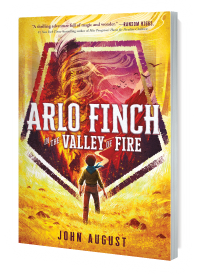
In October 2016, I began writing *Arlo Finch in the Valley of Fire*. It’s about a kid who moves to the mountains of Colorado, where he joins the Rangers. Modeled on the scouts of my youth, Rangers can do some kinda magic things because the forest outside their town is kinda magic.

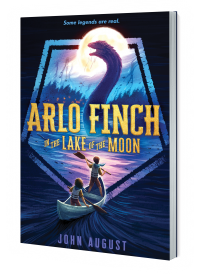
arlo 1Arlo Finch sold to Roaring Brook/Macmillan [as a trilogy](https://read.macmillan.com/mcpg/arlo-finch/), with *Valley of Fire* debuting in February 2018 and *Lake of the Moon* the following year. It has spawned thirteen translations published around the world. I’ve toured extensively across the U.S. and Europe. It’s been a wild trip.

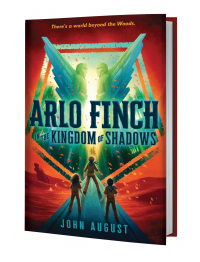
Now the trilogy is finished. The paperback of [*Arlo Finch in the Kingdom of Shadows*](http://johnaugust.com/arlo-finch) arrives in bookstores across the U.S. and Canada today.

As this part of the journey ends, I wanted to look back on what I learned in writing a trilogy. Here’s what I wish someone had told me before I started.

## 1. Have a plan, but be ready to change it.

When I sold the trilogy, my proposal included descriptions of books two and three. Here’s a paragraph I wrote in my summary of *Kingdom of Shadows:*

> The Duchess, who has always operated through proxies and emissaries, is finally forced into the open. Charming, clever and ruthless, she’s willing to make a bargain with the boy she can’t seem to kill. Arlo must decide whether to forsake his friends and family in order to keep them safe.

No spoiler warning needed, because **this doesn’t happen.** The Duchess — a character I’d intended to become the series villain — never appears in the trilogy at all. There’s nothing even remotely like her. Early in writing book two, a better villain appeared, one who was a much stronger foil for Arlo.

arlo coverAnd it’s not just the Duchess. Here are seven crucial elements in the trilogy that I didn’t know when I sold it:

1. Hadryn, and his connection to Arlo
2. Fallpath
3. The Broken Bridge
4. Big Breezy
5. The Summerland Incident
6. Mirnos and Ekafos
7. Why the Eldritch actually need Arlo

Shouldn’t I have planned better? Was it pure hubris to start writing without locking down these details?

Maybe. But I didn’t know about Hadryn until he showed up in a scene. He was a bit player who caught my interest and ended up becoming a costar. I didn’t know — and perhaps *couldn’t have known* — that I needed him back when I was writing the first book. Many things you only discover while writing.

In the end, **a series outline is like a map.** It can help keep you from getting lost, but if you follow it too closely you may drive right past some amazing discoveries.

## 2. Set rules. Break them when necessary.

Every book has rules. Some are conventions (such as spelling and punctuation), while others are specific to the genre or audience (no swearing in a kid’s book).

These rules help both authors and readers. For example, consider how we handle dialogue in prose. The author doesn’t have to add *he said* or *she said* to every line because readers have come to expect that characters alternate speaking unless otherwise indicated.

The same principle applies to point of view. Like many fantasy novels, Arlo Finch is told from a close third-person perspective. As the reader, we are hovering right behind Arlo’s shoulder. We only see what he sees, and we can only peer inside his head. Arlo Finch is at the center of every scene.

> Fifty feet away, by the edge of the gravel driveway, a dog was watching him. Arlo assumed it was a dog, not a coyote or a wolf, though he had never seen one of the latter in person. The creature had a collar, which at least meant it belonged to somebody.

> Arlo knew to be careful around strange dogs, but this one didn’t seem threatening. It was simply watching him.

Although the book never explicitly states it, the reader quickly understands the rule: *Everything is from Arlo’s point of view.*

This point of view splits the difference between a first-person narrator (e.g. *The Hunger Games*) and an omniscient narrator (*Game of Thrones*). It keeps the reader dialed in with the hero, which makes it a perfect choice for Arlo Finch…until chapter 37 of *Lake of the Moon*.

Arlo and his friend Indra had gotten separated. Now I needed to show what Indra was up to. But how? There was no elegant way to do it without breaking the rule on POV.

So I did it. I broke the rule. **After 100,000+ words from Arlo’s perspective, we shift to Indra’s POV for that chapter.**

And it was fine.

My editor noticed — but no one else did. (Or at least, they didn’t complain.) In context, it felt natural to be seeing these events from the point of view of a well-established supporting character. Later, when Indra meets up with the Blue Patrol, they’re focused on finding Arlo but the reader hardly notices that our POV character isn’t there.

Ultimately, I wasn’t breaking the rule as much as amending it: *Everything is from Arlo’s point of view — unless he’s not present. Then it’s from the POV of the best-known character.*

For book three, I stuck with this modified rule. One of my favorite chapters in *Kingdom of Shadows* is told from Uncle Wade’s perspective.

POV wasn’t the only rule I ended up breaking in Arlo Finch. I initially set out to show that Arlo’s real strength was not as a leader, but rather a follower. If there was a decision to be made, he’d help find consensus but would never take the reins.

This “hero as wallflower” approach lasted until the midpoint of book two, when he found himself facing many more challenges alone. By the third book, he’s standing up against governments and supernatural forces of unfathomable power. He’s a reluctant leader, but he’ll do what it takes.

Doing what it takes is part of writing a trilogy. You need to break rules carefully but unapologetically.

## 3. Build roads, not worlds.

The town of Pine Mountain brushes up against the Long Woods, a vast extra-dimensional wilderness that can only be navigated by mastering a special Ranger’s compass. Unlike a lot of fantasy literature, there’s no map at the front of the novels because the Long Woods cannot be mapped.

But there are *books* in Arlo Finch: Arlo and his friends occasionally consult *Culman’s Bestiary* to learn about the dangerous creatures they’re facing, yet I never seriously considered putting together the actual catalogue. Nor did I write out the oft-cited Rangers’ Field Book. I knew the names of the ranks and a few of the requirements, nothing more.

When it came to world building, I tried to create only what Arlo could himself encounter. I put a sticky note on my monitor to remind myself: **Don’t build more than you need.**

In the case of Arlo Finch, the decision was partly practical; I simply had too many chapters to write. But I also recognized a pattern I’d seen in a lot of fantasy literature:

– Elaborately constructed universes that have little to do with the hero’s story.
– Supporting characters who talk about events that happened long ago.
– Visitors hailing from faraway lands the hero (and reader) will never visit.
– Creatures described but never encountered.

Even over the course of a trilogy, your characters will only see a small corner of their universe. So focus on that. Make it rich, rewarding and most of all relevant.

## 4. Slow and steady wins the race.

I started Arlo Finch as part of [NaNoWriMo](https://nanowrimo.org/about-nano), the annual challenge to write 50,000 words of a novel in thirty days. That’s a pace of 1,667 words per day.

While I’d had a lot of [experience as a screenwriter](https://www.imdb.com/name/nm0041864/), I was a complete newbie to the world of publishing. I knew I had a lot to learn, so I used the excuse of making a documentary podcast (called [Launch](https://wondery.com/shows/launch/)) to ask hundreds of naive questions to editors, booksellers and other authors. They taught me about the joys, challenges and frustrations of getting a book published.

When told I was writing a trilogy, authors invariably offered a sympathetic smile along with a gentle shake of the head. *Oh, child,* they seemed to be saying. *You don’t know what you’ve gotten yourself into.*

Writing any book is a marathon. **Writing three books back-to-back is like a race that never ends.**

I wasn’t prepared for the sheer number of words I’d be typing — 202,595 in all — and having to do copy edits on one book while finishing the next. In the morning, Arlo might be investigating a mysterious campsite in *Lake of the Moon.* In the afternoon, he was back six months earlier in Pine Mountain, meeting his friends for the first time in *Valley of Fire*.

As a screenwriter, I’m used to working on one movie at a time. When writing *Toto,* I don’t need to worry about the sequel; it’ll only happen in wild success.

Instead, my experience writing a trilogy had much more in common with the life of TV showrunnner. My friends who write TV have to map out a season, then write the episodes, then oversee all the tweaks and changes — often all at the same time.

While it’s amazing to have this amount of control over one’s work, it requires a steady pace. There’s simply no way to sprint it.

## 5. The middle book is the hardest, but also the most exciting.

The middle book of a trilogy serves as a bridge between the start of the series and the end. It’s the second act, where stakes and complications are raised. As the writer, you’re spinning a bunch of plates, and then you add more.

You can find many articles about [middle](https://writersedit.com/fiction-writing/6-ways-to-avoid-second-book-syndrome/) [book](https://hatch-books.com/blog/bucking-middle-book-syndrome) [syndrome](https://firstlinereader.blog/2019/12/01/an-exploration-of-middle-book-syndrome/), because if there’s one thing writers love, it’s lamenting about how hard writing is.

For me, the second book felt like the second season of a TV series. And I love second seasons. That’s when shows hit their stride.

Having established the characters and the rules of the world, I could introduce new obstacles and conflicts. For example, Arlo has friends — but what if his friends aren’t getting along? Arlo has a routine with family and school, but what happens when he’s away from all of that?

I wrote the second novel while I was living in Paris. My friend Damon Lindelof was in town and stopped by to record [an episode of Scriptnotes](https://johnaugust.com/2017/television-with-damon-lindelof). In our conversation, we discussed the list of ideas you have as a writer than you never actually get around to writing:

> **Damon:** I always wanted to do a show about time travel. And then I suddenly realized, hey, Lost is that show. There is not time travel embedded in the pilot of Lost, but J.J. and I tried to do everything that we could to open up all possibilities in the pilot so that if we wanted to get to time travel, we could.

> And I always wanted to set a show in the ’70s, and I was like, well, we’ve got time travel now. So Lost is that show, too. And I’ve always wanted to do like a pirate show. Well, Lost could be that show, too.

I always wanted to write some time travel as well. So I decided that was a thing that was possible in Arlo Finch.

Having established the mystery of the lost Yellow Patrol in book one, I wanted Arlo to not only learn what had happened, but to be the cause of it. Figuring out how to do that was brain-melting, but the resulting novel is my favorite of the series.

## 6. Most reviewers only read the first book.

Librarians and professional reviewers have to look at dozens or hundreds of books each year, so even if they love book one, they’re unlikely to review book two unless it’s a publishing phenomenon. That’s a real frustration when you’re writing a trilogy, because you’re deliberately portioning out your story over three books.

In the case of Arlo Finch, I wanted to push back against the tropes of the genre (cf. *Harry Potter* and *Percy Jackson*), in particular the notion that the titular hero is the chosen one. So in book one, Arlo is confused why he’s special. Then in book two, he gets the answer: he wasn’t “chosen” at all. He’s an ordinary kid who made a choice — and in the process, created the villain of the story.

But reviewers won’t see that, because they’re only reading the first book.

Now that all three books are out in the world, it’s been gratifying to see some bloggers and librarians looking at the series as a whole when making their recommendations.

> I am so sad that is over but it ended in such a satisfying way! If you haven’t read this series yet, do so. It will be one of the best stories you read in your lifetime.

Returning to the TV analogy, readers who start reading Arlo Finch now will have a different experience than those who encountered it one book/season at a time. Without a year between installments, Arlo’s arc becomes a lot more clear. The setups and payoffs aren’t separated by time.

## 7. Clear some shelf space.

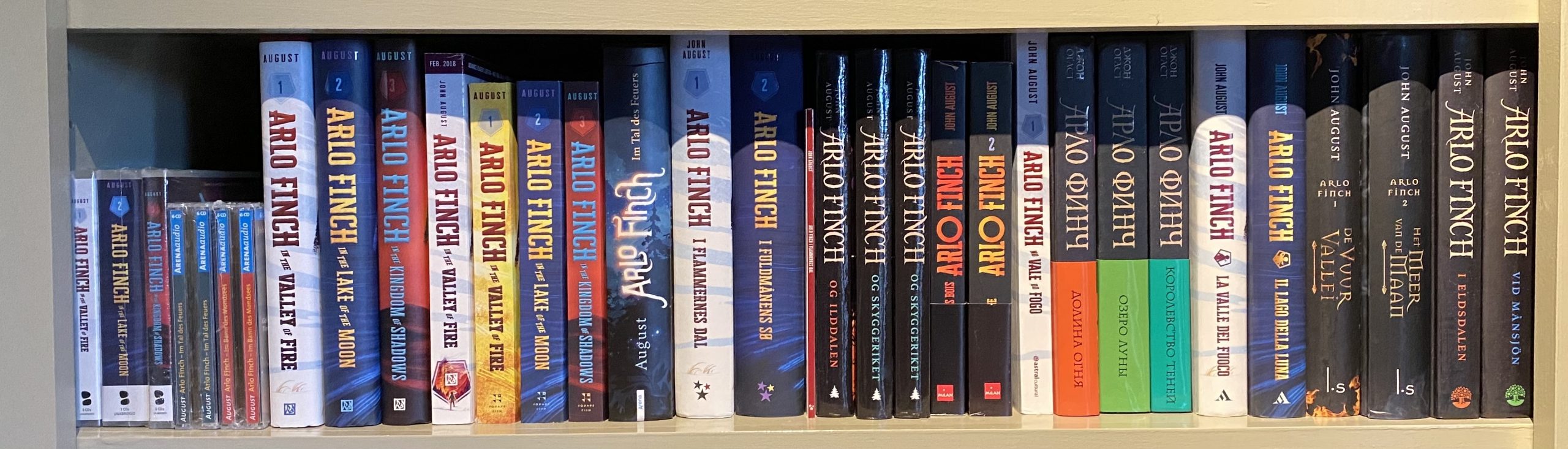
In addition to the original English version, Arlo Finch is available in [12 translations](https://johnaugust.com/arlo-finch-international-editions). For each of these, I receive five copies, for a total of 195 books, which have to go somewhere.

This is luxury problem, to be sure. It’s great and gratifying that so many international publishers took a chance on Arlo. And it’s exciting to cut open a box to see the new Polish or Romanian translation. But then what? I can’t read them. I don’t need them. Yet I can’t bring myself to get rid of them, either.

I hadn’t anticipated how much space it would all take.

shelf with arlo finch books lined up

In my library, I cleared room for one copy of each translation. The rest are packed away in boxes in a closet.

## 8. You won’t get everything right. (See #1.)

If I could go back to book one, I would make a few changes.

**Capitalize Eldritch.** I didn’t realize these supernatural beings would become so important. (I also didn’t know they were giants.) We started capitalizing Eldritch in book two, but it bugs me that we’re not consistent.

**Set up Arlo’s origin earlier.** In book one, we learn Arlo is a “tooble,” but not what it means. We get an answer in book two, but as noted earlier, most reviewers only read the first book. Fox, who appears at the end of book one, could have been less oblique.

**Name the Warden.** In book three, we learn that the adult Ranger Arlo talks to after the campfire in book one is the middle school band teacher (Mr. O’Brien). I wish I’d given him his name from the start.

**Put Hadryn in book one.** Hadryn appears early in book two, but by the rules of trilogies, he should have shown up in the first book — if not as a character, then at least as a named threat.

**Call out how it’s different from other fantasy trilogies.** Unlike Harry Potter or Percy Jackson, Arlo Finch sleeps in his own bed every night. It’s a much more grounded adventure. I think that’s obvious, but none of the reviewers seemed to notice. I should have underlined that.

## 9. Don’t wait to thank people.

Early on, I decided that I wanted to save all of the thank yous and acknowledgements until the end of the third book. My reasoning was that as a reader I generally skip these sections, so why waste the pages and the ink? Plus, wouldn’t it feel presumptuous to thank a bunch of people for a book that might not be well-received?

In retrospect, this decision was dumb.

I should have included thank yous in the first two books as well. As the past year has demonstrated, anything can happen. There was no guarantee the final book would ever come out, or that everyone would be alive to see it. *So thank people often and publicly.*

## 10. It’s hard to say goodbye.

It’s been almost 18 months since I turned in the final revisions for *Kingdom of Shadows.* I’m finished, yet I don’t entirely *feel* finished.

The series was conceived as a trilogy and definitely resolves the major open questions. Like any finale, I took advantage of the opportunity to burn down the sets and let characters move on.

Could there be another book? Sure.

Does there need to be another book? Not really.

Had Arlo Finch become a runaway best-selling phenomenon, I’d certainly be writing more books in the series. But as a writer, my most precious resource is time, and the best use of it going forward is on other projects.

Still, *Arlo is special.* I’ve lived with it longer than anything except Big Fish. I know every inch of the Finch house. I know Indra’s secrets. I know what happens at the Ranger equivalent of the Philmont Scout Ranch in New Mexico and the circumstances of Arlo’s first kiss.

There are Arlo Finch books that won’t be written and stories that won’t be told. But I’m grateful for the three I have, and the years it took to write them. I’m happy they’ll outlive me.

—

You can find Arlo Finch in [bookstores](https://bookshop.org/books/arlo-finch-in-the-valley-of-fire/9781626728141) [everywhere](https://amzn.to/3trKtfw). The series is appropriate for anyone age 8 and up, including quite a few adults.

« Previous Page
Next Page »

Primary Sidebar

Newsletter

Inneresting Logo A Quote-Unquote Newsletter about Writing
Read Now

Explore

Projects

  • Aladdin (1)
  • Arlo Finch (27)
  • Big Fish (88)
  • Birdigo (2)
  • Charlie (39)
  • Charlie's Angels (16)
  • Chosen (2)
  • Corpse Bride (9)
  • Dead Projects (18)
  • Frankenweenie (10)
  • Go (29)
  • Karateka (4)
  • Monsterpocalypse (3)
  • One Hit Kill (6)
  • Ops (6)
  • Preacher (2)
  • Prince of Persia (13)
  • Shazam (6)
  • Snake People (6)
  • Tarzan (5)
  • The Nines (118)
  • The Remnants (12)
  • The Variant (22)

Apps

  • Bronson (14)
  • FDX Reader (11)
  • Fountain (32)
  • Highland (75)
  • Less IMDb (4)
  • Weekend Read (64)

Recommended Reading

  • First Person (87)
  • Geek Alert (151)
  • WGA (162)
  • Workspace (19)

Screenwriting Q&A

  • Adaptation (65)
  • Directors (90)
  • Education (49)
  • Film Industry (489)
  • Formatting (128)
  • Genres (89)
  • Glossary (6)
  • Pitches (29)
  • Producers (59)
  • Psych 101 (118)
  • Rights and Copyright (96)
  • So-Called Experts (47)
  • Story and Plot (170)
  • Television (165)
  • Treatments (21)
  • Words on the page (237)
  • Writing Process (177)

More screenwriting Q&A at screenwriting.io

© 2026 John August — All Rights Reserved.