• Skip to primary navigation
  • Skip to main content
  • Skip to primary sidebar

John August

  • Arlo Finch
  • Scriptnotes
  • Library
  • Store
  • About

Search Results for: youtube

Scriptnotes, Ep 360: Relationships — Transcript

July 31, 2018 Scriptnotes Transcript

The original post for this episode can be found [here](http://johnaugust.com/2018/relationships).

**John August:** Hello and welcome. My name is John August.

**Craig Mazin:** Yes. My name is Craig Mazin.

**John:** And this is Episode 360 of Scriptnotes, a podcast about screenwriting and things that are interesting to screenwriters.

Today on the podcast we’re going to be talking about relationships and how writers let the reader know what’s going on between two or three or more characters in a scene. Then we’ll be looking at three new Three Page Challenges to see how these suggestions might help.

**Craig:** You said this is Episode 360?

**John:** Yep. Gone full circle.

**Craig:** Wow. We have gone full circle. And in five days we will also have a year, five days, five weeks. We will have a year of podcasts.

**John:** Yeah. The math doesn’t really kind of work the same way. Well, I guess, I think if you count the bonus episodes you could listen to an episode a day and fill a full year.

**Craig:** Right. Except the leap year.

**John:** Yeah. We don’t really count those.

**Craig:** No, we don’t count those.

**John:** But looking at calendars, I do have some things to put on your calendar for listeners.

**Craig:** Segue Man.

**John:** Yes. I have a couple of Arlo Finch things coming up. August 25 I’ll be at the San Diego Festival of Books, talking about Arlo Finch and signing some Arlo Finches. September 22 I will be at the Orange Public Library Comic-Con. So there’s Comic-Cons in other places. So this is the City of Orange. And then the start of October I am headed to Frankfurt, Oslo, Stockholm, and Copenhagen for the German and Scandinavian releases of Arlo Finch.

**Craig:** Nice.

**John:** So if you are in any of those cities or countries you can track me down.

**Craig:** That’s awesome. I kept meaning to get up to Stockholm at the very least because Lithuania, we’re right up there, you know. We’re right there.

**John:** Stockholm is amazing.

**Craig:** So like our director Johan Renck and our DP, Jakob Ihre, and then Stellan Skarsgård, they just zip back and forth as they need to. It’s easy for them to go home. It’s not so easy for me to go home when I’m there. But, yeah, so I want to go to Stockholm and Oslo would be pretty great, too. And Copenhagen. I mean, actually they all would be pretty great.

**John:** Yeah.

**Craig:** Well, you’ll have a great time doing that. And just out of curiosity when you are on tour promoting Arlo Finch do you try and shorthand it to ArFi? Do you do ArFi? ArFi?

**John:** Sorry about that loud bang.

**Craig:** Did you just shoot yourself?

**John:** I did. I shot myself.

**Craig:** That question was so horrifying to you that you just – that would have been the most amazing way to end this podcast.

**John:** Boom!

**Craig:** Yeah. John? John? John?

**John:** Episode 360.

**Craig:** John?

**John:** I never shorten it down to ArFi. He’s Arlo Finch in every market. That’s the only thing that hasn’t changed. So in France they changed the subtitle of the book to Le Mystere des Longs Bois. But otherwise it’s just Arlo Finch, something about Valley of Fire.

**Craig:** That French cover for the new book is great.

**John:** Yeah, it’s cool.

**Craig:** Love that cover.

**John:** And you and I will be together doing live shows in the Austin Film Festival. So that is October 25 that that starts.

**Craig:** Right.

**John:** And while I’m there that’s actually coincidentally the Texas Book Festival, so I’ll be doing events both for Texas Book Festival and Austin Film Festival at the same time.

**Craig:** Can we call the Austin Film Festival AuFi?

**John:** Yes. We can. We will officially change it to AuFi.

**Craig:** We are going to have a great Austin show this year. Some awesome people are going to be coming. We’re going to pack the stage as we usually do. And we’ve been talking to the Austin folks and I think it’s going to be pretty exciting. And I did not realize this but apparently the live show, they had to turn people away. So, we’re working on maybe a way that we don’t have to turn people away.

**John:** A bigger venue would be a great thing. So we’ll see if we can get that to happen.

**Craig:** Correct. Oh, and I should mention to those of you who are thinking about going to Austin Film Festival to participate in the pitch competition.

Apparently there was a little bit of I guess some feedback that the judges last year may have been altogether a little too easy on the contestants. And apparently the request came in that I return to provide a little bit of, I don’t know, a little more of that Simon Cowell je ne sais quoi. So I believe I will be judging the final pitch competition at Austin this year. So, you know, you want to do that, right? You want to be in that. So be in it.

**John:** Be in it.

**Craig:** Be in it.

**John:** Do it. Do it.

**Craig:** Do it.

**John:** Do it. Our episode this week is about relationships and Lawant on Twitter actually asked, “I started going through the podcast from episode number one. Do you guys happen to know if there’s an episode going into how you two met?”

And so I was thinking back and in Episode 100 we do talk about the emails that led to the creation of the podcast, but I’m not sure we’ve ever discussed on the show sort of how you and I met, sort of that backstory thing. And I think I have one memory of it, but you may have a different memory of it. So, my memory of it is that you were starting Artful Writer, your blog, and you reached out through David Kramer, my agent, who was also your agent at the time to see if we could get on the phone to talk about setting up the blog. Is that your first instinct of how we met?

**Craig:** That’s exactly right. I remember thinking that there were certain technical things. I noticed, I believe, that you were using – were you using Word Press for your site or were you using Movable Type? Remember Movable Type?

**John:** Yeah. I remember Movable Type. Movable Type is I think entirely Pearl-based, and it generated static pages.

**Craig:** Yeah. It roamed the earth once, like the dinosaurs. And has gone the way of the dinosaurs as far as I can tell.

**John:** I’m still on Word Press now, but I think I might have been on Movable Type at that point. I remember you asking a very specific question about my little brad logo and how it floated over–

**Craig:** Yes! You know what it was? I remember, so I had started up this Movable Type blog and I had just a general design, but then there were certain things I was doing to customize it. And I looked at your site and like how the hell – there’s got to be some simple, easy plug-in or something he’s done to make this logo like this. I remember talking to you and you were like, “No, that took hours,” somehow like trimming around the brad and coding it in to float and all the rest. And then I realized that I just didn’t want to spend hours.

But I think that was the first time I ever spoke with you about anything. It was just computer stuff. It wasn’t writing stuff.

**John:** No, it wasn’t at all. And then I think the first time I remember actually meeting you was at Huntington Gardens. You were there with your family. I was there with my family.

**Craig:** That was the first time?

**John:** I think. We may have met in person one time before then, but I just remember it was really weird and random that we were at the same gardens in Pasadena at the same time. And I’d only been there like twice or three times in my life, so it was a rare overlap.

**Craig:** Yeah, I remember bumping into you there. So that was a long time. But we were just, you know, not friends or anything, we just knew each other and so forth. But then we got involved in this little boondoggle we invented for Fox, but how did that start?

**John:** I think you probably called me about that, because you’d already started talking with other writers. So, for folks who don’t remember, no one would remember this history, Craig had this idea of trying to make a deal at one of the studios for a small group of writers to get real meaningful backend on their projects. And so he pitched it to me. I said it sounded like a great idea. We brought in a bunch of other writers. Craig and I went and pitched it to a bunch of studios. Fox bought into the idea. And very little actually became of it ultimately.

**Craig:** Yeah. It was an interesting thing. I remember specifically the genesis of it was I read about what they had done at Warner Bros. John Wells had put a group together at Warner Bros. And so I called John up and said, “Hey, describe this whole thing.” And he did. And it sounded like a pretty good deal. So then I was like well why don’t we do this. And the problem is I think they all went the same way. They all, every version of this has never gone well, whether it was through Sony or Warner Bros. or Fox. I think those are the three places that have done them. It just ultimately never really works. McQuarrie did one like this as well.

**John:** Yeah.

**Craig:** Nothing ever comes of them.

**John:** And I don’t know if we can say definitively why. But I will say one of the challenges is that studio leadership keeps changing, and so it becomes hard to sort of kind of not really even force the deal but sort of like keep the deal active and going when leadership keeps changing.

**Craig:** It does. And it was I think problematic in part because it required the material to come from the writer. And as we were putting these deals in place the studios’ interest in material they didn’t control kept plummeting. So ultimately you couldn’t really apply a deal like this to any project that relied on underlying property. And, well, that turned out to be essentially all they ever wanted to make.

So that was – there were a bunch of reasons why it began. I think another factor in that is just simply that the writers who qualified for consideration for these kinds of things were so freaking busy and never had a day off, ever. And somebody had always lined up some other thing with them that there was very little time for them to do the sort of work that would lead to success with one of these things.

So, all sorts of reasons why that didn’t work. But you and I went around. I think that was really when we got to know each other. Because we were kind of rowing together in a little canoe. And we made a great little team, I thought.

**John:** Yeah. I thought so, too. And so when we first started doing the podcast I remember there was some episode early on where I said like, “Well it’s not like you and I are friends outside of this podcast,” and you were really offended by it. And I remember I was like, oh, I hurt Craig’s feelings. And Craig has feelings. And we’ve become much better friends over the course of doing the podcast, but also–

**Craig:** Do I have feelings? I guess I do.

**John:** You do have feelings.

**Craig:** I guess I do.

**John:** But we weren’t playing D&D at the start. Like all that stuff came.

**Craig:** No, we have become friends through this podcast. I mean, whether I was legitimately hurt or not. You had a fair point. We weren’t really that close or anything. But our relationship is a function of the work that we do together. That’s how it’s happened. And that’s by the way how relationships must happen, if I may Segue Man myself into our main topic–

**John:** Go for it.

**Craig:** Relationships have to be functional. I think sometimes people make a mistake and they think a relationship is just two people who like to chat together or sleep together. That in and of itself is not enough function.

**John:** Yeah. So in framing this conversation about relationships, I think there’s two challenges screenwriters face.

One is how you get the audience up to speed on relationships that began before the movie started. And so this is trying to figure out like literally letting the audience know how these two people are related. Are they siblings? Are they friends? Are they a couple? Are they ex-spouses? Getting a sense of what are the underlying conflicts that started before the movie started. And really who wants what. That’s all stuff that you as the writer hopefully know and you have to find ways to expose to the audience if it’s going to be meaningful to your story.

The second challenge screenwriters face is how do you describe the changes happening in a relationship while the movie is going on. And so it’s really the scene work. What is the nature of the conflicts within the scene? How are we showing both characters’ points of view? What is the dialogue that’s exposing their inner life and exposing the nature of their relationship?

And they’re very related things but they’re not the same things. So what Craig and I just described in terms of our backstory, that’s kind of the first part is setting up the history of who we are. But so much of the writer’s work now is to figure out how within these scenes are we moving those relationships forward and providing new things to study.

**Craig:** Yeah. That’s exactly right. The screenwriter has certain tasks that are homeworky kind of tasks. You do need convey information. We have this wonderful opportunity when a movie begins to have fun with that. The audience is engaged. They’re leaning forward in their seat. They haven’t yet decided that this movie stinks. So, you can have fun and tease along or misdirect what relationships are. And then reveal them in exciting and fun ways. And that’s I think really enjoyable for people.

So there’s an opportunity to maybe have – maybe it doesn’t have to be quite busy work when we’re establishing how people relate to each other factually. But the real meat of it, as the story progresses, is that fabulous space in between two or three people. The relationship I generally think of as another character. There’s what I imagine this person like alone. There’s what I imagine this person like alone. But when they’re together there’s that other thing between them. And if you think that sounds a little foofy, well, just consider the word chemistry and how often we use it to apply to actors who must perform these relationships. Because when it’s there what do we describe it as? Sparks, or whatever. It’s that thing in between.

And when it’s not there, there’s nothing.

**John:** Yeah. Chemistry is fundamentally the mixture of two elements that by themselves would be relatively stable. And you put them together and they create something new. And that’s what we’re really talking about in a relationship is that new thing that is created when those characters are interacting and challenging each other.

So, let’s talk about establishing these characters and I think you’re right to describe at the beginning of the movie the audience does lean in because I think partly they’re trying to figure out who these people are and sort of what slots to put them in. People approach movies with a set of expectations and there are certain kind of slots that they want people to fall into. And they’re looking for like, OK, well what slot are they falling into? And if you are aware of what the audience’s expectations are that can be really helpful.

So, some of the slots people are looking for is, well, who is the hero, the protagonist? Who is the love interest? Who is the best friend? Who is the rival? Who is the mentor? Who is the parent? That’s not to say you should have stock characters, but it’s to be aware that the audience is looking for a place to put those folks essentially. A sense of the relationship geography of the central character and the people around them.

And so be aware that the audience is trying to find those things and help them when you can. And if you need to defeat those expectations or change those expectations be aware that’s a job you’re assigning yourself.

**Craig:** Right.

**John:** That you have to make sure that the audience understands this isn’t quite what you think. You think that this person is the father, but he’s actually a step-father who has only been married to the mother for a year. If that’s important, you’re going to have to get that out there quickly so we understand.

**Craig:** That’s exactly right. And similarly there are times when just like you and the audience, one of the characters onscreen will also not quite understand the nature of the relationship, and so it’s important then to tie back to our perspective and point of view episode. If I’m in the perspective and point of view of somebody who has a basic understanding of what a relationship is, and if I want to subvert that I first must lay the groundwork for their wrong understanding. And create their expectation.

So, in Training Day, we have an understanding because we share a perspective with Ethan Hawke that he’s been assigned the kind of badass older veteran character who is going to train him and be his mentor. And so that’s his understanding. And then the guy just starts doing some things that are a little uh, and he goes eh, OK, and we’re all a little bit like uh. And then it gets much, much, much, much worse. And we understand that we, like Ethan Hawke, completely misunderstood the nature of this relationship. And then a different relationship begins to evolve.

**John:** Yeah. So, let’s talk about some of these expectations. So Ethan Hawke had a set of expectations going into it. I think so often as I read through Three Page Challenges or moments in scripts that aren’t really working I feel sometimes the screenwriter is trying to do a bunch of work to explain something that could have just been done visually. And so they’re putting a lot of work into describing something that could be done as sort of a snapshot, as an image.

So, I want to give a couple snapshots of things you might see in a movie and as an audience you see these things and you’re like, OK, I get what’s going on here, so all of that work is being done visually and therefore the dialogue can just be about what’s interesting and new and is not establishing these relationships.

So, here’s the first snapshot. You see four people seated at a table in an airport restaurant. They’re all African American. There’s a woman who is 35 and putting in eye drops. There’s a man who is 40, a little overweight, who is trying to get a six-year-old boy to stay in his seat. There’s a girl who is nine and playing a game on her phone.

So, you see these four people around a table, you’re like, OK, they are a family. They’re traveling someplace. That’s the mom. That’s the dad. Those are the kids. That’s your default assumption based on the visual I described. So therefore anything you want to do beyond that, or if you need to clarify exactly the nature of these relationships between people, that there’s like a step relationship or one is actually a cousin, you can do that but that visual sort of gave you all that stuff for free. And so therefore you can spend your time in dialogue on doing interesting things with those characters rather than establishing that they’re actually a family and they’re traveling someplace.

**Craig:** Yeah. You suddenly don’t need to do things like have a character say, “Mom, or “Son,” or any of those annoying things that people do to hit us over the head with this sort of thing. But you’ve put some thought into how to create a relationship in a realistic way.

The fact of the matter is that many writers who struggle with this only struggle with it when they’re writing. If I take any of those people and bring them to an airport and walk them through the airport and just say you quietly look around and then describe to me the relationships you infer from what you see, they’ll get it almost all right.

**John:** Yep.

**Craig:** That’s how it works as humans. Therefore that’s what we need to do when we’re writing. I wish that writers would spend more time in their visual minds, I guess, rather than trying to just begin or stop with words, if they could maybe walk through the space in their heads and experience it. It’s amazing what you see when you do that. And then you don’t have to use dialogue.

**John:** Yeah. All right, so here’s another snapshot. So, next table over there’s a man and a woman. They’re sitting across from each other. They’re both early 30s in business suits. He’s white. She’s American-born Chinese. He wears a wedding ring which we see as he drinks his scotch. His eyes are red and puffy, maybe from crying. She doesn’t look at him. All her attention focused on the spreadsheet open on her laptop. So that’s the visual we’re giving to an audience at the very start.

We know there’s a conflict there. We know that something has happened. Something is going on. The nature of their relationship between each other is probably fraught. There’s something big happening there. And I think we’re leaning in to see what is the first thing that somebody says. What just happened that got them to this place?

Are they having an affair? Are they business colleagues? Something big has happened there. And you have a little bit of an understanding about their jobs, or sort of that it’s some sort of work travel. So that visual gives us a sense of who those two people are before we’ve had any words spoken.

Again, if you saw those people at the airport you would probably get that basic nature of their relationship and you’d be curious. And so I think the thing about sort of establishing people visually is that you want there to still be curiosity. You’re not trying to answer all the questions. You’re just trying to give a framework so that people are asking interesting questions about these characters in front of them.

**Craig:** You’re building a mystery. Right? You’re giving us clues. I have clues here. OK, these are the clues you’ve given me and I’m looking at the situation here. OK, I’ve got this man, I’ve got this woman. He’s wearing a wedding ring. He’s drinking scotch. He’s crying. He’s sad. She doesn’t seem sad at all. That’s a huge clue to me. Whatever he’s crying about, it’s not about her, because she’s looking at a spreadsheet. It’s not that she’s looking down nervously and shutting him down. She’s busy. She’s looking at a spreadsheet. This guy seems pathetic. I’m guessing his marriage has blown up and he’s crying about it for the 15th time to his associate who is subordinate to him therefore can’t tell him to shut the hell up.

She meanwhile is trying to get the work done that they need to get done so they both don’t get fired by the boss above both of them. I don’t know if that’s true. And I don’t know if you even thought it through that far.

**John:** I haven’t.

**Craig:** Right. It’s just that’s the bunch of clues there. And that’s how fast we start to assemble clues. Here’s the good news for all of you at home. What I just did is something that you can use to your advantage if you want people to get what you want them to get. It’s also what you can use to your advantage if you want people to assume something that is incorrect.

For instance, in the first scenario we see a man, a woman, two kids, they’re all sitting together in the airport, playing on a game. They’re all the same race. They all therefore technically can be related. It feels like a family. And that’s a situation where at some point you could have the nine-year-old, turn, wait, see somebody pass by and then hand 50 bucks to the man and the woman and say, “Thanks. We weren’t here.” And then she takes the six-year-old and they move along, right?

Like what the hell? Who is this little spy? But that’s the point. By giving people clues we know reliably we can get them to sort of start to think in a way. We are doing what magicians do. It’s not magic. It’s misdirection and it’s either purposeful direction or purposeful misdirection. This is the way we have fun.

**John:** Absolutely. And so the example you gave where they pay the money and leave, it would be very hard to establish the normalcy if you actually had to have characters having dialogue before that. We would be confused. And so by giving it to us just as a visual, like OK we get the reason why everyone around them would just assume they’re a family. But if we had to try to do that with dialogue or have somebody comment on that family, it would have been forced. It would have felt weird.

So, you have to think about sort of like what do you want the audience to know. What do you think the audience will expect based on the image that you’re presenting and how can you use that to your advantage?

Most times you want to give the audience kind of what they’re expecting so the audience feels smart. So they feel like they can trust their instincts. They can trust you as a storyteller. And maybe one time out of five defeat that expectation or sort of surpass that expectation. Give them a surprise. But you don’t want to surprise them constantly because then they won’t know what to be focusing on.

**Craig:** Right. Then they start to feel like this really is a magic show and they lose the emotional connection to things. So, in the beginning of something you can have fun with the details of a relationship because those are somewhat logical. And you can mess around with that. The more you do it, the more your movie just becomes a bit of a puzzle. And, by the way, that’s how whodunits work. But those are really advertising nothing more than puzzles. And that’s why I recommend all screenwriters spend time reading Agatha Christie. Just pick a sampling of two Poirots and two Marples. And just see how she does it. And see how clever she is. And see how much logical insight and brilliance is involved in designing these things, particularly in such a fashion where it works even though you are trying to figure it out while it’s happening.

**John:** Yeah. And so it’s not like those characters are realistic, but those characters are created in a very specific way to do a very specific function. And they have to be believable in doing their function the first time through and then when we actually have all the reveals you see like, OK, that’s what they really were doing. And I can understand why everybody else around them had made the wrong assumptions.

**Craig:** Well, that’s the beauty of it is that you start to realize by reading those whodunits how much stuff you’re filling in that isn’t there. You make these assumptions that that girl must be that woman’s daughter. That’s just a flat assumption you made and at no point was that ever stated clearly and why would you believe that? So, it teaches you all the ways that our minds work in a sense. So, that’s always great. But I think once you get past the technicals of portraying and conveying relationships, then the real magic and the real fun is in watching two people change each other through the act of being together, whether it is by talking, or not talking, or fighting, or regret. Whatever it is, that’s why I think we actually go to see these stories.

I don’t think we go to movies for plots. I think maybe we show up because the plot sounds exciting. We stay in our seat for the relationships. Lindsay Doran has an amazing talk about – did we – that’s going to be my One Cool Thing this week for sure. I mean, I’m sure I’ve said it before, but Lindsay Doran has a Ted Talk she’s done. It’s available online for free. That goes to the very heart of why relationships are what we demand from the stories we see.

**John:** Yeah. And too often you think about like is this a character moment or is this a story moment. And, of course, there is no difference.

**Craig:** Right.

**John:** You have to make sure that the character moments are married into fundamental aspects of story that are moving the story forward. Because if you have a moment that is just like two character having a witty conversation but it doesn’t have anything to do with the actual forward trajectory of the plot, it’s not going to last. And if you have a moment that just moves the plot forward but doesn’t actually have our characters engaging and interacting and changing and their relationship evolving, it’s not going to be a rewarding scene either. So, moments have to do these two things at the same time. And that’s the challenge of screenwriting. It’s that everything has to do multiple things at once.

**Craig:** That’s why they’re doing them, right? I mean, the whole point is you’re in charge. You can make anything happen. You can end the movie right now if you want. So, why is this happening? And if your answer is, well, it’s happening because I need it to happen so that something else happens, no. No. Stop. Go backwards. You’re in a bad spot.

**John:** So often I think we have an expectation of what the trajectory are going to be for these characters also. Because we’ve seen movies before, so we know that the hero and love interest will have a fight at some point. They will break up. They’ll get back together. We can see some of these things happening. And that doesn’t mean you have to avoid all those things happening but you have to avoid all those things happening but you have to be aware that the audience sees it coming. And so if the audience sees it coming and kind of feels that you’re doing that beat just because you’re doing that beat, like, oh, now they’re going to break up because of this misunderstanding and, ugh, I saw that happening way ahead of time, that’s not going to be rewarding.

They’re going to have an expectation that attractive people will fall in love. That families will fight and splinter but ultimately come back together. So, all that stuff is sort of baked into our expectation of these stories from the start. So, be aware of that and so if you get to those moments understand what the stock version of that moment is and figure out how you push past that. How do you get to a new moment between these two very specific characters, not the generic archetypes of these characters? What is it about them that makes this scene, these two people being in the scene, so unique and special?

And when you see those things happen, that’s what makes your movie not every other movie.

**Craig:** It strikes me that nobody really talks about relationships when they’re doing their clunky, boring screenwriting classes and lectures. I mean, I’m sure some people out there do. But so often when I skim through these books they talk about characters and plot. They don’t talk about relationships. And I guess my point is I don’t care about character at all. I only care about relationship, which encompasses character. In short, it doesn’t matter what the character of Woody is until Buzz shows up.

**John:** Completely.

**Craig:** Woody, until Buzz shows up, is – well, his character I could neatly fit it on a very small index card. Woody is the guy who is in charge and has sort of a healthy ego because he knows he’s the chosen one. So he’s kind of the benevolent dictator. OK. Boring. Don’t care. That’s why movies happen. We don’t want that to keep on going. What we want is for Shrek to leave the swamp and meet Fiona. Then the characters become things that matter because there in – go back to our conflict episode. Everything is about relationship. They should only talk about plot and relationships as far as I’m concerned. We should just stop talking about character. It’s a thing that’s separate and apart.

I think a lot of studio executives make this mistake when they take about character arcs. I hate talking about character arcs. The only arcs I’m interested in are relationship arcs.

**John:** Yeah. Shrek is not a character, but Shrek and Donkey together is a thing. Like that’s–

**Craig:** Right.

**John:** There’s no way to expose what’s interesting about Shrek unless you have Donkey around to be annoying to him. So you have to have some thing or person to interact with. Yes, there are – of course, there exceptions. There are movies where one solo character is on a mission by him or herself and that’s the only thing you see. But those are real exceptions. And I agree with you that so many screenwriting books treat like, “Oh, this is the hero’s journey and this is the arc of the hero,” as if he or she is alone in the entire story. And they never are. And it’s always about the people around them and the challenges.

**Craig:** Or an animal.

**John:** Or an animal.

**Craig:** You know what I mean? There’s some relationship that mattes. And the only place I think you can kind of get away with learning and experiencing something from a character in the absence of a relationship in a kind of impressive way is in theater and on stage and through song, but in that sense you’re there with that person, the relationship is between – so when Shrek sings his wonderful song at the beginning of “A Big, Bright, Beautiful World,” the beginning of Shrek the Musical which as you know I’m obsessed with, he’s singing it to you in the audience. And you’re with him in a room. So that’s a different experience.

But on screen, then when you watch – OK, great example if I can get Broadway for a second, Fiddler on the Roof opens in the most bizarre way any musical has ever opened. The main character walks out and starts talking to you in the audience, immediately breaking the fourth wall. And he does it occasionally and then sometimes he talks to God. And he’s alone. And then there’s the song If I Were a Rich Man. He’s alone the entire time and he’s singing it to himself and to God, who is not visible.

And when you’re in a theater watching it it’s fun, and it’s great, and you get it. Then you watch the movie, which is not a bad movie at all. I like the Fiddler on the Roof movie, but when that song comes around you’re like what is happening.

**John:** Yeah. Who is he talking to?

**Craig:** Why is he? Who are you talking to? Why are you doing this? Why are you standing in a field singing? It’s bizarre. It doesn’t work in a movie. You need a relationship.

**John:** Yep. You do.

All right. Let’s take a look at the relationships in our Three Page Challenges. So, for folks who are knew to the podcast, every once and a while Craig and I take a look at the first three pages of people’s scripts, sometimes features, sometimes pilots. We’ve invited them to send these things in. These are not things we found online. These are not random things we’re criticizing. People have submitted these first three pages for us to look at.

So, Megan, the Scriptnotes producer, looks through them all and picks some that she thinks are going to be interesting for us to discuss. So if you want to read along with us the PDFs are going to be attached to the show notes, so go to johnaugust.com/shownotes. Look for this episode. And you can read along with us.

If you would like to submit your own Three Page Challenge you go to johnaugust.com/threepage and there’s rules for how you sort of put stuff in. So, again, not a competition. Not a contest. No one wins anything except hopefully listeners gain something from us talking about these brave people who have sent in their three pages.

**Craig:** Everybody wins.

**John:** Everybody wins. So, producer Megan McDonnell is actually going to read a summary of the things this time, so we will listen to a summary of the first script and then discuss. So the first script is Convenience by Jonathan Brown.

**Megan McDonnell:** Dee Brown and Sasha Thomas, both early 20s, avoid speaking as they shop in a convenience store. Sasha insists on undressing the unspoken issue. She’s your best friend. She can’t be so mad over some guy. Dee warns her that they’re being watched, but the cashier just reads a magazine. Sasha asks him to pick a side in their argument, but he stays out of it. Dee makes her purchase and exits. Sasha trails her out.

Sasha scolds Dee for being rude and immature saying it isn’t fair. Dee challenges her. What, that she’s not entertaining Sasha’s pity party or that she always has to be the one that pays at the register? Sasha admits that she didn’t notice whether or not there was someone else in the store. Of course she didn’t. She has a focus problem. They put on hoodies. Dee confirms that they are not friends anymore and she doesn’t care. She pulls out a gun. They put on masks and run back into the store.

**John:** Craig, talk me through Convenience.

**Craig:** OK. So, good summary by Megan. We have I think an interesting sort of scenario going on here. I understand that these – I assume that Dee is female. I believe Dee is female. So we have two women, two youngish women in their 20s, and they are both casing a joint. They’re shopping, arguing, and casing a joint and preparing to rob it, which feels like a very sort of Tarantino-y kind of thing. This reminds me of the opening of Pulp Fiction where Tim Roth and Amanda Plummer are having a chit chat in a diner and talking about hopes and dreams and then it ends with them announcing that they’re robbing the place. So that part is kind of cool.

The trouble I had with this ultimately is that it felt a bit rambly. There was a point in here. I think the point is that Sasha has done something to betray Dee. I think maybe stole a boyfriend or something, whose name is John.

**John:** John.

**Craig:** That’s a whole lot of words for what is somewhat mundane. And the relationship as we went through didn’t really change. In other words, it stayed on one level which is Sasha keeps yammering to try and get Dee to be OK with things. And Dee keeps pushing back and saying no. But it doesn’t get physical. It doesn’t get quiet. It doesn’t get stony. There’s no change in tactics which I always find troubling. I think in general people are very, very good at changing tactics when they’re trying to get something from somebody. There’s certainly plenty of conflict on display here which I think is a good thing.

Just technical things. There’s a few just odd bits in here. For instance, Sasha says, “You can’t seriously still be mad about it.” And then Dee says, “Seriously? We’re being watched.” So they’re using seriously twice but in different ways. They’re not necessarily echoing “seriously.”

Sasha says, “I’m your best friend. You can’t stop talking to me over some guy.” Nobody says that really like that. It’s a bit cliché. And I’m your best friend is just a weird thing. When we talked earlier about how to get across the specifics of a relationship, there are cooler ways to do that information than just somebody announcing it. We’re missing an apostrophe on “friend’s feelings.”

There’s a bit where they involve Bill who is the clerk in this convenience store. I assume he’s going to be important because he gets a name. The names are really generic. I don’t know quite what to do with these. Dee Brown. Sasha Thomas. Bill Frank. So I’m not sure where we are. I’d love to know also where are we in the world.

And lastly it appears that there’s some duplicated dialogue on page three where Dee says, “Look. I don’t care about John. I don’t care about you.” And then in the next line she starts, “Look. I don’t care about John. I don’t care about you.” I assume that’s not intentional. But a lot of this felt on the nose and exclamatory. And I think there’s a version of this where two people are whispering/arguing with each other in an aisle and we’re trying to suss out what they’re talking about but we can do a better job of uncorking that this is what they mean. And then one of them pulls out a gun and says “Just shut up until we’re done,” and then they rob the store.

I don’t know. It just felt very – this did not feel like an efficient use of the first three pages. What did you think, John?

**John:** I would agree with you there. So, talking about the relationship here, I think the reason why I didn’t understand the relationship well or didn’t click into the relationship is I don’t have any sense of who these two women are. I don’t – they’re just names. So, “Dee Brown, early 20s, and Sasha Thomas, early 20s, are walking through the convenient store aisles shopping.” That’s all we get for who these two women are.

**Craig:** Right.

**John:** And so I don’t have any sense of who they are individually. I’m not given any bits of flavor to help me tell them apart. And so as I’m reading through the dialogue I had a really hard time remembering like, wait, no, who had the affair with who? I couldn’t tell them apart. And their voices are the same. So, there was really no way for me to click in on sort of what I should be looking for.

So, we talk about expectation. I didn’t really have any expectations for them because you’ve given me nothing to sort of grasp onto at the start here. Same with Bill Frank. “BILL FRANK, 20s, the cashier is flipping through his magazine.” Well, there’s a lot of cashiers and I don’t know what kind of person this is. So give me some flavor here so I have some sense of who this person is and what the nature of it is.

Specificity overall – I don’t know what kind of convenience store this is. I don’t know where we are. I don’t have a sense of the season. I don’t have a sense – just visually I’m given very little to grasp onto, so I’m just trying to listen to the dialogue and I can’t actually pull anything useful out of this other than Sasha did something bad. But I don’t know why we’re talking about it now.

**Craig:** Right.

**John:** And what is the inciting incident that got us to talk about this moment?

**Craig:** Right.

**John:** I don’t know.

**Craig:** Well, it’s that the writer wanted to. And this is what I mean. Like, you got to come up with better reasons than this. By the way, I love what you just said about seasons. There is this fricking thing – am I aloud to say fricking without violating?

**John:** Absolutely. 100%.

**Craig:** Fricking thing where writers just – we talk about default white in screenplays. How about this? Default spring. Writers will write default spring. Because the second you actually get involved in production, somebody somewhere who has to dress these people will say when – what part of year is it? And most writers go, “Oh, uh, May.” No. May is boring. Give me the heat of summer. Give me the chill of winter. Come up with some cool stuff. And maybe if it is May it’s May, but then it’s hay fever. Whatever. Do something so that the weather matters. So that clothes are interesting. So every time the door opens there’s a wind that blows in and knocks a thing over. Use the world.

**John:** Use the world.

**Craig:** Use the world.

**John:** Other things that were just frustratingly unspecific to me, midway through page one, “Fiddles with items on the shelves. Dee continues to look around the convenience store and picks up an item to buy. Sasha follows her.” Picks up an item to buy. Got to pick up something. It’s no more words to actually say what that is that you’re buying. And anything would be more interesting than something to buy.

**Craig:** Anything. Anything. Like, somebody is stock piling the weirdest item. You know, like just ChapSticks. Just one after another after another after another. But whatever they’re doing everything has to be a choice. You’re absolutely right. And I think so much about what happened to these two girls with each other and their relationship could be helped along by just – is one tall and is one short?

**John:** Yeah. Give me something.

**Craig:** Punky haircut? Regular haircut? Give me something. It all felt incredibly bland and generic.

**John:** I had real geography problems when they left the store. And so I think what’s supposed to be happening is they’re basically doing a loop around the entire outside of the store and they’re coming back in front. But I had no real sense of where I was. So I couldn’t tell if they were still out front, where they were in terms of this. It makes sense to do the loop, but just give me the loop because I didn’t process it.

And I wasn’t ahead of the writer in terms of knowing this was going to be a stick up really. I mean, I assume they were shoplifting or something. So, I was a little excited by the, OK, now they’re going to rob and that’s the bottom of page three. But, I didn’t feel it.

And here’s the thing. If you’re going to do the reversal like, oh, they’re going to actually rob the place, the conversation leading up to that still has to be interesting. So, the thing we talked about with Pulp Fiction is like that conversation in the diner was fascinating.

**Craig:** It’s great.

**John:** Before they pulled the gun.

**Craig:** That’s why pulling the gun was such a shock. It’s not a shock here that they pull a gun because really what I get is two fairly bland, generic people are also doing a fairly bland, generic movie thing which is robbing a convenience with a bland weapon. It’s not even an interesting weapon. They haven’t even bought a can of bug spray and a lighter to use that as a flame torch. You know what I mean? It’s just, oh, here’s the usual gun. And I don’t know, it’s all just so…

One last little bit on that geography. I think sometimes if you want to do something that might be confusing to a reader then just use it to your advantage and say we’re not really sure where they’re going now and then, surprise, they’ve ended up right back at the front. Except this time they pull their heads down and pull out their – you know what I mean? Be impressionistic about it I guess.

**John:** Last little thing I will say is at the bottom of page three you commented how there’s dialogue that’s repeated. So it could be intentional. But if you’re going to repeat dialogue that way, because sometimes people do say the same thing again, give us something different in how you’re presenting it so that we know that it wasn’t a mistake.

So, the second time, like, “Listen, I don’t care about John.” Underline something. Uppercase some things to make it clear that this is not a mistake. She really is saying the same thing again, just with different emphasis, or really nailing it home.

**Craig:** Or even a parenthetical. Again. Just so that you’re letting the reader know, yeah, this is purposeful. I didn’t just screw up.

**John:** Final thing I will say is sometimes a character speaks and then there’s a line of action and the character speaks again with a continued. That can be a powerful thing, but I got confused a couple times here where I thought like we should have switched to the other character. If you’re going to do that, there has to be a real reason for why you interjected there. That there’s more happening after it. There were a lot of cases here where I felt like you should have just kept all that dialogue together and then done the action line, or put stuff in as a parenthetical because there’s a lot of cases of CONT’Ds and stuff that just confused me.

**Craig:** Yep. All right, well why don’t we move onto our second Three Page Challenge for this episode. It’s Plunder Cove by Paul Acampora and Erin Dionne. So let’s have Megan tell us a little bit about Plunder Cover.

**Megan:** A beat up car parks near a warn Plunder Cove amusement park billboard. Elliot Marker, 17, and Lilly, 9, gather their belongings from the car, her horse-shaped backpack and his hockey stick. He points out a small snake on the ground and warns Lilly to watch her step. Watching her step is the biggest part of staying safe.

Elliot pries open a hole in the chain link fence and props the gap for he and Lilly to climb through. He calls this their special family pass. They joyfully run through the amusement park and get caught by a guard just inside the wall. Elliot claims that they were just looking for a bathroom for Lilly. She asks why she always has to be the one who needs the bathroom. It’s because she always does.

They plan to meet when she’s done and go to the Merry-Go-Round. She gives him a big hug. He is an excellent big brother.

**Craig:** OK, John, what did you think of Plunder Cove? This is a pilot for a TV series.

**John:** So this is one of the most interesting Three Page Challenges I think I’ve encountered in this whole thing, because some of the writing in this was actually really nicely done and really thoughtful and the nature of the relationship between the brother and sister was interesting. The visual world of it was interesting. And yet these writers, it feels like they have not seen any other screenplays. Like they’re coming in from just some completely other universe of writing.

**Craig:** Yeah.

**John:** Because they just didn’t seem to have any sense of the standard ways that things are formatted. So maybe we’ll talk about the relationships first and then we’ll go into like OK this is how things actually need to look on the page, because the actual – some of the writing was good and would have been so much stronger with proper formatting.

So, I want to talk about our expectations of these two characters and what’s working and what could work better. What I liked about, so Elliot, age 17, and his nine-year-old sister, Lilly Marker, exit sedan. “ELLIOT, solid and tall, is a little too serious for his age. LILLY is high-energy, no patience, wild hair and untied shoes.” Great. Those are good descriptions of those people. Like I get what those people are. I get what the dynamic is. With that description I’m eager to see what is actually happening.

Then what’s actually happening, they’re sneaking into the park. He uses a hockey stick to pull open the chain link fence. Cool. I got it. I get all this stuff. I get a little sense that the home life is messed up. The mom is always in a box of wine. That the brother is a little annoyed by the little sister, but also very protective of the little sister. I basically got and believed their relationship in these three pages which is an accomplishment.

**Craig:** Yeah. I liked the wardrobe, hair, and makeup of the character introductions. I mean, look, the – and I’ll ignore the formatting, because truthfully I was thrilled. To be honest with you, thrilled to see something that people had typed that had absolutely no concern whatsoever for normal formatting. Because I just thought, oh good, finally a test of this thing I keep saying which is it doesn’t matter. Well, it doesn’t matter.

It doesn’t matter to me. I’m sure that for other people they might look at this and go, nah, these people don’t know what they’re doing. But for me, they were an enjoyable three pages, so I stopped caring about that other stuff because in the end it doesn’t really matter.

I mean, if they could keep consistent within their own mad system that would be great. So, for instance, “park guy” is a character and he’s not capitalized, but everybody else is capitalized. So there are things like that. But by and large, you know, I got – here’s the truth, after the second page I stopped caring about that stuff and I was just inside of the scene.

So, let me talk about how that works, Paul and Erin. Pretty well. I think, relationship wise, again going back to the let’s not give away stuff that we don’t have to give away, they do this all the time. Right? We have an understanding that this is not the first time they’ve done this. Correct?

**John:** That is correct.

**Craig:** Lilly is sort of talking like she’s never done this before. That a lot of these things are new. “The biggest part of staying safe is just keeping your eyes open” is what he’s saying to her. Why is he saying this to her now after they’ve done this a bunch of times? You know? And then why is she asking what’s the other part, and “How come we never use the main gate?” That was the line that implied that they do this a lot.

**John:** Yeah. And so that exchange actually worked pretty well for me. I would cut out Lilly’s talk back line at the end. So, “How come we never use the main gate?” “We’ve got a special family pass.” He uses the hockey stick to pry it open. I didn’t need her line that says, “Our family pass looks a lot like a hockey stick.”

**Craig:** Precisely. Because you’ve seen the hockey stick many, many, many, many times. And then when she says, “Why do you always say I need to use the bathroom?” that makes sense, right?

**John:** Totally.

**Craig:** Frankly, the first exchange, too, “Watch your step. The biggest part of staying safe…What’s the other part? Dumb luck.” I’d cut that, too. I would just have him pull out the hockey stick and she’s like, “Can’t we – how come we never use the main gate?” “We’ve got a special family pass.” Then I get that.

She’s a little precocious for nine and we’ve seen that character many, many, many, many, many times. But, you know, it’s not the worst of it. And I liked their whole chitchat about the carousel and demoiselle and all that stuff. It felt nice.

I mean, look, there’s absolutely nothing in this teaser that qualifies as a teaser.

**John:** No. This isn’t a teaser for a TV show at all.

**Craig:** No.

**John:** It’s kind of a scene. Here’s what we should say about a teaser. A teaser sets up a question. Sets up a mystery. Sets up this is the start of a journey and it was just the end of three pages. It wasn’t anything.

**Craig:** Yeah. For this to be a teaser you do this scene and then at the end of the scene you realize they’re ghosts. That’s a teaser. There’s nothing here that goes, whoa, it’s just a lovely, nice little moment and then off they go. It feels like the first scene of an independent film, not a teaser to start you off and make you gripped by a television show.

So, look, in terms of formatting and stuff, honestly Paul and Erin, here’s the truth. You guys write well enough that you probably should give yourself the advantage of writing things in the “normal” format. And you can do that for free. You can do that for free using, well, Highland, there’s a free version of Highland but that’s only–

**John:** Yeah.

**Craig:** OK. So there’s free Highland. WriterDuet. There’s a free version of that. Just start there. At least you’ll get a sense of how the format works. But this was pretty well done.

**John:** Yeah. So a couple things, you know, using the write application will solve most of these problems, the weird way that dialogue was centered rather than blocked properly. If you’re going to do a pilot, that’s fine. Plunder Cove is the title of the series. You put the Episode on the title page. So, Episode One, Merry-Go-Round Broke Down. Teaser would generally be centered over the top of page one of the actual script. And then the application can take care of the rest of the stuff for you.

But here’s why I think it does matter. Here’s why standard formatting, or at least a semblance of standard formatting is if Megan hadn’t picked this as a Three Page Challenge and I was just like skimming through a bunch of them, I would have immediately passed over this because it didn’t look like a screenplay at all. It looked like some person who typed a play once and had never actually looked at it. And people are going to dismiss something that just looks so weird. And it’s not even consistent in how it is done. It’s not like they came up with some other system for how it was all going to be done. It just felt kind of random. And so you want everything to feel deliberate and you’ve made really good choices with words. Make really good choices in how you’re presenting those words so we actually will read your story.

**Craig:** I would have gravitated toward it. I’m just so bored of like, oh here it comes, INT…

You know, but that’s me. That’s me. I’m nuts.

**John:** All right. Let’s go to our third Three Page Challenge. It’s Savorless Salt by Mathieu Ghekiere. He’s from Belgium. I looked him up.

**Craig:** Oh, cool.

**John:** Megan, take it away.

**Megan:** Months are ripped from a calendar. Lucas, 10, sleeps. Hannah, 42, looks over a shelf of canned food with homemade labels. She selects a can and as she prepares a meal she’s careful to wipe down the containers. Jeff, 43, rides a stationary bike furiously, earning credits. Dylan, 5, wakes Lucas with excitement. It’s Christmas. Lucas looks at his wall covered in tick marks. He wipes them away with his sleeve.

Over their modest feast, Lucas challenges his mother’s assertion that it is Christmas. It’s been 412 days since last Christmas. Surprised that he’s been counting the days, she counters with an explanation that time is relative and leaves the table in a huff. Jeff encourages Lucas to keep counting and stay curious.

**John:** And we’re back. Craig, talk me through your experience with Savorless Salt.

**Craig:** What a strange and interesting title. Well I knew that Mathieu was not a native English speaker pretty quickly in. There’s something very lovely – in a lovely way it’s very backwards, the way that German is often backwards. Where he says, “Every month ends in the trash until December.” He’s talking about a calendar on a wall. “With a black marker every day before December 24th gets crossed.” Meaning every day before December 24th gets crossed off with a black marker. So it took me like three times on that sentence, but I was like, OK, I get it. And this is kind of actually awesome. I love the crazy syntax.

So generally speaking I thought this was pretty fantastic. I was gripped by the description. And I could see the space I was in. I understood, even if it said INT. BUNKER I understood that it was definitely bunker-y. That there was no need for me in the audience as it were to see the word bunker. I felt the bunkerness. I really loved that when we met Hannah she’s doing this interesting kind of ritualistic preparation of canned food. And then we get to Jeff who we, I guess are going to assume is her husband, and he’s biking. And you just infer that he’s generating energy and that the energy is measured in credits. So they have these obligations. And she throws powered bleach in the pot before putting in the vegetables. Lovely little details. I’m fascinated by what’s going on here. Fascinated.

Then I meet the brothers. I don’t know how old Lucas is. I know that his little brother Dylan is five. I’d love to know–

**John:** Lucas is 10.

**Craig:** Oh, where is that?

**John:** At the start there’s a weird scene that is underwritten. So, “INT. BEDROOM KIDS,” again.

**Craig:** Oh, there it is. Yeah.

**John:** “LUCAS, 10 years old, is sleeping”

**Craig:** Right.

**John:** But that was a situation where like we had no framing around that at all, so Bedroom Kids is reversed but also I don’t – what does that look like? That was an opportunity to show how this space is different than our expectations of what a bunker space should be, or the degree to which it matches those expectations.

**Craig:** Yeah, probably, Mathieu what you’d want to do is just cut that out. You can see the calendar on a concrete wall if you want. And then if you want to give us little glimpses of the space without drawing attention to people, and then go with Hannah, go with Jeff on the bike, back to Hannah, and then if you want to do the kids again. So just help us out there because I couldn’t remember from that little bloop. It didn’t even register in my brain.

So, his brother jumps on him because it’s Christmas. And in a very small bathroom, “Jeff washes himself with powder and the tiniest amount of water.” Another great little – I feel like I’m learning how whatever post-Apocalyptic nightmare these people live in, or if it’s not, regardless, I’m learning about bunker life. It’s kind of cool.

And then there’s this conversation that happens and Lucas is complaining a little bit that even though it’s Christmas the last Christmas happened 412 days ago. And this disturbs Hannah for some reason. I love the little mystery of this. Why is she upset that he’s been counting the days? She doesn’t like that, but Jeff does like that. Jeff, who is the dad-ish, kind of is pleased about this. And Hannah kind of loses her appetite. She’s having this emotional response to what seemingly is this just happy little family conversation. And smashes her elbows on the table. I’m pretty sure we want hands there. It’s very hard to smash your elbows on the table. Marches off and Jeff basically says to Lucas, you know, promise me you won’t stop counting.

Well, what I love here is I know so much. In three pages I know these people live in a bunker. I know roughly how bunker life works. I know that there’s something really creepy going on with Hannah. I know that the amount of days that they’ve been done there is at issue and that lies have been told. And I know that Jeff likes it and wants his kid to keep doing that because there’s conflict between him and Hannah. To me, that’s great.

So, you know, I say great job Mathieu. I really enjoyed these three pages.

**John:** Yeah. I was confused in the wrong way about Hannah. So I did up underlining on page three, “Her appetite is gone.” It’s like, well why I write. Because I didn’t see enough stuff there to give me a clue whether I was supposed to know that or not know that. And so, again, it’s being aware of what the reader is going to infer or not infer. I felt like Mathieu suspected I was a little more caught up than I actually was at that moment. So, that moment didn’t quite work for me. But I did like that you’re establishing these characters with a conflict already there.

It wasn’t spending a lot of time like everything is happy and now everything is fraught. This is a family that’s already in crisis even within this bunker context which is good. And that the nature of counting the days is important. I think the problem was, as a reader, I couldn’t imagine any scenario for why Hannah was acting the way she was. And so that left me a little bit frustrated.

**Craig:** Right. And I get that. I stopped a little bit when – when she lost her appetite I was a little confused by why it happened in that moment and not a little earlier. I think maybe when he makes the counting thing, maybe that’s when she puts her fork down. The losing your appetite also is a little funky one just because Mathieu makes a big deal about how this is a feast and yet it’s not a lot of food, which makes me think that they’re on rations and are hungry a lot. So, but there’s something also a bit scary about Hannah, which I like. The unpredictable emotionality was putting me on edge, and I like that.

**John:** Yeah. So in our previous episode we talked about point of view and I think one of the things, especially this last scene, could benefit from is a little bit more clear point of view. Because we established all of these characters, but whose point of view are we seeing this dinner scene through? Is it from Hannah’s point of view? Is it from Jeff’s? Is it from one of the boys? And I think making that choice will inform how the scene plays and how we as an audience are reading this moment.

If we’re supposed to be seeing this from Hannah’s point of view, that’s frustrating because we don’t understand Hannah’s point of view. If we’re seeing it from Jeff’s point of view, which seems a little bit more likely, that feels a little bit more grounded. And the boys’ point of view could be equally valid. But I think we need to give the boys a little bit more screen time and weight beforehand and see everything kind of from their POV, which might mean cutting out the Jeff in the shower and stuff like that. Just so we’re really seeing it from the boys’ point of view.

**Craig:** That’s fair. I think there’s a little bit of confusion in there about who we’re with. But I was impressed by the amount of information that I got without being smacked in the face with it. So, it was interesting.

**John:** Let’s talk about Mathieu’s English. Because his English is pretty good, but there’s things that he messes up that you’re going to mess up as a non-native speaker.

**Craig:** Right.

**John:** And so if he’s really writing this in English rather than French or another language, I think it would serve him well to have a native speaker just do a quick run through and just flip some of the words around so it reads a little bit better as standard English. Because sometimes we stop and we trip on things like, wait, what did he actually mean there? And if it was smooth and effortless it would serve him better.

**Craig:** No question. I mean I can go through this and practically every single paragraph there is some kind of mistake in English and they are somewhat subtle. We generally call – it’s canned food. We don’t refer to them as metal food cans. We don’t say big pearls of sweat. We would say big beads or droplets of sweat. He’s eyes instead of his eyes. There’s a lot of things like this. She wipes the plastic with a paper cloth. I think in English we would say paper towel.

So there’s all these little idiomatic things. And, by the way, this is something that I had to do, even though I was writing in English for English people, for Chernobyl because it’s essentially a British production and actors and crew were sort of used to reading a certain thing. We just decided we’re just going to go with British spellings and we were going to go with British words to not confuse people. So, for instance, no more flash lights but they have–

**John:** Torches. Yep.

**Craig:** So Jane Featherstone read through the whole script and sort of went, no, no, yes, yes, change that. Colour. You know. It was all – and it doesn’t change anything, Mathieu. I mean, that’s the point, is that it’s still your writing, you’re just making it what you actually intended it to be.

**John:** Yep. All right, thank you again to our three brave entrants to the Three Page Challenge. I guess it was actually four because there was one writing team.

If you would like to read these pages, they’re at johnaugust.com. Just look for this episode and you can find the PDFs to download. Or if you want to submit your own it’s johnaugust.com/threepage.

It has come time for our One Cool Things. My One Cool Things are these books which you’ve seen in a bookstore, I assure you, if you live in the United States. They’re these sepia toned books that are about local history. So, the first one of these I read was on Larchmont which is the little shopping street in my neighborhood by Patricia Lombard. It was a great history of this weird little shopping street in Los Angeles. But doing research for this new project I’ve been pulling up a lot of LA history. And some of these books are fantastic. Another one I’d recommend is African-Americans in Los Angeles by Karin L. Stanford.

So these books, there’s a company that makes them called Images of America. There’s really a very set template. There’s a ton of photos. Some are really well written, some are not well written. But they’re so fascinating in their very, very, very local history of a place that I’d really encourage you to check them out for wherever you are living right now or wherever you grew up. But if you need to do research on a place, historical research on a place, they are great because they just have a ton of photos of a place that, yes, you could probably find online but you couldn’t find in context. So, I’m going to recommend these Images of America books.

**Craig:** I picked up one of those for La Cañada, the town where I live in. You know, La Cañada in many ways is an incredibly boring little town. That’s kind of why we like it. But when you read the history of La Cañada you realize it’s always been a boring a little town.

**John:** Nothing’s changed.

**Craig:** No. My One Cool Thing is the aforementioned Lindsay Doran Ted Talk. I apologize if it’s been my One Cool Thing before but I don’t care. It’s that good. It’s an evergreen. You should absolutely listen to this. It’s brilliant. It’s not long. It’s 18 minutes and 25 seconds. And in that 18 minutes and 25 seconds Lindsay Doran, who is a brilliant, brilliant producer, legendary producer, manages to convey precisely what it is about movies and relationships that draw us in. And it is such a refreshing antidote to a lot of the garbage advice that I think is handed out, particularly about endings to people, in which endings become loud, stakes-building crescendos of explosions and nonsense cacophony. And miss out on what an ending really is.

And she does this wonderful job of explaining to you through movies you’ve already seen whose endings you may have forgotten what the endings are really about. So Lindsay Doran Ted Talk. Link in the show notes.

**John:** Fantastic. So that’s our show for this week. Our show is produced by Megan McDonnell. It is edited by Matthew Chilelli. Our outro this week is by Michael O’Konis. If you have an outro you can send us a link to ask@johnaugust.com. That’s also the place where you can send questions like the ones we answer on the show.

On Twitter, I am @johnaugust. Craig is @clmazin. That’s a good place to go for little small questions about things.

You can find us on Apple Podcasts. Just search for Scriptnotes. While you’re there you can leave us a comment. That helps people find the show. But you can find the show notes for this episode and all episodes at johnaugust.com. That’s also where you’ll find the transcripts.

We have now seven seasons of Scriptnotes available to download. If you go to store.johnaugust.com you can download them as big files that have all the mp3s. All the related materials. And the bonus episodes. So they are $5 per season if you want to go back through those.

We also have Scriptnotes.net which is $2 a month and lets you load and download any of those episodes of the first 359 that we’ve done, plus the bonus episodes.

So, Craig, thank you again for a fun show about relationships.

**Craig:** Thank you, John. My relationship with you is better than ever.

**John:** Better than ever. Thanks Craig.

**Craig:** Talk to you soon. Bye.

**John:** Bye.

Links:

* [Arlo Finch covers](http://johnaugust.com/2018/youd-hardly-recognize-arlo-finch-overseas) look different around the world. You can catch John at the San Diego Festival of Books on August 25, at the Orange Public Library Comic-Con on September 22, at the Texas Book Festival on October 25th, or in Frankfurt, Oslo, Stockholm and Copenhagen in early October.
* The [Austin Film Festival](https://austinfilmfestival.com) is also coming up on October 25th.
* In a musical, the relationship can be with the audience, like in Shrek: The Musical’s [“Big Bright Beautiful World”](https://www.youtube.com/watch?v=7sqopU4V60w) or Fiddler on the Roof’s [“If I Were a Rich Man”](https://www.youtube.com/watch?v=k_XeHLrkwTY) — as opposed to [the movie version](https://www.youtube.com/watch?v=RBHZFYpQ6nc).
* [Three pages](http://johnaugust.com/Assets/CONVENIENCE.pdf) by Jonathan Brown
* [Three pages](http://johnaugust.com/Assets/PLUNDER_COVE.pdf) by Paul Acampora & Erin Dionne
* [Three pages](http://johnaugust.com/Assets/SAVORLESS_SALT.pdf) by Mathieu Ghekiere
* You can submit for the three page challenge [here](http://johnaugust.com/threepage).
* [Images of America Book Series](https://www.arcadiapublishing.com/series/images-of-america-books?gclid=EAIaIQobChMI5Izfyqis3AIVjeNkCh1gSANLEAAYASAAEgLEB_D_BwE&ef_id=W1EenwAABGOU1CD9:20180719232831:s)
* [Larchmont](https://www.arcadiapublishing.com/Products/9781467134118) by Patricia Lombard
* [African-Americans in Los Angeles](https://www.arcadiapublishing.com/Products/9780738580944) by Karin L. Stanford
* Lindsay Doran’s Ted Talk – [Saving the World vs. Kissing the Girl](https://www.youtube.com/watch?v=752INSLlyf0)
* [The Scriptnotes Listeners’ Guide!](http://johnaugust.com/guide)
* [The USB drives!](https://store.johnaugust.com/collections/frontpage/products/scriptnotes-300-episode-usb-flash-drive)
* [John August](https://twitter.com/johnaugust) on Twitter
* [Craig Mazin](https://twitter.com/clmazin) on Twitter
* [John on Instagram](https://www.instagram.com/johnaugust/?hl=en)
* [Find past episodes](http://scriptnotes.net/)
* [Scriptnotes Digital Seasons](https://store.johnaugust.com/) are also now available!
* [Outro](http://johnaugust.com/2013/scriptnotes-the-outros) by Michael O’Konis ([send us yours!](http://johnaugust.com/2014/outros-needed))

Email us at ask@johnaugust.com

You can download the episode [here](http://traffic.libsyn.com/scriptnotes/scriptnotes_ep_360.mp3).
From Indie to Action Comedy

Episode - 361

Go to Archive

July 31, 2018 Directors, Film Industry, Genres, Highland, Producers, QandA, Scriptnotes, Software, Transcribed, Writing Process

John welcomes Susanna Fogel and David Iserson to talk about making their new movie, The Spy Who Dumped Me. They discuss the transition from TV and indie film to blockbuster, the collaboration involved in crafting a comic action sequence, and the fun of production overseas.

Susanna and David explain the advantages of spec scripts (this was one), and what it’s like writing with a partner.

Links:

  • Thanks to Susanna Fogel and David Iserson for joining us! The Spy Who Dumped Me is in theaters now.
  • David’s much-anticipated premiere suit
  • Banvard’s Folly by Paul Collins
  • American Kingpin by Nick Bilton
  • Natalie Walker’s Twitter Auditions
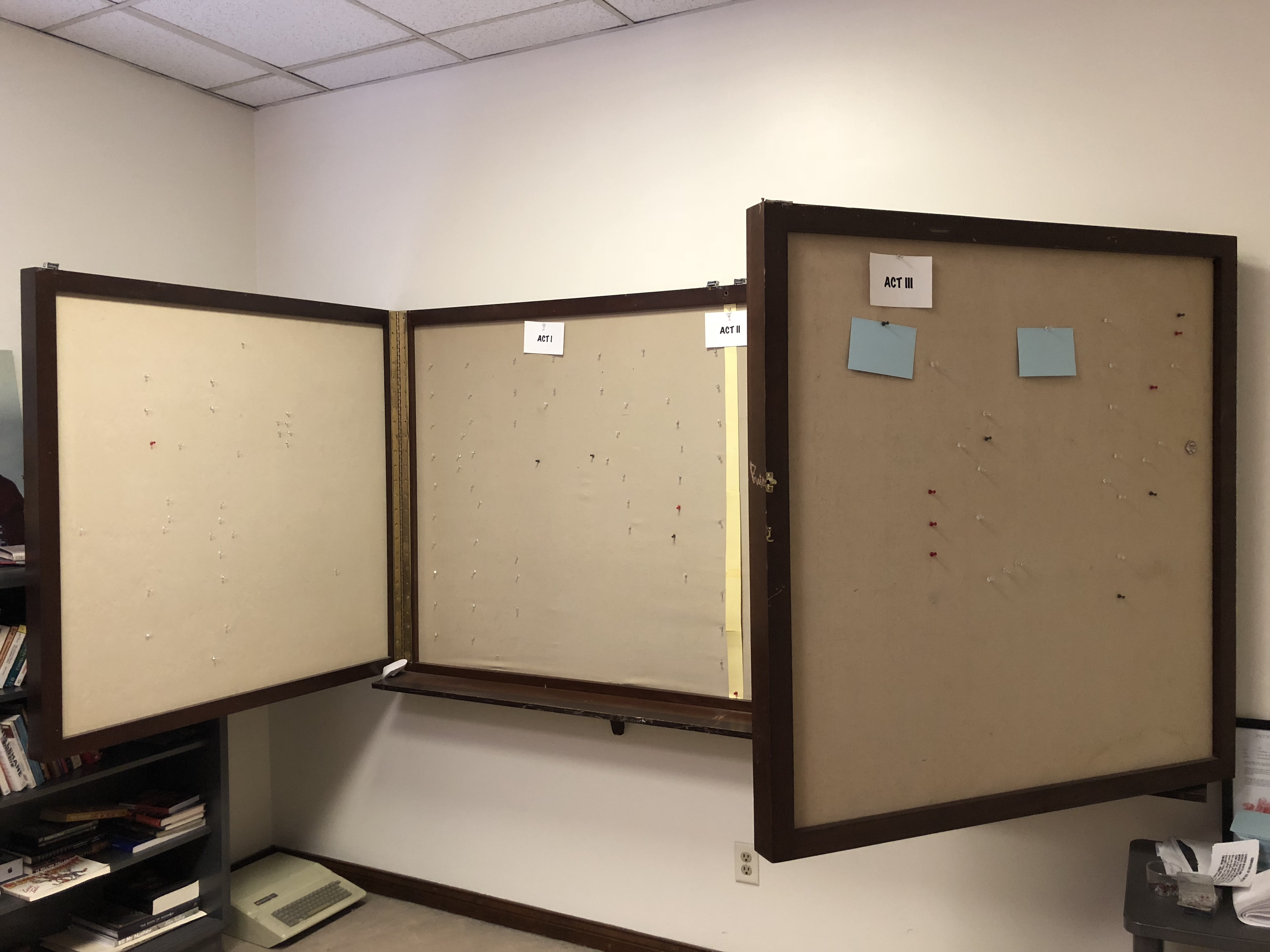
  • Also, as promised in episode 357, this is Craig’s fancy corkboard!
  • The USB drives!
  • David Iserson on Twitter
  • Susanna Fogel on Twitter
  • John August on Twitter
  • Craig Mazin on Twitter
  • John on Instagram
  • Find past episodes
  • Scriptnotes Digital Seasons are also now available!
  • Outro by Rajesh Naroth (send us yours!)

Email us at ask@johnaugust.com

You can download the episode here.

UPDATE 8-7-18: The transcript of this episode can be found here.

Relationships

July 24, 2018 Arlo Finch, Broadway, Formatting, News, Scriptnotes, Three Page Challenge, Transcribed, Words on the page, Writing Process

John and Craig discuss the importance and basics of developing relationships in storytelling. Characters are nothing without relationships, like Woody without Buzz, Shrek without Donkey, John without Craig…

We then test these ideas about relationships against a fresh set of Three Page Challenges.

Links:

* [Arlo Finch covers](http://johnaugust.com/2018/youd-hardly-recognize-arlo-finch-overseas) look different around the world. You can catch John at the San Diego Festival of Books on August 25, at the Orange Public Library Comic-Con on September 22, at the Texas Book Festival on October 25th, or in Frankfurt, Oslo, Stockholm and Copenhagen in early October.
* The [Austin Film Festival](https://austinfilmfestival.com) is also coming up on October 25th.
* In a musical, the relationship can be with the audience, like in Shrek: The Musical’s [“Big Bright Beautiful World”](https://www.youtube.com/watch?v=7sqopU4V60w) or Fiddler on the Roof’s [“If I Were a Rich Man”](https://www.youtube.com/watch?v=k_XeHLrkwTY) — as opposed to [the movie version](https://www.youtube.com/watch?v=RBHZFYpQ6nc).
* [Three pages](http://johnaugust.com/Assets/CONVENIENCE.pdf) by Jonathan Brown
* [Three pages](http://johnaugust.com/Assets/PLUNDER_COVE.pdf) by Paul Acampora & Erin Dionne
* [Three pages](http://johnaugust.com/Assets/SAVORLESS_SALT.pdf) by Mathieu Ghekiere
* You can submit for the three page challenge [here](http://johnaugust.com/threepage).
* [Images of America Book Series](https://www.arcadiapublishing.com/series/images-of-america-books?gclid=EAIaIQobChMI5Izfyqis3AIVjeNkCh1gSANLEAAYASAAEgLEB_D_BwE&ef_id=W1EenwAABGOU1CD9:20180719232831:s)
* [Larchmont](https://www.arcadiapublishing.com/Products/9781467134118) by Patricia Lombard
* [African-Americans in Los Angeles](https://www.arcadiapublishing.com/Products/9780738580944) by Karin L. Stanford
* Lindsay Doran’s Ted Talk – [Saving the World vs. Kissing the Girl](https://www.youtube.com/watch?v=752INSLlyf0)
* [The Scriptnotes Listeners’ Guide!](http://johnaugust.com/guide)
* [The USB drives!](https://store.johnaugust.com/collections/frontpage/products/scriptnotes-300-episode-usb-flash-drive)
* [John August](https://twitter.com/johnaugust) on Twitter
* [Craig Mazin](https://twitter.com/clmazin) on Twitter
* [John on Instagram](https://www.instagram.com/johnaugust/?hl=en)
* [Find past episodes](http://scriptnotes.net/)
* [Scriptnotes Digital Seasons](https://store.johnaugust.com/) are also now available!
* [Outro](http://johnaugust.com/2013/scriptnotes-the-outros) by Michael O’Konis ([send us yours!](http://johnaugust.com/2014/outros-needed))

Email us at ask@johnaugust.com

You can download the episode [here](http://traffic.libsyn.com/scriptnotes/scriptnotes_ep_360.mp3).

**UPDATE 7-31-18:** The transcript of this episode can be found [here](http://johnaugust.com/2018/scriptnotes-ep-360-relationships-transcript).

Scriptnotes, Ep 359: Where Movies Come From — Transcript

July 23, 2018 Scriptnotes Transcript

The original post for this episode can be found [here](http://johnaugust.com/2018/where-movies-come-from).

**John August:** Hello and welcome. My name is John August.

**Craig Mazin:** My name is Craig Mazin.

**John:** And this is Episode 359 of Scriptnotes, a podcast about screenwriting and things that are interesting to screenwriters.

Today on the podcast we’re going to be looking at where movies come from with a focus on feature rooms, IP deals from Wattpad and DMG, and a story of someone impersonating film producers. Then we’ll be answering listener questions about accents, agents, and Lovecraft.

**Craig:** I don’t know how we can possibly do better than last week. I just want to remind you last week’s episode was perfect, correct?

**John:** It was, in fact, a perfect episode. So we’re not going to try to duplicate the perfection of a two-person episode, but because we have so much on our plate we have an extra guest. That is Liz Hannah who is joining us. She’s a screenwriter with all sorts of nominations for The Post. She’s also writing so many movies at the moment and literally just came from a pitch. Liz Hannah, welcome to the show.

**Liz Hannah:** Hi, thanks for having me. This is super exciting.

**Craig:** Welcome.

**John:** Yay! So I first met Liz up at the Sundance Filmmakers Lab and I was just impressed by how smart and devoted you were as a first-time adviser up there. You seemed to just get it in a way that was so exciting.

**Liz:** It’s all an illusion. It was all a trick so I could just be on this podcast. I was just auditioning the whole time.

No, I mean, I think I was really impressed. I didn’t really know what to expect about the Sundance Lab. And I was so impressed obviously by the scripts I read and by the people there, but also just the dedication of the advisers. I mean, it’s sort of contagious how much you talk about the fellows and how much you – and it’s also really – it’s so educational to go back to brass tacks of screenwriting and talk about structure, and character, and exposition, and it’s very helpful then when I was writing a pilot that day. I was like, “Oh, these are the things I should think about.”

**John:** Absolutely. So our last episodes have been brass tacks. They’ve all been about craft. None of that today.

**Liz:** Great. Love it.

**John:** Today is just the industry.

**Liz:** Super exciting.

**John:** Today is just how movies get sort of put together.

Before we get to that though we have follow up. So, two episodes ago, or maybe last episode, a listener wrote in with a question about the Jackman shot. And so a Jackman shot was something he had found in an old screenplay and wondered what is a Jackman shot. And we had no idea. Luckily, a listener did.

Simon in San Francisco says, “I did a little web sleuthing and I think I found the source of the term Jackman shot. Fred Jackman was a director, cinematographer, and special effects guru in the ‘20s and ‘30s. He had a remarkable 88 credits as a cinematographer from the mid ‘10s through the late ‘20s, as well as 11 credits as a director including the 1923 production of The Call of the Wild, which he also wrote.” So a screenwriter.

“From 1930 to ’41 he worked in special effects, winning an Academy Award in 1934 for ‘the development and effective use of the translucent cellulose screen in composite photography.’”

**Craig:** Obviously. Yeah, I mean, now that you say that, of course that’s what the Jackman shot is.

**Liz:** By the way, this is why you needed me on the show last week, because I obviously knew the answer to that off the top of my head.

**John:** There’s nothing like primitive visual effects. That’s your wheelhouse.

**Liz:** Absolutely.

**John:** So what they’re describing though, it sounds very reasonable. If it was written in a script as a Jackman shot because it was a brand new idea to have sort of like, OK, we’re superimposing a translucent thing in front of the screen to sort of build a matte shot kind of thing. That was new.

**Craig:** You know what’s interesting is that all those years ago, decades and decades ago, screenwriters were still writing camera shots into their screenplays. Isn’t that nice to know, world of dumbass modern gurus?

**Liz:** I mean, the thing also that I think is cool is like he was a multi-hyphenate in many different things. It’s always encouraging when you talk to young writers or you talk to anybody who wants to write is like, well, whatever you past experience is just bring that into your writing. Whatever you’ve been influenced by. Whatever makes you different, you can bring that into your writing. So that’s how we got the Jackman shot.

**Craig:** And then you might get a shot named after you.

**Liz:** I’m going to be real honest. I’m a little disappointed it has nothing to do with Hugh. I was really hoping for that. But, I’ll take it.

**Craig:** Just as a phrase it’s a little porny.

**Liz:** It’s very porny. I was very nervous about what we were discussing. I was like, wow, hot take.

**Craig:** Yeah, starting off with the Jackman shot. You normally end with that. OK. Moving on.

**John:** Well, what I thought was cool about looking at this guy’s bio, so he’s working in like 1910, 1920, like literally the start of the film industry. So Liz saying he’s a hyphenate, well, I guess everyone at the start of an industry is sort of a hyphenate because what are these jobs. It’s not obvious that you need a screenwriter and a director to be separate people.

**Liz:** Is it still obvious that that’s a thing–

**John:** Well that’s a thing we can talk about. The idea of a screenplay was sort of invented sort of in these early stages because like we have to figure out what we’re actually shooting. And so the idea of like I’m going to do visual effects, like is that a thing that we need?

So you look around today, we have new media stuff happening. So we have VR stuff. It’s like well what are those jobs? Obviously people are going to be moving back and forth between a lot of things because new stuff is being invented every day. And so you look back early as film and it feels a lot like where we are right now with some of the new technologies.

**Liz:** I mean, even think about sort of what I spent most of my morning talking about is like what is the movie industry going to look like in five years depending on say the Disney acquisition, depending on what happens with studios. And then you’re reinventing sort of what a Chairman looks like, what a CEO looks like, what the President of Production looks like because you’re going to be cross-boarding these things with different people that have been doing that job and now they’re going to work at the same place.

I mean, and I think just in the process of how the industry has developed really over the last I’d say five years, I mean, who knows kind of what is going to be profitable and also keep people in jobs in the next two years.

**Craig:** I’ll be honest. Not me. I have no idea. I am just – I have never felt less confident about what the future was going to hold for our business. If you are some kind of Hollywood or film and television industry prognosticator I actually feel bad for you. Because I don’t think there’s any way any of us can foresee what’s going to happen. Just based on the track record of the last 12 years, almost foolishness to try and predict at this point.

**Liz:** Well, I mean, the fact that the Mister Rogers documentary and RBG were two of the most successful movies so far of 2018, like obviously in comparison to what their budget was. That’s insane. Who would have said that a year ago? Well, maybe a year ago we would have said it. But who would have said that three years ago?

**Craig:** I can think of one person. Ruth Bader Ginsburg. Definitely.

**Liz:** Oh, well, also Ruth be doing those planks, girl. Please, right now, be planking.

**John:** We need you.

**Liz:** We need you. Do you need a liver? Do you need a heart? What do you need? We got you.

**Craig:** We got some Heparin for you over here. What can I do? Can I massage your shins?

**Liz:** Anything.

**Craig:** Let’s keep the blood moving.

**John:** So what Liz brings up is this question of as studios are merging and possibly the Fox/Disney merger, I was in a meeting yesterday and we were talking about going out with these things. Like, well, do we go out to Fox because is Fox a thing? And we just don’t know whether six months from now whether Fox still exists as a brand, as an entity. Do you go out with this project to them or is it just not worth your time because ultimately you’re dealing with Disney down the road.

**Liz:** Well, and it has to do also with control. Right? If you are going to say sell it to Fox, or I think Fox is sort of test case of what’s going to happen in the next two or three years for every studio. I mean, if it goes well then who knows what happens? If it doesn’t go well, who knows what happens? But it’s also at the end of the day is if you sell something to one of these studios that may not be what it is now right now then is it going to go and disappear into the hands of somebody you’ve never met before because of the chain of command of how that goes?

So I think as creators right now the biggest decision, it’s always been a big decision, but it has never been more important than it is now of who you’re selling your material to.

**John:** Well let’s talk about that material. So our feature topic today is where movies come from. And so as we all know when a mommy movie and a daddy movie love each other very, very much sometimes they make another movie.

**Liz:** I thought it was a stork movie.

**John:** Oh, that’s right. I forget.

**Liz:** Come on. We’ve got kids listening.

**Craig:** Women. Daddy loves a stork very, very much.

**John:** But I think so often on this podcast we talk about the script is where, a screenplay is where a movie begins. It’s the first iteration of the movie. It’s the genesis of the movie. It’s the plan for the movie. And while that’s true, it is the first time that we have a vision for what the final movie is going to be, this is what it’s going to feel like to sit in a theater and watch it. The screenplay captures of that experience. So much of what we work on isn’t the original idea behind it, the original sort of like this is a movie behind it started before there was a screenplay.

So, let’s talk about some of our recent projects. Like The Post, where did The Post come from? What is the genesis of The Post?

**Liz:** The genesis of The Post was really my reading of Katharine Graham’s memoir Personal History. It’s an original screenplay. It was not adapted from the book. It was the first time I had ever heard of this woman more than in a casual mention. And I read this book which she won the Pulitzer Prize for. It’s one of the most incredible – excuse me – one of the most incredible memoirs I’ve read. The audiobook she reads herself, which is truly amazing. But I just thought she had such an amazing perspective on her life. And she was a different version of a woman that I had seen depicted in cinema.

And I was I think in my early 20s when I first read the book, and I was like this should be a movie. So, you know, all of these overnight successes, it takes ten years or longer. But I didn’t sit down to write it really until March of 2016 when I kind of had really lost my way with writing a little bit. I felt very discouraged. I hadn’t sold something. I was kind of thinking maybe I’m going to give this up. And then my husband, who was my boyfriend at the time and then I married purely because of this advice, was like “You should probably write that Katharine Graham movie that you’ve been talking about for six years or whatever.”

And so I sat down to write it. And, you know, it was I think for me very much about a woman finding her voice. Very much about a woman standing on her own two feet. It was extraordinarily universal in terms of you don’t have to be a 55-year-old woman in 1971 to feel excluded. You also don’t, I think, have to be a woman to feel like the underdog. That was something that was really interesting about the making of the movie was sort of transcending even just the gender discussion of it.

But, yeah, I mean, it came really from my love of Katharine Graham. And then it just proceeded from there.

**John:** So your project, you got the inspiration, you got the vision for it from reading this book and sort of the life of Katharine Graham, it’s not based on anything. There was no preexisting piece of intellectual property where they bought this book and they hired a writer to do it?

**Liz:** Correct.

**John:** Craig that sounds similar to you and your situation with Chernobyl where you had a vision for telling the story of Chernobyl but it wasn’t based on any one piece of source material. Fair?

**Craig:** Yeah. That’s absolutely true. And I love Liz’s story here because it is a little bit of a beacon for people at home who are in the same position that she was in. Because we are I think falsely told that Hollywood only makes things that are based on IP. The fact that we all just casually use the word IP or those initials IP is so embarrassing to me. It’s a little bit like the way we were saying last week that fans now use the word franchise which is just this awful corporate word, but the truth is if you are fascinated by a story that Hollywood wouldn’t necessarily kneejerk their way into making, well, you’ve discovered something special. And you don’t need to buy anything.

So, the really simple rules are if it’s a fact it’s not anybody’d property. Facts are not property. If you read someone’s autobiography they have put the facts of their life into the public domain. The book isn’t in the public domain. You have to purchase the book. That’s a fixed copy of something. But the facts are representable. And so in this case Liz came across this memoir. She read it. And that it sounds like inspired her to gather lots and lots of research and that’s exactly what happened to me with Chernobyl.

I read just a random article and then I started looking at Wikipedia. And then suddenly I was just buying books. And one book in particular moved me and made me need to write this show.

If what you’re writing is based on truth you have this wonderful opportunity to research and write it.

**Liz:** And I also always think truth, you know, when people start to fictionalize things of the past it can get really dicey. And I have sort of a kneejerk nauseating reaction to that. And the thing I always tell people is you obviously have to dramatize things to make it a piece of narrative work. It’s not a documentary. Tom Hanks is not actually Ben Bradley. But if you’re condensing storylines you’re dramatizing things or you’re amalgamating characters because of whatever, there’s too many. That’s fine. But truth often is much more entertaining than fiction. And that’s the thing that I’ve often learned in working in the nonfiction space is any time I felt that I’m being sort of pigeonholed or something because of the truth or because of the facts of the history it’s like you go read one more book, and you go read one more article, or you go watch a documentary and like, “Oh no, that is way more interesting than anything else I could come up with.”

**Craig:** That is so true. It’s such a good point. You know, I think that if you fall in love with a topic the way you fell in love with yours and the way I fell in love with mine, you begin to have a sense of loyalty to the facts. You do feel a bit queasy about changing them up. To the point for me where part of my deal with HBO is that when we finally do air this miniseries at the conclusion of each airing, initial airing, we’ll have a little separate podcast that will be me talking about what changes were necessary to be made and what the true-true truth was because–

**Liz:** That’s great.

**Craig:** I’m obsessed with just the accuracy of it. Like you said, you have to do some things, but you’re so right. The more you can just stick with what’s real I think people can feel it. And if you stray they can smell the cheating, you know.

**Liz:** Totally, and I think it’s already hard to commit people to watch I think – I guess it’s not hard to commit them to watch true stories, but it’s hard to commit them to watch biopics, or period pieces, or things like that. And if there is something false or inaccurate, you’re right, they’ll sniff it out. And it’s immediately a punching bag. And you don’t need to give somebody a target like that.

**John:** Now, most of the movies that we’re making these days are not biopics. They’re not based on true events. The big movies are big movies and increasingly they are based on previous material. So, I’m about to start working on a project that is not a remake but is sort of related to an existing big studio property. And it’s fascinating because it’s a movie I very much wanted to do for a long time but I couldn’t do it any other place. They have a hold of this thing. So it’s the one place I could do it.

We had Kelly Marcel on before who talked about Saving Mr. Banks which was a movie that she could sort of only do at Disney.

**Craig:** It’s a big swing to take, right?

**John:** That’s a rare case where it is based on true events but it could only be made at Disney.

**Liz:** 100%.

**John:** So getting back to the discussion of Fox and Disney, some of these big moves are really about underlying properties that they want to control. They would need to have a big enough catalog of things to do. There are three different articles I wanted to take a look at in this segment. The first was this thing that broke this last week. Chris Lee was writing for Vulture about Wattpad. And I knew of Wattpad only through my daughter who started to read these things and it was one of her first sort of social media kind of things. We let her read stories on Wattpad. But if you don’t know it, it is a site. It’s mostly through an app. It has 65 million unique visitors per month. And it’s all digital literature. So, there’s a lot of fan fiction but it’s also other original literature.

This article though was talking about how some of the projects that began on that thing have become real Hollywood properties. So, Kissing Booth was a 2011 story book series that got turned into a movie that aired on Netflix and was a big sensation on Netflix. Hulu made a 10-episode straight to series order for Light as a Feather based on a Wattpad story. And what the Wattpad creators are describing and they say is their unique advantage is that all the stories that are read on the platform have all these eyeballs and comments about what people love about it. And so there’s free – there’s engagement for it before it ever becomes a movie or a TV series in ways that most of the projects that we make, you know, or people have read it before there’s a greenlight for it to go into production.

So, it reminded me a little bit of we talked years ago about Amazon Studios which was trying to do this thing where they—

**Liz:** The pilot movie.

**John:** The crowd-sourcing. And maybe perhaps a difference is that the crowd-sourcing that’s happening on this literature on Wattpad, they’re actually reading the real thing. They’re not trying to read a script. They’re reading an actual story and responding to the story. They’re not responding to this theoretical movie down the road.

But, Liz, if someone came to you with a Wattpad story and said it has this big sensation behind it, what would be your first instinct? Would you look at it just as the thing itself? Or do you feel the weight of all the eyes behind it?

**Liz:** No, I think you have to just look at it as yourself. I knew absolutely nothing about Wattpad until I read this article this morning and I was like both traumatized and horrified and intrigued. I can’t imagine having anyone vote on scenes. Like we have to deal with notes from so many people. If I had to get notes, I mean, poor Rian Johnson was like all I could think about while reading this. He’s living the Wattpad life on a constant basis.

But that was really I think for me – that’s what my reaction is to that. I got looped into one tweet that Rian did about Star Wars and all of a sudden it was this cacophony of opinions and negative things. Like telling me what I was supposed to do about it. I was like I’m not involved in Star Wars. You know, hey, give me a call, but like I’m not involved. I’m not doing that. So, you know, I think for me in this Wattpad world, sure, if there’s an original story then I would just treat it as any original story. I mean, I’ve adapted books before. I’m about to adapt another book. And I think you take what works. You streamline the story to convert it into a two-hour visual piece. And you make sure that the emotions and the integrity of the story is still present.

But we live in a visual medium. We don’t live on the page. So, I think you have to make choices and sacrifices that way.

But, yeah, I also think I would be extraordinarily wary knowing that 65 million people had voted on like two sentences. And whether or not X and Y were going to hook up in the next chapter. Like that’s not that enticing.

**John:** It’s great that you bring up Star Wars because we talk about that on the show quite a lot. That sense of ownership over the course of things and how stuff goes next. And Fifty Shades of Grey was, you know, it was not Wattpad. It was the same kind of thing where there was a tremendous sense of excitement about it before it was really even a book series and then before it was a movie. And so that author had a tremendous amount of control.

I do wonder if sort of from Wattpad’s point of view, because they don’t own anything, and so I guess they have a relationship with these authors and they can help facilitate some stuff, or they could maybe help surface some things that could be promising to Hollywood. But I don’t see how Wattpad sort of grows to the next step.

Craig, what was your feeling reading through this?

**Craig:** It does feel a little bit like one of these Internet stories, and I’m doing the thing I said I wouldn’t do, which is try and predict the future, but a lot of these Internet entities grow rapidly, build up, and then collapse under their own weight. There’s some sort of change happens. A lot of times it’s related to the company attempting at long-last to make money off of it. Which ends up ruining it.

My daughter is also a Wattpad user. I personally, I think this is about as double-edged as a sword can get. On the one hand, I think it’s fascinating to see how people that otherwise wouldn’t even be looked at by the traditional publishing industry, and I’m not even going into the usual list of marginalized identities. How about let’s just talk about age?

**Liz:** Yeah, for sure.

**Craig:** The girl who wrote, what’s the big one that they – Kissing Booth? 15 years old. It was 15 years old. It was a book series. And it was read 19 million times. Now that’s amazing. That just is simply something that until three years ago not only didn’t happen, couldn’t happen. Not possible to happen. So I love that.

Here’s the part that’s terrifying to me. My daughter and your daughter, John, are being raised in a world where this is not new. The total integration of reader and writer, there is now this complete loop. And it is not new to them. It’s normal. And I’m terrified by this because I am concerned that something is going to happen to our ability to create things if all of the artists ultimately become marketers before they’re able to mature as artists. Because that’s what something like this does to you. When our kids learn from apps and things like Wattpad that their worth and the worth of their creativity and thought and output is defined by likes and views, well, they become marketers.

And I personally think that it’s nice to have a little bit of separation between the people who are attempting to pry my money out of my wallet and people who are trying to create art. And I don’t mean high art. I mean any art. Even if it’s Funny Guy Falls Down art.

So, this is concerning. And I…that’s my general vibe is “Ugh.”

**Liz:** Yeah, it’s funny, I mean, because I think we’ve been seeing the sort of disintegration of the relationship between the storyteller and the audience over the past few years, specifically with Twitter I think. The veil has been lifted. You can speak to almost anybody. And I think that’s a really important relationship. And I think there are also really important roles. And the role of the storyteller is one thing and the role of the audience is another thing. That does not mean that one is greater than the other. They’re actually in my mind both equal in what they’re trying to do.

But to people who are commenting on Wattpad about what should change in a story, my question to them is are you trying to be a storyteller and then in that way go write your own story and we’ll read that and read it. Or, are you an audience that is trying to engage in a different way and in a Choose Your Own Adventure way, because that’s what’s been taught to us now through social media that can happen.

And so I think that’s really what’s confusing/concerning with me about this. Like we can’t just create something and have it go into the ether and have it be challenged or accepted or questioned or any of these things that happen without tearing it apart. You know?

**John:** Yeah. I think the praise for Wattpad is that unlike a lot of online systems it does seem to be surprisingly positive. That there’s a community of not ripping each other apart and bringing each other down. And so if they can maintain that that’s fantastic.

And I can think of myself as the 14-year-old version of me who would have written and probably would have written on one of these platforms and it would have been great to have that experience and that exposure. But I’m not sure I would want my same name, my same pen name, I don’t know that I want to be for the rest of my life my 14-year-old self.

**Craig:** Right.

**John:** And I do wonder and worry about the degree that like Beth Reekles who is the 15-year-old who did this and another girl was a 14-year-old who wrote Death to my BFF. And so now they’re doing a TV series based on it. And you can’t escape from some of that stuff. The choices you made when you were 14, I just feel like you should be able to—

**Liz:** Be a kid.

**John:** Yeah. And you should be able to like wipe that stuff clean and start again. And so what has been so nice about us growing up where our lives professionally sort of started after college is you could sort of go through all that rocky stuff and get on the other side and announce yourself as the person you are. You could sort of debut. And these people are sort of debuting so early, so young, and maybe that’s just the time we live in. Maybe that’s the time of Parkland shootings and stuff that you are who you are at an earlier age.

**Craig:** I don’t think so.

**John:** But I do wonder and worry for these kids.

**Liz:** I don’t know. I mean, I think, A, these two girls, 14, 15 year olds, like when I was 14 and 15 I was trying to figure out how to like sleep over at somebody’s house and not cry I’m sure. I was not in a place that I was writing a book series.

**Craig:** I feel like we’re the same person.

**Liz:** I know. It’s really weird. No, but I can’t not like give them so many props and it’s such an accomplishment. They should be super proud. But I do agree. I mean, I think – the anonymity of being an adolescent and a teenager and being able to mess up and being able to make choices I think is really important. I also think it’s really important as a writer to develop your own voice. And I think choosing one criticism, be it positive or negative, coming into shape that voice is really important. And I mean I know you guys have talked about this a lot and I’ve talked about it before is choosing who the people are that read your drafts. Choosing the people that you get. And it’s not looking for necessarily I’m going to the people who are going to always give me positive reinforcement, but I know that they are respectful. And they’re going to be honest. And they also know what I’m trying to do.

And it’s not them trying to make what they want to make. It’s what I’m trying to make. And when you don’t have access those five people when you have access to 65 million people, I think that is really scary. I don’t want to watch a movie and not know that the filmmaker has a voice and opinion that is wholly their own behind it. I want to go see something that is very definitively done by a person.

**Craig:** Good for you.

**Liz:** Not by a crowd source.

**Craig:** Yes. Yes! Amen.

**John:** The second article I put here to discuss. This is an article by Scott Johnson writing for the Hollywood Reporter. It is nuts. And so this was—

**Liz:** Oh, bananas. This one, bananas.

**Craig:** The best.

**John:** So this one could have also been a How Would This Be a Movie. But because it was about the movies I thought it was good to talk about it here. So what’s happened is for several years now, but increasingly in this last year, some of the most powerful women in entertainment, so producers, studio executives, have been contacting men generally or other rich folks and getting them excited about a project they’re developing. They tend to go off to Indonesia. They do some research stuff. They end up paying local guides. And only after months in some cases and thousands of dollars spent do they realize the people that they were talking with were not at all the people they were talking with, especially this one woman who somebody impersonates Amy Pascal who produced your movie, Sherry Lansing, Stacy Snyder, Gigi Pritzker.

So this article we will link to has audio recordings of some of these calls as well. It’s just nuts. And I think it speaks to both the classic sort of like con men and sort of like you believe what you want to believe, but sort of uniquely that these people believe like, “Oh, there might be a movie underneath all this.” The dream of like I’m going to be involved with the movies I think is partly what’s getting these people to go to these lengths.

So, I’ll encourage you all to read the story, but I’m just curious what you thought of – first off, you know Amy Pascal. You and I both know Amy Pascal so well. I can’t – she is in my head inimitable. And so—

**Liz:** I don’t know how you make that up.

**John:** But to somebody else who is getting an email from her—

**Liz:** Sure. Of course.

**John:** And talking on a phone call.

**Liz:** You know, it’s funny. I was talking to my husband about this article this morning because I said I was like, you know, particularly about the photographer who is mentioned, and again, this is a horrible thing that happened to him and I’m not faulting him in any way, but I was like why wouldn’t you just call Amy’s office? That was sort of my first question. And then my husband was like, “Well, those numbers are really hard to find. And if you called the Sony switchboard they’re not necessarily going to do…”

There were a number of things that I understood the process of why you wouldn’t do that and how that could be difficult. But yeah, I mean, I don’t know, it just sounded so shady to me. The whole thing. Like you’re getting on a plane to go to Indonesia paid for by somebody that you’ve never met before? Like I’m not going to get on the phone with a lot of people I’ve never met before. I think that – but I do think it is a dream scenario. And I do think it is a lot of times the ability to jump start your dreams in a really quick way because somebody is offering the path to do it. And it can blind you to a lot of things. But I don’t know. It’s scary.

**John:** Yeah, it’s the con man who flatters you and then also makes you think that you sort of are ahead of them in a way. So you’re thinking like, “Oh well, I’m going to get points on this project. It’s going to be a big thing.” They’re envisioning an outcome that is unlikely at all. Man, I felt so bad for them.

**Liz:** I felt so bad.

**John:** And my instinct was also your instinct which is just like you do sort of – Sydney Bristow in the pilot of Alias where like you walk into the CIA so you can actually see that this is the real place.

**Liz:** Exactly.

**John:** And you’re talking to an actual person.

**Craig:** I mean, this is going to sound like victim-blaming, but here’s my thing. You have to have the world’s healthiest ego to believe that any of the people that this particular woman is imitating, that any of these people is calling you, person, and specifically zeroing in on you and needing you to go to Indonesia. That’s not right. I mean, I don’t believe anybody will ever want anything from me. I continue to believe that. Anybody that calls me and says, “Oh, I want you to do something,” my first thought is, ooh, that’s unexpected. Not, yeah, of course.

**Liz:** My first thought is how many people said no. How many people did you call before you called me? I’m very happy you made the call, but I definitely know I was not the first person.

**Craig:** Exactly. You will work forever. So this is the point that, you know, if you have not been operating on an A level in Hollywood, and an A+ level producer or executive or billionaire calls you and offers – directly – and for some reason needs you to do something that also you will have outlay cash for. Are you out of your mind? Are you out of your mind? That part is…

Now—

**Liz:** The laying down your own money part is the part that really like bumps me.

**Craig:** Crazy.

**Liz:** If I’m going to give notes on this story, that bumps me.

**Craig:** So that’s a huge one right there. Now, in their defense did you guys listen to the recording? There’s two recordings in–

**John:** I listened to them, yeah. And I thought they were pretty good. I think, you know, her TH on there is a D and that felt weird to me. But what would be your instincts on it?

**Craig:** It’s not so much the accent that I thought was super impressive or the specific impression of Amy Pascal that was super impressive, although this woman is skilled. I mean, she’s way better at this sort of thing than I would be.

**John:** Very skilled.

**Craig:** What blew my mind was how good she was at double speak and confusion talk. It’s that thing that Kellyanne Conway became famous for of I ask you a very simple, very direct question like this: where is my money. That’s four words and it is unambiguous. And her response was so confusing as to almost seem reasonable. But it wasn’t even an excuse. It was just word salad. And those sociopaths can by breaking all of the contractual bonds of conversation they can sometimes really mess your head up.

But I have to believe that part of this also is just I don’t think this would happen to women. I don’t know if this scam works with a guy calling women up because I just think there’s something about men that believe that this woman calls them up, offers them a bunch of money, and is sexually attracted to them.

**Liz:** I think that’s a really good point. I also think what you said about sociopathy, like that is another aspect of this is like this is not just a con man scheme. This woman then spoke to this photographer for what seemed months after the entire money scheme was over. I mean, that is a whole other level of control that has nothing to do with the $30,000 that he gave her.

**Craig:** Yeah. She just likes it. She enjoys it.

**Liz:** Yeah.

**John:** Yeah, I mean, if you listen to the Dirty John podcast, clearly there’s people who can do it in real life, too. Like who don’t even have to have the distermination of the phone. And to be able to do this kind of thing.

But I think about situations in my own life where I’ve reached out to strangers. And I’ve emailed strangers, but I feel like I’m publicly accessible enough that people can find me. And it’s one of the reasons why reaching out through Twitter is so helpful. And you follow somebody and they follow you back and then you exchange a DM. You can at least say like this is the real person. So unless my account was hacked or something like I am the real person. You’re talking to the actual me.

**Liz:** Well, I mean the blue check mark, it does verify to a certain extent where you know that this person is who they’re saying they are to the extent that it’s the most provable thing. I mean, they make you give a lot of stuff to get that, you know, personal information. So, I mean, the other thing I think is like I’ve done the same thing. I’ve reached out to people that I don’t know and I’ve reached out to people that have no idea who I am for research or for projects and things like that. And the thing that I almost often try and do is find someone that is, even if it’s like a ten degree separation, that we know in common so that there’s some verifiable way. Because I don’t want someone to feel like they’re getting conned or they’re getting schemed.

And that’s always my first question if someone reaches out to me and I’ve never heard of them is like, “OK, well I’m going to do a little research and figure out if you are who you say you are.”

**John:** Yeah. Or you’ll ask somebody like could you CC me in on an email to somebody.

**Liz:** 100%.

**John:** That’s a very common business practice. Now that I’ve said this on this podcast people will use that scheme to sort of like, you know, a fake Franklin Leonard will do – oh, that’s Franklin.

**Liz:** Exactly. Sorry, Franklin.

**John:** Sorry Franklin. But those are common practices. But I would say it’s not a common practice for Amy Pascal to reach out to a stranger herself.

**Liz:** Yes. I mean, obviously we both know Amy. We all know Amy really well. I don’t think it’s common practice for Amy to reach out unless it is for very specific reasons and there is a point to it. I mean, she is one of the most busy people I have ever met in my life. There’s not a lot of extraneous time she has to call up somebody and be like I want to do this random art project.

**Craig:** Why would she anyway? I mean, the point is like people call her. I mean, you get to a place where you just have to be aware of the way power works in the world. If somebody far more powerful than you is calling you, they better be damn convincing and they certainly cannot be asking you for money in any way, shape, or form.

**Liz:** That’s the thing that’s so weird. The money thing is like why would you ever believe that like, “Oh, just pay your way and I’ll pay you back.” No.

**Craig:** What? What?

**Liz:** Absolutely not.

**Craig:** Ever. Never, ever, ever, in any circumstance, I have never outlaid a dime in my career for anything. Ever. We don’t need to.

**Liz:** I mean, it’s like the reddest flag. It is the tallest, reddest flag.

**Craig:** It is. Agreed. You know, just general rule for all of you. Don’t spend your own money in Hollywood. It’s the classic rule. Never spend your own money. And the second rule is never spend your own money. It’s from The Producers, folks. Mel Brooks wouldn’t lie to you.

**John:** The last article I wanted to single out here is a piece Borys Kit did for the Hollywood Reporter about DMG and Valiant. So DMG is a company that represents intellectual property on various things including Valiant comics. And I think what seemed to make it valuable is because Disney has Marvel Comics. Warner Brothers has DC. There are a limited number of existing comics out there and so Valiant is one of them. And so they set up a bunch of deals. Harbinger and Bloodshot are at Sony. Bloodshot is about to shoot.

I get that comics are a big deal. I just found it strange that these comics I’ve never heard of are worth spending all this time and money to try to make into a thing when they don’t have a history behind them.

Like if the comic has a brilliant idea, great, and you want to make that into a movie, fantastic. But I get frustrated when like that exact same idea if it started as a script rather than a comic book would not be worth anything. We wouldn’t be talking about it.

**Liz:** Well, it would have to be a spec and then it would have to be made either into like a cartoon. You know, I think the thing that makes me frustrated by all of this, goes back to what we were talking about before of IP, is how people overvalue IP. And that does not mean that certain IP is not extraordinarily important. But there are sort of tastemaker, if we’re going to use that term, pieces of IP that exist because of how well they’ve been cared for. How well they’ve been done. How well they’ve been produced in the past, and written, and directed. And all of these things that come up into whatever it is.

But just trying to manufacture that out of thin air for me is infuriating as somebody who is a content creator. Like as people who sit here and come up with original ideas, it’s just another way to be replaceable. And that’s not saying there’s not any value in their comics. I mean, I haven’t read them so I can’t speak to that in any way. There could be a lot of value in it, but it’s exactly what you said. It’s like if any of us just wrote this as an original script it would be nowhere near as interesting to these people.

**John:** So a true story from my own life. This is 15 years ago. But I wrote a spec to sell and so we went out on the town and I got an offer from a studio. And they said like, “Oh, we think this could be the blank movie.” Basically, it would become the comic book adaptation. And basically, it was close enough to the general conceit that they felt like, “Oh, we could tweak this around and it could become that movie.” And ultimately I said no and I held on to the rights to it because I didn’t spend six months writing this spec to have it become a comic book adaptation and not sort of be my thing. It was really frustrating. But that was 15 years ago, so I think it’s only accelerated from that point forward.

**Craig:** And you also have this problem of copy loss that it’s the same thing that happened – I remember when they were making a big deal about trying to adapt Halo into a movie. The videogame Halo. And when I read that I thought but Halo is so obviously just an adaptation in and of itself, albeit an official one, of Aliens. It’s space marines shooting aliens that look like the alien sort of from Aliens that infest bodies and then pop out.

It’s Aliens. And when you look at a lot of the third tier, so once you get past Marvel and DC, a lot of these comic labels are sort of mimicking. They’re copying a little bit. Or they’re copying movies. So they’re taking movies, whether it’s some ninja movie or something, or an action movie, and then they’re doing a comic version of that. And then somebody else repackages it and resells it so that you can make a new movie out of thing that’s already a copy of a copy. And it’s a bit like that thing in The Big Short where you suddenly realize that banks are just repackaging their own debt and selling it back and forth to each other.

It can’t hold up. It won’t last. A lot of these assets I think ultimately become junk. And do you need to buy an entire company for this? I don’t think so. I mean, Men in Black was a tiny little comic book that no one read. And they found it. They didn’t buy a company. They bought a story. And then they made a movie out of it.

These people now, I mean, some of the stuff when I read it – this is a quote. It says, “For Mintz, Valiant occupies a valuable position in the IP field. Not only is it something with a global awareness, but it is also something that people pay for, month in and month out, and is in a ‘tipping point’ place, making it ready for a next-level jump. ‘This is something that is validated already and is on a road that has already been traveled by Marvel and DC.’”

What does any of that mean?

**John:** Yeah. It’s trying to play it safe. It’s the sense of like, well, making movies is a gamble but this is a safer gamble because look at how many people already love this thing, so therefore—

**Liz:** I mean, my thing is like, OK, take Men in Black which was an original piece of material that, again, you didn’t need to buy the company for, but was an original piece of material. It wasn’t like it blew the roof off of anything. It worked. It was great. It was super entertaining.

A, that is hard to find because original material is difficult to create and have it be articulate and creative and universal and global. I’m not discounting that. But, if you look at things like The Last of Us, for instance, which I think is a videogame that is absolutely incredible.

**Craig:** The best.

**Liz:** It is super unique. It is a wholly original story. And I know they are going to adapt it or they want to adapt it and I’m happy to see that because I just want more of that. But that is The Last of Us. That’s not every videogame. And just because The Last of Us is original and can be adapted, or should or shouldn’t, whatever it is, doesn’t mean that every single thing that is somewhat in the realm of The Last of Us is something that should be made.

**Craig:** But, Liz, you don’t understand. All of those other videogames are traveling – they’re on a road that has already been traveled by The Last of Us. This is what garbage language sounds like.

So, get this back a little bit to the con-artistry, you know, and the way people use words, because it becomes – everything that is a comic book, literally every comic book, is on the road that has been traveled by Marvel and DC. And this is sort of what happens. They begin to try and sell things by association.

Well, they have a comic book company. And they have a comic book company. Shouldn’t you have a comic book company? No. No. Frankly, only one of those comic book companies is doing really well anyway. The other one is in trouble and that’s literally the second biggest one in the world.

So, I just don’t understand these things. And I am also – I am so frustrated because it is evidence, pure and simple starkly in front of us. Evidence that a lot of the people who make decisions about how to spend money in Hollywood are utterly lost. It’s not that they’re stupid. And I’m not even sure if they’re afraid. They used to be afraid. Now I think they’re just lost. Because there’s just, I mean, why?

**Liz:** Well I think there’s so much content now. It’s grasping at straws to make somebody watch something. But like original material is hard. It should be hard. Finding an original idea that you as either the writer or whomever, the comic book artist, whatever, video gamers, something that you want to spend a year and a half of your life on, bare minimum, that is a hard thing to find. It should be. And it is hard to make it good. It is hard to make it all of these things that I’m saying. That doesn’t mean that it is a useless amount of time to be spent on something. It just means it’s slightly more difficult. But let me tell you, as somebody who made an original film that I never thought was going to get made, like to everyone out there who thinks they have to go find a piece of IP, it can happen. It can.

**John:** Well let’s talk about sort of take home advice for people here as we wrap up this segment.

So we are not recommending folks go out and find that piece of IP. And really I don’t think we’re recommending that if they have an idea for a big giant movie that they need to write it as a comic book first because trust me people have been trying to do that for five to ten years. And it doesn’t seem like that really works either. Sometimes those properties get picked up, but more often they don’t.

**Craig:** And should they buy their own comic book company, John?

**John:** Everyone should buy their comic book company. Start a fake comic book company and then do it.

So, I can definitely see a future season of South Park where they create a comic book company to sell the comic book company.

**Liz:** This is Westworld Season Three. That’s what’s happening.

**John:** That is clearly Westworld Season Three.

**Craig:** Yep.

**John:** But I think what we can say is as you are writing your scripts and as people are getting noticed, and like if The Post hadn’t been picked up to – if Spielberg hadn’t shot The Post, it still would have been a script that people loved and you’d still be going out for all those meetings and be staffed on things.

**Liz:** 100%.

**John:** And so just be aware that part of the nature of feature writing at this point is that you’re going to write something original that people are going to love and it’s challenging to get that made. And you will be going in for things that are coming in from some other medium, be it Wattpad, be it a crazy story in the news, or be it a comic book movie adaptation. Those are the jobs you’re more likely to get hired to do. And that is sort of the reality.

And one of the reasons why writers who can try to work in television or streaming is because more original stuff is happening there. And so just to be aware that, you know, I don’t think this IP fever is going to go away. It’s just going to probably move on to something after comic books.

**Craig:** And probably also as a result of my rant here today, at least three of the movies from this comic book company will become massive hits, along the lines of Star Wars. And I will just be an idiot for the rest of the time. I will be like one of those people that says things historically like no one will ever want to use a calculator or a computer.

**John:** Because you bring up Star Wars, Star Wars was an original project. It wasn’t a piece of IP. Raiders of the Lost Ark is original project. It was a call back to a kind of movie that people loved but we hadn’t seen for a while.

**Liz:** Well, I think the other thing is, if you’re adapting IP, this is sort of my feeling about it and if I get approached for it it’s always my conversation that I want to have which is “Well why should I be the one writing it?” I think there are plenty of writers who can adapt something and make it – and I don’t mean this in a negative way – but make it serviceable. Make it exactly what the movie can be and make it make $400 million because that’s what all these movies are going to make no matter what. But why would I do it?

And I think the greatest example for me and I think we’ve talked about this was Black Panther. Like here’s Black Panther. Black Panther is a comic book. It exists. It is a piece of IP. And Ryan Coogler went out and made his version of Black Panther that is wholly original in his voice. And so there are ways within the studio system, the IP system, to make it unique. I don’t think it happens all the time. And I think it’s very difficult to do. But that should be the goal. That should be your goal if you’re going up against that.

**John:** Cool. We have a couple listener questions. Let’s try to plow through these. Craig, do you want to take Ray from Melbourne?

**Craig:** Yeah, Ray from Melbourne, Australia writes, “This may be a silly question, but what are your thoughts on the use of accents in movies. Recently I watched Valkyrie and they do this thing at the beginning where Tom Cruise is thinking in German but his thoughts gradually change to English and then for the rest of the film the characters, although German, are speaking in their own American or English accent.

“On the flip side, in Schindler’s List, the Germans, Ralph Fiennes character, Amon Göth, et cetera, speak with a German accent. Do Craig’s characters in Chernobyl have Russian accents? Do they speak in American accents? Or is it subtitled?”

John, do my characters have Russian accents? Do they speak in American accents? Or are they subtitled?

**John:** We actually I think had this conversation maybe I think it was on the podcast, but maybe we had the conversation between you and me. My recollection is that you decided that they are speaking a kind of British English that everyone is in the same universe of a British English accent. Is that correct?

**Craig:** Yeah. That’s basically right. And this is not a silly question at all, Ray. In fact, this topic of accent became somewhat of an obsession for everybody for quite some time. Extending all the way really into early casting. And it was actually the casting experience that made it clear to us what we did and did not want to do.

The truth is that when movies, I think, try to explain the accent thing away they end up hurting themselves more than helping themselves. We know that those people aren’t German. We know Tom Cruise is not a German, nor does he exist in 1943. We don’t therefore need the movie to excuse his not German-ness, any more than we needed Hunt for Red October to excuse the fact that Sean Connery is Scottish and not in fact Russian. For us, we were thinking, “Well, maybe we’ll have just kind of a vagueness Eastern European accent.” But then we realized with well over a hundred speaking parts and also actors from the UK, from Ireland, from different parts of the UK, from Sweden, from Denmark, that they weren’t going to do the same accent at all.

And, we also found that when you ask actors to do accents they get extremely excited. They get extremely specific. And they start mostly thinking about the accent. And we had all these wonderful actors that we wanted to cast and mostly we just thought, “Oh, enough with this.” So all we ever asked, we just said, “Just speak in your own accent. And if you have a very strong Scottish accent or strong Geordie accent, or strong Irish or strong Swedish, just maybe take the edges off a little bit.” But even then I kind of don’t care. Nor do I think will anyone at home care.

We all know that they’re speaking English and therefore that choice was made. There is a world where you can make something very true to life. You’re making a movie let’s say that’s set in the Soviet Union. All of your actors speak Russian. You can do that. But now your pool of available actors is dramatically limited. And we didn’t want to do that.

**Liz:** I also just want to say Robin Hood: Prince of Thieves.

**Craig:** Oh, yeah.

**Liz:** That’s all I’m going to say.

**Craig:** Yeah, the accent that comes and goes. Oh boy.

**Liz:** It like sort of disappears, and then you can tell when they shot at the beginning because two hours into the movie all of a sudden it’s back. It’s just tough. It’s a tough one.

**Craig:** By the way, it’s also like in Star Wars Princess Leia briefly is British.

**John:** Every once and a while.

**Craig:** And then the more you squeeze your grasp, it will slip through your fingers. And then later she’s like, “Hey buddy.”

**Liz:** I’m from California, guys. What’s up?

**John:** California.

**Craig:** Exactly. I’m from LA. Let’s do this.

**John:** In terms of accents I highly recommend taking a look at Death of Stalin. So, you know, in an interview with the director he said they talked about Russian accents and ultimately decided no accents whatsoever. Everyone just use your own accent. So Americans speak with an American accent. And his argument was that the Soviet Union was actually a giant place and has a whole bunch of different accents. And if they were speaking Russian we couldn’t tell them apart, but by letting people use their own accents you get a sense of just how big the place is.

**Craig:** That’s right. That’s a great point. We thought about that, too, because also the Soviet Union wasn’t just geographically big. It also encompassed I think 13 different republics and inside of those were mini-republics where people literally were vastly different from each other. And the other thing about the Soviet Union was that they were essentially a classless society, so you didn’t have those structures that you often see in UK, the Brits are extremely conscious of accent. I have discovered this. Because to them, accent is an indicator of class. Less so for us in the United States where class, economic class, isn’t such a huge thing to us because we don’t have that tradition of nobility and Upstairs/Downstairs, and all that stuff.

So, they were very much about making sure that it didn’t feel like, “Oh, all of the people that are miners sound like they’re Cockney and all the people who are scientists sound like they’re posh.” So, it’s a whole big thing, but I think generally speaking the less is more theory is a good theory.

**John:** Next question comes from Jack. He said, “I had two paid assignments and sold one script this year. They’re all nonunion, sub $1 million, family-friendly holiday films. All three were produced and will air this fall or winter. What exactly should I do now? I don’t have a manager or agent. Are there specific agents or managers who are dedicated to these kind of films? It would be nice to work on these projects under WGA jurisdiction and rates if that even exists.

“This is the first semblance of success I’ve had as a writer so I’d like to figure out a way to keep the momentum going. I’m not entirely sure where to turn next.”

So, I can answer some of this. There are rates for these things and these could be WGA movies. And these should be WGA movies down the road. So, this space, sounds like TV movies, could be like a Hallmark or those kind of things, there is patterns for these where people are WGA writers and you can be doing that. It’s awesome you had three things made. You should have an agent and you should have a manager and be working on the next thing after this.

It’s awesome you’ve had these things done, but yes, you should be thinking about the next stuff. You have stuff made and shot. That’s awesome.

**Liz:** Yeah, I mean, I think I would talk to the people who bought your material or produced your material and ask them if they know managers or agents that they would recommend you for. And then you don’t have to cold call. You’ll get like a meeting from them. But if you’ve sold material, I mean, congratulations, and that’s a great step into this. But, yeah, also WGA it. Yeah.

**Craig:** Yeah. This is a weird one. I’m not really sure what these gigs are in the sense that the budget is under a million dollars but they’re produced and aired. On what? I mean, a budget under a million dollars is really, really small.

**John:** Yeah. So the patterns for these things, I’ve seen some of these things come through in WGA discussions, so there’s a whole subset of companies that do these kind of things. It’s I guess a 17-day schedule or shorter than 17-day schedule and you’re really plowing through to get these movies made. It’s great that they’re all like holiday family films.

**Craig:** Is this like a churchy kind of thing?

**John:** Sometimes they’re churchy, but oftentimes they’re not. It’s based sometimes on some greeting card. They’re really simple, but you know—

**Liz:** I mean, after 17 days we are all going to church because, woof.

**Craig:** I’ve done it. I’ve done that. That is no fun.

**John:** So what I would say to Jack is that Liz’s advice is usually right to go to the producer or the company and get that, but if they’re all kind of for the same people they’re not going – they have an advantage of keeping you and getting you not paid, or not moving up the food chain. So I would say look in the trades. Figure out who is representing writers like you. And then I think you can reach out directly to them saying like, look, I have these three movies made. I’m not some person off the street. But I want an agent and a manager.

**Craig:** Yeah. All you have to do is go to Indonesia. Front a little bit of money.

**Liz:** Well, yeah, I’m going to have some friends call you and they will meet you in Indonesia.

**Craig:** For a small fee.

**Liz:** The bank wire will not work, but it will be great.

**Craig:** It will not work. One other thing you might want to try, Jack, is your shows are airing on something. I don’t know what it is because you don’t say. Reach out to the people who are airing the shows. There’s got to be somebody at this entity that you can talk to because they probably don’t have a vested interest in keeping the man down. They’re just airing your stuff, so they’re familiar with you. And if they like you they might just do that favor of at least an introductory email. It doesn’t cost them anything because they’re not budgeting these things. They’re just airing them.

**John:** Tiny last bit of advice for Jack is that someone else is writing your kind of movie. So figure out who the other writers are who are writing your kind of movie and just reach out to them. Find a way to reach out to them and see sort of what their deal is.

**Liz:** Or go to Twitter like we talked about.

**John:** Yeah, go to Twitter.

**Craig:** Tweet it up.

**John:** Last one. Do you want to take Tyler?

**Craig:** Last one. Yeah. Tyler. All right, last question, Tyler in Bellingham, Washington writes, “My writing partner and I are writing a screenplay based on the works of H.P. Lovecraft.” Very cool. “Although it isn’t a straight adaptation of a specific work by Lovecraft, it draws heavily from his many stories, references, characters, and locals from those stories and explores the Cthulhu Mythos Lovecraft created. Here’s the thing. Lovecraft was horribly racist.” As opposed to, you know, amusingly racist.

“I feel like we should somehow address the racism issue head on. At the very least, I think we should specify characters as minorities in the script. But then this is a horror movie and literally no major character makes it out alive. I’m concerned that if we portray a minority’s character in a negative light, as either victim or villain, we only make matters worse. Or perhaps we should make an integral part of the plot. Should we undermine Lovecraft’s toxic philosophy in a movie based on his works? Or am I overthinking it?”

What do you guys think?

**John:** Liz, is Tyler overthinking it?

**Liz:** I don’t think you are necessarily overthinking it, but I think you are – I think you should consider what representation means in the world right now. I don’t necessarily think you have to talk about Lovecraft’s racism, but I do think you should consider articulating in your characters of the race and gender of them.

I would not worry if everybody dies about the crises that have happened in television and film from certain characters being killed, because you know, if it’s all equal and everybody dies then nobody can be mad about singling anybody out. But I do think it is really important right now for representation of every gender and every race and everybody. And, I mean, what better way to do it in a situation where everybody dies. So we’re not weighing the importance of one or the other. We’re all in it together. That would be my advice.

**John:** When I read this, two things came to mind. First off, I wrote a Lovecraft movie. I wrote a Lovecraft movie for Imagine which is based on a comic book, so bringing things full circle. And that actually used Lovecraft as a character in the story, but it was a fictionalized alternate universe kind of story. So I didn’t have to sort of go into his racism.

But the other thing I was thinking about is I knew that Jordan Peele and Misha Green have a series called Lovecraft Country which I think involves sort of the black experience and Lovecrafty things. So, they’re looking at that, too. That doesn’t mean that you shouldn’t do it for your own thing.

One of the things I love about Lovecraft’s work overall is that he encouraged people to tinker with it and use it right from the start. It was always meant to be a mix your own Cthulhu. And so there’s no underlying IP really to own for Lovecraft. Weirdly there was a comic book that my thing was based on, but really Lovecraft is sort of IP-less in a way that’s kind of lovely.

**Liz:** It’s the Wattpad. We’re just bringing it all back to Wattpad.

**Craig:** It’s the Wattpad of giant squid monsters. I’m pretty sure Lovecraft is in the public domain anyway, so even if there were some part of it that he had kind of let you use specifically, oh OK, so I guess it’s half and half. There’s some before and some after.

But I think Tyler you’re not overthinking it, but I think you thought it. And now you should just stop thinking it.

**John:** Yeah.

**Craig:** Because, yes, Lovecraft was horribly racist. True. I’m pretty sure every white person from 1900 and before was racist. People were racist. Racism wasn’t this thing that we think of it as now. Racism was just what people were. That’s how people operated. Racists. Even people who were abolitionists were also racist.

So, it’s like the Founding Fathers of our country, some of them were really cool, but none of them wanted to give women the right to vote.

**Liz:** They still don’t, so it’s fine. We’re still living there.

**Craig:** Some of them still…

So, you’re going to have to just, OK, just bite the bullet on that because that’s what culture is for a long portion of our history. And if you’re using characters from somebody’s work, those are the characters. It’s not the person. Should you shove Lovecraft into your story if you weren’t planning on otherwise? Well, no, that’s a massively different thing. Now, that’s a very intentional thing to do. You don’t want to do that simply to try and get off the hook of something.

Basically it sounds like you’re writing out of fear. So stop doing that. Don’t write because you’re afraid. Write towards something because you love it.

I completely agree with Liz. I think now is the time when we do want to avoid the default white syndrome. Call out how you want your people in your movie to be. Give suggestions. Think about who lives in the places where your show is set. Be true to life. Don’t fall into the trap of just checking boxes, because that can also become incredibly awkward. But just be true and write towards something that you love.

The last thing you want to do is write a character who is a character and then also is black. Right? It’s just like why. Give me a choice for everything, including white. Why are they white? Why are they black? Why does it matter? Why do you care? And if you don’t care at all, then you just say this person could be any race, it doesn’t matter. The thing that’s most important about them is that they are autistic. And then you can do these things, right? Make your choices. But write towards something. Don’t write because you’re worried that people on Twitter are going to beat you up. They will anyway.

**John:** All right. It is time for our One Cool Things. My One Cool Thing is a book. It is called Who We Are and How We Got Here: Ancient DNA and the New Science of the Human Past. It’s by David Reich. I’m about two-thirds of the way through the book. I just love it. So, Craig and I have previously talked about 23andMe. This is not actually so much about looking at people’s modern DNA. It’s about going through and finding old bones of early humans and figuring out sort of who they were and how – obviously all humans came out of Africa, but we came out in different waves.

We now know that we mixed in with Neanderthals at different times. We now know that people crossed over the Bering Sea and in ways we didn’t anticipate before. This guy is a genetic researcher who has sort of done all this lab work. It can be kind of heavy in the lab work and sort of how you connect all the dots. And you may skim through some things. But I just thought it was great and was just a really good look at overall our evolving understanding of how human beings came to be human beings and the many different weird ways it happened.

One of the things I found actually most fascinating, Craig and I have talked a lot about English on the show and sort of Indo-European, and sort of how the language has split apart, there’s a compelling case to be made that it was really just one migration of humans, early humans, that sort of were essentially this ghost tribe of the Indo-Europeans and sort of like when they crossed. And they can really see the markers of that in genetic evidence.

So, really cool book.

**Liz:** Did you do 23andMe?

**John:** We did 23andMe. Craig and I are not related it turns out.

**Craig:** Yeah. I’m human. And John is a machine.

**Liz:** Understood.

**John:** I’m fully robot.

**Craig:** I am as Jewish as Jewish gets. I found somebody slightly more Jewish than me. Actually, you know who is a little more Jewish than me? Benj Pasek of Pasek and Paul.

**Liz:** Oh yeah. You know I went to high school with Justin Paul?

**Craig:** Did you really?

**Liz:** I did.

**Craig:** He’s the nicest.

**Liz:** I know. They’re the best.

**Craig:** Well, Benj may be. I mean, they’re tied.

**Liz:** Yes. They’re very tied. But they’re both just truly wonderful.

**Craig:** I’ve been in this endless, you know, beat me at being Jewish game with 23andMe because I’m 98% Jewish. And I edged out Megan Amram by like a half a percent. But Benj Pasek comes over the top with a fully 99% Jewish.

**Liz:** Wow. That’s pretty impressive.

**Craig:** Amazing, right?

**Liz:** But do you have an Emmy nomination for your own web series about getting nominated for an Emmy like Megan has?

**Craig:** I mean, it’s just like—

**Liz:** I just can’t.

**Craig:** What she has done, so by the way you know that she’s my cousin because of 23andMe. Did you know this?

**Liz:** I did not know this.

**Craig:** We talk about this all the time. Yeah, we found out through 23andMe that we’re cousins, which I love.

**Liz:** That’s amazing.

**Craig:** And we kind of knew it weirdly before it even happened. We’ve just always been like I know your mind. What Megan has done is the most amazing thing. And I believe she’s going to win, by the way.

**Liz:** I do, too.

**John:** Yeah, she will.

**Liz:** I totally think she’s going to win.

**Craig:** And she should win, by the way.

**Liz:** She should.

**Craig:** She should.

**Liz:** I love it. I think it’s so – I mean, honestly it started as a joke. I know it started as a joke. But it is like really inspiring in a weird way. Something really uplifting about it that’s really pure of like this is how you can do it. I kind of loved it.

**Craig:** She’s the greatest. Well, that’s the thing, it’s uplifting on the one hand. This is how you can do it.

**Liz:** Oh yeah, of course.

**Craig:** On the other hand it’s not uplifting because you have to be Megan Amram to think of that in the first place. That’s the problem. That’s the problem for most people who aren’t that level of genius. My daughter loves Megan Amram so much it’s hard to put it into – she would trade me, my wife, her brother, the dog, everything to just go move in with Megan. In a heartbeat. In a heartbeat.

**Liz:** That’s amazing.

**Craig:** Let’s see, my One Cool Thing this week, real easy one. It’s something called GamePigeon. John, do you have GamePigeon on your phone?

**John:** I recognize the name but I never saw it.

**Liz:** No I do not.

**John:** Tell me about it.

**Craig:** So my poor son had some surgery a couple of weeks ago and he’s been recuperating at the house. And so we sit there and I’ve had to do this – I’ve learned how to do – I don’t stick the IV needle in. It’s already in. But then I can hook up the IV thing which is pretty cool. But then we have to wait for this stupid antibiotic thing to drain out into his veins. So we would play this thing and it’s basically – it’s free. It’s a free app for iOS. And you use iMessage and essentially texting to back and forth a very simple game app. So we played Eight Ball, basically pool, about a hundred times. And it’s extremely fun. And it’s super easy to do. And you do it by text so you can be in another state and you can have a little chess game. It’s like a lot of that sort of thing. Little simple games that you can play via text. It’s fun to do with your kids.

GamePigeon. Available freely at the app store.

**John:** Very nice. Liz, do you have a One Cool Thing?

**Liz:** I do have a One Cool Thing. My One Cool Thing is something the New York Times has been doing called Overlooked, which is since 1851 obituaries in the New York Times have been dominated by white men. Now we’re adding the stories of other remarkable people. So, every week they write and add a new obituary for someone who passed away and that was remarkable and left a mark on the world but had not for whatever reason been given their due in the newspaper.

And so they actually have this great quote on the site which says, “Obituary writing is about more life than death, the last word. Yet who gets remembered and how inherently involves judgment. To look back at the obituary archives can therefore be a stark lesson in how society valued various achievements and achievers.”

And so I saw one yesterday, the one that made me think about it, is they had one yesterday about this woman who invented White Out.

**John:** Holy cow.

**Liz:** Which I had no idea about it.

**Craig:** Wait. Isn’t that the mom of—?

**Liz:** A Monkee.

**Craig:** One of the guys in The Monkees.

**Liz:** Yep. Had no idea. And I was just on Twitter and I had been sort of casually reading this. But because it’s an obituary so it covers her entire life. You know, this woman was a single mother and she wanted to be I think a pianist or something. Oh no, excuse me, she was a painter. That was how the whole White Out came out. She was a painter. She was a very good painter but she had to become a secretary because she was a single mom. And she was a very bad secretary. And so kept making mistakes and so she used her painterly ways to create White Out, which it’s the different word for White Out. Whatever it is.

**Craig:** Liquid Paper I think.

**Liz:** Liquid Paper, yes. Liquid Paper. It was amazing. And it was so inspiring to read this. I mean, I think it’s weird to suggest obituaries, but to be honest a lot of these people have been dead for a very long time so it’s not like, you know. But it is also just so inspiring to read these stories that nobody ever heard about and haven’t been covered. And I think it’s a really wonderful thing that the New York Times is doing.

**John:** That’s great.

**Craig:** Well, let me tell you what I wish I had known when I was young and dreamed of glory. You have no control who lives, who dies, who tells your story.

**Liz:** What if I came on here and was like my One Cool Thing is Hamilton. I don’t know if you guys have talked about it.

**Craig:** We’d be like “Get off.”

**John:** It’s a little show. You may have heard of it. That is our show for this week. Our show is produced by Megan McDonnell. It is edited by Matthew Chilelli. Our outro this week is by Larry Douziech. If you have an outro you can send us a link to ask@johnaugust.com. That’s the also the place where you can send questions like the ones we answered today. Short things are great on Twitter. I’m @johnaugust. Craig is @clmazin. Do you want to put your Twitter handle here?

**Liz:** Sure. I’m @itslizhannah.

**John:** @itslizhannah. You can find us on Apple Podcasts. Just search for Scriptnotes. While you’re there leave us a review. That helps people find the show.

You can find the show notes for this episode and all episodes at johnaugust.com. We’ll have links to the articles we talked about and some other things as well. That’s also where you’ll find the transcripts. We try to get them about four days after the episode airs. And you can find all the back episodes at Scriptnotes.net.

We also have albums of the first seven seasons of Scriptnotes available in 50-block chunks at store.johnaugust.com.

And a bunch of people have been buying those, so that’s great.

**Craig:** Oh good.

**John:** If you’d like those, that’s cool. So they’re $5 apiece and it’s all 50 episodes plus the bonus episodes that would have fallen in that season.

**Craig:** So excited for my cut. Can’t wait.

**John:** So helpful. Liz Hannah, it was fantastic having you on the show.

**Liz:** Thank you. Thanks guys. This was great.

**Craig:** Thank you, Liz.

**John:** Thanks. Bye.

Links:

* Thanks for joining us, [Liz Hannah](https://en.wikipedia.org/wiki/Liz_Hannah)! Liz’s film, [The Post](https://en.wikipedia.org/wiki/The_Post_(film)), was a Best Picture nominee.
* [Fred Jackman](https://en.wikipedia.org/wiki/Fred_Jackman), [cinematographer/writer/director/special effects hero](https://www.imdb.com/name/nm0413164/), is the apparent namesake of the Jackman shot.
* [How Wattpad is Rewriting the Rules of Hollywood](http://www.vulture.com/2018/07/how-wattpad-is-rewriting-the-rules-of-hollywood.html), by Chris Lee writing for Vulture
* [Hunting the Con Queen of Hollywood: Who’s the “Crazy Evil Genius” Behind a Global Racket?](https://www.hollywoodreporter.com/features/hunting-con-queen-hollywood-1125932), by Scott Johnson writing for the Hollywood Reporter
* [Comic Book Shake-Up: DMG Entertainment Acquires Valiant ](https://www.hollywoodreporter.com/heat-vision/valiant-acquired-by-dmg-entertainment-comic-book-shake-up-1078980), by Borys Kit for The Hollywood Reporter
* [Valkyrie](https://www.youtube.com/watch?v=X6n3hRZmgxU), [Schindler’s List](https://www.youtube.com/watch?v=JdRGC-w9syA) and [The Death of Stalin](https://www.youtube.com/watch?v=ukJ5dMYx2no) are examples of how one can handle the indication of foreign language.
* [Who We Are and How We Got Here: Ancient DNA and the New Science of the Human Past](https://www.amazon.com/Who-Are-How-Got-Here/dp/110187032X) by David Reich
* [GamePigeon](https://itunes.apple.com/us/app/gamepigeon/id1124197642?mt=8)
* [Overlooked](https://www.nytimes.com/interactive/2018/obituaries/overlooked.html) by the New York Times adds obituaries for remarkable people that were overlooked in their time, like Bette Nesmith Graham who invented liquid paper.
* [The Scriptnotes Listeners’ Guide!](http://johnaugust.com/guide)
* [The USB drives!](https://store.johnaugust.com/collections/frontpage/products/scriptnotes-300-episode-usb-flash-drive)
* [John August](https://twitter.com/johnaugust) on Twitter
* [Craig Mazin](https://twitter.com/clmazin) on Twitter
* [Liz Hannah](https://twitter.com/itslizhannah) on Twitter
* [John on Instagram](https://www.instagram.com/johnaugust/?hl=en)
* [Find past episodes](http://scriptnotes.net/)
* [Scriptnotes Digital Seasons](https://store.johnaugust.com/) are also now available!
* [Outro](http://johnaugust.com/2013/scriptnotes-the-outros) by Larry Douziech ([send us yours!](http://johnaugust.com/2014/outros-needed))

Email us at ask@johnaugust.com

You can download the episode [here](http://traffic.libsyn.com/scriptnotes/scriptnotes_ep_359_v2.mp3).

« Previous Page
Next Page »

Primary Sidebar

Newsletter

Inneresting Logo A Quote-Unquote Newsletter about Writing
Read Now

Explore

Projects

  • Aladdin (1)
  • Arlo Finch (27)
  • Big Fish (88)
  • Birdigo (2)
  • Charlie (39)
  • Charlie's Angels (16)
  • Chosen (2)
  • Corpse Bride (9)
  • Dead Projects (18)
  • Frankenweenie (10)
  • Go (29)
  • Karateka (4)
  • Monsterpocalypse (3)
  • One Hit Kill (6)
  • Ops (6)
  • Preacher (2)
  • Prince of Persia (13)
  • Shazam (6)
  • Snake People (6)
  • Tarzan (5)
  • The Nines (118)
  • The Remnants (12)
  • The Variant (22)

Apps

  • Bronson (14)
  • FDX Reader (11)
  • Fountain (32)
  • Highland (74)
  • Less IMDb (4)
  • Weekend Read (64)

Recommended Reading

  • First Person (87)
  • Geek Alert (151)
  • WGA (162)
  • Workspace (19)

Screenwriting Q&A

  • Adaptation (65)
  • Directors (90)
  • Education (49)
  • Film Industry (489)
  • Formatting (128)
  • Genres (89)
  • Glossary (6)
  • Pitches (29)
  • Producers (59)
  • Psych 101 (118)
  • Rights and Copyright (96)
  • So-Called Experts (47)
  • Story and Plot (170)
  • Television (165)
  • Treatments (21)
  • Words on the page (237)
  • Writing Process (177)

More screenwriting Q&A at screenwriting.io

© 2026 John August — All Rights Reserved.