• Skip to primary navigation
  • Skip to main content
  • Skip to primary sidebar

John August

  • Arlo Finch
  • Scriptnotes
  • Library
  • Store
  • About

Search Results for: storyboard

Let’s talk about Nikki Finke

Episode - 93

Go to Archive

June 11, 2013 Directors, Film Industry, Resources, Scriptnotes, Software, Tools, Transcribed, Words on the page

John and Craig discuss the polarizing potentate of Deadline Hollywood Daily, then segue into what a healthy entertainment journalism ecosystem might look like.

From there, it’s a discussion of Amazon Studios’ new storyboarding software, which demos well but isn’t likely to change much. It’s a good jumping-off spot for talking about storyboarding in general.

Also this week: T-shirts! Live dates!

Official Scriptnotes t-shirts are available in Umbrage Orange and Rational Blue — but only until June 21st, so don’t delay. You can find them at store.johnaugust.com (or follow the link below).

Two live shows this summer! June 29th and July 25th, both in Los Angeles. Click the links for details.

LINKS:

* The Daily Beast on [Nikki Finke’s 8 Greatest Freakouts](http://www.thedailybeast.com/articles/2013/06/04/deadline-hollywood-editor-in-chief-nikki-finke-s-8-greatest-freakouts.html)
* The LA Times on how [Nikki Finke’s next big story may be her own exit](http://www.latimes.com/entertainment/envelope/cotown/la-fi-ct-nikki-finke-20130604,0,4915206,full.story)
* Time asks [What’s Next for Hollywood’s Most Feared Reporter?](http://entertainment.time.com/2013/06/06/whats-next-for-hollywoods-most-feared-reporter/)
* The (one and only?) infamous [Nikki Finke headshot](http://www.mediabistro.com/fishbowlla/files/original/nikki_finke.jpg)
* Gawker on [Why Nikki Finke Never Makes a Mistake](http://gawker.com/5392863/why-nikki-finke-never-makes-a-mistake) and the [commenter edition](http://gawker.com/5501268/why-nikki-finke-never-makes-a-mistake-commenter-edition)
* The Writers Guild Foundation presents [The Screenwriter’s Craft: Finding Your Voice](https://www.wgfoundation.org/screenwriting-events/the-screenwriters-craft-finding-your-voice/) featuring Scriptnotes Live
* [Submit your Three Pages](http://johnaugust.com/threepage) for the Writers Guild Foundation event and let us know you’ll be there
* John’s blog post on [this summer’s two live shows](http://johnaugust.com/2013/scriptnotes-live-in-la)
* [Amazon Storyteller](http://studios.amazon.com/storyteller) from Amazon Studios
* Get your Scriptnotes shirt from [the John August Store](http://store.johnaugust.com/) until June 21st
* [f.lux](http://justgetflux.com/) adjusts your displays for the time of day
* [Kingdom Rush Frontiers](https://itunes.apple.com/us/app/kingdom-rush-frontiers-hd/id598581619?mt=8) is available now

You can download the episode here: [AAC](http://traffic.libsyn.com/scriptnotes/scriptnotes_ep_93.m4a).

**UPDATE** 6-14-13: The transcript of this episode can be found [here](http://johnaugust.com/2013/scriptnotes-ep-93-lets-talk-about-nikki-finke-transcript).
Frankenweenie scripts now online

December 3, 2012 Frankenweenie

Now that it’s officially awards season, Disney has given me their blessing to post the screenplay for Frankenweenie. You can find it in the [Library](http://johnaugust.com/library), along with many of my other scripts.

There are actually two Frankenweenie scripts available to read.

1. The first is my December 2010 draft, which got the greenlight. It’s probably my second or third draft, but the story didn’t really change that much from the very beginning.

2. The second script is conformed from animatic, and incorporates all the changes made during storyboarding, production and editing.

The first one probably reads better — because it was written to be read. The second one more accurately reflects the final movie. If you’re curious about the process of animation, you’ll probably want to look at both. I especially like the trimming and tightening that happened in the third act during storyboarding. It takes a village to make a movie, and I’m indebted to the all the pencil-wielding citizens of Three Mills Studios who worked to make those story beats happen.

This morning, as I was writing up this post, Frankenweenie got [five Annie Award nominations](http://www.latimes.com/entertainment/envelope/moviesnow/la-et-mn-brave-wreck-it-ralph-nominees-annie-awards-20121202,0,4731958.story), including Best Animated Feature and Writing in an Animated Feature. We were also named [Best Animated Film](http://www.huffingtonpost.com/2012/12/03/new-york-film-critics-circle-awards-2012_n_2231093.html) by the New York Film Critics Circle. It’s great to see the film getting such a warm reception.

Workspace: Cherry Chevapravatdumrong

November 6, 2012 Television, Workspace

Who are you and what do you write?
—

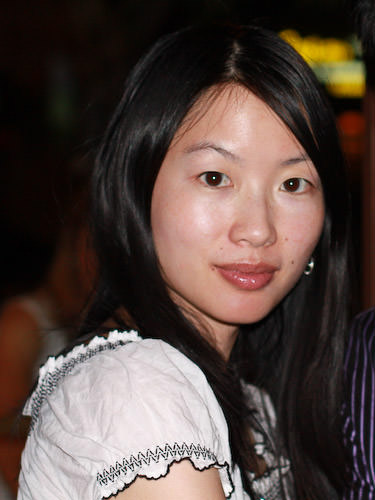
cherry chevapravatdumrongI’m Cherry Chevapravatdumrong. I write for Family Guy and I also write books.

I co-wrote a Family Guy book called [It Takes a Village Idiot and I Married One](http://www.amazon.com/gp/product/B001G8WWOW/ref=as_li_ss_tl?ie=UTF8&camp=1789&creative=390957&creativeASIN=B001G8WWOW&linkCode=as2&tag=johnaugustcom-20) with Alex Borstein. I’ve written two YA novels, [She’s So Money](http://www.amazon.com/gp/product/B005DICQVK/ref=as_li_ss_tl?ie=UTF8&camp=1789&creative=390957&creativeASIN=B005DICQVK&linkCode=as2&tag=johnaugustcom-20) and [DupliKate](http://www.amazon.com/gp/product/B0046LUE50/ref=as_li_ss_tl?ie=UTF8&camp=1789&creative=390957&creativeASIN=B0046LUE50&linkCode=as2&tag=johnaugustcom-20).

I also have a short story in an anthology that’s being published next year by Candlewick. The YA stuff is under the name “Cherry Cheva” which is also where you’ll find me on twitter: [@cherrycheva](http://twitter.com/cherrycheva)

Where and when do you write?
—

workspaceMostly at the Family Guy office, five days a week. It’s a regular day job with fairly regular hours, although on occasion we’ve ended up staying there till super late at night (typical for comedy shows…and I’ve heard of much worse, like staying all night every night, and/or working weekends, so no complaints here). Our staff is huge, so we’re actually rarely all in the same room at the same time (when we are, there’s always a few people sitting on the floor); rather, we usually break into smaller groups and go off to various other offices/conference rooms to work on different sections of the script. Divide and conquer!

When I’m by myself writing a Family Guy script or doing book stuff, I generally do it at home. Not really a café person; occasionally a library person. I’m pretty much a weekend warrior when it comes to non-Family Guy stuff, since it’s nearly impossible for me to motivate to write more after having just spent a whole day at the office doing it. Hell, it’s hard to motivate after spending the whole day doing any job, which meant I was a weekend warrior back in my assistant days as well. I’m definitely not a “get up early and do it before work!” kind of person.

What software do you use?
—

Final Draft for Family Guy scripts and other script stuff, Word for outlines and book stuff.

What hardware do you use?
—

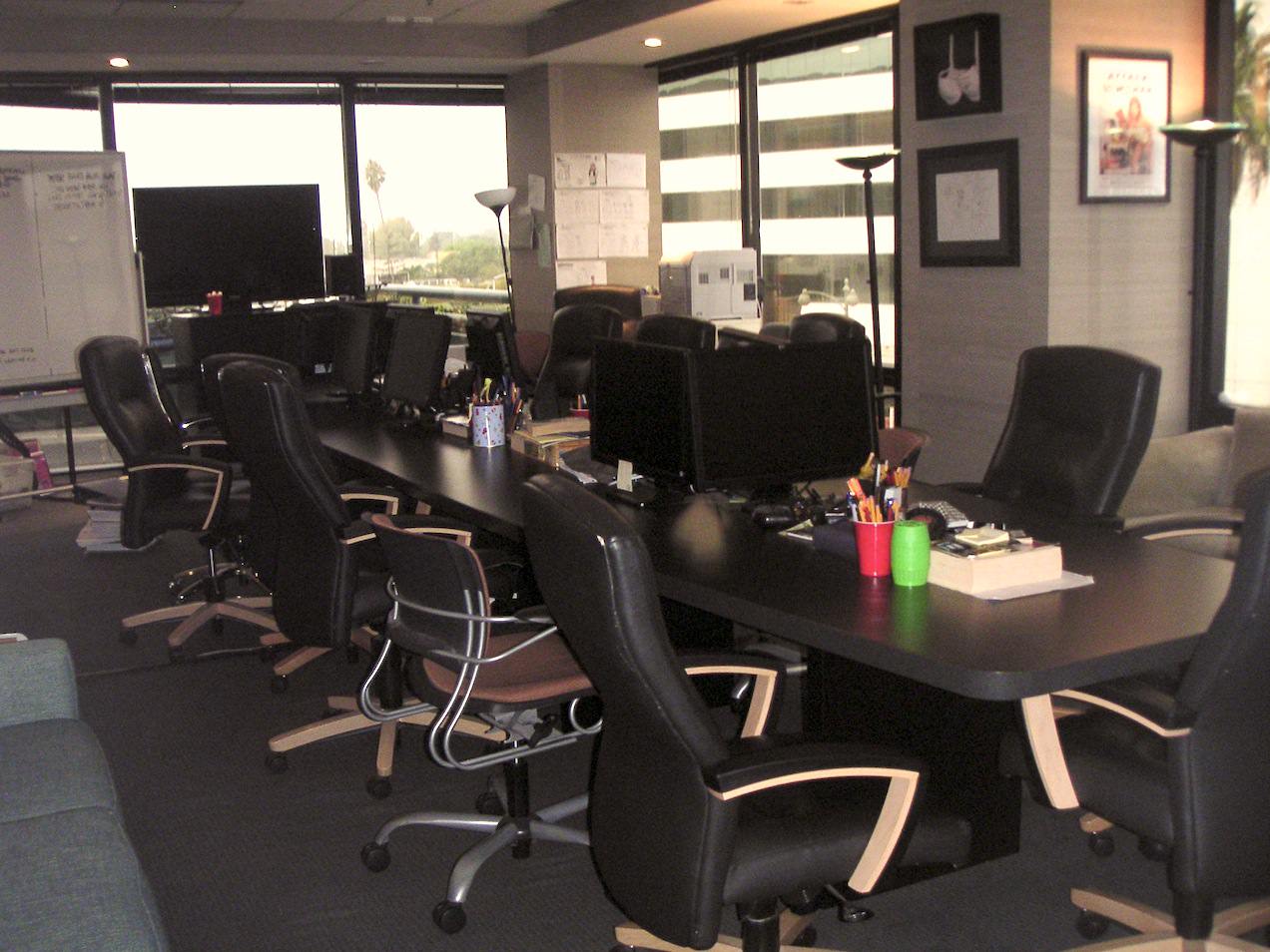
At Family Guy, we’re on Macs, and in the main writers’ room we have a big long conference table that has monitors every few seats, plus a few couches, so that everybody can be looking at the same thing at the same time as the writers’ assistant types.

family guy room

The New York Times [ran a photo](http://www.nytimes.com/slideshow/2012/09/30/magazine/writers-rooms.html#3) that shows what it looks like when we’re all around the table.

There’s also a TV for when we’re rewriting animatics (the rough, black & white early version of an episode that’s basically all the storyboards strung together) or colors (version after it’s been animated), so we can watch it as we go, and we outline stuff on big whiteboards that have wheels so we can move them between all the different rooms as necessary.

People generally handwrite notes on their scripts, so we have many, many containers of pens and pencils all over the table. Like, way more than enough, which is great for when people are doing bits involving throwing them around the room or chucking them at the ceiling.

At home I have a Dell desktop and one of those wavy ergonomic keyboards. I don’t have a laptop, which everyone thinks is insane but is actually fine because on the rare occasion I’m trying to work somewhere that’s not my house, I just bring a pen and legal pad and I’m just jotting down notes or whatever.

I still have the same desk I acquired the first day I moved to LA (I was subletting from this girl who didn’t want her desk anymore so she gave it to me; it’s gigantic so I have lots of surface area to throw stuff everywhere). I also sometimes do that thing of putting up notecards on a corkboard when I’m trying to loosely outline something (one scene or chapter per card, depending on what I’m working on).

What (if anything) would you change?
—

I would write more (and/or procrastinate less)! I’m SO LAZY. I’m fine if there’s an actual deadline, I can totally kick it into high gear then, but if there isn’t one staring me right in the face, yikes. This is probably also a problem with writing at home most of the time…it’s so easy to be like “Oh, there’s the TV.” “Oh, there’s the kitchen where the snacks live.” “Oh wow, what if I turned on some music and had a one-woman dance party for the next hour?”

At Family Guy, of course, it’s different; that’s like an actual office job so you just do it, no problem. There I would just change the available candy to be more often the kinds I like (yeah, look at me, complaining about the free food).

Workspace: Phil Hay

November 23, 2011 Workspace

phil hayWho are you and what do you write?
—-

I’m Phil Hay, a screenwriter. I write (always have) with a partner, [Matt Manfredi](http://www.imdb.com/name/nm0542062/).

At the moment, our film [R.I.P.D.](http://www.imdb.com/title/tt0790736/) is in production in Boston, and we are back and forth from here to there. We wrote, with Adam McKay, an adaptation of the great Ennis/Robertson comic The Boys. McKay is putting that together right now. We’re also working on a quasi-secret movie for Fox and an adaptation of a Japanese movie called Big Man Japan for Sony and Neal Moritz (who is, indisputably, our main man.)

Before all this, we wrote [crazy/beautiful](http://www.imdb.com/title/tt0250224/), [Aeon Flux](http://www.imdb.com/title/tt0402022/), and co-wrote the [Clash of the Titans](http://www.imdb.com/title/tt0800320/) remake, and directed a movie, [Bug](http://www.imdb.com/name/nm0006534/) (2001).

Where and when do you write?
—–

workspaceFrom the beginning, Matt and I have tried to keep to a very regular schedule. We go Monday-Friday, 10-5:30 or 6 in normal times. Obviously, if in production, or when we’re close to a deadline, we can scramble into any hours.

For many years, we worked out of an office lovingly hewn from my garage. Recently, we moved to a place called “The Lot,” in West Hollywood. It looks pretty much exactly as you’d imagine a 1930s studio lot would. It’s mellow, and several of our writer and director friends are here, too, or come here when they are cutting or shooting.

We have one bigger room with two desks and a couch, and one smaller room with the corkboard and a table with chairs around it. We have a mini-fridge with beer in it, acquisition of which was a personal and professional high water mark.

My desk is piled with stuff — scripts, notes, books, scrawls. Matt’s is completely, eerily, annoyingly clean. The desks face the same direction but are angled slightly toward each other so we can talk. We used to sit directly across from each other, but I think we can all agree that that’s a bit much, right?

We’ve both realized that the immediate surroundings don’t affect us all that much. Our HQ used to be the kitchen table in an apartment we shared. At times it’s been a hotel room, a veritable broom closet at Warner Brothers, a spotless, oddly narrow room at Studio Babelsberg in Potsdam, a shivery, cavernous room with dangling electrical wires at Longcross (a tank-proving-ground- turned-studio in England,) a glass fishbowl in Boston that actually, and truly, and deeply, smells of fish.

(An interesting bit about production: during the last couple weeks of preproduction, the editorial department always comes sniffing around your office, measuring, assessing… craving. They will inevitably annex your space and kick you down the hall. 3-for-3 so far.)

But at home, going to our own office every day is a ritual that is very helpful. We always outline together, then we divide scenes and write — sometimes still in the same office, sometimes at home, sending files to each other at the end of the day. When we have the raw scenes down we manufacture a Frankenstein’s monster version, stitch it together, then come back together and work (battle) it through.

What hardware do you use?
—-

I use a previous-generation MacBook Pro, because I always, always pull the trigger on a new computer moments before the new model debuts. Matt uses a MacBook Pro of the current generation, bought two weeks later. I love all office products. I buy a lot of them, but I rarely I end up using them. Little cardboard folders, aluminum boxes (the greatest), envelopes, binders… going to Staples is like going to Toys ‘R Us. But as I said, I can’t figure out what to use them for. I guess what I’m realizing is that I love to store office products. That my true passion is for warehousing.

I truly love pens. I’ve only met one person who loves them more, and that’s [Robert Schwentke](http://www.imdb.com/name/nm0777881/), our friend and the director of R.I.P.D., who turned me on to the greatest pen in the world. Pilot G-TEC-C4. Do yourself a favor.

**Drawing pens.** I scribble and doodle a lot, maybe even obsessively, over all surfaces.

**Notebooks.** I also love notebooks. I’ve had some great composition books from Japan that have weirdly translated slogans on the front: “It must Perfection try to it” or “Information: here fell the NewHand”. I used to use those great hardcover lab books when I was in grad school. Now, I like those orange Rhodia deals that are the size of a pack of cigarettes and can fit in your back pocket.

**Freitag bag.** I got my first in Berlin, where they are very popular. They’re made of old truck tarps and seatbelts. For me, it’s the greatest computer bag in the world.

**A corkboard.** We aren’t big on notecards, but we post a 10-12 page outline sequentially on a corkboard, and kind of check it down as we are writing. We often write out of sequence — our belief is that we should write the stuff that most excites us on any given day, both because it’s more productive for us and it eventually exposes any scene that feels obligatory or dutiful — so this is really helpful. We also put storyboards up here, diagrams of action sequences, things like that.

What software do you use?
—-

[Final Draft](http://www.finaldraft.com). Never occurred to me to use anything else.

Sometimes, [iAnnotate](http://itunes.apple.com/us/app/iannotate-pdf/id363998953?mt=8), which allows you to write on PDF’s on the iPad. It’s the first thing that has come around in a while that feels like a leap forward and has made a dent in my totally locked-down habits. Still, I generally need to print a script out and make notes by hand.

What would you change?
—–

Here’s what I definitely wouldn’t change: having an extremely talented and excellent partner. He’s truly great.

What I would change: I’d write more.

I’d be less snowed under all the time by an avalanche of thoughts and fragments and 100 movies or stories I’d like to write. I’d be more methodical and I’d move on faster. No matter how much we write — and I think objectively we write pretty much — it never feels like enough. That definitely haunts me.

But I bet I have a lot of company in this feeling out there (don’t I?!). So maybe what I’d change is accepting that more. I never stop thinking about stories. Even though I feel I do 90 percent of my own work while walking around doing something else, there’s something very important about having the dedicated physical space and an ironclad ritual about attending to it every day.

Someone once told me that as a writer you’re like the proverbial Newton under the apple tree. Your job is to be there when the apple finally falls. Sometimes that is the job, just being there, putting in the hours, as many as you can. You have to be sitting there so you don’t miss it.

« Previous Page
Next Page »

Primary Sidebar

Newsletter

Inneresting Logo A Quote-Unquote Newsletter about Writing
Read Now

Explore

Projects

  • Aladdin (1)
  • Arlo Finch (27)
  • Big Fish (88)
  • Birdigo (2)
  • Charlie (39)
  • Charlie's Angels (16)
  • Chosen (2)
  • Corpse Bride (9)
  • Dead Projects (18)
  • Frankenweenie (10)
  • Go (29)
  • Karateka (4)
  • Monsterpocalypse (3)
  • One Hit Kill (6)
  • Ops (6)
  • Preacher (2)
  • Prince of Persia (13)
  • Shazam (6)
  • Snake People (6)
  • Tarzan (5)
  • The Nines (118)
  • The Remnants (12)
  • The Variant (22)

Apps

  • Bronson (14)
  • FDX Reader (11)
  • Fountain (32)
  • Highland (74)
  • Less IMDb (4)
  • Weekend Read (64)

Recommended Reading

  • First Person (87)
  • Geek Alert (151)
  • WGA (162)
  • Workspace (19)

Screenwriting Q&A

  • Adaptation (65)
  • Directors (90)
  • Education (49)
  • Film Industry (489)
  • Formatting (128)
  • Genres (89)
  • Glossary (6)
  • Pitches (29)
  • Producers (59)
  • Psych 101 (118)
  • Rights and Copyright (96)
  • So-Called Experts (47)
  • Story and Plot (170)
  • Television (165)
  • Treatments (21)
  • Words on the page (237)
  • Writing Process (177)

More screenwriting Q&A at screenwriting.io

© 2026 John August — All Rights Reserved.