• Skip to primary navigation
  • Skip to main content
  • Skip to primary sidebar

John August

  • Arlo Finch
  • Scriptnotes
  • Library
  • Store
  • About

Search Results for: storyboard

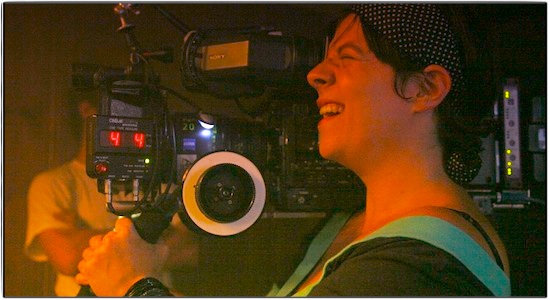
Workspace: Beth Schacter

October 14, 2011 Workspace

beth schacter

Who are you and what do you write?
——-

My name is Beth Schacter. I wrote and directed an indie called [Normal Adolescent Behavior](http://www.imdb.com/title/tt0790721/). My next film is called [A Virgin Mary](http://www.imdb.com/title/tt1874400/) and stars Abigail Breslin.

I’ve written for TV and theater and recently adapted my Popcorn Fiction story “[Break Up 5000](http://www.mulhollandbooks.com/popcornfiction/stories/The_Break_Up_5000_by_Beth_Schacter.html)” for producer Lynda Obst. On Twitter, I’m [@bethshax](http://twitter.com/bethshax) where I rarely tweet about anything professional.

Where and when do you write?
—-

workspaceOur office is downstairs, in a space I share with my husband, Ben, when he is working from his edit bay at home. When he’s not I have the space to myself — which isn’t good when you need to be shamed into concentrating. I have a narrow wooden desk made from reclaimed wood that discourages clutter — in theory.

My work day hopefully starts between 8:30 and 9:30. I get up early and try and get out for at least a 40-minute walk with the dog (for both our sakes) and then eat breakfast because you have to eat breakfast. That whole “most important meal of the day” thing is no joke.

The first thing I do is open whatever I have to work on. I may not touch it for an hour but at least it is there, nagging me, reminding me that it needs attention. I’ll check emails, deal with production things that need to be dealt with and probably spend a little too much time on social networks. You know you are in trouble when people greet you at parties with “I love your Facebook status updates!”

On days when I write in my office I usually play NPR on a volume a little too low for me to actually hear it. I just need a little white noise. I have music sometimes, but for some reason I find music more distracting.

I also leave my phone upstairs and turn on [Freedom](http://macfreedom.com/) as much as I can.

But honestly, when a draft needs to get churned out I need to be anywhere else but in the office. I need to forget the dog, the house, the laundry, the six recipes I’m dying to make.

I usually head to a library (Silverlake is great) for the first couple of drafts and then I’ll lock myself in a hotel room for 24-48 hours, sit on the bed, order inappropriate amounts of room service and gut it out. And usually I have to change locations three or four times a draft; sometimes I write in bed, sometimes on the couch, sometimes in a coffee shop.

If a place has been unproductive I change the place; it’s not superstition, it actually works.

Because I run at least five times a week, a lot of days I have to pack up by 5:30 or so (that’s also when the dog starts his campaigning, an endearing and annoying series of cute maneuvers that includes sighing, laying down dramatically and sighing some more). So my writing day is really 10 to 5.

Once or twice a year we go someplace completely off the grid and work for at least a week. Someplace with no TV, no cell phone reception, no internet. Our favorite place is [Sheep Dung Estates](http://www.sheepdung.com/) in Boonville, CA. Don’t let the name fool you. It’s heaven on earth.

What hardware do you use?
—-

I do all my notes, ideas and brainstorming in graph-ruled composition books. I use black ball point pens because I do…habit I guess.

I shot-list and storyboard in them as well. My shot list/storyboards are pretty sad, but they work for me. I describe the scene and then either sketch the frame for proportion or floor plan the sequence. I tried fancy notebooks but I felt like I was ruining them with mediocre ideas and bad sketches. Cheap quadrilles never judge me.

I have a Mac Mini that absolutely cannot run any sort of game or play movies and a large Dell monitor I inherited when Ben upgraded to HD monitors. I use the standard keyboard and sit in a knock-off Aeron chair.

I use a footstool because I’m super short and my feet don’t exactly touch the ground. And I use a Logitech gamer mouse that has a trackball that I love.

For middle of the night ideas I use my iPhone’s notepad feature. However terrible my text input is on the phone it is far more legible than my scribbles in the dark.

I have a MacBook that I use when I’m not at my office. Don’t tell the MacBook, but he’s getting replaced by an Air later this year.

What software do you use?
—-

I write on [Movie Magic](http://www.screenplay.com/p-29-movie-magic-screenwriter-6.aspx). I hate Final Draft because I don’t know how to use Final Draft. Most times I outline in Movie Magic, syncing everything using [Dropbox](http://dropbox.com). Dropbox is a miracle. I have a redundancy with a 1TB hard drive (LaCie usually) where I dump drafts once every few days.

I also rewrite everything in revision mode. Once you get used to the asterisks you really grow to love them.

I am a Post-It note user when I have to do a pitch. I put all the cues for the pitch on Post-Its, stand in front of them and practice while walking around. And then I type it up and drive around practicing. My carbon footprint for pitching is relatively big.

I used to use [Scrivener](http://www.literatureandlatte.com/scrivener.php), but I found it was too easy to spend my time resizing cards and reformatting the outline, so low tech is the way I go. Also I like to write inside my outline document, re-dating it every day, so that I can keep the first draft as loose as possible. I take notes inside drafts as well.

My one complaint about Movie Magic is that it doesn’t have a graveyard function, or at least I can’t figure it out. I send a lot of stuff to a graveyard using TITLEMOVIE_GYARD but that’s cut and paste and I’d like to be able to reference it — it’s an editing habit that I wish was more easily translatable to screenwriting software. I suppose I could drag and drop the scenes to the end of the script and tag them a different color, but that feels like way too much work. Plus it will give you a false sense of page-accomplishment.

What would you change?
—

I would turn on [Freedom](http://macfreedom.com/) more. Maybe get a fancier chair.

When we buy a house and move we will probably put together a RAID drive with 2 or 3 TB that we can access over the network, but I’ll still use Dropbox. I’d finally settle on a keyboard upgrade.

I’m amazed by how many different ways there are to work. I know teams that work off of IM, people who only write in public, people who only write in longhand, people who can have the internet on all day. You find what works for you and you stick with it until it stops working. So far this method works, but if it ever stops, I’ll change almost everything.
Scriptnotes Ep. 1: Pitching a take, and the WGA elections — Transcript

September 4, 2011 Scriptnotes Transcript

The original post for this episode can be found [here](http://johnaugust.com/2011/pitching-a-take-and-the-wga-elections).

**JOHN AUGUST:** Hello, welcome. My name is John August.

**CRAIG MAZIN:** And I’m Craig Mazin.

**JOHN:** And this is the inaugural edition of something we’re calling Scriptnotes, which is meant to be a podcast talking about things that screenwriters might be interested in.

**CRAIG:** Yeah.

**JOHN:** What would those be?

**CRAIG:** You know, we can cover craft, the business, the union, psychology.

**JOHN:** Like, work habits, too. Sort of like, how you’d actually get stuff written.

**CRAIG:** Yeah, yeah. And topics for people who are working steadily, people who aren’t working steadily, people who want to work steadily.

**JOHN:** Dig deeping.

**CRAIG:** Dig deeping things? You said “dig deeping.”

**JOHN:** “Dig deeping.”

**CRAIG:** Please don’t edit that out.

**JOHN:** I will leave that, I will leave my misspoken terms right in there, unedited.

But I wanted to start with a question, because I figure, you know, answer some questions would be a good thing. And I answer questions on my site, you’ve answered questions on your site in the past, and when we answer questions on our blog, we’re just giving one opinion, and often, there’s more than one opinion.

So, here’s a question we got from a guy named Andrew. “What are execs looking for from working writers who come in and pitch takes on assignments? I’d love to hear more about this and what strategies are important. Do you pitch problems with the script and then solutions? Do you pitch your own version? And how you’d do it from the beginning as though you’re pitching a new movie? Is it a conversation? What are they looking for?”

**CRAIG:** That is a big question with multiple answers, depending on what the project is and who you’re meeting with, but we can certainly give a general sense of how it goes, I guess.

**JOHN:** Great. So, let’s talk about the kind of meeting and sort of, who sets up this meeting and what conversations you’ve had before you even go into those meetings.

So, usually, if you’re coming in to pitch on assignment, there’s some piece of property that the studio already owns. So, they’ve bought a book, they’ve bought another movie that they want to remake. They’ve bought a script, or someone’s been working on a script and they need, they want someone else to come in and rewrite the script. There’s something to look at.

So, before you even start having a conversation with them, they’ve generally sent over some material, you’ve had a chance to look at it, or at least think about it, if it’s something that’s so abstract, like a board game or remaking, like, a classic movie.

So, there’s some sort of basic conversation, or at least, material that you can, like, push off of.

**CRAIG:** That’s right. And your job, essentially, is to help them improve it. I mean, the only reason that these things exist is because, for one reason or another, and often times, the reason has nothing to do with the merit of the script that has been written.

They’re not happy enough. They aren’t at a place where they look at the screenplay that they have and say, yes, we want to commit however many millions of dollars to actually go into production and make this. So, your job, your primary job, first of all, is to figure out how you would do it in such a way that they might want to make it.

**JOHN:** To me, the crucial first step is envisioning what is the ultimate movie that you would make out of this project? And figuring out, like, what movie would you as a screenwriter want to make? What movie would the studio want to make? Or the other film makers involved? What are they looking to make? And if there’s common ground to be found there, that’s great.

A lot of times, those first meetings are not even, sort of, pitching your take on a story, it’s just trying to come to terms with, like, what is it that we’re trying to make here? For the first Charlie’s Angels, there was a pre-existing script that Ed Sullivan and Ryan Row had written. They had a great opening set piece, and everyone loved that set piece, and then the movie went in a very, very different direction.

So, my first meetings with Drew Barrymore and with the studio really weren’t about the story, it was about the tone. It was about, like, what does this movie feel like? And what I got from Drew, I think our point of overlap was that, it was a comedy where the Angels were very good when they were on the job, and they were total dorks when they were off the job. Because comedy is never about cool people, comedy is about dorks.

And that the ultimate tone I was going for was something weird for an action movie, which was, that you want to me kind of weirdly proud of the girls. And so, you know, it was probably three meetings into the project before we actually started talking about the plot, and, sort of, the kinds of things that would happen in the movie. It was more what it would feel like.

**CRAIG:** Well, that’s exactly, that’s what it sort of comes down to, no matter what the project is. I actually never really approach it and think to myself, I always ask the question, of course, is there any input that you have on the studio side for me as I read this material? And I just sort of want to know that, a priori, OK, we want to make this funnier. We don’t think that this works with, we didn’t think that that works.

I listen to that and I take it to heart, but ultimately, I always feel like, the only way to be successful at this is to hear that, acknowledge it, put it aside, read the material, and then have a reaction. What is the movie that I think, if I were running this studio, what would I want, and how, what would I do?

And in the case you just described, a lot of people will ask, well, what is this, people say the word “take” all the time. What’s your take? What the hell does that mean? It means exactly what you just articulated. A gut feeling about what the movie ought to be and some kernel of thematic value or character value or plot value that you can say, this is the direction you should go.

This is a positive place that we can all move toward. And then, if they say, “no, no, no, it’s not very good,” probably the job’s not for you. But if they like it, now you get to go to the next level.

**JOHN:** And there’s some projects here that come in, you’re going to be the very first person they’ve heard from on the project. So, maybe it was a brand new book they bought and they’re listening to see, like, what people would want to do with the material. A lot of cases, you’re coming in, there’s already some scripts available. They’ve already been through this process for a while. And it’s important to remember that you are fresh eyes on things.

So, one of the very first things I tend to say as I talk to people about a rewrite is to point out all the things that are really, really good. Because they’ve forgotten. I mean, all the things that are new and great to you are old to them. And they only sort of see the problems; they don’t recognize what’s working.

I got to work on Hancock, which was a really good script when it was sent my way. And there were problems, there was stuff that wasn’t working in the third act. But, like, it was really good, so I felt like my first phone calls with them was telling them, “By the way, don’t forget you have a really, really good movie. And I know we need to work on this section, but don’t forget all the stuff that’s working really well.”

**CRAIG:** That’s a good point, because as people go through any working relationship with a writer, there’s this strange invisible commodity that’s entirely separate from the quality of the writing. And that is comfort. And when they lose a sense of comfort with the writer, almost like an insecurity that they’re not sure that the writer is taking them to the promised land, they will start to doubt everything, including choices that the writer has made that are good choices.

And when you’re hired to rewrite a project, I think it’s important to always think that there’s this invisible commodity of comfort that you can offer. Almost a sense of, “Look, I’m here now, and it’s going to be OK, because I’m going to be really honest and really specific about what will work and what won’t work.” And if they have that comfort in you, it’s incumbent upon you to both, as you said, defend the stuff that actually is worth defending, and then be really specific about what should change and how.

**JOHN:** What you’re really describing is trust. And trust is a commodity that sort of builds up over time and it’s one of the reasons why the people who are brought in to rewrite scripts at the last minute tend to be the expensive older writers who’ve been doing this for a while. It’s because they have a track record they can point to, like, “Trust me, I know what needs to get fixed here, and I’m not going to go in a crazy, crazy direction. I’m going to take you to this next step you need to do.”

**CRAIG:** Yes, that’s a great point. And that your focus is on the movie, you are going to be less insistent on defending specific things you’ve written. You’re really writing more towards a movie. So, you’re absolutely right.

The trust factor is huge, but even with that trust factor, even if you have that trust factor, more and more, I think, it used to be, I think, that studios were far more willing to have a simple conversation, have a sense in the room that your impulses and instincts were good for this project. And then hire you to deliver on those.

I think those days have given way, to some extent, to a little bit more of, “Look, we do trust you, but in the end, I have to make a much more rigorous case to the people who control the purse strings that we ought to spend all this money on you. So we need more than just that conversation. We need more than just the instinct. We need to, a little more specific about what is it that you’re going to write.”

**JOHN:** Well, let’s talk about the specifics. Let’s talk about that meeting where you first go in and you sort of lay out your take. To me, those cases are always, it’s a process of reminding and helping people forget. You have to remind them of, sort of, the basic ideas of the project.

So, let’s say it’s a book adaptation. Let’s say it’s not a rewrite, but it’s a book adaptation. You’ll go in, you’ll start talking about the world of the book. You’ll talk about, sort of, what kind of movie it is that you’re trying to make, what things are important about this world that they have to keep in mind.

You’ll talk about the characters, and you’ll talk about the characters in terms of how they function in the movie. And you can’t assume that people are going to remember very specifically what they read in the book. You have to be able to just talk about them as movie characters. So, you’ll set up who your hero is, who the important secondary characters are, no more than two or three or four people, even author mentioning in that. Pitch, just sort of, before you get started.

And then, you’re going to get into the story. And you’re going to tell the story the way the movie wants to tell the story, not the way the book wants to tell the story. And so, once you really start pitching what the movie story is, don’t refer back to the book. Be very straightforward about, “This is what we’re seeing on screen; this is how the movie is moving.”

Along the way, people may interrupt you with questions or want to bring in things from the book and it’s, you should be really happy if people are stopping you during your pitch, because it means they’re listening.

**CRAIG:** Right, and that they’re engaged in what you’re saying. I mean, if you are speaking in a way that engenders zero questions, you’re probably just being boring or wrong. So, that part of the conversation’s essential. And that sounds like a really good approach to how to pitch adapting a book.

When you have a script that’s been written, and maybe it’s the sixth in a line of scripts, the way I like to approach that is to sort of say, look, this idea, we love. We all love. If you didn’t love it, you wouldn’t be looking to spend more money on another writer. Here’s, to me, the sort of, the way I like to approach pitching a rewrite is: hero, what is his problem? I like to cut right, what is the theme of this movie? Why does this movie deserve to exist? What’s the philosophical payload of this thing? And express that clearly.

And then say, that is going to, now I’m going to tell you, that will inform how I approach the rest of this material. The story should, essentially, deliver the goods on behalf of the character in his journey toward understanding this theme in the end.

And then, I kind of try and lay out what I think the beginning is. The first 10 pages are the most important. I like to, I can be really specific about those. I always feel like, if I can’t see the first 10 pages of this movie almost instantly, it’s not for me. And then I try and talk about how this thing should resolve in a way that makes thematic sense and would be satisfying.

In terms of what the journey is, I like to at least give three or four tent poles along the way, not tent pole movies, but tent poles that are holding up the second act. That’s sort of our thematic storytelling sign posts that this character’s going to go through, and why those are important for character and plot.

And if I can get those ideas across, what I’ve offered them, essentially, is a shape of a movie to come. And I think that that, frankly, is more valuable, I think, at least, more valuable than sort of, and then, and then, and then, and then.

**JOHN:** One of the challenging things to learn about pitching an original, or a rewrite, or an adaptation, is figuring out how you talk about your hero’s main storyline and how you fold in all the other important details. How do you deal with all the subplots that are actually going to be important to your movie, but don’t feel like the main story? What I was going to say is, at a certain point, let’s just put a pin in that and let me tell you what was happening with those other characters.

You gather up the subplots into a nice little package that you can cut to and show what happened over there, and then you continue on with your main storyline. Where pitches tend to get really frustrating is when you’re constantly ping-ponging it back and forth between multiple storylines. Even if that’s the way it would really work in the movie, that’s not the way that you can really process it as a pitch.

**CRAIG:** That’s absolutely right. That’s absolutely true.

**JOHN:** One of the things about a pitch for an original, or for a remake, or for some sort of adaptation, think about a movie that you just saw that you loved, and you’re trying to convince your very best friend to go see that movie. What would you say to him? You would talk about the characters, the world, the story, but it wouldn’t be exactly the story as it’s presented in the movie.

It would be an optimized version of it that would be very front-loaded with the cool stuff that happens, and then sort of cuts to the very awesome beats along the way. It’s like a teaser for it. It’s not the whole movie itself.

**CRAIG:** Yeah. And then what you start to run into, look, there’s a practical choice that every professional writer has to make when they’re involved in this process of pitching on a rewrite, or just having to pitch their take, so to speak. And that is how to gauge how much pre-work you’re willing to do before you say “Look, you guys have had enough samples of what it is I would deliver. Buy it, or not.”

And meaning “hire me or not.” That is a very difficult thing to adjust, because frankly, the newer you are in the business, the less trust there is in you, and the more they’re going to want to practically see everything. You might have that first great meeting, and their response is “Terrific. You’re our front-runner, we love your ideas, now you do need to come in and pitch us the ‘and then, and then, and then’ version.”

And it’s hard to avoid that. If you are a little further along, you’re in more demand, you may be able to say “Guys, I’ve done this before. I’ve done it a number of times, so you know I know how to do it. If you like what I have to say here, and you’ve read my other work and you like it, we have enough information for you to make a decision about whether you want to proceed with me or not.”

**JOHN:** That’s absolutely true, and the very first projects I was pitching to try to land the assignment, it was the countless meetings and countless… There was pre-writing, which you’re really not supposed to turn in, but you end up sharing so people can have notes to pitch off of. That’s a whole other complicated conversation, but originally there was a lot of that.

And as I had a bigger track record, I could land assignments without going through all those steps and hoops. In a lot of cases there was already a giant director attached who wanted to hire me, so it became more like “Well, that’s what Tim wants”, and that would answer a lot of their questions. The pendulum swings back and forth, and recently I’ve been up for projects and I really had to, I felt like, exhaustively document what I was going to do in a way that’s frustrating.

You’re not going to ask the top level of director, “Show us your storyboards.”

**CRAIG:** Right.

**JOHN:** So, that can get maddening.

**CRAIG:** It can, and this is an area where they can exert far more control than when it comes to hiring a director, because that is always a prospective thing. You just can’t get the film until you hire the guy. When it comes to pitching out the story, ultimately, again, what it really comes down to is that comfort level. And you have to ask yourself “How much work am I willing to do to engender this comfort?” Knowing that you are essentially betting on yourself, because you may not get that job.

You may sweat a lot and have nothing to show for it, and that, frankly, is the standard operating procedure now, more and more than it used to be. And that can be tough, and I should say also, what’s interesting is, we know inherently as writers that the process of coming up with an outline — a full, scene-by-scene step treatment, whatever you call it — is one creative process. Then there’s this other creative process called writing a screenplay, and I don’t know a single writer who doesn’t veer away from that initial plan when they’re actually writing.

It’s inevitable, so from the studio side, I always feel like saying “You know guys, this is a theory”, but in the end, just like a surgeon who takes a look at a patient and says “I’m pretty sure it’s the following things,” once you cut the guy open, who knows? So, it’s always going to involve them having to make a leap of faith, and I think that they try to mitigate that a little bit by demanding more and more work ahead of time.

I’m not sure that there’s anything of greater value than hiring somebody who has a track record, knows what they’re doing, has achieved in the past, and gives you a presentation that you think would make a great movie. At its heart, not necessarily scene by scene, but at its heart. So we don’t always have the choice to just do that short little bullet point presentation, but every now and then somebody goes with their gut and hires you just on that conversation.

**JOHN:** I’ll also say that early on in my writing career, I was pitching on a lot of projects that I didn’t get, and that’s par for the course. My friends Chad and Dara, the Creaseys, they’re pitching on things probably every week. I was like “Oh, that must be so exhausting,” but that’s also incredibly good practice.

**CRAIG:** Huge.

**JOHN:** I have these folders and folders of pitches that I’ve written for myself on projects that I didn’t get. I was going to write the Highlander sequel, and this is my take on the Highlander sequel, and this is really good practice because maybe I spent three days figuring out what this was going to be. It’s a movie I’m never going to write, but I did my Highlander, and I got that out of my system to a degree, and I figured out what kind of sword action movie I would want to do.

It’s not the same as writing, it’s not the same as actually sitting down and writing 120 pages of script. It’s very much a part of the career process of a screenwriter, so it’s not just good practice, but it’s actually part of the craft.

**CRAIG:** Without a doubt.

Well, I hope that answered his question.

**JOHN:** Yeah, I think that was a good start there.

Now, we’re not going to be a generally very news-following kind of podcast, I wouldn’t guess. There’s not going to be a lot of timely news that happens in the world of screenwriting, but we do have something timely happening now, which is that we have the WGA elections coming up.

**CRAIG:** Yeah, there’s an election every year, but every other year there’s an election for officers. So every two years, the Writers Guild elects a President, Vice President, Secretary-Treasurer, and then also eight directors. There are sixteen directors on the board, eight of them are up for election each year. But every two years, there is what we think of as the “big election,” where we’re voting for the leader and we’re saying, “For the next two years, this is who we’re following, and this is who is going to set the agenda for the guild.”

**JOHN:** Now, Craig, were you on the board of directors at some point?

**CRAIG:** Yeah, I ran and was elected in 2004, so I served from 2004 to 2006. I opted to not run again [laughs], in large part because it was very frustrating exercise for me. Although I did get quite a bit done while I was there, and I was very proud of that, but I do have experience as a director on the board of directors and I still chair a committee, so I’m still involved.

**JOHN:** So, talk to us about the board of directors and how when they’re meeting, what their focus is during a non, leading up to a contract.

**CRAIG:** Sure. Almost everything is leading up to a contract in a weird way. Our contracts run three years, so you spend most of those three years getting ready for the next one. It’s an endless, exhausting Sisyphean thing. The board of directors of a union is essentially the governing body of this organization. Unions are Federally chartered organizations; they are created, authorized and have to be responsible to Federal law.

And the board of directors are elected by the membership at large. If you are eligible to vote, and there are certain…you have to occasionally work. You can’t just sell one thing or work once, then expect to vote for the rest of your life. SAG you can, actually, but not in the Writers Guild. And the sixteen members of the board along with the three officers meet once a month, and there’s usually this eight hour marathon awful meeting where you go through all of the issues that the union requires the board to decide.

I mean, the board sets policy for the union. The rest of the month, the staff, led by the executive director, essentially runs the day to day affairs of the union. But the big decisions, what do we want out of negotiations, what should our negotiating stance be, how should we handle the budget, these sort of big questions, that’s the board. Once a month.

**JOHN:** And now, in your experience, is the board leading those discussions, or is it really the President steering those discussions, or does it change based on the personalities involved?

**CRAIG:** Excellent question. The President, the officers set the agenda for each board meeting. So halfway through the month, the officers get on the phone, and they set an agenda. And the board follows that agenda with the proviso that any board member, given enough time, can either introduce an agenda item that can be approved by the officers, or raise new business. New business gets shunted to the end of the meeting, it almost never happens.

If you want to do something as an individual board member, you need to talk to the officers way ahead of time and make sure it gets on the agenda. In practice, the way the union actually runs is this. The Executive Director and the President talk about what they want and what they need to decide at each board meeting, and that’s the agenda.

**JOHN:** OK. So, in looking at the candidates for board of directors, for example, some of these people have very lengthy things like “These are the priorities we need to focus on,” some of them basically have their name and a headshot. How much of an agenda can a candidate list in their goals for the board of directors? How much of that, in your opinion, is really achievable as a director spot?

**CRAIG:** I would love to give you the idealistic answer and say all sorts of achievement is possible, but here’s the truth: you are there as part of a general move towards a general goal, and the general goal for the union is really set by the President. The President and the Executive working together — hopefully working together, it doesn’t always work that way — is going to set a series of priorities for the union. You can, on your own, try and push something through.

If the President isn’t really interested, typically the political realities are that a lot of people on the board have run alongside that President, were supported by that President, were brought into guild politics by that President. They’re simply not going to be interested unless the President is. The President is an extraordinarily powerful position in our union.

They set the tone, and it would behoove you to be on the board with either a President that you support fully, or a President that you don’t support but then there are other allies you have on the board and so you can articulate the loyal opposition. I somehow managed to do both, two years. 2004 I was backing the President, 2005 I was loyal opposition.

**JOHN:** So, some of what the WGA board is focusing on are the external issues of the contract negotiations, how we deal with the studios, things like late payments, the things that effect all writers and are an external focus. Other stuff is the more internal things, like I know you’re on the Credits Committee right now?

**CRAIG:** Right, yeah, I co-chair the Credits Review Committee, which is the committee that tries to improve the rules of the credits process.

**JOHN:** OK. So, looking at the board of directors and at the candidate statements, who are the people who stood out to you, and who are you most excited about being on the board this next year, if you want to name names?

**CRAIG:** Sure. If we have two parties in the union, and these things are very fuzzy, it’s not like Democrat and Republican, I tend towards the pragmatic. I’m less interested in ideology and philosophy and far more interested in money; in the union getting as much money for its members as possible through compensation, residuals, pension and health. So, I always look for the most pragmatic candidates.

In particular, if I had one issue that I like to zero in on, it’s enforcement. Our union tends to get very big and flowery about what we ought to have in our contract. We don’t do a particularly good job of actually getting the things that are in the contract. So we will occasionally strike and bang a loud drum to get a better residuals formula, while we’re doing that, the actual residuals formula that we have, sometimes people just don’t pay.

And the Kafkaesque nightmare that ensues in trying to enforce those terms is incredibly frustrating and alienating for any writer that has the misfortune to go through it. So, I like to concentrate on pragmatic, practical candidates who have an eye on enforcement above all. At the present level, that’s Chris Keyser, who I think is a terrific candidate. He created Party of Five, I believe, so he’s been around for quite some time, worked in screen and television, which is important because we’re kind of weird.

Our union, screenwriters and television writers are rather different kinds of careers, but we’re in it together. So he’s done both, he’s a Harvard Lawyer, as is Patric Verone. So we have two Harvard lawyers running against each other, so they both have the business and real world background, and also Chris, who’s on the board of directors, has been sitting on the board of trustees in the pension health fund for many years, which to me is a big, big deal. That, to me, is sort of the most protectable and important thing that we have as a union. So I’m a big fan of Chris Keyser for President.

Vice President is Howard Rodman against John Aboud. I love John and I love Howard, they’re both great guys. I think that Howard is certainly far more militant and ideological than I am, but he’s a good man and a mensch and he listens, so I think we’d be fine with either one of those guys.

Secretary Treasurer’s a great one, it’s David Weiss, who’s way off in firebrand territory. David loves a good strike. And on the other side we have Carl Gotlieb, the legend.

**JOHN:** Carl Gotlieb, who wrote Jaws?

**CRAIG:** And The Jerk.

**JOHN:** And The Jerk. He was President at some point, wasn’t he?

**CRAIG:** No, he’s never been President. Carl’s never been President, but he’s been on the board, and he’s served as an officer many, many times. He has a tremendous amount of institutional knowledge, which I think is invaluable. There’s no doubt that you need fresh blood and new ideas. The union is particularly susceptible to crusting over and just maintaining status quo, and so you need new people coming in all the time.

The danger, sometimes, as we wipe out so many of the old guard, is that nobody seems to remember. Nobody can say “Oh you know what? We tried. We went down that path twelve years ago, it was a disaster. Don’t try that again.” So, it’s great to have guys like Carl around. Carl has fought many, many times. He spent more time on a picket line than you and I and ten of our friends put together. So I’m a big fan of Carl’s.

On the board end of things, Jeff Lowell is a very strong voice for enforcement. Ian Deitchman, who’s an incumbent, also a very strong voice for enforcement, and Ian was sort of a hero of the strike. He helped run the United Hollywood site along with John Aboud.

**JOHN:** I turn to Ian a lot for insight to things happening inside the guild, because I’ve always found him to be very knowledgeable about why people were saying what they were saying, and what the reality was on the ground. So, that’s one of the reasons why I singled him out in my endorsements.

**CRAIG:** Yeah, Ian, he serves a role that I tried to serve when I was on the board, and that is the member of the board that actually talks to writers. Because most of them don’t, they only talk to each other. A lot of times, I would find myself in this discussion with sixteen people, none of whom had actually spoken to anybody. They just talked to each other and convinced each other what’s best.

Ian actually talks to writers a lot, and so he’s always been open to listening, which is a nice thing. David Goyer is a very accomplished screenwriter, who I think has a terrific attitude. I’m a big believer that it’s best to get people on the board who are feet on the ground right now, who still have a lot of skin in the game and who aren’t afraid to fight for what they have now.

There’s a little bit of a fear that sometimes you have guys who cashed out, they’re done. It’s a lot easier to send other people into battle if there’s no chance you’re going to get hit with a bullet. I like Goyer a lot.

**JOHN:** Yeah, Goyer strikes me as, when I first saw his name there, it’s the kind of name you would expect to see on the negotiating committee, because they tend to bring in the brand names for the negotiating committee so they can sit opposite the studio heads when they do negotiations. But the fact that he was eager to participate in the very, I don’t want to say boring, but the much more day-to-day stuff of the board was interesting to me.

**CRAIG:** Yeah, same with Billy Ray. Billy Ray and David Goyer both have something that I love, which is a… First of all, like so many of us, they are dual members. They’re members of the DGA and the Writer’s Guild, so they’re able to keep their ear to the ground with the directors. You have to remember, the Directors Guild has always negotiated very, very early, but one of the downside results of our previous strike was that we lost our position, our negotiating position.

We used to go first, now we go last. The Directors Guild would try and sneak in ahead of us by negotiating super-duper early. Now, they are actually; I mean technically, I think they may still be after us; but they negotiate so early that they effectively will be the union of first negotiation for the companies. Because of that, we have to talk to them. We don’t have to like the way they go about their business, but we have to talk to them.

One of the issues with Patrick Varrone is that he is loathed by the DGA. I think it’s common knowledge, really. He’s had just a bad time dealing with them. It would be great to get a President who they were a little less antipathetic toward, and guys like Billy and Goyer, I think, will help. I can’t promise that anybody is gonna completely thaw the ice between these two unions, but maybe bring the temperature down a little bit would be nice.

**JOHN:** Yeah, there’s certainly a track record of shared membership between our two guilds, and the degree to which you can leverage that shared membership is only a good thing.

**CRAIG:** Yeah, and it’s a big number too. I can’t remember what the specific stat was, but it was kind of eye opening. Like thirty percent of our members have overlapping affiliations with the guild. It was a lot of writers. A lot.

**JOHN:** I think my endorsements were very much in line with some of the things that people like you singled out as well. For the board of directors, I only mentioned people that I knew personally, who I thought would be fantastic resources on the board, but Howard Rodman I also singled out. Howard, who in addition to being very involved with the guild in every level, is really focusing on bringing guild contract to indies, to independent films, which I think is crucial.

I get frustrated when I see the WGA spending a lot of time and energy trying to organize reality TV production as a sort of strategic goal. It’s not really what the WGA is about. The WGA is about writing film and television, and the film and television that we’re really known for is dramatic dramas and comedies, and that’s indie film. Our next generation of Hollywood writers comes from indie films.

So we’re trying to get them involved as early as possible, and trying to get them protect as early as possible, it feels like a crucial goal.

**CRAIG:** Yeah. I mean, let’s be honest about this reality organizing thing. The impetus to organize reality was always artificial. The intent was to organize reality television to improve our ability to strike. That was entirely what that was about, to the point where I think actually the Barone administration failed to organize reality where they might have been able to, in an incremental basis, because they didn’t care about increments.

What they wanted to say was “When it comes time to strike, all TV goes away. Not just scripted programming, but reality programming.” The problem with that is the companies aren’t dumb. [laughs] They certainly saw the intent there, and they are also hamstrung by certain realities that we can’t avoid. Like, for instance, the fact that a lot of people who work in reality are already represented by IATSE, the stagecraft union which represent all the editors, for instance.

And we tried to organize the editors in a way that, frankly, the companies didn’t even have to bother rebutting that one because there was another union saying that it would be a violation of Federal Labor Law. And it would, it would be as if the Screen Actors Guild suddenly decided to try to represent writers. You can’t do it. The great news is that Howard is exactly, his focus on independent film is exactly the right goal.

Similarly, I think trying to organize scripted cable television. That was the thing where I would sit there and go “What are we doing?” We’re trying to organize the writers on America’s Next Top Model, and maybe even trying to organize the editors, possibly. We have people writing scripted television for cable channels that are owned by the same companies that make the movies you and I write, and we are literally just ignoring them because somehow we don’t think they’re going to bolster our strike threat.

It was just a dumb, dumb time in our union, and counterproductive and bizarre, but Howard’s always been a great beacon of hope for independent film writers and a great guy.

**JOHN:** OK. That’s a half hour. That’s I feel like a good start for our inaugural broadcast. I think I’ve learned a fair amount here.

**CRAIG:** I think I have as well. I didn’t know how Charlie’s Angels came to be, so I feel educated as well.

**JOHN:** Absolutely. So, let’s try this again.

**CRAIG:** Yeah, we’re going to do this fairly regularly, I think.

**JOHN:** That is the hope.

**CRAIG:** That is the hope. And this way I don’t have to blog anymore.

**JOHN:** I know. This is all to save Craig from typing.

**CRAIG:** Really. Thank you. That’s all I can say, is thank you.

**JOHN:** And thank you Craig, and we’ll get this up and see how it goes.

**CRAIG:** See you guys on the podcast.

**JOHN:** Great. Thanks Craig. Bye.

How screenwriters will use the iPad

January 28, 2010 Geek Alert

A few thoughts on Apple’s new tablet, and how we’ll be using it in a few months.

1. **It should be terrific for reading scripts.** Right now, the big Kindle DX does a credible job with screenplays. It’s $489. The iPad is only $10 more, and can handle mail, web, video and a lot more. A few weeks ago, I wrote about reading scripts on [laptops turned sideways](http://johnaugust.com/archives/2009/read-scripts-book-styl). The iPad is the elegant version of this solution.

2. While you probably won’t *write* write a screenplay on it, you could **easily make minor changes to a script** right on the iPad. If Pages and Numbers can run on the iPad, a credible screenwriting app should be possible. (There’s already a poky one for the iPhone that can handle Final Draft files.)

3. **It will be useful for pitches.** A few weeks ago, I was in a meeting and wanted to show the team what I envisioned for a specific monster. I passed around my iPhone. An iPad would have been ideal.

4. The touch screen feels ripe for an **index card/outlining application.** Virtual corkboard, virtual cards. Go.

5. One TV show will use it **on-camera by the end of the season.** I suspect it will be one of the CBS crime procedurals. We’ll notice it the first few times it shows up, then it will become commonplace, the way TV characters are always on iPhones.

6. While it’s never going to have the detail of a Wacom tablet, I can envision a lot of **storyboarding and shot-planning** happening on the iPad. A touch interface is a very natural way to approach angles and spatial composition.

7. **Scaling up blows.** While you *can* run any iPhone app on the iPad, things with text look pretty crappy. Most developers will want to do a new version for the iPad.

8. **Comic books.** They’re going to look great on it. Marvel and DC need to offer subscriptions and all-you-can-eat plans. (Update: Marvel [already does](http://marvel.com/digital_comics/unlimited/).)

9. I don’t know that the iPad is going to save print media in general, but many **film-focussed magazines** would probably work as well or better in this format. Right now, I read [DV Magazine](http://www.nxtbook.com/nxtbooks/newbay/dv0210/) in its online, Flash-based form, and it’s a surprisingly good experience.

10. **There’s still room for the Kindle.** The Kindle’s e-ink screen is great for reading traditional, linear books. Amazon’s selection for the Kindle is great, and the fact that they already make a good Kindle reader app for the iPhone means they’ll be able to bring that selection through to the iPad. I like that there’s going to be competition right from the start.

11. **”Fine, but I’ll wait for version 2.0.”** That’s great. I’ll enjoy using version 1.0 for a year, then get the new model when it comes out. Particularly since you don’t have to buy it with a wireless contract, there’s no penalty for upgrading.

The Nines on DVD

January 29, 2008 Projects, The Nines

In North America, The Nines is [now available on DVD](http://www.amazon.com/gp/redirect.html?ie=UTF8&location=http%3A%2F%2Fwww.amazon.com%2FNines-Ryan-Reynolds%2Fdp%2FB000YW8RN6%3Fie%3DUTF8%26s%3Ddvd%26qid%3D1198301424%26sr%3D8-1&tag=johnaugustcom-20). So I thought I’d explain what’s on the disc and why, and the process behind it.

The cover art
—-

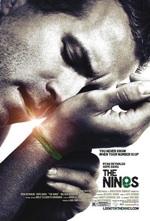
nines one-sheetThe [original one-sheet](http://johnaugust.com/archives/2007/the-one-sheet) for the movie featured Ryan Reynolds tying the green string around his wrist. Even as we were preparing for the theatrical release, we encountered resistance from Sony’s home video marketing folks, who worried that viewers might think the movie was in black-and-white. ((It’s tempting to mock corporate idiocy, but I strongly suspect their opinion comes from some hard data. For example: There are people who refuse to buy wide-screen editions of movies because those black bars aren’t using the full TV screen, and they want to get their money’s worth, dagnabit.)) Since I preferred this one-sheet to all other candidates, I told Sony that we could revisit the issue when it came time for the DVD. ((Also, one of my representatives gently reminded someone at Sony that I’d made a billion dollars for their company. That probably helped.))
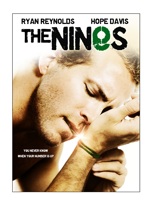
Once theatrical was finished, I was happy to have the conversation with the marketing folks. It kept coming back to the Wal-Mart factor: where would you physically put The Nines on the shelf? Is it in the thrillers, or the comedies, or the dramas?

A movie playing in a theatre can be several genres at once; a ticket buys you the experience of seeing the film, which you’ve presumably sought out based on advertising and publicity. But a DVD is a bunch of atoms that can only be in one place at a time. The box is either going to be in “thrillers” or “comedies.” And if you’re going to put it in thrillers, it needs to look like a thriller. If comedy, it has to look funny.

So while we’re not a typical thriller, that was the closest available category. The string-tying poster didn’t really work as that, and there were other problems:

* For DVDs, the title needs to be near the top. Think about seeing the box on the shelf, or flipping through them in a collection.

* You want space for blurbs and pull-quotes.

* You want the image to make sense at very small sizes, such as Amazon’s “you might also like” section.

* You can’t have a black-and-white (or nearly b&w) photo. That was an absolute from Sony, so more color would have to be added back.

nines mock dvdWith these requirements, adaptations of the original one-sheet came back pretty unsatisfactory. In order to put the title on top, we had to go a little wider on the photo, which took a lot of the mystery out of it. The extra color softened it too much, and it certainly didn’t look like a thriller. If anything, it looked to be kin to that Hillary Swank/Gerard Butler movie about micro-managing from beyond the grave.

faint ninesPunting, we looked at some of the other poster contenders. This one had been discussed and dismissed pretty early on, but the 9 background would certainly hold up to major shrinkage, and Ryan’s expression did say, “unsettling thriller.” Plus, there was plenty of room for blurbage. With considerable changes to color scheme and logotype, we ended up at the final DVD artwork.
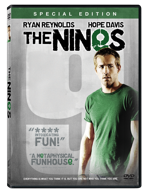
nines DVDI don’t love it, but I accept it as a reasonable alternative given the constraints. Sony was actually really good to work with throughout the process, including me in decisions beyond the contractual obligations. Other than Big Fish, I haven’t been enthralled with any of the posters or key art for my movies, but I don’t know that it’s reasonable to expect a director — who spent two-plus years of his life making a film — to be content seeing it distilled down to one vertical rectangle.

What’s inside
—-

While there were a lot of challenges and restrictions about what could be on the box, there was a lot more latitude about what could be inside. Sony hired a company called Blue Collar to produce the DVD menus, features and bonus content. There was a fixed budget, but beyond having to include a block of Sony trailers, we were free to do pretty much anything.

I’d already been working with Blue Collar before selling the movie at Sundance — Doc Crotzer from the company had been editing our behind-the-scenes footage for months — so by the time I met with Mark Rowen, Sarah Elbert and Erin Brett, they knew the movie inside-out. They were determined to make a disc that invited re-watching.

The movie itself is 99 minutes, which left a reasonable amount of space. But there was a lot I wanted to cram in.

Ryan Reynolds and I had already recorded one [commentary for the theatrical run](http://johnaugust.com/archives/2007/the-nines-audio-commentary), but I wanted a second one with Melissa McCarthy and editor Doug Crise. I wanted to include the short film God that Melissa and I made in 1998. I wanted storyboards. Script. Deleted scenes. A version of the floating words animation that was on the original [Look For The Nines](http://lookforthenines.com) site.

We also had a ton of behind-the-scenes footage. We had video running throughout production, so the challenge was cutting it into a shape that actually told a story, and wasn’t a self-congratulatory wank.

Plus I wanted Easter Eggs. Including more koalas.

Surprisingly, we got it all in. One of the features I’m happiest about is the script-storyboard-screen feature, which simultaneously shows the opening sequence through every stage.

The disc is labelled “Special Edition,” but make no mistake, it’s on the only edition. Six months or six years from now, there won’t be a director’s cut, or an extended edition, or a version that’s almost exactly identical except for one maddening change. There could conceivably be a Blu-ray version, but there’s nothing planned. So don’t wait for it.

I’m including a link to [Amazon](http://www.amazon.com/gp/redirect.html?ie=UTF8&location=http%3A%2F%2Fwww.amazon.com%2FNines-Ryan-Reynolds%2Fdp%2FB000YW8RN6%3Fie%3DUTF8%26s%3Ddvd%26qid%3D1198301424%26sr%3D8-1&tag=johnaugustcom-20), but of course it’s available in retail stores and rental shops just about everywhere in the U.S., and also on [Netflix](http://www.netflix.com/Movie/The_Nines/70066350?trkid=189530&strkid=535044068_0_0). If you have questions on the DVD (versus the movie itself), the comment section on this post is good place to ask.

« Previous Page
Next Page »

Primary Sidebar

Newsletter

Inneresting Logo A Quote-Unquote Newsletter about Writing
Read Now

Explore

Projects

  • Aladdin (1)
  • Arlo Finch (27)
  • Big Fish (88)
  • Birdigo (2)
  • Charlie (39)
  • Charlie's Angels (16)
  • Chosen (2)
  • Corpse Bride (9)
  • Dead Projects (18)
  • Frankenweenie (10)
  • Go (29)
  • Karateka (4)
  • Monsterpocalypse (3)
  • One Hit Kill (6)
  • Ops (6)
  • Preacher (2)
  • Prince of Persia (13)
  • Shazam (6)
  • Snake People (6)
  • Tarzan (5)
  • The Nines (118)
  • The Remnants (12)
  • The Variant (22)

Apps

  • Bronson (14)
  • FDX Reader (11)
  • Fountain (32)
  • Highland (74)
  • Less IMDb (4)
  • Weekend Read (64)

Recommended Reading

  • First Person (87)
  • Geek Alert (151)
  • WGA (162)
  • Workspace (19)

Screenwriting Q&A

  • Adaptation (65)
  • Directors (90)
  • Education (49)
  • Film Industry (489)
  • Formatting (128)
  • Genres (89)
  • Glossary (6)
  • Pitches (29)
  • Producers (59)
  • Psych 101 (118)
  • Rights and Copyright (96)
  • So-Called Experts (47)
  • Story and Plot (170)
  • Television (165)
  • Treatments (21)
  • Words on the page (237)
  • Writing Process (177)

More screenwriting Q&A at screenwriting.io

© 2026 John August — All Rights Reserved.