• Skip to primary navigation
  • Skip to main content
  • Skip to primary sidebar

John August

  • Arlo Finch
  • Scriptnotes
  • Library
  • Store
  • About

QandA

Fight the Giant, or Moving Up the Showdown

July 10, 2015 Story and Plot, Writer Emergency, Writer Emergency Pack

In most stories built around a heroic quest, the big confrontation comes at the end. The heroes face off against their well-established nemesis, and likely prevail. After that, there’s a little time left for wrap-up and rebuilding.

This is the common pattern for most feature films, with a battle or competition happening in the third act.

But it’s not just movies. In novels, the showdown generally happens in one of the final chapters. In series television, the quest to defeat the Big Bad might span a whole season, but the main event comes in the finale. In videogames, this stage even has a name: The Boss Level. The player finally has the skills and hit points to kill Diablo.

Whenever you see such a clear narrative pattern, there’s a great opportunity to subvert it.

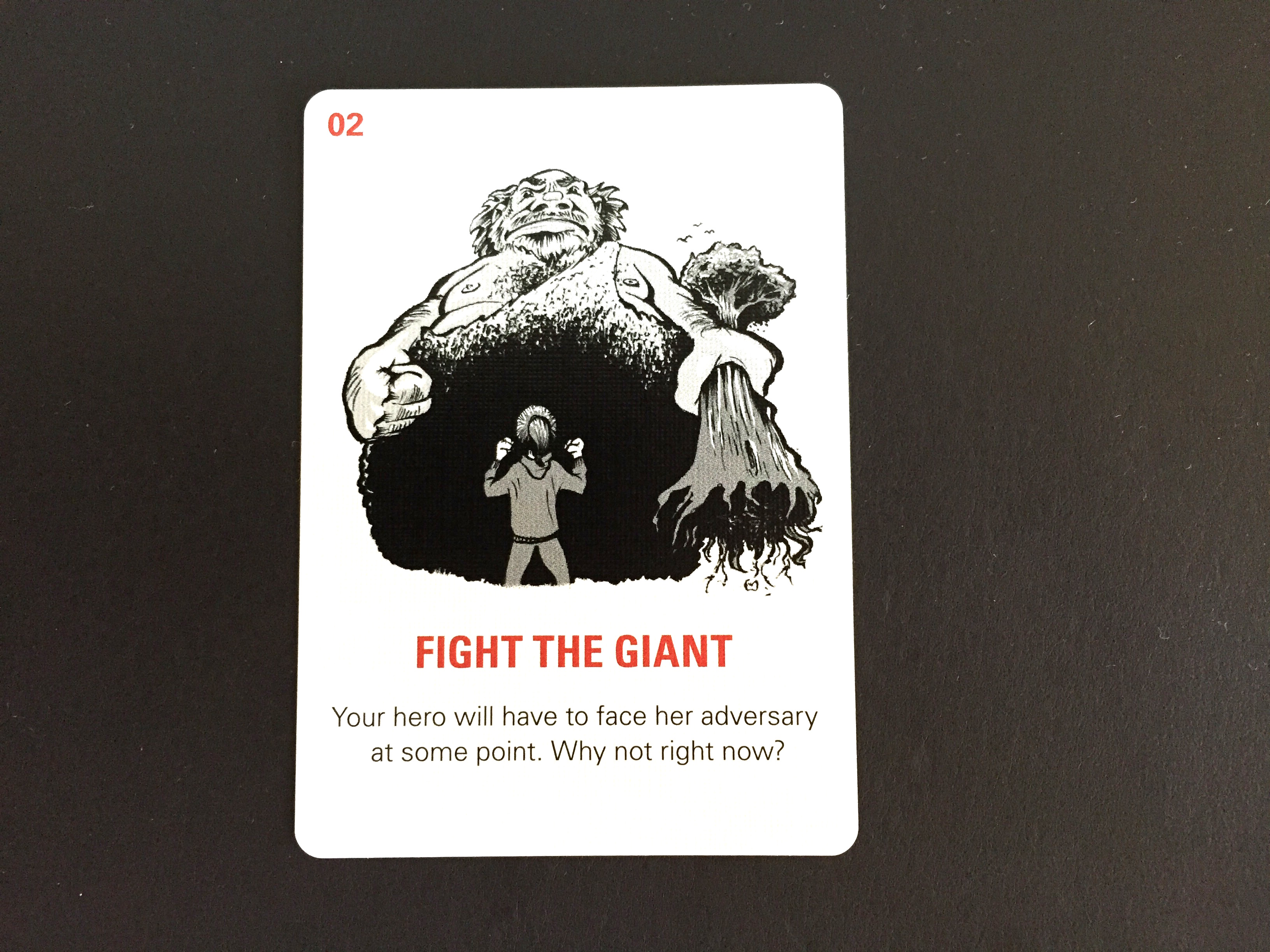
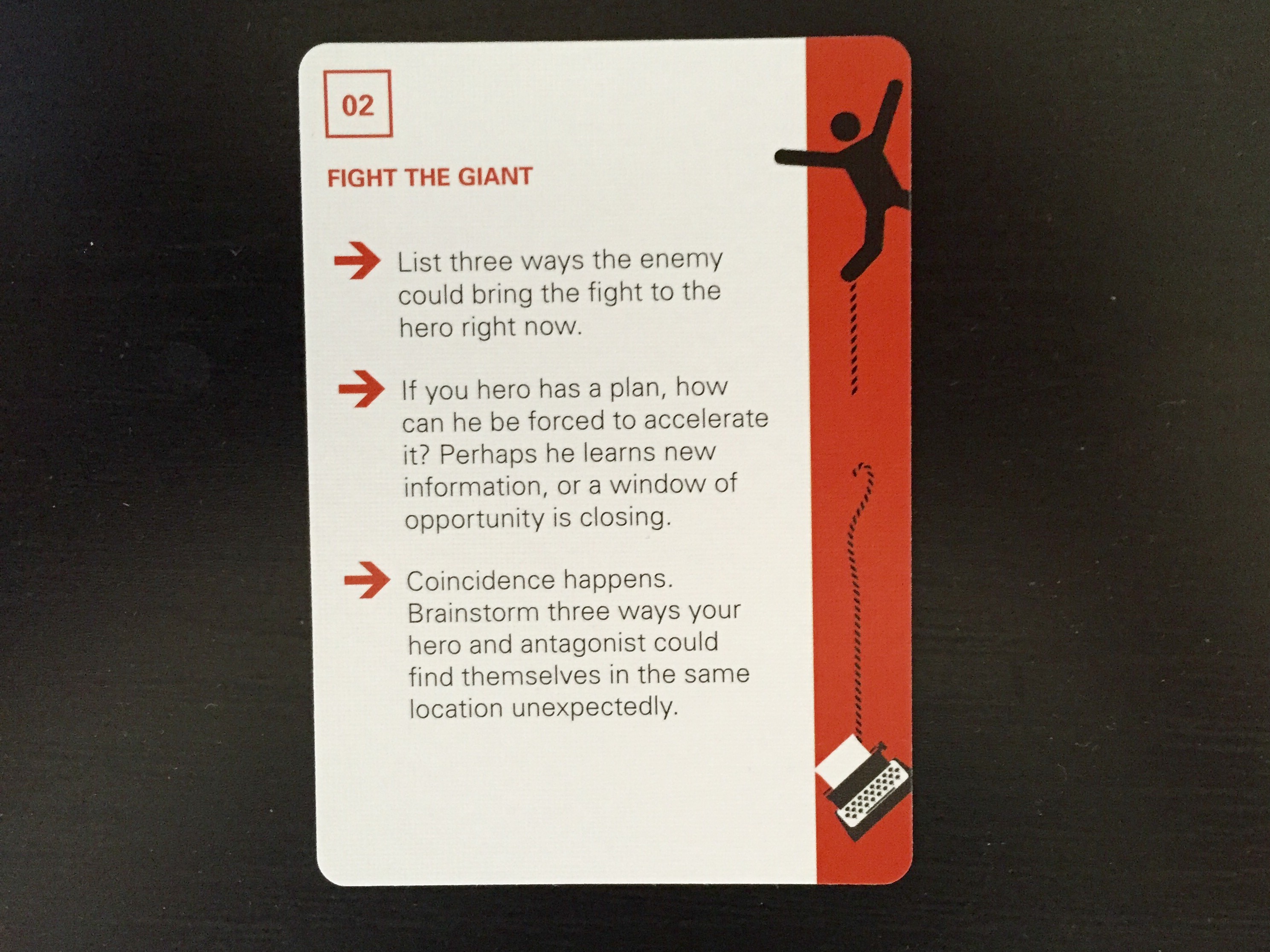
card

Moving the fight earlier can take both your reader and your hero by surprise.

card

There are three basic structures for getting the fight to happen earlier than expected.

The hero rushes in. Perhaps the hero gets a tip that the villain is momentarily exposed. She is forced to make a decision: go in fast or wait for the next opportunity. She decides to strike now, for better or worse. Without the benefit of time and planning, she is forced to improvise.

The villain surprises the hero. Rather than wait for the hero to show up, smart villains often attack first. In Harry Potter and the Goblet of Fire, J.K. Rowling lets Voldemort trap Harry so he can battle him face-to-face, breaking the expectation that the showdown would only happen at the very end. In the real world, the Japanese attack on Pearl Harbor is an example of the enemy changing the narrative with a surprise attack.

Fate intervenes. Some outside force — the boxing commission, an avalanche, pure coincidence — puts the hero and the villain in the same space when neither was quite ready for it.

However your hero and villain end up battling, the outcome should have a huge impact on the rest of your story.

Letting the giant score an early victory helps in several ways:

  1. You’ve established what a powerful threat the villain is.
  2. You’ve knocked your hero down. Almost anything that’s bad for your hero is good for your story.
  3. You’ve warned the reader not to assume your story will follow conventional patterns.

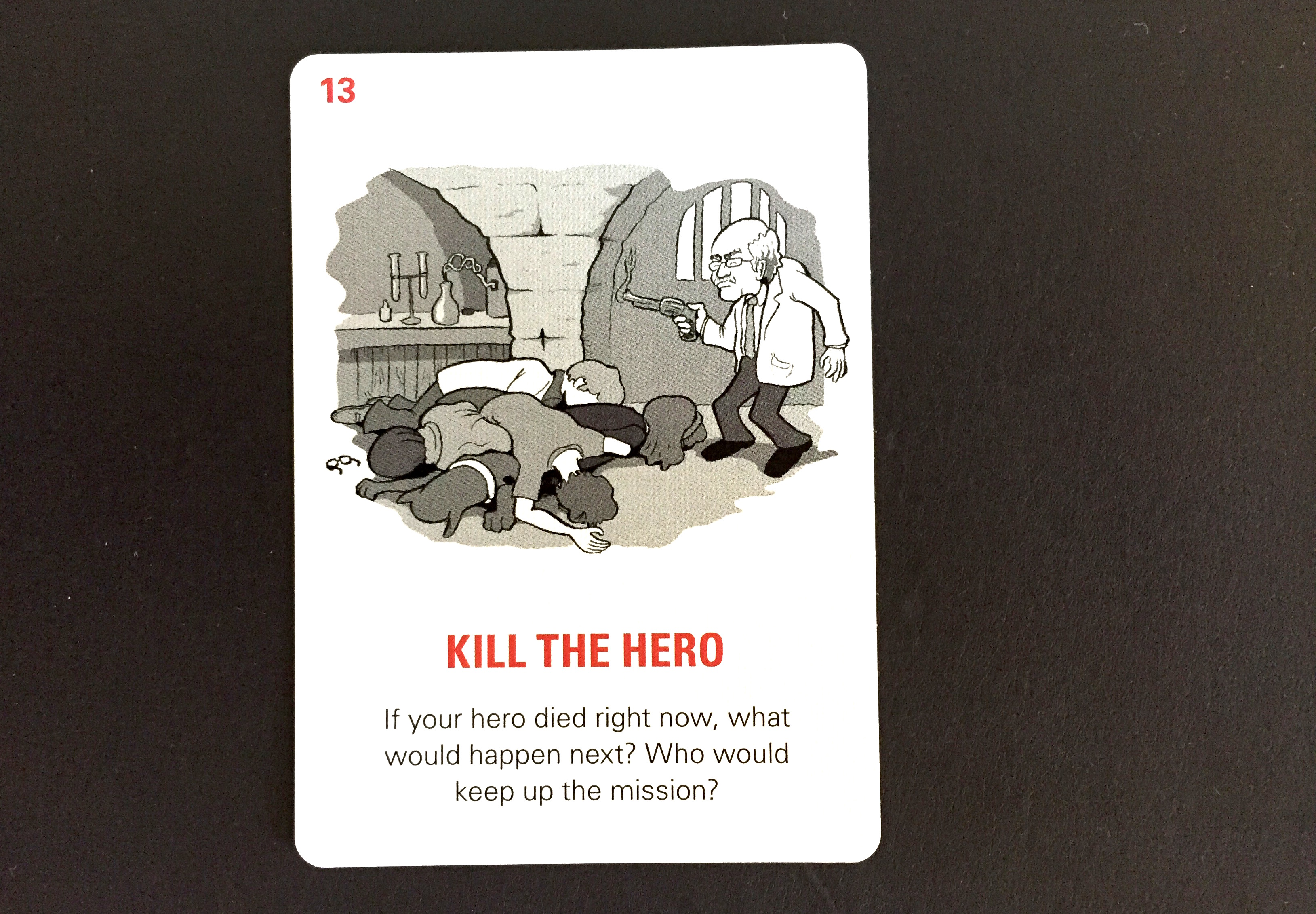
Maybe you’ve even decided to Kill The Hero:

card

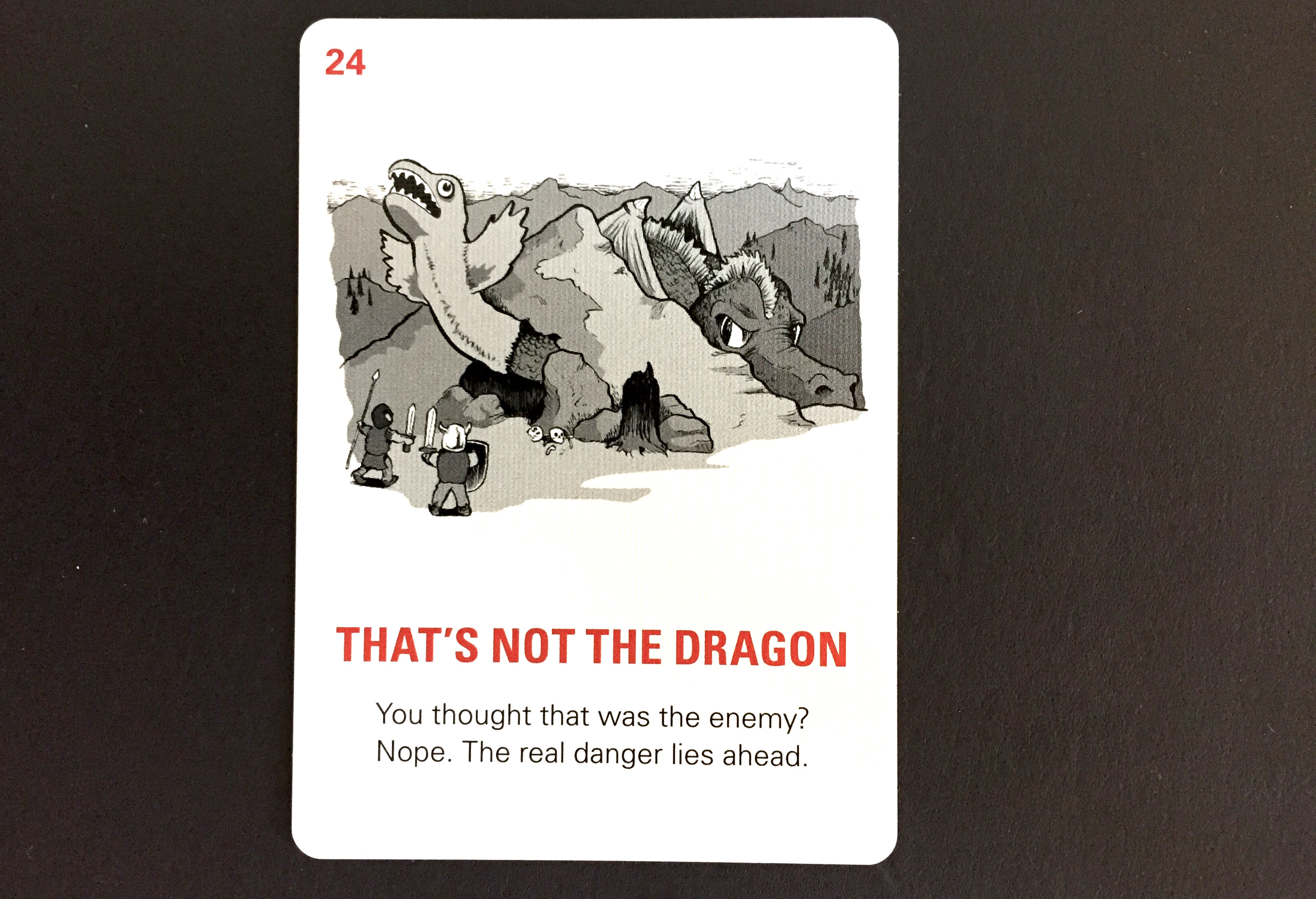
Sometimes, it’s fun to let your hero win this early battle. Maybe the presumed villain wasn’t the ultimate villain after all — or in killing him, the hero has unleashed something much worse. Perhaps That’s Not the Dragon:

card

In most cases, both hero and villain will survive this early brawl, but both will be changed by the encounter.

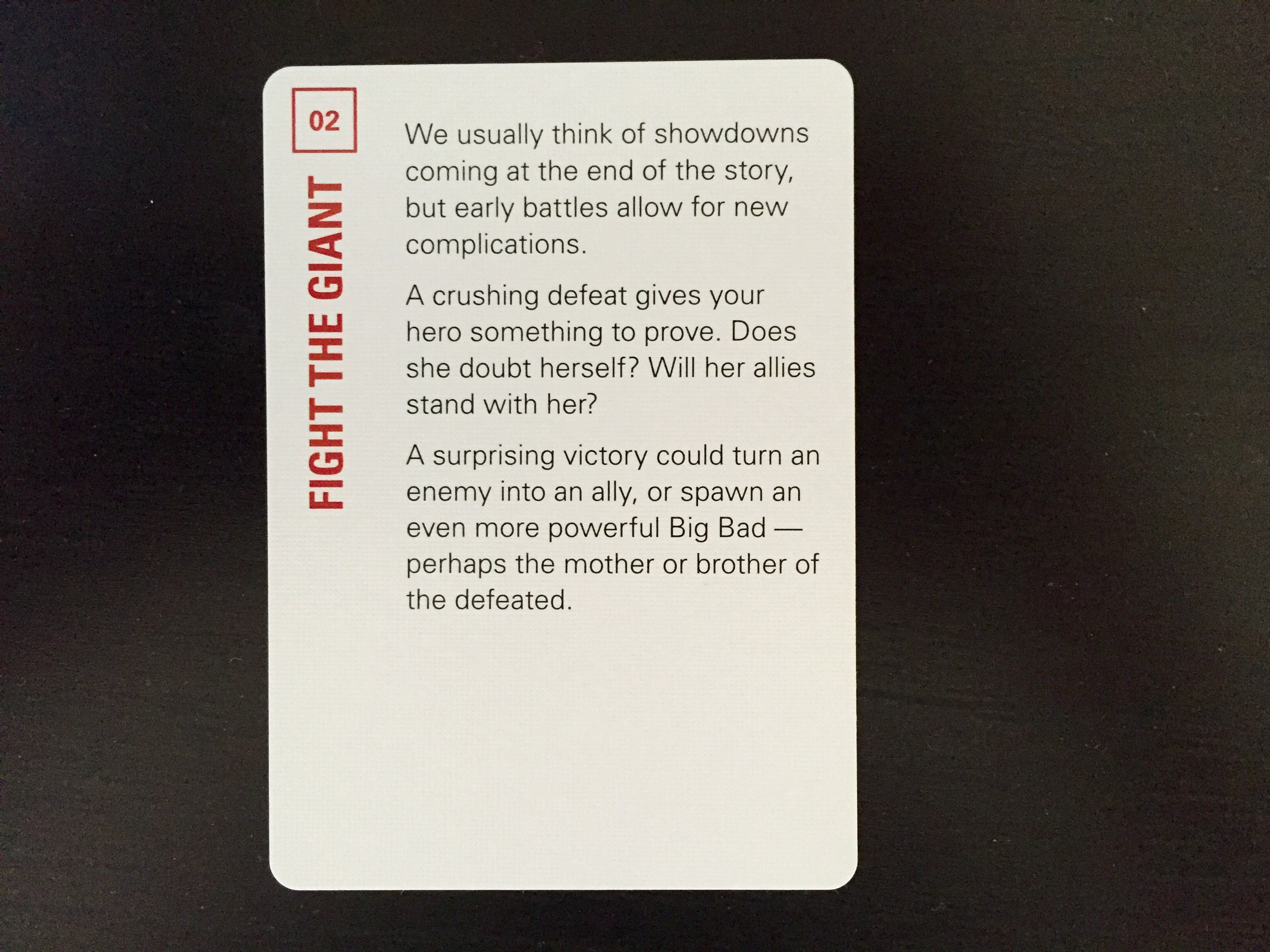
card

Using Fight the Giant

Like every card in Writer Emergency Pack, Fight the Giant can be used at both macro and micro levels of the story process.

Fight the Giant might be a key plot point on which your entire story hangs. Perhaps an unexpected, early defeat sends your hero’s allies packing, and he must now assemble and train a new army from the remnants.

On a sequence level, Fight the Giant is a great way to ratchet up the tension. Your hero had a plan for how this was supposed to go down, but the villain had a plan of her own. And she moved faster.

Finally, Fight the Giant can be a great focus in a single scene. Your cat-burglar hero was expecting three minutes notice when the villain would be returning to his penthouse, but suddenly he’s here in front of him.

No matter how you use Fight the Giant, make the most of its surprise factor. Catch your hero flat-footed, and keep your heroes on their toes.


Fight the Giant is Card 2 of 26 in Writer Emergency Pack, which you can find in the Store and on Amazon.

The One with Alec Berg

Episode - 205

Go to Archive

July 7, 2015 Film Industry, Follow Up, News, Scriptnotes, Story and Plot, Television, Transcribed

Craig sits down with Silicon Valley writer/director Alec Berg to talk about set ups and payoffs, editing comedy and how writing teams get screwed.

Also this week: Tess Gerritsen gives up, but that’s not the end of you-stole-my-idea lawsuits.

The 200-episode USB drives are in the store, but for how long? If you want one, don’t wait. (Note: In the podcast, I misspoke: the discount code give you 10% off, not 20%. You’ll save $2, which is about what shipping costs in the U.S.)

Links:

* [Scriptnotes 200 Episode USB drives are available now!](http://store.johnaugust.com/)
* [Tess Gerritsen on why she is giving up the Gravity lawsuit](http://www.tessgerritsen.com/gravity-lawsuit-why-i-am-giving-up/)
* Alec Berg on [Wikipedia](https://en.wikipedia.org/wiki/Alec_Berg), [IMDb](http://www.imdb.com/name/nm0073688/) and [Twitter](https://twitter.com/realalecberg)
* [The Harvard Lampoon](http://harvardlampoon.com/), and [on Wikipedia](https://en.wikipedia.org/wiki/The_Harvard_Lampoon)
* [Jeff Schaffer](https://en.wikipedia.org/wiki/Jeff_Schaffer) and [David Mandel](https://en.wikipedia.org/wiki/David_Mandel) on Wikipedia
* Silicon Valley on [HBO.com](http://www.hbo.com/silicon-valley) and [Wikipedia](https://en.wikipedia.org/wiki/Silicon_Valley_(TV_series))
* [Christopher Evan Welch](https://en.wikipedia.org/wiki/Christopher_Evan_Welch)
* [Crenshaw/LAX Tunnel Boring Machine](https://www.youtube.com/watch?list=PLbkiTnRw5qna2lET4HkTFbIQ8EXEAoZhT&v=iN_bnsFrGBA)
* [Batman: Arkham Knight](https://en.wikipedia.org/wiki/Batman:_Arkham_Knight)
* [Rex Parker Does The NY Times Crossword Puzzle](http://rexwordpuzzle.blogspot.com/)
* [Check out Featured Fridays](http://johnaugust.com/2015/weekend-read-featured-fridays) on [Weekend Read](https://itunes.apple.com/us/app/weekend-read/id502725173?mt=8)
* [Outro](http://johnaugust.com/2013/scriptnotes-the-outros) by Matthew Chilelli ([send us yours!](http://johnaugust.com/2014/outros-needed))

You can download the episode here: [AAC](http://traffic.libsyn.com/scriptnotes/scriptnotes_ep_205.m4a) | [mp3](http://traffic.libsyn.com/scriptnotes/scriptnotes_ep_205.mp3).

**UPDATE 7-9-15:** The transcript of this episode can be found [here](http://johnaugust.com/2015/scriptnotes-ep-205-the-one-with-alec-berg-transcript).

The road to becoming a professional artist

July 6, 2015 One Hit Kill, Psych 101, Random Advice

Noah Bradley, who illustrated several of the weapon cards for [One Hit Kill](http://onehitkillgame.com), has a great post up about his journey to becoming a [full-time professional artist](https://medium.com/@noahbradley/how-i-became-an-artist-4390c6b6656c):

> The reason I decided to become an artist has nothing to do with what would make me the most money, or what I was “talented” at, or even what I necessarily always enjoyed the most. It was simply something that, in my gut, I just knew was the right choice. Without anything better to go on, that’s what I relied on.

> From this moment, the fear began. I have spent every day since, with some variance, utterly terrified of failing. Of not being good enough. Not making enough money to support myself. Being a horrible, embarrassing failure.

> And it was this fear that propelled me to improve.

Every writer can relate.

One of the things that’s impressed me about working with Noah is his commitment to working on his own projects in addition to assignments. Particularly in the fantasy art industry, it feels like there’s an easy path to burnout. How many orcs and angels can you really be proud of?

Working screenwriters face a similar grind with endless pitches and revisions, while TV writers have to find new stories to tell with the same characters each week.

Devoting time to your own work is one key to staying sane. The work you do for yourself is almost always a better expression of your potential, because you’re not trying to meet anyone’s expectations.

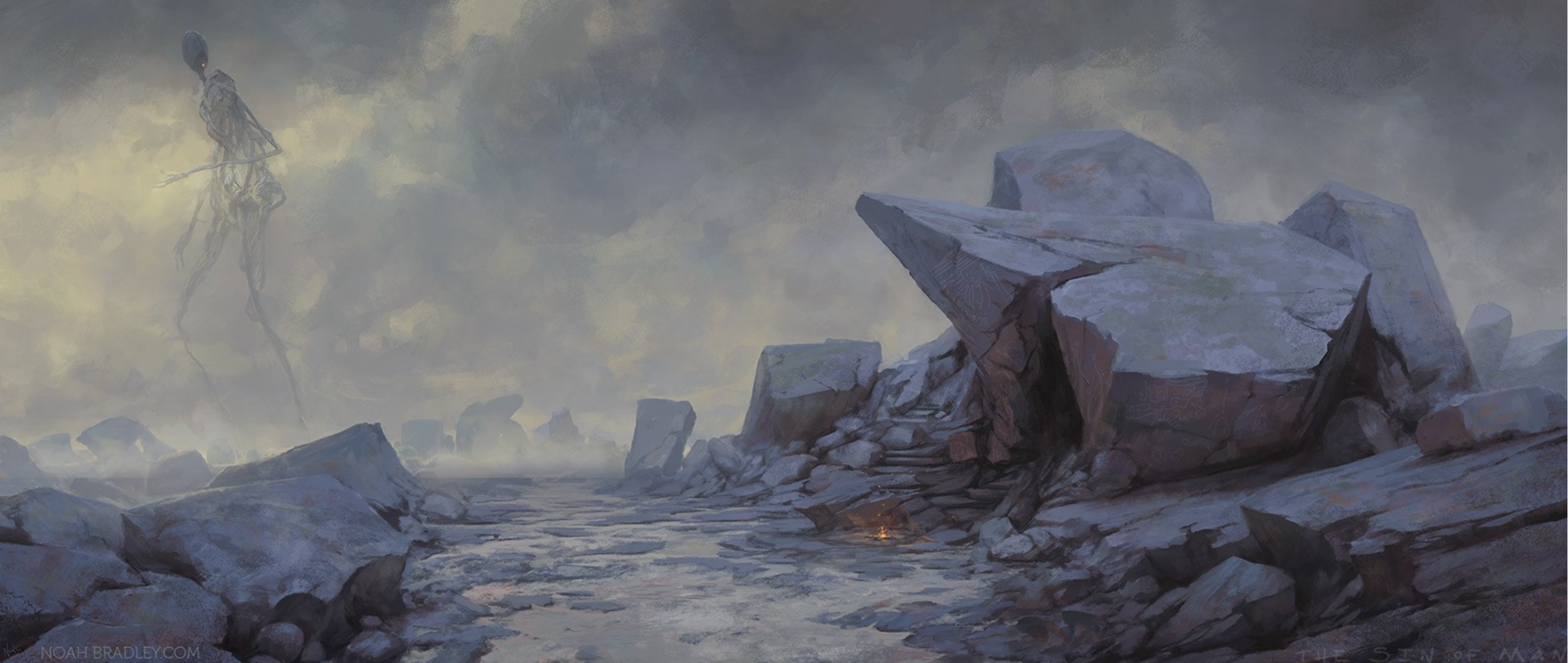
This is one Noah’s personal illustrations. It’s what first got my attention:

landscape

I have no idea why this piece exists, but it compelled me to contact him. When stranger shows up offering you work, you’re doing something right.

No one makes those movies anymore

June 30, 2015 Film Industry, Follow Up, Scriptnotes, Transcribed, WGA

Craig and John look at why certain genres of movies — mid-budget thrillers, adult dramas and romantic comedies — aren’t getting made, and whether there’s any way to get them back.

We also look at Apple Music, and what streaming means for screenwriters. Finally, we chart the screenwriter’s job from pitch to premiere, and how few of those steps are actually paid.

Big news: we have brand-new USB drives with the entire Scriptnotes catalog available at store.johnaugust.com. Quantities are limited, so don’t delay.

Links:

* [Scriptnotes 200 Episode USB drives are available now!](http://store.johnaugust.com/)
* [Ben Affleck to Produce FIFA Scandal Film for Warner Bros.](http://www.hollywoodreporter.com/bookmark/fifa-scandal-ben-affleck-producing-805295)
* [Scriptnotes, 194: Poking the Bear](http://johnaugust.com/2015/poking-the-bear)
* [Is Hollywood Making Too Many Movies?](http://variety.com/2015/film/news/hollywood-making-too-many-movies-1201526094/)
* [Betteridge’s law of headlines](https://en.wikipedia.org/wiki/Betteridge’s_law_of_headlines)
* [STX Entertainment](https://stxentertainment.com/) and [on Wikipedia](https://en.wikipedia.org/wiki/STX_Entertainment)
* [To Apple, Love Taylor](http://taylorswift.tumblr.com/post/122071902085/to-apple-love-taylor)
* [Taylor Swift Scuffle Aside, Apple’s New Music Service Is Expected to Thrive](http://www.nytimes.com/2015/06/29/business/apple-can-skate-by-taylor-swift-but-not-product-missteps.html?_r=0)
* [Supreme Court Ruling Makes Same-Sex Marriage a Right Nationwide](http://www.nytimes.com/2015/06/27/us/supreme-court-same-sex-marriage.html)
* [Neil Gaiman’s advice for getting idea on paper](http://neil-gaiman.tumblr.com/post/107713982316/i-have-been-trying-to-write-for-a-while-now-i)
* [Outro](http://johnaugust.com/2013/scriptnotes-the-outros) by Rajesh Naroth ([send us yours!](http://johnaugust.com/2014/outros-needed))

You can download the episode here: [AAC](http://traffic.libsyn.com/scriptnotes/scriptnotes_ep_204.m4a) | [mp3](http://traffic.libsyn.com/scriptnotes/scriptnotes_ep_204.mp3).

**UPDATE 7-2-15:** The transcript of this episode can be found [here](http://johnaugust.com/2015/scriptnotes-ep-204-no-one-makes-those-movies-anymore-transcript).

« Previous Page
Next Page »

Primary Sidebar

Newsletter

Inneresting Logo A Quote-Unquote Newsletter about Writing
Read Now

Explore

Projects

  • Aladdin (1)
  • Arlo Finch (27)
  • Big Fish (88)
  • Birdigo (2)
  • Charlie (39)
  • Charlie's Angels (16)
  • Chosen (2)
  • Corpse Bride (9)
  • Dead Projects (18)
  • Frankenweenie (10)
  • Go (29)
  • Karateka (4)
  • Monsterpocalypse (3)
  • One Hit Kill (6)
  • Ops (6)
  • Preacher (2)
  • Prince of Persia (13)
  • Shazam (6)
  • Snake People (6)
  • Tarzan (5)
  • The Nines (118)
  • The Remnants (12)
  • The Variant (22)

Apps

  • Bronson (14)
  • FDX Reader (11)
  • Fountain (32)
  • Highland (73)
  • Less IMDb (4)
  • Weekend Read (64)

Recommended Reading

  • First Person (87)
  • Geek Alert (151)
  • WGA (162)
  • Workspace (19)

Screenwriting Q&A

  • Adaptation (65)
  • Directors (90)
  • Education (49)
  • Film Industry (490)
  • Formatting (128)
  • Genres (89)
  • Glossary (6)
  • Pitches (29)
  • Producers (59)
  • Psych 101 (118)
  • Rights and Copyright (96)
  • So-Called Experts (47)
  • Story and Plot (170)
  • Television (165)
  • Treatments (21)
  • Words on the page (237)
  • Writing Process (177)

More screenwriting Q&A at screenwriting.io

© 2026 John August — All Rights Reserved.