• Skip to primary navigation
  • Skip to main content
  • Skip to primary sidebar

John August

  • Arlo Finch
  • Scriptnotes
  • Library
  • Store
  • About

Search Results for: book rights

2020 Annual Review

January 7, 2021 Apps, Highland, Projects, Weekend Read

Now that we’ve called a wrap on 2020, a year that [maybe wasn’t the worst in history](https://www.washingtonpost.com/history/2020/12/30/ranking-2020-worst-year-history/) but sure felt like it, I want to take stock of what I accomplished over the prior 12 months. While the pandemic impacted everything, many aspects of my life marched along with minimal disruption.

I still wrote movies. I still made software, worked out, and played a surprising amount of D&D.

Basically, a lot of *normal* happened despite the abnormal circumstances. It’s worth evaluating those parts of 2020 that were under my control.

In his [annual reviews](https://jamesclear.com/annual-review), James Clear asks three questions:

– What went well this year?
– What didn’t go so well this year?
– What did I learn?

Let’s see what we find.

## Writing

My two big writing projects for 2020 were Toto and Upstate.

Toto, an animated retelling of *The Wizard of Oz*, has been charmed from the start. Writing it felt like remembering. It went from treatment to script to greenlight in orderly fashion. With normal production upended by the pandemic, we found new ways to do things that blended animation and theater workflows.

Upstate, a Netflix comedy with Ryan Reynolds, is a wildly different movie but has also benefited from being the right idea and the right place at the right time.

For both Toto and Upstate, I wrote detailed treatments before starting on the first draft. In the past, I’ve never found treatments to be all that useful, but in both cases the treatments helped me and my collaborators understand the shape of the movie we were discussing. Doing this work staved off some painful decisions down the road. For 2021, I suspect I’ll be writing more treatments.

### The end of Arlo, for now

For the first time in four years, I didn’t need to write a book in 2020. All three Arlo Finch novels are out in the wild, both in the US and overseas.

It’s hard to overstate what a change it is to be freed from the thousand-words-a-day treadmill of writing a novel, much less a trilogy. For four years, I felt like I was always behind — that anything I was choosing to do that wasn’t writing or revising Arlo Finch was cheating. To be finished is a huge relief.

At the same time, I miss that daily work. It was great to have a clear purpose and plan: sit in the chair, write the words, keep going. While I’ve always felt like a writer, working on the books made me feel like an artisan, a potter at the wheel. I couldn’t wait around until inspiration struck. I needed to throw some damn pots.

With the books finished, I took a lot of meetings about turning Arlo Finch into a movie or TV series. Deals were proffered and scuttled. I think there’s a decent chance there will ultimately be an Arlo Finch on screen, but I can’t predict when, and it’s not a top priority for me.

### A quick no is better than a slow maybe

The Arlo Finch meetings were part of a larger narrative in 2020 in which I pitched projects with mixed success.

Early in the year, I made a deal with a Well-Known Rights Holder to create a limited event series based on their material. In the spring, we went looking for a home for it. We took meetings with all the streamers and got offers that never quite became signed deals. Twice, the executives we pitched to left their companies before business affairs started making a deal. It was a very slow process that still hasn’t finished.

In the fall, I tried again with a feature animation pitch based on a terrific short film by an international team. We got a lot of yesses on Zoom but no offers. It was the kind of project that animation folks always talk about wanting to make: mid-budget, unique, very culturally specific. But that was always from the creative side of the studio. The money people wanted something that could easily play to the traditional family audience.

Basically, more Toto, less Frankenweenie.

And on some level, I should have known that going in. The project was always a longshot, but I convinced myself that multiple buyers really could make it.

One important difference between the two experiences: on the animation project, we got to “no” quickly. I’ve come to really appreciate execs who can say, “I like this. I get it. We just can’t make it here.”

### The Zoom of it

Because of the pandemic, all of these pitches were on Zoom. Honestly? Pitching virtually was great. We could meet with six buyers in a week, and I didn’t miss driving all over town. We could rehearse and show slides, and not worry about making eye contact with the one key person in the room. Post-pandemic, I suspect a lot of these meetings will remain on Zoom.

Looking back, I spent too much of 2020 pitching, especially considering I didn’t control the underlying IP. Had these been my own properties, I could have decided to simply write them myself.

Right after the new year, there’s a project I’m going to pitch to the one buyer who could conceivably make it. If they say yes, great! If they say no, I can scratch it off the list. Again, a quick no is better than a slow maybe.

The other theme I’m using to guide my choices in 2021 is [Hell Yeah or No](https://sive.rs/n). If a project comes my way and I’m only mildly interested, I’m going to say no faster. (Basically my internal version of avoiding the slow maybe.)

One project that had zero forward movement this year was The Shadows, a movie I’m planning to direct with a blind hero, played by a blind actor. From the start of the pandemic, it became very clear that the challenges of filming it safely were insurmountable until we’re safely back in a normal production universe.

Going back to our initial questions:

What went well:
– Writing scripts
– Starting with treatments
– Taking meetings on Zoom

What didn’t go so well:
– Pitching other people’s IP
– Self-delusion

What I learned:
– A quick yes is better than a slow maybe
– Focus on words written
– Remember Hell Yeah or No

## The Apps and Other Company Projects

My company Quote-Unquote makes digital things like [Highland 2](https://quoteunquoteapps.com/highland-2/) and [Weekend Read](https://quoteunquoteapps.com/weekendread/), along with atom-based products such as [t-shirts](https://cottonbureau.com/search?query=john%20august) and [Writer Emergency Pack](writeremergency.com).

We made steady progress in 2020, both in terms of revenue and features. In addition to incremental improvements on our main products, we did a lot of behind-the-scenes work setting up for what’s coming next.

Highland 2 is mature. Currently at version 2.9.5, we won’t be adding any new features to it. Instead, we will fix the bugs that invariably pop up because of OS changes, and make sure Highland for Mac stays compatible with the iOS version of Highland currently in development.

Likewise, Writer Emergency Pack is mature. It still sells well, especially at Christmas.

This year, Highland 2 and Writer Emergency Pack have offered useful lessons about supply chains, both in and out of a pandemic.

Highland is available only through the Mac App Store. It’s a [free download](https://apps.apple.com/us/app/highland-2/id1171820258?mt=12), with a $50 in-app purchase to unlock the Pro version and remove the watermark. We qualify for Apple’s new [Small Business Program](https://developer.apple.com/app-store/small-business-program/), so for 2021, Apple will only take a 15% commission rather that 30%.

(For folks doing the math, I’ll confirm: our apps generate less than $1 million per year in proceeds, which is why we’re eligible for the discounted commission.)

One of our goals for 2020 was to get more screenwriting students using Highland. We want the next generation of screenwriters to think of Highland as the way screenwriting apps “should” work rather than Final Draft.

With that aim, we added a Student edition, which is essentially Highland Pro but with an expiration date. Students still download the app off the Mac App Store, but rather than purchasing the upgrade, they enter their pre-approved email address which we’ve gotten from their writing professor.

This new system worked, mostly. We now have around two thousand student users at writing programs around the world. But the system we built for adding students is cumbersome and requires way too much staff supervision. For 2021, we’re greatly streamlining it.

We learned a similar lesson in 2020 with Writer Emergency Pack, trying to reduce the number of steps and intermediaries.

In the US, we sell WEP on Amazon through Fulfilled by Amazon. You click the yellow button and comes directly from Amazon’s warehouse along with everything else. Around the holidays, we had a hard time staying in stock this year because of Amazon’s COVID-related inventory restrictions. I don’t know that there’s anything we could have done differently or better. We kept sending new cases to Amazon every three days, trying to stay in stock but below our limit.

In both the US and overseas, we also sell WEP [directly from our website](https://www.google.com/search?client=safari&rls=en&q=writeremergency&ie=UTF-8&oe=UTF-8). This is where we made bigger changes.

Our system is based around Shopify. When someone buys a deck, Shopify handles the billing and then generate an order for outside fulfillment service. For years, we used Shipwire as our warehouse/fulfillment partner. They were ultimately the wrong place for us: way too expensive, too opaque, too hard to control. For 2020, we decided to flatten our supply chain by shipping directly from our printers in Florida. Now when you buy a deck through our site, it comes directly from the folks who printed it.

The other area where we made changes in 2020 was our user community. We opened a Slack for our Pro users, and hired a new team member to take over customer support emails.

On a tech level, we updated Highland 2 to run natively on Apple new M1 and did a lot of behind-the-scenes work in SwiftUI for upcoming products. We also tried a few moonshots: wild experimental projects just to see what’s possible. I’m happy to report that one of these will ship soon. It has that “wouldn’t it be cool if…” feeling that makes software fun.

As a company, we tend to be early adopters on new Apple stuff. For SwiftUI we definitely hit some rough patches where it wasn’t clear if the issue was us or the language. But I’m glad we stuck with it. The software we’re shipping this year and next will definitely benefit from what we’ve learned.

What went well:
– Flattening our supply and distribution chain
– Signing up students
– Pushing updates
– Engaging with power users

What didn’t go so well:
– Keeping stuff in stock
– Shipping new things

What we learned:
– Asking, “What if it were simpler?”
– Any process that requires a human is worth reconsidering
– Think twice before rolling your own solution

## Scriptnotes

Scriptnotes continued its weekly release schedule through 2020, with a few video events to make up for the lack of in-person live shows.

We moved our premium subscriptions to a new service (Supporting Cast) and raised the monthly price from $1.99 to $4.99, which included access to all the back episodes and special bonus segments at the end of every episode. We also started putting out the premium episode the night before the normal episode drops.

Even at the higher price point, we have roughly the same number of premium subscribers (3,500) as we did before the switch. Craig and I don’t earn any money from the show, but the subscriptions nearly cover the salaries of our producer, editor and transcriber.

In 2019, a major focus of the show was improving Hollywood’s traditionally abysmal assistant pay. This year, the pandemic quickly shut down the industry, leading to massive layoffs. #PayUpHollywood had to quickly pivot to helping support staff simply pay rent and buy groceries. Craig and I donated and raised [more than $500,000](https://deadline.com/2020/03/covid-19-relief-fund-hollywood-assistants-staffers-fundraiser-1202894875/) through GoFundMe to provide direct relief for staff.

Raising the money proved much easier than getting it out the door. With the help of unemployed production accountants, the team was able to cut checks, but the logistics were still daunting. It reminded me of my experience with [Writer Emergency Pack on Kickstarter](https://www.kickstarter.com/projects/johnaugust/writer-emergency-pack-helping-writers-get-unstuck?ref=discovery&term=writer%20emergency%20pack). *Congratulations! You now have $158,109 and 5,714 different problems to solve.*

Ultimately, the Actors Fund took over the ongoing back-end work of getting the last of the money out.

If I had to do it again, I would have gone to the Actors Fund from the start and set up a special campaign. GoFundMe is great for pulling money in, but any roll-your-own system for distributing it is perilous.

### Format tweaks

This fall, we started having producer Megana Rao read listener questions on air. It felt like a good change, in part because she could ask follow-up questions as a proxy for the audience.

In terms of guests, we consciously tried to bring on more new voices — especially female, Black, and members of underrepresented communities — rather than relying on longtime friends of the show. There are big areas of film and TV writing that Craig and I don’t work in, so it’s great to talk with folks who do. That said, we don’t want to become a guest-of-the-week show, so it’s always about finding a balance.

One thing that’s become clear is that our Tuesday morning release schedule pushes work onto the weekend. We may revisit that for 2021.

What went well:
– The switch to the new premium service
– New guests
– Small format tweaks

What didn’t go so well:
– The video episodes felt kludgey

What I learned:
– It’s easier to raise money than to distribute it
– Think twice before rolling your own solution

## Organization and Getting Things Done

Earlier in the year, I wrote about my [Daily Lists](https://johnaugust.com/2020/getting-things-done-in-a-pandemic), the little quarter-folded sheets that have proven indispensable for me. I’ll keep using them.

Likewise, I’ll keep [writing in 60-minute sprints](https://johnaugust.com/2020/writesprint). It’s the way I work best.

In 2020, I started keeping a stack of blank index cards on the bedside table. If I have a late night thought — an idea or reminder of something I need to do — I’ll grab a card, scribble it down and put the card on the floor by the door. That gets it out of my head and into a system for dealing with it.

I haven’t found a great system for that 10,000-foot view of personal projects and goals. (This summary is a stab at that.)

Over the past few weeks, I’ve been trying out [Roam](https://roamresearch.com) as a space for brain-dumping. It’s still early days, but so far I like it. The initial outline for this blog post was put together inside it.

What went well:
– Daily lists
– Writing sprints

What didn’t go so well:
– Evaluating longer-term goals and plans
– Finishing things

What I learned:
– [Habits are better than goals](https://jamesclear.com/goals-systems)
– Don’t mistake the system for the product

## Fitness and Health

This is the easiest one to measure. I worked out nearly everyday. I consistently filled my rings on my Apple Watch. I lost nine pounds and gained three back over the holidays.
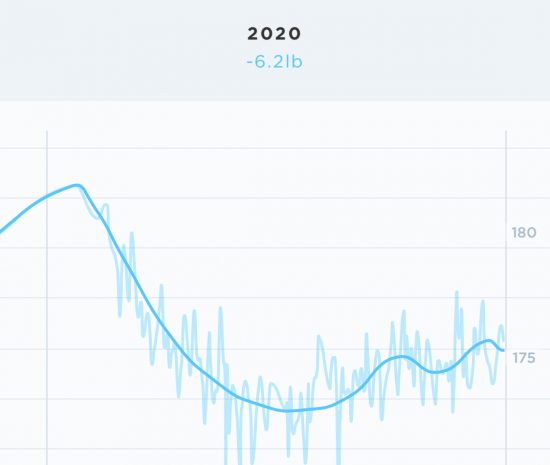
In 2019, I ran a half-marathon. I didn’t run any races in 2020, and ran less outdoors as the pandemic got worse. My total running mileage was about half what it was in 2019, although I did more interval work on the treadmill.

I got a Peloton bike at the end of 2019. I rode just over 1,000 miles in 2020. I pushed myself to beat personal records, figuring that if I was meeting or beating my best output, I couldn’t possibly have COVID.

Is that “healthy?” I dunno. But it was very honest 2020 energy, and it got the workouts in.

In addition to the bike, I liked the Peloton digital classes. I did the four-week strength class, which was nicely designed. In recent weeks, I’ve been trying out Apple Fitness+. The classes are well constructed, and the on-screen data from Apple Watch is smartly handled.

I haven’t been to a real gym since March. I miss it less than I would have expected. I definitely do miss the [Hollywood Boulders](https://touchstoneclimbing.com/hollywood-boulders/) climbing gym, and look forward to going back once that’s safe.

### Food

I used to be a vegetarian. Then I started eating poultry and fish. These days, I try to eat a mostly plant-based diet. Each week we get a box from [Purple Carrot](https://www.purplecarrot.com) with three or four vegan meals to cook, and they’re thoroughly tasty.

In 2020, I stopped eating breakfast on weekdays, which could be considered [Intermittent Fasting](https://en.wikipedia.org/wiki/Intermittent_fasting) or [Time-Restricted Eating](https://www.health.harvard.edu/blog/intermittent-fasting-surprising-update-2018062914156). Basically, I have black coffee and plenty of water until lunch. I eat all of my calories between noon and 9pm, except on weekends.

The science is decidedly mixed on whether these diets are a good idea. For anyone prone to an eating disorder, I’d urge caution. But in my own experience, it was surprisingly easy to do after a rough first week. It’s helped me to distinguish between “hungry” and “bored.”

While most of our meals were cooked at home this year, I didn’t eat especially healthy. Many cookies were eaten.

Other than my regular colonoscopy — my family’s history of colon cancer means I need to have one every three to five years — I didn’t have any of my normal medical appointments this year. Once the infection rate drops I do want to get my normal checks for cholesterol and the like.

### Mental

Between the election, the pandemic and the protests following the killing of George Floyd, it was a stressful year. I tried to watch how much I checked Twitter, and to stop looking at news altogether after 8pm. That helped, but c’mon. This year was scary.

After years of being a sporadic Headspace user, in 2020 I took off my headphones and instead got a [good cushion](https://walden.us/) and a quiet corner. I meditated for about 10 minutes every night before bedtime, and it really helped. When I meditate, I zone out so completely I can’t remember my name.

Likely related: I slept surprisingly well this year given :gestures at everything:. It also helped that I kept a regular bedtime (around 11pm) and woke up later once my daughter’s school went virtual.

What went well this year?
– Working out at home
– Regularly meditating
– Turning off the news

What didn’t go so well this year?
– Limiting sweets and bad carbs
– Normal medical visits

What did I learn?
– Not every tingle is COVID
– The discs in your spine need time to hydrate after sleeping. So don’t rush ‘em.

## Reading

I didn’t have any particular reading goals in 2020. I read a pretty wide assortment of books, including the following:

– **Beowulf: A New Translation** by Maria Dahvana Headley [Amazon](https://amzn.to/3pOUmkN) / [Bookshop](https://bookshop.org/books/beowulf-a-new-translation/9780374110031)

– **Lying: Moral Choice in Public and Private Life** by Sissela Bok [Amazon](https://www.amazon.com/gp/product/B004G5ZYGK/ref=ppx_yo_dt_b_d_asin_title_o01?ie=UTF8&psc=1) / [Bookshop](https://bookshop.org/books/lying-moral-choice-in-public-and-private-life/9780375705281)

– **Brilliant: The Evolution of Artificial Light** by Jane Brox [Amazon](https://www.amazon.com/gp/product/B003U4VESK/ref=ppx_yo_dt_b_d_asin_title_o02?ie=UTF8&psc=1) / [Bookshop](https://bookshop.org/books/brilliant-the-evolution-of-artificial-light/9780547520346)

– **Money: The True Story of a Made-Up Thing** by Jacob Goldstein [Amazon](https://www.amazon.com/gp/product/B083J1BPNC/ref=ppx_yo_dt_b_d_asin_title_o03?ie=UTF8&psc=1) / [Bookshop](https://bookshop.org/books/money-the-true-story-of-a-made-up-thing/9780316417198)

– **The Origin of Capitalism: A Longer View** by Ellen Meiksins Wood [Amazon](https://www.amazon.com/gp/product/B01BRFN69S/ref=ppx_yo_dt_b_d_asin_title_o04?ie=UTF8&psc=1) / [Bookshop](https://bookshop.org/books/the-origin-of-capitalism-a-longer-view/9781786630681)

– **The Truth about College Admission: A Family Guide to Getting In and Staying Together** by Brennan Barnard, Rick Clark[Amazon](https://www.amazon.com/gp/product/B07Q2CQ5V5/ref=ppx_yo_dt_b_d_asin_title_o07?ie=UTF8&psc=1) / [Bookshop](https://bookshop.org/books/the-truth-about-college-admission-a-family-guide-to-getting-in-and-staying-together/9781421436371)

– **Station Eleven** by Emily St. John Mandel [Amazon](https://www.amazon.com/gp/product/B00J1IQUYM/ref=ppx_yo_dt_b_d_asin_title_o08?ie=UTF8&psc=1) / [Bookshop](https://bookshop.org/books/station-eleven-9781594138829/9780804172448)

– **What Does It All Mean?: A Very Short Introduction to Philosophy** by Thomas Nagel [Amazon](https://www.amazon.com/gp/product/B00524YROY/ref=ppx_yo_dt_b_d_asin_title_o00?ie=UTF8&psc=1) / [Bookshop](https://bookshop.org/books/what-does-it-all-mean-a-very-short-introduction-to-philosophy-revised/9780195052169)

– **The Day It Finally Happens: Alien Contact, Dinosaur Parks, Immortal Humans—and Other Possible Phenomena** by Mike Pearl [Amazon](https://www.amazon.com/gp/product/B07P5JB67K/ref=ppx_yo_dt_b_d_asin_title_o01?ie=UTF8&psc=1) / [Bookshop](https://bookshop.org/books/the-day-it-finally-happens-alien-contact-dinosaur-parks-immortal-humans-and-other-possible-phenomena-9781508298007/9781501194146)

– **Trick Mirror: Reflections on Self-Delusion by Jia Tolentino** [Amazon](https://www.amazon.com/gp/product/B07L2JGLZ9/ref=ppx_yo_dt_b_d_asin_title_o04?ie=UTF8&psc=1) / [Bookshop](https://bookshop.org/books/trick-mirror-reflections-on-self-delusion/9780525510567)

– **The 99 Percent Invisible City** by Roman Mars, Kurt Kohlstedt [Amazon](https://amzn.to/385xSWq) / [Bookshop](https://bookshop.org/books/the-99-invisible-city-a-field-guide-to-the-hidden-world-of-everyday-design-9780358396383/9780358126607)

– **Leave the World Behind** by Rumaan Alam [Amazon](https://amzn.to/3rNDRaf) / [Bookshop](https://bookshop.org/books/leave-the-world-behind-9780062667632/9780062667632)

– **I Want to Be Where the Normal People Are** by Rachel Bloom [Amazon](https://amzn.to/3b3WGAe) / [Bookshop](https://bookshop.org/books/i-want-to-be-where-the-normal-people-are/9781538745359)

I re-read **Atrocities: The 100 Deadliest Episodes in Human History** by Matthew White [Amazon](https://amzn.to/38YrQWK) / [Bookshop](https://bookshop.org/books/atrocities-the-100-deadliest-episodes-in-human-history/9780393345230) for the third time. In times of great upheaval, I find it comforting to know things have been much, much worse.

I’m putting up links for Amazon and Bookshop, but I generally buy my books from [Chevalier’s on Larchmont](https://www.chevaliersbooks.com) in Los Angeles. I hosted an [online event](https://www.youtube.com/watch?v=JePRtUN2thg) for them over the summer.

What went well:
– Bedtime reading

What didn’t go so well:
– Reading at almost any other time of day

What I learned:
– Most local bookstores can get almost anything you want in a day or two. So support your local bookstore!

## Friends

In the late spring, I made a conscious effort to set up FaceTimes and Zooms to talk with a few friends I’d normally have lunch with. It was great to catch up. I wish I’d done more of it, and will make it a priority for the new year.

In the summer, we had backyard, socially-distant drinks and dinners with three friend couples. Again, it was lovely to see people. By the time Thanksgiving came around, that wasn’t particularly safe, so our holiday meals went back to Zoom.

The one area in which the pandemic has surprisingly improved things is D&D. My group used to play in-person every few weeks. We’ve now moved online, using Zoom and Roll20. We’re playing every week and I’m eating a lot less junk food.

Our friend Tom commissioned Gedeon Cabrera for this illustration of our D&D group:
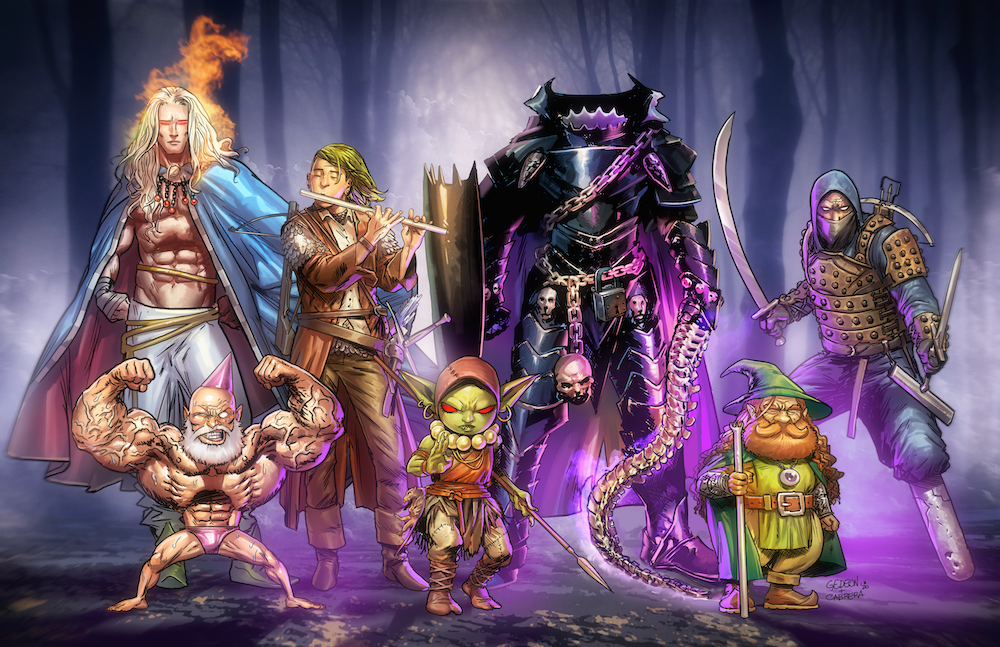
DnD group illustration

Craig and I recorded a [five-part YouTube series](https://www.youtube.com/playlist?list=PLa3qqbMuNy-r-ZvH7UiX_OyW03ymY6axK) on getting set up as a DM in Roll20.

One thing I noticed early in the pandemic is the collapsing distinction between “local” and “distant” friends. If we’re hanging out on Zoom, it really doesn’t matter if we’re in the same city.

What went well:
– D&D on Zoom/Roll20
– Adapting to changing safety standards

What didn’t go so well:
– Keeping up with lunch friends

What I learned:
– It’s weird how the pandemic has flattened distance

## Family

I’ll end my wrap-up with family time, which constituted the majority of my hours in 2020. We were within 100 feet of each other for nine months of the year.

Fortunately, me family is good at spending a lot of time together. Our year living in Paris, along with a lot of other travel over years, definitely gave us a head start on learning to live in lockdown.

We took two family roadtrips in 2020. The first was to Colorado to see family (at a distance). The second was to Yosemite. These trips were by far the most time we’d spent in a car together, but luckily we all enjoy the Hamilton cast album.

From the start of the pandemic, I worried about my 84-year-old mom, who was living in a senior community in Boulder. Since she couldn’t socialize with her friends, I FaceTimed with her every day at lunch. We’d traditionally been on a once-a-week schedule, but moving to daily calls genuinely improved our relationship by taking the pressure off. We didn’t have to go deep. We could talk about anything or nothing, and I could really see how she was doing day-to-day.

My mom died [fairly suddenly](https://johnaugust.com/2020/some-early-reflections-on-losing-my-mom) at the start of December. It sucked. Many the normal things one faces with the death of a parent were upended by the pandemic. There was no funeral, no reception, no sitting around in her apartment reminiscing. In many ways, she simply vanished.

Fortunately, I’m close with my brother and his family. We’ve been able to share the workload, and our relationship was never entirely about our mom. Still, 2021 is going to be weird and different without her.

What went well:
– Lockdown, all things considered
– Car trips
– FaceTiming with my mom

What didn’t go so well:
– A death during a pandemic

What I learned:
– Frequency of contact can be as important as depth

## Conclusions

This post ended up being much, much longer than I expected — which was also true of 2020. It felt like a decade rather than a year.

As I write this, we’re a week in 2021. It’s already had wild peaks and valleys. But I remain bullish on the overall direction of the country, the world and the things that matter to me.

I don’t know that I’ll write one of these updates every year, but the process of accounting for what I did in 2020 has been helpful for organizing my principles for 2021. I recommend this exercise to anyone struggling to move beyond resolutions to real progress.
Scriptnotes, Episode 480: The Wedding Episode, Transcript

December 25, 2020 Scriptnotes Transcript

The original post for this episode can be found [here](https://johnaugust.com/2020/the-wedding-episode).

**John August:** Hello and welcome. My name is John August.

**Craig Mazin:** My name is Craig Mazin.

**John:** And this is Episode 480 of Scriptnotes, a podcast about screenwriting and things that are interesting to screenwriters.

Today on the show we talk weddings. More specifically we talk about wedding scenes in film and television, the tropes, the challenges, and what we can learn. We’ll also answer listener questions about the weather and bombing a pitch. And in our bonus segment for premium members we’ll discuss our post-vaccination hopes and plans.

With so much on our plate we need to welcome back our very own Aline Brosh McKenna. Aline, welcome back.

**Aline Brosh McKenna:** Oh my god. I’m like so happy to be here.

**Craig:** Oh. My. God.

**John:** Oh! We started talking about weddings and there was no one I want to talk more about weddings than you.

**Aline:** Mm.

**John:** So you have written at least one wedding movie, so 27 Dresses is obviously a wedding movie, but you’ve written wedding scenes in Crazy Ex-Girlfriend. You know your way around a wedding scene, correct?

**Aline:** Indeed. And I was thinking after you mentioned this topic that of the four season finales that I directed three of them had weddings in them. And the first thing I ever directed, that first episode that I directed, had a giant, giant wedding. And they’re pretty hellish to shoot.

**John:** So we’ll talk about the practicalities of shooting them, but also as I started digging into it I realized that there’s not one thing that is a wedding scene, so there’s just a lot to dig into. And there are so many universal things. So many specific things. So we’ll get into all of that.

But most crucially as we head into this holiday season I was thinking like what kind of gift could I get for my friends, for Aline and for Craig–

**Craig:** What did you get us?

**John:** And I thought maybe what I can get you guys that you would really, really want, that could really be good for you would be to get you guys agents.

**Craig:** Oh.

**John:** And so I got you guys some agents. So CAA right as we were about to hit the record button signed a deal with the WGA, bringing closure to their part in the agency campaign.

**Craig:** [sighs heavily]

**John:** That’s the relief you hear on the air.

**Craig:** It’s just like, ooh.

**Aline:** [sighs]

**Craig:** [laughs] Yeah.

**Aline:** I mean, here’s the thing. You know, I think you guys have talked about this a lot and I’ve talked to a lot of writers obviously during this, and I think part of this might be generational, but agents have been really, really important in my career, really important relationships. People I really relied on. And in the last few years I’ve had agents that I really loved and really relied on. And I, having done the TV show, I sort of didn’t have a lot of access to them because I was busy sort of doing the one thing and had been looking forward to working with them. And then this thing started.

So, I’ve really missed them. And, you know, my agents really have always been – I’ve never had a manager. And I like to, you know, as I often say quoting Mike Newell, I think with my mouth open, and so I like to have people to talk to. And agents have really been key for me in strategy and in understanding what my potential was, or could be. And so I’m just really happy and I’m really proud to work with the folks that I’ve been working with. So I’m very happy.

**John:** Yeah.

**Craig:** Ditto.

**John:** So you guys have not read through any of this stuff yet, but you don’t have to actually read all that much because the deal with CAA is exactly the same as the deal with ICM. There’s a four-page side letter which goes into all the specifics and disclosures about the sale of Wiip, which is the independent production arm and the blind trust about–

**Craig:** I actually have a question about that. Did they build in – did they, I mean did the guild or them in combination – build in some sort of window? Was that the compromise there?

**John:** So it’s both a window in time but also disclosures and transparencies about what’s actually happening and that it’s not strictly about CAA but it’s also TPG which is the company that owns Wiip and CAA.

**Craig:** Right.

**John:** And so that was the complicated stuff which took a lot of time and negotiation to sort through, but has apparently now been sorted through to both sides’ satisfaction. So it ends the lawsuit on CAA’s thing. I was facing a deposition from CAA and sort of other disclosures.

**Craig:** Right.

**John:** So I’m just delighted that that part of this whole campaign is behind us, leaving only WME as the hold out among agencies in this campaign.

**Craig:** I suppose there is a template now for them to follow in theory.

**John:** It seems like it will be a very similar kind of discussion.

**Craig:** Yes. Good. Well, regardless of how we got there or any of that stuff the thing that – when we started talking about this, John, was way, way back with Chris Keyser–

**John:** Oh yeah. Chris Keyser.

**Craig:** Whenever it was, a year and a half ago. If people go back and listen to that episode they’ll hear plenty of umbrage on my part about packaging, which has always just been this awful stone in our collective shoe. And we’ve gotten rid of it. I mean, I’m perfectly cool with the fact that they’re divesting from Wiip since as I mentioned many times I’ve been a CAA client for whatever how many years, and they’ve never even mentioned it to me. So, it was not anything that was part of my life. But packaging was apparently thrust upon me. And so I’m glad that we have arrived at this place at long last. And now I can get my agent back. And believe me, the texts have been coming in. [laughs]

It’s a bit like Jerry Maguire where suddenly an agent gets fired and they have to start calling all their clients to bring them with them. It’s like, OK, we can all be I guess re-hiring them back. And so, yeah, a lot of texts, a lot of phone calls. And it’s good. I’m glad.

**John:** All right. In a bit of follow up, way back in Episode 348 we did a How Would This Be a Movie where we discussed this Japanese Rent-A-Family business. So it was an article that was in the New Yorker. It ended up winning the National Magazine Award in 2019. But basically you could hire these actors to come in and pretend to be your family. And so for like a lonely man on the holidays you could pretend to have a family that was with him.

But it turns out that the subjects that they interviewed in the story, they were lying. They were not disclosing who they actually were. Some of them actually worked for the company in ways that were not clear. So there’s an editor’s note at the start of that article now sort of talking through what’s not been able to be verified or what’s not been true. And it calls into question sort of how much of the story, or even this industry, actually exists.

Philip from LA, a listener, wrote in to say, “I wonder if this could be its own twist on the story where the story of a fake family for rent in order to drum up publicity becomes something like The Producers set in the modern viral online era with touches of the balloon boy story, or the dark edge of a crisis actor conspiracy theory if things go too far awry for the hapless hoaxers.”

And it is an interesting point. It was like a con within a con. It was like a fake-fake family. It’s just a weird place for this to be at.

**Aline:** I just wonder how much of this movie would have been dependent on like “no guys this really happened.” Because when you first read the article it seemed like, wow, this is unusual. And it feels like if you tell a story that could exist, or it could just be a Black Mirror thing where you have an app and you can get a family. And if you build a great story and an interesting, engaging story I don’t know that – it doesn’t seem like the kind of movie that you’re showing up looking for tons of historical accuracy in that one. You’re looking for relationships to follow. It just seems like it is a fun, interesting, engaging idea that makes people smile and you kind of see the narrative opportunities opening up.

But I agree there’s something also funny in the idea of guys who are launching a business and so they manage to get this article placed in some fancy publication to try and publicize their business. That’s the sort of Shattered Glass version. But I think that the idea of renting relatives, it feels like you could do a lot of variants of that that would point to kind of the funniness of families, especially around the holidays. And it doesn’t need to be – you don’t need to have to fact check it in that sense.

**John:** Yeah.

**Craig:** I’m just excited that any fact checking still happens at all. The gap between I guess what I would call journalistic scruples and political scruples is about, I don’t know, one light year wide. Because here they are sort of – and in a great way – tripping over themselves to say we are holding ourselves accountable. And we’re saying literally we don’t even think this story is false per se, but there is a little bit of this issue of perhaps one or three bad apples are ruining the bunch, so we’re going to tell you about this. As opposed to the rest of the world which is like we’re just going to say nonsense and repeat it over and over and deny.

So it’s nice to see that anyone still gives a damn.

**John:** Well, I think Aline’s point is the difference between there is journalism, which this is part of. And that journalism can be the spring board for a movie. But in many ways the movie doesn’t rely on that underlying story being true. It creates a story area, a story space. And even as we were talking about this in Episode 353 we did follow up where we talked about the different producers who are fighting for the rights over this thing, we wondering how important was it to actually have this actual story, to have this actual Japanese company. Is it really just an area for which you might want to build this fake family?

You think of the movies like We’re the Millers which is about a fake family to hide drug smuggling. Or Dana Fox’s movie, The Wedding Date, where it’s like someone is hiring on a fake boyfriend to go to a wedding. It’s a premise and therefore maybe you don’t really need the underlying details of that story to be true.

**Aline:** Right. The New Yorker obviously has a different standard, because they’re doing journalism. It’s been interesting also there’s been a lot of kerfuffle around this season of The Crown. And people who wanted a disclaimer. But I think people who are watching fictionalized pieces, pieces of history, understand that there is – you’re writing scenes you didn’t witness with characters you don’t know. I wonder, you know, I think that with The Crown it’s because a lot of the people who lived through that are alive today, or still in the public eye today, and so that’s why there’s been sort of a greater call for people wanting the historical record to be completely verified.

I wonder what you guys thought about that.

**John:** Yeah. This season of The Crown I thought was spectacular. And I did find myself because this was part of my own life story, like the wedding of Charles and Diana was a thing I actually remember seeing, I did take this as being, I don’t know, it felt more uncomfortably close to reality. And I did feel bad for some of these people.

Like I don’t know any of the people who are portrayed in this season of The Crown personally, but some of them are friends of friends which is just an odd place to be at. I’m not sure I wanted a disclaimer there, but I did start to wonder about what was true and what was not true. Craig?

**Craig:** I had a very specific opinion about this when I was doing a fictionalized show about historical events. I don’t really say fictionalized, I say dramatized. And I’m trying to dramatize what happened. So, I did, but, you know, just as a basic premise if you’re trying to cover a year of events in one hour, or five hours, or a hundred hours, you are taking license with reality. You have to. There’s no way to do it otherwise. But I personally felt it was important to be as transparent as I could be about those changes and those adjustments via a podcast because I do think if you don’t say anything the presumption that people are going to have is that you did your research and that’s accurate to history.

And I think it would be better for shows to be honest about those changes. You’ll get way more credit, frankly, for the dramatization that you do if you’re just open about it.

**Aline:** But I think most shows, I can’t speak for The Crown because I don’t know what Peter has said publicly about that, but I think that he’s never pretended, as far as I can tell, that it’s word-for-word. It’s a dramatic rendering. And it’s heavily thematic. It deals with, you know, every episode has a different sort of angle. And so I think what people were suggesting was you put a warning on that says this is not exactly historically accurate.

**Craig:** No. That’s dumb.

**Aline:** And I think about all the movies from the ‘40s and ‘50s that are like biopics of people which are just–

**Craig:** You would have to put a warning in front of everything.

**John:** Titanic.

**Craig:** There is no such thing as a dramatization of history that is perfectly accurate to history. I guess all I’m suggesting is that is that if there are significant deviations that have occurred it’s good to just have a forum in which you can acknowledge those and explain why. Because if you don’t I think people will find out and then get grouchy about it. I mean that’s for instance one of the reasons why not only forget the podcast, we literally put in type onscreen that a character in Chernobyl was a composite character. Because I just didn’t feel comfortable having them watch this whole thing and then find out three weeks later that she wasn’t real. It just felt manipulative to not acknowledge what we had done and why.

And you know what? It doesn’t undermine anything as far as I can tell.

**John:** Yeah. So I think what I’m hearing from this is that we need to have companion podcasts for all these shows.

**Craig:** Basically.

**John:** And Craig, I mean, honestly that was a good innovation for Chernobyl and for Watchmen. And I think it only helps them. We should probably try to have Peter Morgan come on the show.

**Aline:** Because he’s done a lot. He did Frost/Nixon and The Queen. He’s delved in that realm a lot. But I think in a certain way it feels to me like he approaches it as a playwright. So, he finds these situations and he’s building the dialogue that he – but, you know, these things are – I feel this way about podcasts, too, where sometimes podcasts now are being put out as sort of a definitive, factual version because that format makes people feel like they’re in a fact zone. And the fact of the matter is like, yeah, newspapers, journalism, they have fact checkers, or they’re responsible to a very literal standard. And it doesn’t feel to me like The Crown, that’s what The Crown is trying to do. It’s not trying to document.

**John:** Yeah. All right. Let’s get onto our marquee topic because I’m very excited to talk about weddings. I’ve had weddings on the brain for a bit because last week I officiated my first every wedding.

**Craig:** Ooh.

**John:** It was on Zoom, but it still counts.

**Craig:** Under what church are you ordained?

**John:** I was the Church of Universal Life.

**Craig:** Yup.

**John:** It’s the one that everyone just goes to.

**Craig:** That’s me. We are both priests or reverends in the Universal Church of Life. [laughs]

**John:** Yes. And so–

**Craig:** Sounds like a Star Wars church.

**John:** It does. It really does sound like life day celebrations are my specialty.

**Craig:** Exactly.

**John:** So just so people can fit this into the chronology, the wedding I officiated was on the same day my mom died, which seem could either be a great tragedy or a great comedy. But it ended up being actually a really nice thing to be able to have a structured celebration on this day that would otherwise be just incredibly sad. So it was nice to have something ceremonial that I could do on that day and sort of commemorate the beginning of someone’s new life rather than just the end of somebody’s life.

Anyway, that’s a really depressing way to get into something I’ve always really been interested in, because I’ve written some weddings scenes, and the script I’m writing right now has a wedding scene in it. But the more I thought about it there’s really no such thing as a wedding scene. Because really what weddings are is a whole constellation of events which you can chose to have become scenes in your story, but don’t necessarily have to do that. And I think weddings are also a really unique opportunity to show what is special and unique about those characters, the relationships between those characters, and what is culturally specific to this group versus any other group. So there’s so many great examples I can think of of ways to explore dynamics because of a wedding, because there is a set form to them that we can dive into and explore.

So, I want to start with Aline. Let’s say you’re writing something that is going to have a wedding, what are the events around a wedding that could become scenes to you? What are some of the moments that you could chose to make into scenes?

**Aline:** Well, I’m actually really glad that you mentioned this because I think that a lot of beginning writers choose a wedding as their first movie because it feels like an identifiable process with component parts. But I have found them brutal to write. I mean, it sounds funny to say about a movie like 27 Dresses, which is, you know, it’s not [unintelligible], but like it was very challenging to write because the way I think of weddings is like you know when you have a baby and you get that set of nesting cups? If you turn them over and you go from big to small you can make a tower, right, because they’re ascending.

Writing a wedding is like the cups are facing up and when you stack them they stay flat. There is nothing in those wedding events that is necessary escalation. If you’re writing a sports movie it’s like the beginning of the season, will they get into the playoffs, they get into the playoffs, they’re in the last game. I mean, it has a progression built into it. A war movie. An action movie. They have a natural progression. You’re trying to get the nuclear briefcase.

Wedding events are just parties. And obviously one of the things that’s really fun about weddings is that every culture has a slightly different one, and I think we’ve seen, you know, people love Big Fat Greek Wedding, and Crazy Rich Asians. And there’s Best Friend’s Wedding. I mean, there’s tons. But they’re actually so – I found it so, so difficult to write in 27 Dresses because it was like what is the difference stakes wise between the shower and the rehearsal dinner? I mean, I don’t know.

**John:** Nothing.

**Aline:** And –and – they’re huge gloms of people, so when you’re writing those scenes if you’re trying to focus on a few people but you don’t want to be in a setting with every single one of your main characters and just have a scene with two people in it, what’s the point of that? And so how are you servicing everyone’s story moving forward? It’s kind of like those nightmare scenes where you have every character together but you’ve got a whole bunch of them and one doesn’t escalate off the other one. And so it’s kind of important in those movies to embed another – you’ll find that most of those movies have another deadline, another kind of process they need – an arc – that is outside of just the getting married.

And it’s also, you know, I think of Shakespeare a lot when I’m working on wedding stuff because I think there’s an expectation with weddings that like there’ll be some sort of minuet with the characters and then they’ll land in the right place. And so there are some sort of formal expectations, but they’re not narrative expectations. And so it’s actually kind of a tough one.

And I’ve read a lot of early screenwriter’s scripts where I see them get into that cul-de-sac where it’s a little bit – their car is a little big for it and they end up doing a K-turn that’s, you know, has 17 backs and forths to it, because it’s very hard to get that forward motion.

**John:** Aline, I want to go back to really underlining a point you made is that with weddings and wedding sequences they have an order. They have a flow to them chronologically how they’re supposed to go. But you’re so right. There’s no natural escalation. There’s no greater stakes because it’s the next part of this thing. And so it really relies on an outside force to create what is going to be the further complication from this stage to this stage to this stage. Because otherwise it’s just you have dress shopping, and scouting venues, and the seating chart, and the bridal party, and the bachelor party. It doesn’t matter.

Unless there’s something else actually happening those are just one-off events. And it can feel very episodic because of that.

**Aline:** That’s exactly right.

**Craig:** Yeah. They are a bit of a trap. The plus side is that you have a rite, and rites are parts of the universal human experience we all understand. Almost everybody has been to a wedding, whether it’s as a child or as a participant, as a parent. So we all have a way in and out. We all understand what it is. There’s a bunch of stuff that you don’t need to explain. So if I need to get all of my characters together in a room to have an argument, or to conclude an argument, a wedding is a great way to do it without having to deal with any plot bending or contortions because everybody gets it. Of course, they have to go, it’s a wedding. And your costume is solved. The space is solved. You don’t have to really think too hard about what it looks like. It’s just really some version of a wedding.

All of these questions that normally drive us crazy are answered by the wedding. But that of course is the other edge of the sword that says that this is very well-trodden ground. So you’re not going to get something particularly new. We know there’s likely going to be somebody going to be somebody walking down an aisle. There’s likely going to be a speech. Those speeches are either amazing or disastrous. There’s going to be a crying parent or there’s going to be a rift. Someone is going to run away.

We’ve seen almost every permutation of what a wedding can do. But the kernel of it, which I think is useful still, is as a ritual and probably I’m curious maybe there’s a version of this where it doesn’t happen where a wedding is either the beginning or the ending of something important in your story. It’s pretty rare that you have a wedding in the middle that matters. And if you do have a wedding just right in the middle then it’s about two other people who are having a relationship and the wedding is a background, a very expensive background for that relationship.

**John:** And that’s exactly, the movie I’m writing right now has a wedding in the middle which is an important turning point in a relationship but also it’s not their wedding. And that becomes sort of a crucial thing.

I want to revisit something you said and shade it a little bit differently because you said you don’t have to think too much about what the venue is like, you don’t have to think too much about what characters are wearing. As the writer you probably are thinking about that because there’s going to be some stuff that’s going to be specific and different to your – so you’re going to be aware that it is so tropey.

**Aline:** Yeah. I was going to jump in on that, too. Because there is a cultural obsession now with weddings, is beyond anything I’ve ever experienced. I mean, it only gets more and more. And I think social media has greatly contributed to that. But I think for a certain audience those differences between what the bridesmaids are wearing, what the venue is, there are so many specific social and cultural signifiers. And obviously the main steps that we have of what a wedding looks like is basically a Christian wedding. And I in addition to being Jewish, my parents are immigrants. We didn’t have a big extended family.

I hadn’t been to a lot of weddings kind of in my life, until I started going to weddings. And so I hear what you’re saying Craig which is like it’s a bride, there’s going to be some – even if she’s wearing a different cultural costume, some of the, yeah, the feel–

**Craig:** Yeah, she’s dressed up. And even then like the—

**Aline:** And the parents have an investment in the relationship. And what are the friends doing? Right. It is, but I really, to me, speaks to somehow we imbibe these tropes and we kind of understand what they are. And I think there’s a loop now where weddings are looking like movies that were about weddings.

**John:** Oh yeah. There’s a feedback to it.

**Craig:** Mm-hmm.

**John:** And going back to what Craig originally said it’s like even though you as the writer have to do that work to sort of make this wedding specific and unique, you don’t have to explain to the audience what a wedding is. Everyone is ready to accept like, OK, there’s going to be some bride and they’re going to walk down an aisle. They have a sense of the kinds of things that happen.

And so some of the movies we’re going to talk through are Crazy Rich Asians or The Farewell and one of the things I love about, or Unorthodox is another TV show that Aline and I talked about, what I loved about the wedding in Unorthodox is I kind of had no idea what was going on for parts of it, but no one had to explain to me what was happening because I could sort of puzzle it out and it was great for that reason.

But, an argument for why weddings are such good material for our stories and why they’re a great place to set scenes is that you have families coming together and there’s a natural emotion, a heightened emotion, and conflict. So, characters are ready to be emotional. And that so often one of the struggles we’ve run into in film and TV writing is realistically people would sort of suppress their emotions and they would keep it level and calm. And weddings are an opportunity to sort of rise up and be heightened. Be a little bit more traumatic than they would be on a normal day.

People are trying to act a little idealized in ways that can be great for us as writers.

Let’s start by taking a look at a scene from Crazy Rich Asians. So this is a screenplay by Peter Chiarelli and Adele Lim based on the novel by Kevin Kwan. And I picked something very late in the story, this is the actual wedding that they’re going to go see, and it’s not our central characters’ wedding. They are just guests at this wedding. But this is an example of an incredibly expensive wedding, an expensive sequence.

**Aline:** That’s a good example of what we were talking about with Craig which is like it’s a wedding, yes, we understand all the signifiers of the basic things of what’s happening, a man and woman coming together. But the details of that were so rich and interesting. And it had a walk down the aisle I had never seen before, which I had a little bit of glee in my soul when I saw that.

**John:** Yeah. So we’re looking at page 113, so we’ll have links to this in the show notes, PDFs for this. So, page 113, “a HUSH falls over the crowd. Eyes turn to: KINA GRANNIS, who takes the stage.” As you read through these pages it’s really specific. I mean, people, again, it’s very directed from the page in ways that the screenwriting experts tell you you’re not supposed to be doing, but of course you should be doing.

It goes into a montage with the flower girls, the ring-bearer boy. You’re seeing all the little moments. And it’s so crucial that the screenwriters here are choosing to show you exactly what these moments are because otherwise you might just aim the camera at the bride and groom who we don’t care about at all. Our actual real interest is in Nick and Rachel and the mother, Eleanor, and really that is the central relationship. And we’re charting their reactions over the course of this while this bigger wedding is happening.

It’s a great example of how you might think a wedding is about the people being married, but it’s really about, in this case, the characters we’ve established our time with and what their reaction is to this thing that we’re all seeing together.

**Aline:** Yeah, I mean, you know, one of the things that this wedding was really particularly beautiful I thought. There’s a sort of a fantasy here. She says it’s a wedding fantasy come to life. As I said, you know, there’s a Shakespearean element to weddings, but there are also – one of the things I’ve experienced in my career is that because I’ve written a lot of stuff that has to do with romance, or weddings, or relationships, or characters, or sort of those smaller moments I have felt a snobbery. I have felt in moments where I’ve been in groups of my peers, male peers, where it’s sort of like a little patty on the head. But we’re all here because a man and a woman decided to join their life in whatever way, shape, or form, whether they were married or not.

I’ve been watching a ton of Finding Your Roots, the Henry Gates show on PBS, which I enjoy so, so much. And you realize there are all these people that had to come together, find each other, and make a baby to make us, to make Craig, and make Baby Craig, and make Baby John.

**Craig:** [laughs] Gross. So gross.

**Aline:** And that is – but it’s true. It’s like all those sperms and eggs had to find a way towards each other.

**Craig:** Oh, come on. No.

**Aline:** And it’s a very primal, so I think weddings–

**Craig:** John wasn’t made like that. John was manufactured.

**Aline:** There were very important semiconductors and robotic arms that had to come together–

**Craig:** There we go. Thank you. Much cleaner.

**Aline:** But I think it is interesting, you know, I always think about the fact that the first movie to win Best Picture, Actor, Actress, Director, and Screenplay was It Happened One Night.

**Craig:** Right.

**Aline:** And that would be like an $8 million Netflix movie at this point. You know, and so–

**Craig:** Yes.

**Aline:** We used to understand as a culture the importance and the value of what it takes when a man and a woman, or a woman and a woman, or a man and a man, or gender fluid, or whoever is uniting themselves that there are families that result from that. And that we all come from that. And there is a sanctity to that that I think we all feel and it’s in those unions. And it’s just interesting that as a culture we have a primacy now on other kinds of storytelling. And it feels like all those comedies and by that I don’t mean like funny stuff but things or stories where things work out in kind of an elegant fashion are considered sort of might I say jejune.

**Craig:** You might.

**Aline:** But there are important reasons and for centuries they’re the reasons that we are the humans that we are because of those genetic unions most of which were sanctified in some sort of ritual.

**Craig:** I mean, the ritual part of it is what you feel here and in all three of these. There are very rituals left. We have birth, we have welcome to adulthood, we have wedding, we have death. Those weirdly are the rituals that are left.

**John:** Graduation.

**Craig:** Graduation. You know what? Graduation-ish. But truly, nah. Like Graduation is sort of like you made it through a bureaucratic thing, so if you’re just standing here you got it. These are different ones. These are sort of like the life impact rituals that are left for us in the west. And I guess this is also the case as we start to see cultural representations of other cultures, it’s through these rituals, we start to see how weirdly uniform the rituals are as we move away from the west into the east and elsewhere. There are always differences.

But the differences sort of serve to accentuate how there are not differences. And in this, these pages from Crazy Rich Asians, this is something that you do see frequently – when I say frequently I don’t mean like, oh, it’s a trope. I just mean this is – because we don’t say like shooting guns is a trope, or I don’t know, punching someone in a bar. These are things that happen frequently at weddings, where the wedding serves as a substrate, a context for people who are on the edge of a thing. And being exposed to a ritual and being confronted by a ritual they understand that a certain path is now available to them. It becomes real.

I think this actually happens in life. I do. I don’t think this is fantasy. I think people go to weddings and then they walk away, I think the amount of breakups that happen immediately after a wedding is probably rather high compared to after like a bar mitzvah. Do you know what I mean? Because you’re confronted by the ritual. And I like the way that they’re confronted here.

**John:** Let’s turn our attention to Palm Springs, which is one of my favorite movies from this past year.

**Aline:** It was great.

**John:** It was a terrific movie. Premise-y wise there’s a Groundhog Day thing happening, but you come upon a character who is already deep, deep, deep into his Groundhog Day-ish-ness. But we start at this wedding. It’s a wedding toast. And we’ve seen bad wedding toasts before, like bridesmaids’ toasts before. This is a particularly a good one. I think Plus One also did a great job with this this past year, with the trope of the wedding toast and sort of how many bad versions of it there are.

What I really liked, this page three I’m starting to look at here. We’re starting in the middle of a terrible bridesmaid’s toast. But then we’re following our other two central characters who we’re going to realize are the central characters, Sarah, who is the sister, who is getting very drunk, and then Nyles who is going to be taking over the mic and giving the speech. We have an expectation it’s going to be an embarrassing speech and then he ends up just saving it in ways that are just remarkable and we’ll realize this because he’s been going through this hundreds of times before this.

A really smart, funny job. So much is being set up in these pages. And it’s so nicely focused on who is important versus who is not important. It’s doing a lot of really good story work while staying very, very funny. Really a great version of this kind of scene.

**Aline:** I also really like the way this is written. It’s very clear, and lively, and easy to follow. Doesn’t have lots of bulky description. I just like the writing style of this piece.

**John:** Yeah. It’s very dialogue forward and just enough stuff to give you a sense of what’s happening in this space and really what the important beats are. Really short scene description, action lines that don’t have to be full sentences. Just enough to get the flow of how the dialogue is driving the scene.

**Aline:** Yeah. Like “All eyes land on Sarah — caught mid wine sip.” And she says, “Uh.” You know what that is. And he doesn’t over-explain that.

**John:** Yeah. So this is written Andy Siara. Story by Andy Siara and Max Barbakow.

**Aline:** We’re all old enough, we’ve passed through the wedding phase, the baby phase.

**Craig:** Yes.

**Aline:** We’re deep in the cancer phase, who has cancer phase.

**Craig:** Yes.

**Aline:** When I went to weddings I would just love a drunken toast. I mean, man, that just livens up the evening. When somebody gets up and you know. And, you know, most people don’t do a lot of speaking. And most people are not prepared, so extemporaneous speech when they’re exhausted and they’re holding a glass of booze. It’s going to be fun stuff.

**John:** The other thing I’d recommend people look at these pages for is that this is a four-page dialogue driven scene which would feel too long normally. But what the writer is doing, which all writers need to learn how to do, is when you’re in a bigger space how you break that up into smaller moments. And how even though it is one continuous scene there are moments and smaller areas within that scene so that it doesn’t just feel like one monolith of a scene. If it had been sort of like in a wide shot that whole time it would have been torture. But because it’s being broken into smaller little moments it doesn’t feel like you’re trapped in this space for a long time.

All right, lastly I want to look at The Farewell which was one of my favorite movies in its year. We had Lulu Wang when she had this movie come out. What I love about this is so our central character, Billi, she’s come to China because her grandmother is dying. She’s very upset about this. But they’re not telling the grandmother that she’d dying, and so she has to maintain this secret. And this wedding is really all a pretense for one last gathering to see grandma before she dies.

And so the actual wedding itself Billi is not really a part of, and so she’s just a spectator at the wedding the way that we as an audience are just sort of a spectator watching all this stuff. And yet what Lulu does so well in this sequence is really letting us focus on Billi even while all this expensive wedding is happening around her. And, again, one of the things I really appreciate about this is Lulu Wang never explains how a wedding is going to work. There’s no outside character who is new to all of this who gets talked through it all. It just happens. And we sort of piece together what the sequence of events must be which is really nicely done.

So let’s take a look at these pages. One of the things I really appreciate about this is recognizing that for most individuals a wedding is a once in a lifetime experience, or they’re a guest at multiple weddings, but for some people a wedding is an everyday thing. And so I like that Lulu shows us the waiters and the other folks who are sort of on break. They do this every day. There’s nothing unusual or remarkable about this day. This is just their daily, ordinary life. And so there’s moments here where she has people on a cigarette break while the wedding is happening around them. I just love that it’s routine for some of the people in this scene.

**Aline:** What I thought was cool about this movie was that even though it’s dealing with this wedding and bringing the family together it didn’t at any point veer into the tropes. It maintained its point of view through the lead character’s eyes in an incredible way through the whole story. So even when you’re in stuff that could take you to tropey land in weddings, which that’s another thing about wedding stories is they kind of have this pull where they will try and drag you towards more kind of expected things, and what I loved about her writing here is that she always maintained her point of view and her tone even through these things which, you know, it’s sort of like in a courtroom piece where you can sort of turn your brain off because you feel like you understand the flow of something. And in here she really maintains the tone. And a lot of it was in the way she shot it, so that you understand that you’re always keeping track of the main character and sort of her issues around her identity and responsibility and what she owes to her family and how she feels. And I thought that was really cool.

So it doesn’t kind of verge into that like wedding comedy space.

**John:** Yeah. In prose fiction there’s a discussion of first person versus third person. And so first person being the I narrator, versus third person is the third party narrator, watching the person. And especially in middle grade fiction they call it a close third person where you are literally like kind of right over the shoulder of that character. And that’s kind of what I feel like here is that we’re basically only getting information that Billi gets, and so we’re never cutting away to things that Billi would not be aware of.

**Aline:** Right. Right.

**John:** And that’s what keeps it very much centered in her experience even as we’re seeing stuff around the edges. It’s very much her experience of this wedding versus the bride and groom’s experience of the wedding. And I remember when Lulu came on the show I said like, listen, I would love to see a companion movie which is just about this bride and groom who have been sort of forced to get married too early and too soon. And I understand why you didn’t want to do that in this movie, but I’m so curious to learn more about them because their story feels really interesting, too.

So it’s an opportunity to – by focusing your narrative lens on your central character you still can paint out the sense that there would be fascinating stories and real life people inhabiting these other roles even though we don’t get to see too much of it in the course of the two hours that we’re following.

**Aline:** Yeah, that was basically the idea of 27 Dresses, which is to tell a wedding movie from the perspective of a bridesmaid. You know, it’s an “always a bridesmaid” movie. I was kind of surprised when I pitched and wrote it that there hadn’t been tons of those. I mean, obviously then there’s Bridesmaids. But 27 Dresses, which was before that, which was really about the type of person who gets asked to be in everyone’s wedding and there’s sort of a personality type. So it actually was an outgrowth of an idea that I had had long, long before that, which is I wanted to do a Cinderella movie from the perspective of the step sisters, who are like, you know, they have a point of view on it and it’s like they’re being told their feet are fat and gross. It seems like there’s another version of that story.

And so that had always stuck with me. And then it’s based on this friend of mine who has been in so many, many weddings. There are characters that populate a wedding movie that you can kind of shift your focus or different type of wedding. So it is a rich area, but, you know, again, I would say from the crafty point of view find something you can hitch your wagon to that’s pulling you through, as is The Farewell obviously. That can pull you through so that you’re not completely just dependent on like, you know, and now they have the bachelorette party or whatever.

**John:** Exactly. So I think our takeaways are it’s nice that there is a structure. There’s a sequence to it. But I think the point that Aline made early on which is that just because there’s a sequence doesn’t mean there’s an escalation. So you are responsible for the escalation and the increasing stakes over the course of these events. It’s nice that people have expectations and you don’t have to teach them what a wedding is. That’s great. But within that you do have to be thinking about sort of what is unique and special about this wedding versus all other weddings.

So, those details are probably even more important for this because otherwise it’s just going to shade back towards generic wedding. And just always make sure you’re keeping your narrative camera aimed at what’s actually important. Because this is something I found just even in a scene I wrote yesterday, which was not a wedding scene, but there was this big moment that happened, this big sort of set piece happened and then I realized like, oh, that set piece is really cool but my protagonist, my actual central hero, isn’t really the focus of it. And so my work today was to rethink that set piece to keep my protagonist really more central focused within it. Because it just doesn’t matter if it’s not about my character.

So, a wedding is like one of those big action set pieces and it can be really impressive, but it doesn’t matter if it’s not about your characters.

**Aline:** Yeah. And that is where boring lives. One of the things that I always think is like one of my hidden weird reverse traits as a writer is like I get bored very easily, even by my own stuff, and I will get bored by a story. And so a lot of times when I find like, geez, I’m boing myself, it’s that I’ve lost kind of the character and I’ve lost the point of view of the character and what’s pulling me in and why I care. And it is – you can get sort of distracted by arranging the tchotchkes on a coffee table and then just forget – you just don’t have a coffee table. You’re just moving ashtrays and candles around on the floor.

So it is always important to – I think, you know, there is a lot of busywork that can come up when you’re writing where you feel like you’re writing stuff down or doing things, to do lists, especially if you’re writing something with an action component or a lot of “business” where your audience showed up to see a story about a person or people that they can connect to. And they came to see characters and to live through characters. And so it’s important to make sure that you’re clearing out all the other bric-a-brac so that’s what you’re doing.

**John:** Yup. So full disclosure, Craig actually had to step away in the middle of that conversation so that’s why he didn’t resolve his feelings about weddings. Craig is back now, though, so Craig–

**Craig:** I’m back.

**John:** Tell us one last takeaway you have for wedding scenes.

**Craig:** OK. I think that wedding scenes are an opportunity to have wish fulfillment in a beautiful way because they are a moment where everybody in life stops and does something special. We literally dress up together and it’s happy. Usually when we’re dressing up together it’s a funeral. So this is nice. It’s a beautiful moment, but don’t think that that’s going to carry you through. It’s not. Even if you’re doing a kind of wedding that people generally don’t see, and there are different colors, and there’s different music, and there’s different food, doesn’t matter. That’s not going to carry you through. What’s going to carry you through is the same thing that carries you through every other scene ever. Relationships.

So use the wedding to leverage relationships as you want unless it is at the end of a movie and it is the conclusion of something in which case it’s the locker room celebration and then just have fun. Just have fun. But relationships.

**Aline:** When I got married, I like a fair bit of attention, but maybe not to be like the center-center of attention. And when you’re a bride it’s the closest that you get to being a celebrity because you’re the person that invited all the people and they all want to talk to you. And I felt the eyeballs on me when I was walking down the aisle. And so the expression I was so nervous that my knees were knocking against each other, I had never actually – I thought that was like hyperbole. But I was walking down the aisle and it was a billion degrees, shvitzing, but with my knees – actually when I stood next to Will my knees where actually banging together to the point where I thought people are going to be able to hear this. It was weirdly the most nervous I’d ever been. And I wasn’t doing anything.

But it was like the fact that – I think one of the reasons this is so bewitching for women is like it is the only moment in my life where I was ever like that person that everybody wanted to talk to, dance with, look at, talk about my outfit. So, I think that’s one of the reasons that it has this enduring appeal. And I got so nervous that I was like knock-kneed.

**John:** Literally.

**Craig:** Yeah.

**John:** Nice. All right. It has come to the time where we bring on our producer, Megana Rao, to open up the mailbag and ask the questions that our listeners have asked us. Megana, what do you have for us today?

**Craig:** Hey Megana, before you ask the first question, Merry Christmas. Merry Christmas, Megana.

**Megana Rao:** Oh, Merry Christmas.

**Craig:** You know, right? Because we’re allowed to say Merry Christmas again. [laughs] I am a Jew that has been saying Merry Christmas literally my whole life. I have no idea what’s going on out there.

**Megana:** Oh, Merry Christmas. This was such a great discussion as someone who is like 28 and had 10 weddings to go to this year.

**Craig:** Yes, you’re in that zone.

**Aline:** And so expensive.

**Megana:** Yes. And normally it’s something I dread, but the Zoom weddings and hearing you guys talk about it I’m like very nostalgic for that.

**Craig:** Aw.

**John:** Now, Megana, when we were prepping this topic you also mentioned a show that you’re watching that you really liked. So tell us what that was.

**Megana:** Yes. So there’s this show called Made in Heaven and it is about these two wedding planners in India. And in Hinduism there’s this idea that all of the matches are made in heaven, so that’s where the title comes from. And it’s really interesting because it’s sort of a procedural where they take on a wedding of the week and they use it to talk about class issues and all the other factors that come into play in an Indian wedding. And some of the I guess antiquated traditions that still exist.

**Craig:** Where would I see this if I wanted to stream this? Yeah, where it at?

**Megana:** So it’s on Amazon. It’s great. I highly recommend it.

**Craig:** Maid of the Week?

**Megana:** Made in Heaven.

**Craig:** Oh, I wasn’t even close. I literally was a million miles away. And you’ve said in Hinduism we think, OK, and I said, no, you know what, I’m changing it to Maid of the Week which is terrible, is the worst title in history. All right, so what do have going in our mailbag?

**Megana:** OK, so Flores from Australia asks, “How important do you think it is to describe the weather conditions of a scene? I like to think that the intervention of nature can help propel the conflict of a scene. For example, a torrential rainfall could increase the danger of a car chase, or a blanket of gray clouds may reflect the grim state of mind of a character. The trouble is that on shoot day the weather rarely plays along. The description in a short film I once directed had started with, ‘It’s high noon as the sun’s warmth fills a cloudless blue sky.’ But on the day of the shoot we were hiding under umbrellas.

“Do you think describing weather is necessary?”

**John:** All right. I think weather is necessary when it’s necessary. And so if you look through my scripts I’m not talking about the weather very often, but when I do bring it up there’s a reason why I’m bringing it up because it’s actually important to the scene.

So I look at there’s a sequence in Go where Sarah Polley’s character gets hit by a car and is in a ditch. And it really does need to be raining for that. It just doesn’t make sense, it doesn’t track for it to not be raining like that.

But I do also read scripts sometimes that are just like way too filled with the weather and blue skies and clouds and such in ways that are not reflective of the reality of production or what’s actually important in the scene. What do you guys think?

**Aline:** I think when you’re writing it you can do that if you want to if it’s important to the story. And then when you get to actually making it you can decide how important it is. But I will say I always try – when I’m doing this podcast I always try and think of beginning writers because I always recommend this show to beginning writers. There’s almost always too much stuff in people’s scripts, not too little. I would say the distribution is probably 70% of people write too much stuff, and 30% write too little.

Your weather thing might be the thing you want to cut. You probably don’t need as much of it as you think you do. Because I think when you’re first writing you feel a need – you know, as Craig always says, you’ve already seen the movie. And I think when you’re first writing you have a tendency to want to write down every single little bitty bob of that because you’re so excited that you see it.

Weather might be something that can go.

**Craig:** Yeah. Sometimes it matters. And rain, always think of this, Flores. Rain you can make. No problem. You can’t unmake it. It’s really hard to do that. But you can make it. Now, when you make it it’s super annoying. So, you know, you’ve got your truck that’s pumping the water. The actors are angry. Everyone is angry. The water is often cold. And it takes time. It just takes time. It messes things up.

That said, sometimes you want rain. Rain is one of the best ways to show onscreen that a roof doesn’t work very well. There are all these little interesting things that rain can do.

But what I would definitely avoid is what I would call unremarkable weather commenting because we have a state of default fine, you know. If I need to see your breath that’s remarkable. If it’s raining that is remarkable, meaning I’m remarking. Otherwise, neutral weather, that’s what we presume. And if you could please try and avoid overly purple discussion and descriptions of normal weather, like the sun. We do – in our Three Page Challenges we have occasionally seen people waxing poetic about the sun. And my whole thing is like, yeah, you know, we’re not going to be staring at the sun. It’s just not going to happen, so I don’t know what you’re talking about.

**John:** We’re never going to aim that high.

**Aline:** Can I ask you guys also a question, because in movies routinely, and this just might be me, people in movies routinely have lengthy, lengthy conversations in the rain.

**Craig:** Yes.

**Aline:** I’m always running through the rain. I’m getting out of the rain. I don’t want the rain. I don’t stand there and talk. I’ve never had a conversation in the rain voluntarily.

**Craig:** Well, actually that’s one of the values of rain.

**Aline:** Have you?

**Craig:** Is that if you put people standing in the rain talking you know that they are in a state. What they’re discussing is so important they actually have to take the hit of the rain. And so I’m breaking up with you. I love you. We’re being shot at. Whatever that is, sure. But you’re absolutely right. If they’re just chit-chatting in the rain? Hell no. Nobody does that.

**Aline:** But those, like if you’re breaking up I would be like I get it, you’re dumping me, can we step to the side?

**Craig:** You would.

**Aline:** I just don’t want to be wet. I don’t want to ruin my hair on top of this.

**Craig:** That is a choice. By the way, a total valid choice for a character, but not all characters. [laughs]

**John:** One other thing I would recommend people think about is the difference between weather and climate. If you’re setting your story in a place that has a specific climate that we might not immediately grasp, it’s worth noting that. So I’m thinking back to Wide Sargasso Sea, which is an indie film from a zillion years ago, and it was just a very sweaty, lush, tropical place. And I needed to feel that. And obviously I’m going to see that on the screen. I’m going to get that and people are sweaty. But I need to feel that on the page as well.

So, in that kind of situation, if the normal is something kind of remarkable make sure we know that early on in the story to get a sense of what it feels like. Tennessee Williams stories are basically always in hot, sweaty Southern places. So that’s worth noting so we can have a sense of what it feels like, because that’s going to inform not just character’s actions but costume and everything else around it.

**Craig:** Yeah, yeah.

**Aline:** Well be aware that whatever you stipulate the opposite will be happening on the day.

**Craig:** Always. Always.

**Megana:** Great. Do we have time for one more from Brendan?

**John:** Sure.

**Megana:** Cool. So, Brendan asks, “Have you ever completely bombed a pitch? I’m a student at a university and I recently crashed and burned while giving a pitch to my classmates. From my point of view it was ugly. I got completely turned around in my notes, was rushed, and all my preparation seemed to disappear. The professor was nice enough to stop and give me an extra week to prepare. And many of classmates were kind enough to send me some words of encouragement. Has this ever happened to either of you?”

**John:** Yes. I have bombed pitches. And I’m trying to think, you know, one that I’ve talked about before was pitching Catwoman at Warner Bros. And I pitched it actually probably pretty well, but the executive was just not at all interested in my version of Catwoman at all. And just basically decimated it in front of me. And that sucked.

But there’s also been times where I couldn’t really connect the pieces very well. Or I could sort of feel it unraveling as I was talking. And that’s disheartening, but it does happen. And it happens more often early in your career just because you don’t have the practice in terms of kind of knowing what a pitch needs to be.

**Craig:** Yeah.

**Aline:** I mean, the one that I think of is I had to pitch a movie across a rather slender table to a gentleman who was eating a rather large sandwich.

**Craig:** Ew, I’ve had that. I’ve been there.

**Aline:** And I get it, he’s very busy. It happens. But it wasn’t like we were in production and we were working on something. It was just like I was maybe 27 and I was pitching something from scratch to a very important man and just as we sit down this giant Dagwood appears in front of him. And it’s sliced in half and he kind of rotates the pieces to face himself and sort of inspects them and picks one up. And he’s a very, very high prominent – he’s now since rocketed through the corporate structure. And when his name comes up all I can do is picture him eating this giant ham sandwich with pieces of lettuce.

And I don’t know if I did bad or well. Something about that I kind of exited my body and flapped my lips until the thing was over.

**Craig:** [laughs] I’ve definitely experienced that, too. I don’t think I’ve ever bombed a pitch because I’m a pretty good yada-dada-dada guy. I’m a good improviser. And I try and prepare so that I’m not kind of figuring the pitch out as I’m there. But I have definitely been in pitches that didn’t go well. And that’s not necessarily a bomb as much as when you’re early in your career – first of all, pitching without context is brutal. It’s the difference between somebody coming in to a show room and saying we would like to buy a washing machine and you go well let me show you our models. As opposed to knock-knock, I’ve got washing machines. How is your washing machine? It’s just so sweaty and miserable. And a lot of times because of that the people you’re sitting in front of aren’t that high up the food chain yet and so they often are bored and you can feel bad about it. It’s rough.

But I will say, Brendan, you’re a student. Therefore you did not crash and burn. You did not bomb. You’re merely experiencing and learning. That’s the point. You should be thrilled that this happened there. That’s why you’re there.

And I love the fact that your classmates gave you words of encouragement, because they’re all in the same spot. And guess what?

**Aline:** That’s very nice.

**Craig:** Yeah. Like a perfectly prepared delivered pitch of a boring movie is less of a success story than a crashing, burning, bumbling, confused pitch of something that has something fascinating at its core. We think we’re in control of this. We’re not. So, don’t freak out. Don’t worry. You’re learning. Crash and burn a few more times. Get a little bit better at it. Feel a little bit more confident. And then we’ll hit the eject button and land in LA and start it over again.

**Aline:** I’ve got another hideous meeting beginning, which doesn’t have to do with pitching, but was a general meeting. I was going to meet, again, really early in my career, I was going to meet a producer and the development lady is walking me with great, great brio. We’re sailing into the room. And she says to her boss, “Do you have time for this – are you ready for this meeting? Are you too busy for this meeting? Are you ready for this meeting?” Something like that. And he says, “Of course I have time for my favorite new writer, Jenny Bicks.”

**Craig:** Oh no!

**John:** Oh no!

**Craig:** Jenny Bicks is really good though. [laughs]

**Aline:** She’s a good writer. And then we all stood there for a minute. And then the wonderful lady said, “This is actually not Jenny.” And then we all died a little.

**Craig:** Yup. That’s rough. That’s a rough one. That’s the them version of us sitting down in a room and having some general chit chat before we start pitching and we mention a movie that we hate and then you–

**John:** Oh…

**Aline:** Oh yeah.

**Craig:** Then you notice the poster.

**John:** Done that.

**Aline:** Oh yeah.

**Craig:** Yeah, no, that’s why I don’t talk about any movies or television shows with anyone.

**John:** Yes. Megana, thank you for these questions.

**Craig:** Thank you, Megana.

**Megana:** Thank you all. It was so encouraging.

**Craig:** Thank you.

**John:** All right. It is time for our One Cool Things. I have two very related One Cool Things. My first one is The Simpsons Christmas episode from this last week. It was called A Springfield Summer Christmas for Christmas, which is a parody of Hallmark and Lifetime Christmas movies. But just really well done. And just a thorough sort of dissection of that form, but also a version of that form. So essentially Hallmark comes to shoot a Christmas movie in the summer in Springfield and everything that should happen in a Christmas movie does happen. Really good version of it.

And then back-to-back I watched that with Lifetime’s The Christmas Set Up which is the gay Christmas movie that Lifetime did this year, which was also delightful, which stars Fran Drescher as a mom trying to set up her gay son with this other guy at Christmas. It is both completely the formula for the Christmas movie and a pretty good version of that with some lovely little performances. So it was just nice to see both the parody of it and the actual version of it back-to-back. So I recommend people check out both of those.

**Aline:** I’m going to cheat also. I have more than one. I’m just going to say watch the Bee Gees documentary. Just watch it. And then my One Cool Thing or Two Cool Things that are sort of related. Merill Markoe who has long been one of my writing heroes who was the head writer of early Letterman Show and has written a lot of amazing books and articles and essays, and she’s incredibly funny, and was a real role model for me, she has written a graphic novel that she also did the illustrations for. And it’s based on her childhood diaries. And it’s called We Saw Scenery, which is when she was a kid and they would go and visit someplace and she would write in her diary “we saw scenery.”

The art is incredible. The story is great. It’s really funny, as are all things Merill Markoe. I highly, highly recommend it. Graphic novels are great for Christmas gifts. They’re easy to read quickly. And I just – I really love the book and it really captured all the things I love about Merill.

And then similarly Rachel Bloom, our friend, friend of mine, friend of the podcast, has a memoir out now called I Want to be Where the Normal People Are. And although I am not in any way an unbiased reader of Rachel’s stuff, it’s so funny. It’s so fresh. It is like hanging out with Rachel. It is a very fast read. And it’s something that you can sort of pick up over the holidays and have a ball reading. And it really, really captures her voice, her humor.

And, We Saw Scenery and I Want to be Where the Normal People Are have a very interesting connection point which is that they both had relationships with boys in elementary school, flirtations, that we’re related to the boys being anti-Semitic and invoking Nazi stuff to flirt. Very disturbing.

**John:** Wow.

**Aline:** But they’re both great. So those are my recommendations.

**John:** Excellent. Craig, what do you got?

**Craig:** Well, it’s a little late to buy a Christmas present for your loved one, but why don’t you buy one for yourself. It doesn’t have to show up on Christmas. And I’m not going to rich guy you. This costs – are you ready – $14.

I derive so much pleasure from things I use all the time that work right. And here’s something I had. A little pan that I was using to make scrambled eggs. And it just didn’t work right. There was always an egg that would adhere. Just terrible.

Anyway, so found this little pan called the Carote. Carote Nonstick Skillet for – and mostly it’s for eggs. And the weird thing about it is the coating is rough. It’s not smooth. And somehow it works. And the eggs just sort of slide around on it. It’s amazing. I love it.

**John:** Love it.

**Craig:** So, super cheap. You can use it on any stove. $14. Do not write in complaining about toxins. I will punish you. It’s just not a concern.

And, yeah.

**Aline:** You can get the toxins out with crystals, right?

**Craig:** Yes. If you ingest enough crystals and colloidal silver you will detoxify by ceasing your life. You will no longer have to worry about toxins.

**John:** Good stuff.

**Craig:** Frying pan.

**John:** And that is our show for this week. Scriptnotes is produced, as always, by Megana Rao. It is edited by Matthew Chilelli who also did our outro this week.

**Craig:** Wow.

**John:** If you have an outro you can send us a link to ask@johnaugust.com. That’s also the place where you can send longer questions. For short questions on Twitter, Craig is @clmazin. I am @johnaugust. Aline, you are?

**Aline:** It’s @alinebmckenna.

**John:** @alinebmckenna. We have t-shirts and they’re lovely. You can find them at Cotton Bureau. You can find the show notes for this episode and all episodes at johnaugust.com. That’s also where you find the transcripts. There you can sign up for our weekly-ish newsletter called Inneresting which has links to lots of things about writing.

You can sign up to become a Premium member at Scriptnotes.net where you get all the back episodes and bonus segments. If you’re looking for that last minute Christmas gift you can actually give a gift membership to Scriptnotes, which is lovely, a little stocking stuffer for somebody who listens to the show but is not a Premium member. You can give them a gift of being a Premium member if you’d like to.

Aline, thank you for coming by to talk about weddings.

**Aline:** Aw, thanks for having me guys. I miss you.

**Craig:** Thanks Aline. Merry Christmas.

**Aline:** I’m going to hug you guys so hard I’m going to break some ribs.

**John:** Aw. That’ll be nice.

**Craig:** Once we are all vaccinated.

**Aline:** Oh man, I’m going to hug you real hard, Craig. Just get ready.

**Craig:** I’m going to bring my ribs to you.

**Aline:** Yeah.

**Craig:** Yeah!

[Bonus segment]

**John:** All right, and we’re back. So, Aline has threatened to hug us all a lot when we are all vaccinated, but that is our main topic is sort of what are our hopes and our plans for a post-vaccination life? Because I’ve been thinking now that vaccinations are actually rolling out it does look like this pandemic will end. So I’ve started thinking about what are some of my first priorities of things I want to do once I can actually safely do them again.

So, I’m curious. Aline, we’ll start with you since you’re the guest.

**Aline:** We all are going to have to live in a world where I didn’t realize how much I was spitting on people and being spat on before. I didn’t realize that when I was sitting in Paris in a little restaurant that’s a little blot that the guy sitting next to me had fully spat all over my coq au vin.

**Craig:** Oui oui.

**Aline:** We are now going to be processing that. I mean, I got to be honest I’m like still very immersed in the trauma of the whole thing.

**John:** Oh yeah.

**Aline:** And I feel like it is so immense. The amount of death is so immense. And every day where you turn on and you see the count and you see just the devastation that’s happening in our country and around the world. There’s many, many, many things I’m excited to do – go to the movies, go to dinner, hug my friends, break some ribs – but I’m also feeling like the after effects of this on all of us are going to reverberate for years. You know?

And so obviously none of us will ever blow out a candle on a birthday cake. Just if you do, that’s fine, I’m just not having any. But also I just think people have lost so much and sacrificed so much in terms of the mortality and the job loss and the economic implications. So I sort of feel like I ricochet between actually processing or trying to process what’s happening and then just being excited to go, you know, to a vintage clothing store and just, you know.

**Craig:** That’s what I’m waiting for.

**Aline:** Squeeze in among other people.

**Craig:** I’m waiting to go to the vintage clothing stores. [laughs]

**John:** Craig loves thrifting.

**Aline:** They have J. Crew. You can get J. Crew there.

**Craig:** Oh, my new thing is Vans. I like a nice Vans shirt now. That’s my new jam.

I believe that following vaccination, widespread vaccination, there is going to be a natural human release of pent up need. We are going to be around each other a lot. And it’s going to be very exciting. And there’s going to be parties. And there’s going to be dinner. And there’s going to be lunches. And we’re going to spend time with each other because we can. It’s going to happen.

And in that sort of burst of exuberance it will be tempting to wet blanket it all and say but look what’s happened. The problem is the exuberance is not really within our control. I think we should allow it. We should experience the exuberance that is coming, because it’s coming. And then following the natural cessation of the exuberance we need to go about doing the work of memorializing the people we’ve lost. Because we just lost more people than we did in World War II and Vietnam and Korea combined. That’s what’s happened.

So we have to memorialize this. And similarly I think we have to now hopefully pursue collectively an improved bolstered healthcare system for all Americans. Because we don’t have it. And the system didn’t just break, but it never even was a system. We didn’t have one. Clearly. At least in this administration. There was nothing there. We just had a house that had no door. Forget the weather stripping. There was no door. So, we have to go about doing that.

But I fully intend to welcome the exuberance with open arms and feel it as best I can and, yeah, some ribs are going to get crushed. And you know what? I’m not a kissy guy, but yeah. I’ll give people a little kiss. Yeah.

**John:** So I want to acknowledge that the collective trauma that we’ve all experienced and sort of the need to deal with the grief of it all and memorialize it is super important. And the collective part of that is really important.

Just thinking sort of individually and selfishly like what am I looking forward to being able to do soon – or not soon – in six months from now hopefully that I can’t do right now. Even watching this Lifetime Christmas movie, they kept showing – because we were watching it through the Lifetime app they kept showing the same ad again, and again, and again for Disneyworld. And like I really want to Disneyland again. I want to do that stupid stuff where it’s I’m in a space and the experience of being in that space is actually unique and different.

So, I want to go to Disneyland. I definitely need to go back to Paris. I haven’t been to Paris in far too long. I’m looking forward to dinners with friends and hanging out. But I also recognize that I can’t even fathom leaving the house after dark anymore. I’ve just become such a homebody and sort of so – like the idea of going someplace at 8pm feels just unfathomable to me. So, that’s going to take some time to sort of get used to.

**Craig:** We’ll get you out there.

**John:** A place I want to get back to is this climbing gym I started going to before the pandemic. And I really miss it. And so there’s so many things I can do working out at home, but a climbing gym is a unique place and I’m looking forward to being able to go back there safely and just do that kind of stuff.

**Craig:** Fun.

**Aline:** Yeah. One of my big New Year’s resolution for 2020 was like, you know what, I like massages and I think I’m going to get a massage once a week. Why not? I will treat myself.

**John:** [laughs]

**Aline:** And I will do that for just a few weeks and then I won’t have any massages for the rest of the year.

**Craig:** Exactly.

**Aline:** And I will just sit between my husband’s legs while we’re watching Homeland and go, “More!”

**John:** Yeah, so all those sort of services like the chiropractor, like the places where you go someplace and they actually have to touch you to do stuff. All that has gone away. So I will look forward to that coming back.

**Craig:** Yeah. I must admit my life has not changed dramatically. Because I’ve always been—

**Aline:** It’s so funny.

**Craig:** Because I’ve always been a bit of a hermit-y shut-in. But even I – I’ll tell you the thing – OK here’s my indulgence. The thing that I really, really, really cannot wait to get back to…Escape Rooms.

**John:** Yes. Had to be a location to go there.

**Craig:** I’ve done a bunch of the virtual ones. They are decent. They’re trying. God bless them for trying to keep their businesses going and keep their employees working. It just doesn’t quite connect the way you would want it to. So, I’m really excited for that.

**John:** It was one year ago that we took both of our, my company, your company, we had a joint Christmas party and Escape Room.

**Craig:** That’s right. And I would like to–

**John:** Who knew?

**Craig:** Yeah, god, that was right before the darkness. The darkness fell. I wonder who is going to be president. [laughs]

**John:** And I want to go skiing. Yeah.

**Craig:** No, I’m not interested in skiing. Absolutely not.

**John:** That’s a me thing. All right, thanks guys.

**Craig:** Thank you, John.

**Aline:** Appreciate it.

**Craig:** Thanks. Bye.

**John:** Bye.


Links:

* [CAA and WGA Agreement](https://deadline.com/2020/12/caa-wga-reach-deal-that-will-bring-writers-back-into-agency-fold-1234657859/)
* [Japanese Rent A Family on Twitter](https://twitter.com/HirokoTabuchi/status/1338703517465382912)
* [Japan’s Rent A Family Industry](https://www.newyorker.com/magazine/2018/04/30/japans-rent-a-family-industry) by Elif Bautman for the New Yorker
* [Crazy Rich Asians Script](https://www.scriptslug.com/assets/uploads/scripts/crazy-rich-asians-2018.pdf) script by Peter Chiarelli and Adele Lim
* [Palm Springs](https://www.scriptslug.com/assets/uploads/scripts/palm-springs-2020.pdf) script written by Andy Siara (Story by Andy Siara and Max Barbakow)
* [The Farewell](https://www.scriptslug.com/assets/uploads/scripts/the-farewell-2019.pdf) script by Lulu Wang
* [Made in Heaven](https://www.amazon.com/dp/B07P75SHR6) on Amazon Prime
* [Simpsons Christmas Movie episode](https://www.denofgeek.com/tv/the-simpsons-season-32-episode-10-review-a-springfield-summer-christmas-for-christmas/)
* [Lifetime’s Christmas Set Up](https://www.mylifetime.com/movies/the-christmas-setup)
* [Carote 8 Inch Nonstick Skillet Frying Pan Egg Skillet Omelet Pan](https://www.amazon.com/gp/product/B0732NXYNS/ref=ppx_yo_dt_b_asin_title_o07_s00?ie=UTF8&psc=1)
* [We Saw Scenery by Merill Markoe](https://www.amazon.com/We-Saw-Scenery-Diaries-Merrill/dp/1616209038/ref=sr_1_1?crid=1XPZEDZMH4S35&dchild=1&keywords=merill+markoe&qid=1608160454&sprefix=merill+mark%2Cgarden%2C198&sr=8-1)
* [I Want to be Where the Normal People Are](https://www.amazon.com/Want-Where-Normal-People-Are/dp/1538745356/ref=sr_1_1?dchild=1&keywords=rachel+bloom&qid=1608160497&sr=8-1) by Rachel Bloom
* [Get a Scriptnotes T-shirt!](https://cottonbureau.com/people/scriptnotes-podcast)
* [Gift a Scriptnotes Subscription](https://scriptnotes.supportingcast.fm/gifts)
* [Aline Brosh McKenna](https://twitter.com/alinebmckenna?lang=en) on Twitter
* [John August](https://twitter.com/johnaugust) on Twitter
* [Craig Mazin](https://twitter.com/clmazin) on Twitter
* [John on Instagram](https://www.instagram.com/johnaugust/?hl=en)
* [Outro](http://johnaugust.com/2013/scriptnotes-the-outros) by Heidi Lauren Duke ([send us yours!](http://johnaugust.com/2014/outros-needed))
* Scriptnotes is produced by Megana Rao and edited by Matthew Chilelli.

Email us at ask@johnaugust.com

You can download the episode [here](http://traffic.libsyn.com/scriptnotes/480standard.mp3).

Scriptnotes, Episode 476: The Other Senses, Transcript

November 20, 2020 Scriptnotes Transcript

The original post for this episode is available here.

John August: Hello and welcome. My name is John August.

Craig Mazin: My name is Craig Mazin.

John: And this is Episode 476 of Scriptnotes, a podcast about screenwriting and things that are interesting to screenwriters.

Today on the show we welcome back a writer whose credits include Get Shorty.

Craig: Never heard of it.

John: Out of Sight.

Craig: No.

John: Logan.

Craig: Don’t like it.

John: Marley and Me.

Craig: Stinks.

John: Minority Report.

Craig: Terrible.

John: Godless.

Craig: No.

John: And the new limited series, The Queen’s Gambit, on Netflix.

Craig: Garbage.

John: I’m talking of course about Scott Frank. Scott Frank, welcome back to the show.

Scott Frank: Thank you very much for having me back. I really didn’t think you ever would after the last time. But glad to be here.

Craig: We didn’t want to. But I guess there was some sort of popular clamoring, and so we have to respond to our many tens of fans.

Scott: Many.

John: The real reason I wanted you here today is I’m watching your show and it’s great, but it occurs to me that you may be breaking some longstanding screenwriting rules.

Craig: Oh no.

John: About what you’re allowed to include on the page. So it’s a celebration and also an intervention for you, Scott. Because there’s some stuff you’re doing you’re just not allowed to do.

Craig: Yeah. There are a number of gurus who have never sold a screenplay or much less had a produced credit who are upset. We need to acknowledge their feelings and talk about why you, Scott Frank, are apparently no good. But also while we’re talking about that I do hope that we get into a little bit of a discussion about why you, Scott Frank, are in fact spectacularly good at what you do. And I have questions about it, like how can I be as good as what you do. Things like that.

Scott: [laughs] Drugs.

Craig: Other than those.

Scott: No, it will be a relief to be uncovered as a fraud by these other gurus. Finally we can get it all out today. So, thank you.

John: And we also have some listener questions that I think you are especially well-suited to answer, so we’ll get to those later on. And in our bonus segment for Premium members I want to get an early start on Thanksgiving and talk about some of the things we’re actually thankful for in 2020 because this has been a really crappy year. But I think there’s some things to be thankful for, so maybe we can brainstorm about some things we are grateful for that came about in 2020.

Craig: How much time do we have for that one?

John: It may be a short segment. But, hey, let’s talk about The Queen’s Gambit. So, Scott, give us some backstory here. Because I think I knew it was based on a book. It’s a book from 1983 by Walter Tevis. How did you come to make this as a series? Why a series not a feature? What was your on road to this as a series for Netflix?

Scott: Well I tried and failed to make it as a movie maybe a dozen years ago. Everybody, since it came out, Bernardo Bertolucci I think was the first director who tried to get it made as a movie. Various people were in and out of it over the years. Michael Apted, Tom Tykwer. Heath Ledger was going to direct it as his directorial debut before he died. I think Ellen Page was going to be the star of that. And right before that happened Bill Horberg and I tried to get it made. He’s the producer along with a gentleman named Allan Scott, who is known primarily for being Nic Roeg’s screenwriter. He wrote Don’t Look Now, The Witches, all sorts of things for Nic Roeg back in the day and is also a producer and a theater producer and so on.

He owned the rights outright. And we were getting together with him and trying to get it made and no one was interested. And then after I made Godless I realized, you know, the way to do this as a limited series, not as a movie, because if you do it as a movie it just becomes about the chess matches and does she win or does she lose. And it’s sort of reduced to that. But if I can do it as a limited series I thought I can kind of get into her head space as a character.

And Netflix had passed on a few things since Godless and I figured they would pass on this as well and I gave it to them to read and Cindy Holland just fell in love with it and said let’s do it. And so we ended up doing it. And it came together so fast that I was doing most of the adaptation during prep. So, it was one of those, which is not my normal way of working.

Craig: There’s certain similarities between you and me, not just the irritable bowel syndrome, but also—

Scott: Yes.

Craig: That you and I both came recently from feature world and now find ourselves in limited series world, and I want to talk a little bit about specifically some of the freedoms that you feel in that space. And I also want to talk a little bit about your choice, which is again a choice that I’ve made myself, at least for now, which is to not do what is typical in the limited series space which is to get a room full of writers and have people working on drafts and all the rest of it. You do it all on your own. Is it a case of you can’t take the feature writer completely out of the feature writer? Or is there just something about the freedom of a limited series that doesn’t necessarily mean you need to go all the way into TV writer room ville?

Scott: That’s a great question. The answer is simple. I only know how to do it the way I know how to do it. And I don’t know – I’ve written things with other people and that’s fine, where we started and began collaborating, and passed it back and forth. I’ve done that a couple times now. And that was great. Were all great experiences. But for this it seemed like I wouldn’t know how to assign, you know, episodes to people. I write it like a long movie and then carve it up.

In fact, so much so that there were six scripts but seven episodes, because I thought I kind of guessed how it would be carved up in the script phase, but ended up really organizing it in post. And so because I also know I’m going to direct it I have to write it all, you know. I can’t – it seems like make work to give it to somebody and then take it back and make it my own after that. I just wouldn’t know how to do that.

Now, if it were a longer series and a different kind of thing I might want a writer’s room, but even then I would only want a couple of people. The idea of looking at a big whiteboard and sitting there – I know people really enjoy it and ordering lunch and all that sounds like hell to me.

Craig: Ordering lunch is the worst part, I think. That’s the part that would absolutely paralyze me for sure.

Scott: I’m too self-conscious. I take too many naps during the day. And I kind of only see things the way I see them, so it’s tricky. But if something began that way I suppose I could try.

Craig: And do you think that now that you’ve had this experience back to back with Godless and with Queen’s Gambit that – and let’s put aside things like rewrites and things like that, but just actual starting from scratch, building a building – do you think you’re going to go back to features or is this were you live now?

Scott: I don’t know. I mean, I’m doing a few things going forward. Two are like this, and one is a movie. So, I definitely – it just depends on the story and what’s appropriate for the story. And in both cases, with Godless and with The Queen’s Gambit, it just seemed like the limited series was a much better way to serve that kind of story. But there are other ideas and things I want to do that feel more like movies to me.

And the challenge for screenwriters going into the limited series world, at least it’s a challenge I felt, is to be disciplined about it. Just because you have more time doesn’t mean you need as much time as you think you do. And you can kind of spend a lot of time sort of getting in the weeds because you have a lot of episodes to fill, or more episodes to fill, certainly more real estate than a movie. And you have to be very careful about that. You really have to be careful about that. Because people – and also as people watch more and more of these things I find that they’re waiting for it to happen as they’re watching.

John: Now, in prepping for this episode you sent through this really amazing, evocative image that you said sort of inspired the look of The Queen’s Gambit. So can you describe what you sent through here and we’ll put a link to this in the show notes, but it’s a very cool image of a chessboard. So tell me about what we’re looking at here.

Scott: So, it’s from a hotel lobby in Toronto. I’m blanking on the name now but it’s got a chess-themed lobby. There are giant chess pieces in the lobby and this interesting chessboard setup as well. And when we scout the cinematographer and I, Steven Meizler, we always bring the red camera along and we’re always taking both stills with it and moving images with it so that we can see how we might shoot someplace, even if we don’t end up shooting there. And this place we didn’t end up shooting.

But he was taking a still of this chessboard when this little girl ran by in the yellow dress. And the board, the dress, the chair, the wallpaper, all of it was the show for me. I looked at it and I instantly zeroed in on it. And I’d been trying to find an image to give to Uli Hanisch in the art department something, because I like to do that. I like to find an image or two and then they create a kind of larger palette board from that. Because I like to have a super limited palette because then you can control the look of the show so much better. And that along with natural light, I just feel like you have so much more control. Whereas too much color for me starts to feel – unless you’re doing it as a riot of color, but even then it should be just there are only a few in there. It just makes it easier for me to control it all. I may be wrong, but it’s what works.

Craig: I like that idea of control. It’s something that you and I have talked about a lot over the years about the writing as well. And it’s something that I always admire in your writing. Full disclaimer, I’m halfway through, so listen, I don’t know. If you guys want to get into spoilers that’s fine. If it’s awesome, like she kills everybody at the end, don’t tell me that.

Scott: She does.

Craig: I said don’t tell me that.

Scott: Yes.

Craig: But I’m going to assume that there is a big chess match at the end that is either won or lost, or it could be a draw. But as I’m halfway through what I’m doing is I’m watching the episodes and then I’m going back and reading your screenplay after the episode. And what always strikes me about your writing in particular is how there is just such a beautiful amount of control within scenes themselves. And it’s something that I learned really from you. Well, I mean, I try and get there as best I can, but I think that for most professional writers they have some kind of good instinct to start with. That’s why they keep working, I suppose. There’s just a good instinct about what is the scene about, what is supposed to happen in it, what is its greater purpose in the overall narrative.

And then there’s this other thing that I guess I’m just going to call finishing. Which is the far rarer thing. Because when we start to craft scenes and put them together, even if our instincts are right and the scene is where it should be, with who it should be, about what it should be, the pieces, it’s like a jigsaw puzzle where there are gaps and some of the bits are rubbing on each other and it’s not quite perfect. And then there are people like you, and maybe just you in your way singularly, who finish it. Who make sure everything fits perfectly, seamlessly. No gaps. No rubbing. No nothing. It all is machined to within a micron of its life.

And I want to ask you because the effect – the reason I bring it up is because the effect on me, as both the reader and a watcher, is that I am being taken care of. That this car will not wobble and that the control is perfect. So that my experience is solely what you want me to experience. How you want me to experience it. Or at least within the range of acceptable reactions to your material.

Can you talk a little bit about that finishing aspect? The perfection that is required to take what is good instinctive craft and make it something beautiful?

Scott: Whoa. Well, my One Cool Thing today…

Craig: You want to jump right to the end? We can do that. I can do my impression of you for the middle part and no one will notice a difference.

Scott: I mean, thank you. I don’t know what I’m aware of as I’m working in terms of that. I just know – like when we were just talking about the visual stuff a moment ago, I’m just trying to be specific. And I think a lot about tone even as I’m writing. I remember when I was writing Godless I realized, oh, it has to be in a voice that feels like the tone. It has to feel like the old west without being silly or kitschy, or feel ersatz. It just has to feel like it’s both authentic but there’s this tone to the script. And it took me a long time to sort that out and figure out how I was going to do that.

And with every script, you know, if I can’t – this sounds silly – but if I can’t hear it I can’t write it. And if I can’t hear the way people are talking it means I just don’t know anybody. And the character of the screenplay comes through the character that I’m writing about in a way. It’s almost like there’s a subtle point of view change that sometimes happens. So in the case of The Queen’s Gambit I was writing from Beth’s point of view. It’s really always in her point of view. And so that helps me with the tone, because I feel a certain kind of tone there. And it was very unusual. That’s what I loved about the novel. And so I’m trying to keep that in the script.

And what happens is I think many writers embrace the mechanical, or they lean into the mechanical because it’s so much easier to understand and see. If you follow a template, if you write an outline and then follow your outline. If you have all these things that are supposed to be in a good scene then you have a good scene. So, frequently you end up with scripts that look like scripts but read like nothing. And so what I’m always trying to sort out is what is the tone. And so I think what you describe as finished or even perfect as you said is for me more just specific. And what is it that makes this specific?

And in terms of the idea of control, you can tell when you open a novel or you read a script the first page. You don’t know whether you’re going to like the script or not, but you know if it’s somebody’s got you or not. I don’t mean hooked. I mean you know they’re in control.

Craig: Like they’re holding you in their hands. Yeah.

Scott: They’re in control. If they’re doing some generic description of something stupid you know they can’t write. You know they’re not going to spin good yarn for you.

Craig: Right.

Scott: So you’re looking for what is the kind of specific thing that brings me into it. That tell me what I’m looking at in a way that doesn’t feel like it’s telling me what I’m looking at. And you only do – you really do – only get two senses in a script. You get sight and you get sound. And so you’re using what do we need to see and what don’t we need to see. What’s important? What things will you describe in this room that will tell me what the room is in the least amount of words? And do you even need to describe the room first?

Frequently when you shoot a scene you’re starting close and you don’t know where you are until you need to know where you are. And then that rhythm is a different kind of rhythm and tells a different sort of story from a different – has a different feel to it. So it becomes feel. And so I don’t know if I’m thinking about it so much as I’m aware when I’ve lost specificity. I’m aware when the tone has changed. I kind of come out of my trance and go, wait, what’s wrong here.

John: All right. Well let’s get specific and actually look at your pages here.

Craig: Rip these apart.

John: Let’s take a look at the first two pages.

Scott: Tear them apart.

Craig: Tear them apart.

John: From the first episode. Because they are terrific and I feel like the image that you shared with us is so closely related to how your series is opening. That shallow focus that you’re kind of in a dream space as we’re beginning. So we’ll put a link to these first two pages in the show notes. But we’re opening in this Paris hotel room. A knock on the door. “Mademoiselle?” A splash. Someone stirs in a bathtub. More knocking. And we’re hearing things. We’re seeing some things but it’s mostly a sound experience. “Mademoiselle Harmon? Etes-vous La?” We make out a face in the dark. Breathing. Watching. Frantic pounding on the door followed by, “Mademoiselle! Ils vous attendant!”

Finally in the darkness, “I’m coming.” So we finally get to see Beth here. She’s getting herself out of the water. I remember as I was watching this how you established this room and we’re not quite sure what the space is we’re in, but suddenly the curtains are being pulled back. We establish that we are in a fancy Paris hotel room. She is clearly a mess. She needs to leave but we’re not sure why she needs to leave. Is she trying to just get out? Does she need to go to some place?

Then we’re going downstairs and we’re walking through this crowd as she’s going into this giant ballroom and then we finally get to the chessboard. She sits down and she says, “I’m sorry.”

They are two terrific first pages. We often do a Three Page Challenge on the show and I would say, Craig, I mean, you could have your own opinion but I think we would talk favorably about–

Craig: No. They’re garbage.

John: These pages.

Craig: Let me explain why these are garbage. [laughs]

Scott: Thank you, Craig.

Craig: No, the thing that I love about these on the page is how dynamic they are. Meaning the way that we talk about dynamics in music. Soft. Loud. Quiet. Rest. Play. Fast. Slow. Things keep getting changed. So we’re in the dark and then we’re in the light. And then we’re in more light, because the curtains open. And then we go from disheveled and a mess to beautifully made up and gorgeous. We go from a small space into a large space. We go from silence to then cameras. And when I see, “And now we hear one sound,” and the word one is italicized, “THE WHIR OF CAMERAS. A DOZEN PHOTOGRAPHERS gathered at the entrance snap her picture.” I see it. I hear it.

Not only do I see and hear it. I know where everyone is standing. That’s the beautiful. If you write well it means you saw it and you heard it so clearly that the people reading it can see it and hear it so clearly. That’s the point. And I try as best as I can to emulate this basic method.

And, John, you and I have talked a lot about transitions. And here every single scene number, 1, 2, 3, 4, 5, 6, 7, on page one and two, has a transition. Every single one. And it’s a transition – even like for instance the transition between 6 and 7 is not just from a hallway into a giant ballroom. But it’s punctuated by “a hundred heads turning toward her” in that ballroom silently when the doors open. That’s what I’m talking about.

John: But let’s also be clear what you’re not talking about. You’re not talking about literally cut to with a colon or a transition to with a colon.

Craig: You don’t need to.

John: We don’t see any of that on these two pages. Instead it’s just that naturally, logically as the action is flowing we can feel the transitions moving us from this moment to this moment. And it feels natural. Everything is falling forward in a good way.

Craig: Yeah, like cut to is actually not a transition. Cut to is simply an acknowledgment that a transition is about to occur. But the transition itself is defined by the difference of things. And so what Scott does really, really well here, we’ll keep talking about him like he’s not here—

Scott: Great.

Craig: Is constantly considering – because you’re not – is constantly considering the difference between things as he moves from scene to scene. And this is what I mean about completion. These are complete pages. Every single thing has been thought through. We do say specificity a lot. Sometimes I think that the word specificity becomes too generic in an ironic way because it can be applied in so many different ways. So to just zero in a little bit more on specificity, what he’s doing is thinking constantly about how big or small, how quiet or loud, how full of people, how not full of people. Power dynamics. She is at one moment bigger than a little girl, smaller than a room full of people. Every single moment is completed like this. This is how you write.

All you need to do if you want to be a good screenwriter is be as good as this. No problem.

John: Now, I said at the start this was going to be a celebration of Scott Frank, but also an intervention because one of the things I noticed here on this first page.

Craig: Seriously. My god.

John: And we have to talk about this. “We can just make out a A FACE in the dark.”

Craig: We?

John: We. Scott Frank, you’re using “we hear” and “we see” throughout the script. I did a search. 47 times you are doing “we see” or “we hear.”

Craig: Oh my god.

Scott: Oh my god.

John: In one script.

Craig: You’ve done the worst possible thing 47 times.

Scott: I’m so ashamed. I’m so ashamed. A couple of things. I also never write “cut to” ever unless it’s in the slug line because I need it to make the transition felt in a certain way. Cut to is a waste of time and a waste of space on a script because if you don’t know it’s a cut then what. I mean, Tony Gilroy’s scripts are great to read. They’re all cut to. They’re kind of a version of what Bill Goldman used to do. But he doesn’t use slug lines. So it’s OK. I use slug lines and I feel – I mean, it’s whatever conveys the image. Whatever conveys what you’re doing.

And transitions, because I’m so pretentious I will quote Tolstoy.

Craig: Oh god.

Scott: Because like all screenwriters do. Tolstoy said transitions are the most important part of storytelling. And they’re certainly the most important part of movie storytelling because it’s all transitions. It’s not like you’re writing a play where you’ve got to get them off stage and on stage. You’re using transitions to create rhythm. You’re using transitions to create tone. Humor. Horror. Whatever it is, there’s another tool that gets ignored because people just end their scene and they go, OK, where am I now. And they don’t think about where they were. And they don’t think about how they might dovetail.

And you don’t have to get cute every time. But you have to feel like there’s a real transition happening. And good novels do that. Good storytelling does that. And so there is that. And the cut to feels like it’s in the way for me. There’s too many things that people don’t even really read anyway. Why is it in the script? Dissolve. I rarely do it, and if I do need it for a certain reason it’s in the slug line so it doesn’t take up any room.

Craig: Right.

Scott: And I want you to read it. I actually need you to read it. It’s not a format thing. It’s a storytelling thing. There’s a difference. People, again, lean into format because it’s easy to remember the eight things about formatting.

Craig: Like don’t use “we see.”

Scott: We’ll get to that. So, yeah, and I love using it. And I use “as” as the first word too often after a slug line. As we…whatever it is. It’s just whatever feels right and sounds right is fair game for me or for anyone.

John: Now I want to talk about fair game though, because one of the things you said in your description well this is an audio-visual medium, you can only write what we can see and what we can hear, and that feels true. I mean, we’re probably not cheating specifically on those things. We’re not describing smells. We’re not describing inner mental states like a novelist. Like a novelist has the ability to take you fully inside a character’s experience and describe things that we as screenwriters don’t describe.

But I do wonder whether we are over-learning this lesson in saying that you can only write about what you can see and what you can hear because just looking at your pages here Scott I think we are getting a sense of those other senses through this. The way that her wet clothes are clinging to her. You’re not describing the smells of that room. You’re not describing what the liquor is that she’s using to swallow the pill tastes like. But those are experiences that the character actually has. And so I do wonder if sometimes as we talk about screenwriting as being just what you can see and what you can hear we may be doing ourselves a disservice because good writing actually does involve all the other senses even if a person watching those movies isn’t directly experiencing those.

So I wanted to explore that a little bit.

Scott: So, yes and no. Or no and yes.

John: Please.

Scott: Right train, wrong track. So, I would say what you’re smelling or thinking you’re smelling when you’re reading that is teed up for you by the description. And the tone of it. And what a screenwriter or writer is choosing to describe for you. They don’t have to say what it feels like and what it smells like.

I’m allergic to getting into too much other than sight and sound only because most often it’s done out of lazy writing. Most often it’s done because they haven’t done the job as a screenwriter already. It’s like when you read the introduction of a character and you get this whole thing about their life and he’s ambitious and he wishes – the audience doesn’t get to read that shit. They don’t get to see that. So if we don’t know who they are from their behavior and the first words out of their mouth, or have a good idea at least, then you failed.

And so the same thing happens with the other senses. Writers who try to do that, it becomes purple. They’re doing it because it’s stylistic. And it’s like this thing that we’re going to do and we’re going to describe this.

I find it not helpful and it gets in the way. So, you want to get out of the way. If you want to have rhythm and flow and feel like you’re moving forward, to describe smells and things stops you when you’re writing a movie. It doesn’t when you’re writing a book and you can describe why someone is smelling something or what it makes them think or whatever. Here if you convey enough sense of the scene you’re going to get all the other senses. You’re going to see it all. It’s going to be as I said teed up for you. That’s the trick.

John: So that’s what I want to push towards is that sense of you’re using the tools you have, which are what you can see and what you can hear, to create those senses that you’re not actually describing. So I’m not trying to argue for we should all be describing smells or textures, but I think you are making choices in terms of what the characters are doing, the environments you’re putting them in that naturally lead to those other senses. That give us a sense that these characters exist in a real world where they would be experiencing these things. They’re experiencing heat and texture and smell.

Scott: Yes. But that takes us right back to specificity. And that’s about choosing the right details that throw off enough description and feeling and tone as opposed to saying it’s a well-furnished apartment. You know? So you pick the things, the telling details are everything. And that’s what writers ignore. They kind of race through the description or they over-describe stuff that really has nothing to do with anything.

Craig: I mean, where you find differences is where I’m always fascinated. Where you present things that are different than what I would assume on the default.

John: Well, I want to talk about the senses as sort of my thesis for this episode which is that obviously sight and sound are crucial for screenwriting. Smell, taste, and touch are things we don’t directly put on the page, but they’re things that characters would know about and explore. And those are the five senses we most often think about. But there’s actually a bunch more and I see some of them in your first episode. The sense of movement. The sense of where we are at in a space. You move that camera a lot. And the sense of balance. Is a character standing on her feet or not standing on her feet? You’re finding visual ways to show balance.

Pain. Time. Temperature. Thirst. The sense of hunger or fullness. The sense of tension or stretch. These are all things that we actually feel physically that we have characters in spaces who can do these things. And so I want to make sure that as writers we are not just painting pictures for people, but we’re actually thinking about what it feels like to be that character in that space. I worry if on this podcast and as we talk about screenwriting in general we’re not emphasizing this enough in terms of what does it actually feel like to be in that place. And once you do that how do you find ways, how do you find actions that characters take that can sort of reveal those things. How do you make people feel like they are inhabiting these beautiful rooms that we’re drawing for them?

Scott: If we were in the room together right now I’d hug you, John. Well, actually if we were in the room together I couldn’t hug you because of Covid. But I would bump elbows with you. That is exactly the goal. That’s what you what to feel like. And I think the disconnect comes from how you convey that. How do you write descriptions or write words, the most basic way of putting it, that throw off those other feelings? And that, again, is the thing.

And people – it goes back to a couple of things. It’s a way of thinking. It’s not what Craig said is picking out different details than someone else would. It’s just a way of thinking. And thinking about this stuff is a way of thinking. It’s not a template. It’s not even rules. If people are telling you not to say “we see” or “we this” or “we that” then your script isn’t very good anyway. Because if it’s a really good story–

Craig: Right. No one cares.

Scott: Then no one is going to notice what you did. I mean, I read a Coen brothers’ script recently that was like formatted in Microsoft Word somehow. And I don’t even know – but it was a great read. It was so good. And it was not particularly screenplay-ish. But still because what they were saying was so great to read.

And so people get hung up on the rules in lieu of being creative. And so it’s a way of thinking. It’s a way of thinking. And you can get stuck. You can become so mechanical if you’re writing to the rules all the time. You know, you just have to be able to spin yarn. And what makes a good yarn? What are those things? And you can analyze it backwards from the end of a story. You can say, yes, you need conflict, and you need this, and your character. And you shouldn’t have someone show up on page whatever. But you know what? I have new characters that have shown up on page 90. I’ve had 30-page opening scenes.

Craig: I’ve seen them.

Scott: Melvin and Howard is a 20-minute opening scene. I mean, I’m going back but I always was blown away by that. They’re singing Santa’s Souped Up Sleigh in the front of the truck and he wins an Oscar.

Craig: Star Wars.

Scott: Star Wars. There you go.

Craig: Goes on forever before we meet Luke. It’s 25 minutes or something.

Scott: The Godfather.

Craig: Right. It’s a wedding. It’s a wedding. Absolutely. A lot of these kinds of analyses I always say are like pathologists showing you a corpse and saying this used to be a this, and this used to be a this. But it’s not the same thing as making life. And one of the things that I find fascinating about the way you evoke these things that we’re talking about is whether you are doing it intentionally or not very often you are relating these kind of intangibles through relationship. Rather than just sort of saying this person is now cold. Even in these first two pages there’s a relationship between her and a voice outside that is causing her to emerge from this kind of pseudo drowning state. And then when she’s getting ready there’s a guy in her bed that she doesn’t even know and we don’t even see his face, but that is a relationship. There’s a sense that there are witnesses. That there is a contrast between her and another person.

When she’s coming downstairs that little girl is looking up at her and witnessing her and things are happening between them. There is a relationship. When she gets her period for the first time, you know, a lot of writers I think would just have her in the bathroom going, “Oh no, what do I do? There’s blood everywhere.” And then she would come out and we would see that she had handled it. No. Another girl comes in and they have a discussion. There is a human connection. And from those human connections that you create, whether there’s a conversation, or they’re silent, you are able to convey a lot of these intangibles and just for my money that’s always more interesting.

And it’s always more true than it is when it is just sort of fabricked in there and meant to be evocative for evocation sake.

John: What you’re describing Craig is in addition to sort of like the standard list of senses, we also have – people have cognitive senses. They have the ability to understand how they’re relating to other people. That they’re being watched. They understand connections between things. And we understand connections between things. So we know what it’s like to be that girl in that situation even if we have not actually had our period then. We know what it’s like to feel the need of trust or fear or disgust. We know what those things feel like. And a good writer is able to evoke these things and can put some of that stuff in subtext rather than having to have direct conversations about those things.

Craig: And the relevance therefore is implied. So it’s not just purple. And it’s not just description for description sake. Or look at the lusciousness of my scene. But we understand that there is something with which we can identify. Something that has some universal meaning for us and this is the best fullest use of what we can do.

It is amazing what you can do on a page. You know? It’s amazing. When you read something really well done it’s remarkable how full it is. Which is why I get so lava-incensed when I hear people say don’t direct on the page and all I want to say is that’s all we’re doing. That is literally what we’re doing. We are directing a movie on the page. We are creating a full space. And then the director, whether it is you, Scott, directing your own work, or somebody else directing your work, is hopefully translating that from the space you’ve created on the page to the space in the real world.

But this is what we do. And when it’s done well like you’ve done it here it’s just beautiful. And, congratulations. I mean, it’s a hit. I know Netflix says that five billion people watch it because anyone who watches four seconds of a Netflix show counts, but I know even in real terms it’s a hit. What are they saying, is it up to 78 trillion people?

Scott: I don’t know. Actually if you watch it you have to watch all of it. You have to watch over half of it.

Craig: Well, that’s real.

Scott: They don’t count people who turn it on and turn it off.

Craig: Oh, I thought that they were doing that like two minutes thing.

Scott: No, there’s something they have as part of it. But I don’t know the exact numbers.

Craig: Here’s the thing. It doesn’t matter. Netflix is such a black box when it comes to that. But we can tell over on our side. Like I know when people are watching something on Netflix.

John: The discussion you have about it.

Craig: And this is being watched. This is a hit. Which I don’t mean to sound vulgar, but we make these things to be watched and this is being watched in a massive way. And I love that. I love that a show about a lady who plays chess is being watched in this massive way. It wasn’t always like this. You know, television has come a long way.

Scott: It’s very confusing. You know, there’s so much to talk about outlining and this and that. And I don’t know how to write an outline or treatments, but what I do outline are scenes. And if people put that same kind of thought into well what’s going to happen in this scene, and spent a lot of time in the scene and realized, oh, I don’t have enough character here. I don’t know who these people are. What am I going to do with them? I outline scenes before I write them. And then I write about the scene and, you know, do everything but write the scene until I end up suddenly it just starts to become a scene. Unless I hear dialogue right away I’ll start with the dialogue and just write dialogue and then begin to shape it with other things.

And I think that’s really important. The other thing that I would say, if people spent less time worrying about format and anything else and just focused on character, and just focused on who they’re writing about. I get stuck every time around page 60. I don’t know what to do. Because I realize I don’t have enough character. I don’t have enough character to figure out where we go next. So the characters are either behaving because the script says so, which is a pet peeve of mine, or I’m just thinking, OK, and then this happens, and then that happens. I’ve lost all of it.

And so, you know, if you spend a lot of time just thinking about who you’re writing about, every character. Even if they only have a line or two. They should be someone that’s understandable and readable. And so that helps you. Then when you get to your scenes you have all this information that you have that you can use to show, give it an attitude, what’s happening, how would they respond here, what would be the honest way they would respond. And maybe in your outline, they have to disagree here, but if it doesn’t feel like they would disagree then you need to either, A, have them agree and figure out what’s going to happen, or figure out what you did wrong where they’re not disagreeing anymore. It’s no longer true to the person you’ve created as opposed to again what the script says so.

Craig: Yes, yes, yes, yes, yes, yes, yes. Truth to who you have and what would really happen there. I think the biggest mistake that is made by every writer, every writer, I mean, we all do it and then hopefully we catch it and fix it, is writing something that just wouldn’t be what would happen. Sorry, it just wouldn’t happen that way. You wouldn’t say that. You wouldn’t do that. There’s nothing that feels less satisfying than someone making a great sacrifice where you’re like would you though? Would you? Well there goes your big moment. It just doesn’t work.

Scott: Or the boss who doesn’t believe you or whatever just because – or the parents who don’t believe you. I’m telling you. I saw him. He’s a monster. No, he isn’t.

Craig: No, he’s not.

Scott: You know what? You got too much sugar. Whatever it is.

Craig: You’re not going to take even a moment to think maybe?

Scott: And you’re missing really good character filigree and plot stuff you can explore to actually get to that point. Instead of just skipping to it, maybe by earning it you may actually create some interesting character facets or something that would get you there so you believe it. Why don’t they believe me? Why don’t they want to believe Jack Bauer is trying to save the world for the 50th time?

Craig: I know.

Scott: But this time he’s wrong.

Craig: I know. If Jack Bauer shows up, if Jessica Fletcher shows up and says I think it’s murder, it’s murder.

Scott: It’s murder!

Craig: It’s absolutely murder. There’s no question.

John: So Jessica Fletcher is here to solve crimes. Our producer, Megana Rao, is here to answer our listener’s questions.

Craig: Segue Man.

Scott: Nice. Transition.

John: In a segment we like to call Question Time with Megana. Megana, please join us and talk through some questions that our listeners have sent through.

Craig: Hey Megana.

Megana Rao: Hi guys, how are you?

John: Hey Megana.

Craig: Good.

Scott: Hello Megana.

John: I feel in the mood for some crafty questions since this has become a very crafty episode. So what do you have for us this week?

Megana: OK, awesome. So, Sophie in London asks, “I’m currently writing a TV series based on historical events in 1920s Argentina. I’ve never written any true story scripts before and I’m struggling with the sheer amount of research each thread pulls me into. How do you balance staying true to the history and communicating essential facts while crafting the heart of the story and character’s development? How do you know when you’ve researched enough and when it’s time to start writing pages?”

John: Ah, a crucial thing. So, people can fall into the abyss of research forever and actually never write their things. Scott Frank, so you are setting the story, the ‘50s and ‘60s?

Scott: Mm-hmm.

John: And so how much research did you do? How much did you not do? What was the process? When did you stop researching and just do stuff?

Scott: I didn’t do much of any research on this one because I had the novel and I had Gary Kasparov and Bruce Pandolfini to talk to. So I did very little research in, you know, traditional. I have a researcher that I work with. I did a ton of research on say Godless. But research is a trap. It’s a wonderful thing because it gives you, again, telling detail. It gives you these things that you can find story. But if you’re just trying to write to the facts then you’re going to get lost. And the story should come first.

What is the good story? What is the story you want to tell? And you first need to figure out what is the yarn you’re going to spin. And, again, that’s a feeling. It’s not a crafty thing, it’s a feeling. What story do I want to tell here? What characters do I want to write about? And then as you get into that then you start to look to research to answer your questions. As opposed to look to research to sort of find your story. I mean, sometimes you do that. I mean, I did that certainly on Godless. But I didn’t know what I was going to write about. I just knew the genre.

You’re writing about something that’s true, so you have a lot of stuff there already. You need to sort of figure out, I would say, what the story is. And then use research to make sure that you’re being honest and true, but figure out again what yarn are you spinning. I’m going to just keep saying that.

Craig: Yeah. I would say to Sophie what got you interested in this thing in the first place. If it feels like you’ve given yourself a book report then, yeah, you’re going to get lost because what do you write about. How do you stress one aspect of this historical event in this decade in Argentina over another? What characters should you be focusing on? So you’re asking how do you stay true to history and communicate essential facts while crafting the heart of the story and character’s development. Why did you want to do this?

So what were the things that grabbed you? And why did they grab you? And how did they immediately in your mind connect to human beings and a story about human beings that would be relevant to anyone, whether they lived in 1920s Argentina or not? And that should help focus you.

You will probably swing back and forth at times between trying to figure out do I make the history, put these characters in a situation that reveals who they are? Do I make the characters and their relationship guide me towards which aspect of the history I should be focusing on in this moment? That’s a little bit of a push and pull balancing act. But keep coming back to what fascinated you. That will be your lodestone.

John: Yeah. I trip on the essential facts because facts – you’re not a journalist here. And so obviously you want to be truthful, but really emotionally truthful should be your goal. What are the essential themes, the essential questions, dramatic questions you want to explore here? And the true life details, the history, can help get you there, but you’re not trying to tell a history lesson. Or if you are trying to tell a history lesson maybe the screenplay is not the right way to do it.

Craig: All right. Megana, lay another one on us.

Megana: Cool. So Truthy asks, “I’m adapting a first person short story about a young woman struggling with depression. More than external events the story deals with the protagonist’s internal journey with her mental illness. I feel like having first person voice over narration in the screenplay would really help, but I’m concerned that voice over can seem like a writing crutch and that somebody detest the concept entirely. What are your opinions on using voice over narration and what do you think are the common mistakes people make with it?”

Craig: Scott, what do you feel about that?

Scott: I feel like the only thing worse than using voice over in this case is to use depressed voice over in this case.

Craig: I’m so bummed out.

Scott: Don’t yeah. Voice over can be great. It can be really fun. You know, if it’s used as kind of ironic or if it’s used – if it feels like it’s a character, you know. If it feels like there’s something – there’s a good reason for it. Goodfellas had great voice over. But then Casino was wall-to-wall voice over. It felt like they were just fixing something. But I love the voice over in Goodfellas beginning with “I always wanted to be a gangster.” It’s awesome.

And so you have to think about it. And frequently it’s a solve, but usually it works better if it kind of grows organically out of your concept. You haven’t said anything about, I don’t know what the story is that you’re telling. I just know that you have a depressed character. And I would just say that there are three things that get old fast. And I just had to wrestle with it. They get old fast on screen or in anything. Anger. Drinking, getting drunk. Drunkenness. And I would say depression/grief. So, those things.

It’s really hard to have a character wrestling with that unless they’re in some situation that’s really interesting. And, you know, what is – I don’t know where you’ve located this person and so I don’t know. It’s hard to answer the question. But voice over could work, but I don’t know how you’re going to use it. If you’re just going to use it to say how she feels and what she’s going through I think you can solve that better by putting her in situations that show us that. And giving her conversations that help us with that. Behavior that helps us with that. But be careful.

Craig: Yeah, Truthy, I think that the thing that’s maybe most concerning to me is that you’re saying your story deals with a protagonist’s internal journey with her mental illness. I don’t actually know what an internal journey with mental illness is. I’ve had my own mental illness. I know what the process of dealing with it is. I know how it makes me feel. I know how the nature of the discussions I’ve had with a therapist or with friends. And I know how it manifests itself in my relationships with other people. But there is no internal journey per se.

There’s a kind of story that externalizes an internal journey. You know, when Robin Williams goes to heaven/hell to find his dead wife, or one of those things. You know?

A great version of that is The Fisher King that Richard LaGravenese wrote which clearly shows an internal journey with mental illness by externalizing it completely in a kind of fantastical element. But if you’re dealing with a very kind of down to earth wide-eyed, clear-eyed view of mental illness it needs to be, I think, experienced through someone’s relationships and behavior. The first person voice over narration when you say it will really help, help what? Help us understand what she’s thinking? That is not the goal.

The goal is to have us feel for her. And a lot of times clear explanations of how someone is feeling takes away our feeling for them. It becomes more of an essay that we’re reading as opposed to something that we’re feeling heart-wrenched over because we’re seeing somebody struggle. Or somebody – I mean, what’s sadder? Having somebody tell us that they’re terrified but have to keep a smile on? Or watching somebody that we know is terrified trying to keep a smile on? See what I mean?

So, I think you might want to just consider that internal journey part first and interrogate whether or not that is a necessary part of how this story should be told.

John: The other thing I would stress is that if you do a first person narration you’re creating a very different relationship between the audience and that character. We get insight into that character’s thinking and thoughts. And that can be great and powerful. You know, Clueless is a great example of first person narration. And if we didn’t understand what was going on inside her head the movie would not work nearly as well as it does. So it bonds us very closely to that.

But it also can interfere with sort of the natural unfolding of story, particularly based on when is this narration happening. Is it happening simultaneously to what the character is experiencing on screen, or is it something that happened before and you’re basically retelling the story? You’re pitching a yarn, in the Scott Frank sense.

Many of the mafia movies are sort of like this is what happened, this is what happened next, and they’re going back and telling you how a thing happened.

So there’s not one right or wrong answer here. I think we’ve just experienced so many times in movies where something wasn’t working right and they tried to throw a voice over on it and it just made it worse. Make sure that you’re doing it, you’re being very deliberate about it and you’re really thinking how is this going to help the audience really identify with this character’s story rather than just being an easier way to have some things being said.

Scott: And that points out something really, really important, too. Which has two parts to it. The first part is you need to know what story you’re telling. That’s really what it is. Who is this – right now you’ve described almost a type. It’s almost that reductive. It’s a depressed person. So, without knowing where you’ve put that person and what story and what else is about this person it’s very hard to know how to kind of address your question.

But more importantly what John was talking about now about voice over is a lot of times, you know, the studio will ask someone to come fix something. The ending doesn’t work, but we think it will work with voice over. If you add voice over people will understand. And the problem is it isn’t about understanding. And they’ve cut out all the things, by the way, at the beginning that got you invested because it was “slow.” So, the problem is you need to feel something at the end. We can understand, oh, they got together, I’m supposed to be happy. But then there is really feeling happy when they get together. Or feeling sad. It’s a very different thing between understanding what’s supposed to be happening and knowing that, yeah, that’s right but really feeling it.

Your job is to make us really feel it. You know, you have to really feel – when you get to the end it can’t be this perfunctory exercise in paying off the beginning because of screenwriting rules. It has to be something that feels really, to use the overused word, earned. And that’s really what you have to feel.

And so voice over or description or explaining things, that’s sort of looking in the wrong place for a solution. You need to look at the character and the story that grows out of that character. All answers are there. Everything is there.

John: Now Megana while we have you here, one of the things – it’s been a full year since PayUpHollywood started and all that stuff. It seems like another lifetime ago. Are you getting any emails in from assistants, from people who are dealing with that? What’s the status of that right now? Is there any sort of news on that level?

Megana: Yeah actually. We’re just about to launch our next survey. We pushed it back because of the election, so I think it’s like November 16. And I’ll include all of that stuff in the show notes for assistants. I think in particular the survey is interested in how people have been affected by the different Covid shutdowns. But take a look for that survey because things seem to only be getting better.

John: Great. So we’ll have a link to that in the show notes. And if people want to send in questions where should they send them?

Megana: To ask@johnaugust.com would be fantastic.

John: And we always love when people attach a voice memo because that way we can hear your voice and know who we’re actually talking to. Megana, thanks so much.

Craig: Thanks Megana.

Megana: Thank you guys.

Scott: Thank you, Megana.

John: All right. It’s time for our One Cool Things. My One Cool Thing is a book I’m reading right now called Brilliant: The Evolution of Artificial Light by Jane Brox. It is just a book about how light came to be. How humans got to have light. And to be able to push back the darkness.

Craig: God. I mean, isn’t it just god?

John: God did it all. And so here’s a thing that I feel like all the movies I’ve seen and TV shows I’ve seen that were set before like 1900 have been cheating. Because most people just did not have the ability to have real light inside their houses to do things. But we needed to film period things and so we just sort of cheat the light and make it seem like these things were lit when they really weren’t.

And our ability to do things at night is actually very, very recent in human times. I mean, moving beyond campfires, which you can’t do very much by, to electric light we went through this transition where we had candles, and candles were just terrible, and then lanterns were a little bit better, and finally get to electric light. But I’ve just really enjoyed her laying out the history of this stuff and how much human civilization has changed because we’ve been able to control light.

So, Brilliant: The Evolution of Artificial Light by Jane Brox.

Craig: Fantastic. Scott, anything on your One Cool Thing list?

Scott: I have a very analog One Cool Thing. Because I’m obsessed with the fact that writing has become so much about screens and looking at screens. Even getting notes on things. It’s just all on screen. And so I have taken to carrying this little teeny tiny Moleskin notebook that has changed my life. It’s tiny. It’s like the size of your Air Pods case, maybe a little bigger.

And what would be great, or what is great, is when you’re out there and I’ll be reading something or I’ll be listening to a podcast and I’ll hear a word that I think is a great word. And I just put that one thought on that page because they’re not huge pages. I don’t feel required, or feel pressured to fill it up with everything. But I think about little thoughts and sentences that I hear and that I want to plug into whatever it is I’m working on or thinking about. And it’s great. You just carry a little pencil stub or they make these great little tiny pens now. And I feel like if we did that more we would kind of find these little things out there in the world that would be better than finding them on screen.

Because I can’t tell you how often I hear something I think, wow, that’s a good use of that word. That’s amazing. I want to remember that. Or, wow, that was a really interesting image I just saw. I want to remember that. And I love notebooks. I have a notebook for every project. But this is something different. You just take it with you and knowing that it’s in your pocket makes you feel strong. [laughs]

Mind blown, right everybody? Yeah.

John: I like it.

Craig: It doesn’t take much to make Scott feel strong. A small amount of paper.

Scott: A little notebook in my pocket. It’s my little secret.

Craig: No one touch my notebook!

Scott: Your little secret.

Craig: Um, Scott can’t find his little notebook and so we can’t get started today. If someone could find his notebook. [laughs]

Scott: [laughs] It’s with his medicine. He left it with his medicine.

Craig: Exactly. Scott, you put your notebook and your wallet in the freezer again. Sweetheart.

Scott: By the way, you can get it on Amazon. The teeniest, tiniest Moleskin. You can get them on Amazon. They sell you like a six-pack or something.

Craig: Yes, of course. We’ve got to keep Amazon’s profit margins up, so here’s another thing you can get on Amazon. We’re heading into Thanksgiving. I don’t think either of you guys are big chefs, but–

John: I cook. But what you’ve posted here I’m fascinated by because it looks so much like a ShamWow kind of commercial.

Craig: No, no, it’s quite beautiful. And it’s cheap which is nice. I always like a nice, cheap thing. And it actually solves a problem. So when you approach Thanksgiving you are going to be making a lot of things with butter. That’s why Thanksgiving tastes so good. And there is a slight annoyance with butter. When you’ve got your sticks of butter you need to maybe grease a pan or something like that. You know how butter is wrapped, like the stick of butter is wrapped in such a way that you can’t unwrap it properly? I don’t know what they do. It’s like an origami thing around it. And then when you need to cut away a tablespoon or whatever you’re never quite cutting evenly. Plus the butter is always super hard.

This is a very simple gadget. It’s called The Butter Twist. You stick your stick of butter in this little plastic thing. Costs $15.49, or I guess the same equivalent as 4,000 of Scott’s little notebooks. Those cost a hay penny a piece. And you put it in there and it obviously holds the butter so if you need to grease a pan or something like that, but also if you need two teaspoons you just set the little dial on a thing and you twist it and it cuts that amount perfectly and drops it out onto your plate which is really nice. Because as you’re cooking like a big meal, like Thanksgiving, you don’t want to just keep screwing up knives and things to cut butter. That’s just a waste of dishwasher time. So, cute little thing. Works real well. $15.49.

The Butter Twist. Spread, cut, measure, dispense, and store your butter.

John: So unfortunately this only takes standard size sticks of butter. We use this weird Irish butter that’s really, really good, but it’s too wide to fit in that thing. So then we’d have to cut it and it would be a lot to do.

Craig: Yeah. This is really for…

John: Americans.

Craig: Well, and also for cooking. I mean, I wouldn’t waste the good Irish butter on cooking. Spread that on your toast. But for cooking just throw the crap in there. Your old Land-O-Lakes.

Scott: Craig, does this device fit in your pocket?

Craig: It does fit in your pocket. Yup. It does not come with a little pencil.

Scott: Just wondering. Just wondering if it fits in your pocket.

Craig: If you had a certain kind of small notebook you probably could write a word or two with butter on it.

Scott: There are marks on the butter where you can just slice right through.

Craig: Again, you must not have been listening to me. I mean—

Scott: About the dishwasher. Blah-blah-blah. Don’t you have to throw this in the dishwasher, too?

John: In fact one photo shows it going into a dishwasher.

Craig: Correct. So instead of the multiple things you just have the one thing. You can store your butter in it and, listen, I’m not talking to you. You don’t cook anything. You sit there at Thanksgiving. You’re asleep before Thanksgiving. Then they wake you up. They send you in there to eat. And then you go back to sleep. Sometimes I think–

Scott: They don’t even wake me up.

Craig: Exactly.

Scott: They don’t even want me in there. They’re glad I’m asleep.

Craig: They mush some potatoes around your slightly open mouth. I’m actually cooking.

Scott: They dip my hand in hot water, warm water, and leave me alone.

Craig: So that you’ll just get to the inevitable pants-peeing quicker.

Scott: Yeah. Dad’s in his chair.

Craig: We know exactly how it goes in your house. I’ve been there. I’ve seen this. [laughs]

Scott: [laughs] Yeah.

John: And that is our show for this week. Scriptnotes is produced by Megana Rao and edited by Matthew Chilelli. Our outro this week is by William Phillipson. If you have an outro you can send us a link to ask@johnaugust.com. That’s also the place where you can send longer questions. For short questions on Twitter Craig is @clmazin. I am @johnaugust. Scott Frank, are you on Twitter? I don’t think you are.

Scott: I’m on no social media.

Craig: He’s smart.

John: That is smart.

Scott: But I do have a little notebook in my pocket.

John: That’s right.

Craig: He can tweet with his little…he says to himself, “Oh, people would love that.”

John: Yes.

Craig: You’re going to like my own thing.

John: We have t-shirts. They’re delightful. They’re at Cotton Bureau. They make a good gift if you’re looking for a Christmas gift for somebody. You can find the show notes for this episode and all episodes at johnaugust.com. That’s also where you’ll find the transcripts.

You can sign up to become a Premium member at Scriptnotes.net where you get all the back episodes including the one where Scott Frank talks about Godless at the Austin Film Festival. We also have bonus segments like the one we’re about to record on Thanksgiving. But, I want to express my gratitude and thanks to Scott Frank for joining us here on this podcast. Great discussion.

Craig: Thank you, Scott. Miss you.

Scott: Thank you guys. It was fun.

Craig: I miss you and I regret to say that once again you’ve done brilliant work. Pisses me off.

Scott: That’s my goal.

Craig: I know.

[Bonus segment]

John: All right. So my thought behind this is that Thanksgiving is coming up. It’s going to be a weird Thanksgiving because of the pandemic. And this has just been a weird kind of generally terrible year. I think this will go down, for the rest of our lives, we’ll know, oh 2020, that was the year that was just awful.

But there were actually some good things that happened this year so I wanted to take a moment to think about the happy things that happened this year and I have a couple things on my little short list. One is that I had a movie that went from like, oh here’s an idea, to oh we’re in production and it all happened in 2020 which was just a delight. It was a fantasy project that I always wanted to do, that I got a chance to do, and weirdly the pandemic was kind of good for it. Because it was animation and nothing else could get made everybody could just focus on, OK, we can do an animated movie. And that was a good thing that happened in this bad year.

Do either of you have some things you’re grateful for in 2020?

Craig: You’re talking to the wrong Jews. A lot of complaining over here.

John: Scott Frank, you had an acclaimed series that you were able to finish post-production on.

Craig: But he’ll never do that well again. [laughs]

Scott: No. I never will. I’m very grateful that I peaked in 2020. I’m very grateful that the show got the response that it did which is surprising and yet lovely at the same time. I am grateful that we finished shooting last year. And am grateful that the technology caught up so that I could do all of post from my house in Connecticut. So that was – I’m very lucky that way. I know a lot of people who had to abandon production in the middle and then go back to it and I feel very fortunate that I didn’t have to.

I also feel lucky that the whole Covid thing forced everyone to kind of, in terms of family at least, to be a little more connected. And it got me to settle down a little bit that way. And it was nice to just be kind of in the quiet and enjoying – I wouldn’t say enjoying because there’s a lot of anxiety, but just kind of being with my family. I really like that. Who would have thought? They didn’t like it, but I did.

Craig: No. They like being with me. I know that.

Scott: They do. They love you. Especially Jennifer.

Craig: And I love them.

Scott: Yeah, they know.

Craig: They know. We all know. Everyone knows. That’s mostly what I’m thankful is the time I get to spend with Scott’s family.

Scott: Yes. [laughs]

John: I will say as the parent of a teenager, you know, in general I would not see her kind of at all, but for this last year we’ve had every meal together. We’ve been with each other this whole time. And it’s been actually really good. So I am also grateful for the sort of chance to hang out with her for this last year when she normally would have been off with friends and I would have been doing meetings and I would have been doing things in person. And I just wasn’t doing those things so we were all just together all this time. And I’m really grateful that it well.

Scott: It’s nice. And my kids are out of the house, but still they would, when we were in the city we would see them, or they would come up here. Because two of them live in New York. And my son came out from California and stayed here and wrote music. And every weekend we would come up and see him and we never would have seen him so much.

And even with Jennifer, you know, we’re married 32 years. Just to kind of cook at home and be at home and just, you know, hang out. There’s something that felt like a reset. It’s a little confusing given that not everybody has that experience.

John: Craig, there’s nothing we’re going to get out of you?

Craig: No, no, that’s not true. I am thankful about things. This is a pretty rough year just for the world and it is a weird thing to think about what’s gone well, because a lot of people have been suffering. But here’s a couple things that went well in 2020 for me, or at least me and the family.

My wife had breast cancer. And the treatment went really well. There’s a little surgery in there that was not too drastic and kind of just went well. And then the radiation after went really well. She didn’t need chemo, which I was really happy about. Because I think both of us were just sort of dreading that. Because, OK, Scott you’ve been married for 32 years. I’ve been married for 24 years. And I always say like any change after that amount of time is a positive. What, lose your hair? You’re going to be bald? Hot. That’s so great. I’m down. Let’s do this.

Any change is exciting. But she didn’t have to lose her hair, so I was a little bummed about that. But she didn’t have to get sick or anything like that from chemo which was really nice. And it looks like it’s all clear.

You know, you feel like you dodge a huge bullet with something like that. My son has Crohn’s disease and he was in the hospital again last week, because he had had some emergency surgery a couple years ago. And then he had a following surgery a year later because when you have stomach surgery there can be these adhesions in your colon that will sometimes just block everything and then they have to do another operation. Which is why the only good thing about him getting an abdominal obstruction and having a second emergency abdominal surgery was that it got me out of running for Vice President of the Writers Guild. So that was great.

I was in the hospital with him while that was going on. But it happened again last week. But this time happily they just – they kind of put him in the hospital and put him on fluids and just waited. And he did not need surgery. And so that was – it was sort of like dodging these bullets. When there are bullets flying all around I guess at some point you’re like, OK, people are dropping like flies so mostly I’m just looking at where the bullets don’t connect and saying, there. That’s a very good thing.

So I’m really happy about that.

Here’s another strange, like you try and find these little upsides to Covid which has killed nearly or more than a quarter of a million Americans and is on its way to ultimately being the deadliest thing America has faced since WWII. In fact, I think it will overcome WWII and be the worst deadliest thing we faced since the Civil War I guess.

My dad died and we couldn’t have a funeral or a memorial thing because of Covid and everything, so we have to wait. But it occurred to me that when we finally do have it, let’s say after vaccines and things it will be summer or something, I don’t know, that we will have a memorial service maybe eight months or a year after he died. And in doing so I think can have the experience that we’re supposed to have when people die. Like I think this should be a thing anyway. Somebody dies, you should wait a year and then have the memorial service. Because then it’s fun and it’s positive and you can actually do the whole thing of like remember. All the things they tell you you’re supposed to do you can do them. Because you’ve had time.

Why do we make ourselves do this when we’re in the lowest point and in the most wretched grievous state? Everybody should get time. And then have a memorial and it can be fun. It can be the kind of memorial the person who died would like to have been at. So, there’s a weird silver lining to that.

So those are the things for which I’m thankful this year. And I would argue that all of those things are more important and better than the things that you guys are thankful for.

Scott: Without question. Just one big ray of sunshine. Thank you, Craig.

John: Indeed.

Craig: And I’m also thankful for Jennifer, Scott’s wife.

Scott: Of course you are. And she for you.

Craig: I know. I know. I know. I know.

John: All right. Thank you, Scott. Thank you, Craig.

Craig: Thanks guys.

Scott: Thank you.


Links:

  • If you’re an assistant or coordinator interested in a PayUpHollywood survey please email ask@johnaugust.com
  • Queen’s Gambit
  • Queen’s Gambit Script Pages Opening and Basement Chess Scene
  • Queen’s Gambit Palette Inspiration
  • Scott Frank
  • Moleskine Notebooks
  • Brilliant: The Evolution of Artificial Light by Jane Brox
  • Kitchen Butter Twist
  • Get a Scriptnotes T-shirt!
  • John August on Twitter
  • Craig Mazin on Twitter
  • John on Instagram
  • Outro by William Phillipson (send us yours!)
  • Scriptnotes is produced by Megana Rao and edited by Matthew Chilelli.

Email us at ask@johnaugust.com

You can download the episode here.

Scriptnotes, Episode 473: I Regret My Quibi Tattoo, Transcript

October 31, 2020 Scriptnotes Transcript

The original post for this episode can be found [here](https://johnaugust.com/2020/i-regret-my-quibi-tattoo).

**John August:** Hello and welcome. My name is John August.

**Craig Mazin:** My name is Craig Mazin.

**John:** And this is Episode 473 of Scriptnotes. It’s a podcast about screenwriting and things that are interesting to screenwriters.

Today on the show short-form video company Quibi becomes short-lived video company Quibi. We’ll talk about what happened and prognosticate wildly about the future of the entertainment industry. Not based on data, just random hunches.

Plus, we’ll answer lots of listener questions. And, in our Bonus segment for Premium members we’re going to discuss scary movies like actually scary movies, not the spoofs that Craig wrote.

**Craig:** Not the spoofs that Craig wrote. By the way, I like that you’re saying that we’re going to prognosticate wildly based on hunches rather than data as if anyone else doesn’t do that. That’s all anyone does. They just wildly prognosticate.

**John:** Yes. But I would say in a blog post I might try to throw some numbers at it to actually sort of pretend that there’s evidence behind this. But that’s not – on a podcast we don’t talk about numbers. We just talk about opinions.

**Craig:** Lies. Damn lies and statistics.

**John:** That’s all we have for you here today. We have crucial follow up because on last week’s episode we asked our listeners what should replace the Slinky Movie as the placeholder for that ridiculous movie that is being based on IP that really should not become a movie. And so people wrote in with their suggestions, but I also did a Twitter poll. So, the poll I posed were Magic 8 Ball, Silly Putty, and Lincoln Logs. And so we talked about Magic 8 Ball. That came in second at 35%. Silly Putty was the winner at 37%. Lincoln Logs a mere 27%. But then it turned out that Magic 8 Ball, we couldn’t even use that because there is genuinely a Magic 8 Ball Movie in development.

**Craig:** Of course. From the description that you have shared with me from Variety it appears that what we said it would be is exactly what it is. [laughs] That’s pretty great. That’s pretty great.

**John:** There’s a Blumhouse version of this which seems to be like a horror kind of thriller thing. Probably a Monkey’s Paw element. But a lot of our listeners wrote in saying like “Don’t tell anybody but I pitched on the Magic 8 Ball Movie because it’s been at various places at various times. And one person shared the brief they got before they went in to pitch.

**Craig:** Oh.

**John:** And so I’ll read a little bit of this.

**Craig:** Yes.

**John:** So this says, “Using the Magic 8 Ball is a jumping off point for a movie. We’d like to follow the classic Amblin model. Something incredible happens and at first it feels like magic and is exciting, then shifts to real stakes and real danger. It starts fun, then gets crazy, and someone has to fix it. Here’s the kernel of an idea. The original Magic 8 Ball was actually an occult item with arguably real powers. It was hidden away but became the foundation for the toy we know. When someone finds the original prototype and asks the wrong question it sets into motion a fun action-adventure investigation into the mysteries of the occult. Inspired by the great myths of the world that we’ve seen depicted around the globe since ancient times, the Magic 8 Ball and our heroes attempt to explain the unexplainable.”

So that’s kind of a Jumanji to me.

**Craig:** Oh god. So here’s what happens a lot. It does seem like when people are trying to present writers with their general hope what they’re saying is what if you took this thing that no one should make a movie about and instead made a good movie. Like you know how they made ET and ET was a good movie and it was based on the thing that no one had ever heard of? Let’s do that but let’s base it on something that everyone has heard of that no one has any emotional investment in whatsoever. In fact, it’s generally viewed as disposable junk, detritus of childhood. Something that gets left behind or rolls into the back of your closet because it doesn’t matter. Because it’s stupid. [laughs] Let’s do that. But let’s make it as a classic Amblin movie.

And I just think you know what makes classic Amblin movies classic? Not making them about the Magic 8 Ball. Just going to go out on a crazy limb there.

**John:** So let’s talk for a moment about why the idea of a Magic 8 Ball Movie or any of these things that are based around IP, why we get approached with them. Because they have some brand awareness. The belief is like, OK, it doesn’t really have to be about the Magic 8 Ball, just we need to have that as the clutter-buster, the thing that we can put on a poster that people will recognize, but then actually we’re going to make a completely different movie that’s really a good Amblin movie. And there’s just inherent tension between there. You’re not going to be able to make that good Amblin movie if you are also stuck with this thing that does not want to be a movie.

**Craig:** Yeah. And we understand that there are two kinds of jobs that are out there. There are the kinds that we are selling to them and then there are kinds that they are selling to us. And it’s almost an entirely different business. There are certain restaurants you go to where you don’t know what’s on the menu at all. You get there but you’ve heard it’s good. And so you get there in receiving mode. I will look at this menus. Oh, look at all these interesting things. I think I’ll try this, and this, and this.

And then sometimes you’re like what do you guys want. Sushi. OK, let’s go get sushi. We are going to get it. They are receiving us. They will now give to us the thing that we want. And it should be like what we want. And that happens. And sometimes they’re sitting around and someone is like let’s make money off the Magic 8 Ball. We own it for some dumb reason and let’s do it.

And, you know, every now and then, look, you can do it well. Everything can be done well. The latest Jumanji version was done well.

**John:** Absolutely. And the Lego Movie. Transformers is not to my taste, but Transformers is a very successful movie franchise. And I think part of the reason why we keep seeing these things happen is because, well, somehow they made Transformers into a billion dollar juggernaut, so there you go.

**Craig:** Right. They did. Now Transformers seems like it’s – look, they’re robot trucks and they shoot stuff. I can see how you’d make a movie out of that. I mean, but it’s weirder when you get into like “we’re doing Checkers.” OK. So we’ve got flat colored discs.

**John:** So Transformers, they did actually have characters. They had names. They had some degree of personality. There was a nostalgia for a thing that existed before. It was not just the toy. There were things who could speak.

**Craig:** Right. There was conflict.

**John:** So let’s talk about the other contenders for our placeholder things, since we can’t do the Slinky Movie. And I should stipulate people think I’m ragging on the biopic about the Slinky Movie. I’m not. I hope that’s a really good movie. And the woman who created it and sort of got screwed over for it, I hope that’s a great story that they’re telling. The problem is we can’t say the Slinky Movie as a derogatory term because I want that movie to succeed. So that’s why we’re looking for a new placeholder. So people who thought I was slamming on the writer’s work who is doing the movie that’s based on the creation of the Slinky, I’m not. We’re trying to make it clear that it’s a whole separate thing.

**Craig:** Wait a second. Did you get undo criticism on Twitter? Did that – wait a second – on Twitter? Huh?

**John:** Yeah. Like people saying, “Way to slag on a writer.” I’m like who do you think I am?

**Craig:** Well, they think that you’re a person on Twitter, therefore hold them down, boys. Get me my hammer.

**John:** All right. So people have pointed out that on previous episodes we’ve talked about the Uno Movie as an example of a ridiculous piece of IP. So I think Uno is a high contender.

**Craig:** It’s still up there.

**John:** Other suggestions. Sudoku. Connect Four. Etch-a-Sketch. Trapper Keeper. Trouble or Sorry, which are basically the same game but one has a popper and I think feels like there’s higher stakes. Sea Monkeys. Hot Wheels.

**Craig:** Well they’ve tried Sea Monkeys.

**John:** And Guinness Book of World Records.

**Craig:** Hot Wheels they had in development and we know people that wrote on it.

**John:** I know people who wrote on that. McG was supposed to direct it one point.

**Craig:** That was a thing. And I get it. I mean, there are movies where like cars are running around, so I get it. That could work.

**John:** Time of Fast and the Furious.

**Craig:** Exactly.

**John:** It’s a car movie.

**Craig:** What I find fascinating about your poll is that it reflects this interesting phenomenon that occurs sometimes when – and it’s actually good news. You look at this and you go, well, no one really wants any one of these things. Roughly a third want the Magic 8 Ball, a third want Silly Putty, and a third want Lincoln Logs. So what does this mean?

What it means is that what we should be doing is more like the tomato sauce business where Prego offers eight different styles of Prego for everybody. Meaning we should have, this is this kind. Oh, do you want your dumb movie with a certain 8 Ball-ness to it? Or would you like a nice Silly Putty version. We should offer multiple versions.

**John:** Yeah. We should. Craig, I leave it to you, but my instinct is to go with Uno for right now because I don’t think there is an Uno Movie about to happen any time soon. And Uno to me is the right combination of like it’s just Crazy 8s but with branding on it. And that feels like the right placeholder movie to me. What are you thinking?

**Craig:** I like a movie where it’s an object, like a single object you can hold. And Silly Putty, by the way, somebody tried it at some point. I’m sure.

**John:** Because there was a Stretch Armstrong Movie for a long time.

**Craig:** I wrote a couple of drafts of that back in 1998.

**John:** Excellent. Or like Flubber. You feel like there’s a thing you could do with Silly Putty.

**Craig:** There’s a whole genre of stretchy, bouncy stuff.

**John:** So Pet Rock is one, but Pet Rock is not a strong enough brand.

**Craig:** It’s old school, too. I was thinking about – I was just looking at music yesterday and I do this all the time now. I don’t know if you do this. So, I was looking at the song, it’s from 1982. And I was thinking it could be in something that might come out in a couple of years and then it would be 40 years old. And I was thinking, well, in 1982 when I was 11, 40 years earlier was 1942.

**John:** Yes. Into World War II. Yes.

**Craig:** Right. Like songs from the 1942 era to me were like from another planet. They were as if someone had cracked open the tomb of Tutankhamun and a song had come out along with the dust and ghosts. And now I think like, oh, people will probably like that song. Wait, no, anybody who was my age then will have no idea what the hell it is. Maybe that’s good? I don’t know. But Pet Rock is even older.

So my daughter or your daughter hearing about Pet Rock would go, oh, so that’s like something from the ‘30s vis-à-vis when you were our age. We’re so old. [laughs]

**John:** Back then they must not have had money for stuffed animals, so they must have just had to paint eyes on rocks.

**Craig:** Yeah. Or glue the little googly eyes.

**John:** Oh yeah.

**Craig:** OK. So here’s my vote. And I think we can use, again, more than one. The Uno Movie is solid. I’m totally down with that. I think I’m going to go with Lincoln Logs. I like Lincoln Logs. Lincoln Logs because it’s so out of date. It’s so ancient. It was even old when I was a kid playing with Lincoln Logs. I think I inherited them from an older cousin. So, Lincoln Logs seems about right.

**John:** Sounds good.

We have more follow up. This is from a former Three Page Challenger. Craig, do you want to read to us what Mitchell from Toronto wrote?

**Craig:** Mitchell from Toronto writes, “My script, ATOM,” it’s all in capital, so I don’t know if it’s Atom or ATOM. What do you think, John? Probably Atom.

**John:** I think it’s Atom.

**Craig:** Atom. “My script, ATOM,” it could be A to M, “was read by Jeff Probst as part of your Three Page Challenge way back on Episode 269. You both seemed to enjoy the pages and were fairly complimentary of the writing. Craig compared it to Wall-E. I’ve since endured years of teasing and ridicule from former classmates, friends, and strangers. People yes, ‘That’s the Wall-E guy.’ Or, ‘Nice pages, Pixar,’ and it hurts my feelings.’

“But in all seriousness, having the pages read on the show was quite a boost. It was a tremendous surge of motivation. At the beginning it’s so hard to know if you’re doing things well, or if you’re just producing utter crap. So I rode that high and finished a draft that got me some attention. I flew down to LA for a week of generals and the experience was amazing. Telling the security guard on the Sony lot that I’m not with the tour and that I actually have a meeting was a surreal experience.

“I ended up meeting a young, hungry manager and whom I’m still working with today. And I can happily announce that the script has recently been optioned by a producer that I’m also very excited to work with. It’s been a long journey and admittedly I’ve spent more time on this script than maybe I should have. But appearing on Scriptnotes and hearing your feedback really gave me the courage to pursue screenwriting with confidence. So a big Canadian thank you for that.

“Also, if there’s time a good friend of mine who listens to your every episode on his daily drive is going to lovingly hate the following. Hi Aaron.”

We’re now doing shout-outs like Morning Zoo.

**John:** Absolutely. The call for your special dedication line. Mitchell, I’m happy for you. I’m happy that you finished that script. I’m happy that the feedback which was hopefully constructive sort of got you finished through this. It sounds like you’re doing the right things. You are continuing to write. You came down here for generals. Obviously you had generals scheduled before you got on a plane and came to Los Angeles. You met a manager who you like, who seems to have the same energy you do. And you’ve got this option. So, I hope things continue to go well for you, Mitchell.

**Craig:** I do, too. I’m really glad, first of all, that you wrote in because it’s nice for us to hear these things. It makes us feel good, too. Because this is what we want. It’s why we’re doing all this stuff. Because as you know one of us doesn’t get paid. [laughs] So at least that’s why I do it.

But mostly what I want to say to you, Mitchell, is because you’ve been working on this script for a long time by your own admission and because it’s now getting a lot of attention, you’re going to want to put even more of your eggs in its basket, which is fine. But if a script is a baby, I need you to have many more children. I want you to have the biggest family you can imagine. Which means that this child cannot suck up all of your attention. This is exactly the time you should be well into the next thing. Because everybody around you is going to be looking for that next thing, and the next thing, and the next thing.

And what makes John a professional or makes me a professional isn’t necessarily one script, or two, or three, but the breadth of them. It’s the churn. And through the churn you will get better and better and faster and faster. So love this script. Give it the attention it needs. Ride that wave. But that’s just one of about 20 kids you’re supposed to have.

**John:** Yup. So keep working on Atom, and great that it’s optioned, and you’ll learn a lot going through the process of working with the producers who have optioned this. That’s going to be great.

You are going to be pitching on the Uno Movie and the Lincoln Logs Movie.

**Craig:** Lincoln Logs is mine.

**John:** That’s going to be good practice for you as well. You’re going to figure out how do I do this thing. So do those, but don’t spend all of your time doing those because you have to write new things and new things that show the breadth of your talent and get people excited and give you more general meetings to go into because people have read your stuff and want to work with you. So, you got to do all of the things all the time.

**Craig:** Got to do all the things all the time.

**John:** Yup. So Craig this last week it was announced that the short-form video company Quibi is going to shut down or sell itself or somehow stop existing.

**Craig:** No!

**John:** And I’ve definitely been feeling guilty of something that’s not schadenfreude but it’s another word for that sense of like, OK, that was never going to work and I’m sort of happy that my expectation that it was never going to work has beared out. I mean, I’m not sure it’s–

**Craig:** It’s I told you so ism kind of thing.

**John:** It feels more like a French kind of term than a German kind of term.

**Craig:** Yeah.

**John:** And still I’ve met folks who worked at Quibi. The David Kwong event we had a zillion years ago I met folks who worked there who seemed so nice, and so smart, and lovely, and I’m sure they will succeed in whatever they’re doing. But Quibi just didn’t work and I didn’t think it was going to work.

**Craig:** Yeah. It didn’t work. And the only part of this that is even remotely pleasurable is just the sense that our understanding of how the world generally should work is kind of correct. Because this didn’t fit in with my – it’s like MoviePass. It just didn’t make sense.

**John:** No.

**Craig:** On its face you just said, “I don’t understand it. Maybe I’m a dumb-dumb, but I don’t get it.” And Quibi was kind of the same thing. In particular the part I didn’t get was the fact that $2 billion had been invested into this thing and when you looked at why what it came down to was people were investing in this belief that an executive had value.

**John:** Mm-hmm.

**Craig:** Worth $2 billion. And my feeling is that that’s not how it works. That these platforms are ultimately fueled by and supported by creators. And that you have to find these great creators. That’s who is going to hold up your building. So when Netflix or Hulu or Amazon or HBO or any of these places go out and spend all this money to get Shonda or Ryan Murphy or Dan and Dave or Greg Berlanti it’s because they understand these are the men and women who are going to be holding up their empire.

The empire is not going to be pulled up from the top by an executive who with his, I don’t know, with his slide decks and his pitches. It just doesn’t work that way. And I’m just blown away that anybody thought it did. It’s like they never read Hit and Run. That great book about how Peters and Guber just stole billions of dollars from the Japanese on their way to ruining Sony/Columbia.

[sighs] You could just see it happening.

**John:** Craig, did you ever talk with Katzenberg about it? Because I had a 45-minute phone call with Katzenberg about it. There wasn’t a slide deck, but I definitely got the pitch and from everyone I talked to they got the exact same pitch.

**Craig:** He must have known because I never got a call from anyone. And they must have smelled it in the air.

**John:** The pitch inevitably goes back to the Da Vinci Code. He’ll always talk about how the brilliant thing about the Da Vinci Code is that the writer broke the chapters into such small little segments that you read one, and then you read another, and you read another one.

**Craig:** Oh god.

**John:** So he always would reference the Da Vinci Code.

**Craig:** So stupid.

**John:** And that was his sort of organizing principle behind why it was short-form stuff.

**Craig:** That’s so dumb.

**John:** The initial conversation with him I asked about, OK, so they’re short, and they’re supposed to be on your phone, but are they vertical or are they horizontal? And it’s like they’re definitely horizontal. And that was one of the fascinating technological things that he went through is that weird pivot thing. It had to be shot for both ways.

And talking with folks who had to deliver content to them it was a nightmare apparently being able to seamlessly deliver both things. Because you have to sort of shoot in two ratios and have to – weird save things. All that stuff was interesting and fascinating, but when it came down to me trying to make a deal to do this. So this was a project I was going to be working on with a director who I really like and if we could have made it all work we would have made it work. But the money just wasn’t right for me. It just wasn’t going to be worth my time and my energy to do it.

And that ultimately is kind of the problem. For some of these creators, like the Ryan Murphys, the Shondas, you got to just roll out the big trucks of money and they didn’t have the trucks of money to roll out.

**Craig:** Because they didn’t think that that was – what they thought was that they had figured out the problem. So he read a book. Congrats. He read a book. Boy, he’s never going to call me now. And then he did what a lot of non-creative people do. They analyze and look for an interesting talking point that would be something they could use at a lunch to make other people who also don’t create things go, “Ooh, that qualifies as an insight. Like the reason that the Da Vinci Code was so successful is that the chapters were short.” No it isn’t. And there are enormous examples of books with long chapters that are even more successful.

Stephen King has built the most successful publishing business probably ever by writing books with chapters that sometimes seem to go on forever. Forever. Forever.

He’s wrong. That’s just wrong. And even if he were right that’s like, look, we figured out how to make rats stop chewing on their own feet. Now we can take that medicine and put it in humans and it’ll make them stop chewing their nails. Why would you think that that would work that way? It’s two different things. It doesn’t matter. So it was just a deeply flawed concept from the start. Anybody that fell for that Da Vinci Code thing deserves to lose their investment money as far as I’m concerned.

And you could tell, also, that underneath all of it was like somebody somewhere in a basement at Quibi must have been saying, “But isn’t this YouTube?” [laughs] Doesn’t YouTube already do this? Hasn’t YouTube been doing this forever?

**John:** And YouTube itself really struggled to monetize that kind of content. They tried YouTube Red. Our friend, Rawson, directed a series for YouTube Red.

**Craig:** That’s right.

**John:** And it was really challenging to do. Just because people watch things on their phone doesn’t mean they want to watch premium stuff on their phone the same way. They don’t want to pay a subscription.

**Craig:** And Quibi wouldn’t let you play it on your television either.

**John:** Yes. And that was a fundamental misunderstanding of not only could you not play it on your television, you couldn’t set clips of it on YouTube or TikTok or anything else. You had no way of sharing the thing that you were watching which is exactly why you had this thing on your phone is so it’s so sharable.

**Craig:** Have you ever, I won’t say ever, but since the dot.com bust of the late ‘90s, mid-late ‘90s, have you seen something that seemed quite so DOA? I mean, at no point. It landed and it was almost like 100th Monkey Syndrome. Everybody just sort of agreed silently that this was not a thing. I mean, no one wanted this.

**John:** Yeah. So certainly not MoviePass because MoviePass was genuinely useful and revolutionary to people at a time.

**Craig:** Oh yeah.

**John:** They’re like this can’t possibly last, but I get why people – it was really good for people to use.

**Craig:** It was the free ice cream store. It was a great idea for us. Not for them.

**John:** I’m drawing a blank on something else that from the moment it came out people were like, no, no I don’t want any of that.

**Craig:** Yeah. Just like right off the bat as it landed everybody just went, “What?” It was like stop trying to make fetch happen. That’s all that kept coming into my mind. Was like stop trying to make Quibi happen. Because it’s one of those things where you just know it’s not going to happen. We don’t need it.

**John:** Here’s what actually it reminds me of. Sometimes someone will run for office. Someone will run a presidential campaign and you’re like, no, no, no, no. No. You should not do that. Nobody wants you.

**Craig:** Nobody wants this.

**John:** Nobody wants you running for president.

**Craig:** Bloomberg. It’s like Bloomberg running for president. Everybody went, uh-uh, nope, nope, nope, nope, nope. Do not want.

**John:** Not a thing.

**Craig:** Not a thing. You’re not a thing. Stop trying to make Bloomberg happen.

**John:** So let’s talk about the good that Quibi did or the argument over whether Quibi’s existence put money in people’s pockets, which I think it die, but also it didn’t put as much money in as I sort of wish it could have done. So here’s the balancing act.

Between $1.75 and $2 billion spent making Quibi happen. Not all of that is on content. Some of it is on infrastructure and back stuff. But people were being paid to do stuff. And people were being paid to write and create these shows which debuted on Quibi. They had this weird business model where Quibi only licensed it for a certain amount of time, so you were allowed to package up the stuff you made and sell it again as a movie. So creators actually owned the content underneath it in ways that was good.

So I want to acknowledge that it got people paid and increased production in Los Angeles and outside of Los Angeles. And more people working is a good thing.

**Craig:** Sure.

**John:** Let’s talk a bit about that. But then there’s also the troubling problem of because they were doing these 10-minute or 11-minute episodes they kept falling underneath union caps for things and so they were paying writers less than they would otherwise have to be paying for the kinds of stuff that they were making. Same with actors and directors and crews. It felt like they were manipulating low budget agreements in ways that is frustrating.

**Craig:** Generally when a new company comes along and says, “We’re doing a new kind of thing in a new sort of way. We’re not going to be doing the WGA thing, but we have something that’s actually better. The WGA thing is old school we’re new school. And this is better for you. It’s better for us. It’s a win.” It’s not better for you. It’s only better for them. Just generally speaking. They’re not charities. They’re always looking to jam you. And if they’re giving you something you should take a good long look at it and see if it’s worth anything.

You can take your eight-minute episodes that we had and then write a movie based on it ten years from now. Hmm. When is that going to come up? And how much is that prospective possibility worth vis-à-vis what you’re not giving me now? So that part obviously – we should always be caveat scriptor on stuff like that.

The notion that $2 billion moved from investors towards creators is a good one. Obviously the creators didn’t get the $2 billion. I don’t know exactly how much were put in creator’s pockets. It did seem like Quibi was going crazy and making a thousand things a minute. In that sense it’s like, OK, good, well some money sort of made it out of the robber barons and into the pockets of working artists. But generally also it is better for working artists for things to succeed and be ongoing. That’s where the real money is.

**John:** Yeah.

**Craig:** Otherwise we’re just helping them build their own house.

**John:** Yeah. And I think we also should separate the just because you’re making money doesn’t mean you’re making art. And I feel like sometimes people were being pulled away from doing stuff that could have been artistically meaningful or actually had a cultural impact because they were making these 10-minute episodes of stuff for Quibi. And so the degree to which you’re wasting people’s time and creator’s time is another thing to be keeping in mind.

But you can say going into this you didn’t know that it wasn’t going to be successful, although we just kind of knew it wasn’t going to be successful. And I think there’s–

**Craig:** We just knew. We all knew. [laughs]

**John:** Everyone was making a show for Quibi I think had to go into it saying like, “This probably isn’t going to work, is it?”

**Craig:** This is just something to do for the next two months. But this is not a thing, right? We can all agree.

**John:** So I want to take this moment as an opportunity to talk about the state of the industry overall. And when you and I were entering into the industry you could write on the back of your valet ticket sort of like these are the major players. These are the studios. This is how everything works. It was really pretty straightforward when we entered. And in some ways it’s more straightforward because there’s been so much consolidation, but it’s also weirdly murky now. So I thought we’d just take a moment to talk through what we mean by the majors, by the other major production entities, and sort of the state of the industry in 2020 and sort of where we see things headed.

So, Craig, as you started who were the majors? When someone said, “You’re going to take out a pitch, you’re going to the studios,” what did we mean by the studios?

**Craig:** So, in the movie business you had Warner Bros and Universal. You had Sony/Columbia which included Tri-Star and Screen Gems I think.

**John:** Screen Gems still.

**Craig:** There was Paramount and there was Disney. And that was kind of it.

**John:** And Fox.

**Craig:** Oh, sorry, and Fox. You’re right. Absolutely. And Fox.

**John:** So we basically thought of six majors. And so as Craig was doing this I bet you were actually sort of thinking about a map of Los Angeles and imagining the drive around. I always geographically sort of place these people. Because Sony is the weird one that isn’t really close to anybody else. And Fox was sort of off the–

**Craig:** Well let’s just say this. I have worked almost exclusively for some combination of Disney, Warners, or Universal. They are all near where I live.

**John:** Yeah. And so I worked a lot at Sony, obviously, for Big Fish and the Charlie’s Angels movies. But I’ve done some work I think everywhere. And even Sony which had different labels and brands it was still kind of Sony. Like Columbia kind of ruled the roost there. And we should also say that we’re talking as feature writers because that’s mostly what we are here, but each of these places had a television business as well. So Disney bought ABC. So Disney controlled ABC. Universal and NBC got combined. Paramount and CBS were combined, and then they were separated, but now they’re combined again. And then Warners and Sony which didn’t have their own broadcast TV networks still make a lot of TV for other places. Famously Warners is the studio behind Friends. Warners also has HBO which is obviously the premier cable place.

So, you can think of these as feature writers these are the major studios. But they’re also the major players in television.

**Craig:** Correct. And more so as – I mean, even when we started it wasn’t quite that way as much. But in the years following the kind of elimination of the financial syndication barrier suddenly CBS and Paramount were the same thing, and NBC and Universal were the same thing. UPN and Paramount were the same thing. And the CW and Warner Bros were the same thing. And ABC and Disney were the same thing. Everything started to squish together. And the squishing together has not stopped nor do I think it will stop any time soon.

**John:** I could not have believed that Fox would sell to Disney. That was inconceivable to me when I started in this industry. Sort of two huge things could just be smooshed together and yet that’s happened. I think it’s an open question of whether there will be more smooshing to come.

Paramount feels like a place – Paramount/CBS feels like a place that someone would take over and combine with something because it’s just the smallest of what’s left. But I don’t know who that is. It may be one of the other giant players. So it could be Apple or Netflix, which are completely outside entities that didn’t exist before. Amazon, which didn’t exist before. So even as we’ve lost majors you really have to look at Netflix and Apple and Amazon as majors because they are making the amount of shows that a broadcast network would make. And they’re starting to make features as well.

**Craig:** In a strange way the test that some of these places have is our value as a company that creates media greater than the worth of the real estate we’re sitting on? Because Paramount has in the past been a major producer of television. All the Star Treks. And of movies throughout the years. Raiders of the Lost Ark and the aforementioned Transformers. But as they reduce and reduce and reduce what you end up with is this enormous amount of real estate.

Same with Fox now that Fox has been absorbed by Disney. That lot is an enormous amount of real estate. And it’s prime real estate. It’s like having five acres in Manhattan or something. Well, maybe not that crazy, but it’s a lot.

**John:** It’s a lot.

**Craig:** And the thing is I don’t know if Netflix needs all that real estate, right? You’d think, well, wait maybe Netflix will just buy Paramount and they’ll have the lot and they’ll make Netflix stuff there. But they’re making stuff everywhere else. So, I don’t know. It’s interesting.

**John:** Yeah. And so a thing people might appreciate is that if you come to visit Los Angeles you will drive through Century City which is the border between West Hollywood and Beverly Hills, but there’s a place called Century City. And it’s called Century City because of 20th Century Fox. It was literally the backlot of 20th Century Fox. And after Cleopatra they had to selloff a bunch of land.

I’m sure I’m butchering the actual history there. But it is called Century City because of 20th Century Fox. The amount of money tied up in that real estate is huge.

**Craig:** Yes.

**John:** At this moment I think the plans are just to keep using the Fox lot for production because you need space for production, but ultimately that land is going to be worth so much more for other things. And it’ll go away at some point.

**Craig:** It will. I mean, so you have these large sound stages. And Paramount has well over a dozen of these mammoth structures that are empty. They’re just big rooms for making movies and television. But since so much production has shipped elsewhere because it’s cheaper to do elsewhere these things are just empty. So what happens?

Well, you can look at Universal. Because I think Universal has been the smartest and canniest in terms of how it uses its own space. It has a great backlot. There aren’t too many good backlots left. Disney has a little one. Warner Bros has a terrific one. Universal sort of had the classic one. And for many years it was a tour. And it still is. You get on a tram and you ride around. Look, there’s Jaws Lake.

But what’s happening now is more and more they’re converting their land to theme park space. They already made Universal Studios Hollywood. It is a very successful theme park, or at least was before a global pandemic forced us all into our hiding holes. And they’re building more such stuff. And I think that that’s going to continue. I think that a lot of these spaces are probably better served as consumer-facing spaces rather than empty production space.

Because when you walk around Paramount, which is a wonderful lot. And to me at least the most Hollywood of them because it’s the only one in Hollywood and it just feels so open and Hollywood-ish. And it also has a great backlot. That’s kind of an enormous, flat, asphalt space waiting to be something. And right now I’m not sure it is anything.

**John:** It’s going to be a skyscraper at some point, or a bunch of skyscrapers.

**Craig:** Or a theme park, you know, with Raiders of the Lost Ark land. You know?

**John:** We’ll see what ends up happening. But a possibility is that these places could combine, they could clear out, we could redevelop this land. But the other big change that’s happened and is clearly only going to accelerate is the move from traditional television, traditional theatrical release, to streaming.

**Craig:** Right.

**John:** And as things move to becoming streaming first it changes not just how audiences see things but the need to spend money on certain things. So, I definitely think about marketing departments. Because for a classic movie that’s being released in theaters you’re spending $30, $40, $50 million advertising that thing because you have to make your money back your opening weekend. If something is debuting on your streaming service you don’t have to do that. And so Netflix does not spend very much money marketing its movies in a classic sense. They buy billboards in Los Angeles and New York, but that’s kind of it. They’re not buying TV commercials other places. And they are saving a tremendous amount of money.

So, saving money is good for that company but it’s not great for the people whose job it is to buy and sell those ads. It’s not great for sort of everyone else in the media industry. So that’s a huge change that’s happening. Or if they are buying ads they’re buying ads on their own services so it doesn’t really count. If Disney is buying ads from ABC it’s kind of an in-house transfer of money.

**Craig:** And this is the thing that we’ve been saying for a long time. I mean, maybe as long as we’ve had this podcast we’ve been saying that the reason that the movie business has changed the way it’s changed is because of marketing and because of the cost of marketing. Because it costs more to market a movie than to make a movie. And if it costs more to market it than to make it then marketing is the more important thing than the movie. And that means the movie has to serve marketing needs. And that’s why movies became what they became.

Television doesn’t have that. Streaming doesn’t have that. And so what we’re seeing from a creative point of view is a renaissance because streaming services are allowing creators to make things that are more important than the selling of the things. They’re taking risks. In fact, they’re going in the opposite direction that movies have been going in. And movies tragically are now even in a more desperate place where they have to be marketing based because when theaters do open back up people aren’t showing up unless it is the most compelling thing ever to get there.

I am terrified for the feature exhibition business. I mean, for the first time ever I don’t know if it will be there. We’ve always scoffed at the “theaters are dead” because the things that everybody thought would kill theaters never, ever did, or would. But now there’s trouble because of the pandemic. So, yes, the big marketing departments are not going to be big marketing departments. And that is not good for the people who work there. It is good for the quality of programming. It’s good for the creators of programming. I love the people who market – the folks that I worked with at HBO who marketed Chernobyl were amazing. I love them. And I can’t wait to work with them again.

And what was great about them was that they were really servicing the program. Those people will still be there. And maybe what happens is a lot of the people that were working in feature marketing move in to fill the desperate need for folks in the TV side, in the streaming side, because they’re making so much. They’re making so much. Even if they don’t market it that much they still need people to cut teasers and trailers and next weeks and recaps and all that stuff.

I think that people will be able to find their jobs. But this is a good thing overall.

**John:** Yeah. I just think your Chernobyl experience was different from the experience of somebody who makes a series for Netflix in that you were occupying prime real estate on HBO. You actually had a time slot for a weekly show on HBO. Versus something that drops all at once on Netflix, you know, I talked to folks who have those kind of shows and basically three weeks they’re in they’ll tell us if we got enough eyeballs, but that’s basically all we can do.

**Craig:** Yes.

**John:** We get constant pitches here at Scriptnotes from people saying like, “Hey, I have a show that’s debuting on Netflix. Can I please come on to talk about it because there’s basically no other marketing that I can do for the show?”

**Craig:** Right. That is true.

**John:** That’s a real frustration.

**Craig:** HBO is still putting things out in the old school way, which I love, and I think that more and more companies are going to start looking at that model. Because it is I think a better model for certain kinds of shows. Not for all of them, but for certain kinds. And those shows do need good marketing.

But you’re right. Netflix doesn’t really market anything until the day it comes out. And then the marketing is should it be on the splash page or not. They don’t do much in that regard. So, that’s true. That’s true. I can’t argue with that.

**John:** You brought up movie theaters, so I just pulled up the numbers for movie theaters right now. The three big chains in the US, AMC has 8,200 screens, Regal has 7,300 screens, Cinemark has 4,500. And then it’s a huge drop off, like below 500. Then you get to your Alamo Draft House, your Landmark Theaters.

As we talked about on the show, the barriers between the Paramount consent decree which restricted studios from owning theaters is basically dissolved. So, Disney could buy any one of these chains, or multiple chains. And I think they’re going to really be thinking about it.

So, the good news if Disney buys them for Disney is they control the pipeline. They have efficiency. They can do stuff there. But they also have to look at we just went through a pandemic where the last thing you want to do is to own a business that relies on people showing up in person to be there. So I don’t know if they’re going to buy up a chain right away. I don’t know if it makes sense for them to buy up a chain.

**Craig:** Well, they won’t buy it until they feel like it is worth nothing. And then they’ll buy it, because it’s worth nothing. It’s not good. It’s a really bad situation. And I do feel for – I mean, people give movie theater chains a lot of guff because they’re kind of monopolistic and they charge you $5,000 for popcorn and they’re generally dirty and they show 400 ads in front of a movie which is disgusting, and all that. But it was still the movies. And they were still movie theaters. And it still had that kind of movie theater thing going on.

And it’s kind of shocking because it might be that we were staying in that relationship out of habit more than out of love. And now that we’ve been forced to break that habit it’s sort of like, well, so once they let us out of the hospital do we start smoking again? I don’t know. I don’t know. We’ll see. We’ll see what happens.

I never thought. But here we are.

**John:** All right. Let’s answer some listener questions. So people write in with questions and we try to get to them, but they stack up. So we’re going to try to burn through a bunch.

**Craig:** Let’s go.

**John:** Craig, will you start us off with Ren’s question?

**Craig:** Ren asks, “I am working with a director on a short film. He originally approached with a concept but no script. I agreed to work with him on the understanding that he would be the director and I would be the writer and received sole writing credit. It is unpaid. Now—“

**John:** Craig, I’m going to stop you right there. Craig, I’m going to stop you right there. You’ve not read the rest of this question. What do you think Ren is going to ask us next?

**Craig:** I’m going to guess, I’m looking away from the question so I don’t read it. I’m going to guess that the director now does want writing credit. What should I do?

**John:** Ah, yes. So now read the rest of it. You are correct.

**Craig:** “Now after seven drafts he has sent back a new version of the screenplay to which he has added scenes without consulting me and has also added his name as a writer.” Oh, yeah. Well, that was pretty much the only way that story was going to go. “Is this as uncool as I think it is?”

Yes.

“Do I have any redress?”

Yes.

“He disappeared for three months prior to this and never sent notes. This short will be going into production this winter, coronavirus permitting.”

OK. Well, John.

**John:** Oh Ren. OK, so yes it’s uncool. Yes it’s so common that that’s why I can stop Craig in the middle of the question and ask him where he thought this was going. This happens all the time. And the director disappearing and showing back up again happens all the time.

If you had the time machine and could go back and at the start of this relationship had come to an agreement about sort of how this was going to work and written that down that would be great. But you have no time machine. All you have is your ability to say no right now. So to say all the feelings that you’re projecting at us you need to direct those feelings back to the director and explain clearly that this is not the arrangement we had. This is not the plan going into this. This is uncool what you are doing. I still want to make this short but I want to make this short as the writer and you as the director and that’s where we’re at.

If this director says, “No, I’m just not going to make this movie,” he’s not going to make the movie. So, who cares? He has not paid you any money. He doesn’t own anything. So hash it out with this director. Make the short if you want to make the short. Don’t make the short if you don’t want to make the short. You have the ability to say no and just don’t forget you have the ability to say no.

**Craig:** Correct. You wrote this thing. He, in rewriting it, has actually violated your copyright. He has created a derivative work without your permission. You wrote it. It’s yours.

So, now, that’s just so that you know that you have some actual leverage here. I think it’s fair for you to say we had an arrangement and whether or not you wish to work on this and you can, and by the way, I’m fine with you wanting to come and do some things on it, I don’t work on this initially for free and put in all the time to get you to this spot if I don’t know that I’m getting sole credit. This, that I did write, is copyright me. And you can’t make any derivative work from it. Any derivative work without my permission.

So if there’s no paper in place he can’t make it unless you allow him to make it. This is what you get when you don’t hire people and pay them. So, you have actually more leverage than you even realize and if he’s going to be a jerk about it it’s time to call up a lawyer.

**John:** Yeah. That said, this is a short film. We don’t know sort of what’s going to happen. So it may not be worth all of your time and energy and concern about this thing. He could go off and make something that’s kind of like your short and as maddening as that is it may not be worth pursuing if it’s not going to ever attract anyone’s attention. It’s just going to suck. Maybe you don’t want your name on it in the first place.

But if you feel like this is a good thing that you wrote that you feel like could become a good short, that could become a thing, yes, have this conversation and make it clear that you intend to protect your vision and your rights on this.

**Craig:** I reserve all rights.

**John:** Indeed.

**Craig:** I got that once. I was making a movie for Bob Weinstein.

**John:** Good stuff.

**Craig:** And we had a schedule. And we had, I don’t know, it was like 28 days to shoot a movie. And around day 14 he calls and says, “You don’t have 14 more days. You now have 10 more days. I’m taking four days out of your schedule.” And I was like, no, that’s crazy. That doesn’t even make sense and no. And he yelled at me and I was like but no.

And then he sent me an email an hour later that says, “As we discussed you will take four days out of the schedule. I reserve all rights.” [laughs] Anyway, I hit delete and did not take four days out of the schedule. What a jerk.

**John:** What a jerk.

**Craig:** And that’s the worst thing that anyone named Weinstein has ever done. Moving on. Next question.

**John:** James from Bristol asks, “I have a question about writing down pieces of dialogue you hear or which come up in conversation. I understand the urge to do it, to write down this great thing you heard so you don’t lose it, but I wonder do you guys ever actually use any of that? Do you not need to be mid writing a scene or movie which requires that specific exchange or something like it? Otherwise it just stays in the notebook unused and out of context? Or do you only write down things that apply to what you’re writing? How do you use this?” And Craig do you write down stuff that you overhear?

**Craig:** No. I think that that’s something that writers in movies do. I don’t think I’ve ever done that. I’ve never just gone, ooh, that’s an interesting turn of phrase. Let me get my little writer notebook and put it in.

**John:** So Nora Ephron did it. And I remember reading in books about like how she would hear an exchange and she would write it down. But I think it was generally in context of something she was working on. So When Harry Met Sally her ears were just primed to hear that stuff. And when she would hear it she would do it. And to me the rare occasions where I’ve picked something out of an actual conversation and used it it’s been because I’m working on that thing and so therefore I was ready to hear it and use it and place it in there.

So I don’t know that it’s overall worthwhile to do.

**Craig:** Yeah. It feels like you’re risking you had to be there syndrome. Because, you know, oh my god I heard three people say the funniest thing. When you hear comedians rely exchanges they overheard I assure you that they have made those exchanges far more interesting and funny. Always. Everything needs to be buffed up and expanded.

Sometimes what I’ll do is I’ll hear people say things and I’ll go well there’s an interesting conversation. But I’m not writing down their actual words. I’ll do the words later in a way that is better. But the concept or the thought or reaction is something that I will note.

**John:** What I will write down or note or I’ll just take a note in my Notes App on my phone is if I hear somebody using a word in a way that I’ve never encountered before or they’re clearly pronouncing a word that they’ve never actually heard aloud and they’ve only read sometimes I’ll take a note of that. A weird bit of usage on something. I will take a note of that. But that’s not quite what is being asked here. Because it’s not like, oh, I can have that character say that thing. Almost never does that actually work.

**Craig:** Almost never. All right, let’s try this question from Joe. This is about copyright for a sequel. He says, “Recently I finished writing a spinoff to a major cult classic that examines the backstory of a particular character and his motivations for killing another character in the original film. I sent the script to a friend and mentor who works for the Black List and she thinks I have something special that fans would love to watch. Before reaching out to the producers with my logline and query letter she suggested I look into the copyright section that my project falls under with the Library of Congress.

“I tried doing this before emailing Scriptnotes but I haven’t had much luck getting a straight answer. My question is can I copyright a spinoff inspired by another film or is this the sort of red tape that producers would take care of in the event they really like my script? Also, do I need permission from the original writers to use their characters in my spinoff?”

John, what do you think about Joe’s question?

**John:** Great, so Joe what you’ve written is kind of fan fiction. You’ve taken something that existed and you’ve written a new thing that’s inspired by and derived from that initial piece of writing. You have copyright because you’ve written something and you have copyright on the things you’ve written, but you don’t have control of those underlying material. And so you couldn’t sell this thing to somebody and they couldn’t make it without getting the underlying rights to the initial cult classic film, assuming that it’s still under copyright which it probably is because it’s not pre-Mickey Mouse or something like that. So somebody owns the underlying rights to this thing and it’s not you.

So you still own the rights to the thing you’ve written, but not the stuff before then. So I don’t know, the friend who is telling you to go to the Library of Congress. You don’t need to go to the Library of Congress. Somebody owns those rights and you are not the person who owns those rights.

Still, what you’ve done is fine and good and is a really common thing for people to show their writing talent. And so you have to look at this thing that you’ve written as being hopefully a fantastic writing sample for yourself. Maybe the people who own these underlying rights will read this and say, “You know what? This is a great idea. We should buy this script and make this thing.” But likely that’s not going to happen and that’s OK.

**Craig:** Yeah. I’m a little curious why your friend did suggest you look into the copyright because that sort of implies that maybe it is old or maybe the original film is based on another property that might be out of copyright, like a book.

**John:** Oh, that’s possible.

**Craig:** Like Sherlock Holmes, old Sherlock Holmes stories are not under copyright, but there are plenty of movies that if you borrowed from based on those things you would be violating the movie copyright. It’s complicated. But I think John has given you the best answer which is if you’ve written it and it’s good you should get it out there. And people will read it. You don’t need permission to write something like that. What you need permission is to exploit it.

So, you can’t make money off of it. You can’t exhibit it without permission. But if you want to sit in your house and write something like that, no problem.

**John:** Sara writes, “I just sold a show after pitching it to an executive I’d met in a general meeting. Now that the show has sold my manager is expressing interest in attaching himself as a producer on the project.”

**Craig:** Oh great.

**John:** “I can’t help but feel bad packaging fee vibes from this and I wondered how is a manager coming on to produce a client’s film or series helpful for the client?”

**Craig:** Oh.

**John:** “I’m not sure he’d be added to the project in any way, creative or otherwise.”

**Craig:** Really?

**John:** “Other than how he already was which is as my representative, representing my best interests.”

**Craig:** Oh?

**John:** “Should I let him produce my show?”

**Craig:** Oh, Sara, what a bunch of silly questions. No, no, no, no. It’s very important that you let the producer be the producer even though he’s your manager because it’ll make him feel better and he’ll get more money out of it. Ugh. [laughs]

You’re asking questions that you already know the answer to Sara because you’re smart and you’re insightful. The reason you feel bad packaging fee vibes from this is because it is exactly bad packaging fee vibes. In short the manager is no longer representing you. The manager is now being paid by the financier of the project. The manager’s responsibility is to that financier. In fact the manager as the producer has seniority over you. And a permanency that you don’t have because at some point if the studio says we don’t think Sara is getting it done then your manager as the producer will say, “Let me go break it to her that we’re firing her. And then let me go hire somebody else.”

And for what? So that you don’t pay 10 percent? Pay the 10 percent. And then they will represent you as you point out. But this is the problem. This is the problem.

**John:** So Craig and I have never had managers.

**Craig:** Oh, I have.

**John:** We have many friends who do have managers. And what they will tell you, so Malcolm Spellman would tell you, or Justin Marks would tell you, or other friends who have managers is that managers can add value and they can be helpful to your career in terms of introductions and giving you notes on things and sort of helping you do your best work. And some of them enjoy having their managers come on as producers because they feel like they’re protecting the writer in this part of this process. There’s somebody who is there on set defending the writer.

Maybe that’s the situation. But Sara that doesn’t sound like you feel that way from this manager that this person is really going to help you. So you’re not going to find any sympathy from me and Craig for this manager in this situation. I think, again, you have the ability to say, “No, I’m not comfortable with this.” And if the manager says, “Well, this is what I want,” then you’re going to maybe find a different manager–

**Craig:** What a great time to fire them. Yeah.

**John:** Yeah. It doesn’t feel like a good relationship to me.

**Craig:** No. No. And if they’re saying that, the manager is expressing interest you say in attaching himself as a producer on the project. The manager is expressing interest in making more money. That’s what the manager is expressing interest in. More money. Please, more money. Well, I want their money to be attached to my money. The more money I make the more money he’ll make. So, I don’t need the manager decoupling himself.

**John:** Craig, you’re so old fashioned. So old fashioned.

**Craig:** I know.

**John:** This is just for you, Craig. Will wrote in. He said, “Hey Craig, have you ever been interested in cryptic crossword puzzles? I’m an American with a British parent so I’ve had enough exposure to both, A, know about them, and B, get some of the more obscure cultural references that the clues often require. I was just curious to hear your perspective on them as someone who is a much more serious puzzler but probably has less grounding in British culture and slang. Are they delightful, crunchy, or obscure and aggravating?”

**Craig:** A cryptic crossword. What is a – oh yeah, that’s that thing I do every day. I love cryptic crosswords. In fact, I’ve stopped doing regular crossword puzzles.

**John:** Explain it, Craig. I don’t know what you’re talking about at all.

**Craig:** Sure. So what we call cryptic crosswords in the US are what the British call crosswords. And they work in a very different way than our crosswords. Our crosswords generally speaking there is a straightforward clue like President blank Clinton. It’s Bill. And you fill it in and they all intersect. And you fill in those things. And sometimes we’ll have themed crosswords puzzles. The New York Times most of their puzzles throughout the week except for Friday and Saturday have a theme where there’s like a little gimmick going on or something like that.

But cryptic crossword puzzles have a very different structure. First of all they rarely feature that kind of rotational symmetry that an American crossword puzzle has where if you turn the grid at 90 degrees or 180 it will always look the same. And secondly the clues work in a very different manner. The clues are basically divided up in two parts. There’s like an imaginary line somewhere in the clue. And on one side of that imaginary line is a definition of the answer. And on the other side of the imaginary line is some word play that will lead you to the answer.

And so I’m just look in – this is the example that they use in Wikipedia. Here is a cryptic clue. Very sad, unfinished story about rising smoke. Eight letters. Well, how does that work? So the definition in that case is very sad. And you have to figure it out. You don’t know if the definition is very or very sad, or rising smoke, or smoke. So the definition there is very sad. Well, OK, well I don’t know what the answer to very sad is. It could be a lot of things. Let’s look at the other side of that clue. Unfinished story about rising smoke. Well an unfinished story, a story is a tale. Unfinished means don’t use the last letter. Just take TAL. Rising smoke, well one kind of smoke is a cigar. So in that case smoke is a noun. Rising is a hint that it’s going backwards. Cigar backwards is RAGIC. And then about – so the unfinished story about rising smoke means take that TAL and put it around the backwards cigar and what you end up with is TRAGICAL.

Now, you can see why I love these things. There are so many conventions to these things. There are anagrams. There’s backwards. There’s taking odd letters. There’s letters that are hidden in between words, like bridging across spaces. It is so complicated.

And then you get into the deep, deep world of like the great Mark Halpin and his cryptic crosswords that do things like in every single clue not only is this clue really, really hard but also there’s an extra two letters in it that don’t belong there. What are those two? Pull them out and do another thing with those. Oh, it’s so deep nerd. It’s so wonderful.

Anyway, Will, the long answer to this could have just been substituted with a yes.

**John:** Craig has never heard of them. He has no interest in them at all.

**Craig:** Now, British culture and slang is really rough. So there’s the hardest, generally speaking what people consider the hardest routinely published cryptic crossword is one done by The Listener which is a UK publication. It is so, so hard. I consider myself to be I’ll say very good at cryptics. I can do very difficult cryptics. That one is just one notch above my head. I just can’t get there. And part of it is because it’s so difficult and the vocabulary is so obscure. And part of it is because a lot of it is sometimes grounded in British culture and slang that I don’t know.

But long story short everybody should do cryptic crosswords. Everybody should do them.

**John:** Oh my god, no way will I ever do cryptic crosswords.

**Craig:** You will.

**John:** What you described is just exactly what I do not want to spend my time doing.

**Craig:** Really? That’s the only thing I want to do. That’s literally all I want to do. David Kwong and I–

**John:** This and D&D. If you could combine D&D and this Craig would be in heaven.

**Craig:** Yes. David Kwong and I will occasionally just create cryptic clues for words. Chris Miller also a big cryptic guy. It’s just fun. It’s fun making them if you’re a dork like me.

**John:** Matthew as you edit this episode make sure to emphasize my sighs of disbelief and frustration.

**Craig:** I want to make a cryptic clue for your name. It’s going to be great.

**John:** Excellent. Cannot wait. It’s time for our One Cool Things. My One Cool Thing is actually podcast related. It is a program, a system called Descript. I’d heard about it before and they just came out with a new thing and a great video that sort of talks you through what it can do. It is magic in a way that is sort of scary.

So, for a podcast for example Craig and I are recording our audio separately. Matthew joins the two pieces together. But he does it all in a very traditional nonlinear editor. He’s cutting the audio together. And what we’re saying he’s just hearing as sound waves. So he’s just cutting sound waves together. Descript works differently. So if we feed this into Descript, and I’ve done this because I’ve tried it, Craig and I show up as text. And so it is transcribing what we’re saying as text and then you can edit it as text, just like you would edit it in Word or Highland, and edit the text. And then it goes through and it cuts the audio for you to match the written text.

It is crazy. And that was already kind of existing and there was a version of that. They’ve just now added video so you can do the same thing for video and edit the video just as text which seems impossible yet still works.

But the spookiest new feature I saw here which would be so useful but so terrifying potentially is it can also not only cut stuff out, it can generate words. Basically it will listen to – it will build up a voice based on the recordings it has of somebody and so if I said six in the podcast but I really should have said seven I can just highlight six and type seven and it will create my voice saying seven in that moment and match the pitch and tone for where I was.

It is remarkable. And it will change a lot of things. For something like Scriptnotes it’s probably not exactly practical. But for the Launch podcast I did about the Launch of Arlo Finch that was a fully written out scripted podcast and it would have been amazing to edit that show in something like Descript.

So, just check it out. We’ll have a link in the show notes to it. It is spooky what they’re able to do.

**Craig:** Wow. Great name for that, too. I like that, Descript. Descriptnotes. That’s the podcast about Descript.

**John:** Yup.

**Craig:** My One Cool Thing is a new book that’s put out by Dungeons & Dragons, the fine people at Wizards of the Coast. And it is written in part by a friend of mine who is also one of the party members in a game I play each week. A D&D game I play each week. And it’s called Heroes Feast. It is the official Dungeons & Dragons Cookbook.

**John:** I love it.

**Craig:** And it’s lovely. It’s adorable. It lives entirely within the kind of vibe of D&D. All the recipes kind of roughly map to various D&D races and classes. You know, elves I guess are veggie and dwarves like meat. You know, stuff like that. I don’t know where they come up with these things. But the point is it’s adorable. It’s adorable. It’s a great kind of gift. I mean, we’re approaching Christmas and it does seem like, OK, well if I’m married to a nerd or my boyfriend or girlfriend is a dork and they also like to cook – or maybe they just don’t and I need to buy them something cute. I mean, this thing is really adorable.

And I haven’t tried any of the recipes but I did look through them. They actually look pretty good. So if you are interested in things like Drow mushroom steaks, or Chultan’s Zombie, Yawning Portal biscuits, well, they’ve got them.

**John:** I’ve adventured in Yawning Portal. I believe he could sell me some pretty good biscuits.

**Craig:** Oh yeah.

**John:** I’ll tell you, just because it’s short, the recipe for the Mind Flayer which is a vodka drink involves peeled ginger, sugar, lime juice, grape juice concentrate, vodka, and ice. And grapes. So, sure, it sounds like a spicy grapey vodka drink.

**Craig:** And the blood of an illithid who approaches you slowly, grapples you – grapples you – and then sucks your brain out.

**John:** Yeah. The ginger does feel like the spiky parts of the tentacles wrapping around your brain.

**Craig:** Wrapping around your brain. Oh yeah. You guys are going to be doing some illithid pretty soon, my friend. It’s coming. Just so you know, so the game that I DM that John is in I also play in but at a much deeper level of the dungeon, so I don’t know what’s coming because I haven’t gotten there as a DM. And I died again. It’s the second time I died.

Well, I mean, it gets serious. It gets serious. So, third character coming up. Pretty cool. I like this guy. War Forged Cleric of Light.

**John:** Love it.

**Craig:** Yeah.

**John:** It’s always good to try some new things. I have a backup character anticipating when my cult leader sorcerer dies.

**Craig:** Yeah, it’s probably inevitable.

**John:** It’ll be fun.

**Craig:** Like I said, it’s one of those dungeons. Well that was fun.

**John:** That’s our show for this week. So Scriptnotes is produced by Megana Rao. It is edited by Matthew Chilelli. Matthew also did our outro this week which is phenomenal and inspired our bonus segment.

If you have an outro you can send us a link to ask@johnaugust.com. That’s the place where you can send longer questions like the ones we answered today. For short questions, on Twitter Craig is @clmazin. I am @johnaugust.

We have t-shirts. They’re great. You can go to Cotton Bureau or follow the link in the show notes.

You can find those show notes for this episode and all episodes at johnaugust.com. You’ll also find the transcripts there.

You can sign up to become a Premium member at Scriptnotes.net where you get all the back episodes and bonus segments.

And, Craig, thank you for a fun show.

**Craig:** Thank you, John.

[Bonus segment]

**John:** Another excellent outro by Matthew Chilelli. And it is almost Halloween so Craig let’s talk about scary movies. Do you like scary movies? I don’t even know if you do.

**Craig:** I don’t like them as much as some people. There are some that I like and I respect highly. I don’t go seeking them. My daughter is obsessed. Obsessed with scary movies and has watched, I think, all of them.

**John:** Yeah. So I fall into your camp where I definitely appreciate scary movies and I think there’s an artistry there and I totally admire some of them, and some of them I greatly enjoy, but I don’t seek them out very often.

And I guess I put them into a couple different buckets. There’s the slasher movie that is not actually scary but just sort of gory. There’s that variety and I don’t particularly care for it. There are thrillers. There’s Silence of the Lambs. Things that are incredibly scary but they’re not sort of supernatural. But those supernatural horror movies, those are the ones that I find so troubling and disturbing that I just really have a hard time watching. All the way going back to like the Amityville Horror would show on TV sometimes and I would have to have the remote in hand just so I could flip to a different channel because it would be so terrifying to me.

Hereditary was the same kind of movie for me in that I had to just watch it in little installments and just walk away because it overwhelmed me.

**Craig:** Yeah. I’m kind of with you on that. The Exorcist absolutely screwed me up. It screwed me up. I saw The Exorcist when I was 12. Obviously I was sneaking it in. And absolutely traumatized me. Traumatized me. Only now am I at the point where I can watch it and not feel stuff, like feel terrible dread in my mind and in my chest. But it absolutely scrambled me. And that’s so much more scary. The jump scare stuff, that’s not scaring me, that’s just startling.

And I don’t really care about the slasher ones. Like I think slasher stuff, it bores me. I’ll be honest with you. I just get bored by watching a guy walk around and stab people. Because I don’t care. I just don’t.

But the things that prey on basic – well we’ll just call them like Jungian themes like the innocence of childhood. Like I remember when I read Pet Sematary. I was terrified by that book. Terrified.

**John:** Yeah. So I’m trying to say this in a non-judgy way, but when I see people who are like obsessed with horror movies, especially really supernatural scary, scary movies to me I equate that with people who keep having to add more and more hot sauce to their food. Where something about how they’re wired, they need to get the most frightened possible. Like normal thresholds of things won’t work for them. And I just don’t feel that. Like I just need a little heat and I’m good. I don’t need to sort of go deep into that.

And the times where I’ve written scary stuff I will genuinely scare myself. It gives you an appreciation for sort of like how difficult a jump scare can really be to execute and how the misdirect that’s required for that. So full appreciation for the craft behind it. It’s just not a thing I sort of willingly go into to experience too often.

Here’s an example. So Mike and Amy they had gone to Ohio to visit family. This is years ago. And I went to the Mann Chinese Theater, like the six-pack theater there, and there was a scary movie that I wanted to see that people were liking a lot. I don’t remember the title of it. And so it was like an eight o’clock show. I go there by myself. I’m watching this movie and then I’m about 20 minutes into it I realize like I am really scared and I’m going to have to drive home and sleep in an empty house tonight. And this is not going to be good so I got up and I left and I drove home. Because I recognized that I’m going to freak myself out way too much watching this movie. Like those things get in my head in ways that other stuff can’t.

**Craig:** Well obviously the manufacturers that constructed you failed to kind of prevent against this one little bit. Clearly this is violating some circuit protocol. I mean, you should be immune to this sort of thing. I’m confused.

**John:** Yeah. What was the last movie that really scared you? Like the last new movie that wasn’t The Exorcist?

**Craig:** Hereditary.

**John:** Hereditary for me, too. Midsommar I guess I “liked” Midsommar. I thought it was sort of overwhelming, but it’s not scary in that way. It’s incredibly disturbing not actually scary. Whereas Hereditary I just have no idea what’s going to happen next and I was terrified for the people involved at every moment.

**Craig:** Right. It just – yeah. There is an intelligence behind it. So, The Exorcist and Hereditary in that zone what ends up happening is it’s not really about anything supernatural at all. The presence of a demon in The Exorcist, I mean, we don’t even see the demon. We see a statue briefly and then of course the famous glimpse of a face. But it’s instead about the way our actual nightmares work, which is taking things that we are incredibly familiar with and perverting them. It’s just a perversion. It’s something that is sweet and beautiful turning into something that is terrible and degraded and disgusting. That’s the part that always gets to me. I struggle.

**John:** Yeah. Even the clichés of like the children singing a nursery rhyme. The fact that that becomes a cliché is because it is that perversion of something that is so innocent and should be happy and it’s like, oh no, this is going to be terrible. Like I can’t watch The Conjuring or Annabelle or any of those kind of things, but it’s the same type of situation where you’re going into that dark basement where that toy is and that toy will be your undoing.

**Craig:** Yeah. In Pet Sematary, I mean, this is why Pet Sematary is so remarkable and why Stephen King is so incredible. The concept is so simple and so direct to our lizard brain and yet only he was willing to freaking do it. What is worse than a child dying? Not just a child, but a toddler. A sweet five-year-old boy dying violently, getting hit by a truck. And then you in your grief try to bring him back to life. And what he comes back as is horrifying and is evil.

That goes right into something so primal and terrifying to me. Ugh. Blech. So like the stuff where Freddy walks around and quips – the quipping ones are the most amusing. Yes. I don’t care about those.

**John:** Many horror movies do cross over into actual they are a comedy reflection of the original horror movie. And so they’re no longer fully scary movies. And then we reached with Scream and everything that sort of came after Scream that the meta recognition of horror. And the original Scream was actually genuinely scary to me. Jump scares but also the initial Drew Barrymore scene. That sense of like, oh, this person is aware of the clichés and the tropes and is using those tropes to kill me was its own unique new thing.

**Craig:** Right.

**John:** But that’s still a slasher movie. And the supernatural horror is the thing that I can’t stand.

**Craig:** Yeah. Yeah. Well, I mean, I appreciate it. You know, I appreciate it when it’s well done. And a lot of people thought that there were things in Chernobyl that were really scary. And I didn’t really intend for anything to be scary.

**John:** Well here’s what scary about Chernobyl to me is when the guys are wearing the suits and they’re sludging through the water. That’s very classically Aliens scary where you’re in a place of darkness. There’s water. You can’t see clearly. And those are primal fears. That fear of not just drowning but suffocating and something coming out of that darkness at you. I can understand why that part was scary.

The other stuff was more disturbing than anything else, because there wasn’t immediate stakes. And that moment had incredible immediate stakes.

**Craig:** Well I guess what I was going for was anxiety. That’s what I wanted people to feel was anxious. And I suppose scared and anxious are twins.

**John:** Yeah.

**Craig:** Kissing cousins. Yeah.

**John:** They are. Yeah. Kissing is scary.

Links:

* [Slinky Movie Twitter Poll](https://twitter.com/johnaugust/status/1318593033487618048?s=20)
* [Magic 8 Ball Movie](https://variety.com/2019/film/news/magic-8-ball-movie-blumhouse-mattel-1203232001/)
* [Quibi Shuts Down](https://www.wsj.com/articles/quibi-weighs-shutting-down-as-problems-mount-11603301946)
* [Hit and Run by Nancy Griffin and Kim Masters](https://www.goodreads.com/en/book/show/324915.Hit_and_Run)
* [Quibi Loopholes](https://www.inputmag.com/culture/exclusive-by-exploiting-a-union-loophole-quibi-is-underpaying-its-shows-crews)
* [Century City](https://en.wikipedia.org/wiki/Century_City)
* [Descript](https://twitter.com/DescriptApp/status/1318945145157464067?s=20)
* [DnD Heroes Feast](https://dnd.wizards.com/products/fiction/heroes-feast)
* [Get a Scriptnotes T-shirt!](https://cottonbureau.com/people/scriptnotes-podcast)
* [John August](https://twitter.com/johnaugust) on Twitter
* [Craig Mazin](https://twitter.com/clmazin) on Twitter
* [John on Instagram](https://www.instagram.com/johnaugust/?hl=en)
* [Outro](http://johnaugust.com/2013/scriptnotes-the-outros) by Matthew Chilelli ([send us yours!](http://johnaugust.com/2014/outros-needed))
* Scriptnotes is produced by Megana Rao and edited by Matthew Chilelli.

Email us at ask@johnaugust.com

You can download the episode [here](http://traffic.libsyn.com/scriptnotes/473standard.mp3).

« Previous Page
Next Page »

Primary Sidebar

Newsletter

Inneresting Logo A Quote-Unquote Newsletter about Writing
Read Now

Explore

Projects

  • Aladdin (1)
  • Arlo Finch (27)
  • Big Fish (88)
  • Birdigo (2)
  • Charlie (39)
  • Charlie's Angels (16)
  • Chosen (2)
  • Corpse Bride (9)
  • Dead Projects (18)
  • Frankenweenie (10)
  • Go (29)
  • Karateka (4)
  • Monsterpocalypse (3)
  • One Hit Kill (6)
  • Ops (6)
  • Preacher (2)
  • Prince of Persia (13)
  • Shazam (6)
  • Snake People (6)
  • Tarzan (5)
  • The Nines (118)
  • The Remnants (12)
  • The Variant (22)

Apps

  • Bronson (14)
  • FDX Reader (11)
  • Fountain (32)
  • Highland (74)
  • Less IMDb (4)
  • Weekend Read (64)

Recommended Reading

  • First Person (87)
  • Geek Alert (151)
  • WGA (162)
  • Workspace (19)

Screenwriting Q&A

  • Adaptation (65)
  • Directors (90)
  • Education (49)
  • Film Industry (489)
  • Formatting (128)
  • Genres (89)
  • Glossary (6)
  • Pitches (29)
  • Producers (59)
  • Psych 101 (118)
  • Rights and Copyright (96)
  • So-Called Experts (47)
  • Story and Plot (170)
  • Television (165)
  • Treatments (21)
  • Words on the page (237)
  • Writing Process (177)

More screenwriting Q&A at screenwriting.io

© 2026 John August — All Rights Reserved.