• Skip to primary navigation
  • Skip to main content
  • Skip to primary sidebar

John August

  • Arlo Finch
  • Scriptnotes
  • Library
  • Store
  • About

Search Results for: book rights

Scriptnotes, Ep 469: Loglines are for Other People, Transcript

October 23, 2020 Scriptnotes Transcript

The original post for this episode can be found [here](https://johnaugust.com/2020/loglines-are-for-other-people).

**John August:** Hello and welcome. My name is John August.

**Craig Mazin:** My name is Craig Mazin.

**John:** And this is Episode 469 of Scriptnotes, a podcast about screenwriting and things that are interesting to screenwriters. Today on the show when two screenwriters uncover provocative research on loglines they must confront an industry determined to keep them silent.

**Craig:** I’d buy that.

**John:** Yeah. It’s a good logline. Plus, we’ll have questions and answers about lawyers, options, and ASL.

**Craig:** And in our bonus segment for Premium members, all of whose money goes to you, we will discuss gaming consoles. Oh, I’m so excited about that bonus segment.

**John:** Yeah. Because I know nothing and you’re going to teach me everything I need to know about gaming consoles and the next generation of gaming consoles.

**Craig:** Joy.

**John:** But there’s even more. So, since Craig missed out on last week’s pitch versus spec episode we’re going to do a bonus episode of extra listener dilemmas that were sent in because we got like 50 of these in and so this is a backlog here. So, if you’re a premium subscriber look for a bonus episode that’s going to drop in your feed that has more of those pitch versus spec dilemmas.

**Craig:** That’s great. We will sort through all of them.

**John:** Yup. Craig, what a week. So 10:42am on Monday morning I got a text from our friend Aline Brosh McKenna. And she asked, “Is CAA a done deal or does WGA still have to agree? I am confused?” And I was really confused because I had no idea what Aline was talking about.

**Craig:** And then you saw it. Yes.

**John:** Get us up to speed, Craig.

**Craig:** You know how it goes. The way I got engaged was I called all of my friends and I said I’m getting married to Melissa. And then later that day I told her. [laughs] No, that’s not how it works. At all.

**John:** No.

**Craig:** No. Now, there was some good news sort of baked into this.

**John:** 100 percent. But let’s go through how it actually sort of broke and then we can talk about what the good news is. Because I think there is good news underneath this overall. So, CAA sent a letter to its staff that also went out to the trades and we can figure out what the order of that was, but in the letter it said, “Today we signed the same deal the WGA made with ICM several weeks ago. We delivered the signed agreement to the WGA and we assume it will be circulated to the appropriate members of the negotiating committee as well as the membership shortly.”

So it sounds like, oh, so they signed the ICM deal. And what it turned out is that they literally just changed ICM to CAA and sent that through, but they also put other stuff in there, too. So it says there, “There’s one change we have provided that we think the WGA will be able to agree to. With regard to our investment in the affiliated production company, Wiip, we are providing for a commercially practical time to come into compliance with the 20 percent ownership limitation contained in the agreement. We are unequivocally committed to achieving compliance.”

So basically they added one thing to that deal they signed.

**Craig:** Yes. That’s right. And they did so unilaterally. Now, in looking at it, I mean, the good news of course is that the stuff that we were generally arguing about and have been arguing about for well over a year they’ve agreed to. They are going to I think once ICM and UTA signed on and essentially said we’re out of the packaging business CAA understood that the packaging business was over. It was going to end anyway. That was the conventional wisdom. My guess is that, you know, maybe in five years there wasn’t going to be much in the way of packaging. But, OK, we get it done quicker and that’s fine. This is a good thing. Because going all the way back to our very first episode on this topic with Chris Keyser it’s pretty clear that you and I and Chris Keyser were in violent agreement that packaging is terrible.

So, it’s good that that is over. And also they are agreeing to reduce their ownership of their affiliated production company down to this 20 percent ceiling. Now, this may have been somewhat surprising even to people inside the Writers Guild, I don’t know, because what CAA didn’t do is say we’re will to get down but we want to see if we can make that ceiling go a little higher. Because that percentage of ownership had kind of crept up from zero to five to ten to 20. But they said, no, 20 is good.

What they are asking for also I’ve got to be honest seems a bit reasonable which is to say we can’t just do that tomorrow because it involves divestment of a corporation. So, can we come up with a timeframe for that that seems reasonable? Now, whatever they’ve proposed, I don’t know what their timeframe is. There’s a – what is it, a year and a half timeframe for–?

**John:** The sunset on packaging, yeah.

**Craig:** So perhaps it’s a similar kind of thing. I don’t know. But some sort of timeframe makes sense. So what they’re saying is good. And what they asked for, at least as far as I could tell, seemed fairly reasonable. The way in which they did it – why did they do it this way? I have theories.

**John:** Yeah.

**Craig:** I have theories.

**John:** So there really are two things to talk through. Why did they do it this way? Let’s have that as one topic. And then we’ll talk about the getting down to 20% and sort of like what is actually reasonable and what the concerns are about getting down to 20%. So let’s first talk about why they did it this way. I don’t genuinely know why they did it this way. And I’ve asked a bunch of people and there’s a lot of different theories. I don’t know that we can know. Craig, what’s your hunch on why they sent out this letter/press release without actually engaging the WGA?

**Craig:** I think that after ICM and UTA signed the deal the problem for CAA and WME was that it was a problem of face-saving. I mean, if you’re one of those organizations you can see where this is all going. You know how it has to end. What you don’t want to be is the person who then just says, “Well, OK, I will l just eat the sandwich everybody else made. You want to feel like you are somehow in control of it, driving it, in charge of it. And I suspect that whatever the communication was between the union and CAA it was not at a level that could have precluded something like this. So I think CAA decided we are going to announce this as if we had full choice in this matter. It’s actually quite savvy in that regard I think. Because otherwise you just kind of get stuck with it. And then one day you just passively agree to it.

So it seems like a very face-saving kind of thing. It sort of seems like, no, no, no, you’re not cutting my finger off. I’ve cut my own finger off. I didn’t want this finger.

Now, I’m happy about it. I think that this is the right thing to do. I’m so frustrated with the length of the process, obviously. But it’s not over yet. So, we do have to follow through now and get this done. I don’t see anything structurally based on what has happened here that would stand in the way unless this was somehow down in bad faith. I don’t think it was, but that’s just a hunch.

**John:** Yeah. So, the WGA did respond after this thing went out. And I think the WGA sort came forward saying we were surprised as anybody that they did this thing, because CAA sent a statement to the press and communicated with former clients saying they signed this franchise deal. This is not accurate. CAA has proposed changes as we’ve talked through. The WGA will assess CAA’s offer but not through the press. And basically CAA is unfranchised. Working Rule 23 is still in effect basically saying you can’t sign with CAA and so don’t think that you can magically today sign with CAA.

Also within that email the WGA sent out saying like, yeah, it is good news that they basically just agreed to the ICM deal, which is fantastic. The remaining issue, though, which is a good segue to this is how do you get down to 20% and do you let CAA sign writers again with this promise that they’ll get down to the 20%? Because how do you actually hold them to that promise? And who determines what is a commercially practical time to do that? What are the safeguards? Because one of the things, you know, you and I both encountered as the guild negotiates things is you have to get things in writing that are enforceable. Because as contracts have been negotiated if things are just verbal agreements or things are sort of vague, vague always hurts us.

And so I’m going to be really curious to see how do we get to a place where it’s clearly codified what this timeline would be because if it’s not clearly codified I also have the alternative perspective of just like, OK, well sell down the 20% and then you can sign your clients again. So, what do you think? What makes you feel confident that they will really get down to 20%?

**Craig:** I have the same confidence in that that I have that UTA will cease packaging when the packaging sunset period is over. I don’t see anything in the agreement that is particularly ironclad about that other than trust. You know, so if UTA and ICM have said that they will stop packaging on this date, I presume they will stop packaging on that date. And if they don’t then you have to, you know, pull the cord again and everybody at UTA has to fire their agent there again. Or at ICM. And it’s the same thing with CAA. Pick a date and if it’s not done by then per some sort of – you know, obviously you want some kind of independent what do they call those people, accountants or something? Forensic? I don’t know. Whoever decides how much a company owns–

**John:** An auditor.

**Craig:** Yeah. An auditor. Right. So some auditor will at that date look at it and go, yeah, they did it, or no, they didn’t. And then the WGA – but I don’t see the difference. I mean, is there a reason that the guild is more nervous about faith in that as opposed to faith in the sunset of the packaging?

**John:** That’s a good question. I think – let’s take a look at it. Sort of where is the information and how do we find out the information about ownership of the company versus involvement in a packaging deal. Yeah, I guess you do need some outside way to assess both situations. And so they’re similar in that way.

**Craig:** Yeah. I would be infuriated – so my normal position is just anger. But that’s I wake up angry. That’s no big deal. But I would be infuriated if CAA agreed to all of these things and said that they would reduce down to 20% and would be willing to do so in some reasonable amount of time a la the packaging sunset. Because, I mean, changing the ownership of a company is a fairly complicated thing to do.

**John:** No, TikTok, simple.

**Craig:** You just need the president to write a thing. If the guild said, yeah, well come back in two years when it’s done and then you can have your clients back I would be infuriated. And that would seem unfair and punitive. Like a singling out. I don’t think we want to be in that business personally.

**John:** And you need a date and you also need really clearly defined terms of what ownership means. And so there can’t be hanky-panky in terms of, oh, it’s a shell company that does all this crazy stuff. That’s why I do feel like you need some sort of outside auditor who is looking at this thing and really setting–

**Craig:** Well can I ask you – I’m going to flip the question around a little bit. We at the union have had a year and a half to be thinking about this. This is a term that we’ve asked for since the beginning. Do we not have already a kind of written up definition of how that would work since it’s a term that we’ve been asking for all this time?

**John:** We do have very specific language in terms of what we’re looking for.

**Craig:** Great. Terrific. Well, hopefully that works.

**John:** But also I think in the guild communications it has been very clear that it’s not sort of the guild’s responsibility to tell you how to wind down this thing. So the actual process of how you’re going from where you are is kind of [unintelligible] to the state you need to be at. That’s not our job to sort of solve your problems.

**Craig:** Seems pretty simple to me. But I’m merely a caveman.

**John:** So it feels like it’s up to the people sitting around tables figuring all that stuff out now.

**Craig:** And this would be – I think people are desperate for some reclamation of normalcy in their lives. A lot of us, I include myself, were CAA clients who would like to return. It’s not so much that we have this great fondness for the building or the corporation, but rather we have individual longstanding year-long, decades-long relationships with our individual agents that we want to return to. So, this is something that a lot of people would just like to have back, or at least would love the choice to have their agent back. And the same goes for all of the people represented by WME. I have no idea what the deal is with WME at this point. I assume that they are on the same track. I don’t know how they couldn’t be because this is the track. There’s one track.

**John:** One track.

**Craig:** There’s one track.

**John:** Let’s do some follow up. So last week in the episode you missed we have a listener named Niko. He pitched an idea for a series and then the day the episode dropped we got some follow up from another listener. So, let me play Niko’s follow up.

**Niko:** Hi John and Craig. It’s Niko Jacques, the Weezer guy from last week. Thanks for having me back on the show to follow up. Shortly after Episode 468 aired screenwriter Ian Sobel linked a Deadline article from August 2014 with the then Breaking News that Rivers and Psych creator Steve Franks sold a pilot to Fox called Detour. It set up a fictionalized account of Rivers’ return to college via character insert with a different name. It was completely shot but was never picked up by Fox.

It’s an unfortunate but common occurrence in the TV world. This actually bodes well for my idea because it shows Rivers’ interest and openness to a depiction of that part of his life. And the description of the pilot is so different from what I’m getting out of the real life story.

Detour’s punny title alone indicates a tone closer to Community, while I’m going for something like The Social Network meets 8 ½. Key differences are that my spec isn’t serialized like Detour. I’m writing to feature the character, Rivers Cuomo, himself. And I want to portray his creative process that led to the abandoning of his ambitious but ill-fated rock opera written on dining hall napkins. You can say it’s a bit different.

I’ve concluded that I’m going to finish it on spec and keep it as a writing sample. Although the rights ultimately belong to Rivers and Fox you guys have made it abundantly clear that I have a right to tell this story and I will. Odds are slim to none that my idea’s fate is any better than Detour’s, but I’m going to write a series that I’d like to see. That is why we write after all. Hashtag Weeze Writing. Thank you.

**John:** All right. So, Craig, I don’t know that you actually listened to last week’s episode.

**Craig:** You know I didn’t.

**John:** So, Niko’s pitch was for something that both Ryan and I really, really loved. So this is the front man for Weezer. He goes back to college to finish college. And so he’s already a rock star but he’s living in dorms again and sort of what that life is like. And so Niko was asking is this a thing that he should write as a spec or is this a thing that he should try to pitch. And so we said spec the hell out of this unless you actually have Rivers Cuomo there with you to go out and do that pitch.

So, what I love about this is he got some real time follow up that like, oh, that is a good idea. They actually already pitched that idea. It was actually already shot as a pilot. And what I like about Niko’s reaction is like, OK, yeah, that’s great. Even if this thing can’t sell I think it’s something that is going to show my writing well and can be a really good sample.

**Craig:** Yeah. I mean, this is a song that we’ve been singing for god knows – how long have we been doing this, like in years?

**John:** A zillion years.

**Craig:** A zillion years. So somewhere around year 50 of a zillion we started saying this and I think it is still true, you are writing to be noticed. You are writing to attract interest in you as a writer. It is not necessarily going to work the way it used to back in the day where it is the writing itself that will be bought and made. It sometimes is. And I would also say that if it’s so good, if it’s so undeniably brilliant, then they’ll be like, “We’ve got to go figure out how to get the rights and work this out.” But really it is about the writing and you. And a great calling card for yourself. So it makes total sense.

And certainly it helps that you know going in that this is something I’m not confused about. I know how this functions.

**John:** Absolutely. And another thing we brought up is that this feels like the thing that if the good version of this script ends up on the Black List at the end of the year because people like it a lot, there’s a long tradition of biopics where you don’t have the underlying rights showing up on the Black List and getting passed around. So there was a Matt Drudge script. There’s a Madonna script. There’s a history of this. So this feels like it’s part of that trend. I say go for it Niko.

**Craig:** I mean, you can write a biopic about anybody without any rights as long as you stick to what is public knowledge, public information. You want to go a little further than that then, yeah, you could run into trouble. And of course the other issue is you just got to watch out for defamation and so on and so forth.

But as we have also said somewhere around year 70 of a zillion if there’s any kind of legal ambiguity and a studio or network or streamer wants to make it, they will assume that risk. As long as you’ve disclosed it to them clearly they’ll make a legal judgment and then it will be their issue because they will be the writer of record. They will be the author.

**John:** Speaking of biopics and Madonna, this last week it was also announced that Diablo Cody is writing a Madonna biopic that Madonna herself will direct. I’m absolutely fascinated. Diablo Cody is–

**Craig:** I just want to chart my reaction to this. If there were a little line chart as you spoke, so on the bottom axis is time and the top axis is interest level, my interest level with Diablo Cody it went up, is writing a biopic, up, of Madonna, way up, that Madonna is directing, straight down.

**John:** Yeah. It’s a challenging combination of things. And Amy Pascal is producing it. So, a very talented producer. A lot of complicated things all together and we’ll see how it goes. I am absolutely fascinated to see what’s going to become of this because Madonna’s life and her rise is so fascinating and spectacular and we were kids during it, so we got to sort of see the whole thing happen. And it does feel very resonant to a social media star of today. I think it could be fantastic.

So, the difference though between the Black List script of Madonna where she didn’t sign on to it and this one is that the person can get all the music rights. Access to things in Madonna’s life that would not be public knowledge and you could just do things you couldn’t otherwise do.

**Craig:** Right.

**John:** And so it’s going to be great to see. And I mean Diablo Cody is such a great writer. We just watched Juno – my daughter wanted to watch Juno this last week and we watched it again. And it’s just so smartly done. And so smartly written. I’m fascinated to see what Diablo can do to a biopic story like this.

**Craig:** Yeah, you’ve got a big plus and a big minus. The big plus is that like you say you have access to all of this stuff of Madonna’s life that you wouldn’t otherwise get from public record. The downside is it will all be filtered through Madonna. So, A, who knows if she’s going to be – I don’t know what a version of her own life. We are all somewhat fabulous when it comes to ourselves. But also it can, you know, the trick is how do you keep somebody from making their own hagiography and just essentially making a movie about how they’re great.

So I’ve never seen, I don’t think, a good – anything like this that’s good that is directed by and controlled by the actual subject of it. That is fascinating.

**John:** Yeah. The closest is probably the Queen, the Freddie Mercury biopic this last year, because Queen actually had a lot of control over it. But they weren’t directing it.

**Craig:** OK. That’s right. But they weren’t directing it. That’s fascinating.

**John:** And also Elton John had a lot of control over Rocket Man. And that–

**Craig:** Yup. But wasn’t directing it.

**John:** Was not directing it. And so that definitely is a thing. So, you’ve got to balance out the Amy Pascal/Diablo Cody factors and Madonna directing it. Challenging. Really challenging.

**Craig:** Yeah. I mean, well, we’ll see how it goes.

**John:** I want to see the documentary behind the scenes. That would be just as fascinating.

**Craig:** That would be good. And if Diablo would direct that, please kindly. Thank you. That would be amazing.

**John:** That would be so, so good. All right, big topic for this week is loglines. And so loglines are a thing we’ve kind of avoided talking about on the show for 468 episodes because they’re just not that interesting to us and they’re not a thing that screenwriters actually write. So, I did a blog post this last week about loglines and basically defined them. So loglines are the one or two sentence description of a story or a screenplay. And the very classic form is when inciting incident occurs the hero must face a challenge against this antagonistic force for the stakes. That’s a really classic sort of like pattern to what loglines are.

They’re a thing that I wrote a ton when I was a reader. So that first page of coverage there’s just a logline there that just describes what it is. It’s like a TV guide sort of description of things. Once I became a professional screenwriter I never wrote them again.

**Craig:** Yeah.

**John:** But aspiring screenwriters often write in saying like, hey, talk about loglines or what’s a good logline.

**Craig:** I know.

**John:** And it’s like I don’t know. I don’t write those things.

**Craig:** I know.

**John:** But aspiring screenwriters are writing them I think because they are applying for competitions or they are emailing producers or potential managers and they’re supposed to put in these one sentence loglines for things. So I thought we’d actually talk through what loglines are and what they aren’t.

**Craig:** Yeah. I had to sort of write one recently. When we were putting the press release for The Last of Us HBO said can you – we’ll take a stab at it, but what’s your version of how we actually describe this. Without saying logline they were basically saying what’s the logline of this thing. I mean, the nice thing is when you’re doing it for a press release you don’t have to structure it in this very formal way. Because you’re right. There’s something so weirdly concrete about how loglines have functioned. When blank…or blah-blah-blah-blah. That’s kind of the weird – it’s like the way newscasters speak in that strange cadence. Loglines have their own cadence. They are artificial. And they’re essentially nonsense.

For some bizarre reason the kind of thumbnail sketch summary that people probably filled into a log as if to say we have received–

**John:** Oh it really was a log.

**Craig:** Yeah. It was just like we have received this about this. People now think that that somehow is going to determine whether somebody reads something or not. I think we probably are beyond that at this point. Loglines are stupid. In fact, the better the logline the worse I suspect the script will be.

**John:** So, getting back to this idea that loglines were literally written down into a thing, as I was going back through my stuff to figure out what loglines did I write I have these spreadsheets of the coverage I did. And so it was a database that would print the title page but also can just show it as a spreadsheet. And so I just have lists of these loglines for different things.

And so this was the first one I think I ever wrote. Which is when a prize-winning journalist makes up a source she pays an ex-con to be her supposed poet laureate. That was for a script called Pulitzer Prize by Sam Hamm who wrote Batman.

**Craig:** Sam Hamm.

**John:** So that was a piece of coverage I wrote for Laura Ziskin way back in the day when she was teaching one of my first screenwriting classes. That logline which is a very classically structured logline, when hero and antagonist situation. I don’t want to completely dismiss it because it gives you some sense of what it’s about. But it’s not story. It’s not a pitch. It’s basically just like an arrow pointing towards there’s a story here somewhere without any details, without any specifics really. It’s pointing towards a general story area. And that’s really all a logline can do.

**Craig:** Yeah. I’m not sure why everybody gets so worked up over it. Well, the same reason I think they get worked up over query letters. It’s all very out of date.

**John:** Yeah.

**Craig:** We live in a time where the way we transmit media information to each other is faster, it is plastic, meaning it changes constantly. And somehow people who are aspiring to be screenwriters insist on obsessing over these methods that date back to mimeographs. And it makes no sense. And I can only presume it is because a lot of the people that are doing this have learned to do it from people who did it that way once or who just keep passing this along as received wisdom when it’s no longer really a thing. If I were writing a spec script today I would not write a logline at all. I would make a trailer. And it wouldn’t even have to be a trailer of like I’m going out with my phone and I’m showing fake explosions. Maybe it’s just text. Maybe it’s a single scene with somebody reading it. I would just try and be creative. And then make people be interested.

And then just say, here, read the first ten pages now. If I can get you to read ten pages that’s so much better than you reading a logline I can’t even explain.

**John:** Absolutely. Because it’s the thing itself.

**Craig:** Yeah.

**John:** You’re able to tell does this person actually have writing talent. Can this person tell a story on the page?

**Craig:** Yes.

**John:** Visual communication ability. All those things which are so crucial a logline doesn’t do. And so I would say like as you are trying to get staffed on a TV show the producers aren’t looking through your loglines. They’re looking through can this person write.

And so while – and people are going to write in saying like, oh, the logline was super important for me signing my manager, all that stuff. So I do want to talk about loglines in the sense that they may be a necessary evil for some people in certain circumstances. But they’re not the real thing. Professional writers aren’t writing query letters.

**Craig:** No.

**John:** They’re not writing loglines. It’s just not a thing you’re going to do after this first stage, so maybe don’t stress out so much about it because it’s not – just because it’s a thing you’re doing right now doesn’t mean it’s actually the thing itself.

**Craig:** That’s right. And don’t be afraid to be brash, to be ambitious, to be meta, to be sneaky about it. Because your logline if you are writing a traditional longline, well, it is competing against every other molecule of logline water in the ocean. And I don’t know how it could possibly stand up. I legitimately don’t understand how any of these loglines rise above any other since they are essentially empty advertisements for some reductive version of a story.

So maybe there’s – what’s the anti-logline? What’s a weird logline? I’m going to give you three words and you’re going to have to read for the rest. Be creative. I mean, that’s what people are looking for. Are they not? I assume so.

**John:** So I’m thinking back to last week’s episode, let’s talk about Niko’s pitch for – it wasn’t even really a pitch, but Weezer front man goes back to college. And that could be a logline. There’s a logline version of that. That’s a good idea. And so there is something about some ideas synthesize down to say like oh that is intriguing, I see what that is, I’d be curious to read that. I don’t want to go so far to say if you cannot summarize your story down to one or two sentences that you have a problem. I don’t think that’s actually true. Many of the things I’ve written don’t summarize down to one or two sentences especially well.

But there are certain, especially high concept ideas, that are hooky in one sentence because – where the premise is essentially why you would read this thing.

**Craig:** Yeah. I mean, this is the Sushi Nozawa method. So here in Los Angeles there’s a group of restaurants, Chef Nozawa. If you like it it’s delicious. And he popularized a kind of Omakase where it’s just called Trust Me. That’s what it’s called. Trust me.

Now, at the time that Trust Me came along menus in Los Angeles were turning into small novels. Novellas. With paragraphs describing every freaking ingredient. And it was so refreshing to not only not have that, but to not even have a choice. Hey, trust me. Sit down and trust me. You’ll get food and then you’ll go home and you’ll be happy. And that may be your best move on certain loglines. You can just say this is a story of Coal Country. Trust me, you’re going to want to read this. That’s a better logline to me than when a down on his luck union laborer finds that the mine has closed he needs to raise money to save his blah-blah-blah before such-and-such and the blah-de-dah.

Ugh. God. Get me my noose. I need to end it. I do not want to read anymore.

**John:** Let’s talk about the other use of loglines which is really the situation you’re describing which is you have to announce something in the trades. You have to basically publically sort of say this is a movie about this. And Keith Calder and other previous guests on Twitter were talking about, oh yeah, it’s totally the thing the producer is doing at 10pm the night before the press release goes out is trying to hammer out some logline for what the thing is. And I’ve definitely encountered that myself.

So it’s a tough thing because you’re trying to describe a future movie in a way that is interesting and exciting and makes it clear why you’re doing this thing without giving away crucial points, crucial details. It’s tough. And you’re trying to finesse things. And everyone has opinions. It’s hard to find what that is.

What was your process in terms of figuring out the essentially logline for Last of Us when that announcement went out?

**Craig:** First of all, it’s a good thing for the writers to be involved in this. I always tense up a little bit when I hear that it’s the producer, the non-writing producer doing this late at night. I just want to go just let the writer do the words. You certainly can have input. That’s the nice thing about in television you are the producer. So I’m looking online at the Hollywood Reporter. This is the paragraph that includes – I think what they did is they rolled the logline-ish that I wrote along with HBO into this paragraph. So it says, “Sony and Naughty Dog’s The Last of Us which bowed in 2013 garnered critical praise for its engrossing tale of the post-apocalypse centering on the relationship between Joel, a smuggler in this new world, and Ellie, a teenager who may be key to a cure for a deadly pandemic.” Then I think they switch over to what we did, “Joel, a hardened survivor, is hired to smuggle the 14-year-old girl out of an oppressive quarantine zone. What starts as a small job soon becomes a brutal, heartbreaking journey as they traverse the United States and depend on each other for survival.” And mostly I think what I was concerned about was making sure the word heartbreaking was in there. Because I don’t care about the rest of it. The rest of it sounds awful. I’m going to be honest with you. Like if I’m reading this and I’m like, oh, it’s a pandemic and it’s post-apocalypse, and he’s a survivor, and they have to struggle? Who cares? Legitimately who cares?

The word heartbreaking signals that none of that is actually the point. That there is something else going on that is far more interesting. And it’s the reason why people care about that story. Otherwise I wouldn’t be doing it. No offense to post-apocalyptic hardened survivor stories, but that’s ultimately I’m not necessarily into survivalist porn. It’s not my thing. What’s my thing is character and relationship. And that’s what I needed to kind of be there to let somebody out there know it’s not just like – this is not what you think.

So, in that regard I probably should have done the logline I described. Trust me. It’s not that. Trust me.

**John:** But what you’re talking about though, that logline is for somebody who is not you. And so the point I’m trying to make is loglines are for other people. And they are just there to provide a handle for other people to grab onto this idea, this story, so they have just some sense in their mind about what this thing is. Because without that it’s just a title. They really can’t do anything with it.

So, you’re trying to give just enough that they can hold onto, but it’s not – I don’t want to conflate or confuse them with a pitch. Because a pitch is really, like when you’ve done the pitch competitions at Austin, you can really tell the people who can sell you a story and really get you engaged into a movie and really make you feel like who those characters are and what their situation is. A logline is just not going to do that. A logline is only, again, just an arrow pointing towards what that pitch might be.

**Craig:** Yeah. Absolutely. Absolutely.

**John:** So we got a question from Kate. She writes, “After reading your article on loglines and listening to the pitch or spec episode of your podcast I wanted to ask your opinion on one of my projects please. There are two options for the logline. Option one, for most winning the lottery is a dream come true, but for one shy retiring social worker money can’t buy her true desire. In fact, the win brings death and despair to her door. That’s option one. Option two, after spending millions, Charlotte Eames discovers her husband’s big lottery win was a lie. And now her husband has disappeared.”

**Craig:** OK. I have a strong preference.

**John:** I have a very strong preference. My strong preference is for number two.

**Craig:** Is it really?

**John:** Yeah.

**Craig:** My strong preference is for number one.

**John:** That’s so amazing. That’s so great. So tell me about why your strong preference is for number one?

**Craig:** I liked the fact that I don’t know this person’s name, weirdly. I get this weird thing about names as like somehow it’s like fake information. The name Charlotte Eames means absolutely nothing to me. But I do like that I know that she’s a shy retiring social worker. But I like that it brings death and despair to her door. I have no idea what comes next and I don’t know necessarily what she’s going to do or why. But death and despair to her door, that could be – is this a supernatural story? There’s so many possibilities of what this thing could be that I’m intrigued beyond what I hope it’s not, which is another kind of – I mean, we’ve seen a thousand monkey paw stories about how the lottery backfires on you.

**John:** The things you like about the first one are the things that drive me crazy about the first one.

**Craig:** See, this is why loglines suck.

**John:** So it’s so vague and hand-wavy. It’s like death and despair. I don’t know. So, things I do like about the first one, a shy social worker, I think that’s more helpful to me than Charlotte Eames. Because Charlotte Eames, that’s not information that’s actually useful to me in the second one. But after reading the second one I have a sense of what the story is. And that is helpful to me. That I know like, OK, I can see the ways that this story can go. Versus the first one is just so vague. It could be anything.

**Craig:** It occurs to me that maybe I like the first one because I don’t like the story of the second one.

**John:** That’s fair.

**Craig:** The second one when I read through it I think so this is a story basically about filling out bankruptcy paperwork. Because that’s what would happen. Just like, OK, so it turns out I overspent money, I’m maxed out my credit cards, I need to go ahead–

**John:** No, no, it’s about a shy retiring social worker tracking down that ex-husband and making him pay.

**Craig:** But how? He doesn’t have it either. It’s going to be bankruptcy. [laughs]

**John:** Maybe it’s not really about the money.

**Craig:** H&R Block Presents the Charlotte Eames Story. What happens when one woman–

**John:** So unfortunately for Kate–

**Craig:** We have no answer.

**John:** We have no answer. We have no firm answer.

**Craig:** Correct.

**John:** Other than the fact that perhaps loglines are not the panacea that you might think in terms of being able to lockdown one clear vision of what you’re trying to say.

**Craig:** I will say this much at least Kate. It’s not like if my job were to pick these things that either one of these loglines would move me one way or the other. I would just sort of go, OK, lottery story. Let’s read and see what it actually is.

**John:** Yeah. Trust me.

**Craig:** Trust me.

**John:** All right. Let’s get to some more questions. So this was a question from Nicole. Do you want to read this?

**Craig:** Sure. Nicole says, “I’m teaching undergrad screenwriting this semester and a student has a formatting question on researching. The student’s first language is ASL. He is hearing but his parents are both deaf. And he is writing a short with one deaf character that he will shoot at some point.” I think Nicole points that the film will be shot, and not the deaf character. So we got to talk about sentence structure here. [laughs] This is really important. I’m going to rewrite your sentence. The student’s first language is ASL. He is hearing but his parents are both deaf. And he is writing a short that he will shoot at some point with a deaf character. “He will also be writing a feature horror with deaf leads later in the semester. He would like to write versions of his scripts with the deaf character’s dialogue written in ASL Gloss. Meaning the dialogue would be written the way the actors would sign it for auditions and/or for going out to talent.

“Here’s a quick breakdown of what ASL Gloss looks like and how it works.” And we’ll have a link in the show notes for that. “I gave him the standard advice for when some of the dialogue will be performed in a non-English language to use in the all-English written version but now we’re wondering if there’s precedent for ASL Gloss in written dialogue. Since you have such a wide reach I thought maybe you could boost the signal and help me find somebody to connect with about it.”

**John:** Indeed we can. So first off I would recommend everybody do click through this link in the show notes. It’s what ASL Gloss looks like. Because it’s really cool. It’s a little slide show that describes what ASL Gloss looks like. And so there’s lines over certain words to indicate eyebrows going up. Because that changes the meaning of certain things in ASL. Also word order is different in ASL. So, I mean, ASL is its own thing. And it’s super cool language that doesn’t track one to one to English which is great. It’s designed for a very specific purpose.

But, yes, we do actually have the resource to go to, Shoshannah Stern, who was on our Christmas episode is a deaf writer and actor. So I emailed her and she says, “Sure. I wouldn’t encourage it for writers who aren’t fluent in ASL themselves. Or if there isn’t a clear rationale behind the inclusion. Most people wouldn’t know what it is, so the Gloss would probably need to be addresses/explained in the script at some point, which is why most of the time I just italicize signed dialogue and have the ASL master handle the translation with the actor.” So the ASL master is the person who is working with the actor to decide how the ASL is going to be handled.

**Craig:** Right.

**John:** She says, “If the writer decides to include it they also probably need to make sure that it’s accessible to the non-ASL using reader. For example, on the couple of occasions I have used Gloss in my scripts I have made sure it’s accompanied by an English version for the purposes of an easier read.” So, a thing you can do if it’s helpful, great. But it seems like Shoshannah’s advice is because everyone else is going to be reading this script, too, maybe just do the English version and maybe do a special version with Gloss if there’s really specific ways you want that Gloss to be handled.

**Craig:** Yes. I completely agree with Shoshannah. And it seems like the most practical method. There are times when I will include a foreign language in a script meaning in the dialogue itself italicized. I will have words that are not English. And the reason I have those there is very specifically because I don’t want the audience to have the translation. That’s why. Meaning your experience watching this will be that somebody is speaking English and then they’re going to turn to their friend and say something in for instance Arabic. And you unless you happen to speak Arabic won’t know what it is and that’s OK. Not required for you. That’s why I do that.

If the point is that this will be translated through subtitle or by somebody who is translating ASL into verbal speech. I don’t see the point of doing it this way other than to kind of flex and say, look, I know this other thing. But that’s not really – I mean, always remember that the purpose of a screenplay is to be as functional as possible while being as artistic as possible. So I think Shoshannah’s method makes the most sense. I would use ASL Gloss only in situations where the point was that somebody who was not an ASL speaker was trying to follow along an ASL conversation between two deaf ASL speakers and failing completely and that we are in their perspective and we don’t know what’s being said. Then I would use it.

**John:** Yeah. That makes a lot of sense. And again that’s the same thing you would do for a foreign language. If the point was the character who doesn’t speak the language is trying to keep up with it.

**Craig:** Yup.

**John:** All right. Questions about lawyers. So two of them sort of came back to back. Anonymous in LA writes, “Recently I’ve optioned two of my projects back to back and found it difficult to get a good lawyer. I first turned to Reddit. Was recommended a young LA attorney who offered a flat rate of $540 for a red line and review. Let’s just say he took a poorly written copy—“

**Craig:** [laughs]

**John:** “Let’s just say he took a poorly written copy and paste agreement and made it worse.”

**Craig:** That’s awesome.

**John:** “In between I spoke to a few lawyers who claimed they could do it but had not film industry experience. After that I went through my limited network and found a ‘good’ LA lawyer at a reputable firm. A solid $600+ an hour.”

**Craig:** Wait, what?

**John:** “With someone who understood where I was coming from when we spoke once on the phone. It worked out, but I question whether someone else would be better in the future. Being a non-WGA, not represented or managed writer, trying to turn in scripts into films, what advice do you have for first time writers looking to find good legal representation?”

**Craig:** Don’t turn to Reddit.

**John:** Yeah. Reddit feels like a bad place to start for me.

**Craig:** Yeah, like what? Why? And nothing against Reddit. I don’t want Reddit to turn against me and destroy me. I really don’t. There’s all sorts of good purposes for Reddit. I’m just not sure that this is one of them. So, with all things you get what you pay for. I don’t have any particularly good advice other than to look around at some of the better known entertainment law firms in Los Angeles and call around and see who might be willing to take on a prospective client. You would certainly get an associate. You wouldn’t need more than an associate it sounds like to me. Options are generally speaking not complicated agreements. There’s a billion examples. And the nice thing about going to a place that’s a large entertainment law film is that that associate can always check through the files of all their other deals to make sure that something obvious is not going wrong or has been left out.

And, yeah, presume that you’re going to spend maybe a thousand bucks or something like that. The purpose is to protect yourself, of course. But, yeah, I don’t understand why you would go to Reddit, because who is recommending this young LA attorney to you? Do you know the person or are they just a rando on Reddit saying oh I love this person. It could be them saying that. You know how it is. That just seems a little nuts. Like I don’t go looking for doctors on Reddit.

**John:** No.

**Craig:** Maybe I should.

**John:** I wish I had fantastic advice for Anonymous, but I really don’t. But I feel like we may have some listeners who do have some good advice. Who may have gone through this more recently and actually have a sense of how they found a lawyer who was right.

So I don’t need specific names of people, but I really would like to hear what was your process. Because I signed my lawyer more than 20 years ago, and you’ve had your lawyer for forever I’m sure, too.

**Craig:** Since the beginning.

**John:** It’s not the same process. But I would have had the exact same questions. And I got my lawyer through my agents. It was a recommendation there. So, there’s got to be other ways that people are finding lawyers right now, especially folks who don’t have other reps. So, write in. Tell us how you got your lawyer and if you’ve been happy and any other tips or advice you might have for anonymous and our other listeners.

**Craig:** That sounds great.

**John:** Cool. The question about options. We may have opinions on this.

**Craig:** OK. Matt writes, “I’m a budding screenwriter and I have an option agreement from my producer in my inbox. Some of the wording seems off to me and I was hoping you could shed some light on it. Just to start off on the right foot the spoken agreement we have is the gold old James Cameron Terminator style option. I give them the script with the provision that I direct it, give it to them for a dollar. My worries are they want the right to ‘use any part of the film or sequel in future works or promotionals.’ Shouldn’t that wait for the purchase agreement? Especially the part about the sequels? There’s an article that says ‘should preproduction be halted or interrupted by epidemic fire, action of the elements, public enemy, strikes, labor disputes, governmental action, or court order, act of god, wars, riots, or civil commotion.’” So in other words 2020. [laughs]

**John:** Yeah. Indeed. Should 2020 happen…

**Craig:** “’Then the time lost during those actions will be added to the end of the option thus extending it.’ Is that normal? They want to be able to set up copyright in their production company’s name. Shouldn’t it stay with the writer unless it’s purchased? They have a provision that reads, ‘The writer will indemnify and hold harmless the production company, its directors, officers, employees, agents, licensees, and signs from any claims, actions, losses, and expenses including legal expenses occasioned either directly or indirectly by the breach or alleged breach to any of the above representations, warranties, or covenants.’

“This feels like I’m giving up my right to do anything should they breach the contract. Is that right?”

**John:** Yeah. So, all of your concerns are understandable and valid. Let’s talk about what option agreements are. So options are you’re buying a thing but sort of not paying for the whole thing right then. So it’s a purchase but it’s not a purchase. There’s a time limit. They’re not paying the full amount right then. So it’s not weird for some of this stuff to be in there. But you’re going to want to listen to the episode where we actually had people talk about how they got their lawyers because I do feel like you’re going to want to have a lawyer look through this.

**Craig:** Yeah. I don’t generally like what I’m hearing. The stuff that concerns me the most is the idea that they’re going to set up copyright in their name. Yes, it should stay with the writer unless it’s purchased. Typically the option is for the producer to have the exclusive right to shop this to people that would then become the copyright owners, meaning studios, networks, and streamers. So I don’t understand that.

**John:** There’s a shopping agreement and then there’s an option. So the option is really they can at any point sort of exercise their option to fully purchase the thing.

**Craig:** Right.

**John:** That is probably more of what this is.

**Craig:** Yes.

**John:** And if they fully do that then, yes, transfer the copyright to them is going to be part of that because that’s your chain of title. That’s a thing they actually do need to do.

**Craig:** But there’s a big number attached to that. And you haven’t told us what that is. You just told us about the dollar which is generally speaking that’s that thing. It’s the kind of exclusivity where they don’t have to give you any money. Yeah, I don’t know about this indemnification. That seems like a lawyer thing to look at.

The halted or interrupted by acts of god and all that other stuff, yeah, yeah.

**John:** Force majeure. I don’t know that it makes sense in this thing. In other agreements you will see stuff that does postpone and extend.

**Craig:** I’m not sure it matters. I don’t love it. I mean, so halted or interrupted by epidemic, well, F-U man. Because you can do your job in your place with your mask on. And, no, you can’t use things like COVID to say oh now we’re going to extend our agreement for five years. Well, you can pick up your phone and do your job as the selling producer at any point during an epidemic. So, no.

**John:** All right. A question about formatting. Wendy writes, “Several of us are wondering what is the best way to format a Zoom call in our scripts. This can get very complicated when there are 16 or more windows/characters onscreen.” This actually feels very addressable and very relevant to today’s world.

**Craig:** Yeah. Probably lots of different ways to do it. I mean, my instinct is that I would do it pretty much the way I would do any meeting scene, the only difference is that I would leave out anything that would happen in a meat space meeting scene. Meat space.

So, Zoom call. And everybody is on. The camera will move essentially just like coverage, right? We did this on Mythic Quest. There’s the grid view, which is sort of like your wide shot or your master. And then it just occasionally will go into coverage, meaning speaker view. And then the meeting proceeds. That seems pretty much the way I would do it.

**John:** Absolutely. So really you’re thinking about an extra space. So, you know, if you are in the room with some of these characters and sort of we’re in their bedroom as they’re talking on Zoom, or in Mythic Quest when we were in Craig’s office, for some of that stuff there probably was a slug line for his living room or his dining room table where he was at. But there’s also probably a slug line that is just basically the Zoom call, or the grid view, and the characters are just in that space together. And that tracks and makes sense.

Just don’t make it more complicated than it needs to be. Ultimately if characters are having conversation they’re just having conversation. And you can use – if there’s special Zoom stuff that happens you can call that out, but most stuff is just kind of normal people talking.

**Craig:** Yeah. I don’t even think – I mean, depending on what it is and how you want to do it, it’s all about perspective. If the idea is that a character is going to walk into a room, sit down, set up their laptop, take a breath, prepare for a difficult Zoom meeting, and then log on, then yes, you’re going to want to establish that in that room, in that space, and then you go into the Zoom. For something like just we cut to a Zoom screen, then where people are individually within the Zoom is not relevant. You can describe it. If their background is relevant you can mention it. But otherwise you’re just in the Zoom meeting.

**John:** Yeah. But like in Craig’s episode of Mythic Quest the actual layout of the final big Zoom call was important because there was stuff that was happening frame to frame to frame. So that’s a thing you would describe. But most movies, most times you’re doing a Zoom kind of thing you’re not going to describe what quadrant people are in Brady Bunch style. That’s just not going to be useful information.

**Craig:** Correct.

**John:** Cool.

**Craig:** Chandler in New York City writes, “How would you go about determining if a screen adaptation of a true and high profile event from recent US history is already being adapted for the screen? The event I’m interested in adapting was the subject of much news coverage in the ‘80s,” so what is it, the girl down the well you think? “And a few award-winning docs.” Probably not. “And in-depth newspaper pieces, but none of my Googling IMDb searches or asking around has revealed anyone adapting it for scripted film or TV.”

Do you think it’s Chernobyl? Maybe it’s Chernobyl. And Chandler just doesn’t know.

“It would be very timely given our current political climate. So it could just be happening now. Any tips on how best to research this before undertaking the endeavor?”

John, what do you think about Chandler’s query?

**John:** I think you are just Googling. And I would say Google all the different parts of it and just try to look for any news that someone has optioned a book about this, has optioned any people’s life rights. People aren’t really all that good about keeping stuff like that quiet. And so if some major place was going to try to do it, if [unintelligible] was trying to make some version of that it likely would be out there somewhere and you could find it.

But you might not. And that’s also the reality of it. I’m thinking again back to Niko. If Niko had Googled he probably would have been able to find like, oh, the Weezer guy did set up a pilot that shot about his life and he might have known that and might have decided not to write the thing. But he wrote the thing and it’s good that he’s writing the thing. So, I would say it’s useful for you Chandler right now to do some Googling and see what other people are doing, see if there’s any big books about this topic that have been optioned to get a sense of what the landscape is. But don’t waste a week of your time doing this. Just do a little research on that.

**Craig:** Yeah. I mean, the answer generally speaking to your question is an event from recent US history being adapted for the screen, the answer is generally yeah. Yes. It has been already. And it’s being done again. Maybe you haven’t seen it actually come to fruition. Certainly when I was writing Chernobyl there was at least one other high profile Chernobyl project in development. And it doesn’t matter. Because there have been multiple Edward Snowden movies. There have been multiple – everything gets multiple coverage on these things. And so, yeah, I mean, I’ve seen more than one Hoffa movie and you just go about doing it. Your version of it is the value.

And, yeah, look, at any one given time can you have two movies in the theater about the US Hockey Olympic team Miracle on Ice? No. But there was a terrific movie. Could you do another one now? Yup. You could.

**John:** You could.

**Craig:** You could. So just do it. Just do it and do it as best you can. Because if that other project is super-hot or interesting somebody might just want to grab it to beat them to the punch. Or, as we always say zillions of times it would be a great writing sample.

Yeah, so no real way other than Googling around. But even if you Google around and you’re like oh my god somebody is doing it, you don’t know if they’re doing it at all. People announce stuff all the time. The trades are 98% nonsense.

**John:** Yeah. As is pointed out by this running with the news that CAA signed the deal and they had reached an agreement with the WGA. I love that headline. Oh, reached an agreement. Is it an agreement? It’s you proposing to your wife without – it’s your wife agreeing to marry you without actually agreeing to marry you.

**Craig:** Yeah. I have agreed that my wife will marry me. [laughs]

**John:** Ah, unilateral.

**Craig:** Yes.

**John:** Let’s end on a higher note. Aisha from Los Angeles writes, “The Black List recently announced the Muslim List which is the same vein as their Indigenous List and their Disability List. I’ve been seeing some hate online where people insist that these lists, especially the Muslim list, are only being made because Muslim writers otherwise won’t be able to get any attention because apparently Muslim writers are mediocre. I don’t know what to tell them. It’s not my job to educate them. But it’s 2020 and people still think these lists/programs/labs for minorities will only hurt their chances of success. Stop being racist is the obvious response. Any other details I should throw in there?”

**Craig:** Well, I think – “I’ve been seeing some hate online” and I was like yup. So, look, there is a lot of good things that are happening in Hollywood. There are a lot of positive things that are happening in our world and in our culture. So, in Hollywood a lot of groups of people have been underrepresented and ignored and I would absolutely include Muslim writers in there. The fact that somebody like the Black List is paying attention by doing the Muslim list is a good thing.

And I think that you deserve, Aisha, to enjoy that. Meaning the rest of it, the haters, you can’t fix those people. And first of all a lot of them aren’t even – this is what’s so hard to grasp about some of these people online. They don’t even believe the stuff they’re saying. They’re just barfing. They’re literally barfing out. And they don’t know that you’re a real person. And they don’t know that any of this is actually landing on anyone’s ears.

It is profoundly consistent when I respond to some nut job troll 99 times out of 100 they will say some version of “I can’t believe you’re taking the time to respond to me.” That I’m an idiot for even taking them seriously. That’s how low their self-esteem is while they’re attacking me. And so what I would say to you is concentrate on the positive thing here. There’s nothing you’re going to be able to say to some idiot who is complaining about the Muslim List as if the Muslim List is going to ruin their job prospects which is insane. There’s nothing you can say. The best thing you can do is in your brain hit a big delete button and they’re gone.

**John:** Yeah.

**Craig:** They’re gone. Because these people will write something and stop thinking about it one second later. You will read it and not stop thinking about it for weeks. And that’s the power they have. So my advice to you is don’t worry about what to tell them. There is nothing you should tell them. You are not responsible to educate them, to correct them, to change them. You should enjoy this.

**John:** Yup. And what I’ll say about lists like these is the reason they exist, the reason why Franklin and company do them is because showrunners and other people who hire writers are looking for – they would love to include more people. Find me some great indigenous writers. Well it’s tough sometimes to find those indigenous writers. And so if you have a list of, oh, you want some really good indigenous writers, some really good Muslim writers, some really good writers with disabilities, here. Here’s a list. That’s helpful for them. And it’s because they want to hire these people, or at least meet with them.

So, that’s only a good thing.

**Craig:** Yeah. I mean, we do this all the time in everything else. It’s not like we go, oh OK, well because there’s something like what are the ten best movies of the year. Here they are. List is done. We are obsessed with lists. You know I hate lists. But Americans are obsessed with lists. So if you go on IMDb there’s not just what’s my favorite ten movies of the year. What are my favorite comedies of the year? What are my favorite rom-coms of the year? What are my favorite action movies that star exactly three women and one men of the year?

This is what people do. They break things out into lists. And it’s nice to see that at least there’s some interest in creating lists around underrepresented people. And you know inherently that that’s not hurting anyone. You know all that is is just a nice thing that’s helping people. So like I say enjoy that fuzzy feeling. Feel good about it. Know that – and it’s just one of the unfortunate realities. Decent people aren’t going to say much. They’re going to look at something like the Muslim List and they’re going to think well that’s good. And then move about their day. And if they see the Muslim List come out they will read it and go, ah, I should think about hiring some of these writers.

And then idiots will go, ah-ha, here we go. Blah-blah-blah-blah-blah-blah-blah. And that’s what you see. So turn them off. Like a light switch just go click. It’s a nifty little Mormon trick. I think I could do that much before getting sued.

**John:** I was going to say. The stopwatch was going there. All right, it’s time for our One Cool Things. My One Cool Thing, we’re not a very political show, but sometimes you have to get a little political. And my One Cool Thing I would urge you to save democracy itself. So this is as we approach this election one scary scenario that could come and because it’s 2020 anything could happen. Is that let’s say neither candidate actually gets to 270 electoral college votes, something like let’s say Florida never certifies it’s results. Stuff can happen. And we sort of all know that stuff can happen. And stuff probably will happen in 2020.

In that scenario where neither candidate gets to 270 votes it goes to the House where each state delegation gets one vote. And so right now democrats control 22 state delegations. The GOP controls 26. So in that scenario the Republican nominee, Donald Trump, would win. Which is just crazy.

And so the good news is that it’s actually not too hard to actually flip those state delegations. And so me and a bunch of other folks and other former Scriptnotes guests are throwing a fundraiser for seven specific House racings for those candidates to try to flip those seats. For Alaska, Montana, Michigan, Pennsylvania, and Florida. So, there’s a fundraiser we’re doing October 4, 1pm Pacific Daylight Time. There’s a link in the show notes. It’s not one of those crazy expensive ones like the basic I’m a supporter thing is $100. So, if you are a US citizen who wants to spend $100 as some kind of insurance hopefully to not have one nightmare scenario happen on Election Day come join us for this fundraiser October 4.

**Craig:** Yeah. I believe this was the scenario that occurred in the election of 1800. Where there was a tie and it was thrown to the delegates. If you had to choose, if you had to choose…it’s up to the delegates.

**John:** I’m trying to remember like Veep was a similar situation, too. Veep ends in a tie. And it goes to the House if I recall correctly.

**Craig:** Yes. When I was a kid, which was around the same time you were a kid, we used to get Newsweek. And Newsweek after the election of Ronald Reagan in 1980, well, technically 1979, yes, the fall of 1979, they showed the three different covers they had to prepare ahead of time. And one was Carter wins. And one was Reagan wins, which was the one that turned out. And then the other one was Deadlocked. They had a cover that they created for deadlocked.

Now, in a normal circumstance the deadlock that you consider is just because there’s a mathematical deadlock the way that the electoral votes break out it’s 269-269. And that’s not what this is. What this is is, yes, is it possible? Yes. I don’t like the underpinning panic behind this in the sense that I never like accepting ahead of time that somebody could do something wildly illegal.

**John:** Absolutely.

**Craig:** However, these days I guess we kind of have to presume that somebody is going to do something wildly illegal because that’s the way it’s going. So in that regard he’s correct. And in general I don’t need much of a reason. Right now if he said here is a scary but possible scenario, here is a lovely but possible scenario, here’s just something that I think we should do, I’ll do it. Because that’s where we are. We’re in a situation now where – I have never in my life been in a situation where I could just go, OK, legitimately there is only one rational choice. There is nothing I can say accept you either do this or you’re out of your damn mind.

I have never been like that in my life. At all. You know that. But this isn’t close. So, hopefully you are not out of your damn mind.

**John:** I hope not to be.

**Craig:** Yeah. Oh, and I have a Cool Thing. My Cool Thing has nothing to do with politics.

**John:** Nice.

**Craig:** My Cool Thing, you know, every now and then I like to say oh here’s somebody interesting on Twitter. And you know who I follow on Twitter who I find fascinating? A guy named Chris Stein. Do you know who Chris Stein is?

**John:** I don’t.

**Craig:** If I said music’s Chris Stein? Rock and roll’s Chris Stein?

**John:** I don’t.

**Craig:** Chris Stein, one of the major songwriters/guitarists for Blondie.

**John:** Oh nice.

**Craig:** The great Blondie. And he has a very cool account. He’s a cool guy, obviously. He’s in freaking Blondie. Oh, I love Blondie so much. And by the way huge crush on Debbie Harry. Like as a kid, because that was, you know, they sort of came up in the late ‘70s. I’m like nine. And I’m just starting to look at girls and stuff. And I remember Blondie being like that. I want that. I think that’s a thing now.

So, anyway, and Chris Stein I believe dated Blondie for a long time. So, hats off to Chris Stein for that as well. But he also publishes these old photos that he took of himself and other people around that time, that kind of new wave era, New York City, CBGBs, late ‘70s. And it’s so cool. And there is actually just tying back into the mention of the Madonna biopic, there was just a random photo he had and in it is a very young Madonna who is just part of the scene.

**John:** That’s great.

**Craig:** And you look at her and you’re like, oh man, she looks like she’s 16. And nothing has happened yet to the face or the eyebrows or anything. It’s just a natural human being. It’s a hell of a thing. And so anyway he’s just a great guy. Really smart. And he puts these wonderful photos up. So, well worth a follow.

**John:** Cool. That is our show for this week. So Scriptnotes is produced by Megana Rao. It is edited by Matthew Chilelli. Our outro is by Michael Karman. If you have an outro you can send us a link to ask@johnaugust.com. That’s also the place where you can send longer questions or recommendations for where people should find lawyers.

For short questions on Twitter Craig is @clmazin. I am @johnaugust.

We have a bunch of t-shirts. They’re great. You can find them at Cotton Bureau. You can find the show notes for this episode and all episodes at johnaugust.com. That’s also where you find the transcripts. And you can sign up to become a Premium member at Scriptnotes.net where you get all the back episodes and bonus segments like the one we’re about to record about gaming consoles. Also, the bonus episode we’re going to do which is more of the pitch versus spec. So subscribe now. Thank you to everyone who subscribed.

Craig, thank you for a fun show.

**Craig:** Thank you, John.

[Bonus segment]

**John:** Craig, I am so confused about the gaming consoles and I know there’s a new generation coming out. There’s a new PlayStation. There’s a new Xbox.

**Craig:** Yes.

**John:** I don’t want to buy both. Which one do I buy? Just tell me. Craig, help me out.

**Craig:** Sure. Well, so first of all what’s so special about these consoles to begin with? Because the gaming world has changed quite a bit. It used to be that you basically had two deals. You had the PC where you would buy a game that was designed to play on your PC, not really your Mac. Or a console where it’s just the console was a computer, and that’s all a console is is a computer that does nothing except process the game. That’s it. It has no other purpose so it can devote all of its resources, graphics, memory, everything to the game.

So, generally speaking your consoles are much better computers for gaming than your PCs except some people would take their PCs and go bananas, soup them up, and turn them into gaming engines that were even better than the consoles, because PCs are very customizable. So that was kind of the way it worked. And then you had this whole online gaming explosion with Steam and all the rest.

So the line between console and PC-based gaming systems has blurred quite a bit because of the way people have souped up some gaming PCs. And generally speaking if you’re like a hardcore gamer you’re going to have one of those.

I’m not that person. I’m more of the guy that plays what they call triple A video games. The large video game franchises. So I’m talking about Elder Scrolls, Last of Us, Grand Theft Auto, Ghosts of Tsushima. These big, big games. And those are–

**John:** Titles that cost – the games are $50 or more.

**Craig:** Exactly. They generally are going to run about $60. Assassin’s Creed. All those things. And those are console games. I can’t quite recall how many years we’ve been in this particular cycle. There was the PlayStation 3 and the Xbox. Those were kind of like the beginning of the big wars between Sony and Microsoft. And that turned into the PlayStation 4 and the Xbox 360. And now we are heading – for many years, many years. I think about seven, I think, is where we’re at. We have finally generation’d up. Which is a long amount of time because in the computer world things generation up much faster. But in the console world not so much.

So PlayStation 5 is coming and Xbox Series X is coming. They are both coming by the end of this year, in time for Christmas. They will both sell a lot. PlayStation will sell much, much more I predict because it’s more popular.

The differences between these things. Very little Very, very little in terms of hardware. They are both going to be pumping out – they use almost the same chips inside, with like little tiny differences. Oh, this one uses an AMD Zen 2 with an eight-core 2.5 GHz. And this one uses an AMD Zen 2 eight-core 3.8 GHz. But then the other one has more IO throughput. It’s got a 5.5 gig IO throughput and this one has got a 2.4 gig IO throughput. Whatever.

They’re both going to look amazing. They’re both going to have solid state drives, which are going to go faster than the traditional spin-y drives that we were using before. The output resolution will be gorgeous at 4K, probably 60 frames a second, maybe even 120 frames per second. I mean, it’s all being figured out, I guess.

So, they’re both going to look amazing. What’s the big difference then? Which one should you buy? It comes down to the availability of certain games. A lot of the games are for both. You can buy certain games and it will work on both of them. But then there a number of games that are exclusive to each system.

**John:** For example Halo was an exclusive Xbox I know.

**Craig:** Halo was the big like – that was the reason that you wanted an Xbox, if you really loved Halo. And similarly on PlayStation, PlayStation has more exclusives. The Last of Us is a PlayStation exclusive. PlayStation, just Sony in general seems to make more specific stuff. But then there are plenty that you can play on both. Look, MLB the Show is exclusive to Sony PlayStation and that’s kind of how it works.

In general if I were to recommend, if you could only have one you should get the PlayStation 5 because it’s going to have the exclusives. There will be more exclusives, I think, and it’s more likely that they will be exclusives that you will want. But you know I’m going to get both. You know that.

**John:** So right now I have an Xbox 360 which I haven’t used in years.

**Craig:** Oh god, yeah.

**John:** And a PlayStation which I do use some. I’m just back playing old Diablo 3. I started The Last of Us and it was just way too stressful for me. So, I needed to go back to something really comforting like Diablo where I can just run around and smash things. So that will probably be the one that gets replaced, at least with the 5.

The PlayStation 4 that I have still has the ability to insert a disk in it, but I’ve not inserted a disk in it for a very long time. So it looks like one of the options I have with the Sony PlayStation, there’s just no disk at all.

**Craig:** Yeah. The disks are kind of going away. So people are generally – a lot of people. It’s actually, I’ll take that back. There are a ton of disks. I mean, one of the reasons that The Last of Us 2 was delayed was because they had to deal with the manufacture of disks during the pandemic situation. And, you know, I asked Neil, people still buy disks? And he goes an enormous amount. Particularly overseas where for instance in Europe the PlayStation Network which is the system you would use to download a game was throttled and may still be throttled because during the pandemic essentially the European Union said yeah, yeah we’re not going to let Netflix and Sony just soak up all of our bandwidth while we’re trying to pump out information to people and–

**John:** Schools were online and all that stuff.

**Craig:** Yeah. Exactly. So, a lot of people do still want those physical disks which they can use to install. So, looking at some exclusives on the horizon, there’s going to be a new Halo. So if you’re into that, huzzah. Xbox has Forza Motorsport, so if you’re a big car race guy and you like Forza Motorsport as opposed to Gran Turismo which is the PlayStation one, then fine. PlayStation 5 will have Spider Man Miles Morales and right there I can tell you that’s going to be a massive–

**John:** That looks great.

**Craig:** That will be massive. But then I think Xbox will also have I think it’s the new game from the guys who did Witcher I think, Cyber – should know what it is but I don’t. There’s a new Harry Potter Open World game that I believe will be coming to both platforms next year.

Here’s what’s exciting. Apparently one of the big limitations of the consoles was how they created light. You would enter a scene and essentially as a game creator you would set a light, like a fixed lamp, in place and that was the light for the room. And if you moved around it didn’t matter because the light didn’t move around. The light was fixed no matter where you go and no matter what happens. And for a videogame author like Naughty Dog that makes The Last of Us, if they want to make it cool, like they want to have somebody – as somebody crosses a window they want to create a shadow, they need to specifically animate a shadow in. But now with these new systems they’re using essentially live ray tracing. So, now people walk through the room and the light knows what to do.

**John:** That’s great.

**Craig:** And so it’ll look pretty great. But it already looks pretty great, you know, so. It’s going to be cool.

**John:** So we haven’t mentioned the Nintendo Switch. So I have a Switch that I got at the start of the pandemic. I really love it. It’s a delightful system. I like that it’s just not trying to play in that same space.

**Craig:** Correct.

**John:** They have exclusive titles that are just their thing and they’re great for that. Honestly I mostly play on my iPad. I’m playing Hearthstone on an iPad which just doesn’t matter that you don’t have a great system. You don’t need a gaming PC to be playing Hearthstone.

**Craig:** No.

**John:** But for actual real videogames I probably will upgrade. It sounds like on your advice I will go for the PlayStation 5.

**Craig:** I think so.

**John:** And any existing games that I have, will my PS4 games be playable on the PlayStation 5?

**Craig:** Yes. So there will be backwards compatibility for both of them.

**John:** Cool.

**Craig:** That’s kind of always part of how they roll. You will also see some of the older popular games get remastered.

**John:** One thing I’m definitely looking forward to when I get a new system is that my PlayStation 4 I bought in France and it is region-locked to French for certain things. And so there are times where I’ll get to a place where everything else is in English. I get to screens that are just completely in French. And of course it’s really technical gamey French. It just breaks my brain to try to figure this out. So like Witcher 3 I got there and no matter what you do you cannot get it out of French. It’s a really tough game when you’re trying to follow it that in French.

**Craig:** Witcher Trois. Oui. Yeah, you know, the English in Witcher is also kind of French. It’s strange – there are strange terms–

**John:** Layers stacking on top of layers.

**Craig:** Yes indeed. But Nintendo, yeah, they will keep doing what they do. They’re sort of like you guys fight over there. We’ll be over here. One day I suspect Disney is just going to buy Nintendo.

**John:** Yeah. Nintendo is big now.

**Craig:** They’re huge.

**John:** Disney is huge now, too.

**Craig:** Enormous.

**John:** Everyone is huge.

**Craig:** Everyone is huge. It just seems like talk about a marriage made in heaven.

**John:** Getting really off-topic, Apple had its announcements this last week where they announced the new watch and the new iPad. It’s great. Lovely.

I always thought that Apple should just buy Peloton because Peloton is a really good product and feels very, very Apple-y. And so what Apple did is just like, oh no, we’re just going to make our own Peloton. And they spent clearly a fortune to basically duplicate what Peloton is already doing.

**Craig:** Yup. And they’ll win.

**John:** Totally.

**Craig:** That’ll happen. I mean, that’s kind of the way it goes. It just – Apple came out with the watch, I don’t know when it was, five years ago. And I think a lot of people were like what? Oh, Apple, stupid. They sell so many watches. They are not just the largest watch manufacturer in the world. It’s not even close.

**John:** Yeah. If the Apple Watch were the only product Apple made it would be a giant top tier company.

**Craig:** Absolutely. Yeah.

**John:** And so, again, looking at Sony, looking at Microsoft, when Microsoft was trying to buy TikTok I’m thinking that’s weird. Microsoft, they make Windows. Oh, no, no, they make Xbox, too. They actually do have a big consumer-facing brand. It would have made sense for them to do it. Sony I think of being an electronics manufacturer, but like PlayStation must be such a huge profit center for that company.

**Craig:** Massive. And whereas Xbox has always been tricky for Microsoft because it isn’t their core business. Microsoft has generally stumbled when they’ve made objects other than–

**John:** Zune.

**Craig:** Computers. So they tried the Microsoft phone. LOL. The Zune. [Unintelligible]. And the Xbox has stuck around. The Xbox is a really good product. Don’t get me wrong. I have owned every version of the Xbox and I will buy the new one. I like the Xbox controller generally more than the Sony controller. Oh, the controllers I should add are also changing. There’s going to be more haptic stuff going on.

**John:** Great.

**Craig:** Vibrations and stuff. Yeah.

**John:** Yeah. Cool. Craig, thank you for talking me through this.

**Craig:** Thank you, John. Anytime.


Links:

* [CAA Signed Deal](https://deadline.com/2020/09/caa-in-deal-with-wga-1234576395/)
* [Madonna to direct biopic, Diablo Cody to write.](https://variety.com/2020/film/news/madonna-to-direct-her-biopic-co-written-by-diablo-cody-for-universal-1234770633/)
* [Blogpost on Loglines](https://johnaugust.com/2020/loglines)
* Write in to ask@johnaugust.com share advice on finding legal representation.
* [ASL Gloss Breakdown](https://www.slideshare.net/MsAmyLC/glossing-in-asl-what-is-it-eight-examples)
* [Save Democracy Itself! Fundraiser](https://secure.actblue.com/donate/tie-breaker-candidate-fund-1)
* [Chris Stein](https://twitter.com/chrissteinplays) on Twitter
* [Get a Scriptnotes T-shirt!](https://cottonbureau.com/people/scriptnotes-podcast)
* [John August](https://twitter.com/johnaugust) on Twitter
* [Craig Mazin](https://twitter.com/clmazin) on Twitter
* [John on Instagram](https://www.instagram.com/johnaugust/?hl=en)
* [Outro](http://johnaugust.com/2013/scriptnotes-the-outros) by Michael Karman ([send us yours!](http://johnaugust.com/2014/outros-needed))
* Scriptnotes is produced by Megana Rao and edited by Matthew Chilelli.

Email us at ask@johnaugust.com

You can download the episode [here](http://traffic.libsyn.com/scriptnotes/469standard.mp3).
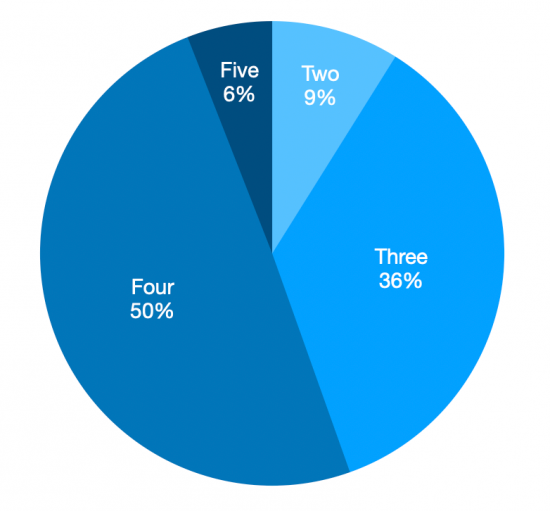
Scriptnotes, Episode 471: Sing What You Can’t Say, Transcript

October 6, 2020 Scriptnotes Transcript

The original post for this episode can be found [here](https://johnaugust.com/2020/sing-what-you-cant-say).

**John August:** Hey, this is John. Today’s episode contains some strong language, including lyrics sung by our special guest.

Hello and welcome. My name is John August.

**Craig Mazin:** My name is Craig Mazin.

**John:** And this is Episode 471 of Scriptnotes, a podcast about screenwriting and things that are interesting to screenwriters. Today on the show we welcome back one of our favorite people. Rachel Bloom is the award-winning co-creator and star of Crazy Ex-Girlfriend. Welcome back, Rachel.

**Rachel Bloom:** Thank you for having me. I’m so excited to be back. I was just listening to Scriptnotes yesterday.

**Craig:** Aw.

**John:** Aw.

**Rachel:** It is one of my delights as I continually, endlessly clean my house which is now all I do. And it’s such a good excuse to love cleaning.

**John:** Aw.

**Craig:** Yeah.

**John:** Last time you were on the show we talked about better portrayals of sex onscreen. And this is possibly confirmation bias but I feel like I’ve seen some better portrayals of sex onscreen and I want to credit you and us for at least people thinking about how they’re portraying sex onscreen.

**Craig:** Yeah.

**Rachel:** I mean, it’s definitely all us. And it’s definitely specifically that conversation that we had, obviously.

**Craig:** And probably mostly me.

**John:** Yeah.

**Craig:** It was us.

**John:** It’s mostly Craig.

**Craig:** [sings] Mostly me.

**Rachel:** Yes!

**John:** Now today Rachel we want to talk about songwriting. I want to talk about the art of songwriting and the business of songwriting because you have some opinions about how songwriters are paid and not paid for the work they do in Hollywood. And let’s try to solve this problem as best we can over the next 45 minutes.

**Rachel:** Oy, OK.

**John:** Oy.

**Craig:** I know.

**John:** And in a bonus segment for Premium members I want to talk about revivals which is what musical theater calls reboots. And what things should be revived, what things should not be revived, and how we’re thinking about stage musicals in this time.

**Craig:** I mean, I’m all for this. This is a dream come true. This is my kind of episode. I might actually listen to this one.

**John:** Ha-ha. That’s how good of an episode we’re going to have.

**Craig:** Yes.

**John:** There’s actually news this week. So we’re recording this on Friday morning, so obviously the thing that just happened was that Trump got COVID. We’re not going to talk all about that, but there’s other stuff that happened this past week.

**Craig:** Yeah. Let’s talk about anything other than that. Please.

**John:** Anything other than that. So this past week the Hollywood Commission on Eliminating Sexual Harassment and Advancing Equality released a survey of nearly 10,000 workers in the entertainment industry. So this commission is the Anita Hill Commission. The one that Kathleen Kennedy helped set up. It started in 2017 on the heels of #MeToo. And so this was a big survey of people working in the industry. It got released. I didn’t hear people talking very much about it, but I want us to talk about it because we were talking about this quite early on.

We’ll put a link in the show notes to this, and both the article is about it and the actual link itself. It’s a beautifully illustrated report. I think this report is 18 months too late at least, and I don’t feel it actually has a lot of very actionable information.

**Craig:** Mm-hmm.

**John:** But let’s talk about some of the information they have in there. So, only 35% of survey respondents believe that a powerful individual such as a producer or director would be held accountable for harassing someone with less power. But there’s an interesting gender split there. 45% of men believe that someone would be held accountable whereas only 28% of women have that same belief. So, again, that seems to track with my experience is that men don’t think the situation is as bad as women think the situation is.

**Craig:** Yeah.

**John:** One good thing the survey did is they talked to people across different areas of the industry. So they talked to people in talent agencies, commercials, film and TV, live theater, and corporate. There really weren’t big changes in any of those different categories. So, no matter where you’re at you had a similar kind of experience.

And less than half of workers felt that they noticed progress since the #MeToo movement began.

**Craig:** Yeah.

**John:** Is any of this surprising to either of you?

**Craig:** I mean, not to me. I think that there is a pretty clear direction that this is pointing out. The part of it that seems particularly useful, at least from my point of view, is the part where they’re saying, “Look, there is just simply not high enough of a number of people who are being victimized who feel comfortable enough to report.”

So the conventional wisdom is everybody is constantly reporting everything. And everybody is inundated with by HR complaints. But in fact in reality that is not the case. And that people just are still reluctant to speak out in our business when they are being victimized. That is something that does feel actionable in terms of reshaping the way that the mechanisms work.

I mean, I think that there is value in these kind of like people feel questions because it does show that there is a total lack of trust among the traditionally victimized people in Hollywood that Hollywood is going to fix itself. And so in this case we’re talking about women and we’re talking about racial minorities, people of color. They’re like, yeah, we didn’t really think anything is changing and we don’t think it’s going to change. And I don’t blame them for that.

On the other hand, I’m not sure why there was so much emphasis on how do you think things are going, because really what I kind of want to know is how are things going. And from what I can tell they’re not going well but maybe going a little bit better? Rachel, what’s your feeling?

**Rachel:** You know, I’m thinking the same thing. What are those actual stats? Obviously, I mean, I have a lot of thoughts on this. I don’t even know where to begin. But I think the first thing is are there stats on complaints. Are there anonymous stats that the HR departments of each studio, for instance, could release to us? Now, I know that that gets touchy because having been in a position of power and very familiar with the HR system it’s a very separate confidential process. Litigation can be involved. People getting fired can be involved. So they’re very, very secretive about it. But I think that like, you know, secrecy breeds a system that doesn’t fix itself sometimes. So I also would be interested in the actual stats.

That having been said, it’s weird because – OK, so first of all I talked to someone the other day who is writing on a staff and the showrunner on that staff is hostile to women. But not in a way that’s like, “Hey sugar tits. Or like I’m not going to give you the script because you’re a lady.” You know, it’s stuff that you can’t articulate why.

Like if you were to write down what they said it’s all – it’s all kind of this dog whistle hostility that you know something is wrong but because it’s not like out and out harassment it’s hard to articulate. And I think that that’s what makes – when the pressure is on you to report something you can’t just call HR or people might feel that they can’t just call HR and be like, “There’s just this feeling of hostility.” You have to have these concrete things because they’re keeping a record of the things said.

And having been in situations where there’s something off and you can’t articulate it and you start to question well maybe it’s me. Maybe I’m just overly sensitive. I can see a world in which we’ve gotten a lot of the actual offenders, right. Assumedly. We’ve gotten a lot at least of the blatant harassers. The fucking rapists. The out and out racists. Now you’re in this I think with some people this second tier. It’s definitely inappropriate and harass-y and bullying, but it’s less like tangible. It’s much more like contextual. And that’s a lot harder to report and scarier to report. And that’s why it falls on people in power to question their power and privilege because ultimately it’s like your personality fucking sucks.

That’s when we get into like change your personality. Change your leadership style. And some people I think are unwilling to examine that. And then also as far as like people’s reluctance in reporting, I saw up close what happens when you report. So basically a couple years ago there was this program called the CBS Diversity Showcase which still exists. And every year – now they just call it CBS Showcase which I think is a huge improvement.

But basically it’s a big sketch comedy show put on by CBS every year showcasing diverse people. Basically anyone who isn’t–

**Craig:** A white guy.

**Rachel:** Straight, white, and white women, too. Straight white men and women, basically. But then it also includes differently-abled people in that. And I being in the comedy community had a ton of friends who did this. And for years I heard horrible stories about, I mean, racism, fat shaming. I mean, the straight up use of the N-word.

I’d heard all these stories. And so when I actually started working for CBS, because CBS was the studio of Crazy Ex-Girlfriend, I got an invite to the diversity showcase that year. I was like, man, now I’m in a position of power here. I’ve got to say something. And so I went through – but it wasn’t on behalf of me. It was on behalf of like a bunch of people. And so I went through this process. And so it started out by asking various people, hey, are you aware that the diversity showcase is terrible? And no one at CBS was aware because it was in its own bubble.

So then they said well here’s who you talk to at HR. I talked to HR and they said, OK, well here’s how you have people come report. Here’s our actual reporting line and then here’s our anonymous reporting line so people can call in anonymously.

So then I sent out some emails and I posted a thing on a couple private Facebook groups saying, hey, various people have been complaining about the CBS Diversity Showcase for years, I just want to let you know CBS has, I’ve been assured, a strict non-retaliation policy if you complain. Because the worry is with people complaining – because it’s not like people – people knew in theory they could complain. I don’t think they were necessarily given the numbers to HR, but they theoretically knew there was a way. But they were afraid because the whole point of this showcase was to expose them to casting directors and people who could hire them. And the worry is well if I complain I’m going to get taking off of those casting lists, which is going to defeat the purpose.

Or, if I complain what if this whole program gets taken away? So, all I did was give people numbers and emails. And what was interesting is otherwise very outspoken people were like, “I’m afraid to complain,” because of those exact things. Sure, you say CBS has a strict non-retaliation policy, but you can’t prove to me that I wasn’t suddenly removed from a casting list. There’s no way to actually record that. There’s no way to actually record how various casting directors or heads of casting are going to like, if they’re thinking of a role, to just like not think of me. There’s no actual way to monitor that. And then god forbid this program gets taken away if this blows up.

So eventually the program did change. But what happened was, because this was in the wake of #MeToo, some independent publications, I want to say it was like The Wrap and I think it was Vulture – I could have that wrong – they were separately talking to people about sexual harassment, which I hadn’t heard about, from one of the heads of the showcase. And then the racism and kind of homophobia and sexism kind of came along with that.

So, I’m still not sure – my point being, because the showcase did change. And it changed for the better. I’m still not sure if that was HR dealing with the racism and the things that people I think had reported based on me giving – because I know some people did call in with complaints based on the numbers I gave them. Or, if people were like, you know what, I’m just going to go straight to news sources because that’s the only way to get things done. I actually still don’t know and I still work with CBS. I want to have faith in that system. HR was very nice to me when I spoke to them. Obviously the situation didn’t affect me, so there was only so much I could do and so much that I could share.

So I don’t know what came first. If it was HR dealing with this or if someone had to leak it to The Wrap to actually affect change.

**John:** Well, one of the things I hear you talking about is we talk about sexual harassment, which is obviously how this all started. We also talk about racial disparities and racism that’s happening. But there’s also just kind of abusive behavior on the behalf of showrunners or executives or other people. And I do feel like if we see a change from 2017 is that all the stuff we sort of knew about but we literally weren’t talking about we are talking about that a little bit more. And some of the CBS showrunners have been fired off their own shows for being assholes.

And so that does feel like there’s some progress there.

**Craig:** Yeah.

**John:** But I don’t think we’ve cracked how you report an actual incident in ways that make you feel like you are not putting yourself at risk whistleblowing on this.

**Craig:** I mean, it’s probably based on what Rachel is describing, and also based on the way that this report functions, it seems to me like this will continue to be something where there is not a clarity that you would hope for, but there is at least an increase in attention and the more that we look at it, even if we’re looking at it imperfectly, if we’re maybe not doing the perfect survey or the statistics don’t cover every possibility, or the system for reporting isn’t what it ought to be, if we keep looking at it and we keep talking about it in theory it will slowly but surely and inexorably improve.

I don’t know what the perfect situation is. I think that sometimes Hollywood, I mean, for instance the Writers Guild for well over a decade has been commissioning a yearly report on diversity, as if paying for a report on diversity was the same thing as helping diversity. It’s not. We do have a tendency – we love reports. It’s one of our things we love to do in Hollywood. We love a report because it’s something that’s easy to do. And it’s not easy to fix the problem that every single report will report. It is always the same.

**John:** But the difference between a WGA report on diversity is we’re looking at how many people are actually employed. And those numbers are actual real numbers we can look at and we can see whether there has been progress, where there’s not been progress. And there has been progress at the lower levels of TV staffing. And it’s also helpful because we can – it’s our own members who are largely responsible for hiring those lower level members. So that is actually progress that can be done.

What’s so tough though is these invisible actions that are happening and people who are afraid to file harassment reports, like those numbers are tough to do. So I think my biggest frustration with this commission report is that this should have come out 18 months ago. We’ve also spent millions of dollars on setting up some anonymous tip line that still does not exist. I’m frustrated by how slowly this has all gone is I think my biggest concern with this commission and this report.

**Craig:** Yeah. Yeah. This is, yeah, it’s complicated.

**John:** So let’s go onto a much simpler issue for us to discuss which is ageism.

**Craig:** Oh yeah. Easy.

**John:** So also this past week the Career Longevity Committee of the Writers Guild of America West sent out an open letter decrying the Academy’s new rules for inclusion and representation saying they should also be mindful of age as a qualifying characteristic. So, we’ll put a link to the letter, but I thought we’d have a brief chat about ageism and how we rank that in our list of priorities of things to think about. And Rachel you’re our young person on the call. How old is old?

**Craig:** Saying young person is the oldest thing a human can do.

**John:** Isn’t it so great? I want to say you’re our young person. Ageism, how do you think about ageism? Are you mindful of people’s careers petering out at a certain point? Where does that fit in your list of priorities?

**Rachel:** Yeah. Ageism, I really first started to think about it when we were auditioning for the pilot of Crazy Ex-Girlfriend. And everyone who came in to audition for the role of Paula, which is we wanted women of – I don’t know if I talked about this last time, but we wanted women, any ethnicity, 40s to 50s. And they were all so talented. I mean, just like pros and so many of these women could also sing their faces off. People who otherwise you would never knew were singers. It’s like, oh, I’m an amazing actress, yes, and I can also sing my face off.

And so I realized like there are so many talented women and so few roles for them. So that’s one element of ageism is just opportunity. It’s interesting when it’s in terms of like a writing staff, we’re talking about writing with ageism, because then when you talk about age you start – like I’m starting to work on a project where two of the leads are going to be in their 40s. So I want to work with someone who is at least in their 40s. Because there are certain – it’s like a kind of project where there are references. I want a partner with someone who is in their 40s. So is that like reverse ageism? Sure, but what I really want is someone who has that life experience and background. It’s seeking out the appropriate person with the background and the life skills to better write and better inform this project.

And similarly when I wrote on Robot Chicken they were actively trying to hire younger people there because it’s a sketch show based on pop culture references and all of the references they’ve been doing were – there were a lot of like He-Man, a lot of like ‘80s shows. And I came in and me and some other people and we were like, no, we’re going to do some like Nickelodeon ‘90s shows, which now is also old. So I’m sure that they should start hiring some even younger people.

I feel like ageism gets – it definitely exists, it just gets trickier when it comes to writing because ageism overlaps with where you’re coming from, point of view, your experience as a writer. And it’s I imagine kind of harder to define and then also there’s this real rebellion against like straight old white men, but like old being one of those defining factors. And that being seen from a position of power.

So I think that it’s interesting to see, especially in writing, is age in writing in the context of writers, is that something that is discriminatory? Is that something that people suffer from?

**John:** Yeah. So I was able to look up some stats on this. The average age of a screenwriter on a top-grossing Hollywood film in 2014 was 46 years and 10 months. So it’s not just the youngs who are getting hired to do these things. And it is weird with a writing career though because it’s expected that you’re going to advance through things. You’re going to start at a low level and you’re going to move your way up and you start getting movies made. And then it can take 10 years to get your career started, so therefore you’re not going to be as young as you were once.

That doesn’t help the 60-year-old person who is looking to break in to the TV industry.

**Craig:** Yeah. That’s a perfectly good number. Writer of 65, whatever you want to call – I guess 65 is what we consider a senior citizen. The problem I have with this, and I’m just kind of astonished the more I’ve been thinking about it, is that the committee is essentially saying, “Hey, Academy, your new rules for inclusion and representation should also include white men from 40 years and up.” At that point there are no more rules for inclusion and representation. Because at that point if that’s all you need to do well that’s what we’ve been doing anyway. That’s who has been winning Academy Awards. White men between the ages of 40 and 60 as far as I could tell.

We’ve discussed this quite a bit that when you look at the statistics from the Writers Guild the age group that is being pummeled and underrepresented is not writers over the age of 40, it’s writers under the age of 30. They’re the ones who are getting killed. But when you look at the way our business actually functions, while there may be a world where there is this like line in the sand of a protective class that starts at 40, I am hard-pressed as a white man who is almost exactly in between 40 and 60 to say that people like me need protection.

I look around and I think that people like me are what Hollywood defaults to. So this feels like, uh-oh, sometimes as people are trying to make things better suddenly everybody is like well what about my thing and then at some point you have to say, no. I’m actually drawing a line there. I do think that there is an issue for older writers. We’re just talking about writers now 60 or 65 and above. I think those numbers are real and I think there is just an endemic kind of ageism in our country and our culture. But from 40 to 60, which is what this committee is suggesting as far as I can tell, no. I think that’s a terrible idea. I do.

**John:** Hey Rachel you’ve had to work with people who are older than you. And you’ve had to be the boss of people who are older than you. And that’s a thing I do hear when I think about writers working on writing staffs where they’re not the senior person but they’re quite a bit older than the people they’re working for, is that an awkward dynamic ever?

**Rachel:** On my end, no. Because I feel like the art that we’re doing – I feel like comedy is such an equalizer. But in general focusing on a task, from my point of view, but again I was a boss, so I’m coming in from a position of power. So, like I want to acknowledge if you ask people from my show they might be like, “Yeah, it was really weird that I had like a 20-something year old bossing me around. Like it fucking sucked. It was humiliating.”

So from my point of view I’m like, yeah, we’re all in our nebulous 30s/40s. That’s how I kind of see everyone around me. It’s about the work. But I think what occurs to me with this is what you said earlier which is breaking in. And there are a lot of programs where it’s like young writers’ new work and young writers has become synonymous with people just starting a career, but there are people who maybe aren’t “young” but want to break into the business and have things to say. And they should be given a fair shot.

This is really true, or this is like really true, is with women and directing. Because – and Rachel Specter and Audrey Wauchope who were writers on Crazy Ex-Girlfriend they’ve talked a lot about this because they wanted to co-direct an episode of Crazy Ex-Girlfriend. It was their first foray as co-directors but they’d been writing partners for – I mean, 10, 15 years. And they had to appeal to the DGA board. And basically they didn’t get approved as directing partners, despite the fact that they’re definitely partners.

And a bias that came up is like well why haven’t you directed more together. And it’s like we had young kids. Being a director you have to be on set constantly. And if you are a mother with young kids you cannot be gone 18 hours a day. And so there is an implicit break from certain aspects of one’s career when your kids are little. And I think that’s a really big issue is the strike against moms.

And this is a larger thing – and I thought this way before I was a mother. And now that I am one I feel this so much stronger which is the lack of paid maternity leave and paid paternity leave. And that’s an overall cultural problem. In general that then leaks into our various guilds.

**John:** Absolutely. So if you’d waited one more year you would have gotten your paid parental leave which the WGA got in its last contract.

**Rachel:** Yes.

**John:** So that is something. But I want to go back to what you said about this idea of we often conflate younger with newer or less expensive. I remember very distinctly I had a lunch meeting with a producer who I really liked and she was great. And I had worked with her before. And she sort of half-pitched me this idea of something they were working on. And I was like, oh, well that sounds great. And she said, “No, we’re looking for a younger writer.”

And I was 30. And I was like, wait, I couldn’t believe she was saying that. And of course what she really meant was a less expensive, less experienced writer for it. But I do think we conflate these two things. And I think that’s to our detriment. We deliberately sort of discount anybody who isn’t in a very clear slot of being like, oh, I really mean a writer who is about 25 years old is my perception of who the writer is for this project. And that’s something we need to past. Because that’s a bias that I hear myself saying, too.

Like I’ve tried to not say Baby Writer anymore. Because it’s infantilizing and sort of makes me think of somebody who has just no idea what they’re doing, when in fact they are a competent person who can write which is why I’m considering them for a job.

**Rachel:** Yes.

**Craig:** Agreed.

**John:** Cool. Rachel, you are a songwriter in addition to being an actor and a writer of scenes. Can you talk to us about the process of writing a song that you know is going to fit into a filmed narrative? So obviously you did a ton of this for Crazy Ex-Girlfriend, but you’re also doing this for Broadway. You’re doing this for other things. Talk to us about in your head that moment where it goes from characters speaking into characters singing and how you think of that transition and just the craft of coming up with a song that is doing some storytelling.

**Rachel:** Ooh. A lot.

**John:** A lot.

**Rachel:** Well, I think I go back to that old adage of you burst into song when the emotion is too strong to speak. And then when the emotion is too strong to sing you dance. That I think rings very, very true. You need a heightened state of emotion in order to burst into song. Or you need something to be heightened. You need a grandiosity.

So, if you look at opening numbers, like even the South Park Movie, the emotions are heightened, sure, but it’s also that they’re setting up South Park to be this beautiful, grand town. And they’re doing a kind of Beauty and the Beast like opening with that. So I think there needs to be some sort of intensity or just a reason why a song here. And that’s a really loaded question because there can be a million reasons. Like on Crazy Ex the emotion was nine times out of ten always high, but occasionally we would have songs that were almost like from the writer’s point of view that were making a point. Because also comedy songs are such efficient ways to explore comedic ideas. I see most of the songs I write as like musical sketches.

It’s ways to like boil down these ideas and fully explore them. And so I’m trying to think of an example on the show where it was maybe the writers coming through. Oh, perfect example. So in season three Rebecca Bunch is kind of at a very, very low point. And a song comes in called The End of the Movie. So Rebecca is despondent. And she could sing a song right now, but instead this voiceover song comes in. And it’s a song about how Rebecca thought she was in a movie this whole time. But if this were the end of the movie it would suck because life fundamentally doesn’t make narrative sense. And it’s sung by Josh Groban.

So that was, sure, motivated by a low point in the story and Rebecca’s emotions were low, but it’s also something we as the writers wanted to say and use to comment on the situation. But I think that even then it was a remarkable low in the story.

**John:** So something like that song, you know where in the context of the story it’s going. So you can’t write that song independent of the actual scene or the sequence in which it’s going to be dropped. It just doesn’t make sense to write that song independently of that. So, as a songwriter, and was this you and Jack? Who was doing this song?

**Rachel:** This was actually a big brainstorming session between me, Jack, Adam, and Aline, this particular one.

**John:** And so you’re coming out of this with just a list of beats or ideas or like these are the things that are going to be in the song and then it becomes the responsibility to put lyrics to it. But you have an outline for what happens in the song independently of where the lyrics and the music are going to go, right?

**Rachel:** Yes. So that song was really almost all Adam, because we had had a brainstorming session where we said it should say like life is a series of revelations that occur over a period of time. And Adam was like oh my god that’s such a great lyric. He really honed in on that song. But generally the way that I go from like a bullet pointed list of ideas to crafting a song is I’ll take the brainstorm and I’ll be like, OK, so first of all what’s the hook. What’s the title of the song? What’s the chorus of the song? What’s the thesis statement of this essay that you’re writing? That comes first.

And then, OK, what is the structure? Does it feel like it’s going to be a verse/chorus structure? What will best serve the idea of the song? And then you’re like, OK, if your verses are your supporting paragraphs – sorry, AP English kid here, so I still think about it like college essays. If your verse is your supporting paragraphs, OK, what are the fundamental ideas I want to have in this verse? How do I want to heighten it into this verse? OK, what should the bridge say? How can the bridge be a departure that kind of goes a different place but then eventually gets you back to the song?

And you start kind of putting sentences and putting jokes in these verse structures. It’s not like lyrics yet. But it’s just organizing your ideas in these clusters and then you start to like rhyme. That’s how I structure it. That’s how I begin to write songs.

I know some people probably they’ll get like a rhyme in their head and they’ll be like, OK, I know I really want this line in there. And so that’s definitely–

**John:** That’s the germ there.

**Rachel:** Yeah, like we knew when we were writing the song Strip with My Conscience, like we knew we wanted this line that Jack came up with of “Let me choke on your cocksuredness.” And so like that was something that came up in the brainstorm. And it was like well that’s a great line. We have to put that line in there. So then it’s a reverse engineer of like, OK, that line is great. That could work in this verse because I know that in this verse we’re going to be talking about this aspect of her sexuality. So then how do we rhyme with cocksuredness? It was reverse engineering. And the answer is luridness.

**John:** Now, Craig, what Rachel is describing, it does sound like writing a scene, doesn’t it?

**Craig:** It does. And I haven’t done anywhere near as much songwriting as Rachel has, but I have done some songwriting for movies. And when I was working on songs with Jeanine Tesori who is a brilliant composer but absolutely refuses to write lyrics. Refuses. [laughs] So that fell to me. One of the things that I was thinking about a lot and I’m kind of curious Rachel if this was part of your calculation was that there’s this awkwardness, there’s an inevitable awkwardness that occurs about one second after the song ends, which is like – and now it’s like almost everybody, like the song ends and then I almost want everybody to sort of look at each other like, “Do we just stand here now? Or what do we do?”

And so I kind of became obsessed with that moment. And really thought as much as I could about how the end of the song would compel the next thing. So that it wasn’t like “and song” and then grind the story up again, but rather push ahead so that even if the song, like a good scene was revealing something, creating drama, resolving a conflict, or whatever it is, that at the very end there was something actionable in the way the song played out so that somebody could do a thing. Or we could cut to a thing and not feel like it was arbitrary.

**Rachel:** Yeah. Yeah. And I think that that’s a testament, because that’s such a good point, that’s a testament to I think when a song is in the right spot most of the time it won’t feel like, well, that was fun. Anyway, we should get back to playing tennis. Because if that’s the case then why did you sing a song? And that song was an aside. So even in like, and I’m going to keep referencing Crazy Ex because I worked on it for a long time, so there’s this silly song we wrote called Man Nap which is a song that men should take naps more. And really silly song. Like one of the most aside songs we ever did. But it was a song sung by Darryl to Nathaniel saying you need to take a nap.

And so throughout the song Nathaniel was getting comfortable and falling asleep. And when the song ended he was asleep and everyone left the room. So there was even a purpose to that song. And that’s the hardest part I find writing especially comedy songs is it’s this balance of you’re furthering something in the plot but yet because you’re living in a comedy song the plot has to stop, because the second that something new plot wise happens in a comedy song it’s the death of the comedy, because you’re not living in this comedic moment.

And so it’s really hard. But it has to still be motivated. It has to be urgently motivated by something in the plot. You have to convince someone to do something. You have to tell the world how much you want something. And at the end of the song, oh my god, I’m going to go get this thing. And that’s also what you can use a bridge for. If you’re living in an idea for most of the song and you’re singing a song called I Want Some Cake. And the verses are like why you love cake. And the chorus is just like I Want Cake, I Want Cake. The bridge is like but wait a second, there’s a pastry shop right around the corner. I can see. It could just go there and get some cake. And then the ending chorus is like I’m Going to Get Some Cake. And then you go and get the cake.

Terrible song idea. But you get what I’m saying that it’s–

**Craig:** It’s the worst song ever. Ever.

**Rachel:** But it’s really hard to strike that balance because a song does stop – most of the time if you’re in comedy songs it does stop the plot a little bit. And so it’s very, very contextual. Craig, what did you work on with Jeanine Tesori?

**Craig:** It’s a movie that I don’t think will ever see the light of day, but we were adapting a Gregory Maguire novel. Not Wicked, but another one of his novels. And writing songs. And it was a joy. And I loved that part of it. Getting a movie made based on a property that people aren’t familiar with always kind of an uphill battle. But it was a great lesson for me because so much of what I kept thinking about was how do I get in and how do we get out.

And for a comedy song like you say why does it happen and also how can its comedy be sort of enmeshed so that it’s not like, again, we don’t stop the show to do – like I always think of Master of the House as the best example of this. I mean, talk about a heavy show, I mean, my god. Look down. Look down. And there are prostitutes that are being in thrown in pits and all the rest. And they’re taking her hair away and her child. It’s awful.

And then you walk into an inn and characters introduced themselves and you just slink into a comedy song. And you slink on out of the comedy song. And it just did it well. You felt seamless.

And I think that this is no different than when we’re writing scenes. I think a lot of times when I read scripts I will see scenes where I’m like this is a wonderful scene. It feels like everything just stopped, a great scene happened, and now everything is starting up again. And then so I don’t recognize how that functions. Yeah.

**John:** Yeah. I’ve definitely written a lot of musicals, but I’ve also written a lot of action movies. And I think the same transition from normal things are happening and suddenly we’re in an action sequence.

**Craig:** Right.

**John:** You have the same moments of like, OK, we’re now in a heightened space where this action moment is happening. And the same trouble of how do you get out of that action moment. You’re definitely thinking about that. And I find it weird that we consider writing action to be the job of a screenwriter but sometimes we don’t consider writing the musical number to be part of the screenwriter’s job. And I always insist that it is.

**Craig:** Of course.

**John:** That’s why in the things I’ve written I write the songs, even if I don’t think I’m going to be the person who ultimately is writing that final song. Because important stuff happened there and I need to show on the page what that is going to feel like.

**Craig:** Yeah. I mean, that’s a huge part to me, at least, of these songs is what are people doing while they’re singing? That’s such a big part of it. And with film as opposed to stage the options are essentially completely wide open. You are not stage bound.

**John:** Don’t need that economy of time and space. Not required. So what are you going to do?

**Craig:** Exactly. So what are they doing? What are they looking at? What are they touching? What are they holding? Where are they going? All of that stuff needs to be considered as part of the song so that you understand – it’s part and parcel because I will just keep saying, I mean, the cottage industry that keeps telling screenwriters to not “direct on the page,” absolutely direct on the page. Direct as much as you can on the page. Because the more you put on the page the more your intention will be carried through.

The danger is when I have seen scripts for a musical, I’m thinking of one in particular, where there’s a scene and then the action says, “She turns to camera and begins singing,” and then the title of the song. And then the next scene. So, wait, they’re just – that’s it? You think your job is to just say that they sing a song? What?

**Rachel:** It’s a fundamental misunderstanding. And also [other rising] of probably music, but also songwriters, because I too have read those scripts where it’s like, “And they turn and they sing something.” It basically is like you’re writing “and they sing some fucking bullshit. I don’t know. You’ll figure it the fuck out. But it wasn’t important enough for me to write because I don’t write musicals. And I’m like ironically writing a musical because my kid likes them or whatever.”

**Craig:** Exactly.

**Rachel:** Anyway, go fuck yourself. But, no, it’s part of the story. And, in fact, in thinking about what demands to be musical numbers, musical numbers are often – it’s synonymous with the term like the fun and games of the movie. When you’d be in a montage or when you’d be in the kind of trailer scenes of a movie. That would be in the trailer. You turn that into a musical number. So important things can happen in the musical number. It’s just that you can’t suddenly in the same musical number go from the “I’m on top of the world, I’m eating cake” to “oh no, cake has been outlawed.”

Again, this is my movie. It’s called Cake.

It’s a misunderstanding of how musicals work and the purpose that music serves. And I have firsthand experience and I didn’t mean to jump in, just before I forget, there is something called Demo Derbies which John you may have been seguing into.

**John:** I was total trying to segue, but you do the segue, because talk to us about how songwriters get involved in this process.

**Rachel:** Yeah. So, I also come at things, just I should preface with, because I’ve had the experience of being both a writer and an award-winning actor I see the disparity in how both are treated. And it infuriates me.

Case in point. I have done a couple of demo derbies. So, what happens is there’s a movie, a big movie, and they decide, OK, we want a song here, or we want to even make it a musical. And so they go out to a bunch of songwriters, give them very little context, and say, “Write a song to try out for our movie.” And not only write a song to try out for a movie, we’re not going to pay you. We’re not going to credit you with any ideas for a song we may take from the song you submit. And also could you make it a finished song? And we also won’t pay you for that production. OK, thanks, bye.

**Craig:** [laughs]

**Rachel:** So it’s asking a bunch of writers to pitch them an idea, except they can ask as many people as they want. Because usually if you’re pitching on an idea you know you’re in the mix. You know when it’s like a bakeoff. You know you’re in a mix with a couple of, maybe, I don’t know, a couple of other people. I’m sure there are sometimes more.

But often they’ll just solicit songs from as many songwriters as they want. I got an insight – I had a friend working on a major motion picture and they were showing me the song submissions. And there were upwards of 15 submissions from big songwriters. And they were also not only big songwriters but also they were fully produced. And that’s the thing that’s different from submitting a spec pitch to a studio is you’re asking songwriters to not only do the work of writing a song, which is really hard, and is frankly harder than coming up with a pitch. But also you’re asking them to pay for production. To pay for a studio. To pay a producer to comp together the vocals. To pay musicians. And they’re not going to – sometimes they’ll give you a demo fee. But most times they won’t.

And it’s just like a complete devaluing of songwriters’ time. And top songwriters do this because Adam was doing this. I did a couple of these with Adam and Jack. And it’s not good for the movie. It doesn’t serve the movie because you’re asking people in a vacuum to write a song without giving them the context. You’re not giving them any say on how the lead in to the song should be, how the lead out of the song should be. It’s other-rising of music.

**John:** Yeah. So I was emailing with you and Jack about this a year ago, even more than that. And we’re talking about Adam Schlesinger. Obviously an incredibly talented songwriter, producer. Did a lot of stuff for you on Crazy Ex-Girlfriend. On Crazy Ex-Girlfriend, you know, you and Jack and Adam were writing songs, but you were all employees of Crazy Ex-Girlfriend. So you guys were covered in ways that someone who is going up for one of these demo derbies is not covered and could theoretically be spending thousands of dollars producing these demos and have nothing to show for it.

**Rachel:** Yeah.

**John:** Ugh.

**Rachel:** Exactly. And granted, sorry, I will actively be breastfeeding during this next part.

**John:** That’s awesome.

**Rachel:** If you hear sucking and or cooing sounds.

**Craig:** Those might be coming from me, though. Just because I do that. It’s around that time of day where I just start making sucking and cooing sounds. Go on.

**Rachel:** [laughs] Everyone has their process. I don’t want to – because this was important to Adam. And I don’t want to speak for Adam because the way that Adam got the gig for That Thing You Do was it was a blind demo submission. So it can be a way – I mean, he wasn’t an unknown songwriter at the time.

**Craig:** No.

**Rachel:** It can be a way for people to achieve success, but it really takes advantage of songwriter’s time and just – yeah, it represents a fundamental misunderstanding of how musicals are done because the same is not the case for theater. If you write musicals for theater you are part of the creative – I’m in this right now. I have literal points in the decision making of a musical because there’s a union called the Dramatist Guild. So the book writers can’t make changes to my songs. That is in the Dramatist Guild. I am part of dreaming up the story for this musical.

There are rights that fundamentally understand the role of songwriting in storytelling in theater that you don’t have in film and TV.

**John:** Now, Craig, talk us through why it’s different, because you’re going to explain copyright and why there’s a big difference there.

**Craig:** This is the sort of push and pull of the world that we’re in. Because on the one hand in theater everybody that’s writing is an author. You author your songs. You’re the author of those songs. You write a play, you are the playwright. That copyright belongs to you. And so you are licensing the work and therefore you are collecting royalties on that work. And if you have a show like the aforementioned Les Mis that goes on and on and on, multiple revivals and tours, even high school productions, all of it funnels money back towards the author.

In Hollywood we don’t have that. We’re not authors. We are employees. Interestingly, I think for some of these cases where you’re writing songs you still maintain your authorship, but that’s why they can kind of do this to you. Because you’re not protected by a union because you’re not an employee. So the Writers Guild has a working rule that says you can’t write spec work on demand. In other words if a studio says you need to write 30 pages in order for us to decide if we’re going to give you this job, you’re not allowed to do it. It is a violation of our contract. It’s a violation of our working rules. But that’s because we’re employees. And a union can do that.

And when you are not an employee all sorts of cool things, but more of the Wild West. And you can be abused. It’s easier weirdly to get abused I think when you’re not under the aegis of an actual employee’s union.

**John:** Yeah. So I do wonder if there are situations, like we’re talking about these movies where there are demo derbies for that, but I often hear from people who are writing songs for animation projects. Or especially like TV animation where they have to crank out these songs for a Duck Tales or something like that. And in those situations I’m not sure they actually are holding on to the copyright for their songs. And I think those are all getting subsumed by the episode itself.

I want to find some protection for folks who are doing that kind of writing. And I don’t know that we’re going to be able to do it through the WGA. But at least we can shine a spotlight on these are abuses that are happening and try to change some of the behaviors here.

Rachel, you talked about a demo fee. Would that help?

**Rachel:** Yeah, and we got it – we had to demand it on one thing that we did. That would help. I think what would help more is in an ideal world if you have to submit a song for something you wouldn’t be expected to submit the full song. What you’d be expected to submit is maybe a verse and a chorus, or just your chorus, and it’s just on one instrument. It’s just a piano vocal. It’s just a vocal guitar.

Now that does ask executives to use their imagination, which I know is a strong demand for most executives. But that would be a more reasonable demand than write a full song. And then certainly write and produce a full song. I understand that like someone pitching a song, “OK, here’s the song I’m going to write and it’s going to sound like this,” I understand that you can’t really get a sense of what that songwriting style is going to be. But there is a middle ground between like produce a fully done song and pitch us your idea for a song.

And that’s where I feel like, and I don’t know much about how these decisions are made in the Writers Guild, but if the Writers Guild stipulated, OK, you’re a songwriter, if you’re going to pitch something on spec here’s what you’re allowed to do, here’s what you’re not allowed to do. But that implies that you would have to then get into the guild as a songwriter. It seems like there should be someone protecting the writers saying here’s what you are and are not allowed to do on spec.

**John:** Yeah. Because, Craig, I’m thinking about Rachel is obviously a WGA member, if she’s a pitching a song, I mean, she is writing scenes that go with it. So, it becomes a very fine line. Is she doing spec work in turning in that spec song for a thing? It’s the assumption she would hold on to the copyright behind it, but if it’s specific to the movie that she’s doing it’s not like she has any value for that work that she did that she could use and exploit in some other way. Her copyright isn’t–

**Craig:** If it’s written down on paper, if it’s written on paper then I think there’s an argument that it’s writing. And is covered and they can’t ask for it. If it’s an mp3, if it’s an audio file, it’s a song, then it’s not on paper. It’s not writing. That’s the weird part of it. I mean, according the Writers Guild right now. At that point you’re saying again that this is a song that you would own the copyright to but you would license. And if they’re like, “Oh, no, no, we commissioned this,” then even then the Writers Guild does not I don’t believe cover lyric writing.

**Rachel:** No. Sorry, hold on, burping a baby. But what these demo derbies – first of all you sign, I think, NDAs. I couldn’t be… [baby cries]

I know, I’m very sorry.

**Craig:** Aw. Hi baby.

**John:** I think it’s the first baby on Scriptnotes. I like it.

**Craig:** Hey baby. Hey.

**Rachel:** [baby cries] OK. OK. All right. Goodbye.

**Craig:** I imagine that you just put her down and she just walked away. Because she’s actually like eight. And she just was like – and you’re like, bye, and she just cries as she walks away, unsatisfied.

**John:** Yeah. It’s a Game of Thrones/Arryn kind of situation.

**Craig:** Exactly.

**Rachel:** Bye, I’m going back to middle school. Someone came in and helped take her away–

**Craig:** Spirit her away.

**Rachel:** For the moment. So, first of all when you do these demo derbies, they own the work that you do. It’s not like you’re licensing this song. You’re writing the song for this thing. It’s not like you can then take that song and be like this is my song. You sign – my brain is foggy right now, but I believe you – well, first of all, you sign NDAs about the material they’re giving you. But you also sign something that like they own that song.

So, you are–

**Craig:** Right. It’s a work-for-hire in other words.

**Rachel:** It’s a work-for-hire that sometimes isn’t paid. Right?

**John:** [laughs] An unpaid work-for-hire.

**Rachel:** But Craig you were saying is it on paper, it’s always going to be on paper because you’re always going to have lyrics on paper.

**Craig:** But do you submit those lyrics or not?

**Rachel:** Yes. I do. Here’s another wrinkle of the way that I do my work which is I don’t just write lyrics. If I’m writing a song I script the song, because I have very specific things that I want to have happen. So I full on any song I do it’s in Final Draft and I turn in the lyrics, or they’re in Final Draft. And I do scripted elements of the song. So I absolutely–

**Craig:** That’s writing.

**Rachel:** Yeah, no, I’ve done that for numerous places.

**Craig:** Well, you should stop. [laughs]

**Rachel:** Well, so what do we do? How can–?

**Craig:** Well, I think that for starters it would be good for the Writers Guild to know that some of these businesses that are asking writers to submit songs are either requesting or are accepting script pages. Because they’re not allowed to. It is a full violation of our working rules. They’re allowed to ask for songs all they want. You can also come and paint a mural for them. But if you’re writing script pages, including action description and stuff like that, then it’s writing. And they can’t do that as a condition of employment. They’re just not allowed.

**Rachel:** I mean, that’s me just the way I work doing that. So I don’t want to speak for other writers.

**Craig:** And they should pay you.

**John:** It’s not about volunteering. They shouldn’t be accepting it.

**Craig:** What they should say is, OK, if we want this and we do we’re going to at least agree to pay you scale. It’s not that much. Believe me. It won’t change your life. But at least it covers the work under the contract that applies. So, something to think about and certainly – by the way, I find a lot of times these companies or their representatives, they don’t know either. I mean, it’s been 10 years, but I sat in a room at Paramount, this is like four regimes ago, with the Committee on the Professional Status of Screenwriters, and we were talking to all of the Paramount executives about the free rewrite issue and why it needed to stop. And one of the junior executives said, “Well, we need to get a producer pass, so how does the producer pass fit in?”

And we were like, actually we didn’t even get to say it. The person who was the president of production, very embarrassed, I had to turn to her and say, “There is no producer pass. It’s not a thing.” They just don’t know. So in this case it may be also that they just don’t know.

**John:** Yeah. So hopefully we’ve raised some awareness on this and just like we improved sex onscreen we can improve the lives of songwriters who are trying to write for the film and television industry. We can always hope.

**Craig:** Yeah.

**John:** Craig, do you have a One Cool Thing for us?

**Craig:** I do. It is a revival of a former One Cool Thing of mine. I am obsessed as some of you know with the movie The Boys in the Band. I mean, I never saw the play. I have just not had the ability to see it performed live. But I am a big fan of the 1970 William Friedkin version of Mart Crowley’s excellent play because it is both awesome and terrible at the same time in various ways. It’s a remarkable thing and I’ve talked about it before.

There is a new Boys in the Band, the play itself has had a fascinating renaissance, where it had been kind of rejected – the history was it was on Off Broadway, then it went to Broadway. It was a big hit. They decided to make a movie. And while they were shooting the movie Stonewall happened and everything changed. And the story of Boys in the Band felt like it was out of its time, like it hadn’t kept up. And that so much of it was about the self-loathing homosexual. And nobody wanted to hear it at the time because the word at the time was pride. And it essentially got kind of pushed off into whatever the gay version of Uncle Tom is. It was just sort of like you go over there. We don’t want you anymore.

And now it’s back, which I think is great. Mark Harris who is a fantastic, I don’t know what you’d call him, critic, but like in the good version, not a reviewer.

**John:** Journalist. Yeah.

**Craig:** But a thinker about culture. Has written a really interesting piece about it contextualizing Boys in the Band as part of history, and particularly part of LGBTQ history.

So there’s a new version of Netflix, because everything is on Netflix, and what’s fascinating about it is that it is an all-gay cast. So the original, the movie was not an all-gay cast. It was mostly a gay cast, and tragically and not at all unexpectedly I think almost every single gay actor from the 1970 movie was dead by 1992 from AIDS. So it was sort of like tragic elimination of these very talented, brilliant guys. And so here comes this new version that has sort of this triumphant revival. Entirely openly gay cast of actors, including lots of actors that we all know like Zachary Quinto and Jim Parsons.

And I thought it was really well done. It was directed by Joe Mantello who is also gay. So it was like everybody everywhere was sort of like, OK, we’re going to do this with full representation. And I have to say I thought it was really, really good. But I want to single out Jim Parsons because – look, I don’t like speaking ill of the dead, but Kenneth Nelson who played the main character of Michael in the original Broadway production and in the 1970 movie, he just wasn’t good. I’m just going to say it. It’s just bizarrely over the top. He’s like in a different movie. He is over there in like Mommie Dearest land, and everybody else is like in a regular movie.

And Jim Parsons kind of reclaims that part and does it in a way that I thought was like, OK, yes, this makes sense. This is really good. I thought he was fantastic. So big thumbs up to Jim Parsons and in general to the production of The Boys in the Band on Netflix. Totally worth watching. A fascinating little time capsule from the late ‘60s.

**John:** Cool. Rachel, do you have a One Cool Thing to share with us? Anything you want to recommend to our listeners?

**Rachel:** Yeah, just in general a comedian. Demi Adejuyigbe. He is such a funny comedian and basically every year on September 21st for the past couple of years he’s done a music video online to the song Do You Remember…September, because it’s about September 21st. And this year he really topped himself. And they’re always these fundraising ventures. And he basically said if you give me enough money I’ll do another one this year. And he earned so much money this year.

So he’s doing these amazing kind of OK Go music videos that are also for a good cause. And just everything he does is so funny in general.

**John:** Agreed.

**Rachel:** Check out his stuff. And it’s Demi is his first name. And then his last name is spelled Adejuyigbe.

**John:** He’s great. And I believe he was a writer on The Good Place if I remember correctly.

**Rachel:** Yes.

**John:** He’s really, really talented. So we’ll put a link in that to the show notes. My One Cool Thing is just a phrase I heard this last week which I had never heard before which is apparently the common self-helpy kind of AA kind of phrase. But it’s “Let go or be dragged.” And it’s the idea that like if you’re holding onto something that’s pulling you into a bad place you need to let go of that thing. And it’s such an obvious idea and yet it would be so useful for so many things I could think of in my life where it’s like why am I holding onto this thing that is pulling me in such a bad way. And the proper answer is, no, you just have to let go of that thing.

And so “Let go or be dragged” is just a nice thought that I feel like I should put a stickie note on my computer here.

**Rachel:** That’s beautiful. I love that.

**John:** Yeah. But more crucially, not just a One Cool Thing, Rachel you have a book to plug. Tell us about your book.

**Rachel:** I do. Oh my god. Thank you so much for asking. It comes out November 17th which is great because we won’t be talking about anything else that’s way more important than my book.

**John:** No, 100 percent.

**Rachel:** In November. There’s like nothing else going on. It’s called I Want to Be Where the Normal People are. And it’s basically a collection of essays and sketches and comedic prose about my experience and feelings on normalcy and not fitting in.

And it starts in childhood and ends in now. And it was always going to be a kind of time capsule of part one of my life, before I had a child. And then now it is very much a time capsule of part one of my life because my child is the age of COVID, born in March. And I finished the book literally the day before I went to give birth.

So, if you feel like you don’t fit in, if you have a kid that feels like he/she/or they don’t fit in, if you want to read about what it’s like to not fit in because you wonder what that’s like because you’ve always fit in, check it out.

**John:** Excellent. And so we’ll have a link in the show notes to that so people can find that in all the bookstores everywhere. So, I’m looking forward to that.

All right. That is our show for this week. Scriptnotes is produced by Megana Rao. It was edited by Matthew Chilelli. Our outro is by Rachel and Jack Dolgen from our live show way back in 2014. Do you remember that live show Rachel?

**Rachel Bloom:** I do. Is that the one where I sang How Do I Get Famous?

**John:** Exactly. So, we’ll be playing that. If you have an outro you can send us a link to ask@johnaugust.com. That’s also the place where you can send longer questions. For short questions on Twitter, Craig is @clmazin. I am @johnaugust. Rachel, what are you on Twitter?

**Rachel:** I’m @racheldoesstuff.

**John:** Yeah. And you also are on Instagram which is where I more often see you, so follow her there.

We have t-shirts. They’re great. You can find them at Cotton Bureau. You can also find the show notes for this episode and all episodes at johnaugust.com. That’s also where you find the transcripts.

You can sign up to become a Premium member at Scriptnotes.net where you get all the back episodes and bonus segments.

**Craig:** Goodbye Rachel and goodbye to your baby. And I miss you. And we’ll all see each other soon.

**Rachel:** Yes. Miss you two men.

**Craig:** Bye.

**John:** Bye.

[Bonus segment]

**Rachel:** Oh, that was so good. I’m so proud of myself.

**John:** You should be so proud of yourself.

**Rachel:** Oh, that was good.

**John:** Yeah. That brings us back to a simpler time. A simpler time. A lovely time. A Christmas show. And we first got to hear about you. It’s where I first met you. And learned about this show. Back then it was a Showtime show. It was before you had even moved to the CW. Wow. So long ago.

**Rachel:** Oh man. Oh.

**John:** So Craig was going to be here for our revival segment, and then Craig had to take off because he had urgent work stuff to deal with. So it’s just you and me talking revivals. But I love a revival and you’ve been in revivals. Let’s think about revivals and musicals and what is sort of the point of revivals. And Craig’s actual One Cool Thing was a kind of revival, The Boys in the Band, sort of taking a thing from the past and looking at it with a new lens.

Where do you come down, Rachel, in terms of the energy we spend reviving old pieces of musical theater versus creating new ones? What should that balance be?

**Rachel:** Yeah. I have sometimes have problems with revivals that really try to like – if you’re going to do a revival that really reimagines something, where it’s like – at a certain point – and I don’t want to throw any like one revival under the bus, so I’ll be as vague as I can while still remaining specific. But if you’re going to do a revival and it’s like but I really want to make it about this, it’s like well then why not just write a new show about that? Because you’re trying to take a piece that was written in the ‘40s or the ‘50s and make a point about the way that we treat gender.

And it’s like, yeah, you can do that. And that is really cool. And that’s all the context of this is how we used to think and here is how we think and isn’t that contrast cool? And that does have value and I have a ton of revivals in my head that I’ve always – I should do a revival of 42nd Street where everyone is on an acid trip. I don’t know. I’ve had ideas like that.

But at a certain point there’s a very fine line between reimagining and then like just write a new show.

**John:** Yeah. And obviously all of the Shakespeare shows had antecedents. They were based on things that beforehand. But that’s not really what we’re talking about. We’re talking about sort of like, OK, we’re going to take the book and the songs from this musical and we’re going to stage them again, either as a very faithful recreation of them. So you and I have both seen plenty of those things where they dust off an old musical and just like stage it again for two nights.

You did one with Susan Stroman where they took an old musical and staged it.

**Rachel:** I did.

**John:** And it’s sort of fun to see what those things were like because they weren’t ever filmed in a way that you should see it. So kind of the only way to experience them is to see them. But then a lot of times you watch them and you’re like, well, that’s not actually interesting. Or that’s not funny anymore. That’s just not a thing we want to see. And that’s the challenge of some of these revivals. You realize like, oh, well maybe there’s a reason why we’re not staging this one again the way we do The Sound of Music every couple of years.

**Rachel:** Yeah. I think that’s also a good point that comedy has a real shelf life. And it’s a problem because the golden age of musicals, the ‘50s through the ‘70s, a lot of things are relevant but the comedy gets more and more and more dated. And then similarly I wanted to do – I looked into directing a production of Anyone Can Whistle, this little known Sondheim show, or lesser known Sondheim show in college.

And I got access to the script. And everyone was like, “You want to do Anyone Can Whistle?” Because the music is great. And they’re like, OK, good luck. And I looked at the book and it’s a mess. It’s an absolute mess. And there are a lot of musicals that are messes, but also that is a problem especially in early musical theater where everything is serving the song so the book is almost like an afterthought.

So then it’s like, OK, well do you then do a rewrite of the book, in which case is it a revival?

**John:** Yeah. Or a complete reinvention of a thing. This whole topic was brought up, our friend Dan Jinks tweeted this last week, “Broadway geeks, what’s a musical that has really good things in it but is probably not revivable in its current form?” And it sounds like book problems are going to be one of the big issues that get in there, but also just sometimes there’s a couple of great songs. You’re like, wow, that’s just so amazing. And then you realize like, oh, there’s also a lot of stinker songs that if you were listening to the cast album you’re just like clicking past those tracks.

And then you actually have, oh, we’re going to have to sit here for four minutes and watch this thing happen onstage, that becomes a real problem.

**Rachel:** Yeah.

**John:** So what do we do? The revivals, like Anyone Can Whistle, that’s a situation where you could go to Sondheim and say like, hey, I really want to do this thing and can we really take another look at the book or how we get into this? Or do we do just a concert staging or some other way to showcase those songs without being kind of stuck with the book?

**Rachel:** Depends what your goal is. Because they’ve done concert readings of Anyone Can Whistle that I think I’m pretty sure they did a glossed over version of the book. That’s if you want to just focus on the songs and say, you know what, let’s revisit these songs. They’re so good.

If you think the piece – and I haven’t read the script of Anyone Can Whistle in quite some time at this point, but if you think, you know what, this piece does have not only amazing songs but also amazing themes, and I have some ideas about how it could be just made fantastic, but it has some problems, or some things that we need to update. And there are ways to go to the original writer or the company that controls the rights and do that. That’s another way to go.

**John:** Yeah. We were talking about the difference between movies and TV shows where it’s all work-for-hire versus something like a Broadway musical where that copyright is controlled by the original playwright, or the original songwriters, and so you are not allowed to make those changes without their permission and their blessing.

There’s many good things about that, but it also gets into situations where you can’t make a change. It seems like an obvious change that you would want to make, it’s not just incredibly misogynistic or racist or just have real troubles putting on a modern stage. Tough.

**Rachel:** Yeah. And I know someone who got dinged in college. There were some fellow students who put on a production of Company but with an all-male cast. They wanted to make it about gay relationships. But they also decided to set it now, rather than setting it in the early ‘70s. So Another Hundred People became this like club song, which is actually quite interesting. But they changed certain things. They said like “I’ll text you.” They changed certain things to be updated with their revival. And R&H who owns the rights, Rogers and Hammerstein Company, found out and they had to write a personal apology letter to Stephen Sondheim.

**John:** Oof. But in some ways it’s kind of fun to write a personal apology letter to Stephen Sondheim because you’re like, ah, I got to write to Stephen Sondheim.

**Rachel:** That is cute. You’re right.

**John:** With all the trouble I created. With Big Fish, you know, the musical, there have been certain changes that we’re kind of allowing just because the show gets performed so often in kind of conservative campuses. Like Utah. Utah High School, they just love it. But there will be certain lyrics that they don’t want to say.

One of the things we’re sort of wrestling with is they try to have the Josephine character not be pregnant at her wedding, and it’s like, well, that’s actually kind of a crucial plot point. And yet if that’s the obstacle between you staging the thing and not staging the thing, I guess we’re just going to kind of live with it. Because we’d much rather you see all the themes and all of the joyful things of Big Fish than for us to get hung up on sort of how pregnant Josephine is at this wedding.

**Rachel:** Yeah. It’s all context of what are you changing, why are you changing. What’s the purpose of you reimagining? I remember hearing about a production of South Pacific done by the director Anne Bogart a while back that all took place in a mental institution. The patients were doing South Pacific as a therapeutic exercise. And I believe they got in trouble with R&H about it.

So it just depends on a lot of factors, but I think it all comes down to why. I think if there’s a compelling like why are doing this, why now. It’s also like contextual. Because there was about to be this Music Man revival with Hugh Jackman and Sutton Foster. I don’t think they were going to make many changes. And the question is like why now. Because it’s Hugh Jackman and Sutton Foster. And that’s going to be awesome. And they’re perfect for those roles and I want to see that. And I want to see The Music Man just done on stage again. And that sounds so fun.

**John:** It’s escapism. There’s always a role for escapism in these shows as well. You’re working on The Nanny right now. I’m sure you will tackle some meaningful social issues in The Nanny, but that is a piece of escapist entertainment that I cannot wait to see.

**Rachel:** Yes. And I signed onto that project because it’s a part of my childhood and because for me there is a – it’s a nostalgic escapism that also is part of my identify because it’s about a loud, brassy, outspoken Jewish lady. And so we are going to come at some things with a more contemporary lens. But especially whenever Broadway comes back, should this go to Broadway, of the why now, people are going to need escapism, especially like back to a time before a lot of complicated things happened. Let’s just say a time pre-9/11 to say the least.

**John:** That would be lovely.

**Rachel:** And I took a musical theater writing class where they walked us through why are you making something, a musical, when you’re adapting something that wasn’t a musical. And the fundamental thing is can you find a new element in the piece or can you make the piece better by making it a musical.

**John:** Yup.

**Rachel:** And I came to the conclusion with that that yes. But sometimes that’s not the case. If you have a movie out there that already has this 90-minute/two-hour narrative that is perfect, that I find less compelling to make into musicals.

**John:** Because then you’re trying to wedge some things in there and either you’re going to have to musicalize some things that were just spoken before, which is awkward, or you’re going to have to – you’re always going to be losing some things by putting the songs in. And in putting the songs in are you really transforming it in a way that’s better for everyone to be watching?

**Rachel:** Right.

**John:** Rachel, good luck with all and it’s so good to talk with you again.

**Rachel:** It’s so good to talk with you, too.

**John:** Cool. Bye.


Links:

* [The Hollywood Commission](https://www.hollywoodcommission.org/)
* [Anita Hill’s Commission Launching Industry-Wide Platform to Report Sexual Harassment in Hollywood](https://variety.com/2020/biz/news/anita-hill-sexual-harassment-survey-hollywood-entertainment-industry-1234786141/)
* [WGA West Career Longevity Committee Demands “Inclusion And Equity” For Older Writers](https://deadline.com/2020/09/wga-west-career-longevity-committee-demands-inclusion-and-equity-for-older-writers-1234588890/)
* [List of Academy Award for Best Director winners by age](https://en.wikipedia.org/wiki/List_of_Academy_Award_for_Best_Director_winners_by_age)
* [Ages of Top Grossing Screenwriters](https://stephenfollows.com/how-old-are-hollywood-screenwriters/) and [Directors](https://stephenfollows.com/how-old-are-hollywood-directors/)
* [Boys in the Band on Netflix](https://www.netflix.com/watch/81000365?source=35)
* [Follow comedian Demi Adejuyigbe on Twitter](https://twitter.com/electrolemon)
* [Let Go or Be Dragged](https://powerofted.com/let-go-or-be-dragged-3/)
* [Get a Scriptnotes T-shirt!](https://cottonbureau.com/people/scriptnotes-podcast)
* [Rachel Bloom](https://twitter.com/Racheldoesstuff) on Twitter
* [John August](https://twitter.com/johnaugust) on Twitter
* [Craig Mazin](https://twitter.com/clmazin) on Twitter
* [John on Instagram](https://www.instagram.com/johnaugust/?hl=en)
* [Outro](http://johnaugust.com/2013/scriptnotes-the-outros) by Rachel Bloom and Jack Dolgen ([send us yours!](http://johnaugust.com/2014/outros-needed))
* Scriptnotes is produced by Megana Rao and edited by Matthew Chilelli.

Email us at ask@johnaugust.com

You can download the episode [here](http://traffic.libsyn.com/scriptnotes/471standard.mp3).

Scriptnotes Episode 468: Should You Pitch or Spec That? Transcript

September 18, 2020 Scriptnotes Transcript

The original post for this episode can now be found [here](https://johnaugust.com/2020/should-you-pitch-or-spec-that).

**John August:** Hello and welcome. My name is John August. And this is Episode 468 of Scriptnotes, a podcast about screenwriting and things that are interesting to screenwriters.

Craig is gone today, but luckily we get to welcome back our favorite north of the border screenwriter, Ryan Knighton. Ryan, welcome back to the show.

**Ryan Knighton:** I love that I’m your favorite north of the border. I think Vancouver is basically the northern suburb of Los Angeles at this point.

**John:** I didn’t want to get too narrow, because I could say like our favorite blind Canadian screenwriter. But really that just becomes insulting at some point.

**Ryan:** Then they’d be like well which one are you talking about.

**John:** Yeah. But you proposed – I’m so happy you’re here – because you proposed our main topic for today. So tell us what the question is that you asked that we will try to answer today.

**Ryan:** Well, the simplest way to put it was my question to you was what goes into the strategy between choosing whether you pitch a project or spec a project. And I know like there’s different conversations probably for whether we’re talking about television or feature, we can get into that. But it kind of came up recently for me, and I think it has for a lot of people, because of the pandemic. You know, the industry has really hit a kind of parenthesis since March and we’re waiting for the other end of that parenthesis.

But it’s made me rethink sort of my assumptions about how to take out a project and how best to put food on the table really in this time. So that’s what I was thinking about, because I don’t want to take anything for granted anymore. I mean, I’ve always assumed I had a certain approach to selling projects and now I don’t know if that’s sort of the right way.

**John:** Well let’s stay into that today. So that’s going to be our main topic. And so I reached out to a bunch of our Premium subscribers and asked for their questions about this. And so we will talk through your projects, my projects, and their projects to figure out what makes sense to pitch, what makes sense to write yourself, and hopefully figure out for 2020 what is the best approach.

I also want to talk today about the Academy put out new requirements for Best Picture. And there’s also questions about options and lawyers, so we’ll see if we can answer those questions. And then in our bonus segment for Premium members I want to talk to you about how you plan to spend this year training to become an amazing surfer and how you’re going to become a competitive surfer apparently. That’s what you–

**Ryan:** Critical screenwriting information for everybody.

**John:** Absolutely. It’s all about Canadian surfing. That’s really what this podcast is about. Hey, so let’s get started with some news. You saw this piece that the Academy is changing the rules for eligibility for Best Picture starting I think in 2023. Did you have an initial take on this? What was your read on these changes?

**Ryan:** Long overdue. It’s interesting, sort of the criteria that they’re using that there are sort of four categories I believe it is and sort of two of them must be met to be eligible for Best Picture, I looked at it and I thought, well, when you have a logjam sometimes you need a blunt tool. And I don’t necessarily think it’s the most elegant solution to a cultural problem. But sometimes you’ve got to kind of kick at the logjam in a very blunt way to get things moving. And obviously the status quo hasn’t been working. And meritocracy is not an argument when we haven’t seen a lot of change happening.

So, I welcome it. I don’t know what sort of the long view of this is. Because maybe this is what we needed all along. Maybe this is a great solution. But I don’t know, what do you think? Where is your mind at?

**John:** Let’s try to describe what it is, because it’s actually complicated. So we’ll put a link in the show notes to what the actual criteria are and how you can meet your eligibility requirements. And this is only for Best Picture, not for any other category. But essentially there’s four basic ways in. There’s four tiers that you need to hit. And within those there are specific requirements of things you can do.

So the first one is about the representation onscreen. So these are actors in roles that are being portrayed by historically underrepresented groups, so including different ethnic groups, people with disabilities, LGBTQ people. So that’s one way in.

**Ryan:** Canadian surfers.

**John:** Canadian surfers. I was thinking you and me together, you’ve got the gay screenwriter, you’ve got the blind writer. There’s some way to packet us together and we can make a Best Picture.

The second way in is the talent behind the lens. And so these are like you and me writers, directors, casting directors, costumers. So all the people who are not in front of the lens. And so representation among those groups. And that first category is also about the subject matter of the picture itself, and so that can be a fact that pushes you across the line.

Beyond that, you can look at sort of the studio or financier behind it. And so if they have programs that bolster inclusion that is a way to meet that requirement. Or the marketing and publicity engine behind the release of the film, if they have representation that meets certain requirements that can do it.

And so one of the natural first things you think about is like, OK, well there’s certain movies that it’s going to be hard to hit those requirements if it’s just about representation onscreen. So classically like a WWII war movie, it may not be possible to have a lot of different representation onscreen. That’s part of the reason why there’s other ways to sort of hit those requirements.

So, will it work? I don’t know. I think the reality that everyone is frustrated by this announcement probably means that it was pitched just about right in that people feel it doesn’t go far enough or it goes too far. So, in that way it may be sort of that sweet spot of actually making some changes. I think I could imagine that a studio looking at making a picture is going to have to be thoughtful about how they’re going to achieve these requirements and in thinking about how they’re going to achieve these requirements they may make some decisions that will bolster inclusion within the industry. I guess that’s the best case scenario for me of what’s happening here.

**Ryan:** It seems to me too like it’s a way of encouraging better behavior. Again, it’s sort of a blunt tool, but I think it’s a way of also just creating better habits in the way we think about how we both work behind the camera and in front of the camera and the stories we tell.

I think it’s also, you know, the other thing that kind of gets muted by this is what are we afraid of here by putting something like this in place? It’s not like they’ve put it in place rules that say you can’t make a movie if you don’t have these things. It’s just for the Best Picture nominations. And it’s interesting because I think your movies will change by virtue of the people that you include in all those aspects. I mean, it helps inform story. It helps inform sort of the point of view of the way that story is told. I don’t see a reason to be afraid of that.

**John:** I don’t really either. And especially in terms of looking at the behind the scenes talent, you might say like, OK, well it’s hard for us to find people that meet these requirements. It’s like well that is actually the problem and actually by incentivizing you to find those people you actually are increasing the supply of those people who you want to see more of in this industry.

Naturally I think everyone looks back at the work they’ve done before and figure out like, oh, which of the movies I’ve worked on would meet these requirements? And so I can’t say exhaustively sort of all the movies I’ve worked on. Some of them would, some of them would not. And you always have to, when you look back, be thinking about, OK, yes, but I was making that movie in 2003 and this is 2020. So I would be making different choices regardless.

So a movie like Big Fish it doesn’t meet some of the requirements in terms of onscreen representation, but I think probably would make different choices that would hit some of those things. Behind the scenes you had me, a gay screenwriter, and a bunch of gay producers. And that would help achieve some of those behind the scenes things. But it also would have come out of Columbia Pictures which would have by its nature had had better representation within those category three and category four requirements.

So I feel like it’s easy to think, oh, well a bunch of those old movies would not qualify. Yes, but if those movies were made today you would be making different choices anyway, so therefore they’re more likely to be qualifying.

**Ryan:** It’s interesting, too, you know, in terms of my TV experience going back to one of the first writer’s rooms I was in I learned later that even though I’m disabled I didn’t qualify as a diversity hire within that room. So it’s interesting to think like even between TV and film sort of the definitions of diversity are quite different.

**John:** Yeah. That feels like a big oversight. I hope that is something that everyone is looking at correcting. And we should stipulate that in terms of TV writer’s rooms the studio might have standards for diversity, the Writers Guild might have standards for diversity. There’s not sort of one governing body the way that the Academy is trying to look at diversity in terms of this Best Picture requirement.

So that TV writer’s room you were talking about was for In the Dark, the CW show, right?

**Ryan:** Mm-hmm.

**John:** So tell me about that. That was the first TV show writer’s room you were in and we’ll put a link in the show notes to the episode where you talk about your experience being in that room. And you just went through that room again, right? Because you just finished writing a new season.

**Ryan:** We just finished season – I just stepped off season three. Yeah. We did one week in the room and then we went remote to Zoom. And I completed my time in the room off Zoom, which was kind of fascinating.

**John:** Because I know you were in town briefly and then you departed, so I had hoped to see you while you were here in Los Angeles. But what was your experience finishing that season on Zoom? And as a blind writer are there additional challenges being on Zoom, or in a weird way are you used to just sort of being in audio format and just talking it out? What was the experience like for you writing the rest of that season on Zoom?

**Ryan:** You just hit the nail on the head. You must be a good writer. You immediately imagined my point of view. Yes, it was a lot like my life experience insofar as siting in the room I might as well be on a conference call because I don’t see anything anyway. So, Zoom was sort of – I’ve talked to other people who have done Zoom rooms so far and one of the things I found most people say is they were surprised by the efficiency of it. That it seemed to get rid of a lot of the – you know, nobody wants to stay on Zoom for very long. So, there’s a kind of push to get the work done and there’s a kind of push to be decisive. And I found that part of it kind of fascinating how it really leaned out the way people creatively work together.

And we started back at the beginning of March and to sort of see the tools evolve of finding like, you know, we went for the first while without any sort of shared idea of a whiteboard working in the Zoom environment. And then eventually they came on, I think it was with Miro. We tried Google Docs for a while but it didn’t quite work efficiently with people being on the call.

But I found it was fascinating because my ability to work was not changed very much by it. I still had sort of a shifting sandcastle in my head of what would have been on the board. And I was still just listening to voices in an environment. I’ve heard other people say they find it visually exhausting to be on Zoom when the cameras are on. And I sort of question whether or not you actually need the cameras on in a writer’s room.

By the end I know other writers were telling me from other rooms that they were turning off their cameras. That they were actually turning it into more of a conference call. And they found that that was less exhausting. I don’t know. Not being a sighted person, I don’t know what the experience of that is like. Have you found that?

**John:** Yeah. Craig and I actually had a discussion about getting notes on Zoom and that we felt like weirdly it was better than being in a room or better than a conference call because it split the difference in terms of being able to be present and make clear that you’re paying attention and also to read people’s reactions and see what else is happening. Because on a conference call it’s never clear whose time it is to speak. It’s just challenging that way. And so having the visual information was helpful for us.

But I also suspect that for you having navigated as a non-sighted person for so many years you have a better sense of these cues. You can keep people’s voices straight a little better than other people could. And so that may be an advantage you have when it’s just an audio environment.

**Ryan:** Well, one thing I did notice is that the shift away from the central power of the whiteboard for a while was kind of fascinating. Because everybody was working more in a verbal environment. We still would have things like Google Docs and stuff to refer to, but I found when everybody had to move into sort of storytelling mode basically you couldn’t just look at the board and be comforted by all the writing on the board telling you that you’ve done lots of work and there was an episode in there somewhere. Because we had to keep telling acts or beats I found that the diagnostic of whether story was working was a lot different. Because when it comes out of your mouths you can tell when a story flags in a way that you don’t necessarily feel by just looking at a whiteboard and seeing a list of beats.

So, I think the empowerment of just verbal storytelling by the Zoom environment has been kind of an interesting change in the way a room is calibrated and sort of how we process the story that we’re working on.

**John:** Now in a previous episode where we talked about your experience in the room you said how important it was to be able to read the notes of the room, to read what the writers’ assistants were typing up so you could keep up to speed with stuff. And so sometimes during breaks you’d have them send you the document so you could read it on your phone and catch up on where stuff was at. How did that change and how did your experience of working with the text change when it became a Zoom situation?

**Ryan:** It pretty much stayed the same. We still had assistants on there taking notes. And at the end of the day we’d get the notes and you could read them at night and be prepared for what you were going to pitch the next day. So I didn’t find it changed very much.

I think the one thing I found really missing was there’s sort of less of a sense in a room, I don’t know if you know what I mean, but if you have 12 people in a room not everybody is looking at you at the same time. And so that sense that you could look away and sort of disappear into your mind for a while was a little different because in the Zoom environment there’d be a sense of like is that person even paying attention. Are they here? Because you’re looking at all 12 faces apparently and not everybody looks as engaged in that moment.

So there’s something about a peculiar anonymity in a room that gets lost once and a while by being in a gallery view. And I found that kind of fascinating.

**John:** In a writer’s room classically you are – attention is focused on the board at the front of the room and that is the source of everything. So without having a single source of focus and sort of a source of truth it is just that conversation. And it is just about you’re only looking at faces. And in real life you can’t look at 12 people’s faces all at the same time. That’s just not possible. And in the gallery view you can. So, it does – yeah, it definitely changes things.

You wrote this season, has any of it started shooting yet?

**Ryan:** No. I believe right now it looks like production will begin in October in Toronto. You know, all things hopefully going forward. But, you know, the west is on fire. So, who knows what’s going to happen in the interim.

**John:** Yeah. I realize we haven’t actually described to the listeners where you are right now. So tell us where do we find you as we record this episode?

**Ryan:** I am up in a place called Ucluelet which is a small fishing village on the west coast of Vancouver Island. So we’ve been here for the last six months and we decided to stay here. So my daughter just enrolled at the high school here for her first day of grade eight. And we are just on a little cedar forest on the edge of the ocean here. There’s only about 1,500 people in the village.

It’s funny because right now looking at the world, I mean there’s smoke up here coming up from the coast, too. I kind of feel like we hid up in the corner and there’s nowhere left to move everybody. We’ve retreated as far as there is left without stepping into the ocean and swimming to Japan. So that’s where it finds me right now. We’re out of the city.

**John:** So my perception of it is that it’s romantic and isolated. How accurate is that? And to what degree do you feel like this is the zombie pandemic that you have found the place of safety or that you are trapped up there and vulnerable?

**Ryan:** A place of safety. Ucluelet actually translates into a place of safe harbor. That’s what it means.

**John:** Oh wow.

**Ryan:** So, it definitely feels that way. And I’m very fortunate that way. But I think like other pp – I don’t know if you’ve heard this from others, but I know a lot of people now that are rethinking the necessity of living in the urban centers right now because everything has gone remote and proving to be done remote. And that change of cost is a huge factor for people. The expense of living in a city. When a city is a technology for me insofar as a city is what allows me to be a very functional, independent blind person. It’s a soft technology.

And everything is built at the school of a human foot. I can walk around. Public transit. All those things. And it’s fascinating right now how the pandemic has basically shutdown what a city is for me. I can’t safely move around it. I can’t socially distance from anybody without them doing it for me. I don’t know you’re coming. And so even just taking out the trash in my city place, I walk to the alley and bumped into two people. And I’m like did I get COVID? No.

So it just didn’t feel like a viable place for me to live right now. But I think other writers I know are kind of rethinking the city right now because it’s not on tap what it normally is. And I do find being away there is an anxiety that you feel the industry is carrying on without you. There isn’t that sense of where everybody is and everybody moving around and seeing each other and going to those general meetings and going to the studio lots. All that has really stopped and there’s a sense like is there even work going on out there? Have I just dropped off the radar? I think that anxiety is prevalent.

**John:** I think that anxiety is understandable and real. I will tell you that you’re not missing anything. The work is still happening. And the meetings are still happening, but they’re all happening on Zoom. And so many of the meetings that I’ve had over the last six months people would have no idea where I am. I could have been anywhere and it really wouldn’t matter.

And some of the projects I’m working on have teams that are in Argentina and France and other places because you might as well. Some things have become possible that would have been much more challenging in a pre-pandemic world. So that is definitely a thing.

**Ryan:** Do you think Zoom will persist after this historical moment as a really substantial part of our job?

**John:** Yes. I do think it will. I think there’s kind of no going back on some of it. I think there will still be in person meetings. I think writer’s rooms will split their time probably between Zoom and being in person. I hear enough from other TV writers who miss the experience of being together that they want some together time. There’s some things that are easier to do. But other stuff which was always done in person people are recognizing oh you know what I didn’t actually have to drive across town to do it.

I was talking with a friend who is producing a movie and she’s going through the edit right now. And you have to have fast Internet but she’s basically sitting “next” to her editor and supervising these cuts but she’s doing it from her house. And so that kind of stuff which was almost possible became possible during the pandemic and people realized like oh maybe we didn’t actually physically need to be there for certain things.

The inevitable question though which actually is a pretty good segue into our main topic is to what degree do you need to be going to somebody to pitch them an idea, or is it all going to happen on Zoom? What is the nature of work in the sense of like this is a thing that I need to write entirely by myself and then send to somebody, or can I just get on Zoom and pitch them the idea and convince them that this is the thing that they should hire me to do?

**Ryan:** Yeah. Or is there a sense that everything is really on a pause button, so spec your brains out? You might as well.

**John:** That’s an absolutely 100 percent valid way of thinking about it as well. As writers it doesn’t feel like we’re quite on a pause yet. But that may be coming. And there’s I think a natural question about all this writing happened while production was shut down. Once production starts again will we still do all the writing, or will we just pause the writing and shoot everything that we’ve written?

If this was ten years ago before streamers, before there was such a demand for so many shows, definitely writing would stop. Now I’m not so sure it’s going to stop. I think there’s a good chance it just keeps going at this rate because there’s so much stuff that these streamers want and need.

We used to think about time needed to be filled, but there’s vast servers that have to be filled with content. And I wonder if we’re just going to need to keep writing that stuff.

**Ryan:** And having said that, though, are the studios and the networks and the streamers, both feature and TV, are they spending money on writing like they were before? Even though there is that need. Or are they looking around and saying, “You know what? We don’t need to do as much development as we did before.”

**John:** What I sense is that they’re doing less development in the sense of like the classic thing where we’re going to shoot 30 pilots and pick five things up for series. I think they’re just making the choice about, OK, we’re going to hire someone to write a pilot. Off that pilot we’re going to write eight episodes and shoot eight episodes. I feel like there’s a lot more direct to series kind of orders happening than the classic shoot the pilots. But we’ll see if that’s the right choice or if that really holds up.

All right, let’s get to our main topic here. So this was your initial dilemma and question about pitching versus speccing. We should start by even defining our terms. So, Ryan Knighton, help us understand the difference between pitching a project and speccing it, or writing it yourself. What do you mean?

**Ryan:** Well, by pitching I mean the idea that you develop a take on something and you set up those meetings maybe through your team and you go out and you try and persuade either a studio or a network, depending if it’s TV or features, to pay you to write that idea out. So, pitching for me has always been the idea of you’re investing time in trying to persuade someone to pay you for writing what you would like to do. And there’s advantages to doing that, both financially and for the business side. And creatively there’s some advantages, too.

And then as far as speccing, speccing is the reverse order where you put in the time and you do the writing yourself. You write the project, then you take it out and try and persuade a studio or a network to pay you for the work you have done already. And there’s advantages to that, too. But the difference, you take on more risk, but then you might get rewarded more for the risk that you’ve taken on.

So, they are two different approaches really to the business of selling the work that you do. But also to how you creatively actually do the work. They’re quite different.

**John:** Now, when I was first entering the film industry in the ‘90s there were spec sales. And so people would write these spec scripts, these spec feature scripts, and sell them for $1 million. Friends of mine sold a script while they were in film school with me for a big chunk of change and it was really exciting. And that stuff did happen. It felt like sort of lottery tickets. People would write spec scripts with the intention of selling them. And that was very much a feature thing for a while, but then people started writing spec TV scripts which is confusing. So we need to separate our terms here.

There’s what’s called a spec where you’re writing an episode of an existing show just as a writing sample. But there’s also writing something that you intend to sell. You’ve written the finished script and you’re intending to sell that. So when we say speccing we’re really talking now about writing a script all by yourself that you then intend to take out and show people and they say, “This is phenomenal. We want to buy that.”

Every writer is making a choice of do I write the whole thing myself and see what happens, or do I develop the idea and then go and take a bunch of meetings with people and try and convince them to pay me to write this project.

**Ryan:** Exactly.

**John:** So, let’s talk about the advantages of speccing a project. What are some things you see as an advantage to you have this idea. It’s like, you know what, I’m just going to write it myself. What would make you decide to do that?

**Ryan:** Well I think there’s a few reasons that I can imagine. And I’m sure you can fill out more. But I mean the first one is creative control. There’s sort of an idea here that it’s difficult in words in a meeting to get them to see the picture that’s in your head. And sometimes a pitch lives or dies on your ability to do that. And sometimes it feels like, you know what, the best way to do this is for me to just write it so you can see for yourself what this thing is. The tone of it, for example, is often a hard thing to communicate in a pitch.

**John:** Yeah.

**Ryan:** And so if you just do it it does a lot of that heavy lifting for you. The other thing being that you get that first run at a story without any interference. It’s you alone sitting beside the washing machine in your house writing this thing out with nobody else telling you, “I don’t know if we can cast that, or I don’t know those locations would work.” You just get the pure experience of getting this story out nose to tail.

And there’s a lot to be said for breaking the back of a story that way. So that’s speccing for me. What about you?

**John:** I would say the other big advantage you have is that you end up – at the end of the process you have a script. You actually have a thing. You’ve written this thing and it’s a thing you can use as a writing sample even if you don’t sell it. People can read this and say, “Oh, this is a really good writer.” So you end up with a finished product. And there’s a lot to be said for that. And there’s a reason why as writers are starting they’re just going to write specs because they actually have to prove that they can write. You’re not going to be able to sort of be a person who has never written anything and sell an idea. That’s just not going to happen. So you get to show what you can do. And so speccing is a chance to do that.

It’s 100 percent you yourself working through this thing and it’s completely your vision and you end up with a finished product when you’re done with this that you can actually take out in the world or decide not to take out in the world. You have total control over everything.

**Ryan:** Correct. You know, and I think what’s interesting in that, too, is you’re pointing out that your relationship to speccing may change over your career. You know, in many respects to start a career in this industry you have to spec. You have to show you can do this work before anybody will pay you to make the next thing necessarily. So, it might be more incumbent on you at the beginning, but as you develop your career you might do less and less of that. Unless what you try to take back is more control over your material by having that time beside your washing machine, right.

**John:** So, let’s talk through the advantages of pitching a project rather than writing it yourself.

**Ryan:** Well, for me one of the advantages of it, and I’ll be honest, I specced my first script and that was 10 years ago and I have never specced anything since. I’ve only ever pitched. And in part that’s just been a choice I’ve made in terms of what I feel is the best way to earn a living for me. And, you know, sometimes for pitching the advantages are particularly if you feel you’ve got the skillset to persuade people in a room to see something with you and to get excited about it and want to buy into it at the ground floor. And that’s one thing. I mean, it’s a different skillset to pitch something than to spec something in many respects because you are trying to bring people onboard to something you haven’t done yet.

**John:** Yeah.

**Ryan:** And one of the things I find is an advantage of it though is that if people do get excited with you they bought it very early at the DNA and it helps see it through, I think, further. Because everybody was there from the green light. What do you think?

**John:** One of the other big advantages is potentially it’s a lot less time. So, the 12, 20 weeks you would spend writing that script is compressed down to the three or four weeks it took to figure out the take and actually go out and pitch the project. And so if you don’t find a buyer for it you’ve not wasted half your year writing this script. And so if no one wants this idea it becomes clear like, OK, you writing that script probably would not have been a good choice. And so you can come out with multiple pitches at the same time, too.

So, there’s good reasons to consider pitching. A lot of what I would say, you talk about buy in, and it’s also just the fact that they are paying you money. It’s much more sustainable. Like you, I’ve not written a ton of specs over the years and we’ll get into which of my projects have been specs versus pitches, but mostly if I have a good idea I will pitch it to someone who I feel is the right person to become a partner on this project and we’ll move forward, rather than writing a whole thing myself.

**Ryan:** One of the things I’ve thought about, too, is just that when you spec something, and this is one of the reasons I’ve shied from it, you’re also giving people more reasons to say no ironically. That is you’ve cut this thing from whole cloth. They read it. They either love it or hate it because they don’t want to spend a lot of time making a choice about something they didn’t ask for.

And so the danger is you can have somebody read and say, “No, just not for me.” But maybe if they’d heard it as a pitch and helped develop the idea with you and felt some ownership of what’s in it they would have a different relationship to the material. So, whereas on the other hand you can spec something and just knock people’s socks off and then you get rewarded handsomely like they did in the ‘90s and it put you in a time machine and you get to go back to the Sundance heyday.

**John:** Yeah. Back then. So, I want to talk through projects I’ve worked on, which have been specs and which ones have been pitches. And I think the decision of what I chose to spec versus pitching may be informative as we get to some listener questions. So the first specs I wrote, my very first script was called Here and Now. It was a romantic tragedy in Boulder, Colorado. It was just the first thing I ever wrote. And so it became a writing sample. It was not a pitchable idea. It really wasn’t a very good story in many ways. But it showed that I could actually write scenes and dialogue and characters.

**Ryan:** Can I ask what do you mean it’s not a pitchable idea?

**John:** It was very low concept. I think we should actually focus on this for a second. It’s like which ideas are pitchable and which are not pitchable. A pitchable idea has a concept that you can grasp that you can see like I can understand what that movie is even if it weren’t executed perfectly. And so we talk about something being execution-dependent, like OK it has to be done exactly right for it to make any sense. You really have to read it to understand how it’s going to work. Versus an idea that you can sort of quickly summarize.

The things I sold as pitches, DC was a pitch, and so it was the first TV show I ever did. It was seven young people living in a house in DC, sort of their first year after college. It’s kind of a post-Felicity show. That was pretty easy for me to sell as a pitch because people understand it’s like Felicity but after college. It’s about Washington, DC. People could read my samples and know that he can write those kind of characters. That’s a thing I sell as a pitch.

Something like Go would have been impossible to pitch because there’s not a clear – I had to write that as a spec because it wasn’t clear how this was all going to work, or that I could even do it. And so the same reason why it was hard to write a log line for Go, it would be very hard to pitch Go as a movie.

**Ryan:** I think that’s key to this. I mean, pitching you know you’ve got pitchable material when part of what persuades people is just the potential that they can see in it. A lot of it is about the gesture. As soon as you say it’s a kind of Felicity version of DC, the post-college grads in Washington, immediately I can feel 20 stories brewing in my head around that sandbox. And that’s part of what makes something very pitchable is that part of the persuasion is just the potential that the people across the table from you immediately see in what you’re saying.

**John:** Now, so I’ve mostly been working on assignments which are kind of like pitches but you’re pitching to get the job, but the things I have written as specs were because they were so execution-dependent that it would have been very difficult to convince somebody like, oh, this is something you should take a flier on and pay me to write. So the way that you and I met was my script for The Shadows which I wrote as a spec has a blind teenage protagonist and is very challenging in lots of ways. That needed to be a spec. I don’t think it would have made sense as a pitch. Would you agree with that?

**Ryan:** I agree. Because again the high concept element of it is just not there. And you’re right, I can feel as soon as you pitch it there’s a blind protagonist who goes through the – I don’t want to give away your story – but what she goes through is not necessarily going to compress into a logline that easily.

And I think the other challenge you can hit with something that doesn’t necessarily – or the other challenge you hit with something that feels pitchable is sometimes the challenge is that you are pitching something that there are other things in the marketplace right now or that just came out onscreen in the last few years that didn’t do well but they immediately see as a comparison.

So you might have a really high concept pitchable thing, but they will say things like, “Oh, nobody wants a western right now.” And it kills it right there on the spot.

And then that becomes now an execution-dependent high concept pitch, right?

**John:** All right, so in order to talk through what ideas are good for pitching and what ideas are better for speccing, we wanted some actual real examples, so I emailed out to all of our Premium listeners to say, hey, if you have a project you’re thinking about writing and you’re trying to decide whether to spec it or to pitch it send in a description of it and we will talk through and try to give you our advice for whether that’s an idea you should pitch or an idea you should spec.

Now, one thing to stipulate at the top of this is that in many cases our listeners are aspiring writers who don’t have credits or don’t have other things that they can sort of show how good their work is. And so in many of these cases you have to spec it just because there’s no one for you to pitch to. But we’ll also take a look at these ideas if Ryan or Craig or I were trying to write them what our decision process would be with that kind of idea.

**Ryan:** By the way, if any network is listening to this and they hear a game show in this, Pitch or Spec, we’ve got it. We’ve got this thing down now.

**John:** All right. Let’s take a listen to our first person who is Heidi.

**Heidi Lauren:** This is Heidi Lauren from Vermont. I’m working on a limited series adaptation of an historical fiction novel that was a book club darling back in 2006. I’ve already optioned it with the author and written the outline and treatment. Should I keep writing or try and find it a home first?

**John:** All right, so Ryan, historical fiction and it’s a book that she now has the option on. In her situation it sounds like she doesn’t have other credits, what do you think her next step is?

**Ryan:** That’s a hard one for me because the key word in there for me was that it was a book club success book. Like it actually has some heft to its audience already built into it. That makes me feel like it’s pitchable right there. However, as soon as you say historical fiction blah-blah-blah I am like, oh, that feels speccy to me. So I’m on the fence. Because there’s sort of two elements that are in contradiction there for me.

**John:** Yeah. The other contradiction for me is that she has an option on it. So, let’s say she writes this spec script and she’s not able to sell it right away, she kind of loses control over things. At some point the underlying rights are going to go away, so she’ll have this script that she can’t sell. And then there’s the book which someone else could buy. So she could have this orphaned script that she can’t do anything with. Still, a writing sample, but it’s frustrating on that level.

If Heidi were to pitch it to somebody I would say she would need to approach producers and financiers who are the right kind of people to make this movie who have made things like this who might be interested in doing this. And try to set it up that way where they’re basically buying both your option and they’re hiring you to write the script. Because that’s going to be the right home for it.

Whether it makes sense to spend months chasing down those people or just writing the script that’s ultimately going to be your choice. It sounds like you really want to write this thing, so I don’t want to stop you from writing this thing by scaring you that at some point you could lose control over the underlying source material.

**Ryan:** I guess now that I’m thinking about it and hearing you I would say if Heidi has a really good sample and then she has the option on this and she’s got – it sounds like she’s got the material to pitch it ready to go. I would lean towards pitching then. But I think the key element for me would be whether or not the sample that she has could really push it over the line for other people and say, oh yeah, this is the right writer for this material.

**John:** Yeah. All right, let’s listen to – here’s Niko.

**Niko:** Hi John and Craig. My name is Niko. And I’m a beginning writer who just moved out to Los Angeles about a month and a half ago. You’ve inspired me to take a big risk and take a jump in my life. And so far it’s been paying off. I got a question in particular about this idea I’ve had in my head about a Weezer miniseries. The story revolves around singer-songwriter Rivers Cuomo who already achieved international fame but returned to college at Harvard after he wanted to finish his education. I thought he premise would be interesting where you’d have the two worlds of being a rock star and still being confined to a 100-square-foot dorm room. Just wondering if that would work better as a pitch or a spec script. Thank you very much.

**John:** Ryan, so what’s the right choice for a Weezer miniseries?

**Ryan:** Spec.

**John:** I think it’s totally a spec. Spec, spec, spec, spec, spec. So, a couple things for Niko here. As Craig has made clear on the show you are allowed to write about real life and real life is up for grabs, but Rivers Cuomo is going to have some control over his life story. There’s going to be complications in making this thing. And so you might say like, oh, then you should pitch it so you don’t run into that. No, you should spec this because I think it’s actually a really interesting idea. It’s the kind of thing that if it gets traction, it gets on the Black List, people dig it. If it’s a fun idea it’s a sample.

I think you have to approach this as you are writing this as a sample that will get you hired onto work on a TV show or do other things. I think it’s a good idea, but I think it’s essentially a spec. You’re writing this as a writing sample with the minimal hope that it could become a real series if it catches fire.

**Ryan:** Correct. I totally agree. And also because really the selling point of this in a pitch is the name Weezer. It’s the band. It’s Rivers Cuomo. And that like you say is going to become complicated with life rights and other things.

If you take that element out of it and you made it a fictional story it actually becomes less compelling because it’s a rock star goes back to school, which could work. But you see sort of the sharp edge of the sell there has been blunted.

**John:** So, let’s imagine that Niko has some good samples, maybe even something that’s – maybe he’s been hired to do some stuff. And he actually has a relationship with Rivers Cuomo. That’s a situation which I think you could actually pitch. And so I can see you going into Seth Rogan’s production company saying like, hey, I have this idea for a thing and Rivers is signed off on it. Isn’t this a cool idea? Then, yeah, that’s a totally pitchable idea. But without those elements I think it is a much better thing for you to be speccing.

**Ryan:** Exactly. And if he had Rivers Cuomo sitting beside him I would say do not spec this. I would say pitch, pitch, pitch.

**John:** Yeah. 100 percent. Next up.

**Adam Kanter:** Hey John and Craig. My name is Adam S. Kanter. I’m a new screenwriter originally from Eastern Massachusetts and have lived in Los Angeles for about 2.5 years now. I would love to get your pitch it vs. write it take on a drama feature I’ve been developing that is a modern take on the idiom “don’t meet your heroes.” The movie is about a troubled teen whose longtime childhood idol is publically outed as a complete monster for to be determined reasons. The main plot of the film would show this teen’s struggle to fill their role model void at a critical moment in their pre-adult development while they themselves inadvertently begin filling that very role for the at risk youth that they work with. Really excited to hear your thoughts on this. Thank you both so, so much.

**John:** All right, so Adam, you introduce yourself as Adam S. Kanter. You’re going to need that S throughout your whole career because there’s already an agent named Adam Kanter. So that’s challenging. There’s also an actor named Adam Kantor, so that S is going to be part of your life.

To me this feels like it has to be a spec because it’s incredibly execution-dependent. Based on what you described and like, oh OK, so he works with troubled at risk youth. There’s this teen idol. There’s so many very specific things that have to work just right. I don’t envision this being a good pitch. Ryan, what are you hearing?

**Ryan:** I agree. I agree. I mean, even when you heard Adam describing the story the logline extended and extended which is an indication that it’s execution-dependent right there. And also some of the details were still a little fudgy. And it doesn’t feel like it’s in a state where Adam actually knows the story well enough to pitch it yet in any case. And sometimes speccing is a way to actually do that thinking for yourself and figure it out with some trial and error.

But I agree. I agree. It feels very execution-dependent even in the way it was described.

**John:** Great. Next up.

**Tiffany:** Hi John and Craig. My name is Tiffany and my idea is a series called The Unknowables. It’s graduation day at a tiny liberal arts college. And five kids who no one has ever seen before show up in their caps and gowns. This is the story of their college experience. As for me, I’m just starting out. I live in the suburbs about a half an hour out of LA, but I have no credits and I know pretty much nobody. Looking forward to your advice. Thanks.

**Ryan:** Ooh.

**John:** What you thinking?

**Ryan:** I’m thinking it’s close to a pitch.

**John:** Yeah. I’m not clear on the tone. So from that title The Unknowables is there a magical thing happening here? Is there some sort of sci-fi twist to this? Or are they just people who flew under the radar? So if it’s just they flew under the radar and that it’s kind of like a Freaks and Geeks situation it’s tough. I feel like that’s really execution-dependent. Unless you had samples that I read that people were breaking down the door to work with you, I think that that’s tough.

But there’s a high enough concept, like that first line of people show up and no one at graduation has any idea who are they or who they were. That’s compelling. That’s a good hook. And that’s the kind of thing that feels like you could pitch a story that gets us there.

**Ryan:** I totally agree. And I think it just depends on what the next sentence is. Which is because they are – who are they? Why were they unknown? How did they fly under the radar and just show up? The answer to that question is going to decide if this is pitchable or specable. Because it almost feels like it has, like you say, like tonally it feels like it’s leaning towards something that has the J.J. Abrams black box.

If it goes that way I would say it’s pitchable. If it’s more just, you know, I teach at a university. And if these are the five students that show up on the last day and they just never showed up during the semester and it’s about these sort of, you know, the Freaks and Geeks like you say, then yeah, it’s probably a spec.

**John:** All right. Next up.

**John from London:** Hey John and Craig. John here from London. So I have a book. I don’t own the rights. A freelance producer brought it to me and introduced me to the author. She was trying to set the project up with production companies here in the UK. She left the project as another show of hers took off. The rights are still available and I kept in touch with the author. It’s a limited series, black dramedy set in an urban UK city about a central character, an artist, on the brink of madness who meets his dead hero on the streets of said city. It’s a story about mental illness, but I guess that’s it.

It’s a difficult one to pitch, especially as a new writer. I’ve got work in development with various UK production companies. I’ve worked in a room on the fifth season of a big UK-US show this year, my first room. But that’s it so far.

I love this book. It would make an amazing limited series. Do I spec it at risk? My inclination is yes [unintelligible] a sale on it. I don’t think anyone else is [pinching] the rights any time soon. It’s not a well-known book. Anyways, thanks. Love, love the podcast. It’s been so much help over the years. Oh, PS, no, I’m not telling you guys the name of the book. Obviously I’m worried you’ll pinch it for yourselves.

**John:** Oh well, John, come on. I mean, Ryan Knighton might steal. He’s a notorious larcenist.

**Ryan:** I have to say right away though, you know, outside my window apparently are a bunch of cedar trees that my wife looks at. I would like John to be outside the other window for me. And I would just like him to narrate my life as I’m doing it. Ryan is currently making coffee. He just chilled me right out. John, keep talking.

**John:** My advice for John from London is to not write this or pitch this. I think he needs to find a different project. Because I just see this ending in tears, to me. And I can’t even quite articulate why I feel this way. But I just remember having projects that were kind of like this early in my career where I kept trying to sort of set up this un-setup-able book, or work on this thing that I didn’t really own. And I should have been focused on writing my own stuff.

Ryan, I’m curious what your instincts are.

**Ryan:** That’s fascinating you say that. My take is just slightly different. I know what you mean. I’m a little worried because even in telling us about the book you could feel John sort of just crumple at the end like I just – I love this book so much and I know it would be so great. And already feeling like he’s having trouble telling me why. And in that case that means it’s not really pitchable. The hook there was not necessarily a high concept one. The book clearly means a lot to him and I think that’s worth something. And maybe that is something you want to put your time into to spec because you love it so much. And it might be the kind of project where you just have to write it out to show somebody why you love it so much. That would be the perfect of speccing it. I’m going to write this out and you will see why I love it so much when you read my pages.

Having said that I agree with you. To be honest my worry is that speccing in TV also just feels like a different risk than speccing in feature. Because when you write a spec script in TV it’s a very simple choice. Are we going to make this pilot or not? There’s not a lot of appetite I think to go in and redevelop a specced TV pilot. Do you agree John?

**John:** I do. And so one of my previous spec examples, which I didn’t get to, was I wrote a project for Legendary TV. And it was sort of a semi-original idea and they wanted me to write it. So I wrote it and I wrote it for them kind of as a spec, and then we were going to – so they were paying me, but we didn’t have a network or a studio for it. And that was a giant mistake because we talk about buy-in on TV and they want to be part of the process right from the very start. And so since they weren’t part of the process everyone looked at this thing like, “Uh, yeah, we like it but we don’t necessarily really want to make it. It’s not ours.” And it didn’t have their fingerprints all over it. And so classically that’s the reason why you don’t see a lot of spec TV because the development executives and the culture of the home that this project is going to end up at becomes so important.

So, that would be my worry for him speccing this thing. He could come out of this with a terrific sample. And it could be great writing that gets him other work. So that’s definitely a possibility if he were to pursue this. But there’s no guarantees.

**Ryan:** I think, you know, another thing to remember is that when a producer brings you a book like that you also have to wonder like, OK, so why is this coming to me. Is it because they’ve tried bringing this to a bunch of other places and nobody has cracked it yet? Did anybody sort of look at this and say, “You know, there’s just something here. Hopefully somebody can figure it out for us.” The momentum may not actually be behind the book, even though you feel somebody brought it to you and that feels like momentum.

Sometimes it’s a bit of fishing. We think there’s something here. Do you know what it is? So, I get a little hesitant around that, too.

**John:** Yeah.

**Ryan:** But what you were saying John about pitching versus speccing with television really cuts to the heart of it for me right now. Which is I keep wondering right now if there is going to be more speccing for TV because there’s less development money being spent at the moment. And are we going to change that TV practice a little bit?

**John:** I think we might. And the way that features and TV are kind of converging because of streamers I think some of the practices we see of these writers going off and writing their own things will become more common. And people will set up limited series that are based on the spec pilot they wrote and that will become the basis of someone doing something.

So I can envision over these next few years a lot more sales happening along that line. Where there is a real crunch, which is worth talking about maybe on a future episode, is if you are a new writer who has written that thing that the sells they’re going to want to marry you with an experienced showrunner who can actually make sure the thing gets shot properly and that the whole thing can come together. There’s a real shortage of those experienced showrunners who people want to hire. And that relationship is difficult. The resource constraints there are real. And in a weird way it’s only exacerbated by the fact that we keep making these short series where no one has enough time to actually learn how to do the job of showrunning. So that’s a real sort of crisis we’re running into.

**Ryan:** Duly noted.

**John:** Duly noted. Let’s take a listen to Brendan here.

Branden: Hey Riddler and Robot. I have written for the game industry for nine years and for the past two years have started writing features and TV pilots. The advice I keep getting is flip-flopping on whether to write a spec or not because I’m told I won’t get the chance to pitch ever because I’m “new” to the business. I’ve written three features and three comedy pilots this year and have been told unless I know someone I can’t get a job as a screenwriter. Here are my pitches.

So the feature is a king who falls in love with a male baker during a time of war in this fairy tale romance. And the pilot is two inept local DJs shoot for the stars while bringing everything else down around them.

Since I was told I won’t get the chance to pitch I have written them out completely. Now what? Thank you. I love you guys.

**John:** All right. So Brendan is hitting the nail on the head here as we said at the start which is that as a new writer who has sort of no connection to anybody it’s tough to find a person you would even pitch to. So you are going to just write these things yourself. But to me both of those concepts are pretty much execution-dependent. The feature idea, which was the king falls in love with a baker, is pretty execution-dependent. It’s high concept enough, but you’re going to want to show that you actually can write this thing. The DJ idea to me, if you had good samples that sort of backed you up and had the right place for it I could see you being able to pitch that as a pilot.

What’s your instinct there?

**Ryan:** Mine are the same. And I feel for him. I mean, there is that hard thing at the beginning of your career. And I remember going through this where getting in those rooms felt like the difference between the choice in speccing and pitching because it is the difference. And without a team that can get you into a meeting to even try pitching something for the first time. I mean, that’s the other thing. You can pitch something and then it gets shot down. You still have the choice to spec it on the other side.

**John:** Mm-hmm.

**Ryan:** You can still do that. And you can learn a lot from pitching something and have it shot down. It can convince you there’s something there that they’re just not seeing.

**John:** Yeah.

**Ryan:** But without that team putting you in those rooms it’s going to be speccing. And I agree that neither of those quite had the juice for a pitch I think.

**John:** I want to hear from a college student. So let’s hear from Steffi.

**Steffi:** Dear John and Craig. Hello. This is Steffi from Houston. I’m a senior in college and only recently distilled my love for screenwriting over the elongated summer. I wrote my first full length. Again, a huge thank you for all of your guidance. And I’m on to my second one which happens to be my senior honors thesis. So, in other words, A, I’m not in a position to be pitching to producers. And, B, I’m writing this thing regardless for a grade, even though in my mind it’s definitely not just for the grade.

So here it is. It’s a feature following the career of an award-winning Panamanian dermatologist and her fraught relationship with her daughter up until the revolution of 1989. Would love to hear your input. Also, feel free to cut out all the above blurb. I wasn’t entirely sure how you were going to use it in the exercise. But regardless thank you and goodbye.

**John:** All right. I’m excited for Steffi to be writing her script. So obviously she’s going to write it herself because she’s in college. She doesn’t know anybody. There’s no one for her to pitch to. But let’s imagine that you are Aline Brosh McKenna and this is the idea that you have. So Aline could pitch to anybody. Let’s imagine what Aline might do in this situation. Would she spec this or would she pitch it? Ryan, help me figure out what are the deciding factors for an established writer with this idea.

**Ryan:** Wow. I’m still stuck on the phrase award-winning Panamanian dermatologist.

**John:** It’s so good.

**Ryan:** That was the most specific character I think I’ve encountered in a while. I mean, I guess again it depends on the tone. If it’s Aline doing this I would assume it is going to be that amazing Aline tone. And when you paint that over that concept, boy, I’m pretty intrigued. I don’t know. What do you think, John?

**John:** If this were based on something I feel like the concept is fun enough – I’m assuming this is a comedy. The world is bright enough that I think it’s pitchable, but I think it’s much more pitchable if there were some source material. If there was like a short story or a real life story. Something you could point to underneath that sort of lies underneath this. But as just a pure pitch I think it’s actually pretty challenging even for an Aline to go out and set up. You want to have something – weirdly some base underneath that is why I think writing it as a spec would probably make the most sense.

**Ryan:** Yeah. I mean, there is something to be said for when you have some kind of IP, even if it’s an article or whatever, it provides a lot of comfort in the room when you’re pitching. Because it’s based on something. It’s already out in the world and people wanted to read about some way. And it sort of gestures to something that’s a little bit more robust than just something that’s inside your head and has been lingering around for a few months.

I can’t stress it enough. It provides a lot of comfort in a room when you’re pitching. Even if it’s a very small piece of IP.

**John:** Yeah. All right, let’s wrap up with the last one and this is a guy who actually has some credits and is in a little bit different situation than some of our other listeners.

**Ryan Roope:** Hello John and Craig. So my idea that I’ve toyed with for a couple years now is where an asteroid was set to destroy the earth. Many people quit their jobs. Spend their life savings. Basically get ready for the end of days. But at the last minute the world is saved and now everyone must somehow find a way to get to a sense of normalcy. My current idea has it sent through the perspective of a 20-something couple who got together when the world was supposed to end and must now figure out what continuing on with life not only means for their relationship but what it means in terms of their place in this now rebuilding world.

My credits include the Tom and Jerry Show, the revamp of the classic cartoon. And I’m currently working on a television Christmas feature set to air in France, which happened as randomly as it sounds. Lastly I want to thank you both for the work you do on this podcast. It has helped me immensely. And I only wish there was some way I could return the favor. All the best and many thanks. Ryan.

**John:** All right. Ryan, what is your advice to Ryan?

**Ryan:** So we had a John pitching to you. And we’ve had a Ryan pitch to me now. I am sold. I’m sold on it right away. And I think it is a great hook. There was a film in the mid-90s that a friend of mine named Don McKellar had made that was called Last Night. And it was an apocalyptic premise. It’s the end of the world but everybody has known it has been coming for years and years and there’s nothing you can do about it. So it’s just how is everybody going to spend that last night on earth when it’s not new news.

And it opens with this amazing sequence of a family having the last Christmas dinner even though it’s not Christmas and still having the same family fights they always do, even though it’s the last night on earth. And there’s something in that shift of the apocalyptic story to that kind of dark comedy tone that just worked so well. It was such a clean premise. And I hear that in this as well. I love the idea that the world is about to end and then it nimbly pivots. That would be my name if I was a Harry Potter character. I’d be Nimbly Pivots. It nimbly pivots to suddenly it’s not over and then how do we recover when we’ve made all these choices thinking we were in the middle of an ending. I think it’s a great hook. It’s a very high concept hook and I can see the comedy in it.

It’s pitchable because I can feel the potential in it right away and I want to write it.

**John:** Absolutely. 100 percent a pitchable idea. You have reps apparently because of the work you’ve been doing. They get you in rooms where you pitch this. I think it also feels like an idea that you pitch to an actor’s production company because you can imagine this selling with comedy actor production company – someone who is on board with this from the start.

A thing I should stress is, like you’ve referenced – what was it called Last Night, the Don McKellar movie – but there’s 50 at least scripts out there that have essentially the same basic premise in terms of like the apocalypse didn’t happen and then sort of what happens next. That’s not an original idea. But your ability to pitch the specifics about it are what sets it apart. And that is a thing that makes it sellable. And so your ability to go into a room and sell the characters, sell the world, sell what’s going to happen in the course of yours. It’s not even clear from your thing whether you see this as a feature or an ongoing series about what happens after that. Both work. And so this is a very pitchable idea.

Yes, you could spec it but I don’t think there’s necessarily a reason to spec it. In some ways I think getting it out there as a pitch so that people can have buy-in and have their fingerprints on it from the start makes it more likely to get made. So I think this is a pitch.

**Ryan:** I think the other thing that’s worth noting, just listening to Ryan pitch that little snippet of what he’s working on and what he’s thinking about, he delivered with a kind of confidence and a control that he knew exactly what this thing was about and what makes it work.

**John:** Yeah.

**Ryan:** And that’s part of what makes it pitchable. And when you compare that to some of the other pitches that we heard, people are still sort of working out what their relationship is to the material and how it might be executed and where it might go. You can still feel that sense that there’s some work to be done in there. But Ryan’s confidence there tells me it’s also pitchable. He knows exactly what this thing is.

**John:** Totally.

**Ryan:** Would you go TV or feature with it? Which would you go?

**John:** You can definitely do either. I think if it’s a TV show then it’s a Netflix eight-episode season after season thing. Sort of like a more Dear White People kind of scenario. If it is a feature then it’s just a high concept feature and I think you can do it low fi and sort of low budget-ish, or you can sort of do it slightly bigger, sort of a, again, sort of a Seth Rogan model kind of budget of this and do it as a romantic comedy or a relationship comedy of what happens after that thing. Or a Judd Apatow for that matter.

So, there’s many ways you could do. I think you’d probably try to sell it as a feature first. I think you go feature first. If you can’t find a home for it then you look at a streamer.

**Ryan:** Oh, see, I’m still your student because I’ve been leaning TV on it. I think there’s a great TV series in it. Because it’s particularly about these ongoing relationships on the other side of this new piece of information and how these relationships evolve and change and have to rethink themselves and so on and so forth. And that feels like the world of television. It’s not building towards a hard ending necessarily like a feature wants.

**John:** Yeah. The other possibility is that you’re intercutting between post-apocalypse and post-post-apocalypse and the lead up to it, so you sort of contrast expectation and how bad things were going to get and then what the actual reality is. And that is a TV way of doing it. You have the flashbacks to where everyone assumed things were going to get to.

**Ryan:** This feels like what you and I are doing right now is the feeling you want in a room when you pitch something.

**John:** That’s exactly right. That’s why it’s a pitchable idea rather than just a spec idea.

**Ryan:** Yeah.

**John:** We in talking through all this stuff we burned through all our time where we would talk about the other questions that came in, which is fine. It’s me and Ryan Knighton talking through pitching and speccing. Let’s wrap this up. What are your takeaways from this and was this illuminating to you at all in terms of your central dilemma about pitching and speccing in this time?

**Ryan:** It was because it puts me back in touch with the fundamentals. I’ve said over the years that one of the reasons I continue to teach at a university is I like to go in once a year and just teach writing and sort of revisit the things that I think I know. And just to see if they’re still true. And I feel like that’s kind of what I got from this. The principles of pitching and speccing, even in the pandemic, haven’t really changed because it’s still about how to persuade people to get on board with you and what is the right approach for the material in hand.

It might change a little bit I think like we raised that pitching with TV might not become so sacrosanct down the road. Like we might see more speccing in television coming out which is I’m sort of feeling is happening, too.

I think the feature landscape is still pretty consistent in its attitude towards what is pitchable and what is specable.

**John:** One thing we didn’t bring up in terms of like a decision to spec even if you have credits is that sometimes if you want to really change your perception, how people perceive you, the kinds of things people consider you for, writing a spec is a great way to do that. And so I have friends who have written on procedurals for years and they can hop from another procedural to another procedural, but they will deliberately write an original that is a different tone that gets them considered for different kinds of shows. And the same thing can work for features. So, if you are a person who is only known for writing certain things that can be useful.

Earlier in my career just based on what I had sold, what I’d been hired to write, I was only being offered projects that involved gnomes, elves, dwarves, and Christmas. Family movies were the things people would send me. And so I wrote Go as sort of a, oh by the way, I can also write other things. And so Go was incredibly useful for me to have written as a spec even though it didn’t initially sell because people could see whatever they wanted to see in it. And it got me into rooms where I could pitch on other things. And so one of the reasons why Ryan Knighton might choose to write a spec in this time is if there’s things that he’s not being considered for that he wants to be considered for. It’s a chance to write that different thing that is outside of what is considered his normal wheelhouse.

**Ryan:** I think that’s a really good point. That even though speccing might be something you do more at the beginning of your career, there’s still a really important function for it in a developing career over the years that you work in the industry. A spec allows you to present yourself differently to people who’ve made a certain opinion of you or out of efficiency think of you a certain way and think of you for certain projects.

I tend to be the person that people think of – if they ever think of me – but they might think of me like I have sort of a disease story, can you make it a bit funnier. You know, the disabled story. That kind of stuff.

But to be honest, the majority of my career over the last ten years has not been that material ironically. But it did take a little bit of convincing that I could write about things other than disability and so on and so forth.

**John:** I did not give you warning about One Cool Things. Do you have a One Cool Thing that you can share with our listeners?

**Ryan:** I do. Because I was looking back and the first time I was on the show I recommended Lovage which is an herb basically. I think it’s an herb. And then the second time I recommended an app. So this time I thought well I’m on a podcast. I’m going to recommend a podcast. And the podcast I want to recommend is a podcast called Crackdown. And it is created by Garth Mullins. I know Garth. He lives around the corner from me in Vancouver.

I think it is one of the bravest podcasts I’ve listened to. And I say that with all bias on the table that I admire Garth very much. But it is a podcast about the opioid crisis as told by the frontline drug users in the drug war. So it’s told from the point of view who are being affected. The point of view of people who are being affected by policy decisions. It is told at the street level with people, activists, who are trying to set up safe injection sites for harm reduction. The fights they’re facing with the pharmaceutical industry around the shift from Methadone to Methadose which is a fascinating episode.

The politics. The science. And the just human compassion that is in this podcast is incredible. And it exposes a subculture. I don’t think we should think of it even as a subculture. But it exposes the culture of the lives of people that I just don’t think we’ve heard them tell in their own words before. And it’s just so powerful.

**John:** That’s awesome. That’s great. So Crackdown is the podcast. Fantastic. My One Cool Thing is an evergreen One Cool Thing. I think every year I’ve used it as one, which is to get your Flu Shot. So the flu shot is now widely available in the US and presumably Canada as well. The flu shot is the vaccine we already have for a disease that is unlikely to kill most of us, but can definitely suck if you get it. Craig got it last year and it was bad. Luckily Tamiflu worked for that, but you know, getting your flu shot is a better choice than having to take Tamiflu.

So, the flu shot. It’s out there. It’s cheap. I got mine at CVS a couple weeks ago. So just get your flu shot. It’s not clear what’s going to happen with the flu this year. And so in Australia which would have had the flu season earlier they basically had no flu, but they were in really tight lockdowns. With us wearing masks and stuff like that it could be a mild flu season anyway, but a flu shot is just an extra little bit of insurance that don’t get the flu which just is terrible to get in any normal year. So, get your flu shot everyone.

**Ryan:** Yeah. I mean, it’s particularly helpful right now I think because it helps the entire healthcare system not get overloaded by people wondering if they have COVID but they have the flu.

**John:** Exactly.

**Ryan:** So it’s sort of like allowing people to spot COVID in the wild much more clearly if we’re all getting the flu shot.

**John:** Cool. That’s our show for this week. Scriptnotes is produced by Megana Rao. Edited by Matthew Chilelli. Our outro is by Lachlan Marks. If you have an outro you can send us a link to ask@johnaugust.com. That’s also the place where you send longer questions. For short questions on Twitter, Craig is @clmazin. I’m @johnaugust. Remind me, Ryan, what your Twitter handle is.

**Ryan:** I’m @ryanknighton.com. Oh, not dot.com. That’s so ‘90s. I’m @ryanknighton.

**John:** So @ryanknighton. We have t-shirts. They’re great. You can find them at Cotton Bureau. You can find the show notes for this episode and all episodes at johnaugust.com. That’s also where you find the transcripts.

You can sign up to become a Premium member at Scriptnotes.net where you get all the back episodes and bonus segments. And advance warning on things like this segment we did today which we talked through things that our Premium listeners had sent in.

Ryan Knighton, thank you so very much for joining us on the show. Thank you for filling in for Craig who is unexpectedly detained. You are going to stick around and you’re going to tell us about surfing, because I want to know about surfing.

**Ryan:** I was so happy to do it. I’m sad Sexy Craig wasn’t here. I wanted to have a rivalry with my character, Curiously Appealing Ryan.

**John:** Yes.

**Ryan:** But that was a very pitchable idea just to hear Craig Mazin was detained. I want to watch that show.

**John:** That’s what it is. All right. Thanks Ryan.

**Ryan:** Thank you.

[Bonus segment]

**John:** Ryan Knighton, so you are going to be spending this year apparently training to become an amazing surfer. Tell us how this starts. Tell us about surfing. Tell us about this whole idea.

**Ryan:** It’s a ludicrous idea. I know it’s a ludicrous idea. The story is I ended up out here on the coast in this little fishing village, Ucluelet, where my wife and I built a house, and the reason I’m out here is COVID pushed me out here. The city became too dangerous for me to be around. I couldn’t get around without – I don’t want to use public transit right now. I can’t take Ubers and taxis safely. I’m bumping into people.

So we pulled up stakes and moved out here by the ocean. And this place, I discovered it 10 years ago though a friend of mine who is deft surfer. And this is the surfing spot in Canada out here. And we’d gone to university together. His name is Colin Ruloff. He was a pro skateboarder. And we were in university together sharing notes in a philosophy class because I couldn’t see what was on the board and he couldn’t hear what the guy was saying.

So, we shared a brain. We got accused of plagiarism because we were making equal mistakes because were half [unintelligible]. But he kept saying to me you’ve got to try surfing. You’ve got to come out and try surfing. And I kept thinking I can never do that.

Then 10 years ago I decided to do it. I decided to try it with him. And so the deaf guy taught the blind guy how to surf for a day and it worked about as well as you would imagine. It was a lot of me saying where are you and him saying what and me saying where are you.

**John:** Marco Polo basically.

**Ryan:** Yeah, Marco Polo. I got it for a couple seconds. And I remember in that few seconds I stood up having this feeling that this was going to be a problem. That it was just going to be a problem. That I felt something I haven’t felt in years which was I was moving quickly without a cane and without anybody guiding me. And it was safe. I mean, when I wipe out I hit water.

So, I started surfing 10 years ago sort of loosely. And then my daughter and I would come out here in the summers and it was like a week a summer, and then it was two weeks, and then it was three weeks. And then I would be pacing in November because it’s going to be a long time until I get to go again. And then this year we ended up here on the coast. I decided I’m going to be here for a year. So I’m just going to throw myself into this completely. And I started doing research. And there is an open adaptive surfing competition every year in San Diego. So I’m going to train for the next year to go into it at the age of 48. And I’m really thinking about middle age and COVID and disability and I’m trying to understand my relationship to all of these things through the lens of surfing over the next year.

And I’m going to write an article about it. I’m talking to an editor friend of mine who used to be at Esquire. I think I’m going to go back to doing that as a feature article for them. If not for Esquire for another magazine. Because again it’s like I want to find something to write right now that’s a little more about self-care. This is about self-care.

So, unless I get killed in a wave. Then it won’t be about self-care. [laughs]

**John:** So, Ryan, one of the things I like so much about this is that it feels like you’re treating yourself as the protagonist in your own life story. There’s a way in which you are both being internal and external in terms of you’re thinking about Ryan Knighton. And the challenges that you’re encountering in terms of like how your world has changed. So basically the COVID pushing you to the coast, but giving you an opportunity to do this thing that you haven’t done before and really looking at being deliberate in your choices the way we hope that our heroes in our stories are being deliberate in their choices. And recognizing that there are some sacrifices you’re making for that.

And so leaving your home in Vancouver, but also recognizing that your work is going to change. And that it’s going to change some of your family dynamics. And that that’s all OK. But I’m just saying you made a very compelling pitch for this idea. And I think it’s a pitchable idea. I don’t think you necessarily – well, you are essentially speccing it because you are speccing your own life. But I would also buy it as a pitch.

**Ryan:** You know, it is one of the most generous things that anybody has said to me, the way you just framed that.

**John:** Well thank you.

**Ryan:** You know, coming out – like I wrote memoirs and my other career is as a travel writer and as you can imagine that has stopped right now for the past six months. I usually am on a plane every two or three weeks and I haven’t gone anywhere for six months. And it’s put me in a very interesting disorientation.

And I still think about how years ago an editor that I was working with, because I would do all these sort of first person travel stories, and starting to do them of like going around the world. Like if I had to go just smell something what I would go smell. That was sort of my travel angle. Trying to educate my other senses by going and finding those sensory experiences.

And this editor had said to me, “You know, one of the things that’s really important is to live an anecdotally rich life.” And I’ve always used that as the measure for a lot of the projects I do. Like is this going to be anecdotally rich? Am I going to come out of this with a lot of stories? And so treating yourself as a protagonist is a way of doing that. What is the uncomfortable thing to do right now? What is the thing that’s most surprising? What’s the thing I’m afraid of?

Coming out here I am so into the surfing thing right now, but I am so terrified about trying to just get around. I’m living somewhere I’ve never lived before and I haven’t done that in a long, long time.

**John:** Well I remember as we were first talking about The Shadows you described how important cities were for you and the ability to sort of find edges of things. And so being out in the forest by yourself is incredibly – it’s a scary thing for a blind person because you have no bearings. You have no way to orient yourself. And so that’s why I was surprised to find that you are in the middle of nowhere right now where you kind of can’t help but be more dependent upon other people to do some things that you could have done – you had self-reliance in the city just because you had routines and habits and the way of finding your own way around.

**Ryan:** Yeah. I mean, you know very well because there’s actually a sequence in your script that very much describes the experience of a blind person in the woods. It’s a very accurate experience. You know, I will be honest I took a page from your playbook. You and Mike and Amy moved to Paris for a year. You uprooted your lives and changed everything for a year. And that was really inspiring to me. Sometimes these moments come and you realize you can, again, it’s my Harry Potter name, you can Nimbly Pivot. And I tried to nimbly pivot because I want stories. And if I find I’m living a life that fills me with stories to tell I find it makes me a better writer.

I find it doesn’t make me as complacent in my thinking about things. And it’s good to be upset in that sense and feeling disoriented. So, I don’t do it lightly. I’m still afraid of the ocean. It’s not a forgiving thing. But I know I’m going to have an interesting year and I know I’m going to walk out of it with a difference sense of myself. And I think that’s important to me right now at this age.

And to be honest I think a lot of people are going through something like this right now. I don’t think I’m alone in looking at the moment historically and saying maybe we could just sort of check in and question the assumptions I’ve made about the way I live and where I live and what I’m doing. Because it can all change so quickly.

**John:** There’s obviously a big third act set piece here which is the actual competition itself. So you said that’s in San Diego?

**Ryan:** It is. And I’ve been doing my research and it’s fascinating. There’s a couple guys I read about who were in this competition that are blind. One of them he uses a crash helmet, I believe from like a motorcycle, because it’s got an ear piece. His coach walkie-talkies him from the beach while he’s out on the board. But he’s got a rash guard like mine, completely made separately, that says Caution Blind Surfer. And he’s got bumps on his board which I also have on mine now which help me feel like braille where I am on the board when I’m paddling, so I can position myself.

There’s another guy who actually uses an iPhone. He straps it to his bicep and has the VoiceOver on load. And his coach texts him from the beach so he can hear where to position himself. It’s been fascinating just this, you know, I’m going to do this. I’m going to figure out a way to do this. And then independently people are coming at their own sort of makeshift solutions to adapt. And that’s what this is. It’s called Open Adaptive Surfing. I find it fascinating.

**John:** I can’t wait to see you do it and to read the article that you write at the end of this, because it’s going to be great. I’m excited for you.

**Ryan:** I’m excited to do it. And I hope I’m still around in a year to tell you how it went. [laughs]

**John:** We’ll have you back on the podcast to pitch it.

**Ryan:** OK, great. Great.

**John:** Ryan, thank you so much.

**Ryan:** Thanks. Thanks for having me.


Links:

* [Academy Awards Inclusions Standards for Best Picture](https://www.latimes.com/entertainment-arts/movies/story/2020-09-08/academy-oscars-inclusion-standards-best-picture)
* [Film Academy Inclusion Standards Diversity](https://www.latimes.com/entertainment-arts/movies/story/2020-09-09/film-academy-inclusion-standards-diversity)
* [Ryan Knighton](https://www.imdb.com/name/nm3716988/)
* [Crackdown Podcast](https://crackdownpod.com/)
* [Get a Flu Shot!](https://www.cdc.gov/flu/freeresources/flu-finder-widget.html)
* [Get a Scriptnotes T-shirt!](https://cottonbureau.com/people/scriptnotes-podcast)
* [Ryan Knighton](https://twitter.com/ryanknighton?ref_src=twsrc%5Egoogle%7Ctwcamp%5Eserp%7Ctwgr%5Eauthor) on Twitter
* [John August](https://twitter.com/johnaugust) on Twitter
* [Craig Mazin](https://twitter.com/clmazin) on Twitter
* [John on Instagram](https://www.instagram.com/johnaugust/?hl=en)
* [Outro](http://johnaugust.com/2013/scriptnotes-the-outros) by Lachlan Marks ([send us yours!](http://johnaugust.com/2014/outros-needed))
* Scriptnotes is produced by Megana Rao and edited by Matthew Chilelli.

Email us at ask@johnaugust.com

You can download the episode [here](http://traffic.libsyn.com/scriptnotes/468standard.mp3).

What are loglines, and do they even matter?

September 17, 2020 Film Industry, QandA, So-Called Experts

Loglines are one-or-two sentence summaries of a story or screenplay. Here’s an example:

– When a prize-winning journalist makes up a source, she pays an ex-con to be her supposed poet-laureate.

That’s a logline I wrote for Sam Hamm’s 1988 script “Pulitzer Prize.” It’s likely the first logline I ever wrote, way back in film school. We were learning how to write coverage, the industry-standard reports that studios and producers use when considering projects.

I ended up working as a paid reader for a little over a year, writing coverage for Tri-Star Pictures. On the top sheet of every piece of coverage I turned in, I had to write a logline. Here are more examples from that time:

– A long-suffering percussionist becomes the director of a dismal marching band.

– An avalanche traps a family in their house, along with a stranger who may be a killer.

– Writing a story about a lonely rancher, a New York Times reporter falls in love with her subject.

– Left home alone for the holidays, James Bond’s nephew uncovers gold thieves.

These feel like the summaries you’d see in TV Guide or on Netflix. They’re short, just enough to give a sense of the project.

Once I stopped working as a reader, I never wrote another logline. It’s just not a thing I’ve ever needed to do as a professional screenwriter.

But *aspiring* screenwriters sometimes do find themselves writing loglines, particularly when submitting material to competitions. ((Screenwriting competitions are often a waste of time, as we’ve discussed often on the show.)) So they’re worth discussing.

Luckily, a reader has spent a lot of time digging into loglines. Viðar Freyr Guðmundsson writes:

> I went through the transcripts of your shows to find that you are in fact not huge fans of the concept of loglines. With my limited experience, I tend to agree. It seems counter intuitive for many types of stories to summarize them in a sentence or two.

> There seems to be a dogmatic view, however in the community of screenwriters regarding this issue. It is that there is a certain formula for the perfect logline. The formula stated is as follows:

> “When (inciting incident), (hero) struggles against (antagonistic force) in order to (goal) before (stakes are lost).”

My first logline basically fits this pattern, but notably none of the others do. Still, this *feels* right. Most stories and most loglines are going to have these elements.

There’s going to be a hero or group of heroes. The logline might shorthand this by using a location or setting. “A theme park” or “a space merchant vessel” suggests that the staff/crew/guests are the main characters.

Likewise, every story is going to have some central dilemma or conflict that serves as the antagonistic force. For the logline, that’s often implied by the setup.

– When her frozen eggs are stolen, a glamorous movie star must scramble to get them back in time.

This logline doesn’t say that the egg thief is the antagonist, but it’s a reasonable assumption.

Guðmundsson continues:

> I was curious to find if the best loglines, of the movies we all know, do in fact follow this template to a degree. So I went through the ‘101 Best Movie Loglines Screenwriters Can Learn From’ as chosen by Ken Miyamoto of Screencraft. My aim was to identify these key features of an ideal logline.

Here’s how often Miyamoto’s loglines included specific elements:

| Element | Frequency |
|——————-|———-:|
| Hero | 100% |
| Inciting Incident | 86% |
| Antagonist Force | 81% |
| Goal | 66% |
| Stakes | 19% |

Guðmundsson found that the overwhelming majority of loglines have either three or four of the elements, while very few (6%) seem to follow the formula completely.

> A common pattern of deviation seems to be that there is either no goal or no antagonistic force. Perhaps these are somewhat interchangeable.

Here’s a look at how many loglines had two or more elements:

pie chart of logline elements

### Takeaways

Do loglines matter? After all, they aren’t something screenwriters are paid to write, nor are they meant to sell someone on an idea like a pitch.

Having written a lot of loglines as a reader, I’m mindful that several of my films are difficult to reduce to a sentence including Go, Big Fish and The Nines. God help whatever reader had to write coverage on them.

Loglines aren’t plot or story. At most, they’re arrows pointing towards story. As you can see in Guðmundsson’s markup of the Miyamoto loglines, you wouldn’t know quite what movie you’re getting based on a single sentence.

### One Hundred and One Loglines

These are from [Screencraft](https://screencraft.org/2019/07/29/101-best-movie-loglines-screenwriters-can-learn-from/), with highlighting by Guðmundsson. Here’s the template:

When (inciting incident), (hero) struggles against (antagonistic force) in order to (goal) before (stakes are lost).

  1. The aging patriarch of an organized crime dynasty transfers control of his clandestine empire to his reluctant son.
  2. After a simple jewelry heist goes terribly wrong, the surviving criminals begin to suspect that one of them is a police informant.
  3. A depressed suburban father in a mid-life crisis decides to turn his hectic life around after becoming infatuated with his daughter’s attractive friend.
  4. A mentally unstable Vietnam war veteran works as a night-time taxi driver in New York City where the perceived decadence and sleaze feeds his urge for violent action, attempting to save a preadolescent prostitute in the process.
  5. With the help of a German bounty hunter, a freed slave sets out to rescue his wife from a brutal Mississippi plantation owner.
  6. During the U.S.-Vietnam War, Captain Willard is sent on a dangerous mission into Cambodia to assassinate a renegade colonel who has set himself up as a god among a local tribe.
  7. An aspiring author during the civil rights movement of the 1960s decides to write a book detailing the African-American maid’s point of view on the white families for which they work, and the hardships they go through on a daily basis.
  8. Two imprisoned men bond over a number of years, finding solace and eventual redemption through acts of common decency.
  9. A Las Vegas-set comedy centered around three groomsmen who lose their about-to-be-wed buddy during their drunken misadventures then must retrace their steps in order to find him.
  10. A cop has to talk down a bank robber after the criminal’s perfect heist spirals into a hostage situation.
  11. young F.B.I. cadet must confide in an incarcerated and manipulative killer to receive his help on catching another serial killer who skins his victims.
  12. The lives of two mob hit men , a boxer, a gangster’s wife, and a pair of diner banditsintertwine in four tales of violence and redemption.
  13. A computer hacker learns from mysterious rebels about the true nature of his reality and his role in the war against its controllers.
  14. A wheelchair-bound photographer spies on his neighbors from his apartment window and becomes convinced one of them has committed murder.
  15. A quirky family determined to get their young daughter into the finals of a beauty pageant take a cross-country trip in their VW bus.
  16. A group of seven former college friends gathers for a weekend reunion at a South Carolina winter house after the funeral of one of their friends.
  17. A man creates a strange system to help him remember things so he can hunt for the murderer of his wife without his short-term memory loss being an obstacle.
  18. A thief who steals corporate secrets through the use of dream-sharing technology is given the inverse task of planting an idea into the mind of a CEO.
  19. When a teenage girl is possessed by a mysterious entity, her mother seeks the help of two priests to save her daughter.
  20. A fast-track lawyer can’t lie for 24 hours due to his son’s birthday wish after the lawyer turns his son down for the last time.
  21. An insomniac office worker and a devil-may-care soap maker form an underground fight club that evolves into something much, much more.
  22. Plagued by a series of apocal yptic v isions, a young husband and father questions whether to shelter his family from a comi ng st orm, or from himself.
  23. A nun , while comforting a convicted killer on death row , empathizes with both the killer and his victim’s families.
  24. A paraplegic marine dispatched to the moon Pandora on a unique mission becomes torn between following his orders and protecting the world he feels is his home.
  25. A seventeen-year-old aristocrat falls in love with a kind but poor artist aboard the luxurious, ill-fated R.M.S. Titanic.
  26. During a preview tour, a theme park suffers a major power breakdown that allows its cloned dinosaur exhibits to run amok.
  27. A Lion cub crown prince is tricked by a treacherous uncle into thinking he caused his father’s death and flees into exile in despair, only to learn in adulthood his identity and his responsibilities.
  28. After young Riley is uprooted from her Midwest life and moved to San Francisco, her emotions – Joy, Fear, Anger, Disgust and Sadness – conflict on how best to navigate a new city, house, and school.
  29. In a post-apocalyptic wasteland, a woman rebels against a tyrannical ruler in search for her homeland with the aid of a group of female prisoners, a psychotic worshiper, and a drifter named Max.
  30. A washed-up superhero actor attempts to revive his fading career by writing, directing, and starring in a Broadway production.
  31. In the Falangist Spain of 1944, the bookish young stepdaughter of a sadistic army officer escapes into an eerie but captivating fantasy world.
  32. A teenage girl raids a man’s home in order to expose him under suspicion that he is a pedophile.
  33. When their relationship turns sour, a couple undergoes a medical procedure to have each other erased from their memories.
  34. A troubled teenager is plagued by visions of a man in a large rabbit suit who manipulates him to commit a series of crimes after he narrowly escapes a bizarre accident.
  35. A self-indulgent and vain publishing magnate finds his privileged life upended after a vehicular accident with a resentful lover.
  36. A boy who communicates with spirits seeks the help of a disheartened child psychologist.
  37. Seventy-eight-year-old Carl Fredricksen travels to Paradise Falls in his home equipped with balloons, inadvertently taking a young stowaway.
  38. In order to power the city, monsters have to scare children so that they scream. However, the children are toxic to the monsters, and after a child gets through, two monsters realize things may not be what they think.
  39. When a killer shark unleashes chaos on a beach community, it’s up to a local sheriff, a marine biologist, and an old seafarer to hunt the beast down.
  40. In the distant future, a small waste-collecting robot inadvertently embarks on a space journey that will ultimately decide the fate of mankind.
  41. A prince cursed to spend his days as a hideous monster sets out to regain his humanity by earning a young woman ‘s love.
  42. A hapless young Viking who aspires to hunt dragons becomes the unlikely friend of a young dragon himself and learns there may be more to the creatures than he assumed.
  43. Following the Normandy Landings, a group of U.S. soldiers goes behind enemy lines to retrieve a paratrooper whose brothers have been killed in action.
  44. A 17-year-old high school student is accidentally sent thirty years into the past in a time-traveling DeLorean invented by his close friend, a maverick scientist.
  45. A cowboy doll is profoundly threatened and jealous when a new spaceman figure supplants him as top toy in a boy’s room.
  46. A team of explorers travels through a wormhole in space in an attempt to ensure humanity’s survival.
  47. A former Roman General sets out to exact vengeance against the corrupt emperor who murdered his family and sent him into slavery.
  48. With his wife’s disappearance having become the focus of an intense media circus, a mansees the spotlight turned on him when it’s suspected that he may not be innocent.
  49. A young soldier in Vietnam faces a moral crisis when confronted with the horrors of war and the duality of man.
  50. A young janitor at M.I.T. has a gift for mathematics but needs help from a psychologist to find direction in his life.
  51. The lives of guards on Death Row are affected by one of their charges: a black man accused of child murder and rape, yet who has a mysterious gift.
  52. An undercover cop and a mole in the police attempt to identify each other while infiltrating an Irish gang in South Boston.
  53. After a young man is murdered, his spirit stays behind to warn his lover of impending danger, with the help of a reluctant psychic.
  54. In 1954, a U.S. Marshal investigates the disappearance of a murderer, who escaped from a hospital for the criminally insane.
  55. An insurance salesman discovers his whole life is actually a reality TV show.
  56. A small-time boxer gets a supremely rare chance to fight a heavy-weight champion in a bout in which he strives to go the distance for his self-respect.
  57. A criminal pleads insanity after getting into trouble again and once in the mental institution rebels against the oppressive nurse and rallies up the scared patients.
  58. A retired Old West gunslinger reluctantly takes on one last job, with the help of his old partner and a young man.
  59. A determined woman works with a hardened boxing trainer to become a professional.
  60. Two detectives, a rookie and a veteran, hunt a serial killer who uses the seven deadly sins as his motives.
  61. A working-class Italian-American bouncer becomes the driver of an African-American classical pianist on a tour of venues through the 1960s American South.
  62. An NYPD officer tries to save his wife and several others taken hostage by German terrorists during a Christmas party at the Nakatomi Plaza in Los Angeles.
  63. After a space merchant vessel perceives an unknown transmission as a distress call, its landing on the source moon finds one of the crew attacked by a mysterious lifeform, and they soon realize that its life cycle has merely begun.
  64. Violence and mayhem ensue after a hunter stumbles upon a drug deal gone wrong and more than two million dollars in cash near the Rio Grande.
  65. A weatherman finds himself inexplicably living the same day over and over again.
  66. After awakening from a four-year coma, a former assassin wreaks vengeance on the team of assassins who betrayed her.
  67. A group of professional bank robbers starts to feel the heat from police when they unknowingly leave a clue at their latest heist.
  68. As corruption grows in 1950s Los Angeles, three policemen — one strait-laced, one brutal, and one sleazy — investigate a series of murders with their own brand of justice.
  69. When an open-minded Jewish librarian and his son become victims of the Holocaust, he uses a perfect mixture of will, humor, and imagination to protect his son from the dangers around their camp.
  70. After discovering a mysterious artifact buried beneath the lunar surface, mankind sets off on a questto find its origins with help from intelligent supercomputer HAL 9000.
  71. A mother personally challenges the local authorities to solve her daughter’s murder when they fail to catch the culprit.
  72. After a tragic accident, two stage magicians engage in a battle to create the ultimate illusion while sacrificing everything they have to outwit each other.
  73. After the death of a friend, a writer recounts a boyhood journey to find the body of a missing boy.
  74. A family heads to an isolated hotel for the winter where a sinister presence influences the father into violence, while his psychic son sees horrific forebodings from both past and future.
  75. A tale of greed, deception, money, power, and murder occur between two best friends: a mafia enforcer and a casino executive, compete against each other over a gambling empire, and over a fast living and fast loving socialite.
  76. A seemingly indestructible android is sent from 2029 to 1984 to assassinate a waitress, whose unborn son will lead humanity in a war against the machines, while a soldier from that war is sent to protect her at all costs.
  77. A Phoenix secretary embezzles forty thousand dollars from her employer’s client, goes on the run, and checks into a remote motel run by a young man under the domination of his mother.
  78. A private detective hired to expose an adulterer finds himself caught up in a web of deceit, corruption, and murder.
  79. A sole survivor tells of the twisty events leading up to a horrific gun battle on a boat, which began when five criminals met at a seemingly random police lineup.
  80. Held captive for 7 years in an enclosed space, a woman and her young son finally gain their freedom, allowing the boy to experience the outside world for the first time.
  81. A research team in Antarctica is hunted by a shape-shifting alien that assumes the appearance of its victims.
  82. A New York City advertising executive goes on the run after being mistaken for a government agent by a group of foreign spies.
  83. A promising young drummer enrolls at a cut-throat music conservatory where his dreams of greatness are mentored by an instructor who will stop at nothing to realize a student’s potential.
  84. Allied prisoners of war plan for several hundred of their number to esc ape from a German camp during World War II.
  85. A former neo-nazi skinhead tries to prevent his younger brother from going down the same wrong path that he did.
  86. A young man and woman meet on a train in Europe and wind up spending one evening together in Vienna. Unfortunately, both know that this will probably be their only night together.
  87. A screenwriter develops a dangerous relationship with a faded film star determined to make a triumphant return.
  88. An angel is sent from Heaven to help a desperately frustrated businessman by showing himwhat life would have been like if he had never existed.
  89. A toon-hating detective is a cartoon rabbit‘s only hope to prove his innocence when he is accused of murder.
  90. Two 1990s teenage siblings find themselves in a 1950s sitcom, where their influence begins to profoundly change that complacent world.
  91. A young programmer is selected to participate in a ground-breaking experiment in synthetic intelligence by evaluating the human qualities of a highly advanced humanoid A.I.
  92. Two astronauts work together to survive after an accident leaves them stranded in space.
  93. An I.R.S. auditor suddenly finds himself the subject of narration only he can hear: narration that begins to affect his entire life, from his work, to his love-interest, to his death.
  94. The spirits of a deceased couple are harassed by an unbearable family that has moved into their home, and hire a malicious spirit to drive them out.
  95. A young African-American visits his white girlfriend’s parents for the weekend, where his simmering uneasiness about their reception of him eventually reaches a boiling point.
  96. A young couple moves into an apartment only to be surrounded by peculiar neighbors and occurrences. When the wife becomes mysteriously pregnant, paranoia over the safety of her unborn child begins to control her life.
  97. In a post-apocalyptic world, a family is forced to live in silence while hiding from monsters with ultra-sensitive hearing.
  98. The monstrous spirit of a slain janitor seeks revenge by invading the dreams of teenagerswhose parents were responsible for his untimely death.
  99. An eight-year-old troublemaker must protect his house from a pair of burglars when he is accidentally left home alone by his family during Christmas vacation.
  100. A man must struggle to travel home for Thanksgiving with an obnoxious slob of a shower curtain ring salesman as his only companion.
  101. A troubled child summons the courage to help a friendly alien escape Earth and return to his home world.

Big thanks to Dustin Bocks for his web wizardry getting this highlighting to work.

« Previous Page
Next Page »

Primary Sidebar

Newsletter

Inneresting Logo A Quote-Unquote Newsletter about Writing
Read Now

Explore

Projects

  • Aladdin (1)
  • Arlo Finch (27)
  • Big Fish (88)
  • Birdigo (2)
  • Charlie (39)
  • Charlie's Angels (16)
  • Chosen (2)
  • Corpse Bride (9)
  • Dead Projects (18)
  • Frankenweenie (10)
  • Go (29)
  • Karateka (4)
  • Monsterpocalypse (3)
  • One Hit Kill (6)
  • Ops (6)
  • Preacher (2)
  • Prince of Persia (13)
  • Shazam (6)
  • Snake People (6)
  • Tarzan (5)
  • The Nines (118)
  • The Remnants (12)
  • The Variant (22)

Apps

  • Bronson (14)
  • FDX Reader (11)
  • Fountain (32)
  • Highland (74)
  • Less IMDb (4)
  • Weekend Read (64)

Recommended Reading

  • First Person (87)
  • Geek Alert (151)
  • WGA (162)
  • Workspace (19)

Screenwriting Q&A

  • Adaptation (65)
  • Directors (90)
  • Education (49)
  • Film Industry (489)
  • Formatting (128)
  • Genres (89)
  • Glossary (6)
  • Pitches (29)
  • Producers (59)
  • Psych 101 (118)
  • Rights and Copyright (96)
  • So-Called Experts (47)
  • Story and Plot (170)
  • Television (165)
  • Treatments (21)
  • Words on the page (237)
  • Writing Process (177)

More screenwriting Q&A at screenwriting.io

© 2026 John August — All Rights Reserved.