• Skip to primary navigation
  • Skip to main content
  • Skip to primary sidebar

John August

  • Arlo Finch
  • Scriptnotes
  • Library
  • Store
  • About

Search Results for: 3 page challenge

Scriptnotes, Episode 477: Counting Clowns, Transcript

November 25, 2020 Scriptnotes Transcript

The original post for this episode can be found [here](https://johnaugust.com/2020/counting-clowns).

**John August:** Hello and welcome. My name is John August.

**Craig Mazin:** My name is Craig Mazin.

**John:** And this is Episode 477 of Scriptnotes, a podcast about screenwriting and things are interesting to screenwriters.

Today on the show it’s another round of the Three Page Challenge where we take a look at the first three pages of listeners’ scripts and offer our honest feedback. Now, Craig, last week we had Scott Frank on the show and we looked at the first two pages of his script and I think we helped him.

**Craig:** Well, they were garbage. And he has huge problems. The “we see” just right off the bat.

**John:** Yeah. So hopefully we won’t see any “we sees” in the three pages we’re going to look at, but maybe we’ll find some other things that we can help these writers with.

**Craig:** I just hope that, and I can’t imagine how, these writers won’t be vastly better.

**John:** It’s hard to be worse than Scott Frank.

**Craig:** Scott Mediocre Frank. [laughs]

**John:** We also have important updates on Uno, Wonder Woman, and whatever is happening with the agencies.

**Craig:** Yeah.

**John:** And in our bonus segment for Premium members Craig I want to springboard off the new autobiographies we’ve gotten from Barack Obama and Rachel Bloom to talk about autobiography as a form and what we take from it and what we would do with our own autobiographies were we to write them.

**Craig:** I imagine that Rachel Bloom has just listened to you say that and is doing a little dance. Because Barack Obama and Rachel Bloom.

**John:** I mean, I think it’s awesome that Rachel’s book is out, but also if you’re going to pick a week to release your book maybe not with the incredibly popular former President of the United States. I don’t know.

**Craig:** You know what? I feel like there’s a solid overlap and yet also the people that like Barack Obama and like Rachel Bloom also have the capacity to absorb two autobiographies. I mean, she’s going to be fine.

**John:** I bought both.

**Craig:** There you go. Et voila.

**John:** Et voila.

**Craig:** Et voila.

**John:** All right, there was some other important news happening this week. Wonder Woman 1984 is going to be released on Christmas Day, both in theaters and for free on HBO Max. So basically it’s not a premium upgrade on HBO Max. I think this was the right choice. It was kind of inevitable. I’m sad not to see Wonder Woman in theaters because I saw the first Wonder Woman when I was living in France. I saw it twice in cinemas. It’s the only movie I saw twice in cinemas while I was there.

**Craig:** Le cinema.

**John:** But I love it. But I’m also really looking forward to seeing it on Christmas Day.

**Craig:** This is I think going to be looked at in the history of movies as a thing. It’s actually a thing. Like the first PG-13 movie I think was Red Dawn. I think it was Red Dawn.

**John:** Sure.

**Craig:** Widely released one. And so, anyway, this feels like a thing because I don’t know how we get back from this. I don’t know, given the way that this is all proceeding. It’s not that somehow theaters are going to be endlessly drenched in Covid. Hopefully we all get that vaccine and we return back to life. It’s just that once you let this toothpaste out of the tube it’s hard to put back in.

**John:** Yeah. So my counter example to that would be Aladdin. So, Aladdin made $1 billion worldwide in theaters before it had its huge life on video. And so I do think that there are going to be some movies where – and Disney which is putting some stuff on streaming. It’s definitely not putting the Marvel movies on streaming because they know how much money they can make in theaters. I do think there’s going to be some movies that it’ll still be worthwhile for studios to say, “You know what, even to support our streaming service, even to do the pay-per-view at home, we’re going to make more money getting it in those theaters.”

But for some movies, I don’t know.

**Craig:** Well, the economics is kind of fascinating. So a movie like Aladdin that makes $1 billion all across the world still has this massive marketing budget that has to be deducted against that. And they just don’t have that budget or need it when they’re putting it on their service. It’s just much easier to sort of self-advertise.

And, of course, they’re not splitting a dime when they’re on streaming with exhibitors, whereas they – I mean, how much of that $1 billion was earned in China, for instance?

**John:** Yeah. A big chunk of it.

**Craig:** Well, of that big chunk Disney probably got about 20%.

**John:** Yeah.

**Craig:** So that’s the real interesting thing. How do you make more money with Aladdin? By the old method or do you put it on Disney+ but say, OK, this is Disney++. If you want Aladdin you just have to give us $3.

**John:** Yeah.

**Craig:** I think they might make more weirdly that way.

**John:** And yet though big theatrical releases and the marketing you do for those big theatrical releases also feed toys and feed a lot of other stuff that’s sort of knock-on value added stuff. So if Aladdin had just debuted on streaming the way Mulan did I don’t think you would have sold the toys that I think Aladdin probably did. I don’t know how many toys Aladdin sold, but it doesn’t have the chance to sort of become the big thing.

You know, Frozen, if Frozen had just debuted on Disney+ back in those days would we have all the Anna and Elsa merchandise that we have now? I kind of don’t think we would have.

**Craig:** I disagree.

**John:** Maybe.

**Craig:** Yeah. I think we would. It’s just different. That’s the thing. It’s just different. It’s weird. The movie business has always been this strange marriage between two people who think the other one needs them more. And I think – look, this was the thing we talked about 100 times because everybody would always predict it every year based on nonsense. But then this rather world-changing event occurred and it occurred exactly when every studio was building their own Netflix killer. And so this interesting concordance is in front of us now historically. I don’t know. I mean, I don’t know how – I think that certainly if the theatrical business comes back it’s going to look a whole lot different. That much I think everybody pretty much agrees on.

**John:** Yeah. So obviously there’s a couple other big movies that we’re curious what’s going to happen to them next. So, 007 No Time to Die was supposed to come out right as the pandemic launched. Apparently there have been discussions with Apple or other places to sort of takeover that and put it out there in the world. It’s interesting because with Wonder Woman 1984 that’s Warners. There’s HBO Max. It’s a really natural fit there and will help drive HBO Max. There’s a good synergy there. With something like No Time to Die there’s no partner studio that is the right place to send it to streaming. So it’s all complicated.

Dune apparently is pushed back a whole year. It’s tough. But I think more things are going to probably go on streaming just because even in the best case scenario where a vaccines get distributed widely I don’t even think our normal summer season is realistic.

**Craig:** Yeah. It just doesn’t seem possible, because there’s going to be a bit of a trust gap. No one reasonable wants to be the first person back in the place that might kill them. So, there will be a little bit of a – I think you might see Christmas. I could see that being – Thanksgiving and Christmas of 2021 could be a thing.

**John:** Could be.

**Craig:** Yeah.

**John:** All right. Let’s get to some follow up. We talked previously about the PayUpHollywood survey that they were surveying people who work in assistant kind of jobs in our industry. That survey is now up and it is now live, so there will be a link in the show notes for that. So a reminder that if you are working in one of those positions it would be great if you could take the survey so we know how you’re working, what you’re being paid, what your conditions are because even in this crazy time there’s going to be progress that needs to get made. And so we can see what has happened and where people are at right now. So please click that link in the show notes if you are a person who works in those assistant kind of jobs in the industry.

One of the places you might be working in that assistant-y kind of job is at an agency. And there was some agency news this past week. I don’t even know where to begin. I guess we should start with a recap of where we were at the last time through this.

**Craig:** Yes.

**John:** So where we were at last time, Craig, help me out. We were down to two final agencies who had not signed the WGA deal.

**Craig:** Yeah. UTA and ICM were the two agencies of the big four agencies that had been holding out and suing and all the rest of it. And also they were two of the four remaining agencies that packaged, I think, yeah, both of them. And UTA and ICM, the only real significant difference between those two and CAA and WME is that UTA and ICM didn’t really have functional or significant production entities that they controlled as well.

**John:** Yeah. UTA’s was small.

**Craig:** Tiny.

**John:** Below the 20% cap.

**Craig:** Exactly. Of ownership that they were allowed to have in it. So UTA and ICM signed the agreement with the Writers Guild and the basic run of it was that they’re going to stop packaging over the course of what is it a year and a half or something or two years?

**John:** Yup.

**Craig:** Yup. And so in a year and a half or two years they will be completely out of the packaging business and as a result of saying we’re going to do that. Plus also some things like we’ll share some information with the guild, all that other stuff. And so the guild said, “Great. Welcome back. If you want to be represented by UTA or ICM as a WGA member you may.”

And then, you know, the expectation was that CAA and William Morris Endeavor would kind of do the same quickly thereafter. It seems like they want to.

**John:** Well actually an important step was that CAA said like, oh, we did sign. And so they signed a copy. They basically the ICM agreement and then sent it through but they actually changed stuff on it so it became this weird back and forth. It was clear that they were basically taking all of the existing deal but that the question of how they spin down their production entity was really at issue.

**Craig:** Yeah. And this is the part that is just frustrating for me, looking at this from the outside. Because what it seems like – and this is where I have a question for you – because we’re dealing with – again, there are hundreds and hundreds of WGA members who had agents at CAA and WME who would like to go back and have their agents back. And CAA and WME as far as I can tell are both saying, “We agree to everything. We agree that we won’t package anymore. And we will divest down from these companies so we’re under the 20% cap.”

And what I think the Writers Guild is saying back to them is, “Great. But you have to actually get under the 20% now before we let you do this again.” And they’re grousing about how that’s complicated and so on and so forth. And this is why this rambles on. And I guess my question is–

**John:** I don’t think that’s accurate.

**Craig:** Tell me what is going on.

**John:** So, what happened this past week was that CAA announced that they have put all their production entities into a blind trust and therefore they believe that met the requirements of what needed to happen. And “you have to let us sign this deal.” And then put in a new lawsuit saying WGA is not allowing us to sign this thing and it’s unfair competition. They complained about Range Media and UTA also in that complaint.

The last statement that the WGA put out about this whole thing in terms of getting below the 20% cap is saying we have to understand what your corporate structure is so we can see what’s actually realistic about sort of the process of getting you down to that 20%. So, I don’t there, as I recall, I don’t think a line has been stated that you have to have sold it already in order to sign the deal. I don’t think that has been said.

**Craig:** So I guess my question is if we are allowing UTA and ICM and by extension CAA and WME to have up to a year and a half or two years to extract themselves from the packaging business, at which point one presumes we review and see if they have or haven’t, why can’t we do the same thing about this other stuff?

**John:** I think what you’re seeing communication from the WGA is that we need to know that we can actually audit that thing. And so I think the questions really come down to, and the things that you and I both were hoping that lawyers were figuring out in rooms, is basically how do we do this audit. What does it look like? How do we actually know?

**Craig:** May I ask a question? How is it possible, this is why I get a little grumpy sometimes, how is it possible that this effort that we began two years ago or something hinges on a point that apparently we have yet to figure out how we want to do? That is very confusing to me.

**John:** Oh, aren’t all negotiations down to sort of those final details? Well how are you actually going to assess this?

**Craig:** No. No. I mean, in the sense that if you know that one of the things that we require the agencies to do is convince us through some sort of auditing or observation process that they have indeed divested from a company, how are we only – I mean, wouldn’t we have already been sort of putting together a method of what would be acceptable to us? I just don’t understand how we – once they agreed to it how then on our side we were like, “Well OK but how will we know?” Shouldn’t we have already known that? Because I know that we hired a lawyer to kind of figure it out now.

**John:** So, I want to answer the question but I also want to take a step back because I feel like it also relates to kind of the election situation that we find ourselves in right now. I think what you and I are both frustrated by in some of this is a lack of clarity and transparency in term so what actually is happening here. Because especially with this new lawsuit that happened this last week there was a lot of sort of he said/she said about what actually happened in this negotiation.

When I was living in France I got to be there for the presidential election. I went with my friends and watched them vote. And it was really different and really cool how they do it. So you walk in, you sign in to show that you are a person who lives there, and then there are two stacks of little ballots and each is printed with one candidate’s name. You take one from each stack and an envelope and then you go into a little curtained area and then you put the name of the candidate you want in the envelope and seal the envelope. And then you crumple up the other one and stick it in your pocket or whatever. And then you put this sealed ballot into this clear plastic box and everyone can see the clear plastic box.

When the election is over, when the voting concludes, they unlock the box and everybody watches as the two things are neatly stacked up. You can see who has more ballots. You actually count them. You can visually see what happened. I loved how transparent that was. And my frustration is that this process – I guess I saw some of that ballot counting happening in the live streams that are happening.

**Craig:** Sure.

**John:** My frustration is that I see some of these Zooms and I kind of wish that everyone could just see these incredibly boring Zooms where they’re talking through this minutia because it would be so edifying to see sort of what is actually being discussed. Because it is this really – this stuff that is important but it’s trivial and it’s also just you want them to get over it. I think you often express how you just wish you could lock people in a room and get them to resolve the thing.

**Craig:** Yes.

**John:** I kind of lock people in Zoom and just get this resolved.

**Craig:** I’m with you on that. And I have no doubt that it’s always the case that actually creating binding agreements between large entities is difficult and challenging. What I guess I remain confused by and grumpy about is the fact that something – generally if you go into a negotiation and you’re looking to win something you ought to understand how that victory should look and feel. Meaning you ought to be able to go in – if we go in and negotiate with the AMPTP and we say, “We want a new system whereby we share copyright. We are employees but also then we share copyright and there’s royalties. A very complicated thing we’re asking.” And oh my god, the companies say, “Fine, OK.” At that point we’re really not entitled to say, “Well, OK, but we need time to figure out how.”

Like you have to know how if you’re asking for something. And this is something that is just confusing to me. That once the companies said, “OK, we’ll divest from these production entities,” we should have said, “Great, here’s our 40-page instruction manual on what we demand.” Now, we can negotiate about that 40 pages.

**John:** I do think more of that has happened – and again I think with big public transparency you might have been able to see a little bit more of that, but I think that 40-page document kind of does exist.

**Craig:** Well it exists now. But didn’t you hire a guy – you, I mean the guild – didn’t we hire a guy really recently to help us figure this out?

**John:** I think one of the things that’s complicated is who is CAA and who is WME. Who owns them? And what does the ownership actually look like? Which was the thing we were asking for. And so even in putting CAA’s production entity into a blind trust, well, OK, but what’s to stop the same people who own CAA from just buying that thing out of the blind trust? It’s complicated. And so those are the things that do need to be figured out.

**Craig:** I agree. But those were facts when we began. I guess that’s really what I’m coming down to is this. It is confusing to me that we’re just now getting around to telling them how our victory should look. Because in all seriousness while it’s going to be a victory eventually it’s just making this drag out longer. That’s what my annoyance is. That when David Young or David Goodman or whoever it was went on and said, “Well this is incredibly complicated. We are hiring an attorney now to help us figure out how we can make sure you guys are comporting with what we want,” I’m like, now? We’re hiring them now? OK.

**John:** To be fair, you could say that the guild is dragging this out, but when CAA or WME doesn’t get back to you with the actual things you’re asking for that help you figure out what needs to be in this contract that’s slowing things down too.

**Craig:** Well, yeah, but I’m not a member of CAA’s governing board. I’m a member of the Writers Guild. So my whole thing is like, OK, I can only “control” what my side does because I have a vote on my side. I don’t have a vote at CAA. I can’t. I mean, you know, I can yell at them. I can say what the F, guys. Look, the fact that all of them, UTA and ICM basically just held their breath and then eventually stopped holding their breath and CAA and WME are still holding their breath. Although I will say at least in their defense they want to stop holding their breath and they keep trying to stop and then we keep saying, “Well not quite yet because we’re not sure how you can stop holding your breath.”

And so really I’m a voting member of the Writers Guild. So this is me talking to I guess the leadership as a member saying like, “Hey, the next time we do this we should probably know ahead of time what the actual terms of surrender are when the other generals come into the room and say we surrender.” That is my minor criticism.

**John:** The Deadline headline for this will of course be, “Craig insists on another action against the agencies.”

**Craig:** Oh, it is? [laughs] I mean, that would be kind of fun. You can’t stop Deadline. That much we have learned. Hopefully they, as always, print everything we just said. They’ll leave this part out.

**John:** That’s the goal.

**Craig:** They’re always, oh, speaking of Deadline by the way, huge news. Huge. There is going to be a Uno Game Show.

**John:** I’m so excited about it.

**Craig:** We’ve done it again.

**John:** So we will link to the Deadline article about this. So thank you to everyone who sent this immediately because obviously we talked previously about how we need a new placeholder–

**Craig:** They’re killing us.

**John:** For the generic movie that is based on IP.

**Craig:** They’re chasing us now, right? Like we said Slinky, they were like, fine, we’ll do it. And then we’re like, OK, they took Slinky. Uno. No, we’ll take that too. What’s next?

**John:** Yeah. To be fair, the Uno is actually a game show rather than a movie, so it takes out of movie contention. It makes much more sense as a game show because it is a game.

**Craig:** It’s a game.

**John:** Yeah, it’s a game.

**Craig:** They’re not doing like you enter the domain of a multi-colored world where blah – no, it’s a game show. But at this point now I’m tempted to say the flushed toilet is the new thing. That when they finally come around and say we’re making the Flushed Toilet, we’re actually delving into the cinematic universe of the Flushed Toilet IP.

**John:** How about Mr. Clean? Mr. Clean feels like a character who could be exploited. I mean, he’s bald. He seems kind of like a genie but kind of like a plumber. I don’t know what his deal is.

**Craig:** He’s got an earring, right?

**John:** He’s got an earring, so he’s lived a life of adventure.

**Craig:** Yeah, something is going on. Sure, he loves bleach. We know that. Like Mr. Clean certainly could be a serial killer.

**John:** Yeah. I mean, he clearly has a goal. He has an objective. He wants to clean things. But what is it about his backstory that is leading him to this need to clean?

**Craig:** And is it cleaning or scouring? I mean, he really – it’s like a chemical burning away of sins. And also suspiciously in great shape for an older man.

**John:** 100%. I really agree. Because there’s a Yul Brynner. He’s like a jacked Yul Brynner.

**Craig:** Yeah. Like is he juicing? Is he even a human? What is he and why is he here and why is he dumping freaking poison all over everything?

**John:** I feel like the Scrubbing Bubbles could be a cute – I mean, the merch on the Scrubbing Bubbles is great.

**Craig:** Scrubbing Bubbles are like the things that we think are the heroes because they’re adorable and then you realize that, oh my god, Mr. Clean was the hero all along. He’s the only thing between us and the bubbles.

**John:** Well, I mean, the question is like the Scrubbing Bubbles they seem kind of like minions in the sense that they’re cute but they could do evil.

**Craig:** Yeah.

**John:** But there’s also a Gremlins quality. Like, you know, they’re helpful until they are incredibly dangerous.

**Craig:** Until the bubbles start happening. You know? And then those little eyes. Scrubbing Bubbles. Oh my god. What a brilliant thought.

**John:** Yeah. I’m excited. So, I’m going to pitch maybe the Mr. Clean movie is really where we’re at next because that’s even less, you know, it’s a character. I don’t know.

**Craig:** I don’t know owns the company that owns Mr. Clean but I’m just go out on a limb and say Unilever.

**John:** Unilever or SC Johnson Wax or those kind of things.

**Craig:** There you go. So like they should create what I think these corporations now call a content division. And it’s just Mr. Clean. Yeah, well we had a president who wanted us to all inject Mr. Clean. So what do you know? It could work.

**John:** It could work.

**Craig:** It could work.

**John:** Let’s get to our Three Page Challenges. We have three new entries in the Three Page Challenge. So if you are just joining us for the first time and you’ve never gone through a Three Page Challenge what we do is we ask our listeners if they want to send in the first three pages of their script, could be a TV script, could be a feature, to us and we will take a look at them and give some honest feedback on what we’re seeing here.

So Megana’s inbox gets overflowing with these. You don’t send them to ask@johnaugust.com. Instead what you do is you go to johnaugust.com/threepage and there’s an entry form there. And you fill out your information and you send it through. So, Megana and sometimes other folks help cull through these and find interesting ones. Not always like the best things that we read but the things that are most interesting and most applicable to our listenership. So this time we have three new entries here.

Thank you to everyone who wrote in, but especially these three people for letting us talk about their things on the air. Again, everyone is doing this voluntarily. This is for fun. This is not for profit or for–

**Craig:** Well, I’m not profiting, but I’m pretty sure you are.

**John:** Somehow. Somehow we’re all profiting.

**Craig:** Except for me. I just want to, again, be clear. I get nothing.

**John:** Let’s start with RPG, a role-playing game. So, Craig, do you want to read us a description of this if people don’t have it in front of them?

**Craig:** Of course. So we’ve got three pages here entitled RPG written by Michael Seminerio. We cut between scenes of a funeral and a dungeon as a boy’s voice over describes being trapped in darkness, finding a light, and then having the light turn on you to become your enemy. Funeral scenes take place in the Everglades and follow Miccosukee tribe members as they lower a coffin and send a float into the water. We pay particular attention to David, 12 years old, who does not sing along during the ceremony. The dungeon scenes follow a hooded figure who tries to light a torch before the fire from the torch chases him out of the cave.

Finally we arrive at a mobile home where David sits under a makeshift cave of bed sheets with a few other boys we saw during the funeral scene.

John, you and I not only enjoy playing an RPG but we were playing one last night.

**John:** We were.

**Craig:** So this seems super apt.

**John:** Yeah. I’m a little bit sleepy just because of that, because we went late.

**Craig:** You’re sleepy?

**John:** Ha, yeah. I saw you tweeting at like 2:45am.

**Craig:** Because Chris Morgan and I just stayed up yacking for a while. So, yeah, I’m like guhhh.

**John:** All right. So we call it a Three Page Challenge but sometimes people have a dedication page before those three pages and this a script that has a dedication page. Right after the title page is a note to the reader saying that this story takes place in 1989. It’s three paragraphs. It’s way too long.

So, let’s talk about dedication pages or introductory pages like this. They can be really helpful for setting important information about the script. Sometimes there’s a quote there. Sometimes there’s something that just gives a sense of what the movie is going to feel like. Here this felt kind of like an apology in a weird way. It was too long and too defensive. My pitch would be to Michael, “This story takes place in 1989. It was a different time.” Just get out of there. Because too much of what’s happening here is trying to explain away things.

**Craig:** Or, just tell him to delete all of it. Because I agree, it seems like an apology. What it seems like – so the basic thrust of this note to the reader is, hey, in 1989 kids ran around more independently than they do now. And, in fact, they do so even if there had been riots nearby or stuff like that. And my answer is was somebody complaining about this? Did someone say, dude, you’ve got to say something because people will not understand. I’m like, no, people will absolutely understand. First of all, most of the readers that you’re going to be giving this to are not, you know, whatever, 18. And they’ve all seen movies before. And they’ve seen older movies before. My guess is they’ve seen ET. They’re familiar with – and I don’t think at any point – there’s an entire series on Netflix called Stranger Things. It’s like, come on.

**John:** I was going back to Stranger Things. Like, we kind of know what that vibe is.

**Craig:** Yeah. And I don’t know if you remember, John, do you remember the long speech in the beginning in the first episode of Stranger Things? Where they sort of like, hold on. No, they don’t do that.

**John:** It was a bold choice to have the showrunners come forward, under a top light, to sort of explain what we were about to see.

**Craig:** I’ll tell you, look, and honestly Michael the bigger issue with this is not that it’s extraneous, because it is extraneous. The bigger issue is that it’s not well written. I’m just going to come right at you with this, Michael. First of all there’s a typo in it. And you’re going to hear me say there’s a typo in it three different times during the Three Page Challenge section today. But, also, it’s just clunky. It’s clunky. It’s not particularly well punctuated. It’s over-written. And it just sets the wrong mood.

**John:** Yeah.

**Craig:** The way you write in screenplay format is better than the way you write in prose. I’m just being honest.

**John:** It’s true.

**Craig:** This is not doing you any favors. I would delete.

**John:** Yeah. So let’s get to the actual pages. So pretend that page didn’t exist. We’re to the actual pages. And we’re cutting back and forth between two different ideas. One is that this sort of adventure game, or following this person in this dark space, and we hear this boy’s voice over talking about what we’re seeing, and this funeral. So let’s talk about the adventure stuff first because that’s honestly why I picked these out of the final contenders because like, oh, it’s an adventure game stuff.

The boy’s description as he’s reading aloud, it felt like Zork language to me. And Zork being the text-based computer adventure game. The writing felt like that and I really responded to it in that it felt like that. Ultimately when it’s revealed that it’s more of a D&D kind of situation where there’s boys together playing a game. I didn’t buy the dialogue anymore. I didn’t buy that description as well because having played a bunch of D&D you don’t talk like that. There’s not these moments of sort of like prose descriptions of stuff.

So I’m torn because I both like the boy’s voice and I didn’t believe it when it was ultimately revealed what the context for that voice over was supposed to be. Craig, how did you feel about it?

**Craig:** Yeah. It’s an interesting idea. I do like the contrast of a juvenile fantasy narration with something that’s very adult and very not fantasy which is a burial. What’s a little concerning for me is that there is a sound issue. Because when you are using one thing to essentially overlap on top of another, so D&D narration overlapping on top of a funeral, you have to let one audio reality dominate. And in this case because the boy is delivering voice over it is his reality.

So, that means his voice over is the sound that we’re hearing. If we want to hear some distant-y footstep-y echoes from the dungeon hero, that’s fine. If we want to hear some very light background sounds from when we’re in the actual Everglades that’s fine. But what you have here is a kid doing that voice over and you have music. You have a song. A pop song. And I can’t quite tell from the way you’ve written it, because you haven’t made it clear, if this is soundtrack, or if it’s actually from the actual funeral itself, like maybe a radio or something, so diegetic or non-diegetic as we say.

It’s impossible to say. Either way it’s not tenable. And on top of that there is, I think, additional singing. I think the funeral, when they’re doing the funeral stuff – oh no, that’s the song. That is. So you’ve got two things that are kind of, ah, no, there is also this song for the dead, song by the Miccosukee members in attendance in the Miccosukee language.

So you have a boy, you have Native Americans singing a song. And then you have a pop song, all clashing in my head. I have no idea what reality I’m in, at all.

**John:** Yeah. And so contrast between different things is great. And so cutting back and forth between different things is terrific. So we’re not arguing against that kind of contrast. It’s just that there’s no coherence between it. Like those things being bounced off each other it’s not doing anything interesting, or it’s not telling us what interesting thing you’re trying to do. So to hear that pop song when we’re back in the dungeon-y space, that could be cool. The sense that we’re all together. But you’ve got to tell us if we’re doing that, because otherwise we’re just making guesses or we don’t feel confident about what we’re doing.

So talk about the real world stuff here. I felt like I really needed to be reminded that this is 1989 in that first slug line, or very early on, because if I don’t know what time period I’m in I’m just sort of guessing. And so I see the word Miccosukee and I’m guessing that’s a Native American tribe but I didn’t really know, so I’m just sort of stumbling for a bit there. And I don’t know, when I see that word, I don’t know if like, wait, that paragraph there, that whole section, I didn’t know if I was in the 1800s or present day or when. So, you’ve got to give me a clearer time period there.

And even better than a time period, if you can find something specific that tells us as an audience so you don’t have to print the year there like he’s got a certain kind of Walkman. He’s got something that tells me when we are, because it’s so crucial. The specificity was missing there.

**Craig:** And I can’t think of a better argument to get rid of that opening note to the reader than what you just said. Because there’s paragraphs about how this thing takes place in 1989 and like you it’s immediately forgotten. Just gone.

You’re right that the narration from the kid is not a very RPG accurate narration. But let’s say we forgive a little bit of that and what we’re thinking about is the sort of artistic juxtaposition of this – somebody taking flight from something terrible and evil out of the darkness. And the loss of somebody that you love. There is a kind of a natural pairing there.

But where it lands is deeply confusing to me. So maybe you got it. I don’t. The boy, who has been narrating this, suddenly yells, “Mom.” And then instead of cutting to reality where the kid is with his friends and his mom has just walked in or something, she’s not there. There is no mom.

**John:** I got confused, too. I don’t know what’s happening.

**Craig:** Why is he yelling mom?

**John:** Also confused.

**Craig:** And then, Gary, his friend, is complaining in a very D&D nerdy way that the specific dimensions of the chasm aren’t relevant. But no one suggested that they were. It’s just suddenly he’s arguing with somebody that hasn’t argued something. I’m so confused.

**John:** Something got lost there. Something got cut out. It just didn’t quite track.

So, one of the things, a general lesson I think people can take from looking at especially page two of this script is how we introduce characters who they’re going to be in a group scene but they’re not important yet. And this is a thing I saw both on page one and page two of this. “One Miccosukee boy, DAVID OSCEOLA (12), does not sing. GEORGE OSCEOLA (70s), with long silver-white hair, stands behind David with one hand on his shoulder.” So you’re calling out that George Osceola is a man in his 70s, probably his grandfather, and I think that’s a situation where I think it’s fine to say like his grandfather this because we’re going to learn this information soon enough. To not say it makes me wonder like what is the relationship between these people. Just give us a grandfather there.

The bigger issue for me is when we get on page two and we just get shot-gunned with a bunch of different character names. And it’s really hard to keep them straight. So we meet Gary, Octavio, his father, Sheila his mother, a woman, Robert, Guy, Wesley. There’s a bunch of people and I don’t know who is important and what’s important and it’s distracting me from what you’re trying to do on the page which is see David’s reaction to what’s happening at this funeral.

So if you’re just giving us a group of people and we’re going to separate them out later just give us the group and don’t call out their names. And you can tell us when we do introduce them separately like we saw them briefly at the funeral. But throwing too many names at us early on, especially page two, just scares us and keeps us on focusing on what’s really important.

**Craig:** Agreed.

**John:** One other moment here I want to call out is “The Woman carries a well-worn ‘Traveling Wilburys, Miami 1989 Tour’ t-shirt. The Woman ceremoniously sets it on the float.” We’re not going to see that. We’re not going to see that it’s a Traveling Wilburys shirt unless she were to hold it up and show it to the crowd and then gets reaction, and then it actually has meaning. So if there is something like that that’s important you’ve got to show it to the people in the scene so it’s clear why she’s doing it, or this is a question of why she’s doing it.

So just having a thing and putting something somewhere isn’t meaningful unless we know what it means to the characters.

**Craig:** There are so many characters in this scene.

**John:** It’s a lot.

**Craig:** Which is fine. Sometimes you can say we’ll meet some of these people later.

**John:** Exactly. I’ve done that.

**Craig:** Just burying people with names just makes everybody a mush. I can see things. I mean, I will say it’s very visual and so I can see things and all that. It’s just there isn’t enough clarity here and there’s just mistakes. Mistakes.

**John:** So a simple writing thing which applies to screenwriting but other stuff as well is try never to repeat a word in a sentence. And so on page one here we have “WE SEE hands fumbling with flint in the brief flashes from the spark of each strike of the flint against an iron shackle.” There’s ways to rewrite that sentence where you don’t have to say flint twice. And that’s what you should do.

**Craig:** Exactly.

**John:** Cool. All right. Let’s move to onto Rodeo by Dwight Myfelt.

**Craig:** OK.

**John:** So here’s a quick description. Again, you can look in the show notes for the actual PDFs if you want to follow along. But if you’re driving in the car here is the description of what we see. It’s 6:36am in a quiet Chicago suburb when a manhole cover moves and a clown emerges onto the street. A small boy watches from his living room window as the clown pulls out sacks of bills and two other clowns from the manhole. The clown sees the boy and gestures “sshhh” with a finger to his lips.

The second clown sees the boy and gestures a gunshot. The third clown doesn’t see the boy. The three clowns load the sacks into a nearby van. The first clown asks where Jason is and the third clown says that Jason is not coming. The van drives away.

We cut to the sewer beneath the manhole where we see a fourth clown, presumably Jason, lying face down and covered in blood. A couple hours later we’re back on the street while a car is being towed out of the open manhole cover where it apparently got stuck. A cop asks a sanitation worker to investigate the sewer tunnel based on the boy’s claim that he saw clowns coming out of it. The sanitation worker says he doesn’t see anything as we reach the bottom of page three.

Craig, what was your reaction to Rodeo?

**Craig:** Well, always a tricky thing to write an opening scene of a movie involving clowns and a heist where one of the clowns seems to die and the clowns appear to be lying to each other because I’ve seen that before in the one of the most famous openings of a movie ever which is Batman Dark Knight. So right off the bat I’m like it feels a little derivative there. It’s definitely of that vibe. But that doesn’t mean it’s not possible to do. There were aspects of this that I enjoyed.

Here’s on aspect I did not enjoy – the first page. Because it is a solid brick with paragraph – returns, I appreciate – of text, action description, and I read the first three paragraphs about a hundred times. There was something about the first three paragraphs that were just quicksand.

I’m going to read the first paragraph because this is what Scott Frank has often called Purple Dialogue. That’s not his coinage, but he does like saying that. And I think this is an example. “EXT. CHICAGO SUBURBS – EARLY MORNING Ground level, looking down the center of a quiet, tree-lined residential street. Oak trees arch over the street like the ceiling of a cathedral. Sunlight streams down through their leaves much as it would have in the Garden of Eden.”

**John:** I see two sentences there you can cut. So, after the word street the rest of the paragraph goes away because just get to the next thing we’re seeing. Because honestly we get it. And all that other description, great in a novel, we don’t need it in a screenplay. And it’s just the difference between the two forms.

**Craig:** I’m OK, if you want me to know that oak trees are arching over the street and it looks like the ceiling of a cathedral with sunlight streaming down like the Garden of Eden, whatever that might have been, I’m OK with that as long it matters. If you then cut to somebody lying on the street looking up, experiencing god because he’s high or has been hit in the head or dying, great. Otherwise, eh. So, that’s my new favorite thing by the way. I’m just doing my One Cool Thing right now because I don’t care, it’s so funny.

Have you seen this thing where Melania Trump talks about how people have attacked her husband for being anti-gay?

**John:** I have not seen this. No.

**Craig:** It’s the greatest. So somebody has mashed it up with this meme of this woman Trisha Paytas, I don’t know if you’re familiar with her. Your daughter probably is. Sort of YouTube-y lady. And so Melania pronounces anti-gay as “auntie gay.” So she goes, “Some people have accused my husband of auntie gay.” And they do a little subtle where it’s like auntie.

**John:** I love it.

**Craig:** And then we cut to this woman and she’s holding a sandwich, or a hamburger or something, and she’s talking to somebody off screen that we don’t see and she goes, “What?” And then it goes back to Melania and Melania goes, “My husband was the first president to enter the White House in support of gay marriage.” And then they cut back to this woman and she goes, “Huh?” And then they cut to a series of Donald Trump quotes saying in almost exactly the same way, like 15 different times, “No, I’m not in favor of gay marriage.” And then it cuts back to her and she goes, “Oh, eh. OK.”

And I have been going, “What? Huh? Oh, OK.” So that’s kind of my reaction to this first paragraph. What?

But what I do appreciate, this is what I appreciated – also there’s what I call forced action here. So these clowns have apparently ripped something off, I assume. Or we’re meant to believe that what they have in their big canvas sacks is money or something they’ve stolen. But here’s the forced action. Clown number one pushes the manhole cover open, climbs out. Walks down the street. 20 yards down the street. That’s a good 60 feet. Passes a brick house. There’s a little kid looking out through a window. I don’t quite know the kid’s age but I’d have to guess because he’s in pajamas and he’s drinking a sippy cup. And the clown waves at him.

And you’re like, oh, that’s interesting. This kid is seeing these creepy clowns but it’s kind of cool. Then clown number two arrives out of the manhole. Where the hell was clown number two? How far back was this clown?

**John:** Yeah. Doesn’t make sense.

**Craig:** Well, same thing as the next clown. These clowns apparently like to keep a good 60–

**John:** Social distance.

**Craig:** They social distanced their way through the sewer system, which is amusing to me. Also moving manholes is actually really hard to do. Regardless, that part felt super not true. It just felt forced.

But I did enjoy the idea at least of these clowns moving down the street and the first two interacting with this kid in differing ways but cool ways. And then the third one not giving a damn about the kid. So that’s an interesting way to learn about a character. So that I really appreciated. That instead of Dwight using a lot of dialogue to make us understand that clown number three is the boss or is the grumpy one or whatever, he used that. And I thought that was very clever.

**John:** So I want to speak up for Dwight here and say that I did actually read the whole first page and I didn’t skim. And I think the reason I did that is even though there were a couple phrases there that I didn’t actually need I was curious about it. And sentence by sentence it was bringing me down a very full page. So well done Dwight for not having me give up and pull the rip cord and skip to the next page.

Here’s a thing I want to point out though is it says clown number one, and then clown number two, and clown number three. The minute we see clown number one, well we know there’s a clown number two. So don’t say clown number one. Just say a clown. And then say a second clown. And then a third clown. And if you need to refer to them as clown number three later on, great, but don’t start with clown number one because it’s giving up the game.

**Craig:** Yeah. I completely agree.

**John:** Cool. I can also see all of this. And I felt like I could imagine what the shots looked like. It felt kind of like it was in a cool semi slow motion, which I appreciated. I like that the car has backed into it. I didn’t mind not seeing the car back into it. I liked coming to the car already stuck in it. Felt great.

I didn’t get what the point was of having the – and maybe there was a reason on page four why we needed to have the sanitation worker, but considering he doesn’t have a name I don’t get the point of the sanitation worker being there at that moment. Why you can’t just look down in there and show us that there’s not a body there now since we as the audience knew there should have been a body.

**Craig:** Yeah. I guess that’s the idea is that you want somebody to go all the way down to the bottom where you’re like, oh god, he’s going to find the body and then there isn’t a body. And he’s like meh. So, I guess I kind of understood that. My issue was more like I don’t need the sanitation worker – here’s what doesn’t make sense. Someone calls the police and says there’s a car. And a cop comes and then the city sends a sanitation guy. And then they stand there. They just stand there. And then one of them says, “So why am I here?” What were the two of you talking about before you asked that question?

I mean, you can get out of a truck and be like what’s going on, but you can’t just start with two people standing dead in the middle of a scene and then one goes, “Why am I here?” You literally cannot do that. That is the – my new thing is that anytime a character says, “Hey,” that’s a sign that something has gone terribly wrong. If you start a scene with somebody going, “Hey.”

OK. And then the cop goes, “Oh, we’ve been activated.” I’m a real person now? Let me explain to you that clowns came out of the hole. But until this point – it’s like they were waiting for the stage manager to go, “You’re on.” I don’t actually think you need any of this. I think what you need is a cop and then have the truck pull up. Have the guy get out and the sanitation worker is like what’s going on. What’s going on essentially? Why am I here? There’s a kid that says clowns came out of the hole. And the sanitation just starts laughing, because it’s funny. He’s like, oh ok, but seriously. And the cop is like someone took the cover off man. I’m not allowed to screw with this. You got to do it. And he’s like, OK, let me go climb down there. And now it’s a suspense thing because we think he’s going to find a body and then he doesn’t.

But it just doesn’t seem realistic at all in any way at all.

**John:** Another moment which is not realistic to me was at the bottom of page two. “CLOWN #4 (Jason) lies face down, eyes open, as blood streams from his temple.” Being face down with eyes open is challenging. Not impossible. But the visual is weird. Basically you can have your head turned to the side but if you’re really faced down then we’re not going to see your eyes being open.

**Craig:** You know, these are the things that people think don’t matter and they matter.

**John:** And also it’s a shot to his temple. How can he be face up? I don’t know.

**Craig:** Yeah. I don’t know.

**John:** I don’t know. Hey, do you want to do our third and final one?

**Craig:** Yeah, let’s finish this off, shall we? Oh, there was a typo by the way in Rodeo. My fault. So we get to our third one. The third one is The Interview written by Leilah Ruan. Leilah has also committed a typo. So all three writers today.

Can I just say, like if you’re sending it in, shouldn’t you proofread it really carefully? I’m just saying like doesn’t that seem kind of a basic sort of thing?

So, that said, here’s the summary of Leilah’s work here. Alex sits upright at a conference table as she anxiously bounces her knee. Next to her is Lexie who twists around bored in her chair. Lexie teases Alex about her nail polish. Alex tries to ignore Lexi.

Steve, 39, walks into the conference room wearing an expensive suit. A job interview begins. He’s interviewing Alex. Steve doesn’t acknowledge Lexi, who makes jokes, tries to get Alex’s attention. Steve asks Alex about her field work experience. Alex says she doesn’t talk about it because it’s embarrassing. We flash back to an 11-year-old Alex as she knocks on doors and asks people if they’re interested in learning about Jesus.

Back in the present Alex answers that she did this work for a few years. And, of course, if it wasn’t clear even from the specific description here, Lexie exists in Alex’s mind.

**John:** Yeah. And that’s where I probably want to start. Because it’s so clear right from the very beginning that this must be this kind of situation. And usually I think you would try to hold off on this, but in this case we’re going for it right from the very start. It’s clear that this is the situation. That this is a figment of her imagination or some sort of split personality case. Great.

OK, I think the contrast between the two characters was clear. I could sense Alex’s frustration and discomfort with having Lexie there, but also knew that this wasn’t a new thing. This felt like a thing that had been going on for quite a long time.

I’m torn because while I largely enjoyed that dynamic I didn’t really believe the interview situation of it. I didn’t believe the reality of the interview especially well. And I didn’t feel like I had great information going into what this interview even was, which was hindering my ability to enjoy it to some degree.

I want to call out though some small things that Leilah does on the page which are great. Our second sentence, “ALEX sits upright at a conference table. Prim. Poised. Perfectly made up. Still as a statue, aside from one bouncing anxious knee.” The alliteration of prim, poised, perfectly made up, it’s a small thing but it also just gives me as a reader a little bit of confidence. Oh, this person is trying. There’s a thought behind this and we’re using the fragments. We’re using the staccato rhythms to sort of get a sense of what’s going on here. So I really appreciate that.

An interesting style of not putting periods at the end of sentences where I expect there to be a period. So on page one you see this after amused, we see this after sit, as if it’s just spilling into the next line of dialogue. I guess you do it enough times it becomes a style rather than a mistake and so I’m going to call this a style.

**Craig:** I’m going to call it a mistake. Because there are too many places where she is putting the period down. And it just seems like there was a kind of a general sloppiness that was going on with a bunch of these because there’s no reason why some of them have periods and some of them don’t.

**John:** So if you’re going to do it just do it that way all the time.

**Craig:** Spellcheck please. Embarrassing is the worst possible word to misspell because it is its own definition. Yeah.

**John:** On page two Steve says, “Good to meet you. Sit please. Did you want a coffee, a water?” And Lexie says some basic grammar. OK to have a comeback but there wasn’t a grammar mistake there. That felt weird. And so I like the idea of a character who is constantly sort of undermining the scene, great, but that wasn’t the right – it’s just like the wrong joke for it. It just doesn’t actually track.

**Craig:** Yeah. You know, this is something we’ve seen before. So this is not – almost a genre unto itself. The “someone is in my mind.” And the movie I always kind of fling myself back to is All of Me because it was just so much fun to watch Steve Martin and Lily Tomlin occupying the same human being. This is clearly different. This is more of a manifestation of your own stronger self, which we’ve also seen too. This kind of like I’m sort of meek and controlled and trying to be a good person and then inside of me is this angry, ballsy, tough person that wants to break out. And basically turning somebody into the devil and angel on their own shoulder. And that’s perfectly cool. Just because it’s happened before doesn’t disqualify this at all.

But, I will say that my biggest issue here you’ve touched on twice. The first is the interview is not real. The interview, both Steve and the things he says, seem really crafted to clear out of the way of Lexie and Alex, which actually hurts what Lexie and Alex do. And there’s too much Lexie. Because when Lexie is talking sometimes it’s OK and sometimes it just doesn’t work.

For instance, it’s fine to say in an empty room looking around one of these stylish boardrooms “I think I feel the ghosts of sexual harassment lawsuits in here.” Sexual harassments is not quite as good, so you want to get that S off of there. But that’s fine because you’re guessing. Well, “You’re right, tax fraud too.” Great.

But when this guy shows up he doesn’t do anything wrong. And she keeps going after him and that part is a little questionable. Like you say she questions his grammar when I don’t necessarily see anything wrong with the grammar there. And she implies that he is covertly racist which doesn’t really come out. I mean, it’s not saying that he might not be racist, but it just doesn’t appear there. But here’s what specifically Leilah what I want you to look at, just technically, is Lexie starts talking. Steve asks a question. Did you want a coffee or a water? Lexie starts talking. And then it says, “Steve speaks inaudibly while Lexie tries to get Alex’s attention.”

So, that’s problematic. You can call out that Steve’s voice sort of disappears because Alex is kind of like tunnel visioning. And then you can have Lexie sort of leaning in saying he looks just like ash. But Lexie doesn’t have try and get Alex’s attention. She has it because Steve is gone. His voice is literally gone. But when Steve’s voice comes back this is what he says, “Alex?” Alex looks up, a deer in headlights. So if she’s looking down that’s a little strange, too. But Steve says, “I asked why are you interested in a career in sales?”

**John:** Don’t buy it.

**Craig:** No. This is how this actually goes in real life. John, you’re going to be Alex and I’m going to be Steve. Covertly racist Steve. So, John, why are you interested in a career in sales?

**John:** I’m sorry, what?

**Craig:** John?

**John:** What?

**Craig:** I asked you why are you interested in a career in sales. Now at that moment I’m insane. Because that’s not how that works. No one presumes that you literally just astral projected or lost the ability to hear. That’s not how it works. So that’s clunky writing. I don’t know how else to put it.

**John:** So here are some options that you could consider for this moment. This is a time where you could break out some dual dialogue and you stick Lexie in the right hand column and keep Steve in the left hand column and both things are happening at the same time. And we as the audience will understand that we can kind of ignore Steve and that we really are more focused on Lexie. And that Alex is trying to balance the two things. That can work. It can be annoying if you’re doing that all the time, but for certain cases that would be terrific.

And what Craig was saying in terms of calling out that you’re focusing in on Lexie and ignoring what Steve is saying that also works. I have a scene for something I’m working on right now, there’s some yada-yada that’s happening in the background and I just call that out as yada-yada. That’s fine and fair to do when you’re focusing on a foreground conversation and ignoring the background conversation. That works. But you can’t just say “speaks inaudibly” because how do you tell an actor, “OK, I want you to speak inaudibly here.”

**Craig:** Correct. Essentially we have to imply that there is something happening in Alex’s mind because her attention is being completely drawn by Lexie.

The other thing we have to do is make sure that if Lexie is going to be this sort of forceful, wry, commentariat that what she says has to be correct. So she makes a mistake about the grammar. So we’ve lost a little bit of confidence in Lexie. And then she does it again. Steve repeats, “I asked why are you interested in a career in sales,” and Lexie, the alter ego, says, “Because no other jobs will pay a 25-year-old with no degree, no special skills, and no experience in anything but minimum wage.” That is not true.

There are a lot of jobs that you can do if you’re 25 with no degree, no special skills, and no experience and in anything other than minimum wage. In fact the most cliché obvious answer is fast food. You just work making hamburgers. That’s sort of the classic cliché one. You don’t have to do the classic cliché one but what you can’t say is that sales is the only option. Because actually I think probably a lot of sales jobs they can be a little choosier. So it just doesn’t work.

I mean, if you want to be snappy and kind of snide you have to be accurately snappy and snide.

**John:** Well, and Craig, really this is all circling to a thing we sort of skipped over. We have no idea what this business is or what this company is.

**Craig:** Sales. [laughs]

**John:** Yeah. General sales. All we’ve been told about this is “Interior, an overly stylish boardroom.” Overly stylish? What does that mean? “Alex sits upright at a conference table.” That’s all we get. And so we have no – she’s just in a generic blank space. And because we just don’t know what this is, we don’t know if there’s phones ringing, are people moving in the background? Are there glass walls? What is this place? And without that specificity it feels fake.

**Craig:** Right. It feels fake. There was a thing I remember when – I don’t know if you loved reading the comics in the paper the way I did when I was a kid.

**John:** Oh yeah, when I was a kid. For sure.

**Craig:** So you remember some of the old comics that were already corny and fusty–

**John:** Hi and Lois.

**Craig:** Hi and Lois. Or like Dagwood. There was always some sort of hectored man or woman working for a boss. And the boss was always demanding that they get the contracts done. And I never knew what the hell – what is this business? Did you get the contract? What? For what? They never said. It didn’t matter. So this was like this place. What they do here is sales of something.

Steve, who by the way, all he’s done is, to review, walked into a room, sat down, greeted her politely, offered her something to drink, overlooked the fact that she seems to be astral projecting. Patiently repeats his question. And then when she says, “I worked door to door for a while,” he gets excited. He’s actually quite lovely.

**John:** He seems to want to hire her, yeah.

**Craig:** He’s the most bland, pleasant–

**John:** No, no, no. He’s “disgustingly attractive” it says on page one.

**Craig:** Oh, he’s disgustingly attractive. And he works at Contract Co. But at last, at long last, we get something here at the end that shows the promise. Which is that Alex has a fascinating little backstory that as an 11-year-old she was going door-to-door seeing if people would be interested in learning about our lord and savior Jesus Christ. And finding people slamming their door in her face. And using that as a little cinematic technique to show her as an 11-year-old, as a 15-year-old, as a 21-year-old. She has spent essentially her whole life going door-to-door trying to get people to believe in Jesus Christ as their lord and savior. And every single person slams the door in her face.

So we understand something interesting about her now.

**John:** Yeah. And obviously you’re tipping us off to that’s related to this split personality thing.

**Craig:** Of course.

**John:** And so even though I’m a little bit frustrated after these three pages I’m still curious to see how this is going to develop, which is good. So well done. You’ve baited the hook enough that I’m curious to read the next couple of pages to see what’s going to happen here.

**Craig:** I agree. I think that there’s a fun concept here and there’s an interesting backstory that makes this more intriguing to me than the usual thing. Because I think the usual version of this is I’m just tired of the world kicking me around. I’m going to get tough. But this is somebody who has actually gone through a different kind of specific getting kicked around. So, cool. And maybe, who knows, maybe Lexie is literally the devil. I don’t know. We’ll see where it goes eventually.

But I would say that Leilah you have to be more careful as you write through these things, not just about things like all three writers again were having some spelling and punctuation typo issues, but you also have to be careful about what people would do. This is what we talked about last week with Scott. What do humans actually do? And in this instance, in this scene, it’s just not comporting with what we know about humans.

**John:** I agree. One last thing, page two, last line of scene description, “Alex trammels down rage.” I got hung up on that thinking like have I been using that word wrong? I don’t think I’ve ever really used the word trammel but does it not mean what I think? So I stopped and I Googled it and looked up. So, that’s not a thing. You can trammel, but trammel down is not actually a thing. And so let’s talk for a moment about just using a word like trammel which is not common in scene description. It’s the kind of thing in a weird way you can get away with it more easily in a book. But in a script where you’re just reading fast and you don’t want people to ever stop or slow down on something I think trammel is just not a good word for you.

**Craig:** There’s another thing about that. Trample I guess or stepped on, or whatever. But here’s what – just like quietly I sort of giggled. Not anything that Leilah or you would ever think of. But there was a baseball player named Alan Trammell. When I was a kid he played for the Tigers. And so when I saw “Alex trammels down rage” I was like, ooh, Alan Trammell. That’s the stupidest thing. That has nothing to do with you, Leilah. I apologize. That’s just completely irrelevant. But Alan Trammell.

**John:** Alan Trammel. I want to thank our brave writers for sending in their pages. So the three who we talked through today, but all the other ones who sent stuff through. So again if you want to read these PDFs they’re attached to the show notes here. Just go to johnaugust.com and find them. If you want to submit your own pages go to johnaugust.com/threepage and you’ll see the little form for doing that. So, again, thank you to everyone who sends these in because I think it’s really helpful for us to be able to talk about the literal words on the page.

**Craig:** What? Huh? Oh. OK.

**John:** I didn’t want to do it as part of the last segment because it was just going too far off field, but how should I feel about Dilbert? I say this because Dilbert is the only comic – I don’t really read the comics anymore, but I think Dilbert is still consistently kind of funny to me, and yet Scott Adams, the creator of Dilbert, is clearly such a weird right wing crank. I can’t – I don’t know how to feel about Dilbert.

**Craig:** Well, Dilbert always was the kind of – he represented the quiet frustration of the white man in the tie, didn’t he? I mean, it’s not actually that farfetched. Sort of the silent fuming – it would have always been a shock if Dilbert had turned to Dogbert and said, “It is odd how we’re all white in this company.” Or whatever. I don’t know if they are all white in the Dilbert company. I don’t know. If you like Dilbert keep reading Dilbert. I mean, look, my whole thing has always been like Ezra Pound for instance.

Ezra Pound, notorious, just notorious racist anti-Semite. Fascist. He collaborated with the fascists, like legitimately. He went to prison. He was arrested in 1945 by our soldiers in Italy because he was essentially collaborating with Mussolini. But his poems are really good. So, I can enjoy his poems and I also think that he the person Ezra Pound was just a dick. I can separate those things. I’m not going to – if I can avoid giving them money I will.

**John:** That’s fair.

**Craig:** I’m not going to buy Dilbert books. I mean, honestly, I don’t actually enjoy Dilbert as much as I do Ezra Pound.

**John:** All right. Thank you for your permission to occasionally chuckle at Dilbert. I just don’t know.

**Craig:** Yeah, I mean, you’re free.

**John:** I’m free. Time for One Cool Things. So obviously one of my One Cool Things has to be Rachel Bloom’s new book.

**Craig:** Of course.

**John:** I Want to be Where the Normal People Are. So it came out this past week. I have my copy. I have not cracked it open yet but I’m so excited to read about the Rachel Bloom origin story. Because we got to know her when she came to a live Scriptnotes before Crazy Ex-Girlfriend debuted.

**Craig:** Yeah.

**John:** And she’s just been delightful every moment since then.

**Craig:** I think when we met her Crazy Ex was not happening.

**John:** It was a Showtime pilot that looked like it was not going to happen. So I don’t want to say that we’re entirely responsible for what’s happened to her career.

**Craig:** I’m OK with that. I’ll say it. I’ll say it.

**John:** But something that we have no involvement in whatsoever but I find just terrific is Harley Quinn, the animated show that is on HBO Max. It is so funny and so dirty and just really smartly done. And really great character work. Great voice work. It was a delight. And so people kept telling me, oh, you should watch it. And I’m like I’m not going to watch that. I don’t really care about that stuff. And I just think it is terrific.

And so what they do with the relationship between Harley and Poison Ivy is really smart. So just kudos to that. And if you’re looking for something to stream over these holidays and the new quarantines I recommend checking out Harley Quinn on HBO Max.

**Craig:** What? Huh? Oh, huh. You’ll use it constantly.

**John:** I will. I know.

**Craig:** It’s wonderful.

**John:** Mike will divorce me.

**Craig:** No, no, no. It will bring you closer together. It really will. Because if he says something like, “John, can you stop doing that” you turn to him and go, “What? Huh?”

**John:** You don’t know Mike at all really. That’s what it comes down.

**Craig:** OK. It’s the laugh in between Oh and OK that makes it so – by the way, this is an old meme. It’s not new. It’s just the Melania – I’ve got to send you the Auntie Gay thing. It’s the greatest thing in history.

**John:** And we will put it in the show notes, of course.

**Craig:** We sure will.

**John:** Great. Is that your One Cool Thing?

**Craig:** Hell yeah.

**John:** All right. Great. So that is our show for this week. Scriptnotes is produced by Megana Rao. It is edited by Matthew Chilelli.

**Craig:** Indeed it is.

**John:** Our outro this week is by Mike Caruso. If you have an outro you can send us a link to ask@johnaugust.com. That’s also the place where you send longer questions. But for short questions on Twitter, Craig is @clmazin. I am @johnaugust.

We have t-shirts. They’re great. They make a great gift. You can find them at Cotton Bureau.

You can find the show notes for this episode and all episodes at johnaugust.com. That’s also where you find transcripts and the signup for our weekly-ish newsletter called Inneresting which has lots of links to things about writing.

You can sign up to become a Premium member at Scriptnotes.net where you get all the back episodes and bonus segments. And if you’re looking for a gift for someone who likes Scriptnotes you can actually give a gift membership to Scriptnotes, so that’s a thing you can consider for a person who is obsessive about our show.

So stick with us after this break because we are going to talk about autobiographies. Craig, thanks for a fun show.

**Craig:** What? [laughs]

[Bonus segment]

**John:** So, Craig, autobiographies. I’ve been thinking about them and sort of what place they hold both on my bookshelves and in sort of my mental space. There were some crucial ones along the way. Like autobiography of Malcolm X which was also written with Alex Haley. But Frederick Douglass’s book. They give you a very clear sense of what it was like to be a person in that place and in that time in ways that other histories sort of can’t. So I appreciate that.

But also I think to like Tina Fey’s Bossy Pants. Or Mindy Kaling’s books. They give you an insight into what it’s like to have the kind of job I wanted to have. And so they’ve been a very important source for me. How about for you, autobiographies?

**Craig:** I generally will go towards biography because for most figures of import or interest it’s the external perspective that I find fascinating. I don’t want to hear somebody explain to me why their life was fascinating. But there are situations where you really want the autobiography because the person’s life is not just fascinating, but it is emotionally fascinating. And that’s something that you can’t really get from the biography the way you can from the individual.

Maybe the most famous autobiography ever is Anne Frank’s diary. It’s not really an autobiography. It was just a diary, so it’s different, but it’s a fascinating insight into somebody in a position that is so specific and so connected to the experience of it that I have absolutely no interest in reading a biography of Anne Frank. Zero.

Similarly I’m sure there are some good biographies of Richard Wright. Why would I want that when what I really want to read is Black Boy because that gets under the hood? It’s like this is the stuff that matters emotionally. So, that’s the sort of thing that I look for. It’s like why must I read this as an autobiography as opposed to not an autobiography, just a regular one.

And so like you, I mean, there are the famous ones we read like the autobiography of Malcolm X. And I Know Why the Caged Bird Sings, because also like if you have somebody like Maya Angelou who is just a remarkable writer. And Richard Wright, it’s the same with him as well. You just want that.

Whereas – and no offense to Barack Obama – he’s a perfectly fine writer. I don’t know if he wrote Dreams from My Father with anybody, like a lot of times they’ll pair you up with somebody because you’re busy and running for president and crap or whatever. But I actually want biographies. I would rather read a biography of Barack Obama. It’s just more interesting to me that way.

**John:** To me the distinction is sort of like you have Annie Leibovitz who is an amazing photographer. And so she can find something in somebody’s face that is remarkable. And then you also have people who use Instagram which is basically taking photos of yourself. And they’re really different things. They’re both photography, but they are so different in the sense of an outside eye looking at you versus Instagram which is a self-curated look at sort of who you are and what it is. And they’re both valuable. They’re just really different things.

You talk about the autobiography of Malcolm X which has an outside writer. Or I think of I, Tina, which was the Kurt Loder book on Tina Turner. It’s an autobiography that another person has stepped in to help write. And probably was really helpful in terms of shaping purpose to this. You have insight because you have direct access to the inner workings of Tina Turner’s brain and what it felt like to be in those places. And you have somebody who has skill in putting that on the page. And I think the reason I respond so well to writer’s autobiographies is because they just have that skill of being able to say this is what I felt like and let me create that same experience in your brain.

**Craig:** 100%. Like I really don’t think I’ll ever read a biography of Ernest Hemingway. But I’ve read A Moveable Feast because he’s a great writer. Why wouldn’t I want to? You know?

And so that’s what I’m kind of looking for. And I’ll put Rachel Bloom right up there with Ernest Hemingway. I don’t care. Why not?

**John:** We absolutely should. Cool. So, Craig, talk to me about your autobiography, because I know you’ve been working on it for years. So, what has been the most rewarding thing for you to get into your autobiography?

**Craig:** My autobiography is mostly just a daily description of what worries me. And I have some fairy involved charts that lay out the frequency and quantity and quality of my bowel movements. That’s what it is.

The thought of writing an autobiography to me as me is so absurd. Like what? I don’t think I would get past the first line.

**John:** Yeah.

**Craig:** Yeah.

**John:** I definitely have a list of grievances and people who were mean to me over the course of my life.

**Craig:** Oh my god, that’s so bitter.

**John:** I’m going to go through that. I don’t think I’m going to be ever writing an autobiography. I will say the Arlo Finch books, so much of my childhood is sort of in those, and so you can sort of squint and you can see it. You and I have been approached about writing a Scriptnotes book at a certain point, and the amount of work that it would take to do that and to have something that I’m proud of feels just daunting. And not a great use of either one of our times. So that’s probably not happening any time soon.

**Craig:** No. Also I don’t think anyone would care. I really do. I just don’t. I’m still amazed that anyone listens to this. I really am. You know what I say when people come up to me and they’re like, “Oh my god, I listen to your podcast every week,” do you know what I say?”

**John:** What do you say?

**Craig:** What? Huh? Oh. Okay. [laughs]

**John:** And we’ll cut there.


Links:

* [Wonder Woman 1984](https://www.imdb.com/title/tt0451279/) coming this Christmas!
* Assistants and support staffers, please fill out the [#PayUpHollywood](https://docs.google.com/forms/d/e/1FAIpQLSeJwPx8-eACD3b2-GMfkue6kGKdSiudlFa3wAX4oRMTaTg-fA/viewform?gxids=7628) survey today!
* [Uno Game Show](https://deadline.com/2020/11/mattel-propagate-lets-make-a-deal-showrunner-john-quinn-tv-game-show-uno-1234616703/)
* Read along with our Three Page Challenge selections:[RPG by Michael Seminario](https://johnaugust.com/index.php?gf-download=2020%2F11%2FRPG_3PageChallenge_MSeminerio_Submission.pdf&form-id=1&field-id=4&hash=5145c7f2ec1a3b3f7d71d8bf68ea19a7132bc2f94a51edf6c4f05db77a776a9d), [Rodeo by Dwight Myfelt](https://johnaugust.com/index.php?gf-download=2020%2F11%2FRodeo.pdf&form-id=1&field-id=4&hash=29792602e5c68aa1b8da3e65872ef04e7fa51b92067f102757186b02bbc15666), and [The Interview by Leilah Ruan](https://johnaugust.com/index.php?gf-download=2020%2F09%2FThe-Interview-2.pdf&form-id=1&field-id=4&hash=87ab9351522e5e95cb8e4395885406345190d42ad0f80542922e200ecd8306b5)
* [I Want to be Where the Normal People Are](https://bookshop.org/books/i-want-to-be-where-the-normal-people-are/9781538745359) by Rachel Bloom
* [Melania’s ‘Auntie Gay’ Speech](https://www.youtube.com/watch?v=dd2CBoZMO7U&feature=youtu.be)
* [Harley Quinn Cartoon Show](https://www.hbomax.com/series/urn:hbo:series:GXxis0w4EP8N_vAEAAACO)
* [Get a Scriptnotes T-shirt!](https://cottonbureau.com/people/scriptnotes-podcast)
* [John August](https://twitter.com/johnaugust) on Twitter
* [Craig Mazin](https://twitter.com/clmazin) on Twitter
* [John on Instagram](https://www.instagram.com/johnaugust/?hl=en)
* [Outro](http://johnaugust.com/2013/scriptnotes-the-outros) by Mike Caruso ([send us yours!](http://johnaugust.com/2014/outros-needed))
* Scriptnotes is produced by Megana Rao and edited by Matthew Chilelli.

Email us at ask@johnaugust.com

You can download the episode [here](http://traffic.libsyn.com/scriptnotes/477standard.mp3).
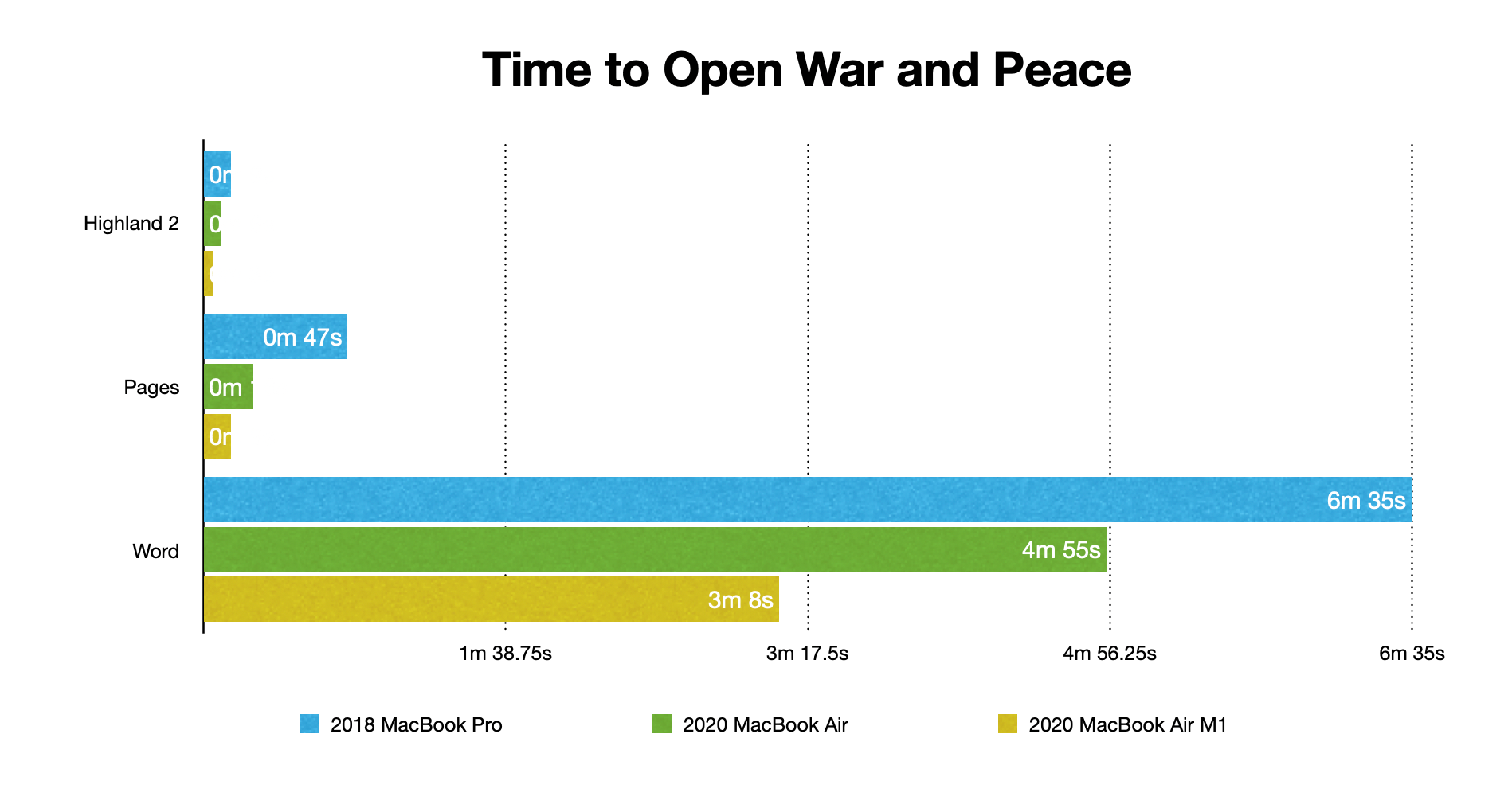
Highland 2 is very fast on the new Macs

November 25, 2020 Apps, Highland

[Highland 2.9](https://quoteunquoteapps.com/highland-2/) runs natively on Apple’s speedy new M1 processor, the chip in its latest Macs.

Naturally, we wanted to see how much faster it runs on the new hardware. The challenge is that Highland 2 is already very, very fast. It’s hard to find an operation that takes long enough to measure with a stopwatch.

So we went back to an earlier challenge, looking at how long it takes to open Tolstoy’s *War and Peace*. Weighing in at more than 500,000 words, this [plain text document](http://www.gutenberg.org/ebooks/2600) is 4,132 pages long when formatted. When developing Highland 2, we used it as a test case because it’s literally 20 times longer than the average feature length screenplay. We figured if Highland could handle such a massive file, then it could handle any screenplay we threw at it.

In our [2018 test](https://johnaugust.com/2018/how-and-why-to-write-a-novel-in-highland-2), we compared Highland 2’s performance against other word processors. Microsoft Word struggled, taking more than six minutes to open the file. Apple’s Pages fared better, at 47 seconds. Highland 2 opened it in just 9 seconds.

Computers have gotten faster, so we decided to evaluate performance on both an early 2020 Intel MacBook Air and the new M1 MacBook Air. We measured how long it took to open *War and Peace* and scroll to the bottom (to be certain it’s fully loaded).

| | 2018 MacBook Pro | 2020 MacBook Air | 2020 MacBook Air M1 |
|————|—————–:|—————–:|——————–:|
| Highland 2 | 9s | 6s | 3s |
| Pages | 47s | 16s | 9s |
| Word | 6m 35s | 4m 55s | 3m 8s |

This chart shows the results more clearly (shorter bars are better).

chart comaring speeds

Getting rid of Word makes the improvements to Highland and Pages more apparent.

highland vs pages

Three seconds is honestly a bit conservative for Highland 2. As you can see in the video, we’re stopping the timer when we reach the bottom of the document, but it’s clearly already loaded.

Three takeaways:

– The new Macs are faster for all three apps.
– Word continues to be laughably slow for very long documents.
– If you’re writing a sequel to *War and Peace,* Highland 2 is still your best bet. And it remains a fantastic choice for screenplays.

You can find Highland 2 on the [Mac App Store](https://apps.apple.com/us/app/highland-2/id1171820258?mt=12).

Counting Clowns

Episode - 477

Go to Archive

November 24, 2020 Scriptnotes, Three Page Challenge, Transcribed

John and Craig host another round of the Three Page Challenge. This week they cover how to use voice over, build suspense, and write alter egos for the screen.

In follow up, we look at the day-and-date release of Wonder Woman 1984, updates in the WGA agency negotiations and of course the newly announced Uno game show.

Finally, in our bonus segment for premium members we discuss autobiographies and what we’d include in our own.

Thank you to all our Three Page Challenge participants!

Links:

* [Wonder Woman 1984](https://www.imdb.com/title/tt0451279/) coming this Christmas!
* Assistants and support staffers, please fill out the [#PayUpHollywood](https://docs.google.com/forms/d/e/1FAIpQLSeJwPx8-eACD3b2-GMfkue6kGKdSiudlFa3wAX4oRMTaTg-fA/viewform?gxids=7628) survey today!
* [Uno Game Show](https://deadline.com/2020/11/mattel-propagate-lets-make-a-deal-showrunner-john-quinn-tv-game-show-uno-1234616703/)
* Read along with our Three Page Challenge selections:[RPG by Michael Seminario](https://johnaugust.com/index.php?gf-download=2020%2F11%2FRPG_3PageChallenge_MSeminerio_Submission.pdf&form-id=1&field-id=4&hash=5145c7f2ec1a3b3f7d71d8bf68ea19a7132bc2f94a51edf6c4f05db77a776a9d), [Rodeo by Dwight Myfelt](https://johnaugust.com/index.php?gf-download=2020%2F11%2FRodeo.pdf&form-id=1&field-id=4&hash=29792602e5c68aa1b8da3e65872ef04e7fa51b92067f102757186b02bbc15666), and [The Interview by Leilah Ruan](https://johnaugust.com/index.php?gf-download=2020%2F09%2FThe-Interview-2.pdf&form-id=1&field-id=4&hash=87ab9351522e5e95cb8e4395885406345190d42ad0f80542922e200ecd8306b5)
* [I Want to be Where the Normal People Are](https://bookshop.org/books/i-want-to-be-where-the-normal-people-are/9781538745359) by Rachel Bloom
* [Melania’s ‘Auntie Gay’ Speech](https://www.youtube.com/watch?v=dd2CBoZMO7U&feature=youtu.be)
* [Harley Quinn Cartoon Show](https://www.hbomax.com/series/urn:hbo:series:GXxis0w4EP8N_vAEAAACO)
* [Get a Scriptnotes T-shirt!](https://cottonbureau.com/people/scriptnotes-podcast)
* [John August](https://twitter.com/johnaugust) on Twitter
* [Craig Mazin](https://twitter.com/clmazin) on Twitter
* [John on Instagram](https://www.instagram.com/johnaugust/?hl=en)
* [Outro](http://johnaugust.com/2013/scriptnotes-the-outros) by Mike Caruso ([send us yours!](http://johnaugust.com/2014/outros-needed))
* Scriptnotes is produced by Megana Rao and edited by Matthew Chilelli.

Email us at ask@johnaugust.com

You can download the episode [here](http://traffic.libsyn.com/scriptnotes/477standard.mp3).
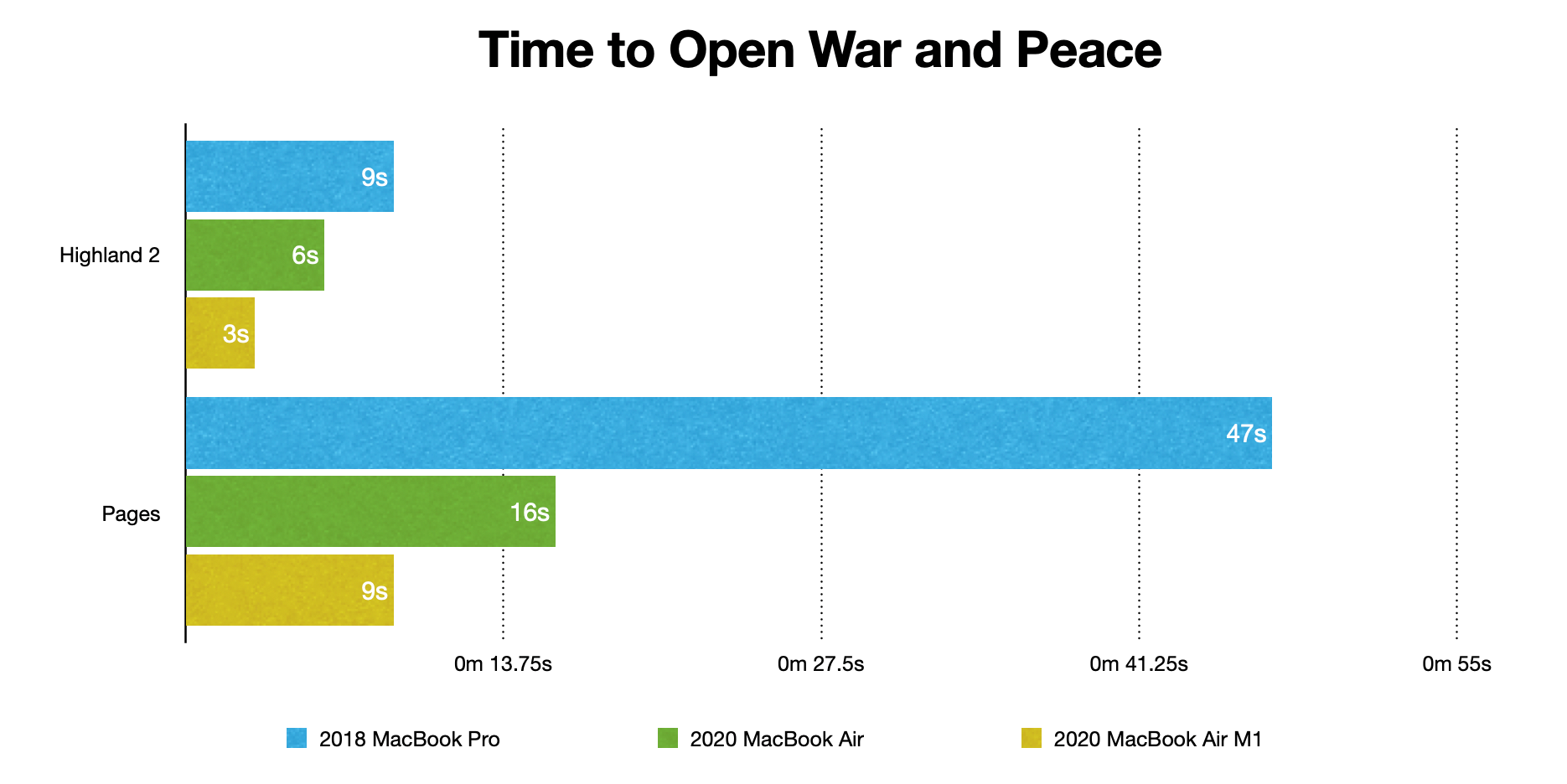
 

**UPDATE 11-27-2020** The transcript for this episode can be found [here](https://johnaugust.com/2020/scriptnotes-episode-477-counting-clowns-transcript).

Scriptnotes 475: The One with Eric Roth, Transcript

November 20, 2020 Scriptnotes Transcript

The original post for this episode can be found [here](https://johnaugust.com/2020/the-one-with-eric-roth).

**John August:** Hello and welcome. My name is John August.

**Craig Mazin:** My name is Craig Mazin.

**John:** And this is Episode 475 of Scriptnotes. A podcast about screenwriting and things that are interesting to screenwriters. Today on the show I’ll be talking with legendary screenwriter Eric Roth about his writing process and his very long career which is probably the envy of any screenwriter out there.

**Craig:** Screenwriters envious? What?

**John:** What? I mean, Craig, can you think of anybody else who has had the length of career that Eric Roth has had?

**Craig:** Well, you know, my go to on this one is Robert Kamen.

**John:** Oh yeah

**Craig:** Who is right up there. I mean, Robert Kamen as we like to point out stretches all the way from Karate Kid in the early ‘80s to Taken and more in the 2010s. So, he’s been crushing it for a long time. But Eric Roth is no doubt one of our all-timers.

**John:** Yeah. So the first movie I can think of that was Eric Roth’s was Forrest Gump. But that was at the midpoint of his career. So, his first movie credit is back in 1970.

**Craig:** Wow.

**John:** And he’s still working more now than ever. So he has A Star is Born. He has the upcoming Dune. He has a lot of other projects. He has Mank which he talks a little bit about on this interview I did with him which is a Netflix thing.

**Craig:** Yeah.

**John:** So he’s got a lot of great stuff out there. So this interview was done a few weeks ago on Zoom. It was for the Writers Guild Foundation. It doesn’t sound as crisp and clear as when we’re doing our live shows all in a room, so keep that in mind. But I think there’s really great stuff in here.

Craig and I will be back at the end for our One Cool Things. And a bonus segment for Premium members where we talk about, oh, that thing that happened this week. What was it, Craig?

**Craig:** The thing that was the week and that was our presidential election.

**John:** Yeah. So we’ll be back at the end to talk about that. But for now let’s transition to a few weeks ago and my discussion with Eric Roth.

Hello and welcome. My name is John August. It is my great, great pleasure to welcome you to this WGF event. We are here talking with the legendary Eric Roth. I’m so excited that we’re going to have a good long chat here on Zoom in front of 500 to 800 people watching us. So, we are in our respective homes. Just for folks who maybe don’t know your credits off hand I’m going to read just a shortened list of some of your credits. Forrest Gump. The Postman. The Horse Whisperer. The Insider. Ali. Munich. The Good Shepherd. Lucky You. Curious Case of Benjamin Button. Extremely Loud and Incredibly Close. Ellis. A Star is Born. The upcoming Dune. The upcoming Killers of the Flower Moon. Producer on Mank. There’s so much to talk about with you. But thank you for being here. It’s a pleasure to see you.

**Eric Roth:** I do. I’m glad you do this. I said to you earlier they sent me a list of people who could moderate it and I don’t really know you that well and I thought, well, he’s a talented guy, why not talk to you, you know? I love that.

**John:** So I’m excited to get into this. And usually in one of these things we would start back in the beginning about how you got interested in screenwriting and all that stuff and we’d spend about 20 minutes getting up to something like the present time and then start talking about the things we should talk about. So I’m going to do it the opposite way. I’d love to talk about what your writing process is like, what you’re working on, how you work in October 2020 as we’re recording this. What does your daily writing life look like?

**Eric:** My writing life really hasn’t varied since I gave up the typewriter which wasn’t as long ago as you might think. Because I’m really a luddite. I still work and I’ve talked about this a lot, so if anybody is bored with it they can tell me, but I still work on a DOS program. I have two computers. And I think half superstition and half a fear of not being able to learn Final Draft or something. It’s a program called Movie Master that actually is what they formulated Final Draft from.

The problem with it is that after like 40 pages it runs out of memory. So you’ve got to make sure – it’s about an act break, you know. And so I can’t do anything with the internet on that computer. That’s just solely for work which is good. And I still have to print out everything and I can’t email on it. So, the problem starts to become if you’re getting lucky and somebody is going to do the movie, it’s on their computer with Final Draft and creating the real document.

Other than that I start at like eight in the morning every day. I mean, I always use the example of John Cheever. He’d go to work every day. Take the train in from Long Island in his nice suit and a hat and he’d go and worked in a basement in New York City in Midtown. And he’d take off his pants and he’d take his shirt off, worked in his t-shirt and his underwear. 12 o’clock he’d get dressed again, go have a martini lunch. Come back. Work till four or five o’clock. Get dressed again and go take the train home. So it was like a job. And a great job for him and better than anybody probably.

And I feel the same way. I’m pretty disciplined. I don’t do as many hours as John Cheever. But come one o’clock, I mean if I’ve done four or five hours that’s about all creatively I feel I can do. And then I’ll work again at night. I’ll start around 10 o’clock and if I’m going good I’ll go as late as I can go. If not I’ll just do an hour so I can go to bed.

If I’m really crunched I get up really early like three or four in the morning and see as much as I can do. [Unintelligible] I like to bet the horses, so that’s my afternoons a lot. I have too many children and too many grandchildren, so I spend a lot of time, if I could, aside from the Covid. I’m a blessed human being. I mean, I’ve been lucky enough to be able to – I think the biggest thing that I taught myself and it’s obviously to be successful to do it, but I tried to pick – and I’ve been wrong many, many times – but projects I felt would somehow enhance my own self number one, and two some kind of legacy that I wasn’t just writing things for pay, which is a nice thing too. But if I could have a choice why not something I really cared about because I believe wholeheartedly that passion is two-thirds of the game and the other third is this kind of bastardized art form we do which is really a craft of a kind. And you can be a great craftsman. I’m not sure you’re an artist as a screenwriter, but that’s a whole different conversation.

**John:** There are so many threads I want to pursue off of this, but I’m going to start at the most recent one which is the degree to which a successful screenwriter like you are is largely – there’s an aspect of stock picking. Because you have your choice of the projects you could work on. Obviously you’re initiating yourself things, things you get offered. And there’s a decision process about which ones you’re going to pursue. So it sounds like you’re trying to pick projects that challenge you. Are they the ones that scare you a little bit? Are they the ones that you know you can do it? What is the decision process? Is it about who else is involved?

**Eric:** I think in a more intellectual way I try to pick things that the themes interest me and then who are the people involved and the characters. And I’ve done a number of adaptations. People think I’ve probably done more than I really have. But, I mean, even things like Benjamin Button was just a bad F. Scott Fitzgerald story if it’s possible that he wrote something that was bad. But of course the idea was a guy aging backwards. And I never came up with that one. But the theme of that I said well that’s interesting to me.

Elvis Mitchell, if you know who he is, the critic from the New York Times. And he does a NPR show. He’s a wonderful man. And he said that he felt – and it sort of stopped me because I thought it was kind of accurate, and I’m jumping. My mind works this way. That my films are about loneliness. And so I guess somehow – and then he started talking about it, and maybe you can make that case and maybe you can’t. But it resonated with me. I think there’s some truth to it. So maybe I pick out themes that have to do with some melancholic kind of [unintelligible]. And something about loneliness, you know.

I never had my own room my whole life. So, I guess I don’t know if I need that. I mean, I lived with my brothers and then – my brother I mean. And then I went to college and had roommates. And I got married very young. And then et cetera. So, maybe that’s part of it. This desire to have human contact nearby. I get very kind of funky in a hotel room alone at night. So not that I do anything exciting. I get too aware of everything I guess.

**John:** Now you can chart some of that fear of loneliness over the course of the 15 movies that I listed. But talk to me about the movies that I didn’t list, because I’m sure over the course of your career there’s at least as many movies that you spent a tremendous amount of time on, you worked your ass off on, that don’t exist. And to what degree do those movies still stick with you? The scripts that you wrote that are not reflected in your bio?

**Eric:** I’ll tell you one thing. I’m very lucky that my batting average is pretty great. So I don’t have that many. I regret they never made a movie that Brad Pitt was – it was actually Brad Pitt’s idea, Hatfield McCoy, that I think is a really good script. I told him eventually, said I’m going to give this to Kevin Costner to do it on television, very successful for him. I liked that very much because it was like about – that feud was kind of very interesting because there was no difference between the people. It wasn’t like the Hutus and the Tutsis, where there was religious differences between the Jews and the Arabs. You know what I’m saying.

And these people all came from the same place. But anyway it was interesting. It came down to the coal companies paid one group for the coal that was under their land because there was a lot of coal in one area and not the other. So that was one.

I wrote a big space thing that probably I don’t know if it was worthy of getting made, but the idea was that three prehistoric men were taken – they were triplets I guess – were taken to another galaxy where they’re like sponges, you know. I’m trying to think what else.

**John:** I can see a loneliness to that.

**Eric:** It’s very lonely.

**John:** It fits Eric Roth’s canon of loneliness.

**Eric:** Hatfield McCoy, the main character is lonely. So that one worked. I’ve had, just bragging I guess, like 25 movies made. And some of them I think are better than others. And some are my fault and some are other people’s fault.

I think I’ve had maybe seven that didn’t get done.

**John:** That’s amazing. That’s a remarkable batting average.

**Eric:** I think I started slipping as the business changed in the sense that I was able to write kind of the movie star driven movies to a certain extent. And then as that changed, you know, as movie stars became too common there was a change of course. And so I think those became – A Star is Born is kind of important to me because it reestablished for me that I could still do this in a way. Not that I had a question mark. But I think there were a few things that kind of lagged in the interim. I’m sure there will be others that come to me that didn’t get done. There’s a few. And there’s a few I wish didn’t get done.

**John:** We won’t make you names the ones you wish didn’t get done.

**Eric:** I’ll name them. I have no problem. I’ll tell you a very quick story that–

**John:** Tell me which one.

**Eric:** So this one I think people enjoy. So I wrote a movie called The Postman early on. And I wrote it for Tom Hanks and a whole bevy of directors were going to do it. Good directors. And it was supposed to be a satire, sort of Swiftian look at post-apocalypse idea, was supposed to be after nuclear war. A man who delivers the mail. Etc. Etc. And it was very tongue and cheek. But I thought it was kind of a good satire.

And then a number of years passed and Kevin Costner hooked onto it and he made it. And during the making of it the writer Brian Helgeland who is a wonderful writer who did Mystic River and he won an Oscar and really talented man. He had done the rewrite and he called me and he said, “What do you want to do?” He was very generous. “Do you want your name on this? What do you want to do? Do you want to just keep credit? Whatever you want to do.” And I said let me check. And I asked my agent. I said what do you think. And she happened to represent Kevin Costner and said, “You’ve got to put your name on it. I’ve seen the dailies. The movie is amazing.” I said really. OK. All right. I’ll take my credit.

And the movie won a Razzie as one of the worst movies ever made. [Barbara] gave us a Razzie, so it was pretty great.

**John:** I want to get into sort of the profession and this idea of rewriting and being rewritten and rewriting other people, because we’ve both done a lot of that. And I think we can clear up some misconceptions about that. But I want to get back to a little bit more of the daily work that you’re doing. Because you certainly treat your writing like a job. It’s not a thing you occasionally do. You treat it very seriously. You said you’re at your desk at eight in the morning.

There’s a scene for you to write. What is your first step in approaching a scene that you’re writing on a day? Outlining? What are you doing?

**Eric:** Well to go a step further, if it’s an adaptation I’m underlining the book and I find I underline the whole book, so then you say where do I begin. I’m not huge on outlines. I know, and I think every one of my movies has had the same truth. The first scene has never changed once I figured out what it was. And the end scene. The only one I can remember is in Munich Steven switched it to be at the World Trade Center for a good reason. It was in a different location, but the scene was basically the same. But the middle is this great big adventure. So I don’t know what it is. And it’s obviously a little more concise if there’s a book. But if it’s more original writing, no matter if there’s a book or not, then sort of that’s what the journey is for me.

So when I start a day, assuming I’ve gotten through the first two or three scenes, hopefully when I leave the computer I know the next two or three scenes, what I’m going to write the next day. That makes me feel very good. I sleep at night. If I don’t it makes me a little anxious.

**John:** Talk to me about when you say you know the next two or three scenes, that you know in a general sense what’s going to happen or how you’re going to get through the scenes?

**Eric:** I know what’s going to happen. I know where the characters are going. That doesn’t mean it works out always, but the characters lead me down there. And as long as I can stay with as I say the theme that’s all important to me. Like for instance I’m doing this little thriller right now for Oscar Isaac and Ben Stiller that I think is quite good. It’s from Jo Nesbo who is a Swedish mystery writer. He’s pretty terrific. Short story. And it’s an oddball story.

It needs me to keep figuring out where they’re going to go next, because it’s not a chase per se but it is in that English style of Strangers on a Train kind of thing. And so I know for instance that I know the next scene is in Paris in a hotel. I know what happens there. I know they have to then figure out how to get to sort of a farmhouse. And I know what happens at the farmhouse because I figured out that he does something deceptive. So I know those three, so I’m hoping when I get there I’ll know what the next three are. I know the trajectory of it though. I know what the outcome of the script is.

So, I’m on my track. Now this one has been a little trickier because I tried to be a little probably – I think it ended up being more clever than half. I tried to make it a little more post-modern kind of like adaptation or something. And I’m still with that but I had to tone it way down. So this one I actually had to rewrite quite a few times.

**John:** Can I stop you for one second? You say you rewrite a few times. So this is as you’re still doing the first draft you’re making big changes? Or this is after?

**Eric:** I start on page one every day.

**John:** OK so you are that kind of classic, like go back and read through what you’ve written and move forward?

**Eric:** I read everything and I make little whatever comments, fix grammar and spelling, whatever else. And it makes me go through another process and makes me more familiar with it. And they do say though that if you’re going to spend your time doing that you don’t give as much time to the ending because mathematically you’re running out of time at some point.

**John:** But let’s talk about the first new scene you’re working on. So you’re talking about the scene that’s happening in a Paris hotel room. You know sitting down basically what needs to happen in that scene, but what is your process in terms of figuring out who is going to say what, what’s the action in the scene, like how it’s going to unfold? Is that just a sitting and thinking thing for you, or is that fingers on the keys kind of decision?

**Eric:** I think it’s a little more intuitive. I’ll give you an example. I’m doing this thing for HBO, a TV show that Alex Gibney is going to direct with Laura Dern. And it’s a six-parter. I’m just doing the first episode. A true story about a woman who is a psychiatrist and her job is to interview serial killers and recommend to the court whether they’re sane or insane to be executed. And so I’ve sort of just begun, but now I’m coming to the interrogation of the guy that becomes our lead character in the first episode. And except for basic stuff I wanted to get out where he asks her questions, where did you go to school. I mean, it’s sort of expository stuff that’s just bad writing.

But I just started writing dialogue between them. And so some of it works, some of it doesn’t, but I just sort of feel my way. And I’m pretty good at it. I mean, I try to write a little off topic. I think the subtext is much more important than textual. So, that’s a thing I’ve had to learn over the years and it’s not something that I think you’re just given unless you’re just such a wonderful writer. But the best writing is not talking about what’s going on.

And so in this one I’m just trying what’s it going to sound like between this serial killer who killed like nine people and her. And so try to keep human and humorous of some kind and also get as much information we can get out of it. So I just dive in. And I’ve always done that. So it’s not a matter of just self-confidence from being successful. I think it’s just – and I embarrass myself by sort of saying the dialogue out loud. I’m like the worst actor ever. Because everybody’s voice sounds exactly the same. Which does remind me, I mean, as a rule that you want to have everybody’s character be something unique and sound different.

This came to me in a way, even though I think I knew it somehow instinctively from being just I like literature, so I read a lot. That Michael Cimino, if you remember that director, Michael and I were doing a movie. I had a rewritten a movie called The Year of the Dragon. It was OK. But it was by the same guy who wrote Silence of the Lambs. But he had given Mickey Rourke a wallet that had the character’s full life, like pictures of him in Vietnam and his children and driver’s license. I’m sure Mickey Rourke never looked at it, but it spoke to the fact that he had to know that person inside and out psychologically. And that’s how I feel as a writer that you have to do that. You have to know every one of your character’s complete lives.

**John:** You’re saying that you need to know your character’s complete lives, are you writing that down or are you just spending time thinking about that? How much of that bio work is something that a person could actually read versus just stuff you are thinking about in your head?

**Eric:** No, I don’t write it down. Except for little scribbles. Like in this thriller I decided that she was going to be a – because I thought it was clever – that she was going to be like Gillian Flynn, like someone who wrote Gone Girl. So she’s an author which I think is interesting because then it makes you wonder whether this whole thing is just a tale that she’s spinning, you know. So then I started figuring how old is she? And you go through it. And what are her neuroses? I’ll give something a little bit away, but like in the Laura Dern one I have her being like because she’s always stressed because of these horrible people she’s dealing with, I’m going to try to make her like a kleptomaniac. I just want to see it works.

So, what does that say? And then what does that say about your relationship, because her child then becomes a kleptomaniac? You know, that’s what I want to try. I probably shouldn’t say this too loud because it’s giving away something. But it’s just interesting to me. And so I don’t think I’m wrong. I’m maybe not right, but maybe that is a question.

I always think I’ve done that, though. That I just said to hell with it. Let’s get old and go down like the same bridge. I don’t mind trying things that are a little bit out of the norm, you know.

**John:** Now, you describe this Laura Dern project, there’s the Ben Stiller thing. It seems like you’re working on a bunch of things simultaneously. How many different projects are underneath your fingers at any given point?

**Eric:** This is unhappily, because I’m not really – it makes me very anxious. But I do have them stacked up which is nice for me, congratulations, but it just happened to be they dovetailed. And sometimes that happens. And the good news is I spent four years on, or five years on this book, with Killers of the Flower Moon, which everybody should read. It’s a wonderful book. And my screenplay I think was accurate to the book, but it was the book and the story of very quickly Osage Indians 1821 – 1921 I mean – poorest people in America and discover oil in this terrible land in Oklahoma they’d been driven to. And then every killer in America comes to kill 184 of them for their money. And this really heroic guy comes in.

So that’s still, you know, that’s supposed to start filming once the Covid clears out, and it’s Marty Scorsese, in March. So I have that. So there will be continuing rewrites with that. Leonardo wanted some things changed we argued about and he won half of them, I won half of them.

So that’s happening. And then these other two are works that are ongoing. And then there’s some older ones that pop up and I have to then address, which is just a factor of having been lucky enough to have a lot of work and some things are just dragging. We had this whole situation that’s developed with Cleopatra. I had done like seven drafts of Cleopatra at that point for Angelina. And it became a mess with the hack at Sony and Scott Rudin and this and that.

And now the project was announced the other day that Patty Jenkins is going to do one with Gal Godot and a very good writer named Laeta, I forget her last name.

**John:** Laeta Kalogridis.

**Eric:** Exactly. And so I’m debating whether this is going to be worth me racing with them. Probably not.

**John:** Yeah.

**Eric:** But that’s an old project. In other words I hadn’t worked on it for five years or something. But I think, look, that’s a function of some luck. Some people have given me the opportunity. And obviously I’ve been successful at it, which sometimes by design and a lot of it is not, you know.

**John:** Talk about rewrites. So talk about the rewrites that you go through in terms of getting the project up to the point where you’re happy with it. And then the rewrite process after you’re happy with it to get other people happy with it.

**Eric:** I mean, when I’m done – when I feel it’s done I’m done. And then I’ll turn it in. I don’t like turning it in just to a producer. I usually try to go around them and turn it into the studio at the same time if I can. And then we get the notes. I have rules about notes and now because I have enough cache I can say you cannot – only give me bullet points. I say would you consider this character doing that? Would you consider…?

I mean, I don’t like when they write these ridiculous essays on showing how clever they are with the notes, you know. And obviously if I did something stupid it wasn’t my intention to write something stupid. So that’s notes.

So then I’ll begin to rewrite. And rewrites are hard for me because I think I’m more of an instinctive writer. So, then I’m lucky enough to have worked with some really great directors. Some who are writers of their own and that’s easy in some respects because they get it and we can work it out together. Like Michael Mann. He’s a very tough guy and is hard to work with, for the right reasons. But he’s a writer so we would battle things out. But he knew if I didn’t quite have it we could feel the direction. While on the other hand, who can I think of, Robert Redford was a little more difficult because he wasn’t a born writer. So he wanted to prove things.

Marty Scorsese and David Fincher are very different people but phenomenal. Marty is the most willing to have you be inventive. And he’ll figure out how to film it and if he thinks it works. And he’s very generous if he doesn’t think it works. He says, “Let’s try it this way.” And David on the other hand is very, very specific. Very literal in a great way and as smart as a whip. And really fights you to get to where you want – he says, “I want you to tell me what you’re trying to articulate.” He just has a different way of doing things. And they both end up in different places. Their movies look different and they’re different people but they’re both incredible experiences which is incredibly rewarding. Which will just give me the time that – I have a movie coming out called Mank that I produced with David and his father wrote and we worked on the script to hopefully bring it up to where it’s really great. But it’s his father’s script.

And it’s about Herman Mankiewicz’s writing of Citizen Kane and his world with Marion Davies and William Randolph Hearst and Orson Welles. And I think it’s an incredible movie. I’m tooting trumpets here but it’s black and white. It’s as skilled as David Fincher can be I think. And I think it’s probably limited for appeal to people because it’s such a narrow subject, but it’s a master work I think because of David’s abilities.

**John:** Its appeal is exactly the folks who are listening to this Zoom right now. Because it is about a writer’s relationship with a director and a visionary film that may or may not come into being based on how people did the stuff.

**Eric:** I think one of the reasons David brought me on was because I’ve been sort of an insider in Hollywood in that way for many, many years. You know, I’ve worked with everybody from Kurosawa through Spielberg through whoever. So I’ve had many relationships with many writers, directors, actors. So I know the process. I know what’s wounding about it. So when he asked me what does it feel like to feel like you’re not going to get credit I can write that. I know what that feels like. So it’s a real experience yeah.

**John:** Well talk us through that. Talk us through advice for writers who are dealing with a director for the first time and what those initial conversations are like. How do you feel out a director and sort of understand what that relationship is going to be like in that first meeting? Because I’ve been through some of them and I’ve come in with assumptions. Sometimes I’ve been right. Sometimes I’ve been wrong. Sometimes it has gone well. Sometimes it has gone really, really poorly. What advice can you offer to folks who are listening about that first conversation?

**Eric:** I want to talk about sort of earlier in my career because I think it’s a little different now because I’m kind of cocky. I’m a little cocky now.

**John:** You’re a legend.

**Eric:** Well, a legend, so funny. But I can come in and I can back up things. I say you might want to [unintelligible]. Early on I did – this is a good story and it’s not [unintelligible] it’s true. There was a director named Stuart Rosenberg who had done Cool Hand Luke and he was a very good Hollywood director and a nice man. And I was really young. I mean, I was 19 when I went down and rewrote The Drowning Pool in Louisiana. And then I was on Onion Field with him. And Onion Field ended up getting made by a man named Harold Becker and it’s an interesting movie.

But Stuart and I fought for like two weeks over one particular scene. And I thought it was a great scene and he didn’t think it was so great. And he finally said to me, and this just always stuck with me that “you can leave it in the script but I’m not going to shoot it.” So that was the end of that conversation. And that was the truth. So at the end of the day if the director is not going to be flexible you are stuck. So, you better try to find a way to be as best communal as you can be and also make the scene as good as possible. So you have to find, I think, and sometimes I’m good at it and sometimes I’m not as good, another way to do the scene. Another way to tell that piece of drama if that’s what you need to do. And each director approaches it differently.

Amenable to a point and yet I get very stringent if I think that they’re varying from what the piece is about. And then I think – I’ve been lucky because the people I’ve worked with, I mean, in the main are really good directors. I mean, it’s also something I don’t think I could do. I mean, I tried it when I was younger and I actually won some awards, a short. But I always felt like this isn’t me. I thought if I went on to direct I’d be like a B-minus director and what was the point of that, you know? And I didn’t want to leave my family and a whole bunch of other reasons.

But the directors have been, I mean, I think have yet to figure out the way they want to get at something. And if you want to be a dick about it you’re going to have a lot of problems. On the other hand I don’t think you should just roll over. It’s a balance. It’s a tightrope walk.

**John:** Yeah. A thing that people have a hard time understanding about the job of a screenwriter is obviously we’re putting words on the page the same way the novelist is, but there’s a whole social aspect to it. You have to be able to read people in the room and understand what they’re actually going after. Even before you get to directors, initially with producers and with studio executives, find out what they’re actually really after and what the note is behind the note.

**Eric:** Yeah. That’s well said, John. In other words it’s really trying to read the note behind the note. Because the initial note will just annoy you. I mean, in most cases you probably thought about it. Just somebody gave us a note on something recently that they felt there was too much description and I took umbrage at it. Said I’ve been very successful with a lot of description. But I got it. In other words I think it made it harder for them to read. It was too dense. And once I settled down and I thought well that’s OK. So in other words you have to be somehow – unless they’re nasty, then you don’t need to suffer that in any way, shape, or form.

But I think you have to be finding a way to be as communal – look, it’s a communal craft, right. Even though I do believe it’s a film by is a director’s film when all is said and done. They put all the pieces together. The architecture, the ship is the screenwriter. And you’re not going to go on the journey without that. But the director has to get it to the right place in the right way.

**John:** How different is it now than ‘70s/’80s, your early credits? How different is it doing this job? Or is it not really that different?

**Eric:** I don’t feel it’s that different oddly because I guess maybe I just stay with my process. I used to, I mean, just on a personal level I had a lot of kids and a lot of little kids. And I used to love to just – they would run around and I would just write in the living room, sitting down to type something. But I don’t know. I had a couple oddball little interesting movies made in the ‘70s that probably would be, you know, interesting today if they were streamed. And then I had some big movies. So, I don’t know. I think eventually it comes down to feeling like the same task to me. But, you know, I’m looking, you know, it’s like my dad said when you talk how does it feel to be 80, or whatever he was at the time, he said, “You know, I don’t look out of those eyes. I don’t look out of 80-year-old eyes, I look out of whatever eyes I am.” And that’s the same thing at 75.

I’m quite – this is just a kind of sweet, sad thing, but lovely in its own way. I’m very close with David Milch who I think is our American Shakespeare from television. David has some challenges with some Alzheimer’s. So I went and visited him. I visit him like once a month. And he was talking about how time goes so. And I said sure does. And I thought to myself, gee, when I was 60 I said, well, I mean 15 years from now 75, or 20 from now, that seems like forever. Well, it was a blink. It was a complete blink of the eyes. And now I’m 75. I said do you have any regrets. And he said, “I wasn’t more generous of spirit.” Which meant he felt that he had been too selfish his whole life. And whether that’s true or not we can think about.

But it made me think. I mean, I think that’s an important kind of lesson. I’ll put that in something, you know. Because that’s just something important.

**John:** Thinking about David Milch and his tremendous success in television and you said the American Shakespeare and I can believe that, he was making television at this pivotal moment where it became just a dominant American art form in terms of a written art form. And the writers who created that were so acclaimed and rightfully. It’s a little frustrating to me. I’m wondering if it’s frustrating to you that we as screenwriters are writing the features that are so iconic and yet there hasn’t been the same appreciation that we sometimes are writing these films that are known for that.

If you were to go back and rewind your career 25 years would you have still done features and focused on features, or would you have been more attracted to 25?

**Eric:** No. First of all I think, you know, I was taught that television is smaller than life and that movies are bigger than life. So I still look at the 40-foot-screen as being 40 even though it’s irrelevant I guess now. And I’m not sure I’m as good a short story writer as you have to be, even though I think I’ve written some good TV episodes. I wrote one for David that they never aired because it was never shot because of this show getting canceled. I thought it was probably as good of writing as I’d done. But I can just be brave because it wasn’t sort of my betting the farm.

No, I grew up with movies. My first experience was watching like War of the Worlds in the Brooklyn Paramount balcony. And it was like oh my god. This is like something that takes me somewhere else. Then I was very big on psychedelics in the ‘70s and late ‘60s, so I liked sort of mind expansion stuff where you can try to go further and farther. So I never felt that way about television.

And I think the difference is that you have some incredible writers who are also directors though. And that’s a great advantage. Because Ingmar Bergman or Fellini. In other words you could start naming them, Antonioni, and then Francis of course. So these people could then realize what they wrote. So, I don’t think there’s anything better than Godfather II probably that has ever been done. Or to me 2001 changed my life in some way. So Kubrick was able to get that out of his writer and was able to write what he did.

I think, I don’t know, maybe there isn’t an American Shakespeare in screenwriting. I think part of that is because you have to be a director maybe to do that. And then maybe Chayefsky was, you know, of a sort. There’s probably a few others, you know.

**John:** Yeah, I mean, and Sorkin would be in that list, but he’s also–

**Eric:** Aaron is wonderful.

**John:** Tremendous television stuff that he’s done before this. Nora Ephron.

**Eric:** I would think, like Bob Fosse, he’s pretty amazing. I mean, he’s a director though. I think there’s a major advantage in being able to direct and if you’re able to be good at being a director.

**John:** I’m going to tackle some questions from our growing list of questions here. This one is about adaptations from [unintelligible]. He asks, “There’s a ‘don’t let the facts get in the way of a good story.’ How do you negotiate what should be kept in an adaptation and what should be left out when you’re adapting a true life story?”

**Eric:** That’s a great question. We just had this discussion the other night because I watched The Trial of the Chicago Seven. And I thought Aaron did a really great job. And I first had a chip on my shoulder, I was a little jaundiced because I knew Abbie Hoffman quite well and I knew some of the people and I had been involved with [unintelligible]. Anyway, and then it got, I’m not sure, I have to ask him because there’s a scene at the end of the movie, because I think the move eventually really becomes pretty great. And he has a scene where someone gives a speech in the courtroom and I’m going to guess that he wrote a speech that was not what was there. And so then we got into a debate about what you can do.

I said, well wait a minute, this is like an historical event. And it’s a trial. And then somebody pointed out I had done the same kind of thing in something of my own. And so that I think I guess your first rule is you’re a dramatist, you know. I’ll give you another example.

I did a script for Tom Hanks called Garden of the Beast which is an historical book which was about the American ambassador to Germany during WWII who was kind of a very big Nazi aficionado. Spoke German. Had gone to school in Germany. And then he saw kind of the errors of his ways as certain things happened. But I dramatized a couple things that Tom objected to. One was that I had a scene – I don’t think this is a big deal – but Hitler used to watch King Kong like three times a week. And so I had a scene where he and the ambassador are discussing whatever the drama was while King Kong was being played. Now that probably didn’t happen. I don’t think that changes the course of it or anything. But Tom took to me to task for it.

And then I had Hitler offered him a ride back to the embassy and I had him get in the car with Hitler with all the people on the streets. And I wanted to see how that felt like for anybody being inside of that and with flowers all over them. Tom objected to that. And he wasn’t right or wrong. In other words so that – my first job is I think as a dramatist. And we say this actually in the Mank movie that you can’t view somebody’s life in two hours. You only can do an impression of it. And the genius of Citizen Kane is that I think it’s the first movie that showed, and maybe there’s a Russian movie, that showed a character from multiple points of view. That’s very rare. In other words usually it’s [unintelligible]. But if you have a wife you have her point of view. If you have a child.

The other thing is I usually pick kind of bad books. So, you know, bad books and bad plays make really good movies because one of the reasons is you can just go take off on your own. So you can change things. I think you have to be careful in certain respects to what is the sensibilities of people. In other words I don’t think you just blithely decide to change what somehow is slavery or holocaust. In other words I think you have to be very careful.

But I mean there is a criteria that you have to dramatize it if you’re a dramatist. So you’re going to combine things. And this Killers of the Flower Moon is a perfect example because that was where I realized I had done the same thing at the end of a particular courtroom that’s at the end of the movie. And I had dramatized something that was not happening there, but I wanted to have.

So, I say go for it, but be a little bit cautious because you can get your assistant kicked if you’re going to start rewriting history that’s affecting people’s sensitivity. And I have never tried to do that. But, yeah, I think there is a burden.

I mean, look, a lot of people don’t like Forrest Gump. They think it’s a poke in the eye at liberalism and all sorts of things. I don’t have the same feeling about it. And Bob Zemeckis and I are quite different. He’s very, at that time, more universal poke in the eye guy. He didn’t give a shit if he made fun of the Black Panthers or Ronald Reagan. And I was a good staunch, I was born as a red diaper baby and I had great communist beliefs. Became watered down over the years.

So the movie was criticized probably rightly in some respects, but I think as Quentin Tarantino said, “I think people have lost the sense of irony.” Because the whole thing is supposed to be – it’s supposed to be a satire, you know. But I think you’ve got to be careful of that is my point. I think you have to really look – and particularly today, because people are very aware of their everything – heritage, what they feel about themselves. I mean, they should. They should.

**John:** Speaking of Forrest Gump, a good segue into a question from JJ. Can you talk about the process of getting hired for adaptations in particular? How do you get started doing adaptation work? So I think it could be, you could talk about Forrest Gump, obviously many of your later projects they came to you with a book and you could say yes or no. But earlier one there were going to be projects where do you want to do this. Do you want to come in and talk to us about this? Your pitching approach to a book. What are those initial conversations like as you’re describing how you want to take an adaptation?

**Eric:** Well that’s a good question. The good news is that those were things that were presented to me by like studios. It wasn’t anybody else really. Or a producer. There was an entity. It wasn’t me bringing them a book and trying to stand on my head and say this will make a good movie. So that was I think ahead of the game. Forrest Gump came as a book. I didn’t think it was a great book. And the man who wrote it should rest in peace. He gave me something that was like a gift. But it was a little farcical for me. And then I thought well this is a good way to tell the story of this year that I just lived through with time passing and all that stuff.

And I’m trying to think. Benjamin Button was as I said a short story of F. Scott Fitzgerald’s. He just did it for money. He did it for Colliers Magazine and had no stake in it at all. So I had the sort of permission to do whatever I wanted with it.

Munich was a true story. I was rewritten on Munich by Tony Kushner who I thought did a pretty great job in certain areas. Other areas I still resent. Not him personally. I mean, we can talk about that getting rewritten if you want. That’s why I brought it up.

**John:** Well let’s talk about rewriting. Because that’s a thing I promised we would get into. So, obviously you’ve come onto projects where there was already a script and you were coming in there to do work on it. And you’ve also had projects that you started and then someone else has taken over the project. So let’s start with when you’re coming in on an existing project and there is a script and you’re talking with folks about stuff. What are those initial conversations and how do you treat the material that you got from the start? Are you treating it like you’re treating a book that you’re being sent? This is the starting place and I’m going to write a new script? Are you trying to incorporate as many scenes as still possible there? What is the decision process for you?

**Eric:** I think it depended on where they are in the sequence of getting the movie made. Because I would never want to go in and destroy somebody’s having a movie get made. I’ve some good jobs in more limited basis. I thought I did good on Black Hawk Down. I thought I did some good writing on that. Leonardo and Russell Crowe was in. Ridley Scott directed it.

**John:** Was it Blood Diamond?

**Eric:** No. Something of Lies or something. Anyway, my point being I just don’t think I did much to help them. And they didn’t want much. But I don’t think what I did was great.

On the other hand I’ve come in on things like Cleopatra where I started from scratch. There had been a couple scripts before I did and good writers, but I just had a different point of view. And Benjamin Button was another one. And usually if I have the time I’ll put in the effort and start over if I think there’s a way. Or I’ll just say I can’t be helpful. I think it’s a more interesting conversation about not so much the work but I’ve rewritten people where it’s bruising to other people. And it’s one of the things I don’t like about doing it. As writers we scavenge each other. And then they don’t have a – something I’ve always spoken to that when you fight for credit and then if you don’t get it you don’t exist in that sense, however much time. And I feel the Writers Guild should change that. But I’m in the minority. I felt like they should have an additional writing credit or something, because everybody should at least share in what they did.

But the Writers Guild feels in the main that it diminishes the credit of the writers that get credit.

And then I’ve had obviously people come in and rewrite me. And I haven’t liked it. I said, you know, you feel like you’ve failed, you’ve been rejected. I knew for instance on this movie The Horse Whisperer, I liked Redford very much but I lived with him for like two months, two or three months. And I realized at one point he’s going to look in the mirror and not want to see me there. And so that’s what happened. And so a good writer, Richard LaGravenese, came in and did very good work. And I’m still not wild about the movie which I don’t think had enough adventure in it, but not Richard’s fault.

But that hurt. I was wounded by that. And you sort of lick your wounds. But I guess I’ll give you a funny story because it’s about this. I think it’s about rejection, you know, which every writer feels from day one. And I asked Warren Beatty the other day, I’m dropping a name here, but have you ever – I don’t know why this occurred to me. I said have you ever been rejected in your whole life. And he had to think for a long time. I said are done thinking? He said, “Yeah, I wanted to do Fistful of Dollars,” or one of those Clint Eastwood westerns. They picked Clint Eastwood. And he said, “But I got to do Bonnie and Clyde, so it worked out OK for me.”

**John:** It worked out.

**Eric:** The only thing he could think of about rejection. He didn’t say there was a woman who didn’t want to go out with me or whatever.

**John:** No.

**Eric:** A man. Whatever he felt. But that was it. I said pretty good. I think him and I’m dropping another name. I worked for Mick Jagger on a thing and he’s the other one I thought this guy has never had a moment’s rejection in his whole life, you know.

**John:** We have real time follow up here. So Body of Lies was the movie that you were thinking about.

**Eric:** Thank you.

**John:** So we have 1,000 people here in the audience.

**Eric:** See, bad title. Bad title to begin with.

**John:** Not a good title. Not a good title. Titles are important. They help frame what things are going to be, the projects.

**Eric:** Oh boy, is it ever. And names, by the way. Don’t you think character names are key, too? Unless it’s a satire or something. If I see a name – here’s one of the things I don’t like about Dune. Because I had read Dune when I was like 15 and I thought it was OK. I wasn’t as wild about it like 16-year-old boys mostly are. But then as I went back into it now to do this version for a guy I like very much, I did a good rewrite on Arrival, which I think I did a good job on, for Denis Villeneuve.

So we were cogitating the whole thing and there was a character named Duncan Idaho in it. And I said wait a minute this is like the planets are billions of miles away. This isn’t a translation of some other language. That’s his name. And I said well how the hell does that work? But that was a famous character and still will be.

**John:** So you just don’t have characters saying his name aloud very often in the movie hopefully. So it doesn’t bum people so much.

**Eric:** I mean, it’s fun to do – I think if you can give characters to somehow reflect the tone of the movie, like I did something today. I called the villain in the thriller Mr. Lime. And the reason was because that was an Orson Welles’ name in The Third Man. So those few who will know that will – or they’ll just think that’s a stupid idea.

**John:** A question here from Ellen Cornfeld. She writes, “How to learn to trust your own voice when you are a people pleasure by nature and surrounded by smart voices giving you terrific feedback on your scripts?” So, basically really a question for you. You’ve written this thing. You had an approach. You had a point of view. There’s a thing you want to do. Now you’re getting these notes back. How do you stay true to your own voice and your own instinct when you start getting that feedback?

**Eric:** I think you have to find a different approach and try to hopefully make that similar to what you could then live with to be, you know, that says what you want it to say. It’s difficult because you feel inundated. There’s sort of a higher power that’s looking down and giving you these [theote] of notes. And obviously I have the power more now because I’m more successful, but when I was younger I’m sure I felt kind of a little buffeted by it.

But I’m not saying not to stick with your vision but I think you have to maybe find a way to do your vision differently I guess. And that’s probably I guess a little more communal in that respect, or a little more where you can mediate things. Because it’s not black and white I guess. And sometimes you’re surprised at the end.

What happens, I mean, eventually which is kind of funny is that you stake your claim on something and you really stick your sword in the ground and you’re not going to move and then you slowly move and eventually it’s gone and it becomes gone and you don’t remember even you were involved with it, you know, and that scene just goes into some void in the ether.

So, I think you have to be brave in a way. Be brave without being stupid I guess.

**John:** Always a good combination. I’m going to combine a couple questions here. People are asking about writing for an actor or writing with an actor in mind. Do you prefer writing something where you know who is going to be playing that role? Or would you rather have it be blank as you’re starting?

**Eric:** I think there’s an advantage to both. In many cases I’ve known who the actor was, so that was easier. Like Tom Hanks for Forrest Gump was the dream. Brad Pitt was Benjamin Button so I knew what he could possibly do or not do. I was a little more taken with in The Insider that Russell Crowe when he was hired I had already written the part and the part was very difficult because I couldn’t interview the real guy. So I had to go on basically who is the guy and I tried to then develop a character which you could always do. You say, well, who is this man who was a scientist for tobacco companies? And what does that say? That he wants to be a big fish in a little pond of scientists? Or he is insecure about his science knowledge? In this case he actually really just wanted to get his pension.

So I wrote what was I think a full-blooded character and then Russell came on and Russell had a lot of questions. And I can’t tell you the number of times I had to get on an airplane and go down there because Michael Mann didn’t want to fight with him and he didn’t want to have that kind of relationship. So I would go and say – because Russell wouldn’t come out of his trailer and I’d say what’s going on. He’d say, “I don’t get this.” And so you go through it and you hopefully convince him that this is the way that it should be. And then you make some accommodations. Things on that movie I’ll never forget is that Al Pacino called me one morning and he said, “You have a three-page monologue here. I could do it in one look.” I said if you can do it in one look do it. And he did. He did.

**John:** That’s good. It saves some camera. Saves some reel.

**Eric:** And he really did. He really did.

**John:** Eric, what’s been your experience, because I’ve had the same thing with actors who are incredibly challenging to deal with over little things on scripts and stories and I’m always wrestling with to what degree are they being reasonable but they can’t connect these dots either intellectually or emotionally they can’t make it work? And to what degree is it insecurity? With a Russell Crowe or with other actors you’ve dealt with how do you think a writer can or should interact with actors who are doing that thing? It could be on an independent film, a small independent film set that our people are working on, or a giant mega budget picture. What works?

**Eric:** I mean, I think rehearsals are really important. And read-throughs because I think you get a sense of what they can do or can’t do, or where there’s going to be bumps. Like for every movie I’ve written I think I go to the set, because I have anticipated what’s going to be a scene that’s going to be a problem. Or I’ll go to watch what I enjoy. But I think you have to befriend the actor in a good way, even if they’re a dick. And try to find a way so you understand their psychology.

I mean, I’m going to do it, and he’s a nice person, I’m going to do a movie in the future with Joaquin Phoenix which is a really tough subject matter, but he works very differently. And he really wants to get into the weeds and the emotions and the things. Like he doesn’t rehearse at all. He doesn’t like rehearsals. But I’ve already established a relationship with him and I think we intellectually can understand what we both want from it. So he’ll trust me to some extent and I’ll trust him. And some of that is just having the experience of having done it for so long, because I work with so many people.

But I remember as a young boy I was literally 19 years old walking on the set of The Drowning Pool, same Stuart Rosenberg had directed, and Paul Newman was the star. And they needed a rewrite and I came with my new pair of corduroys and my nice new briefcase and walked on the set. And Paul Newman said, “Our savior is here.” And I said good luck to him, me and him. And I don’t know they accepted me then. I guess I’m amenable. I mean, I don’t kiss ass particularly but I think it is a team effort of a kind.

So, if you can be smart about the way. I mean, I don’t think there’s any one way to do it, but I think part of it is your own personal skills with people.

**John:** As you’re talking about this 19-year-old you walking onto this set, if you could give advice to that 19-year-old you, obviously you made some really good choices along the way, but are there any other pieces of advice you wish you could whisper to that 19-year-old?

**Eric:** I think writing wise I wish I could be a little more concise. I think I tend to over-write because I’m a frustrated novelist. And so I write these long prose things and I think it probably gets in the way of things. So if I could articulate things a little more articulately in a smaller way. I don’t know. I can’t think of too many movies that I missed, in other words that I was offered and I said no. There’s a couple. The biggest one for me was I was offered to do Cuckoo’s Nest originally. And I was doing The Onion Field. And my agent said they’ll never make that movie. And then literally like a week later Jack Nicholson signed to do it.

And I did come back and I rewrote the fishing boat scene, because I was good friends at that time with Michael Douglas. But that was the only one I think that I said wow. But I don’t know, Bo Goldman who wrote it, even though he rewrote somebody, a guy named Larry Hauben who just out of the blue decided to write a script from it because it was owned by somebody. But Bo Goldman I think may be one of the better screenwriters who ever lived. I mean, he did Howard and Melvin and he did the best divorce movie, Shoot the Moon, I think. I haven’t seen it in so long. And Scent of a Woman.

**John:** All right. So, you’re going to whisper to him like do Cuckoo’s Nest but basically do everything else. Just follow your instincts because it’ll suit you very well.

**Eric:** Look, I don’t think everybody has that leisure. They have to work. So that you don’t get to always do – I think what you need to do though is try to do, and I’ll give you a funny example of this. So I had no money and I really needed work and I did Airport ’79 The Concorde. And I wrote a very wonderful line called, “They don’t call it the cockpit for nothing.” Anyhow, I tried to write, I mean, this is arrogance in a way, but I tried to write the best disaster movie, that’s what they called those then, ever made. You know?

And actually I got sort of half kudos for it. The critics in the New York Times said this is either the worst disaster movie ever made or the best. So, but I did try to make that something special for me. You know, I put in like Saint-Exupery about flying. I had Alain Delon reading poetry. You know, it was ridiculous, you know.

But I think you have to believe in what you’re doing and hopeful you make the best of it.

**John:** All right. Eric, thank you for making the best of it for all these amazing movies you’ve done and thank you for this conversation. I want to thank the Writers Guild Foundation for having us both here. So, they do amazing work throughout the year.

**Eric:** Yeah, they’re amazing. Amazing.

**John:** These panels are great fun but all the outreach they do to developing writers and other folks is remarkable. So please do support the Writers Guild Foundation. Thank you, Dustin, for putting this together. And, Eric, thank you so much. It was great to chat.

**Eric:** Thank you. I loved meeting you this way.

**John:** Yeah, it’s nice. Cool.

**Eric:** See you at the movies. Not really. See you on the television screen I guess.

**John:** And when do we see Mank?

**Eric:** Mank will be, I mean, I think late November/early December maybe. Dune will be next year. And Killers of the Flower Moon the year after maybe. But Mank I want everybody to look at. I think you’ll find it pretty special.

**John:** Exactly.

**Eric:** Thank you.

**John:** Great. Thanks. Bye.

All right, we are back here in the present. We are recording this on a Friday morning. As we record this it has not officially been announced that Joe Biden has won but it seems kind of inevitable that he’s won. So we’ll be talking about that in our bonus segment. But this would be the time where we would do our One Cool Things.

**Craig:** Yes.

**John:** Craig, do you have a One Cool Thing?

**Craig:** I do. So last week my One Cool Thing was maybe America. This week my One Cool Thing is the person we should be talking about, but instead we keep talking about this orange ding-a-ling and his nonsense. Or alternatively in a hopeful tone we talk about Joe Biden and the fact that he is going to be the new President of the United States. But the person we should be talking about Kamala Harris. Because in our ridiculously long short life as a country we have had zero, that is exactly zero, female Vice Presidents or Presidents. Zero. And now we have one.

And, also, she is a woman of color. This is the first Black woman to serve, aside from the first woman to serve as either President or Vice President. The first Black woman to serve as either President or Vice President. The first Indian woman to serve as Vice President or President. This is the most historic election since Barack Obama’s election. And I am just amazed and thrilled and I feel a little bit annoyed that Orange Thunder keeps stealing the limelight when this is the big story. That we have finally broken through the stupidest barrier of entry to high political office that we have. So congratulations us.

**John:** Yeah. And I hope that by the time people are listening to this podcast we will have seen her on a stage and Joe Biden on a stage and other things so we can say like, oh, that’s right. This is what it’s going to look like and that’s kind of exciting and cool. Because you just need the visual sometimes. And I think probably because of the pandemic we just haven’t had the visual at times.

**Craig:** Right.

**John:** And I think when we see that that will be great.

**Craig:** And also good for all of us. More Maya Rudolph, clearly.

**John:** Oh, come on.

**Craig:** This is a huge Maya Rudolph boom ahead, which is good for everybody. We get four years of her saying Joe Biden which puts a smile on my face every damn time.

**John:** It’s going to be great. My One Cool Thing is two related things. First off is one of the few physical magazines I still read which is MIT Technology Review.

**Craig:** What?

**John:** This magazine dates back to like the 1900s. It’s a very storied magazine talking about technology and sort of how things evolve. And one of the fun things about the magazine is that they will show like 30 years ago, 60 years ago this is what we were writing about and sort of compare stuff.

The best comparison for it would be Wired Magazine if it wasn’t so gadget focused. It’s really just more about the overall science and technologies behind things. But the actual article I want to point people to is by Richard Fisher in this last month’s issue called How to Escape the Present. And what I liked about it is it was talking about how human beings grew up in sort of cyclical time. It was all just the seasons and they planted crops, they grew stuff, and your ancestor’s life was not different from your kids’ lives. Basically everything stayed in this little circle.

And eventually we started figuring like, oh wait, there was the past. The past happened. And we started to think longer about the past. We started to be able to think about the future and like plan for future things. He points to a moment in the 1700s where you started to see writers talk about what life would be like in the 20th Century and the 24th Century and had these sort of grand visions of things.

And his point is that we’ve sort of stopped doing that. If you look at sort of how we think about the future it’s really, really short term. And in fact we sort of are obsessed with only the present. And that we are on these incredibly short cycles. So we have the 24-hour news cycle. We have two or four year election cycles. And it makes it very hard for us to do the long-term thinking that we need to do. It’s sort of like a cliff we run into and we can’t think about what happens after that time. And I think, Craig, in our lifetime I’ve definitely felt that.

I feel like as a kid I used to have a better sense of where the future was headed than I kind of do now. And it’s weird talking about this after this election, because I don’t even have a good sense of like what happens next week right now. And this present-ism is really troubling.

**Craig:** Well, we are told constantly to live in the now, as if that’s a virtue. I’ve always been a thinker about the future kind of person, because I like it. Our brains are not very good at this. We know that. But it is true that our culture essentially has made us obsess with a belief that by analyzing the state of affairs in this second we will somehow be able to control what happens next, or get certainty about what happens next, when all we really know for sure is that we will never have that, ever.

So we are taunting ourselves and torturing ourselves with this feeling that well if I just keep watching TV certainty will be created in my mind. Are you like this John? People will text me in these situations. I don’t know why it’s me. And they’ll say, “Can you just tell me what’s going to happen?” Like I would know? I don’t know. None of us know. Everyone wants certainty and they look to somebody to give them some kind of reassurance. But we don’t know until we know.

Math is a beautiful thing. It became incredibly clear, for instance, that Joe Biden was going to win because math is math. And much like Covid it doesn’t care what Donald Trump thinks. So that was nice. But I agree. I that we are locked in this obsessive now-ness because an industry that turns our attention into money has risen up to dominate our culture. And so it will keep doing that.

**John:** But speaking specifically to our audience, people who are writing movies and television shows, I do think that we only think about the future in clearly dystopian terms. We basically have a model of The Terminator, we have Hunger Games. Basically Mad Max. Everything is going to fall apart and what it’s going to look like when–

**Craig:** The Last of Us.

**John:** Yeah. The Last of Us. Go for it, Craig. What’s it going to be like when everything falls apart? And sure, we can do that. But we sort of stopped doing Star Trek. We stopped thinking about the future in terms of optimistic ways. And I feel like there’s a need and a vacuum out there for an optimistic vision of the future and sort of what we should aim for rather than what we fear.

**Craig:** Well, even Star Trek in its most utopian era, which was its network era, created a very virtualized view of where we as a human species would go and then immediately flung us into space to start shooting people. That’s sort of what happens. Because drama is drama. And that’s how it goes. And the earth is always under threat. And the whales are going to do something. And this is going to happen and that’s going to happen. I mean, that is part of what we do.

**John:** Famously The Next Generation wanted there to be no conflict among the crew. And I was like you need conflict for story. So I’m not asking for no conflict. I’m just asking for a vision of the future that is expansive and possibly hopeful.

**Craig:** Sure. I mean, look, for art that is ultimately boring. What we like to see is triumph. So triumph requires bad stuff happening. The things that are the toughest are the ones – and you don’t see this very often – where there’s a vision of the future, there is a struggle, and the struggle fails. But then the purpose of that art is to say there but for the grace of God go we, can we figure our crap out and not be like that?

**John:** Yeah. A movie that you and I both like and refer to often is Her.

**Craig:** Love it.

**John:** Which does posit a near future that is – the future doesn’t look bad. So his situation is not great, but the future itself is not a thing to be afraid of.

**Craig:** Right.

**John:** And just give me some more Hers out there, folks. I’d love to see it. Let’s make a few more of those.

**Craig:** Absolutely. I will not be delivering that. [laughs]

**John:** [laughs] It’s not in Craig’s–

**Craig:** Not coming from me.

**John:** All right. That is our show for this week. So thank you everyone for listening. Scriptnotes is produced by Megana Rao, edited by Matthew Chilelli. Our outro is by Rajesh Naroth.

If you have an outro you can send us a link to ask@johnaugust.com. That’s also the place where you can send longer questions. But for short questions on Twitter, Craig is @clmazin. I am @johnaugust.

We have t-shirts. They’re great and they’re very comfortable. They make a great gift for the holidays. You can find them at Cotton Bureau or in the links in the show notes which you can find at johnaugust.com. You’ll also find the transcripts there.

You can sign up to become a Premium member at Scriptnotes.net where you get all the back episodes and bonus segments like the one we are about to record about the election. So Craig, thanks so much.

**Craig:** Thank you, John.

[Bonus segment]

**John:** So, Craig, I went into Tuesday, well Monday and Tuesday, sort of getting into the election period noticeably more optimistic and hopeful than most of the people around me and on Twitter. And I felt like I wasn’t allowed to sort of express optimism because I was going to be ridiculed for it. And then as stuff happened on Tuesday I felt like oh should I have been more pessimistic. And then I realized like, oh, but being more pessimistic wouldn’t have actually helped this feeling right now. What were you feeling on Tuesday?

**Craig:** Yeah. On Tuesday I was feeling pretty confident that things were going to go well for Joe Biden and therefore for America and therefore for humanity. And they did. It was important to remind myself as Tuesday went on that we were facing an odd situation where the first votes were going to be counted last.

And this is something that I guess, I mean, look, on some level I’m sure most Republicans who are screaming falsely about fraud understand this all too well and they’re just yelling because they don’t know what else to do. I’m not sure Donald Trump understands it because he’s legitimately stupid. But the votes that are being counted now, those votes were cast before the votes that were cast on Election Day. And we knew that the votes that were cast before were largely going to break Democratic because for some reason, and I can’t explain why – I could – Democratic voters seemed more concerned about not getting Covid than Republican voters.

And sure enough that’s what happened. But therefore you had to be braced for the fact that on Tuesday or by Tuesday evening that things were not going to be simple. I was not onboard with the Ragin’ Cajun, James Carville, stating that it was going to be a huge rout and we would all know by, I don’t know what he said, 10pm Eastern Time or something. No. No.

**John:** Yeah. So I wasn’t there. It’s always hard to remember sort of what you were thinking at a certain point in time. But I was thinking that like, yes, if we did have a decisive victory in Florida then clearly it was going to be over. But when it became clear that it wasn’t going to happen that melting dread kicked back in.

It’s an experience I’ve felt enough in my life that I recognize what it is and sort of how I need to address it. And for me it was like go into the other room, sit on the floor, and actually just sort of doing the breathing exercises to calm myself down and just to not participate in the torture of it. And I just went to bed early. And that was the right choice for me.

Of course I’m thinking back to the 2016 election and the special episode that you and I recorded when the results came out.

**Craig:** Yeah.

**John:** And that sense that time forked and we ended up on the darkest timeline and then 2020 was just like the darkest part of the darkest timeline.

**Craig:** Yeah.

**John:** And so I was feeling on Tuesday night like, crap, am I in the coin toss where it actually went the other way? And that is such a terrifying feeling to know that, OK, this could actually all go horribly south.

**Craig:** Yeah. And so I did the same thing you did because I understood that being on Twitter and absorbing everybody else’s anxiety was not going to be good for me. What ends up happening, when people are anxious they’ll teach you – were you a lifeguard? I know you were an Eagle Scout so I figure you were a lifeguard.

**John:** I never actually lifeguarded but I’ve done a lot of CPR training.

**Craig:** Got it. So you know, as did I when I was going through that as a teenager, that when someone is drowning they’re very dangerous to you, because they’re in a full panic and they will try and drag you down. Not on purpose. But they will cling to you in panic and forget that you’re a living person and they can swamp you. And that’s pretty much what’s going on on Twitter on Tuesday. As I look around I just think everyone’s anxiety is just spiraling out of control and they can swamp me with this and it doesn’t have any connection to what’s coming. Right? Because we just haven’t seen it yet. It’s the thing of we’re looking at light in the sky but that’s old light.

So I turned off Twitter and I went and played MLB The Show 20 for quite some time. Did pretty well. Did pretty well. My character in Road to the Show has finally made it through his six qualifying years in the major leagues. He’s a free agent. He got a great deal. He’s a really good pitcher. That’s not important right now.

Here’s what matters. What matters is that it started to turn around as it was always going to go. And I never thought that Florida was going to be Democratic. I mean, yeah, you can fantasize about it. You can fantasize about Texas. And certainly Texas is moving steadily in a direction, so that’s nice to see. But it was – what did we all say? Like adults. This is going to come down to Michigan, Wisconsin, Pennsylvania, and to a lesser extent Arizona. And that’s what it did.

**John:** It is interesting to wind back a year and think about sort of what this election looked like a year ago. And we were told like, OK, the Senate is unwinnable just based on the states and the races and that it’s going to be really tough kind of overall. And I think, yes, we felt this certain optimism going in and we are not the podcast to actually figure out what happened with the polls, but clearly something about the polls got it wrong in a way that has to be figured out.

I mean, the question of can you even poll the American public or is there something special about this situation. Because the 2018 polls weren’t so wrong. I think the closest thing that I encounter in my work life to this is when – you and I have both been through this – when we have a movie that’s opening on Friday night. Because leading up to a Friday night you get tracking. And tracking starts two to three weeks before a movie comes out. You start to see what the interest is among potential movie going audiences for this thing you created.

And you’ll hear like “oh the tracking is great, the tracking is not going so well, they’re going to spend a little bit more,” and it’s all this sort of – it’s basically polling but it’s for your movie’s opening.

**Craig:** Right.

**John:** Then, we’re here on the West Coast, we know by about 5pm or 6pm how the movie actually did on that Friday night because we get the East Coast numbers and it can be cause for celebration or it can be cause for absolute just devastation because you realize like, OK, we tanked and this is not going to work. And I’ve been through both and it’s just the same kind of rollercoaster.

**Craig:** Yeah. It’s unpleasant. And that said tracking is fairly accurate. I’m pretty good at reading tracking. And so back when we used to have movies friends would call me and say, “Can you tell me what my tracking means?” And I would say, OK, I think this is what it’s going to be, and generally speaking that’s what it was going to be. Within a small variance tracking is pretty effective.

I don’t know if our polling industry is broken. I think perhaps what we’re dealing with is a political freak and that’d Donald Trump. And if there’s any weird hope that I have, because I know the next two months are going to be awful, 2.5 months, and I know that he’s not going to go away and he’ll still be out there. And people who like him will still be out there. But one day he will be gone as time does its thing and I don’t think that this is a movement that exists outside of him. I think this is just him. And I think he’s warped polling as well.

**John:** I agree with you there. Because the whole issue of what is Trumpism, because he has no actual central philosophy. It’s just a kind of narcissism. And what that looks like independent of him is really hard to see. And, yes, there are some common themes of people who support him, but it kind of feels like it’s a “him” thing and not something that can be applied to another person.

I don’t see Ted Cruz, for example, being able to take the reins of that horse.

**Craig:** No.

**John:** And so we should acknowledge our ignorance about future events, but going back to my One Cool Thing from this week is be thinking about not just this next cycle but sort of an overall what are we trying to do, where are we trying to go. And that’s why figuring out how we’re dealing with climate change, how we’re dealing with systemic racism, how are we dealing with the projects that are going to take us decades is so crucial and so hard to think about when we’re stuck on what’s going to happen two months from now because we just don’t know.

**Craig:** Yeah. We are in trouble. And I keep looking back at this weird line in our history. You know, the McCain concession speech from 2008 is not old in the long run of it.

**John:** But it feels like a different lifetime.

**Craig:** Feels like a different nation. And I think in part that’s because between 2008 and now you see the rise of Facebook. And I think what Facebook has done to our national conversation is fatal. It is a fatal poison to our national conversation. It has united people who otherwise would have been separated by the insanity of their thoughts and statements. And it allowed them to – I mean, Facebook, when we look back at this there’s going to be a point where people say, “Wait, Facebook let QAnon be a thing for tens of millions of people for years.” They let it happen. And I don’t think we can wrap our minds around that yet. And we’re still dealing with it.

But what they’ve done, what they have enabled, is so horrifying. I don’t know what to do about it other than to say Facebook to me I look at the way I look at RJ Reynolds. A corporation that is just hurting people in our country.

**John:** Yeah. You can delete your account, so that’s what I’ve done.

**Craig:** And I have. Years ago, in fact.

**John:** And Facebook, yes, but there’s going to be other Facebooks. There’s going to be other things like that.

**Craig:** Yup.

**John:** And just being really aware of sort of how something that can start off with one intention and become a very different thing. One of my One Cool Things last week was this book about money and it gets into the creation of mutual funds and how mutual funds became money and they had to all be bailed out. And how bitcoin became money and how basically things that start with one intention, it can become a completely different thing. And we just need to be really vigilant about what can be the next thing that sort of pulls the country apart again.

It apparently didn’t take foreign interference this time to have us all at each other’s throats. And so–

**Craig:** Well, the foreign interference is lasting interference. What they did was pour a lot of gasoline on something and then it’s still burning. I mean, the dumpster fire continues on. Because all foreign interference is is gasoline. That’s it. Putin just puts some accelerant on there. But he knew that our dumpster of racism was full. And all he needed to do was just set it off and it would burn for four years. And it is, still, burning.

And that’s on us. So if we want to be optimistic about it we can say maybe this needed to happen. You know? Like we had a Civil War that didn’t let quite all the blood out. Maybe this is what we needed to do and this will somehow let the blood out. I don’t know. But it has had a lasting effect.

My great hope is that once we get a grown up administration back of professionals we can not only wrap our arms around the pandemic that is killing hundreds of thousands of Americans, but we can also finally do the work that is required to harden our defenses against this very consistent, predictable enemy.

It’s not like we don’t know who they are, where they are, or what they’re going to do. We know all of that.

**John:** Yeah. Now, going into this, obviously to control the Senate would be amazing and there’s certain things you can do when you control the Senate that you can’t do otherwise, but the Trump administration has made it clear how important the President is just in terms of putting people in places that actually do the jobs that need to be done. And so that’s the Cabinet, but sort of all those roles in the government and sort of the trust in the folks who need to monitor the things that need to happen. Folks who need to actually mobilize the pandemic response. Just to have sane grownups doing those jobs is going to be so crucial and it will save hundreds of thousands of lives.

**Craig:** Well, what the Trumpy people call the Deep State, the word we used to use for that was Government. And the reason that the Trumpy people like Steve Bannon didn’t like the “Deep State” is because who those people were were the people who sat down and said things like, “I’m sorry, Steve Bannon, or Donald Trump, what you just said is either illegal or stupid. Or something we’ve tried a hundred times that doesn’t work. We’re smarter than you. We have more experience than you do. And we’re here to tell you you’re just wrong.”

And they didn’t like this. So, rather than say, OK, we will learn or get smarter or have the confidence to listen to people who have studied a topic their whole lives, or worked on something their whole lives, we’re just going to denigrate all of them or get rid of them. And instead fill these rooms with people that just nod along with the Chief Nut Job. That’s what we have.

And as a result–

**John:** Authoritarianism, fascism. Yes. We have all these things. It’s been bad. And so it will hopefully–

**Craig:** Get fixed.

**John:** It will get better. It won’t get fixed, but it’ll get better.

**Craig:** It will get better. A lot better.

**John:** As we wrap up election season, and it sort of felt like a show I was watching and participating in and I will miss some of it. I won’t miss most of it. But I wanted to single out some characters, some actual real people, whose stories I got to know in this show. Some people I’m going to kind of miss. So, Marquita Bradshaw who I only found out about very recently from Tennessee seems just amazing. And so she feels like a character in the story about someone running for Congress and she was great. And I was sorry she didn’t win.

**Craig:** Yeah.

**John:** Jessica Cisneros. Alex Morse. Abby Finkenauer who lost her seat in Iowa, she’s remarkable. She and I went to the same college. She was great and I just cannot believe that she wasn’t reelected. Mark Kelly. The last time I saw you, Craig, in person was at a Mark Kelly fundraiser.

**Craig:** It was the last party I went to before the country shut down.

**John:** Yeah. And Theresa Greenfield, also from Iowa. Again, just the kind of person you want to have in that office. And so my hope is that people will see these folks who ran, some of them won but some of them didn’t win, and will keep running because we need to have smart, dedicated people running for every office in this country to make sure we build a future that we all want.

**Craig:** Yup. Yup. Well, they’ll be back.

**John:** They’ll be back.

**Craig:** They’ll be back.

**John:** Cool. Thanks Craig.

**Craig:** Thank you, John.

Links:

* [Eric Roth](https://www.imdb.com/name/nm0744839/)
* Thanks to the [Writer’s Guild Foundation](https://www.wgfoundation.org/) for organizing this event!
* [MIT Technology Review](https://www.technologyreview.com) and [How to Escape the Present by Richard Fisher](https://www.technologyreview.com/2020/10/21/1009443/short-term-vs-long-term-thinking/)
* [Why Joe Biden is Going to Win by Kendall Kaut](https://kendallkaut.substack.com/p/why-joe-biden-is-going-to-win)
* [Get a Scriptnotes T-shirt!](https://cottonbureau.com/people/scriptnotes-podcast)
* [John August](https://twitter.com/johnaugust) on Twitter
* [Craig Mazin](https://twitter.com/clmazin) on Twitter
* [John on Instagram](https://www.instagram.com/johnaugust/?hl=en)
* [Outro](http://johnaugust.com/2013/scriptnotes-the-outros) by Rajesh Naroth ([send us yours!](http://johnaugust.com/2014/outros-needed))
* Scriptnotes is produced by Megana Rao and edited by Matthew Chilelli.

Email us at ask@johnaugust.com

You can download the episode [here](http://traffic.libsyn.com/scriptnotes/475premium.mp3).

« Previous Page
Next Page »

Primary Sidebar

Newsletter

Inneresting Logo A Quote-Unquote Newsletter about Writing
Read Now

Explore

Projects

  • Aladdin (1)
  • Arlo Finch (27)
  • Big Fish (88)
  • Birdigo (2)
  • Charlie (39)
  • Charlie's Angels (16)
  • Chosen (2)
  • Corpse Bride (9)
  • Dead Projects (18)
  • Frankenweenie (10)
  • Go (29)
  • Karateka (4)
  • Monsterpocalypse (3)
  • One Hit Kill (6)
  • Ops (6)
  • Preacher (2)
  • Prince of Persia (13)
  • Shazam (6)
  • Snake People (6)
  • Tarzan (5)
  • The Nines (118)
  • The Remnants (12)
  • The Variant (22)

Apps

  • Bronson (14)
  • FDX Reader (11)
  • Fountain (32)
  • Highland (75)
  • Less IMDb (4)
  • Weekend Read (64)

Recommended Reading

  • First Person (87)
  • Geek Alert (151)
  • WGA (162)
  • Workspace (19)

Screenwriting Q&A

  • Adaptation (65)
  • Directors (90)
  • Education (49)
  • Film Industry (489)
  • Formatting (128)
  • Genres (89)
  • Glossary (6)
  • Pitches (29)
  • Producers (59)
  • Psych 101 (118)
  • Rights and Copyright (96)
  • So-Called Experts (47)
  • Story and Plot (170)
  • Television (165)
  • Treatments (21)
  • Words on the page (238)
  • Writing Process (177)

More screenwriting Q&A at screenwriting.io

© 2026 John August — All Rights Reserved.