• Skip to primary navigation
  • Skip to main content
  • Skip to primary sidebar

John August

  • Arlo Finch
  • Scriptnotes
  • Library
  • Store
  • About

Search Results for: notes on notes

Three Page Challenge, Live Edition

Episode - 96

Go to Archive

July 2, 2013 Scriptnotes, Three Page Challenge, Transcribed

John and Craig have done quite a few Three Page Challenges over the last 90-or-so episodes, but never with the writers themselves present. In this episode, everything changes.

Recorded live at the Writers Guild Foundation’s Craft Day, we talk empty claws and doe-eyed paranoia with four young screenwriters brave enough to not only send in their pages, but have them critiqued in front of a live audience. It was a fun session, and included live audience questions.

LINKS:

* [Writers Guild Foundation](https://www.wgfoundation.org)
* [Three Page Challenge packet](http://johnaugust.com/Assets/live_threepagers_final.pdf)

You can download the episode here: [AAC](http://traffic.libsyn.com/scriptnotes/scriptnotes_ep_96.m4a).

**UPDATE** 7-6-13: The transcript of this episode can be found [here](http://johnaugust.com/2013/scriptnotes-ep-96-three-page-challenge-live-edition-transcript).
Building shotlists from Fountain screenplays

July 1, 2013 Fountain

Responding to a lazyweb request, Matthew McCowan built a handy little script/app for building shotlists from screenplays written in Fountain. Stu Maschwitz [explains](http://slugline.co/blog/shotlists):

> Fountain’s Notes [[like this one]] can contain any text you like, including multiple paragraphs. Since Notes don’t print, you can use them to store all kinds of useful information, such as notes on revisions, character bios, or even text that can have special, nerdy powers.

In this case, McCowan’s script is looking for notes that start with SHOT: and gathering them with the scene header to form a tidy shotlist. But you could easily generalize this to gather all notes, or tweak it to look for another criteria such as the name of the person giving the note.

One of the huge advantages of Fountain is its easy extensibility. Any tool that can work on plain text can work with Fountain.

10 Questions, 10 Answers

June 18, 2013 Film Industry, QandA, Rights and Copyright, Scriptnotes, Television, Transcribed, Words on the page

John and Craig tackle the bursting mailbag, answering listener questions on topics ranging from the variable length of the TV season to underachieving agents to embarrassing IMDb credits.

This Friday, June 21, is the last day to order Scriptnotes t-shirts, so click over to [store.johnaugust.com](http://store.johnaugust.com/) if you want to express your love for the show in screen-printed form.

We’ll be mailing out shirts starting July 1st, so you’ll have plenty of time to get them broken in for the live 100th episode, July 25th in Hollywood. (Tickets should go on sale July 1.)

But first, you can see us at the Writers Guild Foundation Craft Day, which is Saturday, June 29th. See the links for ticket info.

LINKS:

* [Email us](http://johnaugust.com/ask-a-question) or tweet [John](https://twitter.com/johnaugust) or [Craig](https://twitter.com/clmazin) your questions for future episodes
* [Fitbit](http://www.fitbit.com/) helps you manage your health and wellness goals
* [Mission Log Podcast](http://www.missionlogpodcast.com/discovereddocuments/)’s archive of discovered Star Trek documents is fantastic
* [Order your Scriptnotes shirts](http://store.johnaugust.com/) before June 21st!
* The Writers Guild Foundation presents [The Screenwriter’s Craft: Finding Your Voice](https://www.wgfoundation.org/screenwriting-events/the-screenwriters-craft-finding-your-voice/) featuring Scriptnotes Live
* John’s blog post on [this summer’s two live shows](http://johnaugust.com/2013/scriptnotes-live-in-la)

You can download the episode here: [AAC](http://traffic.libsyn.com/scriptnotes/scriptnotes_ep_94.m4a).

**UPDATE** 6-21-13: The transcript of this episode can be found [here](http://johnaugust.com/2013/scriptnotes-ep-94-10-questions-10-answers-transcript).

Previz for screenwriters

June 14, 2013 Follow Up, Monsterpocalypse

In [episode 93 of Scriptnotes](http://johnaugust.com/2013/lets-talk-about-nikki-finke), Craig and I talked about how storyboarding software (like Amazon’s new Storyteller) is largely a waste of time for screenwriters, who should be focusing on words rather than pictures.

That said, I’ve occasionally found it useful to use images so I know what the hell I’m writing. I’ll use Google Street View to check out a city, or search for photos of the Badlands.

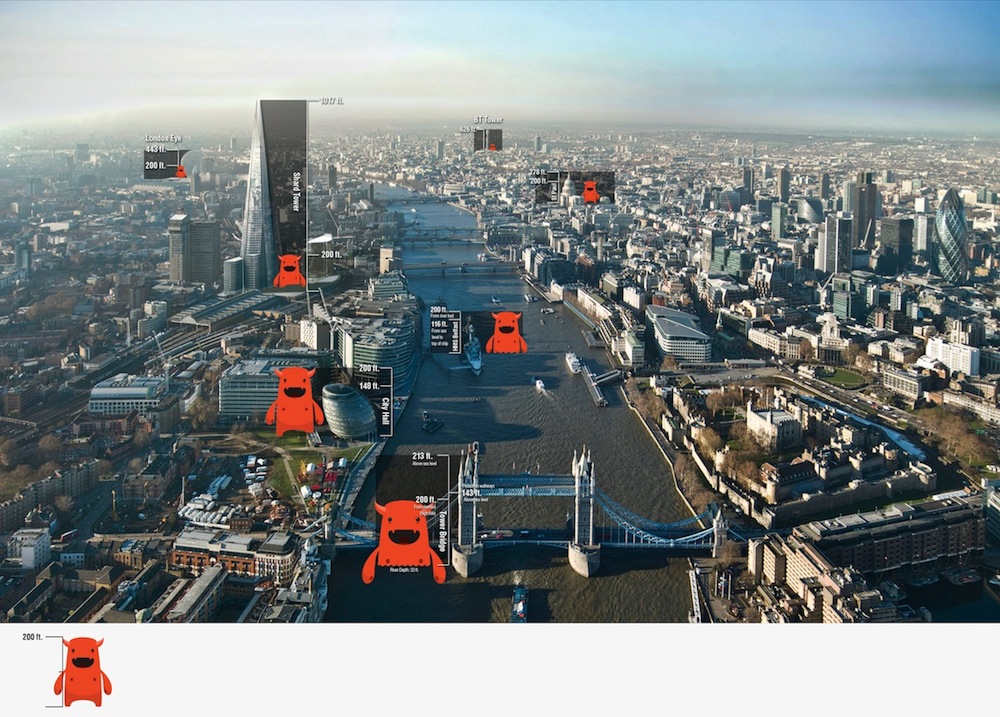
And in the case of the never-will-get-made Monsterpocalypse, ((cf. this summer’s Pacific Rim.)) in 2010 I asked Ryan Nelson to make some graphics for me so I could keep the scale of things consistent.

The script opens with an attack on London by an alien creature.

Vaporous blue flames seep through cracks in the crust. Suddenly, the meteor begins to move. The shell splits and slides in articulated sections, folding open like an elaborate puzzle.

It rolls forward, then begins to rise. It’s only then we get a sense of its true scale.

Two hundred feet tall, it towers over nearby buildings. Its massive claws could lift a 747.

Here’s what 200 feet looks like in practice:

chart

Note that Ryan’s monster is deliberately adorable. In case I needed to show the image to others on the team, I didn’t want it to seem like I was trying to design the creature, just the size of it.

Ryan’s image really helped. It was clear that the creature couldn’t really walk through the city as much as on top of it. The London Eye would still be big — probably too big for him to throw (for example).

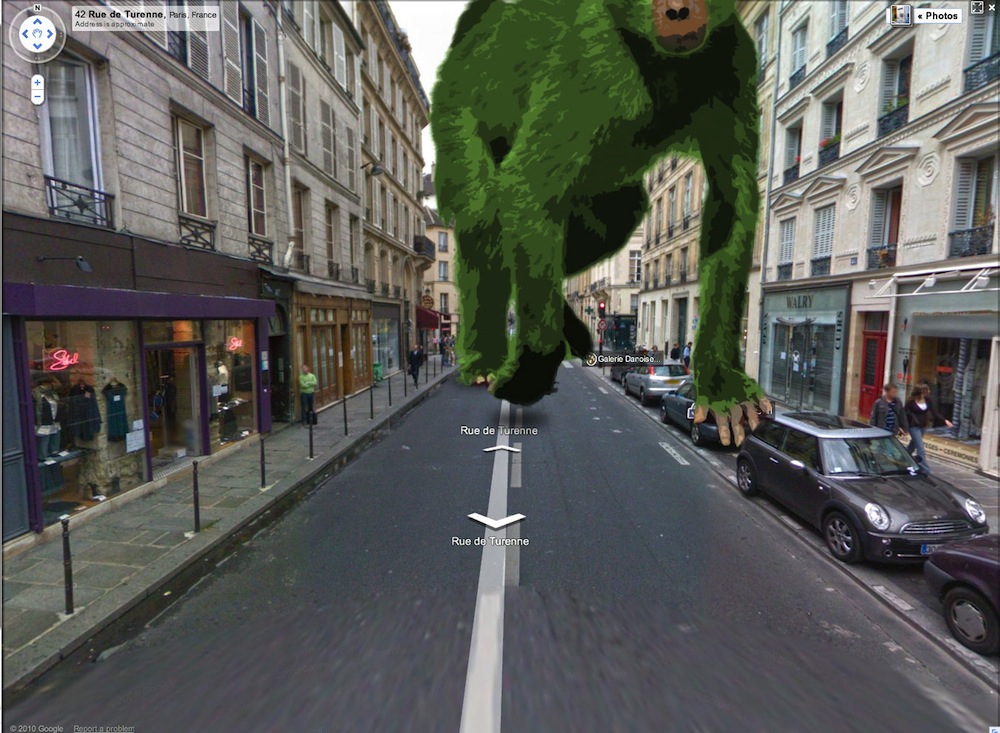
Later in the story, we encounter animals that have become gigantified in the decade following the initial attack. I wanted them to be big, but not so large they couldn’t navigate a city like Paris.

Ryan’s challenge was to find a scale that made sense. Keeping these creatures about 40 or 50 feet tall seemed to work best.

chart

chart

This kind of screenwriter previz is uncommon, so I don’t want to feed the fires of insecurity or distraction (“I can’t write that scene until I learn Photoshop!”). I had the luxury of having a graphic genius on the payroll and 20 feet away. These comps certainly helped me, but I could have written the same script without them.

I didn’t have these images when pitching the project, but that’s one situation in which a screenwriter might consider spending money for artwork — or buying some beer for a talented artist friend. If you have to pitch a project in which many elements are uniquely visual, having something to show might make sense.

Is your story set in a futuristic undersea world of sentient sharks? That might need a picture.

Otherwise, stick to your words.

« Previous Page
Next Page »

Primary Sidebar

Newsletter

Inneresting Logo A Quote-Unquote Newsletter about Writing
Read Now

Explore

Projects

  • Aladdin (1)
  • Arlo Finch (27)
  • Big Fish (88)
  • Birdigo (2)
  • Charlie (39)
  • Charlie's Angels (16)
  • Chosen (2)
  • Corpse Bride (9)
  • Dead Projects (18)
  • Frankenweenie (10)
  • Go (29)
  • Karateka (4)
  • Monsterpocalypse (3)
  • One Hit Kill (6)
  • Ops (6)
  • Preacher (2)
  • Prince of Persia (13)
  • Shazam (6)
  • Snake People (6)
  • Tarzan (5)
  • The Nines (118)
  • The Remnants (12)
  • The Variant (22)

Apps

  • Bronson (14)
  • FDX Reader (11)
  • Fountain (32)
  • Highland (75)
  • Less IMDb (4)
  • Weekend Read (64)

Recommended Reading

  • First Person (87)
  • Geek Alert (151)
  • WGA (162)
  • Workspace (19)

Screenwriting Q&A

  • Adaptation (65)
  • Directors (90)
  • Education (49)
  • Film Industry (489)
  • Formatting (128)
  • Genres (89)
  • Glossary (6)
  • Pitches (29)
  • Producers (59)
  • Psych 101 (118)
  • Rights and Copyright (96)
  • So-Called Experts (47)
  • Story and Plot (170)
  • Television (165)
  • Treatments (21)
  • Words on the page (237)
  • Writing Process (177)

More screenwriting Q&A at screenwriting.io

© 2026 John August — All Rights Reserved.