• Skip to primary navigation
  • Skip to main content
  • Skip to primary sidebar

John August

  • Arlo Finch
  • Scriptnotes
  • Library
  • Store
  • About

Search Results for: notes on notes

The Scriptnotes 200-episode USB drive

July 9, 2015 News, Writer Emergency, Writer Emergency Pack

For a limited time, we’re selling USB flash drives loaded with the first 200 episodes of Scriptnotes — including all the bonus shows, the Dirty Episode, and special interviews. They’re $20 and available in the [Store](http://store.johnaugust.com/products/scriptnotes-200-episode-usb-flash-drive).

[usb drive](http://store.johnaugust.com/products/scriptnotes-200-episode-usb-flash-drive)

These custom-printed 8-gigabyte USB flash drives include:

– Every episode in mp3
– Full transcripts
– Three Page Challenge pdfs
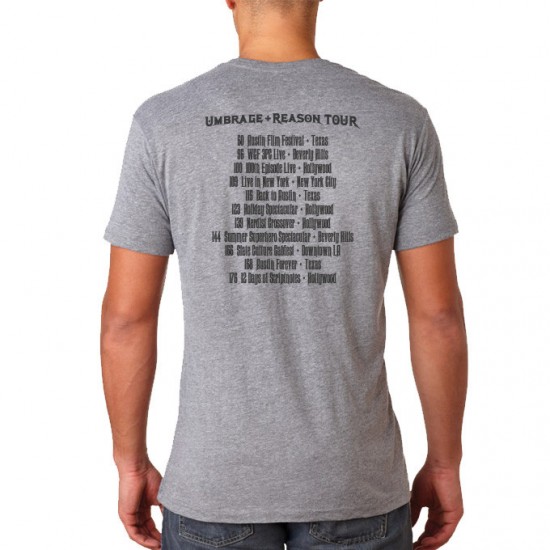
– Boundless love and umbrage
– Our autographs printed right on the side

[usb drive back](http://store.johnaugust.com/products/scriptnotes-200-episode-usb-flash-drive)

As of Thursday at 4pm PDT, we have fewer than 50 left, so we’ll likely run out. If you’re a collector, a completionist, or survivalist planning for the post-internet future, this is your chance.

We’re shipping these from the same warehouse that handles [Writer Emergency Pack](http://writeremergency.com), so if you want to get both, you can save yourself some shipping charges.

Both are available at [store.johnaugust.com](http://store.johnaugust.com).
Scriptnotes, Ep 205: The One with Alec Berg — Transcript

July 9, 2015 Scriptnotes Transcript

The original post for this episode can be found [here](http://johnaugust.com/2015/the-one-with-alec-berg).

**John August:** Hello and welcome. My name is John August.

**Craig Mazin:** My name is Craig Mazin.

**John:** And this is Episode 205 of Scriptnotes, a podcast about screenwriting and things that are interesting to screenwriters.

Now like most weeks, I’m here in Los Angeles, but Craig is way off in the other side of the country. He has kidnapped a famous writer/director who we both like, Alec Berg, and he’s holding him hostage in a house. So this can be sort of a special episode because Craig is going to interrogate him and get all the information he can out of Alec Berg.

**Craig:** Yeah. The Bergs and the Mazins are on a little mini vacation together right now. All of the children are out of our hair, spectacular. And what we like to do when we go on vacation is record podcasts.

**John:** Yeah, absolutely.

**Craig:** So I’ve got him. And I’m going to be asking him all the questions that people want to know. You know, a lot of questions about Alec Berg that have gone unanswered over the years and they’re all going to be asked, and I will get answers. Oh, I will.

**John:** And I’m looking forward to it. So before you do that, let’s do just a tiny bit of follow up.

**Craig:** Yeah.

**John:** In the last episode, we described the new 200 episodes Scriptnotes USB drive that people can purchase. A bunch of people purchased them so we are not quite in danger of selling out of them but they will sell out relatively soon. So if you would like to get the entire back catalogue of Scriptnotes on a USB drive, you should go to store.johnaugust.com and probably not wait too long for those because they will go. But thank you for everyone who bought one of those.

And Craig, do you remember what the promo code was that you picked for these USB drives?

**Craig:** Yes, the promo code was SINGULARITY.

**John:** That is the promo code that will save you 20% which would almost cover the shipping cost of those in the U.S. So if you want one of those —

**Craig:** Huge savings.

**John:** Huge savings. Second, our final bit of follow up — I’m kind of sad about this, on Tess Gerritsen and her Gravity lawsuit. Craig, talk us through it.

**Craig:** Well, you know, we’ve been following Tess Gerritsen. She alleged that she was owed a whole bunch of money because the Warner Bros. film Gravity, at least in her point of view, was based on her book Gravity that she had sold the rights to New Line, and she’d been suing. And all along the way, we had been following this and saying, “We don’t think she has a case.” Well, neither did the judge, repeatedly. And now she’s saying, alas, she’s giving up.

But she’s saying she’s giving up in the weirdest way. And it’s kind of consistent with everything she’s done so far. I mean, her whole thing is — she would go on her blog and say, “This is why I have this amazing case and this is why it’s terrible and this is why Warner Bros. can’t get away with this.” This is an incredibly one sided thing that even then both you and I felt was flimsy and not substantive.

And her final goodbye here is similar. Rather than saying — so the title of the piece is Gravity Lawsuit: Why I’m Giving Up. The proper answer is because I have no case. That’s not the answer she gives. The answer she gives instead is because the court is nuts and didn’t allow us to prove our justice and so forth. But I disagree. I disagree.

She even cites — I don’t know if you noticed this John, she cites for the first time something, right? What she never gave us was anything from her book and then something from the movie for us all to look at and say, “Oh yeah, that’s very, very similar.” What she does instead now is she cites something from her contract and she believes that this is determinative, and it says, “Owner agrees that the company may assign this agreement blah, blah, blah, blah, blah.” May, she just doesn’t see the word may there. Interesting, very interesting.

**John:** Yeah. So this is the end of our Gravity saga and I guess I’ll kind of miss it. The good news/bad news is that people have been tweeting in with all sorts of other lawsuits that are similar, some of which are making it through the court system as we speak. So in a future episode, we will talk through some of these other ones that have percolated up.

My hunch is that we are seeing more of these but they’ve always been there. You and I have both been around long enough that we’ve seen a lot of these things happen, what’s interesting to me is I think more of these are actually going to trial rather being settled before they ever become publicly known. So we’ll talk through some of those. I expect our opinions on them will probably be similar to the Gravity lawsuit but we’ll look at them as they come up.

**Craig:** Yeah. I mean, a general rule of thumb is if it goes to trial, the studio is going to win. They don’t go to trial with losers in general, they just settle them. They never came close to settling on this one as far as I could tell. I think, you know, when I see something like this, I just keep thinking that at some point, somebody must have reached out from the plaintiff side to say, “Well, do you guys just want to make this go away or what?” And when the studio says, “No. Actually, we would love to go all the way with this.” That’s when you know, they just — that’s just not the way corporate lawyers behave when they don’t have something locked down.

**John:** Yeah. I doubt it’s a philosophical change where the corporate lawyer decided to just become much more aggressive and like, “Oh yeah, we’d love to go to trial.” I think there’s something that has shifted in terms of how they respond into these kind of complaints or just that they felt there were no grounds for the complaint.

**Craig:** I agree. I’ll tell you that I don’t blame Tess Gerritsen for anything she did. I am concerned with her lawyers who I think kind of sold her a bill of goods here, but that’s my opinion, my non-lawyerly opinion that her legal team may have led her down the primrose path.

**John:** Great. So for the rest of this podcast, you are going to be talking to Alec Berg and I will not be there in the room to defend Alec Berg as you beat him up. He’s tied to a chair. You’re going to slap the answers out of him, correct?

**Craig:** Oh, yeah. I’m going to slap a lot out of him.

**John:** But what I’d love to know is how he helped create such an amazing show called Silicon Valley and how he actually topped the work in the first season with the second season. And how he prepares for the crushing disappointment of the third season which cannot possibly live up to expectation.

**Craig:** You know, it’s funny, I was not aware that he was involved in a show called — what is it? Silicon what?

**John:** Silicon Valley.

**Craig:** No.

**John:** And so apparently it’s about the silicon mining industry, and also intercut with the plastic surgery industry. So it’s really a great, gripping drama that enfolds over, you know, this sort of nonlinear storytelling mode. So maybe while you’re on vacation with him, you could, you know, rent the DVDs and watch them.

**Craig:** Just to be clear, I’m here with a guy name Alex Berg, I don’t know — do you?

**John:** Oh man, the wrong person, sorry.

**Craig:** Yeah. But this is Alex Berg. He’s not — I mean he’s a writer of a kind-ish. [laughs]

**John:** Well, Craig, I’ll leave it to you to figure out who this man is and why he should be on our podcast.

**Craig:** All right, here we go. So at last, I’m here with Alec Berg.

**Alec Berg:** Indeed you are, sir.

**Craig:** Got rid of Alex Berg, turns out he was useless.

**Alec:** Alex Berg, a real guy, actor.

**Craig:** Oh?

**Alec:** Yes

**Craig:** Not useless.

**Alec:** No. There is an Alex Berg who is an actor, and there’s an Alec Berg who’s a musician, I believe, in Portland. And there’s an Alec Berg who is a tech writer, oddly enough. I think he’s in upstate New York and he tweets constantly. So if you go to Twitter, he’s Alec Berg and I had to be pretentiously real Alec Berg like he’s not real because I’m the real Alec Berg, but —

**Craig:** By the way, you’re not real —

**Alec:** No.

**Craig:** And he is probably real.

**Alec:** He’s much more real than I am.

**Craig:** He seems real than you are.

**Alec:** He certainly tweeted several hundred thousand times more than I have.

**Craig:** Oh, he’s doing — oh, and that means, therefore, real.

**Alec:** Yes.

**Craig:** As we all know, volume equals substance.

**Alec:** Well, sure.

**Craig:** Well, [laughs] so here I am with the real, real Alec Berg —

**Alec:** @realalecberg.

**Craig:** And we are on vacation together.

**Alec:** We are.

**Craig:** With our wives.

**Alec:** Not the way —

**Craig:** I don’t want to start any weird rumors or nothing, although we do have a free path to happiness across the country.

**Alec:** Craig, please, this is going out to the public.

**Craig:** That is true, that is true.

**Alec:** We will end at that part.

**Craig:** Yes, yes.

**Alec:** [laughs]

**Craig:** Let’s keep it in. So Alec, I’ve known you for many years but I’ve never interviewed you. So I’m going to start a little bit where most of the interviews start and then we’re going to wander off. Because what we like to do on our show is talk about things from the writing perspective as writers. It’s not the same old questions. Nonetheless, I’m going to start with the same old question. You began your Swedish life as a writer at Harvard, I believe. Were you writing even prior to college?

**Alec:** Yeah. I mean, I did a lot of like, you know, the usual creative writing classes and things like that. And those were always the classes that I was, you know, enjoying the most in junior high and high school. I went to high school with Ted Griffin who I don’t know if you’ve had on this podcast or not, but —

**Craig:** No. Ted is simply not important enough.

**Alec:** Yes.

**Craig:** No. We’ll get him on for sure.

**Alec:** Screenwriter of much repute —

**Craig:** Ocean’s Eleven

**Alec:** Ocean’s Eleven and Matchstick Men.

**Craig:** And Matchstick Men.

**Alec:** And he created a show on —

**Craig:** Terriers.

**Alec:** FX called Terriers which was amazing.

**Craig:** Yeah.

**Alec:** Anyway, Ted and I went to junior high and high school together and he was, you know, probably from birth, like just obsessed with the film business. It’s in his family. His grandfather was a director. So he was aggressively making short films. We were actually editing short films together where we would have to plug two VCRs into each other and you would have to play from one into the other.

**Craig:** Basically like the first EditDroid from Lucas.

**Alec:** Yes. Yeah, right, right.

**Craig:** But only with two instead of like twenty.

**Alec:** Yeah, right. But like I remember sitting in his apartment when I think I was in like ninth grade and he was in seventh grade and we were, you know, editing. And I grew up in Pasadena so it was close enough to the film business that I knew it was there. Like I wasn’t like a child of the film business but I definitely was very aware of it.

**Craig:** Did you look at the film business as kind of a trap for feckless dreamers?

**Alec:** I had no sense, really, of what it was. And I certainly had no pretension of like — I always assumed like even from that age like, “Oh, I’d like to do something peripherally pertaining to entertainment.” I was really obsessed with stand-ups. Like when I was eight years old, I could do two-and-half hours of Bill Cosby kind of word perfect.

**Craig:** Right.

**Alec:** And then Steve Martin became like the game changer for me, like those few first few albums.

**Craig:** It’s interesting. I went through the same thing. I remember Delirious, Eddie Murphy’s Delirious. It’s like you memorized it almost word for word.

**Alec:** Well, somebody just wrote an amazing piece. Somebody interviewed like a hundred comedians and said, “What was the thing that made you want to be a comedian?” And of those hundred comedians, I think like 80 of them referenced Eddie Murphy’s Delirious. Like that really was like the — that’s the Star Wars of stand-ups.

**Craig:** It kind of is. And I remember, yeah, you would sit with your friends and sort of compete to see who had the most word for word.

**Alec:** Yes. And it’s still amazing. If you watch it now, it’s like it’s not one of those things where you go, “Oh yeah. Well sure, 30 years ago.”

**Craig:** It’s still really funny stuff, yes.

**Alec:** It’s unbelievably edgy. It’s great stuff still. So I was kind of a comedy nerd and we did — Ted and I did — but I mean Ted, far more than I, like driven by show business, show business. So I came to be enamored with the entertainment business, but I always thought I’d be an executive or, you know, an attorney or something like that. Like I don’t really ever think — until I got to college and I started writing — I worked at the Harvard Lampoon and that was where all of a sudden I became aware of like, “Oh, there are people who graduated a few years ago who write for Letterman, who write for The Simpsons,” had just started. The Simpsons started when I think I was a sophomore in college.

**Craig:** Right.

**Alec:** And that was one of those things where it’s like, “Oh, this is a thing.” Like people actually, like they don’t get jobs, they don’t go to law school. But I don’t think I was really like, it’s become a very weird thing now where like, there are like sophomores at the Lampoon who are like writing spec scripts and, “Oh yeah, this is my sketch package.”

**Craig:** Weaponize their ambition, yeah. .

**Alec:** It’s like what? Like I didn’t even know what that was or like that’s how you got a job. But I did a bunch of filmmaking in college and then the part of it that I thought I was sort of best at and I was most interested in was writing.

**Craig:** Right. So you were in that — it’s interesting, I was — because we’re going to leap ahead to a question I was going to ask you later, but I want to ask you now because you kind of segued into it perfectly. When you and I — we both got into the business roughly around the same time, in the early mid-90s —

**Alec:** Yes, the good old days.

**Craig:** The good old days. And we came out of what does seem like a fairly naive place. I mean, I remember, when I first came to L.A. that I got this book, Ken Auletta I think was his name, he wrote a book called Three Blind Mice and it was the story of the networks. And I got it because I just didn’t understand what the difference was between a network and those stations that weren’t networks and who made shows. Wait, wait, networks don’t make shows and I had no idea how any of it worked.

**Alec:** Well, the nice thing is that nobody knows how that works still to the this day —

**Craig:** Still to this day, exactly.

**Alec:** And now more than ever.

**Craig:** But, you know, you were at the Lampoon going, “Oh wow, there’s people who write on those shows, maybe I could do that too.” And you’re right. Now it seems very formalized. Everybody seems to be aware of everything very early on. Do you think that — and I promise we’ll get back to you in a second, but do you think that whatever you call it, the farm system, the incubation of new writers, is that damaged beyond repair or is it just too self-aware right now?

**Alec:** You know, it’s funny, I have no sense — people always ask me like, people always like people ask me questions like all the time.

**Craig:** Like just this morning this guy asked you.

**Alec:** Yeah. I can’t go anywhere without people asking me. When I do get asked about like how do you break into the business, the answer I sort of come around to is I kind of look at it like breaking into a bank. Or it’s like, I can tell you how I robbed the bank.

**Craig:** Right.

**Alec:** I can tell you what I did to short the alarm system and to fool people into thinking I was the security guard —

**Craig:** They’ve closed that loop a lot, yeah.

**Alec:** That’s my thing. It’s like people are like, “How do I break into the business?” And my honest answer is, “I have no idea.”

**Craig:** Right.

**Alec:** Like I know what people were expecting of me back then, like you’d write a couple of spec scripts of existing shows. The rule then was, don’t write a spec pilot because people don’t want to read spec pilots, they want to read existing shows, they want to read —

**Craig:** Just the opposite of what it is now.

**Alec:** Right, right. And now it’s like when I read writer submissions, it’s like — nobody’s writing Modern Family. Like all I’m getting are pilots because that’s the thing people do now.

**Craig:** Do you think that the cohort — I mean, I’m asking to throw an entire generation under the bus, but you don’t have to. But do you think that the cohort of writers that you came up with is stronger at least in inception than say this one now?

**Alec:** I think it’s a generational thing. It’s always going to be, you always think that like because you prize your skills in a certain, you know, order, I think you value certain things that people of your era valued, right?

**Craig:** Right. Like quality.

**Alec:** Well, it’s like, you know, the whole point of like rock music was to piss of your parents. And if your parents like the music, it’s not working correctly. It feels like it’s the same thing where it’s like each generation — like personally, I feel like — especially in sketch, you feel the influence of UCB and that kind zany improv like, “Oh, the twist in the middle of the sketch is this thing goes completely sideways and it turns out we’re on an alien planet watching this on TV.” And to me, as a sort of traditionalist, that offends me, because when I think of sketches I think come up with a really solid premise.

**Craig:** Right.

**Alec:** And serve the premise. And this idea of like in the middle of the sketch you go zany sideways, and it’s — you turn the whole thing upside down. That feels like a quit to me. But people who grew up prizing those zany left-turns as like, “Oh, that’s the comedy gold,” I think that —

**Craig:** Oh, but you know —

**Alec:** That feels right to them. So I guess what I’m saying is, without even realizing it, I’ve become hacky and —

**Craig:** [laughs] At last I’ve led you to the truth.

**Alec:** It’s over. It’s over for me.

**Craig:** Halfway through this, you’re going to quit the business.

**Alec:** Yeah.

**Craig:** And at the end you’re going to shoot yourself.

**Alec:** Yeah.

**Craig:** This is going to be great, yeah.

**Alec:** People would just say, we always used to joke about this, like the hardest thing about show business really is like you never get pink slipped, right?

**Craig:** That’s right.

**Alec:** It not like somebody just calls you and goes, “Yeah, we appreciate your contributions. Here’s your severance package. Don’t come in tomorrow.”

**Craig:** Your last day looks just like all your other days.

**Alec:** Right. You keep going in and then all of a sudden you realize that you haven’t been on the payroll for weeks.

**Craig:** That’s right. And you don’t know any of these people.

**Alec:** No. But also, everyone else knows you’re not working there anymore but they haven’t said anything.

**Craig:** Correct.

**Alec:** And that’s the most brutal part. It’s just like it’s a very slow, quiet, there’s no definitive end moment.

**Craig:** That’s actually great news for us, I think. Because I plan on just drifting out of the business.

**Alec:** But the terrifying thing is that, we may be done.

**Craig:** Right.

**Alec:** Without even knowing it.

**Craig:** You said it’s terrifying and my heart is singing right now. I’m still happy. It means we can extend this vacation. Let’s just keep driving, man, like Thelma and Louise.

**Alec:** Wouldn’t that be amazing? You suddenly realize there’s just no compelling reason to go back.

**Craig:** Well, you know, a lot of people — no one really knows this except for you and for me, but we’ll share it with them that you and I have this fantasy —

**Alec:** Yeah.

**Craig:** We’ve been talking about it for years — quitting writing.

**Alec:** Dare to dream.

**Craig:** Dare to dream, quit writing, and the two of us just open some kind of — we’d become lawyers. And I honestly feel like we could get our law degrees — I’m not kidding — in months. I feel like if you and I tried really hard —

**Alec:** I think you can get a law degree. I don’t know if it would be reputable at all but it does seem like —

**Craig:** It would be a degree.

**Alec:** It would be a physical piece of paper that says we have —

**Craig:** Right. If you and I said, “Look, the bar is one year from now, let’s start studying now,” and we’ll take the bar a year from now, I think we could do it.

**Alec:** If our sole reason for studying was to pass the bar, as opposed to amassing actual useable legal knowledge —

**Craig:** Not interested in that.

**Alec:** [laughs] That’s applicable in some real world.

**Craig:** I already feel like I’m more of a lawyer than you are because of the way I’m approaching it —

**Alec:** Yeah. No, you’ve already — you adjudicated this entire thing.

**Craig:** Your scruples [laughs] —

**Alec:** Masterfully. Yeah. No. See, again, this is the problem, I’m out of that business also before I even got in.

**Craig:** I need a new partner. You and I become lawyers and then — and sort of, like, lawyers-managers-agents. We become like some sort of weird new thing. We take on all of our friends, we stop writing, and we just advise them on how to go through their careers. We probably would end up making more money. Now, we’re taking 10% of 20 or 30 A-list writers.

**Alec:** Yeah. And I don’t know that I would end up being more happy doing that, but I’ll bet you I would be less sad.

**Craig:** Well, and then there’s that. Let’s talk about that. Why —

**Alec:** Yeah.

**Craig:** So Alec, this is what I think a lot of people will never understand. So you and your occasional partners, and for many years you were really tied at the hip with Jeff Schaffer and David Mandel.

**Alec:** Yes.

**Craig:** So Berg, Schaffer, Mandel. Even when I started working, I remember people were like, well, there’s Berg, Schaffer, Mandel. That’s like a thing. They’re like a big comedy corporation. And you guys did everything — Seinfeld, Curb Your Enthusiasm, a ton of movies. You wrote and directed EuroTrip and then there was a lot of movies that you worked on that you didn’t get credit for —

**Alec:** Yeah.

**Craig:** But a ton of work there. Everything seems to be going great and yet, sad. And I talk about this all the time. And I think in a weird way, people, when they hear me say that I’m sad a lot, they I go, “Yeah, you should be.” [laughs] But I think people would be surprised to hear that you get glum about things. What is going on?

**Alec:** I’ve made peace of it. It’s the creative process. That’s just what it is. I think in any creative endeavor, I feel like if you’re not unhappy with where your product is, whatever it is, you’re not going to strive to do better. Like as soon as — I think complacency is just absolutely anathema to doing good work. Especially in comedy which — I mean, you know, this is a sidebar, but like comedy really is binary, right? Like it’s either funny or it’s not. It’s not like, “We’re going to get it to a certain level and then we’ll just make it a little funnier and a little funnier.” Like certain things are like, “That’s funny,” or, “That’s not funny.”

**Craig:** Right.

**Alec:** Right? So if it’s not working, it’s just white hot death. I think as soon as you start to feel smug or complacent or satisfied, you know, unfortunately, you stop trying desperately to make everything better. And I feel like everything I do creatively, I always approach from the standpoint of, “This is terrible. This is going to get out into the world, and people are going to laugh at me in a bad way.” Not like a “Ha-ha, this is hilarious” way, like in a “This is what passes for professional work? This is a joke. That guy stinks. He’s terrible. We’ve discovered his dirty secret. He’s talentless.”

**Craig:** Right. There’s a lot of that going around.

**Alec:** And that is the way I approach everything. And it’s like — it makes it difficult because even, you know, when I get an occasional Emmy nomination, for about 10 seconds, that’s awesome, and then it becomes, “Oh, my God. The fall is going to be even more precipitous and more ugly, and people are going to watch —

**Craig:** What do I do now?

**Alec:** The crap that I turned out next and go, ‘Somebody got nominated for an Emmy for this?'”

**Craig:** Right.

**Alec:** But ultimately, as awful as all that sounds, I’ve sort of made peace with it because it’s good for the work. It just is. It’s a professional hazard but it makes the work better because I don’t stop.

**Craig:** But do you think it’s possible to be happy and still also be committed to — for instance, Jerry Seinfeld, you worked with him for many years.

**Alec:** Yeah.

**Craig:** He strikes me as the guy that isn’t torturing himself. Am I wildly off-base there?

**Alec:** I think he is very hard on himself, but no. He definitely has figured out a way, I think, to feel positive and good about the good work that he’s doing and —

**Craig:** In a healthy way.

**Alec:** The pleasure he derives from his work seems not to have led him to a place of complacency and mediocrity.

**Craig:** Right.

**Alec:** But there’s a reason that you’re citing him as an example because he stands out.

**Craig:** Exception to the rule.

**Alec:** Right? Like, “Oh, there is somebody who can do that and he’s that guy.” Like the vast majority of people are, you know, when Larry David and Jerry Seinfeld worked together on Seinfeld, Jerry was always the positive one who’s like, “If we set our minds to this, we will do it and we will crush it and we will be great.”

**Craig:** And Larry —

**Alec:** And Larry’s whole thing is, “No, we can’t do this. This will never work.”

**Craig:** [laughs] Right.

**Alec:** “Let’s not even try, because what’s the point?”

**Craig:** And that was a pretty great combination.

**Alec:** And the yin and yang of that was really exceptional.

**Craig:** And that’s an interesting thing for you to bring up because for many years you did have this very — it was a unique partnership. You don’t see a three-man team or a three-person team almost ever.

**Alec:** Yeah.

**Craig:** In writing, at least. It’s every now and then, but you guys really are the only one of note that I can think of.

**Alec:** Well, Zucker, Abrahams, Zucker.

**Craig:** Well, yeah, those three guys were — there’s a slightly different division of labor there.

**Alec:** Yeah you’ve worked with those —

**Craig:** Yeah. I mean —

**Alec:** So you tell me.

**Craig:** Because in a weird way, there was almost four of them because Pat Proft was usually in the mix as well. One of them, often David, was directing more, you know. But you guys were like a traditional, like the three of you would write a script.

**Alec:** Yeah. And the three of us would direct when we directed. I mean, it really was — yeah, that is a —

**Craig:** Correct. It was extremely —

**Alec:** That is the interesting thing about that partnership because I do see a lot of partnerships where like one guy is the this guy and the other one is the that guy. All three of us did everything.

**Craig:** Right. All three of you did everything in a kind of an equal way. But now, you have sort of said, “Okay, just as Schaffer is off doing The League and Mandel is currently now running Veep.”

**Alec:** He just started running Veep, yes.

**Craig:** Right. And you are running Silicon Valley, and have been running it as the writer from the start.

**Alec:** Yes. I came on after the pilot.

**Craig:** Oh, came on after the pilot.

**Alec:** Yeah.

**Craig:** So, after everybody else had done the hardest part of it.

**Alec:** That’s right.

**Craig:** And cleared away all the possible mines that you certainly would have stepped on.

**Alec:** Yeah. No. I showed up for dessert.

**Craig:** You showed up after they loosened it and then just went wee, wee, wee, and out came gold.

**Alec:** That seems fair.

**Craig:** Right. So congrats.

**Alec:** Yeah.

**Craig:** Good.

**Alec:** Thank you.

**Craig:** Nice job. But that’s an interesting thing that you have wandered away from what I would imagine would be this comforting nest where you knew, okay, maybe, and each of you might have had this thought at some point. Maybe on our own, we’re only a third of a great person but together we’re one great person?

**Alec:** I think part of us thought that way. I don’t think we ever had one discussion about, like, how do we work and what is our — like, we just did the work. There wasn’t a lot of, like, you know, talk about process and who does what and who’s better at what and why and how can we, you know, make this process more efficient or hone it in any way. Like there was no —

**Craig:** The other two guys just agreed that you were the best of them.

**Alec:** Well, I always used to joke that Jeff and Dave argued and disagreed about almost everything. So functionally, I got to make every decision because that’s the way — it was majority rules.

**Craig:** [laughs] Right.

**Alec:** And that part of it —

**Craig:** You would just wait

**Alec:** Yes. So in a funny way, it was really like it was — they were helping me make decisions but really —

**Craig:** They should have just even stopped trying to make decisions.

**Alec:** Yeah. Which is not entirely true. I mean —

**Craig:** It’s entirely true.

**Alec:** All right.

**Craig:** It’s entirely true.

**Alec:** No. I mean, we just didn’t spend a lot of time analyzing how it worked. We just did it. And actually, I would say it’s funny. Like there are a lot of writing teams, particularly in comedy, of two people. And you’re right, not that many three-person teams. What’s weird is a three-person team actually makes it much easier. Because with two people you get into these deadlocks —

**Craig:** Right.

**Alec:** Where it’s like, “I think it should be black,” “I think it should be white.” And you fight about it. You fight about it, and all sorts of teams have all sorts of different ways of breaking the ties. Some alternate, some flip a coin.

**Craig:** Right.

**Alec:** With three people —

**Craig:** There is no question.

**Alec:** If two people really have an argument, they argue it out and the third person is almost literally watching it like a tennis match. Just listening to the argument meaning that in the end, well, a lot of times, me, but —

**Craig:** I could totally see it.

**Alec:** But really — but here’s — this was also the —

**Craig:** Here’s what’s going on. You have one Swedish guy, you, watching two Jews beating each other up, just waiting.

**Alec:** [laughs]

**Craig:** Just waiting for them to tire each other out with words.

**Alec:** Yeah.

**Craig:** And then you come in and in your flat affect way, just say, “We will do the following.”

**Alec:** Yeah. But what was interesting is, you know, I got outvoted a lot. And what was interesting about that is there just was a level of trust. Like, those guys are both really talented, skilled guys.

**Craig:** Right.

**Alec:** And you just get to a point where you go, “I think they are absolutely wrong. I don’t see what they’re agreeing about here. They’re just flat wrong.” But if both of those guys see something in going this other route —

**Craig:** There might be something —

**Alec:** There must be something.

**Craig:** There must be something.

**Alec:** There must be.

**Craig:** Yeah.

**Alec:** Like we just got to that level of trust where it’s like, “I think you’re wrong — ”

**Craig:** Right.

**Alec:** “But I also believe that because of past experience, if both of you see it, you’re right.”

**Craig:** Yeah. I always felt — when I was writing with Todd Philips and he would say, “No, no, no. This should be this way,” and I would think, “I don’t like that. I don’t think that’s true. But I know that if you see it, then you will at least know how to make it good.”

**Alec:** Yeah.

**Craig:** And when I say good, I mean, I may never love that one thing but I’ll know that it will work.

**Alec:** Yeah.

**Craig:** Because in your mind, if you say to me, “I know how to make this work,” I trust you, you know how to make it work. I would imagine that it was probably that way with those two guys.

**Alec:** Absolutely. No, 100%. That even the things that I was most like adamantly opposed to, in the end I would always come around to and I’d go, “Oh, okay. Now, I get it.”

**Craig:** All right. So the brief journey here, you graduated from Harvard, which is a second tier school, you end up in Los Angeles.

**Alec:** Yeah. It’s the Princeton of Cambridge.

**Craig:** [laughs] It is the Princeton. It’s the Princeton of — I don’t even think — I think it’s actually the Cornell of Cambridge, but fine.

**Alec:** [laughs]

**Craig:** So you end up out here back home, essentially.

**Alec:** Yes, yeah.

**Craig:** Where you’re from.

**Alec:** Well, my folks moved to Boston after I graduated from high school. So I finally —

**Craig:** To be near you?

**Alec:** No, my dad is a college professor, my mom is college professor. They got work on the East Coast.

**Craig:** Idiots.

**Alec:** Yeah, they went that way.

**Craig:** Got it.

**Alec:** So I finally, after graduating college, moved really away from them for the first time.

**Craig:** Yeah, I was going to say. Like you thought you were getting away from them?

**Alec:** Yeah.

**Craig:** And then when was that? Like freshman year? Surprise.

**Alec:** Yeah. Well, no. What was really funny is — no, they moved the summer before my freshman year.

**Craig:** Oh, my. You never even had a day?

**Alec:** So we sort of went to college together.

**Craig:** Oh.

**Alec:** But what was funny is, my brother went — my brother’s in college in Connecticut, he ended up seeing and talking to my parents much more than I did even though they were ten blocks away. Because psychologically I’m like, “I don’t have to call them, they’re right there.”

**Craig:** Right.

**Alec:** “I don’t have to go see them, they’re right there.” And so I would go months —

**Craig:** The distance —

**Alec:** Without talking to them or seeing them.

**Craig:** I’m really rethinking my strategy of moving halfway across the country, entirely across the country with my parents. I should be next door.

**Alec:** Yeah. No, I was — I didn’t have to call them, they’re right there.

**Craig:** Brilliant.

**Alec:** Why? What do I need to call them for?

**Craig:** Brilliant.

**Alec:** I could shout to them.

**Craig:** And so I won’t.

**Alec:** Yeah, so —

**Craig:** So, you came out here —

**Alec:** Yeah, I graduated. I spent about six months living at home, writing specs because I had a friend who was a couple years older who had moved out to L.A. and had worked in an agency.

**Craig:** Okay.

**Alec:** Chris Moore.

**Craig:** Oh, yes, Chris.

**Alec:** Who ended up producing the American Pie movies. And he worked at a little agency called InterTalent. And he basically said, “Look, I just got promoted. I have my own desk. I’m an agent now and I don’t really have a lot of clients. I can sort of represent you, but you’ve got to move to L.A.”

**Craig:** Right.

**Alec:** And he said, “When you get here, you need writing samples.” So I spent six months writing.

Jeff Schaffer graduated the same year I did. He basically lived in Cambridge for six months. And we didn’t work together-together, but everything I wrote, he read. Everything he wrote, I read. We would trade things back and forth. Yeah. We were, you know, we helped each other.

**Craig:** And somewhere out there was Mandel.

**Alec:** Mandel was a year younger.

**Craig:** Okay.

**Alec:** So we had worked with him on a bunch of Lampoon stuff but he was still in college when we were out. So Jeff and I moved — packed up his Toyota Camry and we moved to L.A. And our intention initially was to work.

**Craig:** He had a Camry?

**Alec:** He did.

**Craig:** Rich kid.

**Alec:** Yeah. Oh, yeah.

**Craig:** Rich kid. I had a Corolla.

**Alec:** It was something.

**Craig:** Yeah.

**Alec:** With the leather and the —

**Craig:** Leather?

**Alec:** Yeah. Oh, it had a CD player in it.

**Craig:** Chic.

Alex: Ooh, yeah, no, it was fancy.

**Craig:** God. CD player?

**Alec:** Yeah. I actually ended up crashing his car at one point.

**Craig:** Nice.

**Alec:** So I took him down a peg.

**Craig:** Nice.

**Alec:** So we moved to L.A. and we sat down with Chris Moore. And Chris Moore at that point was trying to get more into features. He represented a young Zak Penn and Adam Leff actually who had just sold the Last Action Hero.

**Craig:** I always put Leff first just to piss Zak off.

**Alec:** Yeah.

**Craig:** Leff and Penn. That team was —

**Alec:** And Zak is —

**Craig:** It was Adam Leff, and Adam Leff’s partner.

**Alec:** Yeah, that’s right. And a slight annex of Adam Leff.

**Craig:** That’s right.

**Alec:** So we moved out. Chris was going to represent us. He became a feature agent, so he put us in a room with two kind of fledgling TV agents, one of whom we ended up working with. The other of whom was a young kid named Ari Emanuel.

**Craig:** That kid’s name was Ari Emanuel.

**Alec:** Yeah.

**Craig:** And was it Ari Emanuel or just a different Israeli?

**Alec:** Who can tell, really? I’m Swedish, I can’t tell the difference.

**Craig:** Alec Berg, anti-Semite. I got my news story.

**Alec:** Edit this out.

**Craig:** No, editing it in.

**Alec:** The thing that happened immediately was these agents all said, “Look, you guys have the same background, you like the same shows, you want to work in the same places, you have very similar samples, you’ve worked together for several years in the Lampoon — ”

**Craig:** Right. Formalize it.

**Alec:** “Be a team.”

**Craig:** Yeah.

**Alec:** “We’re going to send you out against each other or we can send you out with each other,” and people feel like rightfully so they’re getting more for their money when they hire a team because you really are getting two — especially in a comedy room they’re —

**Craig:** Yeah, they’re getting more.

**Alec:** You’ve got two brains instead of one.

**Craig:** Let’s take a side trip and talk for a second to the — because, you know, we have a lot of people who listen to the show that are aspiring writers, many of whom have partners. How do you get screwed when you’re a — I mean, you guys got particularly screwed as a three-man team but what are the ways that writing teams get screwed?

**Alec:** Well, I mean, you know, there’s a big thing going on with the Writers Guild about paper teams, right? Where like TV shows will basically say, “I want to hire you and I want to hire you. You don’t work together, but if you become a team, I can hire both of you for one salary and you guys can both work at the show.” And people who aren’t actually teams —

**Craig:** Yes, they’re getting their salaries halved — they’re getting their residuals halved.

**Alec:** Team up and basically each take half.

**Craig:** Right. There’s also — for you guys, there’s — you know, we get money — when we get paid there’s a percentage on top of that that the studios kick in for our healthcare and our pension. And they don’t really double it exactly or like they don’t double the cap for teams. And tripling God only knows what it is.

**Alec:** You know far more about —

**Craig:** What I’m trying to tell you that you’ve been really damaged over the years.

**Alec:** Yeah, no, just —

**Craig:** Deeply damaged by this.

**Alec:** I was aware of that, I just don’t know the extent to which I’ve been damaged.

**Craig:** Let me take out a spreadsheet and then just take a look at these numbers.

**Alec:** I feel like knowing the extent to which I’ve been damaged is going to damage me that much further.

**Craig:** Yes. So as I said, at the end of the show, you’ll kill yourself. [laughs] I’m working towards the gunshot.

**Alec:** Yeah. You’re just going to show me a printout of my career stats and I’ll off myself.

**Craig:** Here’s your pension information. Here are some texts that I’ve had with your wife. Here’s — okay.

**Alec:** [laughs].

**Craig:** But now —

**Alec:** File all of these under “mistakes made.”

**Craig:** [laughs] Exactly. This is the conception of this thing that eventually turns into this amazing career in television. And I want to talk about this — what I think of as — because I’m catching up to Silicon Valley in a way. I’m going to, like, I’m speeding through Seinfeld and Curb Your Enthusiasm, getting to Silicon Valley in part because I feel like there’s something that unites them. And I always think of a certain kind of story as very Bergian. You prefer Bergian? Bergess?

**Alec:** I prefer neither.

**Craig:** Bergish? Yes.

**Alec:** Speaking [crosstalk].

**Craig:** So Bergian, we all know what Bergian means. Crap.

**Alec:** [laughs]

**Craig:** But also —

**Alec:** That’s what I’m thinking in my head. That’s Hollywood translation.

**Craig:** Yes, but also, “God, that’s Bergian.”

**Alec:** On the fly.

**Craig:** But also there is a certain kind of recursive self-referential plotting, a kind of a Rube Goldberg plotting that goes on, I see it Silicon Valley the way I would see it in Curb and Seinfeld, too, to maybe a lesser extent, but it’s there. And it’s this thing where these really funny jokes happen. And when you’re writing a comedy and there’re jokes that are connected to plot, they’re on plot, they’re on the specific character relationship that story is about. Then there are these little side jokes, they’re there for funsies. Those become important to the plot. You just don’t realize it’s happening.

**Alec:** Absolutely. No, there’s nothing better than something that plays purely as a joke that all of a sudden you realize it’s like a magic trick.

**Craig:** That’s right.

**Alec:** And it’s just like —

**Craig:** This is what I think of as Bergian.

**Alec:** Yeah.

**Craig:** I guess my craft question is how intentional is that? I mean, do you stop and go, “I know I need something that doesn’t seem like plot and seems like pure icing to turn into cake later.”

**Alec:** That’s a great question. The answer honestly is we cheat, which is that I would say way more often than not, that little joke early that becomes plot was written after the plot was written.

**Craig:** Got it. So you’re retrofitting.

**Alec:** That’s the big difference is that you watch a show in a linear fashion.

**Craig:** Right.

**Alec:** The show is never written in a linear fashion. And in fact, one of the great joys of Silicon Valley is because we only do 10 episodes, we can do the same trick from show to show where we’ll come up with something in show six as we’re writing it and we’ll go, “Wait a second, there was a moment in show two where we talked about a similar thing. Let’s go back — ”

**Craig:** Let’s go back and retrofit.

**Alec:** “Let’s put something in the show two script — ”

**Craig:** Right.

**Alec:** “That sets this up.” And there are things that we do all the time in the show where, you know, there’s a conversation in the first episode of the season where somebody says, “Watch out or this will happen, you got to be careful.”

**Craig:** Right.

**Alec:** And then in show nine or 10, that happens.

**Craig:** What’s the board, the — ?

**Alec:** We have a big grid on the wall in the office.

**Craig:** No. I mean, on the show itself, what’s —

**Alec:** Oh, the SWOT board?

**Craig:** The SWOT board, yeah. Like that was something that you could see like, “Okay, that was just funny. That was just a sad joke.”

**Alec:** Yeah.

**Craig:** And then it became like a runner. I mean, even like the condor, you know, the joke was —

**Alec:** That’s a great example.

**Craig:** It was like, “Okay, we’re making a joke about Schrodinger’s bird, Schrodinger’s egg.”

**Alec:** Yes.

**Craig:** And then that becomes — I always think of that as a very Bergian thing, the ferrets.

**Alec:** But that’s the rewriting process, right, is that you go, “Oh, we can reference that here, we can set that up here.” And you’re basically, yeah, you’ve got a chunk of something and you’re pulling little tendrils out of it and plugging them in in other places so that eventually everything is woven in, right? I mean, that I learned from — that’s Larry David. You know, Larry and Jerry kind of invented —

**Craig:** He invented that in a way.

**Alec:** I think so. I mean, I don’t know, there’s probably somebody who did something 10 years earlier who’s listening to this going, “Damn you. It was me.” But —

**Craig:** Well, sorry, sucker.

**Alec:** Yeah. I just made a joke about somebody listening to this.

**Craig:** [laughs]

**Alec:** No, but the honest answer, that’s where I learned it is the whole method of telling stories in Seinfeld is, first of all, there were no freestanding jokes in that show. And it’s what makes that show endure, I think, is when you tell somebody the plot of a Seinfeld episode, that’s the comedy, right?

**Craig:** Right.

**Alec:** It’s not like a traditional sitcom where it’s like, “Oh, he told somebody that he was he was going to do them a favor and then he didn’t want to do it and here of the funny jokes that happened during that.” The story of Seinfeld episodes, when you just say what happened, that’s the comedy of it.

**Craig:** Right. How far can we go without running out of gas?

**Alec:** Right, exactly. But those are the laughs, right?

**Craig:** Right.

**Alec:** Is the comedy and the story are the same and that is something that I kind of learned to do from Larry. And we did that in Curb also, that like, what’s the story? The story is the comedy, right? Like what’s a funny idea? Oh, that’s a comedy idea? That’s what happens.

**Craig:** Right. Jerry Zucker, I think — I don’t know, David will probably say that he said it first because that’s the way they are. But he said early on they said, “Make plot points jokes, and make jokes plot points,” which is very similar. But what’s different about what you do and I’m using you as the common thread even though obviously all you ever did was just rip off Larry David.

**Alec:** I hope this analysis doesn’t screw me up because I’ve never thought about what I do or how I do it, I just do it.

**Craig:** Let me reiterate again. At the end of the show, you will kill yourself. [laughs]

What you do specifically is you make non-plot jokes plot points. There are certain kinds of jokes that never feel like they’re meant to be plot. They just seem like minor, they seem like minor things that are just there because they’re amusing. And you take those out and really — and no one ever sees that coming because we’re trained, I think, now as just consumers of so much culture and a lot of comedy, we’re trained to see setups and payoffs. We know they’re coming.

**Alec:** Yeah, well it’s like the insert shot of something, right? Like if somebody puts their phone down, there’s a tight shot of the phone. It’s like, “Oh, okay. Here it comes.”

**Craig:** That means something. Right. We are trained for setups and payoffs. You know, we know when somebody says, “There is absolutely no way I’m going in there…” Right? And you’re really good at paying off setups that we didn’t think could ever be setups for anything anyway, like why would the ferret thing ever be relevant?

**Alec:** Right.

**Craig:** You know.

**Alec:** Well, the condor is an example of like where we wanted Jared’s idea of live streaming the condor egg to be just a dumb Jared suggestion.

**Craig:** Correct. But that’s exactly right. Like, I thought the joke was Jared is just being a sweet dork the way he is and these guys are torturing him by making him think that he’s going to kill the bird by calling, which is classic those guys, right? And so that felt great to me. And it turns out, yeah, and then in an Alec Berg way — so sorry for the suicide that’s coming — you say, “That’s what we should be paying off. Not, for instance, making a huge payoff about the guy and that the other company and their competing software,” which is what I think everybody else would do.

**Alec:** Yeah. But again, the way that’s actually constructed is a lot of times in reverse, right? Where we know that we’re doing this thing at the end where there’s this guy on a cliff and that’s the live stream and that catches on. And then we sort of back into all that other stuff.

**Craig:** Great.

**Alec:** And sometimes it’s the reverse. Sometimes you have a funny joke and then later in the show you’re like, “What are we going to do here?” And then somebody goes, “Well, what if that thing becomes this?” “Oh, great.” Boom.

**Craig:** Right.

**Alec:** But a lot of times, you back into it. You know, you go back and you go, “Oh, this should be the funny thing that we do there.”

**Craig:** Really, to me, I think what makes you special and different than a lot of writers is —

**Alec:** Aww.

**Craig:** It’s not good [laughs]. It’s just how incompetent you are —

**Alec:** Yeah. [laughs]

**Craig:** And yet you still get paid at such a high level.

**Alec:** Oh, shocking.

**Craig:** It’s that it’s what you choose. It’s when you go backwards, where do you go backwards to? And I find that that’s where you make interesting choices all the time. Because, I mean, you know, everybody, I think, plays the setup/payoff game. But where you go looking for those setups in the kind of retroactive fit ways is very clever and it’s always really funny.

**Alec:** Oh, thank you.

**Craig:** Now, so Silicon Valley, I suspect that you felt great going into the second season. You thought, “We’ve had a great first season, what could possibly go wrong in the second season?”

**Alec:** No, no. Precisely the opposite. I mean, actually in a weird way, the first season was very freeing because it was — “We’re doing this show.” “What is it?” “I don’t know. It could be this.” “What if this is the show?” “How about they — ” “Yeah, that could be the show,” “This could be the show,” “That could be the show.” And you’re just — you’re vamping. You’re just kind of like, you know, you’re really like kind of freeform —

**Craig:** Free.

**Alec:** And it’s like, “This could be the show.” And if it’s not the show, no one will see us fail because no one’s watching the show.

**Craig:** No one will see it. Exactly.

**Alec:** Right?

**Craig:** Yeah.

**Alec:** So it’s very freeing in a way because it’s really like you’re just backstage doing it for yourself. And then when it got out and it sort of worked, Season 2 was like the, “Okay, now prove this wasn’t a fluke.”

**Craig:** Well, first of all, you guys suffered a ridiculous tragedy in between those seasons. I mean —

**Alec:** Well, it was in the middle of Season 1 —

**Craig:** You were in the middle of Season 1, right.

**Alec:** Chris Evan Welch who played Peter Gregory, brilliant, brilliant actor, unbelievably great guy.

**Craig:** And potentially the reason — I mean, this is the thing, that when I heard the news about that, what killed me was that — and I think we all knew by the time the show started airing, correct?

**Alec:** He died when we were shooting shows five and six of the eight initial shows.

**Craig:** But he didn’t die after the first episode aired on HBO, did he?

**Alec:** No, no. He died while we were filming.

**Craig:** While you were filming.

**Alec:** Yeah.

**Craig:** So we all knew.

**Alec:** There were scenes that we had written for him in the last two episodes of the first season that — and toughest thing I’ve ever had to do as a writer is soon after learning of his death, it was like we got — this train is on the tracks and moving —

**Craig:** Right.

**Alec:** You know, the show must go on. I had to sit and delete him from these scripts —

**Craig:** Oh, my god.

**Alec:** I mean we loved him, we loved the character, we loved the scenes.

**Craig:** Right. You are part Swedish and, I don’t know, maybe you have a thousandth of the average human’s emotion.

**Alec:** Do I? I can’t find it. I defy you.

**Craig:** If I ever were on a show where the main character died in the middle and I had to do these tragic things like delete their name while I was in mourning and replace them, I would call you.

**Alec:** It was awful, it was really —

**Craig:** Yeah. Even you thought it was awful.

**Alec:** It was grim. No. I was like, I realized in that moment, I’m like, “Oh, this is what it’s like to feel.”

**Craig:** [laughs] At last.

**Alec:** Yeah. No. No wonder —

**Craig:** And then you said, “Ow.”

**Alec:** Yeah. No wonder my wife gets so down. Like if this is what it’s like, god.

**Craig:** She’s like this every day.

**Alec:** Yeah, man.

**Craig:** But he was potentially the reason to watch that show.

**Alec:** He was amazing. Amazing. He was the guy who every time you shot with him —

**Craig:** Something happened, right?

**Alec:** For the next day or two, everybody like, you know, at craft service was like mimicking his delivery and his lines and it was like —

**Craig:** It was a kind of an impossible creation because it doesn’t seem like you can do anything truly new in that space, in a performance space like that. All you can do is versions of things. I had never seen anything like that in my life.

**Alec:** He was brilliant. And what was amazing about it is it was completely farcical and insanely broad but at the same time 100% real.

**Craig:** Yeah.

**Alec:** Like you believed everything he did was a real human, a very strange —

**Craig:** Very strange but internally —

**Alec:** But very particular human being.

**Craig:** Yeah.

**Alec:** But everything was real. And that was his brilliance. Like there was not a phony beat to anything he did.

**Craig:** No. It was all consistent to his character. You know, when he called the hamburger buns breadings, I believed it 100%. And these breadings have sesame seeds, these breadings do not.

**Alec:** Yeah. And, you know, have you been to Burger King.

**Craig:** Yeah. Burger King.

**Alec:** Do people like it? Is it enjoyed?

**Craig:** [laughs] Is it enjoyed? And then there’s that thing he did that you made me notice. I mean, I think I would have noticed it anyway, when he has that chance encounter with —

**Alec:** Yeah. Belson, yeah.

**Craig:** With Gavin Belson and the rest —

**Alec:** I think my favorite scene to date that we’ve done on the show.

**Craig:** And instead of saying goodbye, he does like a weird hand —

**Alec:** His wave.

**Craig:** His wave.

**Alec:** It’s very strange, where he has his hand at his side and he kind of brings it up sort of across his chest and lowers it like he knows he’s supposed to wave because someone has told him that moving your hand in a certain way is a human way of communicating farewell. And he knows that he’s supposed to —

**Craig:** Incredible.

**Alec:** But it’s just a fascinating thing.

**Craig:** And the reason I also love —

**Alec:** And that was all him, by the way, like there was no like, “Hey, do a weird wave.” He just did it.

**Craig:** And we’re going to get into that question, too, in a second. But that character, what I also loved about him was I believed all of his behavior, all of his behavioral problems, but I also believed because of the way you guys portrayed him that he actually deserved every cent of his billions of dollars.

**Alec:** This is one of the things that we worked I think probably hardest on in Silicon Valley is that there’s a huge amount of protecting the characters. And we talk about that all the time. We can kick the crap out of Richard a lot —

**Craig:** But he has to be at least —

**Alec:** But you have to believe that he’s good at this because ultimately you want to root for him to succeed. And like when we first started, a lot of people, especially like tech journalists and people in the tech business were like, “Wait, is this just like — are you just like kicking the tar out of us? Like is this just a poison pen letter?”

And the answer was, no, of course not. Like, we’re going to take shots and we’re going to call out, you know, things that we see as ridiculous. But we’re not indicting the tech business because our characters are striving to succeed in that business. And if we’re saying that what they’re striving to do is nonsense, then we’re telling the audience not to root for them to succeed.

**Craig:** Not to root for them, not to care about our show.

**Alec:** Right. So ultimately, what we’re saying is there’s a right way and a wrong way to succeed in the business, you know. But we’re not saying that success in that business means that you’re a bad person or is a bad thing because then the audience is going to go, “Well, why am I rooting for somebody to get to something that I know is bad?”

**Craig:** It’s odd to me that the tech community missed the subtle cues of what you were presenting there. But nonetheless, I think you guys do a great job of that. And, you know, particularly good job with him because he did seem like if you pushed him even three or four more millimeters one way or the other that I would just stop believing that he had actually earned all that money. Whereas a guy like Gavin Belson, I think of as somebody who actually probably can’t do much but was a very aggressive businessman.

**Alec:** Of course. No, I mean look, we play with that a lot, too. Like, we can’t render Gavin as a complete buffoon because he needs to be formidable.

**Craig:** Right.

**Alec:** Right? We need a real enemy. We need a real heavy that Richard has to actually battle and those battles have to be real and hard. And if Gavin is just a buffoon —

**Craig:** Well, you look at him as this incredibly — he is like a Steve Ballmer kind of guy, like I don’t think of Steve Ballmer as a big tech head, but I think of him as a corporate bully.

**Alec:** Yeah, but oddly, most CEOs are not engineers.

**Craig:** That’s right, exactly. Gates was — Jobs really wasn’t —

**Alec:** Well, we did a joke in the pilot about that, right, where Richard sort of, you know, raises his nose at Jobs, right, because Jobs didn’t even write code, right?

**Craig:** Exactly.

**Alec:** And it is a funny like engineers versus management thing.

**Craig:** 100%.

**Alec:** It was like Jobs versus Woz. You know there is a yin and yang. Where engineers traditionally don’t make great CEOs because they’re so in their heads.

**Craig:** Exactly, and so that’s what’s interesting that that’s the story that you’ve set up now for Season 3.

**Alec:** Yes. But we have to have that conversation about protecting all of the characters. Like Gilfoyle and Dinesh giving Jared crap is something where it’s fun to watch, but we have to be very careful about making Gilfoyle and Dinesh too mean because it’s just like once they’re just slapping a baby, it’s like you hate them for that. And so it’s like you like them beating him up, but we have to be very careful about how far we go.

And it’s funny, we always talk about — Mike and I have kind of come up with this thing that we call the Price is Right school of comedy where it’s better to be significantly under the line than to be even one penny over the line.

**Craig:** One dollar over, exactly.

**Alec:** Right? Like you’d rather be $10 under than $0.01 over.

**Craig:** Well, because nobody really gives you credit for being slightly over the line. Either you are or you’re not.

**Alec:** It is damaging, and sometimes it just destroys everything. And so you’d rather miss under, under, under, under, under than ever miss over.

**Craig:** When you were evaluating this, I mean, because here’s what I think people probably — for people that are writing, they put so much pressure on themselves to get it right. When you’re writing especially this kind of comedy which is truly about generating laughs, you just acknowledge upfront you’re going to blow some things. You have to. There’s no way, you can’t hit home runs if you’re not occasionally whiffing. So there’s I assume this very painful and painstaking process in editing where it’s like, “No, that went too far.”

**Alec:** 100%. No, we do it in the writing process, we do it on the stage when we’re shooting, we pull people back, we, “Okay, go for it. Try it. And if it doesn’t work, you know, we’ll pull it back later.” And yeah, we do a tremendous amount of writing in the edit on the show where there’s a huge amount of lines on people’s backs that we do in ADR, and reconfiguring things.

And, you know, a lot of times if you’re on somebody’s close up and you want to build a pause into that, that pause is not they were pausing when they performed it, there was somebody else off-camera talking. And we take that line out so you build a pause in, like you play with rhythms and —

**Craig:** You know, when it comes to comedy, I wish that there could be some kind of program or something for up and coming comedy writers to watch comedy people edit comedy because that is where you see so much happening. The rescue missions that happen when you’re editing comedy and the tricks, the bag of tricks that are enormous, I mean, especially when you’re doing joke-based comedy and you and I both spend time doing a lot of jokes-based comedy. It’s all about the rhythm and finding, oh, my god, if I need him to just stare and then look briefly to the right, where is that? Find that.

**Alec:** Oh, the number of times like you’ll use a piece of like after you’ve cut —

**Craig:** After you’ve cut.

**Alec:** And somebody says like, “Hey can we do one more?” And the actor will kind of look up to hear who’s off-camera talking to them.

**Craig:** Gold.

**Alec:** You use that piece because it’s like we need something where he turns to his right so that we can cut to that guy and he looks like he’s looking.

**Craig:** Have you ever done one where you played it backwards?

**Alec:** We have. We did it. There was a scene in an episode in the first season where they hired a guy named The Carver and then we shot two scenes and we realized in the edit that those two scenes really should be one scene. And we glued them together. We had a shot of Kumail in the second scene standing up and leaving. And we used that shot played in reverse so that at the end of the first scene, we cut to a shot of Kumail sitting into his chair which was actually a shot of him standing up from the second scene.

**Craig:** This is the epitome —

**Alec:** And you put some footsteps in, so you hear him enter.

**Craig:** These are the tricks.

**Alec:** Right. So when you’re watching the show, you go, “Somebody’s walking into the room.”

**Craig:** Right.

**Alec:** And then you caught to Kumail sitting. You go, “Oh, that was Kumail who walked in.” And then the second scene starts.

**Craig:** Kumail does act ambidextrously. I mean, the reputation that he has is like —

**Alec:** You can’t tell.

**Craig:** You can’t tell. Even when he’s walking forward, if you play him backwards, it seems natural.

**Alec:** It’s his gift. He walks forward backwards.

**Craig:** He walks forward backwards. He’s incredible.

**Alec:** He’s a talent.

**Craig:** By the way, I mean like I’ve told you many, many times, if all the show were Gilfoyle and Dinesh talking, I would watch it. I would. I know I would.

**Alec:** But see, here’s all I will say. And those guys are brilliant, super, super funny. I respect the hell out of them. But —

**Craig:** Throw them under the bus.

**Alec:** But the fact is, this is an ensemble show. And the reason that you want to watch those guys all day every day —

**Craig:** Of course. You’re right.

**Alec:** Is that they’re part of a bigger machine that works.

**Craig:** You can’t eat dessert all day. I get it.

**Alec:** Right.

**Craig:** I get it. And it’s true. And —

**Alec:** But it’s great that people think that. Like people want the Erlich show, people want the Jared show, people want the Dinesh and Gilfoyle show.

**Craig:** That means you’re doing it right.

**Alec:** Right.

**Craig:** It’s interesting. I saw an interview with those guys and they said something that made me so happy because whenever actors are being interviewed for junkets and things, somebody inevitably, in comedy always, will say, “How much of this is improv?” And the actors will always give one answer and the writers will always give another. It’s just hysterical.

**Alec:** [laughs]

**Craig:** “Yes, you know, they let us kind of do, you know, obviously there’s the script and, you know, then they kind of — we find stuff in the moment.” And the writer answers always like, “Less than you think. Less than you think.”

**Alec:** [laughs]

**Craig:** [laughs] “Ever here and there.” And what I find fascinating about you guys is that you guys switched. In this interview, the actors are all like, “No, the scripts are really tightly put together, so we stick to them.” But when I talk to you, you’re like, you know, you’ll say like Zach Woods is an incredible improv artist and that Kumail and —

**Alec:** They’re all super nimble and yeah.

**Craig:** Yeah, and that they go on these incredible runs and that there is improv in the show. So is it just that you guys are all incredibly humble or is the answer sort of somewhere in the middle?

**Alec:** I think that we’ve just found a balance. And I’ve worked on shows where the writers are very sort of hostile about the cast and the cast are very hostile about the writers and there is a lot of like, “Oh, you want me to go out there and say this? I’m going to look like an idiot.” And that there’s this animosity and there really is this cliquishness where like the writers are mad that the actors are tanking their jokes. And the actors are mad that the writers are giving this garbage. It’s exactly the opposite on this show. I just think that it is a special show in that regard that I think the actors have tremendous respect for the writing and we all have tremendous respect for them as performers. And it’s just a good —

**Craig:** It’s a good mix.

**Alec:** It’s a good ecosystem. And I credit Mike Judge for that as well, like he’s just a super laid back guy. He was a musician and you can tell from the way he writes and the way he directs that it’s all done by ear. It’s not “I have rules and I’m going to, no, this is the way I shoot.”

**Craig:** He feels it.

**Alec:** “I have a style.” He just listens. And if it sounds right, it works. And if it doesn’t sound right, he wants to adjust.

**Craig:** And so, heading into Season 3, I assume now at last, right? So, okay, first season’s whatever.

**Alec:** Uh-huh.

**Craig:** Second season, very scary. I mean, what are we going to do?

**Alec:** Sure.

**Craig:** We lost a key cast member and I was so worried. But then we put together a really good season. So now you’re comfortable and happy and perfectly ready for Season 3 knowing that nothing can go wrong.

**Alec:** Of course.

**Craig:** And by the way, here’s the gun, here’s how it works.

**Alec:** Yes, right.

**Craig:** Now, answer the question. Yeah. [laughs]

**Alec:** I see what you’re doing. Yeah.

**Craig:** Yeah. So, what do you think?

**Alec:** You’re [crosstalk].

**Craig:** [laughs] Are you excited?

**Alec:** Look, I feel like, like I said, there was a freedom to Season 1 that, you know, I think in the moment, I was terrified because, “What is this? We have to make a show out of this. How do we do that?” Look, this applies to everything. I feel like I wish that I could figure out a way to enjoy anything that I’m doing in the moment.

**Craig:** Right.

**Alec:** I enjoy an enormous amount of what I do retroactively.

**Craig:** Like this for instance.

**Alec:** Right. Yes.

**Craig:** You will later look back at this.

**Alec:** Like, right now, this is awful. And at a certain point, I might look back after I realized that this led to the freedom of not having to work again where I’ll go, “Oh, that was good.”

**Craig:** This was the moment.

**Alec:** Yeah. That was pink slip moment. But, virtually, nothing that I do, like during any of it, during the writing process, during the directing, during the editing, if you said to me, “Are you having fun right now?” The answer, 100% of the time, is no.

**Craig:** Is no. So, you’re looking forward to more of that?

**Alec:** “But did you enjoy doing that?” I did. Tremendously. “Did you enjoy that thing?” I enjoyed having done things.

**Craig:** In the past. Right.

**Alec:** Yes, of course.

**Craig:** So, you appreciate the past.

**Alec:** Right.

**Craig:** The present is misery.

**Alec:** I wish I were better because there have been an enormous amount of things that I’ve done that I look back at and I go, “That was awesome that I got to do that. That was an amazing thing that I was allowed to do.”

**Craig:** “But while I was doing it, I hated it.”

**Alec:** “I wish, in the moment, I had been able to relax and have more fun doing it.”

**Craig:** I mean, let’s —

**Alec:** I can’t. I can’t.

**Craig:** Let’s end with this.

**Alec:** Pow!

**Craig:** [laughs] That was Alec Berg in his last interview.

**Alec:** Beep.

**Craig:** [laughs] Reporting live from the Sonoma County Coroner’s Office. Do you think it’s possible, when you say you can’t, if you at least intellectually acknowledge that you’ve worried in all of the moments, some of the results have been good and some have been bad.

**Alec:** Yeah.

**Craig:** Therefore, we can take that variable out. The worrying isn’t what makes the work good. Can you at least then say, “Well, why don’t I just stop worrying since it’s having no effect?”

**Alec:** But, see, I feel like you’ve made a spurious leap of logic there.

**Craig:** Okay.

**Alec:** Which is I believe, unfortunately, that the worrying is what makes the work good. That being so terrified of caulking it up —

**Craig:** Right.

**Alec:** Is what makes me reexamine and reexamine and shred and tear apart and rebuild and —

**Craig:** Okay. But let me —

**Alec:** And if I’m ever enjoying this machine that I’m building in the moment and going, “This works great,” then I’m not scrutinizing it to the point where I’m going to make it work as well as it can.

**Craig:** But I think you’re confounding joy with satisfaction. In other words, you can enjoy the process while saying, “Well, it’s not good enough but it will get better.”

**Alec:** Except that I believe that my motivation to really push and work hard —

**Craig:** Is dread.

**Alec:** I’m not a person who runs to something. I’m not running to quality. I’m running from failure.

**Craig:** Okay, running away. Well, it’s Woody Allen’s thing, you know, that his big goal when they asked him, “What are you always trying to achieve when you make a movie?” And he said, “To not embarrass myself.”

**Alec:** Yeah. And that’s it. That is the sole drive. And I know you would think having done this the way I’ve done it and having worked on the things I’ve worked on, that worked the way a lot of them worked, that at a certain point I would go, “At this point, having done this 20 plus years, I kind of know what I’m doing.” I don’t feel like that at all. I feel like I know less now about how to do it than I did when I started. What I know is I think I have a better idea of what doesn’t work.

**Craig:** Right.

**Alec:** So, I can look at something that 20 years ago I might have looked at something and I might have said, “Yeah, I think that’s pretty good.” Now, I’ll look at it and go, “This doesn’t work, and here are 50 reasons why. That’s no good. This is no good. That guy shouldn’t be this way, that guy shouldn’t be this way, she shouldn’t be talking like that.”

**Craig:** Suddenly, the channel for success becomes incredibly narrow.

**Alec:** Yes. But I don’t know any better now how to make things work.

**Craig:** Right.

**Alec:** I just am much better at identifying flaws.

**Craig:** You just see all the mines in the field.

**Alec:** Right.

**Craig:** Right.

**Alec:** So, it gets harder and harder as I do it. Not easier and easier.

**Craig:** Well, there is one way out, Alec.

**Alec:** Yeah. No, I think we’ve come to that.

**Craig:** Yeah. Here, let me show you how this works. [laughs] And take that. No, no, don’t touch that yet.

**Alec:** What’s this X here?

**Craig:** That, you want to push that down.

**Alec:** Orange dot. What do I do with that?

**Craig:** The orange dot you want to be looking at directly or taste it.

**Alec:** Oh, that’s right.

**Craig:** Well, Alec, a tremendously insightful conversation. I, like you, am soaking in misery all the time. I share this with our listeners constantly.

**Alec:** Yes. But that’s the job.

**Craig:** It’s kind of the gig. It’s part of what we do. I try as best I can now to find little bits of joy.

**Alec:** Yes. It’s funny, we always used to have this running joke that there’s not a funny comedian on earth with washboard abs. And the reason is, once you take the time to focus on yourself and take yourself seriously enough to sculpt your body like that —

**Craig:** Yeah.

**Alec:** You’re taking yourself seriously.

**Craig:** That’s right.

**Alec:** And you’re not kicking the tar out of yourself and you’re not going to be as funny as you can be. And I sort of have just embraced that.

**Craig:** Yes.

**Alec:** At a certain point, I’m sorry for all the misery that I caused my wife and every time I come home and I say, “This show is not good. You don’t understand,” I know I said it wasn’t good before, this time —

**Craig:** That you’ve been saying this to me, I mean, like, you were really worried about this season.

**Alec:** Yes.

**Craig:** Really worried.

**Alec:** Desperately worried. I was convinced that it was a colossal — like we had just driven it right into a cliff.

**Craig:** Right.

**Alec:** I swear to you, it’s not a —

**Craig:** It’s not false —

**Alec:** I need approbation, somebody telling me how good I am. It’s really not. I was genuinely 100% convinced that Season 2 was a disaster.

**Craig:** When you said that to me, it wasn’t like I thought to myself, “Oh, no, no. There’s something I can tell him that will make him feel good.” I thought, “He’s giving me something as he sees it as a fact.”

**Alec:** Yes.

**Craig:** I’m not going to tell him that his, you know, dead cat is really alive by shaking it in the air.

**Alec:** Yes.

**Craig:** And I understood, by the way, exactly where you were coming from. Exactly. Because it’s a very hard thing to do. I mean, it’s essentially a sequel. Every season is a sequel. And you’re always on the horns of, “I want to be different but I don’t want to be so different that it’s — ”

**Alec:** Both.

**Craig:** We have to kind of the same, we have —

**Alec:** It’s like releasing albums. I think like every band, you know, like, there are AC/DCs who just make the same album over and over and over again. And they’re great.

**Craig:** Right.

**Alec:** Right?

**Craig:** And that’s what their fans want.

**Alec:** Right. There’s Madonnas who, like, “Oh, now, she’s this woman. And now, she’s the Marilyn Monroe lookalike, and now she’s Vogueing,” and there are people who can reinvent themselves and each version is good.

**Craig:** Right.

**Alec:** Right? And then there are bands that, you know, they do an album or two and then they put something out and you go, well, I don’t want this. It’s over.”

**Craig:** [laughs] It’s over. You’re done. Here’s your gun, go ahead.

**Alec:** Yeah. Yeah, they are the one-hit wonders.

**Craig:** No, I got actually why you were so upset or concerned, really.

**Alec:** Yeah. Terrified.

**Craig:** But what I know about your show is that the characters are so strong. And I think that no matter what you do plot-wise — because here’s the truth, if you were to say to me, “Figure out the Season 3 plot line,” I think I could sit and come up with a plot line, sure. Would I care about it? I wouldn’t care about the plot line as much as I would care about the characters as they moved through it. To me, that’s the heart of television. The true heart of television is the characters.

**Alec:** Everything is so interdependent that I’d think you care about the characters because the characters care about executing certain things. And that’s the plot.

**Craig:** Yes. But I will tell you as just — this is my experience of the show. I was not worried that they were going to lose their company. And here’s why. Either they were going to lose their company and then I was excited to see what those characters would do, or they were going to get their company and I was excited to see what those characters would do. The dilemma and the building the case — by the way, the lawyer, I mean, just an amazing performance. It was a great, great performance.

**Alec:** Oh, Matt McCoy?

**Craig:** Matt McCoy.

**Alec:** Yeah.

**Craig:** Just crushed it.

**Alec:** Unbelievable.

**Craig:** That’s another great lesson, by the way, is those little characters have to be like your best characters you know. Just your best characters in their own quiet way.

**Alec:** Yeah. And he was so freakishly good. So great.

**Craig:** So good, so good. Anyway, I wasn’t worried. I’m not worried for Season 3 either, although you probably will fail this time.

**Alec:** Oh, we just started writing a couple of weeks ago and I’m already — I just go, “That’s it. It’s over.”

**Craig:** Actually, this time I believe you.

**Alec:** We had a good run.

**Craig:** Yeah — not even — two seasons is not a good run. [laughs]

**Alec:** Eighteen episodes, that’s a lot.

**Craig:** In Britain. [laughs] I mean, come on, man.

**Alec:** We had a good run.

**Craig:** No, this is going to be one of those like, “What happened?”

**Alec:** Yeah.

**Craig:** “Did you ever watch Silicon Valley?” “No. Should I?” “Well, only the first two seasons. Only the first two seasons. Don’t go after that.”

**Alec:** By the way, you’re channeling — this is my internal monologue.

**Craig:** Yeah. I wonder how I know what that sounds like.

**Alec:** [laughs]

**Craig:** Ladies and gentlemen, Alec Berg. Thank you very much for joining us.

**Alec:** Thank you for having me. This was fun.

**Craig:** And we’ll do it again. We’ll get you on live with John.

**Alec:** Would love to, yeah.

**Craig:** So you can face his withering questions.

**Alec:** Bring it on.

**Craig:** All right, that was Alec Berg and now back to the regular show.

**John:** So, Craig, that was your interview with Alec Berg which I did not hear a bit of, but I assume that you got all the answers out of him, that he’s not bleeding too hard, that there are not any marks that cannot be healed with time or with plastic surgery.

**Craig:** Not only that, but I fully expect a Pulitzer for — I mean, truly one of the great coops of journalism right there.

**John:** It was basically Frost/Nixon but in a podcast form.

**Craig:** It was. It was Frost/Nixon except important.

**John:** Yes. [laughs] Let’s talk about our One Cool Things. My One Cool Thing this week is a video that was sent around because the subway, the purple line of the Los Angeles subway is being constructed very, very close to my house. I will be near one of the new subway stops. And so they sent through all this information about the street closures and everything else they have to do to make this subway happen. It’ll be open in like in 2020, so it’s quite a ways off.

The coolest thing they sent was this video that describes and shows how the subway boring machine works, how they actually create the tunnels. And it is so different than you would think. I had a hard time believing that such a robot existed. It felt like something of Robert Zemeckis’ Contact, that we’re actually able to build this thing that can bore and also take all the ore and transport it back.

It was so amazing that I immediately want to set a movie inside a subway digging construction. So it’s a 15-minute video I’m going to send you from a German subway boring tunnel machine. And I think you will find it fascinating.

**Craig:** That is such a boring machine. You know who drives the boring machine? Arkham Knight. Are you playing Arkham Knight?

**John:** I’m not playing Arkham Knight. Is Arkham Knight great?

**Craig:** It’s the greatest and the Arkham Knight who is not Batman. That’s the whole question is, who is the Arkham Knight? I know. He drives a boring machine at one point.

**John:** I think that’s great. You know, the villain at the very end of the Incredibles is the Underminer. Perhaps he is the boring knight.

**Craig:** He is the boring knight.

**John:** Arkham Knight, is it a open sandbox or is it a strict sort of campaign storyline?

**Craig:** Yeah, if you’ve played the other Arkham games, it’s essentially the same thing. You’re in a general sandbox area but your missions are on rails. It’s Arkham. It’s very, very good. It’s very, very good. But that’s not my One Cool Thing this week.

My One Cool Thing this week is “Rex Parker Does the New York Times Crossword Puzzle”. And when I say One Cool Thing, I mean one kind of cool thing because the truth is, Rex is not cool at all. [laughs] He’s not cool. Rex Parker is a man named Michael Sharp. He is a professor I think at — I want to say SUNY Binghamton. I’m guessing on that one, I think.

But what’s interesting about Rex is that he runs a blog, “Rex Parker Does the New York Times Crossword Puzzle”. He does the New York Times Crossword Puzzle every single day. And then he puts the solution on his blog and then analyzes and critiques the puzzle.

And what’s fascinating is, because I do the puzzle every day, and it’s like, if there were no film critics in the world, if nobody reviewed movies at all, that wasn’t even a thing, except for one guy, one guy did it, that’s kind of what this is like. He’s the only crossword critic I think that exists.

And amazingly, even though he’s the only one, he is incredibly typical for critics. He’s just cranky as hell. He hates most of the puzzles that he does, so of course you’re left thinking, “Why do you do them every day?”

He hates about 90% of them. That’s just my unscientific tally from reading his reviews each day. He particularly hates bad fill. Fill is what they call in crosswords — you have your longer theme answers and then Fill are the shorter answers. So, you know, a lot of bad crossword words that people learn, he’s not a big fan of those.

But I do check him out every day after I do the puzzle and it makes me understand how people use movie reviews I think because the way I use his stuff is, I complete the puzzle and then I go over to Rex to see if I’m either angry at him because he’s wrong, or happy with him because he’s right. Either way, I get validation. I get the validation of anger at him because he’s stupid or pleasure with him because he’s smart. It has nothing to do with him. It has everything to do with me. And as it turns out, I agree with him about 50% of the time.

But if you are interested in getting started on the New York Times Crossword Puzzle, you could do worst. At least at his site, you can get the answers pretty quickly and you can see how he constructs his solutions. And to be fair to Michael Sharp who is cranky, cranky, cranky, he’s a very good solver. His solve times are fairly extraordinary. Well, as he says on his website, he is the 9th greatest crossword solver in the universe based on the 2015 Indie 500 Crossword Tournament.

**John:** He sounds like an amazing character, so even though I could not care less about crossword puzzles, I will check out his site just because that persona you’re describing sounds amazing.

**Craig:** It’s kind of great.

**John:** What do you think is his day job?

**Craig:** I know in the day he’s a professor, so I think that his deal is he is — I want to say a professor of English, possibly? Yeah, at SUNY Binghamton, I believe. So he’s an academic.

**John:** Cool. Very nice. I have one last plug. So every Friday this summer, we are going to be putting up some brand new scripts in Weekend Read. Weekend Read is the app that I make for iOS, for iPad and for iPhone.

And so the scripts are only up for the weekend. It’s truly only a weekend read. So if you’re listening to this on Tuesday, there are no scripts up there for you to read because they were only available from Friday until Sunday night. So you just missed out on Josh Freedman’s original script pilot for Terminator: The Sarah Connor Chronicles, you missed out on Lorene Scafaria’s Seeking a Friend for the End of the World, and a highly recommend Black List script.

So, every Friday, check out Weekend Read because there will be brand new stuff up there all summer long.

**Craig:** Great.

**John:** Our show is produced by Stuart Friedel who’s also on vacation on the West Coast. Matthew Chilelli edited our show and did the amazing outro of this week. Our thanks to Alec Berg, our wonderful guest. I hope his wounds heal. Craig, have a great week.

**Craig:** You too, John.

**John:** Bye.

**Craig:** Bye.

Links:

* [Scriptnotes 200 Episode USB drives are available now!](http://store.johnaugust.com/)
* [Tess Gerritsen on why she is giving up the Gravity lawsuit](http://www.tessgerritsen.com/gravity-lawsuit-why-i-am-giving-up/)
* Alec Berg on [Wikipedia](https://en.wikipedia.org/wiki/Alec_Berg), [IMDb](http://www.imdb.com/name/nm0073688/) and [Twitter](https://twitter.com/realalecberg)
* [The Harvard Lampoon](http://harvardlampoon.com/), and [on Wikipedia](https://en.wikipedia.org/wiki/The_Harvard_Lampoon)
* [Jeff Schaffer](https://en.wikipedia.org/wiki/Jeff_Schaffer) and [David Mandel](https://en.wikipedia.org/wiki/David_Mandel) on Wikipedia
* Silicon Valley on [HBO.com](http://www.hbo.com/silicon-valley) and [Wikipedia](https://en.wikipedia.org/wiki/Silicon_Valley_(TV_series))
* [Christopher Evan Welch](https://en.wikipedia.org/wiki/Christopher_Evan_Welch)
* [Crenshaw/LAX Tunnel Boring Machine](https://www.youtube.com/watch?list=PLbkiTnRw5qna2lET4HkTFbIQ8EXEAoZhT&v=iN_bnsFrGBA)
* [Batman: Arkham Knight](https://en.wikipedia.org/wiki/Batman:_Arkham_Knight)
* [Rex Parker Does The NY Times Crossword Puzzle](http://rexwordpuzzle.blogspot.com/)
* [Check out Featured Fridays](http://johnaugust.com/2015/weekend-read-featured-fridays) on [Weekend Read](https://itunes.apple.com/us/app/weekend-read/id502725173?mt=8)
* [Outro](http://johnaugust.com/2013/scriptnotes-the-outros) by Matthew Chilelli ([send us yours!](http://johnaugust.com/2014/outros-needed))

Scriptnotes, Ep 204: No one makes those movies anymore — Transcript

July 2, 2015 Scriptnotes Transcript

The original post for this episode can be found [here](http://johnaugust.com/2015/no-one-makes-those-movies-anymore).

**John August:** Hello and welcome. My name is John August.

**Craig Mazin:** My name is Craig Mazin

**John:** And this is episode 204 of Scriptnotes, a podcast about screenwriting and things that are interesting to screenwriters.

So, Craig, as you know, I’m watching these two dogs for this summer and really enjoying it. I’m enjoying my life as a dog sitter. But as I was putting them to bed last night, I had a sudden flash of this one dog, who’s 12 years old. She’s, you know, she’s the Maggie Smith of these two dogs. She’s older, the dame —

**Craig:** The dame. The Dame Maggie Smith of dogs.

**John:** And so, while I want her to live another 20 years, that is just not just likely, and so she is at the — nearing twilight of her life. And I suddenly had this horrifying thought, like, what if people only lived as long as dogs? And whether society could even exist if humans did not live as long as they live?

**Craig:** I think so. It would look very different.

**John:** Mm-hmm.

**Craig:** There would be so much more sex.

**John:** Oh, yeah, it would have to be.

**Craig:** Yeah.

**John:** Well, except you would have sex with teenagers though.

**Craig:** Yeah.

**John:** That’s all weird.

**Craig:** Oh, oh, is that…

**John:** I guess, what I’m postulating is, what if humans developed as quickly as dogs do so they could actually, like, you know, that a four-year-old could do something useful and productive. But would you actually have society if people only live such a short period of time?

**Craig:** I think so. I think so — I mean, look, we’re the weird ones in the animal kingdom, you know. I mean, most four-year-old animals are perfectly capable of doing everything that animals must do. We’re born stupid because we have to be born too early because of our huge heads.

**John:** That said, you know, we are the weird ones, but we’re also the only ones who developed speech and culture and the ability to build cities and roads and do all sorts of other things. So I wonder if the other postulate would be, if we could live twice as long or three times as long, would society be vastly different?

**Craig:** It would be crankier, the driving would go downhill, just the overall quality of driving. I wouldn’t go anywhere near a farmer’s market, I’ll tell you that much.

**John:** Yeah, there would be so many slow shuffles

**Craig:** Oh, God. Just, you know, it would get — I think we’re in a decent spot now. They keep telling us that sooner or later, they’ll be able to take our brains and put them in a computer and we’ll live forever. Here’s my question for you, John. This is what keeps me up at night.

**John:** All right. I want to hear.

**Craig:** All right. So the brain is a big network of neurons, and though we can’t do it now, it’s — at least, let’s stipulate that one day it will be possible to take a scan of your brain, see every neuron, analyze every connection and then replicate it technologically.

**John:** I would agree.

**Craig:** Okay, fine. Stipulating that, what happens when I take you, copy your brain, put it in the computer and then I turn it on while you’re still alive.

**John:** Yeah.

**Craig:** There’s two of you now.

**John:** Well, you’ve made the world significantly better.

**Craig:** But here’s my question, which one is you? Is the computer you? Are you you? You don’t see through the computer’s eyes at the same time, so there’s two you. So, if I kill you — you, you, you’re dead. But then this other you is alive, so are you still alive?

**John:** Oh, no. You certainly committed a murder because you killed a human being. I think the other interesting question is, if you turned off that computer, did you — is that the same kind of murder as murdering a living, breathing human being?

**Craig:** But even putting aside murder, you don’t really live forever in that circumstance. What happens is your clone lives forever. But you, you, with the experience that you have, you’re going to die.

**John:** Yeah. You know, you’re fundamentally asking the question of, is a person the body and the organs and the everything else, or is the person the processes — is the person the hardware or the software? And that is a question that has been wrestled with by philosophers even before there was a real distinction between hardware and software.

**Craig:** Well, especially because the brain is both. You know, the brain is hardware-software. So I wonder about that. To me, really, what I’m hoping for here is that they figure out a way to take my brain and keep my brain alive forever because that’s me.

**John:** Yeah.

**Craig:** So then I’m good. I’m covered.

**John:** All right. In the first two minutes of this podcast, we’ve outlaid a number of premises for a sci-fi movies that Hollywood won’t make. But we can talk through the day’s work ahead of us, which is, the question is, is Hollywood making too many movies overall? What does Apple music mean for screenwriters? And we will also take a quick run-through a screenwriter’s job from pitch to premier. Those are big topics for today’s show.

But before we get to it, we have exciting news. So way back in Episode — I don’t know — 201, we asked our listeners whether — if we had a USB drive that had all of the episodes of Scriptnotes, all 200 episodes, plus the bonus episodes, would they want to buy such a mythical USB drive? And people said in a loud chorus, yes. So we are making those USB drives and we will be shipping them starting next week.

So if people would like to buy a USB drive with all the episodes of Scriptnotes and all the Three Page Challenges and all the other supplementary things, The Dirty Show with Rebel Wilson and Dan Savage, they can do so now. So it’s at store.johnaugust.com.

**Craig:** And would you say that’s like a $70,000 value?

**John:** It is — probably, you know, as we’ve gone through the ways that people could spend their money on screenwriting, I think it’s a pretty good bargain at $20.

**Craig:** I think it’s a great bargain at $20, yes.

**John:** But, Craig — I mean, do you want to offer any incentive to our long-time listeners? Is there anything we’d want to make sure that the people who actually listened to the show, who listened through our two minutes of philosophical ponderings about death and immortality —

**Craig:** Yeah.

**John:** Should we cut them a break? Should we give them a discount?

**Craig:** I hate discounts, but yes.

**John:** All right. So you can pick whatever words you would like and that can be the word that they can type in for a discount because we haven’t set this yet, so it’s your — it’s up to you, Craig.

**Craig:** I’m going to go with “singularity.”

**John:** Wow, that’s a challenging word but I like it. “Singularity”. So at checkout, if you type in the word “singularity” in a special little promo code box field, you can save 10%, so —

**Craig:** That’s $2. Totally worth it.

**John:** Totally worth it. That basically covers your shipping. So shipping in the US is like $2.79.

**Craig:** “Singularity” has saved you money.

**John:** Singularity has saved your money. Yes, so they’re brand new. If you bought the 100 episode one way back when, you’ll recognize it’s a similar kind of thing. So this one is white, it has our signatures on it, so, yeah.

**Craig:** Have we discontinued the confederate flag USB drive?

**John:** You know what? It was a controversial choice and it was really a lot of hemming and hawing, but no, we’re no longer selling the confederate flag USB drive that we never sold.

**Craig:** I’m disgusted. We’ve bowed to pressure, outside pressure. We had a tradition, sir. [laughs]

**John:** Yes, we had a tradition of not doing something and we’re going to continue not doing something.

**Craig:** Confederate flag, come on.

**John:** Oh, it’s madness

**Craig:** I know. That’s on our other podcast.

**John:** [laughs] Indeed. The old timey racism podcast.

**Craig:** Exactly.

**John:** Good stuff.

**Craig:** Yeah.

**John:** Craig, we have a lot to follow up on this week, and you wanted to start off with something about reversion, which is a topic we covered in last week’s episode.

**Craig:** Yeah, we got a nice comment in from a writer out there whose lawyer had, I guess, reviewed what we said and added one factor that I had forgotten about, and it’s absolutely true. We talked about if you write an original screenplay, you have the chance to get the rights back. It’s involved, you got to pay them the money they paid you and all that.

But the timeline was such that five years after the sale or the completion of your first employment on the project, you have this window. And it was basically a two-year window to get the rights back and set up somewhere else. And the little part that I forgot was that that two-year window has to happen within a five-year window. So you have these two years, but five years after the window begins, it shuts and you lose reversion possibility, I think permanently.

**John:** All right. So in my head, I’m trying to visualize this. And so what I see is a gray bar, and then after that gray bar that was five years long, and there’s an equally sized gray bar, equal size but like maybe a lighter gray bar, and within that lighter gray bar there’s like a red two-year slider that — it has to fall within that two-year slider within that five years. This is why movies are so rarely reverting to the original writers.

**Craig:** Yeah. You’ve got a very limited window. But the truth is, I wish that this were the worst part of it, but it’s not. The financials, the fact that the purchasing company has to pay back interest on all the development fees that the first studio paid. Those are the things that really make it very difficult. But the timeline is tough. I mean, look, the truth is, practically, if you haven’t figured out how to get the reversion rights back within, you know, two or three years of the window opening, it’s never going to happen anyway, so.

**John:** Yeah, I agree with you. What’s interesting to me is that the point at which the writer had the most leverage to try to negotiate better reversion terms is also the moment which he or she was not likely to push for them. So that moment at which you’re selling this project for the very first time, that was the moment where you could have pushed for really strong reversion rights. But you’re also pushing for a lot of other things, and mostly, you’re pushing for upfront money which is a very reasonable thing to be asking for. And paradoxically, that upfront money that you’re getting is money that would have to be paid back. There’s a whole bunch of other reasons why studios don’t want to pay both a lot of money and make it very easy for you to get the script back.

**Craig:** Yeah, it’s true. And there’s also psychologically a little bit of a problem when a studio says, “We want to buy your screenplay,” and you start negotiating with them and one of your big points is, “Now, when this doesn’t work, can I blank, blank, blank?” Just psychologically it’s a little harder to do that and to be really aggressive about it. Everybody on the other side starts thinking, “Why are you so concerned about this failing?” So it’s a tough one, but, yeah.

**John:** Craig, something that occurs to me, which we didn’t really get into in last week’s episode, was what happens when a studio goes bankrupt? So let’s say you sold this to a production company that no longer exists.

**Craig:** Right.

**John:** Those assets could theoretically be purchased by another studio or — is are there sort of fire sales on intellectual property? What have you seen?

**Craig:** Yes, that’s exactly what happens. Basically, if a company that — and let’s presume it’s a WGA Signatory, because otherwise it doesn’t really matter. A WGA Signatory that owns screenplays goes under, they are either bought by another company in whole or they begin to sell off their assets. The WGA — the minimum basic agreement has many, many, many pages dedicated to assumption agreements.

You’re assuming certain rights when you buy things that have WGA stuff, but it’s very complicated. It’s very complicated and it does come up. You know, I’ve never worked for anyone other than the big studios, so I’ve never worried about it. But interestingly, I had like a weird thing happen when — back when we were doing the Scary Movies.

When we started them, Miramax was owned by Disney. By the time we finished the second one, I think, they had gone off on their own. And when they split, Disney and Miramax kind of decided they would share custody of the Scary Movies stuff as part of the divorce agreement. So we had two employers there at one point. It gets complicated. But honestly, if I talked about assumption agreements, I would be way out on a limb. That is advanced lawyer stuff.

**John:** Absolutely. And part of the reason why assumption agreements are so important is that, sometimes these companies are bought and sold, but the movies that actually were produced, somebody has to be responsible for continuing to pay the money that is owed to those writers for residuals and everything else. So it becomes an important part of our contract.

**Craig:** Yeah. I mean, it’s like, if you buy a company and they’re selling you things that have liens on them essentially, so, I go out of business, I’m a restaurant owner, I’m selling you all my kitchen equipment, but I owe a bunch of people money for that kitchen equipment. Well, when you buy it, you now owe those people money for the kitchen equipment. And it’s the same thing with movies. They’re assuming responsibility for all the residuals.

Now, there is an interesting thing that happens. There have been cases where companies have gone out of business. The assets essentially don’t get purchased and they become what we call orphan works.

**John:** Yeah.

**Craig:** Most of the orphan works are very old but there’s been a real effort between the Directors Guild and the Writers Guild to get the United States government which controls the Copyright Office to recognize screenwriters and directors as co-authors. That means copyright holders of orphaned works that had been owned by other people as part of work for hire, but those entities no longer exist. So it’s an interesting thing. In modern era, it will never happen because everybody now understands how valuable IP is.

**John:** Yeah. Next bit of follow up, back in Episode 201, we talked about the FIFA scandal. And we wondered aloud if it could become a movie. Craig, what is the answer?

**Craig:** Yes.

**John:** Yes, indeed. So this past week, just today as we’re recording this, it was announced that Ben Affleck will be producing a FIFA movie for Warner Bros. all about the FIFA scandal. This is the summary here. Capping off eight days in negotiations, Warner Bros. has won a bidding war for Houses of Deceit, a book by BuzzFeed investigator reporter Ken Bensinger which is being seen as a definitive account of the American FIFA exec Chuck Blazer and his role in the largest sports and public corruption scandal in history.

**Craig:** Yes.

**John:** Gavin O’Connor who recently wrapped the Affleck thriller, The Accountant, for the studio is attached to direct and will co-write the script with Anthony Tambakis. So —

**Craig:** Right.

**John:** That movie is going to be there. So we were speculating what kind of movie they would make and this doesn’t say specifically, but it gives us some hint about it. They’re focusing on Chuck Blazer who’s an American exec, which is certainly kind of reasonable to make it for an American audience. What else do we see from this summary here?

**Craig:** Well, in terms of the tone, it sounds like they’re approaching it the way we thought a studio would, that is head on. Not from the side as a comedy or something else, but head on. One interesting thing that they had picked up on it, that we just didn’t know, you and I just didn’t know about it, is that this guy, Chuck Blazer, I think was involved in the corruption itself. He became, as far as I can tell, I could be wrong, but he became essentially an informer.

And so what you have now is more of — their take is a little bit more like the movie The Insider.

**John:** Yeah.

**Craig:** I don’t know if you remember that movie, a really good movie. And they did say, Loretta Lynch, I guess teamed up with this guy back when she was just working at the IRS or something like that, so she has been actually tracking this. Now that’s interesting. Because if you start this character before she’s — you know, we said, “Look, the Attorney-General is too big,” and we were right, but if she’s not yet the Attorney-General and she becomes the Attorney-General towards the end of it, that’s really interesting. So an interesting version of it.

I’m kind of curious to see what the theme of it is. I’m curious to see if the theme is at all related to my thing about America finding its way towards kind of promising American justice again, or if they go a different way and there’s a whole different theme. Very interesting. But note, the movie is about two people, it’s about a relationship, it’s about one who is a soccer person and one who isn’t a soccer person. We nailed it.

**John:** We did.

**Craig:** Not that hard really. [laughs]

**John:** It really wasn’t that hard.

**Craig:** It’s kind of obvious.

**John:** I was curious like who they would pick as the character to focus on. And I didn’t really know about Chuck Blazer’s role in this, but it seems like a very natural fit for the kind of movie we would actually want to make.

**Craig:** For sure.

**John:** Yeah, good luck to them.

**Craig:** Yeah.

**John:** So obviously, how many movies get announced versus get made? Quite a few. But I think the people involved have a good track record of being able to make movies, so let’s hope.

**Craig:** Also, good object lesson for people out there who are like, “Oh my God, they stole my movie idea.” No, they didn’t. Shut up. Is there one cell in your body that’s like, “We talked about it and now they’re doing it” — even one?

**John:** Not a bit. Oh, God, no. No.

**Craig:** No, no, no. It’s ridiculous. Ridiculous. I’m now manufacturing umbrage. I’m making something up that isn’t true and then getting angry about it.

**John:** Yeah.

**Craig:** You know why, because it’s been too long.

**John:** Yeah. Now, if next week there is a Hadron Super Collider romantic comedy announced — and actually, it turns out there was, like I think David Koepp had worked on a romantic comedy many years ago, somebody like sent us a link to that. But if all three of our what-ifs became movies, then I would be a little bit suspicious. Or I would wonder whether we were not making the best use of our time. That we should have been out pitching these movies rather than describing them for free on a podcast.

**Craig:** Hey man. Pitching is easy. It’s the writing that sucks.

**John:** Yeah. We’re going to talk about that in our third topic today.

**Craig:** Okay.

**John:** The next bit of follow-up comes from Joe in Rancho Cucamonga. So in episode 194, you guys answered a question for me about how I would receive credit on an indie movie I co-wrote if I were in the WGA, and now I have another question regarding that situation. The movie did in fact go into production and wrapped a couple of weeks ago.

**Craig:** Congrats.

**John:** I was sent a copy of the shooting script and I discovered that I did in fact receive a written by credit with the director but so did another writing team. There’s really nothing I can do about it. But what I want to know is, assuming the best case scenario, once the movie gets picked up for some kind of distribution, how can I benefit from this movie?

It’s impossible for anyone watching the movie to tell what I wrote, so how will agents or managers or producers know what value I have as a writer? Am I at the mercy of whatever opportunities come to the director’s way and hope he reaches out for me again? I contributed quite a bit to this movie, and if it’s successful, I’d like to be one of the people recognized for it. I’d love your opinion on how to proceed with all of this.

**Craig:** Okay. Well, I’m going to make an assumption here because it’s not quite clear in the question. And the assumption is that this movie was not a WGA movie.

**John:** No, it was not. So flashing back to the previous episode, he wrote this thing but it was not a WGA covered movie whatsoever. So he said, you know, “What would have been different if it had been a WGA movie?”

**Craig:** First of all, he’s not allowed to do that. I hope he knows. Not allowed to write on non-WGA movies if you’re in the WGA, I believe, but fine.

**John:** Clarify more. He is a writer who has not joined the WGA.

**Craig:** Oh.

**John:** So he’s a pre-WGA member. So he wrote on this indie film that is not a WGA film. He’s not WGA. So he wrote in asking in his initial question —

**Craig:** Oh, if I were.

**John:** Yeah. “How would it be different if I had been a member of the WGA?

**Craig:** Well, now that we cleared all that up, I have a clear answer for Joe from Rancho Cucamonga. So what happened is they decided on their own what the credit would be. That’s what happens when it’s not a WGA film. You get a written by credit sharing with an ampersand director and then these other two who the producers have stuck their names on perhaps legitimately and who knows also as written by. So written by A ampersand B, and C ampersand D.

What you’re asking is, how am I going to be credited for this in reality inside the business? The answer is that, in my opinion, you will absolutely be lumped in with the director. If people loved the movie, they’re going to immediately want to know who the director is. They’re going to see that the director was writing with somebody. And they’re going to lump you in as the director’s writing partner.

If you want to not continue to work with that director then you have to go and make an aggressive tour to say, “Look, let me explain the narrative of how this movie came to be,” and in that narrative you are the hero. And I’m just going to presume that that’s true.

**John:** Yeah.

**Craig:** Not that people don’t occasionally tell stories that aren’t true, but presuming that’s true, you say, “Look, here’s how this actually came about and here’s what I think the reality of that movie is.” And if you talk about it in a convincing way, then people will understand that you were clearly a part of it.

But I want to caution you, Joe, that there will not be, unless this movie is literally nominated for an Oscar or makes a hundred times its budget, you will not get waves of attention for this credit.

**John:** I completely agree. You know, we don’t know exactly what genre of movie this is. If it is a small little thriller or a horror film or whatever, if people like the movie, that’s great. And that will only help Joe. There’s nothing in the situation is going to hurt Joe. While he hasn’t taken any steps back with his credit, it hasn’t pushed him very far forward.

So I think he still needs to think of himself as, “I’m a writer who is very fortunate to have something I wrote produced.” And if you were talking with an agent or manager or producer, they can see like, “Oh, he’s actually been through the process to some degree, like words he’s written have actually been filmed.” So that’s useful. But they’re mostly going to be hiring you based on the script that they’re reading on the page rather than this movie that you were one of four writers on.

**Craig:** Correct.

**John:** Yeah, and so that’s fine.

**Craig:** It is. You’re right, there’s no bad news here. I mean, that he’s better off today than he was a year ago. But he does have to be realistic here. And I actually love that he’s asking the question because it’s an indication that he’s already — that A, he doesn’t have a tendency to sort of smell his own farts. I mean, he knows that he has work to do still. And he’s going to have to tackle this.

This isn’t necessarily a clean kill. So he’s right to think about how to circumvent the obstacles that that credit is created for.

**John:** So I would also say that if the movie is good, and he should be really honest about whether the movie is good, what his feelings are and what other people who see the movie, what their response is, and if his relationship with these producers and the director is good, he should try to become involved in the publicity and news of the movie as it goes out there. And so that means to the degree that there are screenings and stuff, try to make sure that he’s invited to those things so he can talk about the movie as a major participant in it.

If the movie is not good, he’s not helping himself by going to those things and he can just stay home and write.

**Craig:** I’m with you on that one.

**John:** Cool. Our first topic today, is Hollywood making too many movies? That is the headline which is usually generally best answered by Betteridge’s law of headlines, in which if the question mark comes at the end of the headline, the answer is no.

**Craig:** I love that.

**John:** So this is an article by Brent Lang writing for Variety. And the central question really is not is Hollywood making too many movies? But it’s looking at the kinds of movies that Hollywood makes and asking the question where are the sort of mid-level movies? Like, you know, we seem to be making a tremendous number of indie films and releasing them theatrically, and we’re also making a huge number of giant movies. We’re not making any sort of mid-budget level movies. And mid-budget but also sort of like mid-performer movies. We’re making very few movies that make between $50 million and $100 million dollars. We’re only making sort of giant blockbusters and things that make $0.30.

So some of the stats he cites, in 2004, roughly 490 films were released on fewer than 1,000 screens according to data compiled by NATO the people who actually track this stuff. Last year, that number ballooned to 563 movies. So 490 to 563. The problem is that the greater profits didn’t follow the influx of films.

In 2004, revenue from films in this sector hit $380 million while admissions topped at $61 million. Ten years later, revenue stood down at $370 million while admissions sputtered to $45 million. So basically, we released a lot more movies on fewer than 1,000 screens but they made collectively less money.

**Craig:** Yeah. John, I am so puzzled by this article. The statistics are irrelevant. They don’t answer the question that he’s asked. I’m so puzzled by Brent Lang’s article here.

**John:** I think this would have been much better served by kind of three different articles because I think trying to address this all in one article is part of where the problem lies. Lay? Lies?

**Craig:** One of those.

**John:** Yeah, either one is great. English is an evolving language, I could say either one.

**Craig:** That’s right.

**John:** So let’s talk about this Indie film argument because I think this is actually something I felt is real and true is that this sense of getting your hand stamped by a theatrical release and then going to video on demand. A ton of movies that are sort of put out every weekend to the point where the New York Times and other major outlets have said, “You know what? We don’t have enough resources to actually review every movie that comes out theatrically, sorry. We’re stopping that policy.”

**Craig:** Right.

**John:** That’s a real change the affects people who make smaller movies.

**Craig:** Ish. Ish. I mean, because look, when you say hand stamped, that’s exactly right. So people have to understand something. When financiers make an independent film, they are funding it not with money out of their own pocket typically but rather from foreign presales. So they’re going to all these overseas people and saying, “Would you be interested in having the rights to run a movie starring these three people about this topic?” And they go, “Yeah, we’ll give you this much for that. We don’t even care about the script and who’s in it. Just those names, that, we’ll give you this much money.” “Great, thank you.”

They collect all those pledges of money. Now they have enough to make the movies, sometimes they have more than the movie costs and off they go. But part of the deal is, “But you can’t just give us some direct to DVD movie or direct to online movie, we need it to be an actual theatrical release. And here are the terms of what qualifies as theatrical.” So that gets worked into the whole business plan. And then at times they will go out and do a “theatrical release.” That release is to qualify them to then go and collect on all the money from all the foreign distributors. So it’s not really being released is the point. If we have more of those movies, we will have more of these rubber stampers.

**John:** The scenario that you just described is absolutely true for certain kinds of movies. And I remember a couple of years ago, there was an article about this movie, Zyzzyx Road, that had made the least amount of money theatrically of any movie. And that really was one of those situations where it was completely just supposed to get its hand stamped. It ran like three showings at a tiny theatre somewhere in the U.S and it was that scenario.

What I see more often though now is the movie that was like pretty good at Sundance that used to not get a theatrical release which now does get a theatrical release because of this day and date video on demand releasing, so we’re releasing to theaters and video on demand at the same time. Now, I think an interesting question to ask is, is that theatrical release component mostly just there to please the filmmaker or does it have a true value for the good of the film?

**Craig:** I think, still, that most of the times when you’re talking about — even though — here is why the statistic is so bad. He’s talking about movies that are released on fewer than 1,000 screens. How many screens? 999 or 1?

**John:** Yeah, I think that’s a weird cutoff.

**Craig:** Way too broad of a number there, right? Because, you know, if you’re talking about movies that are released on fewer than 10 screens, it’s all rubber stamping, it’s all to satisfy the filmmaker or an actor or to satisfy the terms of the deal and has nothing to do with a real theatrical release. If you were to say to me, “Look, the world of movies that are released on 800 screens, that’s really suffering,” that would mean something. But I can’t tell that from this number. So I’m going to refuse to draw a conclusion about how movies with smaller releases are actually performing.

**John:** Great. So the more interesting article which I think you and I would actually love to talk about is the article that looks at, what movies are we not making? Because the only movies that get released theatrically are these tiny ones and these super giant blockbusters, the movies that are incredibly expensive, that open super wide, and have to make $200 million for the movie to be successful.

**Craig:** Right.

**John:** And those are genres in which you and I have traditionally written some movies and those movies are, in some cases, much harder to make these days.

**Craig:** That is true. And if only Brent had talked about any of that, but Brent doesn’t talk about that. Because what you’re talking about is budget. What Brent is talking about is how much the movies made, which is the weirdest choice of focus for this article and that question, that the headline questioner is asking or even what the article seems to be addressing.

I don’t care how much the movies make. He’s essentially equating high performance with high budget. That’s not the way it works. There are movies that cost $80 million that make $20 million and there are movies that cost $30 million that make $150 million. So there’s a really good question to be asked about the middle-budget movies.

**John:** So I think there’s sort of two questions that are co-related here. Are we not making these movies because they’re not successful at the box office? Or are they not successful at the box office because we’re just not making them? Is it evidence of absence or absence of evidence for the reason why we see so few mid-budget thrillers, why we see no romantic comedies of a certain size being released anymore?

**Craig:** All right. So now we’re talking about the article that you and I would write. And here’s what I would talk about. I do think that part of the issue with the middle budget movie is that in success, they don’t make enough, which is a weird thing to say. But the cost of marketing has accelerated dramatically as movie studios seek to drag you away not from just three networks but from 78 possible entertainment options at home, plus the Internet, plus whatever the hell else is going on in your life. So it’s really expensive.

If you make a $30 million movie, you’re going to be spending more than the cost of the movie to advertise it. That’s a tough one, right? You know, whereas if you make a $200 million movie, you’re probably going to spend $200 million to market it. That would be overkill. So they’re expensive. And you may say, “Well, the $30 million movie made $150 million domestically,” and they’d say “Great, it was profitable.” It wasn’t. I mean, like I can’t really do a jig that it’s profitable because the studio next door, they just put out Avengers 3 and grossed $2 billion. What am I supposed to be? Happy that my movie made $20 million? Nobody cares. It’s just — so there’s a question of how profitable can that middle budget be.

The other thing that’s squeezing the middle budget movies is that in the non-comedy areas, a lot of the genre that used to live there — thrillers, police stories, what we call adult dramas, not pornographic dramas, but dramas about adult things — television has really come so far and done such a great job narratively in those genres that people seem to be more interested in watching those things play out episodically than they are in a self-contained two-hour format. So there’s the double squeeze that’s happened there.

**John:** I agree with you. The marketing thing is the challenge of — it’s like a switch you flip and you have to spend a tremendous amount of money or sort of no money if you’re sort of just like putting it out on a screen and going to a home video. If you’ve committed to releasing a movie wide, you’re committed to spending tens of millions of dollars, and that’s just the reality of a wide release.

The other thing I think is a factor is salaries. And so if you want to cast Jason Sudeikis in your movie, and you’re making a tiny little indie movie, he does it for free, essentially he does it for scale. If you’re trying to cast Jason Sudeikis in a bigger sort of action comedy, he’s going to full rate. And so there’s — it becomes very difficult to make movies for the sort of inexpensively enough that you’re saving enough money to make it really make sense to make that middle budget movie. Either you’re paying him all his cost or not paying all of his cost. There’s no sort of in between rate for these sort of romantic comedies or something else.

The other thing I would talk about is technology. And so it’s true that it’s never been cheaper to make a great looking little indie film. And that’s because we have amazing cameras, we have ability to do great stuff in computers, we can make things look great. And so we see these demo reels of these sci-fi short films like, “My God, that looks like a full theatrical production.” It’s absolutely true, you can do amazing things.

The challenges on making a real feature film, the cost isn’t in the technology, the cost is in time and days. And that does not scale. That does not get cheaper you know with technology just days or days you’re spending money on actors in making a movie and trucks and all of that stuff. So it’s very hard to realize those cost savings from technology in making these movies. And so if you’re making a romantic comedy, at a certain point you’re still — you know, you’re still doing 40 days of shooting and that’s going to add up.

**Craig:** No question, it’s a really good point you’re making. Bob Weinstein, I remember he used to constantly complain, why does this cost so much? Some guy is doing this on his computer. Yeah, well he’s doing one shot on his computer. You’re exactly right. If you’re making a typical VFX-laden feature film, you’re talking about hundreds of shots, hundreds of VFX shots.

And the only places that can deliver that many shots, and you can’t divide it up between a hundred different companies. There has to be some cohesion, I mean you can use two or three, and plenty of movies do, but not much more than that. Well, the only places that can handle that bulk, are large places. And guess what? They are fully aware that they are in low supply. There are not a lot of companies that can do the work in the amount of time you have. Therefore, they charge you. Of course they do. And you’re right, they are charging you, as they say, good fast cheap pick two. Well, when you want it good and you want it fast, and trust me when you’re making a movie, it has to be fast. Cheap goes out the window. No question. Yes.

**John:** Absolutely true. So let’s take a look at sort of what some of the solutions are for this, because there are some movies and some genres that we’re able to make and make money at. And so I was thinking about the sort of low budget horror film that get released, you know, there’s one coming out this weekend. We have a template for that. We have a template for making those movies inexpensively, releasing them wide, and they make money. And so that’s the thing that we sort of figured out how to do. Tyler Perry figured out how to make movies with predominantly African-American casts that would make money.

There’s a pattern for how you make those things. And I wonder if we can find a pattern for making the mid-budget comedy, a pattern for making the romantic comedy again so that those things become profitable to make. And it may not be that the giant studios are going to be willing to spend the money and time to figure out how to do that because the point that you made is like, “Well you know the guys next door just made $2 billion. We need to make $2 billion.” But if you’re another company that’s making no movies at all, it may be worthwhile for you to look at like, “I would love to make a movie that makes $50 million.”

**Craig:** Sure, of course I mean that’s the problem. You’re sitting in the office, you’re running a studio, and you’ve got three movies that each cost $40 million. That’s three sets of producers that are driving you crazy, three sets of actors that are insane, three sets of directors that won’t listen to you, three sets of writers that screwed up. All the problems that you have running a studio, there’s three of them right? The best you think — you’re thinking though, “Each one might make $50 million.” That’s a $150 million for all the blood, sweat, and tears that go into managing three movies.

Down the street they’re only making one movie, that one movie makes $1 billion. And they only need to deal one crazy producer, one crazy director, one crazy actor. So you can see how seductive it becomes. And certainly, the world of corporate America is not to find in a binary fashion of make money or lose money. It’s, how much did you make. I can’t keep you on if everybody else in the competitive space is making more in profit than you are. There’s something wrong with you. That’s the way it works, right?

Now, that aside, we know that occasionally there are movies in that $30 million to $50 million space that make a ton of money and are also repeatable. So a film like Pitch Perfect for instance comes along. It’s a smaller budget movie. It doesn’t even do that well box office wise the first time out, but then has this huge second life in ancillary markets, so they can go and make another one and make a ton of money off of it. For comedy, I think the mid-budget comedy is actually still the rule.

**John:** And what would you define as mid-budget in 2015?

**Craig:** 2015 mid-budget is $20 million to $50 million. So between $20 million and $50 million — and really I think $20 million to $40 million is the sweet spot. What you’re trying to do is get one or two comic actors that you know are brand names with the audience. And you are trying to keep the production aspects as manageable as possible because you know from a comedy point of view that people aren’t laughing at stuff because it’s lavish, they’re laughing because it’s funny.

So a movie like Identity Thief is not — it’s far from lavish. I mean, it’s really what it was, ultimately, was an independent movie budget at a studio because by the time you’re done paying Jason and Melissa and me and Seth and Scott Stuber and all the people that are above the line, there’s not that much left to make the movie. You’re kind of making it shoestring, and you’re doing the best you can. And we were cutting corners everywhere. And that was okay, you know. And I’m sure part of what happens, it’s interesting, is when comedy directors have a bunch of hits in a row, they tend to start being able to command larger budgets. Inevitably there is a snap back at them because the larger budgets usually don’t end up warranting themselves.

You know it’s interesting like I’m looking at Spy. I don’t know what Spy cost, but I’m guessing it cost a lot. And it’s interesting because I don’t think it’s going to make that much more than The Heat did, at least not domestically, overseas it’s doing much better. But that’s where comedies get risky when you start getting into that, like the Hangover, the first Hangover I think was $32 million. Now the second and the third started costing a lot because of the above the line but it was understood they would make their money back, and they did. But to go out and make a first — like a first of a comedy, and have it be $70 million, it’s risky. I wouldn’t do it. I’d be nervous.

**John:** So Craig, not talking about any one specific ones of your movies, but let’s say you’re making a $40 million comedy, what is the split above the line versus below the line? And to explain terms, above the line is your top tier actors, it is your director, your producers, your writers. So what is the split between above the line and below the line?

**Craig:** If I’m looking at a $40 million comedy, I would have no problem. Literally no problem with like a 40-60 split, where like 40% of that went to cast, writer, director, producer, and the rest was to make the movie, because I know that people aren’t coming to see a spectacle, they’re coming to see Melissa McCarthy, they’re coming to see Zach Galifianakis, they’re coming to see Jennifer Lawrence. That’s what matter. You know when you’re making a Hunger Games, it’s Jennifer Lawrence. You need Jennifer Lawrence to pay for the spectacle. But for the comedy, you need Jennifer Lawrence so the people go see Jennifer Lawrence. That’s what they want you know. So I would be aggressive about that.

**John:** So circling back, you look at one of these comedies that you’re making for $40 million, and there is the possibility that it breaks out and it becomes a giant, giant hit. And those are wonderful when it happens, but more likely, it’s like well it’s going to make some good money. It’s going to cross over 100 and people are happy?

It reminds me though of a conversation that I was just listening to on StartUp Podcast. So StartUp, talks to a business that’s just beginning and is trying to raise VC capital and grow. And they’re talking about two kinds of businesses, they talk about you know the Twitter, the Facebook, the giant and sort of moon shot corporations, and those are the ones who are trying to become you know, reach a billion dollar valuation. And they talked about lifestyle businesses sort of pejoratively, basically it makes money but like it’s not really interesting to investors because it’s not a good use of their time and their money. And I think in many cases, we dismiss these other types of movies that aren’t going to make you know a billion dollars as kind of lifestyle businesses where they’re just like, “Yes, it’s not the thing we want to do.” And I think, to a large degree, the major studies have been focusing on just these giant hits because that’s the pressure that they’re under.

**Craig:** Yeah, I mean I honestly don’t blame them. I think that if I were running a studio, I would hand this off in a way say like, “Here’s a division that makes comedies from this number to this number.” And so then those people understand that it’s not a problem if their movie returns 10% or 20% on investment. And it’s not a problem that the people down the street just made a billion dollars because that’s not their job. Their job is to do this, and to make money this way. And it would be nice to see especially because the hits can really take off and be hits for a long time. And they generate money in the library for years and years and years.

You know I mean look, Vacation, I mean the movie Vacation was made decades ago. It was a risk like anything else. I guarantee you it didn’t cost a lot. Well, now there’s another Vacation and how many Vacation sequels were there? And there will certainly be many Vacation sequels of this Vacation reboot. And you know the upside is real for these things. So that’s what I would do, I would say, “Hey, big studios, make a little — make a little division, you know.”

**John:** You know our friend Billy Ray is directing a movie for this company STX, which I had no idea of what this company was. I saw their logo when I saw a little screening of his film. And it’s a company set up deliberately to try to make adult dramas that no one else is making. And maybe that’ll work, maybe it won’t work, but it was an opportunity for Billy to make a movie for grownups. And that is an exciting opportunity.

**Craig:** Yeah, there’s been a lot of written and many tears shed over the demise of the grownup movie. And I don’t know. I don’t know if they’re coming back. I — you know it would be nice, but I don’t know.

**John:** Ben Affleck will make his FIFA movie and maybe that will be a watershed.

**Craig:** FIFA!

**John:** FIFA! By the time this podcast comes out, Apple Music should be existing in the world. It’s supposed to launch Tuesday that this episode comes out. So Apple Music is a subscription music program that Apple has promised and should be unveiling. People can sign up to stream all the music they kind of want to stream. About two weeks ago, Taylor Swift sent an open letter to Apple complaining about their plan to not pay artists during the three-month free trial. Apple reverses course and is now going to pay its artists. So we are not singer-songwriters. Well, Craig sings, and I’ve written songs.

**Craig:** There you go.

**John:** But that is not our main focus of this podcast. We’re mostly talking about things interesting to screenwriters. So I wanted to talk about what does streaming mean for screenwriters and what analogous situations could we find for people who are writing for film and television to the singer-songwriters who are concerned about Apple Music?

**Craig:** Yeah, we’ve been in this situation for a while now. We just have one major difference between ourselves and singer-songwriters. So we’ve had iTunes streaming television shows and episodes for free supported by ads in certain circumstances or Hulu. And of course there’s Netflix. Netflix is the ultimate subscription service. You pay your monthly subscription and it’s all you can eat of the movies they have to offer you. And the difference between us and singer-songwriters like Taylor Swift is that Taylor Swift when she writes a song has copyright, we don’t. So the people that we fight with, all the time, in this circumstance become our best friends and our advocates.

This is the great value of the percentage base residuals formula. The more they make, the more we make. So we rely on the studios to be as rapacious with these other vendors as they are with us. And they are. So they negotiate very aggressively with Netflix and all these other companies to try and get as much as they can for the product that they’re giving them. And interestingly, the networks themselves like television networks will say to writers, “We want to stream. We, ourselves will stream a couple of episodes for free, to get people to sample the show and we’re not going to pay your residuals for those.” And we go, “Okay.” But they don’t let anybody else do that.

It’s not like they let Netflix stream their movies for free for a while. They don’t. So we’re actually fairly well covered in this front. And I’m glad that Taylor Swift did this because the truth is, that Apple can afford to pay everybody while they’re not making money for three months. Apple could afford to pay everybody while they’re not making money for 15 years. That’s the God’s honest truth. So while it made business sense for Apple to do that, I’m glad that they kind of caved to the pressure. It was the right thing to do.

**John:** Yeah, thinking about sort what our situation is versus the artists that are going to be covered by Apple Music, it also reminds me of like authors and their dealings with publishers and their dealings with Amazon. It’s very complicated, the nature of the people who make the work and the people who buy the work and what the relationship really is. And it’s also complicated by the fact that we’re moving to sort of post-ownership society. So traditionally when you or I have written a movie, and someone purchases that movie, they’re buying the DVD, and we get that residual payment exactly once. Now, that person pays to rent the movie, in this case, they’re paying a monthly fee to — the ability to stream whatever movies for sort of all they can eat. And we’re given a percentage of the money that the studio has gotten from Apple for that thing.

It’s just another layer of abstraction and it’s harder to track viewing or units or anything like that. We just know that a number comes to us, and that is the money that we are receiving.

**Craig:** That’s right, and so the guilds will collectively audit the companies every few years. I suspect this is part of it. The companies themselves have to do a pretty good job of the counting because part of their decision about making movies now is, — well, okay, let’s run the model. How much will we get from Box Office? How much will we get from paid TV, from free TV? How much are we going to get from Netflix? So when they get — Netflix says, “Well, we’ll give you this much for this movie. And then these many people stream it and we’ll give you…”I don’t know how it works. All I know is that they have to, the studios have to account for the Netflix money.

It’s not like, “Oh, we just have a bunch of Netflix money. This movie got this much Netflix money, this movie got this much.” So that’s how we get our little piece of it. It’s a pretty good arrangement for us actually, because we don’t have to go toe to toe. We don’t have an ASCAP or BMI that we’re dealing with. But the real question is, and this is the thing that people have been puzzling over is, “What will end up getting us more? The old way where people would buy the DVD or the new way where people will…” — I mean I’ve watched my daughter rent the same movie five times. I’m like “ehh.” But that happens a lot.

**John:** It does.

**Craig:** And we actually, our deal on internet rentals is spectacular.

**John:** Talk to us about the deal, difference between internet rentals and internet streaming and sort of which is generally better for a screenwriter.

**Craig:** The best thing you can do to support directors and — well, I don’t know what the directing deal is — the best thing you can do to support screenwriters is to rent on the internet. So, you go to iTunes, it’s not a Netflix deal, you’re going to iTunes and you’re renting the movie and let’s say it’s, I don’t know whatever it is, like three bucks to rent or something. We get whatever the studio gets. So Apple keeps a piece, they send the rest off to the studio. Of that amount, we get 1.2%.

**John:** That’s good.

**Craig:** It’s very good. If somebody buys the movie on the internet and that’s like $9.99 or whatever, Apple takes their cut, they send the rest to the studio, we get something like 0.6%.

**John:** All right.

**Craig:** It’s not as good.

**John:** Yeah, and it’s not as good also because if your daughter rents the same movie three times in a row, we’ve made so much more money.

**Craig:** Yeah, it’s just a better deal.

**John:** So basically, our financial solvency is dependent on your daughter making irresponsible choices.

**Craig:** On my specific daughter which I think bodes well for all of us.

**John:** [laughs] She’ll never learn.

**Craig:** She will never learn.

**John:** Talk to us about the accounting for the Netflix model. So Netflix agrees to purchase a bundle of movies, the rights to a bundle of movies that they can air during a certain window.

**Craig:** Yeah.

**John:** Now, if I choose to watch Identity Thief which is while it’s on Netflix, is my individual viewing of Identity Thief at all accounted for you in your residuals, or was it only in the deal that was struck between the studio and Netflix for that window of time?

**Craig:** The God’s honest truth is that I don’t know.

**John:** It’s so complicated.

**Craig:** Yeah, I know for instance when you talk about HBO, it’s not accounted for by viewing. So HBO will negotiate to air a particular movie. They’ll say, “Okay, I want to put Go on HBO. What’s going to cost me to run Go for a year?” And they’ll give you a number and they’ll negotiate and that’s the number and that’s it. It doesn’t matter if a million people see Go or five people see Go. Obviously, the people that are selling Go will try and figure that number out because if it seems super popular, they’re going charge HBO more for the next cycle. I imagine the same thing is true for Netflix but I don’t know. Netflix may even have a situation with the studios where they are apportioning things out by these — I just don’t know.

**John:** Yeah.

**Craig:** They’re really secretive about the whole thing. I mean they won’t even publish the viewing data for the shows they make.

**John:** Yup.

**Craig:** I don’t blame them.

**John:** Yeah. All right, let’s talk through really quick, we’ll try to do this in two minutes, the process of a screenwriter’s job from the initial idea and pitch to premiere. And just look at sort of what are the stages that a screenwriter goes through, and also really notate at what points in this process are you getting paid? Because I think there’s a misconception sometimes along the way. So, let’s say you have an idea for a movie, Craig, that is about, it can go back to your initial idea of what if people lived for only 12 years and then they were dead.

**Craig:** That was your idea.

**John:** Oh, it’s my idea but you can take it.

**Craig:** Oh, great. Thank you. Okay, so I have this idea, I write up a little pitch on my own, and then I call up my agent and say, “I’ve got this idea for a movie, set me some pitches up.” And he calls around and people say, “Yeah, I like that or I don’t.” And then I have a bunch of meetings. I’d go and I’d pitch it out and I get a call. One or more than that were interested and we agree that’s the one and we make a deal.

**John:** Great. So, at this point you’ve done a lot of work, but you’ve not received any money.

**Craig:** Not a dime.

**John:** Not a dime. But the deal is now made.

**Craig:** Yeah.

**John:** And so you’ve signed your contracts, the contracts have gone in, and you are starting to write, and you’re writing your first script and ka-ching, you get paid.

**Craig:** Kind of.

**John:** Kind of?

**Craig:** Maybe. So a lot of places will say, especially new writers, we’re not going to pay you until the full long form contract is signed, and we’re going to take months to create that long form contract. Most places with established screenwriters or if your lawyer has a good working relationship with, the company will say, “While we’re working on the long form contract, can we all agree that these are the basic points of the deal? Let’s sign a certificate of authorship where the writer is saying okay, I’m officially acknowledging that you guys own copyright in this, I’m doing it as work for hire, that will get me my delivery money.” So get your delivery money.

The key is, when you’re ready to turn that first draft in, make sure you get your — if you haven’t gotten your commencement money yet, sorry, it’s commencement money to begin with. If you haven’t gotten your commencement money, don’t turn it in.

**John:** Yeah. For people who don’t understand, usually, when you’re writing for a studio, you’re paid half the money upfront and half the money when you deliver the script. So it’s just sort of keeps both sides honest that you’re not doing this for free and that you actually have to deliver in order to get the rest of your money.

**Craig:** So, you’ve written the script, you’ve turned it in, you’ve gotten your commencement money, you’ve gotten your delivery money, now they have a whole bunch of notes and you’re going to move on to your next step. And you’re going to do it again, and maybe there’s a polish and blah, blah, blah, and then suddenly they’re like, “You know what, we like this movie. Let’s go out to a director.”

**John:** Great. And you might have a chance to weigh in on who that director is, you might not. You will hopefully have a chance to meet with that director and discuss your shared visions for what the movie is supposed to be. That doesn’t always happen, it’s just really situational.

**Craig:** That’s exactly right. It runs the gamut from, “Oh, did you hear? There’s a director on your movie now, to sit in a room with us while we audition directors.” And I’ve been in both of those spots.

But then they’ll say, “We have our director and we’re going to go into production.” At this point, the director — and I’m just presuming that you haven’t been fired yet. So the director’s like, “Hey, I’ve got a bunch of thoughts, let’s sit for a while and talk about this.” So you start doing some production work on the movie. And you’re doing your pages and your asterisks, and your scene numbers if you’re a good-doobie.

**John:** Absolutely, and perhaps there’s even a table reading where all the actors gather around the table and read your script aloud just once so you know they actually did read it once. And maybe you’re doing some work after that because you’ve realized that certain actors cannot say certain words or that there are opportunities that you had not foreseen until you had this cast in front of you.

**Craig:** And God forbid maybe one of your precious lines of dialogue is sucky. It happens. So then you — there’s a big production meeting, the day or a couple days before the first day of shooting where all the departments sit around a big, big table and they ask questions and occasionally someone turns to you and goes, “Yeah, what is that? What did you mean there? When you said a tree, what kind of tree?” So you have that big meeting and then there’s production where you hopefully have some time to be on the set and watch your work being produced.

**John:** Yeah, and that can, again, run the gamut from being there every frame shot to — oh, hi! This is the writer. Okay, bye. And then you’re done.

**Craig:** Yeah.

**John:** You don’t know what it’s going to be, but you probably have some sense of what it’s going to be based what the process has been up to that point.

**Craig:** That’s right. At that point, by the time production rolls around, you should know where your place is in the world of this movie. And then the movie is done, right? So they’re going to run a screening, you’re probably going to go to the first test screening if you’re still involved with the movie. There may be some additional photography required. You know what, we really need a scene here.

**John:** Yeah. Some of my best experiences in making movies has been in that post-production process where you’re sitting in the editing room, you’re seeing opportunities, you are offering suggestions to help make that movie better because you have some fresh eyes that the director does not have because she’s been starting at this footage this entire time. You can remember what the original intention was. So maybe you’re useful in that point.

**Craig:** And also when you are writing for additional photography, it’s so surgical, it’s so targeted, everybody — you know that you’re writing something that fits right in between existing footage so it’s just easier to do I think. You know, there’s less of a theory about it and more of a fact, a plan.

**John:** Yeah. And I do want to point out one thing. So everything we’ve described, the only times you’ve gotten paid, have been times where we said write.

**Craig:** That’s right.

**John:** And so, you weren’t getting paid for these meetings about directors, you weren’t getting paid for usually the time that you were in — it depends. The time that you’re in production, contractually by WGA standards they don’t have to pay you if you’re just watching. Is that correct?

**Craig:** Yeah, they have to pay you if you’re writing stuff down on paper. So, if you are going to be doing any writing, what they usually do at that point is make what they call an “all services deal” where you’re no longer delivering drafts, you’re just — they’re just saying, “This is an amount of money for all the writing we need you to do from now until the movie is done.”

**John:** Exactly, so could include these rewrites you did during post-production or additional photography — there’s some deal that you’re probably happy to sign because your movie is getting made. Hooray.

**Craig:** Yup.

**John:** Yup.

**Craig:** And then they sell it, they make posters and trailers. You usually look at the trailer and you go, “Oh my God.” And then you send some thoughts to somebody that maybe gets listened to and maybe doesn’t. And then there’s a premiere and you get two tickets.

**John:** Ooh boy.

**Craig:** Usually. Sometimes you get more. You go to the premiere, you realize that you don’t know anybody there, you realize that the premiere is not at all for people that made the movie. The premiere is to sell the movie. You are uncomfortable typically at the premiere. There’s a party afterwards. You again don’t know any of the people there. If the movie does really well, there could be an awards thing going on. Most movies, that is not the case.

**John:** Some cases you will have to do some post release marketing so even if it’s not awards stuff, there might be things about the home video release or might be like going in and doing a DVD commentary. They’re may be some additional stuff they ask you to do or other special screenings that they set up after the release. I remember for Big Fish having to go out to the Palm Springs Film Festival and they wanted somebody from the movie to be there, so it’s me and Alison Lohman. And they had these fish balloons for us to stand by, but they were like the Finding Nemo fish.

**Craig:** Wow.

**John:** And so there’s these great photos out there of like, me and Alison Lohman and the Finding Nemo fish for Big Fish.

**Craig:** That’s terrible.

**John:** Yes. So was I getting paid for any of that? No.

**Craig:** No.

**John:** Because as a writer, you get paid for writing, you don’t get paid for anything else.

**Craig:** Correct. Literary material as they say. And then you’re — at this point, you probably never want to think about that movie again.

**John:** The only thing you might want to think about is, if this was your original idea, which in this case it was, you do own the publishing rights to the screenplay so you could theoretically publish the book form of the screen play and you would make absolutely no money in that, but that is a thing you could do.

**Craig:** You mean that’s not valued at $70,000?

**John:** No. It’s not valued at really any money whatsoever.

**Craig:** Bummer.

**John:** That took more than two minutes, but I just wanted to sort of really walk through the whole process and point out that writers only get paid for writing and there’s so many more parts of the job that you have to do and sometimes your life coaches and marketers and other hats you have to wear, all of which are just part of your job but not getting paid part of your job. It’s time for One Cool Things.

**Craig:** So, my One Cool Thing, easy, gay marriage.

**John:** Hooray.

**Craig:** So the Supreme Court, five to four, I don’t think that tally is at all surprising. If anything, maybe it could have been six to three. We didn’t quite know where Roberts was going to end up, but five to four. And you know what, what I kind of — other than the fact that I think it’s a terrific decision and a well-warranted decision, what I thought today was, you know, it’s so American to beat up America. It’s what we do. The rest of the world thinks that we’re all self-absorbed and self-satisfied. Far from it.

We beat up America more than anybody else does in a way that French people don’t beat up France and English people don’t beat up England. We really are this — we think of America like a business that could be doing better all the time. But I have a certain American optimism as well and my optimism is that even though at times it seems like we’re going backwards or down, that over time, America gets better. Over time I believe that. And I think that today was a real sign of how over time, America got better.

**John:** I agree with you. And so I’ve been involved with various versions of lawsuits challenging for federal marriage equality for eight years now?

**Craig:** Yeah.

**John:** And so it’s a great outcome and so I’m incredibly happy for everyone involved and I liked as people have acknowledged this victory that it was actually the result of many, many, many tiny steps all along the way and little acts of courage. I was gratified to see this and hopeful for what it bodes for the future.

My One Cool Thing is Neil Gaiman’s advice to writers who just can’t get anything on paper. And so I will put a link to this in the show notes, but essentially some fan wrote to ask, you know, I have all these great ideas but I can’t seem to put it down on paper. And Neil Gaiman wrote a fantastic Tumblr post of his advice for how to get those things down on paper which includes in part, “You must catch, with your bare hands, the smallest of the crows, and you must force it to give up the berry. The crows do not swallow the berries. They carry them across the ocean, to an enchanter’s garden to drop one by one, into the mouth of the daughter, who will awake from an enchanted sleep only when a thousand such berries have been fed to her.”

So he goes through this elaborate process for everything you can do if you choose not to actually just sit your butt down in a chair and write. There’s a whole magical way that Neil Gaiman outlines for getting your story written.

**Craig:** That is the most Neil Gaiman-y anything ever.

**John:** I loved it.

**Craig:** An enchanter’s garden, dropping berries into the mouth of his daughter, she has enchanted sleep. Very Neil Gaiman.

**John:** It’s very Neil Gaiman. And this has been our very Scriptnotesy podcast. So if you would like to subscribe to our show, you should go to iTunes and subscribe to Scriptnotes. If you would like a USB drive of 200 episodes —

**Craig:** Wow.

**John:** Plus bonus episodes of the show, you should go to store.johnaugust.com and you should enter the promo code “singularity” in order to save 10%. That’s Craig’s choice for “Singularity.” Our show is produced by Stuart Friedel. It is edited by Matthew Chilelli. If you have a question for Craig Mazin, you should write to him on Twitter, he’s @clmazin, I’m @johnaugust. Longer questions you can write into ask@johnaugust.com. And, Craig, thank you so much.

**Craig:** Thank you, John.

**John:** See ya. Bye.

**Craig:** Bye.

Links:

* [Scriptnotes 200 Episode USB drives are available now!](http://store.johnaugust.com/)
* [Ben Affleck to Produce FIFA Scandal Film for Warner Bros.](http://www.hollywoodreporter.com/bookmark/fifa-scandal-ben-affleck-producing-805295)
* [Scriptnotes, 194: Poking the Bear](http://johnaugust.com/2015/poking-the-bear)
* [Is Hollywood Making Too Many Movies?](http://variety.com/2015/film/news/hollywood-making-too-many-movies-1201526094/)
* [Betteridge’s law of headlines](https://en.wikipedia.org/wiki/Betteridge’s_law_of_headlines)
* [STX Entertainment](https://stxentertainment.com/) and [on Wikipedia](https://en.wikipedia.org/wiki/STX_Entertainment)
* [To Apple, Love Taylor](http://taylorswift.tumblr.com/post/122071902085/to-apple-love-taylor)
* [Taylor Swift Scuffle Aside, Apple’s New Music Service Is Expected to Thrive](http://www.nytimes.com/2015/06/29/business/apple-can-skate-by-taylor-swift-but-not-product-missteps.html?_r=0)
* [Supreme Court Ruling Makes Same-Sex Marriage a Right Nationwide](http://www.nytimes.com/2015/06/27/us/supreme-court-same-sex-marriage.html)
* [Neil Gaiman’s advice for getting idea on paper](http://neil-gaiman.tumblr.com/post/107713982316/i-have-been-trying-to-write-for-a-while-now-i)
* [Outro](http://johnaugust.com/2013/scriptnotes-the-outros) by Rajesh Naroth ([send us yours!](http://johnaugust.com/2014/outros-needed))

Scriptnotes, Ep 203: Nobody Eats Four Marshmallows — Transcript

June 25, 2015 Scriptnotes Transcript

The original post for this episode can be found here.

John August: Hello and welcome. My name is John August.

Craig Mazin: My name is Craig Mazin.

John: And this is episode 203 of Scriptnotes, a podcast about screenwriting and things that are interesting to screenwriters.

Craig, how are you?

Craig: You know, I’m doing quite well. I’m in the strange screenwriter summer place where my children seem to be off of work. I’m not off of work but I feel like I should be off of work. In fact, I think I have more to do now than I did before. I don’t think we ever outgrow the feeling that summer is supposed to be not-work time.

John: Yes. I had the week-long vacation which really felt like my summer break but I’m definitely now back into it. And I’m in to this rewrite and figuring out how to actually execute those things. I said, “Oh, yeah, sure. I can do that.” And then you stare at the scenes and figure out, “Oh, my god, how am I going to do that?”

Craig: Isn’t that the worse feeling when you think to yourself in the moment, “Oh, you know what, there is an easy path there.” And then after maybe five more minutes of private consideration you realize, “Oh, no, no. Oh, no, no.” But it’s too late.

John: Yeah.

Craig: You’ve said it was easy.

John: You already said yes.

Craig: Yeah, I know it’s terrible.

John: Yeah. And the challenges are, in general, I could do all those things but to do all those things without adding pages is incredibly difficult. So you’re looking at sort of how to make these changes work in a way that makes everything better and doesn’t drag stuff out. And I think I can really do that in this pass, but it’s just taken some really careful brain time to do it.

Craig, I don’t know if you ever do this thing called Morning Pages? Have you heard this idea of Morning Pages?

Craig: No.

John: No. So I think I’m probably doing it wrong and I’ll probably explain it wrong. But it’s the idea that the first thing when you wake up in the morning, you go and you write down the stuff that your day is about or the stuff that you’re going to be working on that day and it’s meant to be a way to focus your brain and focus your attention. And I think there’s probably a philosophy that I’m not executing quite correctly. But this last week I tried it.

And so, every morning I’ve been waking up and before I go downstairs and drink my coffee, I’ll just spend a few minutes scribbling down sort of what this stuff is that I’m writing that day. And it has been useful, I think, in terms of focusing on what I’m actually going to do and what the scene work will be for that. And so, some of the solutions I found this week have come out of that. So, if people are looking for a new thing to try, that might be the new thing to try.

Craig: I do a similar thing but I usually do it right before I go to bed. Because I find that if I have some clarity about what the next days’ accomplishments are supposed to be, it’s a lot easier for me to go to sleep. I feel comforted. I think, okay, I have a plan.

If I go to bed without any concept of what the next day is going to be, sometimes, I toss and turn. I’m a little worried. When I wake up I can just start to do those things, of course, as you know, I will use the shower as the shower.

John: Yeah.

Craig: Get it?

John: The shower is the shower of revelations for how you’re going to get things done.

Craig: Don’t anyone ever tell me I’m not clever.

John: Uh-uh-uh.

Craig: I changed a vowel sound.

John: Yeah, no one will ever tell you that you’re not clever.

Craig: [laughs].

John: They’ll never tell you that you’re not clever.

Craig: Everyone is thinking it.

John: Mm-hmm.

Craig: Yeah.

John: So let us get to the work for today which is we were going to talk about what turnaround is and how it works. You know what, it’s possible we discussed turnaround on a previous episode, but if we have, it’s been so long ago that you and I don’t even remember what turnaround is.

Craig: Yeah.

John: So we’re going to have a Professor Craig explanation of what turnaround is.

Craig: Mm-hmm.

John: We’re also going to answer a bunch of leftover questions from the live 200th episode. That was a fun time where we had people writing their questions, you know, listening to the show in real-time, sending in their thoughts and their questions. We were able to answer maybe five of them on the air, but we had a lot of them leftover.

Craig: Yeah.

John: So Stuart gathered them together and we’re going to try to blow through a bunch of them today.

Craig: Great.

John: So, it should be a fun episode.

But first we have some follow up. In the last week’s episode, we discussed a site called FAST Screenplays and our opinion of it to summarize was not high. And we did not think it was necessarily a site to which people should be paying money. Craig had the opportunity this week to do some follow up and conversations with the owner of the site and the program, Jeff Bollow. So do you want to summarize what that entailed?

Craig: Yeah, well, Jeff contacted both of us on Twitter publicly so everybody could see that that’s there and essentially and then followed up with an email saying, “Hey, you know, I feel like I’ve been misunderstood here and actually I’d love a chance to explain to you what I’m doing. I think you will agree that it is a positive thing and it really is worth $30,000,” and et cetera.

And before we decide how we’re going to deal with this, I did have one question for him. Because the thing that was bothering me I suppose the most, the thing that stood out the most that was setting FAST Screenplays apart from a lot of the other sites that we get angry about was that he was claiming it was not-for-profit. And so I asked him if in fact his company and I wasn’t sure if his company was Australian or American, if it was recognized by any relevant taxation authority as a not-for-profit or non-profit company and he wrote us back and said, “Actually, no, it’s not.”

And what he said is that he never intended to imply that it was a legitimate charity, you know, or a non-profit organization the way we understand them to be in the legal sense. He wasn’t even aware that that was possibly something that he could be misleading about, but he understands now that that is misleading and so he apparently has taken that description off of the website. So, at least, there was a positive development.

You know, I’m not sure how to go about this with him because on the one hand I do feel like anybody that we suggest is not being, hmm, let’s say, ultimately useful for the good and welfare of screenwriters should have a chance to defend themselves or rebut or explain. On the other hand, I’m concerned about just giving him our venue as a platform to promote his program. I don’t want to do that either because, frankly, I have no interest in that. So I’m not sure how to proceed here.

What’s your instinct, John?

John: My instinct is to do sort of exactly what we just did in this last 30 seconds which is to explain that there was a conversation and that some things were said, but, you know, it’s up to other people in their own venues to figure out the ways to respond and that it’s not our place to offer an open-mic to anybody who feels offended.

Craig: Well, I think that that settles that. I mean, I do think that he is obviously — he can go ahead and sort of put his own rebuttal up on his website. I was glad that we cleared up the non-profit issue. That was the thing that was really sticking out to me. But, yeah, I agree with you. I think — and, you know, we’ll respond to him but, you know, he was offering to explain his system to us and how it works. I just I’m not interested in that. I don’t —

John: I’m not interested either.

Craig: Yeah.

John: It’s a podcast about things that are interesting to screenwriters, notably us, and that was not particularly interesting to me.

Craig: We’re not interested in it therefore it will not be on our podcast about things that are interesting to us.

John: You and I both got a tweet from a person named Matt Treacy who writes, “Curious whether you guys actually do any genuine research or contact individuals before assassinating their character.”

Craig: [laughs]

John: And I do want to clear this up because we do a lot of research and people may not realize that part of the funds that we’re getting from the subscriptions is to hire private investigators to sort of really do the leg work and the field work to make sure that it’s possible for us to really, you know, know what we’re talking about. So it may just seem like we’re just two guys standing at microphones talking once a week but there’s really a whole crack research team behind this whole thing. And, you know, sometimes, you know, the ethical calls that we get into, it’s sort of like an Aaron Sorkin show where there’s a lot of back and forth, Craig and I are arguing before we get on the air but that we really have all the facts exactly right and straight. And I hope that comes across in our weekly banter.

Craig: Yeah, I mean, look, we sit down every week and we pick from a list of people who we feel deserve to be assassinated. And then we have, yes, a lot of times we’re yelling at each other, “But are you sure? Are you sure?” No, we’re not in the business of character assassination. We read a guy’s website and we commented on it. I think probably that’s a friend. I assume that’s a friend.

John: I think it may be a friend.

Craig: I think it might be a friend. I don’t think that friend is doing his friend any favors with that kind of thing. I mean, no, we’re not interested in character assassination. We are interested in protecting, as I said before, the good and welfare of screenwriters in general. Anybody that’s looking to make a buck off of screenwriters ought to be able to face this kind of critique. And considering that I basically start from a default position of don’t spend money on your screenwriter career, is it really that shocking that I had a problem with that?

John: Nothing is shocking to me anymore, Craig.

Our next bit of follow up is Tess Gerritsen who has a lawsuit in the works against the film Gravity. So we first talked about this in a full-length dedicated episode. It’s episode 183. And so I think it’s time for a little bit of Game of Thrones sort of previously on Scriptnotes so we can actually get all up to speed because it’s really complicated. So I’ll try to do the short version of this.

So previously in the Gravity legal drama, novelist Tess Gerritsen writes a book called Gravity. She sells the film rights to Newline for $1 million with additional payments due if they make the movie. Alfonso Cuarón makes a movie called Gravity for Warner Bros which is a giant hit. Gerritsen says, “Hey, wait, that movie is based on my book.” Warner says, “Nah-uh. It isn’t. And even if it were, the movie rights are owned by Newline and we own Newline so there’s no issue here.”

Gerritsen sues. She wants the money she feels that she’s owed and also a discovery basically, ability to do research within Warner Bros, so she can establish that Warner and Newline are deliberately trying to screw her out of the money.

So the judge here was Judge Margaret Morrow and she said basically, “Nope, you haven’t made a compelling case.” But she gave Gerritsen’s legal team an opportunity to revise their complaint to address the nature of the corporate relationship between Warner and Newline and that’s where we left it last February.

So in the meantime, it turns out Gerritsen’s legal team did file their amended complaint and Judge Morrow this past week came back and said basically again, “Nope.” And so we’ll put a link in the show notes to the actual like 50 or 60-page legal document that came out of it, like, Gerritsen’s opinion. But I’ll tell you, it’s one of the most boring legal documents I’ve ever gone through and I’ve gone through a bunch, because it’s only really looking at the nature of the corporate relationship between Warners and Newline and it’s just eye-glazingly boring in terms of what is the difference between a merger and an acquisition and a stock thing.

Craig: Right.

John: And, I don’t know, Craig, did you try to pile through it?

Craig: Yeah, yeah, I tried. You’re exactly right. What’s happened here is that Gerritsen’s case which the moral core of it is, “Hey, you ripped off my book.” And she also alleges that she did some writing on the screenplay that was developed of her book directly which was written by Michael Goldenberg, not the Cuaróns. The moral core, you rip me off, that’s been discarded. At this point now it’s just been drifting to this whole other thing of, “Hey, these are the same companies and so I should automatically…”

It’s very much now about the relationship between these companies. And so, naturally, the ensuing legal decision is as boring as that topic. And I couldn’t finish it because, as you said, it was eye-glazingly tedious. But the upshot is that the judge enlisting multiple cases and all that other stuff just said, “No, no, you’re done.”

John: Yeah, it feels like the whole thing was like one giant parenthetical. It was all like, you know, half of a page would be sort of parenthesis about all these other cases. And so, it was really hard to get through.

One of the key phrases that’s in here is “breach of implied covenant” which is basically that Katja/Newline had an obligation to pursue the claim against Warner Bros for, you know, making Gravity —

Craig: Right.

John: Which is the same as their project or related to their project, she wasn’t buying that. So that was sort of the upshot of that. It looks like there’s still one more round of this where they’re able to go back another time and try to make their case on the specific nature of the relationship, but she’s even sort of drawing a tighter circle about what could be in this revised complaint. So we’ll see what happens next.

Craig: it’s getting pretty watered down. I mean, look, she’s —

John: Yeah.

Craig: She’s now saying like, forget whether or not I can prove that they did this; now what I’m really angry about is that they, Newline, didn’t try and sue them. But, yeah, okay, fine and no, but also, where is the substance now? At no point have we ever seen any substance from her that Cuarón’s movie has anything to do with her book or her screenplay with Newline.

John: Yeah. So in her latest blog post Tess Gerritsen talks through sort of her reaction to this whole thing. And so, continuing tradition from the first Gravity, we have our friend Christy reading Tess Gerritsen’s words here so we can respond to it so it’s not just me talking this whole time. So here is a sample of the latest blog post.

“This ruling allows me no possibility of remedy. Even if the Warner Bros film had copied my story word for word there would be nothing I could do about it.”

John: Craig, is that true?

Craig: No, that is totally not true. It’s so not true that my teeth hurt.

John: So let’s imagine this hypothetical where she is exactly right, where there’s just no question that the film Gravity completely copies the plot, story, characters, everything from her book, what would be different about this situation?

Craig: So she’s saying, even if the Warner Bros film had copied my story word for word there would be nothing I could do about it. At that point, the easiest thing for her to do about it would be to file a credits complaint and she would certainly know. File an arbitration complaint with the Guild when the credits for Cuarón’s Gravity are being determined to say, “Hold on a second, they’ve left my name off. I should be included on this as a participating writer.”

If for story alone she had written material, not just the novel but had also written screenplay material, so right off the bat, there is a way — and let me point out, you don’t even have to be employed. If she had written a screenplay in her house and had — and there were some proof that it had existed prior to Cuarón’s screenplay, that would be enough for her to say to the WGA, “Hold on. I got ripped off here. I deserve to be a participating writer. I have material in the final screenplay of this film.” That is separate and apart from her rights issues and her contract issues with Newline and Warner Bros, but it would afford her, if she were correct, and hearing her hypothetical “copied my story word for word” she would almost certainly get some kind of story credit and she would also get residuals.

And then working backwards from there, it would be extremely hard for Warner Bros or Newline to say, “Oh, yeah, and you know what, we’re also not going to now honor the contract that says, if we make a movie of your book, you get $500,000.” I’ll ignore the 2.5% of net profits since that doesn’t exist.” Really, what it comes down to is $500,000 and credit. And so, of course, there would have been something she could have done about it.

But no, the Warner Bros film did not copy her story word for word. And I find this very slippery. What’s she’s doing is saying, “Well, okay, what I know is that I cannot show that they copied my story word for word or a word as far as I could tell, so I’ll just say that if they had, there’d be nothing I could about it.” But they didn’t and there would have been.

John: Yeah. Also, imagine this hypothetical. So let’s say it plays out more the way the real situation does where Tess Gerritsen says she was aware that there was a film called Gravity, at the time, she believed it wasn’t based on her book at all. It was only after seeing the movie that she was aware like, oh, she said she became aware like, “Oh, clearly, this is based on my thing. And I find out later that Cuarón knew about it and all that stuff.” Let’s say all of that is true, if in this hypothetical it really were based sort of word by word on her book or very strongly related to her book, there is no way Warners would have let this go to a lawsuit. The hypotheticals would have worked out very differently because there would be no sort of ambiguity about what the situation is.

The reality is she is sort of waves her hands and saying, “It’s the same title. It’s about these same kinds of things” but when you dig deeper into it, they’re very, very different stories. And that’s why Warners feels like, “You know what, these aren’t related at all.” And I think a lot of people would find they’re not related at all if they actual compare it apples-to-apples.

Let’s listen to a little bit more from what she says.

“The court’s latest decision focused solely on the Warner Bros/Newline corporate relationship. It did not take into consideration my novel or Cuarón’s film or the similarities between them.”

Well, that’s true. This is the nature of this new complaint and this new round was that it was only supposed to be about this relationship. That’s all they’re allowed to talk about.

Craig: Yeah, she’s saying this like she didn’t file this complaint.

John: Yeah.

Craig: She files a complaint saying, “Hold on, these two companies are more related than they think and the judge is saying, ‘Actually, no, they’re not.'” And now she’s complaining that they didn’t talk about the material in the book?

John: Yeah. One last one here.

“It did not address my third-act rewrite of Michael Goldenberg’s Gravity script in which I depicted satellite debris colliding with the International Space Station, the destruction of ISS, and the sole surviving female astronaut adrift in her EVA suit.”

So this is new information for me because this is the first time I think I’ve seen her claiming that she actually wrote on the screenplay itself or that she’d — because she said something about like she was writing like story stuff, but I’m really unclear now, was she hired to write on the movie? Like, is she a contracted writer on the movie? What is she claiming here?

Craig: The truth is that, I’m not sure, because like you, I seem to recall that she was providing story material of some kind in additional to her novel, you know, prose material that then was handed to Goldenberg possibly or maybe handed to the studio and not handed to Goldenberg. We don’t know. Now she’s saying that she did a rewrite of his screenplay itself. Either way your depiction, her depiction of satellite debris colliding with the international space station, the destruction of the space station, and the sole surviving female astronaut adrift in her EVA suit would in its essence have no more to do with Cuarón’s Gravity then what was it called, Deep Space Homer did?

John: Yeah.

Craig: You know, when The Simpsons did it.

John: Yeah.

Craig: This is the part about this that’s so puzzling to me, she —

John: South Park defense.

Craig: Yeah, there you go. Tess Gerritsen is behaving as if she invented the concept of a space station in trouble and astronauts adrift in space. I remember seeing that whole, the Mission of Mars movie had astronauts drifting in space. This is not new and that’s not the core of unique literary expression in fixed form. I think she refuses to acknowledge the fact that these casual similarities do not rise to the test of infringement or use of her copyrighted material or the material that she licensed to Newline. She has provided still as far as I can tell no concrete evidence. The way, for instance, was provided in the Sherlock Holmes case by the estate of Arthur Conan Doyle. There’s nothing. She’s just making assertions.

John: Yeah.

Craig: And I think frankly if her book had been called something other than Gravity, we wouldn’t be dealing with this lawsuit. It’s like the title has become a fetish where you can’t get past the fact that it’s two things, a book with one title and a movie with the one title and they’re both about trouble in space but that’s seems to be — I just, I’m puzzled by this. I don’t know why she’s continuing to do this. She’s going to keep losing because what’s not there is what needs to be there. This is the, you know, the case of the dog that didn’t bark. Where is the literary material that is the same?

John: So I do think I understand more why she’s pursuing it because from her perspective all of us could say these same things until the end of time. And she would still feel in her heart that it was based on it and she’s not going to ever change that feeling. I don’t think she’s going win this lawsuit. But I really do fundamentally understand why she feels the way she feels. It’s really hard to take yourself out of the experience that you lived and the book that you wrote and sort of your perspective. It’s not even sort of egocentricism, it’s just reality. And I kind of get it from her side and I’m sympathetic to her feeling about it.

Where I’m frustrated is that to raise this as like this is a battle cry to all writers that they’re going to try to screw you over, that this is a great injustice being done, that all writers are in danger. And this was my frustration in the original episode, too, is that she’s trying to generalize her kind of unique situation to the plight of all writers and that’s actually not accurate.

Craig: It’s not accurate. Here is the nightmare scenario she’s putting out there as one that she’s experiencing and therefore look out everyone. What she’s saying is if you write a novel and you license the film rights to a studio, the studio can then essentially be bought by somebody else and then if that somebody else rips you off, you have no recourse because the studio you sold the rights to are really the only ones that have standing. They’re the ones that have been “injured,” but they’re in bed with the purchasing company so you just got screwed.

John: Yep.

Craig: Here is the problem with that. I don’t believe that’s how it works at all. It doesn’t work that way because it doesn’t happen. It would happen all the time. If it were that easy, it would constantly happen. It does not. This is the first lawsuit of this kind, I recall. And second of all, I would think that if you could show clear infringement, there would be a legal case against the people that you sold your license to to say basically you dealt in bad faith here.

John: Yeah.

Craig: And the material would be the proof, but it’s not there. So what’s happening is I think she’s confusing somebody saying, “You really don’t have,” I mean, based on what you’re saying you don’t have a case with — then none of you would have a case. No, no, it’s just — you don’t have a case. Because the similarities, at least, from what I’ve been presented don’t appear to be there.

John: Yep. So let’s move on to a new topic and this was suggested by a mutual writer friend of ours who asked, “Hey, could you guys talk about turnaround.” And so, turnaround is a term of art that you hear thrown around Hollywood about a script that used to be at one studio and now it’s at a different studio or something is in turnaround and it probably doesn’t mean quite what we think it means. And there actually are very specific terms to it. And so, whenever there is something that has very specific contractual language associated with it, my first recourse is to call Craig Mazin. And so, Craig, let’s talk through turnaround, what it means and what it means for screenwriters.

Craig: Sure. Well, turnaround basically means the studio that had been marching in a direction toward making a movie is turning around. They’re saying, “Look, we have been developing this screenplay. We have decided we are no longer interested in spending more money to develop the screenplay to a place where we could then put it into production. We are ceasing development on this project.”

John: Why would a studio decide to stop?

Craig: Well, all sorts of reasons. The most obvious is that they realize the futility of the effort. [laughs] After a bunch of tries, they all look at each other and go, “Does anybody still like this?” I mean, sometimes people buy things and they think, “Well, the idea is good. We don’t like the script. Let’s develop and now it’ll get good.” It never does.

John: Yeah.

Craig: Very frequently what happens is that there is a change in leadership at the studio. People are fired or quit. New people come in. They look at the development slate and they go, “What’s that?” And someone says, “Oh, yeah, we’ve spent $4 million trying to make that into a movie.” “Well, stop. It’s stupid. I hate it.” The project is now in turnaround.

John: What kinds of projects can go into turnaround? Is it anything that a studio is developing or only very specific kinds of projects?

Craig: Every single thing they’re developing can be put into turnaround. There are things that are more likely than others to be put in turnaround.

John: But let’s not conflate the idea of letting the option on a book lapse is not the same thing as turnaround. So in general, something that gets put into turnaround is something that the studio owns out right and entirely. So it could be a spec script that they purchased. It could be a book that they purchased. They didn’t just option it. They actually purchased it. They bought out all the rights to it. They own it and control it. So it’s not that they have a ticking clock on it. They really are done.

So, a lot of the work that I end up doing, working on is adaptations of books. And so there are some of those movies that haven’t been made. But those projects that I’ve written can’t go into turnaround really because they’ve left the options on those underlying books lapse. Or there’s some fundamental rights that are not associated directly with my script that a person would also have to buy. And so those things don’t tend to go into turnaround.

Craig: Yeah, essentially what happens is when they let rights cycles lapse, that is the ultimate proof of turnaround. Essentially, they’re saying, “We have a renewal fee coming up. Do we want to spend money to renew this or should we just kill this thing now?” So they say, “Let’s kill it now and let the cycle lapse.” It is essentially turned around and then it goes out of rights cycle, yeah.

John: Yeah. But in general, we mean turnaround when the studio is actively letting someone else buy it. Is that what you mean for turnaround?

Craig: No, to me, a movie studio can go into turnaround on a project and that’s the last thing anyone ever hears of it. It’s a dead letter office project. They stop developing it and it goes away forever. But things can be bought out of turnaround by other studios. And that’s where it gets a little interesting.

John: Great. So talk us through how a studio can buy something out and what a screenwriter needs to know about turnaround. If she was working on a project that is now in turnaround, what does that mean for her?

Craig: At the moment, it means that the studio that hired you or purchased your spec screenplay is no longer interested in making it into a movie. They’re not going to be spending any more money on you or any other writer to keep marching towards possible production.

It doesn’t, however, mean it’s dead absolutely. It just means it’s dead there. At that time, if an agent says to you, “Hey, look, you know, maybe we can get another studio interested in getting this out of turnaround,” what they’re saying is we can get another buyer who can come to your studio and say, “We actually like this project. Can we have it? Would you sell it to us?”

And this creates an interesting situation for — let’s call them Studio A has put something into turnaround and Studio B comes along and says, “Oh, you know, actually we would take that off your hands.” The question now becomes an issue of negotiation.

Studio A, let’s say, John, they buy a script from you. It’s an original. After a year, they say to you, “You know what, we kind of want to bring in a new voice.” So then they bring in me, which is natural, of course. [laughs] Of course.

John: Absolutely.

Craig: Because they are hopeful, John.

John: To pay twice as much.

Craig: Yeah. [laughs] They want this to be good. So they bring it to me, I work on it for a year and then they look at each other and say, “Wow.”

John: We made a huge mistake. I mean, Craig Mazin to rewrite the script? What were we thinking?

Craig: [laughs] Basically, both of these guys have proven beyond a shadow of a doubt that neither of them know what they’re doing and this should not be a movie. Let’s put it into turnaround.

Now, you, not me, because here’s the thing, I don’t control anything there, ultimately. I don’t have anything sort of to buy. And I’ll explain why. You do. You have this first script. So your agent goes to Studio B and says, “Let’s go get it out of turnaround.” Studio B calls up Studio A and says, “Hey, you’ve spent X dollars developing this on John and Craig and you’ve gotten nowhere and you have nothing to show for it, nor will you ever. How about we take it off your hands?” And Studio A says, “Fine. Pay us what we spent on it and you could take it off our hands.”

And then Studio B goes, “Nah, I don’t think so. How about we give you half? Half is better than nothing.” And so the negotiation begins. The reason that you have to drive that and not me is because of chronology. See, my screenplay is based on yours. Your screenplay is based on nothing. You created it. If they came and they just said, “We just want Craig’s script,” the problem is that my script is useless because it’s based on your script and Studio A would still own your script.

John: Yeah. Chain of title.

Craig: Chain of title. They’ve got to go all the way back to the beginning. That’s the key one. Now, they may go back to the beginning and say, “Look, we love John’s script, we hate Craig’s script. We just want to buy John’s script out of turnaround. And we assure you, as we develop it forward from John’s script, we will not be infringing on anything that’s in Craig’s script. So we just want to buy John’s script out of turnaround.”

Sometimes they say, “We actually really like what Craig did. We want to keep going, so we want to buy both scripts out of turnaround.” That’s how it works.

John: That’s great. So when can turnaround kick in? Is there something that a screenwriter needs to be mindful of? Are there ticking clocks, are there windows?

Craig: There are, if you’re talking about reversion. But that’s a different thing than turnaround.

John: Yeah, so let’s go through both of these. And, you know, because I think when the writer was actually asking us, I think he was really looking at reversion. He was looking at a script that was lying dormant for a while.

Craig: Yeah.

John: So let’s draw a sharp line here between turnaround and reversion. So, turnaround is the studio said, “You know what, we’re done.” Another studio comes to it and says, “Oh, you know what, we actually would really want to do that.” And sometimes, individual writers will have in their contract specific language about that turnaround, that there would be some sort of dates and times and abilities to control. But in a general sense, it’s just a negotiation where Studio B comes to studio and says, “Hey, you know what, we actually really do want to make this movie. What would you think about that?”

Now, Craig, sometimes Studio A doesn’t want to make the movie but they don’t want Studio B to make the movie either. Let’s figure out why they wouldn’t want that to happen.

Craig: Happens all the time. It is one thing to say, “We’re making a guess that this project is not worth producing.” It’s another thing to say, “We’re making a guess that this project is not worth producing and we’re willing to let another studio prove us right.” Because they may prove you wrong and there are a lot of examples of this.

For instance, Fox had The Blind Side. They didn’t think it was worth producing. They let it go in turnaround to Alcon and Warner Bros. And Alcon and Warner Bros. went along and proved beyond a shadow of a doubt that Fox was wrong.

John: Yeah.

Craig: That is, it’s embarrassing and it impacts them competitively. I mean, the worst thing in the world is you put a movie out in the same week and another studio puts out a movie that you used to have but you let go in turnaround and they kick your butt. It’s a little bit like trading a pitcher to another team and then three weeks later that pitcher no hits you. It’s just a terrible feeling.

So sometimes, it’s worth it to them to just bite the bullet and say, “No one gets it because we don’t want to have our faces rubbed in this.” And they can do that if they so desire on projects that are based on underlying material.

But, interestingly, they can’t completely do that with impunity when we’re talking about an original screenplay. And this is where reversion comes in. A turnaround is something that studios do. Reversion is something a writer can do. And this is something that’s in our collective bargaining agreement.

John: So talk us through it. Talk us through what a writer has the ability to do if she has written an original screenplay or something that she’s set up off of a pitch. It was her entire idea.

Craig: So she sold a spec or she pitched something that was original, they bought it, and she’s written the first screenplay. She has originated this. That is, A, number one criteria, it must be original. If there’s underlying material, there’s no way that she would ever be able to control the rights in toto for somebody else, right? Because there would be an author out there. Okay, so that’s number one. Script must be original.

Next, she has to wait five years from either the sale of her spec or when she finishes her initial services. If she’s hired to write a draft or even if she’s hired to write two drafts, when she’s finished with that, that’s when the clock starts. She’s got to wait five years.

Five years and then on the day that five years is up, a two-year window begins. The two-year window allows her to go shop this somewhere else. But we’ve got some restrictions. And frankly, the restrictions are so odious that reversion happens extraordinarily rarely. It is unicornic, as we often say on the show.

So, restrictions. You’ve got your two years. One, the two-year window only really begins if the script is not in what they call active development. Well, what is active development? From our point of view as writers, well, are you paying another writer to work on this? From their point of view, while we’re looking for another writer, we’re having meetings with writers, we’ve attached an actor, we’re talking to directors.

It can get very fuzzy. And essentially, the studio can obliterate your effective two-year window if they really want to. If they really wanted to, they can just pay somebody scale. They can chuck 60 grand at somebody to go really slowly over two years. So, there’s that.

Let’s say they’re cool about it. They’re like, “Yeah, cool. Take your two years. You got it.” All right. You can get the script back at that point by paying the studio the money that they paid you.

John: So in my case, let’s say that I wanted to reacquire the script that you had horribly butchered and the five years have passed. So I would be able to pay them back the 100K they had paid me to write the script — so let’s say it was a pitch. So I write them a check for $100,000 and I own the script again. And I don’t have to pay the money that they paid you, right?

Craig: That’s almost right. Yes, you don’t have to pay the money that they paid me. However, you have to pay them, I believe, the money that they paid you, plus interest, I think. I think. It may just be that you have to pay them back the money they paid you. Let’s just say it is. Fine.

John: Okay.

Craig: You give them that money. Right off the bat, that can be a problem because let’s say they bought your script for $1 million. You don’t get $1 million. You get $900,000 after your agent. Whoop, it’s down to $850,000 after lawyer. Whoop, it’s down to, let’s say, 500 grand after taxes, okay?

John: Yup.

Craig: And that was five years ago. They need $1 million. So right off the bat, that’s an issue. Okay, that’s number one. Now, you could theoretically find a studio to back you on this, right. If a studio wanted to buy it, that’s probably the way it works.
So at that point, let’s say you have a partner in line already. And they say, “Yeah, we’ll take care of it. We will pay back the money for you.” But the new purchasing studio, in the case of reversion — because remember, reversion is something that must happen if you follow the rules. It’s in our contract. It’s not something that Studio A could do, right? If you catch them the right way with the rules, they have to give it.

So, unfortunately, there are punitive things built in. Studio B, when they’re trying to get something that you’re reverting, they have to pay the original studio for all the costs to all the subsequent writers, including the pension and health that was paid on top of that, and interest on top of it.

And this becomes tough, especially if you wrote a spec screenplay and then, as is often the case, six writers came along and each of them, you know, $1 million a pop or more and there’s $8 million against the screenplay and you get the rights, you know, in your two-year window and you take it out of Disney and you bring it over to Universal and they’re like, “Well, we’d love to but it’s going to cost us $12 million just for a script. And that’s too much. We can’t do it.”

And so, unfortunately, this is why reversion is very, very rare. It’s basically saying, “You can get your script back but you have a very narrow timeline in which you can do it. And the studio you sell it to has to be full burdened of development paid for. It can’t be negotiated down.” Frankly, you’re much better off just doing a traditional turnaround process.

John: Yeah. That sounds brutal. So, very few projects do go through reversion. More projects sometimes do go through turnaround. You and I both, through our Fox deal, we have sort of special reversion rights on the things we write underneath that special Fox deal. So I think sometimes there are special cases where, you know, a screenwriter would have better terms than sort of the standard WGA deal.

Craig: Yeah.

John: But it’s not common. And so, the writer who’s writing to us, I think he was asking about this exact sort of reversion question. And our general answer back to him is that it’s theoretically possible. But it’s challenging.
Would our advice to him be to go forthright up to the studio and say, “Hey, it’s about this five-year window and I’m just wondering because I would like to reacquire it,” or should he just wait and then suddenly spring it?

Craig: I would wait and suddenly spring it.

John: I agree.

Craig: You know how this goes. People don’t want something until they realize somebody else wants it. You know, the worst thing you could do is come to a studio and say, “Hey, look, I was thinking about maybe getting the script out of turnaround because Chris Pratt wants to be in it now.” They’re like, “What? Oh, really? Great.”

John: What? What? What?

Craig: “He could be in it for us. And please go away. We’re hiring another writer.” So, in a way, you kind of want to spring it on them. It will work best if there is not a lot of money against the project. It’s going to be very tough to get it out of there with reversion if there is a lot.

John: Yeah. That is absolutely true. The last bit of leverage that you might have is that sometimes there are relationships. And this is a relationship business. And there are cases I can think of where someone has been able to take a project from one studio to another studio when Studio A would wouldn’t make it, they got it to Studio B because you say like, “I will never work for you again unless you let me make this movie somewhere else.”

And if you are a filmmaker with enough power to do that, Studio A may say yes because they want you to be happy and they want you to be able to do things in the future. I guess my general advice in the situation is become a very powerful filmmaker and then you can have more ability to do turnaround and reversion in the way you want them to happen.

Craig: No question. I mean, let’s remember that reversion, as I’ve described it, is something that we “get” for better or worse in the minimum basic agreement. It is a right for every single writer, including the person that has just sold their first screenplay. It is not a particularly great right.

So you always have the opportunity to do better when you have leverage when you’re selling something. You can put in what they call Proceed to Production clauses where if the company does not get you to production in a certain amount of time, you automatically get things back in an easy way.

Or you’re in a position where you can say, “Look, I’m writing this for you. You don’t want to do that. Let these guys do it and I’ll do that for you.” But when you’re talking about the minimum basics, unfortunately, our reversion rights are minimum.

John: The last thing I want to ask you about, Craig, is sometimes in relationship turnaround, I’ve heard something happen about like, oh suddenly this actor became attached and therefore that canceled the turnaround.

Craig: Yup.

John: What’s happening with that? What is the nature of that attachment that messed up turnaround?

Craig: Yeah, I mean, there’s a thing called no new elements where basically, when you have Proceed to Production clauses and everybody deals with this. Producers deal with this, writers, directors, everybody. When you have any kind of contractual arrangement where you’re saying, “Look, if you don’t get me to production in a certain amount of time, I get to leave with this.” Or if you have a deal where it’s like, “Oh, I have a first look for you, right? I have a first look. You get to look at it once. If you pass, I get to take it somewhere else.”

A lot of times, you’ll see a no new elements clause which basically says, “Hey, when we say we don’t want it, we say we don’t want it as you’re showing it to us. But if you add a new element to that, like attaching a big actor or attaching a big director, that’s not the same thing you showed us. We get to have that now or at least we get a chance to say no to that.”
And that’s only fair. Let’s say you spend a whole bunch of money to give somebody a bungalow and a production deal and all the overhead and the whole deal is but you bring us stuff first, and they bring you a script but they don’t really want to do it with you, so like, “Yeah, here’s the script and we don’t have anybody attached.” They’re like, “Um, no.” “Okay, thanks.” And then a week later you realize, you read that they have sold it to a different studio with Chris Pratt attached, “Come on, guys. It doesn’t work that way.”

So when they add a new element, or you add a new element, you got to realize you’re kind of resetting the clock.

John: Absolutely true. Great. So let’s get to some questions that were left over from our live show and talk through as many of them as we can. Jenny Shelton asked, “Can you talk about the difference between selling a screenplay versus selling a series? And if a new writer has sold a spec pilot, would that guarantee them a spot in the writer’s room?”

So Aline was on the show, so we were talking a lot about television on that episode. But I could talk about sort of selling a pilot because I’ve done that. And you’ve done that now, too.

Craig: Yup.

John: So, selling a screenplay, let’s say you’re a new writer and you sell a screenplay. You are going to be sticking around for minimum of one new draft, Craig. What is the guarantee for new writers selling a spec screenplay?

Craig: The minimum?

John: Minimum.

Craig: You are guaranteed the first employed draft, essentially.

John: Great. So you will have a purchase price for that screenplay and they will also have to pay you Writers Guild minimum at least to do a rewrite of that draft. But there’s no guarantee that you’re going to continue on with that project after that.

In series land, there’s probably some WGA minimums there. I don’t know what they are. But I’ll tell you, in practice, if you are a new writer coming in without a lot of experience and you are writing a spec TV show, which didn’t use to be that common but now sometimes are more common. Well, they will just buy or read a script and say, “Oh, maybe we’ll try to make this.”

The very first thing they’re going to do is partner you up with an experienced showrunner. And, hopefully, the two of you together will figure out how to make this into a series and how to do all these things. You will, yes, be in the room for that show. You’re going to have some role in it. And as long as you prove yourself to be invaluable to it, you will have a function on that show. If you do not prove yourself to be invaluable, they will find a way to not have you be part of the show.

Craig: Unfortunately, that is true.

John: That is true. So, creatively, I mean, there’ll be contractual language, so you’ll still get paid for some things. But they will try to find a way to not have you be around because you are a drag on their vision for what the show should be.

Craig: Yeah, it’s not like they default to getting rid of the new guy. I mean, it’s not that. It’s just that what they default to is getting rid of somebody that they think is going to be disruptive or counterproductive to the production of the show, which is really hard. And the last thing you can really survive is any kind of toxic presence, particularly in the position of authority. So, yeah, you know, if you’re useful and essential —

John: I was fired off.

Craig: You were fired.

John: Yeah, I was fired off of my TV show.

Craig: Yeah. You were obviously a toxic. You were toxic.

John: I was toxic.

Craig: Toxic. You were toxic. [laughs]

John: Ugh. Steve Betters writes, “With regards to getting an agent, which is better, a really good script, a 9 on a scale of 1 to 10 or 3/8? Is there a difference to that answer going for a writer’s assistant job?”

Craig: Too much calculation here, Steve. I wouldn’t worry about that. Who knows? You know, the whole thing about these numbers, the rankings, this is one thing where I think The Black List has caused trouble is The Black List and their system of 1 to 10 has started to codify what these numbers mean. They don’t mean anything at all. A really good script, a 9 let’s say, one really good script, a 9 on a scale of 1 to 10, whose 9? Whose 9 is that?

John: Yeah.

Craig: And three scripts that are 8s, whose 8s? I don’t know what any of that means. This is normal to want to find some predictability and certainty. In a business like this, I must tell you, there’s none. There’s none. You just got to write as well as you can. You can’t write better than you can write. Try and get better as you go. But where you are right now, that’s as good as you can be and that’s as good as you can be.

John: To try to do this without the numbers, let’s do some adjectives rather than numbers. I think to rephrase his question of like would an agent rather have a writer who has written one spectacular script and nothing else or a writer who has written three really good scripts?

I maybe would side with the three really good scripts, only in the sense that you want to know that this person can write multiple things. This person is a workhorse. These are all things that are very exciting for an agent. But honestly, both those situations are probably people that an agent would be interested in.

As far as a writers’ assistant, I’ve never read anything that my assistants have come in — I’ve never read their samples. I’ve never read their screenplay material. So I don’t know that that’s necessarily a huge goal of yours to write an amazing sample to try to get a job as a writer’s assistant because you’re often not being read. You’re basically like, “Hey, you seem like a confident person who’s not going to screw up my life.” That is one of the fundamental characteristics of a great writer’s assistant.

Craig: Is that the way it works for the television writer’s assistants, you know, when they work in the room?

John: You know, I think sometimes they are read like in a staffing kind of way. But my inkling is that in many situations, they’re not really being read as writers. They’re being, you know, hired for — this person seems like a competent person to take the order from Tender Greens and not screw things up.

Craig: Ah, I couldn’t do that.

John: Yeah. I could never do that. And the fact that they end up becoming a good writer and that they have good ideas in the room is what gets a co-EP to read heir script and say, “Oh my gosh she can actually write.”

Craig: Yeah.

John: And that hopefully gets them the freelance episode on one of the shows.

Craig: Yeah.

John: Wayward writes, “Say, you’re bogged down in a script, around the rocky shoals.” This is an Aline Brosh McKenna term. She’s talking about pages 60 to 80, sort of like post middle, before you get into the third act. “Maybe things aren’t coming to you as fluidly as they were on the pages before, what are some good ways to evaluate whether or not you should put your head down and push through or take a step back and reevaluate the decisions you made up to that point?” Craig, what’s your advice as you’re getting stuck there?

Craig: I think you should probably consider doing both. I mean, you certainly want to go back, read from the start again and ask yourself where your plan might have gone awry. Hopefully, you had a plan. And maybe think to yourself that perhaps you are projecting the end of your script a little further away than it actually was.

What I notice is that a lot of people who run into the rocky shoals between 60 and 80 end up with a 128-page script and think, “Oh actually, I really think this is reading long. I probably should just move things up.”

John: Yeah.

Craig: Because things take longer to write than we think they’re going to take. But if you’re having trouble there, take a break. Show it to somebody that you trust, read it out loud, put it aside and come back in a week.

Or if you haven’t organized things prior to the writing, this would be the time to sit down and start making index cards and really ask yourself what needs to happen to get me from here to here and what would be the most interesting way to do that.

John: I think long-term listeners will know exactly what my advice will be, which is to skip ahead and write the third act stuff that you know because my hunch is that you have a really good sense of what’s happening later on. You’re just stuck in this one little moment. Write that stuff that you do know later on. Just don’t forget about sort of like what’s going to go in that middle part.

By the time you’ve gotten through that stuff, you’ll have some clarity about what needed to happen to get you to that moment. And what Craig’s realization of like, “Oh man, maybe I didn’t need all that stuff,” will probably become very clear once you’ve written that later stuff. That’s just my way of doing it.

Craig: I’m with you. Here, I’ll read one, if you’d like. This is from Rebecca. She says, “Army wife here. I’m happy with the idea of moving to LA to work my butt off. And my husband is very supportive of my writing. But the army thing, down with the Ryan Knighton version of doing things, I’m just wondering if you have any other suggestions for me. Are their entry type jobs like long-distance reading, et cetera, that might be possible for a gal like me? Not so delusional to think I can just write a spec and break in from wherever the army takes us. Also, want to be realistic and mature. If it’s not meant for me now, then it’s not.”

What do you have to say to Rebecca?

John: I love Rebecca.

Craig: She’s cool.

John: Rebecca is the best.

Craig: What I love about Rebecca mostly is that she drops the subjects of sentences. I love that.

John: [laughs]

Craig: I do that all the time.

John: She’s writing like she’s writing action lines.

Craig: Yeah.

John: You know, like a clipped scene.

Craig: It’s exciting.

John: Yeah, I love Rebecca because she is both optimistic and realistic simultaneously which is such a difficult quality to pull off. So, yes, as an army wife, you are probably going to travel around a lot. Los Angeles may not be the easiest place for you to get to. I would say that she should write, write, write wherever she is and build up a war chest of maybe three good screenplays and then look at whether it’s going to be realistic for her to come out to Los Angeles for a period of time and really make a run at this.

And whether their family — I don’t know if they have kids, sort of what their situation is, but there might be a realistic situation where she’s out here for six months trying to figure out this thing and see if it’s really going to be possible for her and see if it will work.

She won’t know until she tries. And I think it’s worth maybe trying.

Craig: Yeah. And it’s easier now than it’s ever been before. So one thing Rebecca could consider is just dipping your toe in by writing a script and sending it off to a place like The Black List, not because the numbers are determinative of anything. But at least, they can give you a general idea, am I way off base here? Am I the guy who goes on American Idol and gets laughed at? Am I the woman who goes on American Idol and they’re like, you’re good, you’re just not great? Or am I the person who goes on and they go, wow, you could actually win this thing?

Generally, find out what general bubble you’re in and then make some choices based on that because the last thing you want to do is uproot your life over something that probably just is never going to happen or won’t make you happy while you’re trying to make it happen. So get some like — I would say start there, by getting some very broad evaluations of your work, just so you have a sense of like where am I exactly in this whole thing?

John: And I’d also say that screenwriting is one of the few kinds of writing that is so location-dependent. Anything else you want to write, you could kind of write from anywhere. And so if there’s another kind of thing you want to write, if you want to write short stories, you want to write novels, if you want to write plays, honestly, all of that stuff happens everywhere. Screenplays and television, it’s just one of those rare things that is so specific to Los Angeles and to some degree New York, a little bit to Austin. It’s just not as realistic to do at other places.

So if there’s another kind of writing that you also like, try that other kind of writing.

Craig: Yeah. Agreed.

John: Kevin writes, “Random question. In Hangover III, one of the great jokes in my humble opinion is ‘Nobody eats four marshmallows, Stu!’

Craig: Nobody eats four marshmallows, Stu! [laughs]

John: This joke is in theory is set up in Hangover II, but could have been reverse engineered after the fact. What is the genesis of this joke, Craig Mazin?

Craig: I am the genesis of this joke. [laughs] Well, it wasn’t reverse engineered. It was forward engineered. So in Hangover II, Alan — oh, spoiler alert — Alan drugs his friends. He’s just trying to drug Stu’s fiancee’s brother with some chloroform-laced marshmallows. Well, I don’t know, I can’t even remember what he puts in the marshmallows, but we started with chloroform. And unfortunately, everybody eats the marshmallows and they all get drugged.

And so in Hangover III, we had a scene where the guys were on their way to Tijuana to meet up with Mr. Chow and we needed just like a bridging scene there and we had written one and we got out there and we were shooting it. And, you know, shooting scenes in cars is the worst. I mean we had the guys actually in a car. And we were in the chase car and all the process truck.

It just was not working. The scene was just deadly. I can’t even remember what it was. All I know is that — so after about few takes, Todd said, “All right. We’re not — this is never going to be in the movie. We got to figure something else out.” And so I did a first draft of another scene that we ended up then shooting in like a green screen car which I got to say, shooting green screen in cars now is great. It really — I mean for a simple discussion in car — I mean, for a cool car scene, no, but for a simple car discussion, it’s pretty great. It’s so much easier anyway.

And in that scene, they’re talking about how they’re going to get Mr. Chow and Alan suggests that he can drug Mr. Chow. He’s drugged lots of people before and Stu says, “Yeah, us. You almost killed us.” And Alan says, “No, that’s ridiculous. I set it so that you could eat at least three marshmallows before you would die.” [laughs] And Stu’s like, “What are you saying? That if we had eaten four marshmallows, we would have died?” And Alan says, “Nobody eats four marshmallows, Stu.”

I just love that Alan’s logic was such that he thought it through. And he’s like, “Yeah, no one’s going to ever eat four marshmallows. That was it. And that’s why —

John: It’s not a possible thing.

Craig: That’s why Stu is alive because — and by the way, here’s the crazy thing. Alan was right. Nobody eats four marshmallows. Nobody.

John: I’ve eaten four marshmallows in my life.

Craig: Yeah. You should be dead.

John: Adam Alterberg writes, “What are some tips for writing for production? Does the tone change when you’re doing rewrites day after day?” I’ll take the first crack at this. I would say yes. If you’re like literally writing the stuff that is being shot tomorrow, you might find yourself being a little less artful in the scene description and little bit more pragmatic to exactly what’s happening.

I do find that I’m a little less precious about my clauses and sort of how things are going to play in the non-dialogue lines because I’m just trying to get it to be as clear as possible and specific so that everyone and every department knows exactly what needs to happen.

Craig, have you found any change in what your writing feels like when you’re writing for production?

Craig: Yes, I think that is generally far more compact. It’s concise. And when you are writing during production, you are, well, you should be informed by what you’ve been watching. You’re starting to pick up on certain rhythms. You’re starting to see which actors do better with which material. You’re starting to see which ones are more fun when they’re talking and which ones are more fun when they’re not. And you’re writing to everyone’s strengths. And you’re also writing within the tone of what seems to be sticking out as good and away from stuff that maybe just wasn’t working.

I mean, production is going to reveal things about your screenplay. Nobody gets everything right, so your job is to notice what is right? And then write towards that. This is why very frequently the stuff that you write during production has a much higher rate of inclusion in the final movie because it’s informed.

John: There will be some times where, in the scene descriptions, like not angry at all dash dash because like you see that one actor is going just nutso in a place and you need to sort of rein that back. In the live show, we talked about writing with locked pages. And so you’re trying not to force page breaks because then it becomes an extra page. And so sometimes I will write the shortest sentence imaginable so it doesn’t break in to two lines, so you try to get things together. It’s not nearly so pretty.

And the funny thing is sometimes when they send out the Academy For Your Consideration scripts, you can sort of tell like which scenes were like the pristine sort of like, oh, the literary scenes like where everything is beautiful and like which were just like the nuts and bolts for productions scenes. You can sort of tell a shift in how that scene description is written.

Craig: Yeah, for sure. I mean you start to lose all of the fufara, the fufara.

John: Yeah, it starts as poetry and becomes —

Craig: Yeah.

John: Much less.

Craig: Much less. Amy, is this your daughter or a different Amy?

John: It’s not my daughter. It is some other, Amy. There’s apparently multiple Amy’s in the world.

Craig: Who knew? Amy writes, “Is an unknown writer better off writing ‘high concept’ specs, that is to say inherently big budget, or should I write an indie drama with a limited budget.” There’s a lot of presumptions in that question. [laughs]

John: [laughs] I think most of our listeners know, our standard advice here is you should write the script that is the best script you can possibly write and the script that could actually get made. And both the high concept and the indie script have a chance of getting made if they’re the right kind of thing.

But if you are a person who should be writing big things, then write the big thing. If you are person who should be writing the small thing, you should write the small thing. If you don’t know what kind of writer you really are and what’s really interesting to you, pick one and write it and let’s see what happens.

Craig: Yeah.

John: Craig, what’s your thoughts?

Craig: I completely agree that we have lots of examples of people breaking in with big, big action adventure, tent pole kind of movies. We also have a plenty of examples of people doing the opposite and writing very small independent films and breaking in that way. And you have to write what you’re good at. Nobody wants Diablo Cody’s tent pole action movie. I don’t think Diablo Cody wants Diablo Cody’s tent pole action movie. It’s just not what interests her creatively, at least not to this point.

Similarly speaking, I’m not sure that I would want and I’m trying to think of like a big tent pole-y kind of guy. Like I don’t want their tiny little movies.

John: Simon Kinberg.

Craig: Yeah.

John: Let’s think about Simon Kinberg.

Craig: I don’t want Simon Kinberg’s My Dinner with Andre. I just don’t. I want Simon to do what Simon does. I will challenge this, though. High concept does not mean inherently big budget. There are a lot of tiny movies that are very high concept. High concept just means that there’s a big hooky idea at the heart of the script. And you can have a very small movie with a big hooky idea in it.

John: I agree. Juan writes, “I’m currently pursuing a BFA in film production at Emerson College. I’m also having a quarter life crisis because I have no idea what I’m going to do once I graduate. What are your thoughts in pursuing a collegiate film education versus diving into the industry head on?”

Craig: First of all —

John: We’ve talked about this before, but —

Craig: I mean —

John: Go.

Craig: He says he’s having a quarter life crisis, but that presumes he’s going to make it to 80. We don’t know Juan. [laughs] This could be mid life.

John: [laughs]

Craig: Think about it. This could be end life.

John: You could be dead tomorrow, Juan.

Craig: Exactly. You may not be alive right now.

John: You may eat your fourth marshmallow and this is all for none.

Craig: Nobody eats four marshmallows, John.

John: Oh, true.

Craig: I kind of love the way Zach said that. He was like righteously indignant. [laughs] Like how dare you say something that stupid? Look, my personal feeling if you are asking, and you are, is dive in. I believe in diving in. I think that if you have the money and the luxury and the time and you have been accepted to one of the very few prestigious film schools like UCLA or USC or NYU. I don’t even know if UCLA counts, USC or NYU, then sure, it’s something absolutely to consider. You will meet a lot of people. John went there and met a lot of people.

But on the other hand, it is absolutely not necessary. Scott Frank, I think, went to UC Santa Barbara. I’m not even sure he went to graduate school there. I didn’t go to film school. I don’t think Ted Griffin went to film school. I don’t think John Gatins went to film school. Alec Berg didn’t go to film school. I’m just running down a list of friends that just didn’t go, you know.

John: Yeah.

Craig: And we just dove in. So I would say, consider it a luxury. And if you have the money and the time, go for it. If you’re ready to go now and you’re more of a dive-in, let’s just do this, I learn better by doing guy, then dive in.

John: I largely agree with Craig. I did go to film school and it was hugely valuable to me. And I don’t think I would have the same career perspective if I hadn’t gone through film school. I just, I wasn’t ready to dive in, but film school was a great place for me to start.

I’m a little concerned for Juan that he feels, you know, finishing up his BFA and whatever is happening at Emerson isn’t giving him the confidence to say, “I know what’s next. I know what my steps are.” Well, that’s something you should be getting out of film school. You should be hopefully making friends and contacts with people who you want to be working with for the next 15 years and be excited about making movies.

And if film school is not making you excited about making movies, then something is wrong. So I can’t fix everything. But that’s my punch.

Craig: I just don’t think that anybody taking an undergraduate course in film production anywhere is going to get that kind of thing. I mean you, like you and Rian, I believe Rian went to USC as well, right? Rian Johnson. So you guys went to — this is a, you know, premier film school and it is supported by extraordinary alumni like Steven Spielberg and George Lucas and others. And the people that you meet there are the cream of the crop and they will be in the movie business. They may be in the movie business hiring you. I mean they have a whole production, you know, a whole system for that.

Emerson College is a perfectly fine school, but I can’t imagine that a BFA in film production from Emerson College is going to put you in touch with a lot of people that will ultimately end up in Hollywood nor I am surprised that you seem puzzled as what to do.

This is the problem with higher education right now anyway. A lot of what passes for so called film studies in undergraduate education is really about film criticism. And it’s not about filmmaking. And you may have found some filmmaking there, I hope you did. There is no substitute for actual filmmaking.

People are different. Like John said something interesting. He wasn’t ready. And that’s important to know. And if you don’t feel ready, find your way to kind of — that channel that will prepare you. If you do feel ready, if you’re impatient — I was born impatient — then honor that and get in there. Get your hands dirty.

John: And I recognize as you were talking there that I misread and I was — for some reason thought he was an MFA rather than a BFA. So he’s an undergrad and as an undergrad, he asks, you know what, it’s kind of actually totally natural to not know what’s next and what’s happening. So I was sort of slamming Emerson for not helping you out as an MFA, but, no, as a BFA, you’re supposed to be a little bit lost in the weeds now. That’s just part of your nature and your life.

And so if you feel like you need more structure getting started, moving out to LA and going to a film school would be great. Moving out to LA and being the person who is scrambling would also be great. So just know which kind of person you are.

Craig: Agreed.

John: Do you want to take the last one here, Craig?

Craig: Sure, the last is from Crowe Sensei. “In episode 82” — oh, come on. That’s not fair. “Craig said,” like I would remember, “Craig said, he would be willing to read the entire script of The Answerer by Ben W. after reading his Three Page Challenge. Did Ben W ever send it in and did Craig read it?”

Yes. Now, I’m going from memory here because this is years ago, but I believe, yes, Ben W. did send me the whole thing. Yes, I read it. Yes, I liked it. And in fact, as I recall, I actually did send it along to a friend who worked at a, well, let’s just say a very prestigious animation studio, because it was intended to be animation, I believe. Or even if it wasn’t, it seemed appropriate for that medium.

So I actually did a nice thing. That’s how I remember it. That’s how I remember it, by the way. [laughs]

John: But I kind of remember that, too. I remember you talking about this on the previous episode that you did actually follow up with him and you did forward it on. So my recollection of it was the same as what you’ve just said, which means it probably actually happened.

Craig: How could we both be wrong?

John: That’s not possible.

Craig: Not possible.

John: Nobody eats four marshmallows.

Craig: No. Nobody eats four marshmallows, John.

John: Craig, talk to us about One Cool Thing.

Craig: Okay. So my One Cool Thing was featured at E3. By the way, I went to E3 for a day.

John: Oh my God, Craig, you went to E3? That sounds amazing.

Craig: It was —

John: Was it a zoo?

Craig: Yeah, it was a zoo, but it was a great zoo. It was like a zoo of — I mean, you know, there was a lot of fedora wearing, very cool stuff there. Just a general trend, virtual headsets everywhere. Everywhere. Everyone’s making them.

But Microsoft in conjunction with the Minecraft people demonstrated this thing. I didn’t see this live, but there is a video of it and we’ll put it in the show notes. It’s pretty startling. So they’re using this new technology from Microsoft called the Microsoft HoloLens. Have you seen this thingy?

John: I have. So it looks like a visor that’s in front of you, but you’ll actually be able to see through it and at the same, they’re projecting image into the lens you’re looking through.

Craig: Yeah. So essentially, it’s putting virtual things in your environment that you can see and they’re of remarkable quality, actually. And they were demonstrating how you can use this with say a game like Minecraft where you have a table set up and the HoloLens understands that this table is specifically key to what it’s creating and you can start to just through voice commands create an entire structure in Minecraft in front of you, in real space, right there that you can see and you can manipulate it. And by moving your head into it, you can see inside it.

It’s kind of remarkable. In looking at this stuff, you start to realize, we are on the verge of some awesome stuff, I mean truly awesome, mind-blowing stuff that’s going to change the way we interact with that world around us.

That said, apparently, the demo for this thing was kind of goosed to be maybe a little bit better than you might be able to get now. I mean I don’t know even know if the HoloLens is specifically available yet. But from what I understand, there are some field of view issues with this thing. It doesn’t quite work the way you want it to work yet. But as a general proof of concept, it’s astonishing, just astonishing.

And the applications are — I mean, just absurd when you think of the things that you can do once they nail this stuff down. It’s going to be pretty amazing. And I would imagine, John, when you and I are 60 years old, the way that we now all walk down the streets staring at our little phone. We’re all going to be walking down the street wearing these stupid goggles and just seeing what we want to see. I mean just seeing an entirely different world. It’s going to be bananas.

John: Yeah, it’s going to be crazy. The same way that I can’t do any work or walk any place without like a podcast in my ears. I will want to have my own reality projected in front of me so I don’t need to see everything that’s horrible around me. So there’s a whole troubling Black Mirror episode that could probably be written about just that.

But we’ll have a video for this demonstration in the show notes because my daughter saw the same video that you linked to. And she squealed like three times.

Craig: It’s squealable, yeah.

John: It is incredible.

Craig: Yeah, way, way cool.

John: Yeah. My One Cool Thing is Jonathan Mann who is a very talented songwriter, composer. He’s mostly known for Song a Day. And so in the sort of nerdy podcast world, he’s certainly well-known. He started listening to the show. And he tweeted that he loves the show. And he also tweeted a link to a video he made called Some Guy and it’s very much related to a conversation we had had where so often in the headlines or even in the stories about the things we write, we’re just referred to as, you know, it’s as if the movie suddenly happened, it was written by Some Guy.

Craig: Right.

John: And Jonathan Mann has a very funny song called Some Guy which is about this very concept. So we will use that as the outro for this week’s episode, so you can take a listen to that as well.

Craig: That’s awesome. Well, thank you, Jonathan. That’s really cool. And we’re glad to have you as listener.

John: So that is our show for this week. If you would like to send us a question, like one of the questions we answered today, short ones are great on Twitter. I’m @johnaugust. Craig is @clmazin. Our email address is ask@johnaugust and that’s where you can send those longer questions to us. It’s also where, if you have an outro, that you would like to put on the show, something that uses the [hums] intro, send it there. Send us a link to that and we’ll use it in a future episode, perhaps.

We are on iTunes. So go to iTunes please and subscribe. If you’re listening to this on the website where the show notes are, that’s fantastic. Also really helpful, though, if you do subscribe and leave us a comment to let us know that you enjoy the show, hopefully.

We have an app in the App Store. It is called Scriptnotes. It’s for listening to all the back episodes, way back to episode one and all the bonus episodes as well. You can find that in the app store for iOS and for Android. And that’s our show. So Craig, thank you so much.

Craig: Thank you, John.

John: And have a great week.

Craig: Bye.

John: Bye.

Links:

  • Scriptnotes 202, in which we discuss FAST Screenplay
  • Scriptnotes 183: The Deal with the Gravity Lawsuit, and follow up from Scriptnotes 186
  • The Gerritsen Ruling, in its entirety
  • Turnaround on Wikipedia
  • The 200th Episode Live Show
  • “Nobody eats four marshmallows” from The Hangover 3
  • Scriptnotes 82, featuring Ben W’s Three Pages
  • Minecraft Hololens demo at E3
  • The “Some Guy” Anthem, by Jonathan Mann
  • Outro by Jonathan Mann (send us yours!)
« Previous Page
Next Page »

Primary Sidebar

Newsletter

Inneresting Logo A Quote-Unquote Newsletter about Writing
Read Now

Explore

Projects

  • Aladdin (1)
  • Arlo Finch (27)
  • Big Fish (88)
  • Birdigo (2)
  • Charlie (39)
  • Charlie's Angels (16)
  • Chosen (2)
  • Corpse Bride (9)
  • Dead Projects (18)
  • Frankenweenie (10)
  • Go (29)
  • Karateka (4)
  • Monsterpocalypse (3)
  • One Hit Kill (6)
  • Ops (6)
  • Preacher (2)
  • Prince of Persia (13)
  • Shazam (6)
  • Snake People (6)
  • Tarzan (5)
  • The Nines (118)
  • The Remnants (12)
  • The Variant (22)

Apps

  • Bronson (14)
  • FDX Reader (11)
  • Fountain (32)
  • Highland (75)
  • Less IMDb (4)
  • Weekend Read (64)

Recommended Reading

  • First Person (87)
  • Geek Alert (151)
  • WGA (162)
  • Workspace (19)

Screenwriting Q&A

  • Adaptation (65)
  • Directors (90)
  • Education (49)
  • Film Industry (489)
  • Formatting (128)
  • Genres (89)
  • Glossary (6)
  • Pitches (29)
  • Producers (59)
  • Psych 101 (118)
  • Rights and Copyright (96)
  • So-Called Experts (47)
  • Story and Plot (170)
  • Television (165)
  • Treatments (21)
  • Words on the page (237)
  • Writing Process (177)

More screenwriting Q&A at screenwriting.io

© 2026 John August — All Rights Reserved.