• Skip to primary navigation
  • Skip to main content
  • Skip to primary sidebar

John August

  • Arlo Finch
  • Scriptnotes
  • Library
  • Store
  • About

Search Results for: Dahl

The Challenge of Writing in a Digital Age

October 9, 2007 General

Last week, I blogged about [my upcoming speech](http://johnaugust.com/archives/2007/writing-the-future) at Drake University (my alma mater), which was entitled “The Challenge of Writing in a Digital Age.” I posted my basic thesis statements, and invited comments. As expected, the hive mind was very helpful in reshaping (and renaming) many of my thoughts, so I’m very grateful to those who wrote in.

The speech went well. It was a nearly-full house, with a lot of first-year students in the crowd, and they seemed to keep pretty engaged.

In terms of content, I don’t think the talk was the equal of the [speech on professionalism](http://johnaugust.com/archives/2006/professional-writing-and-the-rise-of-the-amateur) I gave at Trinity University last year, which covered some of the same ground and used one of the same anecdotes. This one wasn’t as organized or persuasive. I think there’s a much better speech to be written on a single one of these topics (such as Authority), but I’d already committed to the sampler platter.

I promised several professors I’d hold off posting the text of the speech until after extra-credit assignments were turned in. Those deadlines should have now passed.

If you’d prefer a .pdf version (it’s 19 pages), you can find it [here](http://johnaugust.com/Assets/writing_in_digital_age.pdf).


It’s an honor–a pleasure–to be back on campus, standing on this stage where just a couple of weeks ago, actual presidential candidates were trying to seem electable.

I feel I should stress: I have absolutely no political ambitions. But I do have a bit of a platform tonight, a list of observations about the things I see looming on the horizon, and what’s to be done about it. I’m not going to ask for your vote, but I am going to ask for your attention. And most importantly, I’m going to ask you to turn off that part of your brain that automatically goes, “Yeah, well, but that doesn’t apply to me.”

(Actually, you don’t have to turn that part of your brain off. Just put it on vibrate. Let your objections go to voicemail.)
What I’m going to try to convince you tonight is that writing matters. That seems like a pretty easy sell at a university. After all, most of you are students. You’re getting grades. Of course writing matters.

But I’m going to be a little more ambitious tonight. I’m not talking about just academic writing. I’m talking about all writing. I’m talking about email. Memos. Your blog. I’m talking about what you wrote on your friend’s Facebook wall. All that writing you don’t think you’re getting graded on–well, you are.

Whether you want to or not, you’re being judged on it. And you’re being judged differently because of the era you’re living in.

So if I do my job right tonight, I’m going to send you out of here a little bit rattled, a little bit paranoid, but hopefully better prepared. [Read more…] about The Challenge of Writing in a Digital Age
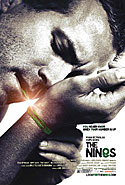
The Nines opens Friday

August 28, 2007 Projects, Sundance, The Nines

I feel like I’ve done [so](http://www.latimes.com/entertainment/la-ca-nines26aug26,1,7639090.story) [much](http://www.nytimes.com/2007/08/04/movies/04augu.html?ex=1343880000&en=601a154e3e1861a5&ei=5088&partner=rssnyt&emc=rss) [publicity](http://www.menshealth.com/cda/article.do?site=MensHealth&channel=guy.wisdom&category=life.lessons&conitem=03044e632f144110VgnVCM20000012281eac____) on it that everyone probably sick of me talking about it, but here’s the direct appeal:

My movie THE NINES opens this Friday, August 31st, in Los Angeles and New York.
—
Please come see it. And if you can’t, keep reading to find out how to get it to play near you.

In LA, it’s exclusively at the Nuart (on Santa Monica, just west of the 405). In New York, it’s at Sunshine Cinemas on Houston. You can find maps (and a lot of other information) at the official site: [lookforthenines.com](http://lookforthenines.com).

nines posterFor those who haven’t been paying attention, or who need to convince friends to accompany them: The movie stars Ryan Reynolds, Hope Davis and Melissa McCarthy, along with Elle Fanning, David Denman, Octavia Spencer and Dahlia Salem. I wrote and directed. We [premiered at Sundance](http://johnaugust.com/archives/2007/sundance-recap), and will be competing in [Critics’ Week](http://johnaugust.com/archives/2007/nines-at-venice) at the Venice Film Festival next week. I’m really proud of it, and happy that it’s gotten great reviews (we’re 100% on [Rotten Tomatoes](http://www.rottentomatoes.com/m/the_nines/) so far).This will change.

All that’s left is to sell tickets.

If you’re friends with filmmakers, you’ll know that they always plead for you to see their movies opening weekend. And you do, to be supportive, though you know in your heart that your $9.00 won’t make the tiniest bit of difference in that film’s multi-million dollar weekend.

But with The Nines, your buying tickets actually matters. A lot.

Because we’re on just two screens, it’s all about the per-screen average this first week. With a great per-screen average, we can plan for a more aggressive expansion. With a less-than-great per-screen average, it will be much more difficult.Anticipating the natural follow-up question: No, I’m not sure what those benchmarks would be — it’s not a single answer. The distributor needs to feel confident in committing new money for prints and advertising; the exhibitors need to want to show it; the entertainment press needs to point out how well the film did on two screens, on Labor Day Weekend, no less.

It’s only a slight exaggeration to say that two tickets can push us over a certain threshold, and convince Landmark, Laemmle’s, or Pacific to give us better screens, be it a week or a month from now. Put it this way: You might prefer to see The Nines at The Arclight. Or in San Francisco. Or Vancouver. But the best chance of that happening is if you buy a ticket for it at The Nuart or The Sunshine, this weekend.

And the very best tickets you can buy are for the special screenings we’re holding on Friday night.

  • LOS ANGELES
  • Nuart Theater on Santa Monica (map)
  • Friday, August 31st
  • 7:30 p.m. After-show Q&A with John August, Melissa McCarthy and other cast/crew
  • 10:00 p.m. Introduction by John and Melissa
  • NEW YORK
  • Sunshine Cinemas on Houston (map)
  • Friday, August 31st
  • 8 p.m. Special guests Ryan Reynolds and producer Bruce Cohen

Tickets for these and all shows are online:

At [Moviefone](http://movies.aol.com/movie/the-nines/28598/showtimes?date=20070831)
At [Movietickets.com](http://www.movietickets.com/house_detail.asp?house_id=464&rdate=8%2F31%2F2007)

(In both cases, you may need to provide dates and zipcodes; the sites seem to overrule URLS with cookies.My kingdom for a true permalink. For LA, try 90046. For NYC, try 10002. August 31st is the opening day.)

If you’re not able to make it — or if you live in one of the 2,000 markets in which it’s not playing — but want to support us anyway, I can tell you off-the-record that a ticket sold is a ticket sold. They don’t count heads. And those under-attended Sunday matinees need love, too.

There will be at least two more bits of Nines-related news this week before the opening. I leave for Venice on Saturday, which should preclude checking back obsessively. But probably won’t.

Giving credit where it’s due

May 31, 2007 Directors, Film Industry, QandA

questionmarkMy question is not about screenwriting per se, but rather about writing about films. Screenwriters, myself included, are not fond of essays about movies that ignore the contributions of writers. Do you have a stylistic preference for attributing authorship when writing about a movie, when each person’s individual contributions are not known? As an example, here’s a sentence from an essay I wrote about Armageddon:

In the real world, [a mission briefing] would probably happen in a briefing room. Michael Bay decided he wanted it to happen in the shuttle assembly building with a B-2 and 2 SR-71 Blackbirds.

Now I don’t know that this was Michael Bay’s decision — it may have been in one of the drafts of the script — or it may have been decided by Jerry Bruckheimer. But if I wanted to cover my bases, I would have to say:

Michael Bay, Jonathan Hensleigh, J.J. Abrams, Tony Gilroy, Shane Salerno, Robert Roy Pool, Jonathan Hensleigh, and Jerry Bruckheimer decided they wanted it to happen…

This seems incorrect. Alternatively, I could recast the sentence as:

“In the film, this happens in the shuttle assembly room…”
or
“In Armageddon, this happens in…”

But doing this consistently means treating the film as essentially authorless. This is probably truer of Armageddon than of most movies, but I don’t like it stylistically. What’s your preference? Say I was writing about Charlie and the Chocolate Factory, and specifically about something that happens in the film. Furthermore, assume I know nothing about the differences between the book, the script, and the finished film (which is usually the case when writing about a film). Would you prefer:

“Dahl, August, and Burton’s characters,”
“Dahl and August’s characters,”
“August’s characters,”
“Burton’s characters,”
“The characters in Charlie and the Chocolate Factory,”

Or some formulation I’m not seeing?

This isn’t entirely an academic question — I write about movies at [Criterion Collection](http://criterioncollection.blogspot.com), and recently someone in the comments criticised me for saying things like “Scorsese’s version of Jesus” when writing about [The Last Temptation of Christ](http://www.imdb.com/title/tt0095497/). So I revised the essay to be more precise — but that meant a lot of sentences that read “the film’s version of Jesus,” and I’m hoping you can think of something more elegant.

Thanks for your time. I enjoy your blog immensely. My little sister recently graduated from Trinity, and hearing you deliver your “[Professional Writing and the Rise of the Amateur](http://johnaugust.com/archives/2006/professional-writing-and-the-rise-of-the-amateur)” lecture was one of the highlights of her college career.

— Matt
Los Angeles

Normally, I lop off these thanks-for-your-blog comments, but I was feeling a little down, so that perked me up. Now, on to your question.

I don’t think there’s a perfect way to address authorship of a movie, but you’re right to be sensitive to the ambiguities. The characters in Charlie and the Chocolate factory are mine, and Dahl’s, and Tim’s, and the actors’. At every step in the process, choices were made by many people for many reasons. The same can be said for the sets, the music, the wardrobe, and the choreography.

If you’re writing about Tim Burton’s body of work, I think it’s absolutely fair to use a phrase like, “Burton’s characters tend to…”, since you’re pointing out a consistency across many different films. (You could do the same for characters in the films I’ve written, or the characters Johnny Depp has played.) Even if the person you’re talking about didn’t create these characters, the fact that there’s similarity between them indicates a certain mindset. An actor or a director might be consistently drawn towards artistic outsiders, for example.

It’s only when you’re looking at one specific film that you need to be careful not to hand out credit indiscriminately. Constructions like, “The characters in Burton’s film,” make it clear you’re not talking about the 1970 version.

I have no issue with the attributive apostrophe. It’s Tim Burton’s film; it’s Richard Zanuck’s film; it’s Warner Bros.’s film. Nor do I mind “A Joe Schmo Film” — it’s including the film in the director’s (or a star’s) canon. The only credit that sets my teeth on edge is “A Film By Some Director.” Both on-screen and in print, the “by” feels like an unwarranted grab for authorship. Even a writer-director is working with a crew of talented professionals to make the movie you’re seeing. That’s why I refused the credit on The Nines. But I know a lot of smart and good people who do use the credit, so I’m not slamming them for it.

In a [previous post](http://johnaugust.com/archives/2007/novel-or-script#footnote-2-771), I’d mentioned that the screenwriter’s name seems to be much more likely to show up in a negative review than a positive one. No one’s taken me up on the challenge to see if that’s really true, but the offer’s still out there. If anyone wants to do a statistical study of a few films on [Rotten Tomatoes](http://www.rottentomatoes.com/) or [Metacritic](http://www.metacritic.com/), I’d love to publish what you find.

Clive Cussler really, really dislikes Sahara

December 8, 2006 Adaptation, Big Fish, Charlie, Film Industry, Los Angeles, Projects

Today’s LA Times has a lengthy article about Clive Cussler’s lawsuit over SAHARA. It’s a fun, gossipy read, partially because I’ve had beers with many of the people involved:

  • Josh Oppenheimer and Thomas Dean Donnelly are classmates of mine,
  • James V. Hart often works at the same Sundance labs,
  • and the estimable Josh Friedman‘s anal canal gets a shout-out. (At this point, 47% of my readers click over to the story.)

For those who don’t have time to read the article, I’ll summarize the moral: be very careful when adapting the work of living authors. Particularly when they go on about how much they hate Hollywood.

Cussler had unprecedented and frankly unconscionable control over the adaptation. He bitched and bullied and couldn’t be placated. And if the resulting movie was less-than-stellar, well Mr. Cussler, three fingers are pointing back at you.

But on another level, I get it. Screenwriters are used to seeing their material altered, mangled and reinterpreted. Screenwriting is part of a process, and the craft can only support medium-sized egos.

The novelist, on the other hand, is God. And God doesn’t like to be told he’s a crotchety old jerk who’s been coasting on a mediocre franchise for years. I sympathize with Cussler’s dilemma: he wanted a big movie to bring new readers to his books, without any risk of the cinematic version replacing his literary one. Dirk Pitt has black hair, damnit! It says so here on page two! He wanted Hollywood on his terms.

Have fun with that lawsuit, Mr. Cussler.

My own experiences with adaptations have been more positive. (How couldn’t they be?)

For A WRINKLE IN TIME, Madeleine L’Engel functioned through a trusted producer, and while I had some significant disagreements over what plot points really needed to stay or go, at least I wasn’t arguing with the author. BIG FISH was a love fest from the start, with author Daniel Wallace so intrigued by the screenplay form that he became a screenwriter himself. And CHARLIE AND THE CHOCOLATE FACTORY was made with the blessing of — and little interference from — the Roald Dahl estate.

What lessons should an aspiring screenwriter take from the SAHARA debacle? For starters, remember that the unhappy stories get press simply because of the train-wreck factor. Most times, the author and screenwriter have a decent relationship — if they have one at all. A smart novelist remembers that the existence of a movie doesn’t change anything about the book sold at Barnes and Noble. And the smart screenwriter remembers to praise the author at the press junket.

« Previous Page
Next Page »

Primary Sidebar

Newsletter

Inneresting Logo A Quote-Unquote Newsletter about Writing
Read Now

Explore

Projects

  • Aladdin (1)
  • Arlo Finch (27)
  • Big Fish (88)
  • Birdigo (2)
  • Charlie (39)
  • Charlie's Angels (16)
  • Chosen (2)
  • Corpse Bride (9)
  • Dead Projects (18)
  • Frankenweenie (10)
  • Go (29)
  • Karateka (4)
  • Monsterpocalypse (3)
  • One Hit Kill (6)
  • Ops (6)
  • Preacher (2)
  • Prince of Persia (13)
  • Shazam (6)
  • Snake People (6)
  • Tarzan (5)
  • The Nines (118)
  • The Remnants (12)
  • The Variant (22)

Apps

  • Bronson (14)
  • FDX Reader (11)
  • Fountain (32)
  • Highland (74)
  • Less IMDb (4)
  • Weekend Read (64)

Recommended Reading

  • First Person (87)
  • Geek Alert (151)
  • WGA (162)
  • Workspace (19)

Screenwriting Q&A

  • Adaptation (65)
  • Directors (90)
  • Education (49)
  • Film Industry (489)
  • Formatting (128)
  • Genres (89)
  • Glossary (6)
  • Pitches (29)
  • Producers (59)
  • Psych 101 (118)
  • Rights and Copyright (96)
  • So-Called Experts (47)
  • Story and Plot (170)
  • Television (165)
  • Treatments (21)
  • Words on the page (237)
  • Writing Process (177)

More screenwriting Q&A at screenwriting.io

© 2026 John August — All Rights Reserved.