• Skip to primary navigation
  • Skip to main content
  • Skip to primary sidebar

John August

  • Arlo Finch
  • Scriptnotes
  • Library
  • Store
  • About

John

I’m on the App Store

August 1, 2018 Apps, Bronson, Highland, News, Weekend Read

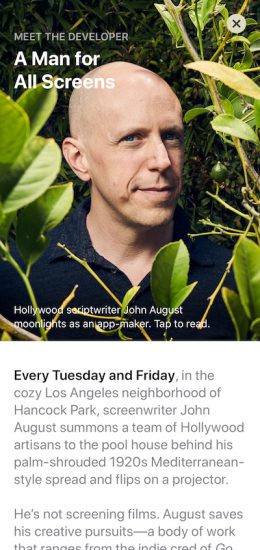
app store article with photoThis morning, Apple posted a profile of me and my software company, Quote-Unquote Apps. If you’re on an iPhone or iPad, you can [read the piece here](https://itunes.apple.com/us/story/id1396871930).

Or just open the App Store app and I’m on the front page.

Yes, it’s a little frustrating that the article is accessible only through the App Store app. I get why they do it — they want exclusive content about apps available right where you get them, just like airlines have their own in-flight magazines. But it feels weird to have a link that only some readers can open.

When you agree to a profile like this, you don’t get a lot of control. I didn’t see the story or the photos until it posted. But I’m happy they emphasized the team that makes it possible. Nima Yousefi is our master coder. Dustin Bocks designs everything to pixel precision. Megana Rao keeps on top of support issues and finds new scripts each week for Weekend Read.

While this profile mostly focuses on Weekend Read, in reality it’s Highland 2 that occupies most of our time. Since it debuted in May, Highland 2 has become our biggest hit by far. It’s also the most important app for me as a writer, since I use it nonstop for scripts, books and blog posts like this one.

If you still haven’t checked out Highland 2, [today’s the day](https://quoteunquoteapps.com/highland-2/).

And if you’re a screenwriter nervous about making the jump, definitely check out our new PDF on [Switching from Final Draft to Highland 2](https://quoteunquoteapps.com/highland-2/library.php).


Billionaires-to-be

July 31, 2018 Citizenship, Follow Up

This quote, often [misattributed to Steinbeck](http://quodid.com/our-words/citation-investigation/john-stienbeck-socialism-never-took-root-in-america/), is a pithy summary of what I wrote [earlier this morning](http://johnaugust.com/2018/living-the-dream):

> Socialism never took root in America because the poor see themselves not as an exploited proletariat but as temporarily embarrassed millionaires.

Thank you to Twitter folks who mentioned it.

“Socialism” and “proletariat” are loaded words, so the simpler 2018 version might read: **Americans never think of themselves as poor, but rather billionaires-to-be.**

Living the dream

July 31, 2018 Citizenship, Rant

Forbes recently named Kylie Jenner one of the “60 richest self-made women.” Ann Friedman [isn’t having it](http://www.latimes.com/opinion/op-ed/la-oe-friedman-kylie-jenner-forbes-20180719-story.html#):

> America is not the level playing field that places such as Forbes pretend it is, and Jenner illustrates perfectly that, while your odds of going from rich to filthy rich are still pretty good, your odds of going from rags to riches have never been slimmer.

Americans love “rags to riches” stories. We mythologize immigrants who came to our shores with nothing and rose to become titans of industry. We celebrate women like Dolly Parton and Oprah who were born into poverty and achieved greatness through talent and determination.

We’re believers. Hopers. Dreamers. America isn’t a country of what *is*, but what *could be*.

The term “American Dream” is surprisingly recent. It traces back to the 1931 book *The Epic of America* by James Truslow Adams, in which he describes —

> “That dream of a land in which life should be better and richer and fuller for everyone, with opportunity for each according to ability or achievement.

> It is not a dream of motor cars and high wages merely, but a dream of social order in which each man and each woman shall be able to attain to the fullest stature of which they are innately capable, and be recognized by others for what they are, regardless of the fortuitous circumstances of birth or position.”

Like Martin Luther King in his “I Have a Dream” speech, Adams is describing a vision and a hope, not a reality.

Yet too many of us act as if we’re *already living* in the American dream, that our country is essentially fair, that everyone has the same opportunities if they just apply themselves.

Friedman again:

> According to Pew, only 1 in 5 people think that the American dream is out of reach for their family. America’s founding myth is that anyone can find success by working hard. Even as inequality grows — particularly along race and gender lines — we want to believe that “self-made” millionaire status is as achievable for the African American daughters of unmarried teens in Mississippi as it is for Westchester-raised Exeter students and reality television stars.

Friedman argues that by focusing on the Kylie Jenners and Mark Zuckerbergs, society is turning a blind eye to the poorest Americans who desperately need our attention.

But I think it’s actually worse than that.

When we celebrate the notion that anyone could become the next billionaire, we encourage this mass delusion that good times are always just around the corner. *Sure, money might be tight right now, but you could strike gold tomorrow!*

**The reality is, most Americans are much closer to becoming poor than becoming rich.** Economic mobility works both ways. You can climb, but you can also fall, and fall fast. A dozen things could wipe out your life’s savings overnight, including illness, addiction, fire, fraud, and crime.

The smart play, then, is to take precautions against events that could send you into poverty. That’s why you go to the doctor. That’s why you buy insurance. That’s why you pay taxes for police and firefighters.

Doing these things isn’t pessimism. It’s realism.

But in America, reality isn’t a priority — after all, we’ve got The Dream. So instead of funding safety net programs, we cut them. We deregulate industries and destabilize health insurance markets.

None of this makes sense if we acknowledge that we’re all likely to need these programs one day. Eventually, fate’s arrow is going to point at us, and our friends and family. We are much more likely to become broke than billionaires. We need to act accordingly.

You’d hardly recognize Arlo Finch overseas

July 18, 2018 Arlo Finch, Big Fish, Books, Film Industry

[Arlo Finch in the Valley of Fire](http://johnaugust.com/arlo-finch) came out in February 2018 in the US and Canada, but the international editions are only now debuting. And in many cases, the book you see in stores overseas looks very different.

Here’s the book in the US, with a cover by [Vivienne To](http://www.vivienneto.com).

valley of fire book cover

Italian publisher Mondadori is the first to offer a translated version — it came out this month. They’re using the same basic artwork for *La Valle del Fuoco*.

arlo cover in italian

So far, Italy is the exception. In most markets, publishers are creating their own artwork for the cover.

German publisher Arena went with a more comic-book style, illustrated by [Helge Vogt](http://www.trickwelt.com). It comes out in August.

German cover for Arlo Finch

The German version also has interior illustrations — the only one so far. Translation is by [Andrea and Wieland Freund](https://www.welt.de/autor/wieland-freund/).

French publisher Milan hired [Levente Szabó](http://www.briskgraphics.com) for their edition, which comes out in September. They’ve stuck with Adam Ladd’s [Cheddar Gothic](https://www.myfonts.com/fonts/adam-ladd/cheddar-gothic/) as the typeface, however.

French Arlo Finch cover

In France, instead of *Valley of Fire,* this book is subtitled *The Mystery of the Long Woods.* It’s very common for French publishers to rename books; the first Harry Potter is *The School of Sorcerers* in France.

The French translation is by [Leslie Damant-Jeandel](https://lesliedamantjeandel275164429.wordpress.com/2017/11/28/arlo-finch-tome-1/). It’s terrific. I got a chance to look through it when doing press in Paris earlier this summer.

The Swedish and Norwegian editions also come out in September. Here they’ve gone for more of a Stranger Things vibe.

Swedish Arlo Finch

The artist is [Håkan Liljemärker](http://www.liljemarker.com). The Swedish translation is by [Mats Kempe](http://www.alma.se/en/Jury/Mats-Kempe/), while the Norwegian is by [Tore Aurstad](https://no.wikipedia.org/wiki/Tore_Aurstad).

The Dutch cover for *Arlo Finch: De Vuurvallei* is the only one with photographic elements. As I’m posting this, the artwork isn’t finalized, and I haven’t learned details about the translator. It’s scheduled to come out in October. ((I’ll be headed to Germany, Norway, Sweden and Denmark in October for launch events. More details soon.))

In addition to these countries, Arlo Finch is also scheduled to be released in translation for Denmark, Poland, Brazil, Romania and Israel. No word yet on what those covers will look like.

## Why aren’t international covers the same as the US?

As a screenwriter, I’m used to seeing some variation in movie posters and video covers. Not only do studios mock up and test various versions of one sheets, ((“One sheet” is the standard term for movie posters in the US. Classically, they’re printed in reverse on the back side so that when inserted into a lighted display case at a movie theater, the color is vibrant.)) they sometimes make different choices for US and overseas markets.

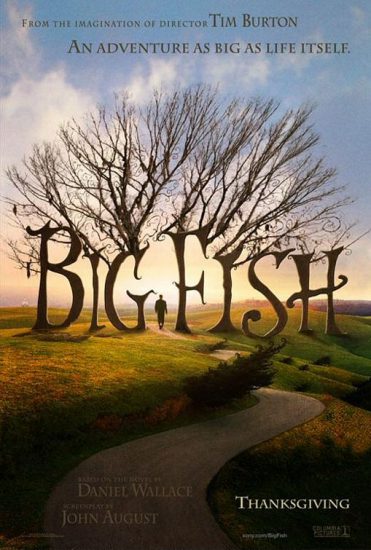
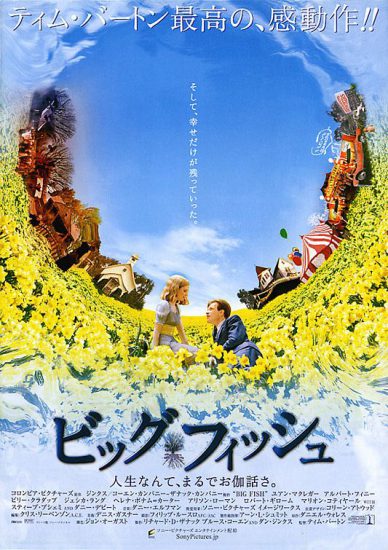
In the case of Big Fish, Sony Pictures tried a completely different approach in Japan.

US big fish poster

Japanese Big Fish poster

But for the most part, the one sheet for a given movie is going to look very similar in most countries. That’s because in the age of worldwide marketing, it’s generally the same studio releasing the film in every territory, often on the same date.

That’s not true for books. In most cases, publishers are only buying rights to the book for a single country or language, and the book will come out months after the English debut.

For Arlo Finch, Macmillan is my publisher for the US and Canada, but I have [11 different publishers](http://johnaugust.com/arlo-finch#international) for other languages. When these publishers bought the book, they only bought the text, not the cover — that’s owned by Macmillan.

Which means international publishers have a choice:

1. Negotiate to license the cover from Macmillan.
2. Make their own cover.

Publishers generally choose the second option. It gives them the chance to make their own creative choices about how to market and position the book for their market.

French publisher Milan might have a theory that French girls are less likely to pick up a book without a girl on the cover. German publisher Arena may have data showing that German kids want books to look like comics even when they’re not. ((I’m making these examples up.))

While rates can vary wildly, cover artists are not that expensive. So it makes sense for publishers to hire their own.

As an author, do you get much say in book covers? Generally, no. You may have some contractual approval, but it’s more akin to giving one’s blessing than actual feedback. They don’t want you to hate the cover, but short of that, they’re fine trusting their instincts. ((Movies are largely the same in terms of approvals. Filmmakers will be shown a range of possibilities, but the real decisions are made by the marketing team.))

## Which is the “real” Arlo Finch cover?

Six months ago, I would have said that the US cover is the real cover. It’s still the only one I’ve seen printed on a book jacket.

But now I’m not so sure. I love the French and Scandinavian covers, especially how they seem to push the age up a bit. I’m intrigued by the German cover, even if it’s not my taste.

In the end, book covers serve two purposes. The first is as bait. Does the design convince you to pick up the book? My hunch is that all of these international covers do the trick.

The second function of a cover design is to help frame the reading experience. That’s what I’m most curious about with some of these covers. By showing Arlo’s friends, does it suggest the story will be an ensemble adventure? Does emphasizing the Hag on the German and Scandinavian covers signal too strongly what’s going to happen in the book?

We’ll see. I’m excited to start getting reactions from folks reading Arlo Finch in a language other than English.

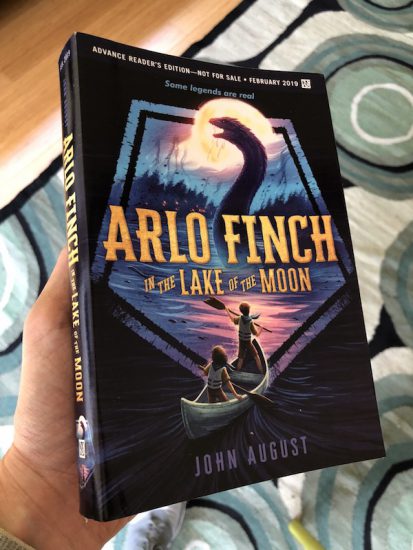
Meanwhile, I’ve just gotten my advanced copies of the second book in the series, *Arlo Finch in the Lake of the Moon.*

arlo finch lake of moon book

Each international publisher will soon need to figure out how they want to handle the cover this time. Do they feature the lake, the monster, the patrol, or another set piece in the book? There’s no one right answer, and just like with *Valley of Fire,* there won’t be one definitive cover. But this one’s going to be hard to top.

« Previous Page
Next Page »

Primary Sidebar

Newsletter

Inneresting Logo A Quote-Unquote Newsletter about Writing
Read Now

Explore

Projects

  • Aladdin (1)
  • Arlo Finch (27)
  • Big Fish (88)
  • Birdigo (2)
  • Charlie (39)
  • Charlie's Angels (16)
  • Chosen (2)
  • Corpse Bride (9)
  • Dead Projects (18)
  • Frankenweenie (10)
  • Go (29)
  • Karateka (4)
  • Monsterpocalypse (3)
  • One Hit Kill (6)
  • Ops (6)
  • Preacher (2)
  • Prince of Persia (13)
  • Shazam (6)
  • Snake People (6)
  • Tarzan (5)
  • The Nines (118)
  • The Remnants (12)
  • The Variant (22)

Apps

  • Bronson (14)
  • FDX Reader (11)
  • Fountain (32)
  • Highland (74)
  • Less IMDb (4)
  • Weekend Read (64)

Recommended Reading

  • First Person (87)
  • Geek Alert (151)
  • WGA (162)
  • Workspace (19)

Screenwriting Q&A

  • Adaptation (65)
  • Directors (90)
  • Education (49)
  • Film Industry (489)
  • Formatting (128)
  • Genres (89)
  • Glossary (6)
  • Pitches (29)
  • Producers (59)
  • Psych 101 (118)
  • Rights and Copyright (96)
  • So-Called Experts (47)
  • Story and Plot (170)
  • Television (165)
  • Treatments (21)
  • Words on the page (237)
  • Writing Process (177)

More screenwriting Q&A at screenwriting.io

© 2026 John August — All Rights Reserved.