• Skip to primary navigation
  • Skip to main content
  • Skip to primary sidebar

John August

  • Arlo Finch
  • Scriptnotes
  • Library
  • Store
  • About

John

Shirts back in the Store

November 7, 2013 Follow Up, Geek Alert, News

Back in June, we sold the first-ever [Scriptnotes t-shirts](http://johnaugust.com/2013/t-shirts-and-transcripts). We took pre-orders, printed them, and sent them out all in a batch.

In that process, we learned a lot about the making and shipping of physical goods — how online shopping carts work, how to calculate sales tax, optimizing postage. We’re geeks. We like that stuff. Plus it’s been fun seeing Scriptnotes t-shirts out in the wild.

So we’re doing it again.

Through Friday, November 15th, we’ll be taking orders for a new batch of shirts. They’ll ship starting December 2nd, in time for the holidays.

Like last time, we’ll only print what people order, so if you want a shirt, you need to [order now](http://store.johnaugust.com).

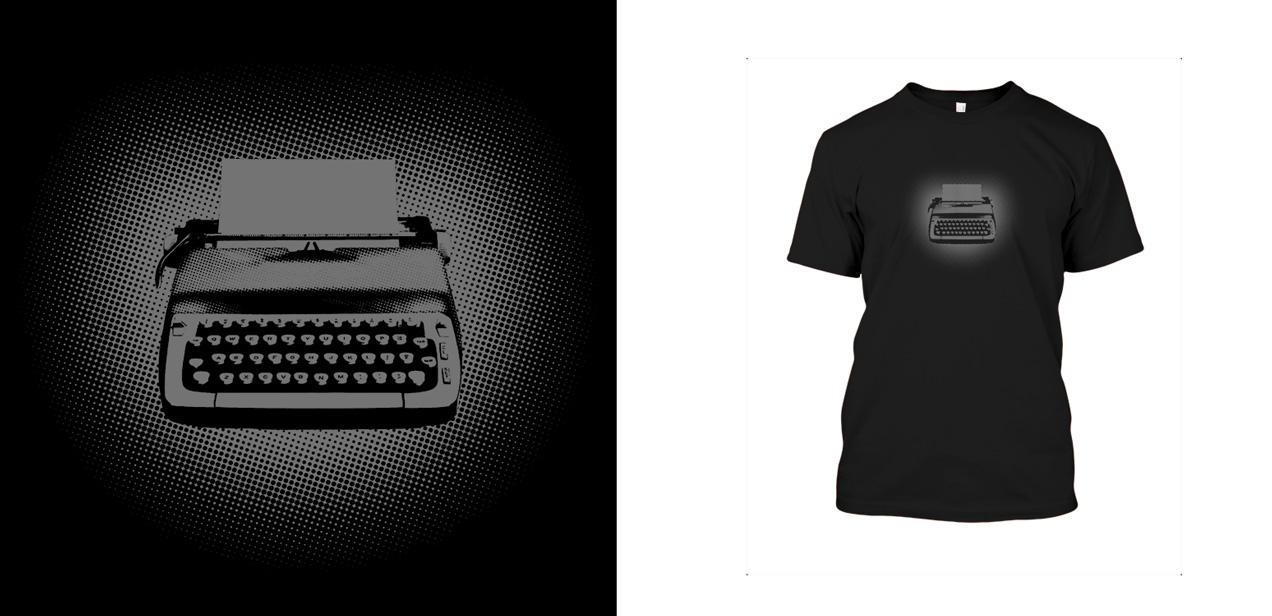
The first batch of Scriptnotes shirts were available in umbrage orange and rational blue. The new Scriptnotes t-shirt is available in any color you want so long as it’s black. ((I always assumed this Henry Ford quote was apocryphal, but apparently it’s real. The original wording was, “Any customer can have a car painted any colour that he wants so long as it is black.”)) For this shirt, we offer both unisex and women’s cuts.
scriptnotes black

I’m really happy with how the logo turned out. It’s faint, and seems to be gently glowing from inside the shirt.

Scriptnotes is not our only labor of love, so we decided to make some more shirts while we were at it.

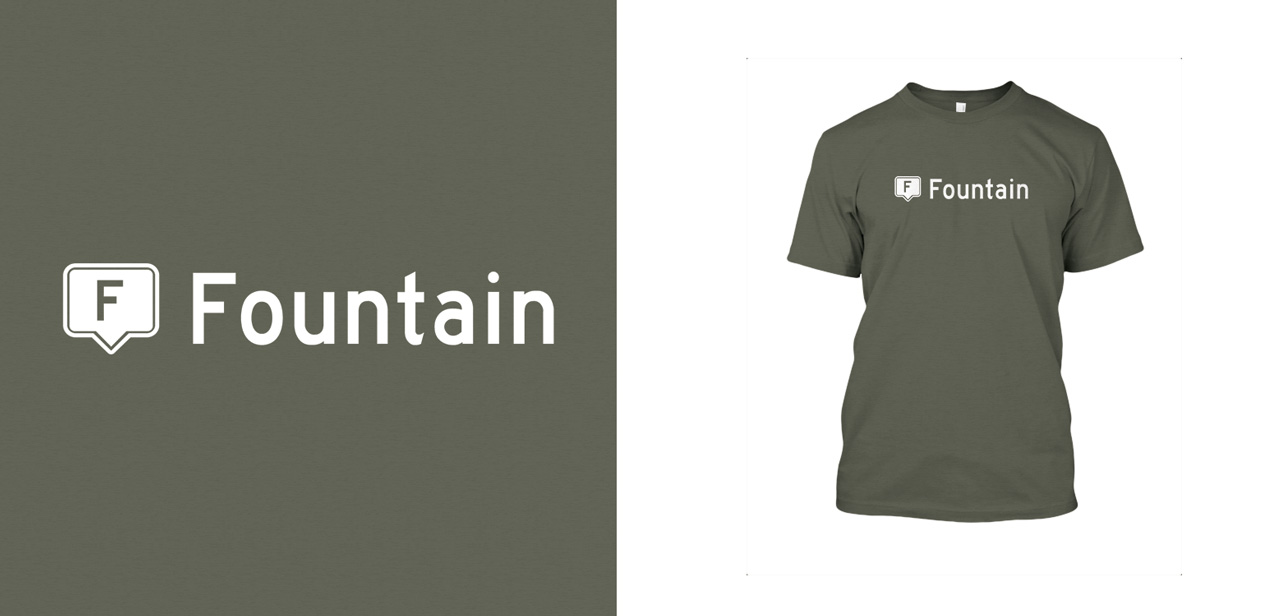
First up is Fountain. How do you show a revolutionary [plain text screenplay markup syntax](http://fountain.io) on a t-shirt? Ryan Nelson and I went through a bunch of variations with document icons and street maps, but none of them felt right.

Ultimately, it was the color that set the tone. Olive green felt appropriately basic. Paired with white type (Highway Gothic) and a Fountain flag, this shirt feels like what you’d wear at boot camp. We’re recruiting a Fountain army, and this is the uniform.
fountain shirt

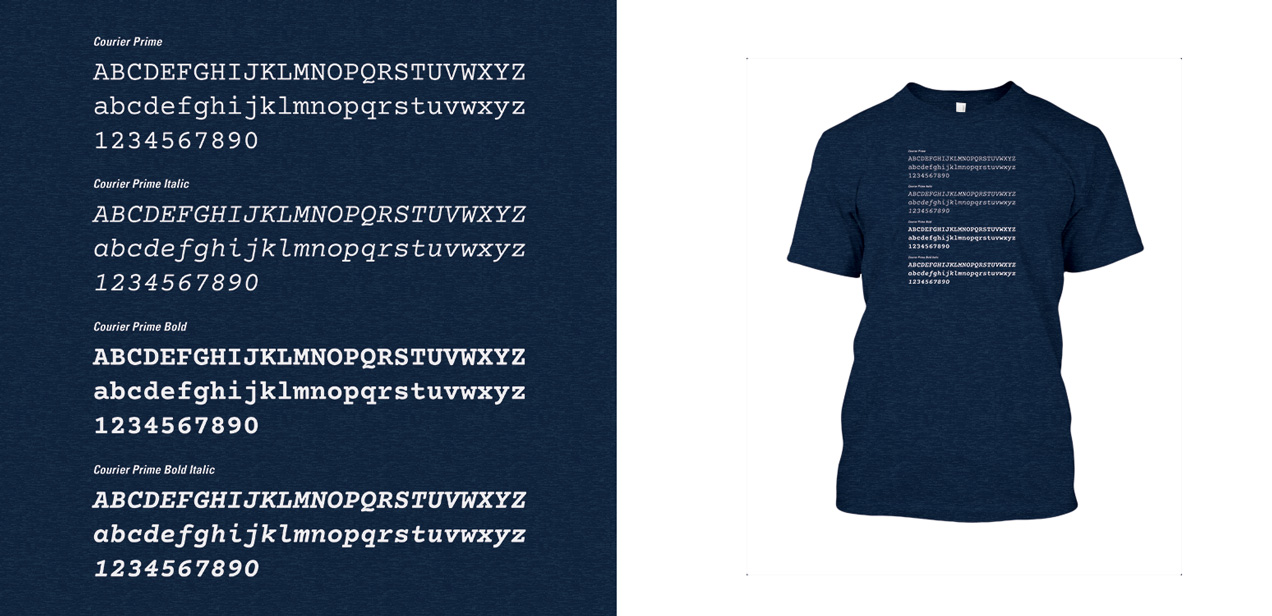
Courier Prime is a [beautiful font](http://quoteunquoteapps.com/courierprime/) designed by Alan Dague-Greene. Since it’s a text face, you aren’t supposed to notice the individual glyphs — it’s for reading, not showing off — but I wanted to highlight just how smart the whole character set is. What makes Courier Prime special — apart from its bolder bolds and crisper serifs — are the true italics, modeled after the “informal” script of old typewriters. Here you get to see the full alphabet at once. ((If you’re ever in doubt which Courier you’re seeing, check the lowercase y. In Courier Prime, the tail of the y never flattens out to a line.))
courier-prime

Right after Courier Prime came out, we made a few shirts with a similar design, but printed them on a heather gray. If you’re not familiar t-shirt lingo (I wasn’t), “heather” means that the fabric has a speckled quality, woven of threads in a range of colors to give it depth. For Courier Prime, that made it far too hard to see the details.

This time, we’re printing white on solid midnight navy, so you can see everything.

Our fourth shirt is actually the very first shirt we printed: Classic Karateka.
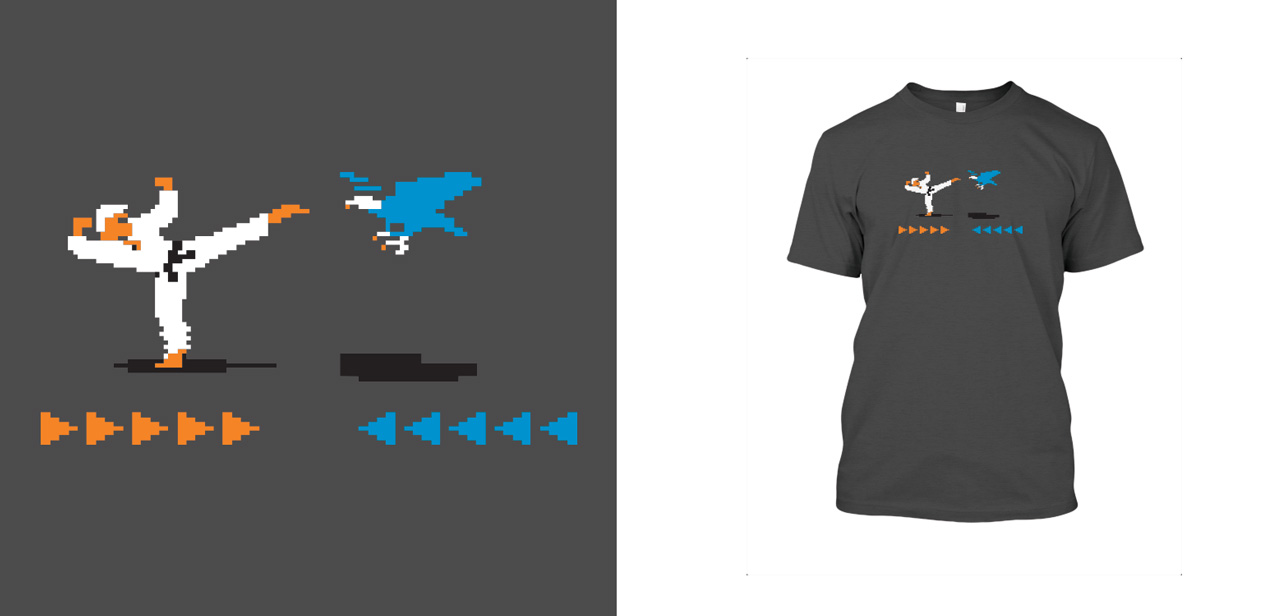
karateka shirt

We made one hundred of these shirts to celebrate the launch of Jordan Mechner’s game on iOS. Only friends and team members got the first batch, but when we put up the few remaining shirts last month, they sold out in minutes. So we’re doing one last run.

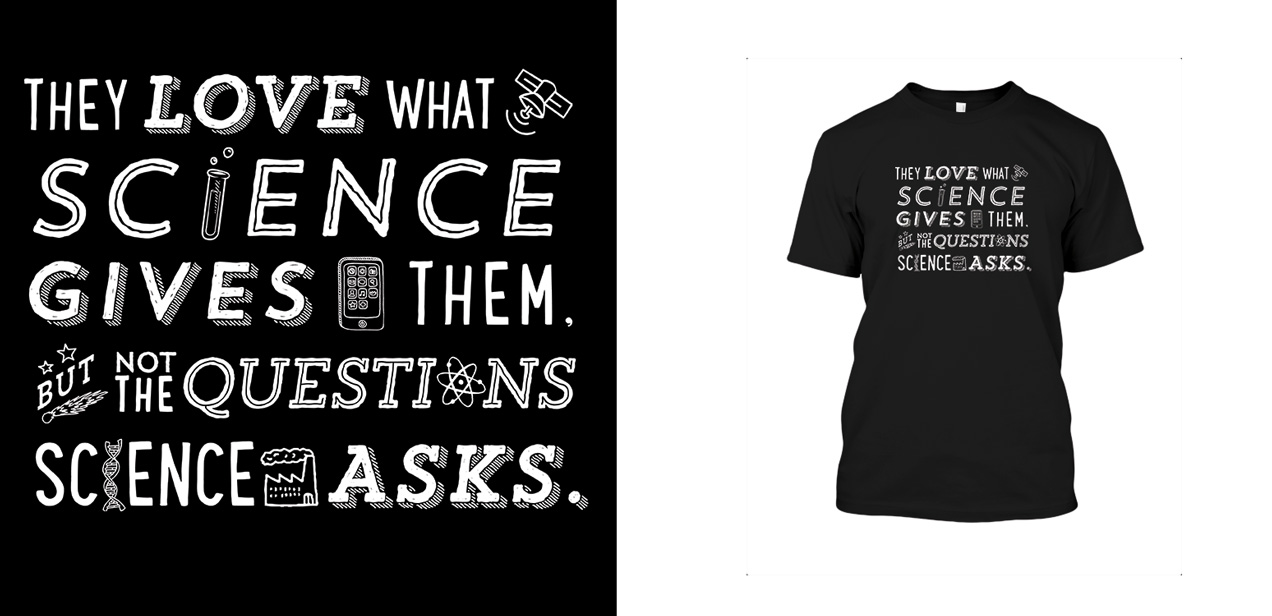
Our final shirt isn’t about a product, but rather an idea. Longtime readers and listeners know I’m not just a fan of technology and gadgets, but the underlying science behind them. We live in a culture that has been completely transformed scientific innovation, yet at the same rejects scientific realities.

I vented some of my frustration through the frustrated science teacher (Mr. Rzykruski) in Frankenweenie. For this last shirt, I’m paraphrasing myself and his answer to the question of why no one likes scientists.

The adult shirts are silver (very light gray):
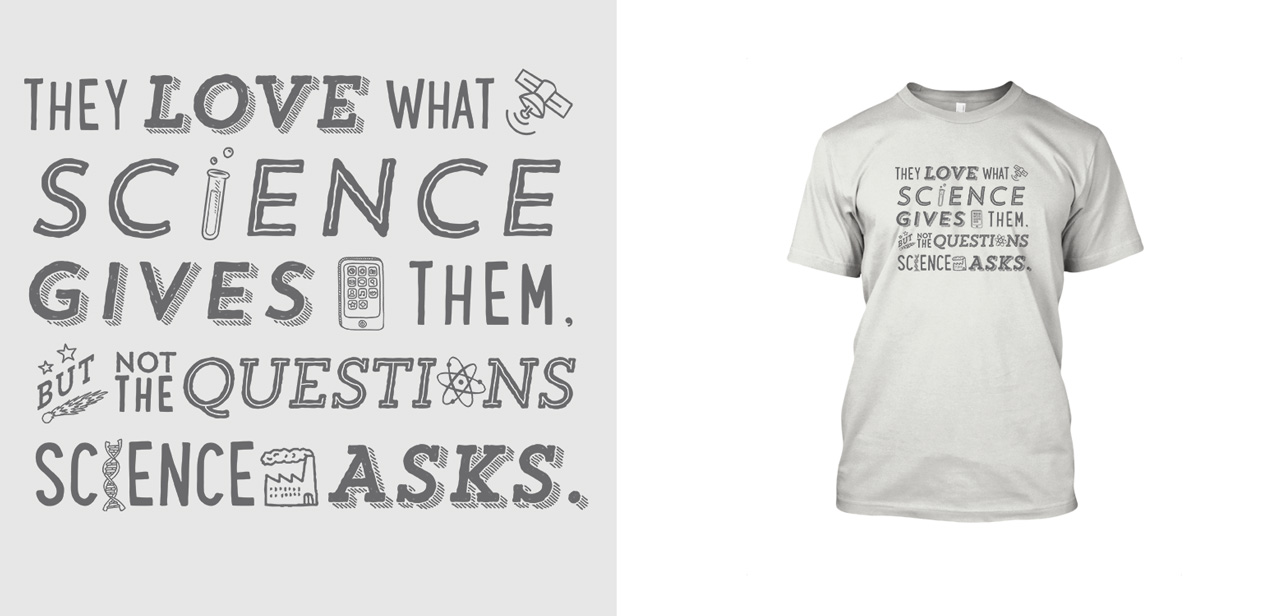
science adult

For the kids shirts, we went black:

All the t-shirts were designed in-house by Ryan Nelson, and printed locally in LA.

Once again, we’re only printing what people order, so if you want a shirt, [visit the store](http://store.johnaugust.com) before next Friday.
How we record Scriptnotes

November 4, 2013 Follow Up, Geek Alert, Tools

scripnotes coverMany listeners have asked how Craig and I record our weekly podcast, so here’s a quick rundown of our standard operating procedure.

### When and what
By email, Craig and I figure out when we’re going to record. It’s usually a Thursday or Friday, late in the afternoon. In that email thread, we also decide what topics to cover. If it’s a [Three Page Challenge][3pc], I’ll ask Stuart to send each of us PDFs of the entries he’s picked.

About 10 minutes before we start recording, I make a sketchy outline in [Highland][highland] with reminders for myself: the episode number, today’s topics, housekeeping bits, and my [One Cool Thing][onecoolthing]. If there’s anything I need to read aloud — for example, a quote from an article — I usually copy-paste it into this document.

Since Craig works in Pasadena and I work in Hollywood, it’s not practical for us to be in the room together, so we record the podcast on Skype. This is the part many people can’t fathom — *we’re almost never in the same room together.*

It takes practice to keep up a conversation when you don’t have the normal physical cues. The first few episodes were rough. But I think the podcast is actually much better for Craig and I being apart. Like the audience, we’re only hearing each other’s voice, so everything we’re communicating needs to happen in speech.

### Editing
While Craig and I are talking on Skype, each of us has GarageBand running on our own computers to record only our side of the conversation. When we finish recording, we each copy our GarageBand project into the same shared Dropbox folder. From there, my assistant Stuart yanks out the audio and marries the two tracks in a vintage copy of Soundtrack Pro, which is where he does most of the real editing.

Many podcasts simply record the Skype call, saving the step of marrying the two tracks. But with all the fire trucks and street noise at Craig’s office, it’s very handy to be able to manage the two sides of the conversation separately.

One problem with recording two tracks separately is sync. We begin with a “1…2…3…go” so that we both hit record at the same time. We clap-sync as well. Despite all this, our tracks eventually fall out of sync, so Stuart has to nudge them a bit. I’m hoping Marco Arment will release his fabled [track-nudging utility][utility] to the world. We’d pay good money for it.

Once Stuart has finished editing a track, he’ll put it back in Dropbox. I’ll listen to it and write up the text for the post, along with links and outro. All that gets added into a new GarageBand project, where Stuart also makes chapter markers. He exports m4a and mp3 formats, then uploads them to Libsyn, which hosts the files.

Every Tuesday morning, Stuart throws the virtual switch to make the episode live.

###Nuts and bolts

For hardware, we started with Dan Benjamin’s really useful guide to [podcasting gear](http://hivelogic.com/articles/podcasting-equipment-software-guide-2011/), but ultimately made different choices.

Craig and I are each using Audio-Technica [AT2020 USB microphones][at2020] mounted on [Heil PL-2T booms][boom]. (When I’m traveling, I pack the [Blue Yeti USB microphone][yeti] instead. It’s really good, but really heavy.)

For listening, there’s nothing better than the Sony [MDR-7506 headphones][headphones], which not only sound great but seal well, keeping Craig’s audio from being recorded on my track. I like them so much that I’ll bring them with me on a trip.

For live shows, I record on the [Zoom 4N digital recorder][zoom]. Even if we’re using audio from a sound board, I’ll still aim the Zoom at the audience to gather crowd noise.

### Podcasting versus blogging

Several longtime readers have pointed out that I used to blog more. Now two or three weeks may pass where I won’t have posted anything but Scriptnotes.

But I really don’t think the podcast has taken my attention away from blogging; life has.

I’ve gotten much, much busier over the last two years, and it’s been hard to stop everything and blog about whatever screenwriting topic arises. The standing commitment of a podcast each week is easier to keep up. It’s like working out with a partner — you show up because of the social obligation.

And as much as I enjoy writing, a blog is essentially a monologue. It’s been rewarding to have a dialogue each week.

[3pc]: http://johnaugust.com/threepage “three page challenge”
[onecoolthing]: http://johnaugust.com/onecoolthings “one cool thing”
[highland]: http://apps.quoteunquoteapps.com/get_highland “highland”
[utility]: http://atp.fm/episodes/25-thrustmaster-joystick “slip sync”
[at2020]: http://www.amazon.com/gp/product/B001AS6OYC/ref=as_li_ss_tl?ie=UTF8&camp=1789&creative=390957&creativeASIN=B001AS6OYC&linkCode=as2&tag=johnaugustcom-20 “at2020”
[boom]: http://www.amazon.com/gp/product/B000SZVZ74/ref=as_li_ss_tl?ie=UTF8&camp=1789&creative=390957&creativeASIN=B000SZVZ74&linkCode=as2&tag=johnaugustcom-20 “boom”
[headphones]: http://www.amazon.com/gp/product/B000AJIF4E/ref=as_li_ss_tl?ie=UTF8&camp=1789&creative=390957&creativeASIN=B000AJIF4E&linkCode=as2&tag=johnaugustcom-20 “headphones”
[yeti]: http://www.amazon.com/gp/product/B002VA464S/ref=as_li_ss_tl?ie=UTF8&camp=1789&creative=390957&creativeASIN=B002VA464S&linkCode=as2&tag=johnaugustcom-20 “yeti”
[zoom]: http://www.amazon.com/gp/product/B001QWBM62/ref=as_li_ss_tl?ie=UTF8&camp=1789&creative=390957&creativeASIN=B001QWBM62&linkCode=as2&tag=johnaugustcom-20

Solitude and getting stuff written

October 28, 2013 Psych 101, Television, Writing Process

American Psycho screenwriter Guinevere Turner doesn’t want to talk to you, [not when she’s writing](http://www.filmmakingstuff.com/screenwriting-advice/):

> For me, it’s about morning, quiet, solitude and no Internet to plug me into the cacophony until I have written something. Also about not having a conversation with anyone. Which might be why I am single. I have often woken up to a person next to me who says in a sleepy affectionate way “Hey – what are you up today?” and I answer but all I am thinking is “You killed it! It’s over! Now I can’t write today.”

Kelly Marcel said something similar at AFF. She wants to go straight from bed to writing, no words spoken except on the page. If that helps, try it.

Turner points out that writing for TV forces you to rethink your process:

> Working in TV was great for me though, because I learned to get over myself and just get the damn thing done. In film, you can lie on your chaise lounge with a Garbo-esque hand to the forehead and claim that you “Just don’t feel inspired today” and get away with it for a bit – in TV you either finish the script when you are told to, or you are fired. And there’s a line of people around the block who are ready to do your job.

I know and adore Turner from Outfest Labs, where we advise screenwriters on their scripts. She’s in fundraising mode for her next project, [Creeps](http://www.indiegogo.com/projects/creeps-a-darkly-comedic-feature-by-guinevere-turner), for which she’s offering a range of perks including notes sessions. She’s smart, tough and thoughtful, exactly the kind of person you’d want reading your script.

Big Fish, Jimmy Buffet, and seeing shows on a budget

October 28, 2013 Big Fish, Broadway, Follow Up

Let’s start with the **TL;DR version**:

The producers have agreed to restore my SCRIPT discount code for Big Fish on Broadway, but only through December 22nd — and they might pull the offer at any time. Tickets are $85/$67 (versus $150/$85) at the box office, or on [Ticketmaster](http://www.ticketmaster.com/Big-Fish-a-New-Broadway-Musical-tickets/artist/1859083) for the same price plus a service charge.

Longer version:

Jimmy Buffett is one of the producers of Big Fish. He has legions of [Parrothead](http://en.wikipedia.org/wiki/Parrothead) followers, but since they’re not the classic audience for a Broadway musical, he asked for a discount code (JIMMY) he could send his fans as an extra incentive.

I love Jimmy. I love this idea.

But I too have followers I want to come see the show, especially students and over-educated/under-employed aspiring writers. My people came in surprisingly large numbers during previews, and I have a hunch many of them may be headed to the East Coast for the holidays. So I asked for my SCRIPT code back and got it.

It’s not quite the deal it was during the [first weeks of previews](http://johnaugust.com/2013/big-fish-broadway-unlock), but it’s almost certainly the lowest price you’re going to find for a guaranteed seat.

###It’s not a competition but yeah sort of it is

Every week, we get a report on the discount codes used, and it would honestly kind of thrill me to out-earn Jimmy Buffett.

And it’s a game you can play, too, because just like booking flights and hotels, you can manipulate the system to get a much better seat than you’d expect.

Big Fish sells out most performances, but here are some suggestions for getting a great seat. Most of these apply to any Broadway show:

1. Tuesday, Wednesday and Thursday nights generally have the best availability.
2. The first five rows of the mezzanine are terrific — arguably the best seats in the house. In the Neil Simon, the front mezzanine is better than rear orchestra.
3. Split up. You’re more likely to find two amazing single seats.
4. Talk to Louie or Eric at the box office. Use the code. Drop my name. These guys are awesome, and want you to have a good seat.
5. In the hours — sometimes the minutes — before a show, a great seat may become available because the producers release tickets they were holding back for media. So even if Ticketmaster says there are no tickets, it’s worth a visit to the box office.

For some performances, we sell tickets at the TKTS booth in Times Square. These are almost always seats at the back of the mezzanine, and availability is constantly changing. TKTS is great, but you’ll get a better seat by coming to the theater itself.

###Seeing shows for less

There are two ways to see a Broadway show for less than list price, but both of them involve some trade-offs.

**Student Rush.** If you’re a college student with more time than money, it may be worth waiting in line for student rush. First check out the [Rush Report](http://www.broadwayspotted.com/rush-report-october-27-2013/) to gauge when you’d need to be there and how likely you are to get a ticket. Big Fish is one of the more difficult shows to rush:

> Weekdays: 15 people in line by 9:20 AM. 26 tickets available. Weekends: 37 people in line by 9:15 AM. 1st person in line at 6:30 AM. 26 tickets available.

Student rush tickets are $27. These seats are generally at the edges of the orchestra, and are sometimes partially obstructed. But you’ll often be very close to the action, and if you’re a theater student, you may learn something extra just from seeing it so close-up. I’ve talked to some college students who’ve already seen Big Fish three times because of student rush.

**Standing Room Only.** At the back of the orchestra, there’s a railing with numbered standing room only spaces. At performances where absolutely every seat is sold, the theater will sell those spots. I’m not even sure of the price, but it’s more than student rush.

This is where I stand to watch the show most nights. I love it — but I work at a standing desk, so your mileage may vary.

There’s no guarantee you’re going to be able to get SRO tickets on any given night. That’s why I strongly recommend that if you want to see Big Fish, you use the SCRIPT code either at the box office or Ticketmaster as soon as you can. Heading into the holidays, supply will get constrained. I really want you to see Big Fish, and I want you to have a good seat.

« Previous Page
Next Page »

Primary Sidebar

Newsletter

Inneresting Logo A Quote-Unquote Newsletter about Writing
Read Now

Explore

Projects

  • Aladdin (1)
  • Arlo Finch (27)
  • Big Fish (88)
  • Birdigo (2)
  • Charlie (39)
  • Charlie's Angels (16)
  • Chosen (2)
  • Corpse Bride (9)
  • Dead Projects (18)
  • Frankenweenie (10)
  • Go (29)
  • Karateka (4)
  • Monsterpocalypse (3)
  • One Hit Kill (6)
  • Ops (6)
  • Preacher (2)
  • Prince of Persia (13)
  • Shazam (6)
  • Snake People (6)
  • Tarzan (5)
  • The Nines (118)
  • The Remnants (12)
  • The Variant (22)

Apps

  • Bronson (14)
  • FDX Reader (11)
  • Fountain (32)
  • Highland (75)
  • Less IMDb (4)
  • Weekend Read (64)

Recommended Reading

  • First Person (87)
  • Geek Alert (151)
  • WGA (162)
  • Workspace (19)

Screenwriting Q&A

  • Adaptation (65)
  • Directors (90)
  • Education (49)
  • Film Industry (489)
  • Formatting (128)
  • Genres (89)
  • Glossary (6)
  • Pitches (29)
  • Producers (59)
  • Psych 101 (118)
  • Rights and Copyright (96)
  • So-Called Experts (47)
  • Story and Plot (170)
  • Television (165)
  • Treatments (21)
  • Words on the page (237)
  • Writing Process (177)

More screenwriting Q&A at screenwriting.io

© 2026 John August — All Rights Reserved.