• Skip to primary navigation
  • Skip to main content
  • Skip to primary sidebar

John August

  • Arlo Finch
  • Scriptnotes
  • Library
  • Store
  • About

Search Results for: youtube

The One with the Kates

Episode - 254

Go to Archive

June 14, 2016 Film Industry, Follow Up, Scriptnotes, Transcribed, Web series

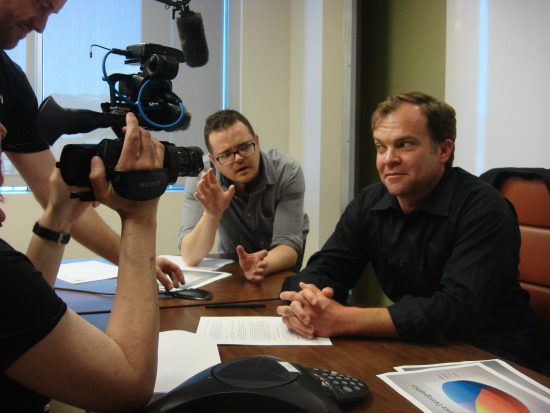
John and Craig welcome Kate McLennan and Kate McCartney, the Australian creator/stars of The Katering Show (a previous One Cool Thing).

We discuss the process and economics of making a web series, signing with a US agency, and trying to figure out what comes next.

Thanks to our Scriptnotes fans on both sides of the world for making this meet-up happen.

Links:

* [The Katering Show](http://thekateringshow.com/)
* [Kate McLennan](https://twitter.com/katemclennan1) and [Kate McCartney](https://twitter.com/tigervsshark) on Twitter
* Watch season 2 of The Katering Show on [Fullscreen](https://www.fullscreen.com/)
* [Dance Academy](http://www.abc.net.au/abc3/danceacademy/), and [on Wikipedia](https://en.wikipedia.org/wiki/Dance_Academy)
* [Tall poppy syndrome](https://en.wikipedia.org/wiki/Tall_poppy_syndrome) on Wikipedia
* [Catastrophe](https://www.amazon.com/Catastrophe-Season-1/dp/B00X8UKEEQ) on Amazon Prime
* [Duqqa](https://en.wikipedia.org/wiki/Duqqa) on Wikipedia
* [Mini Metro](https://itunes.apple.com/us/app/mini-metro/id1047760200?mt=12) and [Human Resource Machine](https://itunes.apple.com/us/app/human-resource-machine/id1005098334?mt=8)
* [Sunspring](http://arstechnica.com/the-multiverse/2016/06/an-ai-wrote-this-movie-and-its-strangely-moving/?utm_source=fark&utm_medium=website&utm_content=link), a short film written by Benjamin
* [The Shaggs](https://en.wikipedia.org/wiki/The_Shaggs) on Wikipedia
* [Hunt for the Wilderpeople](http://wilderpeople.film/) is playing at [Arclight Hollywood starting June 23](https://www.arclightcinemas.com/movie/hunt-for-the-wilderpeople?lid=1001)
* Cope St Collective’s Bjorn on [how to do blackface](https://www.youtube.com/watch?v=ALudjI-8q-g)
* [Outro](http://johnaugust.com/2013/scriptnotes-the-outros) by Rajesh Naroth ([send us yours!](http://johnaugust.com/2014/outros-needed))

You can download the episode [here](http://traffic.libsyn.com/scriptnotes/scriptnotes_ep_254.mp3).

**UPDATE 6-20-16:** The transcript of this episode can be found [here](http://johnaugust.com/2016/scriptnotes-ep-254-the-one-with-the-kates-transcript).

Scriptnotes, Ep 253: Television Economics for Dummies — Transcript

June 10, 2016 Scriptnotes Transcript

The original post for this episode can be found [here](http://johnaugust.com/2016/television-economics-for-dummies).

**John August:** Hey, this John. So today’s episode has a little bit of swearing. Not a lot, but if you’re driving in the car with your kids, this is your warning. Thanks.

[Episode begins]

Hello and welcome. My name is John August.

**Craig Mazin:** My name is Craig Mazin.

**John:** And this is Episode 253 of Scriptnotes, a podcast about screenwriting and things that are interesting to screenwriters.

Today on the podcast, we’ll be doing another round of How Would This Be a Movie, where we take stories in the news and discuss how and if and whether they should become movies. But first, we’ve just come through upfronts where the networks announced their new TV shows. And as I read the coverage, I was perplexed and did not know what they were talking about, so we invited someone on to explain what’s actually happening.

**Craig:** Thank God.

**John:** Yes. Jonathan Groff is our guest, and he is a writer and producer whose credits include Late Night with Conan O’Brien, Andy Barker, P.I., How I Met Your Mother and the late great, Happy Endings. He’s currently one of the executive producers of Black-ish.

Welcome, Jonathan Groff.

**Jonathan Groff:** Thank you so much, John. Thank you, Craig. It’s nice to be here.

**Craig:** And taking time off from Hamilton?

**Jonathan:** That’s what I was just going to say. I’m so glad you went to it.

**Craig:** Yes. Yeah.

**Jonathan:** The disambiguation that is necessary now with my name.

**John:** Yeah.

**Craig:** You are in fact both the television writer/producer and portrayer of King George.

**Jonathan:** Thank you for the disambiguation, Craig. Exactly.

**Craig:** I do something called re-ambiguation.

**Jonathan:** You re-ambiguated, that’s fantastic.

**Craig:** Yeah.

**Jonathan:** Well, the best thing was — do we keep this clean on this podcast?

**Craig:** No.

**John:** We don’t have to.

**Jonathan:** Okay, good. The first —

**Craig:** Fuck it.

**Jonathan:** There you go. The first time I heard of him, my manager had my name on a Google alert which is, I think, how he knows how to manage me. [laughs] He finds out what I’m doing and that’s — I’m kidding. Tim Sarquis, lovely guy.

**Craig:** He’s been arrested.

**Jonathan:** Again. Better make a call.

**Craig:** Oh, boy.

**Jonathan:** So he had my name on a Google alert and also this name popped up and he was like, “Are you doing Gypsy at the South Shore Music Circus in Hyannis or in Cohasset, Massachusetts or whatever?”

**Craig:** [laughs] That’s so great.

**Jonathan:** And I was like, “No.” This guy was just out of like drama school. Really young.

**John:** Yeah, he started young. He’s still young.

**Jonathan:** He’s still young. He’s still really young. So I had no — so that was the first time I noticed him. Then he — you know, every once in a while, I’d hear something, and then he blows up in a show called Spring Awakening.

**Craig:** Oh, Spring Awakening prior to him being on Glee.

**Jonathan:** Prior to Glee, yeah, exactly.

**Craig:** Right, Spring Awakening.

**Jonathan:** And he really blows up on Broadway and he’s a big deal. And, you know, I would have incidents where I would be — like I was casting a pilot and I’d been on the Sony lot every day for three weeks going to a certain casting office and all of a sudden, they’re like, “Oh,” — one day like, “You’re not supposed to be here until 4 o’clock and you’re not supposed to be even coming into this gate.” [laughs] And I was like, “Ohhhhh.”

And then he had the same problem. He — I got an inkling that he was a good dude because he left his email address and said, “This is funny. We should connect.” I don’t think — I think I misplaced it. Or I was like this isn’t — the time isn’t right yet.

**John:** Yeah.

**Craig:** Oh, you didn’t feel like it was — you weren’t ready.

**Jonathan:** I didn’t feel like the time was right. I want to chase this a little bit further —

**John:** Right.

**Jonathan:** And see where this went. And then Glee happened and he really blew up on people and he’s, you know. And so that’s sort of the high, whatever.

Finally, a couple of months ago I went to see Hamilton and he was King George III in it, and he — I got backstage because somebody from Black-ish knew Leslie Odom who plays Aaron Burr and he’s fantastic. And I just said, “You know what, this is going to happen.”

**Craig:** It’s time.

**Jonathan:** So we met, and he’s fantastic. He was wearing a bike helmet.

**Craig:** Of course.

**John:** Because he’s a big biker.

**Jonathan:** A big biker. Gave me a huge hug. We had a great conversation. And we actually have emailed back and forth now. So it’s a nice story.

**Craig:** Ah, that is a nice story.

**Jonathan:** He said that he would occasionally get stuff that was meant for me like — not, you know, lots of them. But I think it was more —

**John:** He rewrites a few scripts just on the side.

**Jonathan:** Exactly.

**Craig:** Or he’s just like, “Yeah, I would occasionally get calls but nothing exciting like you would get that was meant for me.”

**Jonathan:** Exactly. [laughs]

**John:** He put out an inflammatory quote about Black-ish, about sort of like an upcoming plotline of Black-ish. That’s always a good thing.

**Jonathan:** Exactly. That’s the best you get.

So on the other night, I was in New York and I did a panel with some other comedy writers and there was a woman, an alum of my college who had seen the bio listed on the flier to come. And she was very sweet. And she like sheepishly —

**Craig:** Oh, God.

**Jonathan:** When she was introduced to me, like, put her Hamilton playbill that had been signed by every other cast member, tucked it into her purse like, “I’m sorry. I just maybe thought it was the same guy.” [laughs] Yeah, it’s still happening.

**Craig:** Oh no, I have no interest in hearing anything you have to say at all. Well, anyway.

**John:** You’re both very nice guys. And so Jonathan Groff was the — played Will in one of the readings of Big Fish along the way, with the Big Fish Musical.

**Jonathan:** Oh, wow.

**John:** So O known him from that. And so I know that he’s a bicyclist from that.

**Jonathan:** Absolutely.

**John:** So it was him and Michael C. Hall where we asked — that’s sort of how all the iterations you go through when you are trying to put a show together.

**Jonathan:** You know what’s frustrating is I’ve always been like the nice Jonathan Groff and now there’s a guy who’s nicer than me.

**Craig:** Right.

**Jonathan:** And he’s younger, he’s better looking, and he’s nicer.

**Craig:** Better looking, nicer —

**Jonathan:** More successful.

**Craig:** More successful.

**Jonathan:** Yeah.

**John:** I will say you know more about TV, and so therefore —

**Jonathan:** Okay. There you go. Good segue.

**John:** You are more useful for —

**Craig:** We actually don’t know that.

**Jonathan:** I’m not sure that’s true.

**Craig:** Yeah, but we will —

**John:** He has been a star of a TV show.

**Craig:** Exactly.

**John:** Two TV shows.

**Craig:** Right.

**John:** Yeah, so —

**Jonathan:** Exactly.

**John:** All right.

**Craig:** Well, we’re going to find out. He’s going to educate us.

**John:** So this is the education I need. So the point of entry for me was this Deadline article about network ownership. It’s all about upfronts and so they’re talking through all the new shows. And Les Moonves talking about sort of this new season and how ownership is important. And like there were all these terms I just didn’t fundamentally understand.

**Jonathan:** Right.

**John:** So I hope you can explain some of this. And just — can you talk us through what the deal is with ownership because unlike features where it’s all sort of one company, there’s a studio producing a TV show, there’s a network airing a TV show.

**Jonathan:** Right.

**John:** And those used to be different things and they don’t seem to be different things. What’s going on with ownership?

**Jonathan:** They still can be different things. It’s really complicated. I mean, basically, the very basic — and I’ll do my best, and I’m sure there’s some things I’m going to get wrong and you probably — you guys are both so smart —

**John:** No, explain like we’re five.

**Jonathan:** Okay.

**John:** Because we really don’t know.

**Craig:** Well, explain like he’s five. I’m an adult.

**Jonathan:** Craig, no. Exactly. Craig’s been in the business.

**Craig:** Yeah, I know what’s going on.

**Jonathan:** So basically, the studios are the entities that make the television shows. And they are the ones who take on the cost of producing them, the deficit. And most television shows, they get — and then they get paid a license fee by the networks which is a lot less than the deficit. So, you know, roughly, maybe for a single camera television comedy, it might cost $2.1 million to make an episode and they probably get a $1.1 million license fee from the network. So the studios are eating that million dollar deficit for shows until they can eventually sell those shows into syndication.

**John:** So —

**Jonathan:** In which case they then get all of that money back and a lot more.

**John:** So let’s say the 2.1 number that you are getting for that half-hour show —

**Jonathan:** Should we say $2 million? Let’s say $2 million. It’s going to be a lot easier.

**John:** $2 million and $1 million, yeah.

**Craig:** Thank God. The show just got shorter.

**John:** Explain it like I’m five. Indeed. We lost a commercial break.

All right. So let’s say it’s a $2 million show. For the $2 million show, that’s all in, like all the expenses/costs to make that show and an amortization of sort of the overall costs of the sets and things like that, because it’s a weird thing to make a TV show because sometimes, you know, you have things you write a check for once and those —

**Jonathan:** Right.

**John:** Could be things that are going to be used for the rest of the series.

**Jonathan:** Right. Amortization is a big part of it which is why, you know, they like to make as many episodes. And one of the big things that they’ll — the networks really want these six episode orders now and eight episode orders of things to fill in because they want to be doing more and more original programing, and they want to be in fewer reruns which is something I think you want to ask me about as well, probably, because that’s another part of what’s going on in the business. But today like a lot of times, these short orders and the studios don’t like them because it’s much harder to amortize the shows. Because, yeah, especially, you know — and by the way, the $2 million figure does not count the cost of a pilot, like even a half-hour comedy pilot, probably a single camera which is mostly what I’ve done are — maybe I did one that was over $5 million, I think. That got really expensive, but they’re often three, four, four or five, something like that. So you’re figuring that factor in.

And yeah, the cost of building a standing set, you know, the cost of your actor contracts, your buyouts. You’re hiring a staff and writing staff, guaranteeing them a certain number of episodes. You know, that is all of kind of built in. So the more episodes you can do, the faster you get to that magical — used to be a hundred, now they talk about 88 or — when I did Happy Endings, we almost got another 20. We had done 57 and we almost got another 20 episodes when we were going to be able to sell it to USA. And that supposedly would have been enough to maybe —

**Craig:** Right.

**Jonathan:** Make a real syndication sale.

**John:** So $2 million is what it costs to shoot that half-hour.

**Jonathan:** Yeah.

**John:** The network is paying you $1 million. So let’s say — that $1 million is the right to air it on US broadcast television?

**Jonathan:** Yeah, and a limited number of reruns, I think —

**John:** Okay.

**Jonathan:** They get like three or four or something like that.

**John:** So for the studio to make its money back, it has to be able to sell that show either in reruns, syndication, or overseas.

**Jonathan:** Yes.

**John:** And so a lot of the money is coming from overseas now —

**Jonathan:** Yes.

**John:** Because that first run could be worthwhile overseas. So they could be airing that in China or Australia or someplace else right now.

**Jonathan:** Well, apparently. And I’m told that that is a bigger and bigger part of the equation for the studios and that they are making their money back in foreign sales a lot sooner than they used to.

**Craig:** Right.

**Jonathan:** Because the market has expanded and there is such a demand for product. As many platforms as there are here, there’re platforms internationally and they want product. So the whole idea of what used to constitute, you know, the back end and what really you would, you know, recoup or when the thing was out of deficit and now in profit, supposedly it happens sooner than it used to.

The Writers Guild feels this way strongly that these studios sometimes are making that money back sooner with foreign sales than they used to.

**Craig:** That’s really interesting because, you know, the independent feature film model is essentially based entirely on foreign pre-sales so we have a budget, the budget is $10 million, we’re going to go sell the rights in various countries until we have at least $10 million.

**Jonathan:** Right.

**Craig:** Then we’ll make the movie.

**Jonathan:** Right.

**Craig:** So we actually have no risk when we make the independent movie like that. You know, the interesting case with television is the idea that they could also create a situation of foreign pre-sale where before they’re even getting to the fifth episode, they’re essentially saying if we have — now, there’s a danger involved, obviously, where foreign pre-sales is the infection that incurs is an infection of talent. They all say, well, certain actors —

**Jonathan:** Yeah.

**Craig:** Sell shows overseas and certain do not. And now that starts to infect the kinds of shows that we get here because the studios need to sell them overseas. I can see trouble on the horizon.

**Jonathan:** Well, there was — speaking of that and related, there was a really kind of a rough article in Hollywood Reporter about, you know, Empire, not selling as well overseas. And that plays into like race and all that kind of stuff. Black-ish supposedly has done very well. I think maybe a family comedy aspect of it helps it. But Empire, you would think — you know, since so much of like black culture and hip hop and so on is one of our national — international exports.

**Craig:** Right.

**Jonathan:** You would think it would sell but apparently it has been somewhat challenged so that gets into like —

**Craig:** I wonder if primetime —

**Jonathan:** The backlash against — is there’s going to be some kind of backlash against all the fantastic diversity, which is helping, I think, the networks get a little bit of a second wind. Especially ABC has done really well with it. FOX as well, obviously. And all of them realizing like, “Oh my God, the country is changing. This is who is watching television. We’re not reflecting America. Let’s be more diverse.” But that could factor in if it isn’t helping us.

**Craig:** It could be a problem. I mean — and the Hollywood Reporter is fairly reliable in getting things wrong. I do —

**Jonathan:** That’s true.

**Craig:** At least they are consistent. I mean, I remember reading that article and just thinking, there’s a thousand other possible explanations.

**Jonathan:** True.

**Craig:** For instance, I don’t know how primetime soap operas do overseas.

**Jonathan:** Yep, that’s a good point.

**Craig:** I don’t know if that’s something that people like.

**Jonathan:** Right.

**Craig:** And the fact that a show Black-ish is doing well is sort of — I refute thus.

**Jonathan:** Yeah, right.

**Craig:** I mean, kind of argument over.

**Jonathan:** Right.

**John:** I think it’s basically Malcolm Spellman’s fault. As a previous guest on the show.

**Craig:** Everything is —

**John:** He’s one of the Empire producers. It’s probably on his shoulders.

**Jonathan:** It should be.

**Craig:** He screwed it up. He really screwed it up.

**John:** So here is a question. This is again back to that same article.

**Jonathan:** Okay.

**John:** They’re talking about — Les Moonves talking about like, “Oh, in the shows we are picking up, we own a stake in all of them.”

**Jonathan:** Yes.

**John:** And so I’m taking this to mean that even if it is a Sony show or a Warner Bros show or some other studio is behind it, a network gets to say, “Okay, we are an investor in this show up to a certain percentage.” Is that — am I reading that right? Is that what they’re — ?

**Jonathan:** That’s exactly what they’re saying. And it happens all the time. I mean, it feels rare unless — it feels like the exception now is for — it’s the exception for an outside studio that’s not owned by the network that they’re selling to, to be able to maintain a 100% ownership of it. I think some of the studios are a little bit stronger than others and hold the line better, but a lot of times it comes out of deal-making.

In that same article that we both read, it said that, you know, NBC was less aggressively pursuing ownership of a couple of single camera comedies that were coming on because they felt that the backend wasn’t as significant so they didn’t want to assume the cost. Because when you co-produce, co-own, you’re also putting up the money to buy in essentially.

But, you know, they all talk about like, you know, they’re all I think so nervous. And again, I’m a writer, so I don’t understand all this stuff, but I think they all are worried about the business of being in the distributors. They all want to be in the content business.

**John:** Yeah, they want to be the hype. They want to be the, yeah.

**Jonathan:** Exactly. And that’s where the future is. There’s always going to be room for content even if the pipe changes and the distribution platform has changed that content is king. You see Netflix go from obviously migrate from pipe, a brilliant pipe, to how many boxes of screeners did you get —

**Craig:** Yeah.

**Jonathan:** From Netflix this year.

**Craig:** Right.

**Jonathan:** They’re making so much stuff.

**Craig:** Well, you know, you’ve been around for awhile, so you remember the days where it was actually illegal —

**Jonathan:** Yeah.

**Craig:** For a network to own any part of a show that aired.

**Jonathan:** I wasn’t in the business then but —

**Craig:** Okay.

**Jonathan:** I remember that was the facts back in the day.

**John:** Was that called fin-syn?

**Craig:** The financial syndication laws abbreviated as fin-syn. And the purpose of those laws was essentially to prevent monopoly.

**Jonathan:** Yeah.

**Craig:** And they did make sense when they were three networks and, you know, and so there was essentially a forced kind of competition where, essentially, the networks would pay a license fee and then make their money through the sale of ads. But they could not own. Similarly theaters, studios couldn’t own theaters.

**Jonathan:** Right.

**Craig:** And I don’t know if it’s changed or not. I think that’s still maybe a thing. But it’s not a thing anymore for television.

**Jonathan:** Exactly.

**John:** Well, they certainly don’t have monopoly power but it does feel like a network has a tremendous amount of leverage over the studio where it says like, “That’s a really lovely show. It could be a challenge if you couldn’t put that on the air.” Or they say like, “You have to let us buy in.”

**Jonathan:** It’s absolutely what’s happening.

The only thing that’s hilarious is that all these networks pretty much own studios that want to sell outside. Every studio is able to attract better talent, writers and actors, producers, you know, a producer on overall deals, pods, people, if they can say we can sell everywhere. Like I will sign up with Twentieth in a deal or with ABC Studios — I like ABC Network, I like Fox Network, but, oh boy, I would like to be able to take my project to the right place.

And so, they’re all doing it to each other a little bit. Like Sony is really fascinating to me because they don’t have that partnership and they’ve actually — in some ways, I like that studio a lot because they’ve really kept their independence. But they were the ones also more forced I think a lot of times to always co-produce.

**Craig:** Right. So —

**Jonathan:** Happy Endings was a Sony and that was partly because I was in an ABC Studios deal and I got involved in that show. They needed a showrunner. Happy Endings —

**Craig:** But they’ll find some way in or another.

**Jonathan:** I think they would have.

**John:** But it is interesting. When we think about the old Hollywood system where you had writers’ rooms and you had like, you know, MGM writers’ room and like you were bound to MGM and that all went away. But to some degree, that still happens in television where you make a deal with a studio. And so you are writing shows for that studio and you are prohibited from working for anybody else unless certain conditions come up. In order for them to get you on Happy Endings, didn’t they have to do something with the studio who you originally had your deal with? There was a negotiation involved.

**Jonathan:** Yes. Sony, to bring me in, had to —

**John:** Buy you out of —

**Jonathan:** Had to basically, yeah. I think that became a co-production partly because I became involved. But then again, Craig is probably right. Certainly now it feels like it would just become a co-production, whether they were —

**Craig:** Right, right.

**Jonathan:** Needing a piece of talent or a writer to make the show made.

**Craig:** Well, getting rid of that law essentially cleared the way for the most obvious request of all. We are interested in airing this. The fact that we’re interested in airing it means we think it’s good. The fact that we think it’s good means we would like to own some of it. Now, it may be a case where multiple networks want to air something, which probably doesn’t happen that frequently.

**Jonathan:** Yeah.

**Craig:** So there’s a lot of leverage there on their part.

**John:** But some of these negotiations though would happen at the point where you’re selling the pitch. But some of these negotiations I’ve heard from other showrunners, they’re happening like at the last minute. Like you’re into upfronts and they’re still trying to hammer out this deal.

**Jonathan:** Absolutely. It happens really late and it’s the last piece of leverage that the networks have in negotiating with the studios. And the studios then have to decide whether they want to do it or not and whether it’s worth it to them to take on a co-producer. But, you know, all the studios are interacting with each other so well.

I’ve been in two Sony/ABC Studios co-productions, one on Happy Endings and one on a pilot I produced. And, you know, they’re smart people at both studios. Sony was kind of the lead studio on both of those, ABC Studios. I mean that’s why Black-ish is such a — you know, if you can get the owned show that works for you, that is the homerun. Like —

**John:** Right.

**Jonathan:** Like ABC loves Modern Family but Twentieth —

**John:** Yeah.

**Jonathan:** Twentieth owns all of that. They’ve never gotten into that one and that would be, you know, great.

I will give you a little bit of interesting context though, that there has always been a tendency, and I think it’s partly about executive dynamics and like how to reward them, to migrate the purview, the sort of responsibility from network president and give him or her also the title of studio president. And every time they do that, it doesn’t work for you if you work at the studio.

**Craig:** You mean when they leave the network presidency or you’re saying —

**John:** No, no, they basically —

**Jonathan:** Perfect example is like Paul Lee was the president of both — under his, whatever, job description was the head of the studio at ABC Studios and also the —

**Craig:** The network president.

**Jonathan:** President of ABC.

**Craig:** That doesn’t make any sense to me at all.

**Jonathan:** I hated it. I always hated it. And it happened at NBC when I was there. Yeah, I think it’s the way it is at Twentieth Century Fox right now with Dana and Gary are also the head. They came from the studio and the studio was such a profit center and they did such a, you know, huge job in keeping that, I think, probably the strongest of the independent studios for a long time, that they wanted to keep that job. And it was part of the —

**Craig:** Yeah.

**Jonathan:** But the problem is that what I found happening is, and I remember talking to my agent about this, it never really worked for me as a producer because I would be like, “Well, why can’t so and so put on his studio head hat right now and keep my show on the network?” Happy Endings is a perfect example. Like, let’s keep that show on the network. Paul Lee could have kept that show on the network and probably gotten all of ABC Studios’ money out of it if he had programmed it better.

**Craig:** Right.

**Jonathan:** But, you know, at the end of the day it’s like the big job still at that point, and this may be changing, was the network president. And they’re always going to choose the network president, “What’s better for me as the network president? Better for me to cancel Happy Endings. It’s not doing that great.”

**Craig:** Yeah.

**Jonathan:** You know what I mean? And I want to try something else. And so, it’s gone. So which is why I like the configuration they have now at ABC Studios. It kind of vacillates back and forth. It swings back and forth. And now, it seems like Patrick Moran is really growing ABC Studios and has a lot of independence, and makes deals with other places, and doesn’t just do it with ABC. But it’s so tricky when the networks own studios because they have that leverage and it’s an internal kind of thing, so.

**John:** Great. The next term I don’t understand, stacking.

**Jonathan:** Yes.

**John:** What is stacking?

**Jonathan:** I had never heard of that before a month ago.

**John:** Okay, all right.

**Jonathan:** But I get it.

**John:** Then tell me.

**Jonathan:** What it is, is the networks and the studios really realize that they are getting a lot of views of their shows, and the way people are watching television now is to binge watch. So, there’s obviously the DVR usage and that’s now counted for advertisers and it’s counted live plus three and live plus seven and live plus something else. And same-day viewing and it’s all, you know, added up and then sold to the advertisers. The other way that they can kind of binge, “Oh, I didn’t see The Last Man on Earth yet this season.”

**John:** Yeah.

**Jonathan:** “And hopefully it’s up on Fox.com,” or whatever their thing is. And the networks want to have those stay on longer and go past what they call I think the rolling five, which is usually what it has been. So even though they have to pay a little bit more to the writers for a residual, and I actually investigated this because I was curious about it and I talked to somebody at the Writers Guild today, they’re willing to pay that little bit of extra residual to maybe directors and certainly to the writers to have the shows hang around longer on the .com websites, the ad-supported video-on-demand segment.

**John:** So the theory being that it’s good for discovery, it’s good for helping people catch up on a show.

**Jonathan:** Yeah.

**John:** And so especially a show in its first season, you want to make sure people who’ve missed it the first round can actually —

**Jonathan:** Yes. And it’s something the networks I think want more than the studios because I think the networks keep the lion’s share of that .com advertising. And it’s a way of building audience. The studios are nervous about it because it affects, potentially, their back end.

**Craig:** Correct.

**John:** So the stacking rights are a negotiation between the network and the studio.

**Jonathan:** Yes.

**John:** Which in many cases are the same company. But aren’t always the same company.

**Craig:** Well, yeah, and then, you know, you’re dealing with one pocket versus the other pocket. But it’s true. I mean the studio, theoretically, their interest is in making you pay to see this even if it’s a week after it was on air, right?

**Jonathan:** Exactly.

**Craig:** And the network, their interest is in, no, see it forever.

**Jonathan:** Yeah.

**Craig:** See it a billion times. They want to expand the breadth of the license, right?

**Jonathan:** Yeah.

**Craig:** That they’re paying for. And it’s interesting because we tend to look at it as writers as how are we going to get screwed on the residuals, because — and this will get us into our rerun thing. There was a time in the world when it was really simple and network paid a license fee, they were allowed to air a show once or twice. That was primary exhibition. But then there was something called the network rerun where they would rerun it again on the network, during primetime. And the writers would get paid a lot of money.

**Jonathan:** Yeah.

**Craig:** And they don’t really do that anymore.

**John:** Very rare shows do. And a friend just got staffed on a show that actually does that. And so he’s like, “Score. I get a second run.”

**Craig:** Yeah.

**John:** But let’s talk about how writers get paid.

**Jonathan:** Well, the networks will do it on certain shows and like it’s another way of building audience. Essentially, it’s part of the license or the agreement that they have, so it’s not a great additional cost to them and the studios pay out the residual. And it’s fine. But yeah, like the comedies tend to do it more. I think ABC runs — we’re getting rerun a lot this summer on Black-ish. They’ll rerun their Wednesday night comedy block.

What I’m told is that the procedural dramas will do it. The place where it really is hurting is any kind of hour-long that is serialized —

**John:** Yeah.

**Jonathan:** They don’t tend to rerun as much. And that’s where you’re seeing, you know, short order things to fill in. You’re seeing reality shows, game shows, all the stuff that NBC does every summer. And they seem to be the most kind of throwing anything out there.

**John:** It’s a whole different network in the summer.

**Jonathan:** Kind of.

**John:** So let’s say I’m a brand new staff writer on Black-ish. How would I get paid? So what would my deal be like for working there and would I be paid a certain amount per week? If I got an episode to write, would that count against what I had already been paid? How would it work from there?

**Jonathan:** My understanding of it is I have weirdly never been a staff writer on TV show. I had this weird way in because I was a Conan writer and then I started creating shows and so I always had this kind of creator-producer role kind of early on. But the way I think it is, the staff writers do get paid weekly. Their scripts actually they don’t get paid for, which is why the residual is very important if a staff writer writes a script and the episodes gets rerun. They do get a residual.

**Craig:** They have to be paid for it in terms of Guild minimum. But my guess is that it comes out of their — in other words, their salary is this much plus this much for the script and we’re going to pay you that on a weekly basis.

**Jonathan:** I think the deal is that maybe that money gets thrown back into their weekly pay or something —

**Craig:** It has to be. Yeah.

**Jonathan:** But they’re really not getting additional — like if you assign a staff writer a script, it’s not a big like —

**Craig:** It’s baked into their salary. But —

**Jonathan:** Exactly.

**Craig:** But that baked in price still has to cover pension and health and stuff, yeah.

**Jonathan:** Sure, absolutely, yeah. And so they’re on a weekly thing. And I think they’re only ones who are, maybe story editors are, too, I don’t really know exactly. But then after a certain point and, you know, a number of episodes, you bump up in the job description and, well, the job title really, and you then get an episodic fee. Which is paid out weekly, I think. But it’s an episodic fee.

**John:** But that episodic fee is not as a writer. That episodic fee is as a producer, correct?

**Jonathan:** Technically. But everybody’s a writer-producer, essentially.

**John:** Yeah. The frustration, the challenge that always happens in Writers Guild is that like a lot of the money that TV writers get is actually producer money and therefore it’s not Guild money. And so that becomes a strange —

**Craig:** And like we get so screwed because we pay 1.5% guild dues on every dollar we make.

**Jonathan:** Right.

**Craig:** You guys do not at all.

**Jonathan:** Right.

**Craig:** Not even close.

**Jonathan:** Right.

**John:** But this is not an East Side/West Side —

**Craig:** No, but in return —

**John:** We recognize.

**Craig:** In return for the larger share of money we kick in, can we get much less attention? [laughs]. So it’s a great system.

**John:** It’s really an awesome system.

**Jonathan:** Your name is much bigger though in screens and stuff.

**Craig:** Yeah.

**John:** Yeah. When a movie gets made —

**Craig:** Really cool.

**John:** It’s really nice.

**Craig:** That’s right. It’s awesome.

**John:** But it is fascinating how, like, the writers who didn’t actually write that episode, their names do show up on the show as like those other credits.

**Jonathan:** Producer, yeah.

**John:** That’s nice, too. I think it’s a good thing.

**Jonathan:** Yeah, we don’t mind that.

**John:** No.

**Craig:** No.

**Jonathan:** Well, television, I don’t know about hour-longs. The only hour-long show I ever did was Ed. I was on that for a season. But I do know that every half-hour is super collaborative and super room-written to some degree, like you’re breaking the story as a group and then one writer goes off and does an outline and then gets feedback from the showrunners. Maybe another writer or two could get involved in looking at the outline and then the script comes in and the room works on it. So there’s a lot of people kind of throwing and it’s different.

**John:** So I’d forgotten to rave about your show but Black-ish is one of the few shows that we watch every night sort of when it airs. It doesn’t sit on the DVR long.

**Jonathan:** Fantastic.

**John:** And one of the episodes that you are credited with this last season is the flu episode where the whole Johnson family gets sick. So in an episode like that, how much more is that your episode than other episodes that ran in the season? Like percentage-wise, how much more invested are you in that episode than other episodes?

**Jonathan:** Well, I went off and wrote the draft by myself but I had a lot of help on that story. The story came together in the room and there might have been hours even when I wasn’t in the room when they were working on the story. And I came back in and people were like, “We think this is the direction for this.” There was lots of like group effort on the story. And then I went off and wrote the draft and lots of language and jokes are mine and sort of the structure of the scenes sort of. But then you come back in and it goes through another rewrite and you get jokes beaten and all scenes rewritten and you do a table read and it gets rewritten again.

So, you know, I would say the person with the highest percentage of stuff that he wrote in a draft being shot is Kenya Barris who created the show. It’s his show, it’s his voice. He’s a hilarious writer and he also takes on the toughest episodes that we do where we’re really talking about something. I had the advantage of — it was kind of a light episode. There was a sweetness to it, in which Dre was learning to take care of his sort of — like realizing he had missed out by avoiding taking care of his kids and had some regret. And then we learn at the end that Bow is pregnant. So he will have opportunities in the future to step up and be more involved in that way.

So it had an emotional wallop, I think. But it was in general not —

**John:** But it wasn’t the —

**Craig:** Police brutality episode.

**John:** Police brutality episode, yes.

**Jonathan:** Exactly.

**Craig:** Oh, why didn’t they give you that one? [laughs] That’s weird.

**Jonathan:** It’s so funny though. But even now, and like Kenya, we really broke that story as a group. I mean Kenya had so much of the way in because it was really his story of how do you tell your kids about something really hard, like he’d been watching the Ferguson riots with his little boys and they were like, “Why is everybody so mad?” Well, how do you explain this?

**Craig:** Right.

**Jonathan:** So the way in was totally his. But then a lot of the structure of that and a lot of the comedy stuff or ideas for that were, you know, kicked around in the room. But then he went off and wrote a script over Christmas and kind of came back and it just had that feel to it of like this, we don’t need to — we cut a couple of things and changed a couple of folks —

**Craig:** Shoot it.

**Jonathan:** And then it was pretty much shoot it, yeah.

**Craig:** Yeah. Just shoot it, yeah. Yeah.

**John:** It was a one set sort of, you know, a little play.

**Jonathan:** Yeah, that was his vision. And that’s in a lot of ways his vision for that show is he likes the sort of, like, let scenes play out. Let it be almost a multi-cam in some ways, believe in the characters and their abilities to be interesting. You know, I tend to be a little bit more single camera and it’s probably a good blend because I’m a little bit like, “Just keep it moving in the scene because the scene is three pages. It could be two — ”

**John:** That living room is almost proscenium. It’s almost —

**Jonathan:** It is.

**John:** You know, a three-camera setup and you’re in that space probably more than any other space.

**Jonathan:** Yeah.

**John:** So the discussion of the police brutality episode, this is actually a pretty good segue into our other thing we want to do this time which is to talk about these ideas, these stories that are in the news and how they could be movies, which in the case of you, I’d also like to know like how could this be either a series or an episode, because some of these ideas feel like, okay, I can see a series about this but some of them feel like, okay, well that is the premise for an episode.

**Jonathan:** Right.

**John:** So we’ll dig into these and see what we have. So first one up on the boards, this is Peter Thiel v. Gawker. So I’ll link to it —

**Craig:** Who do you root for here?

**John:** Yes.

**Jonathan:** That’s a tough one, right?

**Craig:** Yeah.

**John:** I’ll link to an article from —

**Jonathan:** This one kept me up a little bit, thinking about it.

**John:** Yeah.

**Craig:** Yeah. [laughs]

**John:** I’ll link to an article from Nicholas Lemann for The New Yorker sort of going into the back story behind it. But the short version for people who are like following this years after the fact, Peter Thiel is a billionaire. He’s made his money off of PayPal and other places. He’s a big investor in Facebook. He has a vendetta against Gawker. There was a lawsuit that Hulk Hogan filed against Gawker for discussing or releasing images from a sex tape and Hulk Hogan actually won this huge lawsuit against Gawker. But it turned out that Peter Thiel was actually funding the lawsuit against Gawker. And the whole notion of this billionaire versus this company, here’s a man who can spend his entire fortune to bring down a company if he chose to.

**Craig:** There are some free speech issues. The one fact you didn’t mention is the source of his vendetta.

**John:** Yes.

**Craig:** Which is I think relevant. Gawker outed him.

**John:** Yes.

**Craig:** So —

**John:** As gay. You can be outed as anything now, so.

**Craig:** Yeah. They even outed him as Jewish.

**John:** Yes. [laughs]

**Craig:** That never happens. So I honestly don’t know who to root for here. I understand all the problems, you know, inherent to a very wealthy person possibly stifling a media outlet. On the other hand, ugh, Gawker.

**John:** Let’s talk about this as a movie because like the most simple, obvious thing is basically what if Bruce Wayne sued The Daily Planet out of existence. I mean —

**Craig:** Worst movie ever.

**John:** Yes. [laughs] But I mean there’s that quality of like, you know, what are the limits that you can put on an incredibly wealthy person who can just use the system to their advantage.

**Craig:** It feels like an episode of a TV show, doesn’t it? Like just an episode?

**Jonathan:** Well, first of all, it will be. Somebody will do that.

**Craig:** Right.

**Jonathan:** They’ll find a way to sort of boil that down for Law & Order or something.

**Craig:** Yeah, so like torn from the headlines kind of thing.

**Jonathan:** Yeah. If Good Wife was still on or somebody would find a way to tear that from the headlines, I think. But it also does feel like it could be a really great movie because it could leave you with like just as kind of conflicted coming out as you are going in because it’s easy to see both sides of it in a way. Like Gawker is disgusting.

I had lunch with my friend Todd Barry who’s a very funny comedian and we were talking about like some of the stuff they’ve just done and some of the shots they take of people in New York, friends of his. And he’s like, it’s gross. And I’m like, “Yeah. Screw them. They’re the worst.” And then like it’s chilling because what we’re not talking about yet is the context a little bit of Thiel’s thing is what Donald Trump is talking about.

**John:** Yeah.

**Jonathan:** You know, and the way he went on the attack and played, I think, to a lot of receptive ears when he went on attack the other day against the press and what they were trying to do in just asking basic questions about where that money went through, his veterans things, where there were people going like, “The press is dishonest. The press is disgusting. The press needs to be shut down. There have to be better laws.” And that’s the legitimate press they’re talking about. So that’s the context of like it’s very much of a slippery slope kind of a thing.

**John:** In my head, I hear a lot of the Aaron Sorkin kind of dialogue about the arguments. And sort of like the way that both sides can make really impassioned cases for what they believe and sort of why what they’re doing is the noble thing. So the journalistic quality of like, you know, you may hate Gawker for what they do but recognize that any media publication could just as easily be in Gawker’s position where someone could go after them for anything they’ve ever written. And in this case, like the lawsuit for Hulk Hogan has nothing to do with Thiel other than the fact that he hates Gawker —

**Jonathan:** Exactly. The way to take them out. I would say this. I think that you’ve got to come down on the side of Gawker, ultimately, as much as I hate to say it because I — and I’ll say why.

**John:** For the movie version. Let’s just say like what it is the best movie.

**Jonathan:** But I think the aspirational thing that I would build into the movie, the ending, I don’t know how you get to this, is I thought about this as I watched the sketch that somebody posted today of Amy Schumer doing AMZ, a takedown of TMZ.

**Craig:** Yeah.

**Jonathan:** And it was devastatingly great, on point. And it’s like the aspirational, maybe Sorkinesque, maybe somebody else would write it better. But like the idea that like — do you remember QB VII, the ending of QB VII where the libel case where the author of the book about Adam Kelso who was the doctor who was accused of Nazi crimes that Anthony Hopkins played. It was a TV movie, Leon Uris novel. That he wins this libel suit but he wins a British ha’penny, the lowest coin in the English crown.

**Craig:** Right.

**Jonathan:** The ending would be that Gawker wins but that they close for other reasons. So the market, the people would go, they’re discussing, we’re no longer going to read them, we’re no longer the market. It’s almost like a weird belief in the power of the common sense of people in the market to go like, you know, TMZ is disgusting and corrodes your soul so don’t watch it anymore.

**Craig:** Yeah. I don’t know if I would believe that ending.

**Jonathan:** Of course not!

**Craig:** Yeah, yeah.

**Jonathan:** But that’s the ending I would want to write, you know.

**Craig:** There is possibly another angle where you are on the side of this guy and he is taking on a group that, look, the one thing that gets left out of the discussion is you can’t successfully financially back someone’s winning lawsuit if they can’t win the lawsuit, right? That he did win the lawsuit —

**John:** Oh, no, no, no. But here’s the thing. It’s like he —

**Jonathan:** He drained them.

**John:** He drives them down. So basically like he can bankrupt them just through legal fees, essentially because he’s filing like —

**Craig:** But they got a judgment. I mean the point is they did —

**John:** Yeah, I think they got a judgment but here’s the thing. It’s like he could file 150 judgments and he doesn’t care if he ever makes any money back.

**Craig:** Absolutely. Right. But in this case, what muddies the water is — see, because Peter Thiel is not actually acting like a super villain. He’s acting like a guy that specifically hates one group of people and he has reason to hate them. And a lot of people hate them. And so he’s going after them. And they did do something wrong. They’ve done a lot of wrong things. But there is an interesting ending where in the movie version he wins, gets rid of Gawker, feels good, and then turns on the TV the next day and somebody that is bad is doing it to somebody that doesn’t deserve it and he’s essentially released a virus, you know, of behavior.

**Jonathan:** How about this?

**Craig:** Yeah.

**Jonathan:** Another version, probably not as interesting as your version but I’ll pitch it anyway, is that I do think like he takes down Gawker, he wins, Gawker goes out of business, but when he tries to take down something has journalistic standards, people say no. And that’s the rally. Maybe that’s the sort of like, so all of a sudden let’s just say he tries to take down the New York Times. We could debate whether the New York Times —

**Craig:** Right. He goes too far.

**Jonathan:** Is of quality or not, I’m not going to get into that argument. But like he goes too far —

**Craig:** They’re not Gawker.

**Jonathan:** They’re not Gawker. And people go, no, and they go we still want a free press.

**John:** Yeah. So essentially like he’s taking down Spotlight essentially. Like, you know, he’s taking down the noble journalistic crusaders.

**Craig:** Right.

**John:** And like that’s the thing. What I do kind of find fascinating are the characters involved. And so I think Thiel is a great character because whether you portray him as a villain or a hero, he definitely perceives himself as a hero. He sees himself as that person like all great villains should. Nick Denton is a fascinating character who’s like — I think he is actually clearly very smart but also to some degree self-delusional about sort of what his function is. And he’s willing to sort of say like, “Well, to make an omelet, we’re going to break, you know, people’s lives.”

**Jonathan:** Nick Denton is the head of Gawker.

**John:** Yeah, the head of Gawker, yeah. You have the Hulk Hogan or whoever the plaintiff is you sort of put in that place is really fascinating because that person kind of knows they’re being used as a tool and it’s not really about them. Like Thiel doesn’t honestly care about Hulk Hogan whatsoever.

**Jonathan:** That’s so great.

**Jonathan:** He’s just only a vessel.

**Craig:** We don’t know that. [laughs] He might love Hulk Hogan.

**John:** Oh, he might love —

**Craig:** He might have Hulkamania.

**John:** Yes.

**Craig:** Probably not.

**John:** Probably not. I mean, to me the fascinating —

**Jonathan:** The realization by that guy that he’s been used —

**John:** Oh, yeah —

**Jonathan:** The conversations between him and the Thiel character where he’s —

**Craig:** Because I can see he’s like, “This is amazing. Somebody…”

**Jonathan:** Believes in me.

**Craig:** “…that cares that much about me, I still got it.”

**Jonathan:** That’s a heartbreaking scene.

**Craig:** That is a heartbreaking —

**John:** And so there’s a possibility for like, you know, you think that character thinks that they’re an Erin Brockovich, that they’re like little town Erin Brockovich. And like no, no, no, you were just a pawn being used by these plutocrats moving stuff around a board. That I think is a fascinating —

**Craig:** I still feel like to me, everything we discussed would be a great hour of television. I don’t know —

**John:** I think it’s a great HBO movie maybe.

**Jonathan:** I think it’s an HBO movie. I think two hours —

**Craig:** That counts as television.

**Jonathan:** Two hours of it. Yeah, television. It’s not going to put butts in the seats in —

**Craig:** No, because these kinds of movies ultimately, the issue involved needs to be like — The Insider was a wonderful movie and that’s about tobacco companies killing people and lying. This is in the end, I get that it is relevant to our lives but doesn’t quite feel like it deserves to be that — I always ask myself, “Am I going to drive somewhere and park to see this?” Probably not.

**John:** That was Amy Pascal’s thing which always, like, you know, if she’s going to green light a movie is, like, would I actually get a babysitter and go to the theater on a Friday night —

**Craig:** Right.

**John:** When I’m already tired and had a long day’s work? And like, that’s a high bar to put for yourself.

**Craig:** It actually is a very high bar.

**John:** All right, let’s go to a much simpler —

**Jonathan:** HBO movie — it’s an HBO movie.

**John:** Yeah. Let’s go to a much simpler one here. This is about stoned sheep. So this is a Daily Mail article by Keiligh Baker for MailOnline. So essentially what happened is a bunch of cannabis was dumped at the side of the road. A bunch of sheep ate the cannabis. They went crazy and ballistic and destructive.

**Craig:** Well, okay, but they didn’t so first of all —

**John:** Yeah, it’s a sort of false headline and I —

**Craig:** Yeah.

**Jonathan:** Of course.

**Craig:** It’s a classic Daily Mail.

**Jonathan:** Yeah.

**Craig:** The Daily Mail headline is a Sheep Go on Psychotic Pot Rampage and then you read the article and what happened was they were wandering. They seemed confused. One of them got into a house and pooped. [laughs]

**Jonathan:** And one got hit by a car.

**Craig:** And one got hit by a car which is the most sheep thing of all time.

**Jonathan:** Yeah, exactly. With all the — pot is only going to have them act more sheep.

**Craig:** More sheep.

**John:** Yeah, like —

**Craig:** Like enhance their natural —

**Jonathan:** Like we used to say when we were getting high.

**Craig:** — harmlessness.

**Jonathan:** Like let’s get sheep.

**John:** Yeah.

**Craig:** Like sheep are —

**Jonathan:** Sheep-faced.

**John:** Let’s use this is a springboard.

**Craig:** Sheep-faced. [laughs]

**John:** What is this? If someone came into the writer’s room with this idea, what might that spin into? Like what does that sort of get to?

**Jonathan:** You know, we would have to put it in a context of, you know, like a personal family story.

**John:** Yeah.

**Jonathan:** I mean, a Black-ish, it’s much more of a — it’s not a Black-ish story maybe, you would try to — we have, you know, a —

**Craig:** Not really access to sheep.

**Jonathan:** No real access to sheep. Tracee Ellis Ross’s character, Bow, is a doctor so maybe there’s some way in which we could find an analog where a bunch of her patients got high or something off of an anesthesia — she’s an anesthesiologist or maybe something like —

**John:** You have grandparents — I also feel like they’re always potentially —

**Jonathan:** True.

**John:** You know, getting into things that they shouldn’t get into.

**Jonathan:** I can think it could be an interesting comedy movie, again, maybe, I don’t know.

**John:** Craig, can kids get high on pop syrup?

**Craig:** No, I mean, as somebody that has written a sheep movie —

**John:** Yeah, he has a sheep movie in development.

**Craig:** It’s a sheep movie about sheep that solve — they’re detective sheep, and they solve the murder of their own shepherd. This is not how we want to see sheep. [laughs]

**Jonathan:** Can I throw this in? What about — and I say this because I actually — every once in a while, I would perform on Late Night with Conan O’Brien and one of the things I did was we used to do the Clutch Cargo, which is the moving lips thing, where Conan would interview Bill Clinton or Bob Dole whatever.

**Craig:** Yes, yes, of course.

**Jonathan:** And I was Dolly the cloned sheep.

**Craig:** Oh, yeah.

**Jonathan:** So what if there’s like a — because this happened over in Britain, right?

**John:** Yeah.

**Jonathan:** Swansea or something?

**Craig:** Yes.

**Jonathan:** That was in Scotland. She was a Scotland sheep.

**John:** Yeah, yeah.

**Jonathan:** And I remember trying to do a Scottish accent. “Baa, I don’t know. I recognize myself.” I was trying to like — she was basically freaking out because there were two of her.

**Craig:** Yeah.

**Jonathan:** So maybe there’s a cloning — maybe there’s some kind of high concept? I don’t know.

**Craig:** No. No.

**Jonathan:** Animated?

**Craig:** No. It’s just — here’s the problem.

**Jonathan:** Animated for adults?

**Craig:** Here’s the problem, sheep getting high is as funny as people getting high. People getting high is occasionally funny like back — but it used to be way funnier. Like Cheech and Chong were hysterical because getting high was transgressive.

**John:** I think sheep getting high is funny for a scene in another movie so like —

**Craig:** Right.

**John:** So like, oh, the sheep got high and then they like they ruin the house. That’s a moment, but it’s not a —

**Craig:** It’s a moment, yeah.

**Jonathan:** High sheep in like a DreamWorks movie, they would be like the penguins of Madagascar.

**Craig:** Right. But then you can’t put drugs in kid’s movies so you can’t do that, so.

**John:** Yeah, but they could eat like spoiled something or they eat the grass, yeah.

**Craig:** Or do like the fake high stuff? Like —

**John:** Yeah.

**Craig:** Oh, my God. He ate those weird flowers.

**Jonathan:** We did a show called Father of the Pride for DreamWorks.

**Craig:** I remember that one, yeah.

**Jonathan:** That made it for NBC. Was kind of a debacle. Like it the show about Siegfried and Roy and the white lions that worked for them.

**Craig:** And the Union debacle.

**Jonathan:** Oh, Union debacle, exactly. That was crazy and then it was physical debacle because Roy got eaten by a tiger which was terrible.

**Craig:** Correct.

**Jonathan:** It was a huge amount of money that was wasted all round. But there were some funny things and one of the things, it’s sort of a thing you would do but is that the daughter who’s a white lion — teenage daughter gets caught with catnip. So you can do catnip as a —

**Craig:** The fake drug, yeah.

**Jonathan:** The fake drug, yeah.

**John:** Cats on catnip. All right. Our next story is The Great Swiss Bank Heist. This is a New Yorker article by Patrick Radden Keefe. It tracks Hervé Falciani who is a worker for the Swiss Bank HSBC. He stole a bunch of data from HSBC and in the revelation of what was in the data revealed that there is a tremendous number of people hiding a tremendous amount of money. And it becomes much more complicated from that. Craig, you were the one who loved this more than anything.

**Craig:** Oh, yeah. So, first of all, this will absolutely be optioned by somebody if it hasn’t been optioned already.

**John:** Yeah. So usually whenever we do this section, one of these things absolutely becomes a movie. This is Craig’s prediction.

**Craig:** Somebody will — I don’t know if it will eventually become a movie. Somebody is going to buy the rights to this and here’s why. Here’s what’s boring. A guy steals a bunch of data and it’s got a bunch of information about tax dodging, whoop-dee-doo, right? They couldn’t make an interesting movie out of Julian Assange, so how are they going to make an interesting movie of this guy?

Here’s why it’s interesting. This guy is nuts, okay? This guy is amazing. He is a total psychopath, you can tell, right? Even from him talking. He invents these crazy scenarios and nobody knows if it’s true or not. So he invents a scenario where he was kidnapped by the Mossad. He invents a scenario where he wanted to get arrested because people were trying to kill him. He tells the French that he is bringing them this information out of a sense of some kind of patriotism to let them know that French people are hiding their money.

But he may only have gone to them because he couldn’t find anybody to sell this to, right? Because he was trying to sell through a woman he seduced, right? Even though he was married. This guy is a nightmare. And the character that’s unmentioned in this but the one that I would love to write because this is one of my favorite kinds of characters is — like we’ll call it the Diogenes character. Somebody who sees everything for exactly what it is and no one else does.

**John:** Yeah.

**Craig:** How frustrating that there’s this one guy who’s like, “No, this is not a hero. This is bad man who’s doing bad things.” And, you know, in a weird way, the one person that comes through like that in this article is the former mistress who’s — she’s the one saying, “Why are you all being suckered by the guy the suckered me?” [laughs]

“I’m telling you, you’re crazy.” Anyway, I love that character. I think there’s a really interesting story to tell here. It’s like I could see the trailer starting like, okay, we’re doing, it’s like we’re doing a movie about finances. It’s like we’re doing a Wall Street movie. But then, WAA-BAA. [laughs]

**John:** Yeah.

**Craig:** Crazy guy.

**John:** So it’s that sense of like, is he a hero? Is he a villain? It’s one charismatic guy you’re sticking at the very center of this thing and from the audience’s perspective, are we supposed to be deciding ourselves or do you think the movie has a clear take from the beginning of good guy/bad guy?

**Craig:** I think, ideally, we are left to decide.

**John:** So, it reminds me a bit of — I can’t remember the name of the movie but it’s Matt Damon and Steven Soderbergh directed it where he claimed to be like this much more important CIA figure than he actually really was and he —

**Craig:** Is it the Good Shepherd?

**Jonathan:** The Good Shepherd?

**John:** No, not the black and white one. This was —

**Jonathan:** That wasn’t black and white.

**Craig:** It wasn’t black and white.

**John:** Oh.

**Craig:** The Good Shepherd was about the founding of the CIA so that can’t be it.

**Jonathan:** Yeah, those Yale guys in the —

**Craig:** Oh, The Informant?

**John:** The Informant.

**Jonathan:** Oh, yeah.

**John:** So The Informant had like a really interesting tone where, you know, you thought Matt Damon was the character he initially portrays himself to be and then you realize like, “No, no, no. You are actually a self-deluding fraud at the heart of this.”

**Craig:** Right.

**John:** And that makes it really fascinating when you get into it. What I do like about what you’re describing, though, is it’s a way — sort of like The Big Short where you can tackle some real issues about sort of the way the wealthy hide money and sort of like how that cripples countries but actually have a story to it.

**Craig:** Right, exactly. Yeah.

**John:** A thread to follow on.

**Craig:** Yeah, because taxes are boring and Swiss bank accounts vaguely are boring. I mean, they’re — I mean, we’re all familiar with the phrase because of spy movies and so forth. But you’re right. I mean, this man’s insanity and his crimes, they’re not globally important. It turns out actually the boring stuff is globally important. This is a way to tell that story but at the same time show a scene where he is pulled off the street and a pillowcase put over his head, and he’s thrown into a room, and there’s two guys from the Mossad and they’re telling him that he needs to pretend to be arrested, and he needs to pretend this and triple lies and — oh, and he claims that there is a — what does he call it? The organization or the —

**John:** The Network.

**Craig:** The Network. He claims that his act of data theft was aided by a shadowy —

**John:** Yeah, a loose confederation of anti-tax evasion crusaders, consisting of law enforcement officers, lawyers, and spies.

**Craig:** Oh, bullshit, right?

**John:** Yeah.

**Craig:** I mean, such bullshit and of course his former mistress says, “Yeah, that’s total bullshit. You knew the network was me and him. That was it. And, you know, why he’s doing it? Money, no big shock there.” But you see the things as like I would love to see the story that he’s telling be real and then from another perspective think, “Wait, did that happen or not?” That’s just you telling it. “Are you Keyser Soze or are you Verbal Kint? Which one are you? I can’t tell.” So I love this and somebody should be making this.

**John:** So Jonathan, is there any — if this comes into the room —

**Jonathan:** Yeah.

**John:** Is there any pieces of this that you say, like, “Okay, well, that’s an interesting thing we can use for our show.” Like the idea of hiding money or where people hide money or the idea of what information you reveal like, you know, Dre finds stuff out at work and has to decide — has to make a moral choice as sort of whether to reveal it, like, there’s little bits and pieces you can you use in this probably.

**Jonathan:** Absolutely. I mean, I think that in general, I mean, these things are — I wouldn’t call it high concept but they’re the kind of idea that can support the weight of a two-hour movie where I think the thing about a half-hour television show is it’s smaller stories that you spend a little bit more time. And, you know, characters don’t really change that much so you can’t —

**Craig:** Right.

**Jonathan:** You don’t quite have the giant crusade, like, the thing I always say about a half-hour show in a pilot, you do take your characters maybe from A to C or D in terms —

**John:** Yeah.

**Jonathan:** Of a growth but then you spend the rest of the series shuttling back and forth between A or B.

**Craig:** Yeah, exactly.

**Jonathan:** You know, and maybe at a special episode at the end of the season two, they get to C again and then they return —

**Craig:** But right back again.

**Jonathan:** Back a little bit. That’s kind of what people like in a way. So I think that it’s hard to find exactly what the father — but I will tell you a story like this will get us into — here’s what I think could absolutely happen with that story. If Kenya happened to read that and I happened to read that and a couple of other writers happened to read that. Or I said, “I want you all to read this.” It would get us into an interesting discussion that would potentially be — that I think we could do on our show which is the tendency to believe something like the Network exists or the conspiracy. Like, I was in San Diego last weekend and walked past the 9/11 truth squad —

**Craig:** Oh, yeah.

**Jonathan:** Display on Embarcadero. I walked past a Trump merchandise table which was very happily unpopulated by customers. Flags make America great again. Right near it, though, was a pretty well-attended, lots of curiosity seekers — including I saw this young black family that was listening to this guy give this crazy conspiracy that ultimately was kind of anti-Semitic about, like, Larry Silverstein, the [crosstalk] of 9/11.

**Craig:** And there’s a shock. And there’s the shock.

**Jonathan:** Yeah, exactly. And this family kind of listening and going —

**Craig:** Was it a black guy giving the speech?

**Jonathan:** No.

**Craig:** Because I learned this term called hotep. Have you ever heard of hotep?

**Jonathan:** Yes.

**John:** What is hotep?

**Craig:** Hotep is — I’m sidetracking here. Hotep is —

**Jonathan:** I just learned this this year.

**Craig:** Yeah, I literally just learned — yeah, exactly. Hotep is basically like the subculture of black men who over — they basically lecture all black people on black superiority and they’re kind of —

**Jonathan:** We did a hotep pop in an episode earlier this year when it was in, I forget. But it was a pop to Dre in college and he was a — he had a hotep face.

**John:** I didn’t know that you call those pop, so the quick cutaways where you’re in a different time period and it’s just for that one joke that’s a pop —

**Craig:** Hotep face.

**Jonathan:** Where he was talking about the, you know, the — the yeah. All this stuff.

**Craig:** Anyway, I learned and loved it but these people are spewing paranoid conspiracy cloning.

**Jonathan:** Yes, that gets me back to like where I would think we could do an episode where why a black family — a super educated black family could buy into some conspiracy stuff and I think a lot of the reason is because there has been a conspiracy against them a little bit.

**Craig:** Right.

**John:** Yeah.

**Jonathan:** You know, in some ways and even if it isn’t necessarily as organized a conspiracy as what these 9/11 truthers would say happened on 9/11, you know, the belief in the black community maybe that there was — that AIDS was started as, you know, that there was —

**Craig:** Right.

**Jonathan:** Cooked up in a lab and, like, why would they think that? Because the Tuskegee experiments happened, you know what I mean? There have been conspiracies and so like — and we did sort of tap this when Dre had his fear of going to the doctor and then that was amplified and completely multiplied by Dre’s dad, Laurence Fishburne’s character, absolutely wouldn’t go to a doctor. Well, we talked a little bit about why there is a little bit of sometimes mistrust of doctors in the black community or certain members of the black community. And I hesitate always to say the black community because it’s not monolithic, another thing that I’ve kind of really learned a lot by being on the show. So I think that that kind of what would make people draw to something. So I don’t know whether that’s really what that — to be honest I did not do my homework.

**Craig:** No.

Jonathon: I did not read the long the New Yorker piece about the Swiss Bank Heist.

**Craig:** Clearly. But you see how important it is —

**John:** Yeah.

**Craig:** For those of you listening at home —

**John:** Yeah.

**Craig:** To be able to think and talk on your feet when you’re completely unprepared.

**Jonathan:** Exactly. [laughs] That’s what I do.

**Craig:** That’s how you get a career in this business.

**John:** Yeah.

**Craig:** No, but —

**Jonathan:** You have to love to hear yourself talk about nothing.

**Craig:** About nothing.

**Jonathan:** Yes.

**Craig:** But you are — you are demonstrating something else other than the fact that you’re not prepared, which is that for television, for episodic, I think a lot of times the real value is some kind of underlying psychological issue that you can carry through to any character, right? So how would we deal with this interesting thing?

Whereas in film, a lot of times what you’re looking for are characters like that man to me is a movie character. And you want to try and take it — it’s like the way I would pitch that movie to studios. I want to do The Insider, but what if you cannot trust? Like what if instead or Russell Crowe’s character, it was the Joker because basically that’s what’s going on. Like who do — how do you feel about this? How do you feel — and in a weird way, it is kind of similar to the Peter Thiel thing. It’s just that it’s a much cooler story.

Because it’s not about Gawker or whatever. It’s about the Swiss Banks and billions and trillions of dollars and countries fighting. It’s like in there — if you had read the article, you would’ve seen that they sent Greece a list of — so Greece, you know, few financial problems over there. Meanwhile, they get the data and they send Greece a list of all the very, very wealthy Greek people that have hidden their money in Swiss Banks and are not paying taxes on it. And the amount of taxes that these people were not paying was the equivalent of like 10% of all the taxes that should’ve been collected there. And you know what the Greece did about it? Nothing.

They couldn’t even — then like the new guy came in and found it in a drawer and the old guy had tampered with it to remove three family member’s names from it. It was a disaster — I mean that stuff you can’t make up.

**John:** Good stuff.

**Craig:** Yeah.

**John:** All right, a final story. I think it’s going to fit more into the world of an episodic show. This is about the wrong grandson. So this is a story that comes from South Carolina. There will be a link in the show notes. It’s basically a 65-year-old Orangeburg County grandfather picked up the wrong son — the wrong kid at daycare. Actually the elementary school. And so, essentially, it wasn’t until he got the kid home and that someone looked at him and said like, “Wait you’re not our kid.”

And so basically the school released the wrong kid.

**Craig:** [laughs]

**John:** The granddad —

**Jonathan:** Absolutely an episode of television.

**John:** Yeah.

**Jonathan:** Absolutely an episode I’m doing this fall.

**Craig:** And a broad comedy movie.

**Jonathan:** Absolutely.

**John:** I don’t think it’s enough of a movie premise. Unless the —

**Craig:** I know how to do it.

**John:** Unless it’s Home Alone — okay, tell me.

**Craig:** I know how to do it. You’ve got a kid. It has to be like, you know, think of like a Dennis the Menace age kid.

**John:** Yeah.

**Craig:** And his family sucks. And they don’t understand him or at least he thinks they don’t understand him and he doesn’t like them. And his grandfather, in particular, is the worst. [laughs]

And he wants to run away. So he’s made a plan — in fact, he doesn’t even have a grandfather, right? Just his parents. They’re the worst. So he’s made a plan, “After school today, I’m running away.” And he’s about to do it when this car pulls up and this guy goes, “Get in!” [laughs]

But it’s a nice car and he’s got like McDonald’s with him. And the kid’s like, “Oh my god, that’s Stewart’s grandfather but he thinks I’m Stewart. I’m getting in. And he goes and basically lives the high life for a weekend with this guy making this guy feel like he’s the grandfather except that he isn’t. And then, you could see all sorts of interesting —

**Jonathan:** I could see that.

**Craig:** Yeah. And then, like, you know, family blah-blah-blah.

**John:** It writes itself. That was such a development executive pitch. Basically it’s like, yeah, do this thing and you can figure out the rest.

**Craig:** Family blah-blah-blah.

**Jonathan:** Have you seen the Mitchell and Webb thing about not that but that?

**Craig:** Yeah. A pebble, a penguin, a policeman —

**Jonathan:** No. It’s not that. It’s a guy talking about his novel.

**Craig:** Yeah. That’s what he’s saying. But he says, “It could be a pebble, a penguin, a policeman. All of the above, none of the above, and they are in love or they’re not in love.” That, write that. Or, don’t.

**Jonathan:** Or don’t. It’s hilarious. But, yes, so that could totally be a development executive’s thing — something like that. You’ll figure it out.

**Craig:** Yeah.

**John:** Yeah.

**Jonathan:** But I do think that could be an episode of television. I think you could have — I love the story. I do this story over and over, I think most shows with a strong lead are this most episodes where you have a problem, you try to solve the problem, make the problem worse. And then you solve the problem but in the way you thought you were going to solve it.

**John:** Yeah.

**Jonathan:** And it ends up kind of being a little bit of a moment of growth. So that would be the grandpa, we would have Dre or Laurence Fishburne, Anthony Anderson or Laurence Fishburne pick up the wrong kid. Try to fix it, make it worse, and then actually solve something else. Maybe not solve the real problem but solve something else getting not what he thought he wanted but what he actually needed.

**John:** Yeah.

**Jonathan:** And you can do that in a half-hour television show.

**John:** For sure.

**Jonathan:** A lot, all the time.

**John:** And I bet what some of the challenges as you’re breaking the story in the room is figuring out like what it’s actually really about.

**Jonathan:** Absolutely.

**John:** The premise of it is like he does this thing. But like what is that actually really about? Is it about the fear of kidnapping? Is it about the —

**Jonathan:** I think it could be the fear of not having enough of a connection with your grandson that you notice the difference. You notice the difference until too late.

**John:** Yeah.

**Jonathan:** So then Pops would try to fix that.

**John:** Yeah.

**Jonathan:** Or Dre would try to fix that. I was so in my own head and distracted by work that I let this kid get in my car and drove him. And all of a sudden, the police think — people are thinking I’m kidnapping the kid. And I’m not and I try to fix that. And then you overcompensate and spend too much time with your kids. And realize that the truth is somewhere in the middle.

**Craig:** This guy — look at this guy. [laughs]

**John:** This guy looks great.

**Craig:** He looks so confused.

**Jonathan:** It’s such a bummer.

**John:** Yeah. So what Bart Simpson would always say is like, “The only thing worse than your crappy under-parenting is your scary over-parenting.”

**Jonathan:** Exactly.

**John:** And that would be sort of the thing —

**Jonathan:** That would be a story I could see us doing. And that might not exactly be it but that would be what caused this problem in the first place. And you go back at the end of the third act to kind of actually address the problem in a rational way as opposed to the irrational way that you —

**Craig:** Right.

**Jonathan:** Addressed it for all of act two.

**John:** Cool. It’s time for our One Cool Things. My One Cool Thing is this graphic novel series, a series of comic books from Image Comics but they’re gathered up together in nice little books you can go buy, called Sex Criminals. I’m the last person who’s read these things. Everyone has read them. But they’re really good.

**Craig:** You’re not the last person.

**John:** So in case you have not heard about it, it’s a series by Matt Fraction and Chip Zdarsky from 2013. They are terrific. So the basic premise to this series is that you have this young woman who when she achieves orgasm, time stops. And so she can live in this sort of glowing moment for a period of time. A sort of refractory period in which she can wander around and everything else is frozen except for her. She meets a guy who has the same ability and together they rob banks. And it is brilliantly done. It is about sort of taking control of your sexuality. They’re funny, they’re weird, they’re naughty, so you shouldn’t live them sitting out on —

**Craig:** I have that thing by the way.

**John:** Yeah. It’s amazing.

**Craig:** I have that.

**John:** [laughs] That’s why everything seems a little bit misplaced every once in a while.

**Craig:** Yeah.

**John:** Yeah. You snuck in and done things.

**Craig:** I have two weird things.

**John:** Yeah.

**Craig:** I have the ability to stop time when I have an orgasm and I have the ability to just spontaneously have orgasms. So, yeah, my days are strange.

**John:** Yeah.

**Craig:** But that’s how, you know, sometimes people remark on the podcast, “Oh, Craig tends to speak in complete sentences.”

**John:** Yeah.

**Craig:** I just simply go back and stop time. I think, I write it out, I memorize it, I put it in my pocket. But, first, I have to jizz my pants. Yeah. So if it smells bleachy in here.

**John:** That’s what it’s for.

**Jonathan:** Oh.

**Craig:** What?

**Jonathan:** Oh.

**Craig:** It’s just — it’s biology.

**John:** It’s biology.

**Craig:** Yeah. We have dirty shows so we can do whatever we want.

**John:** Yeah. We can do whatever we want.

**Jonathan:** I took it to that. I got into it earlier on with the cream my jeans in the third row of the theater.

**John:** Nice.

**Craig:** Boom. I was also made —

**John:** Craig Mazin, do have a One Cool Thing?

**Craig:** I do.

**John:** That’s not your orgasm?

**Craig:** Well, I don’t know how to get cooler than that but I’ll try. Fallout 4, I believe, was one of my Cool Things when it came out. It’s very fun game. I don’t know if you’re a video game guy.

**Jonathan:** Not at all.

**Craig:** So big video game guy. Fallout 4 is a wonderful, huge, sandbox, open world exploration, quest-based game. And they have a new DLC for it, downloadable content, called Far Harbor. And so in Far Harbor, instead of wandering around Boston, irradiated post-apocalyptic Boston, you get to take a boat up to their version of Bar Harbor and Acadia National Park and go kill different stuff up there but always, of course, with these interesting moral dilemma storylines. They’re very good at that. Excellent. And I think it’s like 15 bucks or something and it’s another, god knows, 20-hours of game play or something, so Far Harbor —

**John:** Cool. What’s your One Cool Thing for us, Jonathan?

**Jonathan:** My One Cool Thing, this is going to sound lame, but is foreign travel now. You have to do it. We were just in Mexico. My wife and I had our 20th wedding anniversary and we took a fantastic trip to the Yucatan where I’d never been. We stayed at a great resort and it was really fun. And we took this day trip and in talking to our guides — our driver and our guide — the sort of tentativeness with which they asked about how we felt about Donald Trump made me say it’s really important right now to go and let them know that we’re not all crazy. Especially in Mexico, but I think anywhere and honestly the sort of overjoyedness with which when we said, “Oh, god, no please understand that that is something that is — not everybody is that way,” was actually kind of heartbreaking and heartwarming. So I’d say like it’s an old standby, but if you have a chance to reassure anybody —

**John:** Before November?

**Jonathan:** Before November and even after November that even if something — if he wins that he’s going to have a rough road because that’s not who we are.

**Craig:** I don’t think he’s going to win. I think we — I don’t think so.

**Jonathan:** I know, but he’s the nominee of a major party —

John. Yeah.

**Craig:** Kind of.

**Jonathan:** That has seemed to have left its senses.

**Craig:** Kind of. [laughs]

**John:** Yeah.

**Jonathan:** Well, I lost $500 on that with Kenya Barris, who’s a very good —

**Craig:** That’s the biggest problem with what happened. [laughs]

**Jonathan:** I lost the money.

**Craig:** You lost 500 bucks.

**Jonathan:** He took out in a thousand dollars from two writers who were both — Courtney Lily, who’s another writer on the show. We were both like, “Come on! He represents 30% of the Republican Party. Well —

**Craig:** Yeah, you failed to account for whom he was running against.

**John:** Yeah.

**Craig:** I could’ve been of assistance to you.

**Jonathan:** Yeah. I know. You should have stopped me.

**Craig:** I should’ve stopped —

**Jonathan:** Is that an okay One Cool Thing?

**John:** It’s a wonderful One Cool Thing.

**Jonathan:** It’s not a thing but it’s a thing that I think people — I’ve had a little hiatus and I’ve been — I took the opportunity to travel a little bit and it reminds me of a — it’s incumbent upon us now.

**John:** I’ve had the library as a One Cool Thing. So we go general sometimes.

**Jonathan:** Okay good.

**John:** Yeah, totally. That’s lovely.

**Craig:** Totally.

**John:** And that’s our show. Jonathan Groff, thank you so much for being on our show.

**Craig:** Thanks, Jonathan.

**Jonathan:** It was fantastic. Craig, John, thank you.

**Craig:** Our pleasure.

**John:** As always our show is produced by Stuart Friedel and is edited by Matthew Chilelli. Our outro this week is from Adam Lastname, who does such great outros for us. We don’t know what your last name is but it’s Adam Lastname.

**Craig:** I’m so curious.

**John:** Yeah.

**Craig:** Doesn’t he —

**John:** Weirdly, that’s a thing in podcast music where people use other bizarre names. You wouldn’t think there would be a podcast music thing but there is —

**Craig:** There is a thing for everything.

**John:** There’s a hotmoms.gov is another sort of podcast band.

**Craig:** Hotmoms.gov?

**John:** Yeah.

**Craig:** Is the greatest title ever. That’s amazing. [laughs]

**John:** If you have questions for me or for Craig on Twitter, I’m @johnaugust. Craig is @clmazin. Jonathan Groff, are you on Twitter?

**Jonathan:** I’m @notthatgroff.

**John:** What a great handle for you.

**Jonathan:** Notthatgroff.

**Craig:** I’m going to consistent every day. I’m going to be like, “By the way, love you in Hamilton.”

**Jonathan:** Thank you. [laughs]

**Craig:** Love you so much.

**John:** Yeah. We haven’t even gotten into all the stuff you do on your gay HBO show, Looking. So that was really brave.

**Craig:** Very brave.

**Jonathan:** You know, it just, to me it was just a job.

**John:** Very good. It’s just a body. It’s the instrument that you’re given.

**Craig:** It’s just bodies.

**Jonathan:** Exactly.

**John:** If you have a longer question, you can write in to ask@johnaugust.com. That’s also where you’ll find the transcript for this show in a couple of days. The 250 episode USB drives just arrived as we were recording this episode. So they should be in the store if not this week, but the next week. And if you’re on iTunes for whatever reason, please leave us a review because it helps people find our show. Thank you all much.

Thank you, Jonathan.

**Jonathan:** Thanks.

**John:** Bye.

Links:

* Jonathan Groff on [IMDb](http://www.imdb.com/name/nm0342917/) and [Twitter](https://twitter.com/NotThatGroff)
* [Network Ownership & In-Season Stacking Rights Rule 2016 Upfronts: In-Depth Look](http://deadline.com/2016/05/network-ownership-in-season-stacking-rights-series-pickups-2016-upfronts-1201752808/) on Deadline
* [America’s TV Exports Too Diverse for Overseas?](http://www.hollywoodreporter.com/news/americas-tv-exports-diverse-overseas-879109) from THR
* [Financial Interest and Syndication Rules (aka fin-syn)](https://en.wikipedia.org/wiki/Financial_Interest_and_Syndication_Rules) on Wikipedia
* Black-ish, season 2 episode 16, [“Hope”](http://www.hulu.com/watch/909068) on Hulu
* The New Yorker on [Peter Thiel vs Gawker](http://www.newyorker.com/news/news-desk/how-peter-thiels-gawker-battle-could-open-a-war-against-the-press)
* Daily Mail’s [Stoned Sheep](http://www.dailymail.co.uk/news/article-3609322/Stoned-sheep-went-psychotic-rampage-eating-cannabis.html) coverage
* The New Yorker on [The Great Swiss Bank Heist](http://www.newyorker.com/magazine/2016/05/30/herve-falcianis-great-swiss-bank-heist)
* [The Informant!](https://en.wikipedia.org/wiki/The_Informant!) on Wikipedia
* [Hotep, Explained](http://www.theroot.com/articles/culture/2016/03/hotep_explained/) from The Root
* [Grandfather “very sorry” after accidentally picking up wrong grandchild at school](http://www.kplctv.com/story/32102101/report-grandfather-accidentally-picks-up-wrong-grandchild-at-school?clienttype=generic&sf27594567=1)
* [Ok… Not this…](https://www.youtube.com/watch?v=_LC0JjvAJt8) sketch from That Mitchell and Webb Look
* [Sex Criminals](http://www.amazon.com/dp/1632152436/?tag=johnaugustcom-20) by Matt Fraction and Chip Zdarsky, on Amazon
* [Fallout 4’s Far Harbor DLC](http://store.steampowered.com/agecheck/app/435881/) on Steam
* [Travel abroad!](http://www.state.gov/travel/)
* [Outro](http://johnaugust.com/2013/scriptnotes-the-outros) by Adam Lastname ([send us yours!](http://johnaugust.com/2014/outros-needed))

Television Economics for Dummies

June 7, 2016 Film Industry, Producers, Scriptnotes, Story and Plot, Television, Transcribed

Jonathan Groff — the Black-ish writer/producer, not the actor — joins John and Craig to explain the new vocabulary of television and why companies are all about ownership.

Then it’s another round of How Would This Be a Movie (or an episode of network comedy). We tackle Peter Thiel, Swiss banks, psychotic sheep, and absent-minded grampas.

Our track record of predicting which of these ideas will go into development has been quite good. Let us know what you think on our Facebook page or Twitter.

Links:

* Jonathan Groff on [IMDb](http://www.imdb.com/name/nm0342917/) and [Twitter](https://twitter.com/NotThatGroff)
* [Network Ownership & In-Season Stacking Rights Rule 2016 Upfronts: In-Depth Look](http://deadline.com/2016/05/network-ownership-in-season-stacking-rights-series-pickups-2016-upfronts-1201752808/) on Deadline
* [America’s TV Exports Too Diverse for Overseas?](http://www.hollywoodreporter.com/news/americas-tv-exports-diverse-overseas-879109) from THR
* [Financial Interest and Syndication Rules (aka fin-syn)](https://en.wikipedia.org/wiki/Financial_Interest_and_Syndication_Rules) on Wikipedia
* Black-ish, season 2 episode 16, [“Hope”](http://www.hulu.com/watch/909068) on Hulu
* The New Yorker on [Peter Thiel vs Gawker](http://www.newyorker.com/news/news-desk/how-peter-thiels-gawker-battle-could-open-a-war-against-the-press)
* Daily Mail’s [Stoned Sheep](http://www.dailymail.co.uk/news/article-3609322/Stoned-sheep-went-psychotic-rampage-eating-cannabis.html) coverage
* The New Yorker on [The Great Swiss Bank Heist](http://www.newyorker.com/magazine/2016/05/30/herve-falcianis-great-swiss-bank-heist)
* [The Informant!](https://en.wikipedia.org/wiki/The_Informant!) on Wikipedia
* [Hotep, Explained](http://www.theroot.com/articles/culture/2016/03/hotep_explained/) from The Root
* [Grandfather “very sorry” after accidentally picking up wrong grandchild at school](http://www.kplctv.com/story/32102101/report-grandfather-accidentally-picks-up-wrong-grandchild-at-school?clienttype=generic&sf27594567=1)
* [Ok… Not this…](https://www.youtube.com/watch?v=_LC0JjvAJt8) sketch from That Mitchell and Webb Look
* [Sex Criminals](http://www.amazon.com/dp/1632152436/?tag=johnaugustcom-20) by Matt Fraction and Chip Zdarsky, on Amazon
* [Fallout 4’s Far Harbor DLC](http://store.steampowered.com/agecheck/app/435881/) on Steam
* [Travel abroad!](http://www.state.gov/travel/)
* [Outro](http://johnaugust.com/2013/scriptnotes-the-outros) by Adam Lastname ([send us yours!](http://johnaugust.com/2014/outros-needed))

You can download the episode [here](http://traffic.libsyn.com/scriptnotes/scriptnotes_ep_253.mp3).

**UPDATE 6-10-16:** The transcript of this episode can be found [here](http://johnaugust.com/2016/scriptnotes-ep-253-television-economics-for-dummies-transcript).

Scriptnotes, Ep 252: An Alliance with House Mazin — Transcript

June 2, 2016 Scriptnotes Transcript

The original post for this episode can be found [here](http://johnaugust.com/2016/an-alliance-with-house-mazin).

**John August:** Hello and welcome. My name is John August.

**Craig Mazin:** My name is Craig Mazin.

**John:** And this is Episode 252 of Scriptnotes, a podcast about screenwriting and things that are interesting to screenwriters. Today on the podcast, it’s another craft episode. In the past we’ve looked at heroes, we’ve looked at villains. This time we’re looking at allies and the discussion will be led by Sir Craig of House Mazin.

**Craig:** So excited. So excited to the return of House Mazin on Game of Thrones.

**John:** So this was the Hodor episode. And some people were very excited about Hodor’s backstory and Hodor’s disappearance from the show, but we were, of course, most excited by the return of House Mazin.

**Craig:** Yeah. I actually call it the House Mazin show, in which also something happened with Hodor. Crucial moment. Crucial moment where Sir Davos, he’s looking at the map and figuring out how many people they can rally to Jon Snow’s side. And obviously House Mazin, the most important house in the north. Why there’s a Jewish house in North Westeros? I don’t know.

**John:** It’s a fantasy world.

**Craig:** You know, that’s the thing about my name. It actually is a weird… — You know, Rob McElhenney, who is the creator and star of Always Sunny in Philadelphia, he wanted to name the villain — he’s working on a Minecraft movie.

**John:** All right.

**Craig:** And he wanted to name the villain Mazin after me, because it’s a good villain name, too.

**John:** It is a good villain name, sure.

**Craig:** But they were like, uh, I guess the problem was that there are other Mazin’s out there. Apparently they couldn’t clear it. Yes.

**John:** Disappointing.

**Craig:** But like if my last name were Greenberg, there would be no House Greenberg.

**John:** I was watching the scene, this is midway through the episode, and I haven’t gone back to look at the episode to see whether they actually said the name on camera, of it it’s like a looping line that got slipped in there.

**Craig:** I think it was, well, I don’t know if it was a looped line, but they definitely played it over I think an insert of the map. But someone took a screen cap from the closed captioned version and there’s House Mazin spelled correctly.

**John:** Fantastic. I’m so excited. So, that was probably what prompted you to think of this episode about allies and alliances, because that’s what they’re discussing when your name was brought up.

**Craig:** Correct. And when we get into it, you’ll see that Game of Thrones is incredibly useful because there are so many relationships.

**John:** There are.

**Craig:** And every relationship is defined as either an allegiance or as some kind of hero/villain situation, or conflict. So, we have so many different kinds, so we can illustrate so many different kinds with Game of Thrones. But, I suppose first we have follow-up.

**John:** We do. So Emily from Sydney, Australia wrote in to say, “I just wanted to write in to say that the transcript of high quality audio with only two voices, no background noise, is fairly easy and very cheaply done by computers, so it probably isn’t done by child labor or exploitation.” Which is something that we brought up last time. I didn’t know how our transcripts were done. Emily seems to think that it’s probably done by computer transcription.

She continues with, “My mother is a lecturer at a university and likes to read transcripts of her lectures from previous sessions, so she can easily revise. So I’ve gone very deep into computer transcription world.” She says, “I’d also like to thank you for providing the transcripts and just all your other efforts to be inclusive as possible on the podcast.”

**Craig:** Well, thank you very much, Emily. But you have raised a matter of concern. [laughs]

**John:** All right.

**Craig:** Because, again, I feel like, all right, you know, John, he’s collecting money from tee-shirts, USB drives. “Oh, well, you know, we have to pay for the transcripts.” Oh, apparently, according to Emily from Sydney — from Sydney.

**John:** Sydney.

**Craig:** It’s cheap.

**John:** Maybe Stuart needs to reevaluate how much we’re paying our transcript person. The transcript person who is typing up the words that I’m talking right now. See, that’s the whole thing. You know, if it’s a computer, who knows, maybe the computer is the person who is typing up these words.

**Craig:** Right. The computer wouldn’t find any irony in just repeating TRANSCRIPT, TRANSCRIPT, TRANSCRIPT.

**John:** So, I do know how much I pay Stuart, and I can tell you with absolute certainty that this podcast does not make enough money to pay for Stuart’s salary. So, there’s that.

**Craig:** Yeah.

**John:** Bit of brightness.

**Craig:** Well, I suppose we’ll just have to eliminate some salary from Stuart. I mean, listen, [laughs]…

**John:** Craig is volunteering to do the hard work of transcripts.

**Craig:** Oh, no. No, no. No, no, no. I’m the talent.

**John:** Oh, that’s right. Talent doesn’t do that.

**Craig:** No.

**John:** No. I should say that some people don’t know we have transcripts. So, basically when an episode goes up on Tuesday, on johnaugust.com you’ll see the blog post that has the episode and has the audio for the episode. But usually by Wednesday, Thursday, definitely by Friday, that same post will have a new link added that says “This is the transcript.” And click through to that, and you’ll get the full transcript of everything we are saying.

**Craig:** Fantastic. Shall I read some more follow-up?

**John:** Please.

**Craig:** Bretton Zinger. That’s an — oh, god, I wish my name were Bretton Zinger.

**John:** Yeah.

**Craig:** House Zinger.

**John:** House of Zinger. House Zinger. Come on.

**Craig:** House Zinger.

**John:** What would their little sigil be? Like what would their symbol be on their shields?

**Craig:** It would be a guy making like a pointing like Zing! Bretton Zinger, oh, so good, Bretton Zinger writes, “In Episode 250, The One with the Austin Winner, the script you read contained the following: INT. DC METRO STATION. NIGHT. The cavernous dome thoroughfare stands eerily still. It’s beyond late. The midnight train long emptied.”

Bretton continues, “The script is set in 1950. The DC Metro system did not open until 1976. Based on the description here and later, I believe that the writer, Amanda Morad, is actually referring to DC’s Union Station where Amtrak is located rather than a Metro station, which is the subway station, though both have domed thoroughfares.

“When describing real cities, landmarks, et cetera, how much fudging do you think is acceptable? I know writers can do whatever they want, and that good writing always trumps everything else. But how much do you worry about the audience or readers calling BS on something you include?”

**John:** Well, I think it’s a good point about Amanda’s script, and also a good question overall. So, in terms of Amanda’s script, I think that was actually probably a mistake. I think it would be better to actually make that correctly Union Station, if that’s what would actually be there in the 1950s. But it doesn’t really mess me up as a read. I don’t think of it as a different thing because of a Metro station versus Union Station.

So, for Amanda I would say it would be great if she swapped that out for Union Station, just for accuracy and authenticity. But in terms of overall, I think readers have to understand that we’re writing for the ability to create a picture in your head of what things are. And that’s why we’re not so necessarily accurate about geographic locations, about sort of how things fit. You’ll find in movies people can get across the city much more quickly than they really could. And that’s just the nature of moviemaking.

**Craig:** Yeah. You’re always allowed to do anything in your screenplay that a director can do when they’re shooting the movie, right? You can elide time and elide distance. Chop up the shoe leather. I do agree though, I’m a stickler for getting things right if I’m putting them in. So, yeah, she wants to change this for sure. The one thing you definitely can’t do is put something in where there is not a substitute for it. So, for instance, if Amanda had — here she simply makes a mistake, and so she can switch the stations and she’s fine. But, let’s say there were no stations like that in 1950. That’s a problem.

And so you do want to get things as right as you can. I get a little crazy about it. I actually, I was writing a scene yesterday that takes place in the ’80s and on a certain day in the ’80s. And I wanted to know what the face of the moon was that night. And I was kind of hoping it would be full. And it was almost full.

Because, of course, you can go on the Internet and type in any day and they’ll tell you what the moon was doing that day. And in what time zone.

**John:** That’s lovely. I will say that what tends to be more important than being completely accurate is feeling accurate, feeling true. And sometimes one of the things you bump into as a writer is what is actually true doesn’t feel true. And, you know, if you’re basing something on historic event, things could happen a certain way and you won’t actually believe they can happen that way in the course of a narrative film. And so sometimes you have to find ways to either really hang a lantern on like this is how it actually happened, or you have to move things around in a way that makes the simplest believable version of what it is that you want to convey.

**Craig:** Yeah. I actually think it’s a gift sometimes when true life seems unbelievable, because it gives you as an opportunity for somebody to say, in the movie, “I don’t believe that.”

**John:** Yeah. One of the things I really liked about The Big Short is there’s moments where characters will turn to camera and say like, “Okay, this didn’t actually happen this way,” and sort of really explain it. But in their explanation you see like it’s actually even kind of crazier than what we’re doing right here. And that was a good shorthand they were able to do. Most people will not be able to do that in their movies.

**Craig:** Yeah. I moderated a discussion at the Guild with Adam McKay and his cowriter on Big Short and we talked about that a bit. And he said the one where Ryan Gosling turns to the camera and says, “I would never be caught dead in a club like this. This isn’t where we were when this happened,” happened because the person that that guy was who read the script and had to approve that his name be used and all that, he said, “I would never…”

His exact words. And so they were like, well, can we do what you just said in the movie? And he’s like, “Um, okay.”

**John:** Nice. Let’s skip ahead from some questions and get right to the meat of this, because I’m desperate to see what you want to say about allegiances and alliances.

**Craig:** Allegiances. Well, enemies are easy to do, I think, because, you know, we understand what’s going on there. Things are well defined. We have instant conflict. Friends are hard. And a lot of times I will read a screenplay where friends or alliances, partners, are bland. Because they are lacking conflict, and I think is something that people make a mistake about — the idea that an ally is an absence of conflict. Or an ally means a resolved relationship.

Quite the opposite is true.

**John:** Yeah. So often I will read these scripts where it feels like that character is just there to sort of set the balls so the other character can spike it. And they have no life independent of that main character. And there’s no friction between them and the main character at all, or they just have good-natured barbs to each other that doesn’t help us at all.

**Craig:** Exactly. And that, unfortunately, counters the whole point of what an allegiance is. So, let’s go to the fundamentals. Why do we even need allies in movies? And these seem like crazy questions to ask because, you know, why do we need allies in life and we like movies where people are doing stuff together. But it’s good to ask why, because it helps, I think, lead you to the path of writing good versions of these things.

**John:** Yeah.

**Craig:** So, the point of allegiance in narrative. Some general notions of it. Individual characters are trying to advance their own selfish interests through relationships that help them do so. Similarly, characters will learn about themselves through their relationships that are not defined by conflict relationships, but allegiances.

One thing that allies help characters do is suffer pain for the wrong rewards, because friends will get you to do things sometimes and then you find out, oh, I shouldn’t have gone along with that. There are things friends can do in this regard that help characters see themselves much, much better. And, of course, an allegiance helps the screenwriter define what’s wrong about where a character is in the beginning of a movie. And then also helps them define what’s right at the end.

**John:** Great. So, let me try to go back through these four points you just made and see if I can restate them in ways that might anchor them in sort of experience of what you sort of see in a movie? So, characters advance their interests. So, it gives a character the ability to express what they’re after, and it gives another person that the hero can express what they’re actually going after, but more interestingly, the character who is the other part of the alliance, they have their own wants and needs. And so those conflicting wants and needs are the source of tension and also provide propulsion within a scene.

If you have one character who wants something, and another character is just there to listen to it, that’s not a good scene. But if we can see that two characters have different wants within a scene, there is some tension there and there is some — there’s a reason for that scene to be there.

**Craig:** Yeah. It also helps your character as they’re going for something that is maybe just for them, they have to do it through the prism of a relationship with another person, which is vastly more interesting to us. Even in movies where people are really alone on purpose, they’re not alone. This is why you had to have Wilson, you know. You need a relationship. We lose sight of what a person is going through if it’s not understood through that interpersonal connection.

**John:** Let’s get to your point about suffering pain for the wrong reasons, or for the wrong rewards. So, this is the case where it lets you put your hero, your protagonist, in a situation where they’re trying to do something which isn’t necessarily even something they believe, but they are doing it because of a relationship. They’re doing it because they promised their wife they would do this. Because they want to look better in the eyes of this other person.

There’s a reason why they’re doing it which is not a purely selfish reason. It is a bigger reason. And sometimes they’re willing to do things they wouldn’t do for themselves for other people. And that can be great for both comedy and for drama.

**Craig:** Exactly. That there’s something about your friend, your partner, your ally that gets you into trouble. We all have that experience. Every single one of us has had that friend that got us into trouble. And that’s the best kind of trouble. It’s so much more interesting when your friends get you into trouble, I think.

**John:** Absolutely. And so also your friends who can point out where you are starting. They’re the people who can put words to what your starting situation is, but hopefully if you’re trapped with this other character through the whole story, they’re the ones who can tell you, oh, you know what, you actually got there. And you sort of function as a proxy throughout it and say like, “Oh, I see what’s wrong with you here and you actually did this thing that is very good for you to do.”

Without that character there to clock that, you don’t have the sense of accomplishment, the sense of reward at the end of the movie.

**Craig:** That’s right. And sometimes the disruption or disillusion of one allegiance and the creation of another, in and of itself, is a signifier that you’ve done it. You know? So, the bad one leaves you and the good one returns.

**John:** Let’s talk about the experience of allegiances, because very few of us in our life have enemies, but we all have allegiances. So, do you want to dig into sort of what the realities of having allegiances in real life are?

**Craig:** Well, if you have an enemy, there’s a clear state. And there’s not a lot of ambiguity. I don’t like you. Here’s why.

So, Ted Cruz, very clean relationship for me. I do not like him, right? There’s no confusion. There’s no ambiguity. And I’m also not challenged internally in any way by that. It’s nice and easy.

Friends, much harder. Friendship cuts to the heart of all, I think, of our innate human flaws. Because friendship is asking us to do things that go against the selfish gene sometimes. Being friends, having an allegiance, implies honesty, loyalty, self-sacrifice, even love. And these are the things that people find hard to do. Even when they’re trying to make an allegiance with themselves.

**John:** What I also find in the real world is I am a different person to some different people. And my relationships from my high school friends, to my work friends, to my people in other parts of my life, I’m a different person with them. I’m not a completely different person, but what’s important to me about the relationship is so very different. So, my relationship with my housekeeper is very different than my relationship with you.

And so, you know, I’m talking about different things, but I’m also presenting myself in a very different way. And so in narratives, the allegiances you show onscreen let you see different sides of a person that you would not otherwise be able to see.

**Craig:** That’s right. They also let you see people struggle to be good. And we don’t really believe in characters that are just good. We have them, but when we have them, they are rarely the protagonist. They’re usually some kind of rainmaker that comes in to enlighten us all, you know, like K-PAX, or Starman, or Jesus Christ.

Or, Elwood Dowd in Harvey, right? But it’s the people that are struggling to the right thing that are interesting. And so they’re struggling to maintain these allegiance. The boyfriend is leaving and the girlfriend doesn’t want to lose him, but doesn’t know how to keep him. That’s an interesting allegiance that’s falling apart, and she’s trying. We like that sort of thing.

I mean, when you look at a movie like The Avengers, what’s more interesting, the relationships between the heroes and the villains, or the relationships between the heroes and the heroes?

**John:** Absolutely. If you look at the most recent Avengers: Captain America movie, that is based around entirely those relationships. Those people who are neither your friends, nor your enemies, because of the complicated situation you find yourself in. And so when you have Iron Man facing off against Captain America, you are fascinated because you can see from both sides. You know the depth of the relationship between those two, and yet they’re also kicking the crap out of each other. That is fascinating. And that’s a thing I think that they were able to do brilliantly in this most recent incarnation is really dig into what it’s like to be fighting someone who you have a relationship with who’s not purely a villain.

**Craig:** Exactly. Because, we actually spend most of our time fighting with our friends. Very rarely do we fight with enemies, and the reason why is they’re not near us. We avoid them. But we don’t avoid our friends. We don’t avoid our spouses. We don’t avoid our children. We don’t avoid our business partners. We are constantly with our allies. And so naturally that’s where the most interesting fights happen.

**John:** Yeah. Because you would not choose to be around those enemy figures. And you’re getting as far away as possible from them. So, all those tensions that come out, which should be there, can erupt. And that can be the source of drama.

**Craig:** You know that super hacky line, “After all, you and I, we are not so different.”

**John:** Ugh.

**Craig:** Right? The worst villain line ever that just shows up over and over. That is just a very clunky overdone way of trying to say, “Look, even though I’m your enemy, we could be friends in some other world. There’s some connection between us that is almost like an allegiance.”

Where it happens best is when you have enemies and heroes that you believe actually, if not for a slight flick of fate, could be allies. Batman and the Joker are a fascinating partnership. They do feel more in a weird way like allies, even while they’re fighting, because of that strange notion of similarity.

**John:** Absolutely. Without the other person, they would sort of cease to exist. And Batman without Gotham City and without the crime of Gotham City, what would Batman be? And if Joker succeeded in killing Batman, would he be happy? Hard to say.

**Craig:** Exactly. And so in a weird way there, and that’s why maybe the finest of these Batman stories, The Killing Joke, which they are animating, and it looks wonderful, and Joker voiced by Mark Hamill, the greatest Joker of all time, I will say. That’s what that is about. It’s entirely about we love each other, in the strangest way. We do. We love each other.

So, we can talk a little bit about different kinds of allegiances that exist.

**John:** Let’s go through it. I see you have a whole sort of hierarchy built around Game of Thrones, and the kinds of patterns that characters find themselves in. So, I think it’s important to note with Game of Thrones is that because it’s a big giant soap opera, you can’t say like this character is the hero and this character is a villain. Everybody has their own motivations. And so each character in this relationship is sort of equal parts.

And so let’s go through Game of Thrones. Let’s also save some time and talk about movies which tend to have a central character and a character who is not a central character and sort of what’s different.

**Craig:** Sure. So, these are all allegiances. Sometimes they will sound like they’re not, but they are. They function essentially as two people — I guess I would define as an alliance or an allegiance is when two characters are operating toward the same goal.

So, the most common kind of shaky allegiance you’ll see in anything, movies or television, is the marriage of convenience. Essentially, we don’t like each other, but we need each other. That is essentially every buddy film you’ve ever seen.

**John:** Every film in which two characters are handcuffed together for some strange reason.

**Craig:** Correct. Or, in the case of Game of Thrones, Jon Snow and Tormund. Tormund is the best. So, there you have Jon Snow. He’s a member of the Night’s Watch. And you have Tormund, who is a leader of the —

**John:** Wildlings.

**Craig:** Yeah. The Wildlings. And they are historical enemies. They hate each other. But the two of them need to work together because they’re facing a larger common enemy, which are the White Walkers. So, marriage of convenience.

**John:** I’m recognizing as we’re about to go through this whole Game of Thrones thing is that most people’s experience with Game of Thrones is probably my experience with Game of Thrones, where I kind of know some character’s names, but I mostly like point and say, “That guy.”

**Craig:** Oh, well Tormund is the big redheaded Wildling dude.

**John:** Absolutely.

**Craig:** Yeah.

**John:** And he’s the one who has the Brienne fetish with chicken.

**Craig:** Yeah. He’s totally into Brienne.

**John:** Nice. Next up. What kind of pattern next?

**Craig:** Well, here’s a great one. Unrequited love. And this is a tragic one. Now, you may think, well, if someone is pining for somebody else, how is that an allegiance? Well, it is because the person who’s pining typically will do whatever they need to do to get the person to return the love. Which means they’ll help them.

And in the case of Game of Thrones, we have Jorah Mormont and his lovely Khaleesi.

**John:** Yeah. Daenerys Targaryen.

**Craig:** Yeah.

**John:** So, in the case of — we can clearly see what he’s in it for. On her side, she can use him to do anything, but she also has a responsibility to him, and that’s a thing we saw in the House of Mazin episode, where she felt the responsibility of having this person who was so drawn to her. It strikes me that actually all of these relationships we’re talking about, it’s sort of like gravity. Like you have two items that have their own gravity and they’re sort of circling each other. And that’s really what you see in allegiances.

It’s two characters caught in each other’s gravity. And having to decide what they’re going to do with each other and for each other as they’re sort of doing this dance around each other.

**Craig:** That’s a great analogy. And to dig even deeper into it, the gravity has to kind of be in a weird stasis, right? Like the way the moon is around the earth. Too close, boom. Too far, wee. Right? So, and that can happen. But, when it happens, that’s how you end relationships. That’s how you end alliances, by people disappearing from your life, walking away from you. Or, from a collision that’s so emotional or the circumstances are so significant that you hate each other.

**John:** Yeah. Those high school romances that burn far too hot, and then they just completely flare out.

**Craig:** God.

**John:** Oh, I remember those.

**Craig:** Ugh, me too.

Here’s one: misplaced faith.

**John:** Sure.

**Craig:** So this shows up a lot. People are devoted to somebody out of some sense of follow the leader. In this case in Game of Thrones, we have Cersei and the High Sparrow. She kind of puts her faith into him, although really she was hoping for something else. But maybe a better look of it is Sansa and Joffrey. She believes, she has faith, that Joffrey is going to be a good king who will love her and be a great guy and he’ll make her the queen. There’s faith involved in this. There’s an aspirational element to it. If I just stick with this person, and give them all of my belief, I know that blankety-blank-blank-blank.

**John:** Well, it’s also a sunk cost fallacy. And so you have Sansa, oh, actually I’m thinking Cersei. But there is that sense of like I’ve invested this much time in the relationship. And so therefore I’m going to see this relationship through or else.

**Craig:** Yeah. Exactly. I mean, you’re in for a penny, in for a pound. By the way, you see this in life all the time. It is very hard for people to say that they’re wrong. It’s incredibly hard for them to say that they’re wrong after they insisted they were right a lot. When other people were saying they were wrong. That’s the toughest one. Because there’s a certain humiliation to it.

And, of course, then that is an example of a kind of allegiance that almost always ends with some sort of Ka-boom, Wee, because it is not stable. It’s not stable.

What is a very stable one, though, is the parent-child allegiance. So, in Game of Thrones, you have the Three-Eyed Raven and Bran. You have Tywin Lannister and Tyrion, which is a bad version of it. And even though that one ends poorly, you can see that at least it lasted for a good chunk of Tyrion’s life.

Parent-child is sometimes a biological parent and child. Sometimes it’s Yoda and Luke. But it is a pretty strong allegiance. It’s an allegiance of either blood or a sense that you are going to replace me.

**John:** Yeah. Now, there are some — what’s fascinating about Game of Thrones, and I think a lot of good dramas, is sometimes it’s kind of unclear what type of relationship these characters are supposed to be in. So, you look at Arya and sort of her assassin training. What is her relationship with that dude? Like the faceless guys? Is it a parent-child relationship? Is it sort of a mentor relationship? It’s not really clear whether he cares for her at all. And it’s not clear whether she cares for him at all.

The same thing when she was traveling with the Mountain. [sic] You don’t know sort of what the boundaries of this relationship are. And this is partly what forms the conflict and the tension and the friction and all the delight within the scenes. These characters are trying to figure out who they are to each other.

**Craig:** Exactly. You can change the nature of the allegiance depending on the circumstances involved. For instance, take Arya Stark and the faceless man. When she meets him initially, he’s a guy trapped in a thing and she saves him. Then, he offers her something in exchange. He’ll kill three people for him.

Their friendship became almost like a buddy comedy there. And he was in her debt. And it was cute. It was actually kind of cute. And then it became something else. Now, you know, I would describe it more like disciple and prophet. There is somebody who can do things that are supernatural, and she now is training with him to do those supernatural things, to get the power that he has.

**John:** And certainly like Luke’s experience with Ben Kenobi in the first Star Wars tracks sort of that experience. Where like this is a person who is teaching you in these mystical ways, and yet is a very hard mentor. Then becomes a much more difficult mentor with Yoda in the second movie. There’s a track for that. What’s so unnerving and unsettling about Arya’s situation is we’re not sure he’s a good guy. And that’s a large part of the tension there.

**Craig:** Well, yeah. This is something that Game of Thrones generally does well. And I always tip my hat to Dan and Dave, but I also — after this last episode really just reminded myself to tip my hat to George Martin, because he is the one who thinks ahead on this Hodor thing. And he comes up with these remarkable characters that oftentimes you do both hate and love at the same time.

It’s pretty amazing, like the faceless man is a good guy, and definitely a bad guy. He’s a murderer. For money. So, bad guy.

And these allegiances don’t have to be fun. There’s codependency.

**John:** Yes.

**Craig:** Codependency is an incredibly powerful kind of allegiance. Do you know — have you ever met couples, usually married, where it seems like they’re in their own cult?

**John:** Oh, for sure.

**Craig:** Yeah? And no one can get in. And it’s just like they whisper to each other a lot. And they’re just like only into each other. And it’s not like they just met. And if one doesn’t like somebody, the other one is not allowed to like that one either. Codependency.

**John:** It’s really crazy. And sometimes they are literally kind of in that cult where like they only listen to the same talk radio programs. They have one brain. And I’ve met some of those couples that have then later divorced, and both of those sides were just crazy afterwards.

**Craig:** Right. And in part because what you’re looking at there are two people that are missing something and the other person is giving it to them. And that’s a very powerful bond, but it’s also very disruptive to any kind of sense of being a better person.

So, in Game of Thrones, is there anything more codependent than Jamie and Cersei Lannister, the incestuous twins, who are just bad for each other.

**John:** Yeah. They are. And they’re bad for each other in a way that actually kick-starts the entire saga of Game of Thrones. Their lovemaking is what sends Bran flying off the tower. And so if they hadn’t been so messed up for each other, there wouldn’t be most of the drama we see.

**Craig:** That’s actually kind of an interesting idea of just what Game of Thrones would be like, how boring of a show it would be, if that were just — then it’s just mostly like meetings of the small council.

**John:** Yeah.

**Craig:** Yeah. [laughs] I would watch it.

**John:** Bureaucracy of Thrones.

**Craig:** Exactly. Anyway, we have a bunch more of these. I have a bunch more. But rather than belabor them all, I’m just going to pick out a couple of my favorites. Animal loyalty. I like it in movies and shows when there’s a character who is — and they’re always a side character, they’re always fairly minor — but they are defined by their dog-like loyalty to another person. It is completely irrational and it is totally unquestionable. There is comfort in knowing that of all the twists and turns that narrative can throw at you, that one thing will never twist or turn.

So, in The Godfather, Luca Brasi, he’s — that’s pure loyalty. He will never turn on you. And he will do whatever you ask him to do. And similarly in Game of Thrones, Hodor.

**John:** Hodor. You separated out Hodor’s sort of dedication to Bran from Brienne’s dedication to Sansa, which I think is actually smart. Because Hodor, he’s that dog that will just keep following you around, and nothing will ever dissuade that dog from following you. Brienne, she’s really sort of bound to herself in a way. She’s bound to own oath. And that is what is making her stick with Sansa.

And while she would do anything for Sansa, she’s really kind of doing it for herself. It’s a strange thing that happens there.

**Craig:** There’s a sense — some characters have a strong sense of honor or a strong code. And when they find somebody that allows them to indulge their code, and allows them to fulfill their purpose, that is a very strong allegiance.

But, if the person they are serving fails to meet the ideals of their code, then they are no longer serving the purpose, and then the allegiance breaks.

**John:** Yeah. So, you single out a couple other ones. Let’s just highlight them here. You certainly have the Oedipal pull between Robb and Catelyn Stark, which was just strange. I loved seeing it, but I was never quite clear what was going on. You have the master and his slaves. You have Ramsey Bolton and Reek, which is just so messed up.

**Craig:** Yeah.

**John:** And you want to say it’s codependent, but it’s not even that. It’s the desire to destroy another person and sort of reforge them in a different light. And it’s just taken to such an extreme in the example of Ramsey.

**Craig:** And then you can also get into the mindset of the abused. So, when his sister comes to rescue him, we understand why he acts in accordance with his allegiance with his master, Ramsey. Because in his mind we have now come to understand — it’s the strangest thing, to identify with a slave, because of the suffering and torment they have endured.

**John:** You know, what’s fascinating about the Ramsey character is there’s no one — I guess there is the girl he kind of liked who got thrown off the wall. But like you don’t see him with anyone else who is sort of on his side. Everyone else is just a puppet that he’s using.

And you feel like if you could stick him in a room by himself for a week, he would go insane, and would not be able to function anymore.

**Craig:** Yeah. There’s a reason why he — I mean, if you think about what he does to the character of Theon, it required an enormous amount of thought, planning, personnel, creativity. You know, like he actually had to sit and think like, “What would be the most screwed up thing I could do now?” And that implies a need.

There’s no reason for him to do all of that, unless there’s some need, which means he gets something from it. And I find that fascinating.

**John:** Yeah. So, this is Game of Thrones. So, Game of Thrones is a huge universe with a lot of characters, and each character theoretically can take the narrative off in their own direction. And so every character in Game of Thrones basically has storytelling power. There can be scenes just with them.

But when we’re going back to feature films, you tend to have — well, you have a hero, you have a protagonist. You have a central character. You have some sort of opposing force — an antagonist, a villain. And then you have allies. You have people who are there who function in ways like we’re describing here, but they don’t have their own storytelling power. They generally can’t drive scenes by themselves.

And it’s this weird thing in movies I find where you sort of want those characters to feel like, oh, they could take control of the movie by themselves, except they can’t. And so you’re deliberately sort of building the system in a way so the audience never feels like I want to see that character run off and take control of the narrative, because that’s not how it’s going to work. You still want your hero to be the person in charge.

So, what’d different about these allies in movies is they need to be able to illuminate aspects of the hero, the protagonist, without pulling focus. They can’t be so mesmerizing, attractive, fascinating that we stop focusing on our hero.

And that’s a thing you’ll often find where it feels like the minor characters run away with it. That’s what happens. A lot of times you’ll see in the animated films where they’ll go through the scratch reels and say like, “Oh, we’ve got a big problem. The sidekick is stealing the movie. Maybe we should make the movie about the sidekick?”

And that’s a thing you have to worry about in movies is making sure that your actual hero/protagonist is really at the center of the story. And is the reason why you’re wanting to watch this story.

**Craig:** Right. The people around your protagonist should express their allegiance to the protagonist in ways that hopefully add into the hero’s character by the end. You know, so you’ve got this woman and she’s a bit of a broken mirror. And she meets people along the way that are pieces of it, she just doesn’t realize. And each one of them, each one of their stories and their relationships with her should start to put her back together in a way that allows her finally at the end to say, “Oh, I know what I am. I am remade. And now let me do a thing.”

**John:** Yeah. I’m looking back at sort of the in-depth things we’ve done on movies in the past. So we’ve looked at Ghost, we looked at Raiders, we looked at Little Mermaid. In each of those cases, sometimes like Ghost is sort of a two-hander, like Demi Moore’s character almost has sort of full storytelling power there. But in each of those cases, those supporting characters have to be great, they have to be funny, they have to be wonderful, and they can’t pull us away from what we are actually focusing on which is what is the quest of our main character, and what is he or she trying to do.

**Craig:** Yeah. The function, it’s so true, the function of allegiances in movies is vastly different from television. Because, they aren’t designed to go on and on forever. They’re actually designed to resolve. So, it’s the difference between a very slow burning fuse and kind of a bomb, you know. So, movie relationships are more like grenades. They go off and then there’s a lot of noise and confusion, and then things settle down quickly and are resolved.

And so you have to think about your friendships in movies in a much different way than you do… — It’s one of the, you know, writing this miniseries, it’s been fun to extend the nature of some of these relationships, even though they too must end. They’re not designed to spool out forever. But it’s been fun.

**John:** Yeah. The last thing I’ll say is in movies these alliances, these supporting characters, they’re there often to serve as a proxy for the audience. They’re asking the questions that the audience would want to ask. They are helping you feel about the hero the way that these characters feel about the hero. They are the person who lets you into the world of the movie, so you could look at the hero the same way they are looking at the hero.

And it’s one of the reasons why some of the movies I have done have been incredibly difficult because they don’t have that single hero. So, I’m thinking about the Charlie’s Angels movies, which are actually weirdly the most difficult movies to write, because you have three heroes that have their own relationships with each other, and have their own relationships with Bosley, who have their own relationships with the villain. And all of the other supporting characters. It’s just a tremendous amount to try to manage and a tremendous amount to try to manage within scenes that actually have to have plot.

**Craig:** Yeah.

**John:** Big Fish —

**Craig:** Yeah, I mean, those team movies kind of feature the allegiance as the hero.

**John:** Yep.

**Craig:** Right? So there’s no one Charlie’s Angel that is the hero hero. It’s the team. Right? And the idea that they come together and fight together. I mean, there’s always going to be one that’s got slightly more, you know, but yeah, that is tricky. Because that relationship — it’s hard to tell those stories without falling into a very well-worn rut in the road. We break up. We’re jealous of each other and blah, blah, blah, we get back together. You know.

**John:** Yeah. Big Fish was the other example of a very difficult sort of relationship movie, because the relationship between the father and the son is the center of the movie, and yet the father and the son are not onscreen together a lot. I mean, we’re seeing the younger version of the father. We’re seeing the Ewan McGregor version of the father and his life. But we’re also trying to see the story from the point of view of Will, the grown son.

And trying to set up that story in a way that you understand both character’s relationship, that you invest in both of the character’s relationship, and understand the conflict is really challenging. And that’s because they both have very legitimate points. They both have very legitimate needs. And they have this gravity that is sort of destructive to both of them.

**Craig:** Yeah, that kind of destructive gravity to me is fun. That’s where things get interesting. To me, the most fun of writing on the Hangover movies was writing bad allegiances. I mean, they were just — it was just bad friendships from start to finish. These guys were bad for each other. One of them seemed to know it. You know, like that was — Ed Helms’ character Stu, he understood that this was — particularly Alan, Zach’s character, was just a bad friendship that would lead to no good things.

And, yet, without that he doesn’t necessarily win the respect of the father of the woman he loves. And then in the last movie, it really was about the end of that. It was basically how do we take this character, who is obsessed with his friendship, his allegiance with these guys. How do we take him on a journey where they basically say to him at the beginning there’s something wrong with you, and he denies it. And then get to the end where he says, “I’m okay to leave you now.”

And so, again, it was all about managing allegiances. I think they’re the most interesting relationships that you can have. Weirdly more interesting to me than standard romances, where you’re just waiting for the people to kiss. And they’re more interesting to me than hero/enemy, where it’s like I hate you, I hate you, blah, blah, blah.

Friendships are tricky, in our lives, and in television shows and in movies. That’s where I think the fun is.

**John:** Very nice. Cool. All right. Let’s answer a few questions from our listeners and see how much time we have left here. Josh in New York writes, “This year a film by Asghar Farhadi played at Cannes named The Salesman. The film takes its title from Miller’s Death of a Salesman, published in 1949. The film directly references the play, showing the two lead characters, both actors, exchanging dialogue as Willy and Linda Loman. How much published material of that kind can you reference in a screenplay? I’m working on a story that involves the cast and production of Tennessee Williams’ Streetcar Named Desire. And only attempting to reference material in a couple of scenes. Is this doable?

“I’m assuming there’s copyright laws at play.” So, Craig, what advice would you have for Josh?

**Craig:** You know, I wish that I could tell you that there was a clear line on these things. Partly it involves how much you use. If you’re going to use a very small amount, sometimes you can just kind of say it falls roughly into fair use.

If you’re doing any kind of parody of it, then there’s much more leeway. But the truth is, if they want to go after you, they go after you. And if they don’t, they don’t.

For you, Josh, I would say write whatever you want. And then the best problem in the world is that a studio loves your script, wants to give a lot of money. The only problem is that they’re having trouble clearing some of the dialogue that you put into that one scene.

**John:** Yep.

**Craig:** You’ll figure it out.

**John:** For a while, I was going to adapt this book Wonder, which is a great novel, great middle grade fiction novel. And one of my concerns about was in the course of the novel one of the characters is in a production of Our Town. And so the book talks through this production of Our Town.

And in a book form, that was fine, because it’s a book form. But I was nervous about, well, when it comes time to actually make this into a movie, we’re going to have to sort of show scenes from Our Town, and there’s a blurry line at which point like, well, you’re actually just doing Our Town. And that’s a real concern that people do have in the real world. Like, do you change out that play? Do you do something different? Do you deliberately not show it? Do you cut that whole section of the story?

That was something that another writer had to figure out. So, that movie I think is going to get made now. So, we’ll see what they end up doing with that.

**Craig:** That definitely is something that you have to… — It’s a red flag when there’s any sense that someone might be confused and think, wait, am I watching a Streetcar Named Desire, or am I watching something that involves a reference to Streetcar? So, if there’s confusion, that’s generally bad.

**John:** A bad thing. There’s an addendum for Josh. He says, “Last episode you got a question from someone in Launceston, Tasmania, Australia. As a fellow Aussie, I want to clear this up. John, you nailed the pronunciation. And then you, Craig, totally steamrolled him with something that sounded stiff upper lip British.”

**Craig:** Oh, well, here’s the thing, Josh. You’ve released the Kraken.

**John:** Uh-oh.

**Craig:** I’m going to dedicate my life to making sure that the people of Launceston pronounce it the way I think it should be pronounced.

**John:** [laughs] Nice.

**Craig:** I will spare no expense.

**John:** Yeah. Launceston.

**Craig:** Launceston.

**John:** Yeah.

**Craig:** In Tasmania.

**John:** Tasmania.

**Craig:** Mania. Amanda writes, “I sent a query letter with a short description of my script to a production company. The emailed back to say, ‘Feel free to send along your material as well as a signed copy of the attached submission release form.’ Is this a normal thing? And is this safe to sign? I don’t want to naively sign over the rights to my script, or find myself in a sketchy situation. My script is copyrighted, but not registered with the WGA.”

And you and I have taken a look at this attached submission release form.

**John:** Indeed. And, in fact, we’ll actually include this PDF with the show notes, so people can take a look at this, too. Craig, what did you think of this?

**Craig:** I thought it was perfectly reasonable.

**John:** I thought it was reasonable, too. I’ve seen things like this a lot. So, basically, this company is called Cartel, but a lot of these forms are very similar. They’re basically just trying to cover their ass, so you won’t turn around and sue them six weeks later for an idea that’s the same kind of idea.

Some places, the only way they’ll read your stuff is to sign this. You got to kind of sign this.

Definitely read through it. And if there’s things that make it sound like they’re taking ownership of your property, well, that’s not good. But here it was very clear that they were trying to protect themselves because some ideas are just similar. And things will get out there.

**Craig:** Yeah. To me this is sort of a good model actually of what these things should look like. So, running it down, they’re saying here’s what you’re agreeing to when you sign this. You’re agreeing that you actually are the owner of what you’re submitting. You haven’t ripped somebody else off or copied it. You’re agreeing that just by giving it to them doesn’t mean that only that person can read it. They can share it with anybody else within their company.

This is the big one: you are agreeing that they might already be exploring similar ideas. They might already have something else like it, or somebody else talking to them about it. So, you can’t sue them, essentially for misappropriating your work.

That doesn’t mean, by the way, copying your work. It doesn’t mean you’re signing the rights away. It doesn’t mean they can take your script, change the cover page, and say you waived your rights. No. This is what it says. “Accordingly you hereby waive any claim that whatever the company is misappropriated any ideas or portions of your submission.” And really that comes down to, look, if you — it’s a little bit like the Gravity case.

**John:** Yeah.

**Craig:** So, there’s a couple of things that are similar, like the title, and it’s a woman in space, and she briefly gets burned at some point, right, and then one movie is about getting home, and it’s a survival story. And the other one is like a scary aliens on a spaceship story. You can’t sue over that. And nor should you be able to. And the rest of it is nothing.

**John:** Basically saying we’re not going to send back your script. We’re not paying you. That this is a blanket release form. So, this seemed pretty reasonable to me. If people who are doing this for a living want to take a look at this form and give us any guidance about things you think are sort of unusual about this, let us know.

In my experience, I haven’t had to sign one of these for a very, very long time, so I don’t know what the current state of these is. But this seemed very reasonable to me.

**Craig:** Do we have people sign something like this when they send their stuff to us?

**John:** That’s a very good point. So, we do have them — if you’re sending in your script for the Three Page Challenge, you go out through a form, and you’re basically saying like we’re cool, you’re not going to sue us, I’m doing this just for funsies. That’s basically what you’re signing as you submit for us.

**Craig:** Okay. Well, hopefully that covers us. [laughs] You know, because somebody sends something in and it’s like, I feel like once I think I said I’m working on, or have worked on, something similar to this. Yeah, I just don’t want to get sued by somebody.

That’s why these people are doing it. Because unfortunately people do sue, because they’re stupid.

**John:** Yep. So, my One Cool Thing this week is a video by Estelle Caswell for Vox. And she’s looking at the rhyming scheme of great rappers, all the way back from the ’80s with Kurtis Blow, through the present day with MF Doom, and there’s Eminem along the way. There’s really great little snippets of these songs and that they chart out sort of like how the rhyme schemes work.

And it’s really just fantastic. It’s about 13 minutes long, so it’s an investment, but it’s a good thing for the end of the day when you’re just burned out.

And what was weird is I was helping my daughter with a poetry project this weekend when I was watching this video, so she was doing her haikus and her clerihews and these other sort of poetry forms. But I was watching this video and thinking like, you know what, actually rhyming still does matter because it is so fundamental to hip-hop. It’s so fundamental to sort of how modern music works. And to see these great writers working and sort of how they are finding their rhymes, and finding rhymes that not only work sort of mathematically, but also have such great content behind them. I was really inspired watching this video.

**Craig:** I will check that out. You know what it reminds me? This is not my One Cool Thing, but did you ever see that video that this guy did on YouTube of the Amen break?

**John:** No.

**Craig:** Basically it was a little snippet of a song from a B-side of another song. And the song wasn’t popular at all. It was called Amen Brother. And the only thing interesting about the song was that in the middle of it all the instruments dropped out and there was just a little drum break. And the drum beat was basically [hums]. And that little bit got sampled and used for everything.

It literally became like the weird urtext of hip-hop, jungle, trap, everything. It’s a great video if you watch it. Anyway, it’s on YouTube. You can just look up Amen break. But my One Cool Thing is Star Wars: A New Hope in infographic form, which everyone has been talking about. This is on a website created by Martin Panchaud, who is a Swiss illustrator and graphic novelist.

And what he has essentially done is a vertical scrolling, two-dimensional graphically designed explication of Star Wars: A New Hope, the movie, in a timeline, with all the dialogue, and representing everybody and all action graphically. And it’s beautiful. And really ingenious.

**John:** I’m scrolling through as we speak. It really is quite clever. So I would definitely recommend people check this out.

**Craig:** Yeah.

**John:** It’s nice. Well done. Cool. That is our show for this week. So, as always, our show is produced by Stuart Friedel. It is edited by Matthew Chilelli. Our outro this week comes from Timothy Vajda. If you have an outro for us that you’d like us to play, you can send that through to ask@johnaugust.com. That’s also the place where you send questions like the ones we answered today.

We are both on Twitter. I am @johnaugust. Craig is @clmazin.

You probably are listening to this on a podcast player. It’s great that you subscribed, but it would be also really wonderful if you would leave us a review in iTunes, because that helps people find us.

Next week will be — oh, we have a special guest next week. I’m so excited. But I don’t want to spoil it.

**Craig:** Ooh, who is it? [laughs]

**John:** Next week we’re going to be talking television. And we’ll hopefully be talking television with Jonathan Groff, who is one of the executive producers of Blackish.

**Craig:** He plays King George in Hamilton.

**John:** A different Jonathan Groff.

**Craig:** Oh…

**John:** Yeah, he gets that all the time.

**Craig:** Oh…

**John:** Don’t bring it up with him.

**Craig:** Oh…

**John:** And then we have special guests the week after that, too. It’s going to be so exciting. We actually recorded this episode on Wednesday because, Craig, you are headed to Princeton for your college reunion. Is that correct?

**Craig:** Yes. I am heading back to Princeton for my 24th reunion, which isn’t exactly a popular one, but I’m going really because it’s Melissa’s 25th.

**John:** Oh nice.

**Craig:** Which is a big one. Yeah. So, I’m joining her. Princeton reunions are insane. I don’t know if you’ve ever read about them or heard about them. I think they are the second or third largest beer-consuming event in the calendar. I’m not joking. Like behind the Indianapolis 500 or something.

It’s crazy. I mean, it’s insane. Like these old people can drink.

So, yeah, and it’s fun. It’s crazy.

**John:** Oh, it’ll be good. So Ted Cruz won’t be there, because it’s not his reunion. It’s really Melissa’s reunion.

**Craig:** I mean, listen, I hope he is there.

**John:** Yeah. That would be great.

**Craig:** Somebody sent me a picture. There’s a breakfast place in Princeton that has been there forever, PJ’s, and somebody had carved into the wooden table, “We didn’t like Ted Cruz here either.” I mean, now he’s part of the lore of it all.

**John:** Yeah.

**Craig:** Yeah.

**John:** You have your own weird sort of alliance with Ted Cruz. You’re caught in each other’s gravity.

**Craig:** No, he’s caught in my gravity. [laughs]

**John:** [laughs] All right. Have fun, Craig. See you.

**Craig:** Thanks. Bye.

**John:** Bye.

Links:

* [Find Scriptnotes transcripts at johnaugust.com](http://johnaugust.com/transcript)
* Scriptnotes, 250: [The One with the Austin Winner](http://johnaugust.com/2016/the-one-with-the-austin-winner)
* Scriptnotes Bonus: [Craig and Adam McKay](http://scriptnotes.net/bonus-craig-and-adam-mckay)
* [Idea Submission Policy and Agreement](http://johnaugust.com/Assets/SubmissionReleaseForm.pdf) release form
* Vox’s [Rapping, deconstructed: The best rhymers of all time](https://www.youtube.com/watch?v=QWveXdj6oZU) on YouTube
* [Amen break](https://en.wikipedia.org/wiki/Amen_break) on Wikipedia
* Martin Panchaud’s [Star Wars: A New Hope in infographic form](http://swanh.net/)
* [Outro](http://johnaugust.com/2013/scriptnotes-the-outros) by Timothy Vajda ([send us yours!](http://johnaugust.com/2014/outros-needed))

« Previous Page
Next Page »

Primary Sidebar

Newsletter

Inneresting Logo A Quote-Unquote Newsletter about Writing
Read Now

Explore

Projects

  • Aladdin (1)
  • Arlo Finch (27)
  • Big Fish (88)
  • Birdigo (2)
  • Charlie (39)
  • Charlie's Angels (16)
  • Chosen (2)
  • Corpse Bride (9)
  • Dead Projects (18)
  • Frankenweenie (10)
  • Go (29)
  • Karateka (4)
  • Monsterpocalypse (3)
  • One Hit Kill (6)
  • Ops (6)
  • Preacher (2)
  • Prince of Persia (13)
  • Shazam (6)
  • Snake People (6)
  • Tarzan (5)
  • The Nines (118)
  • The Remnants (12)
  • The Variant (22)

Apps

  • Bronson (14)
  • FDX Reader (11)
  • Fountain (32)
  • Highland (73)
  • Less IMDb (4)
  • Weekend Read (64)

Recommended Reading

  • First Person (87)
  • Geek Alert (151)
  • WGA (162)
  • Workspace (19)

Screenwriting Q&A

  • Adaptation (65)
  • Directors (90)
  • Education (49)
  • Film Industry (489)
  • Formatting (128)
  • Genres (89)
  • Glossary (6)
  • Pitches (29)
  • Producers (59)
  • Psych 101 (118)
  • Rights and Copyright (96)
  • So-Called Experts (47)
  • Story and Plot (170)
  • Television (165)
  • Treatments (21)
  • Words on the page (237)
  • Writing Process (177)

More screenwriting Q&A at screenwriting.io

© 2026 John August — All Rights Reserved.