• Skip to primary navigation
  • Skip to main content
  • Skip to primary sidebar

John August

  • Arlo Finch
  • Scriptnotes
  • Library
  • Store
  • About

Search Results for: characters

New photos up

December 22, 2004 Charlie, Projects

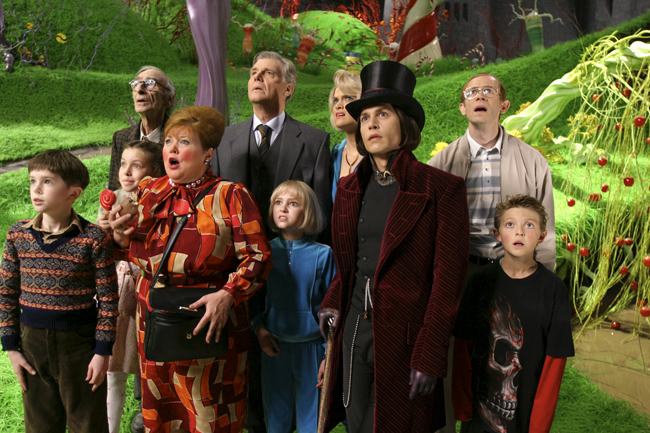
Charlie RiverCourtesy [FilmForce](http://filmforce.ign.com/articles/574/574697p1.html), there are new photos up for two projects. Click on each for a larger version.

The first is from Charlie and the Chocolate Factory, showing most of the principal cast in the Chocolate Room.

From left to right, the characters in the photo are Charlie Bucket, Veruca Salt, Grampa Joe (Charlie’s grandfather), Mrs. Gloop, Mr. Salt, Violet Beauregarde, Ms. Beauregarde, Willy Wonka, Mr. Teavee and Mike Teavee. Not pictured is Augustus Gloop. Anyone who’s read the book can probably figure out why.
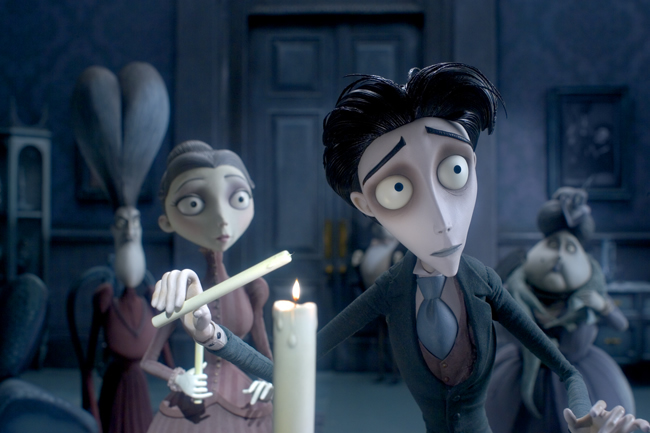
Charlie RiverThe second photo is from Corpse Bride, and shows Victor Van Dort practicing his wedding vows, while nervous bride-to-be Victoria looks on. The film is in production in London.

Dialogue versus exposition

December 16, 2004 QandA, Words on the page

What is a good way to distiguish good dialogue from exposition?

— Josh Hatfield

Dialogue:

FRANK

Let’s say we try to keep the dysfunction indoors, huh?

Exposition:

O’MALLEY

Thompson was a down-on-his-luck bookie who thought he could swindle Ackland out of the ticket profits. He wasn’t counting on Rickman having the same idea.

Always ask yourself: Would the character actually say this, or is he only saying it because you need the audience to know some fact or detail? If the answer is the latter, you’re writing exposition and not dialogue.

That’s not good.

At its worst, you risk “M Syndrome,” named for the James Bond boss whose sole function seems to be telling 007 all the backstory so he knows who to shoot. (This was parodied in the Austin Powers movies by Michael York’s character, Basil Exposition.)

Honestly, there are times when you really do need to have a character say something that’s purely plot. In certain genres, like police procedurals, exposition is pretty much par for the course. But to the degree possible, try to avoid situations where characters are spouting information.

Wherever possible:

1. Show the information, rather than having a character say it.
2. Try to follow a natural line of thought: A to B to C.
3. Simplify. The reader may not need to know everything.
4. Keep your hero active in learning the information, rather than passively listening.
5. Balance natural speech patterns with efficiency. People rarely say things as concisely as they could.

Avoiding exposition is hard, especially in plot-dependent stories. But it’s one of the first things a reader notices, so spend the time to deal with it.

What became of American McGee’s Alice?

November 7, 2004 Dead Projects, QandA, Treatments

questionmarkI’m just wondering what ever happened with the production of “Dark Wonderland,” with the American McGee characters of Alice In Wonderland. I haven’t heard anything about it in a while, and can’t seem to find much info on it.

— Dan
Ontario, Canada

To the best of my knowledge, nothing’s happening with it.

The brief history: Miramax/Dimension hired me to write a (long) film treatment based on [American McGee’s Alice](href=”http://www.amazon.com/exec/obidos/redirect?tag=johnaugustcom-20&path=tg%2Fdetail%2F-%2FB00006G9SB%2Fqid%3D1099782249%2Fsr%3D8-1%2Fref%3Dpd_csp_1%3Fv%3Dglance%26s%3Dvideogames%26n%3D507846) videogame — a trippy retelling/continuation of Alice in Wonderland. Wes Craven was supposed to direct it, but he didn’t really care for my treatment, and things quickly fell apart.

It’s so interesting how (mis-) information spreads on the Internet. For instance, the title “Dark Wonderland.” Don’t ask me where that came from. It was never real, nor was any of the “casting” that was supposedly taking place.

I had lunch a few weeks ago with American, and asked him about it. He didn’t really know what was going on either, except that the project’s apparently at Fox now. He posted everything he knows about the movie at his own site, so people would hopefully stop asking. (Link is now dead.)

I’ll ask around, but as far as I know, there’s no script, no director, no actress, nothin’. But it’s still a kick-ass game. And for his part, American has become a screenwriter himself, so if anyone should take the reins, it’s him.

Avoid CUT TO’s in a busy sequence

October 19, 2004 Charlie's Angels, Formatting, QandA

I’m piecing together a climax sequence that takes place in a park,
with dozens of cuts back and forth between four main characters as
they perform different activities at different locations within the
park. Is there an efficient way to format this without creating a new,
full slugline for each cut, and without using too many CUT TOs?

— Joseph
Uppsala, Sweden

Make friends with the slugline. That’s a single line, all in caps, which tells the reader that you’re focusing on something new. Here’s an example from [CHARLIE’S ANGELS: FULL THROTTLE](http://imdb.com/title/tt0305357/):

(Note: If the following text has bullet points, you need to clear your cache. On the Mac, hold down the command key while you press the Reload button on the toolbar.)

All eight "real" RACERS attack the course like modern-day charioteers, SLAMMING down each hill and SPRAYING dirt like shrapnel.

Some OFFICIALS try to stop Dylan, but she ROARS onto the course.

IN THE STANDS

Alex sloughs off her cotton candy and runs along the lowest walkway, trying to keep Dylan in sight.

ON THE SIDELINE

Natalie grabs an available bike and helmet, ready to join in the race.

ON THE COURSE

The pack is nearing the first turn. Emmers has the lead, with the Man in Black moving up quickly. Boxed in between two other racers, the Man suddenly

KICKS

one guy out of his way. The unsuspecting cyclist crashes in the dirt. This is no ordinary race.

At the fence, Stern YELLS into his wrist-mike:

STERN

Carter! Kalakana! Get up here now!

THE MAN IN BLACK

reaches into his jacket pocket, pulling out an antique revolver. As he closes the gap on Emmers, he starts to take aim. With both cycles heading up and down hills, it's difficult to get a line-of-sight, but their jumps are finally synchronized.

Sometimes, even those single sluglines can be too much, so you might consider embedding them into paragraphs.

Also from Full Throttle:

As the truck falls, we move into SUPER-SLOW MOTION. There’s a lot to cover:

IN THE CAB, we watch as the truck’s nose tips straight down to the floor of the canyon one thousand feet below. Keeping her cool, Dylan grabs the glowing tube and climbs out her door.

IN THE BACK, Alex RIPS open a nylon duffel bag. She pulls out an armful of silk. Clinging to the truck wall, Natalie KICKS loose the wheel chucks. The mysterious fan unit floats freely in the truck.

ON THE DAM, the men watch as the truck falls. The angels may have escaped their reach, but they won’t escape their death. The ARTILLERIST aims the rocket launcher.

IN THE BACK, Alex lets the silk fly. It WHIPS out of her hands, unfurling as a small parachute. Natalie pulls a ripcord, which starts up the massive fan blades.

Dylan climbs into the cargo area.

Meanwhile, the small parachute begins to pull out a much larger canopy, a massive rectangular wing of fabric.

ON THE DAM, the artillerist has a bead on the falling truck. He squeezes the trigger, launching a WHISTLING RPG.

IN THE TRUCK, the angels grab onto handholds near the fan unit. They see the missile coming.

THE CANOPY extends to full berth, yanking taught a web of cables. The whole fan assembly flies out the back of the truck just moments before

THE RPG HITS.

The truck EXPLODES in a fireball that continues to fall towards the canyon floor. We LOOK UP to see

THE CANOPY, where the angels dangle from the crossbars of the suspended fan unit. We get our first good look at the vehicle, a type of ultra-light aircraft that resembles an Everglades swamp boat gone aerial.

ON THE DAM, the men watch with furious awe as the strange craft begins to fly up from the base of the canyon, catching the rising drafts. It’s heading into the sunset.

However you choose to do it, remember that you’re writing for the reader, not the director. You want to create the action sequence that feels most exciting on the page, even if the sequence of events isn’t exactly how you ultimately think a director will stage it.

« Previous Page
Next Page »

Primary Sidebar

Newsletter

Inneresting Logo A Quote-Unquote Newsletter about Writing
Read Now

Explore

Projects

  • Aladdin (1)
  • Arlo Finch (27)
  • Big Fish (88)
  • Birdigo (2)
  • Charlie (39)
  • Charlie's Angels (16)
  • Chosen (2)
  • Corpse Bride (9)
  • Dead Projects (18)
  • Frankenweenie (10)
  • Go (29)
  • Karateka (4)
  • Monsterpocalypse (3)
  • One Hit Kill (6)
  • Ops (6)
  • Preacher (2)
  • Prince of Persia (13)
  • Shazam (6)
  • Snake People (6)
  • Tarzan (5)
  • The Nines (118)
  • The Remnants (12)
  • The Variant (22)

Apps

  • Bronson (14)
  • FDX Reader (11)
  • Fountain (32)
  • Highland (75)
  • Less IMDb (4)
  • Weekend Read (64)

Recommended Reading

  • First Person (87)
  • Geek Alert (151)
  • WGA (162)
  • Workspace (19)

Screenwriting Q&A

  • Adaptation (65)
  • Directors (90)
  • Education (49)
  • Film Industry (489)
  • Formatting (128)
  • Genres (89)
  • Glossary (6)
  • Pitches (29)
  • Producers (59)
  • Psych 101 (118)
  • Rights and Copyright (96)
  • So-Called Experts (47)
  • Story and Plot (170)
  • Television (165)
  • Treatments (21)
  • Words on the page (237)
  • Writing Process (177)

More screenwriting Q&A at screenwriting.io

© 2026 John August — All Rights Reserved.