• Skip to primary navigation
  • Skip to main content
  • Skip to primary sidebar

John August

  • Arlo Finch
  • Scriptnotes
  • Library
  • Store
  • About

Search Results for: book rights

Nope, not my Barbarella

February 3, 2007 Dead Projects, Projects

A few readers have written in asking about the [announcement by Dino De Laurentiis](http://movies.ign.com/articles/759/759621p1.html) that he intends to make a new Barbarella. Specifically, will he be using my script?

As far as I can tell, no. The rights to my script are incredibly murky–it was a shared project between Warner Bros. and Fox 2000, based on a different comic book than the one used in the original movie. When the deal fell apart, it became something of an unadoptable orphan. (Back in 2004, I wrote about my [long history with the project](http://johnaugust.com/archives/2004/the-status-of-barbarella).)

From all appearances, this new project is starting from scratch. My agent asked around about it, and heard it described as more of a female-oriented Matrix. I’ll be keeping on an eye on it, and if it does make it into production, I’ll feel safer putting my script up in the [Downloads](http://johnaugust.com/downloads) section for all to see.

Because really, he should drive a Chrysler LeBaron

July 8, 2006 QandA, Rights and Copyright, The Nines

questionmark*My question concerns referencing branded objects in a screenplay. I’ve read that including name-brand references should be avoided in screenplays because you would need legal clearance in order to feature them.*
*That being said, what if my character drives a Chrysler LeBaron? Can’t I say he drives a beat-up Chrysler LeBaron? And not just as a description, but if it was mentioned in the dialogue as well.*

*Understandably, name brand references wouldn’t make or break my script, but I feel it adds a nice level of depth and detail to my characters if you know they like Gucci shoes and not fancy Italian boots.*

*I guess my question is, what are the do’s and don’ts of brand name references?*

*– Aaron Murphy*

In a screenplay, you can do anything. You can have Ronald McDonald shank Elmo with a sharpened Barbie over a pack of Marlboros.

The trouble comes when you’re moving from the printed word to the projected image. The corporations who hold these trademarks and copyrights don’t look kindly on other people profiting off them, even if the usage is not necessarily disparaging.

So, when you set out to make a movie, someone is generally assigned the chore of getting permission to use other people’s copyrights and trademarks. These “permission slips” are called clearances. During the summer of 1993, while I was interning at Universal, this was my job. I helped do clearances for [The War](http://imdb.com/title/tt0111667/) and [Reality Bites](http://imdb.com/title/tt0110950/), mostly working on props and set decoration.

How do you get permission? You ask.

A large part of the job is figuring out who to ask. In 1993, the Internet didn’t exist in anything approximating its current form, so my fingers got very fast at dialing New York information (212-555-1212) to track down corporate offices.

Once you get the right person on the phone (or email), you explain what the movie is, why you’re asking, and if they could sign and fax back the attached clearance form. As I mentioned in an [earlier article](http://johnaugust.com/archives/2004/getting-permission), Nolo Press’s book *Getting Permission* has templates for clearance forms, and a lot of information about how to handle everything from artwork to music. You can also see a generic version of what we used for The Movie here: [.pdf](http://johnaugust.com/Assets/clearance.pdf) or [.doc](http://johnaugust.com/Assets/clearance.doc).

My assistant Chad handled the majority of the clearances for The Movie, mostly artwork and books featured as props. It’s tedious work, but not particularly brain-draining. (In fact, I wrote my first screenplay while doing clearances.)

How do you know what needs to be cleared, and what you can just get away with using/saying?

I fall back on my standard advice: as a writer, just do what’s best for the script. If that’s Gucci shoes and Chrysler LeBarons, knock yourself out. Don’t worry about phantom problems. Rather, focus on writing the best screenplay you can.

Down the road, when your great script gets ready to become a great movie, there will be producers and other clever people to help you stress out over clearances.

What’s with all the remakes?

January 6, 2006 QandA

questionmarkMy question has to do with the recent trend in adapting books and old movies.

Is it that screenwriters have run out of good scripts, or that producers are too scared to produce anything that hasn’t already been in the public eye?

What is left for the writers who have original stories to tell?

— Ryan Scott Fitzgerald
via imdb

Books have been adapted into movies pretty much since the beginning of cinema. So it’s a mistake to conflate literary adaptations with remakes, or at least to label it a recent trend.

But you’re right to notice that a diminishing percentage of the movies coming out of Hollywood originated with the screenwriter. I don’t think the trend represents any failure on the part of America’s screenwriters. They’re still writing great original scripts. You’re just not seeing them, because these scripts aren’t getting made into movies.

I have two theories why.

The first is fear. We tend to think of studios as faceless corporations, but in reality, the decision to make a given movie rests with a very small number of people. At some studios, a single studio chief has the power to greenlight a movie. At others, it’s a committee of maybe four or five. Either way, it’s their call.

Let’s pretend you, Ryan, are a studio chief.

If you pick the right movie, and it’s a giant hit, you’re a hero. You get millions of dollars in bonuses. You move up a few notches on the “Power 100” list.

If you pick the wrong movie, and it’s a bomb, you get fired. Maybe you can get by with a few bombs. But eventually, you will get canned.

Which movies will you choose to make? Probably the ones you know you can market. The ones which, even if they’re not blockbusters, probably won’t be disasters either.

Basically, you make [Spider-Man](http://imdb.com/title/tt0145487/), [King Kong](http://imdb.com/title/tt0360717/) or [The Dukes of Hazzard](http://imdb.com/title/tt0377818/).

Because as much as you love movies, you’re afraid of making a bomb. You’re afraid of getting fired. And if one of your sure-fire hits ends up tanking (c.f. [Bewitched](http://imdb.com/title/tt0374536/)), you can at least defend why you tried to make it. Had you spent the same amount of money on a riskier project, you’d be in a worse situation career-wise.

My second theory for why fewer movies are coming from original scripts: control. Producers and studios want to drive the process. They don’t want to be beholden to a screenwriter’s vision. They’d rather buy the rights to a book, then hire a screenwriter to adapt it. (Or better, look through the vault for a film they can remake.)

For the producer or studio executive, there’s something comfortingly abstract about the rights to, say, [Knight Rider](http://imdb.com/title/tt0083437/). Properties like Knight Rider are very much like pieces of real estate. The studio owns them, and wants to build something incredible on them. Never mind that it would make a lot more sense — and be a lot less expensive — to build somewhere else. I often compare screenwriting to architecture, and this is another example. People hire Frank Gehry to build them a house on swampland.

An Academy Award-winning writer could pitch the most kick-ass movie imaginable, and the studio would still say, “How about Knight Rider? We just got the rights! We’re thinking Kevin Spacey for K.I.T.T.”

Sigh.

But while Hollywood isn’t making as many original movies as it used to, one really has to consider independent film, which didn’t exist to nearly the same degree a decade or two ago. Taken as a whole, the film industry still has plenty of room for original voices. But you won’t get paid as much, unless you incorporate a talking robotic car.

Dear Governor Schwarzenegger: Marry Me

September 7, 2005 Rant

Dear Governor Schwarzenegger Arnold,

I want to get married.

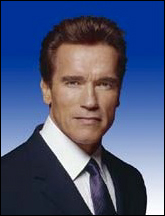
ArnoldNot to you, since you already have a wonderful wife and family — and I’m not the home-wrecking sort, unlike other celebrities I could name. No, I want to marry my partner of five years. That’s why I’m writing. I need your help.

Right now, we can’t get married. Unlike movies you may have seen, the obstacle in our case is not a generations-old family feud, nor a mystical curse, nor a war that has torn this great country apart. What stands between us and the altar is bureaucracy.

I know you love freedom and hate bureaucracy, so I thought you’d want to know.

Some backstory, since we’ve never met. Like you, I come from the film industry. I’m a screenwriter. I wrote Charlie and the Chocolate Factory and Big Fish, along with some other movies you unfortunately didn’t star in. (This can be rectified.) My partner Mike is an MBA. He’s clever. He balances the checkbook. Like you and Maria, we complement each other.

Right now, we’re [registered domestic partners](http://en.wikipedia.org/wiki/Domestic_partnerships_in_California). California currently has pretty good domestic partnership laws. You signed them, so thanks for that. As Californians, Mike and I have benefits basic human rights that we wouldn’t have in any state other than [Massachusetts](http://en.wikipedia.org/wiki/Gay_marriage_in_Massachusetts). We’ve also spent a couple of thousand dollars to draft up wills, trusts and powers-of-attorney to get us a little closer to marriage-equivalence.

But we’re not married.

Do you remember when Britney Spears [married that guy](http://www.cnn.com/2004/SHOWBIZ/Music/01/04/britney.spears.wedding.ap/) in Vegas earlier this year, only to have it quickly annulled? Well, for that day or two, she and whatever-his-name had vastly more rights than Mike or I have ever had. They could file joint taxes. They could adopt children. They could inherit each other’s property. (Probably a better deal for him.) In the eyes of the law, they were more legitimate than Mike and I could ever be.

And the Britney coincidences continue: she’s about to have a baby; we just had one. Her new husband, Kevin Federline, was an unwed father; I am an unwed father.

That’s the uncomfortable truth, Governor, that has me writing to you today. I’m an unwed father. And I don’t want to be.

Sometimes, being unmarried is merely aggravating. For instance, I recently got into heated words with a representative from my health insurance company, who told me I would have to adopt my own daughter. Never mind that my name is on her birth certificate. “With gay people,” she explained, “we have to have official adoption papers.” (Fortunately, her supervisor corrected the misinformation.)

Sometimes, being unmarried is more troubling. It’s no shock that there are some places in this great country we probably don’t want to travel as a family, and that’s not going to magically change overnight. But even in Los Angeles, everyday life is subtly different for us. To wit: when your kids were little, did you carry copies of their birth certificate in the diaper bag, just in case some overzealous official questioned whether these were “really” your kids?

Look, I’m a realist. Letting Mike and I get married won’t suddenly make everything better. There will still be bigots and assholes, and women who cluck their disapproval at the grocery store. However, affirming the right for us to marry would take away one official sanction against gay people. People will still discriminate, but they won’t feel like they have the state backing them up.

And here’s where you come in.

By the narrowest of margins, the California legislature has just passed [AB 849](http://info.sen.ca.gov/cgi-bin/postquery?bill_number=ab_849&sess=CUR&house=B&site=sen), the Religious Freedom and Civil Marriage Protection Act. It says civil marriage is defined as the union of two people, without specifying gender. Now it’s up to the Governor to decide whether to sign it into law, or veto it.

That’s you, Governor Schwarzenegger. And that’s why I’m writing.

In your movies, you always play the hero. Do it again. Sign the bill.

I know you’re worried about the political implications. Personally, I think you’d get a big boost for standing up for what you believe, damn the conventional wisdom. But in case you need to fall back on your Hollywood career, know that I’m offering to write Terminator 4 for you. Hell, I’ll write Jingle All the Way 2. That’s how important this is.

__I’m also urging all my friends and readers who live in California to take two minutes and call the Governor’s office: (916) 445-2841.__ I did. It’s absolutely painless, like voting for American Idol. And there are local numbers, too, for much of the state:

Fresno: 559-445-5295

Los Angeles: 213-897-0322

Riverside: 951-680-6860

San Diego: 619-525-4641

San Francisco: 415-703-2218

Your spokespeople have said that you prefer to leave the decision up to the courts. I doubt it. You’re a man of action. Take action. Sign the bill and marry me.

Sincerely,

— John August

__Update: (9/30/05)__

[Governor Vetoes Gay Marriage Bill](http://news.yahoo.com/news?tmpl=story&u=/afp/20050930/lf_afp/usgaymarriage_050930143429). Arnold, you broke my heart. But at least you stood up for the current domestic partnership laws, and promised to fight any backsliding.

« Previous Page
Next Page »

Primary Sidebar

Newsletter

Inneresting Logo A Quote-Unquote Newsletter about Writing
Read Now

Explore

Projects

  • Aladdin (1)
  • Arlo Finch (27)
  • Big Fish (88)
  • Birdigo (2)
  • Charlie (39)
  • Charlie's Angels (16)
  • Chosen (2)
  • Corpse Bride (9)
  • Dead Projects (18)
  • Frankenweenie (10)
  • Go (29)
  • Karateka (4)
  • Monsterpocalypse (3)
  • One Hit Kill (6)
  • Ops (6)
  • Preacher (2)
  • Prince of Persia (13)
  • Shazam (6)
  • Snake People (6)
  • Tarzan (5)
  • The Nines (118)
  • The Remnants (12)
  • The Variant (22)

Apps

  • Bronson (14)
  • FDX Reader (11)
  • Fountain (32)
  • Highland (74)
  • Less IMDb (4)
  • Weekend Read (64)

Recommended Reading

  • First Person (87)
  • Geek Alert (151)
  • WGA (162)
  • Workspace (19)

Screenwriting Q&A

  • Adaptation (65)
  • Directors (90)
  • Education (49)
  • Film Industry (489)
  • Formatting (128)
  • Genres (89)
  • Glossary (6)
  • Pitches (29)
  • Producers (59)
  • Psych 101 (118)
  • Rights and Copyright (96)
  • So-Called Experts (47)
  • Story and Plot (170)
  • Television (165)
  • Treatments (21)
  • Words on the page (237)
  • Writing Process (177)

More screenwriting Q&A at screenwriting.io

© 2026 John August — All Rights Reserved.