• Skip to primary navigation
  • Skip to main content
  • Skip to primary sidebar

John August

  • Arlo Finch
  • Scriptnotes
  • Library
  • Store
  • About

Search Results for: 3 page challenge

Scripting a short film

February 22, 2008 Genres, QandA, Story and Plot, Words on the page

questionmarkI’m about to get cracking on my submission for a prestigious short screenplay competition. I wondered if you had any advice specific to writing shorts? If you were judging a shorts competition, what would you be looking for?

— Kirsty
York, UK

A short film, like a short story, can’t waste any time. You need to give us your principal characters and establish their motivations immediately. There’s very little stage-setting before you get to the inciting incident and the ensuing complications.

The hero’s fundamental problem/challenge/obstacle needs to occur by the time you get to the 1/3rd mark. So, if your short is meant to be three minutes long, the big event needs to happen on page one. If it’s a 10-minute short, it happens around page three. It’s not that you’re worried about your reader getting bored before then — if you can’t entertain us for three pages, there’s a problem — but rather that if you delay any longer, your story is going to feel lopsided: too much setup for what was accomplished.

Beyond that, I wouldn’t worry much about traditional structural expectations. Funny almost always works better than serious for a short, because there’s not enough time to create the narrative movement you expect in drama. But there are exceptions. [The Red Balloon](http://www.imdb.com/title/tt0048980/) for example. And I loved Walter Salles’ chapter in [Paris, je t’aime](http://www.imdb.com/title/tt0401711/), which was simply a sad rhyme. ((That said, it probably wouldn’t have stood out in a script competition.))

So think funny, or poignant — but only if French.

I’ve put the script for my 1998 short film God up in the [Downloads](http://johnaugust.com/downloads) section. ((The short is a bonus feature on The Nines DVD.)) It’s 30 scenes in 11 pages. A lot of story happens, quickly. But many successful shorts take the opposite tack: they’re essentially just one joke, fully exploited. Todd Strauss-Schulson’s Jagg Off is that kind of short, as are most of the SNL and Will Ferrell videos you’ve seen.

For the competition you’re entering, however, I’d be careful not to submit anything that felt too much like a comedy sketch. If I were a judge, I’d be looking for a script that doesn’t seem like it could end up on Saturday Night Live. (Or the British equivalent.)

Good luck!
The meeting

February 10, 2008 Strike

Last night’s meeting at the Shrine was packed. It started late, because of parking challenges. Most of my picket line crew was out sick. And as I took a seat next to a fellow USC’er, I had a brief moment of panic: I spotted a woman with an LED pin which kept scrolling, “IT’S NOT OVER YET!!!”

While the woman’s pin was technically correct — the vote to end the strike will be counted Tuesday night — I hope she reprogrammed the message during the 2.5 hour meeting. “WE WON!!!” might be a choice. “WE ACHIEVED MEANINGFUL PROGRESS IN KEY AREAS RELATED TO NEW MEDIA” would be more honest. But that probably wouldn’t scroll as well.

The focus of the meeting was to read through and explain the four-page deal summary. To their credit, the guys on stage did a good job explaining the victories and the concessions, and the logic in ending up where we did. They called it the best contract in 30 years, while pointing out its obvious gaps. Was it kind of dull? Yeah. But I was happy to be bored.

One of the most important areas the new contract defends is separated rights, which I suspect will not be well explained in mainstream news reports about the deal. So here’s my very brief recap.

Remember a couple of months ago, when I explained [Why writers get residuals](http://johnaugust.com/archives/2007/why-writers-get-residuals)? In it, I described the weird legal judo writers and studios do to assign copyright and authorship to the corporation rather than the creator. Well, there are certain rights that the writer has traditionally been able to keep in this arrangement. For example, turning a TV series into a feature film. Or using a character created in one show (Frasier Crane, in Cheers) as the basis of a new show (Frasier).

The new contract needed to establish that even if work is created for the internet (rather than TV or features), the same principles of separated rights apply. If a webisode becomes the basis of a new TV show, that’s separated rights. It’s a unique, writer-only issue that doesn’t have a parallel in the DGA or SAG deals. There are loopholes and potential issues, but the framework is now in place.

I went to the meeting dreading the open mic format, but the first few questions from the floor proved to be explanatory rather than inflammatory. For example, in contract terms, “dramatic programs” isn’t a genre, but rather a means of distinguishing scripted programs from other formats. (Thus, a sitcom is a dramatic program.)

There are some writers who don’t like the deal, and intend to vote against it. But the vast majority of people in the room, and online, have already reprogrammed their internal LED displays in preparation for the post-strike period.

Split screens

July 11, 2007 Formatting, QandA, Recycled

How would you go about writing two scenes in a script that run at the
same time in split screen, but don’t necessarily have anything to do with
each other? Basically like a scene from the movie Timecode.

–John

That’s a real challenge to do in standard screenplay format. While someone watching a movie can follow the action happening in multiple sections of the screen at once, the reader simply can’t. Reading is a left-to-right, top-to-bottom process. So you’re going to have to figure out another way to communicate the same idea.

Your approach depends on how crucial the split-screen timing becomes. For instance, in an earlier draft of the first CHARLIE’S ANGELS, there was a chase sequence between Alex (Lucy Liu) and the Thin Man (Crispin Glover), in which they were both trying to get to the roof of the building in order to reach the satellite dish that Eric Knox was using. The chase started with the two characters on opposite sides of an iron fence, which formed the dividing line down the middle of the screen. We then followed each character on separate, sometimes overlapping paths, as they fought their way to the roof. Finally, Alex kicked the Thin Man “through” the center dividing line.

In this example, the exact timing of who-is-where-when was important, so I chose to write the action as two parallel columns on a horizontal page. It was a pain in the ass to format, because Final Draft couldn’t handle it, so each time I printed out the script I had to make sure to leave blank “filler” pages in which to insert the properly-formatted side-by-side pages. Still, it was a fun challenge.

Ultimately, the split-screen stuff was dropped and the sequence became about Alex and the Thin Man kicking the crap out of each other.

For TIMECODE, Mike Figgis apparently didn’t work off a traditional screenplay at all. The entire movie was rehearsed and reshot more than a dozen times. To figure out who-is-where-when, Figgis used musical score sheets.

For your script, since the two sides don’t necessarily have anything to do with each other, I would recommend writing the scenes out straight. If it’s important to indicate to the reader that certain scenes are playing side-by-side, just put a note in parentheses in the first line of a scene’s description. It’s not a perfect solution, but in most cases that’s as straightfoward as you’re going to get.

(This article originally ran September 29, 2003.)

Goodnight Moon, Hello Movie

April 1, 2007 Check the date, News, Projects

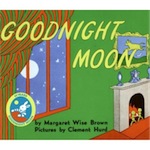
I’m happy to finally be able to announce the next thing I’m writing after Shazam!/Captain Marvel — an adaptation of one of the best-selling children’s books ever: [Goodnight Moon](http://astore.amazon.com/johnaugustcom-20/detail/0694003611/103-7231239-6222202), by Margaret Wise Brown.

[book](http://astore.amazon.com/johnaugustcom-20/103-7231239-6222202?%5Fencoding=UTF8&node=28)Anyone who’s ever had a baby has probably read this book, so it’s no surprise that Hollywood’s been trying to adapt it for years. [Robert Bolt](http://imdb.com/name/nm0004122/) wrote a draft, as have [Waldo Salt](http://imdb.com/name/nm0759029/) and [Andrew Kevin Walker](http://imdb.com/name/nm0001825/) (his version had [Tom Tykwer](http://imdb.com/name/nm0878756/) attached.) So will this new incarnation be the one that finally gets it made? Hard to say.

There are certainly plenty of heavy-hitters involved: [Gore Verbinski](http://imdb.com/name/nm0893659/) is directing, Joel Silver is producing, and Lucasfilm has signed on to handle the visual effects. The movie will be shot largely greenscreen, like 300, with extensive motion capture to handle the Little Bunny and the Kittens.I fully recognize the irony in using greenscreen to create the Great Green Room.

Probably the most innovative and challenging aspect is the casting of the Quiet Old Lady: [Jessica Tandy](http://imdb.com/name/nm0001788/), who passed away in 1994. Using reference photos and forensic measurement (obtained with permission of her estate), she’ll be digitally recreated, a pixel-perfect reproduction.Tandy’s voice won’t be a particular challenge. True to the book, the Quiet Old Lady only whispers one line: “Hush.” The hope is that the R&D involved in building her for this movie will enable her to be re-used in future movies.I’ve actually read a script for a sequel to Driving Miss Daisy, which was obviously never shot. They’re talking about doing it in digital 3D, but it’s unclear whether that’s really going to happen. The infrastructure might not be there, and I’d question whether little kids are going to be willing to wear special glasses. No matter what the format, count on a great Danny Elfman soundtrack to accompany the visuals.

The movie is set up at Walden (who did Narnia) for 20th Century Fox. Given the number of zeroes in the budget, one would expect it to be a summer or Christmas release, but it’s obviously a long ways off.

Before you ask, I have no who we’re casting for the other roles. Right now, I’m focusing on how to turn an 18-page board book into a 100-minute family-friendly blockbuster.

**UPDATE (4/2/07): For future readers looking through the archives, please make sure to check the date: April 1, 2007. Which is also known as [April Fools’ Day](http://en.wikipedia.org/wiki/April_Fools’_Day).**

« Previous Page
Next Page »

Primary Sidebar

Newsletter

Inneresting Logo A Quote-Unquote Newsletter about Writing
Read Now

Explore

Projects

  • Aladdin (1)
  • Arlo Finch (27)
  • Big Fish (88)
  • Birdigo (2)
  • Charlie (39)
  • Charlie's Angels (16)
  • Chosen (2)
  • Corpse Bride (9)
  • Dead Projects (18)
  • Frankenweenie (10)
  • Go (29)
  • Karateka (4)
  • Monsterpocalypse (3)
  • One Hit Kill (6)
  • Ops (6)
  • Preacher (2)
  • Prince of Persia (13)
  • Shazam (6)
  • Snake People (6)
  • Tarzan (5)
  • The Nines (118)
  • The Remnants (12)
  • The Variant (22)

Apps

  • Bronson (14)
  • FDX Reader (11)
  • Fountain (32)
  • Highland (75)
  • Less IMDb (4)
  • Weekend Read (64)

Recommended Reading

  • First Person (87)
  • Geek Alert (151)
  • WGA (162)
  • Workspace (19)

Screenwriting Q&A

  • Adaptation (65)
  • Directors (90)
  • Education (49)
  • Film Industry (489)
  • Formatting (128)
  • Genres (89)
  • Glossary (6)
  • Pitches (29)
  • Producers (59)
  • Psych 101 (118)
  • Rights and Copyright (96)
  • So-Called Experts (47)
  • Story and Plot (170)
  • Television (165)
  • Treatments (21)
  • Words on the page (238)
  • Writing Process (177)

More screenwriting Q&A at screenwriting.io

© 2026 John August — All Rights Reserved.