• Skip to primary navigation
  • Skip to main content
  • Skip to primary sidebar

John August

  • Arlo Finch
  • Scriptnotes
  • Library
  • Store
  • About

Follow Up

An air duct speaks back

July 24, 2007 Follow Up, Meta

From the comment thread on the [Air vents are for air](http://johnaugust.com/archives/2006/air-vents-are-for-air) post:

I am an Air Conditioning Duct and I find this entire conversation incredibly ignorant and offensive.

On the rare occasions that I do see my Community represented on screen, it is invariably unrealistic and below industry standard. All the Air Conditioning Ducts of my acquaintance are spotlessly clean, weight-of-a-grown-man supporting structures. However we cannot deflect bullets.

Someday the true poetry of our lives and history will be told.

Despite the occasional a-hole, I have the best commenters ever.

The Nines goes to Venice

July 23, 2007 Follow Up, News, Projects, Sundance, The Nines

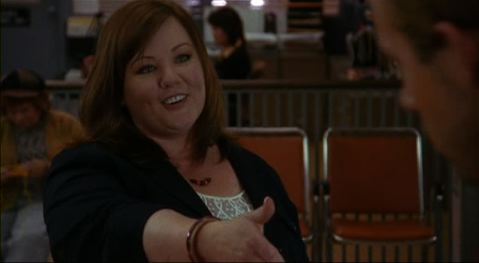
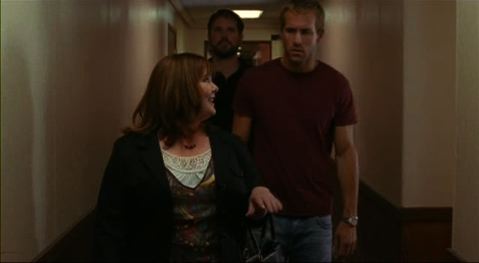
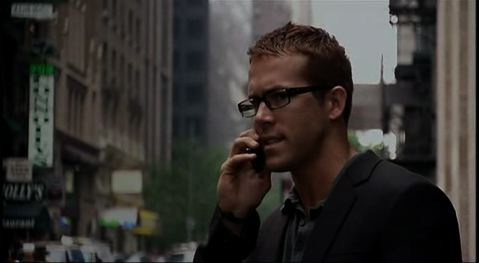
A reader alluded to it in the comments of an earlier post, but today we can officially announce that The Nines was chosen to play the Venice Film Festival as part of Critics’ Week.

(At least, I assume we can announce it. We were sworn to double-super secrecy, which is presumably now over, since it was in [Variety](http://www.variety.com/index.asp?layout=Cannes2007&jump=story&id=1061&articleid=VR1117969003&cs=1) this morning.)

Critics’ Week runs the first week of September; our exact slot should be announced today or tomorrow. Coincidentally — but fortuitously — our U.S. premiere is August 31st, so it will be a busy couple of weeks of promotion.We’ll be launching in New York and Los Angeles, and maybe one other city. How quickly we expand to other cities depends on how well we perform in our first two weeks.

We’re the only U.S. feature in Critics’ Week this year, which traditionally aims for a wide spectrum of international releases. The other films in our category hail from Mexico, France, Kazakhstan, Russia, Italy, Belgium, and Taiwan.You can see the Italian film listing for The Nines (‘I Nove’) at the [SNCCI website](http://www.sncci.it/default.asp?content=%2F34%2F46%2F672%2F2222%2Farticolo%2Easp%3F). If any ambitious readers feel like translating, have at it. I just like the adjective “lynchiano” — “Lynch-ian.”)

How psyched am I to be going to Venice? Ohsovery. I didn’t travel to Cannes when [The Nines screened there](http://johnaugust.com/archives/2007/nines-at-cannes), but that was really just European market screenings for distributors. This is the international debut. I can’t wait to have awkward conversations about the meaning of the film in broken English while jetlagged. And mildly drunk on Italian wines chosen for their melodic names.

Briefly, since I know these will be the first questions raised in the comments section:

* The trailer is done, and should be up within the week.
* The trailer competition is happening, but had to be back-burnered while other stuff got finished.
* No, I don’t know when we’ll be playing in Omaha. Or if we’ll be playing in Omaha.
* Ditto for Argentina.
* I’ve seen the international one-sheet, but the U.S. poster is still in discussions.
* We’re rated R. Presumably for language.
* The official website is getting rebuilt on more-robust servers.
* The movie is unchanged from what premiered at Sundance.
* The movie will be on 35mm in some theatres, digital in others. I’ve seen both projected. They’re different, but equally valid. I’ve considered doing a post about this process, but it would be Geek Factor 8.
* I have no idea when the DVD would come out, but they’re already working on the special features.

Silent Evidence

July 21, 2007 Africa, Books, Follow Up

A few weeks ago, while answering the [Grey’s Anatomy](http://johnaugust.com/archives/2007/she-was-mistaken) question which generated so much talkback, I found myself searching for a specific term I knew had to exist: the human tendency to consider only the samples presented, ignoring other relevant items.

It felt like a fallacy, but it didn’t quite match up to any of the contenders I found online. If you squint really hard, you can make it look like a special case of the [Fallacy of (Hasty) Generalization](http://www.fallacyfiles.org/hastygen.html), but that seems a stretch for something which feels fairly commonplace. I ended up coining, “Fallacy of Limited Sampling” — with a mental sticky note to replace it once I found a better term.

To my surprise, I found the one over the middle of the Atlantic, during the 20+ hour flight to Africa: “silent evidence.”

That’s the term Nassim Nicholas Taleb uses to describe this phenomenon in [The Black Swan](http://www.amazon.com/Black-Swan-Impact-Highly-Improbable/dp/1400063515). He introduces it with a story from Cicero:

Diagoras, a nonbeliever in the gods, was shown painted tablets bearing the portraits of some worshippers who prayed, then survived a subsequent shipwreck. The implication was that praying protects you from drowning.

Diagoras asked, “Where are the pictures of those who prayed, then drowned?”

Those “drowned believers” are silent evidence. You don’t take them into account because they can’t speak up for themselves. The cliché is that, “History is written by the winners.” In fact, it’s written by whoever happens to survive.

Following a discussion of the Phoenicians, and how their lack of literature is more likely due to the fragility of their paper rather than a failure of their culture, Taleb urges us to cast our nets widely:

Consider the thousands of writers now completely vanished from consciousness: their record did not enter analyses. We do not see the tons of rejected manuscripts because these have never been published, or the profile of actors who never won an audition — therefore cannot analyze their attributes. To understand successes, the study of traits in failure need to be present. For instance, some traits that seem to explain millionaires, like appetite for risk, only appear because one does not study bankruptcies. If one includes bankrupt people in the sample, then risk-taking would not appear to be a valid factor explaining success. [Link]

Taleb calls this overlooked bulk of information “silent evidence.” I assumed that was a term of art, but Googling it now, most of the references point back to Taleb’s book. It’s possible that he is its primary champion. Regardless, I like it, and intend to use it liberally.

I didn’t mean for this to become a book review, but since I started…

There are many things I liked about The Black Swan. In addition to silent evidence, I found myself nodding my head to his discussion of the confirmation bias (we tend to notice things that fit our theories), Platonicity (confusion of the model with what it’s modeling), and the narrative fallacy — our need to create a story which explains events after they happened, even if the causality is questionable (or impossible). Thus we write history books explaining how World War I started, when if you were reading the newspapers of the time, these “causes” wouldn’t have shown up.

Taleb’s central thesis is that there are unexpected incidents (Black Swans) which have enormous, disproportionate impact on our world: terrorist attacks, bank failures, iPods. By definition, we can’t predict them — which means any prediction about the future at all is extremely dubious. The best we can do is constantly remind ourselves of the limits of our knowledge, and make some contingency for the completely unexpected.Donald Rumsfeld took a lot of flack for his Yogi Berra-like koan about “Unknown Unknowns” at a Defense Department briefing in 2002, which Slate put in verse form. I’m scared to say: he’s actually kind of right. Acknowledging that there are “unknown unknowns” is important.

I’ve always been leery of statements like, “By 2075, the U.S. population will total 1 billion.” Taleb’s book helps justify my frustration at these seeemingly-scientific projections, which discount what we inherently know about the future: that we know much less than we think.

Despite these interesting points, I can’t honestly recommend Taleb’s book. Too much of it feels like being stuck next to an immodest guest at an interminable dinner party. I found myself skimming whenever I saw the words, “Lebanon,” “French,” or “Yevgenia.” It’s not [Freakonomics](http://www.amazon.com/Freakonomics-Economist-Explores-Hidden-Everything/dp/006073132X). My hope is that an ambitious editor convinces Taleb to let her cut it down to a book half as long and twice as readable.

Summer Sundance, part two

June 26, 2007 Follow Up, Sundance

questionmarkWhat exactly do you discuss at Sundance? They’re entering with completed scripts, which I assume are perfect to them at the beginning, so where to next? And if you participate in the Screenwriting Lab are you automatically given a Directors Lab spot, if that is what you so choose to do with your completed work?

— Christina Shaver

The scripts the Fellows are bringing to Sundance are completed drafts, but they’re still works in progress. The advisor meetings aren’t notes sessions, but rather a chance to talk through ideas with experienced writers, whose fresh eyes can identify problems and opportunities. It’s like therapy for your script.

Over the last two days, I met with Braden King and Dani Valent, whose script HERE is a road movie set in Armenia, and Sophie Bartes, whose COLD SOULS is an existential comedy.My final project is Richard Montoya’s WATER AND POWER, adapted from his acclaimed play. I lucked out this year in that all of my assigned projects feel like Actual Movies I Would Pay to See. Both projects went through the Directors Lab, so the filmmakers had a chance to see how the scenes worked when put up on their feet, which left them with new questions and ideas.

Over the course of the lab, each writer has five meetings with different advisors. In some meetings, I’ve gone page by page with the fellows, looking at how this line on page 19 is setting up an expectation that never really pays off. In other meetings, I’ve left the script in my backpack, instead talking in broad terms about character POV, balancing tones, and the rewriting process. It’s a conversation, and all based on what the Fellow needs. One of the smartest innovations in the Sundance Labs experience is that the advisors meet each morning to talk through the previous day’s sessions, thus building on each other’s work.

I screened THE NINES last night for the group. It was strange to see it in one of same theaters as January, but with a completely different crowd and set of expectations. (And a new, vastly better digital projector.) Atom Egoyan had screened THE SWEET HEREAFTER the second night, and it was terrific to finally be able to ask him questions about his movie and his process.

Sundance doesn’t change much year-to-year, but there have been a few adjustments this time:

* There’s a documentary lab running concurrently, so we’ve gotten to mingle with some editorially-oriented folks.
* There’s wireless, and thus blogging.
* In an effort to reduce waste, they handed out water bottles and coffee mugs upon arrival to use instead of paper cups and disposable bottles. It’s been remarkably effective. Because you’re at altitude, you have to drink a lot of water, and having a container with your name on it makes it simple.We recently banned bottled water at home. Our water cooler was using $145 worth of electricity each year, and that’s not counting all the energy wasted packaging and delivering the giant bottles. It’s surprisingly easy to adjust.
* They got rid of wine at dinner, but added receptions to (partially) make up for it. Again, you’re at altitude, so it doesn’t take much.

« Previous Page
Next Page »

Primary Sidebar

Newsletter

Inneresting Logo A Quote-Unquote Newsletter about Writing
Read Now

Explore

Projects

  • Aladdin (1)
  • Arlo Finch (27)
  • Big Fish (88)
  • Birdigo (2)
  • Charlie (39)
  • Charlie's Angels (16)
  • Chosen (2)
  • Corpse Bride (9)
  • Dead Projects (18)
  • Frankenweenie (10)
  • Go (29)
  • Karateka (4)
  • Monsterpocalypse (3)
  • One Hit Kill (6)
  • Ops (6)
  • Preacher (2)
  • Prince of Persia (13)
  • Shazam (6)
  • Snake People (6)
  • Tarzan (5)
  • The Nines (118)
  • The Remnants (12)
  • The Variant (22)

Apps

  • Bronson (14)
  • FDX Reader (11)
  • Fountain (32)
  • Highland (73)
  • Less IMDb (4)
  • Weekend Read (64)

Recommended Reading

  • First Person (87)
  • Geek Alert (151)
  • WGA (162)
  • Workspace (19)

Screenwriting Q&A

  • Adaptation (65)
  • Directors (90)
  • Education (49)
  • Film Industry (490)
  • Formatting (128)
  • Genres (89)
  • Glossary (6)
  • Pitches (29)
  • Producers (59)
  • Psych 101 (118)
  • Rights and Copyright (96)
  • So-Called Experts (47)
  • Story and Plot (170)
  • Television (165)
  • Treatments (21)
  • Words on the page (237)
  • Writing Process (177)

More screenwriting Q&A at screenwriting.io

© 2026 John August — All Rights Reserved.