• Skip to primary navigation
  • Skip to main content
  • Skip to primary sidebar

John August

  • Arlo Finch
  • Scriptnotes
  • Library
  • Store
  • About

Follow Up

Disaster Porn, and Spelling Things Out

Episode - 103

Go to Archive

August 13, 2013 Broadway, Film Industry, Follow Up, News, Scriptnotes, Story and Plot, Transcribed, Words on the page

John and Craig discuss Damon Lindelof’s interview about how plot stakes have escalated lockstep with budget, perhaps to the point of absurdity.

Then it’s a look at why screenwriters get the note to “spell things out,” and the situations in which it’s okay or troubling to have characters speak story points. Finally, we tackle the media’s obsession with Hollywood’s demise, and why you never read a story about “what went right.”

All this, plus hedge funds, Big Fish discounts and crossword magic in the new Scriptnotes.

LINKS:

* Scriptnotes First 100 Episodes flash drives [are available until Friday, 8/16](http://store.johnaugust.com/)
* Daniel Loeb’s [Variety interview](http://variety.com/2013/film/news/exclusive-interview-daniel-loeb-vows-to-end-sony-spinoff-quest-at-least-for-now-1200572856/)
* Vulture: [Star Script Doctor Damon Lindelof Explains the New Rules of Blockbuster Screenwriting](http://www.vulture.com/2013/08/script-doctor-damon-lindelof-on-blockbuster-screenwriting.html)
* Use discount code SCRIPT for a deal on select [Big Fish on Broadway tickets](http://www.bigfishthemusical.com/) (And be sure to [tweet](https://twitter.com/stuartfriedel) or [email](mailto:ask@johnaugust.com) Stuart and let him know when you’ll be there)
* David Kwong’s [crossword puzzle magic](http://www.youtube.com/watch?v=U1VPUZDr-fY) will blow your mind
* Outro by Scriptnotes listener Bryan Duke

You can download the episode here: [AAC](http://traffic.libsyn.com/scriptnotes/scriptnotes_ep_103.m4a) | [mp3](http://traffic.libsyn.com/scriptnotes/scriptnotes_ep_103.mp3).

**UPDATE** 8-15-13: The transcript of this episode can be found [here](http://johnaugust.com/2013/scriptnotes-ep-103-disaster-porn-and-spelling-things-out-transcript).

Scriptnotes, a look back and ahead

August 7, 2013 Follow Up, News

Craig Mazin and I recorded our [first episode](http://johnaugust.com/2011/pitching-a-take-and-the-wga-elections) of Scriptnotes almost two years ago, and 100 episodes later, a lot has changed. I wanted to share a quick summary of where we’ve been and where we’re going.

For starters, we’ve literally moved: we’re on a new server now, one with room to grow. We switched right after episode 99. For most people, the switchover was seemless, but if for some reason your subscription isn’t updating (i.e. you’re not seeing episodes 100, 101 or 102), just [delete your subscription and re-add it](https://itunes.apple.com/us/podcast/scriptnotes-podcast/id462495496?mt=2). ((Better to do this when you’re on wifi, just in case iTunes decides to download several episodes at once.))

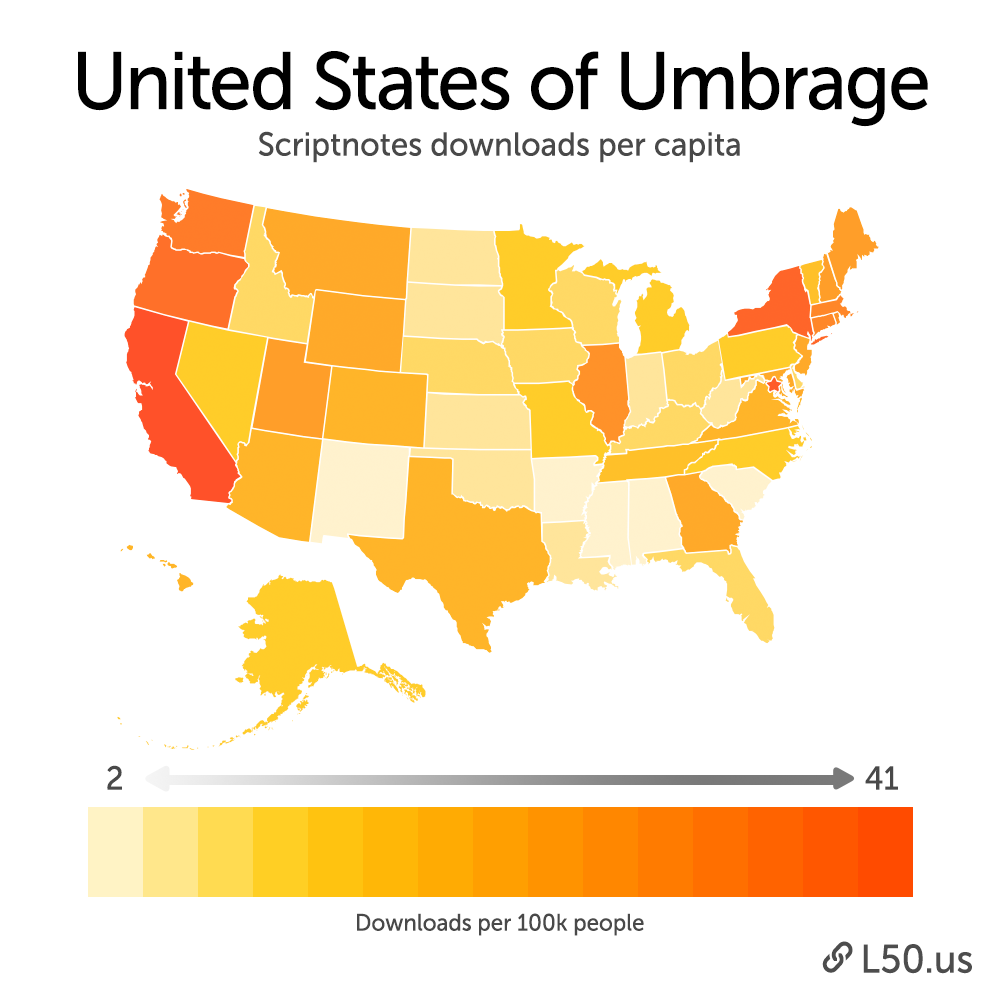
One Cool Thing about our new server setup is that we have a lot more geodata about our listeners. For this map, we divided listeners by state population to reduce the impact of big cities:

chart

California is still in a class by itself, naturally, but Washington D.C. comes in number two. (I suspect that’s because D.C. is uniquely a “state” that’s a city.) The west seems to have an affinity for screenwriting; compare Wyoming to Arkansas or Indiana. I also find the difference between Arizona and New Mexico to be striking.

##The Three Page Challenge

Every few weeks, Craig and I take a look at few entries in the Three Page Challenge. Last year, Stuart Friedel wrote up [his findings](http://johnaugust.com/2012/learning-from-the-three-page-challenge) from having read 500 of them.

As of today, he’s gotten 1,340 entries. We’ve looked at 50 submissions on the podcast, so that means statistically any given submission has a 3.7% chance of making it to air.

But the truth is, Stuart picks the best ones. A well-written entry has a much, much higher chance of getting on the show.

##The back catalog

Unlike a lot of podcasts that quickly become dated, most of what Craig and I discuss remains relevant — writing is writing, after all.

But because we don’t have any advertisers, there’s no one to pay for the not-insubstantial server costs of hosting all those old files, which is why we only keep the most recent 20 episodes on iTunes.

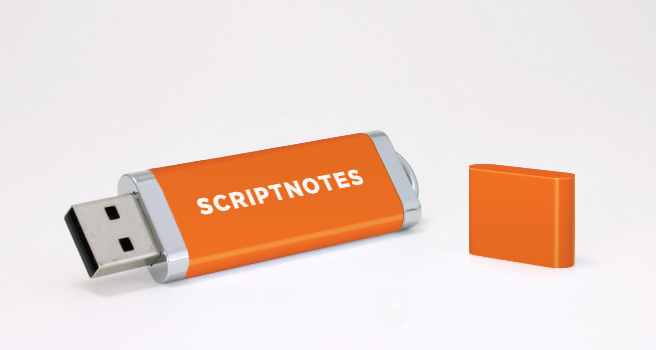
In order to help out newer listeners who want to catch up on back episodes — or anyone who’d like the whole catalog for themselves — we’re offering the first 100 episodes on a USB flash drive for a limited time. You can find them [in the store](http://johnaugust.com/store).

chart

T-shirt sales covered almost all of our costs for transcripts, so thank you again for that. Stuart, Ryan and I learned a lot about the shipping of physical goods through that adventure, so we may decide to do it again.

But not right away. Man, that was a lot of work.

##The year ahead

Craig and I both really like audiences, so we’re excited to be doing another live episode this October at the [Austin Film Festival](http://www.austinfilmfestival.com/festivalandconference/conference/2013-panels/). After that, we’ll be looking at more opportunities in LA.

I’ve really enjoyed the episodes in which Craig and I sit down with special guests. So expect more of that. We’ll also be looking for ways to talk about more than just three pages — like how a whole movie is structured at the index card stage.

In the meantime, thanks for listening. If you haven’t left a comment on iTunes recently, [maybe share the love](https://itunes.apple.com/us/podcast/scriptnotes-podcast/id462495496?mt=2). It helps other people find the show.

Psychotherapy for screenwriters

July 23, 2013 Follow Up, Psych 101, Rights and Copyright, Scriptnotes, Transcribed, Writing Process

John and Craig sit down with screenwriter-turned-psychotherapist Dennis Palumbo to discuss writer’s block, procrastination, partnerships and more. It’s a can’t-miss episode for aspiring writers and professionals alike.

The [live 100th episode of Scriptnotes](http://www.oscars.org/events-exhibitions/events/2013/07/script-notes.html) is this Thursday, July 25th, at the Academy Lab in Hollywood. The event is sold out, but there will probably be a stand-by line. Follow [@johnaugust](https://twitter.com/johnaugust) or [@clmazin](https://twitter.com/clmazin) on Twitter for details.

LINKS:

* [Dennis Palumbo](http://dennispalumbo.com/), author and psychotherapist
* Dennis’s book [Night Terrors: A Daniel Rinaldi Mystery](http://www.amazon.com/gp/product/B00CKUTZGS/ref=as_li_ss_tl?ie=UTF8&camp=1789&creative=390957&creativeASIN=B003O34OL6&linkCode=as2&tag=johnaugustcom-20) on Amazon
* [Impostor Syndrome](http://en.wikipedia.org/wiki/Impostor_syndrome) on Wikipedia
* [The Imposter](http://imposterfilm.com/)
* [Paper Karma](https://www.paperkarma.com/) helps you control your mailbox
* [The Secret in Their Eyes](http://www.sonyclassics.com/thesecretintheireyes/)

You can download the episode here: [AAC](http://traffic.libsyn.com/scriptnotes/scriptnotes_ep_99.m4a) | [mp3](http://traffic.libsyn.com/scriptnotes/scriptnotes_ep_99.mp3).

**UPDATE** 7-27-13: The transcript of this episode can be found [here](http://johnaugust.com/2013/scriptnotes-ep-99-psychotherapy-for-screenwriters-transcript).

Previz for screenwriters

June 14, 2013 Follow Up, Monsterpocalypse

In [episode 93 of Scriptnotes](http://johnaugust.com/2013/lets-talk-about-nikki-finke), Craig and I talked about how storyboarding software (like Amazon’s new Storyteller) is largely a waste of time for screenwriters, who should be focusing on words rather than pictures.

That said, I’ve occasionally found it useful to use images so I know what the hell I’m writing. I’ll use Google Street View to check out a city, or search for photos of the Badlands.

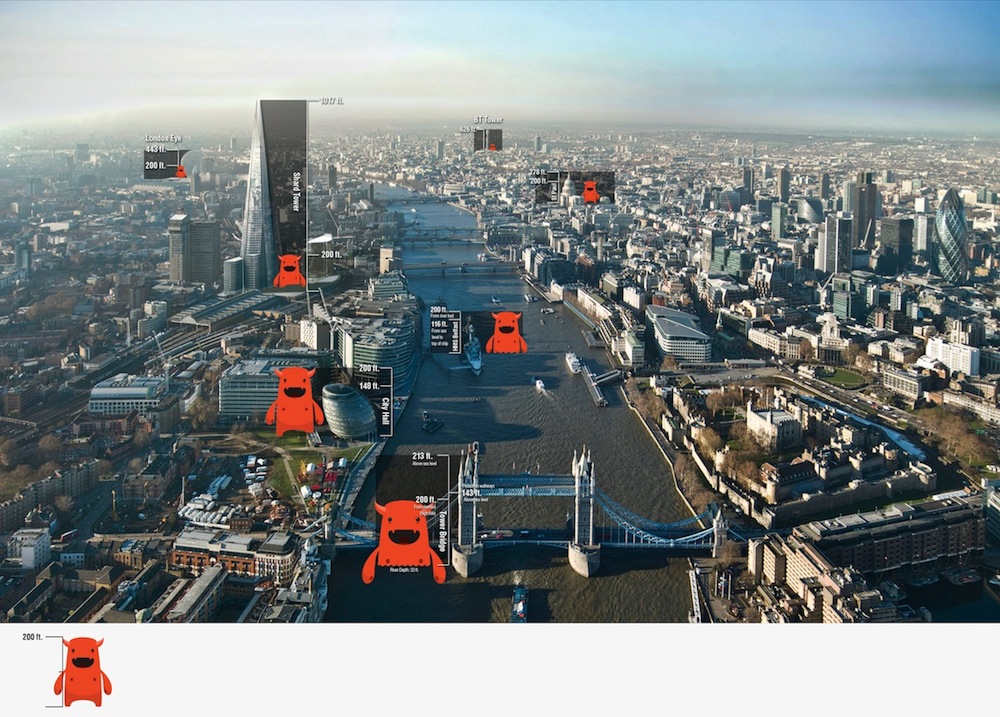
And in the case of the never-will-get-made Monsterpocalypse, ((cf. this summer’s Pacific Rim.)) in 2010 I asked Ryan Nelson to make some graphics for me so I could keep the scale of things consistent.

The script opens with an attack on London by an alien creature.

Vaporous blue flames seep through cracks in the crust. Suddenly, the meteor begins to move. The shell splits and slides in articulated sections, folding open like an elaborate puzzle.

It rolls forward, then begins to rise. It’s only then we get a sense of its true scale.

Two hundred feet tall, it towers over nearby buildings. Its massive claws could lift a 747.

Here’s what 200 feet looks like in practice:

chart

Note that Ryan’s monster is deliberately adorable. In case I needed to show the image to others on the team, I didn’t want it to seem like I was trying to design the creature, just the size of it.

Ryan’s image really helped. It was clear that the creature couldn’t really walk through the city as much as on top of it. The London Eye would still be big — probably too big for him to throw (for example).

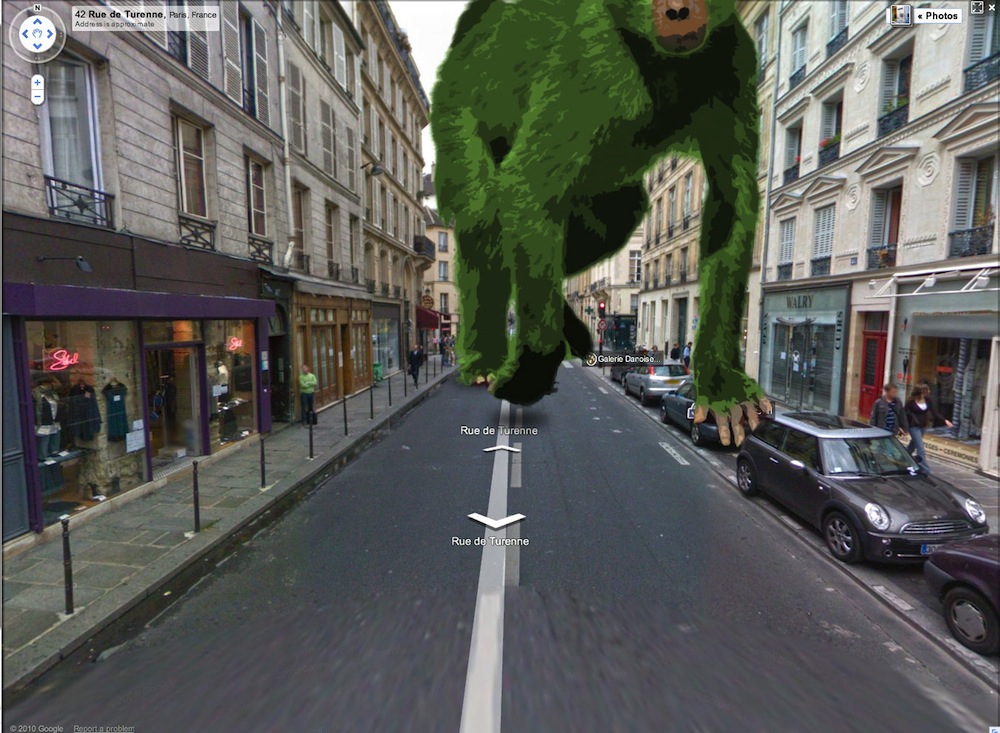
Later in the story, we encounter animals that have become gigantified in the decade following the initial attack. I wanted them to be big, but not so large they couldn’t navigate a city like Paris.

Ryan’s challenge was to find a scale that made sense. Keeping these creatures about 40 or 50 feet tall seemed to work best.

chart

chart

This kind of screenwriter previz is uncommon, so I don’t want to feed the fires of insecurity or distraction (“I can’t write that scene until I learn Photoshop!”). I had the luxury of having a graphic genius on the payroll and 20 feet away. These comps certainly helped me, but I could have written the same script without them.

I didn’t have these images when pitching the project, but that’s one situation in which a screenwriter might consider spending money for artwork — or buying some beer for a talented artist friend. If you have to pitch a project in which many elements are uniquely visual, having something to show might make sense.

Is your story set in a futuristic undersea world of sentient sharks? That might need a picture.

Otherwise, stick to your words.

« Previous Page
Next Page »

Primary Sidebar

Newsletter

Inneresting Logo A Quote-Unquote Newsletter about Writing
Read Now

Explore

Projects

  • Aladdin (1)
  • Arlo Finch (27)
  • Big Fish (88)
  • Birdigo (2)
  • Charlie (39)
  • Charlie's Angels (16)
  • Chosen (2)
  • Corpse Bride (9)
  • Dead Projects (18)
  • Frankenweenie (10)
  • Go (29)
  • Karateka (4)
  • Monsterpocalypse (3)
  • One Hit Kill (6)
  • Ops (6)
  • Preacher (2)
  • Prince of Persia (13)
  • Shazam (6)
  • Snake People (6)
  • Tarzan (5)
  • The Nines (118)
  • The Remnants (12)
  • The Variant (22)

Apps

  • Bronson (14)
  • FDX Reader (11)
  • Fountain (32)
  • Highland (75)
  • Less IMDb (4)
  • Weekend Read (64)

Recommended Reading

  • First Person (87)
  • Geek Alert (151)
  • WGA (162)
  • Workspace (19)

Screenwriting Q&A

  • Adaptation (65)
  • Directors (90)
  • Education (49)
  • Film Industry (489)
  • Formatting (128)
  • Genres (89)
  • Glossary (6)
  • Pitches (29)
  • Producers (59)
  • Psych 101 (118)
  • Rights and Copyright (96)
  • So-Called Experts (47)
  • Story and Plot (170)
  • Television (165)
  • Treatments (21)
  • Words on the page (238)
  • Writing Process (177)

More screenwriting Q&A at screenwriting.io

© 2026 John August — All Rights Reserved.