• Skip to primary navigation
  • Skip to main content
  • Skip to primary sidebar

John August

  • Arlo Finch
  • Scriptnotes
  • Library
  • Store
  • About

Search Results for: outline

Celtx screenwriting application shows promise

February 22, 2005 Formatting, Geek Alert

[](http://celtx.com)[Steve](http://johnaugust.com/archives/2004/new-css-template-for-screenplay-formatting#comments) wrote in to point out a new-ish screenwriting application under development called [Celtx](http://celtx.com), which seems to incorporate a lot of features I’ve [been clamoring for](http://johnaugust.com/archives/2004/screenwriting-software-survey-results-are-in) in terms of leveraging new technology. It’s certainly not a [Final Draft](http://finaldraft.com) killer yet, but it’s worthy of a look.

In many ways, this seems to be the screenwriting program I yearned to write. It’s open source, standards-based and well thought out. If I’d known I could get what I want by sitting on my ass and doing nothing, I would have not-done it sooner.

Celtx uses the Mozilla Application Framework, the same underlying technology as [Firefox](http://mozilla.org). That goes a long way towards making it platform independent, since Mozilla can run under Windows, Linux and Mac OS X. It’s a two-edged sword, naturally: for sake of compatibility, it can’t use some only-on-Mac features and eye-candy.

[](http://johnaugust.com/Assets/celtx-full.png)
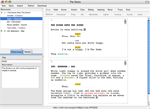
Unlike Final Draft, which strives to keep the screen matching up exactly to the printed output, Celtx takes a more relaxed approach. All the standard formatting blocks are there (Scene Header, Action, Character, Dialogue, Transition), but there are no rulers or page breaks. That’s a reasonable choice; you shouldn’t worry about every (more) and (cont’d) as you write. The program generates .pdfs, rather than trying to print directly — again, a smart call. However, I suspect many writers will find they need more control when it comes time to print.

One of the biggest psychological hurdles with Celtx is how it handles screenplay files. Currently, they seem to reside on Celtx’s server, rather than staying local on a writer’s individual computer. (I say “seem” because each project shows a URL, and you’re not prompted where you’d like to save your file.) This client/server model makes a lot of sense for collaboration, but would make a lot of writers nervous, both in terms of access and security.

**Update:** The developer wrote in to say that files are indeed kept locally on your computer, unless published to the server. A “Save As…” feature is in progress, according to the support forum.

You can import an existing script from Final Draft or other screenwriting applications, but only by saving it first as a formatted text file. (Final Draft uses a proprietary file format; if any reader out there has figured out how to decode it, please write in.) My import test was a mixed bag. Most of the formatting came through intact, but it lost all of the character names at the head of dialogue blocks. I suspect that’s an easily-addressable problem, however.

More impressive than its importing function is Celtx’s ability to export. It generates .pdfs and HTML, which, if you look through the source code, is actually properly formatted with CSS, as opposed to Final Draft’s ridiculous wrapped text file.

I haven’t fully examined Celtx’s outline and resource capabilities, but you can flag elements such as characters and props, which can be useful for generating reports. (Not that I ever use this feature in Final Draft.)

Celtx is currently in beta. Right now, it doesn’t offer enough to get me to switch from Final Draft. But I’m certainly fascinated by it, and would encourage any interested reader to give it a try.
How I Learned to Stop Worrying and Love Courier

February 10, 2005 Formatting, Geek Alert

Update 2025: since the original posting of this blog, we’ve developed our own font, Courier Prime. It’s like Courier, but better. And, it’s free to download.

I originally posted this as a reply in a screenwriting forum, but it’s pretty relevant here.

When I bought my first LaserWriter printer (probably 1993), I freaked out because Courier was suddenly ghastly thin. On my old StyleWriter inkjet, it had looked properly typewriter-like, but coming out of the laser printer, it was a shadow of its former self.

It bothered me enough that I used Fontographer to pull the Type 1 Courier outlines from the printer, then chunk-ify them a bit and save them as a Type 3 font, which I called Dorphic. (I have no idea why I picked that name, but it seemed to fit.)

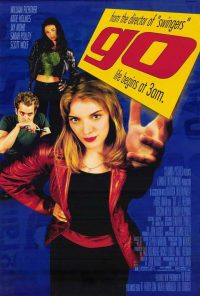
So for many years, I happily used Dorphic on all my scripts. GO, for example, was in Dorphic. I would probably still be using that face, but the shift to OS X made Type 3 fonts impossible. I scoured the net for new options, and settled on Courier Ragged, which I used for a year or two.

But a new problem came up. Up until about 2003, when I needed to turn in a script to a producer or studio executive, I would print it out and call for a messenger. I could be certain the script would look right, because I was printing it myself. But once executives (and their assistants) became more internet-savvy, it made a lot more sense to turn in scripts in .pdf form. So, while I could use Courier Ragged, there was no guarantee it would look right when they printed it out.

All of which leads me back full-circle to plain old Courier. Of the natural alternatives (Courier New, or Courier Final Draft), it’s the best-looking to me, both on-screen and printed.

A side-note: Before I became a screenwriter, I made a meager living in graphic design. So the cruelest irony is that I’ve now spent a decade using nothing but 12-pt Courier, or its imitators.

Library

This page contains .pdf versions of various projects I’ve written over the years. The best way to learn screenwriting is to read a bunch of scripts, so these are intended for educational purposes only. Obviously, don’t try to sell/stage/pilfer any of the material you find here, or the studios involved will send scary lawyer types after you. It’s not pleasant for anyone.

Important: If you want to link to any of the scripts here, please link to this page. Everything else you see here will inevitably move, and broken links suck.

Table of Contents

Produced projects:

  • Go
  • Big Fish
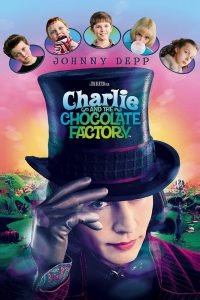
  • Charlie and the Chocolate Factory
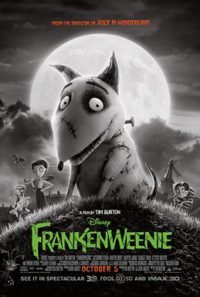
  • Frankenweenie
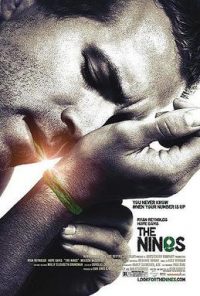
  • The Nines
  • The Remnants
  • God
  • D.C.

Unproduced:

  • Ops
  • How to Eat Fried Worms
  • The Circle (aka Alaska)

Things I’m hosting for others:

  • Station Eleven NEW!
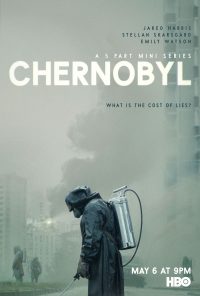
  • Chernobyl


###Go

  1. Original spec script
  2. Final shooting script
  3. Additional audition scene for ‘Mannie’

Big Fish

  1. Original one-page outline
  2. Revised full outline after first draft
  3. Final shooting script
  4. Introduction to paperback version

Charlie and the Chocolate Factory

charlie poster

Here I’m including the production draft (white), along with the blue and pink revisions so you can see how they fit into the white draft. (Rather than release entirely new scripts, only the revised pages are printed and sent to departments, who can then insert them into their scripts.)

The final shooting script incorporates the blue and pink revisions.

  1. Production draft (white)
  2. Blue revisions
  3. Memo for blue revisions
  4. Pink revisions
  5. Memo for pink revisions
  6. Final shooting script

Frankenweenie

frankenweenie poster

  1. Production Draft. The original draft from July 2010 isn’t vastly different.
  2. Final Conformed Script. This draft reflects changes made during storyboarding, production and editing. In particular, notice how much the third act has been tightened.

The Nines

the nines poster

  1. Final shooting script. The original draft isn’t vastly different, save for two scenes added in reshoots.
  2. Shooting schedule. Pretty close to our final shooting schedule.
  3. Visual FX breakdown. Boards and descriptions for two of the more complicated sections.
  4. The audience questionnaire we used for our second test screening.

The Remnants

This is the web pilot I shot in February 2008. You can find it here.

  • The Remnants (character bios and shooting script)
  • Additional audition scenes for Chas, Mia and Wallace

God

This is the short film I made in 1998, a prequel to The Nines. You can find it here.

  • God

D.C.

  1. Pilot script
  2. Episode 2: Truth
  3. Episode 3: Justice
  4. The initial pitch I made to the WB
  5. The outline for the pilot
  6. A template for a “normal” episode
  7. And an exercise in which I look at God from each character’s perspective
  8. The pilot presentation script

In order to save money, the WB asked all its drama pilots to shoot a 30-minute “pilot presentation” of the show, rather than the whole hour. To do this, I had to omit a bunch of scenes, and rewrite some others so that it would all make sense.

Yes, if I had written Episode 4, it was supposed to titled, “The American Way.”


How to Eat Fried Worms

Note that this is not the script for the 2006 movie. It predates it by almost a decade. You can read more about the backstory here.

  • Fourth draft

The Circle (a.k.a. Alaska)

  1. Initial write-up/pitch document/treatment
  2. Pilot script
  3. Episode 2: Gravedigger

Casting sides:

  1. Mathers
  2. Harper
  3. Prescott
  4. Vico
  5. Connie
  6. Elias
  7. Ivanhov
  8. Mary
  9. Valerie
  10. Van Der Kamp
  11. Bobby

More information about The Circle is here.


Ops

There are three versions of the pilot. The first is set in Afghanistan and Venezuela. The second, in Afghanistan and Iraq. The third, in Brazil and Uzbekistan. Since the first two pilots were both called “Blood and Oil,” they’ve been labeled here as “Venezuela,” “Iraq,” and “Uzbekistan.”

  1. Initial write-up/pitch document
  2. Venezuela beat sheet
  3. Venezuela outline
  4. Venezuela pilot
  5. Venezuela pilot, revised
  6. Iraq outline
  7. Iraq pilot
  8. Iraq pilot, revised
  9. Uzbekistan outline
  10. McGinty casting sides
  11. Vanowen casting sides

Station Eleven

station eleven poster

On Scriptnotes 553, Station Eleven showrunner Patrick Somerville joins us to talk through the writing of the 10-episode limited series. We discuss the script of the first episode, but Somerville agreed to share the entire series’ scripts for reference.

  1. Episode 101
  2. Episode 102
  3. Episode 103
  4. Episode 104
  5. Episode 105
  6. Episode 106
  7. Episode 107
  8. Episode 108
  9. Episode 109
  10. Episode 110

Chernobyl

poster for chernobyl

The acclaimed HBO/Sky miniseries written, created and produced by Scriptnotes co-host Craig Mazin debuted May 6, 2019. As promised, here are Craig’s scripts for the five episodes.

You should also listen to the excellent companion podcast co-hosted by Peter Sagal.

  1. Episode 1 – “1:23:45”
  2. Episode 2 – “Please Remain Calm”
  3. Episode 3 – “Open Wide, O Earth”
  4. Episode 4 – “The Happiness Of All Mankind”
  5. Episode 5 – “Vichnaya Pamyat”

Researching and writing The Circle

September 16, 2004 QandA, Television

Question MarkI just finished reading [both episodes](http://johnaugust.com/library) of The Circle, and I was wondering if you could answer a few questions about writing for television.

  1. How much time did you spend doing research for each episode?
  2. How long did it take you to write an episode?
  3. Seeing as how you created the show, but would have not written every episode during the season how are the episodes handled by other writers?
  4. Do you as the creator set an outline for the season as to what each episode would center around and where you wanted to show to go?

Thanks for your time, I enjoyed reading them both.

-Josh
Federal Way, WA

I probably spent three weeks researching Alaska for The Circle, most of that before I started writing the pilot. By the time I started working on episode 2, there really wasn’t anything new I needed to research.

Television scripts are short, at least by feature standards. An hour-long drama will clock in below sixty pages, so it’s no big chore to write one in a week. Unfortunately, in the real world of television production, you often have to write one in a weekend, and that’s where it gets ugly.

Since The Circle never went to series, we didn’t end up hiring a writing staff, although [Matt Pyken](http://imdb.com/name/nm0701487/) and [Michael Berns](http://imdb.com/name/nm0076965/) did pen a follow-up episode. Had the show been picked up by ABC, we would have hired an executive producer to ultimately take the reins of the show. Although I would stay on to consult, he would have supervised the writing staff, setting the course for each episode and the series as a whole. This would include meeting with the writers (both individually and as a group); approving beat sheets, outlines and scripts; and rewriting scripts as needed.

This executive producer would be considered the showrunner, since all the creative decisions would ultimately rest with him. I knew this going in. I deliberately created a show I felt could flourish without my day-to-day involvement. Although I love TV, I prefer features. That’s where I make my living, and the time table is much more relaxed.

« Previous Page
Next Page »

Primary Sidebar

Newsletter

Inneresting Logo A Quote-Unquote Newsletter about Writing
Read Now

Explore

Projects

  • Aladdin (1)
  • Arlo Finch (27)
  • Big Fish (88)
  • Birdigo (2)
  • Charlie (39)
  • Charlie's Angels (16)
  • Chosen (2)
  • Corpse Bride (9)
  • Dead Projects (18)
  • Frankenweenie (10)
  • Go (29)
  • Karateka (4)
  • Monsterpocalypse (3)
  • One Hit Kill (6)
  • Ops (6)
  • Preacher (2)
  • Prince of Persia (13)
  • Shazam (6)
  • Snake People (6)
  • Tarzan (5)
  • The Nines (118)
  • The Remnants (12)
  • The Variant (22)

Apps

  • Bronson (14)
  • FDX Reader (11)
  • Fountain (32)
  • Highland (75)
  • Less IMDb (4)
  • Weekend Read (64)

Recommended Reading

  • First Person (87)
  • Geek Alert (151)
  • WGA (162)
  • Workspace (19)

Screenwriting Q&A

  • Adaptation (65)
  • Directors (90)
  • Education (49)
  • Film Industry (489)
  • Formatting (128)
  • Genres (89)
  • Glossary (6)
  • Pitches (29)
  • Producers (59)
  • Psych 101 (118)
  • Rights and Copyright (96)
  • So-Called Experts (47)
  • Story and Plot (170)
  • Television (165)
  • Treatments (21)
  • Words on the page (237)
  • Writing Process (177)

More screenwriting Q&A at screenwriting.io

© 2026 John August — All Rights Reserved.