The original post for this episode can be found [here](http://johnaugust.com/2012/plot-holes-and-the-myth-of-perseveraversity).
**John August:** Hello and welcome. My name is John August.
**Craig Mazin:** My name is Craig Mazin.
**John:** And this is Scriptnotes, episode 59, a podcast about screenwriting and things that are interesting to screenwriters.
How are you, Craig?
**Craig:** I’m doing fine, John. How are you after Halloweenie?
**John:** I’m doing pretty well. I actually wrote a little blog post about my feelings on it, because as we talked during the last podcast I didn’t know which of three futures we were living in — whether we were living in future where Frankenweenie did extraordinarily well, did just fine, or did less than hoped. And we are in the “less than hoped” alternate universe.
And yet I wanted to make sure that… — I was blogging about I want to make sure that I wasn’t letting that disappointment over how much money we made sour my experience of the whole movie, which has been my experience on other things where something you really love a lot, a bad thing happens, and suddenly you feel like, “Well I can’t love it anymore; I can’t even think about it anymore,” because you only remember the bad stuff.
So, it was a very therapeutic blog post.
**Craig:** I think that’s exactly right. And the truth is that these movies get discovered, and sometimes they get discovered in their own time. Didn’t Nightmare Before Christmas kind of go through a — it wasn’t a big box office hit, and then it just exploded later?
**John:** Absolutely. It became a phenomenon quite later. So, I think, that’s one of the things I cite in the blog post, but also Go, which did not come out roaring in the box office and ended up being a very useful thing for my career. So, yeah.
I’d rather have a good movie that doesn’t make a lot of money than a bad movie that makes a lot of money.
**Craig:** I’ll tell you the worst situation is when you have a bad movie that also doesn’t make a lot of money. [laughs] Because, you know, I mean one day we should do a podcast on Superhero, or what was absurdly retitled Superhero Movie, and what an awful experience it was for me to work on it, and make it, and then also to watch it crash and burn.
It was just sort of… — That might be therapeutic for me.
**John:** [laughs] Talking through it. The second Charlie’s Angels is a bit of that for me, because the first Charlie’s Angels was, you know, an adrenaline high of a really hard to make movie, but we ended up doing it right, and people liked it a lot, and it became sort of — we were an underdog. And then coming in with the expectations of the second movie, which was just a nightmare to shoot, and it not performing well, it was frustrating on a lot of levels.
**Craig:** Yeah. You never want to… — We are taught, there’s a narrative that if you persevere in the face of terrible adversity you will come out on the other end successful. And yet there are times when you persevere through terrible adversity and you still die. [laughs] You know, you battle cancer and they give you a clean bill of health and you walk out of the hospital and a bus mows you down. And those are rough moments, and frankly hard to derive very positive lessons from them beyond “sometimes you lose,” you know?
But that’s not what happened here, I don’t think, at all. I think you have a great attitude about it. Because I suspect that this movie will — good movies, especially good movies for kids, and especially good movies for kids that are tied to holidays, they have a way of living forever.
**John:** Yeah. Plus movies about kids and dogs.
**Craig:** Mm-hmm. That’s exactly right.
**John:** Done. You have kids, dogs, Halloween, you’ve got animation of the dead.
**Craig:** And you have a great title, Halloweenie.
**John:** Exactly. If only we had chosen the Craig Mazin title rather than the actual title that we used.
**Craig:** I may be onto something.
**John:** So, last week was our very special episode in that we looked at the very first screenplays that we had ever written, and so we did our Three Page Challenge on ourselves, and looked at those three pages.
And one of our listeners wrote in a very smart follow up question. Kevin in Sydney, Australia wrote, “If you could each give your first screenplay writing selves one piece of advice that would help you learn the craft a little quicker, what would it be? Or, conversely, what thing were you stressed out about that turned out to be really unimportant?”
**Craig:** Well, I think I kind of said it in our last horrifying podcast. For me it would be to not overlook good, basic, non-comedy oriented storytelling. Make really good characters. Write really good interesting scenes. Don’t let the comedy lead everything, because you’re not doing a sitcom; you’re doing a movie.
And what was the second part of that question?
**John:** “Conversely, was there anything that you were stressed out about when you were writing that first screenplay that ended up being really unimportant?”
**Craig:** Oh, just, like, “there has to be five jokes on every page?”
**John:** Yeah.
**Craig:** No. One really, really good one is much better.
**John:** I would agree with you there. My two pieces of advice to young John August would be to make things worse for my hero. I think I had this sense, and a lot of new writers have, is that you love your characters and don’t want bad things to happen to them. But, no, you’re a screenwriter and you should make terrible things happen to your [characters], and so you should embarrass them in comedies and kill their loved ones in dramas. You need to make things as difficult as possible for your heroes, and that’s a hard lesson to learn, because you love these characters and you don’t want anything bad to happen to them.
But you have to make bad things happen to them, because you’re god. And god has to make disasters and floods.
**Craig:** That’s right. That’s right. And specifically you, as god, you look at a character and you decide, “I must put them through the most miserable thing for them, or else they will not come out the other end improved.”
**John:** Yeah. And I think my converse advice is that early on in my career I was so worried about pleasing everybody that I would sort of take notes and really try to work notes that were just not the right notes. And I would take notes from people who just really didn’t understand what I was trying to do and try to implement them. And that is just a recipe for disaster.
**Craig:** It is. That is a burden that we carry our entire careers. And there is always a time, in every movie, no matter how well it’s going, where you suddenly have a moment of clarity and realize: “I’m actually now just writing towards people, specific people. I’m no longer writing towards the audience.” And that’s when you need to stop.
And I have to tell you, in general, when you say to people, “Look, I feel like this is what’s happening,” they, too, suddenly become scared. They don’t want to be responsible for something bad. You can’t obviously say it every day, but when you have that feeling, you got to put your hand up. You have to put the movie before your own feelings, your need to be accepted, your fears, etc.
**John:** Yeah. It’s hard as screenwriters because I think we are by nature good boys, and we want to please people. And you are not always going to be able to please people. And it took me years to learn that.
**Craig:** Yeah.
**John:** So, today I thought we’d talk about three things. First, I want to answer some listener questions, because it’s been awhile and they’re sort of stacking up. Second, you had suggested we talk about plot holes, so let’s talk about plot holes. And third, we have two Three Page samples that we meant to get to last week, we didn’t get to last week, so I thought we’d do those this week.
**Craig:** Perfect.
**John:** It’s going to be a full show. Let’s get started.
**Craig:** Do it.
**John:** First question comes from Ricardo in Italy. He writes, “I haven’t seen Frankenweenie yet, because the movie will come out here only in January, but I would like to ask you something. What is the exact meaning of all the names? I think I get all the references to classic monster movies, but why Persephone, Colossus, Toshiaki, Rzykruski? And Weird Girl has no real name?”
So, I’ve answered some questions on the blog people have written about Frankenweenie, but this was a good general purpose question, because I think how you name your characters is really important, so I can talk about sort of why I named these characters these names.
The hero of the story is Victor Frankenstein, because it’s always as Victor Frankenstein, but the rest of the characters are essentially new to the story. So, Mr. Burgermeister is the next door neighbor. “Burgermeister” actually means “mayor,” and so it’s like this fake Dutch town, and so Burgermeister is just the mayor of this town.
Persephone is the dog next door. Persephone is the queen of the undead in Greek mythology, and so it’s sort of nice to have a reference there. I think we had a different P name for the dog originally, the poodle, and Persephone just felt right.
Colossus is a joke. So, one of the boys, Nassor, resurrects his beloved pet and has this massive tomb, and he says, “Rise, Colossus,” and of course a little hamster comes out. So, it’s just the joke of Colossus.
Toshiaki, I needed a Japanese name, and it sounded like a good Japanese name. I wanted to make sure I wasn’t using the same first letter as any of the other characters in the story.
Rzykruski was the instinct to have the most difficult to pronounce name you could find so that all the characters in the movie would sort of avoid saying it if they could. And so when he wrote it on the board it was funny.
So, they’re all there to be sort of specific, and I didn’t want any Joneses or Smiths. There’s one Bob, but he actually just looks like a Bob. He’s sort of a big, chubby boy. And the rest of the parents, like the mom and the dad don’t have specific names. Bob’s mom is just Bob’s Mom. It’s really a story about the kids.
**Craig:** Should I give my answer now? [laughs]
**John:** [laughs] Yeah, what’s your answer?
**Craig:** I actually think that that’s really interesting. I obsess over the names. Obsess.
**John:** I do too.
**Craig:** And it’s funny because sometimes when you’re writing a movie where it’s not fantastic and it’s just regular people you think, “Well, why obsess over a name like Phil?” But it’s either right or it’s wrong, and you will type that name over, and over, and over. Don’t be afraid to change it if it feels wrong.
**John:** So, the pilot that I’m writing right now for ABC, there’s a family of four, and I knew one of the girl’s names right from the very start. It was an interesting name that was believable enough but obscure enough — that’s just right. I knew the dad’s name. The boy, found a good name for him. And then the mom, the wife, she was the hardest character because I had this image in my head of who she was, and she’s sort of an Amanda Peet kind of character. And so what do you name Amanda Peet in this role?
**Craig:** Well, I just did it. So, what did you name her?
**John:** I ended up naming her Lisa.
**Craig:** I went for Trish.
**John:** Trish? Trish is a great name. But Trish feels more like the snarky Amanda Peet, and this is sort of the little bit more serious Amanda Peet.
**Craig:** Yeah, my Amanda Peet was, yeah, she was kind of a slightly sassy but understanding wife. And I know a Trish who is a slightly sassy understanding wife, so maybe that’s — really, sometimes that’s all it is.
**John:** Yeah. Lisa feels like she could be an accountant. And so I had to violate one of my principal rules in that I have Lisa and Logan — Logan is the son. And usually I would not have two L names in a script, but they’re such different names, and one is a boy and one is a mom. I just felt like no one is going to get them confused.
**Craig:** A general piece of advice: If your character reminds you of or is inspired by somebody that you know in real life, take the name. Because just using the name sometimes helps, just helps you kind of connect with the person that you’re writing.
**John:** I agree.
Our next question is from Jack in Massachusetts who writes, “I heard on your latest podcast that Craig wrote the script Identity Thief. I wrote a much different script called Fake ID about two guys who steal the identity of a newly married man and woman and go on their honeymoon. So, although the premise of stealing an identity is the same, my script was obviously very different. Should I give up on the dream of having my script sold, or do you think because they’re so different I shouldn’t worry about another ID movie being made?”
**Craig:** Oh, I mean, if — Here’s the problem. There are two possibilities. Identity Thief is a hit or Identity Thief is not a hit. If it is a hit, you should know that that space has been occupied by a hit movie and it’s going to be tough for you to not look like a copycat. If it’s a bomb everyone’s going to say, “Oh, we don’t make movies about people stealing IDs. Remember Identity Thief? What a bomb.” So, it definitely impacts the salability of your script.
What Identity Thief nor any movie can impact is the quality of your script. So, while I and Universal Studios may have negatively impacted your fortune here, if you’ve written a really good script you will be noticed as a writer and you will work. So, I can’t say it’s all good news, but it’s not the worst possible situation.
**John:** I would reframe how he thinks of his movie. Because I think part of the problem is his title. Fake ID, the ID sounds like Identity Thief; it puts people in the same mind frame as that. But this is the logline or pitch for his movie: These two con artists take another couple’s honeymoon and hilarity ensues. Essentially if you frame it as these people and not sort of the identify theft of it all you have a valid premise there. So, I wouldn’t try to put a giant spotlight on the stuff that’s obviously similar, like the word “identity” or “ID.”
**Craig:** Right.
**John:** And there you have a premise. Because people impersonating other people, that’s a standard premise. That goes back to Greek drama or comedy.
**Craig:** Yeah. Maybe just re-title it Stolen Honeymoon.
**John:** Yeah. Done.
**Craig:** Or something like that. And then — great point — then you sort of avoid the stink of it and you don’t have to worry so much about it. And, frankly, I don’t even think, just from what he described as his premise, the actual theft of the ID is probably something that you could change or alter anyway so that it’s not ID based.
**John:** Yeah, completely. I wanted to throw that question in because a lot of times I’ll be flipping through the trades or something and see a premise for something and it’s like, “Oh my god, that’s so totally my movie.” But that’s because I’m reading like a sentence of a log line. I’m seeing a title that seems similar to something that I’m working on. But, if I actually really dug into it, they are not related at all.
**Craig:** Right.
**John:** It’s only because in my head everything is about this one movie that I’m working on. And that’s not at all the reality on the ground.
A question from Joseph, who I don’t have a city for: “With the Austin Festival approaching I was wondering what type of experience an aspiring writer/director could have attending alone. Is it easy to network on your own? Or does everyone attend in groups?”
**Craig:** Well, my experience is that people do tend to show up with a friend or as part of a group, but networking — you know, I have been…that word has made me cringe for 20 years now. Because any social circumstance where you are trying to meet people or talk to people is akin to dating, and networking is very similar to going to a bar and working pickup lines, you know?
You will likely find other people with similar interests to you if you go to certain panels and you just strike up conversations. And don’t worry so much about networking, because the truth of the matter is most of the people you’re going to talk to at Austin Film Festival aren’t professionals. They’re not in the business. They’re just like you — they’re learning.
And so it’s less about networking and more about just making friends with similar interests. And if you go with that in mind, I think you’ll find that after basically once 8 o’clock comes around everybody starts drinking and having a great old time in the bar. And if you can meet some friends, you know, make some plans with them and get to know people and don’t be quite so calculating about it. I think you’ll have a good time.
**John:** I would agree. There is an opening night party. There’s the barbeque, which I assume is happening this year as well, which are sort of big open events where you’re sort of wandering around and it’s very easy to sort of strike up conversations with people.
I went to my first Austin Film Festival and it was really before I knew you and sort of the other screenwriters, and so I just wandered out there by myself and it’s fine. And everyone is friendly. And everyone is in the same boat, so you’re unlikely to have a bad outcome from just saying hello to a random person and talking. So, I would go for it.
**Craig:** Unless you’re a weirdo and then it’s just going to go as poorly for you as all other social interactions do.
**John:** Yeah. But, I mean, I would say you’re at least in good company. There could be plenty of other weirdos who are just as socially awkward as you are.
**Craig:** That’s absolutely true. There are a lot of weirdos there. I mean, they’re all good weirdos. I like — I mean screenwriting weirdos are a lovely group of people actually. I much prefer screenwriting weirdos to like Comic-Con weirdos…
**John:** Oh yeah.
**Craig:** …or even general movie weirdos that tend to obsess over source material and directors and actors. Screenwriting weirdos are actually pretty nice.
**John:** Yeah. So, people in Austin at the festival are good sorts overall, so I wouldn’t be too nervous about attending by yourself. And in a weird way going by yourself rather than going with some other friend, you may actually talk to more people, because if you’re just there with one friend you’re most likely going to just stare and talk at your one friend.
**Craig:** Correct. True.
**John:** James in Antioch, California writes, “I’m currently working on an outline for a drama that is heavily infused with Argentine Tango dance sequences. While there is a good portion of drama to fill the page, I have zero idea how to write the dance numbers that will appear throughout the script. Do I list specific dance moves? It sounds like it would be tedious, but then again writing ‘and they dance’ seems incredibly boring and shallow.”
So, this is really sort of a special case of how you write action. So, writing a car chase or a gun fight, you know, you’re going to have to write these things, or writing a sports movie — you’re going to have to write what you’re seeing on screen. And you want to write it in a way that’s interesting so the reader doesn’t just completely tune out of it. Dance isn’t one of the easier things to write. Craig, what’s your instinct?
**Craig:** I would think that every time your characters dance there is a dramatic purpose to that dance, something is going to change because of that dance. Someone is going to fail. Someone is going to fall in love. Someone is going to be inspired. Someone is going to realize that they’re better than they thought. Someone is going to realize that the competition is harder than they thought. So, that’s where you concentrate.
It’s less about the steps themselves, because frankly the steps are irrelevant. What matters is the drama and the characters and the change of state. So, that’s what you need to zero in on as they dance, and then as you describe the dance only describe the parts that really service that.
**John:** I agree. I would also point to looking at a scene; it’s not just the people who are dancing but everyone reacting to how they dance. And a lot of scene writing is just sort of painting with words what it kind of feels like. So, give some description for that. A good exercise for you honestly would be to look at some dance sequences in other movies, watch them a few times, and then just write what the scene would be that goes with that.
And if can sort of describe what’s happening in those great dance numbers in an interesting way, there is a good chance you’re going to be able to write a good dance number.
**Craig:** And I would do a quick search on the internet and see if you can find a screenplay for Strictly Ballroom, which is my favorite dance movie, and I think you could — if you find it, hopefully that would give you a great model for what you’re going for.
**John:** Dennis in New York City writes, “A lot of the movie I’m writing takes place on a computer interface which requires some Google, Facebook, Twitter, etc. I can’t use Google, can I, or CNN, or Twitter? For example, there are scenes where someone is using someone else’s Facebook account to look at their lives. How do you show these real interfaces in film without being lame, like renaming Facebook to something stupid like Social Net, etc?”
**Craig:** You don’t. I mean, you, the screenwriter, write anything you want. I’m putting aside the issue that so much of your movie takes place on a computer screen, which I think has the potential for great disaster for you, but presuming that you’re spectacular and the story is great, write Facebook, write CNN, write whatever you want.
Down the line it will be other people’s issues to get the licensing and figure it out.
**John:** I would agree with you on both topics. Looking at computer screens in movies is not generally a great idea. The Social Network did it as well as any movie I’ve ever seen, but still you’re not doing coding or Facebook for very much of that movie. Use the real stuff until they tell you that you can’t use the real stuff. And even when they tell you that you can’t use the real stuff fight them on it because you probably can.
**Craig:** Absolutely. There are certain instances where you simply can’t use a product, or you can’t use a name. They are hard and fast, depending on the circumstances and the context. Then there is a certain class that you can always use, and then there’s this big old gray area and a negotiation ensues between the filmmakers, the creative side of the studio, the production side of the studio, and then the business affairs department who will always, of course, default to protecting themselves.
And I have found over my career that there is an always an overturn, one or two overturns of a decision when it really matters.
**John:** A question from Anna in Australia who writes: “I’m a 24 year old Australian aspiring writer and will soon be visiting LA. I have a year-long working holiday visa, some savings, scripts, and a handful of contacts. I hope to spend to spend the year dipping my toe in the water to gauge my prospects and see if I even like it in LA. My question: Should I take care to use Americanisms such as ‘trash’ instead of ‘rubbish,’ fahrenheit instead of celsius, and ‘color’ instead of ‘colour’ in the scripts I send out?”
I have sort of two opinions on that. If she’s representing herself as an Australian writer and the script that she’s writing is set in Australia, then she should use Australian words for things in dialogue and in scene description. If she’s writing a script that takes place in America and there is nothing about it that says “isn’t it so interesting it’s an Australian writer,” I would Americanize it and use the American words for things and don’t put anything in there that can stop the reader.
And, honestly, just throwing in that extra “u” every once in a while, or that different word for some things we describe, could stop somebody, so don’t risk stopping somebody.
**Craig:** I’m halfway there with you. I think you definitely don’t want to use terms that some readers simply might not get. You know, we get “rubbish,” but it would probably stop you. It just seems a little odd. I mean, for us. “Rubbish” is commonly used for garbage in the UK and in Australia; here, “rubbish” is an old fashioned word. It’s something almost comical to us.
So, things like that I wouldn’t use. I would not use celsius simply because a lot of people don’t know how to do the math on it, and frankly, why do you want to stop them for doing the math?
The only thing I would say though is different spellings, alternative spellings, like for example “colour,” might actually give you a little bit of, “Oh, there’s a slight foreign glamour.” If you’re, for instance, writing a prestige piece, an awards-drama kind of movie, it might not be such a bad thing to cloak yourself in the — because, you know Americans do think that UK and Australian spellings are somehow more erudite than ours. So, that, you know, that’s the only thing where I might say, “Okay, well I suppose that’s okay as long as it doesn’t stop anybody.”
**John:** Yeah. I had lunch last week with Jonah Nolan who is a screenwriter and writer on the most recent Batman movies and also does Person of Interest. And so Jonah Nolan, if you’ve met him, it’s like, “Oh, he’s an American.” But his brother Christopher Nolan, if you met him you’d say, “Oh, he’s British.” And it’s because while they are brothers, Christopher was raised more in the UK and Jonah was raised more in America.
And so it was interesting talking with him because every once in awhile there is a word that will slip out, I think it was “pro-cess” (process) he said. And so like everything else, his entire accent is completely American except for a few special words. And so, don’t change who you are necessarily. I would just say look for reasons why somebody might stop reading your script and don’t give them those reasons.
**Craig:** Canadians say “pro-cess” also. The Canadian thing is really interesting to me because everybody there is basically like Nolan. There is no clear accent. I mean, there is a little bit of an accent, but there is no clear accent. And yet you will hear “pro-cess.” They will say “past-a” instead of “pasta,” which his fascinating to me.
**John:** And, of course, “a-boot.”
**Craig:** And “a-boot.” Yeah, I mean, that’s sort of a general accent. But the complete alternate pronunciation on certain words. And “shed-ule” — I think a lot of them do say “shed-ule”. And I’m fascinated by cases like Chris and his brother because there are people that are really good accents. I mean, everybody remembers sitting in foreign language class in high school and some kids would just ace every test, but had the most atrocious accents. And other kids actually had great accents; they just couldn’t remember any of the grammar or vocabulary.
Accent is very musical. It’s just a different part of the brain than the actual linguistic part that processes grammar and words. And so I’m just fascinated by — for instance, my sister and grew up on Staten Island. And we have audio tapes of each other when we were kids with the most outrageous New York accents. And my parents have really strong New York accents. And my accent is gone. It just went away.
We moved to New Jersey and I’ve always, I don’t know, I have good accent ability. Don’t have great foreign language ability, but I have good accent ability. So, it just went away, and Karen’s stayed. It diminished, but it stayed. It’s an interesting skill that some people have. They just — it falls away.
**John:** Friends of mine moved to Australia with their daughter who is my daughter’s age. And so she was 6 when they moved to Australia. And so it was interesting, they came back after four months and the girl’s accent had started to drift to somewhere in the middle of the Pacific. And now you hear her and you go, “Oh, she’s completely Australian.” Things hit at a certain time and they’re not aware that they’ve changed these things, and they’re not aware that they’re doing it.
A question from Natesh in India. He says, “I live in India and my financial conditions aren’t so good, so I cannot come to LA to sell screenplays or search for agents in these conditions. What should I do? Do I need to be in LA if I want to sell my screenplay? I really want to break into Hollywood but I know I cannot come to LA now. So, how do I handle all of this from my place?”
“What should I do,” essentially, asked many more times.
Oh, Natesh.
**Craig:** Well, if he had asked this question 15 years ago I would have said nothing. But, we live in a time now where the Korean rapper Psy has 400 and something million hits for Gangnam Style. The internet is the world’s greatest megaphone. I think you should put your script on the internet. And I think you should put it on — obviously you speak English which is essentially the lingua franca of media.
**John:** Yes, big Hollywood media, too.
**Craig:** Yeah. So, you should put it on the internet. And you should try and see if you can attract attention that way because, frankly, I’m not quite sure — I mean, it sounds like you’re not interested in Bollywood or the very large industry there, so that’s what I would do. I’m not sure what else I could think that you would do.
**John:** If he has a hope, it is the internet. I would also write things that you can specifically make in your current situation that are smaller and shorter that you can actually put up online. So, if you have any interest in directing I would write yourself things you can direct locally and put up online so people can see them, and develop your skills as much as you can there since you can’t move someplace else.
And sometimes magic happens. I forget all the details about the South American visual effects filmmaker guy who did this sort of alien invasion movie that was a little short that was terrific. And he did it all sort of himself. And you could be that guy and find the way that it breaks out to the next step.
I would also look for every — sort of the Sundance model of script development and sort of like screenwriting labs. Almost all the other countries have their own equivalent of that now. So, I would look for what is the equivalent of Sundance in India and try to get involved with that and see if there are ways you can sort of reach out beyond your little smaller place to the bigger India. And eventually get to either the UK or America.
**Craig:** Yeah. And the last piece of advice I’ll give is that Hollywood tends to not notice things unless they accrue enormous attention prior to their attention. The good news is you don’t live in a small country. You live in an enormous country with a billion people. And if you put something up there, part of what you should be thinking about is how to show evidence of attention. A counter of how many times downloaded or viewed.
If millions of people are suddenly liking and enjoying what you have done, someone will notice at that point.
**John:** Last question comes from Joe in Rancho Cucamonga. “I wrote a script a few years ago that I gave to my mentor at the time to read. He’s a professional screenwriter with a few credits and I’ve always valued his opinion. He happened to like the script very much and had some notes and suggested I did a little rewriting and he could show it to people. I was thrilled and got to work right away. I incorporated his notes and worked with him closely to craft the script into a sellable or at least readable asset.
“He read the read the new draft and congratulated me on a much improved draft. However, then he laid a bombshell on me that I still have trouble understanding: My protagonist happens to be a screenwriter and the bulk of the second act involves the making of this fictional movie. My mentor told me that regardless of how good he thinks the script is screenplays about moviemaking get thrown into the trash.
“Rather than completely reconstruct my script I moved onto the next one. But, I still really like that script. Is that a real thing, or was that just his way of telling me that it wasn’t good enough and wanted to spare my feeling?”
**Craig:** Uh…go ahead.
**John:** I would say he’s — there’s an aspect of truth to what he’s saying. Movies about moviemaking are a hard sell. Movies about screenwriters are a hard sell. There are not a lot of big successful examples to point to. There are little successful ones to point to, which seems surprising considering screenwriters know screenwriters and could write about that craft very well.
So, I think there is some aspect of truth to what he’s saying. If you have really good writing in your script, that’s fantastic, and that’s great and good. But it shouldn’t be a surprise that Hollywood is not knocking down your door to make that movie because it’s just about a screenwriter. And, kind of who cares about a screenwriter?
**Craig:** Yeah. The thing about movies about Hollywood is that the point of a movie is to escape into a story, and no matter how good of a job you do writing about the making of movies, you are reminding people that they’re not watching a real story; they’re inside of a movie because you’re inside of a movie. The whole point of the movie is that the movies are fake and somebody is writing it, so that becomes a barrier between them and the experience of watching the movie.
It’s not impossible. The Player is a wonderful movie.
**John:** Yeah.
**Craig:** Didn’t really find an audience in theaters maybe because of this, but it’s about as good as you can do.
**John:** Sunset Boulevard.
**Craig:** Yeah. Sunset Boulevard. Yeah, you’re right, an absolute classic. But I’m a little annoyed that he didn’t just tell that right off the bat. It’s kind of lame — I mean, why tell you after you did all that work? But, that said, look, it could be both.
He’s right: Movies like this are a difficult sell. And also he may just be letting you down easy because he doesn’t like it. That might be true, too. But as we say over, and over, and over on here, a well-written script is its own reward and also will lead to other rewards.
**John:** Agreed. I would say there may be very good reasons why he said this thing about your script, partly because of what he read on the page and partly because of the genre and sort of the nature of trying to make a movie about Hollywood, or a movie about screenwriters.
If you’re picking your next thing to write, just a general audience thing, writing about screenwriters is not usually the best choice for a subject matter.
**Craig:** It does imply that you have a poverty of experience or insight into the world, because you’re writing about the thing that you’re literally doing in that moment. That’s sort of my gut feeling. You know, they always say, “Write what you know.” Well if you’re writing about being a screenwriter, I’m presuming that you don’t know anything else.
So, that’s a little bit of a ding on you. But, listen, if it’s a really good script, you know, I wouldn’t sweat it.
**John:** I agree. So, Craig, let’s talk plot holes, because you brought this up as a topic for something that we should discuss on the podcast. And when you brought it up I said, “Oh yeah, absolutely, sure.” But then I was like, “What are we going to mean by plot holes?” Because it could mean a couple different things. And so I wanted to give the Wikipedia definition of plot holes first and see if we agree with that.
**Craig:** Okay.
**John:** “A plot hole is a gap or inconsistency in a storyline that goes against the flow of logic established by the story’s plot, or constitutes a blatant omission of relevant information regarding the plot. These include such things as unlikely behavior or actions of characters, illogical or impossible events, events happening for no apparent reason, or statements or events that contradict earlier events in the storyline.”
**Craig:** Yeah, that’s not a bad definition. I tend to use plot hole to mean an omission, rather than an inconsistency or illogic. Although, I guess that’s a plot problem or just a mistake. [laughs] But to me, plot holes are things where it appears that you’ve left stuff out of a story because it would have made the scene you wanted to write impossible. And people stop and go, “But wait a second, how did he get there?”
**John:** Yeah. There’s a question of refrigerator logic, which is like, as you’re watching it, “Oh, okay,” and then as you’re going to get a soda out of the refrigerator you’re like, “Wait, that doesn’t actually make sense.”
**Craig:** Right. Exactly. If you really look at the logic of it, the movie is impossible as constructed. There are movies that naturally invite this sort of thing, like time travel movies, because time travel is inherently impossible. It is inherently paradoxical. Therefore, every time travel movie will have some sort of plot hole or inconsistency.
But the areas where we have to really be careful about it is when we’re writing movies that don’t involve the supernatural or things that should invite plot holes. And what happens is, I think, a lot of times screenwriters come up with something they want to do in the story. It solves a lot of problems for them. It is interesting to them. It is dramatically compelling.
The problem is it’s just inconsistent with what’s come before it, and yet what’s come before it is what’s making the scene interesting. And so you suddenly have this cognitive dissonance between what you want to do and what you can do.
And, so, a lot of times people just go, “Yeah, screw it. No one will notice.” But they always do. [laughs]
**John:** They always do. And one of the sites that does, there’s actually a site called movieplotholes.com. And so I looked there and they defined, they have like different categories of plot holes which I thought was interesting. They have what they call “minor plot holes,” which is something that affects the logic of an individual scene. So, an example of that would be in Speed when Keanu Reeves and Sandra Bullock’s characters have an early conversation they know each other’s first names even though they’ve never introduced themselves to each other.
**Craig:** Right.
**John:** That’s a minor thing. It only affects that scene and the world is not going to come crashing to an end.
A major plot hole affects the logic of main characters. An example would be what they called “induced omissions or stupidity.” So, like, you have a character doing something that either they know way too much information or they are doing something dumb for the sake of necessary plot advancement.
An example they cite is in The Avengers, Loki, the evil Norse god, he does mind control over Hawkeye and he’s controlling him for a lot of that movie. But why Hawkeye? Why doesn’t he control somebody more useful or powerful like Nick Fury, who is, like, running S.H.I.E.L.D. and running the whole operation?
**Craig:** Yeah. That to me is less of a plot hole and more of just bad logic, you know. The plot hole to me is, for instance, the name thing. A lot these plot holes happen because of editing.
What happens is, if you run a movie site called movieplotholes.com, well, you’re going to go ahead and chase down those plot holes the way that the Gaffes Squad chases down the discontinuities in movies, like, “The liquid in the glass keeps going up and down.”
But when you screen movies for people, what happens is you start to realize that some of the information that you felt was necessary is not. And that, in fact, a two minute scene designed to actually strengthen and support something isn’t enjoyable for anybody and they don’t need it. There is actually a certain amount of plot hole that is required. Movies are discontinuous; we’re doing it all the time. I mean, people get in a car and suddenly they are somewhere else.
And so the intermittent motion of the film itself kind of metaphorically spills over into the story itself. So, in cases like, I guarantee that there is a scene that was cut out of Speed in which they learned each other’s name. But, everybody will presume that it was never shot or thought of by the screenwriter and will say, “It’s full of plot holes.”
I mean, The Hangover for instance, there is a big deal about “let’s not mess up my dad’s car.” And when they get home it is trashed. Well, the dad never says a word about it. It’s a deleted shot. Just, you know, they shot it. It’s just people didn’t care at that point. They were onto other things, didn’t matter to them, their attention was elsewhere.
My feeling is you actually don’t know what those things are going to be until you screen the movie, so as screenwriters we have to write the scene where the car is explained.
**John:** Yes. I think it’s very crucial just to point out that the ones the screenwriters are responsible for, and sometimes those are the questions of motivation. Like, suddenly a character is acting in a very different way for no clear reason, or has information that they couldn’t possibly have. And that is often a screenwriting problem. You needed them to do that and that’s why you’re having them do that, but it doesn’t actually make sense. And then a lot of what we call plot holes are really just deleted scenes.
And, in Frankenweenie, suddenly Weird Girl shows up along with this group of boys to go reanimate the dead. Well, where does she come from? We hadn’t seen her for awhile and suddenly she’s with this group of boys. Well, there is a small deleted scene where she joins in with them, but it wasn’t crucial enough in the story to get that little bit in there.
**Craig:** Exactly. I think for the audience — I think people who get outraged over certain plot holes need to understand that it likely… — And people who get enraged but also are surprised that other people aren’t enraged need to understand that it’s because other people aren’t enraged that the plot hole exists. That the idea of the movie isn’t to satisfy the most demanding logician; it’s to satisfy the broadest audience.
**John:** And so this website also defines what they call a “Super Plot Hole,” which is a plot hole that makes you question the entire logic of the story. And this is, I think, a meaningful one for us to talk about screenwriting. An example would be like a villain has a weapon that can destroy a whole city but he’s using it to rob a bank. Or things like Signs or War of the Worlds where the aliens are invading but they seem to have no basic idea of how earth works, that water can kill them.
**Craig:** Right. Signs was sort of rife with them. I mean, there’s this whole thing where they just didn’t know how to turn a door knob but they had mastered intergalactic travel. And at that point what happens is you just get angry, because you understand that Shyamalan had come up with this really cool scary scene with this thing in a closet, and a knife under the door, and it was tense, and it was Hitchcockian and cool. The problem is it just didn’t make sense with what had come before it. And so it’s just not legal. And it angers people.
**John:** There are two last categories I want to talk through because I thought they were good ways to distinguish two ideas. A “plot contrivance” is an unlikely event or coincidence. And I’ve talked a lot about sort of the perils of coincidence on the blog, and I’ll link back to my post on that, but I feel like a movie gets one, maybe two coincidences that can happen.
A premise coincidence is absolutely fine and good. Like in Identity Thief, the coincidence is that these two people have the same name. That’s the premise of the movie so you can’t say that’s really coincidence. That’s the premise. Or in a romantic comedy, like these two people happen to meet and they wouldn’t have otherwise met. They could have met anyone else, that’s great.
It’s when you have a bunch of things, like they just happened to be there at the right moment to see this thing in the third act. That feels frustrating.
**Craig:** Actually even in Identity Thief they don’t have the same name. She basically just looks for people whose names she can pretend to be.
**John:** Even better.
**Craig:** But every movie needs a contrivance or coincidence to get things going, because the whole point is the story of a movie is exceptional. So, therefore, one exceptional thing should happen. In the case of Identity Thief, she makes an appointment at a salon under his name and they call to confirm Jason Bateman. And when he realizes that someone has stolen his identity he also knows I know where she’s going to be at a certain day and time. And so that’s the contrivance or coincidence.
And you not only get one, you need one. But once you get into two, or three, then you realize that the screenwriter simply isn’t in control of a good story.
**John:** One thing I will say about coincidences: a good way to sort of take the curse off them is to give the coincidence to the villain every once and awhile. So, if the villain can have a happy lucky thing happen to them every once and awhile, then you can sort of take the sting off a little bit.
**Craig:** You’re absolutely right. And also if there is a coincidence that gets a laugh then I think it’s good. I mean, there’s that moment in Pulp Fiction where Butch pulls up to the light and there’s Marsellus just happening across the street in front of him. They look at each other and it’s just funny. [laughs] It’s just funny, and so it’s okay.
**John:** The last thing they separate out is an “unaddressed issue,” which is like a natural question that comes up about the plot or the universe of the world that the movie doesn’t really address. And that’s fair, and I think it’s nice to sort of separate that out from plot holes. Yes, in this elaborate science fiction universe we’ve created of Star Wars there is stuff that you don’t really know how that all works, but every movie isn’t responsible for answering all of those questions, because if they did you would have no movie. You would just be — a bunch of people giving exposition to the screen.
You can’t answer all of those questions that could come up because of the nature of your movie or your universe.
**Craig:** Yeah. And it gets a little uncomfortable at times when you’re in the test screening process and you realize that there’s been some information left out that does make you uncomfortable that it’s not there. You feel like, “Okay, people are going to think I did a bad job here.” But the audience just doesn’t seem to care. I mean, there’s like three people that are grumbling about it, but everybody else is like, “Ah, shut up.”
Because the truth is as screenwriters we are that guy. We’re always the guy who is like, “But, but, but.” And so sometimes it’s a little uncomfortable. It’s one of those things, I always talk about the illusion of intentionality, that when an audience or critics view a movie the presumption is that every single thing was intentional and that nothing else was shot. “There was not one other foot of film shot other than what I saw, and no mistakes were made.”
**John:** And if it’s a legendary director like Kubrick that intentionality means that, well, that chair that’s there in one shot and not there in the next shot, that was a deliberate choice.
**Craig:** Correct.
**John:** Where if it’s a comedy then these people are hacks who don’t know what they’re doing.
**Craig:** Pretty much. “They didn’t even bother to explain why A and B happened.” Mm, they probably did and the audience was squirming in their seats at that point and didn’t seem to care. And so what do you do at times like that? It’s a tough one.
**John:** So, as a screenwriter what we’re talking about with plot holes and trying to anticipate what could be perceived as plot holes is you’re really trying to make sure that people are going to be able to suspend their disbelief throughout the entire read and then through the entire movie that they’re watching. There is nothing that’s going to come up that’s going to make them say, “Hey, wait a second. That doesn’t actually make sense.”
And there are two techniques which I sort of commonly go to when faced with these issues. The first is to take away the questions, which is to anticipate when they’re going to start asking those questions and answer them before they can ask them. And sometimes you can collapse a lot of questions together.
I worked on — we talked about time travel movies — Minority Report is essentially a time travel movie, that you have these people who can see the future. And it creates a host of story and logic problems, because if they can see the future how can they know what the future is? One of the ways I tried to address that is a scene where Tom Cruise’s character rolls a ball down a table and Cog girl’s character catches it before it drops off the end. He’s like, “Why did you catch that? It was going to fall.” “How did you know it was going to fall?” And the fact that Cog girl stopped it didn’t mean that it wasn’t going to fall.
I’m explaining this poorly. This is explained better in the dialogue in the actual movie. But it was a way to sort of — there were going to be all these questions about causality and how if you’re stopping the crimes these things can come up. And so very early on I needed to have a scene that sort of took all those questions off the table, like, “We understand, this is what we’re saying in this movie, and let’s not keep asking that question again and again.”
**Craig:** Precisely. I mean, there’s a scene in Identity Thief where he kind of comes up with this plan and Jason Bateman and I spent days and days just sort of going back and forth about the need to know that when this guy goes to get this woman it makes sense, it is the only option, there is nothing else that’s going to help him. It must be this.
Because if people are going, “Well, but why is he — why don’t they just call the police,” then you don’t have a movie. So, you have to make those as interesting as you can. You have to make them as compelling as you can without turning into homework. And it’s a real challenge.
**John:** It is. The second technique is something that Jane Espenson’s blog referred to as “Hanging a Lantern,” which is if there is something that sort of sticks out, you hang a lantern on it so that people say, like, “Oh, yeah, I’m aware that this thing is here and it’s addressed and we know it’s there and we’re going to keep moving on.” And so you’re in a space environment and you need to talk about the lack of gravity — gravity being there/not being there is important. You sort of hang a lantern on it by having the gravity generators fail at a certain point so you can say like, “Yes, we do know that there is gravity, or people are referring to it.” So, you’re acknowledging that this is part of the rules of the universe of your movie.
**Craig:** Yeah. I mean, what’s that line from Casablanca? “Of all the gin joints in the world she had to walk into mine.”
**John:** Classic example.
**Craig:** Yeah, I mean, yeah, that is pretty insane. And yet it needed to happen for the movie and he acknowledges that it’s a wild coincidence, but here we are.
**John:** So, that is some plot hole talk. Let’s go to our samples now.
**Craig:** Let’s do it. Which one first?
**John:** Well, last week I had said that we’d gotten 200 samples. I was wrong. Stuart says we’ve actually gotten more than 500 samples.
**Craig:** Good god almighty.
**John:** So, Stuart as read all of them, except for the ones that didn’t have like the proper header stuff which he deletes immediately.
**Craig:** Stuart has read 500 of these things? [laughs]
**John:** Yes.
**Craig:** Oh my god. Stuart…
**John:** Yeah, Stuart, god bless him.
**Craig:** I’ve got to get him some flowers.
**John:** Our first script that we’re going to look at today is from Greg in Lichtenstein. And here is a summary — we don’t have a title for it, so here is Greg in Lichtenstein’s script in summary.
**Craig:** [Thunder rolls] Did you hear that?
**John:** That was great thunder. I like it a lot. Now is there actual rain with your thunder or not?
**Craig:** Is it rainy thunder did you say?
**John:** Yeah, is it rain or just thunder?
**Craig:** Oh, no, no. It’s raining here. It’s coming, buddy.
**John:** Oh, it’s sunshine here.
**Craig:** As goes Pasadena goes Hancock Park.
**John:** I don’t think that’s how it works, but that’s okay.
**Craig:** [laughs]
**John:** We open in Central Park where a bird, a harrier, catches a worm and swoops up to its nest, which is high atop the Empire State Building, which is still being built. It’s 1929. A rope snaps, a beam falls, and the nest is knocked down. As it falls a single egg in the nest remarkably survives by falling into a truck full of pillows, then it hatches revealing a little chick named Dave. He gets washed into the sewers, emerging later as an adolescent harrier.
We seem him chase a squirrel named Skip, but he’s not trying to eat him, they are friends. And that’s the three pages of Greg’s script.
**Craig:** Yes it is. And it appears to be an animated movie.
**John:** Yeah, and I wasn’t sure it was animated at the start, because I thought, “Oh, maybe this bird is actually setting up the world of New York City.” And then by the time you get to the animals are talking, it’s probably animation.
**Craig:** Yeah. I really liked when I saw the Empire State Building being constructed. I thought, “What a great way of establishing our place and our time.” It was very cool.
However, I didn’t like the fact that I was delayed, because here’s the thing: This bird is flying along Fifth Avenue and getting dangerously close to the ground in the middle of rush hour traffic. Well, those cars would be cars from the ’20s, ’30s. Whenever the Empire State Building was built. Oh, it’s…
**John:** 1929.
**Craig:** Oh, it was on the edge. So, we would already, the surprise is ruined. The Empire State Building being constructed is such a great surprise, and since New York is such a relatively old city, I would have just hit that first.
We then have an impossible sequence. I mean, this is a real problem. The idea of the movie clearly is that this harrier eagle, this harrier eagle egg, is dropped and separated from his family, although, then later it seems like his father is still around, and goes through this traumatic thing, and yet the baby survives. And that’s fine if it’s possible.
And so our writer does a pretty good job of showing how the egg is falling through some shades and things, and there’s a gag I’ve seen a lot where there’s a pillow truck. You know, it’s the old feather truck gag they’ve done on the Simpsons. And then you miss the feather truck, and you land in the glass shards truck. So, I’ve seen that joke too many times.
But the point is the egg hits the street. It hits the street after falling from the top of the Empire State Building. It says, “The egg hits the street — missing the pillow truck — the shell breaks in half — a miracle — the very cute, helpless BABY HARRIER is still alive. This is DAVE.” No, he’s not. He’s dead.
Sorry. [laughs] ‘Cause I don’t know — if you want me to believe that bird is alive, there are no stakes left in the movie anymore, because I can’t think of anything more dangerous that you could do to unhatched egg than drop it from the Empire State Building and have it hit the street. So, that’s a huge mistake.
**John:** I agree. I feel like it could land in somebody’s drink or something like that. I would buy that there’s some way it could land, but just not on the street.
**Craig:** Right. Not on the street. And then we sort of jump ahead to the modern day. It appears that, I guess Dave has been adopted by other creatures and he is — we now do a little bit of a misdirect. He is flying but then it turns out he’s not flying, he’s running, which I liked. So, I like the idea of a bird that never learned to fly. I can see where this movie is going already. I can already tell you in the end he has to fly, and that’s great. I’m all for that.
He is with his buddy, Skip, who is I assume like an adopted brother. He’s a squirrel. And the squirrel is beating him in the race, which is cute. And then he stops, turns around, and starts his victory dance. “Ha, ha! I win again? I am a winner, You are a looser. I am a winner, You are a looser.” But, Greg from Lichtenstein has spelled loser “looser” not loser. And you and I had a little pre-conversation about this — people misspell loser on the internet constantly. It’s one of those words that, I don’t know why it’s hard for people to spell it L-O-S-E-R as in I lose, loser, as opposed to looser.
So, I don’t know if Greg is making the internet mistake or making an English mistake. Or, as you thought, maybe he was trying to say “Looooser” mocking, in which case he needs a couple extra Os.
**John:** You need at least four Os to make it clear that it’s not a typo. “I’m deliberately spelling it wrong to draw something out.”
**Craig:** Right. Exactly. And then the last line of dialogue is a bit too — it’s one of those lines where someone is saying exactly what they’re thinking.
**John:** Yeah. The last line of dialogue is, “It was only three times and we really have to get going now. I don’t want a sermon from dad again for being late.”
**Craig:** Right. Better maybe if the dad just delivers the sermon when they get back.
So, I think there is the bones of a good animated film idea here about an eagle that’s been adopted by squirrels and doesn’t know how to fly. I can see a grand adventure and I love the setting of art deco 1930s New York. We just need to work a little bit on some of the mistakes.
**John:** I agree. My issues were, from the very start, what is a harrier? He doesn’t say it’s a bird, and so I’m reading this and I’m like, “Is it a jet? What is it?” It took me awhile. I had to keep reading the first couple sentences again. I was like, “Oh, a harrier is a bird.” I just wasn’t clear. And even once I knew it was a bird, I didn’t know what kind of bird that is. Is it like a dove? Looks like it’s more like an eagle, I guess.
But assume your reader has no idea of what a harrier is. So, I would start with that.
I thought the opening gave us a lot of scale, and once I understood it was animation I was less frightened by sort of the unproduceability of it. In animation, unproduceable stuff is fantastic because you’re doing things you couldn’t do in real world stuff. But I wasn’t getting a lot of sense of character or comedy or what kind of movie this was.
And once we actually started getting into dialogue it wasn’t funny, so that is an issue. Because I feel like this wants to be a comedy — the premise is a comedy premise. So, those first lines need to be funny, and it didn’t feel like we were going to get there.
**Craig:** Yeah. The scenario, the concept that he’s running and not flying, it was a good way to introduce that important fact right off the bat, but it didn’t actually — the scenario itself, the character of his friend, it was playing very young.
You know, Pixar does such a good job of pitching their comedy to adults, and yet also being acceptable and enjoyable by kids. And this just felt very kind of Nickelodeon sitcom.
**John:** Yeah. And I should have said right from the very start that if you want to read along with us on any of these Three Page Samples, there are links along with this podcast. you can look at johnaugust.com/podcast and find all of the links to the samples that we’re talking about today.
Our second script sample is by Vance Kotrla. I asked Stuart to pick the most difficult names possible.
**Craig:** He’s doing a great job of that.
**John:** It’s good stuff. It’s a script called State Champs. So, here is the summary: We start in 1987 at the Houston Astrodome, Texas, at the Texas 5A High School Football Championship. With a minute left in the game Quarterback Martin Peavey, 17, gets sacked. His finger is dislocated but he doesn’t want to get off the field, so tailback Dave Enstein yanks it back into place. In the final seconds Martin throws a shaky pass that nevertheless results in a game-winning touchdown.
We dissolve to today where 42 year old Martin throws a football in the back yard with his 10 year old daughter, Rachel, who doesn’t even like sports. Meanwhile, Martin’s son, Sebastian, is at a high school football practice. And as we come to the bottom of page three he has closed his eyes preparing to get hit.
**Craig:** Right. Would you like to begin?
**John:** I will begin. Oh, so we start in a football game, and football games are not my forte. It was an okay description of a football game. There was nothing kind of unique or magical about this one football game. It felt like a Texas football game.
My concern was that we’re being introduced to a lot of characters along the way, so Dave Enstein, some of these people may come back, some of these people may not come back, but I was having a hard time following what was going to be unique about this thing, because I’ve seen that last minute left to play a lot. And I’ve seen it as an opening a lot, and it wasn’t particularly wonderful or special. I wasn’t even sure kind of how to feel about sort of the shaky pass that he wins. I was concerned that we were getting into cliché territory really, really fast with this opening.
Then we jump forward to the present. We see the 42 year old guy. I didn’t get a lot of sense of who he was now, and then why it was important that I saw the young version, sort of how he grew into it.
We meet the daughter, but there’s barely any time to sort of know who the daughter is. And then it’s not fair to criticize Sebastian because he was just barely getting started there.
**Craig:** Right.
**John:** So, I would say by the bottom of page three I wasn’t sure what kind of movie this was. And is this a family comedy? Is it a comedy? It felt like it was trying to be funny. I just didn’t know where we were aiming as we got to the bottom of page three.
**Craig:** Well, Vance is lucky because he comes a week after my disastrous debut as a screenwriter in 1995. So, please Vance, take all of this in the context of I too once fumbled badly. This is a comedy. It is a comedy for sure. It wants to be a comedy. And I understand why we’re opening where we are. This is going to be a redemption story where the father whose life was defined by one moment of glory in high school, and who I suspect probably no longer has any glory like that wants to relive it again through his children. And yet comedically it is the daughter that has all the talent and the son doesn’t, and he’s going to have to figure out how to connect with both of them and accept them for who they are.
That’s okay. I don’t mind predictable. [laughs] Here’s what I mind. The opening sequence, I agree with you by the way, I get a little confused, especially when I have Claire and Coach Stapp and they both begin with C. These little things, believe it or not. And Clear Lake.
We have Clear Lake. Claire. Coach Stapp.
**John:** Conroe. The other team is Conroe.
**Craig:** Exactly. So we have a ton of Cs. I’m confused between Clear Lake and Conroe. I had to go backwards when I saw that he was playing, that Sebastian was playing with Clear Lake High School. I had to go backwards to make sure they hadn’t left town and gone somewhere new.
But, look, those are minor things. Here’s the biggest issue: We have a dramatic situation here where this young quarterback, who is pretty great, and who has a girlfriend that perhaps he’s now married to, Claire, is worried because it looks like he’s been hurt, and he’s hiding this pretty severe injury. I do not think that the way to go about this is to be broad. The injury itself is rather severe. He’s dislocated his finger and he doesn’t want to come out.
I need two things. One, I need to understand why that’s not a selfish, bad thing to do. Or, is it a selfish bad thing to do? When you’re hurt, and the game is on the line, and you’ve dislocated your finger and you’re job is to throw a ball, you need to tell me either, A, the backup quarterback is a disaster and you guys know as well as I do if I don’t throw this it’s not happening. Or, B, someone needs to say, “Look, we’ve got a good backup over there.” “No, I’m doing this. Pull it back into position.”
So, I just need a character moment there to explain. Because the truth is, staying in a game when you’re hurt like that is meaningful, and I need to know which way it’s meaning about this guy.
**John:** It’s being selfish or selfless?
**Craig:** Exactly. So, that’s question one. Then the second thing is when they snap the finger back in place, don’t do, “I need someone to pull my finger,” ha, ha, ha. You’re just killing the drama of the situation. The whole point is the movie is going to rest on this dramatic thing. And if it’s not dramatic and stupid, or goofy, then we just don’t care. Why am I supposed to cheer for a bunch of guys laughing about pulling fingers? And I say that as someone who has written far too many fart jokes in his life.
And, similarly, “You gonna pass out? I think I am,” and then “without warning Dave gives Lucky a NIPPLE TWISTER.” Now we’re doing gags between secondary characters and I would argue that if the point of all this is to setup people that we’re going to see later, don’t. We need the big ones. We need Dave, we need his wife, or his future wife Claire, or maybe she’s the one that got away. Either way, I’m sure she’s important. And maybe Coach Stapp who’s still the coach. And maybe even if you needed his buddy Dave, I understand, I’m sorry, Martin. But then to add on Lucky and to have them interrupting everything with a nipple twister is just off tone. It’s just a bad idea — don’t do it.
**John:** I would agree. If you look at page two, most of the dialogue comes from these minor characters. Dave and Lucky have the bulk of page two, and who wants that? That’s not your story. That’s not what you should be focusing on.
I would probably call Dave “Enstein” rather than calling him Dave. Using somebody’s last name helps distinguish that first names could be your primary characters and secondary characters have their last names, so that’s a thought there.
Just fewer people talking, less C words and I’d be able to follow the sequence more clearly. And really know what the stakes are. Putting a joke on something so early kills all the tension. I think you’re much better to cut that out.
**Craig:** Yeah. And then on page three we’ve got bad dialogue here. Martin throws a pass to his daughter, who catches it, and I like that. And I like that she doesn’t like the fact that he’s working her so hard. And then she says, “Maybe if you went slower…” And he says, “We’ve got a winning tradition in this family. I’m counting on you to keep it going.”
No. No, no. Humans don’t say stuff like that. That is entirely subtext. And no one should announce. And then she says, “But I don’t like sports.”
**John:** “Why can’t Sebastian do it.”
**Craig:** Yeah. It’s like, come on. We’ve got to do better than that for sure. For sure.
**John:** Cool. I want to thank our two writers this week, Greg and Vance, for sending in their scripts, because that was hugely brave of you, and useful, and helpful, and I got something out of it. I hope people did who are listening. And I hoped we helped some.
**Craig:** As do I.
**John:** Craig, do you have a Cool Thing this week?
**Craig:** Ugh, you know, last week I had one and you weren’t going to do it. And then I wasted it last week.
**John:** Yeah, that’s fine. I’ll talk about mine, and maybe you’ll think about yours in the meantime.
**Craig:** Okay, yeah, sometimes that happens.
**John:** Sometimes it happens. My Cool Thing is I got the new Kindle. And I really liked my old Kindle. I had the $79 cheap Kindle that I liked a lot. And I use it, especially if I got to New York. I can stick it in my pocket and read at restaurants. Or, if I’m not home with my family I tend to read myself to sleep and it was great for that.
But what wasn’t great is because it was an e-ink Kindle, you had to have a light turned on in order to read it. And so it was tough for reading in bed. The new Kindle, the $119 version that has a side lit screen, so it’s not really backlit, it’s lit from the sides. But it’s really well lit. And it’s actually quite great. I’m enjoying it a lot.
The way the side lighting works is that during daylight hours the light is actually on quite bright, so it makes the screen look much whiter than a normal Kindle screen does, because Kindle screens have always been kind of gray. And so this one actually looks white, and it looks really, really nice. And then at nighttime you can bump the brightness way, way down and you can read in bed or in the dark with it, and it’s actually quite pleasing. And it’s not as hard on your eyes as trying to read on a iPad which is like glowing at you full time.
So, I really quite like it. It’s a tiny bit thicker than the cheap $79 Kindle that I had. And I wish it were not thicker, but I’m happy to have the light. And I’m sure that’s the battery that’s mostly doing that. The touch screen works pretty well. The interface is a lot better than the other Kindle was. So, I enjoy.
I would recommend it. If you’re considering a Kindle for reading books, I think it’s great. Some people always ask, “Oh, can you read scripts on it?” And the answer is yes, sort of. You can email yourself a PDF and it will do a reasonably good job of trying to convert that to read on the screen, but it’s not ideal. And I think if you want to read scripts you’re probably better off with an iPad.
**Craig:** I have heard good things about the new Kindle, so I’m going to check that. And while you were talking a Cool Thing did emerge for me.
**John:** See, I thought it might.
**Craig:** And you know what? It’s a Cool Place. I spent the last three, four days in Nogales, Arizona, where we were shooting The Hangover Part 3. And Nogales is a border town. We were literally feet from the actual border. It was kind of bizarre to be somewhere that close to the border where you can see folks on the other side watching you, looking at you. Border guards everywhere on bikes. Guns. It’s an interesting environment.
But, when you come to a small town, and Nogales is a small town, which a large movie production it is disruptive. You’re disrupting traffic. And you’re also recruiting, in this case, because we were shooting outside and we were shooting both day and night scenes, we were on splits which is, for those of you don’t know, a split schedule is when you’re in a location and you need to do both daytime and nighttime work. So, you start shooting at say two in the afternoon and you finish at two in the morning. It’s sort of the most dreaded of production schedules for crews.
**John:** Yeah.
**Craig:** But we needed people, we needed a lot of extras, so we needed a lot of local people to come out. And I have to say the people of Nogales were spectacular. They were — they kind of reminded me that this is actually fun. That as hard of a job as it is, it’s fun. And to the point where there was a crowd that came, the first night we were there the crew was really just sitting up and rigging lights. And they stayed with us until two in the morning, just a crowd of people, just watching us rig lights.
**John:** Wow.
**Craig:** I mean, I wasn’t rigging lights. [laughs] But, they really were — they just loved it. And all the extras who came out, and extras — so, extras are people that are walking through the scene, but a lot of people don’t realize a lot of times extras are people just driving their cars through a scene.
**John:** Yeah.
**Craig:** And so they just drive in a loop. And they drive on a loop all night until two in the morning. And when you come back the next night, because you’re shooting a different part of the same scene, you think to yourself, “Oh, they’re not going to come back. I mean, they’re just going to say, ‘Well the hell with this. I’m not driving in a circle.'” They did. They all came back. And they came back again.
And the crowds of people, you know, cheering for the actors and the actors were great, and talked to them and held up signs and things. And also for all the people that were standing out there and who could have disrupted shooting by being noisy or honking horns or being disruptive, incredibly quite, and respectful.
It was a wonderful place to shoot and I just want to thank the people of Nogales and the mayor for just coming out and being the perfect town for us to be in and visit and they were great hosts. So, thank you, Nogales.
**John:** That’s wonderful. It’s great when production shooting goes well on location. Because there are horror stories, so it’s nice to hear the happy stories.
**Craig:** Yeah, exactly.
**John:** Hooray. Well, Craig, thank you for another fun podcast. if you have comments about this podcast you can Twitter to Craig, @clmazin. I am @johnaugust. You can also leave a comment for us in iTunes, which we love, which is helpful and helps other people find the show.
And that’s our week.
**Craig:** And are we going to record again before our big live podcast in Austin? Or is that the next one we do?
**John:** I think that may be the next one we do. We’ll check our schedules. So, our next one, it could be you and me in the studio, or it could be a live festival in Austin, so we’ll see.
**Craig:** We’re getting close. I love it.
**John:** Getting close. All right, Craig, thanks so much. Have a great week.
**Craig:** You too, John. Bye-bye.

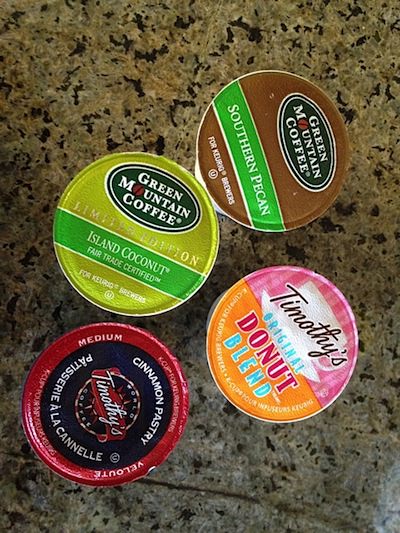 The most important software we use is coffee. What is our favorite Keurig cup flavor? We have it narrowed down to four (but suggestions are welcome).