• Skip to primary navigation
  • Skip to main content
  • Skip to primary sidebar

John August

  • Arlo Finch
  • Scriptnotes
  • Library
  • Store
  • About

Search Results for: notes on notes

Are writing groups a good idea?

March 17, 2009 Psych 101, QandA, Writing Process

questionmarkI was wondering if you have ever had any experience with writing groups. I know it’s good to network and build more of a community of contacts, but in your experience, can they improve your writing? Do you think they can be advantageous? Or do you just end up getting ever more sets of conflicting notes?

— Jack
Burbank

I’ve never been in an official writing group, but I did rely on an informal circle of writer friends for my first few years after film school, getting feedback, suggestions and a healthy amount of peer pressure. Reading other people’s writing — even bad writing — makes you think more about the words you put on the page, so it can be a worthwhile exercise even if the notes you get back on your script are less than ideal.

I’d recommend finding people who are interested in doing the same general kinds of movies. If most of you want to write comedies, the woman writing the drama about a girl’s troubled relationship with her alcoholic father is going to be a drag on the group. Likewise, if most of the writers in the group have emotion-laden scripts, your hilarious spec about a farting monkey won’t get much love.

Another suggestion: Accept and embrace that the group won’t hold together long. People will flake out, drop out or move on. In fact, it might be a good idea to put an expiration date on the group at the start: “We’ll be meeting every Monday for the next six weeks. That’s it.”

Alternate with water

March 13, 2009 Random Advice

random adviceA significant percentage of this blog’s readership is still in school, so my hunch and hope is that many of these readers are still novice drinkers. So as I close out this week of random advice, let me offer one bit of wisdom that can carry you through the next 80 years, or at least this coming weekend:
__For every alcoholic drink, drink a glass of water.__

Do this and you will avoid 65 percent of drinking idiocy and embarrassment. It will pace you. It will dilute you. It will save you at least five pounds of the dreaded [freshman fifteen](http://en.wikipedia.org/wiki/Freshman_fifteen), and lessen possible hangovers.

To be clear: I don’t mean drink a half-gallon of water before you go to bed. I mean that when the beer or cocktail you are holding is finished, you drink a glass of water. No glass? Then fill that beer can with water from the tap.

There is no magic here. Water doesn’t undo what you drank, so you’re still just as much a menace on the roads. But with less alcohol consumed over a longer period of time, you’re less likely to make dumb decisions about driving, dating and diet.

Two related notes:

* When asking for water at a bar, always tip the bartender.

* When someone says they don’t drink, leave it at that. There’s invariably a good reason, and it’s never your business.

Which project should I write?

February 11, 2009 Dead Projects, Psych 101, QandA, The Nines, The Remnants

questionmarkI know you have addressed this type of question to a certain extent, but I was left wanting more of an explanation that I hope you can provide. I have four ideas in my head for four different stories. When I start working on one, I think I am making a mistake and I should concentrate on another one. I will then switch and after a little bit of time, I feel the same way that made me move to this story. When you have multiple ideas and aren’t certain which idea is the right one to focus on, how do you resolve that?

— kaz

This will never end. It will continue to be a problem as long as you write. I’m certain that Stephen King, even after umpteen books, wrestles with this problem. In fact, his prolificacy might be a coping strategy; rather than decide which thing to write, he just writes them all.

At this moment, there are no less than fifteen projects competing for brainshare in my head. Five of these are things I’m contracted to write, while the other ten or so are old ideas, recent ideas or things that just occurred to me as I walked up the stairs to my office.

So which projects do I write?

Well, I should write the ones that I’m being paid to write, and more specifically, I should work on the one that is next due. So I spend the bulk of my writing time on the project with the nearest deadline. Honestly, that may not be the project that excites me the most at any given moment. But I’m getting paid to do my craft, so I’m certainly not going to complain.

But what about those other projects, the ones I’m not currently writing?

They’re battling it out in my subconscious, each trying to get my attention long enough that I’ll recognize how worthy it is. Sometimes they’ll even gang up on me: The Nines was three separate ideas that conspired to fit together.

INT. JOHN’S BRAIN – DAY

PRISONER STORY

We’re sort of about the same thing. The difference between an actor and a creator.

HOLLYWOOD STORY

You’re right!

SPOOKY STORY

Hey guys, what are you talking about?

PRISONER STORY

We’re trying to get John’s attention.

HOLLYWOOD STORY

You’re new, right?

SPOOKY STORY

I’m a pilot!

PRISONER STORY

John’s not doing TV.

SPOOKY STORY

He might.

PRISONER STORY

He won’t. Go away.

HOLLYWOOD STORY

Wait! Wait! What if the pilot that they’re shooting in my story is actually Spooky Story?

PRISONER STORY

John likes things in threes. Like Go.

SPOOKY STORY

And what if...

(reeling with excitement)

What if your main character was my main character and also your main character? And we know that because they’re all the same actor.

HOLLYWOOD STORY

Dude.

PRISONER STORY

Quick! Get him while he’s in the shower!

Some “old” ideas get written this way. Others simply recede so far back they’re nearly forgotten. That’s okay. You’re not going to become best friends with every nice person you meet. You’re not going to write every good idea you have.

In some cases, simple timing makes a new project suddenly possible. For the Alaska pilot, I pitched it to the network within a week of having the idea. The Remnants was possible only because the WGA strike meant I couldn’t work on any of my “real” stuff.

If you have four ideas, all equally viable, I’d recommend writing the one that has the best ending. That’s the one you’ve thought through the most, and the one you’re least likely to abandon midway. But whatever you do, just pick one and write it without delay. If you have great ideas for your other projects, absolutely take some notes, but don’t switch. Finish what you’re doing, or you’ll have a folder full of first acts.

Shazam! It ain’t happening.

January 5, 2009 Dead Projects, Projects, Shazam

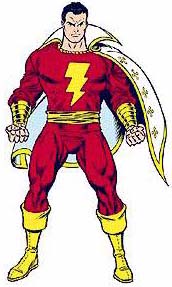
marvelBefore the holidays, I promised a post-mortem on Shazam!, the big-screen adaptation of the DC comic I’ve been working on since early 2007. In case you’re not familiar with the character, here’s what I wrote when I [first announced](http://johnaugust.com/archives/2007/the-big-red-cheese) the project:

Captain Marvel is a superhero roughly as powerful as Superman, minus the heat-vision and cold breath. What’s unique about the character is that in ordinary life, he’s teenager Billy Batson. Speaking the name of the wizard who gave him his powers (Shazam) calls down a magic thunderbolt, transforming him into the studly superhero. But he’s still a teenager in there.

If this to you sounds, “Like Big, but with superpowers,” then congratulations! You now understand Hollywood.

So that you may further understand Hollywood, let me briefly fill you in on what’s happened in the meantime.

I wrote a draft for New Line. Around the time I turned it in, there was a lot of speculation about whether New Line would continue to remain in business, but there was enough enthusiasm that the mini-studio ran the numbers and considered going into production before a potential actors’ strike. (The WGA strike hadn’t yet happened, but it looked inevitable.) Director Pete Segal was busy on Get Smart, costarring Dwayne Johnson, and rumors began building that The Rock would play Black Adam. A lot of people liked that idea, me included.

I would describe this draft as a comedy with a lot of action. It mostly centers on Billy Batson getting and learning how to use his powers, and discovering what happened to his parents that left him an orphan. One of the appeals of the project is that Billy is a comic book hero who actually reads comic books. Black Adam ultimately becomes the adversary, but he works much like Voldemort in the Harry Potter movies — a dark force to battle at the end, not a constant presence throughout. I wrote the draft I had pitched, and was very happy with how it turned out.

I got notes from New Line and the producers — mostly about set pieces, and keeping Black Adam from becoming too sympathetic — but before I could get started, the WGA went on strike. I couldn’t write, nor did I talk to anyone involved for 100 days.

When the strike was over, Shazam! was suddenly a Warner Bros. movie. ((Warners has a relationship with DC Comics that goes beyond the corporate kinship with New Line, so they apparently could have gotten involved even if New Line had remained separate.)) The new executive at Warners said he agreed with the New Line notes, and told the producers I should go ahead with my rewrite. We weren’t on the official production schedule, but there were discussions about budgets and timelines. We were definitely Pete Segal’s next movie, and many of the stories coming out of the press junkets for Get Smart were about Shazam.

When we turned the new draft in to the studio, we got a reaction that made me wonder if anyone at Warners had actually read previous drafts or the associated notes. The studio felt the movie played too young. They wanted edgier. They wanted Billy to be older. They wanted Black Adam to appear much earlier.

(I pointed out that Black Adam appears on page one, but never got a response.)

I expressed my frustration that I’d wasted months of my time and a considerable amount of the studio’s money on things that should have been discussed at the outset. I asked for a meeting with the executive in charge. He and I had one phone call, then I got a new set of notes that didn’t gibe with what we had discussed. (The written studio notes, I will say, were well-considered. I disagreed with the direction they were taking the movie, but they were thorough and self-consistent.)

In retrospect, I can point to two summer Warner Bros. movies that I believe defined the real issue at hand: Speed Racer and The Dark Knight. The first flopped; the second triumphed. Given only those two examples, one can understand why a studio might wish for their movies to be more like the latter. But to do so ignores the success of Iron Man, which spent most of its running time as a comedic origin story, and the even more pertinent example of WB’s own Harry Potter series. I tried to make this case, to no avail.

I was under contract to deliver one more draft. So I took them at their (written) word and delivered what they said they wanted: a much harder movie, with a lot more Black Adam. This wasn’t “Big, with super powers” anymore. It was Black Adam versus Captain Marvel, with a considerable push into dark territory and liminal badlands like Nanda Parbat. It wasn’t the action-comedy I’d signed on to write, but it was a movie I could envision getting made. The producer and director liked it, and turned it in to the studio [while I was in France](http://johnaugust.com/archives/2008/going-to-france).

By the time I got back, the project was dead.

By “dead,” I mean that it won’t be happening. I don’t think it’s on the studio’s radar at all. It may come back in another incarnation, with another writer, but I can say with considerable certainty that it won’t be the version I developed. ((Keep in mind that press releases often have little relationship to reality. The same week I found out that Shazam! was dead, Variety and several online news outlets ran stories about Pete Segal’s new overall deal with Warners, which highlighted Shazam! as his next project. I got several “Congratulations!” emails.))

Yes, that sucks. And obviously, I can only share my interpretation of what transpired. There were dozens of meetings and phone calls in which I had no participation. As a reader, you should certainly consider the possibility that I wrote shitty scripts they simply didn’t want to make. Because Warners controls copyright on them, I can’t put them in the [Library](http://johnaugust.com/library) for you to read yourself. So you have to decide whether to take my word on it.

The larger point of this retelling is to help readers understand that at every level in a screenwriter’s career, there are projects that simply don’t happen, mostly for reasons you couldn’t anticipate at the outset. I’ve had good experiences at Warner Bros. (Charlie and the Chocolate Factory, Corpse Bride) and bad experiences (Tarzan, Barbarella). My next movie is at that studio, so while I’m frustrated by the way they handled this project, I have no axe to grind. When they have a movie they want and support, they’re top-notch.

I got paid well to write Shazam, and I get to keep that money. The real cost is an opportunity cost — the other projects I could have written that might be in production now. More than anything, that’s one of the reasons production rewrites are so appealing to established writers: you know those movies are going to get made.

Also softening the blow is that I’m already writing a new project, one I might have had to pass up if Shazam had dragged on any further. The first half of 2009 is going to be very busy. So while I’ll miss Shazam, and the movie it could have been, I won’t feel too bad if this is the last post I ever write about it.

« Previous Page
Next Page »

Primary Sidebar

Newsletter

Inneresting Logo A Quote-Unquote Newsletter about Writing
Read Now

Explore

Projects

  • Aladdin (1)
  • Arlo Finch (27)
  • Big Fish (88)
  • Birdigo (2)
  • Charlie (39)
  • Charlie's Angels (16)
  • Chosen (2)
  • Corpse Bride (9)
  • Dead Projects (18)
  • Frankenweenie (10)
  • Go (29)
  • Karateka (4)
  • Monsterpocalypse (3)
  • One Hit Kill (6)
  • Ops (6)
  • Preacher (2)
  • Prince of Persia (13)
  • Shazam (6)
  • Snake People (6)
  • Tarzan (5)
  • The Nines (118)
  • The Remnants (12)
  • The Variant (22)

Apps

  • Bronson (14)
  • FDX Reader (11)
  • Fountain (32)
  • Highland (75)
  • Less IMDb (4)
  • Weekend Read (64)

Recommended Reading

  • First Person (87)
  • Geek Alert (151)
  • WGA (162)
  • Workspace (19)

Screenwriting Q&A

  • Adaptation (65)
  • Directors (90)
  • Education (49)
  • Film Industry (489)
  • Formatting (128)
  • Genres (89)
  • Glossary (6)
  • Pitches (29)
  • Producers (59)
  • Psych 101 (118)
  • Rights and Copyright (96)
  • So-Called Experts (47)
  • Story and Plot (170)
  • Television (165)
  • Treatments (21)
  • Words on the page (238)
  • Writing Process (177)

More screenwriting Q&A at screenwriting.io

© 2026 John August — All Rights Reserved.