• Skip to primary navigation
  • Skip to main content
  • Skip to primary sidebar

John August

  • Arlo Finch
  • Scriptnotes
  • Library
  • Store
  • About

Search Results for: characters

The Variant, a new short story

May 22, 2009 Books, News

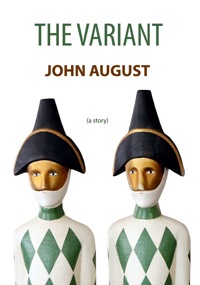
book coverAs a screenwriter, most of my writing takes place in the third-person present tense. Movie characters run, shoot and misbehave within a small subset of the words, senses and actions that other literary characters take for granted. We never know what Indiana Jones is thinking, unless he tells us. We don’t know what a Wookie smells like, unless another character mentions it.

Don’t get me wrong: I love screenwriting. But it’s limited.

So when a friend asked me to write a short story, I jumped at the chance. The thing I wrote, The Variant, was and maybe still is supposed to be part of an anthology of short stories written by well-known screenwriters. It falls in that loose genre of spy-fi which encompasses both The Prisoner and Jorge Luis Borges.

After leaving it to sit on the shelf a few months, I considered sending the story out to the usual magazines that publish short fiction. But it’s not really a New Yorker story. It probably belongs in a sci-fi quarterly, one that I would never buy unless specifically instructed. And I would have a hard time nudging all my friends to drop five dollars on a magazine they had never heard of.

So, in the spirit of iPhone apps and [Jonathan Coulton](http://www.jonathancoulton.com/) tracks, ((I discovered the delivery system (E-Junkie) through Coulton.)) I’m releasing it myself for 99 cents. You can get it as a pretty .pdf, or on your Kindle through Amazon. ((And if you live in the U.S, keep in mind that every iPhone can now read Kindle books with the Kindle app.))

You can find all these options here: [johnagust.com/variant](http:/johnaugust.com/variant)

This is all an experiment, obviously. I’m lucky to have a career where it doesn’t matter if this generates $15 or $1,500. But I’m curious whether this is a feasible model for a writer. In the next few weeks, I’ll be posting the results.

I’m well aware that there are going to be some people who simply can’t pay 99 cents for something online. And while I can’t anticipate every scenario, I’ve set up an email account (sales@johnaugust.com) to figure out solutions.

Take away the questions

May 20, 2009 Adaptation, Projects, Story and Plot

Discover Magazine has a list of eleven [Rules for Time Travelers](http://blogs.discovermagazine.com/cosmicvariance/2009/05/14/rules-for-time-travelers/), which seems pertinent given the double whammy of Lost and the new Star Trek.

I’m largely on board with most of their recommendations, particularly the idea that there are no paradoxes. I’m not talking scientifically here — I honestly have no idea how to crunch the numbers to prove this point. But in terms of fiction, and screenwriting in particular, I’d argue you need to actively crush any talk of paradoxes or impossible conundrums. They will grind your story to a halt.

I did a little work on Minority Report, a Scott Frank adaptation of a Philip K. Dick story which is enjoyable for its combined Frank-Dickness. Minority Report doesn’t deal with time travel, but rather its pushy cousin called precognition — knowledge of the future. In the story, police use precognition to stop murders before they happen.

But! But! How do you know the murders were going to happen? You changed things. So for every crime, you would need to prove that the soon-to-be-killers were absolutely, unquestionably going to do it. Which seems impossible.

I argued that you couldn’t just answer those questions when they came up. You had to take away that whole class of questions, early and forcefully.

Here’s the scene I wrote:

WITWER

But it’s not the future if you stop it. Isn’t that a fundamental paradox?

Jad sets the sphere down on the table, needing both hands to explain this.

JAD

You’re really talking about predetermination, which happens all the time.

Unseen by Jad, the sphere is starting to roll towards the edge of the table, building up speed.

JAD (CONT’D)

In fact, it’s easy to demonstrate...

At the last moment, Witwer catches it. Everyone smiles.

KNOTT

Why did you catch that?

WITWER

Because it was going to fall.

FLETCHER

You’re certain?

WITWER

Yes.

JAD

But it didn’t fall. You caught it.

Witwer smiles a little, starting to catch on.

JAD (CONT’D)

The fact that you prevented it from happening doesn’t change the fact that it was going to happen.

WITWER

It’s the same with the murders.

FLETCHER

The precogs are showing us what’s going to happen unless we stop it.

(In the final movie, it’s Tom Cruise’s character (Anderton) rather than Jad who provides the explanation. And that’s an understandable change: you want your hero to feel in command of the facts.)

In any script, look for scenes in which characters answer questions, and try to find ways to take the questions away. Often, that means backing up five or ten pages, well before the audience has started to formulate their concerns, and finding a way to visualize (or better yet, physicalize) the problem.

The first Jurassic Park does this well, with the animated science lesson setting the ground rules and chopping down poles upon which red flags might fly. Likewise, the first acts of most horror movies are largely devoted to creating situations in which the characters can’t simply escape or call for help. The more artfully it’s done, the less you notice the setup.

Nor can comedies waste time addressing audience concerns. Groundhog Day churns through a number of possible solutions to Bill Murray’s dilemma in a montage that makes you feel certain that he’s tried everything, whether you’ve thought of it or not.

Don’t answer questions. Get rid of them before they’re asked.

**UPDATE:** The weird thing about running this blog for 5+ years is that I sometimes forget which questions I’ve answered, and which anecdotes I’ve given. I wrote this post an hour ago, but it covers a lot of the same ground as last year’s longer and better essay on [How to Explain Quantum Mechanics](http://johnaugust.com/archives/2008/how-to-explain-quantum-mechanics). Credit for consistency, I guess.

Jerome Schwartz, first person

May 13, 2009 First Person

I met Jerome Schwartz during the WGA strike. He recognized me from the blog, and told me that he’d applied for his job at the guild specifically because of one of my posts. After the strike, I asked him to keep me apprised of how his career was going. I had a hunch he would find a path.

———

first personI can remember, in the years before moving to Los Angeles, being constantly frustrated with Hollywood “breaking in” stories. I would devour those tales in search of details, steps to follow, at least an outline. But people seemed remarkably cagey about their first step. They gloss over, they skip the details. And now, after eighteen months in L.A., I realize why that is: The stories are useless.

Maybe useless is too strong a word. What I mean is, these stories are not replicable. There is no outline to follow. Hollywood careers all have their own weird combination of factors — luck, skill, circumstance, the flow of the industry, the flapping of a butterfly’s wings. The ingredients may be similar. But the meal is never the same.

So, disclaimers aside, here is my own little story.

I moved to Los Angeles in October of 2007. It was a move I had contemplated for a while, but resisted. At the time, I was living in Portland. And I loved Portland. It had friends, mountains, good coffee and better beer. I wrote a lot. I made a few films. But I finally concluded that script writing outside of L.A. was really just a hobby. If I wanted a career, I needed to wave goodbye to the evergreens and head to the land of sunshine and smog.

jerome schwartzOn Day One in Los Angeles, I picked up a copy of the LA Weekly. I saw mention of a little thing called the “Writers’ Strike.” And I thought, great. Of all the ill-timed ventures, I just made my big L.A. move two weeks before every writing job in the city was about to disappear. Nice move, Schwartz. Real nice.

Fortunately, I read John’s blog. And he pointed out that the strike was a blessing in disguise for young writers. Under normal circumstances, you arrive in Hollywood, and can’t find a single working writer to talk to, much less reveal the arcane secrets of the industry. Because they are all working. But now they were all standing in a pack, in front of the studios, holding signs. Looking for a little conversation to kill the time.

A week later, I found a temp agency hiring out to the Writers Guild, and pressed them for a job. This sounded like the perfect opportunity. To be around writers every day, networking, supporting my future guild, and getting paid for it? Dreamy.

On my resume, I was a “Volunteer Coordinator.” But to the writers, I was “That Van Loading Guy.” Put simply, the guild operated strike lines at all the major studios. Those striking writers needed signs. A lot of signs. And water. And food. And sunscreen. And chairs, and tables, and flyers, and so on. Every night, vans returned from the strike line in need of fresh supplies. Writers arrived to volunteer, and I put them to work loading those vans.

It was a funny reversal of the Hollywood story. I had just arrived. I was supposed to be getting these people coffee. Instead, I was ordering them to haul water jugs and clean dried orange juice out of vans. One time, a volunteer came up and said, “That was gutsy. Asking Cameron Crowe to haul your garbage.” I thought, “That’s Cameron Crowe?” I didn’t know what he looked like. To me he was just another easy-going volunteer, someone who wouldn’t mind taking out the trash if his guild depended on it.

The work was simple. The kind of work that is only made bearable with chit-chat. So there was a lot of it going on in the basement of the guild. And in Hollywood, I have often found chit-chatting to be synonymous with networking. I had always thought of networking as a particularly vile form of communication, reserved for slick, soulless Hollywood types. But in practice, it’s really just a habit of making friends. And eventually, friends may be in a position to help you.

100 days later
——-

The strike ended after 100 days. Unemployment loomed. So I emailed all my writer friends, and started hunting for that elusive first job. And finally, a job came through. One of the van-loaders was a writer on “The Office,” and he got me a job in the post production department. As a P.A. I loved the show and was excited to work there. I learned a lot in a short span of time. Problem was, I wanted to write. And I wasn’t learning about writing.

About two months later, a second opportunity arrived. Another writer from the guild (okay, full disclosure, this writer happens to be my girlfriend) passed my resume along at “Cold Case,” where they were looking for a writers’ P.A. This was much closer to what I wanted. I jumped at the chance.

Let me explain the job, at least as it plays out on “Cold Case.”

As a writers’ P.A., you are the lowest person in the writing department. Meaning coffee, lunch runs, and photocopies. But, at the same time, you are right where it’s all happening. Your work is all for the writers, and you will inevitably get to know them. You’ll see how they shape a script from concept to production draft. You learn the language, the techniques, and the pace of TV writing.

Now, I don’t know about other staffs, but the writers at “Cold Case” were also amazingly supportive of my own fledgling career. They gave me great critiques, which helped sharpen my material. A few of them passed me along to their agents, which was huge. As someone who has cold-called every agency in town (just before my L.A. move), I assure you it goes nowhere. You need a personal connection. And the writers at “Cold Case” were willing to recommend me, for which I am extremely grateful.

While working this job, I wrote a “Mad Men” spec that was well received. One very generous writer (from my guild days) thought the script was good enough to pass on to showrunners. Thanks to her belief in me, and a strong script, I landed two showrunner meetings in my first year in Hollywood. Neither worked out; one show wasn’t picked up, the other said close, but no thanks.

But getting those interviews was huge. It put me exactly one step away from that elusive dream of writing for a TV staff. Also, it impresses people. I was suddenly getting read by more agents and managers, because they heard about these meetings.

At this point, I had a little buzz, but nothing tangible. My spec was good, but not enough on its own. I met with agents, and was told repeatedly that I also needed a great original piece. So I buckled down, did my research, and wrote a one-hour dramatic pilot. In the process, I gained new respect for the art of the pilot episode. Setting up a unique world, a great cast of characters, a full season of conflict, and a satisfying story arc in 59 pages is no small task.

The here and now
———

As I write this, I have just completed that pilot. I have been getting notes from writer friends. I passed it on to agents in hopes of representation. And last week, I finally secured a manager. He agreed to manage me only because I had a personal recommendation, a good spec, showrunner meetings, and a good pilot. All these factors finally made me an attractive client. And I couldn’t have gotten good management without them.

Eighteen months ago, I had no idea what a Hollywood move would do for me. Now, after a lot of legwork, I at least have a toe wedged in that ornate mahogany door. I ain’t there yet, but the path looks a lot clearer than it once did. And for that, I feel pretty good.

Not my problem

May 10, 2009 Writing Process

Great quote from Alvin Sargent in the most recent [Written By](http://www.wga.org/writtenby/writtenby.aspx):

> Somebody told me once, “If you have a problem with a character, give the problem to the character because it’s not my problem.” It’s truly their problem and you have to watch and wait and see what they do that makes some kind of sense. Sooner or later, if they are really people, they will do something, or someone else will come and help them. But I have nothing to do with it. If you have a problem, give it to the character.

Characters are not responsible for plot; you as the writer have to decide what you’re showing, when and why. But your characters need to be responsible for the actions they take. The reader and the audience can feel when characters are doing something simply for story’s sake.

Think of yourself as the producer of a reality show. You’ve hopefully cast interesting people, who will do and say interesting things. You’ll create obstacles that will force them to react. You’ll shoot a bunch of footage and edit it to tell the story you want. But if you’re pushing your characters around, telling them exactly what you want them to do, the audience will feel the manipulation — and your characters will resent it.

« Previous Page
Next Page »

Primary Sidebar

Newsletter

Inneresting Logo A Quote-Unquote Newsletter about Writing
Read Now

Explore

Projects

  • Aladdin (1)
  • Arlo Finch (27)
  • Big Fish (88)
  • Birdigo (2)
  • Charlie (39)
  • Charlie's Angels (16)
  • Chosen (2)
  • Corpse Bride (9)
  • Dead Projects (18)
  • Frankenweenie (10)
  • Go (29)
  • Karateka (4)
  • Monsterpocalypse (3)
  • One Hit Kill (6)
  • Ops (6)
  • Preacher (2)
  • Prince of Persia (13)
  • Shazam (6)
  • Snake People (6)
  • Tarzan (5)
  • The Nines (118)
  • The Remnants (12)
  • The Variant (22)

Apps

  • Bronson (14)
  • FDX Reader (11)
  • Fountain (32)
  • Highland (75)
  • Less IMDb (4)
  • Weekend Read (64)

Recommended Reading

  • First Person (87)
  • Geek Alert (151)
  • WGA (162)
  • Workspace (19)

Screenwriting Q&A

  • Adaptation (65)
  • Directors (90)
  • Education (49)
  • Film Industry (489)
  • Formatting (128)
  • Genres (89)
  • Glossary (6)
  • Pitches (29)
  • Producers (59)
  • Psych 101 (118)
  • Rights and Copyright (96)
  • So-Called Experts (47)
  • Story and Plot (170)
  • Television (165)
  • Treatments (21)
  • Words on the page (237)
  • Writing Process (177)

More screenwriting Q&A at screenwriting.io

© 2026 John August — All Rights Reserved.