• Skip to primary navigation
  • Skip to main content
  • Skip to primary sidebar

John August

  • Arlo Finch
  • Scriptnotes
  • Library
  • Store
  • About

Search Results for: book rights

You’d hardly recognize Arlo Finch overseas

July 18, 2018 Arlo Finch, Big Fish, Books, Film Industry

[Arlo Finch in the Valley of Fire](http://johnaugust.com/arlo-finch) came out in February 2018 in the US and Canada, but the international editions are only now debuting. And in many cases, the book you see in stores overseas looks very different.

Here’s the book in the US, with a cover by [Vivienne To](http://www.vivienneto.com).
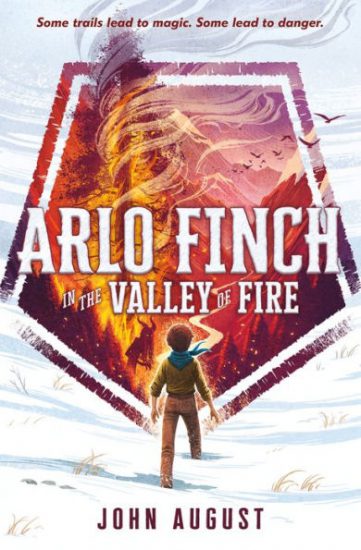
valley of fire book cover

Italian publisher Mondadori is the first to offer a translated version — it came out this month. They’re using the same basic artwork for *La Valle del Fuoco*.
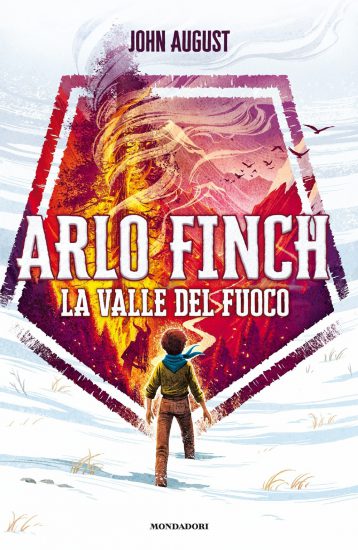
arlo cover in italian

So far, Italy is the exception. In most markets, publishers are creating their own artwork for the cover.

German publisher Arena went with a more comic-book style, illustrated by [Helge Vogt](http://www.trickwelt.com). It comes out in August.
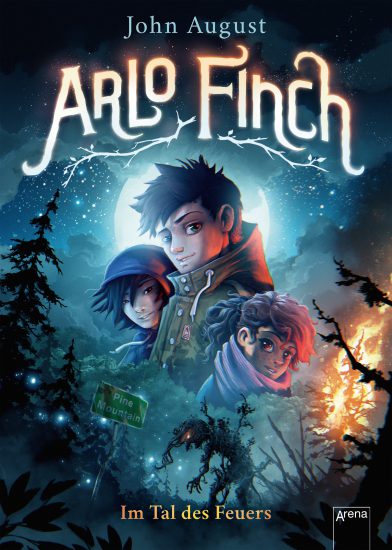
German cover for Arlo Finch

The German version also has interior illustrations — the only one so far. Translation is by [Andrea and Wieland Freund](https://www.welt.de/autor/wieland-freund/).

French publisher Milan hired [Levente Szabó](http://www.briskgraphics.com) for their edition, which comes out in September. They’ve stuck with Adam Ladd’s [Cheddar Gothic](https://www.myfonts.com/fonts/adam-ladd/cheddar-gothic/) as the typeface, however.
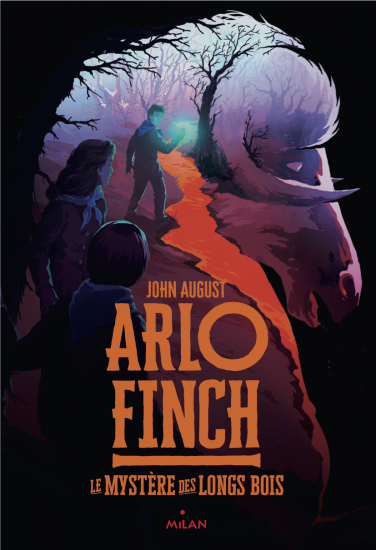
French Arlo Finch cover

In France, instead of *Valley of Fire,* this book is subtitled *The Mystery of the Long Woods.* It’s very common for French publishers to rename books; the first Harry Potter is *The School of Sorcerers* in France.

The French translation is by [Leslie Damant-Jeandel](https://lesliedamantjeandel275164429.wordpress.com/2017/11/28/arlo-finch-tome-1/). It’s terrific. I got a chance to look through it when doing press in Paris earlier this summer.

The Swedish and Norwegian editions also come out in September. Here they’ve gone for more of a Stranger Things vibe.
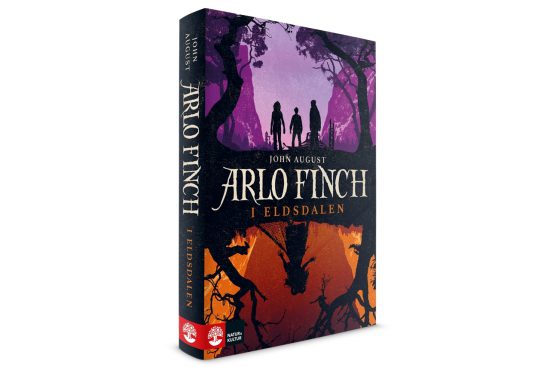
Swedish Arlo Finch

The artist is [Håkan Liljemärker](http://www.liljemarker.com). The Swedish translation is by [Mats Kempe](http://www.alma.se/en/Jury/Mats-Kempe/), while the Norwegian is by [Tore Aurstad](https://no.wikipedia.org/wiki/Tore_Aurstad).

The Dutch cover for *Arlo Finch: De Vuurvallei* is the only one with photographic elements. As I’m posting this, the artwork isn’t finalized, and I haven’t learned details about the translator. It’s scheduled to come out in October. ((I’ll be headed to Germany, Norway, Sweden and Denmark in October for launch events. More details soon.))

In addition to these countries, Arlo Finch is also scheduled to be released in translation for Denmark, Poland, Brazil, Romania and Israel. No word yet on what those covers will look like.

## Why aren’t international covers the same as the US?

As a screenwriter, I’m used to seeing some variation in movie posters and video covers. Not only do studios mock up and test various versions of one sheets, ((“One sheet” is the standard term for movie posters in the US. Classically, they’re printed in reverse on the back side so that when inserted into a lighted display case at a movie theater, the color is vibrant.)) they sometimes make different choices for US and overseas markets.

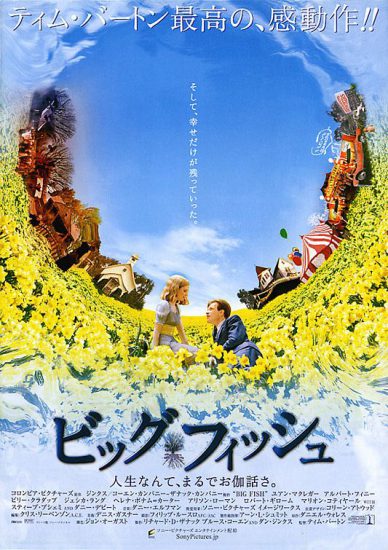
In the case of Big Fish, Sony Pictures tried a completely different approach in Japan.
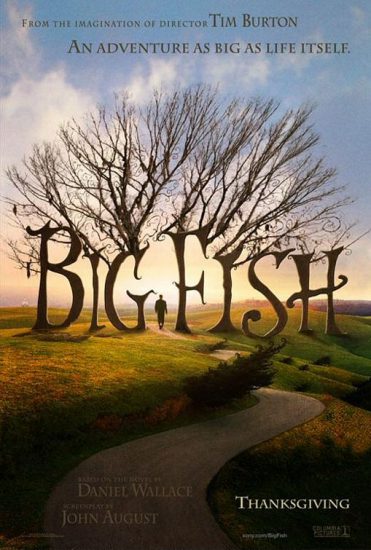
US big fish poster

Japanese Big Fish poster

But for the most part, the one sheet for a given movie is going to look very similar in most countries. That’s because in the age of worldwide marketing, it’s generally the same studio releasing the film in every territory, often on the same date.

That’s not true for books. In most cases, publishers are only buying rights to the book for a single country or language, and the book will come out months after the English debut.

For Arlo Finch, Macmillan is my publisher for the US and Canada, but I have [11 different publishers](http://johnaugust.com/arlo-finch#international) for other languages. When these publishers bought the book, they only bought the text, not the cover — that’s owned by Macmillan.

Which means international publishers have a choice:

1. Negotiate to license the cover from Macmillan.
2. Make their own cover.

Publishers generally choose the second option. It gives them the chance to make their own creative choices about how to market and position the book for their market.

French publisher Milan might have a theory that French girls are less likely to pick up a book without a girl on the cover. German publisher Arena may have data showing that German kids want books to look like comics even when they’re not. ((I’m making these examples up.))

While rates can vary wildly, cover artists are not that expensive. So it makes sense for publishers to hire their own.

As an author, do you get much say in book covers? Generally, no. You may have some contractual approval, but it’s more akin to giving one’s blessing than actual feedback. They don’t want you to hate the cover, but short of that, they’re fine trusting their instincts. ((Movies are largely the same in terms of approvals. Filmmakers will be shown a range of possibilities, but the real decisions are made by the marketing team.))

## Which is the “real” Arlo Finch cover?

Six months ago, I would have said that the US cover is the real cover. It’s still the only one I’ve seen printed on a book jacket.

But now I’m not so sure. I love the French and Scandinavian covers, especially how they seem to push the age up a bit. I’m intrigued by the German cover, even if it’s not my taste.

In the end, book covers serve two purposes. The first is as bait. Does the design convince you to pick up the book? My hunch is that all of these international covers do the trick.

The second function of a cover design is to help frame the reading experience. That’s what I’m most curious about with some of these covers. By showing Arlo’s friends, does it suggest the story will be an ensemble adventure? Does emphasizing the Hag on the German and Scandinavian covers signal too strongly what’s going to happen in the book?

We’ll see. I’m excited to start getting reactions from folks reading Arlo Finch in a language other than English.

Meanwhile, I’ve just gotten my advanced copies of the second book in the series, *Arlo Finch in the Lake of the Moon.*
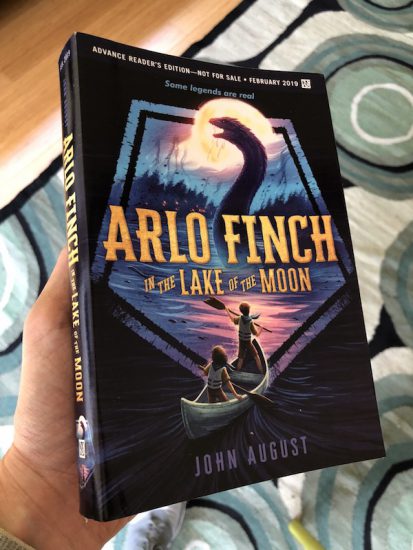
arlo finch lake of moon book

Each international publisher will soon need to figure out how they want to handle the cover this time. Do they feature the lake, the monster, the patrol, or another set piece in the book? There’s no one right answer, and just like with *Valley of Fire,* there won’t be one definitive cover. But this one’s going to be hard to top.

Scriptnotes, Ep 356: Writing Animated Movies — Transcript

July 3, 2018 Scriptnotes Transcript

The original post for this episode can be found [here](http://johnaugust.com/2018/writing-animated-movies).

**John August:** Hello and welcome. My name is John August and this is Episode 356 of Scriptnotes, a podcast about screenwriting and things that are interesting to screenwriters.

This week Craig and I have switched places. He is in Europe while I am back in Los Angeles. Luckily I am not alone. Across from me I have Linda Woolverton, a screenwriter whose credits include The Lion King, Homeward Bound, Alice in Wonderland, Maleficent, and of course 1991’s Beauty and the Beast. She also wrote the book for the stage musical Beauty and the Beast for which she received a Tony nomination. Linda Woolverton, welcome to Scriptnotes.

**Linda Woolverton:** Well thank you.

**John:** I could have gone on for about another five minutes with your credits because they are so vast. And like these are just some of your feature credits, but you also had TV credits from before then and after then. You’ve done a lot of stuff.

**Linda:** Well, I’ve been writing professionally since over 20 years.

**John:** Yeah. Well, I’ve been writing for more than 20 years, but I don’t have anywhere near the credits that you do. It’s just remarkable.

**Linda:** Well, thank you. You know, it’s hard work.

**John:** I sort of want to start with that last credit because Beauty and the Beast, the 1991 movie, I looked it up on Box Office Mojo and I looked up the adjusted gross, all-time adjusted gross income for it. It ranks number 133 of all films adjusted gross income. And that is higher than Iron Man. It’s higher than Toy Story. It’s higher than five of the eight Harry Potters. And then, of course, that also spawned the live action movie from 2017 which made $1.2 billion. So I guess this may be an insensitive question, but Linda Woolverton you must have gotten so much money off of Beauty and the Beast. Can you just give a sense of how much money you’re really talking?

**Linda:** That is a really appropriate question given where we are right now in terms of the business and feature animation and feature animated films being made into live action films.

**John:** Of course.

**Linda:** So, the important thing to note here, we’re going to talk about financial gain, is that feature animation is not covered by the Writers Guild of America. Which means that there are no residuals. There’s only up front. And I was paid I’m going to guess $35,000 to write the script. Took me four years, as animation does. There was nothing else. Oh, there was a bonus when the movie was made that Jeffery Katzenberg gave us checks. Howard Ashman was there. Alan Menken was there. And the directors, Gary Trousdale and Kirk Wise. He handed us a check for $100,000 each. I was blown away. I had never seen that in a check before.

So, I was like, “No!”

**John:** So many zeroes.

**Linda:** Really. Howard Ashman tore it up and threw it him.

**John:** Because that was a pittance. Even back then.

**Linda:** For him.

**John:** Yeah. At that time to be paid $100,000 as a bonus. So I want to make sure everyone’s clear. You were paid $35,000 up front for these four years of work on Beauty and the Beast. And your backend was zero. Well, $100,000, it was that $100,000 check.

**Linda:** Gift.

**John:** Gift. That was what you’ve received from writing one of the biggest movies of all time.

**Linda:** Yes, now, luckily I wrote the theatrical version of Beauty and the Beast, which is a whole different ballgame.

**John:** Having done a musical adaptation, it’s a very different thing.

**Linda:** Completely different thing.

**John:** You control copyright in these stage play versions of what you’ve done. And that is probably a much more lucrative thing. I can guess you’ve made more than $35,000 off of that.

**Linda:** A little. Because the show ran 13 years on Broadway. Traveled around the world twice. And it just opened in China. So that’s very lucrative. Just a little note here, when we did the deal for the theatrical version, Disney – it was really interesting – they had ownership of the movie. Right? Because they owned the movie. So I had to proportion out my royalty as per all the new stuff I wrote. So my royalty, which if it had been a full royalty it would have been a wonderful thing. But it’s only partial royalty.

**John:** I am in the same situation with Big Fish. So I wrote the stage play version of Big Fish, having written the screenplay of Big Fish, but Columbia is considered the author of that. And so they could have brought somebody else in to have written the stage version of Big Fish and I would have had no participation in it whatsoever.

**Linda:** Right. Exactly.

**John:** It’s not a great situation. But, in your case and in my case we got to stay on those projects and that’s fantastic. But I think what’s so interesting is not only did you not get residuals on the animated version of Beauty and the Beast that you wrote, but while your name is listed in the credits for the live action Beauty and the Beast you don’t have a piece of that either because that is – animation is not covered by separated rights. Had the original movie been live action and covered by the WGA, you would have gotten a piece of the live action remake as well.

**Linda:** Probably. Because if there had been an arbitration, because I did not work on the live action. If there had been an arbitration I’m 99% sure I would have gotten at least shared credit, which means I would have had a participation. So, it’s unfair with a capital U. But it is what it is.

**John:** So let’s get into that. Why animation is not covered. Because Craig and I have talked about this before, back in Episode 317 a listener wrote in with a question basically saying “How could animation not be covered by the Writers Guild of America?” And the long answer is long, but the short answer is that back in the days when animation was new the WGA didn’t think it was necessary to cover that. And so the Animation Guild began covering the writing of animated features. The Animation Guild is part of a larger guild, IATSE. They represent animation writing at the major studios. And the WGA can’t just go in and take it back because it’s another union thing. So, US labor law is preventing us from trying to go in and get that.

So it is a real frustration. And I think also a real cautionary tale for people writing in other genres that don’t seem like important things at the moment, but will become very important things.

**Linda:** Right.

**John:** I look to videogame writing. And I look to people doing things that don’t yet feel like they are on the level of film and TV writing but could be one day.

**Linda:** Yes. Yes. It is definitely a cautionary tale. And I didn’t know. Someone from the guild Board of Directors asked me, you know, well you signed the paper. True. I signed the paper. But I didn’t even know that there was a WGA at the time. I was this Saturday morning writer. I wasn’t in a guild at that point. And I went over and wrote a feature film.

So, you don’t know what you don’t know.

**John:** So let’s go back into some of that history because you were a Saturday morning writer, but what were your first writing credits? What got you started? And what made the leap into being able to write a feature animation?

**Linda:** It all began when I wrote two young adult novels. I had just left my job at CBS. I was on a desk and I wanted to be a writer. So I wrote a spec Muppet Babies.

**John:** I remember Muppet Babies. It was a great show.

**Linda:** I wrote a spec. And I didn’t sell the spec but I got work off of it. I started writing Berenstain Bears for Saturday morning. And then my career just never stopped. I was writing Saturday morning for like four years.

**John:** That was here in Los Angeles?

**Linda:** Yes. Here. Really fun. Really fun. Great group of people. You know, it’s just a little group.

**John:** So, in that era of TV animation were you writing as a room or were you just going and pitching a show and being sent to write it? What was the process of writing a half-hour like a Berenstain Bears, or they aren’t even half-hours. You’re writing little smaller segments.

**Linda:** They’re like 15 minutes.

**John:** So Muppet Babies. Was that written as a room or was that written – each individual writer just went off and wrote it himself.

**Linda:** I have never written in a room. Ever. Don’t know how to do it. No, you know, Berenstain Bears, it was very funny. It was my first job, so they gave me an outline. And they said here’s the outline. We want you to write the script. If it’s no good we won’t pay you. And there you go.

**John:** That’s a non-WGA sort of situation.

**Linda:** Exactly.

**John:** Here, work on this for spec, and then if we like it we’ll choose to pay you.

**Linda:** Yes, we’ll choose to pay you.

**John:** But if not it’s a useless thing that you’ve spent weeks writing.

**Linda:** Yes, exactly. So, that worked out. And the process was here’s an idea. Pitch the idea. Just like anything else. Here’s the idea, pitch the idea, pitch a take, and then they hire you and you go write it and then you get paid. So, that went on for – I had a really fun time. And then I just couldn’t think of anything more for silly creatures to do. And I had just seen a Disney animated feature that I didn’t think was very good.

**John:** Are you going to say the name? This pre-Little Mermaid. Little Mermaid is the moment where–

**Linda:** Little Mermaid is the revolution, whatever it is, of animation.

**John:** It was a ground-breaker. And that’s a whole special episode of Scriptnotes. We had a whole episode just talking about The Little Mermaid as a breakout moment.

**Linda:** Oh really?

**John:** Yeah. So, it was a pre-Little Mermaid feature you saw which wasn’t especially good, and that inspired you to say, “I can do better than that.”

**Linda:** Yes. So I went to my agent. I did have an agent. And I said I would like to go try to work at Disney. And she said, “No. They don’t read animation Saturday morning writers, because it’s not real writing in an interview.”

**John:** That whole thing about it’s not real writing is an ongoing thing in animation, isn’t it?

**Linda:** Yeah. It’s an ongoing thing. Yeah. What real writing is? Real writing? So I said, but I have these books, you know, I am a real writer. Here’s a hard cover book published by Houghton Mifflin with my name on it. Does that prove anything? So I drove my book over to the lot and it there was no dwarf building. This is way–

**John:** Pre-dwarf era.

**Linda:** Pre-dwarf. And there was no guard. So I just walked in and put it on the desk and said maybe somebody here wants to read this. And I left.

**John:** Wow. I can’t believe that worked. But it worked apparently.

**Linda:** It worked. My phone rang on Sunday and it was Charlie Fink had picked it up. He was probably hanging out with the receptionist. Picked it up. Read it over the weekend and called me and said you have to come work for us.

**John:** Well that’s great. So they say come work for us. Was it a specific project already at that point, or was it just a general come in and pitch things? What was the idea?

**Linda:** I did have an idea. Several ideas and pitched them. I came up with an idea that they didn’t do. But they offered me a live action Winnie the Pooh.

**John:** Sure.

**Linda:** I mean an animated Winnie the Pooh feature.

**John:** Feature.

**Linda:** I wrote that. They didn’t make it. But it opened the door to Beauty and the Beast.

**John:** I think a lot of writers we talk with, they get hired to do something that doesn’t actually go, but they can demonstrate that they are a good writer who can work with people and that’s what gets them the next job. And one of those things becomes the assignment that actually happens.

**Linda:** Right. Exactly. So that’s OK. You know, you’re getting paid. You’re honing your skills. You’re proving what you can do. And you’re bringing what you bring, which is really important I think.

**John:** So at the time that you’re writing the animated Winnie the Pooh, or eventually you’re brought in to write Beauty and the Beast, are they bringing you in as a special like they’re assigning you this project and you’re writing this, or are you working on a weekly basis? What was the nature of your relationship with Disney at that time?

**Linda:** It wasn’t weekly. It was a contract.

**John:** So just like writing any other feature.

**Linda:** Any other feature. Yeah. Only I didn’t know how animation worked.

**John:** Let’s talk about how animation works, because this is so different. I’ve done three animated movies. And so much of the process of writing an animated film, like the script looks almost exactly the same, but the actual process of making it is so different from live action, not just in terms of the development of it, but then with the live action feature you are writing it, and then you’re shooting it, and then you’re editing it. And those stages are pretty distinct. In animation you’re sort of doing all those processes at the same time. You’re writing a script and you’re hopefully going off and you’re able to get at least one chance to write a script when it’s just a script. But from that point forward it goes through this process of being broken down into shots and storyboards and then into animatics. And it becomes this living thing.

And your script, while still important, isn’t as central as this animated thing that’s in this sort of raw form in front of them. And you have the ability to keep changing story things quite a lot later in the process than you do in live action. It’s a very different situation. It’s not like the editing room. It’s like the clay is still moldable a lot longer.

**Linda:** It’s moldable for years and years.

**John:** Yes.

**Linda:** And what’s interesting about the process, you know, it’s sort of a given that the project will take on a different form from the written word to a different medium, which is usual. Then it will go from that to the next step. But it’s sort of a given that at some point in time the whole thing will get thrown out and you start again.

**John:** Yeah.

**Linda:** If you’re lucky. So, that’s just how that process works. And there’s a lot of, you know, I would say it’s difficult to be a writer in feature animation because they really – you sort of like aren’t on the same par as people who are artists. It’s an artists’ medium. It is not a word medium, even though it’s a story medium.

**John:** It is very much a story medium. But that story is being translated through artists’ hands who are doing some of the functions where in live action the actor would be doing it. The artists are the actors who are making this thing come to life.

**Linda:** Exactly.

**John:** And stuff changes through that process.

**Linda:** It does. It absolutely does. But, again, story is the most significant thing. And the story as a writer as the story-maker, you know, I still believe that we are as significant in feature animation as in a live action feature film.

**John:** Absolutely. And especially the movies that have done well have had their writers as an integral part of the process the entire time through because those are the people who just the keepers of story. The people who can see past that beautiful artistic moment that you created to this is the journey the character is on and this is how we have to get through this.

**Linda:** Because it’s so fragmented. And one person is in charge of this sequence and one person is in charge of this sequence. Which was so confusing to me when I first did Beauty. It’s like well how do you have a singular voice? How do you keep that singular voice? Because every sequence had a different tone as per the person who was boarding it.

So, you know, I fought. I had to fight. I had to fight for Belle. Because Belle was losing her way. She was going backwards, back to being the victim princess, and I had to kick and scream to make her not.

**John:** Also she’s in many situations the only human character on the frame. And everyone else is big and broad and special. And so that’s a thing that happens, especially in animation, but also in live action where the hero becomes the least interesting character on the screen because everybody else can be wild and crazy and be driven by their Id. And the hero has to be this sort of moral compass moving board. And I can totally imagine how Belle could be reduced to just princess of the castle.

**Linda:** Yes. So we couldn’t let that happen.

**John:** No. And you didn’t. Am I correct that Beauty and the Beast was the first animated film nominated for an Academy Award for Best Picture?

**Linda:** Yes.

**John:** And that was a crucial ceiling to break through, because to be able to think of these movies as not just like a good movie for children, but an actual good movie for adults and for everybody else.

**Linda:** That was a huge breakthrough. It was like on a par with all the other live action movies that year. Silence of the Lambs won.

**John:** Yeah. But Silence of the Lambs is a great movie.

**Linda:** It is.

**John:** Nothing to take away from that. But I think just to be on the same list as Silence of the Lambs–

**Linda:** Yes.

**John:** Or these other sort of movies for adults is a crucial thing. And I don’t know if we’ve gotten to a place where Pixar movies could be Pixar movies if we hadn’t gotten an Academy Award nomination for Beauty and the Beast. I do think it was a ground change of sort of how seriously we’re going to take animated films.

**Linda:** Well that’s about the money, isn’t it? Isn’t it about the box office?

**John:** Well, yes. So, I think the box office is a crucial thing to be talking about though because we’re recording this as the Incredibles 2 has just opened and sort of set all sorts of records. Like everybody wants to be that movie. It’s a well-liked movie that is making a tremendous amount of money, so everyone wants to be able to do those things. And very few people can do those things. Disney can do it. Pixar can do it. They’re the same company now. Every once and a while Fox Animation or Warners will have something else that breaks through. But it’s really tough. And it takes a tremendous amount of investment and years of commitment to make an animated movie. Much more so than to make a live action movie.

**Linda:** Yes.

**John:** Anybody could just write a check for $100 million and make a big live action movie. You can’t just write a big check and make an animated movie. Essentially the research and development on making it is just so much greater.

**Linda:** It is. It’s much greater. Yeah. And I’m writing one right now for a company called Skydance.

**John:** So Skydance’s logo used to be often in front of like Paramount Features. They’re a big pool of money that invests in movies and they’re starting animation now.

**Linda:** Yes. They’re starting a live animated feature division, but I guess they produce television now as well. And big budget live action features under the Paramount umbrella I guess. So, there’s three in the pipeline at this moment in time. My one was first, but we got put back because it’s a hard subject. Again, it was one of those like let’s throw it all out and start again. So, you just sort of like I had forgotten all this.

**John:** Well, you choose to forget that. It’s like having a newborn.

**Linda:** Oh, yeah right.

**John:** You forget the darkness of those first months. And then it’s like, “Oh no, but they were so cute. You look at the photos, like oh it was delightful.” And then you’re like, “Oh that’s right, this is what it’s like.”

**Linda:** That’s right. This is what it’s like. I forgot.

**John:** Here’s one of the differences is that making a normal live action movie you’ll go through those places where everything falls apart, but it will fall apart in sort of script land and then you’ll start shooting and then you’ll have troubles during shooting and there will be challenges and there will be a terrible first cut and you’ll get through it. But at no point will you be sort of like a ways into it and then just like, “OK, we don’t know what this is. We’re going to change who the lead character is of the story.” And that happens almost every time in animation. It’s just so regular to know that you’re going to have the complete upset.

**Linda:** Yeah.

**John:** And it’s still surprising. I will say the stop motion movies I’ve made with Tim Burton have been somewhat of an alternative to that because you can’t go back and rejigger things very easily. Because once you’ve shot a frame it’s just sort of shot. And so the most that could happen to us with is we could reboard and reschedule some things for sequences we’re not quite sure of yet, so like if there’s things where like we’re not quite sure how it’s going to work out we’ll put those towards the end of the schedule and so we can sort of see what we’ve got and then write towards those sequences which were not set on, but we can’t do that thing which they can do on Frozen and other movies and just like let’s change that entire sequence and let’s make Elsa a very different thing.

We can’t do that in stop motion the way that you can in traditional or sort of CG animation.

**Linda:** I had the best time of my life working with Tim Burton.

**John:** So tell me about your experience. What was good about that for you?

**Linda:** Working with Tim?

**John:** Yeah. I have my memories of Tim, but I’m curious what it was like from your side.

**Linda:** From my side it was, first of all I was intimidated by him. But he agreed to direct Alice in Wonderland. And I went to London to meet with him and I was intimidated. You know, it’s Tim Burton. But when we started talking, you know, he doesn’t make complete sentences because he finishes it in his head.

**John:** Absolutely true.

**Linda:** So he’ll say something and he won’t finish it, and then he’ll say, “But you know what I mean?” And I realized first of all I did know what he meant and I knew who he was.

**John:** Yeah.

**Linda:** Because he came from here. And it came from animation. So, I got it. And then I was able to kind of connect. And I found him to be so open and many directors I’ve found they want to put their stamp on it immediately. They want to just stomp on what was there and sort of show it around and make it theirs. And I didn’t find that with Tim at all. I found suggestions and he’d say, “Well try this,” and they were great suggestions. And he was very, very supportive. And, you know, we had to throw a bunch of stuff out for budget-wise, and I would say how about we throw this out. “No, no, no, we’ve got to keep that.” So I found him to be fantastic.

**John:** Yeah. What I love about Tim is that he treats a writer like a department head. You are the department head in charge of the script and the story. And he treats you with the respect that he would treat a costume designer, you know, a Colleen Atwood, or a great DP, or a production designer, and like lets them run with this thing. And will give them guidance, but like he sort of trusts that you know what you’re doing. And so often directors don’t trust that you know what you’re doing. And that makes a huge difference.

**Linda:** Huge difference.

**John:** Do you know the backstory? I had the competing Alice in Wonderland project. You know that there was a whole thing here right?

**Linda:** I don’t really know the whole thing.

**John:** Well, let’s go through it. So here’s what happened is at the same time that Disney approached Tim about your Alice in Wonderland, because you had written it first for Disney, right?

**Linda:** Yes.

**John:** I was approached to do an Alice in Wonderland project for Sam Mendes. And Dick Zanuck was the producer of both movies.

**Linda:** Right.

**John:** Which is just an impossible situation for Dick to be in, but being the uber-producer he was and the wonderful gentleman he was he was making it work as best he could. But it became this crazy situation where like I was trying to write this movie for Sam and Sam was going off and doing another movie. Tim was going to do his movie. Mine was for Warners. Yours was for Disney. And it became a place where it’s just like “Well this is just silly. This is just not going to happen.” And so ours went away and yours went into production. And so the choice was made for Dick. He didn’t have to sort of choose between which of his directors he was going to work for. But it was nuts that there were going to be two live action Alice in Wonderland movies in the same space.

**Linda:** I find that when that happens, when you hear that there’s two competing versions of a project, one of them ultimately goes away.

**John:** But sometimes they don’t and it’s always crazy. So Deep Impact and Armageddon is an example of where both things happened. There is the other Jungle Book movie which is coming out. That’s crazy. Mowgli.

**Linda:** That’s right.

**John:** So it does sometimes happen that both movies exist, but you don’t want to be the second movie most times.

**Linda:** No. No you don’t.

**John:** And we were going to be the second movie. So I wrote a movie called Monster Apocalypse for Tim. And we were getting close. And Pacific Rim went into production and we looked – someone read both scripts and is like that’s too close. We’re going to be the second giant robot movie and we don’t want to be the second giant robot movie.

**Linda:** Right. So whoever gets there first.

**John:** Yep. First to cross the starting line is the thing. It’s tough. But, anyway, I’m glad your movie exists and you got it made and you got to make a sequel and that’s fun. I visited Tim on the set while he was doing your movie and it was in Burbank and they had – actually, no, it was down in Culver City. And they had this giant green screen stage and I’d never been in a space that was that much green. It was really painful to be in that set. And Tim had these special weird tinted glasses so he wouldn’t get headaches from it. But it was just so strange being in a space where I just had no idea what anything was.

**Linda:** What was up, what was down.

**John:** Yeah. I mean, the costumes were beautiful, but there was no set.

**Linda:** He kept having to leave and just get his perspective and reality in the blue sky and all that during that whole process. So, yeah.

**John:** But let’s talk about – that movie was a live action movie and there was a tremendous amount of CG and animation. But there’s other kinds of movies like Justin Marks and his Jungle Book that Jon Favreau directed which are essentially animated movies with like one live action element. And now you wrote the original Lion King, but now they’re going to do The Lion King as an all CG thing with real actors voicing those parts. We’re at a place right now where it’s really difficult to say whether that movie is an animated movie or a live action movie.

My understanding is its being shot as a live action movie technically under WGA, but we’re going to run into situations where is that animation or is that live action and we have to fight to keep them.

**Linda:** Who is going to make that determination though? Studios aren’t because it doesn’t behoove them to because they will have to give up something. So, who’s going to decide? What percentage of real people are in it? So, if it’s all CG, does that make it animation?

**John:** That’s the question. I mean, the original Lego Movie is a WGA movie because there’s a live action element to it. The second movie does not have that and it is not a WGA movie. And the difference for what a writer gets off of writing One versus Two is tremendous. And so my hunch is that there will be some movie that will come up, it will be a big enough fight to say this should actually count as a live action movie that WGA and SAG and DGA will all step in to say like this really needs to count as a live action movie. And whether that becomes a lawsuit or there’s some way that you intervene to say like “You have to be acknowledging this as that kind of movie.”

Zemeckis with his stop motion things, those have been WGA movies to date. And so hopefully that’s a good precedent.

**Linda:** That would be wonderful. So that’s it? So the last Jungle Book was WGA.

**John:** Yes.

**Linda:** The Jungle Book. Is there a definitive–?

**John:** No, there’s not. It’ll be figured out at some point. Well, most people go by if there’s one live action person in it, if there’s a real identifiable human being in there that is filmed then it’s not an animated movie. But there’s going to be weird test cases where you’re just not quite sure what it is.

And what happens if the original Lego Movie, if they’d taken out the live action element would it still be a WGA movie? If something starts as a WGA project can it go into animation and come back out? These are difficult situations and you and I both know writers who are in those situations.

**Linda:** Yes.

**John:** Folks who are being hired on to write projects where it’s not quite clear whether it’s going to be animated or live action or a combination of it. And they’re getting hired generally by the worst possible terms.

**Linda:** You know when you’re being hired to write a story, to me it’s like the furthest thing on my mind in the beginning anyway, when I was young and naïve, is how much I’m going to get paid, or how, or what it’s going to land as. I’m concerned about telling the tale. And I’m thrilled to be able to tell the tale. And much less for a big company like Disney that it’s going to be seen around the world. That’s huge.

**John:** Yes.

**Linda:** So the last thing on my mind is like, “Well, do I get residuals for this?” Didn’t cross my mind. So, I think it’s really important for writers who are making a leap from live action to animation to be very conscious, especially the new marketplaces.

**John:** Absolutely. So we were talking about, so Skydance is a new marketplace. But there’s Netflix. There’s Apple. There’s Amazon. There’s new people who are making movies. And if those people make movies under a WGA contract that is so much better for writers like you and me who are trying to make a good movie and actually get paid for it.

**Linda:** Right.

**John:** Than if they were to do it under an Animation Guild contract or no contract like Pixar is done under.

**Linda:** Right. So, when I went to Skydance, you know, I understood intimately the unfairness of it. So, I said, “Well, if you want me to do this then you have to give me a contract that’s as if it’s a WGA deal.” And I actually foolishly didn’t sort of press them to join the WGA, because I actually didn’t know that I could do that, or had that sort of clout in any way. But they agreed. So my contract is as if a WGA contract.

**John:** Which is better. And so I think what we’re going to be looking for in the next ten years for feature animation writers is places where we can get an actual WGA deal, best case scenario. That’s fantastic. That’s great. But in places where we can’t, how do we get coverage there on individual projects, for individual writers, that give them some of the benefits of a WGA contract. That gives them some protection, some backend, hopefully some credit protection.

I looked at some of your credits and you’re listed as additional material by, which is not a WGA credit.

**Linda:** No.

**John:** It’s madness that you could have worked on a movie and clearly would have gotten credit under WGA, but wouldn’t get credit because the studio decides.

**Linda:** The studio decides. Yes. So even in the Skydance project, it won’t be WGA arbitrated. If there are other writers, they’ll decide.

**John:** So ideally you want to get some coverage for that. The other situation which many writers find themselves in is that maybe you’re going back and forth, you’re writing some animation, you’re writing some live action, and getting your pension and health covered between those two things can be really difficult. And so a writer you and I both know said like “Well thank goodness I’m on my wife’s health insurance because otherwise I wouldn’t have health insurance because I don’t work enough in WGA projects. I don’t work enough in Animation Guild projects to get it covered.” And that’s foolish.

**Linda:** And that’s a really scary thing. Like I don’t get WGA coverage on this project and I’ve been on it for two years already. So, thank god I have points, the points system is still working for me.

**John:** So, we’ll explain to listeners that when you work on WGA projects you accumulate points which sort of count against times where you’re not working. So, because Linda and I could be on a project for two years without sort of new income coming in there to sort of pay your things, you have points that sort of carry you over those stretches where you’re not on a new project.

**Linda:** It’s like credits.

**John:** It’s like credits essentially.

**Linda:** Yeah. Then you use them up.

**John:** You use them up. Yeah. And so then you’re looking for the next WGA job because otherwise you’re going to be out of health coverage.

**Linda:** Right. Exactly.

**John:** Scary things. Well, let’s talk about other changes that are out there because just this last week it was announced that Jennifer Lee is taking over as Chief Creative Officer at Walt Disney Animation. Jennifer Lee was on here to talk about Frozen. She is fantastic. She’s a real writer, so it’s great that she’s taking that over.

Pete Docter is taking over that slot at Pixar. Again, a real screenwriter. I would hope that’s somewhat good news for writers overall. They’re both places that really value story. So, maybe there could be some progress made at those two places, at least in terms of we can’t get WGA deals, but at least we can get some better consideration of what it’s like to be a screenwriter working on these projects. A little bit more parity with what we’re getting for writing live action and what we’re getting for animation. I would hope.

**Linda:** Right. I would hope, too. I don’t know if he’s going to change the nature of Pixar, because they’re a non-union joint. So, who knows?

**John:** Who knows?

**Linda:** I hope though that can change a little. And I don’t know Jennifer Lee.

**John:** She’s great.

**Linda:** Well, that’s fantastic. It would not be anything I’d want to take on because, you know, being a screenwriter is one thing and being in charge of all the everything of animation is a whole different ballgame. So, I wish her luck.

**John:** I mean, yeah, it’s more like producing. Or, it’s running a studio really.

**Linda:** Yeah, it’s running a studio.

**John:** It’s all the management aspects of that, but also the creative choices. And so I have a hunch she’ll do a fantastic job of it, but it’s tough.

Like you, she’s also – she went through and adapted her own thing for the Broadway stage, so she’s got that experience too. So, we’ll see.

Do you have any regrets not having gone back and tried to sort of run the show? You haven’t directed any features. You haven’t produced other things. If you were to do it again would you have made different choices in terms of the kinds of things you – the kinds of other roles you would want to take on?

**Linda:** I produced. I guess I have a credit producing a few. You know, people ask me a lot if I want to direct. And I have a skillset. I have big imagination. I have a skillset. I’m a storyteller. I’m a world-builder. And just because I can do that doesn’t necessarily mean I can do something else.

**John:** Yeah.

**Linda:** And maybe I don’t have a director’s eye. Maybe I don’t know where to put the camera. And that’s OK. You know, I create the world, I put the people in it, and when I write I write really specifically, very specifically on the thing. I overwrite, which annoys directors. But that doesn’t necessarily mean that I’m going to be a good director. So I have never taken that on. Because I think I know myself. I also know, I mean, here’s what the really horrible truth is: I get bored.

**John:** Yeah.

**Linda:** Right?

**John:** Totally. And to be stuck on something for three years on the same thing is so tough. At least as a writer you can dip in and dip out. A director, you’re there every day.

**Linda:** Yeah. I can dip in. I like to dip out. [laughs] And do something else, you know. So, if I were to go back and do it again I’d probably just write novels like you have.

**John:** Yeah, writing novels is – that sense of control you have writing a novel is great. So, after your YA novels you haven’t gone back to do prose?

**Linda:** I never have.

**John:** It’s so many words. Man, just so many words.

**Linda:** It’s a lot of words.

**John:** It’s a lot of words.

**Linda:** You have to fill up the white on the page. Right?

**John:** Yeah, you can’t just sort of sketch it in there.

**Linda:** No.

**John:** That is a tough thing. But I’ve enjoyed it. But it’s much more work than I sort of anticipated going into it.

**Linda:** Really. Yeah. I might still try my hand at it.

**John:** You should. It’s fun. I had two listener questions that I thought would be great for you. So I’m going to start with Ben in LA who writes, “I was just wondering if there is such a thing as a bad character want. A character should always want something, but is there an example of something a character shouldn’t want?”

And I’ll sort of put parenthesis around this to say that we talk about want a lot on the show in terms of that driving force behind that character, and really I think animated musicals are a great example of character wants because so often that second song in a Disney movie is the I Want song. It’s basically them singing their wants.

As you’re working on one of these movies how early in the process are you articulating what that character wants? Is it from the very first pitch you’re describing that want?

**Linda:** The I Want issue holds true in musicals, but again I think that if you lean on one thing too heavily it becomes formulaic. And I live in fear of that happening. You know, so my protagonist wants something. And to make them proactive as opposed to reactive they have to proceed through the world with a desire. And however that’s not how everybody lives. So every single protagonist isn’t going to be like the person with I Want who has like I’m never going to stop until I get this thing. That’s not every character in the world.

You know, some characters – isn’t it interesting to have like a normal person who has something remarkable happen to them and then their want becomes to get it back to the way it was.

**John:** Absolutely. Return to normalcy. Yeah.

**Linda:** Return to normalcy, or to find happiness in another way. So, I fear the I Want and it’s also kind of like so getable and kind of easy. Land this I Want on this person and then like whatever obstacle comes at them. They still have this I Want. And then to me it seems like then all the characters become the same. It’s like this relentless pursuit of their desire. And the world is a big place filled with remarkable people who have different experiences and not all of them are the I Want. That’s my rant about the I Want.

**John:** I like that rant. I would say that sometimes I notice that if things aren’t working it’s that the character wants something that I don’t really want for the character. Or the character wants something that I feel like I don’t think the story is set up to give them that want. You know, an example of like it’s a medieval dragon story but the character really wants to sing, or really wants a moment in the spotlight. And it’s like, yeah, but it’s not really a good match for that. It doesn’t seem like you created your universe and your character to fit quite right together. What you’re saying in terms of like there’s characters who like they’re so want driven that it’s the only thing you can see, I get that. And it can be–

**Linda:** It makes it really one-dimensional, or two-dimensional, but it just becomes that. So, then story becomes really simplistic in my view. You just have this drive to get what you want no matter what and then the interesting sub characters come in and out. And then the villain stands in your way. And then you get rid of them to get what you want.

**John:** Yep. You know, some of the fascinating movies, it’s not that the protagonist is opaque, but they’re self-defeating in interesting ways. Like, you may be able to see sort of what they’re going after, but they’re making choices that interfere with their ability to get that. And that draws you in closer because you recognize that weakness in yourself.

**Linda:** Right.

**John:** I think also part of the reason why we’re so attracted to longer form great dramatic television is because it doesn’t have that pattern of like this is the one-time story that you’re going to see this character go on this one-time journey that’s going to epically change everything. It just doesn’t happen that way.

**Linda:** No.

**John:** So they have a bundle of conflicting wants and you see them juggling those different things. And movies tend to be focused for better and for worse on that one road. You started here, you got there, and that is the path of this movie.

**Linda:** Yes.

**John:** Second question comes from Tommy in Toronto. He writes, “At what point during the process do you break down story days? Is this something you tackle in outlining? I’m nearing the completion of a new draft and it’s occurred to me that certain story days seem extremely packed in terms of events while other story days are quite light.”

So, what Tommy is describing is like let’s say you’re watching a movie that takes place, it seems to take place over the course of a week. And if you really look at sort of like day by day by day you could figure out like this would be the Wednesday of the week. I personally don’t find myself thinking about that too much. Do you find yourself thinking about like what day of story this is in your projects?

**Linda:** No. I don’t. I can only think of that where it happened if the time clock was part of the plot, then you would think, OK, well like in 24, whatever it was, this is hour 23. We better get it together. I’m just really old school. I think in the three act structure. And I just do. Beginning, middle, and end. You know, Billy Wilder’s quote, “Get your guy up a three, throw rocks at your guy, get your guy out of the tree.” I think it’s pretty good.

I’ve also never read a screenwriting book, so I don’t know anything.

**John:** Then you’re Craig’s hero, because Craig hates screenwriting books. He rants about them endlessly.

**Linda:** Screenwriting books?

**John:** Yeah. Just like, again, it’s that frustration of formula in the sense that everything has to fit this one model for how things work.

**Linda:** I guess because you’re always looking, you know, if you want to start something you’re always looking for like, because there is no path. There’s no path to being a screenwriter. There’s nothing like if you do this, and you do this, then you’re going to be a screenwriter.

So you grab onto what you can that’s going to guide you through that process. And sometimes screenwriting books are a help, I think, to a lot of people. I steer clear because I don’t want to be on a formula. I don’t want to put – I don’t want to shove my stories or my ideas into this formulaic how to do it.

**John:** Yeah. Getting back to Tommy’s question, I feel like sometimes it is good, like after you finish a draft to just take a step back and look at like realistically could all these things happen over the course of this amount of time. And does it feel like this is happening over the course of a week or a year? And sort of where you’d fall.

A thing that happened in the first Arlo Finch as I got notes back from I guess it was the proofreader or the first production editor was pointing out like the week logic, the week’s logic didn’t really make sense. Like if this was September and this was January, we skipped over Christmas, and so we should at least acknowledge that we skipped over Christmas. There were some interesting things where she was pointing out like, “OK, time does still happen in a normal fashion.” So, trying to figure out sort of when roughly some things could have happened was really good.

And the same thing will happen in movies. At a certain point, you know, they’ll break down and go into boards, but I think even before that process you need to look at did characters wake up twice in a row. I mean, there can be situations where like, OK, that’s actually not possible. Where it went day to night to day again but it’s still sort of the same day. So you got to be looking at that.

**Linda:** I do look at that. It’s like are we at night now? And, again, the time of day, the weather, all plays into it.

**John:** Totally.

**Linda:** Plays into whatever is going on anyway. So, I do step back at a certain point. I don’t realize I do, but I do I guess.

**John:** At a certain point in every project I have kind of a color scheme in mind for the movie or for the book in the case of Arlo Finch, and I sort of see myself moving from like, OK, I’m in here, and then into this new color, and then into this new color. And it’s a helpful way of me thinking about what’s changed along the way. I’m in the green section now. And so if I’m in this section it literally looks more green to me. It’s just the basis of how it is. But some of those logic things aren’t going to be such a thing because I’ve moved forward to a place where I’m in this section now and I know I’m in new days. I know I’m in new places. And even if I’m not like mentally changing the clothes on characters I know that they’ve woken up and gone to sleep again a few times. Things have changed in their life.

**Linda:** I know that actors do that. They’ll color code their script as per what emotions or whatever it is that they’re going through at the time. But that’s interesting. You’re in the green.

**John:** I’m in the green section now. Some interview I was listening to years ago was talking about My So-Called Life. And Winnie Holzman was talking about one of the crucial things she and ultimately the directors had decided is that they wanted her, the lead character’s wardrobe, to repeat. Basically like for her not to have new outfits every time, but to see that she would wear the same things again, because realistically characters do wear the same things again. And they never do on TV, but in this case they wanted to make sure that she was actually a middle class girl who has a limited number of outfits, which I thought was a genius choice.

**Linda:** That was good. Yes it was.

**John:** I’m thinking back to some of your movies and in so many of them characters don’t get a lot of wardrobe changes because they are theoretically just on one quest the whole time through. Like Belle–

**Linda:** Belle gets her yellow dress.

**John:** She gets her yellow dress. That’s crucial and iconic.

**Linda:** She wears her blue dress and then she gets her yellow dress. And then she gets her yellow dress. Or she goes home, and then she comes back and she has her yellow dress.

**John:** I guess with few costume changes each costume change is really meaningful and it really does, you know, it lands bigger.

**Linda:** Yeah. I think you’re right actually. And the yellow dress became such a big thing it needs its own agent. The yellow dress. That’s interesting. Alice shrunk, so she had to get a little mini wardrobe. What else have I written? In Lion King nobody wears clothes.

**John:** Naked people running around the whole time. Rafiki has some like beady kind of stuff, but that’s about it.

**Linda:** And let’s see, Homeward Bound, same thing.

**John:** Not a big wardrobe movie.

**Linda:** Yeah, yeah.

**John:** You know that Linda Woolverton, lovely. Won’t dress her characters at all.

**Linda:** Yeah, sorry, no clothes. You don’t get the clothes.

**John:** All nudists. We do a little thing on Scriptnotes called One Cool Things. Did I warn you about this? Do you have a recommendation?

**Linda:** You did. I was trying to think of – well, I guess, it is a recommendation?

**John:** A recommendation or something you like. If people want to check it out.

**Linda:** OK. Go to Shanghai.

**John:** OK, Shanghai.

**Linda:** Go to Shanghai, China. Go to Disneyland. Disney Shanghai, or Shanghai Disney, and go to the Pirates of the Caribbean ride.

**John:** So why should they check out at that ride?

**Linda:** It’s so awesome.

**John:** Tell me.

**Linda:** If you know Disneyland and the Disney ride, they’ve completely re-envisioned it for like the new version of Pirates, the Johnny Depp version of Pirates, but the whole thing is three domes. And you’re in your little boat. And you go under the sea–

**John:** Of course.

**Linda:** In this little boat. And you’re still on the floaty boat. It’s real water. But these domes are sort of like above you and they’re moving the boat around in circles. And there’s like creatures and there’s a big fight between battleships, you know, the ships. It’s really so imaginative and so impressive. So get on that plane and go to Shanghai.

**John:** My One Cool Thing was almost a Disney Imagineering thing also. So, I’ll put a little bonus. I read a great article, I think it was called Adventure House, and so they were going to do sort of a sequel to the Haunted Mansion. So they have the Haunted Mansion ride or attraction at Disneyland. They were going to build a second one called Adventure House. And so they have all the Imagineering plans for it and what was going to be there and there was like a sleeping bear in a bed and it sounded kind of great. And so I sort of wish they had built that.

But my actual One Cool Thing is an article I read this last week about Climate Central. And I’ll put a link to the NBC News article and also the real website. But what this organization does is a non-profit and they provide information about climate change to local weather stations. So if you’re watching the local news they always have the weather man who is mostly talking about the seven-day forecast. What this group does is they provide charts and graphics and little video packages for local news stations to talk about how climate change is affecting local places.

And so like how pollen counts are going up. And the effect of climate change on pollen counts or on hops brewing and how it will change beer taste because of climate change. It was just a very smart way of getting local news stations to talk about climate change.

**Linda:** Wow.

**John:** In ways they might not.

**Linda:** Interesting.

**John:** This was a really bleak news week and so this was like one of the few little moments of like, “Wow, there’s some really smart people doing some very clever placement of good information.” So, Climate Central, you’re a One Cool Thing.

That is our show. So, as always, our show is produced by Megan McDonnell. It is edited by Matthew Chilelli. Our outro this week is also by Matthew. If you have an outro you can send us a link to ask@johnaugust.com. That’s also the place where you can send longer questions like the ones we answered today. For shorter questions on Twitter I’m @johnaugust and Craig is @clmazin. Linda, are you on Twitter?

**Linda:** No.

**John:** Good. Safe. Stay away.

**Linda:** I know. Those knee-jerk reactions, not good. Yeah, no.

**John:** You can find us on Apple Podcasts. Just search for Scriptnotes. While you’re there leave us a comment. You can find the show notes for this episode and all episodes at johnaugust.com. We’ll also have transcripts up within the week.

You can find all the back episodes at Scriptnotes.net. It is $2 a month. And you can get all the first 355 episodes of the show.

Linda, thank you so much for being here. It was so great to chat with you.

**Linda:** I know. So much fun. Thank you so much for having me. Bye.

Links:

* Thanks for joining us, [Linda Woolverton](https://en.wikipedia.org/wiki/Linda_Woolverton)!
* Adjusted for inflation, Beauty and the Beast ranks [#133 in domestic grosses](http://www.boxofficemojo.com/alltime/adjusted.htm), above Toy Story, Iron Man, and other huge films.
* In [Episode 317: First Day on the Job](http://johnaugust.com/2017/scriptnotes-ep-317-first-day-on-the-job-transcript), we talked about the history of why animation writers are not represented by the WGA.
* In [Episode 92: The Little Mermaid](http://johnaugust.com/2013/scriptnotes-ep-92-the-little-mermaid-transcript), we did a deep dive on the animated film that changed the game.
* [Shanghai Disney’s Pirates of the Caribbean](https://www.shanghaidisneyresort.com/en/attractions/pirates-of-caribbean/) ride is amazing. This [POV video of the ride](https://www.youtube.com/watch?v=1vIchXwRw7U) is definitely a spoiler.
* [Climate Central](http://www.climatecentral.org) is an independent organization of leading scientists and journalists researching and reporting the facts about our changing climate and its impact on the public. It helps [localize reports](https://www.nbcnews.com/news/us-news/global-warming-now-brought-you-your-local-tv-weathercaster-n884831) of the effects of climate change.
* [The Scriptnotes Listeners’ Guide!](http://johnaugust.com/guide)
* [The USB drives!](https://store.johnaugust.com/collections/frontpage/products/scriptnotes-300-episode-usb-flash-drive)
* [John August](https://twitter.com/johnaugust) on Twitter
* [Craig Mazin](https://twitter.com/clmazin) on Twitter
* [John on Instagram](https://www.instagram.com/johnaugust/?hl=en)
* [Find past episodes](http://scriptnotes.net/)
* [Outro](http://johnaugust.com/2013/scriptnotes-the-outros) by Matthew Chilelli ([send us yours!](http://johnaugust.com/2014/outros-needed))

Email us at ask@johnaugust.com

You can download the episode [here](http://traffic.libsyn.com/scriptnotes/scriptnotes_ep_356.mp3).

Scriptnotes, Ep 353: Bad Behavior — Transcript

June 13, 2018 Scriptnotes Transcript

The original post for this episode can be found [here](http://johnaugust.com/2018/bad-behavior).

**Craig Mazin:** Hi folks. Today’s episode may feature some strong language. So if you’re listening with your kids you may want to stop that. Or put some headphones on.

**John August:** Hello and welcome. My name is John August.

**Craig:** My name is Craig Mazin.

**John:** And this is Episode 353 of Scriptnotes, a podcast about screenwriting and things that are interesting to screenwriters.

Today on the podcast, we’ll be discussing the hot new trend of firing assholes off television shows and speculate about what happens next. Then we’ll be answering listener questions on feature comedies, biopics, and shopping agreements.

**Craig:** That’s great. You know what’s funny, John, is that those folks who are listening to this heard me just warn them that there might be some strong language. And then you immediately say asshole, which I like. You know, let’s just get right to it. We’re going to say asshole a lot today.

**John:** Yeah, we are. Because people have always been assholes and I think we’re calling them on it more now and we will discuss that trend of calling people assholes.

**Craig:** Wonderful.

**John:** But first some follow up. So back in Episode 348 we discussed the Elif Batuman story for the New Yorker about Japan’s rent-a-relative business. And we wondered How Would This Be a Movie. And the answer is someone will hopefully find out because they’re going to try to develop it as a series it looks like for Anonymous Content, Paramount TV, and Conde Nast.

**Craig:** Yeah. I don’t get it, personally. I mean, I do, but I don’t. I mean, the part that I get is the part where they think, “OK, this is sort of a good inspiration for a show.” The part that always puzzles me is why people feel the need to go get the rights to things. So I’m of two minds about this. One mind is that there are some things about these individual stories that people find really attractive and so just to close the loop on things and be safe and smart they go ahead and they get the rights. But another part of me, frankly the majority part of me, thinks it’s just general media company laziness. They feel like it’s not real unless they’ve purchased a thing to make it real. I just don’t see what the point of buying some of these things is.

**John:** I understand your concern there. I will say that by these companies coming together to say like, “OK, this is a real thing that we’re going to develop” — it gives them ownership – at least some sort of intellectual ownership, not even real legal ownership, of that idea space. And sort of scare somebody else off from trying to do something that’s like that in that space, because they are first out of the gate with the announcement saying we’re going to try to make this as a show.

I think also the idea of trying to do it as a show is a good one. I don’t remember whether we talked about that as whether it’s a movie or a TV series, but the more I think about it I think it is a TV series idea because it’s the ongoing relationships you form with these families, sort of like The Americans, you see people dropping in and playing different roles in different scenarios. That could be very cool.

**Craig:** It absolutely could be. And I think you’re right. That sometimes there is a certain claim-staking value to purchasing some of this material. But there is a flip side to that coin and that is that sometimes companies will do some stake-claiming with – I won’t say it’s like this where there was an article that was published, but rather there’s a book. So someone says, “OK, so-and-so is writing a book about blankety-blank.” And it’s a lot of times with big authors and big books they will pre-sell the film rights. So the book is going to be published in a year but we have the rights to it and we’re going to start developing something.

But meanwhile the writer is still working on the book. Well, actually that happened with Chernobyl. A little bit after I set Chernobyl up, which was just based on my own research. There’s no individual book that I said, “OK, we’re going to purchase this book and make a show of this book.” Another company and another producer, fairly well-known, very reputable producer did this kind of thing where he bought the rights to an unpublished book and then they sort of waited. They had to wait. I guess for the book to be done.

Meanwhile, you know, our show is shooting. So there is a little bit of a danger to that. Sometimes I think – and the only reason I bring it up is because it cuts against us, meaning you and me as writers, and anybody else out there as writers, this thing where companies are constantly buying material, sometimes when they don’t need to, diminishes our individual rights as writers.

So, I don’t know, I guess I’m just saying wouldn’t it be nice if these companies saved a little money and maybe afforded the actual writers of these things a little more credit.

**John:** Yeah. Let’s talk about that credit, because I think what you’re alluding to is that because this is going to be based on preexisting material there are scenarios in which whichever writer comes in to actually do this may not have the degree of rights to the property that they would otherwise have, such as separated rights. They might not have the ability to control spinoff sort of materials. Even if they were to hold onto some of those things, they just have less hand in the project overall because it’s not their thing, it’s the studio’s thing. And that is a power imbalance that will affect the whole project going forward.

**Craig:** It will. And I am constantly struck by the arbitrary nature of the birth of things in this business. And simply by a quirk of, “Oh, I happened to mention it to someone, well now they’re the producer of it.” Or they happened to read this article that no one needs to buy, because we’re not talking about using any actual elements from the article other than the things that are public record. Now they somehow will make more money than the writer who actually does the work.

There’s all these strange things that happen at the beginning of the inception of projects. And I do think that as writers going into the next decade where the, I think – I’m just going to go out on a limb here and say that the demand for content will continue to increase – we have a lot of power that we give away simply by not paying attention in the very beginning. That’s all I’m going to put out there.

**John:** Yeah. But I don’t want to undercut a thing we’ve said often on the show which is that the idea is not the thing. The execution is the thing. Well, this is a situation where the idea kind of is the thing and like they’ve chosen to put a lot of value in this idea or this notion of like, OK, it’s a rental family thing, and these people have bought this idea but not the execution. So it is just a really dangerous precedent that we’re sort of starting to set.

**Craig:** Well, yeah. I mean, look, the interesting thing is that these folks bought this idea, but you and I could write this idea ourselves.

**John:** 100%. Yeah.

**Craig:** So like what are they buying? That’s the weird part, you know.

**John:** They’re buying air.

**Craig:** Yeah, they’re buying air.

**John:** It’s tulip fever. On previous episodes we’ve talked about outlines and whether we outline and sort of what applications we use to outline. Folks have written in with their suggestions for things that they use for outlining and so I thought we’d talk through some of them. So, we’ll start with Workflowy. That’s what Craig and I are looking at right now. It’s how we do the outlines for the show. I use it sometimes for outlining for creative projects. I don’t use it a ton. What I like about Workflowy, it is a shared thing, so Craig and I are looking at the same document. We can update it in real time. That is genuinely useful. And it’s pretty minimalist. Like it just works the way I sort of expect it to work. So, I do like it for that.

But listeners wrote in with some other suggestions, so I thought I’d read through them. And we’ll have links in the show notes if anything is interesting to you.

The next one down here is called Gingko. So I tried that this afternoon. It’s weird. So it’s a web app. You create things on the left hand column. They can branch out into things on the right column, and then the third column to the right. And things can nest together. I never really got it. It could be a thing where you spent some good time with it and it becomes feeling very natural. But it did seem like a lot to learn right off the bat. And sort of a strange way of doing things.

**Craig:** So many of these things are – what’s the word–

**John:** Skeuomorphic?

**Craig:** That’s what I’m thinking of. Skeuomorphic, right? Where we’re doing digital versions of real life things, like index cards. And so this one looks very much like, here, we’ll give you index cards without index cards. But you know what I also have? Index cards.

**John:** You have actual physical index cards.

**Craig:** Which are wonderful.

**John:** So the next thing we have on our list is Cloud Outliner Pro. This is a Mac app. There’s other versions of it, too. This one looks a lot like Workflowy, except it’s actually genuinely a Mac app. It seemed fine. The controls for it weren’t as intuitive as what I’m used to in Workflowy, but I’m sure you get used to it. It seems fine. If you want an application that just does the outlining stuff.

**Craig:** I got to be honest with you. “It seems fine” is not enough of a recommendation for me.

**John:** It’s not a glowing recommendation from me.

**Craig:** No.

**John:** So if you want a really powerful one, an app I’ve used a couple times and I keep trying to love and I just have never fully fallen in love with is OmniOutliner Pro. It’s from Omni. And they’re a great Mac developer. This one is like our Workflowy. It’s like a normal outline, but it actually has columns. And so you can do complicated things with columns across. So you could have like this is the scene, these are the characters who are in that scene. I’ve tried to use it for that purpose before and it’s always felt like too much application for when I want to try to do this.

Someone recommended just using Pages and just using the bullets on Pages. When you’ve done outlines have you done them in Word before? How have you done that kind of stuff?

**Craig:** I do them in Word. And Word has kind of an automatic numbering system which you can format as you like. So, you can – sometimes if I’m doing a true-true bare bones outline I will do a kind of Roman numeral – I guess you’d call it a legal outlining system where you start with a number, then you go to a letter, a Roman numeral, a small letter, and whatever. So I can do that. But typically I’ll just do one, two three. A list, essentially. And it automatically formats that for you. It’s pretty simple to do.

And I do like that because if I go back and stick something between two and three it knows to make three and everything after a bump up one. You know, easy.

**John:** Yeah. And so Highland has a similar feature. So Highland automatically does lists for you, so if you add something between it will renumber the list and sort of make that all work. It’s totally doable and you can use the header formats to sort of break out stuff if you wanted to. But it’s probably not what people are talking about with outlines where you can just drag stuff around simply. That’s a thing that we can do in Workflowy which is really helpful.

**Craig:** Yeah. Workflowy is great, it’s just a little too minimalistic for me. For whatever reason I do like numbering things. I don’t know why. When I’m doing things on index cards, I mean, my proper outlining is to actually – I have a little template that I made for myself in Word that is an index card template. And I have a font that’s like Sharpie font, which is very comforting. So I just type them. I just type them and print them. It’s old school.

**John:** Are you laying those out on a table? Are you sticking them up on a wall? How are you doing those?

**Craig:** Ah, OK, so, folks at home prepare to envy me, if you don’t already envy me. Years and years ago, now we’re talking 15 years ago, when I first met David Zucker, we were in his office in Santa Monica working on Scary Movie 3. And he had this wonderful thing on his wall. It was this corkboard, but then it had two hinged wings that could close in. And the front and back of those wings were corkboard. So you essentially had six corkboard surfaces that could fold in and open up. And this, in fact, was the same corkboard that they were using for Naked Gun.

So he and Jerry and Jim had been using this – they had it built. And years later when David moved out of that office and just was working out of his home, this thing ended up in storage. And I was like I want it. And we got it out of storage. It was like in some lockup in Compton somewhere. And so we got it out of storage and they just gave it to me. And I have it and it’s in my office. So I have the Naked Gun bulletin board and I use it constantly. It’s the best thing. I don’t know what to do – if it should ever fall apart, I think I’ll just retire.

**John:** Oh, that’s charming and sad. So you have your big special corkboard. You know, when I’ve needed to use the actual physical thing I’ve not found index cards to be especially helpful. I’ve done sometimes just like on a big table. You can just lay them out there and that can be helpful. They don’t stay put that way, which is sort of the advantage I guess of a corkboard. But like a TV room I will just use a whiteboard. And just whiteboard and markers. And that’s honestly how most TV is put together is just on a big whiteboard and that’s another good way of doing it.

**Craig:** By the way, do you go horizontal or vertical?

**John:** I go vertical.

**Craig:** So do I. And guess what? We’re the weird ones?

**John:** Oh really?

**Craig:** Because everything I see, early on there were some skeuomorphic – I’m not saying it right, but I don’t care – apps where you could – it was like little index card/corkboard apps. And they would–

**John:** Final Draft still has that.

**Craig:** OK. They would default to horizontal. And for instance when Tom Schnauz, sometimes Tom will publish on Twitter a picture of what the index cards for a particular episode of Better Call Saul looks like. All their progression is horizontal.

**John:** So it goes left to right, then left to right, then left to right?

**Craig:** Yeah. And I’m a big top to bottom kind of guy.

**John:** Yeah. That feels weird to me. But everyone has their own way.

**Craig:** I know. But our way is right.

**John:** Our way is right. The last thing I will point people to, and Craig click the link on this because I’m curious what you think of it, it’s an app called Causality that someone had recommended. It looks just like a lot of app. And so if you thought OmniOutliner was too much, this is a thing that’s trying to actually build your screenplay in a way and there’s a timeline view.

**Craig:** Oh god.

**John:** It’s a lot of app.

**Craig:** Oh my god. This is like they’ve basically tried to Avid a screenplay. So like a stripped timeline with bricks. I hate this sort of thing. I apologize. I’m sure it is a wonderful app for a lot of people. I just look at these things and I think I’m further away from my story than ever. Now I’m into something else, this graphical representation of it. I’m adding layers between myself and the thing I feel. I don’t like it.

**John:** Yeah. You’re a long ways away from the writing in something like this.

**Craig:** Yeah!

**John:** And so for all my criticism of Final Draft, at least you are looking at the screenplay.

**Craig:** Right.

**John:** This you’re looking at some just bizarro representation of what this thing would be. But you will know that there are templates you can download for it that build in Save the Cat, so that’s useful.

**Craig:** Is it? [laughs] I mean, this just seems like an amazing thing for bad screenwriting professors, which is nearly a redundancy, to use in a class to enforce some sort of rigid thing. It’s very pedantic looking. None of this is at all necessary when what you really need – and this is the most unsexy thing, and you can’t monetize this – is inspiration, talent, and either a pen and a pad or just–

**John:** The most basic way of just getting text onto a surface.

**Craig:** Right. And even if you want to just say, look, I think formatting is important to me ultimately. Then you’ve made the app for everyone. Highland 2. Here’s the cheapest solution that totally works. You can write in normal text. It turns it into a properly formatted screenplay. What you need is some kind of inspiration/understanding of how to tell a story. None of this stuff – I guess my point is I feel like if you need this, it’s probably not your business.

**John:** Yeah. Maybe so.

**Craig:** Probably not for you. But, look, I am notoriously a dick. So, there you go.

**John:** I’ll leave this segment on, outlining apps. Definitely use the thing that works for you, I just feel like in general minimalism is going to be your friend and a thing that gets you thinking about the sequences of your story and not about the technology behind it is going to be helpful.

What’s useful about some of these apps is that they’re freeform enough you can just drag stuff around and drop them the same way you could with index cards or something else. You can sort of see what the layout of your stuff is. But if it’s anything that to me is skeuomorphically trying to create Craig’s index cards is probably going to be worse for the process. Because you’re spending your time figuring out how to use the app and not figuring out how to structure your story.

**Craig:** I agree. The one thing you definitely don’t want your goal to be is a pretty outline.

**John:** Oh, a beautiful outline. Yeah.

**Craig:** Worthless. Absolutely worthless.

**John:** Color-coded. Good tags.

**Craig:** Feh.

**John:** Feh. All right, let’s get to our feature topic. I’m excited to get into this.

**Craig:** Here we go.

**John:** So over the past few months something kind of weird and unprecedented happened in TV at least. Is that two, actually three networks now have decided to let loose the stars of their popular series and fire them not because of sort of money or contract demands, which is the classic things, but because of their behavior. So first I guess we had Jeffrey Tambor who was booted from Transparent. We had Clayne Crawford who was knocked off of Lethal Weapon. So Fox agreed to pick it up but with a different star attached. And then this last week Roseanne booted from her show, or the show was canceled at Craig’s request, because of her racist tweet.

**Craig:** I think I did it. [laughs]

**John:** You did it. So, I want to talk about a couple things. First off, am I right in thinking this is actually something new?

I mean, that is in previous seasons the networks would have just hunkered down and made their way through it because the show was successful and they were just going to pretend they didn’t see it. And if it is new, then what’s changed? What are the reasons why we’re seeing this now in 2018 where we didn’t see it in 2017?

**Craig:** Well, it’s sort of new. I think that there have been incidents in the past. Is it Isaiah Washington? Is that his name?

**John:** Yeah, yeah. And I was thinking of him and I was also thinking of Charlie Sheen.

**Craig:** And Charlie Sheen. There have been incidents in the past where networks or producers have terminated stars of hit shows because of their bad behavior. I think what has changed beyond the culture around us, I mean, certainly since the – we are living in a Weinstein era. I guess we’ll call it a post-Weinstein era. That is an enormous difference.

I think the fact that we have a president who is also a many time accused sexual assaulter and also notorious and factually-proven liar has created a lot of sensitivity about these things. And thirdly there’s Twitter. And we now have a situation where you can’t get away with saying things the way you used to before simply because they weren’t noticed. I mean, Roseanne has been saying crap like this for years. Years. Which they knew. And people generally just sort of didn’t know. Or if it happened it happened and disappeared. That doesn’t occur anymore. I don’t think that’s a thing you can do now.

**John:** So the three stars I mentioned, they all had sort of different trajectories. And it’s worth maybe looking at what the commonalties are and what the differences are. So Jeffrey Tambor, there were specifics, sexual harassment allegations against him, but also increasingly just being a dick kind of problems that were surfaced about him, when he was let loose from Transparent. Clayne Crawford, it wasn’t a sexual harassment thing I heard about so much but just that he was the problem on set, or he was a significant problem on set and was an obstacle to actually making the show that they needed to make.

And Roseanne, the final firing line was over a tweet she did. And I think if you were to dial back five, 10, 15 years, these same people could have been in those positions but I think you’re right. There wasn’t Twitter to either let themselves – they couldn’t hoist themselves up by their own petards. They’d have to go through some other media platform to get it out there. So, they say something to a reporter and that gets reported, or they’re caught on TMZ doing something. But there were buffers between this. And Twitter has sort of taken away the buffers.

And in some cases, you know, it’s probably the case of Jeffrey Tambor, people are more willing to speak out because of sort of a Twitter culture that says I’m going to share my story about what actually really happened.

**Craig:** Yeah. And there was a time, too, I think in our culture where people were simply more naïve about how this stuff worked. And networks and studios took advantage of that. They would get rid of people for being huge problems. But they would do it under the guise of their character dies and it’s a bit of drama and then that person says, “Oh yes, I wanted to pursue other projects.” They would lie. So they were just lies.

A bit like, you know, in the ‘50s when a young woman had an unwanted pregnancy and needed an abortion then she would take a holiday or something. Go overseas to visit someone. And then would come back later. There was this weird Kabuki theater that people would do because there was a shame around these things. And everybody bought it. Or maybe they didn’t, I don’t know. But we don’t do that anymore. We don’t need to. We don’t have shame about those things. And similarly for people on television – I don’t think anybody would those excuses anymore. We’re too savvy. I think the culture is too savvy. I mean, remember when you and I were growing up nobody ever talked about box office. Now everybody looks to see what a movie has made by Friday at noon. Because we’re just movie and TV savvy now.

**John:** Yeah we are. So, let’s think about whether it’s useful to draw a distinction between a person who is a difficult and a person who is an asshole. Because you and I have both worked with difficult people, and sometimes it’s worth it to deal with difficult people because they are genuinely talented and they’re not actually mean or bad people, just they are a lot to handle.

And so there’s been people I’ve worked with and people will call me to ask like, “Should I work with this person in the future?” And I will tell them these are the problems you’re going to run into and here’s why you need to decide whether that’s worth it to you. But if someone is asking me is this person an asshole, that’s a different conversation. That’s like this is a bad person who will make your life miserable and will hurt people around you.

I’ve always felt pretty free to speak up about that, but I feel like overall we’re more empowered as a town to be talking about that just in the last year or two. I feel like those conversations are coming much more to the fore.

**Craig:** No question. And it is an important distinction to make. Because it is inevitable that you will work with people that are “difficult.” Everybody’s difficult is different. Sometimes people are difficult simply because the relationship with another person is just not a good fit. So one person may say, “Oh yeah, so-and-so is difficult to work with,” and another person may say, “Oh, no, they were a dream.” That can happen.

Also, “difficult” sometimes is a function of just a person’s way of doing their job, but they’re not trying to be malicious. They just are puzzling. Actors in particular can be difficult in that I find some incredibly gifted, wonderful actors may behave in ways that are illogical. They may behave in ways that are seemingly hypocritical and yet they don’t recognize it. They may say and do things that seem counterproductive or self-destructive. A lot of it is connected to fear and feelings.

And yet if you get through it and survive that process what you get is wonderful work and you understand that that person is being difficult because they don’t know how else to get where they need to go to give you a good performance. And that’s their job.

But then on the other side of that line is abusive behavior and mean behavior which is –- whether it’s part of their process or not — I don’t think is going to be tolerated anymore. And this is sort of the discussion that was going on around Arrested Development the last week or so.

**John:** Absolutely. So I didn’t dive too deeply into any of the articles but it was the question of if you’re doing a group interview and this topic of Tambor comes up, how do you respond in a group interview to the reality of what’s in front of you? And his behavior in relation to everybody else who is in that same room. That’s tough. And it doesn’t sound like people nailed that conversation.

**Craig:** Well, I listened to it and I actually was really impressed by everybody. I know people gave Jason Bateman a really hard time and he went out and said, “OK, I might have flubbed that one,” or he said, “I did flub it.” But I actually thought that there was a very grownup conversation going on about performance and acting and the different temperaments involved in acting. And the fact that the work product of acting is ideally a true emotional expression. Requires actors sometimes to go to strange places inside of themselves psychologically. It is naïve to expect that that will not have some sort of bleed through for some people when you’re not in between action and cut.

But I also thought that it was a very reasonable response to say, “Yes, until you are hurting other human beings,” and at that point we have to protect humans. It’s not fair. There is ultimately, I don’t think, an even balance between treating humans decently and getting a good performance. I’d rather that people just be treated decently. There is no single actor in their genius ability that to me justifies them being cruel to other people.

So, I thought it was a really interesting discussion. Note, this was not about the accusations of sexual harassment against Jeffrey Tambor. This was about Jeffrey Tambor’s behavior, essentially being verbally abusive and being a dick during the shooting of Arrested Development in some prior seasons.

And lastly I will say that it is my experience that a lot of times when we hear that someone is a bad guy, or a bad woman, and then I meet them in person I am sort of stunned by the fact that that is not the case, at least for me. And there are other actors, men and women, who are held up as paragons of virtue, good guys and good ladies–

**John:** Oh yeah.

**Craig:** And then I meet them and I go, “Oh god, no, you’re awful.” There is one person in particular I’m thinking of who is sort of lauded for being wonderful and my personal experience is that this person is a monster.

**John:** Yep. And that’s why you have some of those conversations before you cast somebody in a role. Ideally just know like, “OK, you’ve worked with this person before. Is there anything you want me to know about them?” And that’s why you talk honestly about sort of what’s going on there.

**Craig:** Yeah. And also I would just add that the person that I encountered and went, oh god, this person is a monster, you know, then I asked other people, “By the way, do you know—“ And everyone is like, “Oh yeah, no, of course. This ironically incredibly famous person is also ironically a terrible human being but we all just quietly move about our day.” And that part is shocking.

**John:** Again, I wonder if it’s worthwhile to distinguish between one blow up and a pattern of behavior. So, I was thinking back to Christian Bale’s notorious blow up on the set of Terminator Resurrection and all the brouhaha over that, versus if Roseanne had tweeted this one time and had never tweeted anything else like this I don’t think she would have been fired. If that had been one tweet, and that was the one tweet, I don’t think this show would have been canceled.

I think there’s a difference between a long pattern of behavior and sort of like this one-time blow up that people do look at very differently. And the decision to get rid of her was like, “OK, we’ve crossed that line and we’re never going to go back to a place of normal sanity. We’ve got to cut our losses and run.”

Do you see a difference between the one-time and the pattern?

**Craig:** Sure. I mean, we are human. Every single person on this planet has had a bad hair day, you know. Everybody has lost their temper at some point. Everybody has done something that they regretted. Everybody has said something that they wish they hadn’t said. We’ve all had moments where later we feel ashamed of how we acted and then we make amends. We apologize. First of all, Christian Bale’s thing, I was on his side. Because I’m still angry about the fact that a DP goes behind an actor while the camera is on the other actor. So Christian Bale is trying to do a scene looking at another human being, and meanwhile behind that human being is a guy moving the lights around while they’re shooting. That’s crazy. So I actually understand that blow up. I mean, yes, any individual blow up when you start to listen to it it becomes unhinged and a little scary because that’s what blow ups are. That’s what anger does. And Christian Bale I believe apologized later, because that’s how it goes.

That’s different. The people that I have found scary aren’t the ones that have had moments and then come back to you and say, “I’m sorry about that.” The people that I find scary are the people that have no idea that they’re being cruel and in fact cruelty is sort of their method. They live in a weird space where they show up angry, they continue angry, and then they leave angry. And while they’re there they’re just mean. And mean in ways that make no sense. Those are the people that I just find terrible.

**John:** Yeah. That’s where you start to look at the, like, this person may be a psychopath test.

**Craig:** Yeah.

**John:** These are the people who cover their walls in pictures of predatory animals. They can fake human emotions but not actually demonstrate them. That is a real thing and you will see some of those behaviors.

But I want to talk about though these three examples we gave were all TV examples and there’s a difference I think with what we put up with in features versus what we put up with in TV. I think because TV you’re coming back for another season, you’re going to have to keep working with this person. Versus in features at least to this point we’re like “OK it’s only a month. It’s three months. We can get through this.”

**Craig:** Right.

**John:** “And so we just suffer through with this person and hope to never work with that person again until the movie is a huge hit and then we’re making the sequel.” That is an interesting thing and I’d be curious to see the first movie that fires a lead actor and just says like, “OK, no, you’re horrible, you’re gone.” I mean, Kevin Spacey is sort of an example of that because when they reshot all that stuff, but I’m curious what the first like while a movie is happening we’re just like “OK, no, we’re done, go away.”

**Craig:** Well, it doesn’t have to necessarily be an actor. For instance Bryan Singer was recently fired from the Queen biopic because of terrible behavior. Now, of note, Bryan Singer has been accused of terrible behavior practically for every single movie he’s directed in the last ten years, or more. So, again, it does seem like things are changing. The tolerance for this sort of thing is starting to drop to zero.

In the case of Roseanne, yes, if this had been the only time she had ever tweeted something like that then I suppose there would have been interventions, tears, apologies, the Ambien excuse may have possibly held a little bit of water. But the nature of it was so outrageous and so disgusting that I just don’t think it would have ever been able to continue even if it had been a one-time thing because there is a difference between a blow up where you are so dedicated to your work that you become enraged at inefficiencies or things that keep you from doing your job and incidences where you express thoughts or opinions or feelings that are just repugnant and completely out of line with the experience you want people to have when they watch your show.

**John:** Yeah. I think it’s worth pointing out was that Roseanne’s issue wasn’t about her being a bully on the set. It was about things she was saying off the set that were just abhorrent. And that was one of the first times we’ve seen that. So it wasn’t about what she was doing on the set. It was something unrelated that was causing her to be nixed from it.

So the last thing to sort of talk about, we talked about actors, we talked about directors, but some writers are notoriously assholes. And there’s been writers who have been famously fired or had big scandals that happened because of how they were running their writer’s rooms. Not so much on the feature side, because we’re not sort of in control very much, but there’s writers who are in control who are out of control.

One of the things I find so fascinating and frustrating is that we are one of the only places in the world where someone with no management experience is suddenly expected to manage a staff and be able to do all these things with no training and sometimes very little support around them. So I think it’s not a wonder that some people’s worst instincts come out in those situations.

**Craig:** Yeah. And to complicate matters further, what I said about actors is also true for writers. We’re emotional people, like all humans, but on top of it we’re doing something that is specifically emotional by design. We write and create these things. We do it with emotion. We do it to create emotion. And then we are, in television at least, placed in charge of the process to bring this about. And when things are different or don’t work right or are frustrating it is natural then to have strong emotional feelings about it.

And I think ultimately the best advice for all of us in these situations is when you have those responses, those strong emotional reactions, go have them quietly somewhere else. Have them to your heart’s content alone so as to not dump that on other humans. And then when you have calmed down and are able to be a little more dispassionate, come back and address the cause. Because you can fix things quite easily if you’re not enraged or frightened, you know.

It’s the anger and the fear in the moment that never – you might get what you want right then and there just by screaming or shouting or throwing a tantrum or being angry or afraid, but in the long run you’re damaging yourself, you’re damaging human beings around you, and you’re damaging the show.

**John:** Yeah. When you Hulk out you just destroy things. That’s what you do.

**Craig:** Hulk Smash.

**John:** Hulk Smash. All right, let’s smash our way through some questions. We will start with Mark. Mark writes, “What happened to feature comedy? It’s one of the genres I specialize in. Even though I’ve gotten positive feedback on my script from a variety of sources, people keep turning me down when I go in to pitch. In general the explanation is since comedy is no longer doing well in theaters they are only looking for small budget indie style comedies or ‘high concept’ bigger budget films with star talent attached. And, unfortunately, I fall somewhere in the middle of the scale.

“After doing research it does seems to be true that only dramedies like Bick Sick or Lady Bird or star vehicle comedies seem to be opening in theaters lately. And even then the numbers seem to be declining. Meanwhile, mid-budget comedies in the vein of Superbad, American Pie, and even something like Zombieland seem nowhere to be found as far as I can see. Is this reasoning just an excuse for executives to turn my scripts down, or is it true the feature comedy landscape is actually changing or declining?”

Craig, you write in this space. Tell me about it.

**Craig:** I don’t agree with this argument. Yes, it is true that there used to be more comedies because there used to be more movies. And it is also true that of the reduced amount of movies that now exist, we’re talking about theatrical films, a greater percentage of them are franchise movies which tend to be action films, super hero films, etc. The smaller movies a lot of times are mini-budget horror movies.

So I’m just looking at 2017 and so right off the bat I see Girls Trip. So when we talk about what he says, “Original mid-budget comedies in the vein of Superbad, American Pie, and Zombieland seem nowhere to be found as far as I can see,” it’s staring right at you right there. Girls Trip worked. And there was The House and there was Jumanji which I thought, I mean, it’s a larger thing but it was definitely a comedy. The made Chips which, OK, maybe didn’t work, but again in that same zone. There was Snatched.

Anyway, point is they do make comedies. Kevin Hart makes one a year as far as I can tell. So, they absolutely make these. Melissa McCarthy makes one to two a year as far as I can tell. It has always been the case that comedies are driven by comic stars. When one of them kind of comes out of nowhere then that person becomes a comic star and they keep making movies with that person.

I don’t think anything has changed other than the fact that they make fewer movies in general. If you get turned down when you go to pitch, you’re pitching to the wrong people. I mean, I don’t understand this. You go to pitch a screenplay for a comedy and the person says, “Oh, comedy is no longer doing well. We only want small budget indie style comedies or high concept bigger budget films,” who is sending you into these rooms?

**John:** That does feel weird.

**Craig:** Either you’re in the wrong rooms or they’re kind of just lying to you and really what they’re saying is, “We just don’t want to buy that.”

**John:** Yeah. I can see that. Another comedy that I really loved quite a bit was Game Night of this last year.

**Craig:** Yeah, Game Night, there you go.

**John:** Which was delightful. And, again, mid budget. Stars Jason Bateman. It’s the right kind of thing for what we’re describing.

I think they do still exist. I think Craig is correct that it’s mostly because we’re just making fewer movies overall, so in making fewer movies we’re making fewer of these comedies. I also do wonder is the kinds of comedies we’re talking about, even Game Night, even Girls Trip, as a script you could also make that as that lower budget thing, too. So I’m not sure you’re necessarily – unless it’s Jumanji where it literally is that expensive of a movie to make, or some of the other Kevin Hart things like Central Intelligence that requires a certain budget and scale, a lot of those scripts are going to look the same whether they’re kind of low budge or medium budget. So, write those scripts and if people want to make them they will make them.

And the reason they become mid budget is because they add on some stars and enough of a production value that it just costs that much and they shoot it in Atlanta. But otherwise it’s not that different of a thing. So, keep writing those scripts. And also I’d say writing those scripts is also probably a good way to get staffed on the many, many comedies that are shooting these days for TV.

**Craig:** Yeah. And they’re also making comedy films for TV, you know, Netflix for instance does this sort of thing. But, yeah, I think that there’s still plenty of life in the let’s call it $30 million comedy. Plenty of life there.

Christina from Malibu writes, “What is your opinion on postscripts at the end of a biopic? Are they necessary? Appreciated? Expected? Can they take away from the story you just told?” John?

**John:** They largely drive me crazy. Basically like we’re going to tell a story up to a certain point, and then we’ll roll some cards and tell you the rest of it. I tend to find them very frustrating. Sometimes they work when they’re done well.

What does drive me crazy on biopics is when they show the real people. It’s like, you know those actors you just saw, well these are the real people and this is what they really look like and isn’t that great? That drives me crazy. I can’t explain why it drives me so crazy, but I don’t want the illusion broken by showing me the real person at the end. It makes me nuts.

**Craig:** Well, do not watch the very, very end of Chernobyl, which is going to have a very long postscript only because there’s just so much to say.

**John:** Oh, of course.

**Craig:** But are they necessary? Are they appreciated? Are they expected? I don’t know. I mean, in a movie where you just spent 90 minutes or two hours and you’re a trapped audience member and you can’t go, there’s a limited amount of time there at the end. Basically people are incredibly patient for the first 20 minutes of the movie and I think they’re generally incredibly impatient in the last 20 minutes of a movie. And reasonably so.

So, whatever you say at the end should be quick, I think, if you are talking about people in a theater. For television at home, I mean, I think everybody can – it seems to me like it’s sort of information on demand, you know? The more you want to know, well, it’s there. And if you don’t want to know it, you just hit pause and go to sleep. You’re done. So that’s kind of my feeling about it. It’s sort of up to you. And the good news is it’s something that you can decide very, very late. I mean, you do need to know what it is you want to show at the end if you’re going to be putting up cards. You need to plan for that visually if you need to shoot stuff. But the actual decision of how much you want to put there and why, you know, that’s late – that’s a late sort of thing to worry about. And there’s chances to do it or not.

**John:** The one thing I would urge Christina to think about is that the card should not be the end of your movie. So basically the central dramatic question of your movie shouldn’t be answered by the card at the end.

**Craig:** Right.

**John:** Your movie has to answer the question at the end. If there is an extra beat that is meaningful or poignant or is very helpful for the audience to know after that, basically sort of how much longer this couple lived at the end, great. I can see the argument for that. But you have to really end the story as the movie and not as the card at the end.

**Craig:** No question. The cards really do have to have a little bit of irony to them or they have to be extra credit. Essentially if you love this story, and you love all this stuff, here’s some more that would be cool for you to know. But beyond that, yeah.

**John:** Cool. Tony writes, “I was wondering what your thoughts are about shopping agreements. I’ve adapted a novel I co-wrote and a small production company here in Australia is offering a shopping agreement, giving them the rights to represent the screenplay for 18 months. From what I can see on the intertubes, the agreement I’ve received is pretty standard to others out there, but I’m curious how effective these agreements are.”

**Craig:** I mean, pretty standard sort of thing. How effective are the agreements? I’m not quite sure how to answer that. I mean, what you’re really asking I think is how often do people that sign shopping agreements end up actually selling something, and the answer is I don’t know. And it doesn’t matter. Let’s say I gave you the average. Let’s say I told you that 0.5% of the time it works. What are you going to do? Cancel it? Of course not. You want to be the 0.5%.

So, I wouldn’t worry about any of that. Generally speaking if you want to work in this business and you’re starting out you need to make friends with uncertainty because that’s what you got.

**John:** Yeah. So to define terms here, a shopping agreement would be Tony making a deal with this production company saying that for this period of time you can be essentially the producer, the creative financial partner behind this thing as they go out and try to find more money to raise to actually make this project. They’re kind of standard. If you’ve looked up other ones online that would be good.

I would say that your trust and faith in this production company is worth as much as the actual contract is. And so hopefully you’ve done your research to figure out what else have they actually made. What is the reputation they have for things? You’ve talked with them about what their actual goals and intentions are with the thing.

I haven’t done a lot of these shopping agreements. The closest we came was a project that Jordan Mechner and I did together, which was to be shot in Asia, and we ended up partnering up with this small Asian production company which was trying to find the larger financing. It was fine. But, you know, it’s not a thing that Craig and I are doing on a regular basis. It’s a thing that happens more in indie finance things or things that are using a lot of international financing.

**Craig:** Correct. Nate writes, “Recently your colleague Josh Friedman was fired as showrunner on his TNT series Snowpiercer and was replaced by Orphan Black creator Graeme Manson. Friedman was hurt when Graeme failed to reach out to him and he said so on Twitter. What is your opinion on proper etiquette? Was Josh justified in making this public?”

All right, John, what do you think?

**John:** So Josh is a friend. I don’t know Graeme at all. I’ve known Josh for a good long time. And I knew Josh as he was headed off to make Snowpiercer and I know that he had a vision for the show and was not at all happy to be replaced on the show. And I think what I respect about Josh is he actually sort of openly communicated his feelings about how it all happened. Because there’s a tendency we have is to buckle down and pretend that everything is OK and that it’s all just fine and good and that’s just the way it goes. And it’s not always well and fine and just the way it goes.

And so Josh has been – back even from his blogging days has been just very up front and honest about sort of how it feels to be doing this job. And so I get that.

I would say overall protocols for when I come on to a project to replace somebody, when I am replaced by somebody, that reaching out, that conversation is good and helpful and just lets the person know where all the bones are buried. Just that little bit of a blessing to go forward. But it’s not always easy.

I can very much see it from Graeme’s side as well. I don’t know what the real situation was. I don’t know how bad things got or sort of who was saying what. I know it’s hard to sort of come in and make that first phone call to the person who just got let go. But I think I am mostly with Josh in the sense that it sucks. And I think it’s good sometimes to acknowledge that it sucks publicly because otherwise it seems like it’s all happiness and success in this town. And if you don’t talk about the failures people get even more distorted views of how the industry works.

**Craig:** I agree with that completely. And that part is very admirable. We should talk about our failures more than we do because it is a huge part of our lives. For many writers, probably most writers, it’s the majority of their careers is failure. Because this is a tough business and the odds are brutal. It’s why, for instance, when the critics ripped me open for Identity Thief that’s why we did that show, because I wanted to talk about that specific kind of fail. I mean, the movie was a success happily, but critically it was a failure. So I wanted to talk about that.

Look, that to me is – protocol wise I feel like our failures are ours. We own them and we are free to talk about them and I encourage that. And I think it’s wonderful – anything that avoids shame about that is wonderful.

However, I don’t take swings at other writers in public just as a matter of course because, again, I feel like even if another writer flubs it or blows it – and I certainly support always reaching out to writers. That’s something I’ve always done.

I just don’t like making other writers the villains. I feel like this business is brutal and a lot of times we just don’t know what’s going on. There are times when people are hired and someone says, “Listen, if we can’t keep this show going the following 150 people lose their jobs. We need you to keep it going. And for the following reasons we are asking that you do not have contact with the person we just fired.” Well, that’s a tough spot. And then it becomes tougher when you can’t respond and someone is taking swings at you in public.

Now I don’t know if that’s what happened. It may be as simple as that in fact it was just kind of poor etiquette. I don’t know. But because I don’t know – and because I generally think that taking swings at writers and taking swings at their work is not good for us as a community, that’s something that on that front I think it’s better etiquette to refrain from that sort of thing. But I certainly feel for Josh completely. And so as much as we can show empathy for each other I’m in full support.

**John:** So I don’t want to go back through the whole Twitter timeline right now to see who said what exactly, but my recollection is that Josh was talking about his situation and how he felt about not getting a call from the person who is replacing him. Is that taking a swing at the guy who replaced him? Kind of, but like there’s sort of no way to even talk about it without acknowledging that he hasn’t had any conversation with the guy who is taking over the show.

One thing I should say is that Josh and I actually developed a show together. So we did a show at Fox that didn’t make it past the pilot. And it was heartbreaking, but I’ll tell you that it is so much nicer to have a script not go to pilot than to go to pilot and not get picked up, or go to series and last a few episodes. The more you’ve done on a project, the more fully emotionally committed you are to something and it’s just devastating when it doesn’t go forward.

TV is just this crazy thing we make where we’ll shoot 30 shows and four will make it to the air. And there’s just so much buried labor in making TV.

**Craig:** It is an awful situation. And these things do happen – they don’t happen often, but they do happen. And they can be very upsetting. They should be very upsetting. I mean, to be asked to leave something that you love and care about is hard. And it’s happened to all of us. And it is very, very hard.

I’ll tell you what I do with writer etiquette and it’s just my way of etiquette. It’s not the right way, it’s just my way. I love to give positive examples. So I like to talk about how I feel when a writer calls me, or how writers react when I call them. Because I think that’s helpful. And then I also will from time to time I will send a private message to somebody who I think is doing it wrong. And certainly not in this case. Not Josh. I don’t think he did anything. I’m talking about other writers occasionally do things on Twitter and I go, “Oh no, no, no, nope, nope, nope. No.” And then I send them a little note. I’m like an old guy now, so I can say “I just don’t think that’s good for us as a group.” And I’m polite about it. And it has nothing to do with me, so I’m just an independent observer. I’m just saying this isn’t good for us. And every single time I’ve had that conversation it’s gone well actually.

I think a lot of times it’s just that we don’t see it. We miss it. And we’re human, right? We make mistakes. But we must protect each other and take care of each other. And when we fail to do so it’s weirdly even more important to figure out how to take care of each other while we correct each other. I think that’s just generally my feeling about these things.

**John:** Yeah. I’m sure I’ve said it on the show before, but I’ve become good friends with screenwriters who I only met because either I was replacing them or they were replacing me. And we had that phone call to talk through stuff. And it was fantastic. So, it’s just a way to do that. And especially in the age of Twitter now it’s much easier to reach out to somebody, even if you don’t have the mutual contact, to just chat about things and wish them well and let them know that you are there to listen if they have things they want to tell you about the baby that you were raising for those past months.

**Craig:** I mean, how often do you read something, have a reaction to it like, “Oh my god, this person has reported a story, they have been wronged, this other person is a jerk.” And then maybe you meet that person, or you meet somebody that knows that person and you hear a different story and you go, “Oh, OK, that’s not what I –“ that’s pretty common. And all the more reason I feel like there’s rarely any practical good that comes from this sort of thing in public. Far more practical good comes from it in private.

However, the big difference is the stuff we were talking about earlier. The abusive stuff. So now we’re not talking about etiquette. We’re talking about people that are bad people. They’re abusive. They’re hurting other human beings. Then I think actually we do ourselves a disservice by not talking about it in public.

**John:** Yeah.

**Craig:** That’s where it gets dangerous.

**John:** It’s tough. And I think for far too long we’ve just assumed that saying nothing is the best approach and maybe a thing that’s happened over the course of the last 18 months is we’re starting to realize if we say nothing things will just continue.

**Craig:** Yeah. That’s true.

**John:** All right. Let’s go to our One Cool Things. My One Cool Thing is a card game called No Thanks! I’m not even sure who first recommended this card game to me, but it’s really good. It’s by this guy Thorsten Gimmler. And the idea behind it is you are sort of bidding to not take cards. And in the bidding you are putting these chips on the card that shows up. And eventually you’ll decide like, oh you know what, I’m just going to take this card and get all these little chips. It’s a very clever mechanic and I’ve never seen it in any other game before.

It’s good for like three to five, maybe six players. But we really liked it, so it’s become a new Friday afternoon game here around the office. So it’s No Thanks! It’s by Thorsten Gimmler.

**Craig:** Excellent. I also have a little game this week. It’s the third chapter of a series that I enjoy called Faraway. This is an app on iOS and maybe it’s for Google, but as we all know I don’t care. And Faraway is sort of a puzzle solving game. John, did you play The Witness by the way, or I guess it’s just Witness?

**John:** I never played it. I know what it is though. It’s by the same guy who did Braid.

**Craig:** Yeah. Exactly. Jonathan Blow. Excellent game. The style of puzzles in Witness are I guess more complicated versions of what you see on Faraway, but it’s a very fun game. It goes through pretty easily, but inside each level there are three little hidden pieces, notes essentially, and finding two of the notes is usually very, very simple. Finding the third note is very, very hard.

I tend to like games that add little collectible hunts. It’s just an interesting little mechanic that makes me happy. So anyway, Faraway 3. Pretty cheap little game in terms of cost. But fun.

**John:** Nice. Cool. Well that is our show for this week. Our show is produced by Megan McDonnell. It is edited by Matthew Chilelli. Our outro this week is by the great Jon Spurney.

**Craig:** The great Jon Spurney?

**John:** It’s a pretty great outro, so he gets the great for this one.

**Craig:** OK.

**John:** If you have an outro you can send us a link to ask@johnaugust.com. That’s also the place to send questions like the ones we answered today. On Twitter, Craig is @clmazin. I am @johnaugust. That’s a great place for little short questions we can answer.

You can find us on any place where you get podcasts, including Apple Podcasts. Just search for Scriptnotes. While you’re there you can leave us a comment or a review. Those help.

You can find the show notes for this episode and all episodes at johnaugust.com. That’s also where you’ll find transcripts. For all the back episodes you can go to Scriptnotes.net. For $2 a month you can get all the back episodes. There’s also an iOS app that will let you listen to them easily.

We still have a few more of the 300-episode drives. Let us know if you want us to make more of those because we were encountering situations, especially overseas buyers will say like it’s cool to get the drive but the import taxes on the drives are incredibly expensive so is there another way to do it. So we’re thinking through that. Let us know on Twitter what you’d like us to do about the drives, or the situation for that, because we might just go to a purely digital version of that. We’ll see.

**Craig:** Right. Yeah, I mean, because somebody can go and buy themselves a little thumb drive for $20 and then download just our archive right?

**John:** Yeah. So we’re thinking about maybe we could break them up into either 50-episode or 100-episode chunks that are like still manageable for downloads. We’ll see.

**Craig:** What will be the most profitable for me?

**John:** The most profitable for you would be anything. Really nothing would make any difference for you.

**Craig:** Right. Right. OK. Interesting. Interesting. Great.

**John:** Now, Craig, if you want to negotiate a split on this we can? Tell me what more you’d like to do on the show to ensure its profitability.

**Craig:** I feel like I do so much, you know, just in terms of personality labor.

**John:** Oh yeah. For sure.

**Craig:** Just like my glowing personality has a value.

**John:** So going back to Kevin Hart, so I went to the Survivor Finale which was great, because Jeff Probst who is a Scriptnotes listener invited me to come to the finale. And it was fantastic. But Kevin Hart shows up at it to promote his new show. And I really wonder about the business model of Kevin Hart’s new show, because it’s this competition show where it’s this silly thing where you’re racing across these obstacles and the other team is trying to knock you off these obstacles. Sort of like American Gladiators but with like–

**Craig:** Regular people?

**John:** Regular people doing American Gladiators. And he’s a charming host, he’s wonderful, but how much are you getting paid? What is the split that gets Kevin Hart to do that show?

**Craig:** So much money.

**John:** So much money. So like you, Kevin Hart has that sort of personality plus is what he gives.

**Craig:** So true.

**John:** He is the intellectual property. He’s the emotional property. That’s what it is.

**Craig:** Kevin and I go back. We go all the way back to 2008.

**John:** Was he in Superhero Movie?

**Craig:** He was in Scary Movie 3 and Scary Movie 4 and Superhero Movie.

**John:** So you directed Kevin Hart.

**Craig:** Yeah, I did. I don’t know if Scary Movie was his first movie, but it was close to his first movie. We hired Kevin because he came in – remember, he came in for like a fill in for a table read.

**John:** That’s so great.

**Craig:** Yeah.

**John:** That’s great. And he was small back then. But he’s grown so much.

**Craig:** Well, he’s still physically small.

**John:** But now as a force of personality.

**Craig:** I have loved watching the rise of Kevin Hart so much because just to close the circle, let’s come full circle on our theme. Kevin is such a good guy. He’s always been such a good guy. He’s always been a gamer, up for anything, hard-working dude. Doesn’t get any like ego in the way. And he’s good at what he does, obviously. He’s just a delight. Kevin, every time he would walk on set, every single time he would go, “OK, it’s magic time.” That was what he would say every time. I loved that. He’s the best. I love Kev.

**John:** And the minute we stop recording we’re going to talk about all the actors who are not good people. Bye Scriptnotes!

**Craig:** By the way, I know, exactly. I made a mistake. I said 2008. I meant 2003. Sorry, Scary Movie 3 was in 2003.

**John:** Wow. We’re old.

**Craig:** So Kevin Hart’s first role was in a movie called Paper Soldiers in 2002. I don’t know what that movie is. But his second role was in Scary Movie 3. So that’s how far back me and Kev go.

**John:** Very nice.

**Craig:** Yeah. All right, that was a good show.

**John:** Good show. Thanks.

Links:

* A [series](http://deadline.com/2018/05/series-japan-rent-a-relative-business-in-works-anonymous-content-paramount-tv-conde-nast-entertainment-1202397497/) is in development based on Elif Batuman’s New Yorker [article](https://www.newyorker.com/magazine/2018/04/30/japans-rent-a-family-industry) about rental families.
* Some listener-recommended outliners include [Workflowy](https://workflowy.com/), [Gingko](https://gingkoapp.com), [Cloud Outliner](https://itunes.apple.com/us/app/cloud-outliner-pro/id1024917449?mt=12), [OmniOutliner](https://www.omnigroup.com/omnioutliner) from Omni Group, [Pages](https://www.apple.com/pages/), [Causality](https://www.hollywoodcamerawork.com/causality-videos.html), and good old index cards.
* Some recently fired examples include [Roseanne Barr](https://variety.com/2018/tv/news/roseanne-canceled-abc-1202824211/), [Jeffrey Tambor](https://www.hollywoodreporter.com/live-feed/jeffrey-tambor-officially-fired-transparent-wake-harassment-claims-1085236), [Clayne Crawford](http://www.latimes.com/entertainment/tv/la-et-st-lethal-weapon-clayne-crawford-fired-20180514-htmlstory.html), and [Bryan Singer](https://variety.com/2017/film/news/bryan-singer-fired-bohemian-rhapsody-1202630247/).
* A [question of etiquette](https://www.hollywoodreporter.com/live-feed/fired-snowpiercer-showrunner-calls-replacement-an-idiot-not-reaching-1112964) regarding replacing another writer
* [No Thanks!](http://www.amazon.com/dp/B013FAC4FK/?tag=johnaugustcom-20), a game by Thorsten Gimmler
* [Faraway 3](https://itunes.apple.com/us/app/faraway-3/id1336928392?mt=8), a puzzle game for iOS
* [The Scriptnotes Listeners’ Guide!](http://johnaugust.com/guide)
* [The USB drives!](https://store.johnaugust.com/collections/frontpage/products/scriptnotes-300-episode-usb-flash-drive)
* [John August](https://twitter.com/johnaugust) on Twitter
* [Craig Mazin](https://twitter.com/clmazin) on Twitter
* [John on Instagram](https://www.instagram.com/johnaugust/?hl=en)
* [Find past episodes](http://scriptnotes.net/)
* [Outro](http://johnaugust.com/2013/scriptnotes-the-outros) by Jon Spurney ([send us yours!](http://johnaugust.com/2014/outros-needed))

Email us at ask@johnaugust.com

You can download the episode [here](http://traffic.libsyn.com/scriptnotes/scriptnotes_ep_353.mp3).

Scriptnotes, Ep 352: Infinite Westworld — Transcript

June 6, 2018 Scriptnotes Transcript

The original post for this episode can be found [here](http://johnaugust.com/2018/infinite-westworld).

**John August:** Today’s episode of Scriptnotes contains a surprising number of F-bombs. So, if you’re listening in the car with your kids, this is your strong language warning. Now this episode was recorded live last week at the ArcLight in Hollywood. It was a great venue for a live show and a surprisingly terrible one for recording sound. So between the wireless mics and a buzzy soundboard editor Matthew Chilelli had his work cut out for him. So we’ve done the best we could.

If anything, I think it’s a reminder of why it’s great to see these shows live in-person, so you can see and hear everything properly. We had listeners coming in from Texas, Chicago, and Sweden. I got to talk to a bunch of you after the show. That is awesome. And so we love to chat with our listeners live and in-person.

Our intro this week is by Jon Spurney and our outro is by Matthew Chilelli. Enjoy.

Hello and welcome. My name is John August.

**Craig Mazin:** My name is Craig Mazin.

**John:** And this is Scriptnotes. It’s a podcast about screenwriting and things that are interesting to screenwriters.

So we are here in Hollywood. We have a giant crowd here. Thank you all so much for coming out here. Hollywood is in Los Angeles, otherwise known as LA. It is the only city in the world that is known by the initials. Is that correct, Craig?

**Craig:** Not according to the kind folks on Twitter that angrily told us that DC also works.

**John:** DC. Who would have thought of DC? I actually created a television program that ran for four episodes called DC. And I didn’t think of that once.

**Craig:** Well, if it had gone for five episodes possibly.

**John:** Five episodes. If Dick Wolf had given me that fifth episode then it might have been the one. Craig, you are back from a city. You are back from Chernobyl.

**Craig:** I’m back from actual Chernobyl.

**John:** Actual Chernobyl. So, is it safe for me to be standing this close to you?

**Craig:** No. Nah, you’re okay. It’s totally safe…they’ve told me.

**John:** All right. So tell us about your experience being in actual Chernobyl because this has been a project you’ve been working on for so long. What was actual Chernobyl like?

**Craig:** It was kind of amazing. I mean, I’ve been working on this for four years and we’re shooting it right now, largely in Lithuania. A little bit in Ukraine. But I went with the second unit team to scout. So we went to actual Pripyat which is a little town right next to Chernobyl. I don’t know if you guys have ever seen any images of the ghost city next to Chernobyl. And then we went into the power plant itself. I had lunch in the Chernobyl cafeteria.

**John:** Nice.

**Craig:** Not great. I should be honest, not great food. Also, you get what they give you. Still kind of Soviet there. It was remarkable to be somewhere that I felt like I’d been in my – you know, you guys are all writers, right? We have one. So great. I don’t know what the rest of you fucking people do. But things seem so real in your head when you’re doing them and then for you to go somewhere that matches up to that, it’s exactly the same. It’s so strange.

So, it was great. It was very surreal. But it was very safe. We were all taken care of. And, yeah, things are going well. I’m excited for people to see that show. But that’s not for a bit.

**John:** Nope.

**Craig:** Still shooting.

**John:** But tonight we get to talk about the same kind of thing you went through where you’re creating a world in your head and you’re seeing the world come to life. You get to see this imaginary scenario that you’ve built come out in front of you and you have to figure out what are the things you want to see, what are the things that actually happen. We have four people here who I think are remarkably talented at talking about that thing. So let’s bring out our guests.

**Craig:** They may be remarkably talented at doing it. We’re about to find out if they’re good at talking about it. So let’s see.

**John:** I assumed perhaps too much.

**Craig:** Shall we?

**John:** Let’s bring out our guests. First, I want to welcome Lisa Joy who came into screenwriting after practicing law with her 2013 Black List script Reminiscence. That became one of the biggest sales of the year. She’s been staffed on Pushing Daisies, Burn Notice, and is currently set to write Battlestar Galactica for Universal Pictures.

**Craig:** What?

**John:** She created – Lisa Joy – it is a pleasure.

**Craig:** Welcome Lisa Joy. Welcome.

**John:** She created a show called Westworld with Jonah Nolan. Jonah’s credits include the story for Memento, screenplays for The Prestige, Dark Knight, The Dark Knight Rises, Interstellar, and before Westworld he created the CBS series Person of Interest. Jonah Nolan, welcome to Scriptnotes. A pleasure.

**Craig:** Welcome Jonah. Welcome aboard. You’re doing great so far by the way guys. You’re doing great. Nailing it.

**John:** Nailing it.

**Craig:** But we have more.

**John:** We have more.

**Craig:** People. Because that’s not enough. We like to have the best of all worlds. We bring you the best of television and now we bring you the best of film. There’s a small film out you may have seen written by these two folks, Stephen McFeely and Christopher Markus. Markus and McFeely. McFeely and Markus, if you would. They wrote three Captain America films, The First Avenger, The Winter Soldier, and Civil War, along with Thor: The Dark World, and this year’s very small failure, Avengers: Infinity War.

And also its untitled sequel: Infinity Plus One War.

**John:** More than Infinity.

**Craig:** Their other credits include The Chronicles of Narnia film franchise and ABC’s Agent Carter. Earlier this year they signed a new deal as Co-Presidents of Story for the Russo Brothers new venture. So welcome aboard McFeely and Markus and Markus and McFeely.

It’s an impressive group.

**John:** It’s a really good group.

**Craig:** All to save lives, by the way.

**John:** Yeah.

**Craig:** We’re saving lives. Right?

**John:** We’re saving lives. We’re saving children’s lives. Hollywood Heart. We’re doing it.

So what I was so excited to have the four of you here to talk about to start with is world-building, because you guys all had to come out and figure out what is this universe we’re going to create. And so I want to start by talking – Lisa, I’ll start with you, because you’re next to me – about the literal geography of the place that you’re building. As you’re coming up with your plans for Westworld, you have Sweetwater the town, you have the ranch, you have the mesa. How early in the process were you figuring out literally where things are and how much to show our audience about how stuff is structured, like geographically structured in your world?

**Lisa Joy:** Well, we basically – Jonah and I before even shooting the pilot we sat in a room for about six months, because I think I was pregnant at the time probably, and we just papered it with all the deep mythology that we were talking through. And one of the things that we talked about was the geography of the place. We had this idea that the epicenter of it would be the most calm, idyllic place, Sweetwater. And that the further out you pressed from it, the more wild, dangerous, lascivious the park would become. So it basically created a soft border that kept pushing you back towards the center.

And then we sort of started charting and plotting out the different locations that we thought we would feature. We have weird maps that we drew in that endeavor. But, I mean, as it turns out, you really experience the park through the host perspective, so it’s a very slow unveiling of that. So you only kind of come to see shades of it through their lens. So, we could have slacked off a little bit because it took us a while to get to some of those places.

**John:** And Jonah how much mythology, I mean, how much geography – how big were your Tolkien maps of this? Because in the second season we learn like, “Oh, there’s Shogun World.” And there’s this whatever – I don’t even know if we know the title for the Indian kind of world of it all.

**Jonah Nolan:** The Raj.

**John:** And so there’s bigger spaces, but you guys probably had a sense of that right before – the six months leading up to it.

**Jonah:** Yeah, I’m big on geography. And I think actually we’d gone to see Sleep No More in New York a year before we started writing the pilot. And one of the things – I don’t know if anyone else here has experienced that. It’s a very, very cool sort of live action immersive experience in New York, sort of a mishmash of Shakespearean plays and you got to put on a mask and the audience kind of follows things around. But they laid out the geography beautifully in that experience because you start at the bar, always the most important part of any experience. I will be there in about 45 minutes.

And the geography is really simple. If you got lost, you go back to the bar. The bar was the center of it. So we thought, “Oh, that’s perfect.” And what we wanted with Westworld was we wanted an experience for the guest. We sort of designed the theme park first. How does the theme park work? Where would all the rides go? How would the corporate structure look like? But you also wanted an experience that required no owner’s manual, or no user manual rather. The experience, as Lisa was saying, reveals itself to you intuitively. So the geography was kind of all important.

And then we added five more parks all around, but didn’t tell anyone.

**Craig:** In terms of that concept of geography, geography can either be limiting in the sense that when they stand in front of that holographic dome image you get, OK, the park has an edge to it like all parks do. But we don’t necessarily know – you haven’t shown us all of the area. We don’t know scale necessarily. So we’re not sure how deep in.

But narratively speaking, too, you have a choice as people writing a series, you can say this narrative has an end point. We get to it and it’s over. Or, do you not see the borders of your own story? I’m kind of curious like how you guys conceive of the narrative? Is it ongoing and extensible endlessly? Or do you have a kind of end game in mind?

**Lisa:** Yeah, we have mapped out for the series kind of these tent pole moments I would say. You know, Westworld posits some kind of intellectual, philosophical questions. And we wanted to at least suggest some answers. And also in terms of our characters, we wanted to know where they would go and how we would keep renewing, and refreshing, and exploring different things.

So the really large sweep of their arcs we planned out in advance. But then as you’re writing, as you’re going into series and you’re writing the individual scripts, you know, the fun of it is when you find these opportunities to dance and linger and stay a moment with a character or a place, or you find some great chemistry between your actors and it opens up a whole new world for you. So there’s wiggle room in there.

**Jonah:** And I’ve done broadcast TV, and I’d very gotten very use to the sort of endless churn. I liken broadcast TV to getting a tie caught in a shredder. You’re just fucking all in. The prevailing rule of broadcast television for decades was once you’ve got that magic formula, that franchise of cast and characters and the story of the week, you just keep doing that. And I never had any interest in that whatsoever.

I think with Westworld much more explicitly we set out not using the rules of television, because TV has now expanded to fit so many different formats, it’s kind of the Wild West. We looked more at the rules for franchise filmmaking.

**Craig:** Got it.

**Jonah:** We’d say, “OK, you’ve got a consistent cast, you’ve got a larger story you’re telling, but you’re going to settle your obligations to the audience by the end of each season.”

**Craig:** And that’s fascinating because I feel like you guys – things are meeting. Because when I watch your movies I feel like now more than ever I’m seeing these enormous, very expensive, very elaborate, but really well-crafted episodes of this very big television series. It seems like there’s a series-if-ication of movies and there’s a movie-fi-cation of series. Do you feel that as you’re doing what you do?

**Stephen McFeely:** We do, but Kevin Feige would hate to hear you say that.

**Craig:** Well, that’s why I don’t work at Marvel. He’s not here I think.

**Stephen:** But it’s serialized storytelling. There’s no way around it. And I think that’s why people have embraced it because it treats the audience as if they’re in on something. I find – it’s a little funny that a lot of critics will go, “Ah, that’s too much for me to pay attention to. This movie is like…“ Well, your audience is clearly getting it.

**Christopher Markus:** Well, also it keeps it alive. It makes it not sequel after sequel. It makes it the next episode. So there’s a reason for it to exist outside of commerce.

**Stephen:** It rewards investment.

**Christopher:** Yeah. And I think with TV now there’s a reason to stop it outside of commerce. And people are paying attention. The narrative is done. Done. Let’s stop.

**Jonah:** That’s a good idea.

**John:** Lisa was talking about the moments that you discover where you get to linger, where you get to sort of hold onto a place. And what was so impressive about your film is there’s not a lot of time to sort of linger. You guys have to crank through a tremendous amount of stuff. And even the geography of your movie is really complicated. You’re creating brand new worlds that we’re seeing for the first time and you have basically very little time to establish anything about the world, but I guess the difference is we know those characters so we can see the world through those characters and that’s all that sort of matters. What was that – the new worlds we visit in your movie are extensive.

**Stephen:** Well, they’re actually not that extensive. We have very few choices in terms of what was still available to us, because we’re doing a movie with six MacGuffins, right? And five of them were established. So, we were going to visit places that if you were an audience member that already knew the movies you were expecting. So, the decisions we got to make were where was the soul stone, and where do you hold the third act. So basically we chose what combat and we made up a story about the soul stone and plucked a name of an old Marvel planet and put it there.

**Christopher:** And Thanos’s home town.

**Stephen:** Thanos’s home town. Sure.

**John:** But there are also environments–

**Craig:** Did you know that that was Thanos’s hometown, or did you just find out right now?

**Stephen:** We didn’t make it up. He’s from Titan, which is–

**Craig:** I just feel like he was maybe telling you. Covered meetings.

**Christopher:** You should come to more meetings.

**John:** I want to give you guys credit. There are moments – you can say like, oh, those places are already established in canon, but like we’re seeing them in your movie and the characters are suddenly there and we have to sort of like run with it. OK, we are at these [unintelligible] forages and like just roll with it. That’s brand new. We’re seeing this for the first time.

**Christopher:** Well, I think that’s the confidence that the franchise has built by this point is trust us, you’re going to be OK. This does make sense. We might be jerking you around a billion more miles than we usually do, but we know what we’re doing.

I do, however, miss those lingering moments and look forward to getting back to them.

**Stephen:** I mean, that was one of the things about that movie is that we had plenty of lingering moments in early drafts and it was a three-and-a-half hour movie and it turned out we needed something propulsive that only brought you in when a stone came up or a purple guy came to punch you in the face.

**Christopher:** Captain America’s dissolving relationship with his girlfriend was a great scene.

**John:** It was really good.

**Craig:** You can imagine it.

**Christopher:** Yeah, you can just see it.

**John:** But part of world-making is not just the literal worlds, it’s also setting the rules and the expectations for the audience. And so you guys in Westworld had to really clearly set rules for what the hosts are able to do and pushing past those rules. That’s the journey the hosts are on. But also rules for the universe and our expectations of like what’s happening outside this world. Because the first season we don’t get to travel outside this world to see what the rest of it is like. So, what were the rules you set originally for the hosts and for yourselves about how we’re going to venture into this world?

Was there a deliberate process of figuring out what it is that you wanted the audience to know were the rules of the world? Because in the second season Maeve is able to do things she couldn’t do the first season. So how do you set the rules for powers?

**Jonah:** It sort of came – the grounding in it for me was in working in the superhero film world for ten years with the only superhero who doesn’t actually have any super powers other than money and anger.

Male Voice: And rage [in a Batman voice].

**Jonah:** But the rules in those movies are all important. And we knew that the rules in Westworld were vitally important as well. Not that you want to belabor them for the audience, but I think – I know when I’m watching movies or TV I can feel sometimes when the writers haven’t put in the work. I don’t need to be told what the rules are necessarily, but I need to feel that the writers have spent six months sitting in a room, driving themselves nuts trying to figure out how it works.

2001 is a great example of that. You’ve got Arthur C. Clarke, you read the novelization of it. It’s like, “Oh shit, it all actually means something.” When you watch Kubrick’s film there’s very little exposition, but you feel there’s an underlying thought process that’s gone into – even the most sort of hallucinatory sequence at the end you can kind of feel that there’s a set of ideas that’s been woven into it.

So with Westworld from the very beginning we felt like we got – I mean, I literally we drew the map, maps, and then a corporate flow chart for how people work. And then we were like, “OK, we’ll set aside two days to figure out what consciousness is and then figure out the rules set for that.” Did not quite work out.

But, yeah, you’ve got to put in the leg work on that or the audience sniffs it out immediately. And that allows you to go to exciting places because if you know what their limitations are you can push through them.

**Craig:** I want to talk a little bit about the consciousness thing–

**Jonah:** Oh dear.

**Craig:** Because I got so excited–

**Jonah:** It was all going so well.

**Craig:** Here we go. You guys bring up this concept of the bicameral mind. I took a class with that guy in college.

**Jonah:** Julian Jaynes?

**Craig:** Julian Jaynes.

**Jonah:** Come on, really?

**Craig:** Julian Jaynes.

**Jonah:** Is he cool?

**Craig:** Well, he’s dead now. So no. But then, he was like a wise old owl. He was very cool. The book was incredibly influential on me. I bought it hook, line, and sinker, even though my other professors were like “This is bullshit. There’s no fucking evidence for that.” And it’s true. There is no fucking evidence for that.

But, it’s a fascinating theory and actually weirdly after I graduated I called him up one day, this is before he died luckily, and – because I had this idea that you know when we dream, I’m not high I swear to god. But if you are high this will make more sense.

So, we have dreams and in our dreams there are people that talk to us, and there are people that talk to each other, and we’re constantly surprised in our dreams. I mean, that’s why nightmares work. But that’s all from our own head. And it seems to me like we’re fragmenting our consciousness all the time in dreams. And I said isn’t that kind of evidence of – and he said, “No, I don’t think so.” And then that was the end of that, and then he died shortly thereafter. I may have killed him with that question.

But when I was watching this I couldn’t help but think how in a way your entire show, and specifically that point, is a great description of what it means to be a writer. Because you are fragmenting your mind into these interesting things. You’re hearing voices that are from you. And you’re also the god of creatures that you are responsible for that begin to in a strange way take on their own life. I can imagine only when drunk that this comes up all the time between the two of you.

**Lisa:** We weren’t oblivious to the sort of meta aspect of writing this, which is why we like to make fun of ourselves in it through the character Lee who is just such a high maintenance pain-in-the-ass. So, it was kind of, you know, our way of exorcising our demons through him. I don’t think we’re quite the pains-in-the-asses that Lee’s character is, but yeah, that’s what he’s there for.

**John:** Well, speaking of writers who are pains-in-the-asses, so you guys have a ton of characters that you have to manage in the course of your movie, some of which you’ve worked with before, some of which are brand new. You’re having to deal with machinery that’s been put in place largely through your movies but also through other movies, certainly through Black Panther you’re dealing with Wakanda which is a new thing for you to be touching. What is that like to be stewards of these characters, this story, to be controlling this universe but also know that it’s going on to another thing? What is your, as creators, what is your sense of responsibility to those characters and to those storylines?

**Stephen:** I mean, it’s make the best movie in front of you. Right? That’s always been Marvel’s watch word and it’s certainly ours. We’re selfish in that we’ll try to take everything for our movie and someone will have to pry things out of our hands and say, no, that’s somebody else’s. And I think we’re confident in our place enough now that we can ask for advice, help, and input. So we flew Taika Waititi in and said what the hell are you doing to Thor – we need to talk about this.

Because it was a radical re-toning of the character for the better clearly. But, you know, we didn’t know how far they were going to go with that. James Gunn is very specifically entwined with the Guardian, so we needed to talk to him. That kind of stuff happens all the time at Marvel. For all of its success it’s a very small shop, so that’s really easy to do.

**John:** So what is the conversation as you’re going in to work on this movie and the movie thereafter, you’re describing your overall plans for things and do you know – it feels like if you’re working on one of these movies you have to know not only what’s happening in your movie but what’s happening in the movie before you and happening in the movie afterwards. And that’s a complicated decision. It’s like if Lisa and Jonah were running your show, but somebody else was running another show that–

**Stephen:** Like if you had to know what was going on in Barry or something.

**John:** Exactly.

**Christopher:** And it’s particularly annoying because we were writing movies that we had to start making before they were making theirs, but theirs were going to come out first.

**Craig:** Oh.

**Christopher:** So we’d look like idiots because our movie didn’t mesh with theirs, even though they had to go after us. So there was a lot of, well, a lot of reading drafts and a lot of going just promise me you’ll leave him standing right here. I don’t care how he gets there, do whatever you want, just standing right there at the end of your movie and everything will be fine.

**Stephen:** It was also an opportunity, right? I mean, put yourself in our spot. Three years ago, we’re looking at a board that says Avengers 3, Ant-Man and Wasp, Captain Marvel, Avengers 4. You can either freak out by that or you can go, “Oh well, maybe we can use that to our advantage.” So the tags, spoiler alert, on our movie is a little teaser for Captain Marvel. Undoubtedly you’re going to figure out what that pager device is, right, and that’s a weaving. Ant-Man and Wasp will be the same thing, which means you’ve got to watch both those movies to get what’s going on in the next one.

**Christopher:** Well it’s also a selfish way of getting them to do a tiny bit of our work for us so that in the two movies – it wasn’t just a pause, the story was evolving as it went on.

**John:** Lisa and Jonah, a thing you and I have talked about is how important the “previously on” cuts are for a show. As someone is sitting down to watch an episode of your show, figuring out what it says on the “previously on” so you can set the right expectation about what’s going on there and remind people about what’s important. How early in the process do figure out what needs to be in that “previously on?” Is that a thing that’s happening in the writing stage or as you’re looking at the cut to see like you need to remind our audience that this is stuff that’s happening?

**Jonah:** I don’t think we get writing stage, although you start drawing up maybe a tiny list. One or two things. And then we do – I think unusually we cut our own. We cut our own in-house and we ship the cut to the network with a “previously on” on it. And then they recut it and they say – they have a traditional trailer vendor who makes – HBO puts a lot of money into their shows. And so in some cases you’ll have a really beautifully done piece. But we sort of hauled up the pieces we think are vital for understanding what’s coming.

**Craig:** And it seems like that’s something HBO has to do as one of the few places left that make you wait. Which, you know, as somebody that is doing something for HBO I personally like. I’m kind of old fashioned that way. I like the fact that I have to wait now a week, and a week, and a week to see your show. But it seems to me that the part that – well, at least from my point of view and I’m kind of curious what you guys think about this – and it sort of ties into the trailer—

**Christopher:** I would love for a “previously on”–

**John:** “Previously on” would save you so much time.

**Craig:** “Previously on” would be amazing for you guys. But it’s actually the coming up part at the end that I think is so important because when you’re binging you just go, great, I’ve finished, next, next, next. You can’t binge Westworld if you’re watching it during the season so it’s that little piece. How involved are you in that little hit of crack?

**Jonah:** We are sadly micromanaging lunatics and we’re involved in everything.

**Craig:** I love it.

**Jonah:** If there’s a fucking Westworld napkin under your beverage, we looked at the design.

**Craig:** Good.

**Jonah:** But the partnership at HBO is fantastically collaborative in that way. I’ve had it both ways, fighting tooth and nail to get your voice heard. With HBO it’s a seamless partnership on those pieces. You know, one of the reasons I got into movies is I love trailers. And that’s your little trailer at the end of every – you know, we had a lot of fun this year doing the trailers for our season. I shot the Super Bowl spot. I got to shoot that. And very hands on with all this material. It’s a lot of fun.

I’m also a big believer in – I think the binging thing is very cool, disrupt, etc., but there’s a lot of wisdom in the traditional broadcasting model. We come out for ten, I mean, in the movie business you would kill for ten consecutive weeks of watercooler conversation and articles. No matter how big your movie is, it’s kind of four weeks and it’s gone.

You know, if you get ten consecutive weeks it can be frustrating for some of the audience, but for everyone else it drives that conversation forward. And it gives you a chance to cut a little trailer for next week’s episode.

**Craig:** And there’s that beautiful anticipation that happens. You do feel as if the cliffhangers are cliffhangers. I have noticed that when I’m binging something the cliffhangers are – it’s just “Shut up, cliffhanger. Next episode. You know? I don’t believe in you.”

Which actually brings me to a question for you two, and it’s about death.

**Christopher:** Ah, death.

**Craig:** If you haven’t seen Avengers, fuck you. Come on. I mean, it’s the biggest movie in the world.

**Christopher:** It’s on in this building. Right now.

**John:** Literally walk across the hall.

**Craig:** In this structure, it’s on 20 screens. So, something happened I think, and I think it happened when Ned Stark’s head got chopped off. And in that moment, and it’s many years ago now, there was a kind of end of an era, in a weird way, where everyone always felt safe. The only time somebody would die is if, I don’t know, Jean Stapleton just didn’t want to do All in the Family anymore. And it was sort of like, well “OK, so you know she died.”

But when Ned Stark died I think it was kind of like a burning torch that said we are no longer going to let you be safe. And the ending of your movie is very television-like in that way I think. In that it sort of said you’re not safe anymore. Now I believe any of it. But I believe some of it. Like, I’m not sure. I feel like you guys are fucking with me, but I also feel like you’re not fucking with me, and I think that – so yeah, no.

**John:** They’re negging you is basically what they’re doing.

**Craig:** They are. Black Panther is not dead. That aside, money is money.

**Christopher:** Certainly dead at the moment.

**Craig:** But some of those people I think are dead. And I actually kind of love that. And I’m wondering if television was an influence on that in any way. The notion of lack of safety.

**Christopher:** I mean, yes, in that we’ve all gotten used to it between Game of Thrones and Walking Dead where death has become real. Has become a tool you can use. And I think when they chopped off Ned Stark’s head you went, “Oh, this is about the show. I’m watching a show. I’m not just watching these characters. Like this is a story they’re telling and they’ll kill people.”

And it made me take a wider view of the whole thing. And each time they lopped off the lead character’s head you go – people are thinking. Just like you said. They thought about this and they went, “They thought it through. We can do without that and move on.” It’s not just what are we going to make handsome man do next week.

**Stephen:** But that’s what movies had been for a long time, right? You got a handsome man and everybody went to go see handsome man. We’re going to see Handsome Man 2. We’re going to see Handsome Man 3.

**Craig:** Right. And handsome man could never, ever die.

**Stephen:** Oh my god no. Right.

**Craig:** He might get less handsome eventually.

**Stephen:** Eventually Handsome Man 4 will make less money and Handsome Man 5 won’t make any money. And then he’s done.

And Marvel understands, I feel like a huge shill here, but the success is ridiculous. They’re at 19 movies and god knows how many billions of dollars. So they understand that good storytelling needs endings. I mean, if you just keep giving them Handsome Man 6 you’re going to stop coming. And they also have this confidence that they know what they’re doing now and they’ve got a bench of 5,000 characters. So that you didn’t know you wanted Guardians of Galaxy. They got a ton of Guardians of the Galaxies. They’ll figure it out.

So, I mean, a part of it comes from this ridiculous confidence that they have now.

**Craig:** They really do. And I think it’s – you’d think that other people would learn the lesson. It’s remarkable how no one seemed to learn any lessons. They just learned – how did they not see it? You know what I mean?

**John:** I would also say that in defense of some of the other studios who are working with some of these characters–

**Craig:** Ugh. Talk about a shill.

**John:** So often these studios were like backed up against a wall. If we don’t make this movie within the next year we’re going to lose the rights to things. So they were making things for the wrong reason without a greater plan for how stuff was going to fit together.

**Craig:** That is true. But I do think that there’s a certain bravery that television just naturally has. Like you guys I feel on your show at any point you could kill anybody.

**Jonah:** Yeah.

**Craig:** For instance, Anthony Hopkins happened to make it through season one. But I didn’t know he was going to make it through season one, which is almost as good as him not making it through season one.

**Lisa:** Have you seen the finale, my friend?

**Jonah:** I hate to break your heart, but he didn’t make it through–

**Craig:** No, no, I’m saying, I’ve seen it. He didn’t. But I’m saying he didn’t know that he wasn’t. I thought maybe he would. But I wasn’t sure. And so that’s the best situation is I can’t predict. Television is very good at that. But Handsome Man 3 at a lot of places, I think, they’re petrified to kill Handsome Man because they think that’s why people are coming. And it’s interesting because I personally think that people generally now are coming for the promise of something that is unsafe narratively.

**Craig:** Yeah.

**Lisa:** I think – I mean, just to interject, I think you’re right. And I think it’s so great. And as writers we always want to just go for it. And you need stakes. And one of the evolutions that’s happened in the superhero genre, and we deal with robots who are essentially superheroes, you know, is that after a while if they are just completely immune to death you start – it starts becoming really formulaic. And so you need to have stakes.

But just to give credit where credit is due, it’s also we all want stakes because we are adults and writers who are somewhat cynical and have been through and watched this and studied it for craft. A lot of these movies they attract children and families who haven’t gone through that whole experience yet. And so it really is still like a real risk to take in anything, in a feature or in TV, where you create these characters and you love these characters. As writers you love those characters. And to kill them is painful for you, too. You know, it’s not – you don’t do it blithely. Like, “Oh, I love this actor. I love this performance. And now that we have reached the pinnacle of our affinity for this character I’m going to lop off their head.” It’s tough.

**Craig:** I do like it though. It’s exciting.

**Lisa:** Yeah, I mean, it’s rewarding creatively. Because you get to write this swan song and everything. But there’s a lot that goes into that I think. It’s art but it’s also empathy for your audience. And it makes it tough to make the call.

**Christopher:** But also leaving them alive, when you have death leaving them alive has more weight now.

**Craig:** Mm-hmm.

**Christopher:** And now they’ve got mileage on them. You know, it used to be about they have to look just as pretty next season. They can’t age. Now, you know, every time Chris Evans comes up I think about, well, we put him through that and we put him through that, and we put him through that and he must be pretty unhappy by now.

**Craig:** Still incredibly good-looking.

**Christopher:** Yeah, he’s doing fine.

**Craig:** Yeah. All that trauma and just a brew grew.

**Christopher:** I don’t know.

**John:** So when we are talking about characters who live or characters who die, naturally spoilers come up. And you guys as people who are making these shows have to be mindful of you don’t want the world to know about what’s going to happen in your piece of product before they are actually watching the thing. So you guys have to be very mindful of how you’re going to protect those secrets.

So this last season on Westworld, between seasons you put out this special spoiler video that spoiled the whole second season as an acknowledgment of the strange relationship fans have with the thing that they love that they want to explore and investigate but also kind of end up destroying in the process of loving so much. Talk about the decision to do that. And also, you know, your relationship to fans and secrecy. Because you guys had the biggest script controls of anything I’ve ever seen. I remember talking with you guys about what you were doing even before the first season had shot about like how you guys locked down scripts. So, can you talk through us like secrecy and fan engagement?

**Jonah:** I just came up with It Runs in the Family. And Chris was psychopathic about script security before anyone gave a shit. I’d be like who’s trying to steal this script for painting houses and shit. I was like no one cares. But then eventually they kind of did. And I remember wandering around with a script for The Dark Knight on my laptop and thinking, “Fuck, like a state secret.”

And I had this insane 264-bit encryption thing, like a secret invisible drive. I’m like we’re doing all this shit ourselves from the beginning.

So we just came up with it that way. I don’t know any other way to do it. I mean, the way that the scripts for those movies work is the head of the studio goes to my brother’s house and reads it there. The script does not exist. Does not exist digitally ever outside of our little computer. And it’s on red paper for everyone else.

In TV it’s a little harder because you have bigger departments. You have – you’re moving faster. There’s a far greater volume of material. I mean, so many stories over the years in terms of every time you let your guard down, right. I’ve emailed one script my entire fucking career. One. And it’s online. And it was the original script for Interstellar. And everyone was like, “Ow.” And that wasn’t even a fucking draft. That was like a half draft somewhere very, very early, and I was in England and the producers were in LA and they were like “We need it now, now, now, now, now.” And I was like, it was literally like Christmas Eve or something. I was like, “Send.”

**Craig:** What a terrible feeling.

**Jonah:** That’s the one script that’s up. And it’s not a draft. It’s filled with mistakes.

**Craig:** Now there are reviews of your half draft.

**Jonah:** 100%. So I was like, well, that story comes up anytime anyone is like, “Just email it to me.” No.

**Craig:** Nah.

**John:** So, Chris and Stephen, I imagine you just print up copies and send them around.

**Christopher:** Yeah. We just hand them out.

**Stephen:** I took this out of my car today because I didn’t want to leave it in the parking lot.

**John:** So what is that you’re holding in your hand?

**Stephen:** Just a thumb drive that’s got stuff on it. All right? You know.

**John:** Just in case.

**Craig:** There’s so many more of us than there are of you. We could kill you right now. We want to know what it is.

**Stephen:** There’s nothing in my car.

**John:** So, I mean, obviously as much as you’re comfortable talking about it, like what is your process of making sure that the stuff that you’re writing is safe for you, but you obviously have to share it at a certain point. And is there a whole internal procedure for how that goes?

**Christopher:** There was. Sometimes it broke down. You know, sometimes you really would wind up going like “Just come here.” Were anyone to drop that thing, you know, at the waffle house, there’d be trouble.

**Stephen:** We’ll get the waffle house later.

**Christopher:** Once they were printing it and giving parts of it to different people, it got really sort of arcane and there were fake scripts and there were portions of scripts. And people didn’t know how things ended. So it was a very confused crew.

**John:** So when you say there are fake scripts, so these would be in the script there’d be scenes that you knew that you were never going to shoot.

**Christopher:** Or there’d be versions. So in the real version Thanos comes in, picks up an infinity stone, and in the script he’d come and pick up a donut.

**craig:**: That you thought that was going to work.

**Christopher:** You know, the equivalent to bats.

**Craig:** You thought that would throw these nerds off the trail?

**Christopher:** Exactly.

**John:** He’s Homer Simpson.

**Christopher:** They’re making a donut movie.

**Craig:** So Thanos is looking for the five donuts that power the universe. And no one is going to make the connection.

**Christopher:** There was at least one incident where the wrong version went to set deck, or something, and it wasn’t donut, it was the equivalent of a donut, but it was like where are the things. My script says donuts.

**Craig:** It was on the page and you said.

**Christopher:** It’s a fake one.

**Stephen:** You know the last thing you want to do when you’re trying to wrangle these things is write more—

**Christopher:** Oh my god, write extra.

**Craig:** Why don’t you hire one of these good people to do that? They could write fake scripts for you.

**John:** Absolutely.

Male Voice: Our assistant Joey eventually did it.

**Craig:** Oh, you gave it to Joey to do?

Male Voice: Yeah. Joey crushed it.

**Craig:** Yeah, Joey.

**Christopher:** He’s trustworthy.

**Craig:** Joey’s selling your shit right now on the Internet.

**Christopher:** Joey’s dead now.

Male Voice: Fucking Joey.

**John:** So, Lisa, as you’re going into your second season is there more – I mean, obviously you have a crew that you’re familiar with. There’s a little more comfort. Do you relax a little bit more going into it where you’re not so paranoid about every little thing? Or is just the same?

**Lisa:** I was like writers never relax. We’re always just neurotic messes. Actually that also pertains to security, so now, it’s the same level of paranoia.

**Craig:** I would think it should be higher, not to upset you, but when you’re making a show and no one has seen it yet and maybe there’s just an article that says Westworld, people are like, what, like “The Yul Brynner? OK.” Then maybe no one is trying to break into your shit. You know? And now they would be. So, think about that.

Tonight. When you’re trying to sleep.

**Lisa:** We could come up with a scheme where I’ll steal yours, you steal mine, and we sell them back to each other. There could be a real get rich thing here.

**John:** It’s like Ocean’s 4.

**Christopher:** I don’t have a problem with that.

**Craig:** Well how do I get into that? I want a taste.

Male Voice: You’re not required.

**Craig:** Shit.

**Christopher:** How does Chernobyl end? Oh shit.

**Craig:** That’s actually how it begins, to be honest with you. Well, I’m just giving something away, but I just thought like oh my god what torture if you were to watch a miniseries called Chernobyl and you had to wait five episodes for it to blow up. So, it blows up on page three.

**John:** All right.

**Craig:** Why wait?

**John:** Lisa and Jonah, you both also direct your show. And that has got to be an incredible – there’s a giant train moving and you’re stepping off the train to direct part of it and do the rest of it. So how is that possible? I mean, how does it not go off the rails when you are stepping outside of the writing and producing of the show to direct an episode? What was it like for you, Lisa?

**Lisa:** I mean, I delegated to Jonah. You know, everything from – it was actually a terrible time for me to direct, and if you think about it because I think I had just had a baby a couple weeks before I started prep.

**Craig:** What?

**Jonah:** Another baby.

**Lisa:** Yeah, a different baby.

**Jonah:** They just keep coming.

**Craig:** Different baby.

**Lisa:** It wasn’t like the longest gestation period, like a two season—

Male Voice: That would be one hell of a baby.

**Craig:** Wait, so you had a baby and then two weeks later—

**Lisa:** We have one per season just to really fuck ourselves.

**Craig:** Right. And then two weeks later you’re like, I know what I should do. The thing that kills people that haven’t just had a baby.

**Lisa:** Yeah. Yeah. And we were kind of still writing some of the scripts, so it was truly masochistic. And I actually was going to back out of it, but Jonah, you know, in a moment – actually in this moment in Hollywood it was especially lovely to have this level of support, not just from him, but from my whole crew, cast, from HBO. You know, I’m like, “OK, I’m going to get out of the hospital, I’m going to pump in the scout van. I’m going to write pages at 2am, and in the meantime I’m going to direct this episode. It’s going to be great guys. Don’t worry.”

And they didn’t. You know, and Jonah, there was one point where I was like am I mad because if I mess this up it’s going to be really bad. It’s going to be quite embarrassing. And he was like “You’re not going to mess it up.” And he pointed out that he was going to give me the same opportunity that I gave him for first season when he directed the pilot and the finale, which is I helped with the room, I helped with the kids. And he was like now I’ve got your back. And he did.

**John:** Aw.

**Craig:** You two! Wow.

**John:** That’s good.

**Craig:** You guys never do anything like that.

**Christopher:** No, we never do that.

**John:** You guys don’t help each other out like that at all.

Male Voice: I did pump in the van though.

**Craig:** Yeah. That’s a huge fucking problem, and we’ve got to – we can’t even have a podcast anymore.

**Christopher:** We don’t use a van anymore.

**Craig:** That’s bad.

**John:** One of the things that I like and admire so much about writing teams and partners is that they get to know each other so well. And they can see the same problem and come up with the same solution. Sometimes you can separate them apart and either one of them can do the job.

**Craig:** Like the Newlywed Game.

**John:** Kind of like the Newlywed Game. They know each other so super well. And so I thought we might actually do a version of that.

**Craig:** Oh good.

**John:** And see how well we know each other.

**Christopher:** Weirdest place you’ve ever made whoopee.

**Craig:** That would be in the van.

**Christopher:** In the van.

**John:** So here is what we’re going to do. I emailed each of you separately the start of a little scene or the moment from a scene and asked tell me what happens next. And so I emailed these to you separately and I asked you to sort of email back what you guys thought happened.

**Christopher:** We were supposed to email it back?

**John:** That’s OK. You can just read it. It’s fine. You didn’t actually follow the instructions. That’s fine. So let’s start there at the end of the list here. Here’s the prompt that I sent to Stephen and Christopher. This is somewhere in the middle of a script somewhere:

“Carson ducks for cover behind a parked car. Windows blow out, glass raining down. She’s got to get out of there, but where? Suddenly…”

That is the prompt I gave. Let us here how Stephen McFeely answered this call. No, no, you’re going to read it to us.

**Stephen:** But you said everyone else emailed it.

**Craig:** I don’t understand the rules of this game either.

**Christopher:** I don’t have mine.

**Stephen:** Then I got to take credit for this. This is a terrible thing, by the way. Every one of us thinks this is—

**Lisa:** We are so horrified by the stress–

**Craig:** He does this every year.

**John:** Absolutely. So, with that scene, I’m curious what your scene reads like.

**Christopher:** Oh dear.

Male Voice: Carson ducks for cover behind a car. Windows blow out, glass raining down. She’s got to get out of there. But where? Suddenly…something glints in the side mirror. She leans in, dumbfounded, staring at the reflection of something we don’t see. Over the gun fire we can just make out the sounds of Turkey in the Straw. You have got to be shitting me. She turns as Bethany approaches in the stolen ice cream truck, a string of Christmas lights dragging behind her.

**Christopher:** This is so much longer.

**John:** That was nice.

**Christopher:** You said two lines.

**Craig:** I feel like you were sabotaging yourself.

**John:** That was a good little moment. The Turkey in the Straw. Some good scene work there. I like that.

**Lisa:** They’re critiquing your writing. This is the most high stress thing ever.

Male Voice: He wrote Dark Knight. I had to do something.

**Lisa:** All right.

**Craig:** But you wrote Avengers: Infinity Box Office. I don’t understand.

**John:** Yeah, come on.

Male Voice: It writes itself.

**Craig:** It writes itself. You mean your partner. You described your partner as itself.

**Christopher:** I can’t wait for it to write itself next time.

**Craig:** He’s like I wish I had something to write itself for me.

**Christopher:** Because I’m going home.

**Craig:** All right, this is going well so far.

**John:** Christopher, do you have yours there, or do want to read off of mine?

**Christopher:** Please read it off of yours.

**John:** All right, I’ll read Christopher’s.

“Carson ducks for cover behind a parked car. Windows blow out. Glass raining down. She’s got to get out of there, but where? Suddenly…her phone rings. She answers. Carson: Hello. Hi Honey, it’s mom. Kind of a bad time, mom. I’m at work. Well, look then, call the guy and call me back. We never talk anymore. I miss you.”

**Craig:** Very sweet.

**John:** Sweet.

**Craig:** Very sweet.

**John:** They’re is the heart and the violence.

**Christopher:** Well, you know, I feel guilty about my mom.

**John:** In your actual writing life can you tell who writes what stuff? If you go back to something a year later, do you kind of remember “Oh yeah I did that, or he did that”?

**Christopher:** Some specific lines sometimes. But we’ve grounded down for so many mutual drafts that it’s hard to ID.

**John:** Are you guys both at the computer together or you’re writing separate things and pasting together?

**Christopher:** We’re writing separately, pasting together, then sitting down and rewriting this really shitty script written by this third guy.

**John:** Nice.

**Craig:** So much self-sabotage. You have the biggest movie in the world.

**Christopher:** What do you want me to take credit for it?

**Craig:** Yes!

**John:** Yeah!

**Craig:** Yes! Because you did it. See, this is the problem with guys. Nothing ever is good enough.

**Christopher:** No.

**Craig:** Nothing. Nothing. What’s your dream? To write the biggest movie in the world.

**John:** Duh-duh-duh.

**Craig:** Yeah, doesn’t work.

**John:** All right, Lisa and Jonah, I sent you a different prompt. So this is the prompt that I sent you guys:

“Dave smiles at yoga mom. Just then the bottom of the wet grocery bag rips. He frantically tries to keep everything from spilling out, but one item escapes his grasp.”

Jonah Nolan do you want to take it first?

**Jonah:** This is the worst thing that’s ever happened to me. I want you to know this.

**Lisa:** This is so bad.

**Jonah:** Not fun at all.

“Dave smiles at the yoga mom. Just then the bottom of the wet grocery bag rips. He frantically tries to keep everything from spilling out, but one item escapes his grasp. His spleen. He had taken out only the pieces of himself he thought he really didn’t need. Just enough to achieve that perfect Kundalini posture. But as he bent double trying to slide it back into the bag, hoping against hope that his homemade stitches wouldn’t give out he caught the glimmer of admiration in her eye. It had all been worth it.”

**Craig:** Nice.

**John:** Nice.

**Craig:** Nice. That’s good. He did write Dark Knight.

**Lisa:** Oh man.

**Craig:** He did write Dark Knight.

**Christopher:** This is a very expensive little gag, John.

**John:** It is actually. I mean, how would you charge here? It’s a day rate here.

**Craig:** Millions and millions of dollars for that.

**John:** All right. Lisa Joy.

**Lisa:** Can I say it’s exactly the same? OK.

“Dave smiles at the yoga mom. Just then the bottom of the wet grocery bag rips. He frantically tries to keep everything from spilling out, but one item escapes his grasp. His precious corrective lenses. A complex prescription to treat not only his myopia and a light astigmatism, but also a recently diagnosed and pernicious case of hyper-masculopia, commonly known as the male gaze.

“Yoga mom bends her live form. Her breasts skimming the top of her low neck line. Her stomach taught. She gives him a come hither look as she hands him the specks, which he gracefully places on his nose. And is gob-smacked to see Yoga Mom suddenly transforms into Leslie from accounting. She balances a screaming toddler on her hip with the same ease she regularly balances the messy P&Ls of his company’s financing. He stammers, “Leslie, I almost didn’t recognize you.” She shrugs, “You’d be surprised how much that happens.” Then she turns and walks away, disappearing down the frozen food aisle without so much as an undulation of her hips.”

**Craig:** Wow.

**John:** Yeah!

**Craig:** You definitely went over. You went over. But it was pretty good.

**Lisa:** I’m sorry. And I didn’t have the–

**Jonah:** Have you seen our show?

**John:** Both of you guys sort of wrote like a New Yorker little short story, like a one-pager New Yorker thing, which I think is kind of great.

**Lisa:** We normally tell ourselves when we’re carrying on too long, but we didn’t have each other to do that. So, you know, mortifying.

**Craig:** I loved all of it.

**John:** I loved every little bit of it. So, Craig and I are going to participate in this, too, because we’re not a writing team, but we’ve spent 352 episodes – we’re 352 episodes into this.

**Craig:** Yeah.

**John:** So the prompt I gave to the two of us is:

“Katherine awakens in a seedy motel room. Wood paneling. Stained carpet. Dead flies in the overhead light. She sits up in bed, putting her hand to her neck where she discovers…”

Do you want to do yours first?

**Craig:** Sure. Oh god, I got to read that whole thing again, don’t I? Shit.

“Katherine awakens in a seedy motel room. Wood paneling. Stained carpet. Dead flies in the overhead light. She sits up in bed, putting her hand to her neck where she discovers…a Post-It note starting to curl away from her skin. She pulls it free and stares at her boss’s handwriting through bleary eyes. Strike two. Ah, shit. Katherine staggers up on unsteady legs, walks to her cleaning cart, grabs some mini soaps and toilet cleaner, and gets back to work.”

**John:** Oh.

**Craig:** Yeah.

**John:** Poignant that is.

**Craig:** I’ve been writing dramas lately.

**John:** You have been, you. Katherine awakens in a seedy motel room. Wood paneling. Stained carpet. Dead flies in the overhead light. She sits up in bed, putting her hand to her neck where she discovers…a large bandage. She stumbles to the bathroom, squints in the harsh light, carefully peels back the bandage revealing a fresh tattoo. No. No. No, no, no. We reveal the tattoo. It’s Strawberry Shortcake. Not bad, really. Kind of cute. Fuck me. The camera reveals the rest of her tattoos. A flaming skull on her shoulder. A swastika along her bra strap. Finally a grinning Pepe the Frog along the small of her back.

**Craig:** Oh.

**John:** Reversed a little.

**Craig:** Alt-right lady. Got Strawberry Shortcake. I feel like ours could be combined.

**John:** They’re really very close.

**Craig:** She also could be the maid.

**Christopher:** I’d like to say the email said specifically a line or two.

**John:** Yeah, I know.

**Christopher:** A line or two. I’m the only one who followed the rules.

**Craig:** I like to stay within the general boundary of–

**John:** You had a blank, you want to fill the blank.

**Craig:** You want to fill the blank. Hey, John, great game.

**John:** Thank you very much.

**Craig:** Everyone loved it.

**John:** All right. Everyone out there–

**Craig:** Everyone out there.

**John:** Everyone here is like you’re making us do work. The last bit of work I want to make everyone do is a One Cool Thing which I was meant to remind you about in the green room. Did you guys remember it? You forgot. Jonah, did you remember? No one read the email. So I think instead of One Cool Things we should skip to–

**Craig:** Thank god.

**John:** The questions.

**Craig:** Oh yes.

**John:** So this is where Craig tells you what a question is.

**Craig:** Hi everyone. If you’ve been to one of our live shows before you’ve heard me say this. You get a chance to ask questions of us, any one of us here on stage, but we do have two rules.

One is your question must be a question. It can’t be a statement and then like “you know” at the end. Has to be an actual question.

Two, do not pitch anything, or even come close to pitching anything. Don’t be that guy. Don’t be that guy. And that’s it.

**John:** All right. And so what we’re going to do is we’re going to position John Gatins and Megan McDonnell, our–

**Craig:** You guys know John Gatins is an Oscar-nominated screenwriter. I just want to be clear about this.

**John:** And Scriptnotes producer Megan McDonnell in this corner. If you have a question come to the end of the steps and they will offer you the microphone and you will ask a question.

**John Gatins:** And Craig, you said that I can beat people, right?

**John:** Yes. If you ask something that’s not a question–

**Craig:** If they violate my rules, hit them hard with the mic.

**John:** Go down and talk to John Gatins, sir.

**Audience Member:** OK, I have a world-building follow up question, for all of you. How much more than what you’re going to write on the page do you have to know about your world. Like ten times more? A hundred times more? How much more do you have to know to not have a total anxiety attack about what you’re offering the audience?

**Craig:** 53 times more.

**John:** There can be a paralysis where all you do is world build and you don’t actually write the real script. So, do you guys have any suggestions for where you stop?

**Christopher:** I don’t know, at the moment we’re having a problem of we’ve got way too much world. And the story is actually much simpler. And we’ve got so much iceberg under the water that it’s fucking up the simple story. So, it can really help having all of this knowledge. This is not Avengers 4. Which is already done.

**Craig:** And perfect.

**Christopher:** Having a ton can really help, but it can also kind of cripple you in that you feel obligated – you become confused as to how much of this shit the audience actually has to know. And you can overshare.

**Craig:** It’s also a little bit of a potential form of procrastinating. I know some writers love to use research – it’s just basically jerking off. I mean, that’s what it is. And at some point, right, it is important. But you know when the research that you’re doing is valuable, and if it’s pure fiction you know when the backstory thinking that you’re doing is valuable. But more often than not I think what happens is you may get to a point in your script where you realize, “Oh, the ice here is a little thin. Let me stop and think a little bit about what I need.“

I would kind of think about it as world-building on demand. Don’t get into the trap of world-building to avoid, you know, type, type, type. Whereas John Gatins calls it click, click, click.

**John:** One thing to add on world-building, so I’m doing the Arlo Finch books. And so there are three books in the series. And I got to a place in the second book and my editor is like, “Great, you need to stop world-building because there can be a situation where all you’re doing is building the world out bigger” and I’ve only got one more book. And I’m not going to be able to pay off all those things. And you’re setting an expectation for the audience if you show these things that they’re going to be meaningful. And I think you guys have similar things.

Like if you’re setting something up it feels like that’s a Chekhov’s gun on the wall. That gun is going to have to shoot. And there’s not going to be a space for that thing to shoot. And so the editing process of this has been, “OK, I need to make sure that I’m only building the stuff I can actually really use in the upcoming book because if it’s more than that it’s not just wasted time, it will diminish the actual read of the second and third books,” which I thought was a smart point.

**Lisa:** I totally agree. I have one little trick that I’ve been using lately, because we’ve been doing a lot of world-building for this and some of the feature work that I’m doing. And you really can get lost in the weeds. And it’s also fun. You’re imagining these wonderful places. But the thing that I’ve done to kind of get myself out of that and make sure it’s not a crutch, but I think it’s also just important for the story anyway is I’ll put it aside once I get really mired into it and say now approach this entire thing from just the character’s perspective.

Like look at what your protagonist and your villain is doing, because a lot of the time the thing that’s most relatable and most wonderful about a film I think is feeling really tied into that person, regardless of what world they’re in. And sometimes the most powerful moments I think are incredibly simple in that way. It could just be one person in a room staring at themselves in a mirror, but you understand what they’re thinking. And so that’s a little exercise I’ve been doing lately.

**Audience Member:** I’d like to ask a question about jeopardy. I wrote a screenplay. And one of the things that a couple readers didn’t like was, well, several things. But one of the things was that my protagonists were in Los Angeles and my antagonist was all the way across in New York. And they kept saying “He’s so far away. He’s so far away.” But my defense was he’s such a bastard and he’s very, very powerful.

My question is do you ever think about the different degrees of jeopardy? Do you ever think about as far as proximity to danger when you’re looking at a character and the situation they’re in? I’m not talking about immediacy. I’m talking about – in other words should I move him to like Covina or something?

**Craig:** Well, it’s certainly an evil place. You guys, sometimes your villains aren’t even on the planet.

Male Voice: Yeah, we certainly had a similar problem where Thanos had six things he had to do and he couldn’t be everywhere at once, even though he had the space stone. He could teleport everywhere.

**Craig:** Yeah. I was going to bring that up. But, OK.

Male Voice: Best we don’t dwell on that.

**Craig:** He had a rock that literally allowed him to break your movie, but go ahead.

Male Voice: Understood. But so in that case he had minions. And so we were able to have a few different scenes that were accomplishing the same thing. But I would also say that jeopardy doesn’t necessarily mean physical violence. It’s a super crutch of ours, but end of act two is always what’s the worst thing that could happen to our main character? And that does not have to be a punch in the face. That could be the loss of anything. That could be failure in any way. There’s lots of things that could be. And that could be a phone call.

And so I would just say that jeopardy is pandimensional.

**Christopher:** And also, I mean, distance can make people more frightening. There are a lot of people right now who are really terrifying who are just people, you know, and they’re in offices. They just happen to be in the right offices to scare us.

I mean, James Bond’s bad guys are inevitably guys he could just punch in the mouth and they’d fall over. They’re big fat guys, or, you know, titans of industry. It’s the power they wield from their chair. So I don’t know. Depends on the villain, but I don’t have a problem with them being across the country.

**John:** One thing I’d point out is in No Country for Old Man, Anton Chigurh from that movie is so terrifying in part because he’s headed towards you. And so you establish how scary he is, and he’s headed in your direction, and that is part of his threat is he’s coming towards you and you don’t know how the hero could possibly survive that threat. So not being right next door is fine. And most horror movies the villain is coming towards you and that is the thing.

But if people are consistently saying it feels just too distant and too remote, then you need to either bring him closer or proximity of emotion needs to be closer. Needs to feel like it’s a bigger threat to this person’s life.

**Craig:** Feeling is such a good way of thinking about these things, because you can get caught sometimes in the trap of trying to out-logic someone. They say “I don’t feel like your villain is close enough.”

“Well, I mean, there are scarier people that are even further away.” That’s a rational argument, but has nothing to do with how they feel. And ultimately we’re trying to make people feel things. So sometimes when someone says I feel like blank, blank, blank, I say OK, let’s talk about your feeling. You become a little bit like a therapist.

It helps if you have this kind of beard. This is very therapist-y. It’s amazing how often as writers we have to kind of, oh, I wish it weren’t so. It would be nice if everybody else had to be our therapist. But I feel like a lot of times we have to be therapists to the people that are reading to kind of help pull out of them what they’re saying. And then we can choose to agree or disagree, but then we’re agreeing or disagreeing about feelings which is different than agreeing or disagreeing about facts, which ultimately at some point fall apart because there are no robots that do that. And there is no Thanos in space. And so on and so forth.

**Craig:** Yes, I’m sorry. He’s not real.

**John:** Let’s go back over to Megan here.

**Audience Member:** This is specifically for Lisa and Jonah. I love the way you guys use music in Westworld. And I specifically love that this season, five episodes in, and there’s been so much hip hop. Very excited about that. But my question is first of all do we have any more hip hop to look forward to? And secondly how does influence your story or how do you choose the right music to use with the story that you’ve created?

**Jonah:** We have a psuedonoymous music supervisor on the show, which represents me. You know, one of the pent up frustrations for me, the wonderful experience of working with my brother for 15 years making movies was that he wasn’t a huge fan of using contemporary music, in the films or the trailers. You know, when you’re working with Hans Zimmer, you know, it’s an understandable impulse. You love the music that they crafted for each film.

And I kept trying to get him to do a Batman trailer with Paint it Black. I’m like “Just once. Let’s do it. People would lose their fucking minds.” And so then when we made the pilot for Westworld I was like I know which song I’m going to use. So this pent up 15 years of – because I love music. Lisa does as well, and Lisa picked the music for her episode which was magnificent. Boxy music and Rolling Stones. And there was this delightful idea very early on in the development of Westworld, we were looking for an icon for the show. Along the lines, if anyone here is a Patrick McGoohan, The Prisoner fan?

**Craig:** Yes.

**Jonah:** So the penny-farthing bicycle, right? I don’t know what the fuck it means. I have no idea. There’s no penny-farthing bicycle in the show. I keep waiting for him to get on the penny-farthing bicycle and escape and he doesn’t. But we like the iconography of it.

And so we were casting around looking for an icon. And I’ve been a Vonnegut fan as a kid. And we just though every western town had a robot in it and it was the player piano. It was typically operated almost tragicomically because there’s no electricity in the Wild West. Most player pianos had a set foot pedals on the side and some poor asshole had to sit there pedaling the thing so it would play. We left that detail out.

I think originally you were introduced to Ford’s character in the pilot playing Deep Tracks. We just love this idea – I’ve worked now with Ramin Djawadi for, well, on and off – we collaborated at a distance, at a spooky distance, on Batman Begins, which I was a ghostwriter on and he was working with Hans Zimmer, kind of doing instrumentation. And then we started working together again 2011 on my first show. And we’ve worked together ever since. He’s one of the truly fucking gems. Like one of the greatest people in the world.

And so he loved this idea of “Let’s take contemporary music.” It was a way to fuck around with human programming. This is how payola works. Even if you don’t like a song, if I play it enough times it embeds. So we knew we could take popular music, which is why most of the songs are fairly well known, and we program the audience to make them feel something in it.

**Craig:** And you guys used, correct me if I’m wrong, Nirvana in your big sort of season trailer, right?

**Jonah:** We did.

**Craig:** Which was awesome. And part of the fun of watching your show is sometimes it’s pretty – like Paint It Black, something about the melody where it doesn’t matter how you play it. It’s Paint It Black.

**John:** And this last time you played it in Japanese instrumentation to remind us–

**Craig:** That’s the thing. But then there are some songs we’re like, “Wait, what the fuck is? And then like, oh, this is Black Hole Sun.” It took me like a minute or two, but this is Black Hole Sun. And I love that kind of–

**Jonah:** But you feel it moving around in your own programming.

**Craig:** It’s happening, you’re right, before you’re conscious of it it’s happening.

**Jonah:** The Wu-Tang one I think is our supreme fucking victory. Cleared that a year ago. I had a back and forth. I went to college with four roommates all from Brooklyn and Manhattan and I had to listen to the Wu-Tang Clan for five straight years.

**Craig:** Had to? Got to.

**Jonah:** Yeah. Got to.

**Craig:** I’m from Staten Island. I’m from Shaolin, my friend. That’s where the Wu-Tang – Brooklyn and Manhattan, psh.

**Jonah:** I was a grunge rock fan when I started. Everyone is like this show is set in the ‘90s. Clearly the fucking park is in the ‘90s. No, I just went to high school in the ‘90s. That’s where all the music comes from Wu-Tang, we cleared it a year before hand. Ramin did the instrumentation. And we had a choreographer. I’ve never been prouder. It was fucking glorious.

**John:** All right, question from John Gatins’ side.

**Audience Member:** Hi. This question is mainly for Westworld people.

**Craig:** They have names. We’ve said them over and over.

**John:** Lisa and Jonah.

**Jonah:** We’re OK. Westworld people works.

**Audience Member:** Of course, but it also kind of applies to the Marvel universe as well. And my question is about developing characters and creating characters and the process of making rules for these characters that are so close to human, like the hosts are, but they also have to have these elements of AI and robotic-ness to them. And how do the conversations when making rules for them and making these characters go when you’re trying to balance something that’s so close to the uncanny valley?

**Lisa:** You know, it was something we were very aware of, especially because in one of the drafts – we showed it to a producer who will remain nameless. And Delores gets attacked and murdered. And then they wipe her and put her underneath and they kind of repair and put her back out. And his note was, “Well why does it matter? Why do I care? Because she just forgets anyway.”

And I’m like that’s an argument for people who dose people with roofies. Like that’s really dark and terrible. Like it matters because it was evil and she suffered. And I don’t know that it matters if she remembers it or not.

**Craig:** I love that you were trying to explain that to a producer and they’re like “I don’t get it.”

**Lisa:** And I got really into this debate–

**Christopher:** Still not getting it.

**Craig:** Yeah. So, wait, the roofies is also bad?

**Lisa:** I was trying to – yeah, I was trying to liken the experience, and I really went deep into this debate with him, and I love the guy by the way. He’s a nice guy. It was just he could not get over this thing. But what I did realize then was if I’m having this debate it means that something has to change at least in the alchemy of when it goes to screen. Because god forbid people are having that debate. That’s not the feeling they should have from this. It’s not the feeling I intended as a writer, that we intended as writers. And honestly this is something that goes a little bit beyond script. It’s one of those places where direction, and Jonah directed it, and performance are incredibly, incredibly important.

And so the one thing we did in script to safeguard us on this count was we rooted our perspective as an audience with Delores’s perspective. She did not know she was a host. She did not know who among her were humans or hosts. And neither did we as the audience. So when it was revealed that her lover, the guy we thought was a guest was actually a host and the man in black was the villain, we too as the audience were meant to feel that betrayal. And it was supposed to bridge the empathy that we had with these hosts to make their pain more real and valid.

And then, of course, there’s the performance aspects of it and the direction, which it changes. It changes stuff, don’t you agree, to see it brought to life, where it’s no longer an intellectual debate about, “Oh, does it matter if she forgets?” because you see this heart-wrenching performance of a woman suffering. And you just think this kind of cruelty should not go on.

**Craig:** Yeah, it’s amazing how acting eliminates 80% of the – it’s very frustrating as writers when we have to talk about those things, because what we want to say is a little bit like what you guys were saying. “Just trust us. We know what we’re doing. We’ve done it before. We’re not going to overwrite this. We need space for an actor to make it real and human.”

But you guys also, I think, very cleverly built in situations that allowed you to address the uncanny valley thing straight on and exploit it, particularly the interviews. I think the interview sequences are so important in the beginning because you realize how many levels there are. “Lose the accent. OK. Now also – no, stop with the emotion. Stop. Analysis. Why did you say that?” That’s brilliant and it allows the hosts to, A, be robots, and B, be very human actually in the strangest way. So you came up with I think a brilliant mechanism there to do that. So well done. Well done, you two.

**John:** Smart people. That wasn’t a question–

**Craig:** Those rules don’t apply to me. I can do whatever the fuck I want.

**John:** It is time for our actual last question, which I’m so sorry, over on Megan’s side.

**Audience Member:** This is for Christopher and Stephen. I just wanted to ask simply what was it like creating the character of Thanos on the page, because one of the things I really enjoyed about the film is that he had such an impersonal goal to balance the universe, yet you guys on the page made it very human and very emotionally resonant to us as an audience member. And having read Joseph Campbell, you can see that being paid homage to through the character of Thanos. Yet you guys seem like to really throw a monkey wrench into a lot of Campbell’s ideas. So I just wanted to ask what was it like crafting that character?

**Christopher:** It was a lot of fun. He was from very early on the protagonist, the main character of that movie. And that gave us the leeway to touch the emotions of a villain that you wouldn’t ordinarily go to. And he became more and more “human” the more we figured out the cost that he was going to have to pay to get what he needed. It’s not just he’s going to make the world pay. He’s going to pay a cost and it’s going to hurt. And that made him extremely compelling and lovable.

Male Voice: Sort of the secret writing trick we use is – I sort of alluded to it earlier, you know, what’s the end of act two? It’s the worst thing that could possibly happen. And I think a lot of people sort of just if you look at it casually think, oh, we lost Gamora at the end of act two and that’s terrible for our heroes. Not who it’s for. It’s terrible for him. And that idea when we hit upon that, that he would have to sacrifice the person he loved the most to get what he thinks he wants, everything sort of slid into place after that.

You knew what was coming. You knew he was going to collect six stones, or that’s at least what he was trying to do. But if there’s an emotional cost to collecting those things, if it’s not attached to Dr. Strange or isn’t sitting in Vision’s head, or isn’t an exchange required that you’re going to have sacrifice Gamora, then you’re just chopping. And we didn’t want to do that. We wanted it to cost.

**Craig:** It might as well be donuts at that point.

Male Voice: Exactly.

**John:** It could be donuts. That is our show for tonight. I want to thank Stephen and Christopher and Jonah and Lisa, our amazing guests. I want to thank our host, John Gatins, Denise Seider, Hollywood Heart. Thank you very much for having us here. They put together all this event.

**Craig:** Thank all these wonderful people.

**John:** We want to thank our fantastic audience.

**Craig:** You guys did a good thing tonight. You helped children. We think.

**John:** You would think.

**Craig:** We think.

**John:** We think there’s children involved in this. We need to thank Megan McDonnell, our producer. Yay, Megan McDonnell. And Matthew Chilelli who will edit this. And thank you to ArcLight for hosting us here. This was really fun.

**Craig:** Thanks guys.

**John:** This was nice. Thank you all for very much. Good night.

**Craig:** Thanks for coming out. Good night.

Links:

* Thanks to the ArcLight, [Hollywood HEART](http://www.hollywoodheart.org), and everyone who came out for this Live Show!
* [Lisa Joy](https://en.wikipedia.org/wiki/Lisa_Joy) and [Jonah Nolan](https://en.wikipedia.org/wiki/Jonathan_Nolan) are on the second season of [Westworld](https://www.hbo.com/westworld) on HBO.
* [Stephen McFeely & Christopher Markus](https://en.wikipedia.org/wiki/Christopher_Markus_and_Stephen_McFeely)’s [Avengers: Infinity War](http://marvel.com/avengers) is in theaters now.
* [The Scriptnotes Listeners’ Guide!](http://johnaugust.com/guide)
* [The USB drives!](https://store.johnaugust.com/collections/frontpage/products/scriptnotes-300-episode-usb-flash-drive)
* [John August](https://twitter.com/johnaugust) on Twitter
* [Craig Mazin](https://twitter.com/clmazin) on Twitter
* [John on Instagram](https://www.instagram.com/johnaugust/?hl=en)
* [Find past episodes](http://scriptnotes.net/)
* Intro by Jon Spurney and [Outro](http://johnaugust.com/2013/scriptnotes-the-outros) by Matthew Chilleli ([send us yours!](http://johnaugust.com/2014/outros-needed))

Email us at ask@johnaugust.com

You can download the episode [here](http://traffic.libsyn.com/scriptnotes/scriptnotes_ep_352.mp3).

« Previous Page
Next Page »

Primary Sidebar

Newsletter

Inneresting Logo A Quote-Unquote Newsletter about Writing
Read Now

Explore

Projects

  • Aladdin (1)
  • Arlo Finch (27)
  • Big Fish (88)
  • Birdigo (2)
  • Charlie (39)
  • Charlie's Angels (16)
  • Chosen (2)
  • Corpse Bride (9)
  • Dead Projects (18)
  • Frankenweenie (10)
  • Go (29)
  • Karateka (4)
  • Monsterpocalypse (3)
  • One Hit Kill (6)
  • Ops (6)
  • Preacher (2)
  • Prince of Persia (13)
  • Shazam (6)
  • Snake People (6)
  • Tarzan (5)
  • The Nines (118)
  • The Remnants (12)
  • The Variant (22)

Apps

  • Bronson (14)
  • FDX Reader (11)
  • Fountain (32)
  • Highland (74)
  • Less IMDb (4)
  • Weekend Read (64)

Recommended Reading

  • First Person (87)
  • Geek Alert (151)
  • WGA (162)
  • Workspace (19)

Screenwriting Q&A

  • Adaptation (65)
  • Directors (90)
  • Education (49)
  • Film Industry (489)
  • Formatting (128)
  • Genres (89)
  • Glossary (6)
  • Pitches (29)
  • Producers (59)
  • Psych 101 (118)
  • Rights and Copyright (96)
  • So-Called Experts (47)
  • Story and Plot (170)
  • Television (165)
  • Treatments (21)
  • Words on the page (237)
  • Writing Process (177)

More screenwriting Q&A at screenwriting.io

© 2026 John August — All Rights Reserved.