• Skip to primary navigation
  • Skip to main content
  • Skip to primary sidebar

John August

  • Arlo Finch
  • Scriptnotes
  • Library
  • Store
  • About

Follow Up

Self-distributing an indie feature

July 6, 2008 First Person, Follow Up, Sundance

_Todd Sklar, who I know from his work up at the Sundance Labs, wrote in to agree with a lot of the points I raised in my post-mortem of The Nines. His experience with the indie film he made and self-released is alternately inspiring and exhausting, but worth careful attention for anyone considering making a festival feature._

_They basically treated their indie film like an indie band, going gig to gig and selling out of the back of their car. It worked, more or less, but it demanded an amazing amount of chutzpah and commitment, which not all filmmakers are going to be able to muster._

—

first personWhile I was at the labs, I was in the midst of making a low budget feature, which I’ve now completed, and also self-distributed throughout 34 markets.
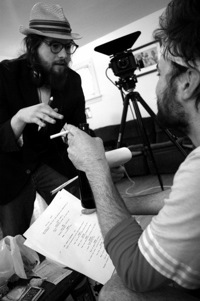
SklarAlong with some of my cast and crew, I accompanied the film on the road for 3 months in order to help market the film in each city. We basically set the whole thing up like a band would do for a tour, supplementing the screenings with intensive grass-roots marketing and also using social networking sites to create a viral buzz prior to our arrival.

Our entire model was conceived around the concept of using the theatrical release as a tool for the ancillary benefits it can provide: building a fan-base for future projects, acting as a platform and catalyst for DVD and download releases, and providing a ton of press exposure and validation for the film to name a few.

As such, our overall goal for the tour was to break even. We felt that if we could sustain the touring of the film for the entire 3 and half month tour, the real reward would be the opportunities that would develop by maintaining the film’s limited theatrical life for as long as possible, and in as many different places as possible. I compare it a lot to when companies will build a brand, in order to create a name for themselves amongst their target audience, or when a politician will it the road to raise awareness of his campaign.

In the end, we sold a little over 9,600 tickets, as well as 800+ DVDs, despite only having them available at the last 11 screenings.

We split our ticket sales directly with the theatres, and used niche-oriented marketing to keep promotional costs down, and in the end, we grossed around $32,000 theatrically. After factoring in all the expenses, we found ourselves with a profit near $11,000. As a result, we’ll be touring again in the fall & spring, while also bringing a handful of other films with us in an attempt to make this a repeatable and sustainable distribution model.

You can check out more info on the film here; www.boxeldermovie.com. Plus there’s more verbiage on the aforementioned self-distribution stuff if you’re intrigued. We’re creating a postmortem document similar to your blog post in regards to the tour.

Again, excellent post and viewpoint on the matter, and thanks again for all that you do.

I never told Robert Redford to suck it

July 3, 2008 Follow Up, Sundance

I want to expand, redirect and challenge some of the discussion on my earlier post about [Sundance, The Nines, and the death of independent film](http://johnaugust.com/archives/2008/nines-post-mortem).

For starters, many in the P2P world were all too happy to declare victory over, well, logic. ([The Nines Director: Forget Sundance, Use P2P Instead](http://newteevee.com/2008/07/01/the-nines-director-forget-sundance-use-p2p-instead/)). That’s incorrect on a lot of levels.

In the article, I said that leaking a copy online at the right moment would have certainly increased awareness, and might have helped sales of tickets, DVDs and paid downloads. Notice that I really am talking about sales — that antiquated notion where people pay for things. My thesis is that if you make it at least as easy to obtain something legally as illegally, a fair number of potential users are happy to pay for it.

And I said nothing approaching, “Forget Sundance.” I said that Sundance buzz is annoying and meaningless, but that doesn’t mean the festival is irrelevant. Quite the contrary. Film festivals are public events in which thousands of people come together to watch challenging, independent film. The failure of arthouse distribution for indies makes festivals even more essential, because without film festivals, most of these movies would never screen before an audience.

Sundance is the Grauman’s Chinese Theater of festivals — you really do want to premiere there, to reach the biggest number of eyeballs at once. For two weeks each year, the American media pretends to give a shit about non-blockbusters. People stand in line to see documentaries, and Parker Posey is considered a star. It’s Fantasyland. So you trudge up and down the snow-covered streets, visiting all the different outlets and pimping your movie.

But wait. Didn’t I say the buzz is useless?

I think it is, at least as a component of the traditional bought-at-Sundance, released-six-months-later cycle. But if you could shorten that, and get those buzz-worthy movies from Park City in front of audiences worldwide in two weeks, I think you’d find some real success. Studios do this all the time with their quasi-indies, premiering them at a festival as a launch pad. We did it with Go in 1999.

Would it be difficult to go from Sundance to worldwide in two weeks? Absolutely. The lead time on a commercial DVD is still six weeks or more. But pay-per-view, iTunes and Netflix online have a lot more flexibility. All the legal work (clearances and contracts) would be a scramble. But we absolutely could have done it with The Nines.

Where does that leave theatrical?

I don’t know. My hunch is that for indies, the arthouse circuit is best left to special events and filmmaker Q&A’s. The Academy has rules about how long a film has to play in theaters in order to be eligible for awards, so for certain films, that may be a factor. But what readers outside Los Angeles may not realize is that many of the award-contender movies are sent to voters on DVD before they’re playing theaters.

Other small notes:

* You can disagree with me about whether Once tanked. I loved the movie, and felt it could have and should have made a lot more. Its low budget is ultimately irrelevant, because the real money was spent on marketing.

* A Sundance award-winner from this year, Ballast, dropped its deal with IFC and will self-distribute. The director gives a lot of good insight about why, and just how low the dollar figures are. If I were in his shoes, I might have done the same thing. With The Nines, we had Ryan Reynolds and Hope Davis, who were big enough names to generate some minimums. Without any stars, it’s tough to shake out more money.

* Also notable is that Ballast was to be distributed through IFC’s First Take program, which debuts movies simultaneously in theaters and by video-on-demand, much like 2929’s HDNet Films program. It seems like the right idea, so I’m curious whether the business model will work.

* The Sundance folks are adamant that it’s a festival, not a market. Redford himself [has said](http://www.canada.com/vancouversun/news/arts/story.html?id=74eacc4d-d5b5-45cc-b3c0-fae9fc0ea18a), “We have to remind people of who we are and what we’re about…[W]hen buyers are coming in and looking at the guide (for commercial product), I don’t care about what’s commercial. I think we should leave that to the mainstream.”

Coming back to one of the key ideas in the original article, I’d stress that the real measure of success for an indie film’s release is how many people saw it. Festivals let people see your movie. So do theatrical, DVD, pay-per-view, TV and yes, piracy. Finding the right combination these elements is the challenge. I don’t think I have the answer, but I can safely say it’s not what we did on The Nines.

I got married

June 30, 2008 Follow Up

On Saturday evening, one hundred friends and family members got together for our wedding at a house in the hills. There were rings and toasts and food and cake. It’s all a bit of a blur. The photos I’ve seen so far have me grinning idiotically, which I’m sure I was.

We had guests come from as far away as Brazil and as far back as Webelos. Weddings and funerals seem to be the only ways to assemble large swaths of people from across one’s life. And only in the former do you get to catch up. That was a great part of the weekend.

At a cocktail party on Friday night, I described the feeling that the universe had forked, and that luckily we’d ended up in the version in which marriage is legal and good people win elections. Here’s hoping my theory is proved correct.

You’ll likely see photos from the wedding in (ironically enough) bridal magazines. And you’ll see my name and face in the press as we get closer to the November election, in an effort to defeat a constitutional amendment which would make Saturday’s festivities impossible.

But for now, I’m just trying to get used to the ring on my finger. And saying husband.

Scene challenge winners

May 8, 2008 Challenge, Follow Up

Y’know, I think we learned something today: Derivatives were maybe not the best choice for the [third-ever scene challenge](http://johnaugust.com/archives/2008/derivativ).[Scene Challenge]

I deliberately picked something tough because in real life, screenwriters are often faced with [challenging topics to explain](http://johnaugust.com/archives/2008/how-to-explain-quantum-mechanics). For example, last night I spoke with Ron Bass about the Einstein project he’s working on. Quick: Show special relativity.

But this wasn’t much easier. Readers tried hard to find a way to make these abstract financial instruments cinematically explicable, but it proved tougher than expected. First, you had to find a scenario in which derivatives would make sense. Then you needed to craft an explanation that didn’t read like a Wikipedia summary.

That’s assuming you really understood what derivatives were, and after reading 84 entries, I think I understand them less. In the end, I was happy to accept any of the sub-categories (options, futures, forwards), but kept hoping for more entries where the concept of a derivative was really key to the story, and not a throwaway bit of dialogue. That’s why I threw in my own piece of [Angel fan-fic](http://johnaugust.com/archives/2008/derivativ#comment-129753).

That said, I was happy to see that most of the entries didn’t take place on Wall Street, but rather ranged from fantasy ([Alan Scott](http://johnaugust.com/archives/2008/derivativ#comment-129712)) to bachelorhood ([Andy](http://johnaugust.com/archives/2008/derivativ#comment-129742)).

“John August” was introduced as an element in a [surprising](http://johnaugust.com/archives/2008/derivativ#comment-129847) [number](http://johnaugust.com/archives/2008/derivativ#comment-129801) of [scenarios](http://johnaugust.com/archives/2008/derivativ#comment-129851), a meta-quality that helped break up the sameness, but didn’t win any ribbons.

[Jonathan](http://johnaugust.com/archives/2008/derivativ#comment-129867), however, brought up an interesting and obvious analogy I’d overlooked:

ACCOUNTANT

Why don’t you just ask your blog readers to explain it for you?

JOHN

I’ve already tried that. You should have seen the dreck they wrote back. Besides, what do I pay you for?

ACCOUNTANT

(sighing)

When a studio wants to buy your script, but doesn’t want to risk all their money, what do they do?

JOHN

They option the script, so they can buy it at a future date. Crafty devils.

(Jonathan also put me in a jacuzzi with grape-feeding starlets, which suggests he might not know my biography that well.)

[Juicy Lucy](http://johnaugust.com/archives/2008/derivativ#comment-129898) found a good example of a character whose entire existence seems to be a pitiful derivative:

A COUGH from across the table causes Popeye and Olive Oyl both to look up, but their companion’s face hides behind his open newspaper, whose headline reads:

PRICE OF BEEF EXPECTED TO PLUMMET BY THE END OF THIS WEEKEND

The newspaper lowers to reveal WIMPY, his yellow top-hat perched precariously on his fat head, his already thin mustache stretching even further when he shoots a sh*t-eating grin at the approaching WAITRESS...

WIMPY

I’ll gladly pay you Tuesday, for a hamburger today.

I liked how [Unkatrazz](http://johnaugust.com/archives/2008/derivativ#comment-129935) made the distinction between a stock and derivative:

PAPERWEALTH

Why buy an investment...when you can make a bet on an investment?

Having a character explain his job was a natural choice for many readers. The best of these was [Jacob’s](http://johnaugust.com/archives/2008/derivativ#comment-129958):

Next date: Girish is animated. He holds a coffee cup and moves it around the table as he speaks.

GIRISH

Say there is a farmer growing coffee beans in Karala. It’s late July and harvest is still six months away. The problem is that market prices for coffee go up and down for reasons out of his control. In six months, prices could be higher than they are now, which would be lovely. But if prices are lower, he stands to lose his farm. In order to protect himself, he gets together with other farmers in the same position and signs a contract to sell tomorrow’s beans for today’s prices. He gets a little money now, and then when the contract comes due, he sells the beans to the buyer for the agreed-upon price.

Girish pauses, then speaks with emphasis.

GIRISH

Betting that prices will rise, I am that buyer.

Many entries took a glancing shot at derivatives, without really trying to explain them. Of these, [Andy’s](http://johnaugust.com/archives/2008/derivativ#comment-129972) was a favorite:

Scrawny BILL GATES (19) signs a contract in black ink.

BILL GATES

We’re in the 70s. Nobody signs in blood anymore.

He smirks at SATAN (∞), who fidgets nervously.

SATAN

I don’t get it.

BILL GATES

It’s basic finance. Derivatives. By the time you get my soul, it could be worth a lot more.

SATAN

Or a lot less.

BILL GATES

But you’re getting it cheap now. Look, either way you get it. You’re covered.

SATAN

Erm... I don’t know...

BILL GATES

Tell you what. I’ll throw in some stocks to sweeten the deal.

BILL GATES offers him the pen. Satan hesitates.

SATAN

Ah, fuck it.

He signs, and at that very moment, a new Circle is carved into Hell.

Crimeland figures played a role in many entries. [Mike Lavoie](http://johnaugust.com/archives/2008/derivativ#comment-130087) gets credit for working the most financial terms into a threat:

BURGER

There are four kinds of derivatives, Frank. Forwards, which is the direction we can move in now. Options, which you’re running out of. Futures, a couple of which you can decide now. And finally: swaps. As in: You give me my money and, in exchange, you get the rest of your wife.

The two top finishers come from the other side of the crime equation, with police-types investigating derivative wrongdoing. [David Nemesis](http://johnaugust.com/archives/2008/derivativ#comment-129841):

INT. BRANT BUILDING LOBBY – DAY

Eckes and Rosenfeld are walk-and-talking to Rosenfeld’s office.

ECKES

Stop, you lost me. What was Laszlo dabbling in?

ROSENFELD

Weather derivatives. Let’s say you’re Gruber Foods. Your bottom line depends on a good wheat harvest, there are any number of things that can mess that up, and you want to hedge your bets. So you buy up some weather futures.

ECKES

Okay. Wait, what?

ROSENFELD

Weather futures. They’re like an insurance policy on the weather, only no insurer would be crazy enough to put money on the weather. So you go to an options exchange and find someone who’ll sell you a contract that guarantees you a payout if certain things that aren’t likely to happen do happen.

ECKES

Like a snowstorm in the middle of Kansas in July?

ROSENFELD

Well...I’m sure they were thinking more along the lines of a few days of extra rainfall over a 60-day period. But yeah, pretty much. It’s all about variations from the norm. The seller’s taking a calculated risk that their forecasts will be close enough to accurate that they’ll get to keep all the money from the sale.

ECKES

So Laszlo was buying insurance policies which paid out if the weather did something unexpected?

ROSENFELD

Precisely. It’s a great investment opportunity if you just happen to be able to control the weather.

ECKES

Yeah, well, something tells me the folks in the derivatives market don’t know about super powers yet.

And this from [Anthony](http://johnaugust.com/archives/2008/derivativ#comment-129706):

AGENT

Your husband was leading something of a double life. Did you realize he was into derivatives?

WOMAN

(shocked)

You mean ... like transvestites or something?

(a beat)

AGENT

No ma’am. Derivatives. They’re financial instruments – futures, forwards, options.

(beat)

Sort of like stocks, but you’re buying the right or the obligation to make a transaction in the future. Your husband was trading derivatives online. Mostly options.

The woman stares blankly.

The Agent picks up a book from the couch – “Taste of the Town 2008”. It’s one of those coupon books school kids sell for fundraisers.

AGENT

Like the coupons in this book.

(shows her a page in the book)

This Burger Bonanza coupon here – “Any sandwich for 99 cents during the month of December”. That’s like a derivative. When you bought this coupon book you purchased the option to buy an item for a set price at a set time in the future.

WOMAN

I think I liked it better when he was just surfing the Internet for porn. At least my furniture didn’t disappear then.

In the end, I’m giving the imaginary award to Anthony for the coupon book metaphor. Well done. He can claim his bragging rights in the comments section.

Thanks to everyone who entered. I promise next time, it will be something a little more fun.

« Previous Page
Next Page »

Primary Sidebar

Newsletter

Inneresting Logo A Quote-Unquote Newsletter about Writing
Read Now

Explore

Projects

  • Aladdin (1)
  • Arlo Finch (27)
  • Big Fish (88)
  • Birdigo (2)
  • Charlie (39)
  • Charlie's Angels (16)
  • Chosen (2)
  • Corpse Bride (9)
  • Dead Projects (18)
  • Frankenweenie (10)
  • Go (29)
  • Karateka (4)
  • Monsterpocalypse (3)
  • One Hit Kill (6)
  • Ops (6)
  • Preacher (2)
  • Prince of Persia (13)
  • Shazam (6)
  • Snake People (6)
  • Tarzan (5)
  • The Nines (118)
  • The Remnants (12)
  • The Variant (22)

Apps

  • Bronson (14)
  • FDX Reader (11)
  • Fountain (32)
  • Highland (73)
  • Less IMDb (4)
  • Weekend Read (64)

Recommended Reading

  • First Person (87)
  • Geek Alert (151)
  • WGA (162)
  • Workspace (19)

Screenwriting Q&A

  • Adaptation (65)
  • Directors (90)
  • Education (49)
  • Film Industry (490)
  • Formatting (128)
  • Genres (89)
  • Glossary (6)
  • Pitches (29)
  • Producers (59)
  • Psych 101 (118)
  • Rights and Copyright (96)
  • So-Called Experts (47)
  • Story and Plot (170)
  • Television (165)
  • Treatments (21)
  • Words on the page (237)
  • Writing Process (177)

More screenwriting Q&A at screenwriting.io

© 2026 John August — All Rights Reserved.