• Skip to primary navigation
  • Skip to main content
  • Skip to primary sidebar

John August

  • Arlo Finch
  • Scriptnotes
  • Library
  • Store
  • About

John

On the new Black List

October 16, 2012 Film Industry, So-Called Experts

Franklin Leonard, creator of [The Black List](http://blcklst.com), has announced a new incarnation of his site that allows screenwriters to upload their scripts for review and rating — for a fee:

> Aspiring screenwriters will pay $25 a month to have their scripts hosted on The Black List’s website, accessible only by a closed community of Hollywood professionals. They can further pay $50 for evaluations by anonymous script readers hired by The Black List. Every read by industry professionals generated by those evaluations is entirely free.

> Moreover, The Black List will not claim a commission, finder’s fee, or producer credit on business generated by their service. “Writers retain all rights to sell and produce their work and are free to negotiate the best deal they can get. All we ask is an email letting us know of their success,” added Leonard.

Many readers (and podcast listeners) have asked for my take on it.

At first glance, it feels like an attempt to leverage the prestige of The Black List to create yet another service making money off aspiring screenwriters.

Yet Franklin Leonard knows what the hell he’s doing. This isn’t another Amazon Studios situation, where an outside entity boldly declares it can fix what’s wrong with the film industry. Leonard has already posted a [long list of answers](http://blog.blcklst.com/2012/10/the-what-how-and-why-of-the-black-list-the-long-answer-by-franklin-leonard/) to some of the immediate questions and feedback, showing he’s thought it through.

I can’t predict if this new Black List will succeed — or even if it’s a good thing for screenwriters and filmmakers — but I know it’s not done with naiveté or hubris. That makes it worth watching.

Craig Mazin and I will be discussing the new Black List in depth at Scriptnotes Live this Saturday in Austin, with the podcast episode scheduled to go up next Tuesday.
Winning marriage in Washington State

October 15, 2012 Rant

Four states will be voting on marriage equality this November, and for a change, I think it’s worth winning this round.

For new readers, a brief recap: I [got married](http://johnaugust.com/2008/i-got-married) to my husband back in 2008, during the months before Proposition 8 passed and took that right away. I’m still married in California, kinda-sorta married in some other states, and single in the eyes of the Federal government — except for taxes, for which I have to fill out [phantom returns](http://www.kiplinger.com/features/archives/2008/01/domestic-partner-joint-tax-returns.html). Yes, it’s frustrating; no, I wouldn’t do anything different. Marriage is great.

Since 2008, I’ve focused my time, money and attention on the *Perry* Prop 8 case, which is currently awaiting a hearing before the U.S. Supreme Court. ((The Court will also be considering one or more DOMA cases, which is actually more relevant for my situation, since DOMA addresses federal issues.)) I believe the courts are ultimately the correct place for these matters; the rights of minorities shouldn’t be put up for a popular vote.

With this philosophy, I’ve basically ignored the other states with same-sex marriage votes over the past four years. I fact, I wondered whether a state victory might send a dangerous message: *see, it’s perfectly fine to vote on civil rights!*

But this year, with four states voting on same-sex marriage, I think it’s worth winning at least one of them.

Last week, I donated to [Washington United for Marriage](http://washingtonunitedformarriage.org), which is working to approve R74, a measure to extend marriage to same-sex couples while protecting the rights of churches to do their own thing. (You can read the exact wording on Ballotpedia.)

The same measure already passed the legislature — couples should be getting married right now — but opponents got it placed on the ballot for the same reason they always do:

> Every time the electorate has had the opportunity to cast a ballot, the people vote for traditional marriage.

That’s Chip White, the deputy campaign director for Preserve Marriage Washington, reiterating a standard talking point.

I think it’s time to prove him wrong, and Washington is a great place to do it.

Here’s why a win matters: Federal judges are not oblivious to popular opinion, and no poll is as clear-cut as a vote. Winning same-sex marriage in Washington State would show that public opinion has crossed a tipping point, and that a pro-equality ruling would not be ahead of the curve.

So far, polling in Washington State has been strong but not decisive, with 55 percent of voters in favor of marriage equality. Just like California, the vote will probably be closer than that. But a lot has changed in four years, with popular support climbing over the 50 percent barrier for the first time. Most Americans assume marriage equality will happen. If it isn’t already the mainstream opinion, it seems destined to get there.

Why donate to Washington, and not one of the other three states with marriage issues on the ballot? I think they’re all worthy. I can only speak to my thought process in making my decision.

In polling, Maine’s marriage equality bid seems to have an even bigger lead than Washington’s. Just looking at the map, geography suggests destiny, completing a northeastern block of states with happily-married gay people. I think they’ll get marriage regardless of my dollars.

Minnesota is voting on a constitutional amendment banning same-sex marriage, much like Proposition 8. I think all these constitutional amendments will be struck down by the Court at some point. Spending money to defeat this one doesn’t immediately help couples get married, which is my priority.

Maryland’s Question 6 feels very much like Washington’s R74: passed by the legislature, then placed on the ballot for an up/down vote. I chose to support Washington over Maryland largely out of West Coast bias; I wanted another state on my side of the country to get marriage equality.

I still believe what I wrote at the start: I don’t think we should be voting on marriage at all. But I’m donating money this time because it may be our best opportunity to never vote on these issues again. With even one or two wins for our team, the other side loses its perfect-record narrative. Take away their talking points, and there’s not much left to them.

So that’s where I’m at. If you feel similarly, consider [sending some money](https://salsa3.salsalabs.com/o/50436/p/salsa/web/common/public/content?content_item_KEY=10090&track=home_topnav) to help win marriage in Washington.

Workspace: Josh Friedman

October 12, 2012 Workspace

josh friedman

##Who are you and what do you write?

I’m Josh Friedman. I created the TV show [Terminator: The Sarah Connor Chronicles](http://www.thewb.com/shows/terminator-the-sarah-connor-chronicles/), co-wrote [War of the Worlds](http://www.imdb.com/title/tt0407304/), and adapted the James Ellroy novel [The Black Dahlia](http://www.universalstudiosentertainment.com/black-dahlia/).

I used to have a blog called [I Find Your Lack of Faith Disturbing](http://hucksblog.blogspot.com/) but we broke up a couple years ago and I haven’t heard from it since.

I’m also working with the one and only John August on Chosen, a very cool pilot John’s writing for 20th TV and ABC.

##Where and when do you write?

workspaceI write almost exclusively in my office at 20th Century Fox. I have a TV deal there and with it comes a wonderful office in a building with a number of other writers.

It’s a perfect set-up for me — I love sitting at my desk with the door open so I can ensnare any of the other writers and suck them into a conversation. Any pee-break can easily turn into a fifteen minute rant about whichever network executive has given whichever one of us notes on this particular day; it’s a nice way to vent, procrastinate, bond, and, lest it get lost in the sentence, procrastinate.

I’m not a fan of writing in public spaces because it reminds me of when I used to write in public spaces. But I do like the constant distraction and stimulation I get from seeing other writers pacing in front of the Xerox machine trying to figure out how to cut twelve pages out of forty-three.

Perhaps due to these tendencies I tend to, as my co-showrunner on TSCC used to say, “burn a lot of daylight.” But I’m at peace with that: I get most of my actual typing done in the late afternoon and the evening. When I’m really working hard on a script I’m probably most productive from 7PM to 11PM. I like ordering in dinner, eating at my desk, and cranking out three hours of really focused writing. I’m a big believer in stopping when you’re on a roll so you can more easily pick it up the next day.

I listen to music all the time when I work; I think it’s because I used to do my homework in front of the television. But I can’t stand silence. I’d guess eighty percent of everything I’ve written has been accompanied by Bruce Springsteen bootlegs. Like Bruce, I believe there is no such thing as writer’s block.

##What software do you use?

[Final Draft](http://www.finaldraft.com/). I’ve never known anything else. I don’t even understand why people don’t like it. It’s better at its job than I am at mine. I choose to remain ignorant to its shortcomings.

##What hardware do you use?

MacBook Pro 13”, a big ol 27” iMac, and an iPad for reading scripts and emails and such.

I also use legal pads for early stages of doodling and asking myself questions. I like to put a question mark at the end of almost every sentence when I’m starting a project — it makes me feel like I’m not committing to anything and I have less anxiety. “He is a cop” will always be written as: “Is he a cop?”

The most important writing tools I use are my four whiteboards hung on my walls. I never used them when I wrote movies but since I started doing television I have become totally addicted to them. They’re on almost every surface of my office.

I have a swivelly chair in the middle so I can sit and spin round and round looking at the different boards. One board usually has all of the characters listed. One has ideas for scenes. One is near my desk and I use sort of as scrap paper. The fourth is reserved for the outline as I break the story. Eventually all of the boards will be covered with the outline and then I start writing my draft…

When I’m finished writing a draft, I read it backwards. I can’t explain why. It’s the same way I read magazines.

##What (if anything) would you change about how you work?

I would write more for myself. Either a screenplay on spec, or prose, or resurrect my blog. I’d write nonfiction, maybe. Just more writing in other genres, I guess.

Too many screenwriters tend to forget they were writers before they were screenwriters. Maybe some of them weren’t. But I was. I miss writing other types of things and I’d like to do that more.

Also, I wish I wouldn’t get so pissed off when people give me notes. I’m working on that one. Sort of.

Workspace: The Wibberleys

October 11, 2012 Workspace

wibberleys

##Who are you and what do you write?

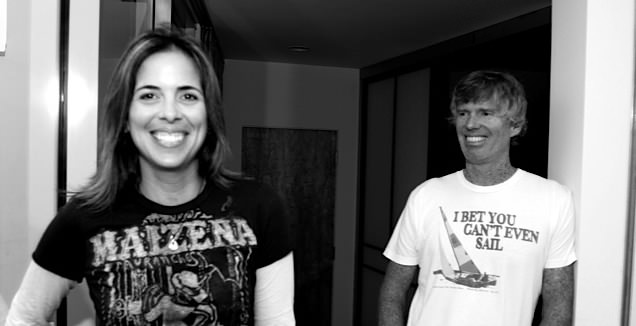
workspaceWe are Marianne and Cormac Wibberley (aka., “the Wibberleys” which is how we are now credited). When we first meet people in the business, sometimes they ask if we’re siblings. No, we are a married writing team. We’ve been married for decades and have been writing together almost as long.

Our most well known credits are the two [National Treasure](http://disneydvd.disney.go.com/national-treasure.html) movies, [Charlie’s Angels: Full Throttle](http://www.sonypictures.com/homevideo/charliesangelsfullthrottle/index.html) (with John August), and [Bad Boys 2](http://www.imdb.com/title/tt0172156/).

We are currently producing a project at Fox and writing the film adaptation of the video game [Uncharted](http://naughtydog.com/games/uncharted/) for Sony. Our daughter is a big fan of the game, so if we screw it up, we’re dead meat.

##Where and when do you write?

Everywhere. Anywhere. Because we’re married, there is no separation of work and personal life.

dogs

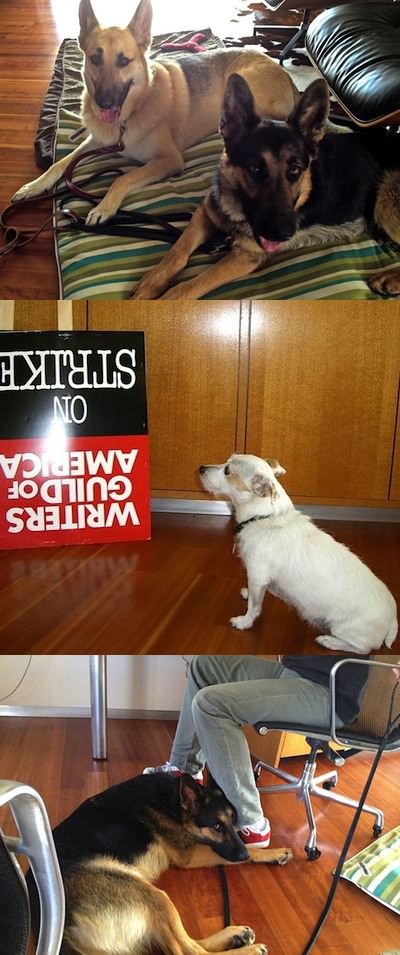
We have three dogs: a Jack Russell and two rescue German Shepherds. Our Jack Russell is easy, but the two German Shepherds run our lives.

They hang out in our office, and our writing schedule is geared around their schedule. We walk them at least two miles a day, and a lot of that time is spent spitballing and brainstorming while watching for cats, motorcycles, squirrels, skateboarders, other dogs, and the dreaded ninja cyclist.

Yeah, sure, they look nice, but they bite. If we’re on a deadline, we get stressed. And when we get stressed, they get stressed and then bad things happen in the house.

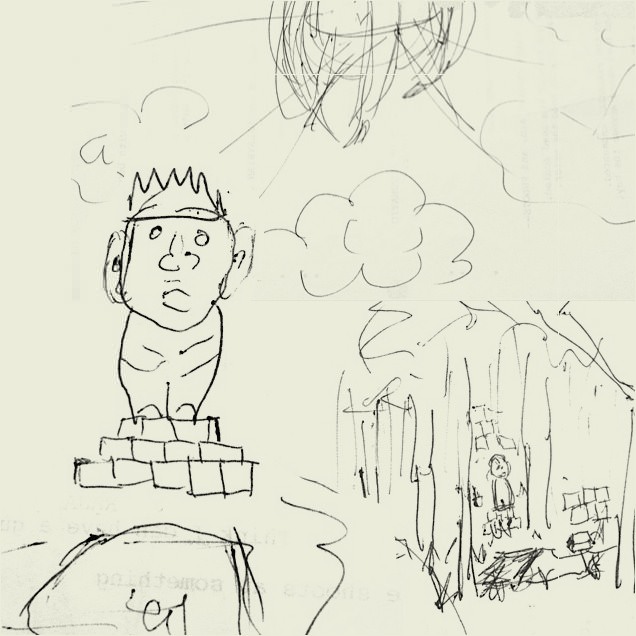
As for our process as a writing team, we do actually sit in our home office and write everything together. Not a word gets typed without us both agreeing on it. This means a lot of our time is spent trying to convince each other why his line of dialogue or her bit of action is better. We pitch feverishly, act out scenes badly, and when all else fails, we draw pictures to convince the other how awesome his/her idea is.

sketches

Here are some other things we keep around the office to inspire us.

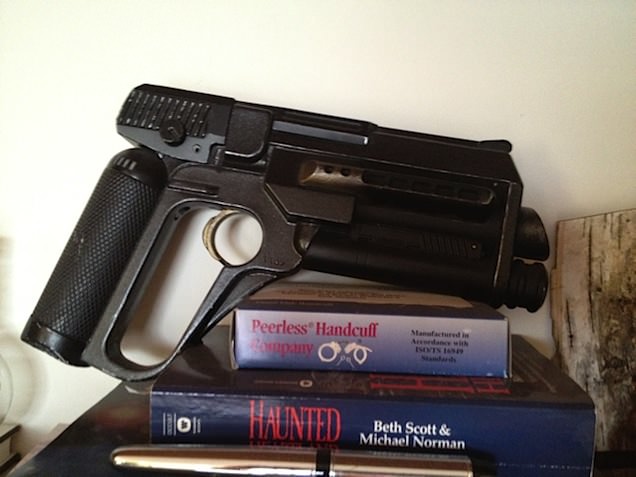
A prop gun from our first big movie, [The 6th Day](http://www.imdb.com/title/tt0216216/).

gun

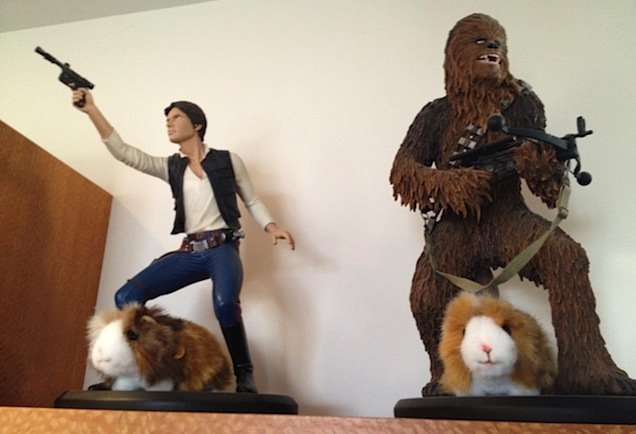
Han, Chewbacca, Sundance & Butch, and…a couple guinea pigs:

star wars

##What software do you use?

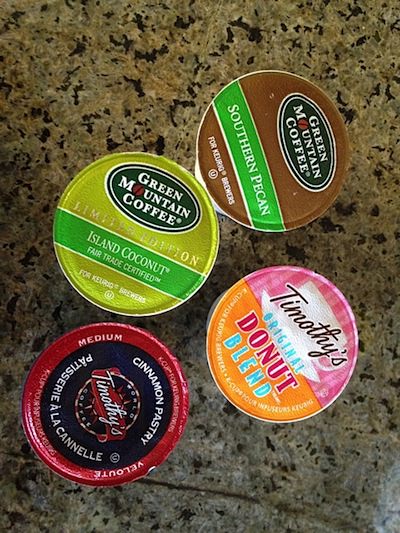
coffee keurigThe most important software we use is coffee. What is our favorite Keurig cup flavor? We have it narrowed down to four (but suggestions are welcome).
For screenwriting, we use [MovieMagic Screenwriter](http://www.screenplay.com/p-29-movie-magic-screenwriter-6.aspx) (but we know how to use Final Draft as well).

Other software: iBooks, Kindle, and Dropbox. We just started using [Pages](http://www.apple.com/iwork/pages/), which is a surprisingly easy yet powerful word processor that you can use on your iPhone and iPad. We also like it because it uses the iCloud without us having to think about it.

##What hardware do you use?

We are a Mac family. We have Mac laptops, a desktop, iPads, and iPhones.

post its

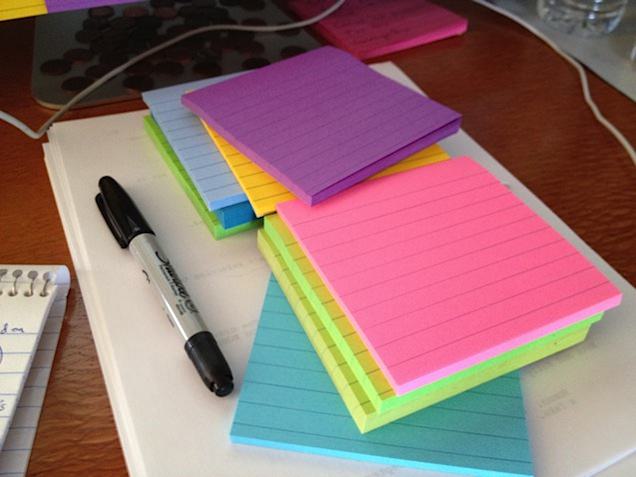
But really the best piece of hardware we use are [these giant Post-Its](http://www.amazon.com/dp/B000WUY67G/?tag=johnaugustcom-20). We started using them recently instead of index cards so we can stick our ideas and story beats to the wall, cabinets, and bookshelves. No corkboard necessary.

We outline using Post-Its and keep the three acts up on our wall while we outline and write the script. The cards are constantly changing, however. Most times, by the time we get to the third act, the story’s been rebroken a dozen times.

##What (if anything) would you change?

We’d like to be able to enjoy our time off, but instead, we just worry. If the phone’s not ringing, it means they hated the draft. And if we’re not trying to write something new, then we worry that like sharks who don’t swim we’ll die.

« Previous Page
Next Page »

Primary Sidebar

Newsletter

Inneresting Logo A Quote-Unquote Newsletter about Writing
Read Now

Explore

Projects

  • Aladdin (1)
  • Arlo Finch (27)
  • Big Fish (88)
  • Birdigo (2)
  • Charlie (39)
  • Charlie's Angels (16)
  • Chosen (2)
  • Corpse Bride (9)
  • Dead Projects (18)
  • Frankenweenie (10)
  • Go (29)
  • Karateka (4)
  • Monsterpocalypse (3)
  • One Hit Kill (6)
  • Ops (6)
  • Preacher (2)
  • Prince of Persia (13)
  • Shazam (6)
  • Snake People (6)
  • Tarzan (5)
  • The Nines (118)
  • The Remnants (12)
  • The Variant (22)

Apps

  • Bronson (14)
  • FDX Reader (11)
  • Fountain (32)
  • Highland (75)
  • Less IMDb (4)
  • Weekend Read (64)

Recommended Reading

  • First Person (87)
  • Geek Alert (151)
  • WGA (162)
  • Workspace (19)

Screenwriting Q&A

  • Adaptation (65)
  • Directors (90)
  • Education (49)
  • Film Industry (489)
  • Formatting (128)
  • Genres (89)
  • Glossary (6)
  • Pitches (29)
  • Producers (59)
  • Psych 101 (118)
  • Rights and Copyright (96)
  • So-Called Experts (47)
  • Story and Plot (170)
  • Television (165)
  • Treatments (21)
  • Words on the page (237)
  • Writing Process (177)

More screenwriting Q&A at screenwriting.io

© 2026 John August — All Rights Reserved.