• Skip to primary navigation
  • Skip to main content
  • Skip to primary sidebar

John August

  • Arlo Finch
  • Scriptnotes
  • Library
  • Store
  • About

Archives for 2004

Todd Graff on How I Write

March 8, 2004 First Person, Writing Process

Todd Grafffirst personThe first thing you need to know is that I write longhand, on legal pads, which makes me either a romantic or a dinosaur or both. When an idea starts percolating in my head, I jot notes everywhere: matchbook covers, snaking around all the white areas in a magazine ad, etc. Bad movies seem to get my juices flowing, and I’m forever ripping up popcorn containers, scribbling on their oily, white insides with the tiny wallet-clip pen my boyfriend bought me for Xmas (a far more useful present than the gym membership).

These notes all make it onto individual index cards. As time passes, the pile of cards grows, until all that’s missing is the connective scene-tissue between all the jotted down sequences.

When it’s time to write, I procrastinate as much as the next guy. I find I have to sneak up on it — like I sit down to work, knowing I absolutely have to be somewhere in an hour. That way I can’t fuck up too much at any one time.

I also take long showers, where I don’t let myself leave until I’ve had at least one valuable idea about the script. Solved one problem. My hot water bills are always an accurate gauge of how blocked I am.
***
Todd Graff wrote and directed CAMP. As a writer and
producer, his other credits include BEAUTICIAN
AND THE BEAST
, ANGIE, THE
VANISHING
and
USED PEOPLE.
Do you need permission to use a quotation?

March 6, 2004 QandA, Rights and Copyright

If when writing a screenplay, you use a quote from a live person that you saw in a magazine article, do you need to get the rights from either the person or magazine?

–Russell

I should always preface these answers with: “I’m not a lawyer, so I could be wrong…” But I don’t.

I can imagine two different instances where this might come up. The first is when you’re using the quoted material in reference to the speaker himself. So if your scene has dialogue like:

TOM
Why sell yourself short? As Donald Trump says, “As long as you’re going to think anyway, think big.”

In this case, you’re attributing the quote to its creator. In my personal, non-lawyer opinion, you’re pretty well protected without getting any additional permissions from anyone. The only thing to watch out for is that the comment couldn’t be seen as defamatory in the context you’re using it. For instance, an otherwise innocuous quote used as a racist insult should set off red flags.

Another scenario might be using a quote without attributing its source. Here it gets a little stickier. For instance:

UNCLE PHIL
You can put wings on a pig, but you don’t make it an eagle.

It’s a somewhat funny line. It’s also a direct quote from former president Bill Clinton. While someone of his stature probably wouldn’t have the inclination to hunt down a screenwriter who stole his line, another man with more time on his hands just might. The question of fair use certainly has some merit here, though it’s hard to say exactly how you’d go about documenting your legitimate usage. An on-screen footnote? A bibliography printed on the back of the ticket?

Honestly, it doesn’t come up that much. While we’re all familiar with ugly cases of plagiarism in which book authors have lost a lot of esteem, that’s just not the movie business. My advice — which tends to be my advice for most of the rights-oriented questions I get — is to do whatever you need for your script. At the time anyone expresses interest in making a real movie out of it, bring up these concerns with whomever is handling the legal affairs on the film. Let lawyers handle the law. You have plenty to worry about as a mere screenwriter.

Prince of Persia announced

March 4, 2004 Prince of Persia, Projects

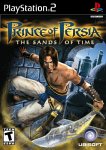
Prince of Persia videogame boxThis morning’s Variety has an article announcing PRINCE OF PERSIA: THE SANDS OF TIME, a feature film I’m executive producing. It’s an adaptation of the bestselling videogame created by Jordan Mechner. The project is set up with Jerry Bruckheimer and Disney. Technically, the deal isn’t finished yet, but it’s close enough to being real that the trades picked it up.

Jordan and I have been working together for the past three months to come up with the movie’s storyline, and spent a week pitching it to various studios. What’s unusual about the deal — for me, at least — is that I won’t be writing the script. Rather, Jordan will write it, and I’ll be supervising, helping him out as much as possible. Jordan will be an executive producer, along with Chad Oman and Mike Stenson.

Like the videogame, the story is set at the edges of the Persian Empire during the 9th century. We follow an adventurous young prince — the black sheep of his family — who uncovers a dangerous artifact in a remote mountain kingdom. With the help of an enemy princess, he must stop a despot from unleashing a sandstorm that could destroy all mankind.

Those who’ve played the videogame will recognize many elements, although the underlying plot of the movie is quite a bit different. Neither Jordan or I wanted to directly translate the game to screen, a la RESIDENT EVIL. Rather, the goal is to make something like PIRATES OF THE CARIBBEAN, swashbuckling and exciting in an entirely new world.

I’ll add updates over the next few months.

Leonard Maltin’s mid-term exam

March 3, 2004 Big Fish, QandA

I was hoping you could clarify something for me–well actually, a bunch of us from Leonard Maltin’s film class at USC have the same question. One of our potential midterm questions asks: “John August commented that Big Fish differed from typical family films in one specific way. What was the difference he spoke about?”

Nobody seems to have a specific answer to that question; could you please help us out? I realize that your time is precious but I would really appreciate if you could give me the briefest of responses so I don’t fail!

–Catherine
Los Angeles

Honestly, I might get this wrong as well. But I suspect I said that most movies about families have the big blow-out argument at the end. In BIG FISH, the only argument is at the start of the movie.

Good luck on the test.

« Previous Page
Next Page »

Primary Sidebar

Newsletter

Inneresting Logo A Quote-Unquote Newsletter about Writing
Read Now

Explore

Projects

  • Aladdin (1)
  • Arlo Finch (27)
  • Big Fish (88)
  • Birdigo (2)
  • Charlie (39)
  • Charlie's Angels (16)
  • Chosen (2)
  • Corpse Bride (9)
  • Dead Projects (18)
  • Frankenweenie (10)
  • Go (29)
  • Karateka (4)
  • Monsterpocalypse (3)
  • One Hit Kill (6)
  • Ops (6)
  • Preacher (2)
  • Prince of Persia (13)
  • Shazam (6)
  • Snake People (6)
  • Tarzan (5)
  • The Nines (118)
  • The Remnants (12)
  • The Variant (22)

Apps

  • Bronson (14)
  • FDX Reader (11)
  • Fountain (32)
  • Highland (74)
  • Less IMDb (4)
  • Weekend Read (64)

Recommended Reading

  • First Person (87)
  • Geek Alert (151)
  • WGA (162)
  • Workspace (19)

Screenwriting Q&A

  • Adaptation (65)
  • Directors (90)
  • Education (49)
  • Film Industry (489)
  • Formatting (128)
  • Genres (89)
  • Glossary (6)
  • Pitches (29)
  • Producers (59)
  • Psych 101 (118)
  • Rights and Copyright (96)
  • So-Called Experts (47)
  • Story and Plot (170)
  • Television (165)
  • Treatments (21)
  • Words on the page (237)
  • Writing Process (177)

More screenwriting Q&A at screenwriting.io

© 2026 John August — All Rights Reserved.