• Skip to primary navigation
  • Skip to main content
  • Skip to primary sidebar

John August

  • Arlo Finch
  • Scriptnotes
  • Library
  • Store
  • About

Search Results for: parenthetical

Scriptnotes, Ep 195: Writing for Hollywood without living there — Transcript

May 4, 2015 Scriptnotes Transcript

The original post for this episode can be found [here](http://johnaugust.com/2015/writing-for-hollywood-without-living-there).

**John August:** Hello and welcome. My name is John August.

**Craig Mazin:** My name is Craig Mazin.

**John:** And this is episode 195 of Scriptnotes, a podcast about screenwriting and things that are interesting to screenwriters.

Today, we are going to be talking about how to have a Hollywood career when you don’t live in Hollywood. And since that’s a topic Craig and I don’t really know anything about, we have a special guest with us here today.

**Craig:** Special guest.

**John:** Ryan Knighton is the author of books including Cockeyed and C’mon Papa: Dispatches from a Dad in the Dark. He’s written essays for Esquire, The New York Times, Salon.com, and The Globe and Mail. He’s also a screenwriter. In addition to the movie adaption of Cockeyed, he’s currently writing a feature for Ridley Scott.

**Craig:** For who?

**John:** Ridley Scott.

**Craig:** Never heard of him. No.

**John:** That talented director.

**Craig:** No.

**John:** He also teaches at Capilano University in Vancouver.

**Craig:** The Couve. Yeah.

**John:** Welcome, Ryan Knighton.

**Ryan Knighton:** Thank you. I think of it as like LA’s northernmost suburbs.

**John:** That’s a very good — very apt analogy.

**Craig:** Pretty much. Yeah, I mean, I’ve spent enough time there. I feel like it’s, by the way, great city. I actually love that city.

**Ryan:** Yeah, what about it?

**Craig:** I mean —

**Ryan:** Did I sound disparaging?

**Craig:** A touch. A little challenging, a little disbelieving. I hate to truck in stereotypes but Canadians in general are super nice. Sorry.

**Ryan:** Sorry. [laughs]

**Craig:** Sorry. How do you get the Canadian paparazzi off your lawn?

**John:** I don’t know.

**Craig:** You ask them to get off your lawn, please. The air is really clean. And it’s just beautiful. It’s a beautiful town. If you don’t like where you are, just ride your bike 10 minutes over a bridge and you’re in a different part. I love it. I just love Vancouver.

**John:** Yeah, why would you ever leave Vancouver, Ryan?

**Ryan:** For a career in Hollywood.

**Craig:** Ohh…

**John:** Oh, well that’s a perfect reason to have you on the podcast.

**Craig:** Yes, of course.

**Ryan:** Yeah.

**John:** So walk us through some back story. So you wrote these books and when did the bug to become a screenwriter kick in? Was that before you wrote the books? Has it always been there? What is your history with screenwriting and movies?

**Ryan:** Well, I was actually really a TV kid. I didn’t read a lot of books. And, you know, I grew up watching Three’s Company reruns basically. That was my education.

**John:** That’s great.

**Ryan:** So I’d never really had a plan of going into books but the long story is I lost my sight when I was in my late teens. So I’m actually a blind guy. And I went to university because of that. I was driving forklifts poorly when I was losing my sight.

**Craig:** Probably.

**Ryan:** Yeah.

**Craig:** I’m just guessing.

**Ryan:** Yeah. You’re supposed to pick up things with the forks. Not impale things with the forks.

**Craig:** [laughs] That’s a weird way to find out you’re going blind.

**Ryan:** It’s a weird way you find you’re going blind.

**Craig:** Yeah.

**Ryan:** Yeah. So I ended up going back to — well, not going back to. I end up going to university and, you know, I kind of got the bug for writing there and I started writing books and articles and things like that. And I had a great chain of mentors. And so TV was never and screenwriting was never really on my horizon. I wished it was — like I wanted to go into theater when I was a sighted guy. I’d done like improv but then when the blackouts started happening on stage, you know, my sight was going and I couldn’t get off stage.

**Craig:** Yeah.

**Ryan:** So, I never thought it was something I’d be able to, you know, participate in. But after I’d done my first memoir Cockeyed, you know, my lit-agent had tried to sell the film rights and nobody would buy it. And they said, you know, it’s very David Sedaris-y but, you know, it’s more like a sequence of essays than a story. But I just knew there was a bunch of stuff on the cutting room floor that actually was probably more in service of a movie than it was the book. So I just picked up the phone and called the film rights agent and I had sort of told them what other material I had. And he said, “Well, you know, it would help if you wrote a treatment.” And I said, “What’s a treatment?”

**Craig:** We’ve all been there by the way.

**Ryan:** You’ve been there?

**Craig:** Everybody that is asked to write a treatment goes, “Uh-huh”. And then they immediately run to somebody and go, “What the F is a treatment?”

**Ryan:** And that’s probably your first career choice.

**Craig:** Pretty much.

**Ryan:** It’s like if you didn’t ask that question, you would have no career, but it’s the people who say, “Okay, what’s a treatment?”

**Craig:** Yeah, yeah. “Can someone please help me?”

**Ryan:** Yeah.

**Craig:** It’s a weird word for what that is. Yeah.

**Ryan:** Yeah.

**Craig:** Tell us what a treatment is?

**Ryan:** Me?

**Craig:** Well, somebody — you’re the person now that’s going to answer the question for them.

**Ryan:** Well, it’s weird, like he sent me three and he said sort of imitate these. And my first thing was, “Oh, it’s in present tense. How weird? As a book writer, as a memoirist, I mean, why do you guys write in present tense?”

**Craig:** Right.

**Ryan:** So that was actually a strange thing to switch to. I actually had to really self-consciously work in present tense when I was writing whereas like teaching in the university now, all my students write in present tense. They have no past.

**Craig:** [laughs] It’s so strange.

**Ryan:** It’s a weird glitch in the culture now. I wonder if it’s — did you guys read The Hunger Games books?

**John:** Are they written in present tense?

**Craig:** Yeah, and it really threw me but I could also see how that probably helped them.

**Craig:** They were?

**Ryan:** Yeah, and it probably helped when it was time to adapt them because everything was just — and it was all present tense first person.

**John:** Yeah.

**Ryan:** Well, my theory has been that it’s arisen as in speech the way like has arisen to replace said. That you’ve switched from a print-based culture to a mediated culture where, you know, “said” is for print culture. You know, “This is what I said.” And now we say, “I was like this.” Like you’re performing it.

**John:** Mm-hmm.

**Ryan:** And sort of present tense is in that sort of more performance mode, right?

**Craig:** And there you were trying to engage in performance mode with your treatment.

**Ryan:** Yes.

**John:** Yes.

**Ryan:** So it made sense. And, you know, I imitated. And what I learned was just, you know, tell me the sort of the short barstool yarn of the story with its big moments. And I just tried my best and it was too long because I was writing books and it took me awhile to learn less is more and less is still more. And so I did that and nobody was interested still but that was interesting.

**Craig:** So far it’s going great.

**Ryan:** It was going great.

**Craig:** Yeah.

**Ryan:** And then he said, “Well, you know, you should maybe just take a crack at writing the script, adapt the book yourself.” And I said, “Great. How do I do that?” And he said I needed to get Final Draft and so I got that.

**Craig:** Which you don’t by the way. You don’t need Final Draft.

**Ryan:** Well, I didn’t know.

**Craig:** You know, we — you were lied to. [laughs]

**Ryan:** [laughs]

**John:** He just lied to you this whole time. [laughs]

**Ryan:** [laughs] It’s like I just learned this on this spot.

**Craig:** Yeah.

**Ryan:** I’ve been lied to for the last 10 years.

**Craig:** Yeah.

**Ryan:** So I got that and then he sent me three scripts and just said, “Read these and try and imitate the format.” And then I will be shameless here, I found both of your websites and I’m basically an alumni of your websites.

**John:** Holy cow.

**Craig:** Fantastic.

**Ryan:** That was my education in screenwriting.

**Craig:** I have a question for you. When you say, “They sent you these,” I mean, you’re learning about the format of screenwriting, how does format work? I assume you’re reading these in Braille.

**Ryan:** I don’t actually read Braille.

**Craig:** So what are you doing? How do you pick up the — ?

**Ryan:** I have a voice synthesizer that reads to me.

**Craig:** Okay.

**Ryan:** And it’s sort of like Stephen Hawking basically.

**Craig:** Right.

**Ryan:** And if you get this voice synthesizer as a blind though, the first thing you do is you write a little bit of soft core just because it’s really interesting to hear Stephen Hawking do smut.

**Craig:** So hot. [laughs] Right.

**Ryan:** It is as funny as you imagine.

**Craig:** Yeah. [laughs]

**Ryan:** And I hope a lot of people right now are really trying to do this.

**Craig:** Yeah.

**Ryan:** Yeah.

**Craig:** But how do you pick up the format from that?

**Ryan:** Well, the format, I mean, it reads to me. It’s case sensitive in voice.

**Craig:** I see.

**Ryan:** So I can hear when things are capitalized.

**Craig:** I see.

**Ryan:** And it tells me when I’m in the action line or if I’m in a dialogue line so I know where I am in terms of function.

**Craig:** How does it tell you then? Out of curiosity.

**Ryan:** Well, it’s just sort of key strokes, you know, I sort of figured out how my voice synthesizer interacts with the program.

**Craig:** I see. Got it.

**Ryan:** Or what it reads me. And mostly I just — I wrote action lines, you know, character names and dialogue. I never really wrote parentheticals. And afterwards I would just get somebody to proof it for me and tell me if I had actually accidentally written a dialogue line in an action line and fix it.

**Craig:** Makes sense.

**Ryan:** So I had to have somebody check it. But I just, I loved it. I loved writing it. And I thought, this is so awesome to see if I can go where I’m unwanted like if I can go down to Hollywood and convince somebody that you need blind people describing pictures to you —

**Craig:** [laughs] Right.

**Ryan:** That will be like the best ever.

**Craig:** What can’t you do after that?

**Ryan:** Exactly! I figured. I figured that is the most unwanted person in Hollywood so I’m going to try that.

**Craig:** I love it.

**John:** It strikes that writing, you know, both writing in just normal fiction and writing in screenwriting the visual challenges, the lack of being able to see everything else on the page would present issues just because of — or your visual buffer. Like you can’t look back up like three paragraphs what was there. You have to physically sort of scroll up there to hear it.

**Ryan:** Yes.

**John:** Like you can’t just glance at it. You have to have it read it back to you at that moment. So do you think you have a bigger overall buffer for what’s around the line that you’re currently writing because you can’t just look at it?

**Ryan:** I do. I do. I write straight. I just write directly straight ahead as long as I can without going back and rereading.

**John:** Okay.

**Ryan:** Because it is a chore. It goes up and it reads me line by line like whatever line my cursor is on, it reads that line and it stops reading at the end of a line; not at the end of the grammatical unit.

**John:** Okay.

**Craig:** Oh, I see.

**Ryan:** So it takes a while to get used to it. And I probably should have brought it with me. You could have heard it. You wouldn’t be able to understand it. It speaks so quickly.

**Craig:** Yeah.

**Ryan:** But it’s sort of like, you get so used to the voice that you can accelerate it and accelerate it and still process the voice whereas people who’ve never heard it before can’t process it.

**Craig:** It’s just something you train your mind to.

**Ryan:** Yes, yeah.

**Craig:** To do. I mean, it’s funny. I was playing this, I guess , what do you call, like, a thought experiment on the way over here where I thought, okay, if I lose my sight, how would that impact my screenwriting? I could see how it would impact my life in all sorts of ways but how would it impact my screenwriting. And, you know, the technical aspects you’re describing, the chores, they’re there. But it’s funny like in terms of imagination and screen, what screenwriting ultimately is at its core is so — it’s so internal.

**Ryan:** Yeah.

**Craig:** You know, it’s so mind’s eye based.

**Ryan:** It is. And actually that’s what I discovered was I found a form basically or a format where what you are doing is describing a picture to somebody who can’t see it.

**Craig:** Right.

**Ryan:** So it’s basically a blind format.

**Craig:** Yes.

**Ryan:** And, you know, but it put me on the other side of the table where I’m the one describing rather than being the one being told. And so I come at it from a very kind of empathetic ear to what it’s like to hear pictures being told that are paste inappropriately to how they’re actually unfolding. Like —

**Craig:** Yeah.

**Ryan:** Action sequences that actually are quite slow. Or —

**Craig:** That’s interesting.

**Ryan:** You know, when a bus is barreling down at a character, you don’t want a rococo sentence about it.

**Craig:** Right.

**Ryan:** That’s not the feeling.

**John:** Yeah.

**Craig:** Yeah. And you’ve been at the mercy of poorly told visual paintings.

**Ryan:** Yes. Because my image of the world in my mind’s eye is mediated by other people’s language, and so, I’m really fickle.

**Craig:** Right.

**Ryan:** You want that specificity and clarity. That’s not to make people uncomfortable. Like if you meet me, don’t think I’m judging you.

**John:** [laughs]

**Ryan:** But, you know.

**Craig:** Oh, you are.

**Ryan:** But if the bus is coming at me, you know, don’t take your time.

**Craig:** Right, exactly. Yeah, yes.

**Ryan:** [laughs] In telling me that it’s coming.

**Craig:** Paint the story well.

**Ryan:** Yeah.

**Craig:** Paint the story well.

**Ryan:** Paint it well in its appropriate pace.

**Craig:** Well, if it weren’t hard enough for you as a screenwriter because you are blind, you also decided, “And I also don’t want to live in Hollywood. I think I want to stay here in Vancouver,” is that —

**Ryan:** Yeah.

**Craig:** So are there any other challenges by the way that we don’t know about?

**Ryan:** And I’m illiterate.

**Craig:** Narcoleptic perhaps or —

**Ryan:** I actually have never seen a movie, but — [laughs]

**Craig:** [laughs] Never seen a movie.

**Ryan:** Never seen a movie. No, well, I already had a life up there, right. I mean, I’ve been teaching at a university since I was in my 20s and, you know, it’s a good day job and I still like it, too. I only teach part time now. I have for years because I’m writing all the time. But I like to go back in the classroom and teach first or second year just basic writing or creative writing just to kind of check in with the 18 year olds —

**Craig:** Right.

**Ryan:** And see what they’re thinking about. And I also think it’s really useful once a year just to go in there and sort of reacquaint myself with the basics of things.

**Craig:** Right.

**Ryan:** Just to see if they’re still true. I think sometimes you develop habits that you think are truths and they’re not necessarily. So I like that once a year to go back in. So it’s one of the reasons I stay there. And then, you know, I have an 8-year-old daughter and she’s in school and my wife has her job up there.

**Craig:** Sure.

**Ryan:** And I’m Canadian. There is a culture. I do feel different down here. I couldn’t explain what it is but I do feel like a foreigner.

**Craig:** No, you absolutely are.

**Ryan:** Yeah, yeah, so it is true.

**Craig:** The word for you is alien actually.

**Ryan:** Oh, yeah.

**John:** Yeah, you’re an alien.

**Craig:** You are. But you’re legal.

**Ryan:** Okay. [laughs]

**Craig:** [laughs] You’re legal.

**Ryan:** So I stayed. I stayed up there.

**John:** Let’s figure out the history here. So the first script you’re writing is the adaption of your first book.

**Ryan:** Yeah, I adapted Cockeyed at the urging of my film rights agent because it means — I came out of the book world and for those that don’t know, you know, you have a lit agent in the book world who sells the rights to different countries for your book, your publishing rights. So Canada has a sale, US has a sale, they’re all separate. And then the film rights is something that’s usually handled by a subagent and they have the connections at the studios and the production companies to try and get somebody interested in it. So at his urging, I tried to spec, you know, adapt my memoir. And he submitted it to the Sundance Lab and I made it down to the final 25 for that and came down for a meeting with the lovely Sundance Institute people.

**John:** Yeah, they’re wonderful. And I’ve been an adviser and a mentor at Sundance for many, many sessions. So what was your experience dealing with Sundance and what was that process like for you?

**Ryan:** Well, it was amazing because it came down for the interview for the shortlist and I was expecting a lot of questions about like, “Oh, you know, how do you write? How do you put on your pants in the morning?”

**John:** Yeah.

**Ryan:** That’s what I’m used to. It’s like, “What do you see when you dream?”

**Craig:** [laughs]

**Ryan:** But they asked me just a lot of really nuts and bolts, kibbles and bits questions about story.

**Craig:** Yeah.

**Ryan:** And I realized, holy shit, I’m a writer and I don’t know much about story, particularly in the book world and coming out of academia, you know, you know a lot about rhetoric and genre theory and you don’t know the first thing about storytelling.

**Craig:** Right.

**Ryan:** And they asked me one really amazing question that sold me so well on the experience which was, you know, I was adapting my own memoir. I knew it wasn’t going to be the book anymore. It was going to be a different story because it’s a different beast when you’re doing a movie. I’d have to sacrifice certain things and drop certain plots and things.

**Craig:** Yeah.

**Ryan:** But the question they asked me was, “What do you think of sentimentality?” And it was such a strong question because in my memoir, basically, the story is, you know, I started losing my sight when I was in my teens and they said, “You could lose it completely within two years or five years or ten years, we don’t know. It could, you know, go really quick or it could just stop. But, you know, plan your future around that.”

**Craig:** Yeah.

**Ryan:** And I was a working-class kid and I didn’t know what I was going to do. I didn’t have great grades in school and all that kind of stuff. And when I was telling this story in the book, I made one choice which was I didn’t want to tell the scene when I was diagnosed. It’s just sort of the medical porn of all those trauma memoirs.

**Craig:** Absolutely.

**Ryan:** And I just didn’t want it. So I think I captured it in like maybe a sentence like after my diagnosis. And that was it. And I moved on in the story to the things that really interested me. And I cannot tell you how many people when I went on tour with that book said how moved they were by the diagnosis scene.

**Craig:** That they filled in with their mind.

**Ryan:** What they filled in. And because the genre and the culture is so front loaded —

**Craig:** Yeah.

**Ryan:** That we think we know the story before it even starts and we know it’s going to be a story about triumph of the human spirit. And the worst thing that happens to you when you go blind is you become inspirational. It’s just horrible.

**Craig:** Yeah, tragic really.

**Ryan:** And you can’t —

**Craig:** Because you just want to be a bastard, don’t you? [laughs]

**Ryan:** You just do. [laughs] Well, wouldn’t you? I mean, it’s sort of like —

**Craig:** I do every day.

**Ryan:** It’s like you become a —

**Craig:** I’m living the dream. [laughs]

**Ryan:** [laughs] It’s like you become a cartoon character. Now you can say anything.

**Craig:** Right, right.

**Ryan:** But anyways, that taught me something. And when I went into the Sundance interview and they asked me about sentimentality, I realized they understood that element in the culture that the culture is going to impose something on this that isn’t necessarily there.

**Craig:** Right.

**Ryan:** Or you’re going to be a sucker to it, too. I mean, just because you’re a blind guy doesn’t mean you’re immune to it.

**Craig:** Right.

**Ryan:** And they called me on it and I had dipped into it in parts of the script just because I didn’t know how else to handle it. And so I just substituted what the culture had sort of taught me to think about these stories. Nobody in the book world had said that to me.

**Craig:** Yeah.

**Ryan:** And I was just so impressed by their command.

**Craig:** It’s interesting. I really like the point you’re making about the difference, one of the differences, there’s many, between the world of we’ll call literary fiction and academic literary analysis and mainstream or even independent filmmaking that so much of the literary world is about deconstruction and undermining text and ripping the conventions apart and so much about what we do is to actually perfect some kind of narrative.

**Ryan:** That’s right.

**Craig:** Like a structured narrative, you know, it’s almost oppositional in its approach.

**Ryan:** It very much is.

**Craig:** You felt that jump when you —

**Ryan:** I totally felt that jump.

**Craig:** Yeah.

**Ryan:** Yeah.

**John:** I think it also speaks to the nature of present tense story telling versus this past tense which literally fiction tends to be told in the past tense where everything can be sort of looked at through a gauze of history and perspective and you can pause for a long time to figure out like what that moment actually was and what event versus screenwriting which has to keep chugging along at 24 frames per second. Like, it’s always about what’s happening right now.

**Ryan:** That’s right.

**John:** And the only way to encounter a moment or encounter an emotion is to find some way for it to be happening in the present tense and not to reflect back on something that happened before.

**Ryan:** I think in some ways I had a perfect storm of, you know, sort of collateral education for this which was — I mean, first of all, the only kind of pros I was doing be it for articles like I still do travel writing for magazines, you know, it’s like send the blind guy to the to the revolution in Cairo and see what happens. Right?

**Craig:** [laughs] Did they really do that?

**Ryan:** Yeah, it was awesome.

**Craig:** Oh my god. [laughs]

**Ryan:** It’s like I’m basically Forest Gump in the back of a CNN shot just looking for water.

**Craig:** [laughs] Oh my god. I want to read that.

**Ryan:** I just, I mean, I love that stuff. The thing that I like about non-fiction is non-fiction is really — it doesn’t matter if it’s magazine form or book form, long-form thinking. It’s really the art of omission. You have a finite amount of raw material to work with and it’s how you remove things to make the shape of a story emerge.

**Craig:** That’s right.

**Ryan:** And I think especially with memoirs and true stories which I do a lot of adapting of that I think an interesting life isn’t necessarily an interesting story.

**Craig:** That’s right.

**Ryan:** And accomplishment isn’t necessarily an interesting story. You know, that we think of those as like these big moments but sometimes there is no story that grows from that moment or grows up to that moment that gives it the kind of punch that it needs.

**Craig:** Absolutely. Yeah, I always feel like the stories about extraordinary people or ordinary people doing extraordinary things that you never get to the place where it becomes a movie until you figure out the ordinary thing that matters, you know.

**Ryan:** Oh, yeah.

**Craig:** And I was talking about it with John Lee Hancock. I remember he was looking at The Rookie to direct that. I don’t know if you ever —

**Ryan:** John Lee was one of the advisers at the Sundance Lab.

**Craig:** And he’s the best. And The Rookie is basically the story of a high school coach who had burned out as a Minor League baseball player early on from an injury. So there he was a baseball coach in Texas I think and Mike Rich I believe wrote the script. And he made a bet with his team that if they could, you know, win so many games or whatever that he would go try out again. Because the guy had pretty live arms still. And they did and he went and he tried out and he ended up pitching in the Majors for like a season and a half at the age of 38, you know, that was the thing.

**Ryan:** Oh, wow.

**Craig:** But John didn’t really know how to make that a movie until he understood that it was a story about a father and a son. And that really was what mattered that you have to find the ordinary thing under the extraordinary thing, you know. If you’re writing your own story, in a weird way, I would imagine that you’d have to kind of find the point of why does my life deserve to be a movie beyond the blindness.

**Ryan:** Yes. It’s true. It’s totally true. In fact, Cockeyed itself, I never think of as a book about blindness.

**Craig:** Right.

**Ryan:** I had a brilliant editor in New York and she, you know, that was my first lesson with non-fiction that it’s the art of omission. And my first draft was 120,000 words and she said — she phoned me and she said, “Okay, before we start editing this, I have one question for you. You have to answer it for me in one sentence and you can’t use the word blindness.” And she said, “What is your story — ”

**Craig:** What is your story about? Right. [laughs]

**Ryan:** And she said, “And you can’t answer it now. You have a week and I’ll phone you.”

**Craig:** [laughs]

**Ryan:** “And when you figure out that sentence, it’s a razor. And with that razor we will cut away.”

**Craig:** Wow. Good for her.

**Ryan:** And it was hard. But I realized —

**Craig:** And what was your answer?

**Ryan:** My answer was that basically it’s a coming of age story about a young man who’s becoming a disabled man and he thinks it’s a contradiction.

**Craig:** I see.

**Ryan:** And it’s about masculinity.

**Craig:** Right. There we go. There we go.

**Ryan:** Right. And once you had that, it’s like, oh, it just — all the stories read differently.

**Craig:** Right.

**Ryan:** Right? Because you think they’re literally about something on the surface. And, you know, when you ask young writers, you know, “What’s your story about?” They tell you what happens which is a very different question —

**Craig:** Than what it’s about.

**Ryan:** Than what it’s about.

**Craig:** Which is the most — well, because now also, I read your book and I’m not reading it from the outside point of view of somebody that’s, say, learning about in a sense of curiosity, well, what’s it like living as somebody who’s blind? I’m reading a story about something that impacts me. This is also about me. I too am a man and if you’re a woman you’re reading about your brother or your father or your son.

**Ryan:** Yeah.

**Craig:** It’s relevant.

**Ryan:** Yeah.

**Craig:** Then that just is transformative. That question of what it’s about. I mean, we talk about it on the show all the time.

**John:** Yeah, it’s a thematic question. Like, what is this movie underneath all the plot, underneath all the characters, what is it actually asking and what is it trying to find an answer for?

**Craig:** Yeah, why does this need to exist essentially. Because if it’s just about what it seems to be about, there’ve already been movies about that, you know. [laughs]

**Ryan:** Yeah. Because then it becomes like Social Network is about Facebook.

**Craig:** Right. Exactly. Great example.

**Ryan:** And I think, you know it’s sort of — what I often say is that stories are a unit of measurement that we measure what we understand in beginnings, middles and ends. And you know when a story is over because it has understood something. Right? And it didn’t know it from the beginning.

**Craig:** Right?

**Ryan:** Right. And that’s that feeling of satisfaction at the end of the story. It’s not because the plot is over.

**Craig:** That’s right.

**John:** It’s because the machine doesn’t need to run anymore.

**Craig:** The plot is over because the machine doesn’t need to run anymore.

**Ryan:** That’s exactly it.

**Craig:** That’s what resolves the plot.

**Ryan:** And that was the first lesson from non-fiction that I took into screenwriting was that thing that the art of omission is really what you’re working with in screenwriting, especially when you’re adapting, is really about the art of omission.

**Craig:** Sure.

**Ryan:** And so that was one thing. And then the other side, I mean, I did a lot on radio and I’d done stuff with This American Life and The Moth and I learned a lot from working on that side of the media because, you know, when you’re telling a story on the radio, you’re telling it in a time-sensitive medium which is screenwriting as well. You’re telling a story that is going to unfold in time and you’re trying to replicate the effect in the reading of the script of what it would be like watching it in real time.

**Craig:** Right.

**Ryan:** And when you write for radio, you’re really sensitive to that. You’re really sensitive to how a story is unfolding and when it’s starting to flag and somebody is going to actually go and do the dishes. And if they came back, would they still be able follow what’s going on? So it was such a great training in the economy of storytelling because you don’t get that with books.

**Craig:** No, no. If anything, I just imagine books provide you with this remarkable luxury to expand and contract your focus as you wish.

**Ryan:** Yes.

**Craig:** It’s kind of the fun of books is that they do that.

**Ryan:** Yeah. And I love making fun of my novelist friends because I’m like, “Oh, there you guys go, just whenever you got a problem, just make some shit up”.

**Craig:** Yeah. [laughs]

**Ryan:** Adding to the pile.

**Craig:** That’s right.

**Ryan:** You know, what do I got to do? I’ve got to find something else to remove.

**Craig:** Yeah.

**Ryan:** That’s hard. Digging is harder.

**Craig:** You have a zero sum game of time.

**John:** So it was a hard adaptation. So, is the screenplay of Cockeyed similar to the books? In what ways is it different? Is it the same thematic question in the movie version versus the book version?

**Ryan:** It’s changed in iterations, I mean, when I came out of the Lab, Jodie Foster attached for a couple of years and we worked on it. And she said something to me that was so cutting. [laughs]

**Craig:** Really?

**Ryan:** Brutal.

**Craig:** Sweet Jodie Foster?

**Ryan:** And so instructive because it was so generously done. And she read the script and she said, “I’ll direct this if…” I hope, you know, I’m sure she’s fine with me saying. She said, “I’ll direct this if you’re willing to do a page one rewrite because I think there’s a big problem in the script.” And she said, “Basically, you’ve written an ensemble story because your character is the least interesting.”

**John:** Oh yeah.

**Craig:** Wow.

**Ryan:** And she said, “You have confused a guy going blind with a transformation of character.”

**Craig:** Wow.

**Ryan:** She said, “That’s like washing your hair. It was dirty. Now it’s clean. He’s sighted and now he’s not.” She said, “But the guy at the beginning and the end is still the same person in the script. And I think, you were just avoiding yourself by making the other character stronger.”

**Craig:** Man, you know, she doesn’t seem like the kind of person that would punch you that hard in the face, but boy, that’s — but she’s right.

**Ryan:** But she was right, which is so rare.

**Craig:** I haven’t read either the book or the script but I could tell you she’s right.

**John:** But I’ll tell you like almost any memoir adapted by its own person, it’s going to have that issue because —

**Ryan:** Yes.

**John:** How you find the inherent conflict and contradiction and how do you make yourself the villain of the story in some ways and that’s a real challenge.

**Ryan:** Yes. And it was sort like, you had to go back and think about who did you think you were going to be and how was it taken from you?

**Craig:** Yeah.

**Ryan:** And when I had that, I’m like, “Oh, this is a different story now.” And so we rewrote it by taking away the ensemble, like my character wasn’t allowed to be omitted from any scenes just as a constraint to help that.

**John:** Yeah.

**Ryan:** And when that happened it became a different story. It became more of a love story about me and my wife and I’d followed her to South Korea because she went there to teach English and I was losing my sight and I went with her but she helped me pretend I could see for six months so I could keep a job.

**Craig:** Wow.

**Ryan:** And it was about how we crossed from lovers to caretaker and, you know, girlfriend to mom. And you know, it’s a bit like Lost in Translation in sort of the feel of it. And we ended up sort of amplifying that section to be really a lot of the movie.

**John:** Yeah.

**Craig:** Cool.

**Ryan:** So it changed quite a bit because of that but every time you rewrite something, you learn something different about it. I mean, I’ve written the book. I’ve written the script a few times now in different ways and it still changes.

**Craig:** And now, you’re writing a screenplay for Sir Ridley.

**Ryan:** I’ve been adapting something for his company that’s based on a New York Times story —

**Craig:** Yeah.

**Ryan:** That’s sort of a big military thing.

**Craig:** Are you allowed to talk about what it is?

**Ryan:** I don’t think I can.

**John:** Well, that’s fine.

**Craig:** Well, you shouldn’t. We’ve never gotten anyone fired. We don’t want to start now.

**John:** So, Ryan, is this the first job you’ve been hired on to write for somebody else?

**Ryan:** No.

**John:** Or you’ve done other stuff for other people too?

**Ryan:** No, I’ve done — I adapted Proof of Heaven for Universal which was the brain surgeon who had the sort of [crosstalk] visions.

**Craig:** Yes.

**Ryan:** It’s actually going back to what Craig was saying about, you know, what is the story about. I don’t think that thing is about the afterlife. I think it’s actually about something quite different. I adapted that. I adapted a thing called Wings of Madness for Chris Wedge which was something he wanted to do as a live action, his first live action. But it’s a really difficult movie to get made because it’s set in like 1903 Paris which everybody is just running to make.

**John:** Absolutely. 100 percent.

**Craig:** I’m about to start, the next thing I’m doing is 1903 Russia so —

**Ryan:** Oh, really?

**Craig:** I’m going to take the same shovel of the face. So, you’re not alone. [laughs]

**Ryan:** So we were writing about Alberto Santos-Dumont who was this sort of crazy Brazilian guy who was basically racing the Wright Brothers to invent a flying —

**Craig:** Oh, I love that.

**John:** That’s great.

**Ryan:** But he was the guys who invented the flying balloon. And there’s pictures of him circling it around the Eiffel Tower because he was the first person to prove you could control a balloon in the sky. And he actually had a flying machine in Paris. He’s still the only man who’s ever had an urban flying machine and he used to fly it to Maximes and tether it to the gas lamp like a horse.

**John:** That’s awesome.

**Craig:** Wow.

**Ryan:** I know. It’s like, why it isn’t that a movie?

**Craig:** Plus the costumes. What a great time for clothing.

**Ryan:** Oh my god, and the science like the things you discover, I mean, you guys know this way better than I do. But when you get into the research on these things, it’s always the weird little stuff that you stumble on —

**Craig:** I know.

**Ryan:** That opens up the story in this just totally amazing way.

**Craig:** That’s so funny you say that because sometimes this is how you find out you’re a storyteller. I’ll do research for things. And I’ll sit down with somebody who’s an expert in the field and I’ll begin asking questions. And they tell me what they think I’m supposed to know. But the thing that I seize on always surprises them.

**Ryan:** Yeah.

**Craig:** They’re like, “Well, why is that important?”

**Ryan:** Yeah, yeah.

**Craig:** Because it’s dramatic. That’s why.

**Ryan:** Yeah.

**Craig:** But they don’t think that way

**John:** It’s also why you can’t have somebody else do your research for you. You always say like, “Oh, I’ll have a researcher who will go out and do stuff and pull stuff in.”

**Craig:** No. You got to do it.

**John:** It’s the process of like exploration.

**John:** I can’t imagine letting somebody else do that work. It’s sort of like, “Here, sift through the rock and let me know when you find the good thing.” And it’s like, “I don’t know what I’m even looking for.”

**Craig:** Right exactly.

**John:** So you definitely have to dig.

**Craig:** Yeah. No, no, you have to do it yourself. And actually one of the great — the process of writing oftentimes is miserable. But research, I just love that part.

**John:** I love it.

**Craig:** I love that part.

**John:** Because you can’t fail at research. There’s no —

**Craig:** I’ve finally figured out why I love it so much. Yeah, I’m always looking for things that I can’t possibly fail at.

**Ryan:** John, you didn’t do the research quite well enough.

**John:** Yeah, exactly.

**Ryan:** That’s so funny.

**Craig:** This is a cool, so whatever the — you can’t tell us what it’s about but I guess at this point now you’re — after your assignment at Universal, and this is an assignment. You’re now in the cadre of working writers, doing this working writer job.

**Ryan:** Yes.

**Craig:** But you still —

**Ryan:** I just became pensionable, I learned.

**Craig:** Oh, you’re a vested in our pension.

**John:** Congratulations.

**Ryan:** I’m a vested. I’m a vested.

**Craig:** Welcome.

**Ryan:** Thank you.

**Craig:** Welcome. It’s actually quite a good pension.

**John:** But I want to connect some dots before this.

**Craig:** Okay.

**John:** So you wrote this adaptation and Jodie Foster attached herself and you had done Sundance Labs. Is that what first started getting you meetings about other adaptation projects?

**Ryan:** Things went really quiet for a while. I actually had that feeling. Like from what I’d read and understood, I thought I’m going to come out of the Sundance Lab and like there’s going to be a line up at the door.

**Craig:** No.

**Ryan:** No.

**Craig:** There’s never a line.

**Ryan:** No, there’s no line. No. And I had a couple of calls but it was much quieter than I sort of thought it would be. And it was hard. It didn’t make my life any easier at that point it seemed. I mean, Jodie definitely helped. And it was sort of nice too when you’re working in this long development process people are like, “Oh, that must be such a drag, two years.” Well, actually, it’s so nice to have those two names together side by side and nothing that anybody can judge them by.

**John:** Yeah.

**Ryan:** It’s like you’re just working with Jodie and nobody can say they didn’t like it.

**Craig:** That’s right.

**Ryan:** But I didn’t have much happen for a while and then Anne Carey who is a producer in New York called my agent and had a book that she was interested in somebody adapting and she thought of me because I’d had a general meeting with her. I’d done a couple of general meetings, not many, like a couple in New York in the in the indie world and a couple down here. And it just was expensive to do that.

**Craig:** Yeah, because you’re flying.

**Ryan:** Going back to your question about not living here it’s like you have to fly in and do that. But Anne was one of the few generals I had and it really paid off. And she brought this book to me called Rodeo and Joliet which is a true story of vein of 50/50 and it was about a comedian who was diagnosed with terminal cancer when his wife was eight and a half months pregnant. And he had three months to live and he came home and decided not to tell her.

**Craig:** Right.

**Ryan:** Until he absolutely had to. And so he was going to go through some radical treatments and stuff. And he tried to keep it all from her until he had to absolutely say, “I’m going to die”. So, he pretended he was fine the whole time. He shaved his head and said he was doing a play. And it gets funny.

**Craig:** It’s that what you’ve done, John?

**John:** That’s what I did. Yeah, yeah.

**Craig:** Oh, no. I’m so sorry to hear that’s what’s happened to you.

**John:** Absolutely.

**Craig:** And soon I’ll be alone.

**Ryan:** But it was interesting.

**Craig:** It had to have ended well because he wrote a book.

**Ryan:** He survived and what I liked about it, it goes exactly to the about-ness question was I thought, “Oh, no, if I get any work, it’s going to be — people bring me your disease books and make them funnier.”

**Craig:** Yeah.

**Ryan:** And I’m like, “I want to be that guy.”

**Craig:** You would be pegged as the disease of the week guy.

**Ryan:** But I read this book and I’m like, “I love this guy’s story because it’s not about what it should be about.” The dramatic question isn’t, “Is he going to live or die?” The dramatic question is, “How long can you keep it from her?” And you kind of want him to get away with it.

**Craig:** Right. It’s like a murder mystery almost.

**Ryan:** It’s like a ticking time bomb story, right?

**Craig:** Yeah. And it’s about marriage. And it’s about the dynamics of men and women —

**Ryan:** I just loved it.

**Craig:** Yeah, it’s great.

**Ryan:** And he was a comedian. And there was a thing I wanted to do which was, you know, because so much of his struggle was in his internal life, I said to Anne, I really want to stylize this in a way. And I had this thing like, for example, he doesn’t tell anybody he’s sick, so like, what are we going to do with that? And so I have this scene where he’s in an elevator and his head is shaved and these two women are talking and he just looks at them and they keep sort of looking at him sideways like, “Is he sick or is he — ?”

And he just says, “Cancer.” And they just carry on their conversations like he hasn’t spoken and then he’s like, “Cancer, cancer, cancer.”

**Craig:** [laughs]

**Ryan:** And he just really enjoys this moment. And then when he breaks out of the elevator and follows them out of the building it turns into Spring Time in New York and it’s a musical and he’s like, “Hey, everyone, I got cancer.”

**Craig:** Oh, that’s great.

**Ryan:** And I said, “If I can do a musical sequence of his fantasy of telling everybody and everybody is like —

**Craig:** “Great for Glenn.”

**Ryan:** I love it. And the banners drop like —

**Craig:** “Glenn has got the cancer!”

**Ryan:** If I can do that, I want to do this.

**Craig:** I love that.

**Ryan:** And they were just so game.

**Craig:** They should make that movie. That sounds like a great scene.

**Ryan:** I had such a great time in it. But that was the second one. And then —

**John:** So they paid you to write that movie and that became your second sample?

**Ryan:** And that one still circulates a lot as a sample.

**John:** Right.

**Ryan:** And they’re still trying to make it and Chris O’Dowd is attached as the lead.

**John:** Great. Oh, he’d be great.

**Ryan:** Yeah, he’s just so great.

**John:** Chris O’Dowd is sort of like you. You probably don’t know that he’s sort of like you but —

**Ryan:** He is?

**John:** He has physicality that’s actually very similar to yours.

**Ryan:** Really?

**John:** Yeah. So people who are listening at home —

**Craig:** No, he doesn’t. [laughs] I’m going to tell you right now that, no way. You think he looks like Chris O’Dowd?

**John:** Chris O’Dowd if he shaved his head.

**Craig:** No.

**John:** You don’t think so?

**Craig:** No.

**John:** All right.

**Craig:** We’re talking about the same Irish guy, right?

**John:** Same Irish guy. Yeah.

**Craig:** No.

**John:** Bridesmaids.

**Craig:** No, he’s lying to you. [laughs]

**John:** All right.

**Craig:** No. Look at these two sighted guys who can’t agree on what they see.

**John:** [laughs] Exactly. It’s a waste.

**Craig:** [laughs] What’s the point of seeing if they —

**Ryan:** What’s the point?

**John:** Absolutely, They can’t agree on who should play you.

**Craig:** What is the point?

**John:** What is the point?

**Craig:** It doesn’t even work. Vision is baloney.

**Ryan:** Is there a Google Glass out to help you guys see people the same way?

**John:** Absolutely.

**Craig:** It wouldn’t work well.

**John:** So, you need the Google Glass app that just like identifies like sort of who is —

**Craig:** [laughs]

**John:** Who’s crazy and who’s not crazy.

**Craig:** Well, you know, they have that thing online where you can upload a picture of you and it’ll tell you which —

**John:** Oh, yeah.

**Craig:** Movie star you look like. So —

**Ryan:** I have —

**Craig:** We could do that with him.

**Ryan:** I think John should build an App that’s called Consensus Vision.

**John:** 100 percent.

**Ryan:** We all just see the same thing.

**Craig:** He should not because it’s going to be rigged.

**John:** It would be totally rigged.

**Craig:** I won’t believe a damn thing that I see.

**John:** It’ll be absolutely true for everybody except for Craig’s questions about Chris O’Dowd.

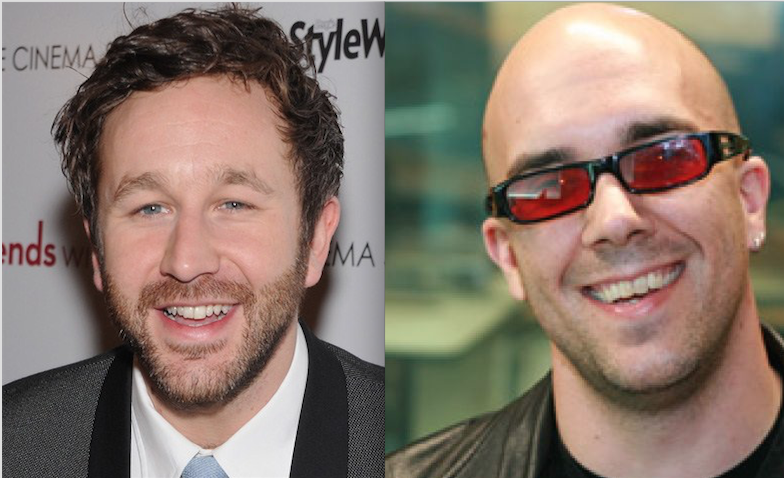
**Craig:** You know what? In the show notes, I want a picture of Ryan and I want a picture of Chris O’Dowd. And I want people to feedback on this. That’s crazy.

**John:** Yeah, Stuart will do it and Stuart will find the two photos that are most identical.

**Craig:** I know. I know.

**John:** We’ll put some red glasses on Chris O’Dowd and people will —

**Ryan:** As a man who has not seen his face in 12 years, I’m really happy to hear I look like Chris O’Dowd although I don’t know what he looks like.

**John:** Yeah, it’s great.

**Craig:** He looks a bit like not you. [laughs] No, we’re going to find who he looks like.

**John:** We will figure it out.

**Craig:** Yeah.

**John:** So —

**Ryan:** So that was my second, my second.

**John:** That was your second and that sort of got the ball rolling. So, many of our listeners are listening to this podcast because they are screenwriters who do not live in Los Angeles and you are one of the few people we’ve had on the show who is a working — –

**Ryan:** I’m a three-legged unicorn.

**John:** Yes. You are a working screenwriter who does not live here. And we could think of a couple of other people like Gary Whitta doesn’t live here.

**Craig:** Justin Marks.

**John:** Justin Marks. People, but almost all the people —

**Craig:** Well, and I don’t count New York as not here.

**John:** Yeah.

**Craig:** Because there are a ton of guys in New York.

**Ryan:** Well, that’s funny. When you go into generals, and people are like “Where do you live?” or “You don’t live here, do you?” And I say, “No.” And they say, “Oh, so you live in New York.”

**Craig:** Yes.

**John:** Yes.

**Ryan:** They assume, if you’re not living LA you live in New York. And now, they sometimes will say, “Are you in Austin?”

**Craig:** Yeah, there’s a few of those —

**Ryan:** Yeah.

**Craig:** But, yeah, because like Robert Rodriguez has his whole factory in Austin and New York has Richie LaGravenese and Tony Gilroy and —

**John:** And you’re dressed in black, so that also feels like New York dress.

**Craig:** You look New Yorky but the second you start talking, you’re Canadian.

**John:** Yes.

**Ryan:** Because I talk about my mum.

**Craig:** About your mum. [laughs]

**Ryan:** My mum. [laughs]

**Craig:** My mum. [laughs]

**John:** So we’re recording this on a Wednesday at 5 p.m. and we’re in a very specific time because you’re super busy because you came down here to do a bunch of meetings.

**Ryan:** Yeah.

**John:** So tell us what that process is like. How much ahead of time do you figure out that you need to come down? How many meetings do you jam in to one of these trips? What is it like?

**Ryan:** It’s funny because it’s sort of like a genre that I’ve invented over the past few years of like how I do meetings. Which is first of all, I don’t think you can do this if you live somewhere else unless you have representation in town.

**Craig:** Right.

**Ryan:** You absolutely have to have presentation in town.

**Craig:** Because they’re setting up all the meetings for you.

**Ryan:** They’re setting up meetings and also they kind of keep you as a virtual presence in your absence.

**Craig:** Yeah.

**Ryan:** So I’m managed at Mosaic and I’m repped at WME and I have, you know, all those people constantly circulating my stuff hopefully and keeping everybody sort of aware that my name is on the frontal lobe in case jobs come up. And you see this enough that, you know, somebody gets a book or something comes through the office that they get excited about and they think, “Okay, who is this good for?” They’re not going to think back two years to that one general they had.

**Craig:** Right.

**Ryan:** And sometimes you have to refresh with people. And so that’s part of what that team in town does for me is they keep me alive when I’m not here.

**John:** They literally keep you available.

**Ryan:** Yeah.

**John:** So literally there’s lists of writers who are available or actors who are available and you’re on the available list and they want to think of you as being available in a way that you could just go in for a meeting on something if it were interesting. And so, you have to be ready to come down here when those opportunities arise.

**Ryan:** That’s right. So if there’s something that’s super urgent like if it’s really time-sensitive then we’ll do it on the phone and that’s not great.

**Craig:** Yeah.

**Ryan:** Like I’ve done pitches, a lot of pitches on the phone which is just an absolutely horrible —

**Craig:** It’s the worst.

**Ryan:** It’s the worst. It’s just the worst. Especially —

**Craig:** There’s no — it’s so formalized, I mean, you want to feel them with you, you know.

**Ryan:** Yes.

**Craig:** It’s like in a weird ways you just want to feel that. And you can’t feel anything on a phone.

**Ryan:** It’s very hard to tell stories when you don’t know how people are really —

**Craig:** Yeah, exactly.

**Ryan:** Interacting with it and you just don’t get it on the phone.

**Craig:** And what by the way, out of curiosity, because you don’t have the visual element to tell you, what are you picking up on when you are with people in these meetings?

**Ryan:** That’s a good question.

**Craig:** Is there the buzz there?

**Ryan:** I actually often bring an assistant with me. And sometimes I will ask like tell him, like if you’re seeing like they are losing it, like they’re just rolling eyes with their — picking up BlackBerry’s.

**Craig:** Nudge me.

**Ryan:** Nudge me.

**John:** Yeah.

**Ryan:** And sort of like pick up the pace.

**Craig:** Yeah.

**Ryan:** Otherwise, I just go in to my own groove. I mean, I’ve done a lot of stuff with The Moth, with the storytelling which has been great training like —

**Craig:** Yeah.

**Ryan:** Just telling somebody a story for 10 minutes is training on pitching, because you get a sense of sort of the pacing and how to set things up. And especially if you’re handling a story that has like 10 characters in it, you realize, I don’t need to tell every one of them.

**Craig:** Right.

**Ryan:** Who are the ones that matter? What are the moments that you can really pop, you can kind of sell a certain moment in the script that really feels like, “Oh, that’s what this story is really going to feel like.” And until you tell it, you don’t feel that. Like, you can’t write that out and feel it the same way as telling it.

**Craig:** That’s right.

**Ryan:** And the room, I still find this a very bizarre thing in this industry that, you know, you’re hiring a writer based on how they can tell you something.

**John:** Yeah, it’s a crazy way to do it.

**Ryan:** It is a crazy way to do it.

**John:** Yeah, yeah.

**Ryan:** But it’s benefited me because I like doing it.

**John:** Yeah. And you’re good at it. You’re good at talking.

**Craig:** Yeah. I mean, that’s the thing. And look, there are writers who are actually terrible at talking and they shy away from pitching, but they do — it’s a little harder for them because they have to go the route of just writing and saying, “Look, here’s a script.” And then when it’s time to get an assignment, someone will sit down with them and just sort of know beforehand from their representatives, not necessarily the best in a room but the work is great, you know.

**Ryan:** Right.

**Craig:** So there’s a certain amount of faith they have to operate on. But when you’re either relatively new or you’re kind of battling for stuff to have, you know, you could call it whatever you want to call it, the gift of gab or just a natural storytelling ability, but man, it’s useful.

**Ryan:** Yeah. And I think the danger too is over doing it like if you over-rehearse a pitch like that, it comes off as recitation.

**Craig:** Correct. And glib and contrived.

**Ryan:** Yeah.

**Craig:** You know, you don’t want to feel like you’re calculating anything. You want to just — I always say to people like, the best pitch is the one where if somebody walks out of a movie theater having just seen a great movie and says, “Let me tell what I just saw”.

**Ryan:** Yeah.

**Craig:** And that buzz is, you know, what it’s all about for me.

**John:** The best pitches also tend to feel like conversations —

**Craig:** They do.

**John:** Even though you’re doing almost all the talking, you are inviting them to come in and ask a question at the right moment or to nudge the story this way or that way. You’re seeing sort of how they’re engaging with the story. So it doesn’t feel like it’s just one long monologue.

**Ryan:** Yeah.

**John:** It feels like they are present in this moment as the story is being told.

**Ryan:** Part of the difficulty I find is that, you know, it’s not visual cue either. Like I seem to be surviving without the visual cues in a room unless I’m completely missing things, like what do I know. I mean, maybe people do or just people are walking out, I have no idea.

**John:** Rolling their eyes like, oh —

**Ryan:** I’m just talking to the empty room.

**John:** [laughs]

**Craig:** [laughs] Everyone just hates you.

**Ryan:** But you can feel like that thing when you walk in to a conference room like —

**Craig:** Yeah.

**Ryan:** When I’m doing The Moth, it’s like if it’s in a theater and there’s people there that are ready to hear a story and they’re out for an evening.

**Craig:** Right.

**Ryan:** And you’ve got a microphone. There’s something that just sort of warms the room and readies it for a story. Whereas when you walk into conference room at 9 o’clock in the morning on the lot and people are still like drinking their coffee, and still trying to catch up on the morning email while they’re walking in, it is so hard to bring them up to temperature.

**Craig:** Yeah.

**John:** Yeah.

**Ryan:** And so I find those first two minutes that are not about the pitch so critical.

**Craig:** Right.

**Ryan:** Because it’s really the time you have to buffer them into your zone and get them into your sort of vibe more.

**Craig:** Yeah.

**Ryan:** And to answer your question, I mean, so that’s one thing is I need the people down here to kind of keep my presence going around. But I will start planning usually to come down about a month before I come down.

**Craig:** To give your guys time to —

**Ryan:** They need to get scripts out to people, to give them time to read them, to get back to them, and to think.

**Craig:** Set the appointments.

**Ryan:** And all of that stuff.

**Craig:** Yeah.

**Ryan:** And then, a month at least. And what I find is LA, I learned has a calendar that’s actually very short like, you know, you can’t come down in January because Sundance is on. You can’t come down in February because the Oscars are on. May and June, it’s Cannes, Cannes, Cannes.

**Craig:** Yeah.

**Ryan:** Summer.

**Craig:** Summer?

**Ryan:** Summer goes from June to forever, you know.

**John:** Yeah.

**Ryan:** Everyone is gone.

**John:** Yeah, they’re just gone.

**Ryan:** There gone until TIFF which is September.

**Craig:** And then it’s Christmas.

**Ryan:** You can’t come in September.

**Craig:** Right.

**Ryan:** So really, there is, like October and November are prime windows for me and March and April, those are usually my too busy windows for just doing generals. If I’m coming down just for general meetings, it’ll be those two times a year.

**John:** So within one of these trips down here, how many meetings will you try to get scheduled?

**Ryan:** So I will usually give my team about a week. Like I’ll give them a Monday to Friday.

**John:** Okay.

**Ryan:** Sometimes I’ll come in on the Monday because I find a lot of people have their staff meetings on Mondays.

**John:** Yeah.

**Ryan:** Like I learned over the years, I used to come in on a Sunday and I’d only have like two meetings on the Monday and it would be like kind of a waste.

**Craig:** Right.

**Ryan:** So I tend to fly in on the Monday and start Tuesday morning and then I leave Friday night.

**Craig:** In that span?

**Ryan:** In that span, five or six a day.

**Craig:** Whoa!

**John:** Wow!

**Ryan:** Yeah, I know.

**John:** That is more meetings I’ve ever heard of. That’s crazy.

**Craig:** That’s insane.

**Ryan:** Four days in a row. You get —

**Craig:** You’re like 20 to —

**John:** You’re a machine.

**Craig:** 24 meetings in a week?

**Ryan:** Yeah.

**John:** Yeah.

**Craig:** How do you even do that?

**John:** That’s superhuman. I mean, it’s great that you’re having somebody drive you.

**Ryan:** I’m Canadian.

**John:** You don’t have that [crosstalk].

**Craig:** You just have to be able to put up with an enormous amount of suffering.

**Ryan:** And no, I don’t want the other writers listening to this podcast and say, “Oh, so he’s the one hogging all — ”

**John:** All the slots.

**Craig:** Well, I have to say that there is something, like if I’m an agent, I’m always looking for an angle, you know. So, here’s a guy like, look, he’s in Vancouver. He’s coming down here for a week.

**John:** Absolutely true.

**Craig:** We got Tuesday to Friday and it’s filling up because —

**Ryan:** This is what they say.

**Craig:** Because like Bill Morrow always said, “In Los Angeles, if you put a velvet rope in front of a garbage dump, people will start lining up.”

**Ryan:** [laughs]

**Craig:** It doesn’t matter. So if suddenly there’s a competition and it’s like —

**Ryan:** I am the garbage dump to this velvet rope.

**Craig:** In this analogy you are the garbage dump.

**John:** But what I have to say is also brilliant about that is like look how many times you’re at bat. I mean, you’re literally going into those rooms so often. And so even if like four out of those five meetings are not going to lead to anything, one of them will and that’s great.

**Ryan:** Well, you know, the first general I ever had was with a producer named Richard Gladstein.

**Craig:** Oh, yeah, sure.

**John:** Yeah.

**Ryan:** You know him from those days.

**Craig:** Yeah, back in the Miramax days.

**Ryan:** Miramax days.

**Craig:** What was it? It was FilmColony, right?

**Ryan:** FilmColony.

**Craig:** Yeah, FilmColony.

**Ryan:** And it was the first general I ever had. And I pitched him a story. It was the first time I kind of pitched a story to a producer and it was terrible. But Richard really liked my sample which was the adaptation of my memoir. It’s the only script I had. And I was working on trying to get a second one together because I knew it wasn’t enough to come down and say, “I adapted my own book.”

**Craig:** Right.

**Ryan:** You know, you got to show some other chops. So I was busy doing that. And anyway, he had a book that he was, you know, looking at having somebody adapt and I read it and I loved it and it was tonally just exactly what I wanted. It was sort of like True Romance told like Raising Arizona. And so he showed my sample to the director who was attached and the director was like, “I don’t see the connection.”

**Craig:** Yeah.

**Ryan:** Like, you know, “The blind guy, this? I don’t get it.”

**Craig:** Right.

**Ryan:** So that was it. It was over. Two years later, Richard phones me and says, “Do you still like that book?” I’m like, “Oh, yeah, I still like that book.” He’s like, “Okay, I got money. I’ll hire you to do it.”

**Craig:** Wow.

**Ryan:** Two years later, I don’t know. I hadn’t spoken to him in two years.

**Craig:** That’s, wow. Richard is that kind of guy. He’s a real producer, you know.

**Ryan:** Yeah. And those kind of, like I’ve had really amazing luck with being connected with really amazing people when it comes to developing material and —

**Craig:** Well, you know my whole theory about luck is that in fact if you are talented and you seem to be, judging from everything, that really good people will find you, you know. It’s not only luck. I mean, there’s a connection between what you’re putting out and what you’re getting back.

**John:** I think there’s other advantages, too. It’s like, obviously, we talked about your experience with radio and talking to people.

**Ryan:** Yes.

**John:** That was a huge help. You’re also distinct and people remember you. There is no other person in your slot exactly. There’s like, you remember like, “Oh, that’s right. He was the talented writer who is also blind.”

**Ryan:** Yeah.

**John:** And that’s a useful thing. And that can be great. He remembers you from two years ago because you were great and you had a good approach on that. And also, oh, there’s one other sticky detail that’s always going to be there.

**Ryan:** Yeah.

**John:** And so, while that may be —

**Craig:** So the advice is everyone pretend to be blind. [laughs]

**Ryan:** Everybody gouge your eyes out, you know. [laughs] And Hollywood will bring you in —

**John:** Exactly.

**Ryan:** For your general.

**Craig:** Get to gouging folks.

**Ryan:** I think there’s two things. I mean, I think it’s true that if you want to try and do this living somewhere else, I also had the advantage that I came from other mediums. Like I had done books.

**John:** Yeah.

**Ryan:** I had done articles. There were things that people had read. Some people had recognized me from This American Life. It’s not like I came in to town cold from Vancouver.

**Craig:** Right.

**Ryan:** And just showed up with my one sample. And that was it.

**Craig:** Because otherwise you wouldn’t have agents at William Morris. You wouldn’t have representation in Los Angeles anyway.

**Ryan:** No.

**Craig:** Anyway, so —

**Ryan:** And prior to having them repping me. I mean, I had somebody in New York and he set me up on generals and at that time I might do two or three a day and it’s just blown out bigger since then.

**Craig:** Well, these guys will certainly, I mean, for those of you listening who aren’t in Hollywood or New York and you’re trying to play the game of, well, I don’t want to leave but I also want to do this, what Ryan is saying is kind of mission-critical here because any reasonable — I mean, look, like there’s four big agencies, right? Any one of them can fill anyone’s plate with meetings.

**John:** Yeah.

**Craig:** For sure, if you give them two weeks, they’ll make you go on 80 meetings.

**Ryan:** Yeah.

**Craig:** But in a weird way, it’s binary. Either you have that where it’s a buffet of meetings or you have nothing.

**Ryan:** Yeah.

**Craig:** Just wind whistling and tumbleweeds. So, you know, I’m glad that this point came out because we get this question all the time. And what’s behind the question is a certain — I want to have my cake and eat it, too. I don’t want to make a commitment but I also want to do this, so can I do this from Peoria? And, yeah, if you have an agent, if you have like a big-shot agent —

**John:** Yeah.

**Craig:** In Hollywood, yeah, you can do it from anywhere.

**John:** But Ryan’s life is much more difficult than it would be if he were living right here because then he could just easily go someplace. So I think he’s maximizing on sort of —

**Craig:** Yes.

**John:** Sort of the opposite goal of being out there.

**Craig:** There will always be that obstacle, yeah.

**Ryan:** Yes, that’s right.

**Craig:** Yeah.

**Ryan:** I mean, what I sort of decided was, I mean, there’s an expense too. I got to fly, you know.

**Craig:** Yeah.

**Ryan:** I got to stay in a hotel.

**Craig:** Right.

**Ryan:** I have to hire an assistant to fly with me.

**Craig:** And you can’t fly alone, yeah. You got this guy here.

**Ryan:** Oh, no, I go alone.

**Craig:** Oh, you fly alone?

**Ryan:** I do everything alone but when I get here I hire an assistant who drives me to all the meetings and sort of does my visual eyeballing of things.

**Craig:** Got it. Right.

**Ryan:** Kicks me under the table when I’m slow.

**Craig:** Table kicker.

**Ryan:** But the gain, like, that costs a lot, too.

**Craig:** Yeah.

**Ryan:** So, you know, if you live in Peoria and you want to try and do this and come in for meetings and all that kind of stuff, you are still spending a lot to come in and do this one week. And, you know, you might do 20 meetings of which you might not find —

**Craig:** Right.

**Ryan:** 10 of them were really that worth it in the end for you.

**Craig:** That’s right. And then there are times where you really want something that they’re discussing but you don’t get it.

**Ryan:** You don’t.

**Craig:** There are times when they’re saying, “Hey, here’s something we’d be interested in you doing,” and you’re like, “I don’t want to do it.”

**Ryan:** Or it is so general, it’s a general of the general and —

**Craig:** Right, yeah.

**Ryan:** You just feel like nothing concrete will ever come out of this.

**Craig:** And those are hard.

**Ryan:** And you realize, I drove an hour for this. This was another hour and now I’m going to drive an hour to another place, so that was three hours and I don’t think I probably should have done it.

**John:** Yeah.

**Craig:** But you never know which one is going to be the one.

**Ryan:** You never know.

**John:** Yeah, yeah.

**Craig:** And you don’t even know at the time because it may seem like it was nothing. And then, you know, two years later —

**John:** But the other thing you’re, I think, helping our listeners understand is that you have to physically be in the room with these people —

**Ryan:** You do.

**John:** For them to understand —

**Craig:** At some point.

**John:** Who you are and what it is. So like, they will have already read your script or they already know that you’re a talented writer, but they want to see you and be able to talk with you about things and they want to be in the room with you. And that’s why you’re coming down here to do these meetings.

**Ryan:** And I will admit, at the beginning, I was skeptical. I didn’t understand it. And I said, I remember saying to one of my agents, like, “Can’t I just do a phone meeting? Like, I mean, for me it’s the same.”

**John:** Yeah.

**Ryan:** “Like I don’t see them anyways. What do I care?”

**Craig:** Right. [laughs] Ah, that’s awesome.

**Ryan:** It’s just for them, isn’t it? And does it have to be all about them? What about me?

**Craig:** [laughs] It’s so funny.

**Ryan:** But I came down and I realized, “Oh, wait, if I work with any of these people,” like I’ve done scripts where, you know, you’re working for a year with this person.

**Craig:** Yeah.

**Ryan:** And you work with them, never when it’s easy. Like it’s when things are difficult. And part of being in that room is, “Can I do a year with you? Are you open and collaborative? Do we have a good rapport? Is this going to be a good time together in the hard time?

**Craig:** Yeah. Which is exactly what they need to know from us.

**Ryan:** They need to know that.

**Craig:** Because unlike, you know, let’s say, we’re doing really well and we’re working on two projects a year or even three, that’s two or three different people a year, main people that we’re dealing with. Well, they have, I don’t know, 10, 12 things a year.

**John:** Yeah.

**Craig:** They have lots of writers, so they have way more experience with bad relationships in a weird way than we do, just by the numbers, just by the amount of swings at that plate.

**Ryan:** That’s true.

**Craig:** So I think that they need to look in the horse’s mouth and figure out, “Can I sit next to this person?”

**John:** Yeah, do I, yeah.

**Craig:** Can I trust them?

**John:** Trust is really what it comes down to.

**Craig:** Yeah.

**Ryan:** Yeah.

**John:** It’s very hard to trust — I was going to say, when you can’t see, but like —

**Ryan:** Yeah.

**John:** What’s not in front of you. And so that’s why you being in that room is important. Like, “Oh, this is an actual real person who can actually do this work.” And that’s crucial.

**Ryan:** Well, you understand, I mean, you come quickly to understand the economy of fear in town where, you know, when somebody gives you a job, what they’re doing is putting their job on the line in some respect.

**Craig:** Right.

**Ryan:** Like they’re saying, “I vouch for you, that you’re the one that we should go with. So if you don’t deliver, I’m going to pay with it too.”

**Craig:** They will. They are held accountable for — I would say it’s like the worst, as writers, if somebody broke into our house and held a gun to our head and said, “I have a script that I’ve written, put your name on it and then send it out.”

**Ryan:** Yeah.

**Craig:** That’s kind of what they’re lives are like.

**Ryan:** Yeah. And I feel like I sort of owe them at minimum the dedication to the craft that I would come down.

**Craig:** Yes, exactly.

**Ryan:** You know what I mean?

**Craig:** To show that level of commitment.

**Ryan:** Yeah. But, you know, you do the 20 meetings in the week or whatever and I think it’s also important for listeners who haven’t done generals to know you can’t just come in to those meetings and — it’s not like you walk in, they just put some stuff on the table and it’s like, “Here is this job and here is this job. And there’s this one. And, you know, what do you think of these?”

**Craig:** Wouldn’t that be nice?

**Ryan:** Sometimes they have something they might pitch you and you might realize after a while like, “Oh, I was pitched that last year.”

**John:** Yeah.

**Ryan:** But it’s also, you need to come down prepared with things to bring to them as well.

**Craig:** Right.

**Ryan:** And they might be nuggets of ideas. They might be better formed ideas. They might be fully-realized treatments. But you need to have a variety of things that you can pull out of our quiver at any given moment given what they’re interested in and what they’re looking for, right?

**John:** Absolutely.

**Ryan:** So if I’m going to fly down here and spend the money and do the grind of driving to six different meetings across town and let me tell you if you don’t live in LA you spend a lot of freaking time in a car. It’s like half the day is in the car, half the day is in a conference room.

**Craig:** That’s pretty much where people listening to this show, I think, is we’re just fulfilling people’s rush-hour needs.

**John:** Absolutely.

**Ryan:** [laughs]

**Craig:** Yeah.

**Ryan:** But, you know, so you want to maximize the use of that time if you go through the rigmarole of setting up all those meetings with you agents. And when you get here by the way, many of them will just fall out.

**Craig:** Yeah, they just won’t even happen.

**Ryan:** They won’t happen. And then another one will get slotted in or one will get moved to try and get another one. And my team, when I am here, I know they are so busy. Well, their assistants are so busy, too.

**Craig:** Yeah.

**Ryan:** And I want to stress the assistants work so hard supporting me.

**Craig:** Well, they do all of it. You know, they do all of it.

**Ryan:** Because they piece it altogether, right?

**Craig:** And they also, they’re the ones that are on top because what happens is the network of assistants is what suspends the entire business.

**Ryan:** Totally.

**Craig:** It’s just, that’s the matrix that people don’t see. So you’re at a meeting, right? They know you’re in town and they know, “Okay, we need him over here at 3:00.”

**Ryan:** Yeah.

**Craig:** So if you let this go until 2:15, he’s never going to get there. So you need to be back from — you need your guy back from his early lunch like you promised. So they’re all working together to make this stuff happen. And truly, all of them, the unsung heroes.

**Ryan:** I’ve heard from friends of mine in town here who are writers that they think one of the advantages I do get in not living here is that there is a kind of novelty because you’re not always available.

**John:** Yeah.

**Craig:** Yeah.

**Ryan:** And that will get you a meeting that, for them, they might get and it changes, and it changes, and it changes, and it gets deferred for months maybe.

**Craig:** Right, because you can punt somebody to next week if they live around the corner but they can’t punt you. That’s kind of bad form.

**Ryan:** And also, because you’re not always here, there is a slight newness to you, you know, that you’re not in the scene. You’re not seen at events. You don’t cross paths with people, so, you know, you’re a bit of a Dodo bird.

**Craig:** Well, yeah, you know, it’s true that these people, you know, part of their DNA is to find something, to discover something. That’s part of their gig.

**Ryan:** Yeah.

**Craig:** In ways that isn’t necessarily what we do. They’re looking to find and exploit something essentially. Like capitalists. And to find you and exploit you. That’s part of the fun of tracking the new guy.

**John:** I just realized we’ve ruined you because —

**Craig:** Yeah, yeah.

**John:** Because people are going to be listening to this like, “Oh, he’s actually, you know, he’s sort of established. He has credits.”

**Craig:** He’s just a man. He can really — [laughs]

**John:** Absolutely. [laughs]

**Craig:** [laughs] That’s right.

**John:** I want to wrap up with one last sort of minor topic which is that you’re not American so you’re writing all this as a Canadian and are there tax and weird implications for writing in the US?

**Ryan:** Yes.

**John:** So, can you just walk us through quickly what that’s like?

**Ryan:** There’s sort of two different ways to go. I incorporated in Canada when I started sort of earning enough of a living off of it that I realized I had to do that. Some of the studios can be sticky about it. They don’t like to pay a foreign company. One studio in particular insisted that if they did pay my foreign company that I could not be covered by a WGA contract.

**Craig:** Right.

**Ryan:** Even though I’m a WGC member in Canada too, so we would have to go through that union instead which that wasn’t nice either.

**Craig:** No.

**Ryan:** So then they wanted to put me on what’s called an O1 visa which is like the, you know, what hockey players use to come and play here and get paid on foreign soil for doing work here. So, you know, it can be very complicated. Most of the time, I’d say 75% of the time, they’re fine to pay my Canadian company. I’m covered by WGA contract. I’m a foreign member. And in that case, I pay all my taxes up in Canada. They don’t withhold any here. If I do —

**Craig:** And so they don’t withhold here either for corporations.

**Ryan:** No.

**Craig:** And then you got to pay it yourself.

**Ryan:** But when I was on the O1 visa, they withheld taxes here.

**Craig:** Oh.

**Ryan:** Which were credited against my Canadian ones at the end of the year and that was just a nightmare because I was also paying Medicare here I don’t use. I was paying all sorts of stuff.

**Craig:** Right, because you got BC Health.

**Ryan:** I got that Canadian social —

**Craig:** Yeah.

**Ryan:** My wife figured out the way to part the Red Sea of the lineups to the hospital, which don’t actually exist but —

**Craig:** Yeah.

**Ryan:** The night I went in for the hospital, she figured out the way to get me to the front of the line which was, she walked me into the emergency room very quickly. I didn’t have my cane because that’s how quickly we got in the car and she said, “Quick, my husband has electrocuted himself and he’s blind.”

**Craig:** [laughs]

**Ryan:** And she meant them as separate facts.

**Craig:** [laughs]

**Ryan:** But you can imagine those doctors just came running —

**Craig:** Right.

**Ryan:** And like the guy that like lost his leg stepped out of the way like —

**Craig:** Yeah.

**Ryan:** “You got to help him.”

**Craig:** Like you’re blind, like your vision has been electrocuted.

**Ryan:** Yeah, like I shoved my eye in a wall socket.

**Craig:** Right.

**Ryan:** And they’re like, “Oh, wow!”

**Craig:** That’s a great triage trick.

**John:** Yeah.

**Ryan:** But that’s how you get up to the front of the line in a Canadian hospital is you try and do a mash-up of problems that they’ve never heard before.

**Craig:** Right. [laughs] That’s awesome. And everyone just goes, “Oh, sorry. I’m…sorry.” [laughs]

**Ryan:** Speaking to you taxes question because that, you know, everybody is so fascinated by taxes. On the other side, I will say, right now, because I’m Canadian and the exchange rate, I get a huge bump.

**John:** Yeah.

**Ryan:** So that’s one of the reasons it’s also like so attractive to work down here.

**Craig:** Yeah, it was not that way maybe 10 years ago or —

**Ryan:** Two years ago.

**Craig:** Two years it was like 1 to 1 basically.

**Ryan:** Two years ago I actually lost money working down here.

**Craig:** Canadian dollar was stronger than the US?

**Ryan:** It was above. It was.

**Craig:** Oh, that’s a national shame for us. We don’t like that sort of thing. We can’t handle that.

**Ryan:** No, I’m glad you guys rose up again like the phoenix from the ashes and kicked the ass of our dollar.

**Craig:** Because of the Loonie, I mean, we can’t let that — it’s called a loonie. We can’t let the loonie win.

**Ryan:** That’s right. I agree.

**Craig:** Yeah. The toonie can win.

**Ryan:** Please don’t let it win.

**Craig:** [laughs] Exactly. I don’t want it to win either. I make all my money down here.

**John:** I love me a toonie. It’s time for the end of our show and the One Cool Things. Craig —

**Craig:** Yes.

**John:** What is your One Cool Thing this week?

**Craig:** My One Cool Thing this week is, it’s not — I haven’t discovered anything particularly new but it’s growing in popularity. If you have, it’s probably mostly for kids I would say. If you have a son or daughter that’s a dork like me or my kids, when you love gaming, video gaming, just general nerdy pop-culture stuff like that, there’s this company called Loot Crate. Have you heard of Loot Crate?

**John:** I’ve heard of Loot Crate. Tell me.

**Craig:** Okay. It’s basically, it’s kind of a brilliant business. I think it’s like 12 bucks a month. So it’s a subscription-based thing. And once a month they send you a box. It’s not an actual crate but it’s a box and every kid loves getting a box. And you open it up and there’s just stuff in it. And all the stuff I feel like the business model is they go around to a bunch of people and they’re like, “Give us promotional items. We’ll shove them in a box. We’ll send them to kids and now kids have your stuff and are interested.”

**John:** Yeah.

**Craig:** So you get like interesting playing cards. Actually, this month, my son got a cool D&D t-shirt.

**John:** Nice.

**Craig:** And there’s little games and cool stuff. So anyway, Loot Crate, if your kids like any packages and they’re dorks like my kids, in a good way.

**John:** Yeah. I should send them Writer Emergency Packs, would that fit in a Loot Crate?

**Craig:** Totally. It would totally fit in a Loot Crate.

**John:** Totally.

**Ryan:** Loot Crate, that’s awesome.

**Craig:** Yeah, Loot Crate.

**John:** Loot Crate.

**Craig:** I mean, they may ask for quite the volume.

**John:** Yeah.

**Craig:** I don’t know how it works, but so I’m going to look into it at the very least so it’s lootcrate.com.

**John:** Very cool .

**Craig:** Yeah.

**John:** My One Cool Thing is actually a bunch of One Cool Things. This last week I had to do some optimization of Google AdWords and Google AdWords are those terrible ads that show up in search results. And so I needed to actually do that and I had no idea how to do it. And so I started looking for books on it and it’s like, “Oh, here’s advanced Google AdWords and stuff.” But it’s like, you know what, I really have no idea what I’m doing so I just went to the Google AdWords for Dummies books.

And I would say like over the course of the years, I’ve discovered that for most purposes, the For Dummies books should be your first place to look because they’re actually written for anybody who doesn’t really know what stuff is. And so if you go to any of the more of the advanced stuff right from the start, you’re going to miss out on the fundamental things.

So I think a weird sort of blanket recommendation to, if you’re at the bookstore, check out the For Dummies in whatever topic that you’re going to look up. For example, Ryan, you might want to check out like Electricity for Dummies. So the next time there’s an electrical incident. Hey. You can avoid that.

**Craig:** Do you, because I’m a big — I believe in what you’re saying. I do it all the time. I get the dummies guides. But sometimes I’ll get the Idiot’s Guide, too. It’s Coke and Pepsi, which one is better?

**John:** I don’t know consistently if they’re better. But I would say, my general recommendation is just swallow your pride and pick up the book with the goofy cover.

**Craig:** Right.

**John:** Because sometimes it actually has the best information. And I think it’s probably because it’s a big enough industry that they just actually have editors who like work really hard on finding the right people to write those books.

**Ryan:** I think dummies are just self-deprecating and idiots have Xs for eyes.

**Craig:** That’s the deal. That’s the difference.

**Ryan:** That’s the difference, yeah.

**Craig:** We should start our own thing like, you know, The Absolute Moron. Like, oh, if the Dummies books are too challenging —

**John:** Yeah, indeed. For people with incredibly low IQ.

**Craig:** Like, How Stupid Are You series.

**John:** That’s very good.

**Craig:** [laughs] All right. What about you, Ryan?

**John:** Ryan, we didn’t warn you about any of these things.

**Craig:** Yeah. You got a cool thing floating around your head.

**John:** Are there any things you’d like to endorse to our audience?

**Ryan:** Lovage?

**John:** Oh, what’s Lovage?

**Ryan:** I’m a big like food guy because like that’s sort of my way of seeing places. And Lovage is a kind of like a celery sort of basil herb that grows up in the mountains usually. But there are restaurants now that if you could find one that makes a Lovage sorbet.

**Craig:** Lovage.

**Ryan:** If you find them around, it’s amazing.

**John:** Nice.

**Ryan:** It’s like eating perfume that fell off the gods. It’s just insane.

**Craig:** Wow! I was not expecting that to be what Lovage was.

**Ryan:** I thought I would just completely do it.

**John:** Yeah, Lovage sounds like something that you use for —

**Craig:** When you started with Lovage, I got really interested.

**John:** Like pulling off skin or something.

**Craig:** Yeah, no, yeah, like frottage.

**John:** Oh, yeah.

**Ryan:** I figured this is the first sort of gardening endorsement on your show.

**Craig:** No question.

**Ryan:** Go grow some Lovage.

**Craig:** No question, Lovage.

**John:** 100 percent.

**Craig:** Well, that’s going to be a cool little Scriptnotes for us, Lovage.

**John:** Yeah, I think so.

**Craig:** Yeah.

**John:** Lettuce and Lovage. Ryan Knighton, thank you so much for being on the show this week.

**Ryan:** Thank you. I am just so happy I got to come here. And I have to say, like truly, I am like an alumni of your programs. And I can confirm to your listeners that there are people in lab coats around here.

**Craig:** Yes.

**John:** Very true. And there are of course cult members surrounding us. Because last week we learned that Scriptnotes is actually a cult.

**Craig:** Yeah, we were accused of being a cult.

**John:** Yeah, which is delightful.

**Ryan:** Yes, there’s the ATF.

**John:** They’re storming the compound as we speak.

**Craig:** Exactly, yeah.

**John:** So we’ll wrap it up. Our show, as always, is produced by Stuart Friedel. Our show is edited by Matthew Chilelli who also did the outro of this week. If you have a question for me or for Craig, you can write us at ask@johnaugust. Little short things are great on Twitter. I’m @johnaugust. Craig is @clmazin. Ryan Knighton, what are you on Twitter?

**Ryan:** I’m @ryanknighton. And it’s Knighton like K-N-I-G-H-T-O-N.

**John:** Very fantastic.

**Ryan:** Ryan Knighton.

**Craig:** I’m going to follow you moments from now.

**John:** And that’s going to be really good. And I told Craig that you’d be a fantastic guest and I was, of course, wrong. No, I was correct. [laughs]

**Craig:** John is right again.

**John:** I am right again.

**Craig:** And we like to end every show with a confirmation that once again John was right.

**John:** If you would like to tell us that I was right, leave us a comment on iTunes. And say what a great guest Ryan Knighton is. I’m sure you’ve been on a lot of other podcasts so they could probably actually search for you and find other podcasts you’ve done.

**Ryan:** Yeah. I think the most recent Nate Corddry.

**John:** Okay, great.

**Ryan:** Reading Allowed. Reading Allowed with Nate Corddry.

**John:** Very nice.

**Ryan:** That’s great.

**John:** Another good endorsement. While you’re on iTunes you can download the Scriptnotes app. We’re also on the Google App Store and you can subscribe at Scriptnotes.net to find all the very, very old back episodes dating back to episode one.

**Ryan:** The dusty ones.

**John:** The dusty ones, those old dusty ones. And that’s our show. Ryan Knighton, thank you again.

**Craig:** Thanks, Ryan.

**Ryan:** Thanks.

**John:** Cool.

Links:

* [Ryan Knighton](http://www.ryanknighton.com/), and on [Twitter](https://twitter.com/ryanknighton), [Wikipedia](http://en.wikipedia.org/wiki/Ryan_Knighton), [This American Life](http://www.thisamericanlife.org/contributors/ryan-knighton), [The Moth](http://themoth.org/posts/storytellers/ryan-knighton) and [Reading Aloud with Nate Corddry](http://wolfpop.com/photos/711304/ryan-knighton)
* Ryan’s books [Cockeyed](http://www.amazon.com/dp/1586484400/?tag=johnaugustcom-20) and [Swing in the Hollow](http://www.amazon.com/dp/1895636345/?tag=johnaugustcom-20) on Amazon
* [What is a treatment?](http://screenwriting.io/what-is-a-treatment/) on screenwriting.io
* [Ryan side-by-side with Chris O’Dowd](http://johnaugust.com/Assets/chrisryan.png)
* [LootCrate](https://www.lootcrate.com/)
* [The For Dummies series](http://www.dummies.com/) and [Google AdWords for Dummies](http://www.amazon.com/dp/1118115619/?tag=johnaugustcom-20)
* [Lovage](http://en.wikipedia.org/wiki/Lovage) on Wikipedia
* [Outro](http://johnaugust.com/2013/scriptnotes-the-outros) by Scriptnotes editor Matthew Chilelli ([send us yours!](http://johnaugust.com/2014/outros-needed))

Scriptnotes, Ep 188: Midseason Finale — Transcript

March 22, 2015 Scriptnotes Transcript

The original post for this episode can be found [here](http://johnaugust.com/2015/midseason-finale).

**John August:** Hello and welcome. My name is John August.

**Craig Mazin:** Yeah, my name is Craig Mazin.

**John:** And this is episode 188 of Scriptnotes, a podcast about screenwriting and things that are interesting to screenwriters.

Now, Craig, if I bring up the term “midseason finale,” what does that evoke to you? What does that mean to you?

**Craig:** Nothing. [laughs]

**John:** Nothing?

**Craig:** Nothing. I have a blank.

**John:** You don’t watch TV. I keep forgetting that. I keep trying to bring up these things that involve television.

**Craig:** I mean, I watch some TV but I don’t, like, I never realized there was a midseason finale.

**John:** I think it’s a fairly recent construct. And what it is, is generally as a TV show, especially a show that has a 22-episode season, they sort of break into two chunks. And so, you’ll go through a long narrative arc that will sort of like culminate after like 13 episodes or something. And this often happens sort of around Christmas time and then there’s a break and then they come back for the second half of the season later on.

And so, the midseason finale I think about sort of wrapping up a bunch of plot lines but also establishing the new stuff that’s going to happen.

**Craig:** Right.

**John:** And this episode of Scriptnotes kind of feels like a midseason finale to me because even though we’re not taking a break, even though next week there’ll be a show, there’s a whole bunch of stuff on the outline to go through which is basically let’s just wrap this stuff up and be done with it for awhile.

**Craig:** Well, I like that. I’m a big believer in getting things off the plate. Some of these things I never want to see again.

**John:** Yes, and so some of these things will be buried forever.

**Craig:** Yeah.

**John:** But let’s talk through some of the things we’ll talk about today.

**Craig:** Okay.

**John:** We will have a follow up on a previous Three Page Challenge. We will talk about the WGA diversity numbers.

**Craig:** Yup.

**John:** We’ll look at Road Runner cartoons.

**Craig:** Yup.

**John:** Gerritsen’s Gravity lawsuit.

**Craig:** Wait, we’ve already done all of these things. Oh, this is the point.

**John:** This is the point.

**Craig:** Got it.

**John:** More rules on screenwriting.

**Craig:** Oh.

**John:** But then we’ll be looking forward to the future.

**Craig:** Ah.

**John:** And so establishing the second half of the season of Scriptnotes.

**Craig:** Oh, I see, I didn’t even know we had a season. That’s how far ahead of me you are.

**John:** Absolutely. The new thing in podcasting is seasons.

**Craig:** Oh, okay.

**John:** Yeah, so Serial has seasons. We haven’t had seasons to date, but maybe we should have seasons and then maybe that’s a thing we should talk about.

**Craig:** Oh, yeah, Serial I presume is going to find somebody else who’s definitely guilty to talk about for awhile about how maybe they’re not guilty which you could do with literally anyone.

**John:** Yeah. That’s fun to do.

**Craig:** Yeah.

**John:** Go back and revisit things that are already decided.

**Craig:** I have stolen my pronunciation of literally from Seth Rudetsky.

**John:** Oh, good.

**Craig:** Yeah, he has his own.

**John:** Yeah.

**Craig:** He has — like the English people say “literally” and Americans typically say “literally” but he says, “literally, literally”. It’s his own thing. I love it. Stole it.

**John:** Yeah. So it’s like a lit tree.

**Craig:** Yes, literally.

**John:** As an adverb.

**Craig:** Right, literally yeah.

**John:** Yeah. It’s good. All right, so before we get in to this big batch of follow up, there’s a little bit of actual news. So news on my end, we have a brand new version of Weekend Read out which finally adds the thing that Craig has been asking for the last year for is support for the iPad.

**Craig:** Thank god.

**John:** So the new version, version 1.5 of Weekend Read adds iPad support but also adds iCloud Sync which is very useful. So you can start reading a script on your iPhone, continue reading it on your iPad and it will know where you are and it will keep those files together and in sync.

**Craig:** Great

**John:** It will also let you do folders, which is super handy, so you can group things together. And you can even build a folder on your back, in the little iCloud folder and just drag a bunch of files in there. So, super useful. I want to thank Nima Yousefi who literally went —

**Craig:** Literally.

**John:** Literally ripped his hair out and went insane trying to make it all work. But it works, so thank you.

**Craig:** Do you think he did it for me?

**John:** Mostly he did it for Craig. Whenever he was about to give up, I said, “But think about Craig.”

**Craig:** And he literally went back to work.

**John:** Yeah. And so, Craig, you signed up as a beta tester but we can actually check how many times you installed the beta and it was zero.

**Craig:** [laughs] That’s so me.

**John:** That’s so Raven.

**Craig:** That is so Raven. I’m going to — look, I don’t, listen man, now that I know it’s real —

**John:** Now it’s real.

**Craig:** I’m just going to —

**John:** Now it’s on the App Store.

**Craig:** Yeah, I’m just going to buy it. I’m just going to literally going to buy it.

**John:** Yeah, that’s great. Thank you.

**Craig:** How much does it cost?

**John:** Yeah, well, it’s free to download and then to upgrade it for all the new extra features, it is a one-time purchase. If you upgraded the original version of Weekend Read, just click Restore Purchases and it would already be there.

**Craig:** And if I upgrade it because I’m going to — you know me, I love to upgrade.

**John:** Yeah.

**Craig:** I’m an upgrader.

**John:** Yeah.

**Craig:** What am I looking at here? 400, 500 bucks?

**John:** $9.99.

**Craig:** I can do that. I can swing it.

**John:** You can absolutely do that.

**Craig:** Totally.

**John:** Yeah. I’ve seen your house. You could totally afford that.

**Craig:** I could totally afford it. And you know what? I’d could have done ten.

**John:** Yeah.

**Craig:** I could have just done a flat — nobody does that by the way, right? Is there anyone that does that on the iStore?

**John:** You actually can’t do it on the App Store, there are set price tiers, so.

**Craig:** That’s amazing.

**John:** They do these price tiers because depending on what country you’re in it’s a completely different amount of money.

**Craig:** Oh.

**John:** And so they set the price tier so it can be convertible to whatever currency it’s in.

**Craig:** And 9.99 is more convertible than 10?

**John:** Yeah. I don’t know.

**Craig:** Hmm.

**John:** Everyone understands it’s 10.

**Craig:** [laughs]

**John:** It’s actually literally called tier 10.

**Craig:** It’s literally tier 10.

**John:** God, oh no.

**Craig:** I hope that’s Seth —

**John:** I mean, Mathew is going to have to go through this and just cut out all of these.

**Craig:** We have to send this to Seth. I don’t care.

**John:** Yeah.

**Craig:** I want him to listen to this. I literally want him to listen to it.

**John:** Our friend, Aline Brosh McKenna, has issued a jeremiad against the term “seriously.”

**Craig:** Well, I’m with her. I mean, “really” and “seriously” both need to go.

**John:** Yeah.

**Craig:** Both.

**John:** They’re clammy.

**Craig:** They’re gone.

**John:** The other new thing we put out on the same day as Weekend Read 1.5 is brand new versions of our flagship font. So we make Courier Prime. We are the people who released Courier Prime which is free for everybody but we made it. And we also put out today Courier Prime Sans and Courier Prime Source. And so these are, the Sans version is basically it’s the exact same metrics as Couriers Prime but without the serifs on it so it is more like a Helvetica that there’s not little feet on the letters and heads.

And Courier Prime Source is designed for people who are writing programs who wanted a great mono space font. It is the same font as Courier Prime Sans but the Os have slashes through them so they don’t get confused with zeros. Actually the zeros have slashes —

**Craig:** Yeah, I was going to say the zeros are supposed to have the slashes.

**John:** That would be a huge mistake if we made that.

**Craig:** That would have been, literally, we could have brought the world down.

**John:** Yeah, like literally —

**Craig:** Literally.

**John:** Oh, we’ll never stop this.

**Craig:** I know.

**John:** Satellites could have crashed because of this one mistake.

**Craig:** Absolutely, a lot of lives would have been lost. I like that it’s your flagship font as opposed to, what, your 10 other not-flagship fonts?

**John:** Yeah, we have a lot of other internal fonts that we use for other things.

**Craig:** Oh, you have internal fonts?

**John:** Yeah. We have a busy font making —

**Craig:** A little font factory.

**John:** Operation.

**Craig:** Yeah.

**John:** And so Courier Prime Sans is actually the same face essentially as Highland Sans, the face that we use inside Highland. We just wanted other people to be able to use it. So Slugline was the first people who came to us to say, “Hey, can we use that?” And we’re like, “Yeah, sure,” but it feels weird that it’s called Highland so we changed the name of it. And then the Source font basically because the font we made as just as a Sans didn’t really work right for programmers, so we fixed some things for programmers.

Things like the asterisk which, you know, for a normal typewriter face you want the asterisk to be a certain way. But if you’re actually coding where you want it to be a much bigger, a more centered thing because you use it for multiplying numbers and such or pointers.

**Craig:** Is there a term, a linguistic term to describe a word in a language that is a foreign source but everybody mispronounces it just as a general — like Sans is, everybody knows that like a font is a Sans font.

**John:** Yeah.

**Craig:** But it’s from sans, the French without. And there are words like San Pedro here in Los Angeles.

**John:** Absolutely.

**Craig:** What the hell is San Pedro? That’s the weirdest thing. It’s not like we — why would we say that? Why don’t we just say San Pedro?

**John:** I’m sure there is. So, please listeners, if you know the name for the word that Craig is searching for, let us know. Because it’s a special consistent thing, like you have to learn that it’s La Brea, like le, le, but it’s La Cienega, same word pronounced completely differently based on what street it’s associated with.

**Craig:** Le Brea, La Cienega. You’re right. And my wife speaks fluent Spanish, and so she really gets rankled by Los Feliz. That makes her nuts. Because we all know Feliz Navidad, it’s not like we go Feliz Navidad. We all know how it’s supposed to be but we say Los Feliz. And her favorite is in Florida, there is a lake, Buena Vista. But in Florida they call it Buena Vista.

**John:** Yeah.

**Craig:** What is that?

**John:** It’s madness but it’s just the way it is. And I would also argue that Los Feliz and Los Feliz, you hear both being pronounced and it’s partly because that neighborhood in Los Angeles still has a large Spanish-speaking population who choose to call it what it’s actually — more like what its actually Spanish would be.

**Craig:** They have to be so angry every day.

**John:** I don’t think they’re so angry.

**Craig:** I think they, I would be.

**John:** I think they recognize they’re living in a period of language transition.

**Craig:** I would riot. I mean — no, I’m not — listen, when I say I would riot, please understand I’m not trying to instigate a riot. But if I were walking around, I spoke Spanish, I was raised speaking Spanish and someone is like, “Oh, where do you live?” And I said, “Los Feliz”. And they said, “Oh, you mean Los Feliz?”

**John:** Yeah.

**Craig:** I would light a garbage can on fire at that point.

**John:** So, I think in the SNL app that you highlighted earlier, two weeks ago probably, I do recall an SNL sketch where they over-pronounced Spanish words and it’s just so terrible, like “Chimichanga” like, you know, really go too far in pronouncing a Spanish word in a Spanish way. That’s one of the worst things you could do, also.

**Craig:** That’s the local news anchor disease.

**John:** Yes.

**Craig:** Yes.

**John:** Very much.

**Craig:** Yes, yes.

**John:** The last bit of news I had that was just sort of news because I got to experience it for the first time is I went to PAX East which is the big game convention here in Boston which happened to line up with the dates that I’m here in Boston for Big Fish. And it was just overwhelming and amazing.

Now, Craig, do you like conventions? Do you like going to big nerd-out bunches of people?

**Craig:** I love nerds and I love so much what happens at those conventions. Like when E3 comes around or when Comic-Con comes around I will definitely look and see what the news is coming out of them. But I cannot explain how much I hate being in an enormous box room with people jammed against me…eh…ah..eh…do you hear that noise?

**John:** Yeah, that’s pain.

**Craig:** That’s my brain every sec. I went to E3 once.

**John:** I went to E3 once too and it was —

**Craig:** Once.

**John:** Yeah. So I would rank this on the whole scale of like these kinds of conferences and conventions. So I went to CES once in Las Vegas and it was one of the most overwhelming and terrifying things I have ever encountered where like I wanted to stare just at a blank wall for like 20 minutes just to sort of get my eyes to shut up. I did not enjoy that. And then I also went to E3 and that was a similar kind of thing but a little scaled back. This was actually much better. It was a huge number of people, just a crazy number of people.

And so as you descend the escalator into it, you’re like, “Oh, my god, I’m going to have a panic attack.” But I realized quite early on that half of the convention floor is all the videogame stuff. And that’s the big, bright, loud, noisy part. And there’s probably amazing things to see and you’re seeing things like Over-Watched the new Blizzard game and there was Oculus stuff and there’s amazing stuff if you’re in to that. I just bee-lined straight through there and went to the other half of the hall where they had all the table-top games and it was just so much more sedate and calm and just delightful.

**Craig:** Of course.

**John:** One of the best things that I saw there, which I had anticipated is they have these tables where they have a bunch of opened board games and box games and table-top games and you can just check them out. You basically give them your ID. You can check them out. Like go over to a table and play them. And it was just a brilliant, simple idea but the chance to actually see what those games are like when they’re played. And I just commend everybody who sort of ventured over into that half of the arena.

**Craig:** That’s probably where you would find me. I like to go in the quiet place. I like quiet and cool. I don’t like it to be too hot.

**John:** Nope.

**Craig:** I don’t mind too cold. I’ll put a jacket on.

**John:** Yeah. That’s fine. Yeah. So, part of the reason why I wanted to see this PAX East board game space is because we actually are developing a board game in my little company.

**Craig:** What aren’t you doing over there?

**John:** We’re kind of doing a lot. We got a lot of —

**Craig:** Are you guys going to build a car?

**John:** Shh.

**Craig:** Okay. I’m just saying because I, you know —

**John:** We know you love cars.

**Craig:** Well, if you could out Tesla the Tesla. I’m just saying

**John:** Yeah, out Apple the Apple cart.

**Craig:** Anyway, all right. So back, so you’re developing a game.

**John:** We’re developing a game. And so part of the reason why there were some specific people there I needed to talk with about this game we’re developing and trying to figuring out and one of the things we need to do next is actually put it in front of a bunch of people to play test it. So this is a callout to listeners and I’ll also put this on Twitter, but in Los Angeles on which day, on — ?

**Craig:** March 23rd at 9:00 p.m.

**John:** We are going to be testing this game.

**Craig:** That was a wild guess, was I right?

**John:** You were absolutely right. You were looking at the Workflow ahead me.

**Craig:** I might be cheating.

**John:** You might be cheating. We are going to need about 30 people to test this game. So if you are a person who really likes board games, table-top games, card games, that kind of thing, we might really benefit from your just spending 90 minutes and helping us figure out this game. So if you’d like to do that, the sign-up for that is johnaugust.com/game and that would be cool if you want to come join us. So it’s in Los Angeles. It is on March 23rd at 9:00 p.m. It’ll be somewhere in the Hollywood area/Mid-Wilshire area. And we will make sure the game actually makes sense, that the instructions make sense.

**Craig:** Am I allowed to go to that?

**John:** You are allowed to go to that, Craig.

**Craig:** I’m just, like, I mean, because, I mean —

**John:** So we now need only 29 people, so tick-tock.

**Craig:** Well, maybe, I mean, hold on a second, March 29th.

**John:** That’s a Monday.

**Craig:** That’s a Monday, I got — wait, it is?

**John:** Yeah.

**Craig:** Oh, yeah, I’m looking at April.

**John:** Oh, March 23rd, March 23rd.

**Craig:** March, I’m not wrong, March 23rd, right. Yeah, I think I might do that.

**John:** That’d be really fun. We’d love to have you.

**Craig:** If I go there and I start playing and people are really enjoying it but then I just started saying eh… Is it really that good? Eh?

**John:** Yeah.

**Craig:** And I start turning people against your game.

**John:** That’s absolutely fine.

**Craig:** Oh, okay.

**John:** You have to, you know —

**Craig:** Challenge accepted. [laughs]

**John:** Yeah. [laughs] Follow your heart, Craig.

**Craig:** Exciting.

**John:** Let’s get in to the meat of our show which is all of this follow-up.

**Craig:** Follow-up.

**John:** So the first bit of follow-up is we got an email from Chris French who was one of the writers from our Three Page Challenge last week. And he’s the guy who wrote the script called Seven Secrets which involved a forest fire.

**Craig:** Yeah.

**John:** And if we recall, we were so intrigued by sort of what was happening. And we were really frustrated and confused by some of what we were reading on the page. And so, Chris sent through a much longer description about sort of real things that were happening there. But I wanted to read a little bit of what he wrote.

He writes, “To begin, yes, this is a screenplay where we will never see the faces of an adult. The entire film will frame the camera exclusively on the faces of five 9-year-olds in Big Sur, California. As for the grownups and their lives we’ll see silhouettes hands, feet, clothing, but never their faces. The film focuses on the way these five kids struggle, connect and eventually escape life-threatening circumstances forming unimaginably strong bonds with one another.”

So that was — you and I had that fundamental question because —

**Craig:** Yeah.

**John:** The first line of the script kind of says that but was it only a rule for that scene or was it a rule for the whole movie and he says, “That’s a rule for the whole movie.”

**Craig:** Yeah, so, in our little back-and-forth with him, I think he acknowledged this when he wrote to us, he realizes now, yeah, I probably do need to put something between the title page and the beginning of the script that says, “Hey, this is the way this is going to work and this is the rule, the cinematic role of this movie,” because no one would ever — it’s not something you can casually put in there.

**John:** No. Craig, what do you call that page between the title page and the first page? Is there a term you would use for that?

**Craig:** No.

**John:** Because I — that came up this week. Because the script I — the other reason why it’s a midseason finale, I turned in a script.

**Craig:** Yay!

**John:** And I ended up doing that intermediary page and I guess intermediary page makes sense. It would be kind of a dedication page kind of.

**Craig:** Yeah, I mean, people will use that page for quotes.

**John:** Yeah.

**Craig:** You’ll see that fairly frequently. So it’s like a — but in this case it’s really just a — what do they call it, a nota bene page.

**John:** Yeah, a nota bene. So you’re trying to frame the experience of reading it based on that one page that goes before the movie starts. And I had a back-and -forth with the producers about whether or not to put that page in. And I originally left it out and then they had this concern and I said like, okay, right before I sent you the draft, I took that page out. And so this is what was on that page. And they’re like, “Oh, yeah, that page needs to go back in there.”

**Craig:** Okay, yeah.

**John:** And it was just a way of framing the read that helps people understand what they’re about to get.

**Craig:** Was it a quote or was it note from you?

**John:** It was a single sentence and I don’t think I can say more than that.

**Craig:** No, no, you shouldn’t say anything more than that.

**John:** It was a single sentence but it basically framed expectation in a way —

**Craig:** Right.

**John:** That was useful. So in Big Fish, that page exists and it says, “This is a southern story full of lies and fabrication, but truer for their inclusion.” And that was always in the script and that never was meant to be filmed or shot, but it was a useful way of sort of framing people’s expectation that like you’re going to see a bunch of really crazy tall-tales and that’s sort of the point, it’s like what’s really underneath those.

**Craig:** Yeah, anytime you feel like you need to put that context there, because remember, when people go see movies, of course, they have the context of the trailer and the commercials and all of the publicity that goes around it. There is a hundred ways to prepare people for a certain kind of viewing experience. There is no way other than what we’re talking about to prepare them for the script-reading experience. So I’m always in favor of that being really direct with people.

In Cowboy Ninja Viking, I didn’t put it in between the title page and the front because I wanted to have the audience experience confusion for a bit, and then when it was time, I broke out a little paragraph in italics and said, “This is how this movie works.”

**John:** Okay.

**Craig:** But the one thing, I’m not a huge fan of what I would call the inspirational quote. You’ll see that a lot of times, somebody will throw a quote on there from Thoreau or Nietzsche or Plato, I don’t know.

**John:** Yeah.

**Craig:** And I always feel like, “Oh, yes, well, we can’t hire them,” so perhaps you’re just trading on somebody else’s wit and wisdom. I like what you did with Big Fish. You like said this is — because you know, like people are going to read this going, “Wait, is this happening? Is this not happening?” They’re a little confused because they’re not experiencing the movie. You just come right off the bat and say, “There’s going to be a bunch of lies in this. Have fun.”

**John:** Yeah.

**Craig:** Yeah.

**John:** Yeah. And it’s also trying to tip off the reader that the language is going to be a little bit more flowery than they’re probably used to.

**Craig:** That’s right.

**John:** It’s a very deliberate choice.

**Craig:** That’s right. Yeah, you’re setting that tone of the tone of tone.

**John:** That said of, you know, maybe 60 screenplays I’ve read, I think I’ve done it twice. So it’s not a thing you do all the time.

**Craig:** No, that is a particular ingredient that you add when required.

**John:** Our next bit of follow-up is the WGA diversity numbers which we discussed in the last episode. Friend of the show Dennis Hensley writes, “On the heels of the WGA’s diversity report, which you talked about in the last show, the WGA offers a writer’s access program which showcases mid-level guild writers from different diversity categories. I ticked the GLBT box. I was one of 11 writers who got in out of 171 scripts submitted.”

**Craig:** Great.

**John:** “I’m one of only two comedy writers, the rest are drama.”

**Craig:** Oh.

**John:** “I want to thank you both for the practical tips I learned listening to you as well as the overall morale boost reality checks you offer. It really helped me with the script I submitted.” So there’ll be a link to this in the show notes but this is essentially the WGA TV Writer Access Project, a program designed to identify excellent diverse writers with television staffing experience.

**Craig:** Yeah, I think that’s great. I mean, the downside of the WGA diversity report which is the annual collection of depressing statistics that do not change is that they don’t do anything except point backwards in time and say, “Eh, bad.” This program which has been going on for a bit now, this is what you would want your union to do, you know.

**John:** Yeah.

**Craig:** To go out and say, “Okay, well, we’re not going to sit here and just complain. Look at these people. We pick them. We read their stuff. We like it. You should take a really close look.” So I love that. Interesting also that the Writers Access Program does include sexual orientation or gender status whereas the diversity report doesn’t seem to get into that, as far as I could tell, at least, the diversity report is really about race and gender unless I’m missing something, and age.

**John:** And age, yeah. So this program has five diversity categories, minority writers, writers with disabilities, which the diversity report I don’t think singled out, women writers, writers age 55 and over, and gay and lesbian writers.

**Craig:** Oh, so they’re putting the number at 55, which again, probably —

**John:** Makes a lot more sense.

**Craig:** Yeah, a lot more sense than using the 40.

**John:** 40.

**Craig:** Yeah, 40 makes no sense.

**John:** Yeah.

**Craig:** Well, anyway, I’m really happy Dennis that we gave you any tips that were helpful to you and we are rooting for you and the Writers Access Program.

**John:** So one of the things they highlight about this program is that it’s all blind submissions. And so the idea of blind submissions I think is really interesting and crucial. And so, I was talking with Andrew Lippa who is here during Big Fish with me, the composer of Big Fish. And they were talking about how many more women players are in orchestras and then how much higher chairs they have reached in the last 10 years. And apparently, the reason why that change has happened has been blind auditions. So essentially, the player is playing behind the screen and the judges are listening but not seeing the player play.

**Craig:** Fascinating.

**John:** And so blind submissions for this project. And also, I’ve read the same thing for like John Oliver show. Everybody came in with just a number on their submission page and it was all read based without names or any other information about who that writer was.

**Craig:** I think that’s great. I mean, I don’t know if you recall. At one point, we talked about that study, the Princeton study where they sent out the same play under a male name and a female name and female authors actually ran aground of discrimination from female readers.

**John:** Yeah.

**Craig:** This issue of whatever you’d call it, gender bias, whatever, all the bias. Bias, how about that word [laughs]? This issue of bias, it’s not necessarily always the stereotype of the 50-year-old white guy.

**John:** Yeah.

**Craig:** But I think that blind submissions are really smart. I love that.

**John:** And sometimes people will make a misassumption based on a name on a title page. So just last week we had, I think it was K.C. Smith. We loved what we assumed was her sample, which was that great script about this guy who really wanted to eat waffles and was not allowed to eat waffles.

**Craig:** [laughs]

**John:** And so we said, this woman wrote a terrific script and it turns out K.C. is a guy and an African-American guy. And so, hooray.

**Craig:** Yeah, we didn’t know if K.C. or Chris were men or women. But it turns out they’re both guys.

**John:** They’re both guys.

**Craig:** Yes.

**John:** Two guys wrote in with a link to a live action Road Runner short. So last week we talked a lot about sort of Road Runner rules, the rules that the creators of those cartoons had set for themselves about how the Coyote and the Road Runner should function. And so this was an interesting example of trying to do that in a live action world.

I didn’t find it entirely successful. But I found it kind of just fascinating to try to apply cartoon physics and cartoon logic to a live action scenario. And one thing it reminded me of is we didn’t talk about in that list that sense that in a Road Runner cartoon, you only fall once you realize that there is no ground beneath you.

**Craig:** That’s right.

**John:** Yeah, which is just crazy.

**Craig:** Yeah. Falling is a function of awareness, not gravity.

**John:** Yeah.

**Craig:** Yeah.

**John:** Yeah, just odd.

**Craig:** Yeah. No, that’s the best part of those cartoons was when Wile E. Coyote was midair and was still really happy.

**John:** Yeah.

**Craig:** And then, huh.

**John:** Huh, wait.

**Craig:** And then he would look down and then he would look at you like, “Oh, you got to be kidding me.” [laughs] And then his body would fall while his head stayed there [laughs]. And his neck would expand, which by the way, I don’t know if you’ve ever seen the slow motion video of somebody dropping a slinky, it kind of works that way. Like they let the slinky go and the bottom drops while the top essentially stays and then it drops like Wile E. Coyote.

**John:** That’s good stuff.

**Craig:** Yup.

**John:** On the subject of gravity, we have some follow-up on the Gravity lawsuit.

**Craig:** Okay.

**John:** So Med writes —

**Craig:** Med.

**John:** “I’m baffled by your continued defense of Warner Bros and Cuarón.”

**Craig:** Baffled.

**John:** “Unless there are significant errors in the revised claims, Tess Gerritsen definitely did get robbed.”

**Craig:** I thank God that this guy or woman is writing because they definitely know what happened. Continue.

**John:** [laughs] “You both seem pretty quick to decide against anyone who is not closely aligned with the screenwriting community maybe due to your union allegiance.”

**Craig:** Good point. Good point.

John “I’m not sure.”

**Craig:** [laughs]

**John:** “In any case, I suggest you put yourselves in Ms. Gerritsen’s shoes and tell me you would not be outraged.”

**Craig:** Okay.

**John:** “She was right to state that writers in general should be ultra cautious in selling properties to Hollywood. For successful writers like Gerritsen, it seems like ‘cash and carry’ with no bonus, earn out, or residual options is really the only bulletproof option. This is a doubly true if writers cannot even depend on their own larger community to support them when they are wronged. Still enjoying your show very much even on those few occasions when I disagree.”

**Craig:** [laughs] So, John, you hear people say, that begs the question all the time but they misuse it. You probably know the real meaning of begging the question, correct?

**John:** Absolutely. Assuming facts not in evidence.

**Craig:** Begging the question, actually, it’s building an argument around something that needs to be figured out by the argument. It’s essentially saying, people are definitely hungry because they’re hungry. This guy is basically saying I’m baffled by your continued defense of Warner Bros and Cuarón because they’re wrong.

**John:** Yeah [laughs].

**Craig:** But you’re supposed to prove that, you see [laughs], your argument. You are begging the question. So going through this very quickly, you say that Tess Gerritsen definitely did get robbed. I have no idea how — we are not saying that she definitely didn’t. I’m not sure what access to the cosmic oracle you have that we don’t [laughs]. No, we are not pretty quick to decide against anyone who is not closely aligned with the screenwriting community. We’re not quick to decide anything. And union allegiance surely has nothing to do with it I think. [laughs]

**John:** Absolutely nothing.

**Craig:** Nothing at all. It doesn’t work that way.

**John:** So in our very long and very exhaustive episode about the Gerritsen lawsuit, I recall making it very clear that if I were in Tess Gerritsen’s position, I would probably perceive things the way Tess Gerritsen perceives things because from her perspective, it does feel like that. And so our objective with that episode was to show, you know what, if you zoom out and take it outside of her personal experience, it probably looks quite a bit different. And that was the perspective we were trying to provide.

**Craig:** Right.

**John:** But a great example this last week of like, “Well, I just can’t believe that happened,” was the Blurred Lines lawsuit. So we are not a music industry podcast or we’re not a show for songwriters and people who are interested in songwriting, but I thought the Blurred Lines things was nuts. And so to summarize for people who don’t know what we’re talking about, Robin Thicke and Pharrell Williams and another collaborator were sued by Marvin Gaye’s estate arguing that Robin Thicke’s big, giant hit song infringed upon the copyright of a classic Marvin Gaye song.

And if you listen to the two songs back to back, you’re like, “Oh, yeah, they’re in a similar kind of vibe.” But in any sort of like one thing is directly lifted from the other, I was astonished. And most people were astonished who were sort of music industry legal scholars were amazed that they lost this lawsuit.

**Craig:** Well, you know, obviously this comes down to juries and so forth. I, myself, was completely rooting for the Marvin Gaye estate and was thrilled. I, unlike you — so, here, Med, you can see. We do not have union allegiance or whatever the hell. Or even allegiance to each other. I thought the song was a dead rip-off, I really did. I thought it was —

**John:** Wow, that’s amazing.

**Craig:** A straight up rip-off. Look, if they had contacted the Marvin Gaye estate when they were making it and said, “Listen, we want to basically do a version of your song,” because they didn’t copy it directly. What they did was a version of it. I think there was infringement. I don’t know if the — the award seems a little whacky [laughs] but the damages. But, you know, I was on the side of that.

But, look, Med says, “I suggest you put yourselves in Ms. Gerritsen’s shoes and tell me you would not be outraged.” Why? Who cares if I’m outraged or not? Okay, I’m in her shoes and I’m outraged. Whoopty doo.

**John:** Yeah, right.

**Craig:** Outraged doesn’t mean I’m right. In fact, outraged generally means that [laughs] feelings are clouding my logic. She was not right to state that writers in general should be ultra cautious in selling properties to Hollywood. Let me remind Med that she did get paid $1 million, I believe, regardless. She had a lawyer. That’s the caution that you take. This was not her first rodeo, as far as I understood either.

I actually think she liked the way this turned out. But, no, I don’t think any of the conclusions here are correct, nor do I think the larger community of writers is meant to support a writer just because the writer says I’ve been wronged.

**John:** I agree.

**Craig:** Frankly, we supported one of the — we supported the people that wrote Gravity in our estimation. But we are still enjoying your listenership very much.

**John:** Very much.

**Craig:** Even on this one occasion where we have disagreed.

**John:** We shouldn’t spend too much on the show about the Robin Thicke thing because obviously it’s — several other episodes could be about the Robin Thicke thing. What I found so fascinating as I was reading sort of the reaction to this lawsuit, clearly, the fact that Robin Thicke seems like an incredible douchebag, hurt him. Clearly, the fact that he spoke about his influences hurt him.

But if you look at other songs, though, the same claim could be made against them, they are enumerable. And so the same way that I worry that a success by the Tess Gerritsen lawsuit would have a horrible chilling effect on Hollywood, I feel like this verdict of the Robin Thicke thing could have a horrible chilling effect. Basically, imitating a style rather than imitating the exact notes.

So the thing I’ll link to, Jon Caramanica for the New York Times, wrote a piece talking about how copyright law is focused on the sheet music. It’s focused on like this is literally what is on the page. And by that standard, it doesn’t actually work at all. I mean like there should be no basis for it. Instead, we’re just sort of basing it on like, well, they kind of feel like the same thing. But feeling like the same thing is a really murky, dangerous thing to try to talk about.

**Craig:** Well, yeah, there’s the publishing right and then there’s obviously the performance which is its own copyright issue. And I’m sure the Gaye estate was going on the basis of the publishing as opposed to the mechanical, as they say. But, look, I just call them like I see them like everybody else out there. And I actually thought that that one was overt, which is overt infringement to me.

The second I heard that song, just to be clear, the first time I heard Blurred Lines, I’m like “Oh [laughs]. Oh, that’s Marvin Gaye.” You can’t do that. I mean, even down to the people like chitchatting at a party while, I mean, you’ve ripped him off. That was a rip-off. Now, people can argue about, you know, how you define what was ripped off specifically and what wasn’t, I understand that.

I see you brought up Stay With Me, which absolutely is a rip-off [laughs] of Won’t Back Down. It’s a dead rip-off.

**John:** Here’s why I think they settled quickly and did not actually go to the full-on trial is because they wanted to sort of protect Sam Smith from being dragged into it. I suspect if they actually did the research and proved it, you would find 15 gospel songs that have the exact same chord progression.

**Craig:** It’s not the progression.

**John:** [sings].

**Craig:** It’s not the progression.

**John:** [sings]

**Craig:** It is both the progression and the rhythm. So it’s not only the notes but the dots and the rest. [sings] That is very specific. That is pretty much the definition of unique expression and fixed form.

**John:** Right, so —

**Craig:** And it’s a dead rip-off.

**John:** So that never went to trial, so we will never know sort of how that would have sussed out.

**Craig:** See, I think the opposite. I think it didn’t go to trial because I think they knew that they had screwed up [laughs]. I think they knew were wrong.

**John:** I think it didn’t go to trial because of, you know, Sam Smith’s meteoric rise and just trying to protect him. I do strongly, strongly, strongly suspect that they would have been able to find five gospel songs with that exact hook in it. And that doesn’t mean that Tom Petty took it, it just means that I think it was a thing that exists in the world.

**Craig:** It is possible. But again, I got to back up my ’70s.

**John:** Got to back up Tom Petty.

**Craig:** My ’70s era stars [laughs], you know. Don’t mess with Marvin, not when I’m around. Marvin, I mean, really, truly, I love Marvin Gaye. I love Marvin Gaye. I think the world is so worse off for not having more Marvin Gayes out there. And so worse off, frankly, for more stuff that kind of is like, “Oh, we’ll just do Marvin without Marvin being here.” And I love Tom Petty and, by the way, I love Sam Smith.

I don’t think Sam Smith knew. Did he write that song?

**John:** He did.

**Craig:** Oh, then he knew [laughs]. He knew. He took Don’t Back Down and he slowed it down.

**John:** I don’t think he deliberately did it. But we will never actually be able to suss that out.

**Craig:** We’ll never know.

**John:** But what we can suss out are some other rules that were broken or unbroken. This is from Josh who wrote in with a note about coverage he got, which he described as being, in part helpful and in part maddening. So he writes, “The reader wrote, ‘A few other issues that jump off the page are the use of underlining in slug lines usually done only in sitcom scripts, the improper use of italics and narrative in dialogue, and occasional placement of parentheticals at the bottom of dialogue. Bottom line, to avoid development of one’s own script formatting conventions and confer regularly with Trottier for accepted formats.'”

So he’s referring to the Screenwriter’s Bible which is a book that’s often held up as being the standard.

**Craig:** Oh. I don’t have the Trottier. Trottier or Trottier?

**John:** I don’t know if it’s Trottier or Trottier.

**Craig:** Let’s go with Trottier. I don’t have the Trottier book. But if I did, I would hold it up and then throw it down forcefully into a wood chipper. I underline my slug lines. No, I’m sorry, I bold my slug lines. But, yes, people do underline their slug lines. I don’t care. If I’m reading a great script and the slug lines are underlined, I don’t care.

**John:** No.

**Craig:** I don’t know what the improper use of italics in narrative and dialogue are. I will occasionally use italics when I so desire. Not often but when I feel like it. “The occasional placement of parentheticals at the ends of dialogue,” I’ve seen people do that to imply this is unsaid but this is sort of what I want them to act as being unsaid. “To avoid development of one’s own script format conventions.” F-you.

**John:** [laughs]

**Craig:** That’s what I’d say to — and by the way, Josh, your script might be terrible.

**John:** It could easily be terrible.

**Craig:** But the reader really should be concentrating on that because if your script was great and this is what the reader was saying, then I think I would also lift the reader up and throw the reader into a wood chipper.

**John:** Oh, this could be a whole wood chipper festival because that’s all a means of teeing up this article from Script Magazine written by Ray Morton.

**Craig:** Wait, Ray Morton? How did they get Ray Morton? [laughs]

**John:** Well, Ray Morton is a writer and script consultant. His new book, A Quick Guide to Screenwriting, is now available online and in bookstores.

**Craig:** Oh, good. As long as it’s quick because nobody has time for a lengthy guide to something as easy and obvious [laughs] as screenwriting.

**John:** Morton analyzes screenplays for production companies, producers, and individual writers. He is available for private consultation.

**Craig:** Oh, thank God.

**John:** So this is all available online. There will be a link to this in the show notes. And so he has, how many points is this, 12 points to talk through. And I thought we’d talk through them. And because, actually, a fair number of them I agreed with. But some of them were wood chipperable.

**Craig:** Okay.

**John:** So let’s go through it.

**Craig:** All right.

**John:** Craig, would you want to start reading the first one?

**Craig:** Yeah. [laughs] You know my, this is great. The script is short, between 90 and 110 pages. If a script runs longer than 120 pages, that tells me the writer does not know the industry standards or worse, thinks that he/she is an exception to them.

This always reminds me of The Holy Grail, you shall count to three, not four, five is right out.

**John:** Yeah.

**Craig:** So the script is short between 90 and 110 pages. If you’ve gone over that, you don’t know the industry standards or you think you’re an exception to them, or you’re Francis Ford Coppola and Mario Puzo and you’ve written The Godfather again.

**John:** Yup.

**Craig:** Yeah.

**John:** Yeah. So I predict that Craig will say, no, that is poppycock and —

**Craig:** That is.

**John:** Many terrific scripts are larger than 110 pages.

**Craig:** And by the way, some of them are under 90 pages like, I don’t know, The Artist that won the Oscar. This is poppycock. It’s foofaraw and I reject it. [laughs]

**John:** Number two, the front cover is free of WGA registration numbers and fake production company names.

**Craig:** Right.

**John:** I agree.

**Craig:** Yeah. Look, again, if I see a WGA registration number, I’m not going to go, “What an idiot,” and then never read the script. If it’s a great script, what do I care? It’s like I don’t care. Yes, it’s true that amateurs are the only people that are concerned about [laughs] piracy literally. The only people that are concerned about thievery.

**John:** Yeah, yeah.

**Craig:** None of — the rest of us don’t care. Fake production company name, all production company names are fake. They are as fake as, I don’t know, Ray Morton’s expertise. It’s just because you’re saying you’re an expert, you’re an expert. They’re saying they’re a production company, they’re a production company. I don’t care. If it’s a good script, what do I care?

**John:** Yeah, you don’t care. And the only reason why I say I basically agree with this is because if I see the WGA registration number or that goofy production company name, it’s just the first impression. It’s just the first impression like, “Oh, oh, this might be one of the scripts of a person who doesn’t know what they’re doing.” So it’s useful to not have that there because I don’t have any negative thing as I turn to page one.

**Craig:** Well, you know, it is true. Like if you don’t want people to know that you are an outsider, don’t put that. That’s just a fact. If you put your WGA registration thing on, you’re an outsider.

**John:** Yup.

**Craig:** On the other hand, my guess is people will know you’re an outsider anyway because they won’t know who you are.

**John:** The first page contains a lot of white space. If I open up a script and I’m confronted with big blocks of uninterrupted type, I know immediately that the piece is overwritten, that the author has employed excessively flowery literary style and action lines and/or that he/she has incorporated lots of unfilmable material. Craig, what’s your opinion?

**Craig:** Yes, it is true that if you see big blocks of uninterrupted type that the first page is going to be hard to read which is certainly not what you want. You want people to feel easy reading it. I know that everybody, myself included, if I have a choice of screenplays to read and the first one is just like, “Whoa, lots of text,” and the second one is, “Ah, nice and airy,” I’ll go for the airy one. That doesn’t mean I’m not going to read the other one, especially if it’s —

**John:** It means you’re lazy.

**Craig:** Yeah. I’m lazy. Like every human, I am essentially lazy. I don’t agree with these conclusions. When I open up a script and I’m confronted with big blocks of uninterrupted type before I draw any conclusion, I only make one — I know one thing only, for sure. And that is that this person could use their return key more frequently. That’s all I know. The rest of this may be true, may not.

**John:** Yeah. I know who the protagonist is by page five.

**Craig:** Unless you’re Francis Ford Coppola and Mario Puzo and you’ve written The Godfather again or maybe you wrote Star Wars.

**John:** The premise is clearly established by page 10.

**Craig:** Unless you’re Mario Puzo and Francis Ford Coppola and you wrote The Godfather again or you wrote Star Wars.

**John:** Something interesting/entertaining happens in the first five pages.

**Craig:** Unless you’re Francis Ford Coppola and Mario Puzo and you wrote The Godfather again —

**John:** No, I would basically stand up for him here. I think the overall point is that if by page five nothing interesting has happened, I’m going to have a harder time getting to page six.

**Craig:** Well, let’s —

**John:** I mean, that’s human nature.

**Craig:** Okay, but let’s define interesting.

**John:** Absolutely.

**Craig:** I mean, so —

**John:** Intriguing. It could be, you know, if you don’t have me curious by page five, I’m less likely to want to read page six.

**Craig:** Look, I’m interested in good writing and then I’m interested in interesting things, right? So The Godfather opens with Bonasera who is the undertaker, in a beautifully underlit single, telling a story in broken English about why he’s come to this man for help. And he tells a story.

Now the story I think is very interesting. But nothing’s actually happening. He’s describing something that has happened. We will never meet the person he’s talking about. What has happened to him, not important to the plot of the movie, particularly at all. He is not a secondary character. He’s like a quadrary character if.

And what he’s describing will contain no stakes in and of itself. It is interesting because it’s an interesting story and then it brings out this interesting relationship with a character who is also not the protagonist of the movie. Point being that this is the dumbest thing to say if you’re a so-called screenplay expert. What you’re really saying is be good. Yeah, thanks, we know.

By the way, how about this? Something interesting or entertaining should happen on every page.

**John:** The first 10 pages contains plenty of action. By action, I mean dramatic action, stuff happening. Not just car chases, although car chases are fine, too.

**Craig:** Okay. So unless you’re Francis Ford Coppola [laughs] and Mario Puzo and you wrote The Godfather because it’s a guy telling a story.

**John:** Or it’s Harry Met Sally.

**Craig:** Yeah.

**John:** There’s not action, per se.

**Craig:** Yeah. I mean, it’s just, eh.

**John:** Number eight. I can tell what’s going on.

**Craig:** Oh, well —

**John:** I’m sympathetic here. As we talked about pages we’ve read this last week, I had a hard time understanding what was going on. And that can be frustrating, like literally understanding what it is I’m seeing on screen.

**Craig:** Yeah. And if what the person’s describing is not visualizable, sure. However, if what the person is describing makes no sense to me at the moment, we talk about grace period all the time, right?

**John:** Oh, yeah.

**Craig:** So like I didn’t understand what was going on in The Matrix for the first five minutes. Why was he — who’s talking about the Matrix? Who’s Morpheus? What the — what?

**John:** What? What?

**Craig:** Why is she whispering in his ear? Who’s that lady running from? Who are those guys in the suits? Why are they different from the police? How did she jump across the thing? A million questions, right? I love that.

**John:** Yeah, the dialogue is short and to the point. There’s nothing worse than opening a screenplay and getting faced with a single speech that goes on for a page or two or five.

**Craig:** Unless you’re Mario Puzo and Francis Ford Coppola and you’ve written The Godfather, again.

**John:** Well, also, there’s nothing worse, like literally, nothing is worse? Like it’s worse than Hitler?

**Craig:** And there’s nothing worse. There’s something worse.

**John:** That’s the worst thing that happened to mankind.

**Craig:** Here’s something worse. You open the screenplay and it’s not a screenplay at all, it’s actually like a fake screenplay and inside there’s a little indentation. And in the indentation is anthrax.

**John:** Yeah. Or it’s just a single note saying like we’ve kidnapped your wife and family.

**Craig:** Right, exactly. Or you open it up and it’s some kind of amazing existential mirror and through that mirror you realize that you’ve been living in — it’s a fake world, everyone’s been putting on a play, you don’t actually exist.

**John:** Yeah. That’s actually the line I added to the script or to the page. And in between, is that was we’ve kidnapped your wife and family.

**Craig:** This guy, I swear to God, I wish I could send this guy back to the ’70s so that he could advise Puzo and Coppola on that terrible, terrible script they wrote.

**John:** Well, one of the things he might help with is the script doesn’t begin with a flashback.

**Craig:** Yeah. Except that it kind of does because this guy is talking about something that happened.

**John:** Yeah, it is. It’s basically a flashback.

**Craig:** It’s like amazing how bad this guy is at his “job.”

**John:** There are no camera directions, shot descriptions and editing instructions.

**Craig:** Oh, unless you’re Mario Puzo and Francis Ford Coppola.

**John:** There are no coffins. I once received a vampire script packaged in a miniature coffin, complete with the screenplay’s title on the lid and a spring-lidded bash positioned that would jump out when the coffin was opened.

**Craig:** Yeah, okay.

**John:** I fully agree with him. Do not send gimmickry trash along with your script.

**Craig:** Yes.

**John:** Send your script.

**Craig:** Sure. I can’t imagine this is a common thing. But yeah, sure, thanks for that Ray, you nailed it. Can I just say? Look —

**John:** You absolutely may say.

**Craig:** I don’t mean to beat up on this dude specifically. But let’s say that I were a con artist by constitution. I’m a charlatan. I flit around from con to con looking for ways to bill people out of their money. And my current scam is dried up, I’m looking for a new one.

What I’m looking for is a situation where a lot of people want access to something, but don’t have it.

**John:** Yeah.

**Craig:** And that thing that they want access to is behind a curtain. So I can tell them I’ve been behind the curtain. And if they give me money, I’ll tell them what’s behind the curtain so that they can go behind the curtain. And they’ll never know if I’m telling the truth of not.

And what’s so amazing about all these people is that they never contradict each other. And they never contradict each other because they literally do not have the vocabulary to contradict each other because they, unlike you or me, haven’t been behind the curtain in any real substantive way. So they just write these baloney things and they create this stack of them, this massive whirling stack so that they can basically get people to pay them 200 bucks at a time for information that I have to tell you all is not worth it at all. Stop paying these people. Stop it. Stop it.

**John:** As you were talking, I was thinking about like what other industries have similar kinds of things and clearly the financial industry in general, like investments and stock market. Real estate has a very specific thing because there’s all these little esoteric terms and you feel like, “Oh, this is how you’re going to do it. This is the churn, how you’re going to do it.”

**Craig:** Medicine.

**John:** Medicine, absolutely.

**Craig:** Always, yeah. Because people don’t understand medicine, they don’t understand finance, they don’t understand real estate. And somebody comes along and says, “I’m going to give you the secrets that all those swells are using. And because, by the way, they’re only successful because they know the secrets. And I’m going to share them with you. How about exercise? Same thing, exercise.

**John:** Oh yeah, absolutely.

**Craig:** It’s just like every single one of these things has the same deal. And there’s no way for somebody who is ignorant to question what they’re saying because they’re ignorant. That’s the scam.

**John:** Well, but the thing is you have to recognize, you know, within your own ignorance that there is very likely no correct answer. That’s the hard thing to sort of accept is that there may not be a way to do that. So, you know, as we get questions about like, “Well, how do I break in? Or how do I break back in?” Or how to all that stuff?

Part of my frustration, and I suspect you share it too, is that like, there is no answer. There’s no one answer for like how you and me everyone else “broke in.”

**Craig:** Right.

**John:** And there’s no answers for how it’s going to work for you. It’s just like it’s just a bunch of stuff happens and suddenly you are being employed to do this thing that you really wanted to do. But I can’t tell you why it happens for some people and doesn’t happen for other people. There’s no proper answer.

**Craig:** There is no proper answer. Frankly, the vocabulary that has been defined by the con artistry industry, “breaking in,” there’s no breaking in. Sorry. I mean we just talked — did we talk about the case of the screenwriter who ended up living in his car?

**John:** Yeah.

**Craig:** Yeah. I mean he broke in and then he was in his car. There’s no breaking in. There are these interesting dribs and drabs and suddenly one day you look in the mirror and go, “Am I screenwriter now? I can’t tell, I think I am. I guess I’ll just keep trying to do it.”

**John:** Yeah.

**Craig:** All the things that they’re promising you, rules don’t exist. Breaking in doesn’t exist. Getting rich quick doesn’t exist. Things that you should or shouldn’t do, they don’t exist.

**John:** No.

**Craig:** And if they did, trust me when I tell you, John and I, I like to think of you and I like as Penn & Teller a little bit. Although, we both talk.

**John:** And we don’t do magic.

**Craig:** And we don’t do magic. But Penn & Teller were always amazing about saying, “We’re going to dispel the cheesy fake nonsense around magic,” or all those magicians that walk around. I mean this was really started by James Randi who’s one of my personal heroes. James Randi was a magician and he would do things like cold readings as part of his act and people would believe it.

And part of the reason they would believe it is because magicians have always done that thing that Doug Henning would say, “It’s an allusion, it’s a World of Magic. I come from.” No, you’re not. You’re doing tricks.

**John:** Yeah.

**Craig:** And Penn & Teller always said, “No, no, no, there’s no magic. Trust me when we tell you this. We’re doing tricks. And in fact, we’re going to show you how we do some of them and that’s — and then we’re going to do more and still seem like magic and that’s the real fun of it.”

**John:** Yeah, so classically Penn & Teller like it’s done with string. And so they talk you through the whole thing.

**Craig:** Right.

**John:** And it’s like, “Oh, and it’s done with string.”

**Craig:** And then sometimes they’ll do, they did the whole ball and cup thing once with clear cups. And it was still amazing how complicated the whole thing was. You and I, I feel are like that. If we found something, anything that we thought would help everybody that was a magic bullet, we would rush to the microphone and tell you, “We assure you.” But there is nothing. I say this not out of arrogance, but just out of fact, because of the amount of time that you and I have been doing this professionally. Ray Morton, whoever he is, could not possibly know anything more about this than we do. It’s not possible. It’s not possible.

**John:** Yeah. And I don’t ascribe — actually, I want to be clear. I don’t ascribe any negative motivation to Ray Morton. I think he genuinely is trying to help people.

**Craig:** It’s possible.

**John:** I want to say that. And I think he’s also noticing patterns in his own response to things. And I think those are valid personal experiences. The frustration I have is that in observing his own personal reactions to things, then trying to go to the next step and codify these out as like these are things, prohibitions of things you should never do. And I think that is incorrect.

**Craig:** Yeah. I mean look, you’re right. I cannot ascribe con artistry as a motivation to Ray. I don’t know him. And I can never say what’s in someone’s heart. That said, you and I do not charge for this and he charges for what he does.

**John:** Yeah.

**Craig:** And then he writes these things in Script Magazine which has their marketing deal with Final Draft. There’s money involved. And when there’s money involved just really remember my golden rule, screenwriting costs nothing. Nothing. It is free. Don’t pay money.

**John:** Don’t pay money. Which is a great segue to the next thing I want to talk about which is sort of the future and sort of like as we sort of wrap up this midseason finale and look forward to the second half of the season and sort of what is going on ahead. There’s things that you and I need to figure out and sort of our listeners need to figure out.
One of the things that came up was —

**Craig:** Am I getting fired? It sounds like I’m getting fired. [laughs]

**John:** Craig, I’d like you on the phone at 3pm because we have some things to talk through.

**Craig:** And HR will be there.

**John:** So our podcast is like really successful, which is just terrific. We have like a lot of listeners. We have like so many listeners that by most metrics, we’re in the top 1% or 2% of all podcasts out there.

**Craig:** Wow.

**John:** Which is just crazy.

**Craig:** How many listeners do we have? Are you allowed to say that?

**John:** Oh yeah. We have 60,000 listeners a week, which is a lot.

**Craig:** Wow.

**John:** Yeah. So that’s great. So that’s fantastic.

**Craig:** Oh now, I’m scared. You should have never told me that.

**John:** Well yeah, don’t worry about it.

**Craig:** You should have told me 60.

**John:** We have 60 listeners a week, we count them off.

**Craig:** Okay.

**John:** So we have Malcolm and we have Aline. And we have Rian Johnson sometimes. And Kelly when she’s in town. So we have a great number of listeners and fantastic listeners and we love them all. So one of things unusual about our show versus other shows is we’re like kind of the only show in that group of things that doesn’t have ads. And I kind of enjoy not having ads. But you and I have both talked about like, “Well, should we do ads? And what would be that like? And would it ruin the show?” And I honestly don’t know. And we don’t know what that would be like if we do that.

**Craig:** Yeah. We had a good conversation about it. And, you know, my feeling — I have sort of competing feelings on this. I mean on the one hand, I am, you know, like you I really love the fact that we are essentially editorially as pure as the undriven snow. No, sorry, the driven snow because I used to think the driven snow was that a car had driven through it, but it means the wind has moved around. So we’re as pure as the driven snow.

However, I’m also really aware that you and your staff do all this work that I don’t do. Now granted they are supported by our premium subscribers.

**John:** Absolutely.

**Craig:** And things like we make a little bit of money on the t-shirt sales. When we say we make money, we actually don’t make money. Correct me if I’m wrong, we are still losing money.

**John:** We still lose money. So we still, you know, through the premium subscribers, through t-shirts and stuff like that, we make enough money to pay for Matthew who cuts the show and bless you Matthew for cutting the show.

**Craig:** Yes.

**John:** And for sort of the basic keeping the lights on stuff. We don’t actually make enough money to pay for Stuart. But Stuart is my assistant normally so like, you know, he has to be sitting at a desk doing some things anyway.

**Craig:** Right. But what about like the hosting?

**John:** Hosting is cheaper than it used to be.

**Craig:** Okay.

**John:** So again, it’s the economies of scale. So we’re much closer to breaking even. So it’s a question of, though, of whether we should just stay and stop at that point or whether we should do the, you know, the Mail Chimp sponsor at the start of the show and at the end of the show, which sort of all the other podcasts do.

And so I don’t honestly have the great answer for that because I don’t want to change the show in any way that’s sort of detrimental to the show. I don’t want to do something stupid. Either to do it or not to do it.

**Craig:** Yeah, I mean this is always the dangerous time when you fix what isn’t broken. But I mean look, I think, I’m just going to give you, ‘m going to give you my opinions like I’m a listener because and in a sense I really am kind of a listener because you really, I mean, people need to know that John and his crew over there do everything. I show up and I talk. I hate the idea of losing money consistently only because it ultimately becomes a strain on you and me and that just seems crazy.

**John:** Yeah.

**Craig:** So at the very least, breaking even sounds good. There are a lot of charities that you and I support, not only writing charities but just, you know, off the top of my head, I support three different educational charities. I support a bunch of medical charities.

So if money did come in, I would pledge to people, you just have to take my word for it, I would give it to charity. I wouldn’t keep any extra. Because the thing is you could say, “Well, we just want to make enough to break even,” but there’s no easy way to do that. You get what you get.

**John:** Yeah.

**Craig:** So I mean on my end, I would kick it over to charity unless it was millions of dollars.

**John:** Millions of dollars. And it’s not millions of dollars yet. But the thing is it’s actually more money than it was like a year ago. And so the thing, because you don’t listen to other podcasts, you’re not sort of aware of like sort of that the advertising universe in that has actually changed to the point where it’s not like, you know, oh someone will give you $100 for a sponsor read. It’s like a lot more money than that.

**Craig:** And we’re the freaks that don’t do it essentially.

**John:** Essentially, we’re the freaks. And maybe it’s great to stay the freaks. And part of the reason I bring this up in this conversation is because I’m really curious what our listeners themselves feel like about this. And so we always invite you to write into to ask@johnaugust.com or which I thing I always forget we have, what we actually have is a Facebook page.

And so if you actually go to Facebook/scriptnotes, there’s a whole page of Scriptnotes stuff. And no one ever comments on it because we never mention it. But maybe on the link for this episode, basically click on this episode, leave a comment. Just tell us what you actually think because I’m really of two very different minds about what should happen with the idea of advertising on the show and sort of whether it’s a good thing or bad thing for us.

**Craig:** Yeah. I think a lot of the bigger podcasts also are part of networks and we’re not.

**John:** We’re not.

**Craig:** We are floating alone. So it’s actually, look, on the plus side, it’s pretty amazing that we have this kind of listenership for whom we are truly grateful without the benefit of any promotion, any money coming in, any network, anything.

**John:** Yeah.

**Craig:** So we want to do right by people. We don’t want to screw people up. But on the other end, I don’t want to like have to write a check for the rest of my life for this thing either.

**John:** Yeah. The second thing I want to bring up is we floated this idea of, you know, we always do the Three Page Challenges and it’s great to look at the first three pages of a script. But it would actually really useful to look at like a whole script and have an episode where we could take a look at an entire script from something.

But we’re not quite sure how to do that because to sort of open up the flood gates, it’s just like terrifying.

**Craig:** It is.

**John:** So I would invite our listeners to absolutely never send us your script. But maybe provide some suggestions for ways in which we could get a script that we could actually all look at. And so perhaps it is a Black List script or perhaps it is some other script that is chosen by some other means to do it.

We had floated this idea of like, “Oh maybe we’ll only take a list from our premium subscribers,” and that also felt weird like you’re paying for access. So I’m not sure what the answer is to that. Although, I would say I think it would really helpful for us to be able to look at a whole script for an episode.

**Craig:** Yeah, I love the idea of giving the subscribers a little something special. Maybe we do like one week, we do a Three Page Challenge that’s only from them. But we don’t just limit Three Page Challenges to just them, you know?

**John:** Okay.

**Craig:** For the whole script, also another possibility is maybe we take one of the three pages that we all, you and I were both really enthusiastic about and go back to that person and say would you like the full post mortem? And maybe we go through that whole script.

**John:** Craig Mazin, that’s a very smart idea.

**Craig:** I’m so smart.

**John:** You’re just so smart. See, you think you don’t do anything for the show, but every once in a while, just randomly you’ll have a really good idea.

**Craig:** I don’t like the backwards nature of that. That was very backhanded. You think you’re stupid and 99% of the time, you’re right.

**John:** Yeah. But really, it’s that 1%.

**Craig:** It’s the 1%.

**John:** Yeah. That 1% really makes it all worthwhile.

**Craig:** I’m incredible.

**John:** Anyway, so if you have thoughts about what we should do with either advertising in the future or whether it’s a great or a terrible idea, let us know about that. And if you have thoughts about sort of how we could do a full script for an episode, give us thoughts about that. Please do not send in your script.

**Craig:** No.

**John:** Do not. We will delete immediately.

**Craig:** Yeah, we will delete.

**John:** So you can tweet at me or Craig about those things too. But let’s get to our One Cool Things.

**Craig:** Yeah.

**John:** I have two very short ones. First off is Unbreakable Kimmy Schmidt, which was the Tina Fey/Robert Carlock show which was supposed to be on NBC which is now on Netflix. I watched the entire thing here in my hotel room, all 13 episodes. I just loved it. So I would strongly encourage you, if you we’re a fan of 30 Rock, to watch it. Because it’s a very premisey pilot. And so you might watch the pilot and go like, “Oh, I don’t know if that’s going to sustain.” But then you’re like, on episode six, you’re like, “This is just delightful.”

**Craig:** Yeah, 30 Rock was a really premisey pilot too. And then you’re like, “Yeah, it works.” Ellie Kemper is great. A Princeton graduate by the way.

**John:** Okay. She’s just incredibly talented.

Second thing I want to highlight is this thing called Draftback for Google Docs. It’s this really clever — I think it’s a Google Chrome extension. But essentially, if you ever are writing in Google Docs, it’s actually recording every keystroke. And so it’s fascinating. It’s this little plug-in lets you replay the writing of an entire document. And so you can see like all the edits and all the changes you made and it basically creates a video of you writing the whole thing.

**Craig:** Wow.

**John:** So it’s fascinating to sort of see what the writing process looks like for different writers. I think it could also be terrifying if you were not the person who had access to seeing you type it.

**Craig:** Yeah. I like it. I want it.

**John:** It’s of those things that is both like fascinating and dangerous and troubling. So I will steer you to that for a demonstration of it, not necessarily encouraging you to use it.

**Craig:** Yeah. That’s a little scary. I mean it’s very smart, but it’s very scary.

**John:** Yeah.

**Craig:** My One Cool Thing comes from one of our wonderful Twitter followers. I love this thing, it’s called VeinViewer. So smart. So everybody has had the experience of having their blood drawn or having an IV line put in. And if you’re young, or if you’re in good shape, you’re veins are usually pretty clearly accessible, but in some people they’re not. And if you’re older or overweight or if you’re really pediatric, you know, a lot of times with babies, it’s hard to find veins. So what ends up happening is they stick you a bunch of times, they cause bleeding, it’s a mess, there’s pain involved. Nobody likes that.

So this company, VeinViewer came up with this brilliant idea to basically pick up, to scan your arm or your wrist or your elbow with infrared because, you know, obviously blood is hotter, you know, as it’s moving through than say your skin. So they can essentially map your veins because they’re closer to the skin’s surface and then they project it back right on to your arm.

**John:** Neat.

**Craig:** Yeah, so that whoever is sticking you, they don’t have to go hunting for a vein. They can see exactly where your veins are. It’s so smart. And we’ll throw a link on as well, it’s very, it’s just so cool. I love stuff like that.

**John:** That’s good stuff. Because I have high cholesterol, I have to get blood draws a lot. And so I’ve just learned that like it’s like my left arm, it’s exactly this one vein, they’re like, “Really? That’s going to hurt.” Like, “Yeah, it’s going to hurt, but otherwise you’re going to be poking like 15 times. So just put it in that vein.”

**Craig:** I’ve always had like full big easy pipey veins

**John:** Yeah.

**Craig:** They’re always thanking me when I go through, they’re like, “Oh, thank you.”

**John:** It’s the umbrage. It’s all the umbrage.

**Craig:** It’s like, yeah, my rage.

**John:** Just pushes it to the surface.

**Craig:** I have rage veins, which is great.

**John:** Hulk.

**Craig:** Yeah, I have rage veins. They’re great. You know, cholesterol, so, I mean not that we have to get into your medical history.

**John:** Yeah.

**Craig:** But do you take the Lipitor?

**John:** I do take the Lipitor. I was on a different thing first and now I’m on the Lipitor.

**Craig:** It’s a brilliant medicine.

**John:** Yeah, it’s worked out just great for me. And it was one of the situations where I do eat really quite healthy, but just my family will always have the crazy high —

**Craig:** Yeah, it’s just the deal.

**John:** Both good and the bad cholesterol, so —

**Craig:** It’s just the deal. You know what, it’s German.

**John:** It’s strongly German.

**Craig:** It’s sausage blood.

**John:** Our outro this week is by Kristian Gotthelf. Thank you, Kristian, for sending in your outro. If you have an outro for our show that uses the [hums theme], theme music for our show, send it to us. You can send a link to ask@johnaugust.com. That is also a great place to send questions or longer thoughts about what we should do with the future of the show.

On Twitter, I’m @johnaugust. Craig is @clmazin. On Facebook, we are Facebook.com/scriptnotes. So leave us a comment there. Leave us a comment on iTunes as well. That is where you can find the show. It’s also where you can find the Scriptnotes app. The Scriptnotes app lets you listen to all the back episodes if you’re a premium subscriber. You sign up for premium subscriptions at Scriptnotes.net.

And that is our show which is produced by Stuart Friedel, edited by Matthew Chilelli. And we will be back with the start of our second half of our season.

**Craig:** [laughs] That’s just ridiculous.

**John:** Next week. Thanks Craig.

**Craig:** Thank you, John.

**John:** Bye.

**Craig:** Bye.

Links:

* [Weekend Read now has iPad support, iCloud sync and folders](http://quoteunquoteapps.com/weekendread/)
* [Download Courier Prime Sans and Courier Prime Source now](http://quoteunquoteapps.com/courierprime/)
* [PAX East](http://east.paxsite.com/)
* [If you live in LA, sign up to help us test a new tabletop game on March 23](http://johnaugust.com/game)
* [Scriptnotes, 187: The Coyote Could Stop Any Time](http://johnaugust.com/2015/the-coyote-could-stop-any-time)
* [WGAw 2015 Writer Access Project](http://www.wga.org/content/default.aspx?id=3436)
* [Wiley Vs. Rhodes](https://www.youtube.com/watch?v=ZQ5p9WttVhE) on YouTube
* [Scriptnotes, 186: The Rules (or, the Paradox of the Outlier)](http://johnaugust.com/2015/the-rules-or-the-paradox-of-the-outlier)
* [Begging the question](http://en.wikipedia.org/wiki/Begging_the_question) on Wikipedia
* The New York Times on [What’s Wrong With the ‘Blurred Lines’ Copyright Ruling](http://www.nytimes.com/2015/03/12/arts/music/whats-wrong-with-the-blurred-lines-copyright-ruling.html?_r=0)
* [12 Signs of a Promising Spec Script](http://www.scriptmag.com/features/meet-the-reader-12-signs-of-promising-spec-script) by Ray Morton
* [Email us at ask@johnaugust.com](mailto:ask@johnaugust.com) or [leave us a comment on our Facebook page](https://www.facebook.com/scriptnotes?_rdr)
* [Unbreakable Kimmy Schmidt](http://www.netflix.com/WiMovie/80025384?locale=en-US) on Netflix
* FiveThirtyEight on [Draftback for Google Docs](http://fivethirtyeight.com/features/watch-me-write-this-article/)
* Laughing Squid on [VeinViewer](http://laughingsquid.com/veinviewer-a-medical-system-that-projects-an-image-of-veins-on-skin-to-help-clinicians-insert-an-iv/)
* [Outro](http://johnaugust.com/2013/scriptnotes-the-outros) by Scriptnotes listener Kristian Gotthelf ([send us yours!](http://johnaugust.com/2014/outros-needed))

Scriptnotes, Ep 187: The Coyote Could Stop Any Time — Transcript

March 13, 2015 Scriptnotes Transcript

The original post for this episode can be found [here](http://johnaugust.com/2015/the-coyote-could-stop-any-time).

John August: Hello and welcome. My name is John August.

Craig Mazin: My name is Craig Mazin.

**John:** And this is episode 187 of Scriptnotes, a podcast about screenwriting and things that are interesting to screenwriters.

Today on the podcast we will be talking about Road Runner rules —

**Craig:** “Beep, beep”.

**John:** The WGA Diversity Report, living in your car and we’ll have three new entrants in the Three Page Challenge.

**Craig:** Big show today.

**John:** Big show.

**Craig:** Big show.

**John:** Big show of little things.

**Craig:** We are — I have to say we are on a roll. Again, thanks to the Redditors over there at the screenwriting subreddit who helped us out with all those wonderful bad rules last week. We’ve gotten a lot of really good feedback on the Malcolm Spellman episode and then that episode last week, so we’re on a roll.

**John:** Yeah.

**Craig:** Let’s keep it going.

**John:** Absolutely. That’s the goal of this episode. So let’s dig right into it. This is something that was just randomly in my Facebook feed. I think Howard Robin had posted and this was a bunch of rules for the Road Runner cartoons. So essentially, Chuck Jones in his book Chuck Amuck: The Life and Times of Animated Cartoonist Chuck Jones claimed that he and his artists and writers had a set of rules that they went back to when they were writing the Road Runner cartoons. And having just been through an episode where we talked all about the rules of screenwriting, I thought it was so interesting to look at the rules and limitations that a group of writers put on themselves when creating something as iconic as the Road Runner cartoons.

**Craig:** Yeah. You want to go through some of these?

**John:** Let’s alternate here.

**Craig:** Okay.

**John:** So first rule. The Road Runner cannot harm the Coyote except by going “beep, beep” to scare or surprise him off a cliff.

**Craig:** Yeah, that’s right. He never touches him.

**John:** No.

**Craig:** Yeah. No outside force can harm the Coyote; only his own ineptitude or a failure of Acme products. Trains and trucks were the exception from time to time.

**John:** Absolutely. And trains and trucks are sort of like natural forces that he was, you know, he was always too close to them anyway, so. And generally, they were like a follow-up punch line. And basically, like, everything would have failed and then he gets run over by a truck.

**Craig:** And the trains and trucks in this area of the desert would appear out of nowhere without warning of any kind. [laughs]

**John:** [laughs] The Coyote could stop anytime if he were not a fanatic. To repeat, a fanatic is one who redoubles his effort when he has forgotten his aim as George Santayana said. So there’s no reason why the Coyote has to do it. I mean, I guess, sometimes they motivate it through hunger to some degree but it’s more that he’s driven to pursue the Road Runner. That’s just his function in life is to try to get the Road Runner.

**Craig:** Yeah, he’s a mono-maniac as we say.

**John:** Yeah.

**Craig:** Dialogue is strictly forbidden except “beep, beep” and yowling in pain.

**John:** Yeah, it’s absolutely true. And I don’t think I realized that when I was a kid watching them in the morning. It was like, that was what was so special about them, are these little silent movies. And, you know, even when he’s going to fall off a cliff, he just holds up his little sign that express his dismay.

**Craig:** Yeah, the little sign thing was, you know, they were like silent movies basically, you know, the old style and they forced these guys to be incredibly physical and everything. So I love that. What’s the next one here?

**John:** The Road Runner must stay on the road for no other reason than that he’s a Road Runner.

**Craig:** Which, by the way, you know, okay, so [laughs] I saw a roadrunner once, I wouldn’t have known it except that my wife who is a bird watcher, she said, “Oh, my god, that’s a roadrunner.” And I guess it’s actually kind of rare to spot one. They don’t look anything like the Road Runner and —

**John:** No at all.

**Craig:** Not even. I mean, the Road Runner looks more like an emu or something in the cartoon. But, yeah, they’re actually — I didn’t see it on a road. [laughs] They don’t actually follow the road but man, if you’d asked me that when I was a kid, I would have thought, no, no, it’s what Road Runners do.

**John:** Well, again, we always talk on this podcast about specificity. But like, you know, we’re talking about the specificity of this one unique bird and the one thing he does and it’s not trying to do anything else. It’s just he’s this one bird doing his one thing and all he does is run and he runs on this one road and it seems to be, just like the Coyote is a fanatic about catching him, the Road Runner just wants to run.

**Craig:** He just likes running. All action must be confined to the natural environment of the two characters, the southwest American desert.

**John:** Yeah, and again, very specific and I know that intuitively like, oh, that’s right, they’re always falling off cliffs and stuff like that but it hadn’t occurred to me until I was an adult that like, oh, yeah, it’s always in the exact same place.

**Craig:** Mm-hmm. That’s right.

**John:** It’s the backlot.

**Craig:** I know, yeah. But it was actually quite beautiful, I mean, and they made real use of the rock formations that he would always fall off of. I mean, I always loved the ones where, you know, the Road Runner goes out on that little separated ledge of rock —

**John:** Oh, yeah.

**Craig:** That’s a mile in the air and — but the huge rock falls [laughs] that the Coyote is on, I mean, they’re very smart about that.

**John:** Well, and also, I think, in its time the American Southwest obviously wasn’t new but I think it was the westward sort of migration of America towards, you know, the Southwest but also towards California. So it was like, it was the right kind of imagery for that generation. That was a place where people hadn’t seen and people were going to the Southwest for the first time to explore it.

**Craig:** You know what’s cool about these rules is that David Zucker and Jim Abrahams and Jerry Zucker had a similar set of rules. And rule number 15 is there are no rules. But in comedy, when you can confine yourself like this, what you’re essentially doing is forcing a certain amount of a degree of difficulty. And you get rewarded for it because everybody knows that you’re stuck in this desert and you’re stuck not talking and you’re stuck with these same motivations. Coming up with new variations on a theme becomes a little more impressive when you actually successfully do it.

**John:** You’re also, you’re taking away all those other choices. And so, it allows you to really focus in on who are these characters, what is their predicament because all the rest of the world is stripped away from it. And that’s a lovely thing in most cases.

**Craig:** Yeah, I agree.

**John:** Example here, all or at least almost all tools, weapons or mechanical conveniences must be obtained from the Acme Corporation.

**Craig:** Of course, I mean, that’s just the coolest company in the world. And I know that Warner Bros is always trying to figure out new ways to revive these cartoon characters. And Acme, I mean, it’s just such a great — you have to use Acme, I mean.

**John:** Oh, it’s the best.

**Craig:** It’s the greatest. And they really did make some very dangerous stuff.

**John:** [laughs]

**Craig:** So I’ll just do, I’ll do a couple of here quickly. Whenever possible, make gravity the Coyote’s greatest enemy which we’ve already discussed. And the Coyote is always more humiliated than harmed by his failures, which, you know, frankly, has to do with squash and stretch, I mean, he was terribly, physically harmed but he didn’t seem to feel that much pain. I mean, I would imagine that if we walked through life able to survive being hit by trucks and falling from the sky, we also would feel more humiliation than harm. Just sort of an extension I guess.

**John:** And related to these, the audience’s sympathy must always remain with the Coyote because even though he’s kind of the villain, he is also your hero. You’re the one — you relate to his struggle.

**Craig:** Yes.

**John:** The Coyote is not allowed to catch or eat the Road Runner unless he escapes up the grasp.

**Craig:** So he’s not allowed to catch or eat the Road Runner unless he can catch him and then the Road Runner gets away.

**John:** And really, I’m trying to remember instances where he really got the Road Runner for any more than three seconds. It’s mostly like, he’s held on to him and suddenly the Road Runner is smoke in his hands and the Road Runner is gone.

**Craig:** Yeah, I don’t really remember him actually holding the Road Runner but I will say that the Coyote, Wile E. Coyote, people sometimes struggle with the concept of what is an anti-hero. Wile E. Coyote is an anti-hero. He’s somebody that is doing something that you know is wrong. By the circumstances of the drama, he is the villain and yet we are rooting for him.

**John:** Yes.

**Craig:** Anti-villain. I mean, anti-hero. Sorry.

**John:** Is there such a thing as anti-villain?

**Craig:** No. I don’t believe there is.

**John:** Yeah.

**Craig:** Well, I guess, maybe you could say, like, Gru from Despicable Me —

**John:** Oh, yeah.

**Craig:** Is an anti-villain. Yeah.

**John:** That’s true. Yeah, because he’s identified as a villain but he ultimately is forced into heroic deeds.

**Craig:** Yeah, anti-villain.

**John:** That’s a lovely thing. So the reason why I wanted to bring up these Road Runner rules is that we were talking in the previous podcast about how all these prohibitions that people put on screenwriters saying, like, “Oh, you can’t do this. You can’t do this. You can’t do that.” And most of those cases, there’s a good reason why that thing sort of seems like a rule or like why generally it’s a good idea but it should not be a blanket rule.

And these are examples of rules that you’re placing on yourself that really should be iron-clad rules if you’re going to make a very specific thing. They are how you focus your story, you focus your art into a very unique frame. It’s providing boundaries for yourself that’s really helpful. Unlike the things we talked about in the previous show which were in many cases I thought destructive rules.

**Craig:** Yeah, I mean, the big distinction is rules that you put upon yourself as opposed to rules that you accept from someone else. You can place any rule you want on yourself for any reason whatsoever. If you feel that that’s going to make your work better or more interesting, do it, absolutely do it. And you’ll hear, there are rules that are specific to a piece of work, which is again different than the rules we were discussing last week which are meant to be these blanket bits of orthodoxy that apply to everyone. So every script, somebody sooner or later will say, “Well, what…” you know, if you have a script where somebody is magical, inevitably a studio executive will say, “Well, can we talk with the rules of the magic?” “Okay, sure.”

**John:** Yeah.

**Craig:** So, yeah, big distinction there. You’re allowed to put any rules on your work that you’d like, just don’t necessarily go follow blindly other people’s rules.

**John:** I had a meeting today with an executive and we were talking about sort of the writing process and she works in animation. And she was describing how over the course of the screening process they’ll screen thing multiple times. There inevitably hits a point at which everything just completely falls apart. And you end up sort of fundamentally questioning the assumptions you’ve made about what this project is. In some cases you are taking a character who you thought was a subsidiary character and that now becomes your main character or you’re doing either just these massive overhauls.

When we had Jennifer Lee on the show, we talked about, you know, the massive overhaul of Frozen where you just really reconceived how everything works. But these kind of rules that you’re setting for the Road Runner cartoons are that kind of massive reshaping and you might be well down the road in a feature length project, whether you formally codify these rules or haven’t codified these rules, you may find yourself like, you know what, these are the wrong rules. These are not the rules that are getting us to where we need to be and we need to write some different rules or just restructure our story based on some different underlying assumptions.

**Craig:** Yeah, it’s amazing how animation goes to, I mean, part of the benefit they have is that they can reimagine their movie and look at it.

**John:** Yes.

**Craig:** You know, through storyboards. They also have the time, generally. Because everybody is so frightened of actually animating something they don’t want, and I mean, animating, like full animation of something is super expensive.

**John:** Yeah.

**Craig:** So they give themselves the time. They also don’t have to worry about actor availabilities. That’s the other thing that —

**John:** That’s a lovely thing.

**Craig:** Huge flexibility for them.

**John:** So her question to me this morning was like, “Well, do you think there’s a way to sort of speed through that process or to get to the breaking point sooner?” And I had to say, no.

**Craig:** No, I don’t think —

**John:** I think the process is the process and the process is just, it’s kind of always terrible. And in live-action features, that breaking point is generally when you see the first assembly of your feature and you want to kill yourself.

**Craig:** Yeah.

**John:** You pray that the movie can never be released. And I remind myself every time before I watch it that, okay, that’s going to happen. And every time I forget.

**Craig:** Yeah. No, no question. There is a, you know, I’ve been talking about built-in inefficiencies. There is a built-in inefficiency to the system. It is impossible to achieve something even good, much less great without going through an inefficient process. Sometimes there are inefficiencies we can avoid that it’s just that the business won’t let us avoid them. But a lot of them, they’re just part of being human. And, I mean, you simply can’t see the story in its totality before you can see it in its totality. I don’t know how else to put it, you know.

**John:** Absolutely. And so the kind of thing where you recognize that your subsidiary character is actually your main character, you wouldn’t know that until you’ve written, you know, scenes with her and sort of heard her voice and saw what was possible. That’s just the reality.

The challenge I think in animation often is that the teams are so much larger. Whereas, making a live-action feature, you have your writer. You have your director. You have your producer. You have your studio executives. In some cases, you have a very powerful actor. In the case of animation, you often have a much bigger brain trust to go through and that can be really beneficial because you have more brains to apply to it but is everyone looking at the same movie, you don’t know. So it’s challenging.

**Craig:** Indeed.

**John:** Indeed. Let’s go to a much simpler challenge to solve which is diversity within the ranks of the Writers Guild of America.

**Craig:** Yeah. It’s a breeze.

**John:** It’s a breeze. I mean, honestly, Craig, I’m just so happy that it’s been solved.

**Craig:** We solved it.

**John:** It’s all good and done.

**Craig:** We solved it.

**John:** We’re talking of course about the diversity report that the WGA published this week that details the numbers for employment. And this was TV and features or was this just the TV report?

**Craig:** I think we will eventually get TV and features but for now it’s the TV report since that’s frankly where the majority of writers are employed.

**John:** Absolutely. So we’ve discussed this before in previous episodes and we’ll have a link to the earlier episode and I honestly wonder if we could just clip the audio from —

**Craig:** I know.

**John:** The previous show and talk about it again. The headlines on the story were, you know, numbers are down. Diversity is worse than it was before. If you actually look at the report, you see that it’s largely a flat line and there are cases where numbers have dropped or numbers for white men in their 40s have risen slightly but it’s not — it’s good news for no one.

**Craig:** Yeah, I mean, part of what I struggle with at times is that the Writers Guild, if their argument is that things are bad for racial minorities, for women, for people over a certain age as their argument should be, well, the data supports them. It supports them so sufficiently that they don’t need to exaggerate and yet they do anyway.

**John:** Yeah.

**Craig:** So, for instance, they’ll say things like, “Well, we’re really down from 2000 and they’ll pick a number, like, they’ll pick a low point but then, you know, you don’t realize, well, yeah, but we’re also up from the year before. So, you know, for instance, women writer’s share of TV staff employment is actually up incredibly slightly from 2013 over 2012, but down ever so slightly from 2011. So they’ll pick that 2011 number. Either way, I’m looking at this and I’m just seeing, this is the most dispiriting graph ever because it’s charting female writer’s share of television staff employment from 2001 to 2013 and the line is flat. I mean, yes, it’s true, in 2001, it was only 26.8 and in 2013 it’s 29, whoopty doo.

It was also 29 in ’07. It was down 27.4 in 2004. It’s basically hovered between 26.8 and 29 for 12 years and this is despite all of the talk and all of the reports. It’s just, like, I look at this and I just think, well why are we spending money on this report? Just keep reprinting the number from last year. If you’re not going to do anything different, why even do the report?

**John:** Yeah.

**Craig:** It’s just the same. Anyway, same deal. Minority writer share of TV staff employment here, there’s a slight uptrend, ever so slight. When you look at 2001 and 2013, you’re looking at actually somewhat steady growth from 8.8% in 2001 to 13.7% in 2013.

**John:** But that’s over the course of 12 years to have, you know, minimal. Yeah.

**Craig:** It’s the same old story there.

**John:** Yeah. The chart we’re looking at actually shows the percentage of US minority population, you know, as a sort of midpoint of sort of like, you know, you’d think you would be able to get somewhere near that and of course it’s nowhere near that.

**Craig:** Yeah.

**John:** And for women, you could — I can even just tell you that about half of Americans are women.

**Craig:** Yeah. That’s right. That’s the way biology works. In fact, if you want to feel really bad about the minority writers’ share of TV staff employment, here’s the saddest thing of all. Yes, there has been a slight uptrend. There’s also been a slight uptrend in overall minority population. Basically, the hiring line has sort of risen ever so slightly along with the actual line of racial minorities in the country.

**John:** Yeah.

**Craig:** So just terrible news there in terms of just the incredible stagnation. Now, here’s the one interesting chart. Here’s something that’s changed, like an actual change. And it’s what they call older writers’ share of TV staff employment. Back in 2001, 40 and under was at 58.2% and over 40 was at 41%. This was sort of viewed as an ageism issue. Those lines —

**John:** That’s flipped.

**Craig:** They have diverged and then they have converged. They converged and diverged, so we have an X. So now it’s flipped, exactly. Over 40 writers are now at 57% and under 40 are at 43%. So I guess now we should be concerned about the employment of younger writers frankly. [laughs] I’m not really sure what this means.

**John:** Yeah. It’s always a problem and it’s always a crisis. Do we need to be mindful of older writers? Yes. Is 40 years old a good barrier for us to be thinking about? I’m not sure it is. You know, as a person who is in my 40s, you know what, this is a gainful time to be employed. I am very much mindful though, as I hit my 50s and my 60s and beyond, that employment may not be as possible.

**Craig:** Yeah. I think 50 probably makes more sense. I mean, obviously people are, you know, life expectancy and so on and so forth. But I think there’s something else going on here. And this is entirely conjecture. It’s just a theory.

The business used to do a much better job of cultivating new talent. And so it is not surprising to me that in 2001, there were many more writers under the age of 40 because the business was generating the farm system, taking care of the younger writers to some extent, and encouraging them and there was frankly more business to do. I think over time that started to fade. And so a lot of the people that were in their under 40s in 2001, well, they’re still there working.

**John:** Yup.

**Craig:** But they have not been replaced, there isn’t that churn, which isn’t a bad thing. You know, we talked about this last year, the segment of population that’s been hit the hardest in terms of age are the 20-somethings.

**John:** Yeah.

**Craig:** And to me, that’s a sign of bad news. Moving forward, just as an interesting stat, this is something, a trend that continues that the distribution of minority TV writers is weighing more and more heavily toward hour-longs as opposed to half hours. I don’t know if that’s — what they don’t do is correlate this data with the actual number of hour-longs versus half-hours in script —

**John:** Yeah, because I have a strong suspicion that there are a lot more hour-longs than half-hours these days.

**Craig:** Right. So this is an area where I think the statistics are either leaving stuff out on purpose or just leaving stuff out because they haven’t really thought it through. God, look at this. Women’s share of staff writing positions and other programming in the 2013-14 season, 18%.

**John:** Yeah.

**Craig:** 18%. Embarrassing. Minorities’ share of staff writing positions, 3.5%. So whatever the numbers are overall, it gets much, much worse when you start looking at actual staff writing positions as opposed to, I guess, freelancing coming in or, you know, part-timers.

**John:** Or the showrunners.

**Craig:** Right.

**John:** So it’s that question of sort of like maybe there’s women who are at that sort of higher level but like staff writers are the people you need because they are the ones who become the showrunners of the future.

**Craig:** And they also are a decent indication of new people coming in.

**John:** Yeah. So, are there any things to be hopeful about? Well, when we had Malcolm Spellman on the show, he was convinced that something had broken in a good way and that there will be more black shows than ever. That would hopefully be good news for African-American writers and for minority writers overall. He’s on a show that has, you know, women running the show. That’s good too.

**Craig:** Yes. Yes. I mean, we’ll see.

**John:** We’ll see.

**Craig:** Right now, all I can say from this data is nothing has really changed. Based on this data, it’s the same old same old. Hopefully, because this is essentially an echo report of, you know, so this is a delayed snapshot. So it may have already changed. The number at the next report, hopefully, is better.

I do want to draw your attention to some of these. [laughs] This is what I call the WGA pointless spin. Percent of shows with no women staff writers, which is obviously a bad thing, they do two charts. They showed that in ’11, ’12, it was at 10%. And ’13, ’14 it went all the way up to 11% which is not a significant growth but —

**John:** Yeah. This chart is amazing. So we’ll have a link to this in the show notes. So we’ll have a link to the whole report in the show notes. But this is figure 12 we’re talking about. And so let me just try to describe it to you.

**Craig:** [laughs]

**John:** It’s a bar chart. And so if I’m looking at it, on the left-hand side, it’s 2011-2012 and it’s a very low bar, it says 10%. On the right-hand side, it says 11% and it’s a very tall bar chart. And then you look at the Y-axis and you realize it starts at 9.4% and it goes to 11.2%.

**Craig:** Yeah. So they have broken down these incredibly tiny increments to make the bars —

**John:** Fox News would be so proud.

**Craig:** [laughs] This was very Fox Newsy but that was nothing compared to figure, oh, this is my favorite, yeah, figure 14, percent of shows with no staff writers over 50. [laughs] So obviously you want that number to be lower. Well, in 2011-2012, it was at 31.1%. In 2013, the bar is literally three times taller at 31.5%.

**John:** Yeah.

**Craig:** It’s gone up 0.4% and they now, the Y-axis is divided in increments of 0.1% each.

**John:** Yup.

**Craig:** That’s just silly.

**John:** It is very, very silly.

**Craig:** Don’t do that.

**John:** Yeah.

**Craig:** Why do they do that? I know why they do it, obviously. You know why they do it? Because they think we’re dumb. And frankly, a lot of people are just going to go, “Oh my god, look at the two huge blue blobs here. [laughs] One is so much bigger than the other.”

**John:** I think if I wanted to visualize this though, I kind of want to see — I want a picture of like what a group of people is. And sort of like, you know, in this room, let’s just say that you have a writer room of like 20 people, how many would be, you know, over 50. If you represented it that way and you would actually see like the little people showing there that essentially, you know, whatever number of little people figures out of the whole group would be, you know, white men in their 40s or a woman or something like that.

**Craig:** Right.

**John:** Something that would actually make it feel more what it’s actually like there because this little bar chart doesn’t tell me anything.

**Craig:** I agree. And I would actually say to the Writers Guild that the value — so this report is put together by Darnell Hunt who is the director of the Ralph Bunche Center for African-American Studies at UCLA and he’s a professor of sociology. And he is the guy that they’ve gone to for almost all of these reports, I think.

**John:** Yeah.

**Craig:** Here’s the deal. The collection of the data is the collection of the data. What is I guess proprietary for somebody like Mr. Hunt is — or Professor Hunt I should say — is the analysis of the data and the presentation of the data. I don’t actually think this data has been analyzed and presented particularly well.

I actually think that there are ways to portray what is very bad news in a more impactful manner. And I also think that there’s a way to be a little more honest about the news that isn’t so bad or at least doesn’t become kind of laughable in its overstatement. I don’t love the way this report is done. Now that we’ve had a bunch of years to look at it, I think the Writers Guild should actually think about maybe switching it up here and seeing if somebody else can do a better job because I’ll say this much, if the report is supposed to be influencing anything, it is a failure.

**John:** Yeah.

**Craig:** If the report is just here to say, “Yup, it’s still bad,” well, success.

**John:** Success.

**Craig:** Yeah.

**John:** All right. So that was some familiar dispiriting news. Another thing that came up this week was a blog post by Todd Farmer who is a screenwriter. And that was sort of a new sobering kind of story —

**Craig:** Yeah.

**John:** Which is Todd Farmer describing how he went from writing two movies, big feature movies, Jason X and Drive Angry, to living in his car and being homeless.

**Craig:** Yup.

**John:** And so we’ll link to the blog post and he does a really great job sort of talking through what all happened and he’s sort of come out the other side of that. But I thought it was a really interesting look at — we always talking about breaking in and there’s this sort of myth of breaking in. Just because you’ve broken in and you’ve had two movies produced doesn’t mean everything is going to go remarkably well. You know, Craig and I both know writers who have found themselves struggling in their careers. And it’s a challenging career to be sort of working at if you’re not actually working.

**Craig:** For sure. You know, a lot of people tweeted you and me about this particular article. And so on the one hand, it is a very sober look at how things can go very wrong, that there are no guarantees attached to selling a screenplay or even getting a movie made or even having a hit movie, frankly. There are no guarantees that things will go well for you and we also saw that unfortunately with the very tragic death of Harris Wittels.

But I also think that, you know, in any population, things are going to go wrong for some people in a dramatic way. I don’t know if there’s any larger conclusion to draw from this. This felt like a very individual circumstance but it was a very good reminder to people that there is no breaking-in nor is there a making-it.

**John:** Yeah.

**Craig:** There is no line over which you are safe until you have actually put together a career and enough resources that somebody independent of you can look at and say, “Yes, at this lifestyle, you are now fine.” [laughs]

**John:** Yeah. [laughs]

**Craig:** But until that day, and, you know, we’ve broken this down before on the podcast. It sounds great. You sell a movie, “I’m making $300,000.” No, you’re not, not even close.

**John:** Not at all.

**Craig:** Yeah. Go ahead, give your managers money, give your agent their money, give your lawyer her money. Now, give the government their money, give the Feds, the state, the city. And then in this case, the writer in question had been divorced and now there’s child support and child. When all is said and done, you know.

**John:** Yeah. The thing for people to keep in mind is that unlike other jobs in which you might be unemployed, employment for a screenwriter is very come and go. And so you are working for yourself. And you don’t necessarily know when that next paycheck is coming and that can be really challenging.

So on the blog, I’ve often done first person reports. And going back many years, I’ve done first person blog posts where I have writers talk about their sort of early adventures in the business and sort of how they got their first jobs. And there were people who like just, you know, got off the boat to Los Angeles and are just figuring out how they’re starting their careers and really talking through what it’s like to just start it out here. What you don’t see so often reported is those, what I think Todd did a huge service to us all by writing about it, is what is life when things go wrong.

**Craig:** Yeah.

**John:** And the realities of things don’t always work out so well. And you may have IMDb credits but you may have no place to live, and that’s a reality.

**Craig:** Yeah. It turns out that hard times in this business look a whole like hard times in every business. All the glamour and all that baloney, it’s just an illusion business. In the end, everybody goes home and they’re still — they need a roof over their heads and they need to be able to pay their rent and put gas in their car. And I do worry.

I mean, look, it goes back to the discussion we had with Malcolm a couple of weeks ago, that feeling of heat and how reality-warping it can be and you think that it will last forever and then suddenly it just stops dead, you know. And then the cold wind blows, not good.

**John:** Not good.

**Craig:** Not good. Yeah.

**John:** So let’s go on to our main topic today which are three new entrants to the Three Page Challenge. So I sent Stuart to finding us three things we could talk about today and he read through 60 different Three Page Challenges yesterday.

**Craig:** Oh, yeah, Stuart.

**John:** And so without even my asking, he slacked over his common patterns he noticed in the different things he was reading. So I’m going to read aloud. These are Stuart Friedel’s observations from the 60 scripts he read yesterday getting ready for the segment.

So things he saw very often. Opening on a night sky or space, zooming in on a town or a house.

**Craig:** Yup.

**John:** Opening with pronouns as character names to hide who the characters are. Opening on a speech/presentation/awards ceremony in a large lecture hall. Opening on breakfast, so not the opening on an alarm clock cliché but very close.

**Craig:** Yup.

**John:** War movies, either ancient like Game of Thrones, fantasy style or real stuff or modern. Common errors he spotted. Opening on an event describing the event in general but giving us no indication of what the camera is actually looking at.

**Craig:** Mm-hmm, interesting.

**John:** Bad children dialogue, like these people were born 30 [laughs] and never bothered to listen to what children sound like. So it’s all cliché of what children-haters imagine children must sound like.

**Craig:** I love that.

**John:** Yeah. It’s Stuart editorializing here.

**Craig:** Children-haters.

**John:** Bad uses of we see or we hear. And in parentheses he says, “I have no problem with those, but when they’re unnecessary, interrupt the flow of the writing.”

**Craig:** Sure.

**John:** Unnecessarily flowery age-defining, an example being, “Stephanie who is currently 16 years old” instead of “Stephanie, 16.”

**Craig:** Yeah, [laughs] is she currently 16 years old? I love that.

**John:** And here’s the reason why I think people sometimes do that is that they’re going to age up the character. But you don’t need to tell us if you’re going to age up the character later on, just give us her age.

**Craig:** Yeah. Just do it.

**John:** And Stuart’s last observation, “Multiple spaces between sentences like three or four. I’ve seen this five times today. Maybe it’s a problem with the form used to submit or something but I don’t see why that would mess up a PDF. So I’m going to assume the problem isn’t on our end.”

So the people who are submitting to the Three Page Challenge, and this is a good reason for us to bring it up. People submit to the Three Page Challenge by going to johnaugust.com/threepage, and there’s a form you fill out and you click a button and you attach a PDF. So the answer, no, Stuart, we couldn’t possibly be changing their PDF —

**Craig:** No.

**John:** But for some reason, people are sending in stuff with like crazy returns and things. And while there are no hard and fast rules of screenwriting, random white space, not your friend.

**Craig:** Well it’s just sloppy. Just don’t be sloppy.

**John:** Nope.

**Craig:** Well, what do you say? Should we crack one of these open?

**John:** Go for it. You can decide which one we hit first.

**Craig:** All right. I’m going to go with Theo & Rabbit.

**John:** All right.

**Craig:** Theo & Rabbit was written by Mark Denton. So you guys all have the screenplay at home, but I’ll do a quick summary.

We open on a sun-baked desert. A Baja Bug, which is a kind of off-road vehicle is traversing the landscape. And in the vehicle, we see Theo Meeks, in his 30s, driving. And next to him is Rabbit, a robot, who’s actually a pleasure bot. Imagine the Iron Giant but six feet tall and painted off-white. And Rabbit is reading a porno mag.

The engine seems to be suffering from a problem, which Rabbit knew about but didn’t mention. And the car dies. Theo discovers that the car’s been tampered with, in fact. And then the two of them are attacked by men in the distance with rifles and Gatling guns. Theo and Rabbit both hide behind the car while they’re being shot at. And they have a discussion about who might be doing this, and it turns out it’s probably bandits.

**John:** All right.

**Craig:** Theo & Rabbit.

**John:** Theo & Rabbit. And I should say, if you want to read along at home with us, all of these scripts are available in the show notes. And so there’s PDFs, you click them open. Read along with us because that will really help you out because we’re going to get very specific because there’s a lot of things I specifically liked about this.

The onomatopoeia in the script was really great. And basically, the use of words to describe the sounds that we’re hearing, which is really fun. So page three, “We see flickers of fire from the gun before we hear anything. Then whump-whump-whump-whump-whump.”

We have some “tunks”. We have, you know, the little bits of sound information that are showing us what kind of thing is shooting at us. It’s really cool.

**Craig:** Yes.

**John:** I liked, overall, the environment of this. I like the overall style of it. I was more enjoying the idea of Rabbit as a character than sort of how he manifested quite on the page so far. But I was going to read page four if page four had been there.

**Craig:** Yeah, for sure. I really enjoyed this. I’m going to talk through some of the things that stopped me or things that I wanted to be different, but then I’m going to say what I like. Because in general, there’s much more here that I liked than there was a problem. And the problems were minor.

First, Theo Meeks is described as a ruggedly handsome man. Don’t do that.

**John:** No, no.

**Craig:** That is the sort of Swiss coffee paint of descriptions. It’s just the most bland overused thing. Also, Rabbit is a pleasure bot. Well, we have no idea of that.

**John:** So I thought he was a robot that you have sex with. But then it made me really confused about the relationship between him and —

**Craig:** Right.

**John:** Yeah.

**Craig:** And we may discover that. And I would much rather discover that. I’d rather have Rabbit explain to somebody at some point, “Oh, no, I’m a pleasure bot. Yeah, yeah, I’m here to give pleasure.” And somebody looks at him like, “Well, you don’t look very pleasurable.”

I really love the reveal. He’s reading a porno magazine. I loved it so much the idea of a rabbit, I’m sorry, a robot reading a porno mag that I wanted that to have its own line. There’s nothing wrong with adding a little line break there for that just to give me that kind of vibe.

**John:** Yup.

**Craig:** Rabbit says, “I was trying to be positive.” Next action line, “He tries the ignition, it turns over.” If you’re going to follow a dialogue line from one person with action by another, don’t use the leading pronoun. Use the name. It just makes it easier to read. You don’t get stopped and wonder.

**John:** Yeah. I would also say, look for not repeating the verb. So Rabbit just says, “I was trying to be positive.” Next line, “He tries the ignition.” If you can avoid, you know, saying “try” twice, do it.

Also, I would say Rabbit’s line, “I was trying to be positive…” dot, dot dot, I don’t know if the dots are helping you in any meaningful way.

**Craig:** I agree with that. Further down on the page, “Theo pops the hood to be met with a cloud of steam.” Now, I had to read that a couple of times to get it because there are sentences where a collection of words could lead our minds in one way. “Pops the hood to be met.” “The hood to be met,” that’s not good.

**John:** Yeah. Did the hood hit him? Yeah, it’s like it implies a change or a relationship between his head and everything else that I didn’t like.

**Craig:** Yeah. I mean, you could say, “Theo pops the hood,” comma, “only to be met with a cloud of steam.” You know, just something to not make that. There was I think maybe an error here on page two. Middle of the page, they’re, “Clipping a belt of bullets into a mounted Gatling gun. Two drivers behind wheels,” no punctuation. I think that there was probably something you meant to get rid of.

Larger note here. I don’t like it when things happen in a movie and I immediately know what those things are and the characters don’t, unless they’re in the dark. Clearly someone’s shooting at him. We’ve seen this before where someone’s talking and suddenly there’s a red dot on them or there’s a bullet hole. And we’ll give them a chance to be surprised, but then they got to get it pretty quickly.

Well, Theo sees this hole, “Tunk!” Then he turns. He sees a bunch of guys, he sees them with guns, he sees them with Gatling guns, that’s what the movie’s telling us, I see. But now, he’s shielding his eyes, going, “Huh?” Like he doesn’t see, but we see him see because that’s the way cameras work. And then he figures that after another shot. I think he needs to see that much quicker.

I did like Rabbit being confused. Because, you know, Rabbit , we didn’t have his POV there. And I just like a robot shielding his eyes. That’s hysterical to me. There’s a very clever bit that Mark does on page three. I’m just not sure it’s working exactly the way he wants it to.

The idea is that when Rabbit, the robot, gets scared, his nose which turns, like, along with his processing, freezes the way that like a Mac pinwheel freezes and then restarts again. I’m not sure any of us would quite know what that turning disk was on his nose because we don’t get that. If in fact he had a display on his nose or something that was a more precise copy of the freezy icon, I think maybe then we would get it. But if it’s an actual analog disk turning, I’m not sure we would know that that’s what that is indicating.

**John:** Yeah. So here’s the description that he puts. And he puts it in italics. I might put a similar kind of thing in parenthesis rather than try to italicize it. He writes, “It’s the physical equivalent of the Mac pinwheel or the Microsoft Hourglass, denoting the fact that there’s too much information for his central microprocessor to handle.” There’s a shorter version of that. “He’s locked up like a Mac pin-wheeling.” I mean, it’s something like that just gives you the sense of what it is without stopping us for, you know, three whole lines.

**Craig:** Yeah, yeah. It’s not quite working. I mean, the bigger issue to me is that a physical equivalent of a Mac pinwheel is a new thing for everyone. No one has seen that before. And now you’re adding it on top of this action. So that’s part of the problem with that.

And then finally, at the end of their conversation where they’re being shot at, Theo, you have a rhythm of Rabbit, the robot, being a little sort of deadpan-ish, “That was a gun.” And Theo, angry, you know, “Yeah, why’dya think?” Right?

And then it turns and flips where suddenly Theo says something and then Rabbit flips out. And there was something a little odd about that last line there because he was kind of being weirdly while they were being shot, or at least his comment was. And then at the end, after they’ve stopped being shot at, he starts to get crazy. So there are some issues with that.

But overall, what I really liked about this was, A, I absolutely want to keep reading it. I’m already interested in this very unique pairing. These pages are very confident. They just present a man and his robot hanging out. They’re not worried about making us believe any of it. There’s not a whole bunch of overdone stuff about what the robot looks like.

The robot has a terrific voice, I think, for most of this. It’s very unrobot-like. And we’re immediately into action. And I don’t know what’s going on or why. I know that they kind of know what’s going on, and that’s good enough for me. So good job.

**John:** I agree. Good job. The thing I want to point out at the top of page three, here’s the sentence that I highlighted. “We see flickers of fire from the gun before we hear anything. Then whump-whump-whump… It’s aimed too low,” comma, “and 50 caliber bullets kick up giant spades of dry earth fifty feet in front of the car, heading right towards them!”

Way too much happens in that second sentence. Just like, “whump-whum-whump… It’s aimed too low,” period. “Bullets kick up giant spades of earth heading right towards them.” In attempting to over describe things, and attempting to sort of make all that into one sentence, it was actually more confusing than it needed to be. And it actually took away the action.

And so this is a moment in which, you know, big stuff is happening and it’s meant to happen fast. Short sentences are going to help you a lot when you’re trying to describe bursts of things.

**Craig:** Yes. And in general, the actual caliber number of the bullet will be undetectable to us.

**John:** Yes.

**Craig:** For many readers, they simply won’t know what a 50 caliber bullet means.

**John:** I really don’t, so.

**Craig:** And we’ll get it. It’s a machine gun. It’s dangerous. So, good.

**John:** Cool.

**Craig:** All right, well, which one would you like to proceed to, Mr. August?

**John:** I will read “This is Working” by K.C. Scott.

**Craig:** I love that title.

**John:** Yeah. I do, too.

**Craig:** Such a good title.

**John:** It does feel like an Albert Brooks movie.

**Craig:** Well, I just like it, you know, it’s one of those titles where I looked at it and I went, you know, ambiguous titles seem kind of corny, you know. But yet I get like, I’m looking at them and I’m kind of fascinated by a title like “This is Working” like “This is working.” But really more, “This is Working.” I think there’s something really interesting about it.

**John:** This is working.

**Craig:** Yeah, I liked it.

**John:** Yeah. A Judd Apatow’s movie could be also called “This is Working.”

**Craig:** Right. [laughs] This is 40 Working.

**John:** [laughs] And I think Judd Apatow would do a good job with this movie. I think Judd Apatow would like this movie. That’s my hunch. So we don’t know if K.C. Scott is a man or a woman. So I’m going to say she’s a woman. I’m going to say K.C. Scott is a woman.

**Craig:** Let’s do it.

**John:** All right. We open in an elegant San Francisco apartment where we see Byron and Jane. And it’s breakfast time. Byron is African-American, chubby, in his 30s. He’s drawing a good illustration of a hummingbird. His girlfriend, Jane, who’s Chinese-American, sets down a bowl of berries beside them.

Byron wants a waffle. Jane says, “You had a waffle on Sunday.” And he’s trying to bargain for a waffle. And she says nope, he’s going to get berries. We move to a busy diner where Byron is working on another drawing. This time, it’s the same illustration, but sort of a more graphic version of it.

And the waitress, Carol, and he have a conversation, and he asks for a waffle. And she has a conversation with someone else there and was like, “You know what, we talked about this. You’ve had a waffle before. Let’s get you something healthier like a parfait.” And they’re talking about how African-American men, diabetes is a big factor, and so basically lecturing him on this.

Amanda, who’s sitting in the next booth over, argues she should just give him the waffle. If he wants a waffle, he should have the waffle. They go back and forth. Carol says, the waitress says, “I’m trying to be a friend.” There’s a whole discussion of like would a friend really intercede there, what is the nature of the relationship between a patron and a waitress. And, ultimately, it becomes sort of a heated moment. And then Byron still wants a waffle as we end page three.

**Craig:** Right. So, K.C., really good. I really enjoyed this. Because generally speaking when I like stuff, I like to talk about little problems first and then just say what I liked. So let’s talk about some little problems, then we’ll talk about the good stuff.

Top of the first page, “His girlfriend, Jane, Chinese-American, sets a bowl of berries beside him. After a long sad look at the berries…” Who’s looking at the berries? These are little things that I find come up all the time when I’m writing, too. This is not just you or anyone. We all do this because we see it so clearly in our heads that we elide certain things. But the readers often get confused.
And in fact, I read this as Jane was looking sad. I made that mistake and then I realized, “No, it’s not possible.” It must be him. So anyway, just make that a little clearer.

**John:** So let’s talk about ways you could actually implement that. So —

**Craig:** Sure.

**John:** Honestly, if you’d broken that, “After a long sad look at the berries,” dot dot, and then Byron says a line, I would’ve described that that he was looking at the berries. But it’s because it’s in the same paragraph where you just introduced Jane and she’s the last person we’ve seen, I’m thinking it’s that.

But honestly, just say, “Byron looks at the berries.”

**Craig:** Or “he”.

**John:** Yeah.

**Craig:** Yeah. “He takes a long sad look at the berries.”

**John:** Yeah.

**Craig:** Right? Okay.

**John:** Yeah. And honestly, if there’s any possibility of confusion, just repeat the character’s name.

**Craig:** Yeah. And, you know, we’re not being pedantic about this although it is pedantic. But we’re not being pedantic about it because the truth is, these little stupid confusions really do impact people. And you’d be amazed how often it comes up professionally. You know, you’re making a movie and somebody will say, “I got confused. Who are we talking about here?” It happens all the time. It’s just normal, so, but no worries. It’s little stuff like that.

Here’s something that I think. At the end of this little first conversation where he’s trying to get this and he’s bargaining for it and he says, “What if I make it myself?” Jane, more sternly, “Byron.” And Byron says, “I know. Sorry.” “He goes back to drawing.”

I would argue that in moments like this where people are apologizing, it’s more natural for us to delay apologies. If we give quick apologies, they feel insincere. And it is a little insincere here, but not. I mean, he is sorry. He knows that he’s doing the wrong thing. And in a very simple way, K.C., what I would recommend is just floppiness.

“Byron. He goes back to drawing.” Byron, “I know. Sorry.”

**John:** Yup.

**Craig:** You know, it just feels a little more natural.

**John:** Yeah, you’ve bought yourself a beat and therefore, you know, it changes that last little bit of the scene.

**Craig:** Right.

**John:** Yeah.

**Craig:** All right. Let’s talk about page two. First off, I’d love to know if the waitress is black or white. Only because you’ve pulled out everyone else’s race, but also because the waitress is going to talk about race. And it’s just a different vibe. If she is a black woman who’s saying to a black man, “Hey, this is our problem,” it’s one thing. If she’s a white lady lecturing him about the problems of African-American men, it’s another thing. So I kind of want to know what the vibe is supposed to be here.

**John:** I went back and forth about whether the waitress should be named, should be titled “Waitress” or “Carol” because we’re ultimately going to learn her name.

**Craig:** I would’ve said “Carol”.

**John:** But she’s a waitress —

**Craig:** Yeah.

**John:** Yeah. Here’s the pros and the cons. If you make her Carol, then suddenly three women’s names we’d have to remember in the first two pages of the script, that’s a lot. So “Waitress” just gives her a functional title. But because we’re going to refer to her as Carol throughout, you can think about sort of whether you want to do it again.

Obviously, if this waitress character ever appears again in the script, you should’ve named her.

**Craig:** Absolutely.

**John:** You should always be using by her name. But if she’s a one-scene character, maybe stick with just “Waitress.”

**Craig:** And maybe also not say her name, you know, it may not that be that interesting or maybe just say, put her — we can see her name as Carol from her nametag, you know. People generally speaking don’t announce each other’s names, you know, so already that’s an issue.

**John:** Yeah. So it becomes a plot point. I mean I think it was actually a really well handled plot point here. So we get into page three, midway through page three. Amanda and waitress are having a little showdown here in which she says, “Are we friends, Byron?” And Byron isn’t exactly convincing when put on the spot, “Sure, when you see me and you say, ‘Hey, Byron’ and I say, ‘Hey, Carol’.” See?

**Craig:** Right.

**John:** So that’s the only reason her name sort of gets dragged into the scene. So I go both ways in whether she should be named.

**Craig:** I’m okay with it either way. But I would love to know if she’s black or white because she’s going to talk. And if she’s black, it just changes the tone of what’s going on with that line about diabetes is the number one killer of African-American men which is really funny by the way that she’s — I mean, I love that. This is all very funny.

I don’t understand this parfait thing. To me a parfait is a sundae, it’s not healthy at all.

**John:** Yes, I agree with you. And, you know, it’s meant to be as berries and yogurt. But I didn’t believe that it’s enough better than sort of like, you know, if it was oatmeal then I’d buy that.

**Craig:** Yes. A traditional parfait is actually an ice cream dessert. So I understand that they’ve kind of, you know —

**John:** So if it’s specified like how about the yogurt parfait?

**Craig:** Right, exactly. That would help. So let’s talk about what’s working here which is just about everything. I really enjoyed this.

**John:** I think the characters’ voices are really clear.

**Craig:** Yes.

**John:** Byron is meek but still goes back for what he wants. I think the characters are really well named and Byron is just a terrific name for this guy who’s, you know, African-American, chubby an artist. I like that a lot. Amanda, we don’t know as much about but she feels good. Jane, I can totally believe as the Chinese girlfriend.

**Craig:** Well, you know, this is — these three pages are a great example of lots of different kinds of conflict, you know, going back to our conflict episode. The unfulfilled desires and the arguments and the negotiations. All this is coming through here.

And you can tell that K.C. is a smart — we decided that she’s a woman, so she’s a smart woman. I really thought this was great. This is the kind of stuff frankly folks at home, sorry can’t teach it.

**John:** Yeah.

**Craig:** She says, “Amanda is challenging the waitress on this, challenging the fact that the waitress really isn’t the friend.” And Amanda says, “I’m a stranger and I just undermined her. Now you have to order the parfait out of loyalty, that’s what a friend would do.” What’s great is that this character has excellent insight into the way this scene is working.

And what’s great is the scene didn’t overdo that. It’s just that this one person suddenly pulls the plug on her baloney, on the waitress’ baloney. And what I like is K.C. is very confident to just presume that we’ll get it and we do. So really good job, I like this a lot.

**John:** Yeah. What’s so smart about the exchange that you’re talking about with Amanda because I highlighted it too is that Amanda sort of flips on Byron too. So the first is like a challenge to the waitress and then she’s like challenging Byron again. So like, “Oh, no, we have to order it because, you know, only a friend would do that.” And so poor Byron is just sort of stuck in the middle here and then she challenges him again. So it was just really smartly done.

So if these pages crossed my desk, if the whole script crossed my desk, I would be fascinated to read it. And if this were a sample, I think it would do really well. If this were in a competition, I could see it doing really well. Granted, I have no idea where the actual story is going.

**Craig:** Me neither.

**John:** And so I don’t know that K.C. has the ability to tell a two-hour movie but I know she can write characters and scenes. And lord knows that’s a lot of this job.

**Craig:** Yeah. K.C. can do this, she knows how to write.

**John:** Yeah.

**Craig:** And here’s something else you can’t teach. When the waitress calls him on his waffle thing, “I know I just I have a big morning at work” and then she starts lecturing about diabetes. And then at the end of the scene when Amanda challenges him and says, “Or do you want the one effing thing you came in here for, a waffle.” After a tortured beat, Byron renders his decision. “The thing is Carol I just have a really big morning at work,” [laughs]. That’s perfect, right.

**John:** Yes.

**Craig:** It’s perfect. It’s the worst way to render a decision. It’s passive, it tells us a lot. And it’s funny because there’s just a rhythm to it. K.C. understands rhythm. If you understand scene structure like that, I’m pretty sure you understand story structure.

**John:** Yes. Another little example of rhythm. Top of page two, waitress, “What can I get you?” “Um, a waffle please.”

**Craig:** [laughs]

**John:** And I highlighted the um. The um is exactly right, you know —

**Craig:** [laughs] Because he knows.

**John:** Yes.

**Craig:** He’s trying to pull a fast one but he doesn’t have the skill to pull a fast one. See all this stuff that we’re pulling out of this guy that isn’t on the page is on the page but not on the page. That’s the job, is to just start to pull stuff out from people that isn’t there. It’s all the good stuff in between the words. So very good, very, very good.

**John:** Nicely done.

**Craig:** All right. Here comes Seven Secrets written by Chris French who also maybe a man or a woman. I think this time we’ll say man just because we gave K.C. — we’re just flipping coins here.

**John:** Yeah.

**Craig:** Okay. So it’s called Seven Secrets. We open on a girl’s dark bedroom. Clara who is nine is hiding in bed listening to her parents argue outside of the room. The mother is saying very cryptically that, “It could be over the ridge by sunrise.” The father is saying, “We’re not leaving until I say it’s okay.” And then the mother says, “Let me out. Please. John.” The dad says, “No, you’re staying put until I get back.”

Then Clara, the little girl, leaves her room, waits for the sound of her dad leaving, then finds a key in a potted palm tree in the house, unlocks the bathroom door and finds her mom trapped inside. Her mom makes sort of an excuse about how she locked herself in. Clara uses the bathroom, then tells her mom to get back into the bathroom and locks her back in again.

Then she goes back to her room and looks outside and sees flickers of flame in the distance, a forest fire. Her mom yells for her, “I need you let me out right now. We need to go.” Clara apparently does, off-screen. The mom starts packing stuff, tells Clara to pack up her things. And Clara packs up her favorite childhood items.

Next thing Clara is in her mom’s car, they are driving. There are fire trucks, they’re in a California suburb, there’s a fire nearby, clearly. And she’s on the phone with somebody saying, “I can see the fire from here and you know something it’s — believe it or not it’s beautiful.”

**John:** Yeah.

**Craig:** All right.

**John:** So of all the Three Pages Challenge we’ve done, I can’t think of an example of three pages in which I found the moment so compelling and what was happening was so compelling and yet the writing is so frustrating to me.

**Craig:** [laughs] Couldn’t agree more.

**John:** Because, I mean, let’s just talk about the situation, just the story situation that was being described here is that clearly the dynamic between the husband and the wife, the mom and dad, what is that and like it’s so intriguing. And is he locking her away sort of her own safety because she’s going to do something rash and stupid. Is she dangerous?

**Craig:** Is she a werewolf?

**John:** Is she a werewolf? And I think my gut was like she’s prone to making really bad choices, that he was doing it for a right reason and not for sort of just being an asshole reason. But I don’t know. And to have, you know, it felt very weirdly I want to say Australian to have like this Clara character who was like, who seemed kind of independent and yet was really a little girl and, you know, didn’t want to disobey her father. It was all those dynamics were so fascinating and then to have a fire coming was great. It started off with, you know, just a lot stakes and it was just great.

**Craig:** And mystery, lots of mystery.

**John:** And mystery. There’s so much mystery. And I was actually genuinely really fascinated about what’s going to happen. And yet, I had a lot of problems with the actual writing on the page.

**Craig:** Me too. I mean. So, yeah, because the summary it’s hard to kind of get this across. We have a situation where there is a fire. There’s a large fire near a suburb. For whatever reason this feels like this has happened before, by the way the discussion feels like the same old discussion in a weird way. The father seems to be somebody who either fights fires or goes out and looks at fires for some reason. He is acknowledging that this situation is serious that in fact there’s a 10% chance the house will be gone by morning. But this is what you always do, you get hysterical is what he says to her. And he locks her in a bathroom.

The daughter is quite familiar with this because she knows exactly where the key is and she knows exactly where her mom is. The mom doesn’t get that Clara knows all this, so she lies about the circumstances. Clara makes her mom get back in and locks her in again which is really weird. And then they both leave and Clara’s mom is on the phone with somebody who we don’t know, she’s crying, she’s so excited that she’s leaving. I couldn’t begin to tell you what happens with the story, what’s going on. But it’s obviously it’s like cliffhanger galore.

**John:** Yeah. And honestly that weird stutter stopper where like, she locks the mom back in and then like, you know —

**Craig:** Well, that’s the biggest —

**John:** But then like three lines later you’re like you’re letting out here again. It’s really strange but I kind of love it because it feels like we’re living in sort of like this no time kind of thing where it’s just like, you know, you don’t know what to do. And that felt very real and very true. And yet, I had a hard time getting through these pages. So let’s go down to actual words on the page.

**Craig:** Absolutely. All right.

**John:** So interior girl’s bedroom, night. We will never see the face of the adults, only the kids.

**Craig:** Oh, you already added a word that should’ve been in there. We will never see the faces of the adults, only the kids. Yeah.

**John:** Yeah.

**Craig:** So you added it in because it needed to be there.

**John:** Okay. So that’s the very first line of the script. It shouldn’t be there because we’re not going to see them in the scene anyway.

**Craig:** Correct.

**John:** But I also, I’d forgotten that by page two and I don’t understand how it is supposed to work like through this whole thing, was I never supposed to see the mom’s face?

**Craig:** I think what Chris was going for was the idea that this section where Clara’s mom and dad are talking off-screen, they’re not on-screen, [laughs], right. That’s what OS means.

**John:** Yes. Well, you know what, OS means that.

**Craig:** Right exactly.

**John:** So get rid of that sentence.

**Craig:** Right. Also it says only the kids, there’s only one kid.

**John:** Yes. So, yeah. So don’t say kids.

**Craig:** Right.

**John:** So let’s imagine that line was not there. So our next sentence would be “A door slams, a nine-year-old girl who’s lying in bed, Clara, blinks with a jolt.” Just an awkward sentence. Clara, nine, blinks with a jolt, she rolls over in bed, just move the bed to the next sentence, do something different there because that was a stopper of a sentence for me.

**Craig:** Yes. By the way I’m just, now I’m hung up on this. I mean, do think that Chris does what he means here is that truly through the movie no adults face?

**John:** That we’re in Peanut’s land?

**Craig:** Yeah. Like if that’s the case, Chris you got to make that like — you got to billboard that like crazy like —

**John:** Yes. That’s where you actually put like a whole separate page or before we get to the first scene because —

**Craig:** Yes. Like there’s a page in-between the title page and this that says throughout the movie, “No adults’ face will be seen, all their dialogue will be framed in such a way that we will never see their faces.”

**John:** Yes. If you’re going to do that, you got to pull that out and make that.

**Craig:** Yeah.

**John:** Because it can’t happen within a scene.

**Craig:** That’s not going to happen.

**John:** That’s going to happen for your whole movie.

**Craig:** That’s not a casual thing. We’ve literally never seen a movie like that before.

**John:** Yeah.

**Craig:** So, I mean, it’s interesting but, okay, so.

**John:** It’s interesting. So then we go into the off-screen dialogue. The parentheticals for off-screen dialogue feels really weird. So Clara’s mom on edge but quiet and Clara’s dad reasoned, calm. I would say before you get into that off-screen dialogue, just give us a sense of who those characters are talking with before they start talking. And then you can keep all their dialogue together.

**Craig:** I mean, frankly the stuff in the parentheticals were essentially baked in to the lines anyway.

**John:** Yeah.

**Craig:** I don’t think he needed either of those. I mean there’s, “Let me out, please, John,” was really cool like, okay, I was nice and surprised and happy by that. I like the description of Clara’s face and what she did I was so like I got to the bottom page one and I’m like, great, we’re going to find out something. Really interesting moment I thought between her and the mom in the bathroom and the way that played but —

**John:** But at the start of page two, so, as she opens it up her mom has been trapped inside. And then you go into Clara’s house bathroom that moment, don’t — if you’re already in a scene, don’t give us the slug line for that.

**Craig:** Right. Just move us through, exactly. You don’t have to worry about that so much like what you find is eventually when you get to production and you’re nowhere near it now, somebody will just go ahead and add something to that or literally say, where her mom has been trapped inside, they’ll turn that into a slug line and give it a scene number. It’s totally — you don’t have to kill yourself over that now.

I have a huge problem with this swing around thing that happens. I found it fascinating that Clara, a nine-year-old, pushes open the bathroom door, a silent command for her mother to go back in, after a moment’s hesitation she does and Clara uses the key to relock the door. Okay, that just told me an enormously crazy thing: not only does the father go ahead and lock the mother up in a bathroom, the daughter does too. And has so much authority over the mother that the mother just agrees to do it.

**John:** Yeah.

**Craig:** That is then completely thrown out the window when just moments later the mom says, “You got to let me out.” Well, why didn’t you say that before you walked in voluntarily, [laughs], back into the bathroom, right, it just makes no sense.

**John:** Yeah. So Clara sees the fire coming more closely, if we had a cut away with the mother seeing it’s coming closer or the mother has a dialogue that’s like, “Clara it’s over the hill, we got to go, we got to go.” Then I would believe it. But not enough had changed for me to necessarily understand why —

**Craig:** No.

**John:** Clara simply agreed.

**Craig:** Well, also remember Clara’s mom has been nervous about this fire since the beginning of the scene. So why is she suddenly, and why a girl, why her nine-year-old daughter can order her back into a lockup, why Clara feels that’s a good idea to begin with? Very strange.

**John:** So some confusing language through here too. So Clara gets in the bathroom she’s going to pee. But it says, “As Clara relieves herself, she looks out the bathroom window.” And then relieves herself is like, okay, you’re not saying pee but just say pee because relieves herself like I sense there’s that weird thing of like she’s giving herself relief. I wasn’t entirely clear that she was sitting on the bowl peeing.

**Craig:** Well, yes, also —

**John:** Let’s be literal here.

**Craig:** Where is this bathroom where a little girl is sitting on the potty and there’s a window, [laughs], at that height straight out right next to her. That’s a little —

**John:** That feels weird.

**Craig:** Yes. It feels weird. Normally, windows aren’t staring directly at a toilet for good reason.

**John:** [laughs] A few sentences later, “As she opens the door, her mother’s feet, in trendy sandals, pace the hall.” So, again, we’re seeing mother’s feet, so maybe we really aren’t seeing faces.

**Craig:** Maybe. But what’s this OS stuff then, it’s like sometimes it’s OS, sometimes it’s not.

**John:** I don’t know.

**Craig:** I don’t know.

**John:** I mean, she’s on-screen but you’re not seeing her face. “She sweats through fraying cargo shorts.”

**Craig:** Like that is a sweaty ass.

**John:** That is a sweaty ass.

**Craig:** Like your ass is so sweaty we’re watching it sweat in real-time.

**John:** But again, we’re having problems with pronouns because this paragraph opens with, she opens the door but the she sweats through fraying cargo shorts is the mother, so, you know, again I was unclear whether we’re looking at Clara’s cargo shorts or her mom’s. It’s probably her mom’s and I’m like I’m now 80%, I but I had to think about it, and I should never have to think about that.

**Craig:** Also, I mean nobody sweats through their cargo shorts unless, just like pacing, that’s like a medical problem.

**John:** Yeah.

**Craig:** And we would laugh at that. We would think that she was peeing. I mean that’s a weird choice. You can show that’s she’s sweaty or, you know, her t-shirt is soaked in sweat, that I believe. Then we get to this final page and there’s some very nice writing here, I really liked the choices of, again, by the way Clara sort of, suddenly innocent “Dad said the red powder planes” that sounds like a normal nine-year-old hopeful child, not the kind of child that Twilight Zone style orders their own mother back into a bathroom for a lock-up.

**John:** [laughs]

**Craig:** But Clara goes to her room and chooses all of her favorite stuff to take with her and it was very nice. I like the specificity of all that, I like the specificity of “strips two Barbies of their outfits leaving the dolls.” That shows that, you know, that Chris has thought through this character and I really like this line “years of childhood smooshed into a pink pleather bowling bag” like I could see that, you know?

**John:** Yup.

**Craig:** But then following, we’re in Clara’s mom’s SUV. Clara’s mom’s SUV. I’m already suffering from the fact that mom doesn’t have a name because I hate the blanks, blanks, blank. Clara shudders in the back seat. I do not think that word means what you think it means. Shivers? Trembles?

**John:** Yeah.

**Craig:** Shudders, that’s pretty big time.

**John:** That’s not the right verb.

**Craig:** No, no ,no. Also, this sentence is no bueno. “With flashing lights and sirens, firemen coordinate the evacuation of a California suburb,” so they’re using the lights and the sirens to [laughs] herd people like cattle?

**John:** Yeah. So, if you wanted to keep that sentence structure, you could do amid or a sea of flashing lights and sirens.

**Craig:** Right.

**John:** Firemen coordinate the evacuation.

**Craig:** I mean, also, “Her mom weaves between police cars and fire trucks. Flashing lights. Fireman coordinate, or flashing lights and sirens.” You don’t have to like —

**John:** Yeah.

**Craig:** This is almost like bad poetry, “With flashing lights and sirens, firemen — ” yeah, so anyway that sentence is not doing at all what you want it to do. So I’m with you, I felt like, “Oh, my gosh, here’s three pages full of these really interesting ideas. I don’t know if Chris is entirely in control of his or her script here or her story. There’s multiple confusions going on and character wonkities but hey I mean he gave us a lot to talk about.

**John:** Absolutely. The last thing I want to talk about is just scene headers, so you can call them scene headers or slug lines, but the INTs and the EXTs and so just look at the ones on page three here, “Int. Clara’s House – Parent’s Bedroom – Moments Later” we’re going to assume that were going to be in Clara’s house no matter what. Unless you tell us we’re someplace else, we’re going to assume that we’re going to continue the space, so I don’t think you need to necessarily repeat the Clara’s House. Parent’s would be the apostrophe at the end of parents’ for ownership.

**Craig:** Right.

**John:** Let’s look at that line you said for Clara’s Mom’s SUV.

**Craig:** Yeah.

**John:** So “Int./Ext. Clara’s Mom’s SUV. Int. SUV, you know, we’re going to assume that it belongs to the person who’s driving the car unless you give us some reason not to think it, so just, you know, always think, you know, specific but simple with these headers so we don’t need to read them.

**Craig:** And we don’t need the “Int./Ext.” there because it’s fine. I mean look, on this page you got Int. — like kind of an over specific Int. Clara’s house — parent’s bedroom — moments later, where it should just read “INT. Clara’s parents’ bedroom” or “parents’ bedroom” then you have “Back to Clara’s bedroom” not slug lined.

**John:** Yeah, that’s odd.

**Craig:** So, pick one or the other and then “Int./Ext.” unnecessary, “Clara’s Mom’s” unnecessary, “SUV – Night” and then in brackets “driving”. “Her mom weaves between police cars” I think we’ll get it from that.

**John:** Now, I am a bracket driver. If I do have a car that’s driving versus not driving I will tend to single that out in scene headers, it’s not a must, it’s a style. And I will tend to do that for driving and for raining and that’s just something I do but it certainly is not a must.

**Craig:** Do you do it even if like the action makes it clear right off the top the car is driving?

**John:** I will tend to do it even if it makes it clear, particularly if I have scenes in cars where they are moving and where they aren’t moving. I think sometimes, the script I finished up today I do that very specifically because there’s times where you’re on the road and times where you’re not on the road.

**Craig:** Well, all right. I mean I know what my comment is on your three pages.

**John:** So our general comment on all these pages is thank you so much for sending these in, it’s so amazing that — certainly these three people who sent in their pages for us to look at, but the other 50 to 60 people who Stuart read through, you’re all awesome for sending in your pages. If you would like to send in your own three pages for us to look at, you can go to johnaugust.com/threepage and submit on a little form there and occasionally we will look through there and Stuart will burn his eyes out by looking at all those different submissions.

**Craig:** Good.

**John:** Yeah.

**Craig:** Good, I hope he goes blind. [laughs]

**John:** You’re the worst, Craig.

**Craig:** [laughs] I just, I really like the runner of me being mean to Stuart for no reason whatsoever. I hope he gets sick, I hope he goes blind.

**John:** Yeah. Stuart’s parents listen to the show, by the way.

**Craig:** I know. Well, I love Stuart’s parents. His parents are great.

**John:** Oh, they’re the best.

**Craig:** Oh, my God. Stuart’s dad is the greatest. He’s the greatest. No, we love Stuart of course, it’s just that Stuart’s adorable and he’s like our Muppet so I have to go dark.

**John:** All right. It is time for One Cool Things. My One Cool Thing this week is a video by Joss Fong and Alex Abad-Santos done for Vox and they’re looking at Kevin Spacey’s accent in House of Cards. And so Kevin Spacey’s character in House of Cards is a South Carolina — I guess he starts as a senator but he moves up. If he were to pronounce the name of his show he wouldn’t say, “House of Cards,” he would say, “House of Cahds,” and he would get rid of the R and so the video very specifically talks about Spacey’s character and his choices in trying to portray his specific Southern accent and essentially he has gone non-rhotic and rhotic is whether you’re pronouncing your Rs or you’re not pronouncing your Rs.

The video talks through sort of how that non-rhotic style came to be, that it was really an affectation and it’s really an affectation that’s passed. You don’t see current Southerners doing it, so like you’ll see Jimmy Carter doing it but not a lot of modern day Southerners do it. So from that perspective you’d say, “Well, Kevin Spacey you’re wrong,” yet at the same time he’s making a character choice and for that character choice it may be kind of right and delicious. The Foghorn Leghorn kind of thing that people complain about Kevin Spacey’s.

**Craig:** It is. Yeah, I mean the problem is that in fact Southern dialect in the United States, it’s broken up into many, many, many sub-dialects, but for the most part it’s incredibly rhotic, I mean it’s like they’re super R R R, you know?

**John:** Yeah.

**Craig:** And that whole, “I say I saw a man who was driving a car.”

**John:** Yeah.

**Craig:** That feels like a cartoon character old school plantationy kind of guy, it doesn’t seem like — I’ve literally never heard anyone actually speak that way. No one in my life.

**John:** Yes and when you find actors trying to do a Southern accent, they’ll often go there. And so when we were doing Big Fish which is set in Montgomery, Alabama, both when we were doing the movie and when we were doing the Broadway musical, we brought in dialect coaches to talk through what the sound was supposed to be. And one of the things I was very specific about is like we are rhotic. We do pronounce our Rs and so when Edward he goes off he fights in a war, not a wah.

And what you do find which is consistent, you know, certainly in the Alabama accent but really all Southern accents is a degree of vowel shifting and this video talks about sort of how the vowels shift and sort of why they shift, but, you know, that’s why pens become pins and most vowels have a pretty logical shift, particularly based on whether the consonants that are near are voiced or if they’re not voiced. And, you know, actors can do it, they can get it and they can sort of learn how it all is supposed to be.

From a writer’s perspective, sometimes you do need to point out certain things that need to go a certain way. And so for the show notes for Big Fish with all the other productions we’re doing, I very clearly point out that we are rhotic, that we are pronouncing our Rs and that certain characters have exceptions and so, you know, Sandra is always pronounced Sandra, it’s never Sondra. And Jenny Hill is always Jenny, not Ginny, even though naturally her name should switch to Ginny. We always say Jenny Hill so you can always recognize we’re talking about the same person.

**Craig:** Yeah.

**John:** So a fun video.

**Craig:** Have you ever met anybody that says, “I was in the wah”?

**John:** “I was in the wah”? I’ve seen so many people in movies do it.

**Craig:** I know, but have you ever actually met a human being that talks like that? No.

**John:** No, I don’t think so.

**Craig:** That’s why I don’t get it. Weird.

**John:** Yeah, I find people talk more like Adele than I would ever imagine could be possible.

**Craig:** Adele the singer?

**John:** Adele the singer. I don’t know any other Adele’s, do you?

**Craig:** They — but — what? [laughs]

**John:** The strange — the F shifting, yeah the VF shifting —

**Craig:** Oh, that. Oh, that thing. You know, that actually does happen. That’s a very Englishy thing.

**John:** Yeah.

**Craig:** But it’s also a very Northeastern thing. For instance in Boston or around Boston you’ll hear that sometimes. There’s an area of Boston called Fall River where I believe our friend Nancy Pimentel is from.

**John:** Yeah.

**Craig:** And my wife is from near there and she said a lot of people from Fall River call it Fall Vivah.

**John:** Yeah. That and sort of the TH frontings are the Britishisms that you hear and I think we’re only going to hear more of them as young people, you know, love their British people and try to imitate the way they speak.

**Craig:** Is TH fronting is that the after erf syndrome?

**John:** Yes.

**Craig:** Erf.

**John:** That’s where the TH has become “fa” sound. Or a V sound after certain vowels, so “My brova.”

**Craig:** Brova. My brova. Right. Well, if that wasn’t dorky enough, watch this One Cool Thing folks. I was a contest winner.

**John:** Congratulations.

**Craig:** Yeah.

**John:** Did you win best co-host of a podcast about screenwriting?

**Craig:** They didn’t have that award.

**John:** I’m sorry.

**Craig:** While everybody else was worried about nonsense like the Oscars, I was hard at work attempting to win the Enigma Variations Crossword Puzzle contest. So around the movie The Imitation Game, a lot of puzzles were sponsored by the movie to just drum up some publicity type stuff but they were good puzzles and I actually did one of them with David Kwong which he won and then because we did it together and then he just put his name down because that’s the kind of person he is. But I did one on my own and it was a really cool puzzle and, you know, there were a bunch of people that won but I was one of the grandmaster level winners.

**John:** So this is a puzzle you designed, not a puzzle you solved?

**Craig:** No, it’s a puzzle I solved.

**John:** Okay.

**Craig:** So it was a crossword puzzle that then you had to kind of find a meta-theme from and then from that meta-theme you actually have to figure out how to get one key word as the ultimate answer which turned out to involve using a replacement code like an Enigma code.

**John:** Well, fantastic.

**Craig:** Yeah. So, my prize, I had a choice of prizes and what I chose was what they call a vanity puzzle. It was a custom crossword puzzle that was done for me by a proper crossword puzzle maker named Tom Pepper who has been published in the New York Times before. And what I did was I helped him because I have a little Twitter crew that does the New York Times crossword puzzle.

**John:** I know I see you tweeting each other. I find it annoying.

**Craig:** Yeah, of course you do because you’re not part of it and you’re jealous.

**John:** I am a little bit.

**Craig:** You’re jealous. Hey, start doing the puzzle. So David Kwong, Rian Johnson, Steve Asbell who is an executive VP at Fox, Megan Amram who was a writer for Parks and Rec. And Shannon Woodward who was on Raising Hope and is about to be on Westworld, we’re all like little crossword puzzle buddies. So I had each of their names built in as answers and I helped clue those and made a little private crossword puzzle for our friends, but Tom Pepper helped me with that, so he — Tom Pepper and the Enigma Variations Puzzle are my One Cool Thing of the week, because it was super nice that they did.

**John:** That’s fantastic. Having a puzzle maker make a puzzle for you and your friends is maybe the most sort of bespoke kind of thing you could do, which is like it’s just so — it’s fancy, it’s fun.

**Craig:** It’s artisanal, it’s bespoke, [laughs] it’s all of that stuff. Incredibly dorky in a way that I like, but you know how dorky I am.

**John:** Yeah, I do.

**Craig:** We play D&D together, we both know how dorky we are.

**John:** We do.

**Craig:** Oh, I should tell people that last week we played D&D, John wasn’t there so I piloted his character.

**John:** And how did Bao do?

**Craig:** Great and I really tried to stay in character, so we did encounter some undead and they were —

**John:** And did you kill them all?

**Craig:** Not only did we kill them all and Bao killed a bunch of them but they were in a room. We opened a door and they were in a dark space and everybody was like, “You know, we could lure them out one by one,” and Bao said, “No,” [laughs] and just walked in and started killing them because he doesn’t wait.

**John:** No.

**Craig:** He’s a paladin and he doesn’t wait.

**John:** Yeah. The dead must die.

**Craig:** The dead must die, so I was very John Augusty about it.

**John:** Well, thank you very much.

**Craig:** You’re welcome.

**John:** Cool. And thank you all for listening. So, this was an episode of Scriptnotes but there are many more episodes of Scriptnotes you could find. You look for us on iTunes and you’ll find the most recent 20 episodes. The episodes before that you can find at Scriptnotes.net. It is a subscription service, it’s $1.99 a month. If you subscribe then you get all of those back episodes and bonus episodes, the dirty show, some other interview episodes.

**Craig:** So dirty.

**John:** So dirty. There’s also an app that you can install for your Android phone or your iOS phone or other device. You can find that on the applicable app store. If you’re on iTunes, leave us a rating, leave us a review because that helps some people find the show.

**Craig:** Come on. Just do it.

**John:** It’s so nice. If you go to johnaugust.com, you will find the notes for this episode and including the Three Page Challenges that we talked about today, links to the different articles we talked about and other great information. You’ll also find a transcript for this show and many other shows, basically all the other shows that we’ve ever done. So we’re one of the very few podcasts you will find that has transcripts dating back to episode 1. So I want to thank our producer Stuart Friedel who puts those transcripts together. Our show is edited by Mathew Chilelli and we have an outro this week by somebody awesome but I don’t know who is it going to be this week.

**Craig:** Oh, by somebody awesome.

**John:** Somebody awesome.

**Craig:** Great.

**John:** Craig, I will be talking to you next week from Boston where I will be there for two weeks doing Big Fish, but we’ll keep it going.

**Craig:** Yeah, we’ll keep it going. Good luck out there. I will hold down the fort here and the entire State of California.

**John:** That’s what you basically always do. All right. Thanks.

**Craig:** Bye.

**John:** Bye.

Links:

* [Chuck Jones’ Rules for Writing Road Runner Cartoons](http://mentalfloss.com/article/62035/chuck-jones-rules-writing-road-runner-cartoons)
* [2015 WGAw TV Staffing Diversity Report](http://wga.org/uploadedFiles/who_we_are/tvstaffingbrief2015.pdf)
* [Scriptnotes, 141: Uncomfortable Ambiguity, or Nobody Wants Me at their Orgy](http://johnaugust.com/2014/uncomfortable-ambiguity-or-nobody-wants-me-at-their-orgy)
* [From Hollywood To Homeless](http://badassdigest.com/2015/03/02/from-hollywood-to-homeless-the-writer-of-jason-x-and-drive-angry-on-screenw/), Todd Farmer tells his story
* [Submit your Three Pages here](http://johnaugust.com/threepage)
* Three Pages by [Mark Denton](http://johnaugust.com/Assets/MarkDenton.pdf)
* Three Pages by [K.C. Scott](http://johnaugust.com/Assets/KCScott.pdf)
* Three Pages by [Chris French](http://johnaugust.com/Assets/ChrisFrench.pdf)
* Vox’s video on [Why Kevin Spacey’s accent in House of Cards sounds off](https://www.youtube.com/watch?v=mgCeH3xovDw)
* [Enigma Variations contest](http://www.chem.umn.edu/groups/baranygp/puzzles/enigma/index.html)
* [Outro](http://johnaugust.com/2013/scriptnotes-the-outros) by Scriptnotes listener Rajesh Naroth ([send us yours!](http://johnaugust.com/2014/outros-needed))

Scriptnotes, Ep 181: INT. THE WOODS – NIGHT — Transcript

January 29, 2015 Scriptnotes Transcript

The original post for this episode can be found [here](http://johnaugust.com/2015/int-the-woods-night).

**John August:** Hello and welcome. My name is John August.

**Craig Mazin:** My name, uh, uh, is Craig Mazin.

**John:** And this is Episode 181 of Scriptnotes, a podcast about screenwriting and things that are interesting to screenwriters.

Craig, it’s been a short week but a very busy week for both of us.

**Craig:** Yeah. I guess — I’ve been running around for sure. What have you been doing?

**John:** We’ve had just a lot of little things to take care of. And then I’m deep in writing this project. And so it’s sort of that crunch time where you’re trying to — you’re pushing through to the end. And so I’ve written the beginning, I’ve written the end, I’m writing towards the middle, which is how I love to write. But it’s just a lot of work.

**Craig:** It’s a lot of work. I was in the mode of writing, you know, I like the luxury of writing as I wish. Sometimes that doesn’t happen. Sometimes something emerges and suddenly you’re thrown into a cauldron and you’re given 2.5 weeks to do what you can on a different thing. And so that’s where I am right now.

There is a certain adrenaline to it, I guess.

**John:** There is. It’s also that thrill of knowing that you’re not just doing pie-in-the-sky what-ifs. It’s like this needs to happen. And so that urgency can force other people to make decisions and sometimes indecision is the death of quality.

**Craig:** It’s so true. And there is a certain thing that happens when you’re writing on something that’s actually happening while you’re writing it. You start talking to the line producer and suddenly the decisions you make have these ripples. So, there is this communication. It’s not quite as solitary as the typical writing process. I like that.

**John:** I like that, too. I was listening to another podcast, because there are other podcasts in the world besides our podcast.

**Craig:** What?

**John:** And on the most recent episode of StartUp they were talking about burnout. And the burnout they were talking about wasn’t that sort of long-term burnout. It was that you are sprinting as fast as you can and then you realize that you’re actually in the middle of a marathon. And sometimes writing can feel like that and that is a bad place when you hit that because, you know, what are you going to do?

And I feel like people who have meltdowns in television, that’s because they are sprinting and they realize like, oh my god, there is 22 episodes of this sprinting.

**Craig:** Yeah. It’s hard for us to believe it because it doesn’t seem as objective as say getting a muscle cramp and just failing to continue to run. I mean, we all know what that feels like and it seems very mechanical and therefore acceptable to us.

Harder for us to understand that our brains have the same kind of thing going on, and we need to be aware of it, and we need to accept that we have certain limitations.

**John:** Yeah. So, on this episode we’re actually going to do a little of that clean up of stuff that could otherwise fall at the wayside. So, we have a lot of follow up and we have some questions that have been sitting in the inbox for awhile. So, I thought we would just plow through as much of this as we can. We’re going to knock out those — if this is a getting things done, you’d be knocking out those next actions and those sort of projects that have been unfulfilled for too long.

So, it’s going to be a smorgasbord of miscellaneous screenwriting topics this week.

**Craig:** Smorgasbord.

**John:** So, one of the things that’s been dangling for awhile on this podcast has been this dirty episode. So, we have long promised that if we hit a thousand paid subscribers on our premium feed at scriptnotes.net we would do a dirty episode which is just filthy and would be not-safe-for-work or for the kids or for in the car when the kids are in the car.

**Craig:** Yeah. Or for anyone really at any point.

**John:** It’s something that will melt your ears. And we’re so excited that next week we’re going to record that episode. So, hooray.

**Craig:** Yes. And are we allowed to say who are special guests will be?

**John:** I don’t think we should say who are special guests are just in case something goes horribly wrong.

**Craig:** Something goes horribly wrong. Well, once we record it, will there be some time between the recoding of it and the release so that we can tell people who is going to be on it and maybe then they might be motivated, you see, to become premium subscribers.

**John:** You are a clever man. Craig, you really do have a business acumen to this thing which you deny, but you do have a business acumen. I think what we should probably do is we’re going to have a normal episode in that week that we release the episode, but we’ll have little snippets from the big thing there.

**Craig:** Ooh.

**John:** So, we’ll have some safe-for-work snippets in that episode, but for the full dirty thing you’re going to have to tune in.

**Craig:** I mean, I know, look, I know who we’re going to have on the show.

**John:** I’m so excited. So, last week on the show we had Aline Brosh McKenna on and one of the things we talked about was what it means when you call somebody a friend in Hollywood. Like, we refer to someone as like, “Oh yeah, he’s a friend.” But is he really a friend?

And so we had some follow up form Junk Mail 8720. I may have gotten the numbers wrong. 8230, I apologize.

**Craig:** Yeah, don’t confuse him with Junk Mail 8720.

**John:** 8720 is just a jerk. “What you guys described on the most recent Scriptnotes is exactly what the term fond acquaintances was invented for.”

**Craig:** Is it?

**John:** I don’t know hear anyone saying fond acquaintances. But that’s really what we kind of mean. It’s a person I know and I really like, but I can’t necessarily call them a friend.

**Craig:** Yeah. Fond acquaintance, even that sounds too…

**John:** Yeah. It sounds like something Oscar Wilde would say.

**Craig:** Yeah. And he would be intimating something. [laughs]

**John:** [laughs] Well he’s a fond acquaintance.

**Craig:** Yes. Yes.

**John:** But part of the reason I included Junk Mail’s tweet is that he spells Scriptnotes capital S capital N. ScriptNotes, which was named by Craig Mazin. We never talked about the origin of the show, but you picked the name.

**Craig:** I did. It’s true.

**John:** And Scriptnotes is — it’s all one word. And it’s capitalized S. Nothing else is capitalized.

**Craig:** I get why people would want to make it that way. And, you know, I don’t get too upset about it. But I can see that you would definitely get upset about it. [laughs]

**John:** I get a little upset about it because I think proper capitalization is really, really important. And to do this sort of camel case thing which is what you call that when you’re coding, there’s a good argument for doing camel case when you’re joining two words together to make it clear what’s actually happening there. But like Scriptnotes as one word, it makes a lot of sense.

**Craig:** Listen, I back you, as you know, 100 percent. So, if this is something that you feel strongly about, then I feel strongly about it.

**John:** Thank you very much.

**Craig:** You’re welcome.

**John:** Now, the episode before that episode was the conflict episode. And that was the one where we talked all about conflict and we had our little staged scene that made people really uncomfortable, including one of our guests.

**Craig:** Yeah, a lot of people bought it. They actually bought our acting.

**John:** So, Steve in Los Angeles wrote, “So, in the conflict episode, one of you mentioned that in the first improv class you learn yes-and. But a screenwriter should think in terms of yes-but so the scene can build conflict. This is true, but in your 20th improv class you learn that the heart of yes-and is agreeing on what the actual conflict is and then running with it together so you can just as well say no while agreeing to say yes to the situation you’ve both agreed upon.

“If someone has a gun and they say they’re going to shoot you, you can say, ‘No, don’t shoot me. I promise I’ll stop sleeping with your wife.’ You have said no, but you have both agreed on what the situation is and what the conflict is: husband dude sleeping with wife. In essence, most really good improv is actually yes-but. Yes, you have a gun, but no, I don’t want you to shoot me. Or even, no-and.”

**Craig:** Yeah. Sure.

**John:** Mm-hmm.

**Craig:** I’m okay with that. I mean, yes-and, yes-but, no-but, no-and. All of that is fine to me, honestly. The only thing that I think is the death of conflict is okay. I mean, in other words agreeing is —

**John:** Yeah. A tacit agreement without any sort of further pushing on. And actually another listener wrote in with sort of a follow up to that. “Conflict is a prerequisite for comedy. In all comedy there is conflict between a grounded point of view, often the straight man or straight woman, and a comedic one which is say the one that is unexpected. The conflict can exist between two characters or between a character and the world around here.

“Yes-and applies to all screenwriting though in the sense that you cannot just blindly throw ideas at a scene and expect it to be coherent and successful. Just as in improvisation, you are striving for unity, not just crafting a vessel to hold all the funny lines and experiences.”

**Craig:** Why is Seth lecturing us? [laughs] I mean, I like what he’s saying, but, hey, Seth is taking a little bit of a tone here.

**John:** Well, perhaps he is. But I think he wanted to sort of clarify, because I cut out the earlier paragraphs which were basically the same as the previous one. Basically saying that, yes, improv does teach you yes-and, but implicit in that yes-and is the sense that there should be some conflict to sort of push you to the next thing.

And all comedy is really structured on the sense of like two people want different things or disagreeing about sort of the nature of the situation they’re in, while accepting the basic premise of a situation.

**Craig:** Which is what I just did to Seth.

**John:** You really did.

**Craig:** Yeah. I just started —

**John:** You created conflict.

**Craig:** Well, because it’s funner. It’s more fun. It’s funnerer.

**John:** Yeah, pot-stirring.

**Craig:** Yeah.

**John:** So, on the blog this past week I did a post about reading scripts on the Kindle and which had actually been a follow up to a much earlier post which when I got the very first Kindle, I got the original Kindle, people had naturally asked me like, oh, is it good for reading scripts. And the answer is, no, it’s terrible for reading scripts because it doesn’t really want to be a script reader.

The blog post I will link to and you can see what I said about the follow up which is basically like a Kindle is still a terrible thing to read a script on. And so people wrote back with some suggestions, other topics, and ways to sort of do things. But, Craig, when I say Kindle, what do you think about?

**Craig:** I think about the Amazon device that is gray.

**John:** Yeah. So, there are really two kinds of Kindles and I only think about Kindle as being the e-ink reader, the one that’s sort of like the original Kindle, the modern version, the original one. But, of course, there is also the tablet, the Kindle Fire. So, if you have that Kindle Fire thing, it’s probably fine. It’s probably fine for reading scripts because you can get a PDF on there and it’s going to be okay. It’s going to be a small screen, but it’s going to be okay.

I was really talking about as an e-ink reader, which is sort of the best way to read a book, the Kindle still is not a very good way to read a script. There are ways to do it. You can turn it sideways and sort of read half a page, kind of.

**Craig:** Nah.

**John:** You can send things through Fade In, but it’s just not so good.

**Craig:** I mean, I read scripts on my iPad and on my computer, but I don’t — you know, actually sometimes if I get a script in PDF I will open it in iBooks, which is a perfectly fine PDF reader on the iPad. Yeah.

**John:** Yeah. And so starting today you can actually read it on Weekend Read on your iPad.

**Craig:** I know. I got to download that.

**John:** Because we have the beta version of Weekend Read.

**Craig:** Finally.

**John:** Now for your iPad. So, Weekend Read is the app that we make for the iPhone for reading scripts, and it’s really good for the iPhone, but it didn’t work on the iPad well. The new version, which is in beta right now, works on the iPad and has iCloud sync and stuff. So, there will be a link in the show notes if you want to sign up for the beta on that. We’re probably weeks or months away from putting it in the App Store, but it’s good.

And, Craig, you get a preview.

**Craig:** Well, I mean, this is what I’ve been waiting for. This is the thing for me.

**John:** Yeah. Hopefully you’ll love it.

**Craig:** I feel like you made it for me. [laughs]

**John:** We made it just for Craig. So, Craig Mazin, Weekend Read.

**Craig:** Aw, thanks.

**John:** But Aline uses it. Rian Johnson uses it. Kelly Marcel uses it. You’re basically the only screenwriter I know who doesn’t use Weekend Read.

**Craig:** Well, I don’t like reading scripts on my phone, but I do love reading scripts on my iPad. And, you know, I still feel that I’m somewhat representative of a community, a community of what we would call quasi-luddites.

**John:** Okay.

**Craig:** Yeah. We’re technologically advanced. We just don’t like some technology.

**John:** Exactly. So, you drive your Tesla to poke fun at other people’s technology.

**Craig:** Yeah, man. Sounds like a great day.

**John:** Continuing follow up, James writes, “In episode 178, there was an excellent Three Page Challenge called Going Om.” I remember that.

**Craig:** Yeah.

**John:** And so that was the one that started with the guy whose wife died. He wakes up in the morning and the guy’s wife is dead.

**Craig:** Right.

**John:** And so James goes on to write, “However, as a former EMT I must point out that ambulances do not transport the dead. If a person is found to be deceased, then the police and the coroner, etc, take responsibility for the body. The reason is so that we don’t divert our emergency personnel away from people who could potentially be saved.

“I know the body bag in the ambulance makes for a cool visual, but it just isn’t done. And don’t me started on the whole ‘he’s gone, flat-line, shock him thing.’ You never ever defibrillate flat line. That is called asystole.”

**Craig:** Asystole.

**John:** Asystole? Thank you, Dr. Craig Mazin.

**Craig:** You’re welcome.

**John:** “It means absence of cardiac electrical activity. You can shock disorganized rhythms, such as ventricular defibrillation, or ventricular tachycardia, because defibrillation is meant to reset the chaotic electrical activity in the heart in an organized rhythm, just generalizing a coordinated heartbeat to pump blood.

“If no electrical activity is present to begin with, then you can shock all you want, but nothing will happen.”

**Craig:** [laughs]

**John:** So here is why I stumbled through all those words is that I think it actually matters. I think I’ve seen both of those things so often in film and television and apparently they are not actually accurate.

**Craig:** No, they’re not. And doctors and lawyers have long since given up caring. I mean, I love that James still cares. I think that’s terrific. However, if you continue to care about this, James, you’re going to lose your mind. Because movies and television are full of medical and legal dramas that consistently trample on what is real all the time.

You know, it’s one of those things where it’s drama. I mean, listen, it’s a bad scene to have an ambulance show up, walk into a room, find a dead body and go, “Right. Well we’re going now. But in about 25 minutes somebody from the coroner’s office will show up.” We don’t have time for that.

**John:** See, here is where I disagree. And part of why I disagree is I think there is something really potentially rewarding about looking at sort of what is the standard procedures in those situations. Because once you know what the real standard procedure is, you can find something dramatic.

In the thing you just described, that’s a cool moment I’ve never seen before. And so if you were one of the first movies that sort of shows that I’m like, oh, wow, that’s so weird. If you were that guy, that husband who lost his wife, and the people show up and are like, “Oh no, that’s not us. We got to go.” And then suddenly you’re just alone again with the body. That’s really cool.

**Craig:** If it fits the tone of the movie, I totally agree. If it fits the tone of the show, I totally agree. In fact, that would fit into the three pages of Going Om that we read. I think it would be really cool.

**John:** I think it would be really cool.

**Craig:** Yeah, but in a lot of things it’s like, eh…

**John:** So I’m just pushing towards, as a screenwriter, always investigate what the real situation is. You’re not bound to that real situation, but look for situations where there is something that is sort of often glossed over in other films and in other television things where you can actually really zoom in.

So, both of these things I’m talking about, sort of standard procedures and magnified, those are actually both cards in Writer Emergency Pack which we sent out 8,000 of those packs. And I think they’re actually really rewarding. Because when you get sort of stuck on something, sometimes it can be really good to just sort of just like focus in on some little detail that would otherwise go unnoticed.

**Craig:** And, frankly, if there is one service that James is doing to everyone out there, it’s to eliminate defibrillation from movies and television because I can’t think of anything more cliché. It may be the most cliché thing possible. Someone yelling clear, and then going ka-tunk.

**John:** Ka-tunk. You know, I have a thing in what I’m writing right now, like literally the scene that I’m working on right now where a person comes across someone who has recently died and has no sense of sort of what has actually happened. But his training is as a lifeguard, so he just kicks into sort of lifeguard mode and starts doing CPR. Is that realistic?

I think it’s realistic for that character to want to try to do something, and so it makes for a good scene. And thinking about it from his point of view, it seems to fit well with the story.

**Craig:** I mean, CPR is totally fine. I mean, hopefully your character doesn’t go, “Come on, breath dammit.”

**John:** Oh lord.

**Craig:** [laughs] And then someone else goes, “Let it go. She’s gone.”

**John:** So, one of the things I need to investigate this week is when do you, if you’re a police detective, when do you swab a person’s hands for bloodstains, DNA evidence? At what point do you say like, “Oh, you know what? This might be a murder,” and do you start swabbing the guy’s hands? And that’s a thing I’ll be researching this next week.

**Craig:** You know, it’s funny. I’ve been doing a little bit of research on that myself just because I’m writing a murder mystery.

**John:** Or you’re planning to kill somebody.

**Craig:** And also planning to kill a number of people. But I had the benefit of a — I mean, the fun of a very small town police officer who is mostly just giving out traffic tickets, now suddenly in charge of a murder investigation. So, he just gets things wrong, which is kind of fun.

**John:** Always the best.

**Craig:** I get the benefit of having him not actually follow protocol. He makes a number of mistakes. In fact, he finds a guy dead. He presumes it’s a heart attack. He talks to the person who actually discovered the body. He doesn’t ask them any questions. Then a reporter shows up and the reporter says, “Well, you should probably just take a look around. Like for instance there’s his trailer that he lives in.” So the police offer goes, “Eh, you know, you’re probably right. I should probably look in there.” And he is about to open the door and the reporter says, “Eh, fingerprints.”

“Well, yeah, okay.” He’s just terrible at this. So, I get to actually break the rules constantly.

**John:** That’s fun.

**Craig:** But the other part then that’s nice is that he starts to do a little research, because he starts to feel embarrassed, and he actually grows into the role of being, and he figures it out. He does.

**John:** Great. And this is your main character?

**Craig:** Well, my main character is a sheep. [laughs] But he’s —

**John:** It’s always more challenging that way.

**Craig:** But this is a human. The sheep is brilliant.

**John:** That’s good. Nice. On the topic of figuring out specifically how things are supposed to be done and how they would be done in the real world, we had a question from Tao who writes in, this is in reference to Craig’s earlier post about the Hollywood Science Exchange. “Over the last few years I’ve gotten very involved in the world of crypto currency, such as bitcoin. This has happened because I solve unusual problems for clients, often by recruiting highly specialized talent or implementing creative out-of-the-box solutions.

“My question is how would somebody like me go on to become a resource for a specialized field in the Hollywood creative community?”

So, he’s asking basically I’m a guy who knows how this thing works, how do I let people know that I know how this thing works?

**Craig:** I actually don’t know. I remember that the Writers Guild used to publish a list of available research resources to screenwriters on the back page of Written By magazine, which is the union publication. Admittedly, I don’t read Written By very carefully. So, I don’t know if they still do that or not. But if you wanted to become a go-to resource for the Hollywood creative community, you might start by calling the Writers Guild, and offering your name as a reference.

There is probably a place on the website where that would go. You have to be willing to do it for free.

**John:** Yeah. You should be.

**Craig:** Yeah. That’s what I would do.

**John:** So, I think that’s a good suggestion. I would also say I don’t know the outer limits of what the Hollywood Science Exchange talks about, but what you’re doing is sort of science, so it might be applicable.

I would also say if I was looking for information about crypto bitcoin stuff, I would do a Google search. So, if you set up a website for yourself that says like this is me, this is what I do, I’m happy to consult on story issues for people who want to do that kind of stuff, that might show up in search engines and help you there.

I would also consider doing like a Reddit thread on that. I am a crypto currency expert. Ask me anything. All that kind of stuff would just get you some exposure. And it’s that kind of exposure online that will probably lead some screenwriters to your door.

**Craig:** Exactly.

**John:** Cool. Craig, we now have to discuss the Peter Bart article.

**Craig:** Oh. My. God.

**John:** Okay, you’ve got to set it up.

**Craig:** Okay. So, in all honesty a lot of people, I saw this on my own. And then a lot of people sent it to me and I think people now look at me as some sort of bear that they can poke and make dance for them, a dance of rage.

Actually, I couldn’t even get angry at this because it’s too stupid to arouse anger. It is phenomenally dumb. So, Peter Bart, you know, is a Hollywood institution of a sort. I believe he used to run Paramount back in the day. Am I right about that?

**John:** That sounds right. But I mostly know him as running Variety. Back when I first started here, he was the editor of Variety I believe.

**Craig:** That’s right. So, he at some point transitioned to journalism and in the heyday of Variety when people actually paid hundreds of dollars a year for a subscription because there wasn’t the internet, so powerful guy.

He wrote this editorial called Are Screenwriters Becoming Obsolete in Hollywood? And if he had thought it through, the editorial would have been one word. No. And then he would have gone about his day. But he didn’t think it through. Instead, he engaged in the strangest argument. He started to talk about how screenwriters are rarely if ever mentioned by other people in acceptance speeches for awards. What in god’s name does that have to do with screenwriters being obsolete in Hollywood? I mean, who cares if they mentioned your name?

I mean, I know, look, it would be nice if everybody gave us the public credit we deserve, but that hardly indicates the obsolescence of the job. It was just — he opened with one of the dumbest arguments I can fathom.

**John:** Yeah. It was an incredibly frustrating article/editorial. And it’s sort of like paragraphs that were basically strung together at random, I think. There was like the little machine that just spits them out as it occurred to him.

So, it started with the headline. Obviously he doesn’t necessarily write the headlines, but Betteridge’s law of headlines applies, which is basically any headline that ends with a question mark can always be answered no.

**Craig:** Right.

**John:** And that’s actually accurate. Like screenwriters are not obsolete, but he’s making this weird case and he basically ends up — I think he kind of wants to celebrate screenwriters and throw them under the bus at the same time. It’s just a bizarre thing.

I want to read just a little snippet from here because it’s just annoying and offensive.

So, he’s talking about how omission of names of screenwriters. “Such omissions have become increasingly apparent lately, since more and more films have either been written by the director or perhaps not written at all.”

**Craig:** Wow.

**John:** “I’m convinced that no director named Anderson has ever hired a writer.” So, we’re going to pause here. So, director’s named Anderson, so he must be talking about Wes Anderson.

**Craig:** Right.

**John:** And Paul Thomas Anderson.

**Craig:** Sure.

**John:** But they’re both writers and their both really good writers.

**Craig:** Yeah. They don’t need to hire a writer. They are writers.

**John:** Plus, Wes Anderson writes with somebody else, so that’s just crazy talk.

**Craig:** Right. Exactly.

**John:** “Further, Birdman, with all its frenetic energy, plays like it was created scene-by-scene by its hyper-caffeinated cast.”

**Craig:** Wow.

**John:** “The director…” Okay. Blah. Blah. I want to say blah. First off, there’s a bunch of screenwriters credited for Birdman, like more than you would normally get for a WGA credit. But, that thing was like choreographed within precise half breaths.

**Craig:** Was he drunk when he saw the movie? I mean, the whole thing about Birdman is that it’s designed to be as if it’s one long take. Obviously it’s not one long take, but the chunks that are knitted together are much longer in camera than we are accustomed to. There’s maybe, I don’t know, 20 edits in the film total. So, of course, the last thing in the world it could be is created scene-by-scene by its cast. That’s a mentally ill statement. I don’t know how he could have arrived at it.

And, frankly, what follows in the parenthetical is even weirder. He says, “(the director, Alejandro G. Inarritu, takes screenplay credit along with three other scribes, including two friends).” First of all, what does mean take screenplay credit like, oh, I’ll just have this. No, screenplay credit is granted. And what is it like, “along with three other scribes, including two friends.” Oh, they’re not really writes. La, la. This is the worst.

**John:** Yeah.

**Craig:** It’s the worst. You know, and then he takes swipes at Interstellar. “It would have been a far more satisfying film,” he says, “had a talented writer worked on its dialogue and plot,” because Chris Nolan and his brother I guess are not talented writers. Either way, what in god’s name does this have to do with the obsolescence or the putative obsolescence of screenwriters?

Now, he’s just complaining about scripts he doesn’t like.

**John:** Yeah. And so when you say like oh now he’s going to talk about back in the old days of the studio system…

**Craig:** Here we go.

**John:** Yeah, he goes and talks about the old days of the studio system.

**Craig:** There we go.

**John:** And then like the unproduced scripts written for mistresses, I’m just like, that was better?

**Craig:** Maddening. So, what he yearns for, the days of Nunnally Johnson and Dalton Trumbo “who labored in the old studio writers buildings.” Yes, where they were underpaid, and abused, and occasionally put on a black list. “I even read unproduced scripts written by the likes of F. Scott Fitzgerald.” Yeah, F. Scott Fitzgerald wrote a lot of screenplays. He was drunk half the time. A bunch of those are terrible. He actually — the best work that he did about screenwriting are his Pat Hobby books, where F. Scott Fitzgerald invents a down on his luck screenwriter. That stuff is great.

He says, “It was clear why they were never made, but they deserved to be published.” What?

**John:** What are you talking about? What editorial are we in now?

**Craig:** Exactly. Now we’re in an editorial where we’re trying to fix the crimes of the ’40s? And then, of course, this editorial, this bizarre romp through disconnected and incorrect utterings burps forth a reference to his late friend Roddy McDowell.

**John:** Which is nice, too. The other recent thing he steps all over, which I think is shameful, is Guardians of the Galaxy, which was terrific. And so he’s claiming its plotlessness, it’s like, yeah, you know what, the plot was a little bit hard to follow. But you look at sort of what the characters do in that story, and it was terrific. And so it’s just grump old man not happy with things.

**Craig:** I know.

**John:** Get off my lawn.

**Craig:** Yeah. It’s such an old man yelling at clouds. I mean, he says, “It’s apparent in the trend toward what some critics call the ‘post-plot’ movie. Guardians of the Galaxy is a prime example of a movie that offered great shtick and a wisecracking raccoon.” Because, you know, there are lot of movies that offer that, but this one is a prime example of it. “But no true narrative.”

No, there’s clearly a narrative in Guardians of the Galaxy. The fact that Kenneth Turan couldn’t follow it doesn’t mean it’s not there. Because you know what? My son could follow it. All it means is that Kenneth Turan couldn’t follow it. And maybe Peter Bart can’t follow it. And that’s fine. But this is maddening. The thing about this editorial that’s so strange is not that it’s making an argument that screenwriters are becoming obsolete in Hollywood, because it doesn’t. it literally makes no arguments.

It’s embarrassing because it’s so poorly written. It’s an editorial about writing that in and of itself is in desperate need of a rewrite.

**John:** Yeah. I’d also point out that the WGA awards which are actually nomination by the screenwriters themselves include three of the films that he’s singling out as being exemplary of the end of screenwriters. So, Boyhood is a nominee. Grand Budapest Hotel is a nominee. And Guardians of the Galaxy is a nominee.

**Craig:** Right. He swipes at all of them. He says, “I admired Boyhood, but again, it plays as if the actors year after year inventing scenes as they slowly age.” You know, I have to say if the screenwriter and the director do their job really, really well, it should seem like the actors are actually just doing this for real. That’s what we do. That’s our job. If it seems like it’s written, then we haven’t done our job well, Peter.

**John:** Peter.

**Craig:** Peter.

**John:** Grumble. All right, let’s move on to new stuff.

**Craig:** Yeah.

**John:** So, we got some questions in the mailbag and some of them were stacking up and some of them are new, but let’s get through as many as we can.

**Craig:** Great.

**John:** So, Evan in Philadelphia writes, “The script I’m working on focuses on a female team of characters.” Oh, no, he’s writing Ghostbusters. “Four of them on a team. What I’m getting hung up on is now that we’re in act two and the team has coalesced is I don’t know how to refer to them in action. Do I use the team? All of them? Do I name them individually every time? Bea, Betty, Rue, and Estelle charge down the stairs. Do I assume that they all move from one scene to the next if it’s continuous action? It’s an action-thriller, so I’m trying to make sure these characters are all responding and interesting in separate ways to the story, pressures on them, but also work as a unit.”

So, what he’s talking about is such a good thing, because it’s something that actually genuinely happens a lot which is you’ve moved from one scene to another scene and you have to kind of remind everybody who is in the scene. And what do you use as the collective noun for the heroes, the group, the gang?

Like the scene I’m writing this evening, I had to refer to the guys, it’s like, ah…

**Craig:** I know, it’s rough. Well, he’s got a little bit of a gift here because he’s writing an action-thriller, so yeah, they should have — you can give them a name. And it doesn’t have to be a name that’s actually announced in the movie itself. But if you want to call them, you know, when they come together, now you can say something like Bea, Betty, Rue and Estelle, The Squad. You know, you can say that The Squad charge down the stairs. At some point call out what you’re going to referring to them as.

Like the way in legal documents there will be a long name and then they’ll put the short name in parenthesis. And then you can call them The Squad from there on out and we’ll get it, you know, the reader will get it.

**John:** I find myself leaning on trio a lot. If there are three characters, I fall back to trio. Maybe every three paragraphs you’re allowed to say trio and then it becomes annoying. But if it’s clear that all three of them are doing the same thing and then other times maybe that’s a reason to look for individual actions that individual people can take. Because if they’re doing things as a group the whole time through, that can be annoying.

And then I would also just say let your pronouns do some of the work for you. So, if it’s clear who we’re talking about, they can be they. And them can be them. And let that be a useful shorthand for what we have to do.

But, I feel you. This is a real thing that’s kind of annoying.

**Craig:** It is. I have to say though that I think when Todd and I were writing The Hangover sequels, we didn’t ever refer to the guys as The Guys. It was always their names. And we would say Phil, Alan, and Stu cross the street. It helped actually that their names were short.

**John:** For sure.

**Craig:** But, you know, people didn’t really seem to get name fatigue. And when I would read through it I didn’t get name fatigue. And in a way it kept the faces in my head more than say something like The Team, or The Unit, or The Squad, which starts to feel a little impersonal as if there is no separation there, you know?

**John:** Yeah. And sometimes you can start a sentence with one of the characters who is doing the primary action and the other two are following behind. If you’re coming into a scene and somebody hands off something to somebody, there are ways you can sort of use their names that aren’t just a list. And that can be useful, too.

**Craig:** Yeah, like if Betty catches the signal and then Betty says, “Let’s go.” She starts moving towards the signal. The others follow.

**John:** Others is a good collective.

**Craig:** The others is very useful.

**John:** Yeah. All right. Tim in Liverpool, England has the simplest question we will ever answer on this show. Are you ready?

**Craig:** I’m so ready.

**John:** Okay. “In my screenplay, I am writing a scene which takes place in a woodland area. I originally thought this would be EXT. WOODS — NIGHT. But as the scene takes place in the woods, would this be INT. WOODS — NIGHT?”

**Craig:** One, two, three. No!

**John:** Absolutely not. It’s EXT.

**Craig:** Yes.

**John:** You’re outside. If you’re outside it’s exterior.

**Craig:** The reason that we write exterior and interior is not to help people imagine where we are, although we are, but it’s really for the people who are making/producing the movie to understand that we’re supposed to be outside or inside. There will be times when exteriors will actually be shot indoors. You will create a little set, like a park.

**John:** For example, Into the Woods.

**Craig:** Into the Woods. A lot of the woods were in fact interior stage, but they needed to be called exterior so people understood they were designed to look as if you were outside.

Yes, you are in the woods , but you are not interior of the woods.

**John:** So, there are some cases where you’ll be using INT/EXT. Like driving seems to happen a lot where you’re in the car, but what’s happening outside is also a factor. And so if things are happening inside and around the car, especially if the car is moving, INT/EXT can be your friend. Or if characters are just really sort of moving into and out of a house a lot, sometimes you’ll use that nomenclature.

**Craig:** Yeah, you know, I’ve actually — I used to do INT/EXT when I had somebody in a car talking to somebody out of a car. I’ve actually stopped doing it and now I just write EXT. ROAD. Jim drives. Leans out the window. Because you’re outside.

**John:** You’re outside. At that point you’re outside.

**Craig:** You’re outside. Even if you’re shooting inside the car, you’re outside.

**John:** Yeah. Lisa writes, “I am 49 years old and it’s been my dream to move to Hollywood after my son graduates high school in 2016. I’ll be 50 then. I’m also deaf, which is the heart of my challenge to this point. Many agencies don’t want to train me as a personal assistant because of my deafness, which I find rather silly as I can type, speak — not perfectly, but I can get my point across, and I have office skills. I really want to be trained and have no idea who else to contact. Any suggestions? And please don’t refer to me GLAD, Greater Los Angeles Agency on Deafness, as I’ve already contacted them.

“It seems like that’s the default answer for a lot of the hearing people is to send me to deaf-related agencies. I wonder if they send black people to black people agencies? It’s just annoying. I just want advice on how to break into the entertainment industry without being an actor or a studio worker.”

**Craig:** I’m a big believer, and you know, I have hearing-impaired people in my family. And I’m a big believer that hearing-impaired people can do far more than hearing people think they can do. No question. But I do think that you’re going to have to be realistic about the jobs that are going to be right for you. Now, if you don’t want to go to the Greater LA Agency on Deafness, which I know nothing about frankly, then my suggestion would be maybe to interview at some of the big temp agencies here in town.

So, there are a few that specialize in entertainment placement. The Friedman Agency, for instance. And if you sit down with them and say, “Listen, here is the deal. I can do the following things, as well as anybody who hears. Obviously there are some things that I’m challenged with. What would be right for me?” And then see if they can’t find you something.

**John:** I think your advice to look for agencies, and sometimes even studio HR departments, just to try to do an informational interview to see if there is a way that they can figure out a place for you to be able to work there. Because it’s going to be challenging in certain circumstances. And you may not really know what the job is. And going in for that informational interview, you’ll find out what that job is. And so maybe together you can figure out what are some things you can do that could make it all work out.

Yeah, a lot of stuff does happen sort of on email and that kind of stuff and there’s probably some spot like that that could be great, but it may not be on a classic desk.

The other thing I would say is you’re going to be 50 years old. And 50 years old is older than most sort of new personal assistants are going to be. So, that’s going to be something also to be mindful of is that most of the people who are doing the kind of job you’re talking about, the kind of job we talk about being your first job in Hollywood, that’s kind of the like, hey, you just graduated from college. Here’s this job. And where you’re making no money and eating ramen out of the sink.

That’s not probably what your best first step is going to be. So, some sort of informational interview would probably be a good start.

**Craig:** Personally, I don’t think your age matters. And I also think that with some exceptions, being hearing impaired shouldn’t matter either. But I want you to know that I suspect I have a rare perspective on this. And that you are going to face very serious barriers whether they’re fair or not, and you need to go into that with your eyes open because they’re going to be there.

And I want you to approach this with I guess a clear of a picture of what you’re going to be facing as possible, because let me tell you, if you can hear, and you’re 23 years old, these jobs are hard to get. If you can’t and you’re 50, it’s going to be very hard to get. And that’s not always fair, that’s not always just, but it’s the world we’re in.

**John:** I agree with you. And I should say that I think Lisa found out about our show because we are one of the rare podcasts that has transcripts for all of our episodes, going back to the first episode. So, if you are a person who is catching up on the show and want to read the transcripts, that is a way you can partake in our show as well.

And it’s people who get the premium subscriptions, that’s what pays for the guy who does all the transcripts. So, thank you listeners for chipping in on that.

**Craig:** Always.

**John:** Amy writes, “In terms of dialogue, do you use dot-dot-dot when someone is pausing or dash-dash when someone is breaking off what they’re saying?” Craig, what is your style. Are you a dot-dot-dotter, or a dash-dasher?

**Craig:** When someone is pausing, I usually will do a dash-dash. If, for instance, I’m not going to break out the pause in a parenthetical like beat, you know. But if someone is going to say, “I just — I just don’t know.” I would say, “I just — I just don’t know.” I tend to use the ellipses for a trailing off as in, “I don’t know man…”

**John:** I think within a block of dialogue I am largely the same. I’m pretty sure if you look through my old scripts I’m completely inconsistent. But I think I do it this way where if somebody is trailing off, that’s ellipses for me. And if someone is stopping a sentence and then starting kind of a new thought, that’s a dash-dash for me, where they’re sort of talking over themselves.

Where I’m a little less consistent is when someone is being interrupted. I will sometimes do the dot-dot-dot, or sometimes I’ll do the dash-dash. If I’m carrying dialogue across a cut, that more likely is a dot-dot-dot for me. But I don’t know that I have a consistent answer for you.

**Craig:** Yeah, you know, frankly it’s not that big of a deal. Whatever feels right to you. There’s never been a great script that was unproduced because of this.

**John:** I would completely agree. The only thing I will say is make sure you match. And so if something stops on a dash-dash, start it up on a dash-dash. Don’t go like dash-dash, then dot-dot-dot. That’s just weird.

**Craig:** That is weird, yes. Stick to one. By the way, John, when you have somebody — let’s say somebody is talking and then they notice something and then in the middle of it, so it’ll say, “John, excuse me, would you mind if — ”

And then action. “The person turns around. It’s his dad.” And then John, ” — Oh, never mind.” Do you do the dash-dash leading into that second line?

**John:** I do.

**Craig:** Yeah, me too.

**John:** I do, too. But that’s the case where like I can’t tell you 100 percent if I would always dash-dash or if I would dot-dot-dot it. And I think it’s just the way the mood strikes me when I’m writing it.

**Craig:** Nothing wrong with that. Oh my god, I got into such a — dude, I got into such an argument. I don’t know why. This is the one thing that I will argue about with anyone at any time anywhere. I did the ask me anything on Reddit screenwriting a long time ago. So, every now and then I’ll just pop over and take a look at what people are talking about. And generally speaking they’re talking about the same things they always talk about. This one guy is saying, “Hey, is it okay to put descriptions of camera angles or moves in your screenplay?” And this one guy just says, “Nope, it’s never okay. It’s absolutely not okay. If people see that in your script they will presume that you’re an amateur and you’re no good.”

And I just — I can’t take it. Where did this come from?

**John:** From one of the books. From one of the How to Write a Screenplay books, or some screenwriting teacher who drilled it in at some class at some Florida college.

**Craig:** [laughs] That’s a perfect detail. We have to find patient zero and kill that person.

**John:** Yes. And here’s what is so maddening about that kind of absolute rule is that someone will then tweet at us. I think someone just today tweeted at us saying like, “But I looked at Goodfellas’ script and it says we see all the time and there are camera motions, or like James Cameron uses camera movements, but can he get away with that and no one else can?”

It’s like, no, anyone can do it. It’s a question of is your script great? Is it really clear what’s happening? Is the camera motion or referring to we as the audience, is that useful in helping tell your story? Then do it. If it’s not, then you shouldn’t do it. And anything can be perfect, or anything can be annoying, it’s just how you’re doing it.

**Craig:** Yeah. Exactly. I mean, my big problem with this, so what people will say is directors will tell you they don’t like that because you’re telling them how to direct. Here’s the thing: if I say push in on, wide angle, close, am I telling them how to direct? No. I don’t think so. What I think I’m telling them is this is how I envision this movie.

But here is what else I will — what everybody puts in a screenplay that apparently is okay. Cast. Setting. Action. Motivation. Performance. Dialogue. Costume. Props. Every other aspect that the director controls on a movie set, we have put into the screenplay if we have done our jobs right.

They don’t need to do it the way we said it, but it is incumbent upon us to do all of that to help the reader see a movie. That’s also “directing on the page.” It’s infantile. This whole thing is infantile. I want to kill it as best as I can. And I’m enlisting all of you out there. You will go out like our heralds and spread this word. Spread this gospel to your film teachers and your friends.

**John:** Two points I want to follow up there. You were talking about we describe performance, we describe costumes, we describe settings, and yes we do that, and we do that only to the degree that we need to do that in order to make it clear what the movie is.

**Craig:** Right.

**John:** And so that’s why you don’t choke your script full of camera directions because most of the time you don’t need to.

**Craig:** Right.

**John:** But if you need to, do it. If it helps to tell your story, you do it. Just like we never refer to every costume. We never refer to sort of every setting in intricate detail. We do as much as we need to do to get the idea across for what it is. And screenwriting is always about that balance of detail and economy. And that’s what you’re always trying to juggle.

**Craig:** Absolutely. It’s the job. And if anyone tells you — if anyone tells you that there is some sort of blanket rule against we see, or camera stuff, or any of that, you just look them in the eye and say, “No. No. No.”

**John:** [laughs] And I want to come back to something that we’ve often talked about in the Three Page Challenges which is that trying to keep action lines short. And Craig really likes to keep action lines to like no more than three lines in a row.

**Craig:** Right.

**John:** But that’s not an absolute rule. And there are many great screenplays you will read that are quite a bit longer and have dense paragraphs full of stuff, and that doesn’t mean that they’re wrong or they’re bad. And they can work really, really well. And in Whiplash, which we both really liked a lot, has huge blocks of action and it works great for Whiplash.

And so it may work great for your screenplay, too. But just know that if you’re doing that kind of density, you’re making some other tradeoffs and people may start skimming. And that’s a danger, but maybe that’s going to be fine for you. Or maybe you’re going to write things so well that people are not going to skim, and that’s going to be great, too.

So, there are no absolute rules other than just know that absolutely there are no rules.

**Craig:** Totally. Yeah, listen, you know, a great screenplay that has big long action blocks, people will read through the action blocks because they love your script. We all have our preferences. We all think, well you know, the way I do it is easy on the eyes, but that doesn’t mean anything.

I mean, listen, there are screenwriters out there that mix up capital letters and stuff. And all sorts of crazy stuff. Hey, guess what, we’re artists. Holy crap. And we don’t have to follow this weird — I don’t know, this orthodoxy as if we’re all working for the typist pool at Warner Bros in 1962.

**John:** And they’re still working there. It’s so maddening.

This last week, so I’m writing a scary movie, and I’ve had to break out the underlines more than I’ve ever had to in a script. And it’s because there are things that I recognize in horror movies that have to be made clear in ways that are just very different than in comedies or normal dramas. Where like you have to make it clear what it’s actually going to feel like. And sometimes the best way to do that is to underline it.

I’m generally a person who is very, very spare on the uppercase and the bolds and the underlines, but I find myself doing it more on this script than I’ve ever done before because there are both those shock scares, those little jump moments, but there is also that you have to see that this is something really unusual. That classic like we can’t see into that room but this thing is right there.

And it’s interesting to me, you know. working on my, god, 50th screenplay maybe, and to have to be doing some things differently just because of the nature of the story.

**Craig:** Isn’t that great? I mean, I just love that. It’s funny. Rather than being the exception to the rule, I don’t know any other professional screenwriters that don’t do this stuff. I can’t remember the last time I read a screenplay by a professional that didn’t have some occasional camera direction and some occasional we see and some occasional underlining and some occasional fiddling of things in interesting ways.

It’s part of what we do. I mean, god, grow up. It’s amazing out there.

**John:** Yeah. You’re trying to create the experience of seeing a movie with just the words on the page. And sometimes you need to goose those words in order to get the effect across.

**Craig:** Ah, I feel much better.

**John:** I feel much better, too. Craig, it’s time for One Cool Things.

**Craig:** I have one.

**John:** Start us off.

**Craig:** So, someone on Twitter recommended this to me because I’m a big fan of The Room and the Room 2 for iPad.

**John:** I love them both.

**Craig:** Wonderful, wonderful games. So, this is a new game. It’s not for iOS. In fact, it’s for Mac OS. I think Mac OS only. I’m not sure. But I’m Mac OS, so what the hell. So, you download it through the App Store and it’s called Lumino City as in luminosity. On one hand it’s a simple point and click puzzle adventure where you play this little girl who is looking for her grandfather in this funny little town. And you have to figure out where to go and how to solve some puzzles to make things move around and so forth. The game play in and of itself is not revolutionary.

What is revolutionary is the animation and what it looks like. I believe what the game creators did was actually build their environments. They built these environments out of paper and wood and material and then shot them photographically and now are using that as the environment, the 3D environment that you’re moving through.

It’s just stunning. I mean —

**John:** Ah, I’m looking forward to it.

**Craig:** It’s gorgeous. And the way they built the game is that you enter an environment, for instance, a house or a plaza with a couple of rooms that you can go in. And in that area there is a puzzle or a series of puzzles to be solved to exit that area and move on. When you do and you move onto the next area, there’s this moment where you arrive in the new place and every time I’ve done it I go, oh, because it’s just so well done. It’s so pretty. And I love it. I just love the way this game looks. It’s so beautiful. And it’s like, I don’t know, $12 or something.

**John:** It’s a bargain. We need to start paying for things.

**Craig:** I agree.

**John:** Good stuff. My One Cool Thing is a book and, god, it’s a long title but I will try to give the whole title to you. Things to Make and Do in the Fourth Dimension: A Mathematician’s Journey Through Narcissistic Numbers, Optimal Dating Algorithms, at Least Two Kinds of Infinity, and More by Matt Parker.

And so I’m reading it right now, I’m about halfway through, I really like it a lot. And so it’s a mathematician who is sort of talking you through the kinds of thing mathematicians talk about. And so it’s not numbers and formulas, it’s about sort of like higher dimension stuff and weird four dimensional things that happen and sort of like how rules apply and sort of weird puzzle algorithms.

So, Craig, I think it’s a book that you and David Kwong would like because it’s very much about sort of the weird patterns that show up in nature when you start sort of applying rules to things.

**Craig:** It sounds great. Did you ever read, I mean, this probably isn’t quite like that, but I’m wondering if you ever read Flatland when you were a kid?

**John:** Oh, yes, it’s very, very much Flatland.

**Craig:** Oh, it is Flatland.

**John:** That sense of like what it would be like to be in, you know, Flatland is about a two-dimensional creature. This is like what it is like to be able to manipulate things through four dimensions.

**Craig:** I always remember, there was this little — so, Flatland, if you guys haven’t read it, is very short, terrific, little story that helps instruct on geometry. You’re a character that lives in a two-dimensional land. He describes what that’s like to see things only in two dimensional. You’re flat on a plain.

And then one day this character is visited by a sphere from the third dimension. And as this sphere moves through his world, he appears to be a line that goes wider and shorter, you see, because the sphere is moving up and down through this plain, like cross sections.

So, I read that, I’m like, oh, that’s cool, I can see how a three-dimensional person like me would absolutely freak out a two-dimensional person.

But what’s so cool about that is that the sphere describes how he was visited by a fourth-dimensional shape. And the fourth-dimensional shape, if I recall correctly, was like a chain link, but it could unlink itself without breaking. And then link, yeah, because something is happening in that fourth dimension that we can’t see. Oh, I love it. I thought that was so great.

**John:** Yeah, it’s nice stuff. So, it does some little simple projects you can figure out yourself. And like things that roll in ways that seem kind of impossible. And it’s like solids that aren’t spheres but can roll like spheres, which seems impossible, but are actually real. So, it’s neat, so I would recommend that book if you’re into math nerdery and sort of extra dimensional stuff.

**Craig:** Sounds good to me.

**John:** Cool. That is our show this week. So, our outro this week is by Rajesh Naroth. Thank you, Rajesh. He sent us some really good ones, so thank you again for another great melody here.

If you have a Scriptnotes outro you would like to have us play, you can send it into ask@johnaugust.com. That’s also where you can send listener questions like the ones we answered on the show today. If you have a question for Craig Mazin, you should tweet at him. He is @clmazin. I am @johnaugust.

If you are on iTunes for whatever reason, you should subscribe to the podcast. While you’re there, leave us a comment or a rating. People did that last time Craig told them to do it, so thank you very much for that.

**Craig:** Thanks.

**John:** We also have a premium feed which you can find at Scriptnotes.net. That is where you will listen to the dirty episode when it’s up, which is probably about a week away.

**Craig:** So dirty.

**John:** So dirty. It’s going to be fun. So, that’s where you can find that also all the back episodes, back to episode one.

Scriptnotes is edited by Matthew Chilelli. It is produced by Stuart Friedel. Hey Stuart. And that is our show for this week.

So, next week we will have a normal episode, but there will also be a dirty episode, so you’re going to get a twofer if you’re on the premium feed.

**Craig:** Sweet.

**John:** Cool. Thanks Craig. Have a great night.

**Craig:** Thanks John. Bye.

Links:

* StartUp, #12: [Burnout](http://gimletmedia.com/episode/12-burnout/)
* [Weekend Read 1.5 now in beta, adds iPad and iCloud support](http://johnaugust.com/2015/weekend-read-1-5-now-in-beta-adds-ipad-and-icloud-support)
* [Screenplays on the Kindle, 2015 edition](http://johnaugust.com/2015/screenplays-on-the-kindle-2015-edition)
* WGA’s [FYI Listings: Ask the Expert](http://www.wga.org/content/default.aspx?id=165)
* [The Science & Entertainment Exchange](http://www.scienceandentertainmentexchange.org/)
* [Are Screenwriters Becoming Obsolete in Hollywood?](http://variety.com/2015/voices/opinion/hollywood-doesnt-seem-to-value-screenwriters-anymore-1201405150/)
* [What is the difference between an em-dash/double-hypen and an ellipsis?](http://screenwriting.io/what-is-the-difference-between-an-em-dashdouble-hypen-and-an-ellipsis/) on screenwriting.io
* [Lumino City](http://www.luminocitygame.com/), and [how it’s made](http://youtu.be/JO6t6H19CUk)
* [Things to Make and Do in the Fourth Dimension: A Mathematician’s Journey Through Narcissistic Numbers, Optimal Dating Algorithms, at Least Two Kinds of Infinity, and More](http://www.amazon.com/dp/B00JD1LBBY/?tag=johnaugustcom-20) by Matt Parker
* [Flatland](http://www.amazon.com/dp/1623750318/?tag=johnaugustcom-20) by Edwin A. Abbott
* [Outro](http://johnaugust.com/2013/scriptnotes-the-outros) by Scriptnotes listener Rajesh Naroth ([send us yours!](http://johnaugust.com/2014/outros-needed))

« Previous Page
Next Page »

Primary Sidebar

Newsletter

Inneresting Logo A Quote-Unquote Newsletter about Writing
Read Now

Explore

Projects

  • Aladdin (1)
  • Arlo Finch (27)
  • Big Fish (88)
  • Birdigo (2)
  • Charlie (39)
  • Charlie's Angels (16)
  • Chosen (2)
  • Corpse Bride (9)
  • Dead Projects (18)
  • Frankenweenie (10)
  • Go (29)
  • Karateka (4)
  • Monsterpocalypse (3)
  • One Hit Kill (6)
  • Ops (6)
  • Preacher (2)
  • Prince of Persia (13)
  • Shazam (6)
  • Snake People (6)
  • Tarzan (5)
  • The Nines (118)
  • The Remnants (12)
  • The Variant (22)

Apps

  • Bronson (14)
  • FDX Reader (11)
  • Fountain (32)
  • Highland (74)
  • Less IMDb (4)
  • Weekend Read (64)

Recommended Reading

  • First Person (87)
  • Geek Alert (151)
  • WGA (162)
  • Workspace (19)

Screenwriting Q&A

  • Adaptation (65)
  • Directors (90)
  • Education (49)
  • Film Industry (489)
  • Formatting (128)
  • Genres (89)
  • Glossary (6)
  • Pitches (29)
  • Producers (59)
  • Psych 101 (118)
  • Rights and Copyright (96)
  • So-Called Experts (47)
  • Story and Plot (170)
  • Television (165)
  • Treatments (21)
  • Words on the page (237)
  • Writing Process (177)

More screenwriting Q&A at screenwriting.io

© 2026 John August — All Rights Reserved.