• Skip to primary navigation
  • Skip to main content
  • Skip to primary sidebar

John August

  • Arlo Finch
  • Scriptnotes
  • Library
  • Store
  • About

Search Results for: notes on notes

Good advice from agents

May 28, 2005 Film Industry, First Person

first person
Reader and fellow screenwriter-blogger [David Anaxagoras](http://www.davidanaxagoras.com) is taking a class from the estimable [Mike Werb](http://imdb.com/name/nm0921209/maindetails), who recently brought in David Lubliner and Ken Friemann of the William Morris Agency to talk about agents, managers, and the business of representation.

Mr. Anaxagoras was generous enough to share his [notes](http://www.davidanaxagoras.com/2005/05/24/agent-qa/) from class. Since “How Do I Get an Agent” is my number-one most avoided question to answer on this site, I thought I’d take this chance to comment upon some generally excellent advice:

Ken stressed that you should get as many pair of eyes to look at your script as you can, and that the eyes you want are in LA — so move out to LA. Search out managers, lawyers, assistants, creative execs, young directors — anyone who might have a connection and can pass your script along.

Two good points rolled into one. First, never be afraid of showing your work. Put it in the hands of everyone you meet, no matter what their job in the industry. Even these readers aren’t in a position to help you at the moment, one day they will be. Or they’ll know somebody who knows somebody.

Second, move to L.A. Yes, technically it’s possible to become a working screenwriter while living in Boise, but it isn’t likely. L.A. is film what Nashville is to country-western music. You just can’t avoid that.

Often, a good script will not sell. That’s the norm. New writers will get meetings off their script, and should look at it as an opportunity to open doors and build relationships.

I’d amend that to say “most good scripts will not sell.” Don’t look at screenwriting as a lottery ticket. You’re trying to build a career that will last decades. Building relationships with people who love your writing is much more important than a six-figure sale.

New screenwriters should expect to sign up with junior agents. In fact, Ken says it is imperative to sign up with a junior agent. Find someone who is passionate about you and your work and who has a vested interest in advancing your career — and thus their own. An established agent with high-powered clients has little at stake in your ultimate success or failure. Find someone you can grow with.

Yes. You want to grow up with an agent. An agent in his mid-40’s with top-tier clients isn’t going to hustle for you the same way a junior agent in her early 20’s will. More importantly, that agent won’t be having drinks with all the junior execs around town — the guys who oughta be reading your script.

Writers are often asked “what else do you have” in meetings. Ken recommends writers stick to the same genre or something similar until they are established. It’s just too much for Hollywood people to wrap their head around a romantic comedy, a period drama, and a horror pitch all in a short space of time. Remain relatable and help the agent to help you. Earn the right to write different.

Don’t worry about being pigeon-holed until you actually have a career. My first two paid jobs were adapting kids’ books, so I got sent a lot of other kids’ books. It was annoying. But I was working, which is a lot.

Ken let us know that a screenplay has a short window of opportunity once it goes out, and that if it doesn’t sell, writers need to learn to let go and move on. They can’t live off the hope of that one script forever. Instead, they need to keep producing new material. Keep writing — don’t sit around and wait for the sale or the next assignment.

Amen. This is very hard advice to take, because you’ve no doubt poured your heart and soul into those 120 unsold pages. Hopefully, you’ll get great meetings off that script. But don’t expect that one day someone will say, “Hey, we should really buy this old script that’s been sitting on the shelf.” From experience, I can tell you that it doesn’t happen.

You can read David’s whole recap in [part one](http://www.davidanaxagoras.com/2005/05/24/agent-qa/) and [part two](http://www.davidanaxagoras.com/2005/05/24/agent-qa-part-2-full-throttle/).

[Tom Smith on How I Got My Agent](http://johnaugust.com/archives/2003/tom-smith-on-how-i-got-my-agent)
[David Steinberg on How I Got My Agent](http://johnaugust.com/archives/2003/david-steinberg-on-how-i-got-my-agent)

Glossary

ACT
A collection of scenes forming one of the main sections of a script. In stage plays and teleplays, acts are explicitly indicated in the script (e.g. "End of Act One"); in features, they are not. One-hour TV dramas are usually broken into four acts, plus a teaser, coinciding with commercial breaks. Half-hour sitcoms fall into into two acts, plus a teaser. Made-for-TV movies are divided into seven acts. Stage plays can have any number of acts. One and two-act plays are common, while Shakespearean dramas often have five acts. Since screenplays never show act breaks, an "act" is really a theoretical concept. Screenwriters talk about three acts, meaning "the beginning," "the middle," and "the end."

ACT BREAK
The end of an act. Generally, it’s a highpoint in the story in which something important occurs that thrusts the audience into the next chapter or stage. In television, an act will end just before a commercial break. In stage musicals, the act break is usually preceded by a big song to keep people humming through intermission.

ANTAGONIST
A major character in a screenplay whose values or behavior conflict with those of the protagonist. Sometimes, the antagonist does not have to be personified, but can be the elements, society, etc.

ASSOCIATE PRODUCER
See the Producer page.

BASE CAMP
During production, the area where most of the trailers are located. Sometimes base camp is several miles away from the set.

BIO-PIC
A film that tells the true story of a historical figure (e.g. A Beautiful Mind, Patton, Nixon).

BUMP
An increase in pay. For a writer, this would come on a new assignment. A writer may deserve a bump for having written a successful movie, gotten a big director attached, or winning a major award.

BUY
To understand and accept the logic of an assertion. “I buy that the hooker didn’t want to call the cops, but I don’t buy she would actually bury the body herself."

BUSINESS
A character’s action during a scene , which is generally not related to the content of the scene itself. “Can we give Rachel some business over by the copier while Joey and Chandler are talking?"

CHARACTER
Essentially, any person in a story who does or says something. It’s the addition of unique and meaningful details that elevates a character beyond purely functional status.

CIRCUS
The Canadian term for "base camp ." (Example: "If you’re going back to the circus, would you get me some coffee?")

CLOSE UP
A shot in which a character or item takes up a large portion of the frame. Often used for dramatic effect or to highlight something the audience should be paying attention to.

CO-EXECUTIVE PRODUCER
See the Producer page.

CO-PRODUCER
See the Producer page.

COPYRIGHT
The legal protection of creative ideas. A writer automatically owns copyright on anything she writes, even without official governmental registration. One exception is works-for-hire, in which the copyright rests with the entity paying for the work. Registering written material with the Writer’s Guild of America (WGA) is not the same as copyright, although it does help prove exactly when something was written.

COURIER
The standard typewriter font in which all screenplays are written. Twelve-point is the proper size. You could use a different font, but you’d look like an amateur.

CUT TO:
In screenwriting, a quick or marked transition from one scene to another. Moving from one scene to another automatically implies a CUT TO:, so you don’t need to use it unless you’re trying to convey a certain pace .

CUTTY
Using many quick edits between shots in a scene , often making the audience feel dizzy. Michael Bay movies tend to be cutty, even in non-action scenes.

DAY PLAYER
A non-star actor who is paid a flat daily rate, generally speaking only a few lines in a film. Characters who appear in only one scene are generally played by day players. This is sometimes a “bump " for an extra who is asked to read a line on-set.

DEVELOPMENT
The lengthy and often painful process in which a screenplay is re-written time and time again to satisfy all those involved with the project, namely studio executives, directors, and cast members. To quote Howard Rodman: “Development is the process of taking the screenplay only you could have written, and turning it into something anyone could have written.

DEVELOPMENT EXECUTIVE
A studio executive who is in charge of shepherding the writer through the “development process," giving them notes and feedback on the script.

DOCU-DRAMA
A film that tells the true story of a historical event (e.g. Schindler’s List, Tora! Tora! Tora!, Gettysburg).

EARNED
The sense that a story moment has come about organically and logically, particularly in terms of character motivation. (“I don’t think you really earned Megan’s decision to give up the baby on page 21.")

EDGY
A term used to describe a story or writing style that is unusually unsettling, exciting, or dark. Everyone claims to want edgy material, but then they end up making generic comedies.

EIGHTH
A unit of a written page, used for production. Script pages are broken down into “eighths of a page," approximately one vertical inch of text. A scene might be listed as 1 1/8th long, which means one page plus one-eighth of the next.

ENTRANCE
A character’s entry into a scene. “The scene is really wonky up until Chandler’s entrance."

ESTABLISHING SHOT
A written description of an exterior location, usually to set up the logistics of a place, rather than a specific story purpose.

EXECUTIVE PRODUCER
See the Producer page.

EXIT
A character’s exit from a scene . “Could we have him exit on Monica’s line instead?"

EXIT LINE
A character’s last line as he or she exits a scene . “I hate Joey’s exit line. Can we do a recall on the hoagie business?"

EXT.
A scene header that tells the reader the following scene takes place outdoors (e.g. EXT. BOB’S DINER – NIGHT).

EXTREME CLOSE UP
A shot in which a character or item takes up the entire frame of film, often used for dramatic effect or to tell the audience that this is important.

EYE CANDY
Something on-screen that is meant to be looked at and ogled, but rarely has anything to do with the development of the story. Examples include big pyrotechnic explosions, cool CG effects and gorgeous alien vistas.

FANTASY SEQUENCE
A scene or sequence that occurs outside the reality of the story, often to visualize a character’s dreams or wishes.

FLASH CUT
A quick edit in which a scene flashes to white before entering the next scene, often used to transition into dream or fantasy sequences .

FLASHBACK
A scene from the past used to explain something happening in the present. See also NON-LINEAR .

FLASHFORWARD
This is a scene from the future that appears out of the linear telling of the story, usually to highlight a dramatic moment.

GENRE
A category of films lumped together based on subject matter, theme or tone. Film genres include action, drama, comedy, horror, noir, musical, mystery, western, thriller, documentary, or science fiction. Many genres then have sub-genres, such as dark comedy, teen comedy, romantic drama, historical drama, sci-fi thriller, or sci-fi horror.

HACK
An unflattering term for a writer or director who carelessly puts together a script or film with little talent or regard for craft or storytelling.

HALF-HOUR
A television term for a comedy that lasts for a half-hour (eg. Friends, Sex and the City, Malcolm in the Middle).

HERO
The main character in a story, who drives the plot, or around whom plot is structured. Often, but not always the protagonist .

IN
The moment or manner the writer begins a particular scene . ("Could we come in later to the party scene, after Rich has eaten atomic goldfish?") See OUT .

INDUSTRY
Short for the film and television industry. At a party: "So, do you work in the industry?"

INT.
A scene header that tells the reader the following scene takes place inside (e.g. INT. BOB’S DINER – NIGHT).

LINE PRODUCER
See the Producer page.

MANUSCRIPT
The typed (as opposed to type-set) version of a novel, as originally submitted to the publisher by an author. Much of the editing and revision of a book takes place at the manuscript stage.

McGUFFIN
Often associated with Hitchcock, PageWise has a good definition: A device or plot element that catches the viewer’s attention or drives the plot. It is generally something that every character is concerned with. The McGuffin is essentially something that the entire story is built around and yet has no real relevance. That is, it’s what the movie says it’s about, even though it really isn’t. In the first Charlie’s Angels, the McGuffin was stolen voice-identification software; in the second, it was Federal Witness Protection List. In both cases, the villain’s real motivation was greed and revenge. In early drafts of Full Throttle, the Angels had to retrieve a glowing vial labelled “McGuffin Industries.”

MEET-CUTE
In romantic comedies, the moment when the destined-to-fall-in-love couple meets for the first time, typically in ironic or unexpected fashion.

MOMENTUM
The inertia within a story as it approaches its climax. "I really feel the five-minute break-dance number is slowing the momentum in the second act ."

MONTAGE
A series of short scenes , often used to show the passing of time, or the process by which something is done. In screenplays, the individual scenes within a montage sometimes don’t use scene headers , but rather list each action on a separate line.

MOTIVATED
When a character’s dialogue or action makes sense based on the information that preceded it. "Monica’s tirade about the dish drainer doesn’t seem properly motivated."

MOTIVATION
The wants, needs and beliefs that drive a character . "I don’t understand the drug lord’s motivation for wanting Salazar dead."

NOIR
A genre of film with a dark or disturbing tone. Noir films are typically thriller or crime stories.

NON-LINEAR
A style of storytelling in which plot does not unfold chronologically (e.g. Go, Pulp Fiction, Rashomon). One or two flashbacks does not make a film non-linear, but an extended flashback might (e.g. Crouching Tiger, Hidden Dragon).

ONE-HOUR
A television term describing a dramatic series that lasts for one-hour (e.g. ER, The West Wing, The Sopranos).

OUT
The moment or manner the writer ends a particular scene . ("Could we find a better out for the dinner party scene?") See IN .

PACING/PACE
The speed at which events unfold within a story. Action scripts are often described as fast-paced, while character dramas can be slow-paced.

POLISH
A small rewrite of a screenplay before it enters production, typically with the goal of smoothing out storylines or spicing up dialogue.

POST
The period after principal photography in which a film is edited, visual effects are completed, sound work is done, and a musical score is laid down, all leading up to the theatrical release.

PREP, PRE-PRODUCTION
The period prior to principal photography in which directors are hired, actors are cast, sets are built, costumes designed, and writers work on polishes.

PRINCIPAL PHOTOGRAPHY
The main period of filming for a movie, lasting days, weeks, or months.

PRODUCER
The person who (in theory) brings together all the elements to make a film. A producer shepherds an idea from scripting through the theatrical release, hiring and firing personnel as needed. The “Best Picture" Oscar goes to them. For information on the different types of producers, see the Producer page.

PROTAGONIST
The central character in a story, generally synonymous with hero . This character drives the plot and is typically changed the most based on what he or she encounters.

QUEST
The journey a hero takes to achieve his goal. Sometimes the quest is literal (take this ring to Mordor; win the cheerleading championship). In other stories, the quest is more abstract (improve the relationship with your brother).

RESIDUALS
Payments made to a film or television writer when his or her work is sold to another venue, such as a feature film sold on DVD, or a network television episode shown in syndication. These fees are negotiated and collected on behalf of the writer by the Writers Guild of America.

REVEAL
The moment in which previously withheld information about characters or plot is unveiled. “Could we move the reveal of Carrie’s father to the end of the first act?"

SCALE
The minimum amount of money a writer must be paid for their work, if the employer has signed a contract with the Writer’s Guild of America (WGA).

SCENE
A unit of story that occurs in one location at one time.

SCENE HEADER
The top of scene , which lists the location, time of day, and whether or not a scene is inside or outside. INT. BOB’S DINER – DAY tells the reader the scene takes place inside Bob’s diner during daylight hours.

SCENE NUMBER
Scripts in pre-production (and thereafter) have each scene numbered to the left and right of the scene header , in order to facilitate production (e.g. “Today we’re going shoot scene 17.") Before this point, most scripts do not number individual scenes .

SCREENPLAY
A script written to be a feature film (or possibly a made-for-television movie).

SCRIPT SUPERVISOR
The on-set person responsible for keeping track of “continuity of filming," ensuring that everything will cut together logically in the editing room. For every take, they make sure the actors repeat the same actions and dialogue. The script supervisor is also responsible for noting which takes of a scene the director prefers.

SET-PIECE
A scene or sequence with escalated stakes and production values, as appropriate to the genre. For instance, in an action film, a set-piece might be helicopter chase amid skyscrapers. In a musical, a set-piece might be a roller-blade dance number. In a high-concept comedy, a set piece might find the claustrophobic hero on an increasingly crowded bus, until he can’t take it anymore. Done right, set-pieces are moments you remember weeks after seeing a movie.

SEQUENCE
A collection of shorter scenes that tell a larger part of the movie (e.g. a car chase, a heist, a prom).

SINGLE-CAMERA
A television show that is shot more like a feature film, using one or two cameras with several setups for each scene , rather than recording all the action from multiple cameras. Most dramas are single-camera; most comedies are three-camera . "Sex and the City" and "Malcolm in the Middle" are examples of comedies that are shot single-camera.

SLOW-MOTION
The appearance of time slowing down, often used to heighten tension. In film, it is achieved in film by shooting at a higher frame rate, such as 48 frames per second rather than 24.

SLUGLINE
In screenwriting, a piece of description placed on its own line, in uppercase letters, to signify its importance in the scene . Often used to break longer scenes into manageable chunks.

SPLIT-SCREEN
A shot that is “cut" down the middle of a frame to illustrate action happening at the same time, but in two different locations.

STUDIO
In film, a company that finances, produces, markets and distributes motion pictures. Major American studios include Columbia, Universal, DreamWorks, Paramount, Warner Bros., MGM and Disney. In television, a company that finances and produces television shows. The marketing and distribution is handled by the network, which may or may not be related to the studio.

SUB-RIGHTS
The division of a publisher one calls to find out who owns all underlying rights to a creative property, be it a magazine article, novel or other written material.

TELEPLAY
A script written specifically for television.

TENTPOLE
A major motion picture, generally released in the summer or Christmas season, which is the primary focus of a studio’s marketing attention. The term comes from this analogy: if the tentpole fails, everything will collapse around it.

THREE-CAMERA
In television, the format of most situation comedies. Scenes are filmed in their entirety by multiple cameras in front of a live audience.

TRACKING
In regards to feature films, the process of measuring a soon-to-be-released film’s popularity within the general public. Tracking allows a studio to know whether or not a film’s marketing is effectively reaching the target audience. In regards to screenplays, the process of checking the internal logic of the plot. “Something about the HALO rings just isn’t tracking." In regards to development , the sharing of information between development executives about what screenplays are coming onto the market.

TRANSITION
The movement from one scene to the next. It can be as simple as a cut, or more dramatic such as a dissolve, fade out, fade in, etc.

VIDEO VILLAGE
On-set, the bank of monitors where a director watches what is being filmed. Generally, the script supervisor , director of photography and producers are also huddled around video village.

VILLAIN
The hero’s primary opponent in the movie, who must be defeated in order for the hero to succeed.

WE’RE-NOT-IN-KANSAS-ANYMORE
The moment, generally at the end of the first act , in which characters recognize their dilemma or setting has suddenly changed (generally for the worse).

WONKY
A moment that feels out-of-place or forced. “There’s something really wonky about how we get to the car chase."

WORST-OF-THE-WORST
The moment in the story, generally at the end of the second act , when things are at their absolute worst for the hero , and all hope seems lost. In an action movie, the hero’s plan to defuse the bomb may have failed. In a buddy comedy, the two friends may have gone their separate ways. In a romantic comedy, the guy and the girl aren’t speaking, and she’s about to marry the rich jerk. Even movies that don’t have a classic three-act structure tend to have a worst-of-the-worst, if only to allow the hero one last obstacle to overcome.

Using the story of a friend’s life

March 9, 2005 QandA, Rights and Copyright

[question mark]
I’ve looked through all your replies to rights questions, but didn’t see one
that quite answered mine.

A friend of mine tried to write a memoir a few years ago, but ended up with
a hodgepodge of notes and thinly connected chapters. It never came together,
but while trying to help him ferret out a through-line, I started thinking
of it in terms of a screenplay. So I adapted it, devising an entirely new
story to bind the fragments together. I haven’t told my friend because he’s
hideously critical (I once dreamed he was a snotty French midget who made me
carry him around on my back), so I don’t want to breathe a word of it until
I have a half-decent script to show him.

In the meantime, I want to submit it for a contest whose prize is a
month-long workshop, but they require that adapted scripts include written
proof that the rights have been obtained. Do you think this sounds necessary
in my case? My understanding is that since it’s just for a workshop, the
sponsor organization isn’t in any position of liability anyway — am I
correct in believing rights needn’t really come into play until money
changes hands?

— Lara

There are two issues at work here. First is legal liability. If you were simply appropriating bits and pieces of your friend’s life from stories he told you, and constructing a new narrative, then I think you’d be relatively well-justified in thinking yourself safe. But the fact is, your friend wrote this stuff down. You read it. No matter how badly written it is, his hodgepodge memoir is his intellectual property, not yours. So if your script is based on the stuff he wrote, you need his permission. While it’s true that there’s not a lot of consequence to this kind of copyright infringement until money changes hands, that doesn’t mean it’s harmless, or okay.

The second issue here is moral responsibility. You’ve read through my other answers about copyright, where my standard advice is generally write first, ask questions later. I think you wrote in specifically to get the same counsel, and keep your conscience clear.

No such luck.

I think you’re a pretty crappy friend. So what if the French midget can’t write a good memoir? That doesn’t give you the right to make the movie version of wee Napoleon’s life without consulting him first. Does the title page even acknowledge that it’s based on his life? Or is that something that doesn’t matter “until money changes hands?”

My advice: tell him what you did, and show him the script. Maybe he’ll love it. Maybe he’ll hate it, and stop being your friend. I can’t say I’d blame him.

Library

This page contains .pdf versions of various projects I’ve written over the years. The best way to learn screenwriting is to read a bunch of scripts, so these are intended for educational purposes only. Obviously, don’t try to sell/stage/pilfer any of the material you find here, or the studios involved will send scary lawyer types after you. It’s not pleasant for anyone.

Important: If you want to link to any of the scripts here, please link to this page. Everything else you see here will inevitably move, and broken links suck.

Table of Contents

Produced projects:

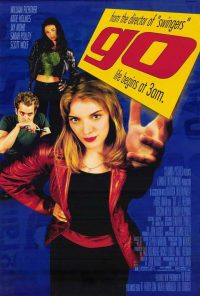
  • Go
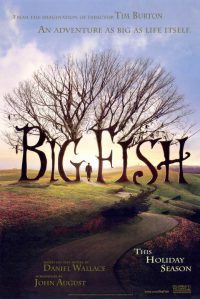
  • Big Fish
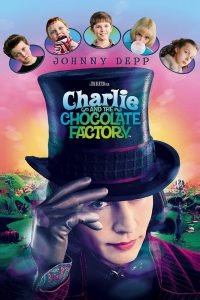
  • Charlie and the Chocolate Factory
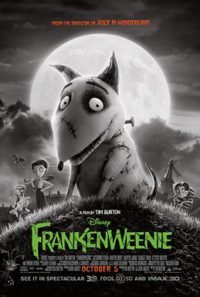
  • Frankenweenie
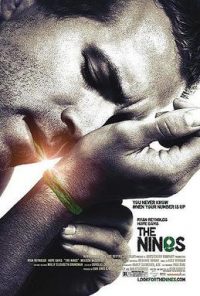
  • The Nines
  • The Remnants
  • God
  • D.C.

Unproduced:

  • Ops
  • How to Eat Fried Worms
  • The Circle (aka Alaska)

Things I’m hosting for others:

  • Station Eleven NEW!
  • Chernobyl


###Go

  1. Original spec script
  2. Final shooting script
  3. Additional audition scene for ‘Mannie’

Big Fish

  1. Original one-page outline
  2. Revised full outline after first draft
  3. Final shooting script
  4. Introduction to paperback version

Charlie and the Chocolate Factory

charlie poster

Here I’m including the production draft (white), along with the blue and pink revisions so you can see how they fit into the white draft. (Rather than release entirely new scripts, only the revised pages are printed and sent to departments, who can then insert them into their scripts.)

The final shooting script incorporates the blue and pink revisions.

  1. Production draft (white)
  2. Blue revisions
  3. Memo for blue revisions
  4. Pink revisions
  5. Memo for pink revisions
  6. Final shooting script

Frankenweenie

frankenweenie poster

  1. Production Draft. The original draft from July 2010 isn’t vastly different.
  2. Final Conformed Script. This draft reflects changes made during storyboarding, production and editing. In particular, notice how much the third act has been tightened.

The Nines

the nines poster

  1. Final shooting script. The original draft isn’t vastly different, save for two scenes added in reshoots.
  2. Shooting schedule. Pretty close to our final shooting schedule.
  3. Visual FX breakdown. Boards and descriptions for two of the more complicated sections.
  4. The audience questionnaire we used for our second test screening.

The Remnants

This is the web pilot I shot in February 2008. You can find it here.

  • The Remnants (character bios and shooting script)
  • Additional audition scenes for Chas, Mia and Wallace

God

This is the short film I made in 1998, a prequel to The Nines. You can find it here.

  • God

D.C.

  1. Pilot script
  2. Episode 2: Truth
  3. Episode 3: Justice
  4. The initial pitch I made to the WB
  5. The outline for the pilot
  6. A template for a “normal” episode
  7. And an exercise in which I look at God from each character’s perspective
  8. The pilot presentation script

In order to save money, the WB asked all its drama pilots to shoot a 30-minute “pilot presentation” of the show, rather than the whole hour. To do this, I had to omit a bunch of scenes, and rewrite some others so that it would all make sense.

Yes, if I had written Episode 4, it was supposed to titled, “The American Way.”


How to Eat Fried Worms

Note that this is not the script for the 2006 movie. It predates it by almost a decade. You can read more about the backstory here.

  • Fourth draft

The Circle (a.k.a. Alaska)

  1. Initial write-up/pitch document/treatment
  2. Pilot script
  3. Episode 2: Gravedigger

Casting sides:

  1. Mathers
  2. Harper
  3. Prescott
  4. Vico
  5. Connie
  6. Elias
  7. Ivanhov
  8. Mary
  9. Valerie
  10. Van Der Kamp
  11. Bobby

More information about The Circle is here.


Ops

There are three versions of the pilot. The first is set in Afghanistan and Venezuela. The second, in Afghanistan and Iraq. The third, in Brazil and Uzbekistan. Since the first two pilots were both called “Blood and Oil,” they’ve been labeled here as “Venezuela,” “Iraq,” and “Uzbekistan.”

  1. Initial write-up/pitch document
  2. Venezuela beat sheet
  3. Venezuela outline
  4. Venezuela pilot
  5. Venezuela pilot, revised
  6. Iraq outline
  7. Iraq pilot
  8. Iraq pilot, revised
  9. Uzbekistan outline
  10. McGinty casting sides
  11. Vanowen casting sides

Station Eleven

station eleven poster

On Scriptnotes 553, Station Eleven showrunner Patrick Somerville joins us to talk through the writing of the 10-episode limited series. We discuss the script of the first episode, but Somerville agreed to share the entire series’ scripts for reference.

  1. Episode 101
  2. Episode 102
  3. Episode 103
  4. Episode 104
  5. Episode 105
  6. Episode 106
  7. Episode 107
  8. Episode 108
  9. Episode 109
  10. Episode 110

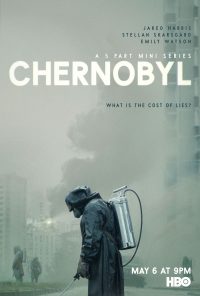
Chernobyl

poster for chernobyl

The acclaimed HBO/Sky miniseries written, created and produced by Scriptnotes co-host Craig Mazin debuted May 6, 2019. As promised, here are Craig’s scripts for the five episodes.

You should also listen to the excellent companion podcast co-hosted by Peter Sagal.

  1. Episode 1 – “1:23:45”
  2. Episode 2 – “Please Remain Calm”
  3. Episode 3 – “Open Wide, O Earth”
  4. Episode 4 – “The Happiness Of All Mankind”
  5. Episode 5 – “Vichnaya Pamyat”
« Previous Page
Next Page »

Primary Sidebar

Newsletter

Inneresting Logo A Quote-Unquote Newsletter about Writing
Read Now

Explore

Projects

  • Aladdin (1)
  • Arlo Finch (27)
  • Big Fish (88)
  • Birdigo (2)
  • Charlie (39)
  • Charlie's Angels (16)
  • Chosen (2)
  • Corpse Bride (9)
  • Dead Projects (18)
  • Frankenweenie (10)
  • Go (29)
  • Karateka (4)
  • Monsterpocalypse (3)
  • One Hit Kill (6)
  • Ops (6)
  • Preacher (2)
  • Prince of Persia (13)
  • Shazam (6)
  • Snake People (6)
  • Tarzan (5)
  • The Nines (118)
  • The Remnants (12)
  • The Variant (22)

Apps

  • Bronson (14)
  • FDX Reader (11)
  • Fountain (32)
  • Highland (75)
  • Less IMDb (4)
  • Weekend Read (64)

Recommended Reading

  • First Person (87)
  • Geek Alert (151)
  • WGA (162)
  • Workspace (19)

Screenwriting Q&A

  • Adaptation (65)
  • Directors (90)
  • Education (49)
  • Film Industry (489)
  • Formatting (128)
  • Genres (89)
  • Glossary (6)
  • Pitches (29)
  • Producers (59)
  • Psych 101 (118)
  • Rights and Copyright (96)
  • So-Called Experts (47)
  • Story and Plot (170)
  • Television (165)
  • Treatments (21)
  • Words on the page (238)
  • Writing Process (177)

More screenwriting Q&A at screenwriting.io

© 2026 John August — All Rights Reserved.