• Skip to primary navigation
  • Skip to main content
  • Skip to primary sidebar

John August

  • Arlo Finch
  • Scriptnotes
  • Library
  • Store
  • About

QandA

Screenwriters don’t simply adapt, they adopt

March 13, 2011 Adaptation, Big Fish

Daniel Wallace, who wrote the book Big Fish, [on movie adaptations](http://www.puremovies.co.uk/articles/some-things-are-better-left-on-the-page/):

> The best adaptations are inspired by the source material, not dictated by it. The screenwriter doesn’t work for the author; he takes possession of the story, and owns it as much as the novelist does. If not, if there is even a hint of subservience, the adaptation and the movie it hopes to become will suffer, and sometimes die a grisly, unliterary death. And if you’ve never seen an unliterary death it’s a sad thing to watch.

Juggling paid work and specs

March 10, 2011 Education, First Person

I’m still sorting through emails from readers who wrote in [offering up their experiences](http://johnaugust.com/archives/2011/looking-for-more-first-people) for the First Person series. The blessing and curse is that there are far too many to choose from. Over the next few weeks and months I’ll be featuring a variety of them, possibly bundled in theme weeks. (We have a lot of married writing teams and reality TV producers.)

The first article of this new batch comes from Allison Schroeder, a [young-new-baby screenwriter](http://johnaugust.com/archives/2011/young-vs-new) who works in both features and television. She exemplifies something I’ve seen again and again: a career is shaped by talent, luck and very hard work. It’s like trying to start a campfire in a rainstorm. You can do it, but it takes persistence.

I don’t know Allison, but after reading her article, I realized how many friends and colleagues we had in common. When I asked about it, she wrote back:

> Ironically, you’ve been there for a lot of my big moments probably without realizing it! That Career Fair where I met my mentor, you were one of the organizers. Al Gough’s birthday right before I was staffed on 90210. And Dara’s BBQ the week MG2 was greenlit. You’ve been good luck!

I don’t think it’s kismet or coincidence. She was putting herself in the right places for luck to happen. These were situations that wouldn’t have happened if she didn’t live in LA.

——–

first personallison schroederI’m a working writer in Los Angeles. Those are beautiful words to say. Now there’s a lot of doom and gloom rants, discouraging statistics and articles regarding women in the industry — if you want that, don’t look at me. I love being a female writer in Los Angeles!
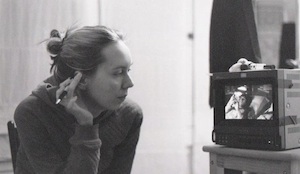
Now like all love stories, there’s been some heartbreak and tears, some highs and lows, but rarely have I ever felt my gender was holding me back. In fact, at times, it’s helped me. Execs, producers, actors, and directors want to hear a unique voice that feels authentic. And I write quirky, strong female characters, often drawing from personal experience. One of my very first spec scripts Stickgirls — which I wrote as both a pilot and feature — followed two young teenagers, essentially a Stand By Me for girls. That sample led to my first staff writing position on the new 90210 and later to my first feature, Mean Girls 2. But before my big break, I worked, and worked hard as a PA, an assistant, and writer-for-free.

How it all started
——-

I graduated from Stanford University for undergrad and after two years as a consultant, I returned to school at the University of Southern California for my MFA in the Film Production Program.

Everyone has a different opinion on film school; all of us who started together left USC with different impressions. Would I do it again? Yes. Why? First, I understand how a set works which helps a lot when I’m writing a screenplay as production nears. I know what the AD means when she asks for changes. Second, the alumni and my friends. I don’t have a manager, so my friends give me notes. I never turn in a script without someone reading it first. I call it the “stupid check” — as in, am I a talentless hack that will embarrass myself by turning in this draft? They say no, I breathe easier, and hit send.

After graduation, it took some time to find a job in the industry (I tutored during those months) but I finally landed as a PA on Pineapple Express. Everyone on the film was incredibly open to questions about the process, about writing. They honestly wanted to help me with my career – and I think this had a lot do with the fact I took pride in my job. I was the best damn grocery shopper they’d ever seen. Seriously.

I know writers who fear getting a job in the industry because they won’t have enough time to write. And I understand that, I do. But I feel that to work in the industry, you, well, need to work in the industry. Don’t be above getting people coffee!

My big break
—–

During this time, I met a mentor at a USC Career Event. I started developing with him and his writing/producing partner. I wrote two pilots and a feature on spec, but the writer’s strike didn’t exactly help the odds of a sale.

I continued to work as an assistant, replying to a USC job posting and moving to Smallville as a Writers’s PA. Until one day, about a year later, I was manning my boss’ desk at Smallville and I got the call.

My mentor casually asked, “Hey, do you want to be a staff writer on 90210? We’re the new showrunners.”

Uh, yes please.

And that was it. I met with the network soon after; they read Stickgirls and approved me. I met with UTA that same day; they became my agents ten minutes after I walked out of the network meeting.

It happened “overnight.” Well, if “overnight” means after two years of hard work, building relationships, and endless writing.

People often want to know how much I wrote during my assistant years. In terms of time: many hours a week. In terms of material generated: two original pilots, one TV spec, two features, a novel, and a pile of tossed out pages. I meet many aspiring writers who haven’t finished a single script. That’s not going to be a path to success.

After that first job
—–

I now work in both features and television.

After 90210, I created a pilot for MTV with Wilmer Valderrama, called Brooklyn Sound. It didn’t get picked up but it was a great experience. They had absolute faith in my abilities regardless of my gender or experience, and I will forever be grateful for that.

Compliments are far more rare than criticism in this industry. One of my successful writing friends (who I met when she was an assistant, I her intern) told me silence means you’re doing a good job. When I have self-doubt, I remind myself of that. No news is good news.

A lot of my scripts will never see the light of day. So when one’s actually greenlit, the game changes.

allison schroderBudget, logistics, stunts, company moves, clearances, censorship can rapidly change a script. Coming from film school, I knew all the steps involved to make a script come to life. I had built sets, hung lights, set-up craft service, held the boom mic, loaded film, managed budgets, rented costumes. When I showed up on the Mean Girls 2 set (directed by the fabulous Melanie Mayron) and saw the lead character’s house decorated for Halloween, the gravity of the moment hit me.

I had written the words almost too casually: FLASHBACK – HALLOWEEN.

Which meant a team of art department geniuses had transformed the exterior of the house into a Halloween fantasy. As a screenwriter, you’re writing the blueprint for hundreds of people. It’s made me consider my words far more carefully as I write now. Am I giving enough information for all the departments? Am I clearly stating the tone, mood, and action of the scene for the director? Am I filling the silence?

Juggling paid work and spec work
—–

After Mean Girls 2, I was hired for Mean Girls 3 and an MTV television movie. Plus I was developing a pilot and finishing the first draft of my spec feature. Ah multi-tasking!

A lot of my friends work in teams or focus on either television or features. I work alone and like to do both. So I make sure to prioritize according to deadline. I don’t miss deadlines. I am not late.

Many writers miss deadlines. Yes, we’re creating “art.” But this is business, a job, and I don’t take that lightly.

But I will call and ask for a few more days if I need them. I called MTV yesterday and said, “I could turn this in today but I feel this first act isn’t working.” The executive and I brainstormed for an hour, and I’m taking the week to do an overhaul. You want everything to be the best it can be, but I’m also mindful of their production schedule.

I’m still very much starting out my career. Which means I have to constantly be working on spec scripts — both features and pilots — to make people see me differently, hire me for something besides teen comedies. I have to be strategic, balancing assignment work and my own projects.

For personal projects, I normally send my agents a handful of ideas and they point me at the ones that might work. Because I don’t have a studio hounding me, it’s all about discipline.

Paid projects always take precedence, followed by projects that I’m doing for a specific production company or a producer that showed interest, followed by passion projects. My specs are always personal in some regard. Write what you know has worked well for me.

Sometime, your brain hurts from all the juggling. Switching from teenage slang to old Southern rhythms in my pilot, from two teen stories — one all about guys, one all about girls — plotlines could get confusing. But you manage. I alternated weeks on the teen stories based on deadlines. I wrote the pilot when my mind needed to jump into an alternate world. And then I took a break. After a massive writing spree, I need at least a week to decompress.

Where I go from here
—

My writing teacher at USC said this profession is a marathon, not a sprint.

I’m always looking for the next job. Always. As I move forward, I’m pushing myself to take chances. I don’t feel pigeonholed as a woman or a teen writer. I feel it’s up to me to write what I want to be hired for.

Here’s a little secret. Female action writers, especially in television, are in hot demand. So to continue to expand my writing career, I need to step outside my comfort zone. That doesn’t mean I plan to turn my back on teen work. I love it. It comes naturally to me. But to move to the next level, to theater-released features, to television development, I must continue to write new samples.

Writing my own work often takes longer than when I’m on assignment. One of my feature specs, I’ve been stuck on for years. It’s personal, it’s autobiographical, it’s hard to write. Other specs are finished within weeks. I try not to beat myself up too much, but there are dark days where I sit in my pajamas, stare at my cats (no judgement please) and wallow.

I am only allowed to wallow for twenty-four hours. It’s a rule. Then I have to get back at it.

And no matter what the project, when I write, you can always hear my voice — maybe not literally in all cases, but my sarcasm here, my Southern roots there, even a line or moment of dream fulfillment.

My biggest obstacle to overcome as I move forward has less to do with outside forces, and more to do with me vs. the blank page. I have a poster that reads: “Type or Die.” That pretty much sums it up.

Revenge of the snarky script-reader

March 7, 2011 Film Industry, QandA

questionmarkFor the last few years I have been using a coverage guy (along with my trusted readers) to give me perspective on my screenplays before I send them to my manager. I found this particular reader’s notes to be lucid and constructive, close to what an average reader would say about the project. Worth the price.

Recently I became Facebook friends with him. I looked on his Facebook page and found it filled with snarky comments about scripts he has read or is in the process of reading for coverage. Some of the more mild comments were about ironic spelling mistakes. But some of his comments were on very thematic elements and specific in nature. He described entire scenes and visuals from scripts, along with the titles.

I emailed him and told him I had a real problem with him commenting on scripts that he does coverage for. He replied that he has never commented on my projects and that I sent him, that only comments on things that are “totally ridiculous.”

I said it’s not about me personally, I just don’t think you should be making these comments when someone pays you for a confidential opinion on a script. He then posted on his Facebook page something to the effect of SORRY I HAVE TO TONE DOWN THE COMMENTS AS A WRITER IS GETTING PISSY ABOUT THEM. Never one to back down away from a debate, I fired back my point of view: he shouldn’t post specific things from the scripts he is paid to cover.

He deleted all of my comments then deleted me as a friend, thus eliminating the entire debate from public view. He has since, in a private email, told me he never comments on a script that is sent by a writer directly to him. I told him that that didn’t matter if it was Joe from Idaho’s first script or Steven Spielberg looking for perspective on a project, that you were entering into a contract with that writer/submitter to keep things confidential.

Do you think this coverage guy was out of line? What level of privacy do you expect from people who cover your scripts?

— TJ
Los Angeles

answer iconHe’s unprofessional. It will bite him in the ass eventually. No further action is required on your part.

But I am a little sympathetic. I wrote a lot of coverage during my first few years in Los Angeles. Sometimes, the only way I could get through 120 terrible pages was imagining what I’d get to write about it.

This was all basically pre-internet, so my snark was limited to the comments section of coverage. Had Facebook existed, I hope I would have been smart enough to keep it off there. But I’m keenly aware that I’m not a 20-something, and my expectations of privacy and professionalism don’t line up with the current generation’s. I’m not even sure [who I should be](http://johnaugust.com/archives/2011/all-yourselves-belong-to-us) on Facebook.

A famous friend of mine now keeps a stack of non-disclosure agreements on the table in his foyer. When a plumber comes to fix a leak, he has to sign the NDA.

Yes, it seems ridiculous. But I think it’s indicative of how a culture of oversharing has undervalued trust and discretion.

Married showrunners

March 7, 2011 Television

Running a TV show is inconceivably exhausting. But is it better or worse to do it with the person you love? Mary McNamara has an article in the LA Times about [married TV showrunners](http://articles.latimes.com/2011/mar/06/entertainment/la-ca-showrunners-20110306):

> Imagine a world in which you and your spouse together write, pitch, sell, cast, staff and then make a television show — 12 episodes for cable, 22 for network. Writing is the easy part, the fun part, the part that you now barely have time to do because you now are managing writers’ rooms, actors and budgets, discussing with your spouse every living little detail, before and after the notes from network executives inform you what you’re doing wrong.

McNamara interviews the married showrunners of Blue Bloods, The Good Wife, Big Love, Hung and In Treatment. But I can think of several more teams in the same situation, both in features and television.

The perk, of course, is that you actually get to see and spend time with the person you love. The downside is that work never really ends.

> “You will disagree on what[ever] you are invested in,” says Dmitry Lipkin, who with his wife, Colette Burson, created and produces “Hung” for HBO. “It’s not something I would recommend if your marriage is in trouble,” adds Burson.

« Previous Page
Next Page »

Primary Sidebar

Newsletter

Inneresting Logo A Quote-Unquote Newsletter about Writing
Read Now

Explore

Projects

  • Aladdin (1)
  • Arlo Finch (27)
  • Big Fish (88)
  • Birdigo (2)
  • Charlie (39)
  • Charlie's Angels (16)
  • Chosen (2)
  • Corpse Bride (9)
  • Dead Projects (18)
  • Frankenweenie (10)
  • Go (29)
  • Karateka (4)
  • Monsterpocalypse (3)
  • One Hit Kill (6)
  • Ops (6)
  • Preacher (2)
  • Prince of Persia (13)
  • Shazam (6)
  • Snake People (6)
  • Tarzan (5)
  • The Nines (118)
  • The Remnants (12)
  • The Variant (22)

Apps

  • Bronson (14)
  • FDX Reader (11)
  • Fountain (32)
  • Highland (73)
  • Less IMDb (4)
  • Weekend Read (64)

Recommended Reading

  • First Person (87)
  • Geek Alert (151)
  • WGA (162)
  • Workspace (19)

Screenwriting Q&A

  • Adaptation (65)
  • Directors (90)
  • Education (49)
  • Film Industry (490)
  • Formatting (128)
  • Genres (89)
  • Glossary (6)
  • Pitches (29)
  • Producers (59)
  • Psych 101 (118)
  • Rights and Copyright (96)
  • So-Called Experts (47)
  • Story and Plot (170)
  • Television (165)
  • Treatments (21)
  • Words on the page (237)
  • Writing Process (177)

More screenwriting Q&A at screenwriting.io

© 2026 John August — All Rights Reserved.