• Skip to primary navigation
  • Skip to main content
  • Skip to primary sidebar

John August

  • Arlo Finch
  • Scriptnotes
  • Library
  • Store
  • About

Follow Up

What free gets you on Kindle

February 6, 2012 Follow Up, Snake People, The Variant

Last week, I [ran an experiment](http://johnaugust.com/2012/spelunking-the-kindle-market-contd) to see what would happen if I took one of my existing Kindle titles and made it free for three days.

[Snake People](http://www.amazon.com/Snake-People-ebook/dp/B004H8GF0U/) got a lot of downloads. Over the three days, it “sold” 654 times. It climbed the charts, topping out at #7 on Kindle’s free short stories list.

Since returning to its normal price of 99 cents on Saturday, it sold seven more copies. It no longer shows up on any of the best-seller charts. In no way did it catch fire.

However, if you compare those seven copies to how many it would have sold in a normal week — 2.2 copies on average — the free promo seemed to at least bump the needle. There was also a fair amount of spillover to my other Kindle title ([The Variant](http://www.amazon.com/The-Variant-ebook/dp/B0029ZAPRW/)), which sold 13 copies, up from its average of five.

In another week or two, I suspect Snake People numbers will be back where they were before the promo. I’ll post another update if I’m wrong.

So, was going free worth it? Hard to say.

It certainly increased sampling, and it was gratifying to see readers tweet about it, particularly those who stumbled across it on the best-seller chart and took a chance. I strongly doubt it cost me any buyers; the people who got it free hadn’t been holding off, waiting for a sale.

In the end, I’m hesitant to even label this an experiment because the numbers are so sketchy. I’d hoped to provide a graph showing how many copies were sold based on which spot it reached on the best-seller list, but I can’t. Amazon’s sales figures are maddeningly murky. You can’t be sure how often they’re updated, so any correlation is suspect.

As Snake People was rising on the best-sellers chart, the dashboard report would only show five more copies had sold. An hour later, 100 more sales showed up. Were those additional sales the cause or effect of moving higher in the best-sellers chart? There’s no way to know.

Most writers are probably better off writing new stuff than spending a lot of time gaming the Kindle publishing platform. That said, the spillover effect from one free title to other paid titles probably merits some attention, particularly for authors with many titles available for sale. If I had 15 books for sale on Kindle, rotating free sales periods among them would be a way to increase exposure and probably bring in new paying readers.

Spelunking the Kindle market, cont’d.

February 2, 2012 Books, Follow Up, Snake People, The Variant

I’ve written several times about my experiments with self-publishing on the Kindle, mostly concerning my short story [The Variant](http://johnaugust.com/variant), which briefly hit #18 on the overall bestsellers list.

Overall, I found Amazon’s ebook tools satisfactory, but the price structure was [frustrating](http://johnaugust.com/2009/spelunking-the-kindle-market):

> Amazon doesn’t distinguish between free and paid content on their Kindle bestseller list. In fact, 19 out of the top 50 books are free. There’s nothing wrong with free, but it’s a semantic and tactical mistake to include them on a “bestseller” list.

They’ve fixed that.

Free books are now listed separately, and with the introduction of the KDP Select program, self-publishers can finally price a title as free for up to five days. (Before this, only major publishers could set the price at zero.)

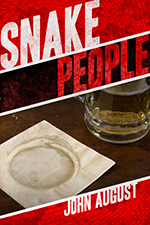
snake people coverAfter reading [David Kazzie’s post](http://wahoocorner.blogspot.com/2012/01/how-kdp-select-saved-my-book.html) about his experience with KDP Select, I decided to try it out on another one of my short stories, [Snake People](http://www.amazon.com/Snake-People-ebook/dp/B004H8GF0U/), which had gotten nice reviews but never achieved the traction of The Variant.

To enter KDP Select, you have to promise that the title isn’t available for sale anywhere other than Amazon. Unlike The Variant, I wasn’t selling Snake People as a PDF, so there was nothing to take down.

Dropping the price is handled through a pop-up box called the Promotions Manager. The only option listed for me was “free book,” but the system seems to be designed for more-extensive campaigns. You’re allowed to be free for up to five days total, divided however you want.

Snake People went free yesterday (February 1st), and as of this writing sits at #20 on Kindle’s free [short stories list](http://www.amazon.com/gp/bestsellers/digital-text/157087011/ref=pd_zg_hrsr_kstore_2_4_last), with 75 copies “sold” in the last 24 hours.

The list is everything
—

From our experience with [Bronson Watermarker](http://quoteunquoteapps.com/bronson), we’ve learned that where you fall on the lists has a huge impact on sales. The higher you’re ranked, the more people see you. The more you’re seen, the more you’re purchased. Winners keep winning.

The pure ranking matters, but even more important is where the page breaks.

For Bronson, we made the front page of the Mac App Store in the “New and Notable” section. For the two weeks we were there, our sales were ten times normal. Once we fell to the second page of “New and Notable,” we quickly regressed to the mean.

I realize that writing about Snake People while the experiment is still running will inevitably corrupt the data. Some readers will click and buy it because hey, [it’s free](http://www.amazon.com/Snake-People-ebook/dp/B004H8GF0U/ref=zg_bs_157087011_20).

And that’s okay. I mostly want more data to answer correlation questions: If 75 copies lands a title at #20, how many copies is the #1 short story “selling?”

In my initial experiments with The Variant, I was able to estimate how much Stephanie Meyer was bringing in off of her Twilight books. (A lot.) I’m curious what the numbers mean in Kindle’s new free ecosystem.

So if you haven’t checked out Snake People, [go get it](http://www.amazon.com/Snake-People-ebook/dp/B004H8GF0U/) before the promotion ends on Friday. I’ll publish a follow-up on Monday with numbers.

Shine on, you Kubrick theorists

January 26, 2012 Directors, Follow Up

When I [criticized](http://johnaugust.com/2011/cinematic-geography-and-problem-of-genius) Rob Ager’s analysis of spatial impossibilities in The Shining, I didn’t realize the extent of [wild theories about Kubrick’s film](http://www.nytimes.com/2012/01/29/movies/room-237-documentary-with-theories-about-the-shining.html?_r=2&src=me&ref=movies):

> “Room 237,” the first full-length documentary by the director Rodney Ascher, examines several of the most intriguing of these theories. It’s really about the Holocaust, one interviewee says, and Mr. Kubrick’s inability to address the horrors of the Final Solution on film. No, it’s about a different genocide, that of American Indians, another says, pointing to all the tribal-theme items adorning the Overlook Hotel’s walls. A third claims it’s really Kubrick’s veiled confession that he helped NASA fake the Apollo Moon landings.

Of course, we’ll never know Kubrick’s true intentions, because he’s dead.

*Unless he isn’t.*

Ownership in a digital age

January 20, 2012 Follow Up

Jeremy Dylan doesn’t share my zeal for [renting movies](http://mrjeremydylan.blogspot.com/2012/01/collapse-of-ownership-society.html):

> In a recent episode, August and Mazin presaged a dystopian future in which entertainment exists only in an ethereal online space and nobody owns anything. Apparently, we are marching inexorably towards this brave new world and any attempts to halt the approach would be futile.

> I like owning things. I own The Philadelphia Story. I own all seven seasons of The West Wing. I own The Last Waltz. I paid a one-off charge at a store at some point, and in exchange, I own these things. I can watch them as often as I feel like, whenever I feel like, in perpetuity, and it costs me nothing further. I don’t need to be connected to the internet to do so. And no one can take away my ability to watch it. If I come across someone who’s never seen The West Wing (seriously?), then I can lend them my copy. While they have it, I can’t watch it, which is only fair. If they get bitten by the Sorkin bug, they can trot off and buy their own copies, and enjoy the associated privileges I listed above.

Valid points, every one of them.

I think one reason DVDs (and Blu-rays) have been so successful is that they hit a sweet spot of being cheap enough and small enough that you can afford to keep an extensive collection in a normal-sized apartment. If, at two in the morning, you suddenly have a jones for the second season of 24, you can pull out the discs and start watching.

That is, as long as you’re *at your apartment.* If you’re in a hotel room in New York with your iPad, the ability to get that through streaming is much more appealing.

Maybe it’s because I’ve been travelling so much — or because I’m going through a general [discardia](http://www.discardia.com/) phase — but I’m much happier to not own things. If a book is the same price in hardback or on Kindle, I’ll always take the Kindle edition.

With movies, yes, there’s the risk that I won’t be able to watch what I want when I want it. But that’s my argument for more pervasive licensing and rights-packaging. With HBO Go, I can watch that episode where David gets carjacked and confirm that *oh shit, yeah, that was insane.* It’s like having all the DVDs to all the seasons of all the HBO shows, and I’m happy to pay for access to it.

But that’s me. I rarely re-watch movies. I rarely re-read books. For folks wired the other way — which I suspect is a sizable majority — ownership of atoms makes a lot of sense. I think we’ll continue to have ways to buy physical books and movies. It’s not either/or.

« Previous Page
Next Page »

Primary Sidebar

Newsletter

Inneresting Logo A Quote-Unquote Newsletter about Writing
Read Now

Explore

Projects

  • Aladdin (1)
  • Arlo Finch (27)
  • Big Fish (88)
  • Birdigo (2)
  • Charlie (39)
  • Charlie's Angels (16)
  • Chosen (2)
  • Corpse Bride (9)
  • Dead Projects (18)
  • Frankenweenie (10)
  • Go (29)
  • Karateka (4)
  • Monsterpocalypse (3)
  • One Hit Kill (6)
  • Ops (6)
  • Preacher (2)
  • Prince of Persia (13)
  • Shazam (6)
  • Snake People (6)
  • Tarzan (5)
  • The Nines (118)
  • The Remnants (12)
  • The Variant (22)

Apps

  • Bronson (14)
  • FDX Reader (11)
  • Fountain (32)
  • Highland (73)
  • Less IMDb (4)
  • Weekend Read (64)

Recommended Reading

  • First Person (87)
  • Geek Alert (151)
  • WGA (162)
  • Workspace (19)

Screenwriting Q&A

  • Adaptation (65)
  • Directors (90)
  • Education (49)
  • Film Industry (490)
  • Formatting (128)
  • Genres (89)
  • Glossary (6)
  • Pitches (29)
  • Producers (59)
  • Psych 101 (118)
  • Rights and Copyright (96)
  • So-Called Experts (47)
  • Story and Plot (170)
  • Television (165)
  • Treatments (21)
  • Words on the page (237)
  • Writing Process (177)

More screenwriting Q&A at screenwriting.io

© 2026 John August — All Rights Reserved.