• Skip to primary navigation
  • Skip to main content
  • Skip to primary sidebar

John August

  • Arlo Finch
  • Scriptnotes
  • Library
  • Store
  • About

John

Texting in film and television

August 18, 2014 Follow Up, Television, Words on the page

Craig and I may have [taken umbrage](http://johnaugust.com/2014/scriptnotes-ep-147-to-chase-or-to-spec-transcript) at his video about comedy directors who aren’t Edgar Wright, but Tony Zhou’s [newest video](http://vimeo.com/103554797) looking at how filmmakers handle texting and the internet on-screen is all good.

Zhou’s underlying point is that we still haven’t settled on conventions for showing texting or the internet. And that’s good! Filmmakers can and should experiment to see what works best for their needs.

In ten years, some of our choices will look quaint and foolish, but that’s the fun and challenge of making new things.
Secrets of Highland’s Dark Mode

August 18, 2014 Highland

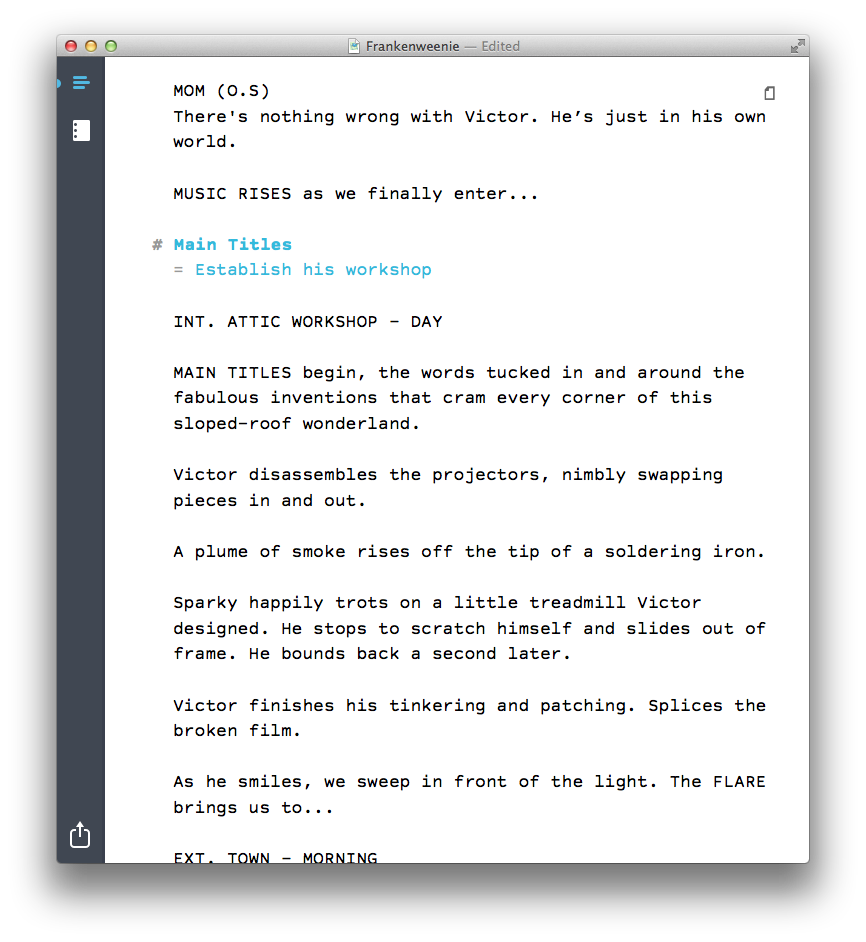
When you’re writing a script in [Highland](http://quoteunquoteapps.com/highland), you can turn on Dark Mode (⌘D) to flip the colors in the edit view. So instead of this:

screenshot

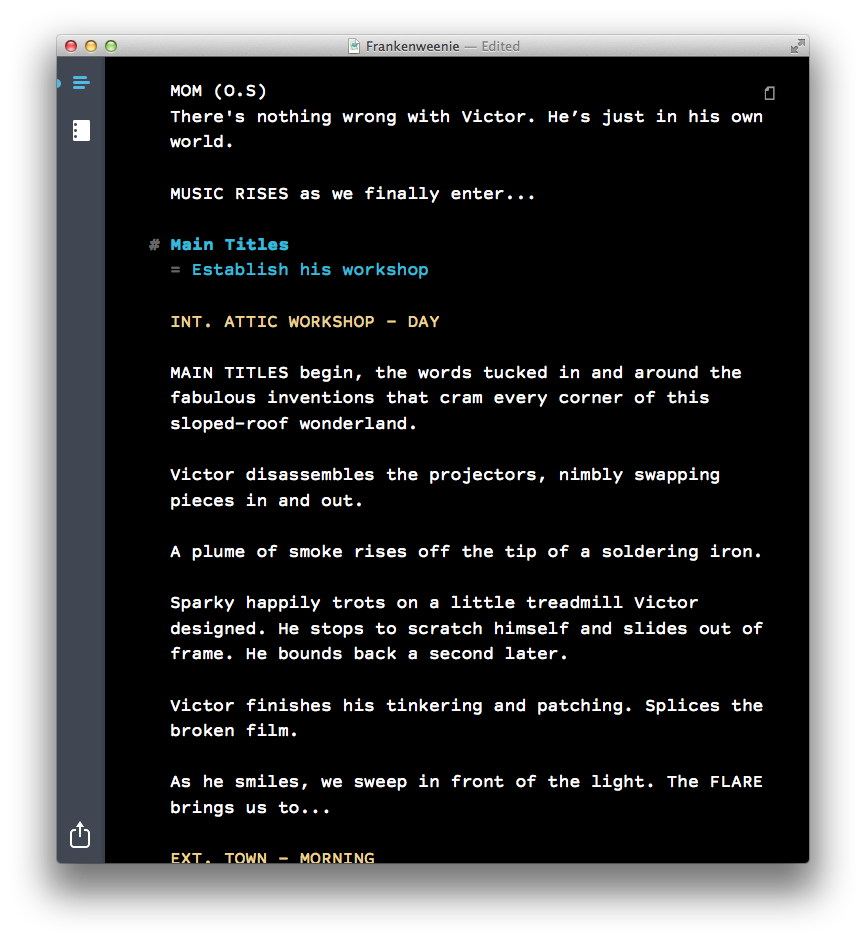
In Dark Mode, you get this:

screenshot

Dark Mode is useful for writing at nighttime or in darker locations, when you don’t want to be staring at a bright screen. It can also be easier on your eyes.

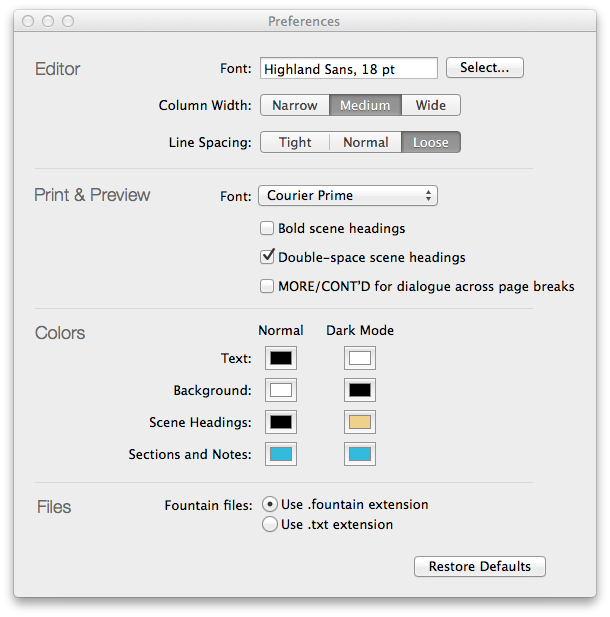
But you’re not limited to white text on a black background. You can customize the colors to your heart’s content in Preferences.

screenshot

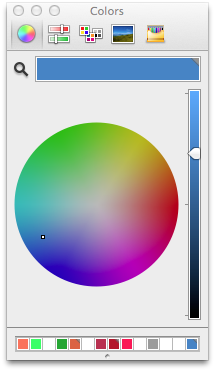
color picker
Under Colors, click on any of the color swatches to bring up the color picker. Here you can set your choices for text, background, scene headings and notes, for both Normal and Dark Mode.

In the color picker, I often click the magnifying glass, which sets the color to anything I can click on screen. It’s a handy way to get exactly the color I want. (In the first version of this post, I called this an eyedropper instead of a magnifying glass, because in most image editing apps, the equivalent tool is an eyedropper. As a UI metaphor, which tool makes more sense? Discuss.)

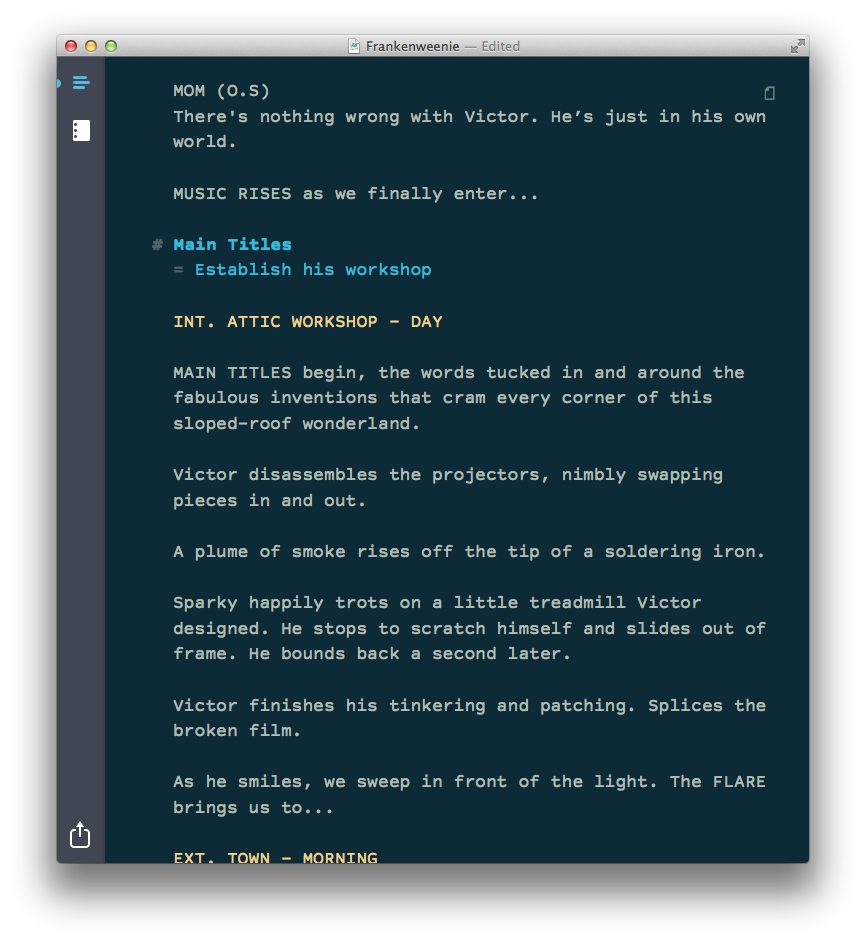
Most days, this is the color scheme I use in Highland:

screenshot

It’s pretty close to Ethan Schoonover’s [Solarized Dark](http://ethanschoonover.com/solarized) theme, and works particularly well with Highland’s default typeface (Highland Sans).

If you feel like going down the color theme rabbit hole, there are [myriad options](http://eclipsecolorthemes.org) out there, most of which were originally designed for coders. ((In many ways, screenwriting resembles coding; you’re writing the plan for creating something else, using specific and esoteric terminology.)) The magnifying glass is usually the easiest way to try these different configurations. Just click on a theme’s color swatches in the website. ((We’re discussing whether to build editor themes into a future edition of Highland. If you have an opinion, let us know.))

Because Highland will let you pick any colors you want, we have to be smart about what color we use for selecting text. We’re generating the highlight color programmatically, using the following code:

CGFloat selectionAlpha = 0.2;

NSColor *invertedBackgroundColor = [NSColor colorByInvertingColor:backgroundColor];

[self.textView setSelectedTextAttributes:@{NSBackgroundColorAttributeName: [invertedBackgroundColor colorWithAlphaComponent:selectionAlpha], NSForegroundColorAttributeName: invertedBackgroundColor}];

In English, this means we’re setting the background color of the selection to the inverse of the normal background color, with the opacity knocked down to 20%. Meanwhile, the text color is set to the inverted normal background color. As a result, you’ll always be able to read highlighted text, no matter what colors you choose.

If you haven’t tried Dark Mode or customizing colors, give them a shot. They’re both small things, but they make working in Highland just a little more delightful.

As always, you can find Highland in the [Mac App Store](https://itunes.apple.com/us/app/highland/id499329572?mt=12).

One-Star Amazon Reviews

August 18, 2014 Follow Up

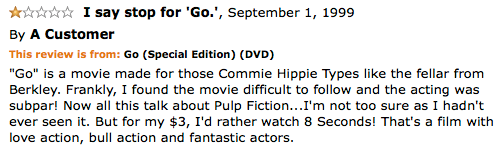
I’ve been following the Twitter feed [@AmznMovieRevws](https://twitter.com/AmznMovieRevws), which curates some of the most inane movie reviews on Amazon, particularly the one-star variety.

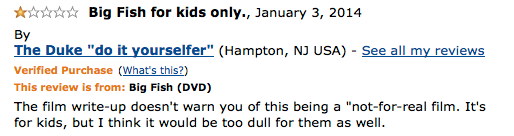
I was inspired to look up some for my own films.

review

In retrospect, we should have put a sticker the DVD warning people that it’s a not-for-real film.

review

Who’s the fellar from Berkley? That’s the central question of my new one-act play, “The Fellar from Berkley.” We’re trying to get Corey Stoll for the lead. Maybe Julia Stiles as the Slate reporter?

(Worth noting: Eight Seconds, the [Luke Perry bull-riding movie](http://www.amazon.com/8-Seconds-Luke-Perry/dp/B00002SSKG/ref=sr_1_1?s=movies-tv&ie=UTF8&qid=1408384607&sr=1-1&keywords=eight+seconds), has better reviews than Go, earning five stars to Go’s four.)

No one cares about manufacturing costs

August 14, 2014 Rant

One of the most common refrains I’ve heard during the Amazon/Hachette tussle is that ebooks should cost less to buy because they cost less to make.

Question: Who cares about manufacturing costs?

Answer: Manufacturers. And that’s it.

Let’s say you’re buying a hammer. You don’t care that it costs Black & Decker $5.23 to manufacture it, package it, and ship it. All you want to know is how much you have to pay for it at Home Depot.

Does Home Depot care about the hammer’s manufacturing costs? Not really. They just buy hammers from Black & Decker and sell them to customers. If a shortage of steel causes Black & Decker’s per-hammer cost to increase 10%, does Home Depot care? No. Not at all.

Home Depot is a big company, so they’ll likely push Black & Decker to sell them hammers for less, so they can increase their margin.

That’s business.

Amazon is pushing Hachette to sell them ebooks for less, so they can make more money.

That’s business.

So let’s be clear: *There’s nothing wrong with Amazon wanting Hachette to sell them ebooks for less.* In their internal negotiations with Hachette, I’m sure Amazon brings up how much cheaper it must be for Hachette to manufacture ebooks than paper books.

But with [astroturf](http://en.wikipedia.org/wiki/Astroturfing) campaigns like Readers United, Amazon is suddenly trying to make its customers care about manufacturing costs. Here’s what they write on the [site](http://readersunited.com):

> With an e-book, there’s no printing, no over-printing, no need to forecast, no returns, no lost sales due to out of stock, no warehousing costs, no transportation costs, and there is no secondary market — e-books cannot be resold as used books. E-books can and should be less expensive.

That last sentence pulls a clever trick by omitting the indirect object, thus confusing cost and price. Are we supposed to read the sentence as…

> E-books can and should be less expensive for manufacturers. (cost)

or

> E-books can and should be less expensive for readers. (price)

The first version is logical. Ebooks are almost certainly less expensive to make, although [not necessarily as much as one would think](http://dave-bryant.livejournal.com/21544.html).

But does it logically follow that ebooks can and should be priced lower for readers?

I agree with “can.” Anything can be priced lower. That’s a fact. The Kindle Fire tablet is priced lower than it would otherwise be because Amazon is willing to [sell it at a loss](http://www.npr.org/blogs/money/2011/11/16/142310104/why-amazon-loses-money-on-every-kindle-fire).

But “should” doesn’t follow logically. “Should” is not a fact, it’s an opinion, and everyone is entitled to her own, particularly about price.

Amazon wants to sell ebooks profitably at $9.99. In order to do that, they need publishers to sell them the books at some number less than that. It’s the same negotiation Home Depot has with Black & Decker. Except that you don’t see Home Depot setting up websites that [selectively quote George Orwell](http://www.theguardian.com/books/2014/aug/14/orwell-estate-amazon-corporate-doublespeak) to make their point.

Remember, Amazon just wants to sell books. They truly don’t care how much they cost to make, and neither should we.

« Previous Page
Next Page »

Primary Sidebar

Newsletter

Inneresting Logo A Quote-Unquote Newsletter about Writing
Read Now

Explore

Projects

  • Aladdin (1)
  • Arlo Finch (27)
  • Big Fish (88)
  • Birdigo (2)
  • Charlie (39)
  • Charlie's Angels (16)
  • Chosen (2)
  • Corpse Bride (9)
  • Dead Projects (18)
  • Frankenweenie (10)
  • Go (29)
  • Karateka (4)
  • Monsterpocalypse (3)
  • One Hit Kill (6)
  • Ops (6)
  • Preacher (2)
  • Prince of Persia (13)
  • Shazam (6)
  • Snake People (6)
  • Tarzan (5)
  • The Nines (118)
  • The Remnants (12)
  • The Variant (22)

Apps

  • Bronson (14)
  • FDX Reader (11)
  • Fountain (32)
  • Highland (75)
  • Less IMDb (4)
  • Weekend Read (64)

Recommended Reading

  • First Person (87)
  • Geek Alert (151)
  • WGA (162)
  • Workspace (19)

Screenwriting Q&A

  • Adaptation (65)
  • Directors (90)
  • Education (49)
  • Film Industry (489)
  • Formatting (128)
  • Genres (89)
  • Glossary (6)
  • Pitches (29)
  • Producers (59)
  • Psych 101 (118)
  • Rights and Copyright (96)
  • So-Called Experts (47)
  • Story and Plot (170)
  • Television (165)
  • Treatments (21)
  • Words on the page (237)
  • Writing Process (177)

More screenwriting Q&A at screenwriting.io

© 2026 John August — All Rights Reserved.