• Skip to primary navigation
  • Skip to main content
  • Skip to primary sidebar

John August

  • Arlo Finch
  • Scriptnotes
  • Library
  • Store
  • About

Search Results for: youtube

On the Amazon film thing

November 18, 2010 Film Industry

Earlier this week, Amazon announced the formation of [Amazon Studios](http://studios.amazon.com).

Whenever new money comes into the film industry, it’s cause for some celebration. The purse strings loosen a little, and more people find work. Since you can’t shoot movies without scripts, screenwriters are among the first to benefit.

Over the years, money has poured in from venture capital firms, foreign investment funds and entrepreneurs from other industries. ((My first reader gig was with a production company bankrolled by Little Caesar’s Pizza money.)) Amazon has a lot of money. It’s understandable why they might want to get involved with creation rather than just the distribution of entertainment.

Steve Jobs got involved with a little company called Pixar, and that’s worked out pretty well.

If Amazon Studios were a simple finance and production outfit like Relativity or Morgan Creek, there would be nothing more to say. But Amazon Studios has an [unusual strategy](http://blogs.indiewire.com/thompsononhollywood/2010/11/16/amazon_launches_new_movie_studio_run_by_roy_price_son_of_frank/?utm_source=twitterfeed&utm_medium=twitter):

> Amazon Studios invites filmmakers and screenwriters from all over the world to submit full-length movies and scripts, which will then get feedback from Amazon readers, who will be free to rewrite and amend. Based on reaction (“rate and review”) to stories, scripts and rough “test” films, a panel of judges will award monthly prizes.

Several readers have written to ask my take on all this. I won’t conjecture about anything beyond what’s on the press release and website, but I’m left with some pretty big questions. I have a hunch other screen-bloggers will be tackling some of the glaring ones, like copyright, authorship and the 18-month free option.

So I’ll just ask one:

**Do you really want random people rewriting your script?**

To me, this feels like the biggest psychological misstep of the venture. Sure, most aspiring screenwriters yearn for access to the film industry and the chance to get their movies made. That’s why they enter screenwriting competitions, including things like Project Greenlight, which feels like its closest kin.

But here’s the thing: each of these writers wanted to get *his movie* made. I’ve never met a single screenwriter who hoped anonymous strangers would revise him.

From the [FAQ](http://studios.amazon.com/getting-started):

> **Can I make it so that no one else can revise my original work?**
> No. But if someone makes changes that are bad, their version is not likely to get a lot of attention. And if someone comes along and makes your work better, you’re more likely to win a prize and get your project made. Sometimes other people can bring a different viewpoint or a different set of skills that take the story in a new direction or add new elements that make it even more compelling.

“Look, I know your script was about a blind cheerleader in Harlem. But ramsey22’s revision making the cheerleader an elephant is *so much funnier.* And blueGoblin has a good point: a safari park is a better setting for a story about elephants.”

In software development, the open source movement has succeeded in bringing teams of strangers together. But writing code is a lot different than writing a screenplay. A bad line of code is obvious; it doesn’t do what it needs to do. A bad line of dialogue is a judgement call. A thumbs-up, thumbs-down voting system isn’t likely to fix this.

Hollywood already has a bad track record of messing up projects by bringing in too many writers — and that’s when they’re paying people who have already written and produced movies. The idea that an undiscovered screenwriter in Wichita will rewrite someone else’s screenplay *on his own time* seems far-fetched, and to me smacks of spec labor.

I’m pro new ideas. I think you can make interesting, artistically worthwhile projects through crowdsourcing, such as YouTube’s [Life in a Day](http://www.youtube.com/user/lifeinaday). I love sites that leverage group energy, like Wikipedia and Kickstarter. I had fun with the [trailer competition](http://johnaugust.com/archives/2007/trailer-winners) for The Nines.

But I don’t see Amazon’s model working, for the reasons above and many others. My readership is pretty much the exact target audience for their venture, so I’m curious to hear your opinions.
In praise of unsheets

September 20, 2010 Film Industry, Rave

To most people, they’re movie posters. But to the American film industry and its superfans, they’re one-sheets: posters designed to hang in theaters promoting upcoming releases.

One-sheets are designed to sell tickets. Period. Some one-sheets are beautifully designed. A few border on captial-A Art. But they are all ultimately advertising. Distributors test them in front of focus groups, often resulting in the lowest common denominator of floating movie-star faces and [Trajan, the movie font](http://www.youtube.com/watch?v=t87QKdOJNv8).

One-sheets present the movie that studios hope audiences want to see.

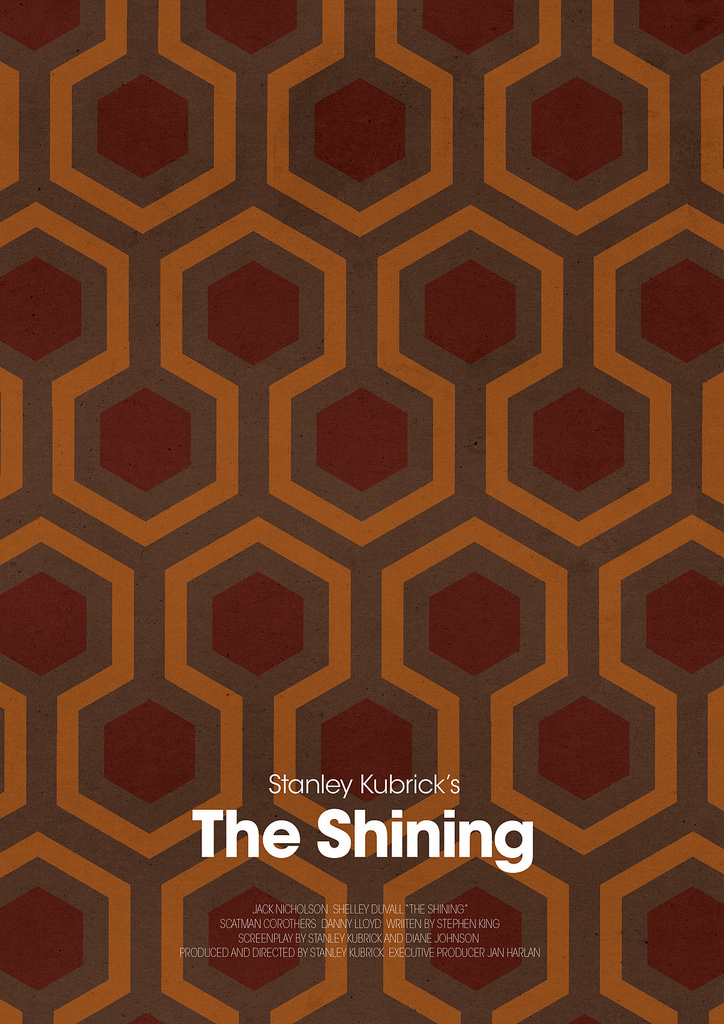
The Shining
The Shining by backstothewall

But there is an entirely different class of movie poster that I want to champion. These are posters made *after* the movie by talented fans — in many cases, decades later. They’re not trying to make a movie look appealing. They’re celebrating movies that are already beloved.

Let’s call them unsheets.

I’m not referring to just any fanmade image. You’ll often see posters for movies fans *wish* would get made, like [this one](http://backseatcuddler.com/2008/08/19/new-poster-for-dark-knight-sequel/) for a Riddler-centered Batman sequel. That’s a burgeoning genre I’d call “fantasy one-sheets.”

I would also break out a distinct category of “mock one-sheets,” which range from outright parody to [unlikely mash-up](http://www.flickr.com/photos/hertzen/4725630242/in/set-72157624026063799/). These are the slash-fiction of graphic design. (And that’s meant as a compliment.)

My definition of unsheet has two requirements:

1. It’s for a real movie that has already come out.
2. It has a graphic style atypical for one-sheets of its genre and era.

Most of these are actually virtual posters, in that they’ll never be printed. But that doesn’t mean they won’t be used. Olly Moss’s series for the [2010 Rolling Roadshow](http://trailers.apple.com/trailers/events/rollingroadshow/) reframes nine classic movies with a unified style and color scheme, making a few scattered screenings feel like an event.

Getting the reference
—-

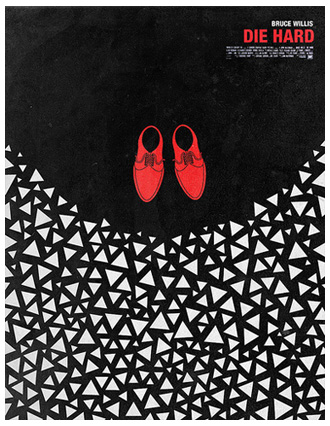
Die Hard
Die Hard by Olly Moss

Unsheets often rely on familiarity with the movie. In fact, many of the best unsheets focus on distinct moments or images from the film that serve as a kind of shibboleth: *You’re cool because you get this.*

On their own, these posters might catch your eye and stoke your curiosity, but they don’t tell you anything about the movie. They wouldn’t score well with focus groups.

For example, Ferris Bueller’s Day Off isn’t about a car — at least, it isn’t *mostly* about a car — but its unsheet portrays a key moment that captures much of what you remember about the movie.

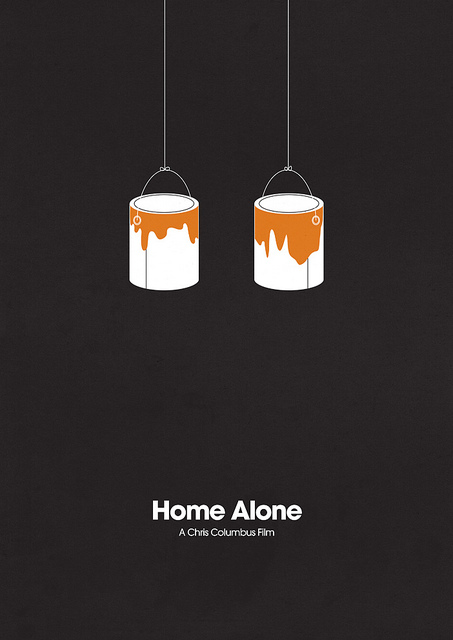
This Home Alone unsheet doesn’t tell you anything about the plot or even the genre of the movie. Is it a movie about suicidal housepainters who fall in love? Based on the unsheet, maybe. (But the two cans might have been a good teaser poster for the sequel.)

Ferris Bueller's Day Off
Ferris Bueller's Day Off by Jordan A.
Home Alone
Home Alone by backstothewall

Better than the masses deserve
—-

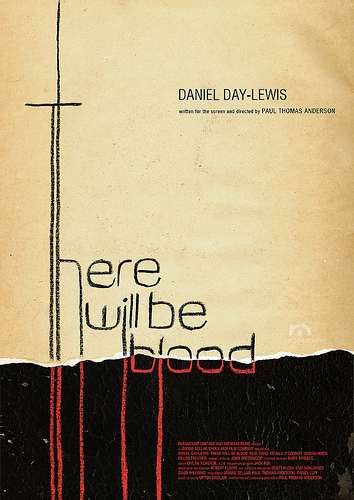
There Will Be Blood
There Will Be Blood by rafael muller

Some unsheets are simply good design. They’re striking in part because they don’t look like traditional one-sheets, using typography and whitespace wholly alien to what we find on video boxes.

You don’t often see photography in unsheets — nor any meaningful representation of the actors. Rather, the star of the movie is the movie itself, or an iconic image from the film.

Some of these could easily be book jackets. For whatever reason, book buyers seem to accept a level of abstraction and design that moviegoers find off-putting. Maybe authors hold more sway over marketing departments. Maybe star designers like Chip Kidd can point to their track record of success. Or maybe, competing with hundreds of titles on the shelf, a striking visual image is the only way of cutting through the clutter.

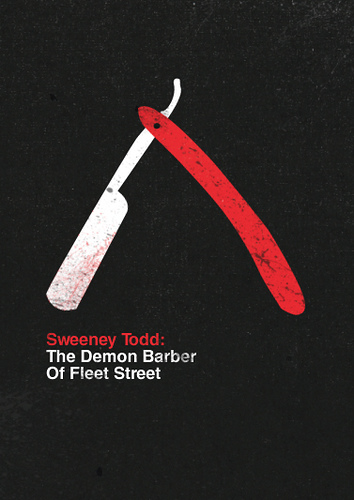
Many unsheets try to recapture an older graphic style — most notably the work of Saul Bass. But any earlier era is fair game. Narrowing the color palette simulates the real limitations on designers in the time before four-color presses.

Sweeney Todd
Sweeney Todd by nategonz
Misery by bee combs
Misery by bee combs

Circling back around
—–

Star Wars
Star Wars by Tom Whalen

I believe unsheets are already having an effect on traditional one-sheets, particularly movies that can afford to gamble. The [poster for Precious](http://www.firstshowing.net/2009/05/12/fantastic-poster-for-lee-daniels-sundance-hit-precious/) feels like an unsheet, as do the [first](http://www.buzzsugar.com/Picture-Official-Movie-Poster-Buried-Starring-Ryan-Reynolds-8252752) and [second](http://www.firstshowing.net/2010/08/19/new-poster-for-ryan-reynolds-buried-debuts-with-fs-quote/) posters for Buried.

Unsheets have a close cousin in tag-along posters, which highlight some aspect of a movie or series without specifically being *for* that movie.

I’m talking about things like Justin Van Genderen’s [Star Wars travel art](http://www.2046design.com/Star%20Wars2.html), or Tom Whalen’s [Ghostbusters instructional poster](http://strongstuff.tumblr.com/post/960067403/ghostbusters-inspired-technical-poster-created). Like unsheets, they flourish in the cozy embrace of geek nostalgia.

I don’t have any traditional one-sheets hanging in my office, not even for my own movies. But in researching images for this post, I came across a half-dozen unsheets I’d be excited to own.

By stripping away the credit blocks and pithy taglines, unsheets distill films down to their essence — an essence that may not have even been apparent when the movie was released. Studios may own copyright, but fans feel emotional ownership, and these posters reflect that. Ultimately, unsheets aren’t about the movies that came out, but the movies they became.

Is machinima worthwhile?

August 5, 2010 Geek Alert, Genres, QandA

questionmarkI’ve been frustrated with not being able to get a project together to direct this year, and have a couple unproduced short scripts sitting around that I kind of like.

I’m considering getting into machinima to animate my films, using software like Moviestorm or iClone. Have you ever considered using machinima as a method of telling stories? I wonder what would happen if an awesome writer got involved in a burgeoning storytelling medium like machinima.

— John
San Diego

Machinima — using videogame engines to create animation — sits smack in the middle of a very geeky Venn diagram. It’s easy to do, but tricky to do well. It’s extremely limited and wildly liberating. And it hasn’t broken out of its niche yet.

So do it. Full speed ahead. But don’t do it because it’s simple. Do it because you want to make something cool.

In considering which projects to do, I’d urge you to think along two axes:

1. **Suitability for machinima.** On one extreme, you have [Red vs. Blue](http://www.youtube.com/watch?v=5NtBX0XEHT0), which uses Halo to make a comedy about characters in Halo. On the other extreme, projects that seem particularly ill-suited for machinima — say, Hamlet — might be especially awesome simply for their outside-the-boxness.

2. **Production values.** Do you want it to look amazing, rivaling something Pixar could make? Or should it be endearingly crappy? Consider a machinima version of Clerks. Just as that movie wouldn’t have worked if it were shot in IMAX, your little project might benefit from some rough pixels.

Readers, feel free to link your favorite machinima examples.

Women in film

June 1, 2010 Film Industry, Story and Plot

Screenwriters: Think back over the scripts you’ve written, and ask yourself three questions about each one:

1. Are there two or more female characters with names?
2. Do they talk to each other?
3. If they talk to each other, do they talk about something other than a man?

This is the Bechdel test, [first articulated](http://alisonbechdel.blogspot.com/2005/08/rule.html) by cartoonist Alison Bechdel and amended by others over the years. ((The origin of the test is complicated, and very Googleable.)) You’d think it would be a very low bar to climb over. You’d be surprised.

Let’s be clear: many, many great movies don’t pass this test, and many terrible movies do. It’s not even a particularly good gauge for determining a film’s feminist content; Transformers 2 meets the requirement because Megan Fox receives a compliment on her hair.

So if this rule doesn’t necessarily speak to quality or content, what’s the point? My friend Beth, who took all the women’s studies classes I never did and therefore yawns at the mention of this old axiom, would argue it’s meaningless checkbox-marking.

But for screenwriters, I think it’s still fascinating. After all, we’re the ones who ultimately put characters in scenes together.

Looking back through my movies, I’m struck by how rarely the female characters actually do talk to each other. In Big Fish, it’s only a brief moment with Sandra and Josephine. In Charlie and the Chocolate Factory, it’s a throwaway moment between Violet and Veruca. Titan A.E. fails the test unless you know that the alien Stith is technically female.

In each of these cases, I had to spend a few minutes just to come up with these (admittedly slight) examples.

Also, I find it fascinating that the Reverse Bechdel Test is almost meaningless. Pretty much every movie made includes two named male characters talking about something other than a woman.

Does acknowledging the situation change anything? Maybe. I’ll certainly ask myself these questions about future scripts. For now, my upcoming projects all seem to pass, but they have a familiar paradigm: a single main female who mostly interacts with the men in the story.

« Previous Page
Next Page »

Primary Sidebar

Newsletter

Inneresting Logo A Quote-Unquote Newsletter about Writing
Read Now

Explore

Projects

  • Aladdin (1)
  • Arlo Finch (27)
  • Big Fish (88)
  • Birdigo (2)
  • Charlie (39)
  • Charlie's Angels (16)
  • Chosen (2)
  • Corpse Bride (9)
  • Dead Projects (18)
  • Frankenweenie (10)
  • Go (29)
  • Karateka (4)
  • Monsterpocalypse (3)
  • One Hit Kill (6)
  • Ops (6)
  • Preacher (2)
  • Prince of Persia (13)
  • Shazam (6)
  • Snake People (6)
  • Tarzan (5)
  • The Nines (118)
  • The Remnants (12)
  • The Variant (22)

Apps

  • Bronson (14)
  • FDX Reader (11)
  • Fountain (32)
  • Highland (75)
  • Less IMDb (4)
  • Weekend Read (64)

Recommended Reading

  • First Person (87)
  • Geek Alert (151)
  • WGA (162)
  • Workspace (19)

Screenwriting Q&A

  • Adaptation (65)
  • Directors (90)
  • Education (49)
  • Film Industry (489)
  • Formatting (128)
  • Genres (89)
  • Glossary (6)
  • Pitches (29)
  • Producers (59)
  • Psych 101 (118)
  • Rights and Copyright (96)
  • So-Called Experts (47)
  • Story and Plot (170)
  • Television (165)
  • Treatments (21)
  • Words on the page (237)
  • Writing Process (177)

More screenwriting Q&A at screenwriting.io

© 2026 John August — All Rights Reserved.