• Skip to primary navigation
  • Skip to main content
  • Skip to primary sidebar

John August

  • Arlo Finch
  • Scriptnotes
  • Library
  • Store
  • About

Search Results for: youtube

FDX Reader, now on iPhone

July 21, 2011 FDX Reader

[FDX Reader](http://fdxreader.com), our app for reading Final Draft files on the iPad, is now a universal app with support for the iPhone and iPod Touch.

It’s [available on the App Store](http://itunes.apple.com/us/app/fdx-reader/id437362569?mt=8) today. It’s a free upgrade.

We developed the iPad version of FDX Reader first because the larger screen is such a natural fit for reading screenplays. We took inspiration from readers like iBooks and Kindle, flipping virtual pages. It’s been great to see it get such a positive response, both among screenwriters and the tech press.

But in some ways, I think the iPhone version serves a more crucial need.

Up until now, reading screenplays on the iPhone has been terrible, even with PDFs. The small screen simply isn’t friendly to 8.5 x 11 sheets of 12-pt Courier. You end up pinching and zooming and straining your eyes to see anything.

While it was technically possible to read a full script on the iPhone, you’d never want to.

Now, you just might.

Our design choices were driven by the smaller screen. The iPhone is nothing like a printed script, so we felt free to break from screenplay conventions. We sliced margins. We stopped flipping pages. We picked a font that worked great at smaller sizes.

The iPhone version of FDX Reader takes its inspiration from non-book apps like [Instapaper](http://itunes.apple.com/us/app/instapaper/id288545208?mt=8) and [Reeder](http://itunes.apple.com/us/app/reeder/id325502379?mt=8). We focused on the text, not the area around it.

We kept two of the best features of the iPad version. The page popover lets you skip right to a given page, scrolling the text as you go. The type button gives you five choices of size — since people hold iPhones closer, you may find yourself going much smaller than you think.

And to maximize screen real estate, we dismiss the header with a center tap.

FDX Reader was made by the same team of Nima Yousefi, Ryan Nelson and me. Many thanks to all our beta testers for their suggestions and bug reports.

As with the initial FDX Reader launch, I’m sure we’ll find some unexpected situations as we expand support to additional devices. ((Previous issues that have come up: A4 paper, locations files, TV act breaks, non-Final Draft .fdx files.)) If something’s not working, [tell us](http://quoteunquoteapps.com/support/fdxreader). We’ve been able to iterate so quickly — five releases in seven weeks — because our users help us.

If you’re new to FDX Reader, check out the [demos and videos](http://fdxreader.com) on the site. If you’re already a user, the new version should show up in your Updates immediately.

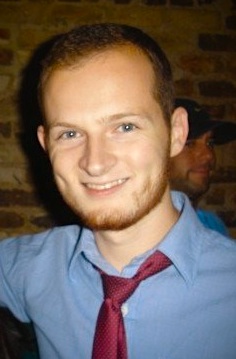
Newly arrived in Los Angeles

July 12, 2011 First Person, Los Angeles

Matthew Hickman was born and raised in rural Georgia. After dropping out of law school, he started working an hourly-wage job at a UPS store, and saved money for a year in hopes of moving to Los Angeles to begin a screenwriting career.

Several months ago he arrived in Santa Monica, where he now works at another UPS store, writing in his off hours. He recently published a [novella on Amazon Kindle](http://www.amazon.com/gp/product/B004LLIEZW/ref=as_li_ss_tl?ie=UTF8&tag=johnaugustcom-20&linkCode=as2&camp=217145&creative=399349&creativeASIN=B004LLIEZW”) and has just started work on his second feature length script.

—-

first personmatthew hickmanI want to stress my beginnings here because I know that for many of you, getting to L.A. is the battle before the battle. I think many of John’s readers may have a sensation similar to what I felt in the time I read this blog before I moved to L.A., and that’s one of isolation. In the middle of reading all this talk about getting an agent, pitches, script revisions, options, treatments, and copyrights, many of you probably feel left apart entirely from the ability to act on your ambitions. I know I did.

How it starts
—-

As I sit here in my two hundred square foot studio, water is boiling on the stove. I live in a guest house attached to someone’s guest house. I’m not completely broke, but I do eat a lot of spaghetti these days. I don’t have much money to go out with friends, much less go out looking for them.

On the other hand, I recently paid eleven bucks to see a screening of The King’s Speech followed by a Q&A with David Seidler, Tom Hooper, Colin Firth, and Helena Bonham-Carter. The next week it was Darren Aronofsky between screenings of Black Swan and Pi. At my day job I’ve had conversations with Marcus Dunstan, Lester Lewis, and others about advice for new writers. I’ve met Jessica Biel without knowing it, and walked by Paul Haggis on an empty sidewalk on a Sunday afternoon. If I hadn’t been wearing a Cookie Monster t-shirt at the time (don’t ask), I probably could have exchanged a few words with him about what it takes to succeed here. Lastly (and most importantly), I’ve met countless other transplants from Normalville, USA looking to carve out their place in the entertainment industry.

All this has happened during my first four months in Los Angeles. These are a few of the trade-offs I’ve gladly made for a shot at what most of you reading this column want: to be a screenwriter.

Unlike a lot of the first-person columns you’ve been reading the last few months, I haven’t accomplished much yet as a screenwriter. I don’t have any writing credits to my name, none of my work has been optioned. Hell, I don’t even have an IMDb profile. But I have made one significant step toward that dream of being a working writer we all harbor: I made the jump and moved to Los Angeles.

For those unconvinced about the benefits of moving here, see the above paragraph for examples of why you should rethink your position. I’m not just namedropping (Jessica Biel aside).  If a guy freshly transplanted from the foothills of Appalachia can run into all these people, imagine who you could meet here.

And I don’t even have a car.

[Read more…] about Newly arrived in Los Angeles

That’ll teach her

May 18, 2011 Genres

Tad Friend examines female characters in comedies and finds an [unsettling pattern](http://www.newyorker.com/reporting/2011/04/11/110411fa_fact_friend):

> Funny women in movies must not only be gorgeous; they must fall down and then sob, knowing it’s all their fault.

Nerve has a super-cut to demonstrate:

Friend’s article — a lengthy piece on Anna Faris — looks at a lot of the issues surrounding female roles in comedy. It’s easy to point fingers at screenwriters (“Write better parts!”) or studios (“Make better movies!”), but the real obstacle is of course the audience, voting with dollars.

The more money female-driven comedies make, the more female-driven comedies will get made. In the short term, the success of Bridesmaids should make studios less gun-shy about spending money to produce and market these movies.

But will they be any good? I worry we’ll learn the wrong lessons and just make more comedies about women in wedding dresses.

Never can say goodbye

April 14, 2011 Video, Words on the page

Movie characters hang up the phone earlier than actual people would.

I’m not sure this is wrong, per se. Movie dialogue in general is a heightened, optimized version of how real people talk. In many of these examples, adding a last goodbye would feel odd.

As the last few examples show, “thanks” has become an acceptable closer word in English. And “love you/love you too” often serves as a final couplet.

Still, I’ll be hyper-aware of phone calls both real and written for at least the rest of the week.

« Previous Page
Next Page »

Primary Sidebar

Newsletter

Inneresting Logo A Quote-Unquote Newsletter about Writing
Read Now

Explore

Projects

  • Aladdin (1)
  • Arlo Finch (27)
  • Big Fish (88)
  • Birdigo (2)
  • Charlie (39)
  • Charlie's Angels (16)
  • Chosen (2)
  • Corpse Bride (9)
  • Dead Projects (18)
  • Frankenweenie (10)
  • Go (29)
  • Karateka (4)
  • Monsterpocalypse (3)
  • One Hit Kill (6)
  • Ops (6)
  • Preacher (2)
  • Prince of Persia (13)
  • Shazam (6)
  • Snake People (6)
  • Tarzan (5)
  • The Nines (118)
  • The Remnants (12)
  • The Variant (22)

Apps

  • Bronson (14)
  • FDX Reader (11)
  • Fountain (32)
  • Highland (75)
  • Less IMDb (4)
  • Weekend Read (64)

Recommended Reading

  • First Person (87)
  • Geek Alert (151)
  • WGA (162)
  • Workspace (19)

Screenwriting Q&A

  • Adaptation (65)
  • Directors (90)
  • Education (49)
  • Film Industry (489)
  • Formatting (128)
  • Genres (89)
  • Glossary (6)
  • Pitches (29)
  • Producers (59)
  • Psych 101 (118)
  • Rights and Copyright (96)
  • So-Called Experts (47)
  • Story and Plot (170)
  • Television (165)
  • Treatments (21)
  • Words on the page (237)
  • Writing Process (177)

More screenwriting Q&A at screenwriting.io

© 2026 John August — All Rights Reserved.