• Skip to primary navigation
  • Skip to main content
  • Skip to primary sidebar

John August

  • Arlo Finch
  • Scriptnotes
  • Library
  • Store
  • About

John

In praise of unsheets

September 20, 2010 Film Industry, Rave

To most people, they’re movie posters. But to the American film industry and its superfans, they’re one-sheets: posters designed to hang in theaters promoting upcoming releases.

One-sheets are designed to sell tickets. Period. Some one-sheets are beautifully designed. A few border on captial-A Art. But they are all ultimately advertising. Distributors test them in front of focus groups, often resulting in the lowest common denominator of floating movie-star faces and [Trajan, the movie font](http://www.youtube.com/watch?v=t87QKdOJNv8).

One-sheets present the movie that studios hope audiences want to see.
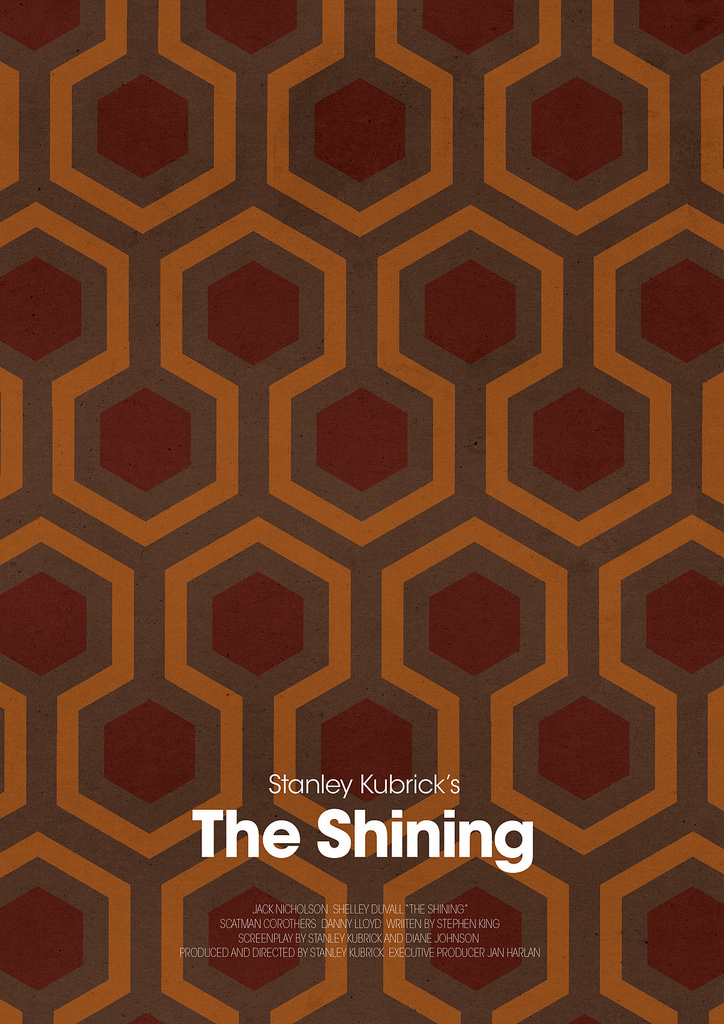
The Shining
The Shining by backstothewall

But there is an entirely different class of movie poster that I want to champion. These are posters made *after* the movie by talented fans — in many cases, decades later. They’re not trying to make a movie look appealing. They’re celebrating movies that are already beloved.

Let’s call them unsheets.

I’m not referring to just any fanmade image. You’ll often see posters for movies fans *wish* would get made, like [this one](http://backseatcuddler.com/2008/08/19/new-poster-for-dark-knight-sequel/) for a Riddler-centered Batman sequel. That’s a burgeoning genre I’d call “fantasy one-sheets.”

I would also break out a distinct category of “mock one-sheets,” which range from outright parody to [unlikely mash-up](http://www.flickr.com/photos/hertzen/4725630242/in/set-72157624026063799/). These are the slash-fiction of graphic design. (And that’s meant as a compliment.)

My definition of unsheet has two requirements:

1. It’s for a real movie that has already come out.
2. It has a graphic style atypical for one-sheets of its genre and era.

Most of these are actually virtual posters, in that they’ll never be printed. But that doesn’t mean they won’t be used. Olly Moss’s series for the [2010 Rolling Roadshow](http://trailers.apple.com/trailers/events/rollingroadshow/) reframes nine classic movies with a unified style and color scheme, making a few scattered screenings feel like an event.

Getting the reference
—-
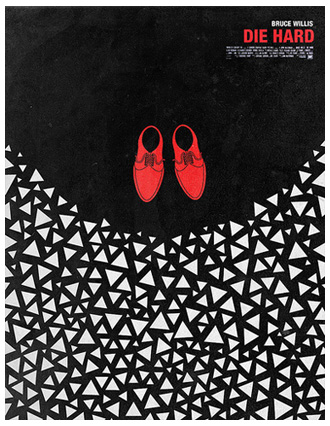
Die Hard
Die Hard by Olly Moss

Unsheets often rely on familiarity with the movie. In fact, many of the best unsheets focus on distinct moments or images from the film that serve as a kind of shibboleth: *You’re cool because you get this.*

On their own, these posters might catch your eye and stoke your curiosity, but they don’t tell you anything about the movie. They wouldn’t score well with focus groups.

For example, Ferris Bueller’s Day Off isn’t about a car — at least, it isn’t *mostly* about a car — but its unsheet portrays a key moment that captures much of what you remember about the movie.

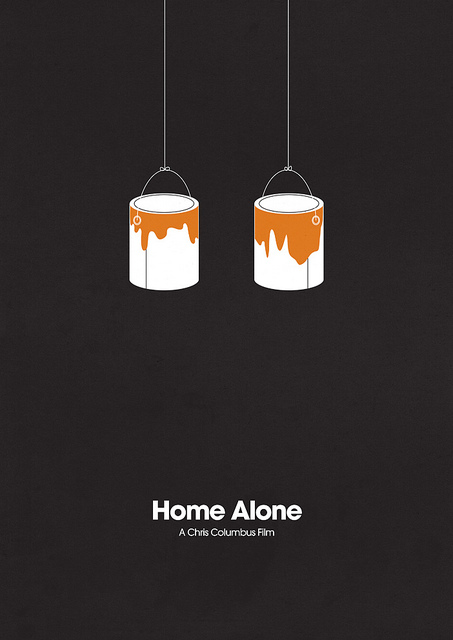
This Home Alone unsheet doesn’t tell you anything about the plot or even the genre of the movie. Is it a movie about suicidal housepainters who fall in love? Based on the unsheet, maybe. (But the two cans might have been a good teaser poster for the sequel.)

Ferris Bueller's Day Off
Ferris Bueller's Day Off by Jordan A.
Home Alone
Home Alone by backstothewall

Better than the masses deserve
—-

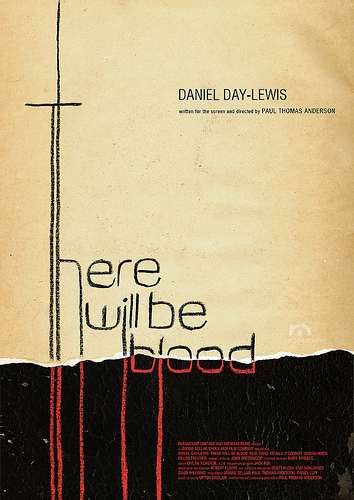
There Will Be Blood
There Will Be Blood by rafael muller

Some unsheets are simply good design. They’re striking in part because they don’t look like traditional one-sheets, using typography and whitespace wholly alien to what we find on video boxes.

You don’t often see photography in unsheets — nor any meaningful representation of the actors. Rather, the star of the movie is the movie itself, or an iconic image from the film.

Some of these could easily be book jackets. For whatever reason, book buyers seem to accept a level of abstraction and design that moviegoers find off-putting. Maybe authors hold more sway over marketing departments. Maybe star designers like Chip Kidd can point to their track record of success. Or maybe, competing with hundreds of titles on the shelf, a striking visual image is the only way of cutting through the clutter.

Many unsheets try to recapture an older graphic style — most notably the work of Saul Bass. But any earlier era is fair game. Narrowing the color palette simulates the real limitations on designers in the time before four-color presses.
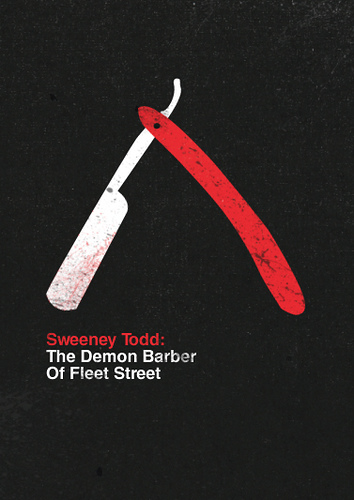
Sweeney Todd
Sweeney Todd by nategonz
Misery by bee combs
Misery by bee combs

Circling back around
—–

Star Wars
Star Wars by Tom Whalen

I believe unsheets are already having an effect on traditional one-sheets, particularly movies that can afford to gamble. The [poster for Precious](http://www.firstshowing.net/2009/05/12/fantastic-poster-for-lee-daniels-sundance-hit-precious/) feels like an unsheet, as do the [first](http://www.buzzsugar.com/Picture-Official-Movie-Poster-Buried-Starring-Ryan-Reynolds-8252752) and [second](http://www.firstshowing.net/2010/08/19/new-poster-for-ryan-reynolds-buried-debuts-with-fs-quote/) posters for Buried.

Unsheets have a close cousin in tag-along posters, which highlight some aspect of a movie or series without specifically being *for* that movie.

I’m talking about things like Justin Van Genderen’s [Star Wars travel art](http://www.2046design.com/Star%20Wars2.html), or Tom Whalen’s [Ghostbusters instructional poster](http://strongstuff.tumblr.com/post/960067403/ghostbusters-inspired-technical-poster-created). Like unsheets, they flourish in the cozy embrace of geek nostalgia.

I don’t have any traditional one-sheets hanging in my office, not even for my own movies. But in researching images for this post, I came across a half-dozen unsheets I’d be excited to own.

By stripping away the credit blocks and pithy taglines, unsheets distill films down to their essence — an essence that may not have even been apparent when the movie was released. Studios may own copyright, but fans feel emotional ownership, and these posters reflect that. Ultimately, unsheets aren’t about the movies that came out, but the movies they became.

Election results announced

September 17, 2010 Follow Up, WGA

The votes have been counted in the [WGAw Board election](http://wga.org/content/default.aspx?id=4332):

> The following eight members were elected to the WGAW’s Board of Directors: Robin Schiff (754 votes), Katherine Fugate (749 votes), Aaron Mendelsohn (741 votes), David A. Goodman (740 votes), Kathy Kiernan (691 votes), Christopher Keyser (610 votes), David Shore (554 votes), Mark Gunn (519 votes).

> Fugate, Goodman, Gunn, Kiernan, and Mendelsohn are incumbents. Board members will serve a two-year term, effective immediately.

Congratulations to all. I’m especially happy to see Aaron Mendelsohn and Mark Gunn returning to the board.

Rewriting from a blank page?

September 15, 2010 QandA, Writing Process

questionmarkMy first script has been stagnating in the Hollywood ether for the past 18 months as director after director has turned it down. In the meantime, I’ve had success with several other scripts, and have now decided (along with my producer, who’s one of the top in the business), to try to re-tool the original, using everything I’ve learned in the past year — which is a lot.

Looking back, I now know why this script isn’t great — and, I also know that I can make it great. That said, when approaching a rewrite of your own work after some time away from it, would you just start with a blank page, and then do some merging of the versions if necessary; or, would you work with the original draft, cutting, adding scenes, adjusting dialogue, etc.? I’m tempted to start fresh, but I know the original script has some great stuff in it, and using it as a roadmap might be helpful. I just don’t want to limit my vision.

I’m reminded of Guillermo Arriaga who says that when he’s done writing a script he throws it out and then rewrites it, assuming that whatever was worthy in the first draft will certainly make its way into the second.

— Ben
NYC

The danger of writing a new draft on top of an existing draft is that you won’t change enough. You’ll scroll through, tweaking things and moving a few commas. You’ll be more of a reader than a writer.

Don’t let yourself off easy.

For minor work, I recommend starting on paper. Print out the script, then go through with a colored pen. Scratch out the scenes you’re cutting, scribble notes on what goes where. When you go back to your computer, *Save As…* with a new file name. Before you start rewriting, make your cuts and changes from your paper draft. You’ll end up with a bunch of little holes to fill, but that’s some of the easiest, most enjoyable work.

For a major overhaul, you’re better off starting from a blank page. If you’re a carder, [make cards](http://johnaugust.com/archives/2010/10-hints-for-index-cards). If you’re an outliner, write one. Try to ignore everything you’ve written — focus on what you’d like to have at the end.

Once you know what you’re trying to do, start writing the new script.

Write the new scenes and sequences first. When you get to a section where you plan keeping a version of what you wrote before, open the old file and copy out just that stuff. You may find that you like the new way you’re writing the script so much that you don’t even want to use what you had before. That’s okay.

I’m not fully on board with Guillermo Arriaga’s throw-it-all-out philosophy. ((If that’s really his practice; I’m taking your word on it.)) My first drafts are pretty great, and I never want to lose that initial instinct. Some scenes turn on a certain line of dialogue that only occurs to you once. Letting that slip away seems foolish.

A final piece of advice: Rewriting that first script rarely pans out. It’s probably great. It’s gotten you a lot of work. But it may never get made. In talking with screenwriter friends, very few of them had their first scripts produced, and they’re all working steadily today. Always remember that screenwriting is a career of writing many scripts, not just the one.

Stressing out in dialogue

September 12, 2010 Formatting, QandA, Words on the page

questionmarkI was just wondering how to indicate that a character is stressing a certain word in the dialog. I’ve thought about using capitalization but I’m not sure that’s the proper way, as I’ve also seen quotation marks used to similar effect. If you had any advice on which method you use, that would be more appreciated.

— Mike Morin
Portsmouth, Rhode Island

Underline. But remember, in most cases, you needed and shouldn’t give a specific line reading for any piece of dialogue. If a scene is working, readers (and actors) will naturally fall into the right tone.

But if you have a line that only makes sense one way — and it’s not the first way someone would read it — you have a couple of choices:

Set it up in stage direction:

Through clenched teeth --

MARGARET

I’d delighted.

Use a parenthetical:

CORBIN

(condescending)

I’m sure you’ll improve.

Underline the word or words that need to be stressed:

XANDER

I’m not not saying he wasn’t a Bugwath demon but if he was — or wasn’t, I confused myself there — either way he was surly. And oddly cat-phobic. Now can we get back to the part where the whole world goes boom at midnight?

You’ll occasionally see italics in dialogue (often for foreign languages). A few screenwriters use boldface or uppercase in dialogue. I’ve never seen the need.

Quotation marks should be reserved for moments that a character might make “air quotes” around something they’re saying. The misuse of quotation marks is a scourge of modern English.

« Previous Page
Next Page »

Primary Sidebar

Newsletter

Inneresting Logo A Quote-Unquote Newsletter about Writing
Read Now

Explore

Projects

  • Aladdin (1)
  • Arlo Finch (27)
  • Big Fish (88)
  • Birdigo (2)
  • Charlie (39)
  • Charlie's Angels (16)
  • Chosen (2)
  • Corpse Bride (9)
  • Dead Projects (18)
  • Frankenweenie (10)
  • Go (29)
  • Karateka (4)
  • Monsterpocalypse (3)
  • One Hit Kill (6)
  • Ops (6)
  • Preacher (2)
  • Prince of Persia (13)
  • Shazam (6)
  • Snake People (6)
  • Tarzan (5)
  • The Nines (118)
  • The Remnants (12)
  • The Variant (22)

Apps

  • Bronson (14)
  • FDX Reader (11)
  • Fountain (32)
  • Highland (75)
  • Less IMDb (4)
  • Weekend Read (64)

Recommended Reading

  • First Person (87)
  • Geek Alert (151)
  • WGA (162)
  • Workspace (19)

Screenwriting Q&A

  • Adaptation (65)
  • Directors (90)
  • Education (49)
  • Film Industry (489)
  • Formatting (128)
  • Genres (89)
  • Glossary (6)
  • Pitches (29)
  • Producers (59)
  • Psych 101 (118)
  • Rights and Copyright (96)
  • So-Called Experts (47)
  • Story and Plot (170)
  • Television (165)
  • Treatments (21)
  • Words on the page (237)
  • Writing Process (177)

More screenwriting Q&A at screenwriting.io

© 2026 John August — All Rights Reserved.